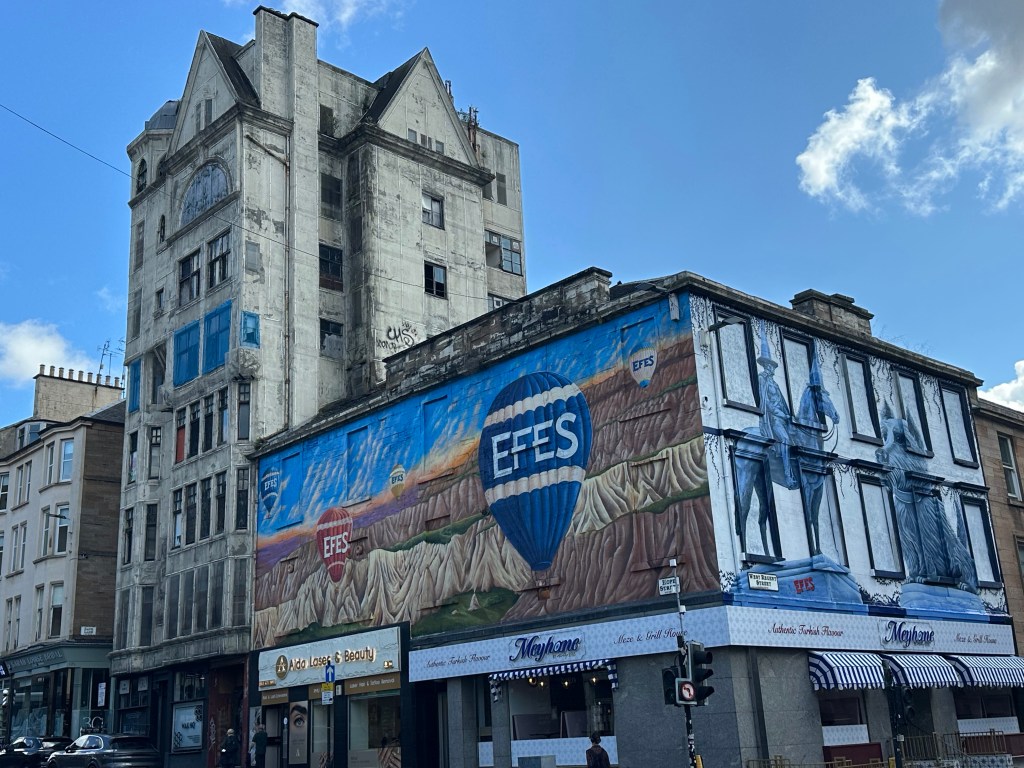
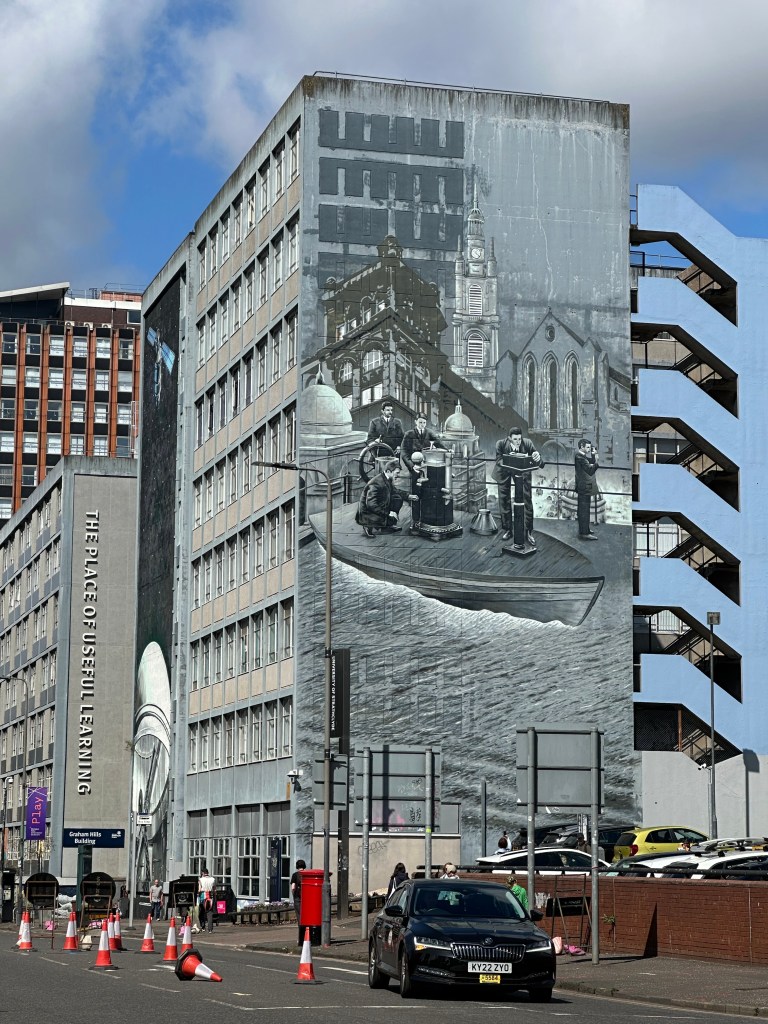
Glasgow is the largest city in Scotland by population and the third largest in the UK. It developed as a port city on the River Clyde and at one point over half of all tobacco imported into the UK arrived through Glasgow. The wealth created resulted in a building boom in the late 19th and early 20th centuries. The two most noted architects of the time were Alexander “Greek” Thomson, who designed buildings based on classicism, and Charles Rennie Mackintosh who created “Glasgow Style”.
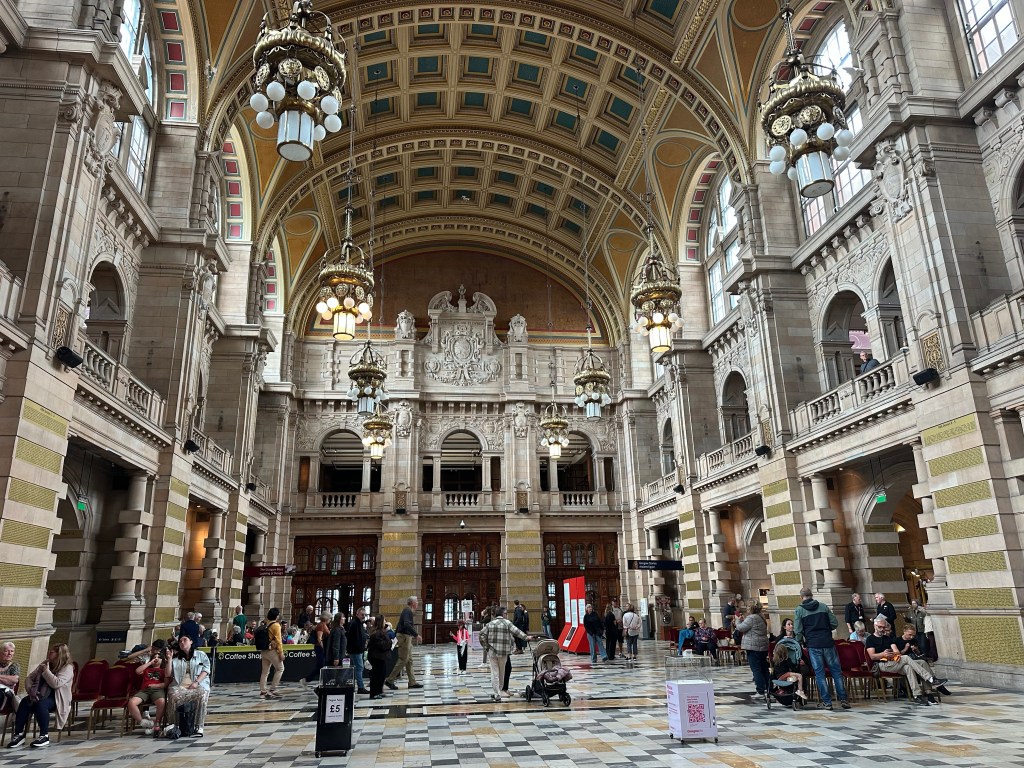
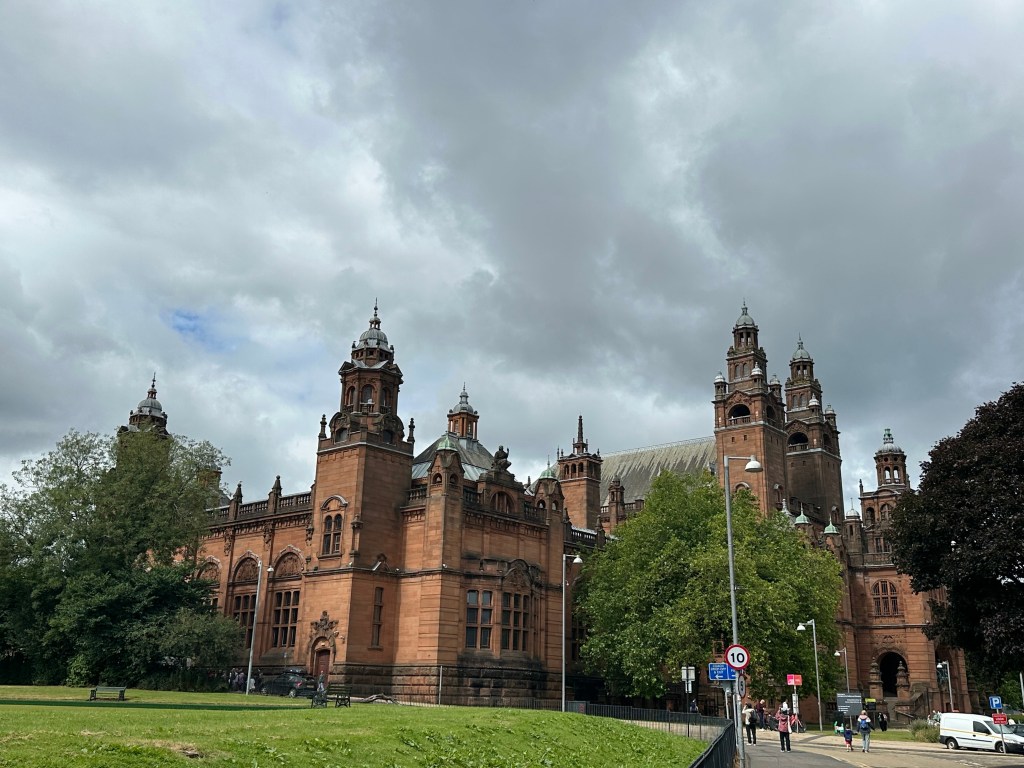
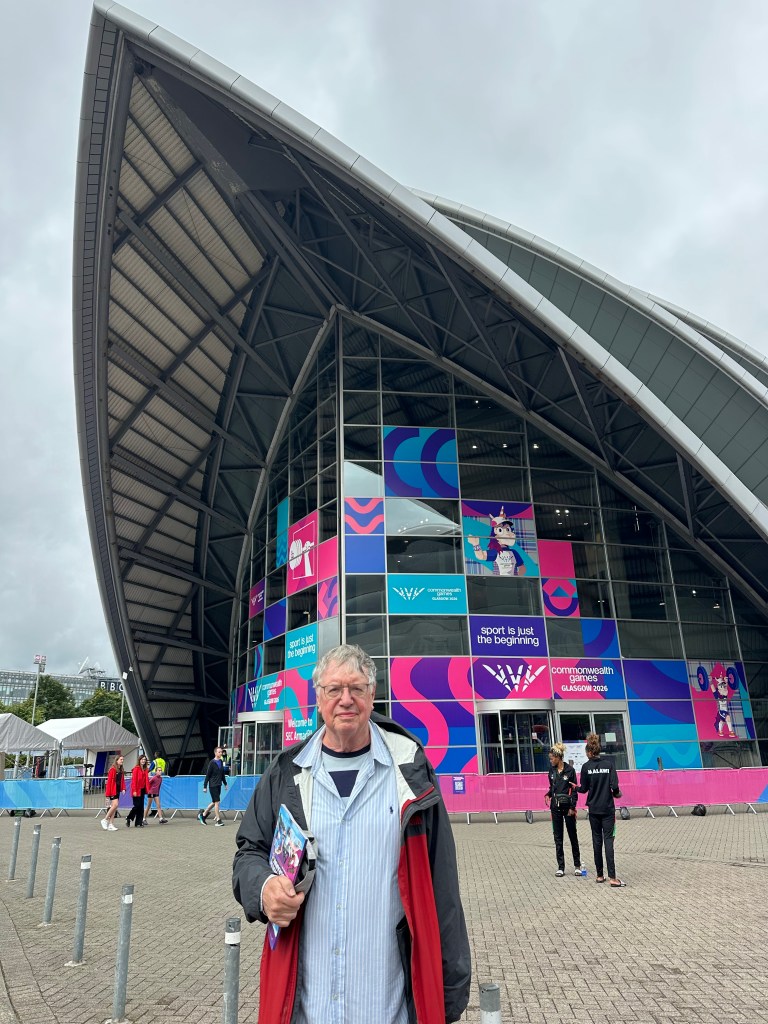
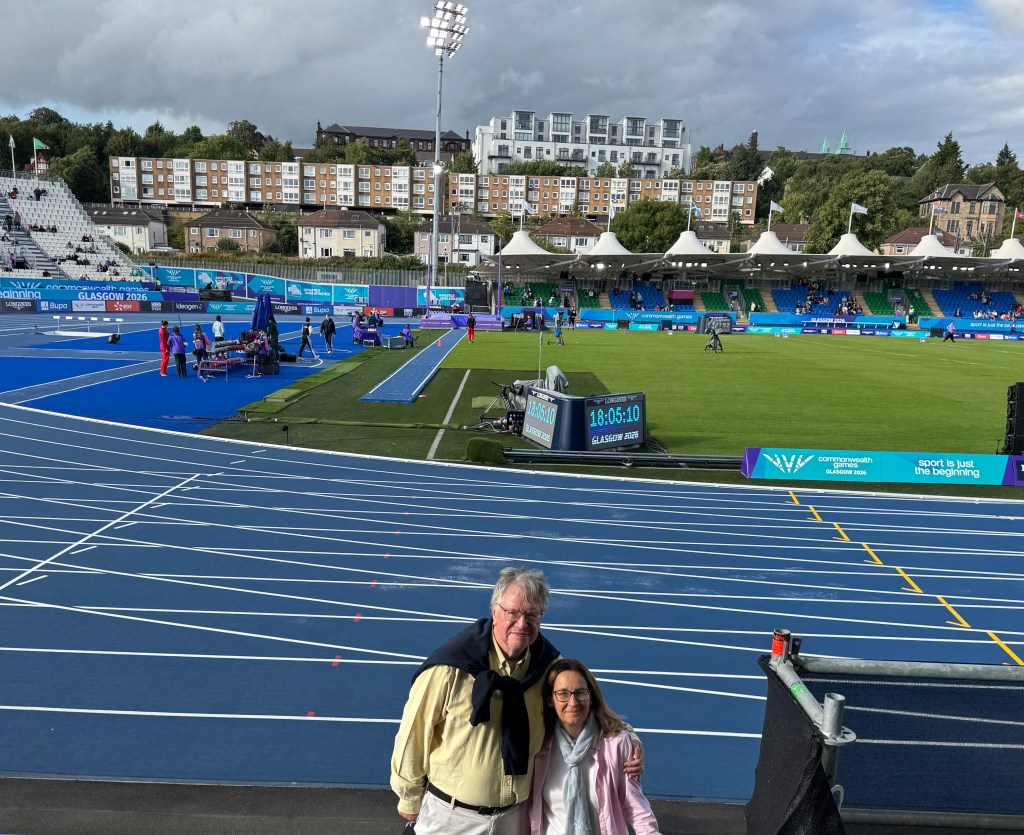
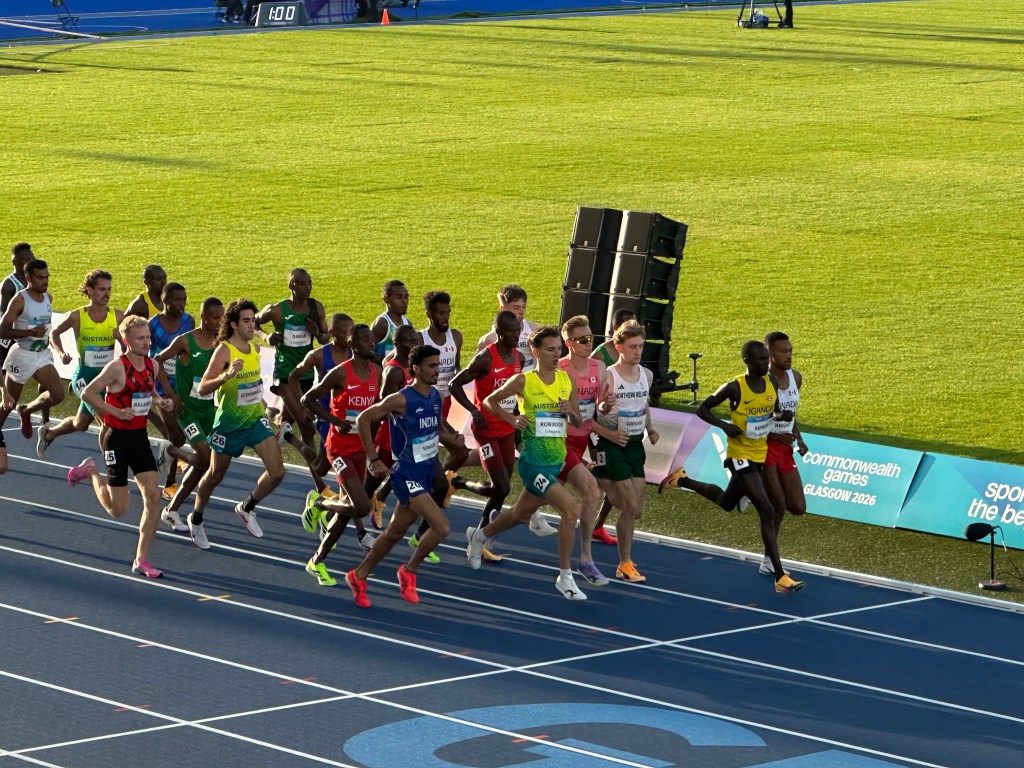
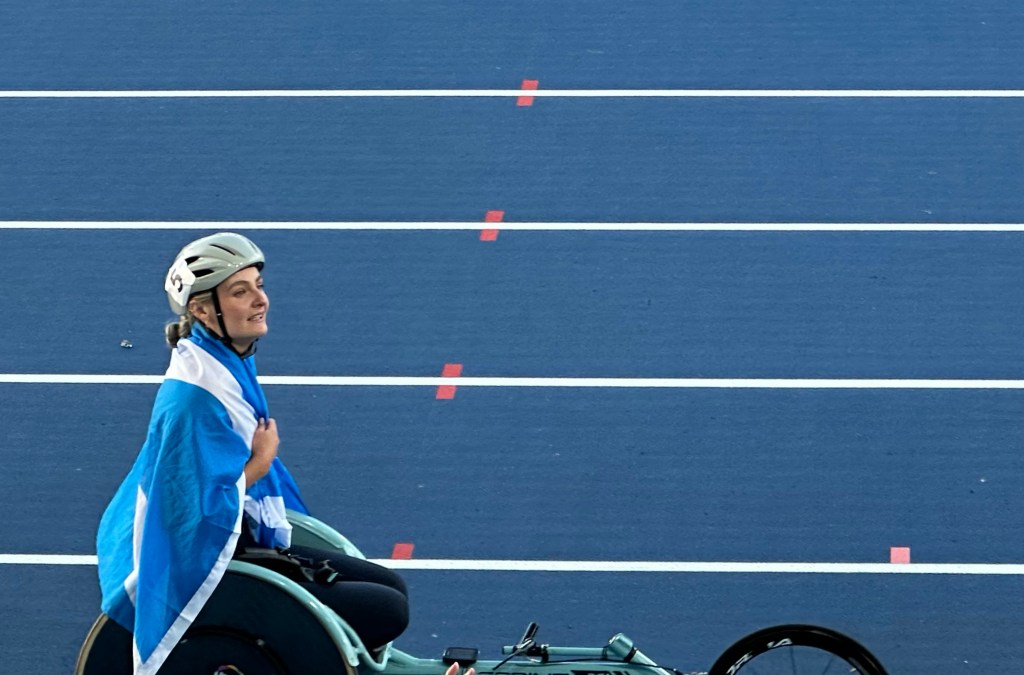
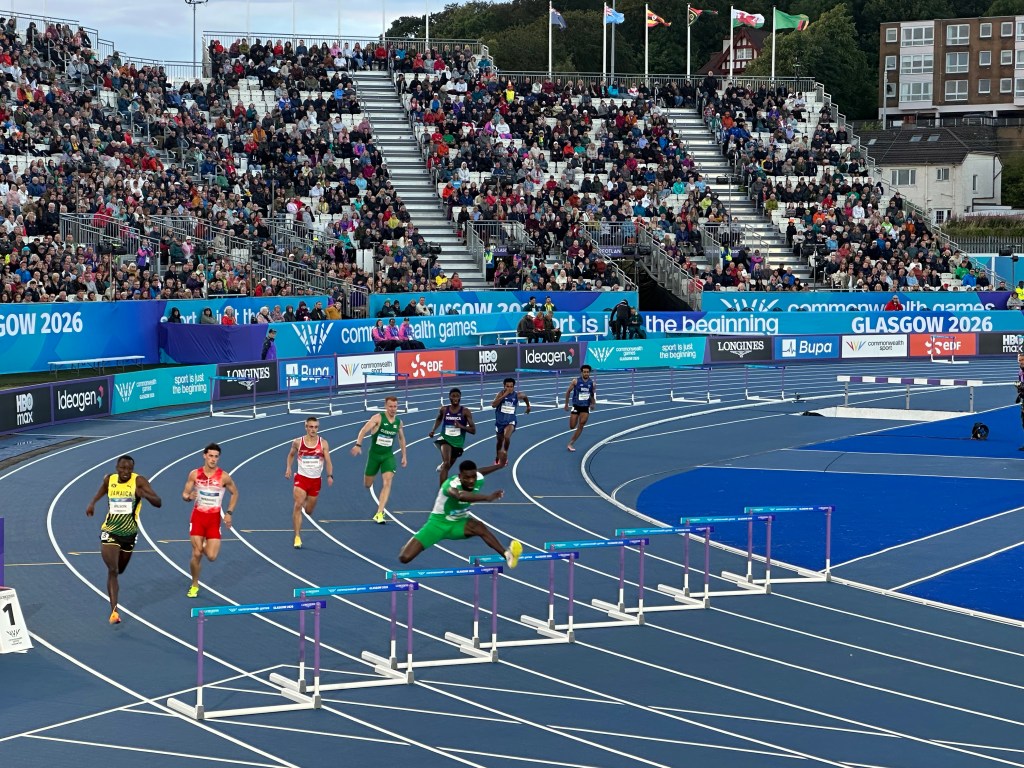
The city has major cultural institutions including Kelvingrove Art Gallery and Museum which we visited. The main focus of the visit was to attend the 2026 Commonwealth Games. Glasgow previously hosted the Games in 2014 and stepped in to host the 2026 Games when the state of Victoria in Australia reneged on its agreement to host them. This resulted from self-inflicted cost overruns in an attempt to compete with other state in hosting major sports events. Part of the cost of the Glasgow Games was funded by a cancellation fee from Victoria. The Australians still turned up to lead the medals table.
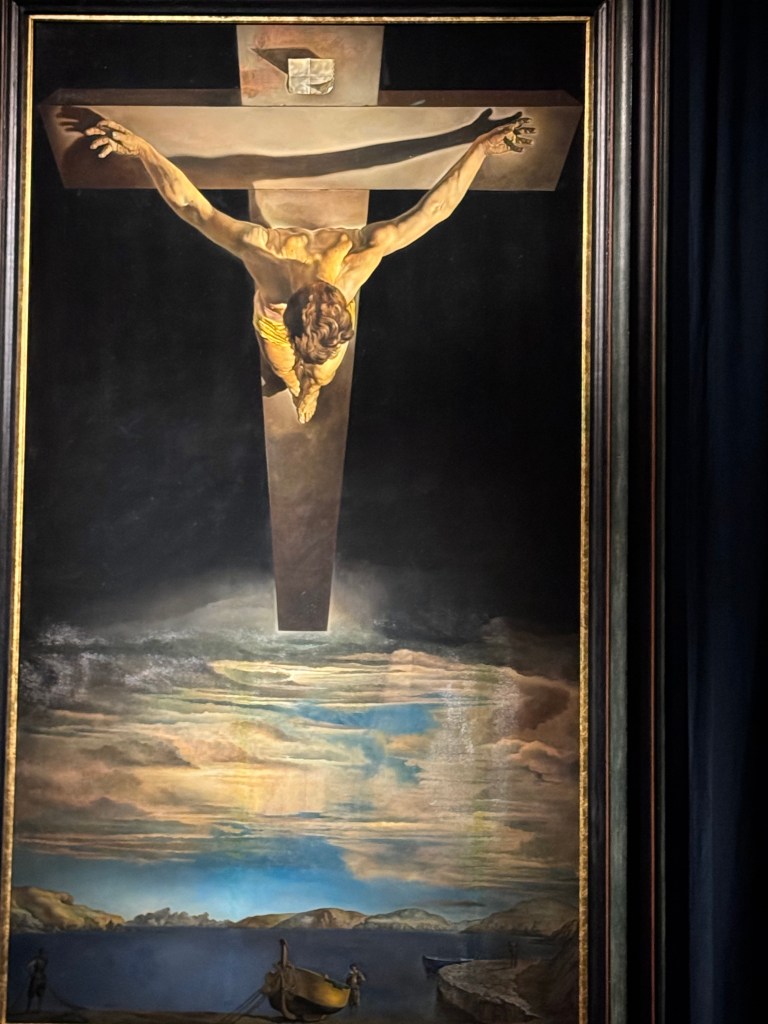
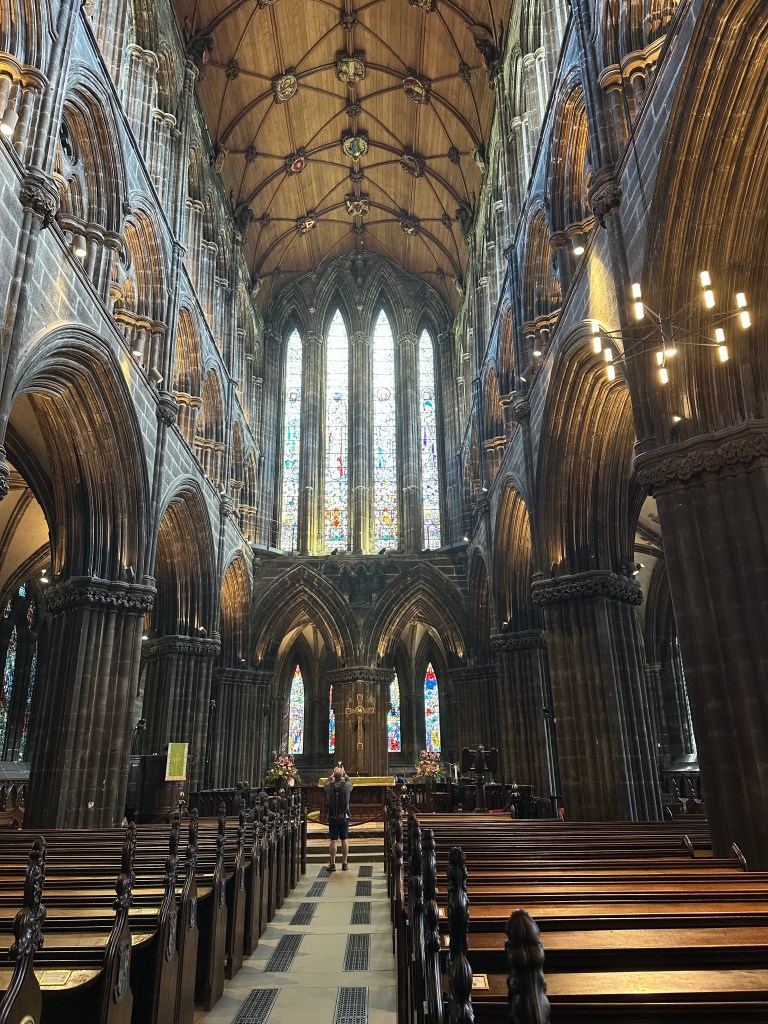
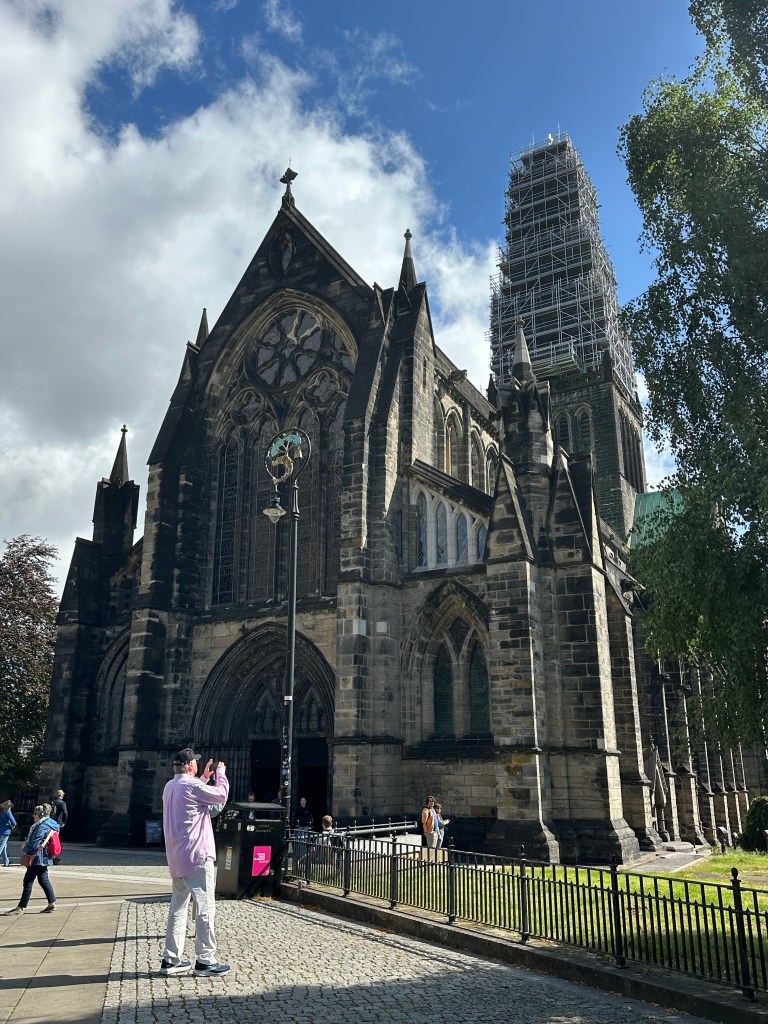
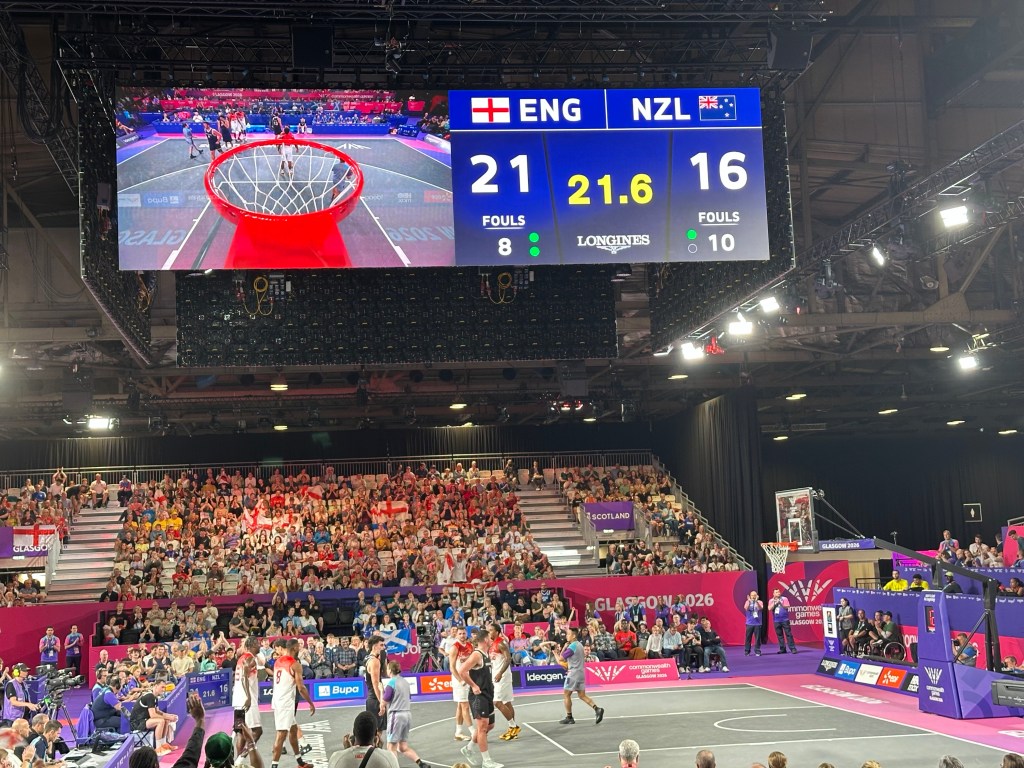
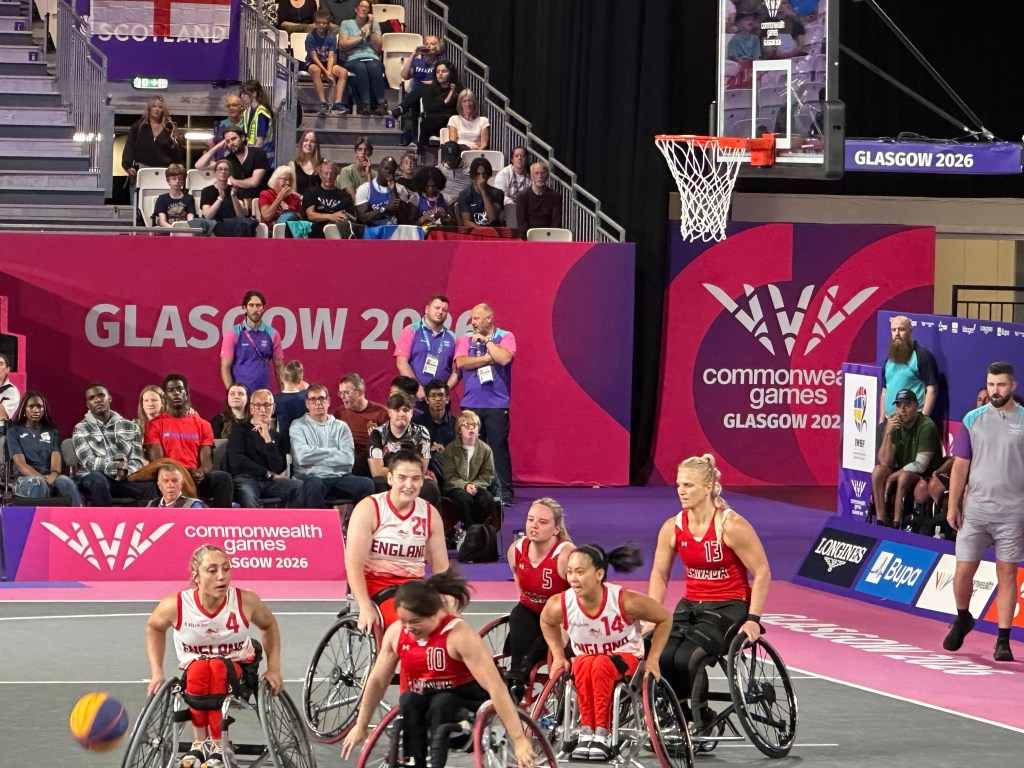
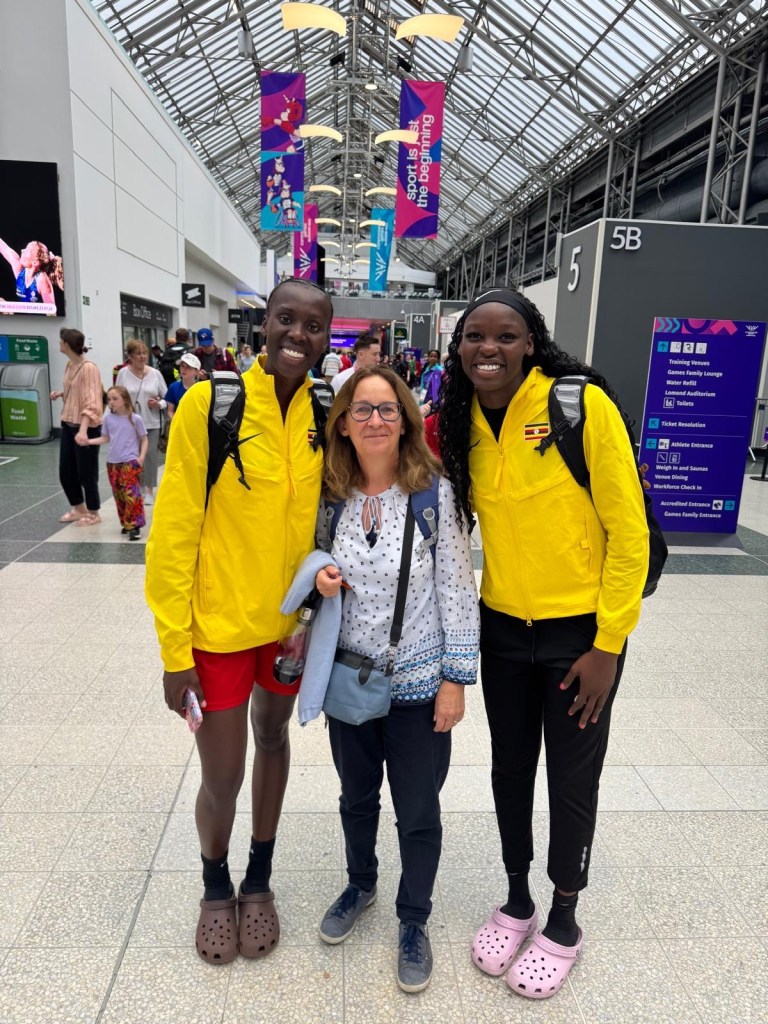
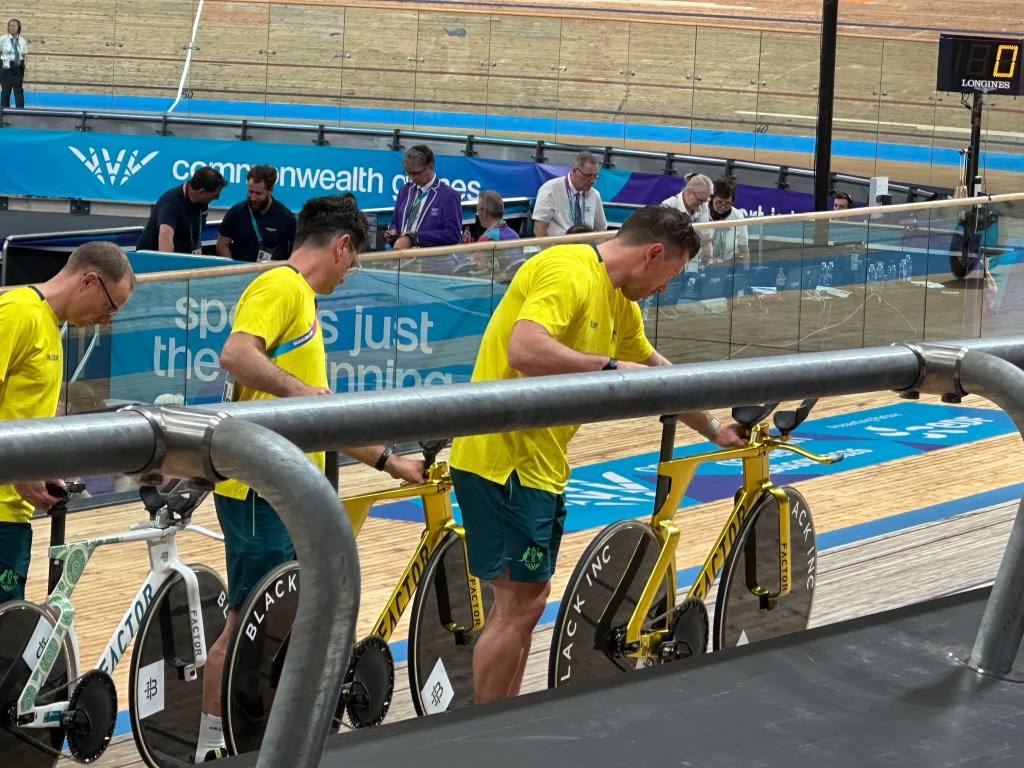
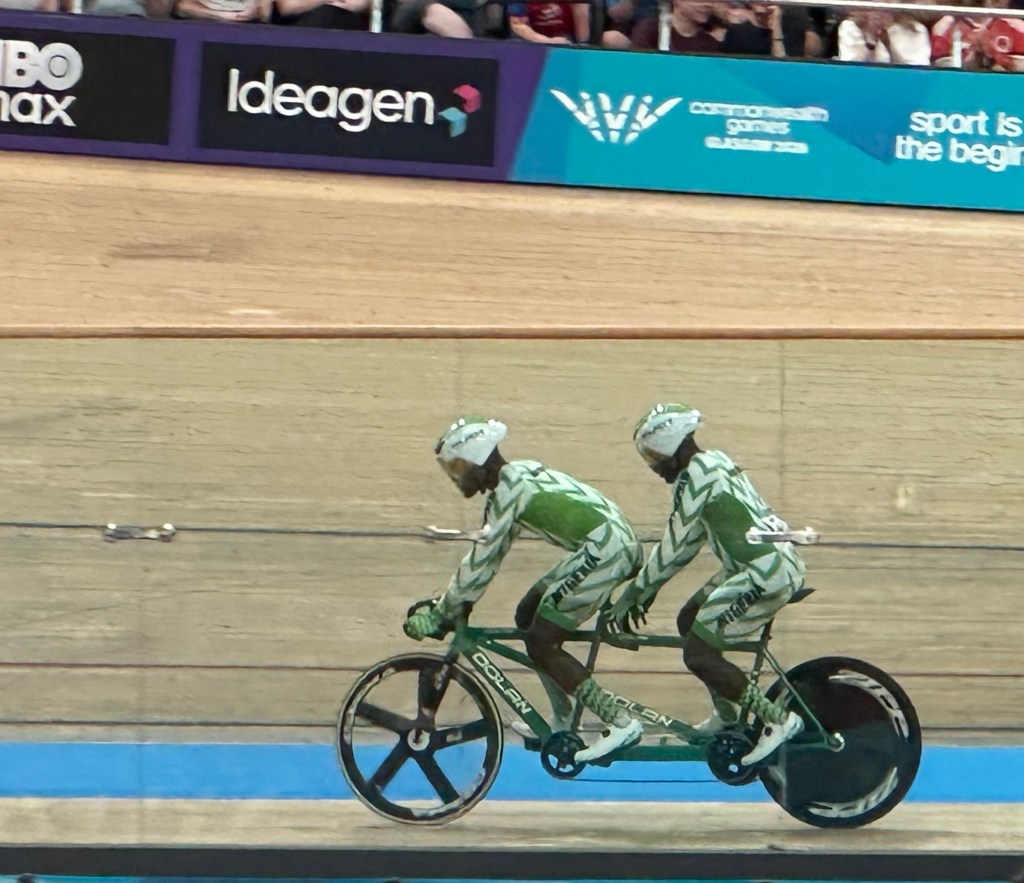
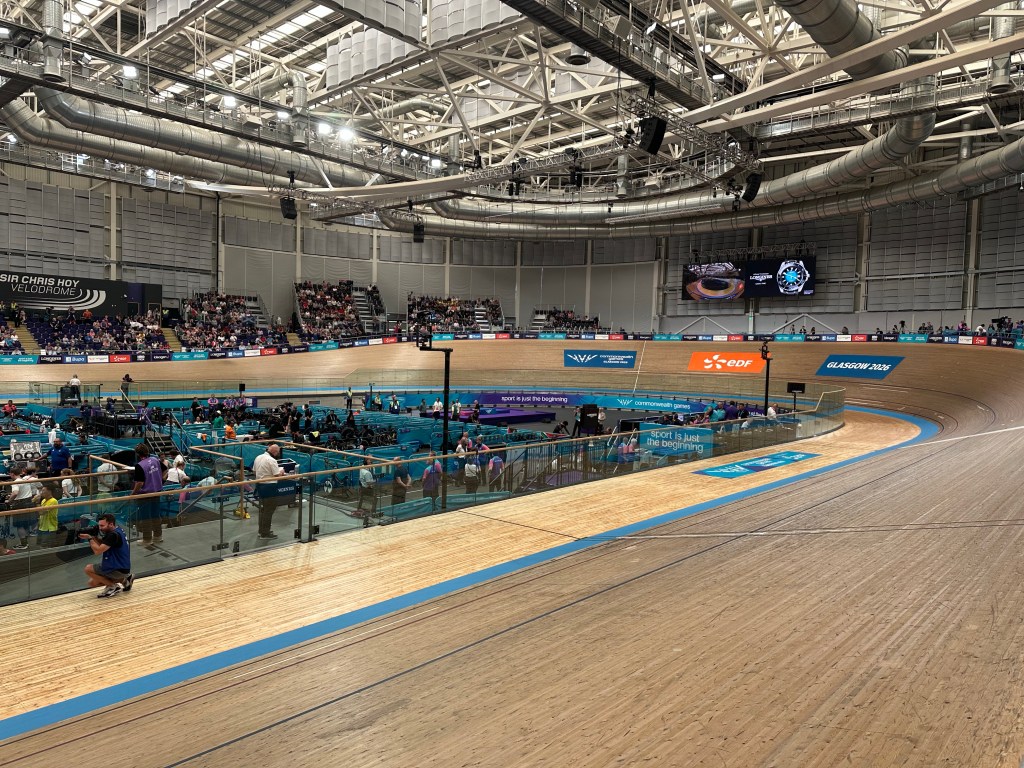
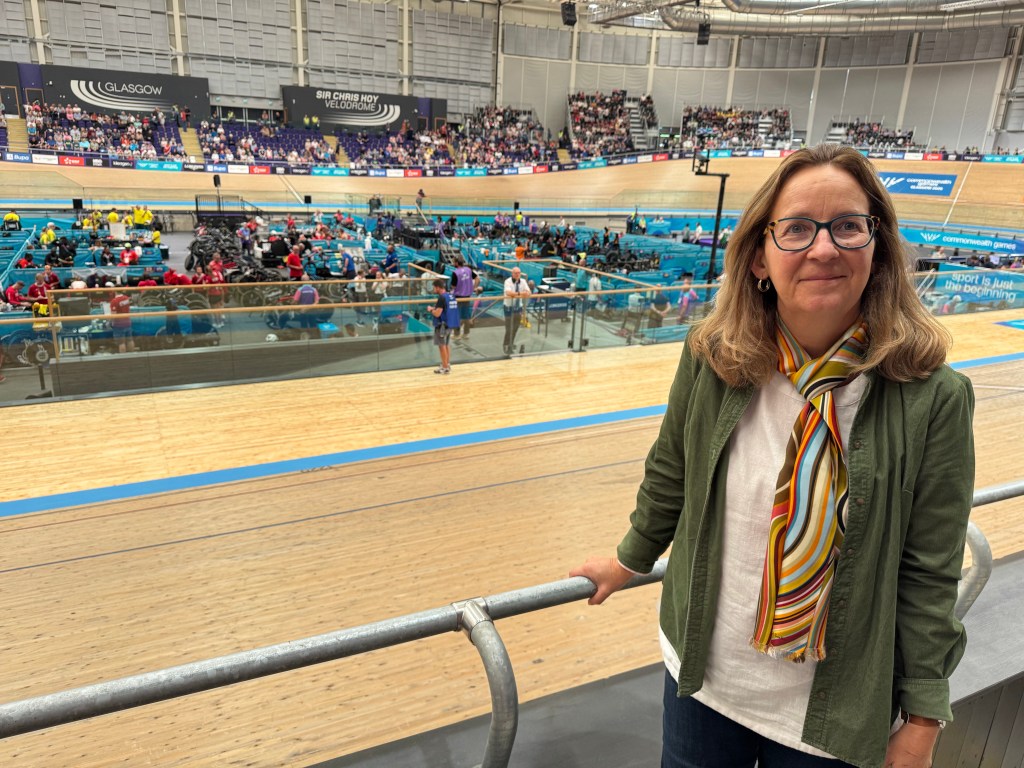
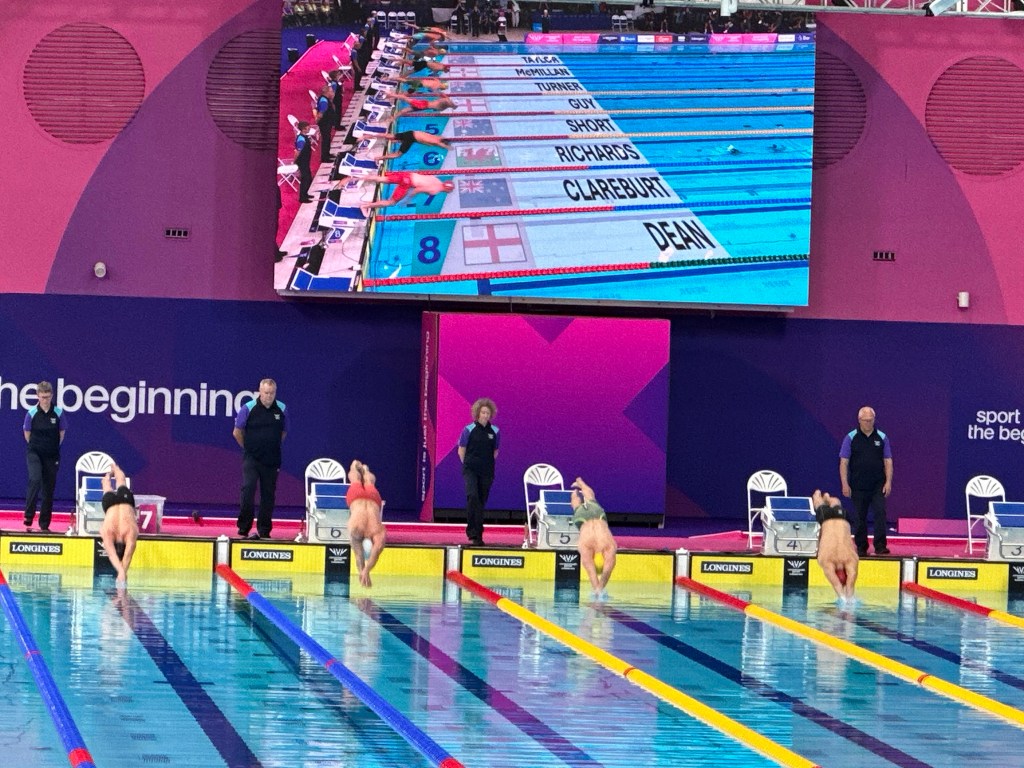
Street art murals are popular and impressive Kelvingrove Art GalleryChrist of St John of the Cross by Dali in Kelvingrove Art Gallery, acquired by Glasgow City Council in 1952 for £8,200 a year after it was paintedGlasgow Cathedral We saw the semi finals of men’s and women’s 3×3 basketball and the same for wheelchair basketball at the SEC and met two of the competitors Cycling at the Sir Chris Hoy velodrome- gold bikes for the Aussies and striking Lycra for the Nigerian teamSwimming at Tollcross Aquatic Centre We saw two athletics sessions
After a very full two weeks in Uzbekistan we had a few final memories to add.
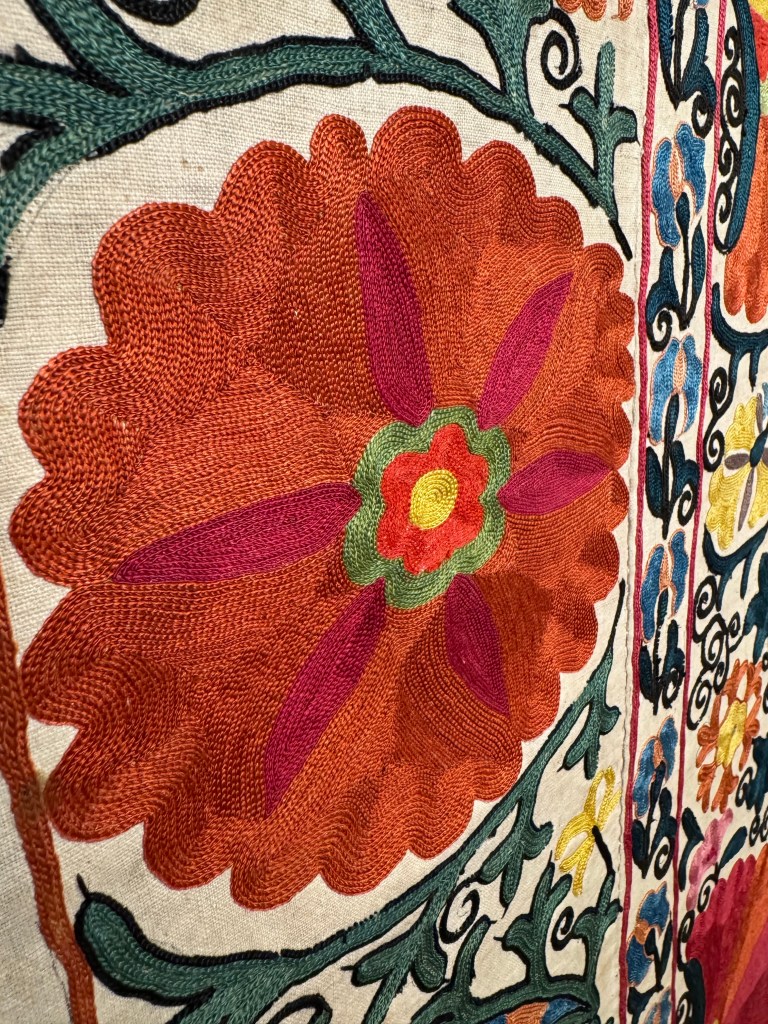
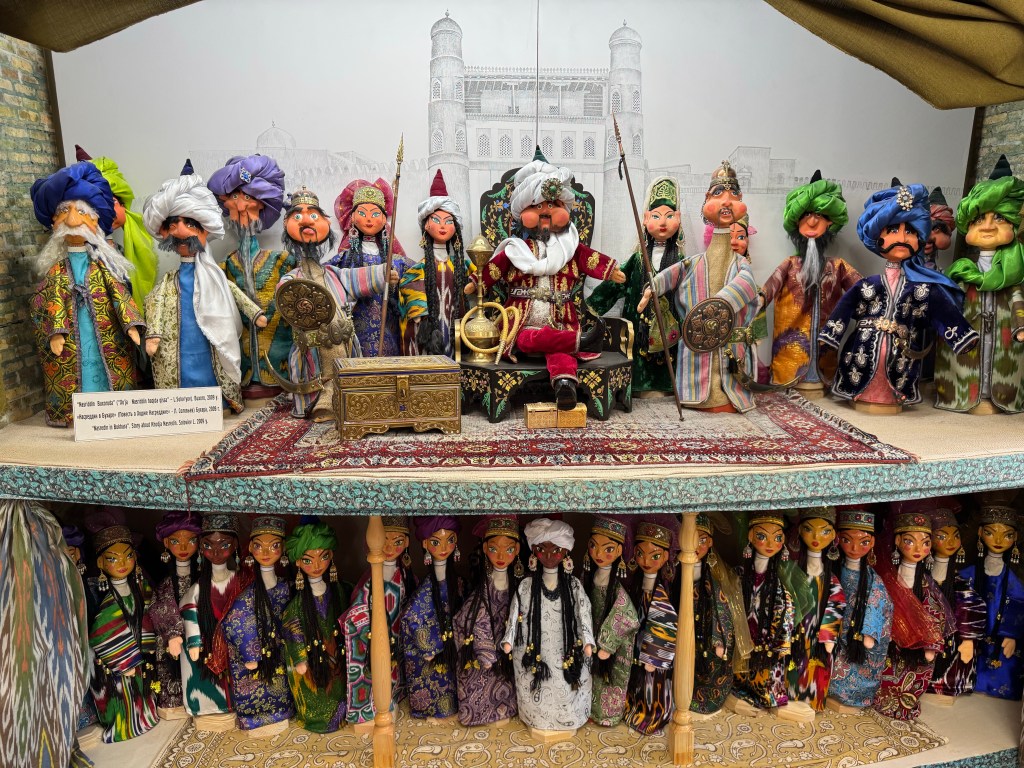
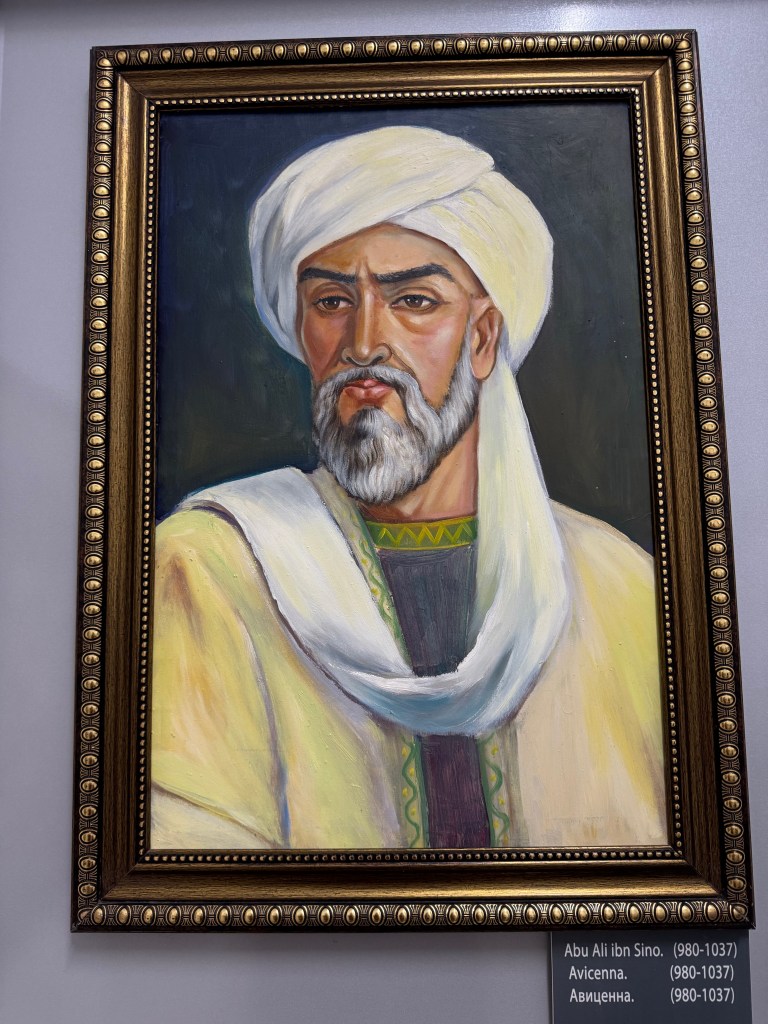
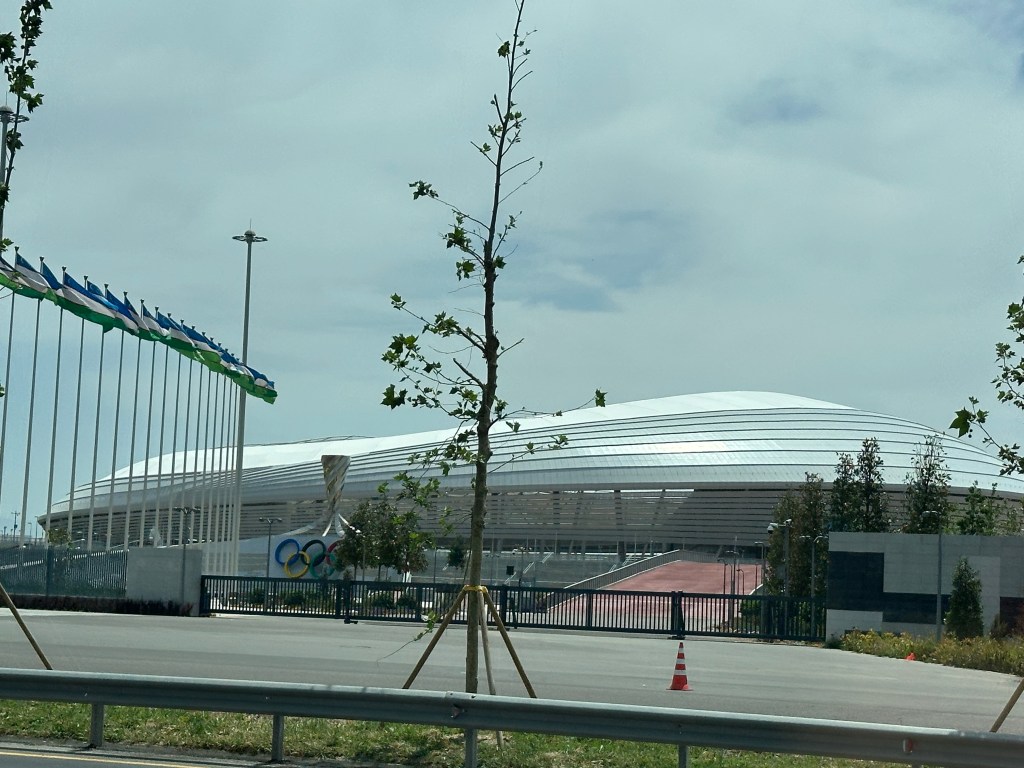
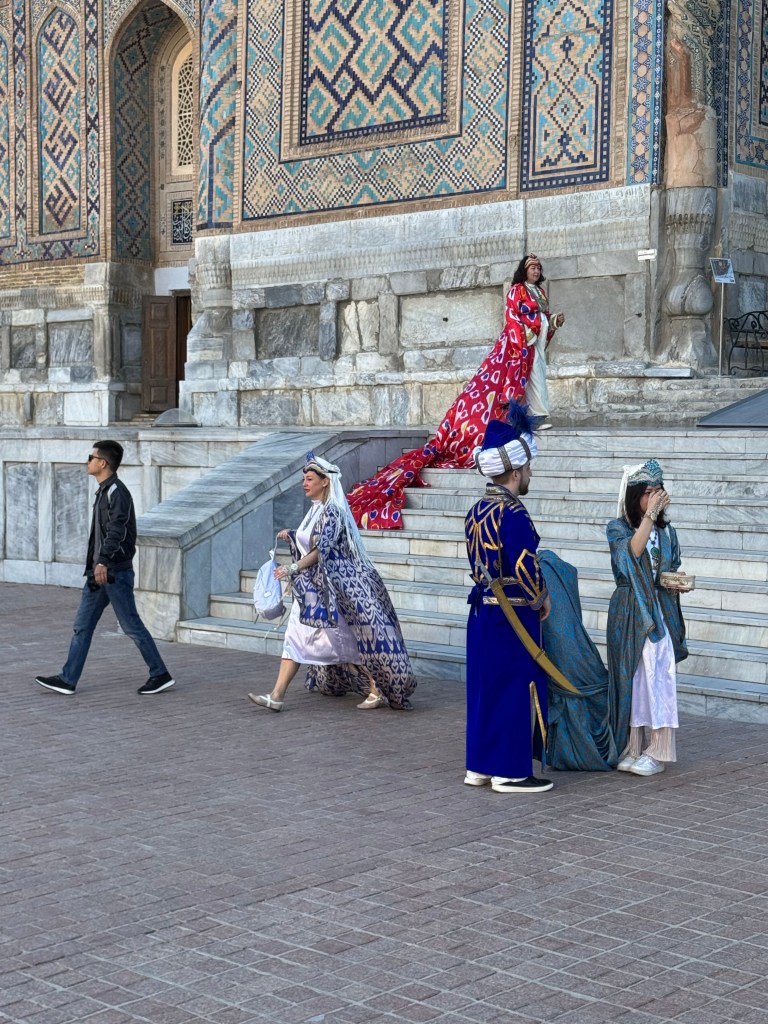
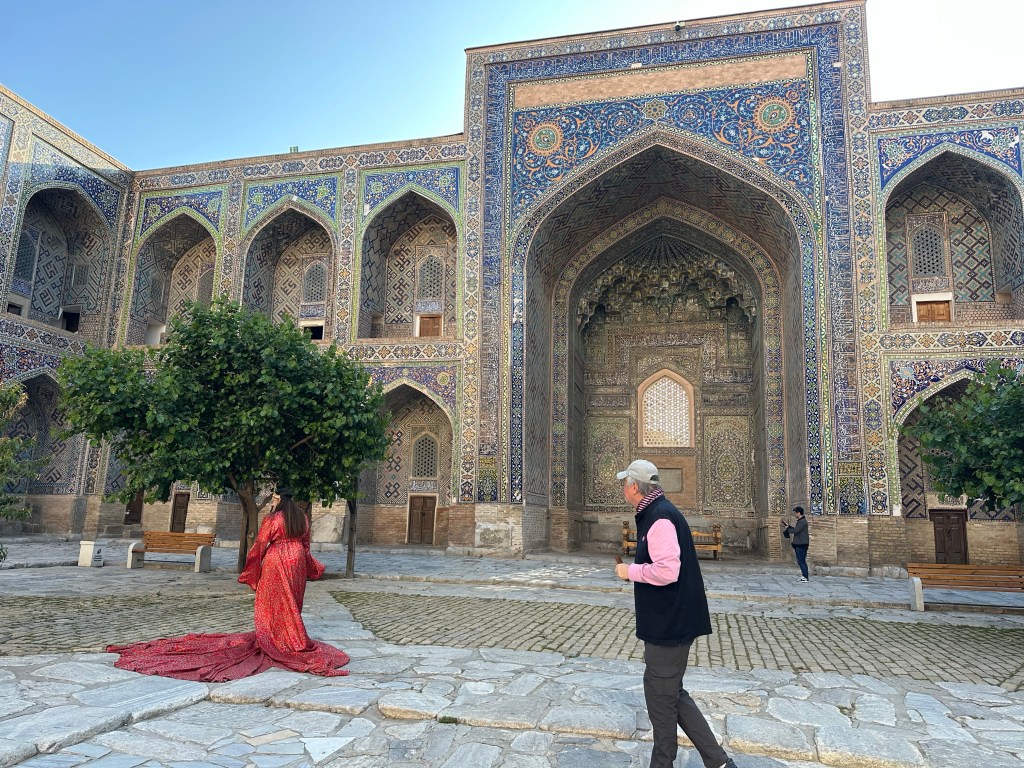
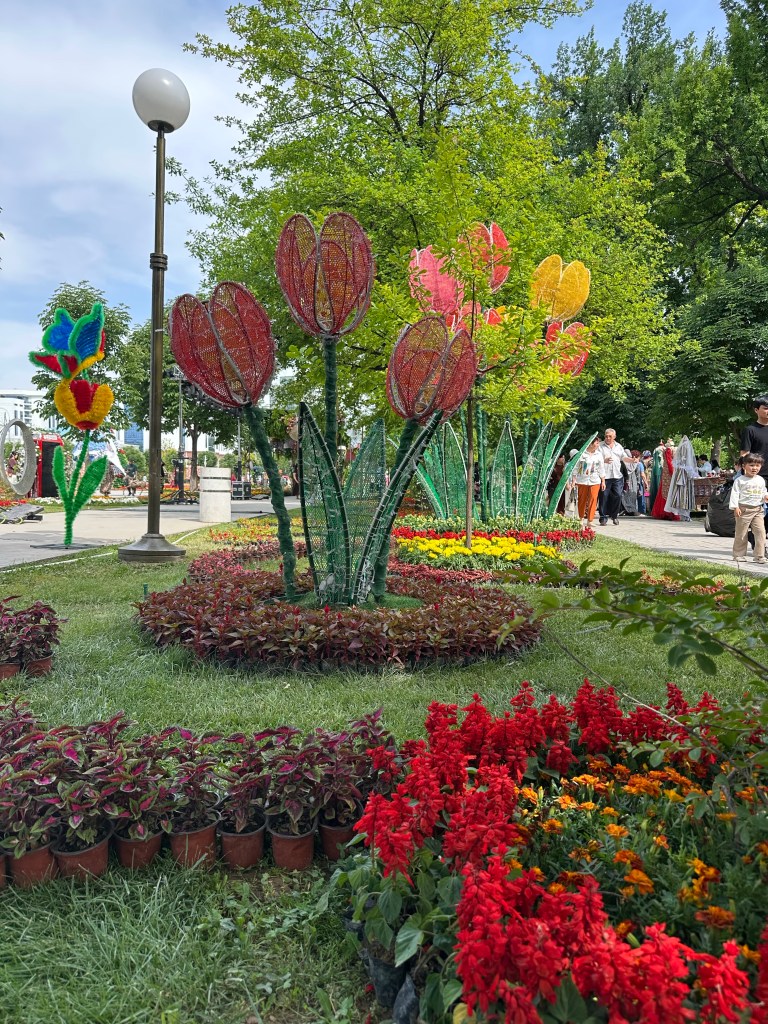
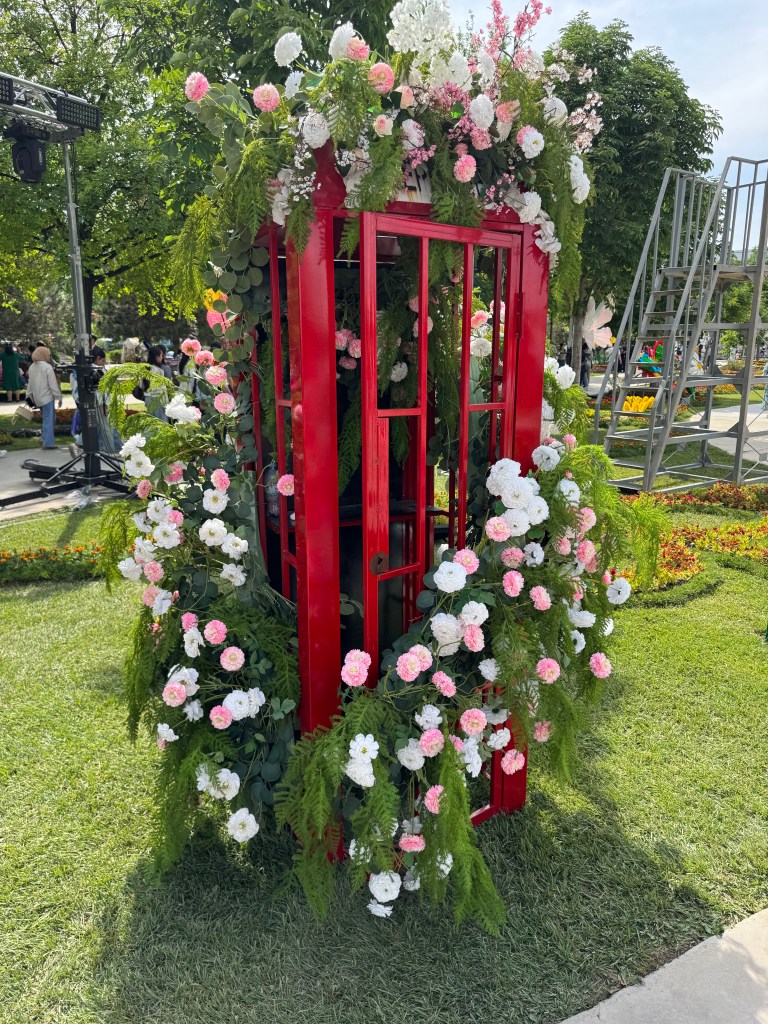
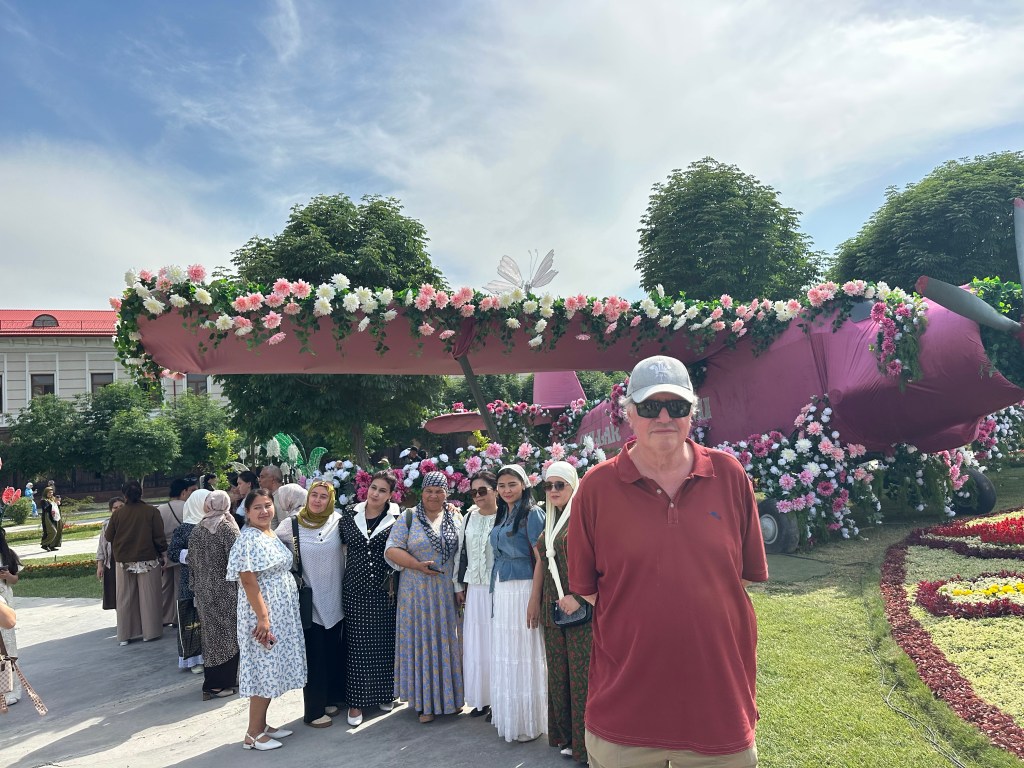
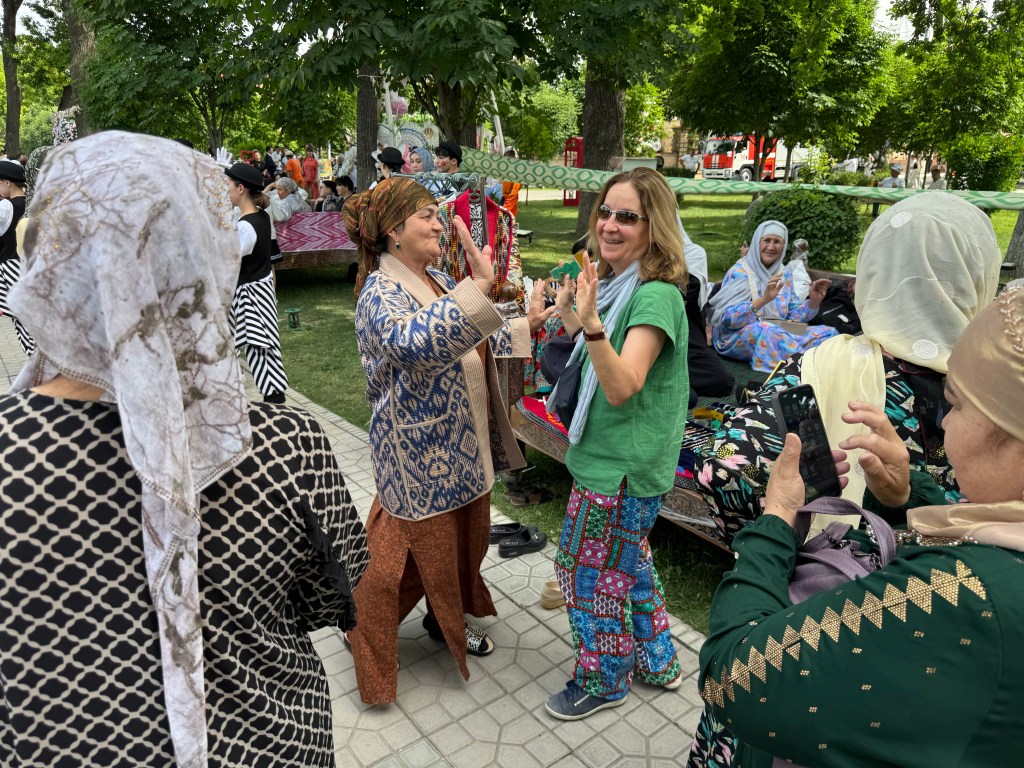
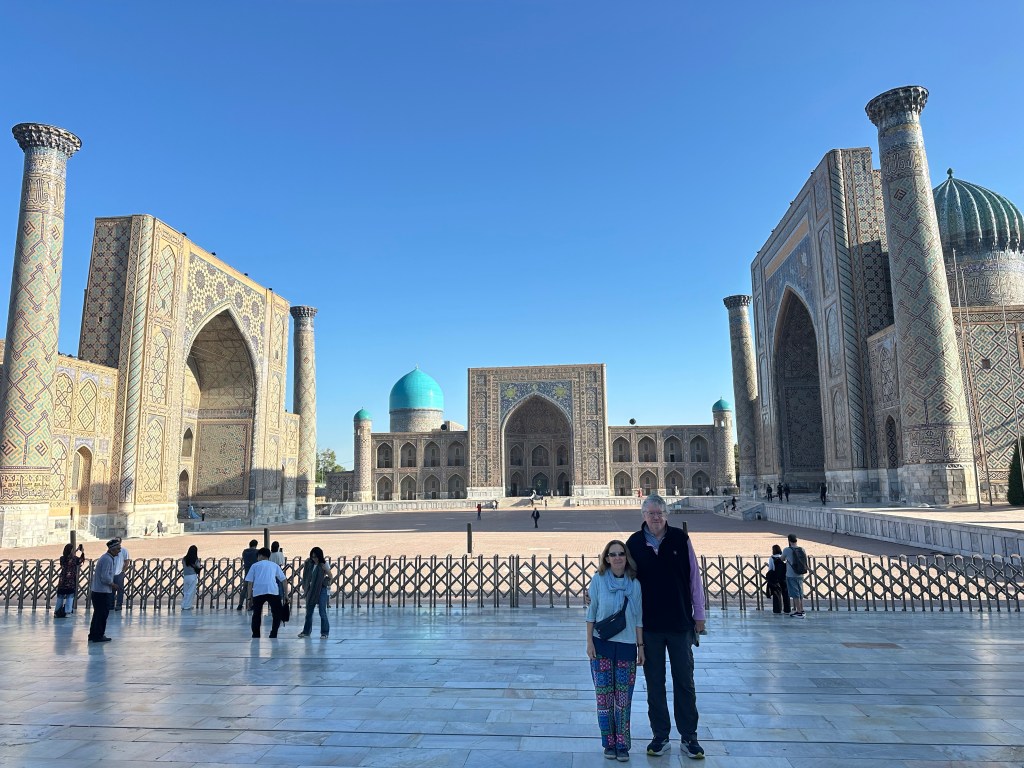
Uzbekistan has some beautiful crafts with skilled artisans still producing local products such as this form of silk embroidery known as suzaniPuppet shows have been popular over the ages. We visited a small museum of handmade puppets in BukharaWe were struck by the importance of this part of the world in terms of innovation and discoveries through the ages. For example this man, who lived in Bukhara, was very influential in the early development of medicine We saw huge amounts of construction work almost everywhere we went. For example this is an “Olympic Park” just outside Tashkent. It includes numerous stadiums such as Olympic standard velodrome and aquatic centre. It was built by a Chinese construction company but is yet to host a major international event to match the facilities.Some tourists seemed, in our view, to miss the point of the amazing sights of the Silk Road cities, treating the buildings as a backdrop for photo shoots. Above and below, Registan Square, Samarkand on our our pre breakfast visitsAt the end of our trip we had a half day in Tashkent before an early flight. Opposite our hotel there was a three day flower festival. Not quite what we are used to – many of the flowers are artificial and most are still in their pots. The flower festival, which was free, was also an opportunity for locals (we only saw a couple of other tourists) to have a party with picnics, food and craft stalls, music and dancing. These ladies were excited by the novelty of foreigners in their midst !With Nodira, our Uzbek guide. She shared with us her love of her country as well as her sense of humour. We learned a lot from her that we never would have read in a guide book.Blog in action
We do not think anyone would visit Uzbekistan for a culinary experience, especially fish lovers and we came with fairly low expectations. On the whole we were pleasantly surprised but after a few days noticed that all restaurants provide broadly the same menu. There are some similarities with Turkish food, although spices are used much less, pulses and cheese are limited as is the choice of fruit and vegetables.
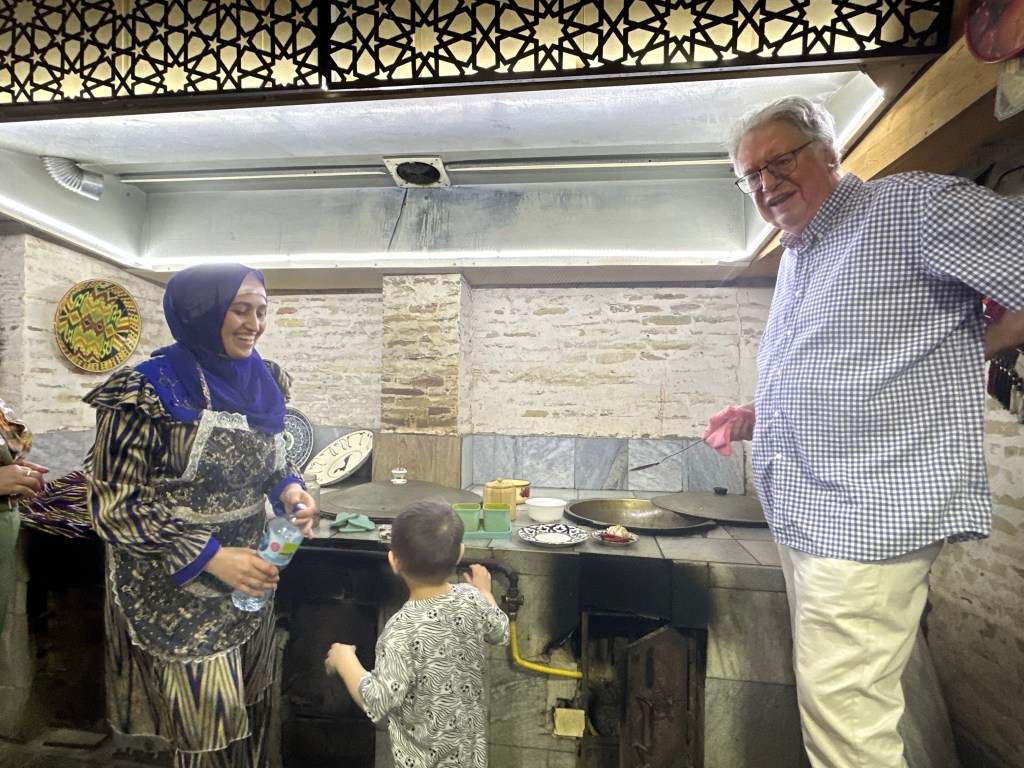
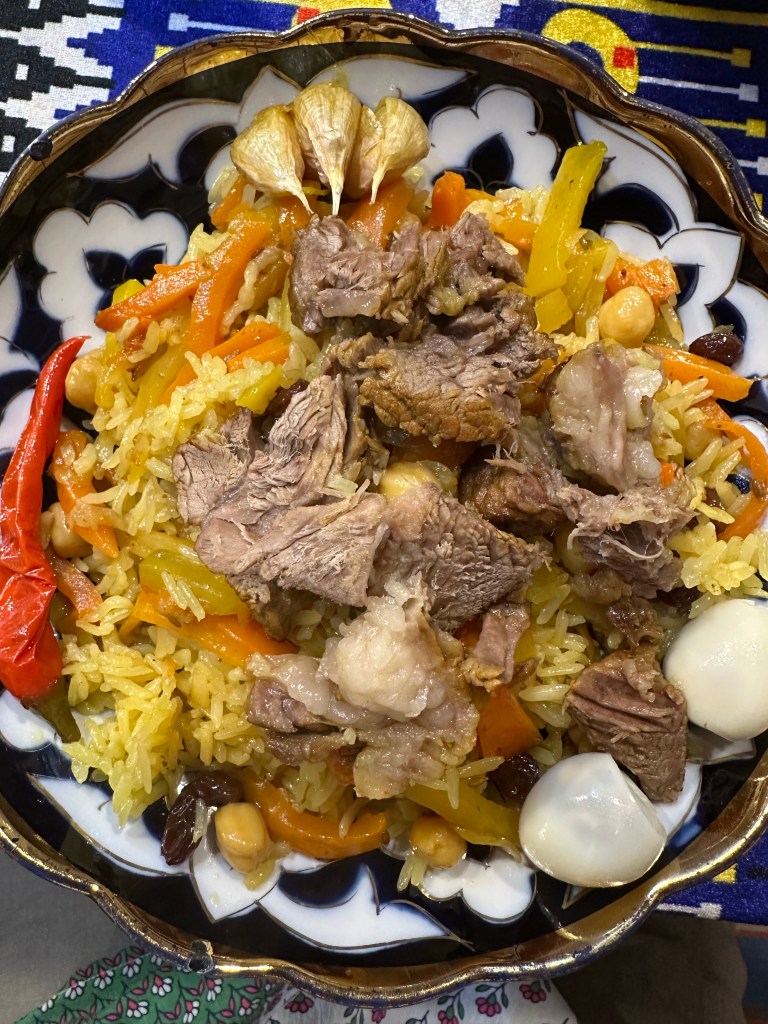
Uzbeks like meat with the national dish being plov. We went to a plov making demonstration in a shop which doubled as a family home with the kitchen in the basement. Plov is a meat, generally lamb or beef, pilaf. Other than meat (which can be quite fatty) the main ingredients are rice, carrots, garlic, a mixture of spices and chilli. Uzbeks eat plov on special occasions and any other time where budgets stretch to it.
Most Uzbeks, being fairly strict Muslims, do not drink alcohol but beer and vodka are readily available for tourists at very reasonable prices as there do not seem to be alcohol taxes. Some restaurants are alcohol free but where alcohol is sold it is illegal to sell it for cash; it has to be paid for by card. The same applies to cigarettes (although we saw very little smoking), due a recent law designed to combat illegal sales and tax evasion.
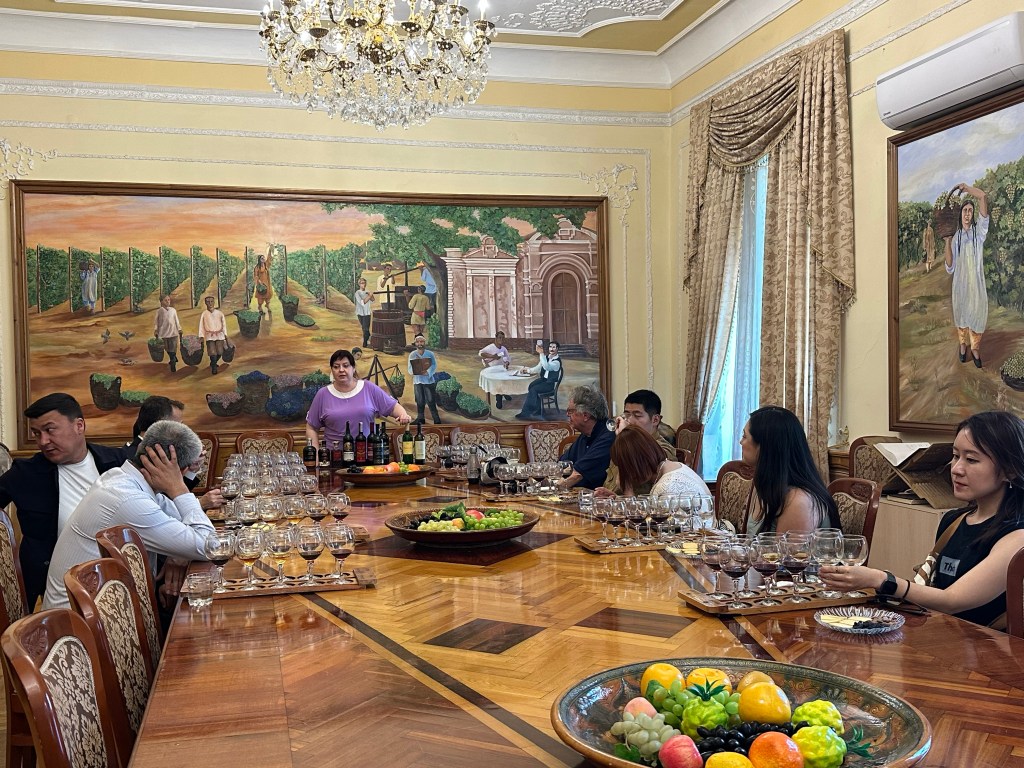
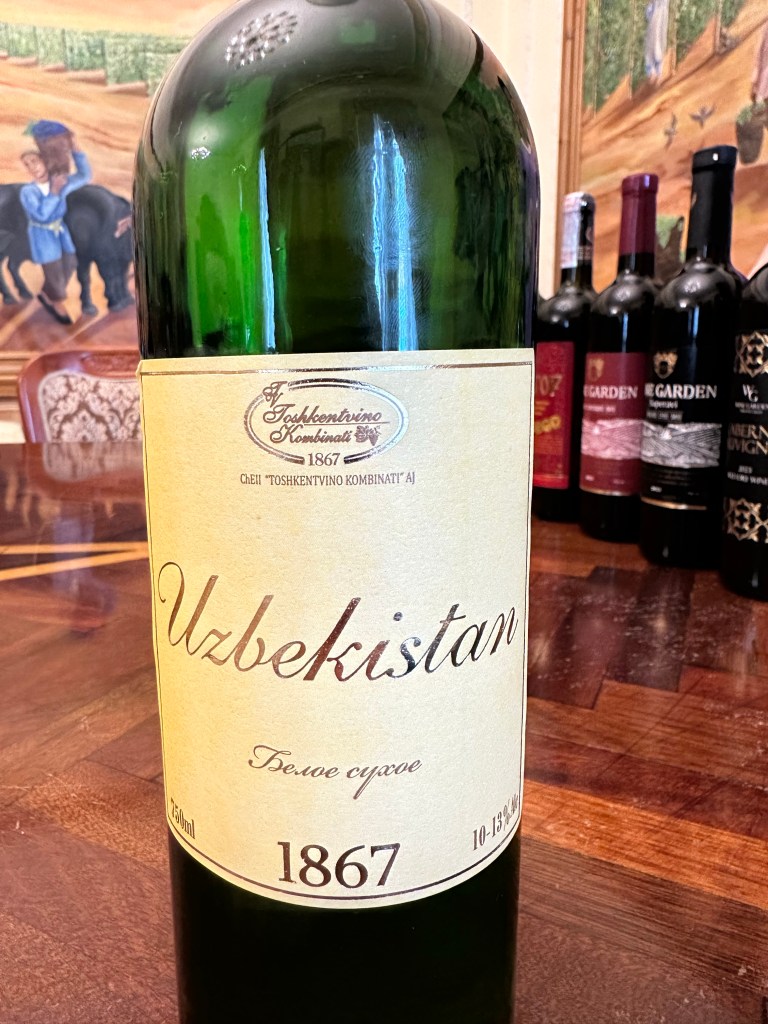
Since the 1960s Uzbekistan has been producing wine. The grape varieties are a mix of local, Georgian and French. We went to a wine and spirits tasting but left more than we drank. On our trip we stuck to local beer which was palatable.
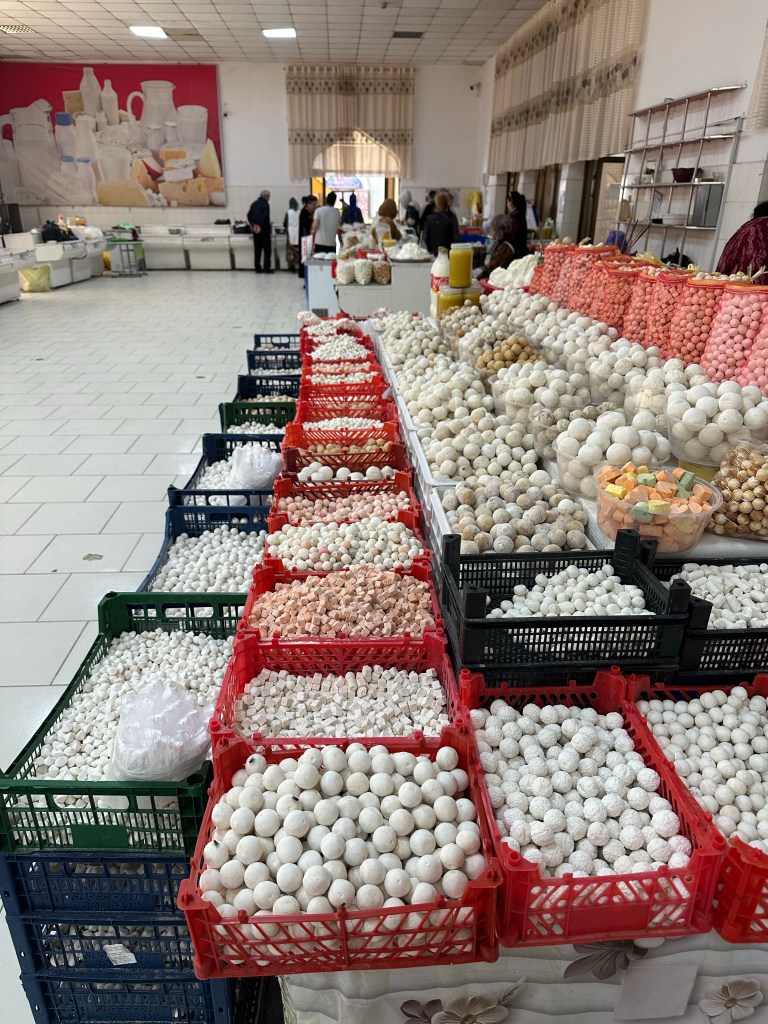
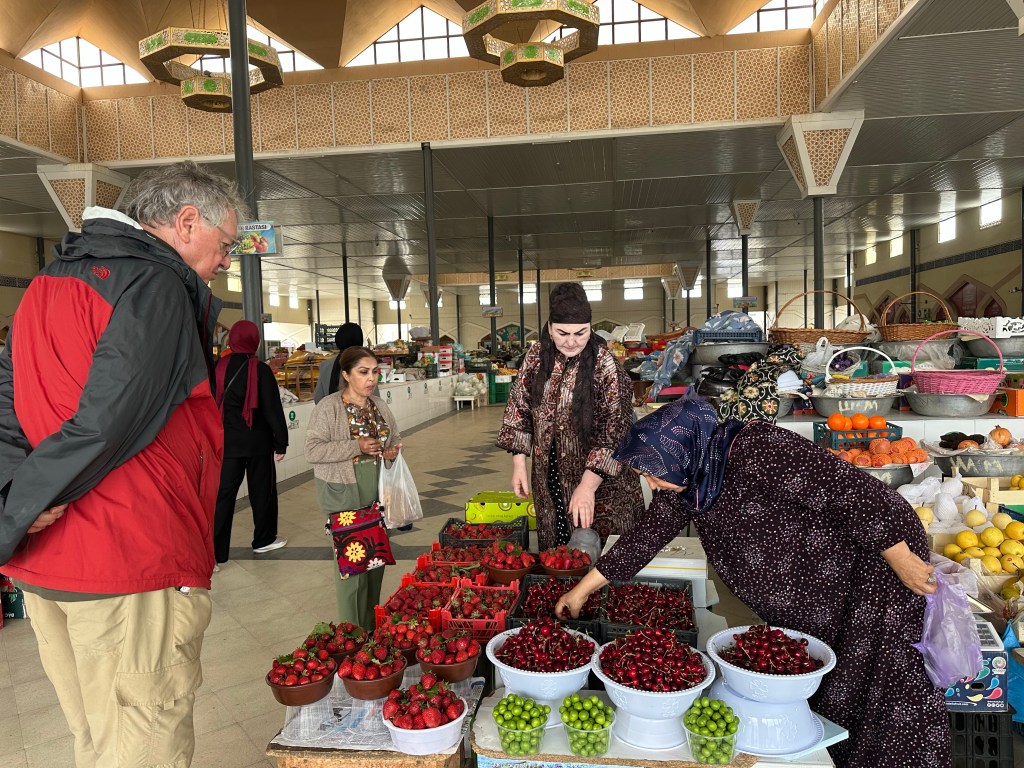
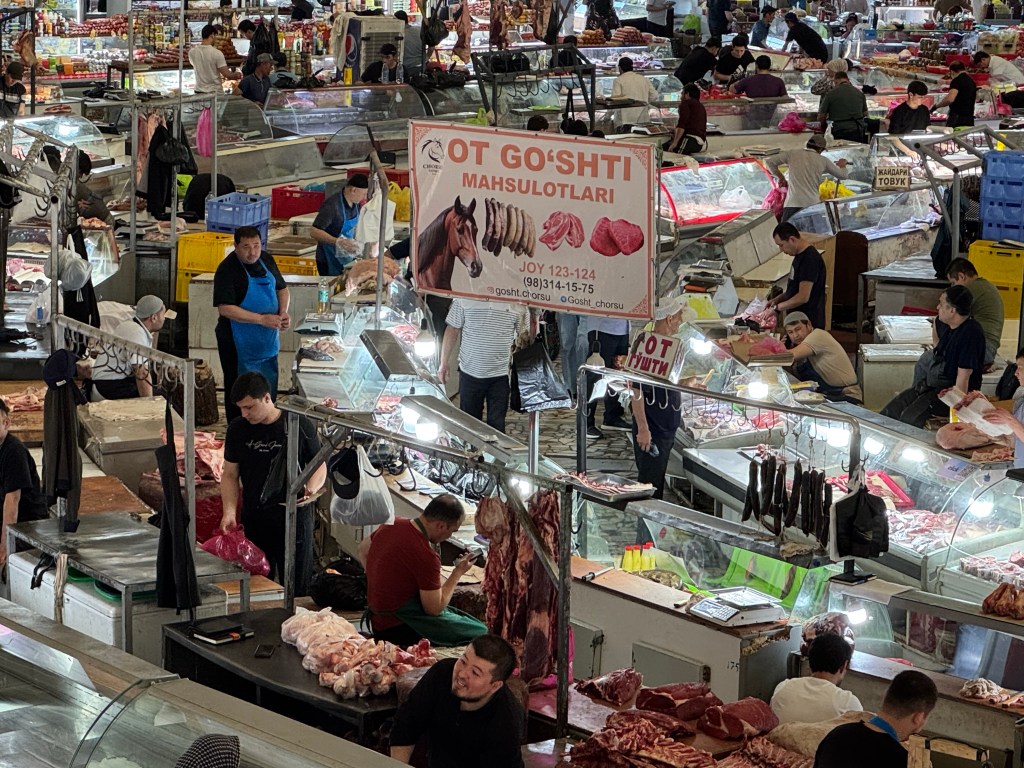
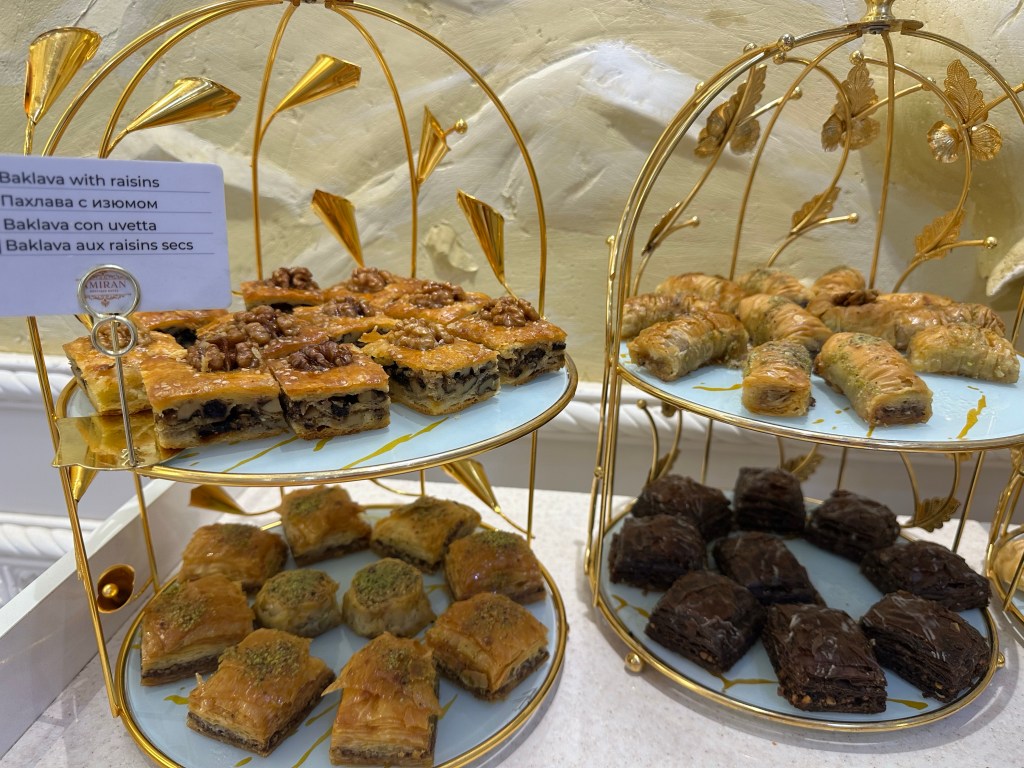
All cities have central food markets in Soviet style buildings. The fruit and vegetables are good quality, much of it grown in greenhouses. We bought strawberries and cherries which had just come into season. We also bought almond oil which is rich in vitamin E, to help clear up our colds, a recommendation of our guide whose parents were both doctors. As well as beef, lamb and chicken, horse meat is very popular as are all things sweet. We didn’t (knowingly) eat horse meat but we did discover that the yoghurt drink we are familiar with from Turkey (ayran) is sometimes made with horse milk. We were advised to avoid the “cheese balls” as the farmer producers are not always diligent with handwashing.
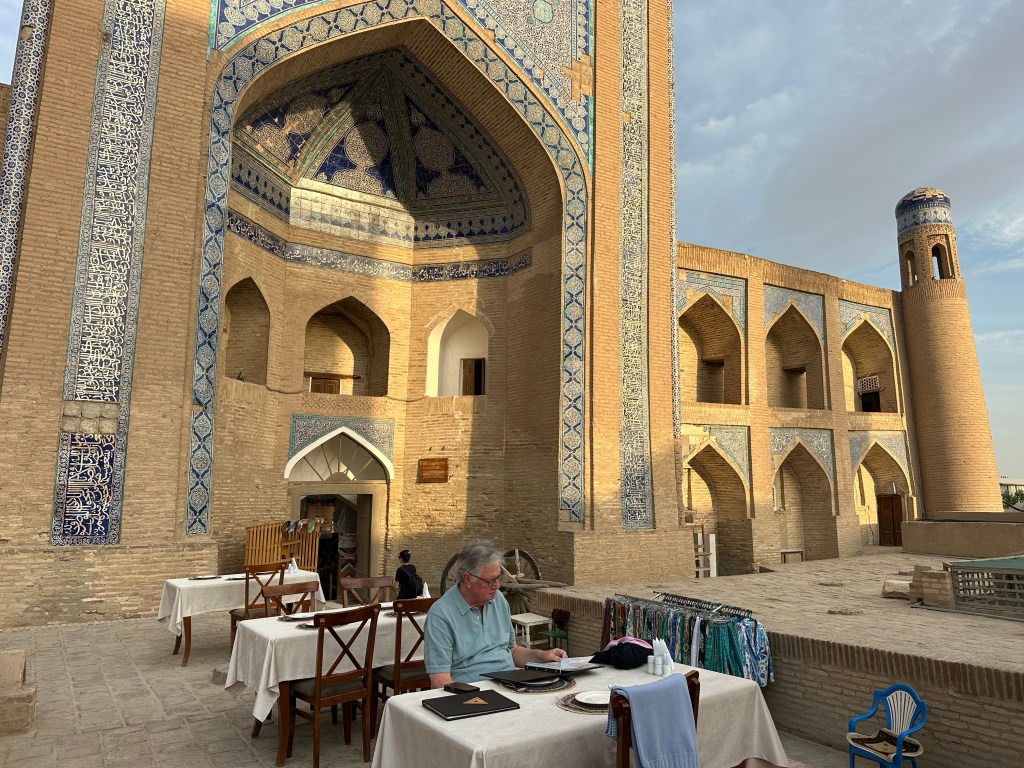
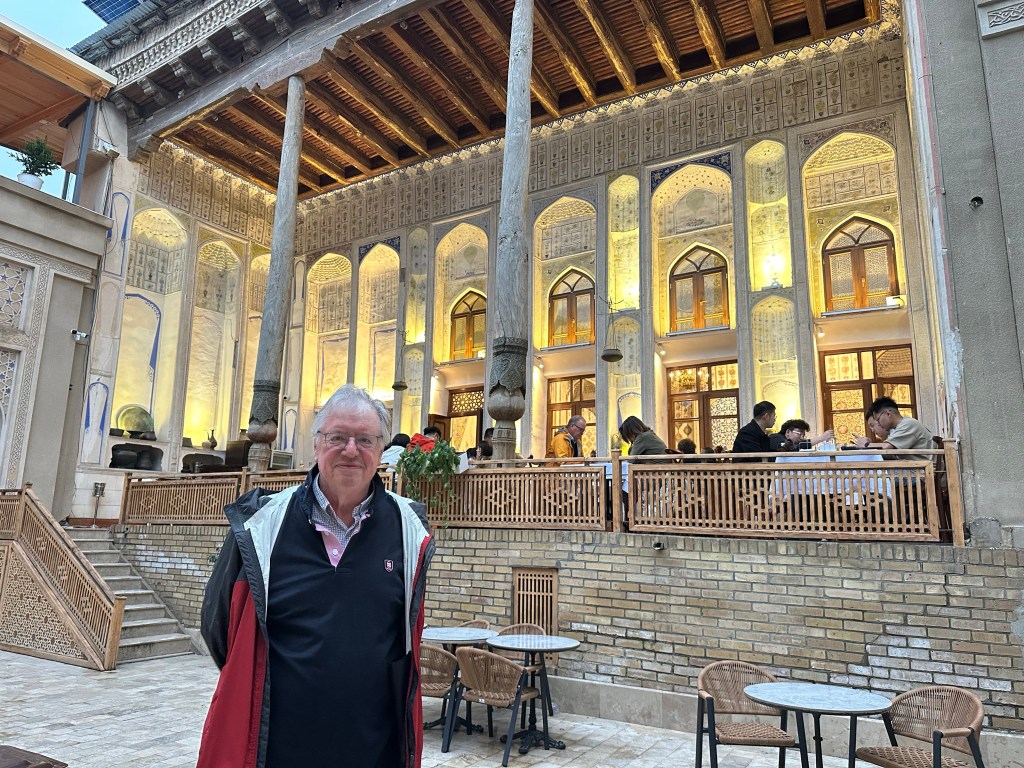
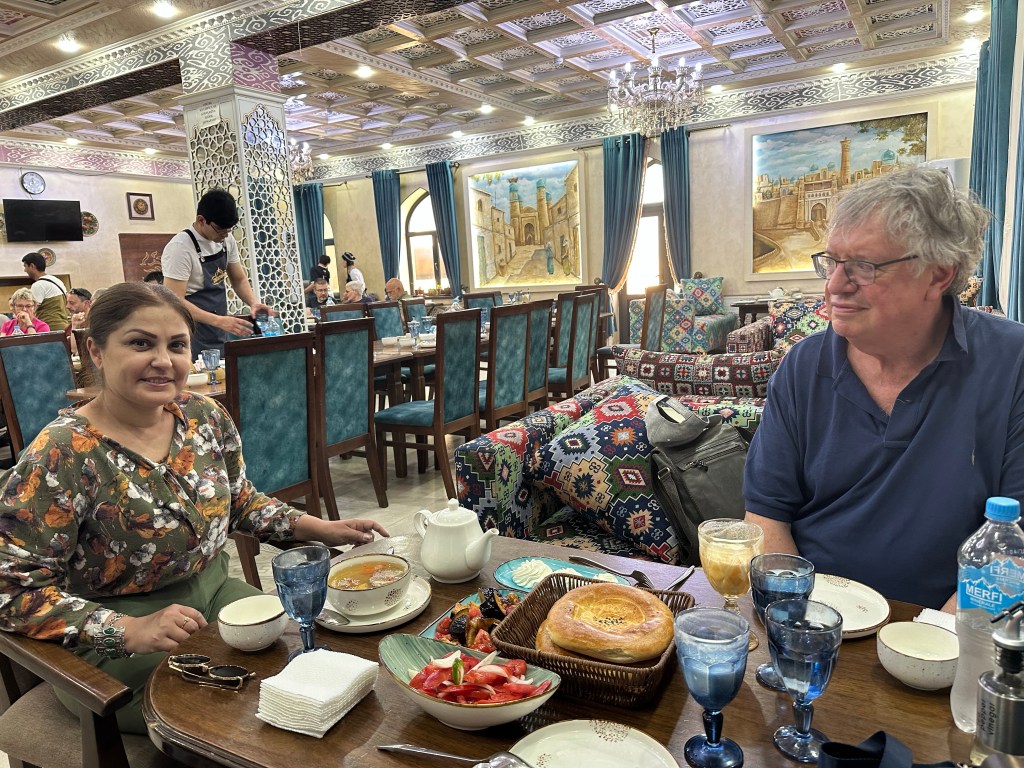
Some of the restaurants we ate in were in fantastic surroundings- this one is outside a madrasa in KhivaDinner at a former palace in Bukhara Making plov in Bukhara The finished result!Wine tasting in Samarkand. The setting felt like an international negotiation- Russian guests on one side of the very large boardroom style table, English speakers on the other sideThis white wine was made from “various local grapes” with an alcohol content of “10-13%”At the market in Bukhara there was there was a large hall devoted to honey and milk products, mostly cheese ballsBuying cherries and strawberries Meat section of Tashkent market Baklava for breakfast at our hotel in Bukhara?!
We travelled in Uzbekistan by one internal Uzbekistan Airlines flight, two trains and by road. Our route took us close to the four other former CIS neighbouring countries (a good geography lesson!).
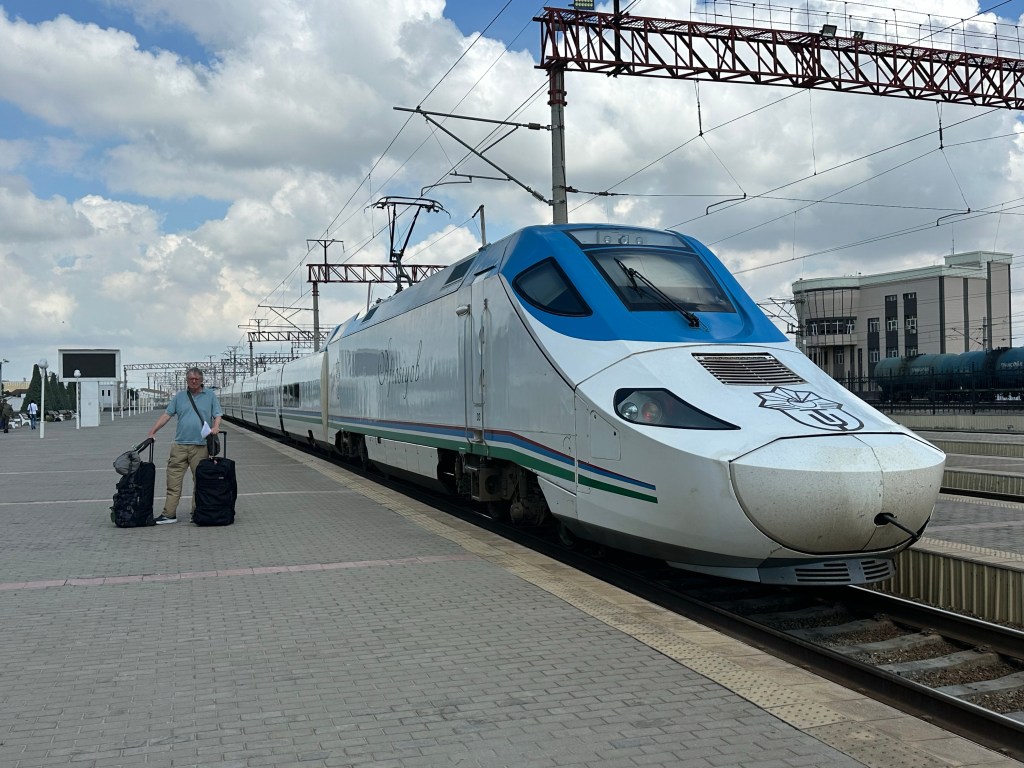
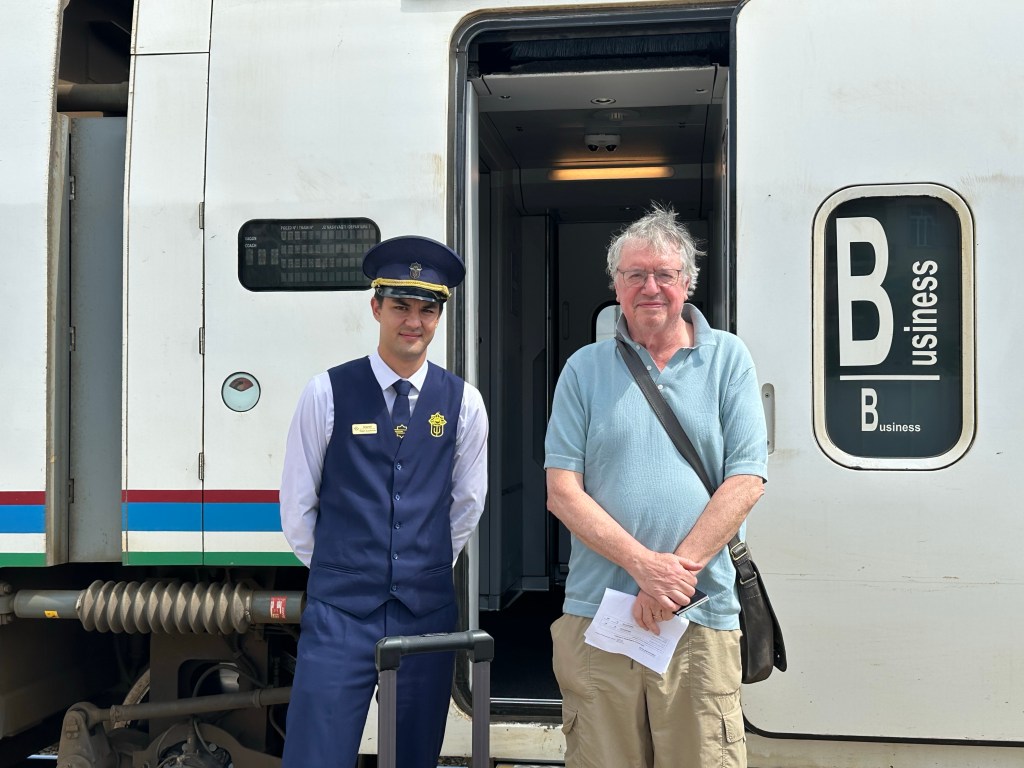
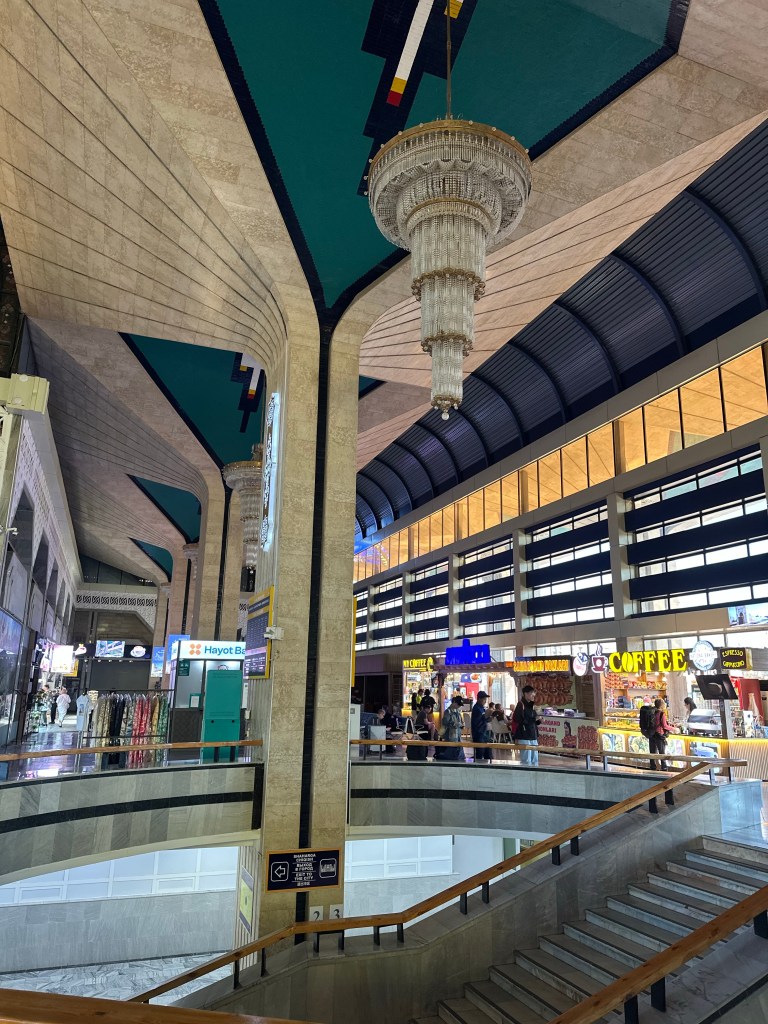
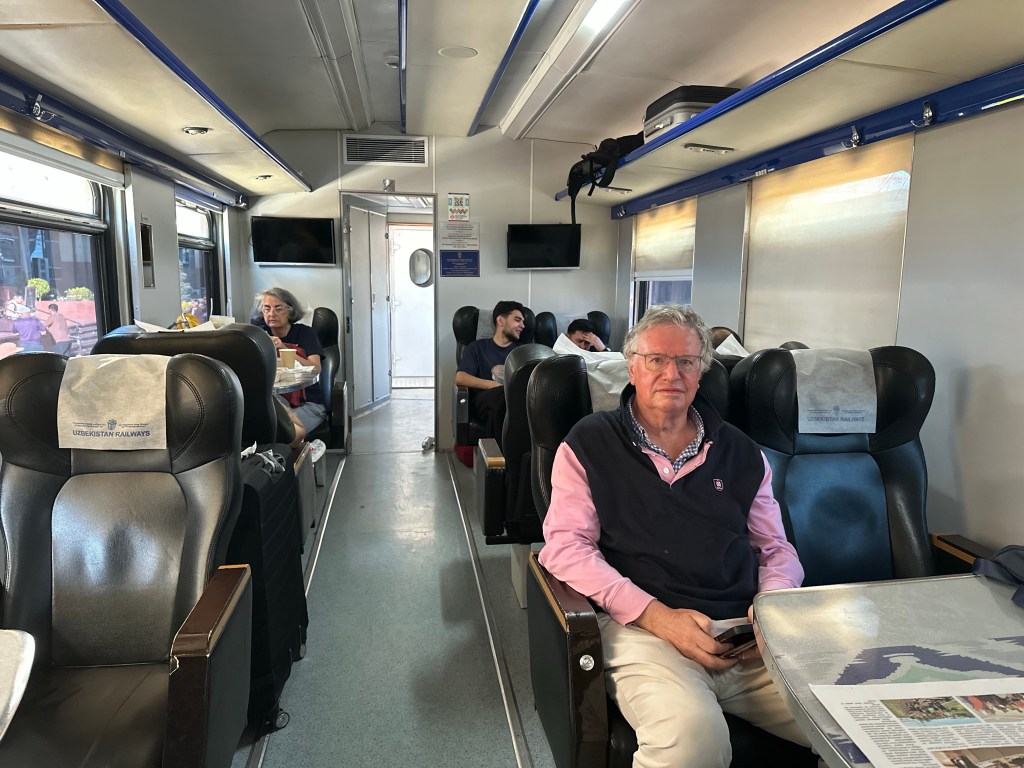
Trains and planes had the feel of Soviet years both in terms of the transport and the level of security checks. The stations also date from Soviet times while airports are very modern, but with rather chaotic boarding arrangements. The trains have numerous staff including a conductor for every carriage. Aside from checking your passport and ticket, the conductor helps with luggage, a welcome novelty.
Some of the roads were modern but others provided “Asian massages” which made complaints about potholes in the UK seem frivolous. We also experienced a 30 minute wait at a rail crossing only to discover that trains and vehicles shared a single track across a bridge over a river – this was on the country’s main route from west to east near the the intersection with the road into close by Turkmenistan and a major freight route. On reflection 30 minutes was a good result.
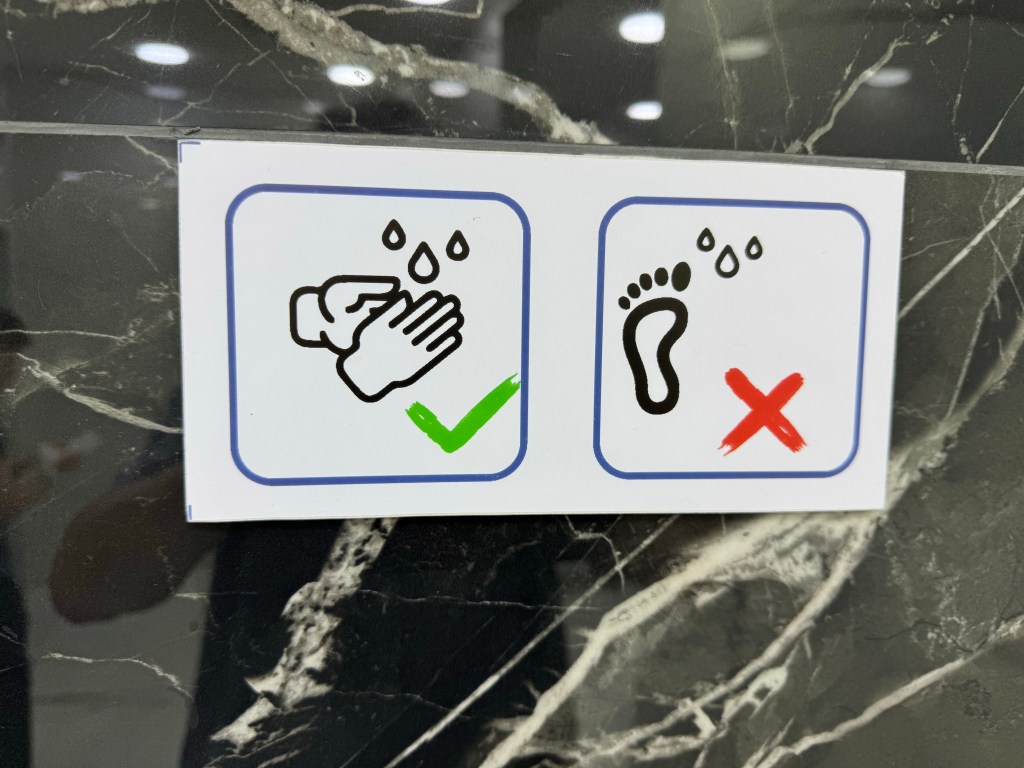
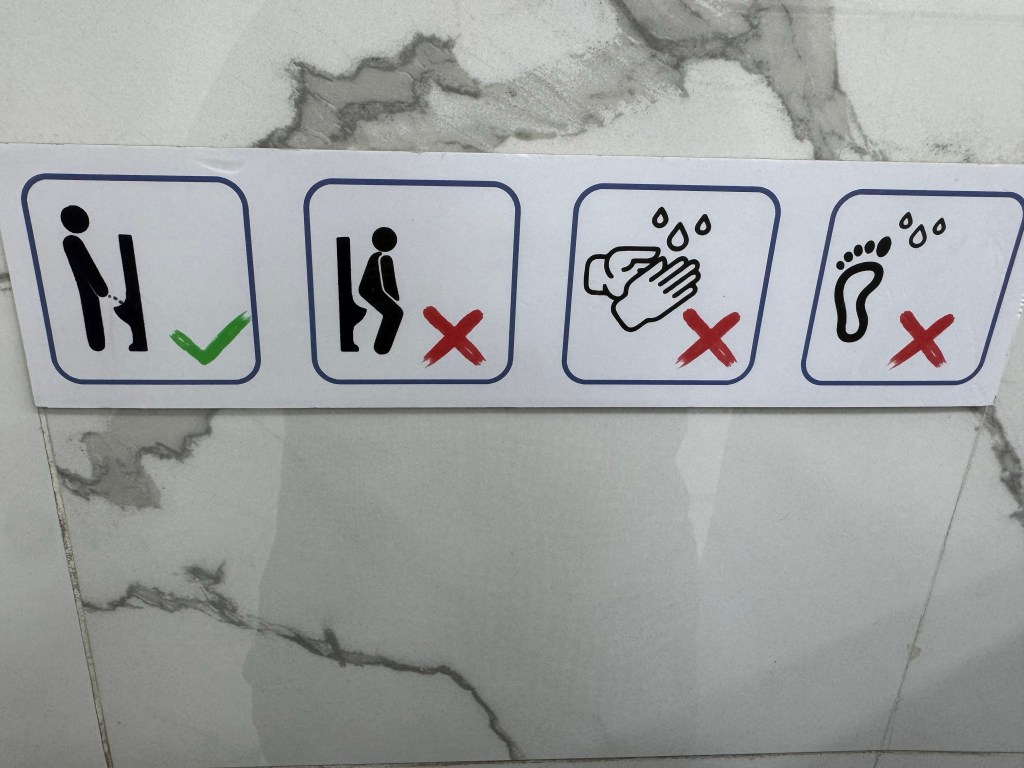
Food at roadside restaurants and cafes was generally good (better than most UK equivalents and a fraction of the price), unlike the toilets. All public toilets require payment of between 12p and 30p, but that does not guarantee cleanliness. However having to pay after eating at the adjacent restaurant at a roadside stop and then having to hold your nose to use the only sink while Uzbeks wash their feet in was a new experience, especially as many people were not sufficiently tall or agile to do so without great difficulty. At another stop the cubicle walls were around shoulder height. Carrying your own toilet paper is an expected part of such travel; where it existed it was Soviet rations style (a greyish crepe paper !).
The Uzbek language is officially written in Latin script but until recently it was written in Russian Cyrillic script and prior to that Arabic. As a result many words, particularly names of people and places have evolved to have multiple Latin scripts spellings. We soon discovered that our knowledge of a bit of Turkish was helpful as around 60% of Uzbek is the same or similar. For instance all the numbers are the same as well as many food items. The Uzbeks were surprised and it soon became a topic of conversation, together with football and British music. Uzbekistan have become the first Central Asian country to qualify for the World Cup and their star player plays for Manchester City.
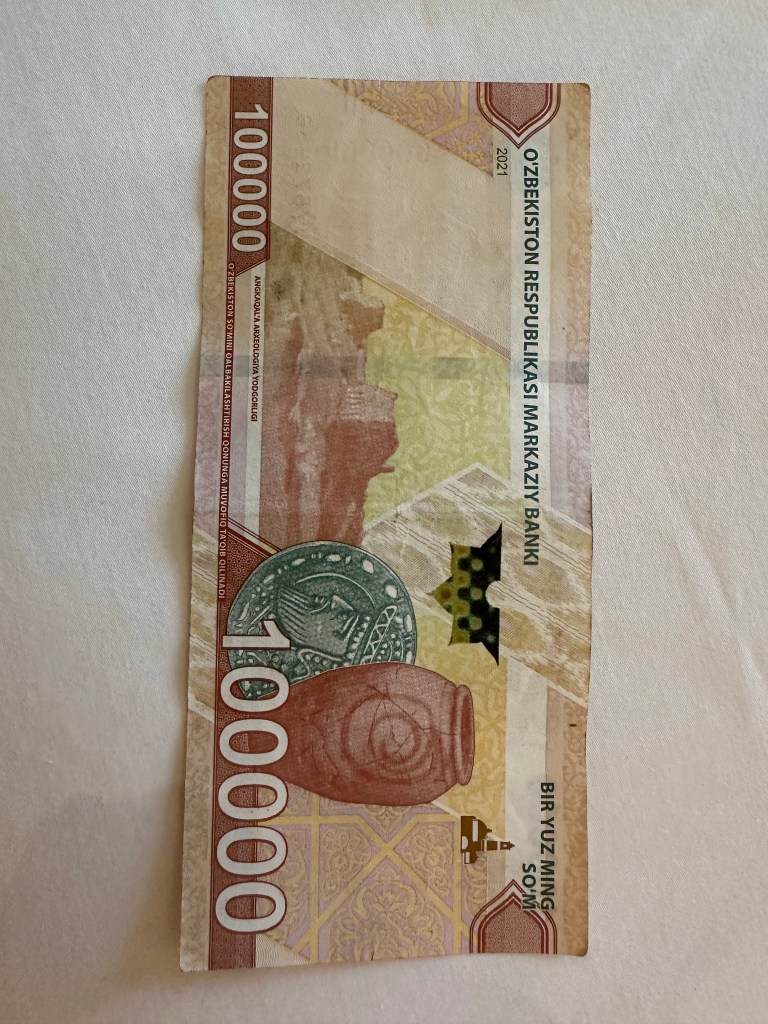
Uzbekistan is a very inexpensive country for Western tourists with the average monthly salary being approximately 500 US dollars. They have suffered from inflation and the currency, the som, is approximately 16,000 to the pound. Lunch for three, including our guide, with service was typically 300,000 som, less than £20. Even with a couple of beers, dinner was not that much more.
We came across relatively few British travellers. Tourists, aside from domestic, most commonly came from other Stan countries, Russia, China, Italy, France and Germany.
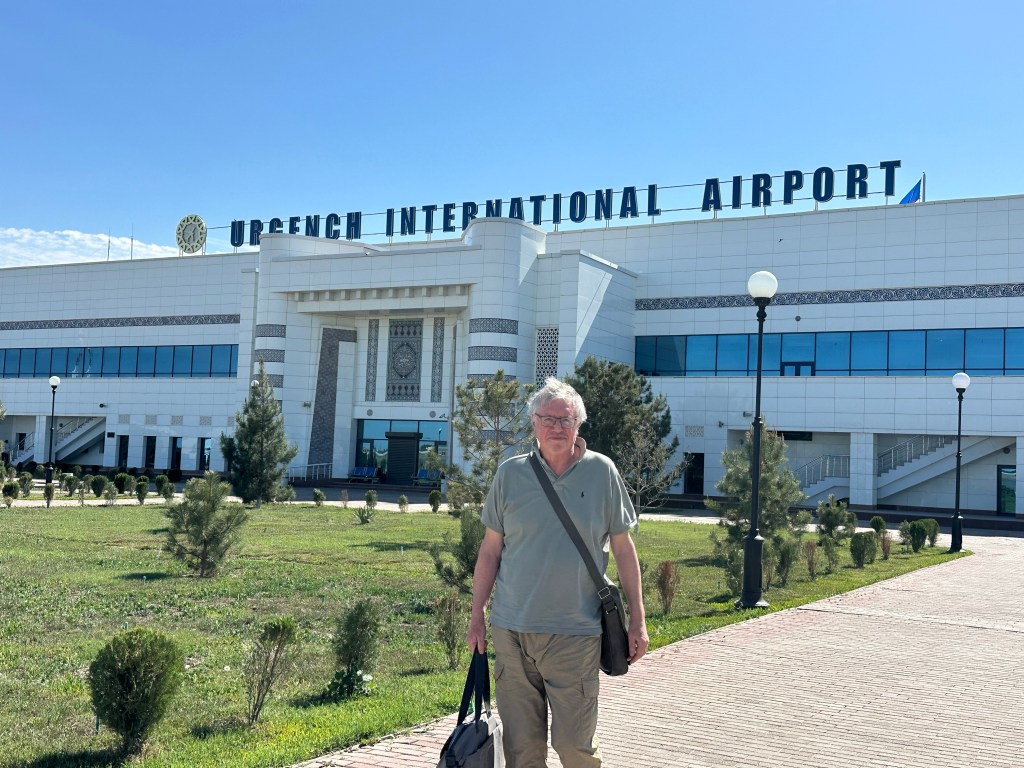
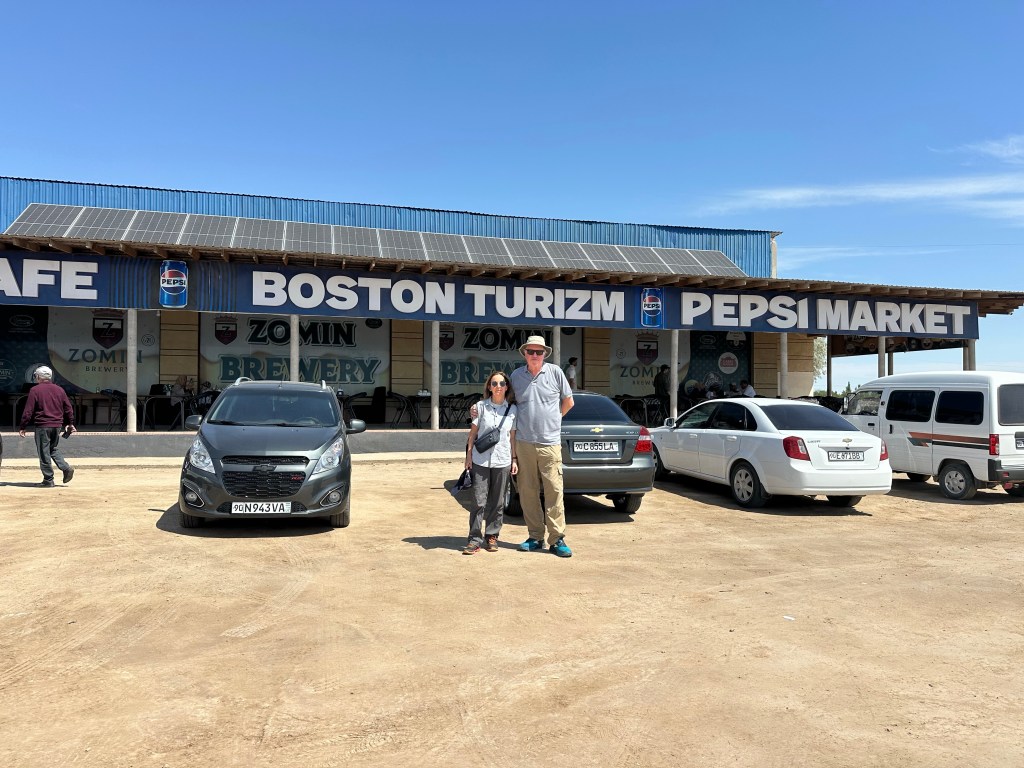
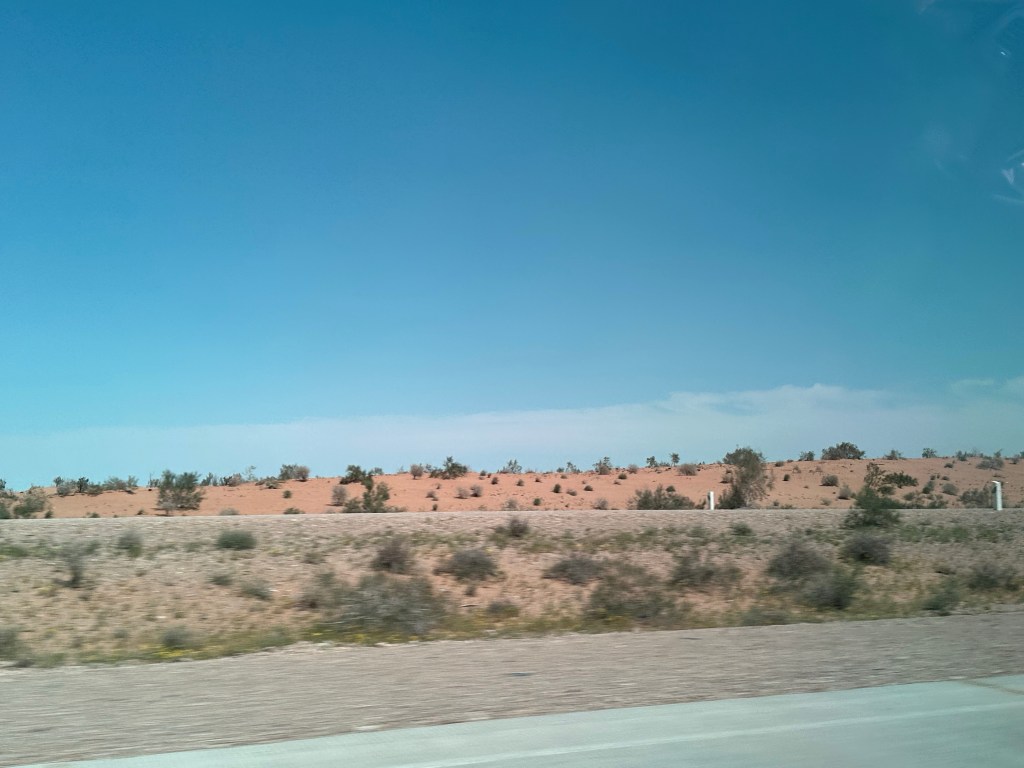
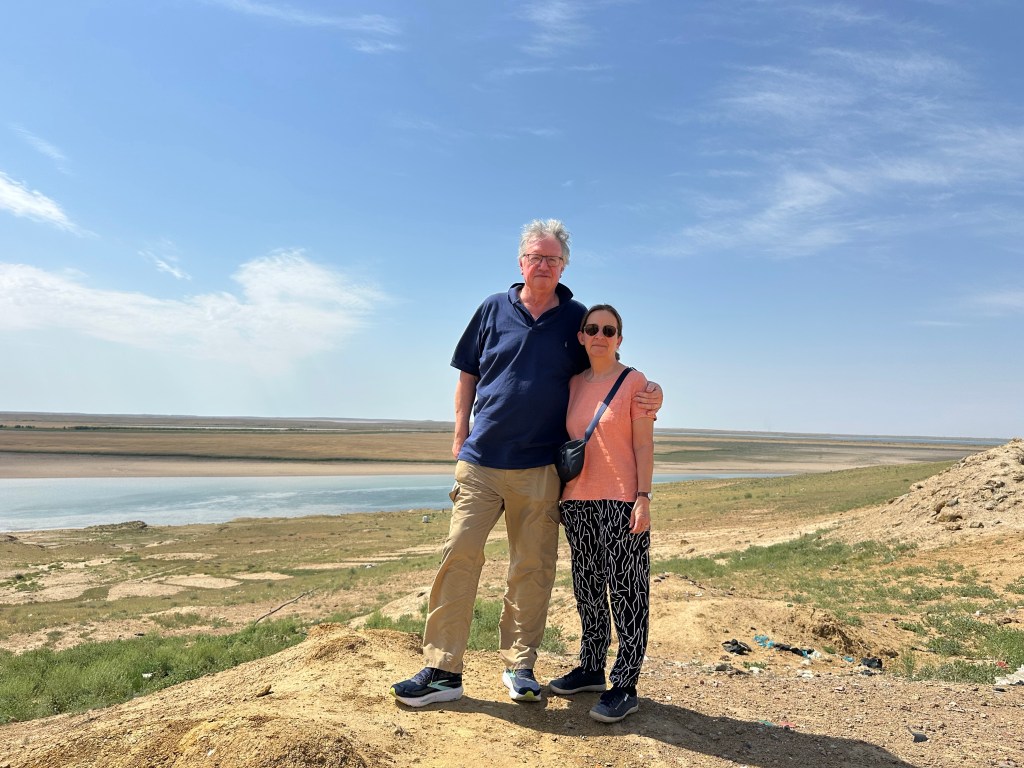
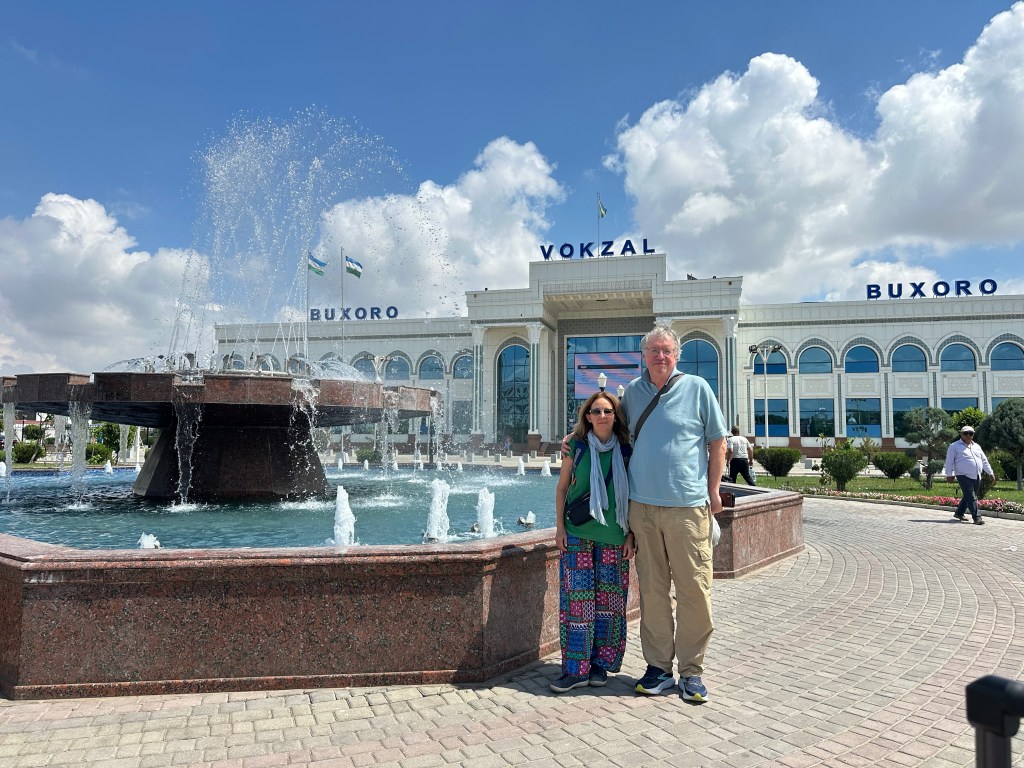
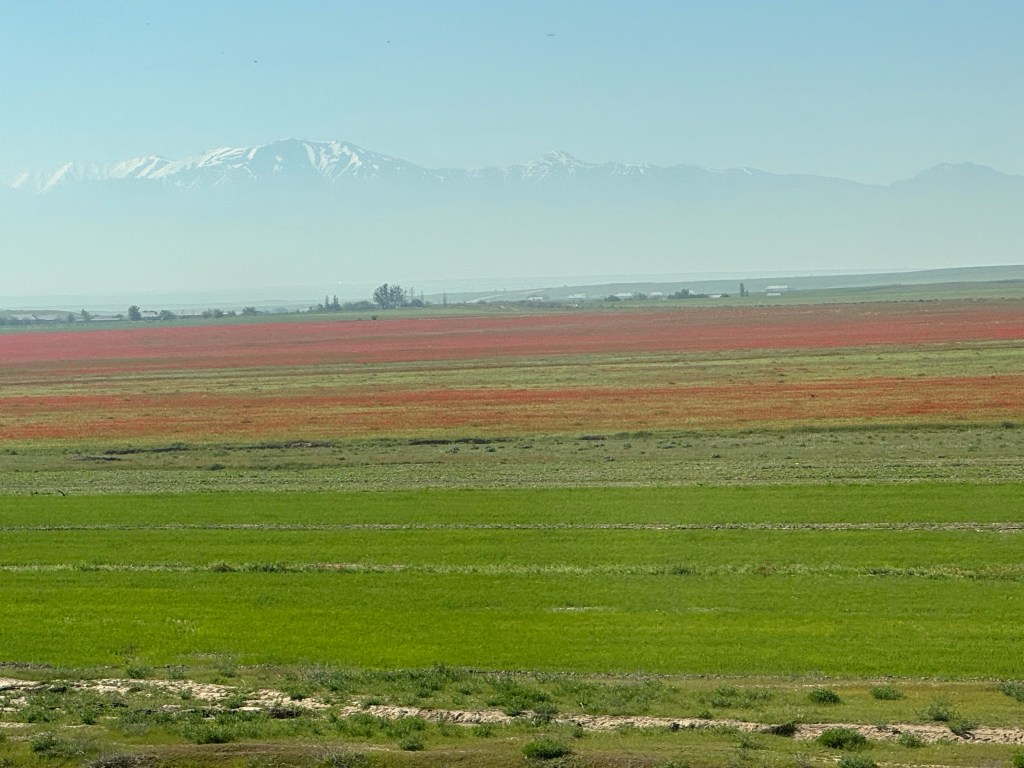
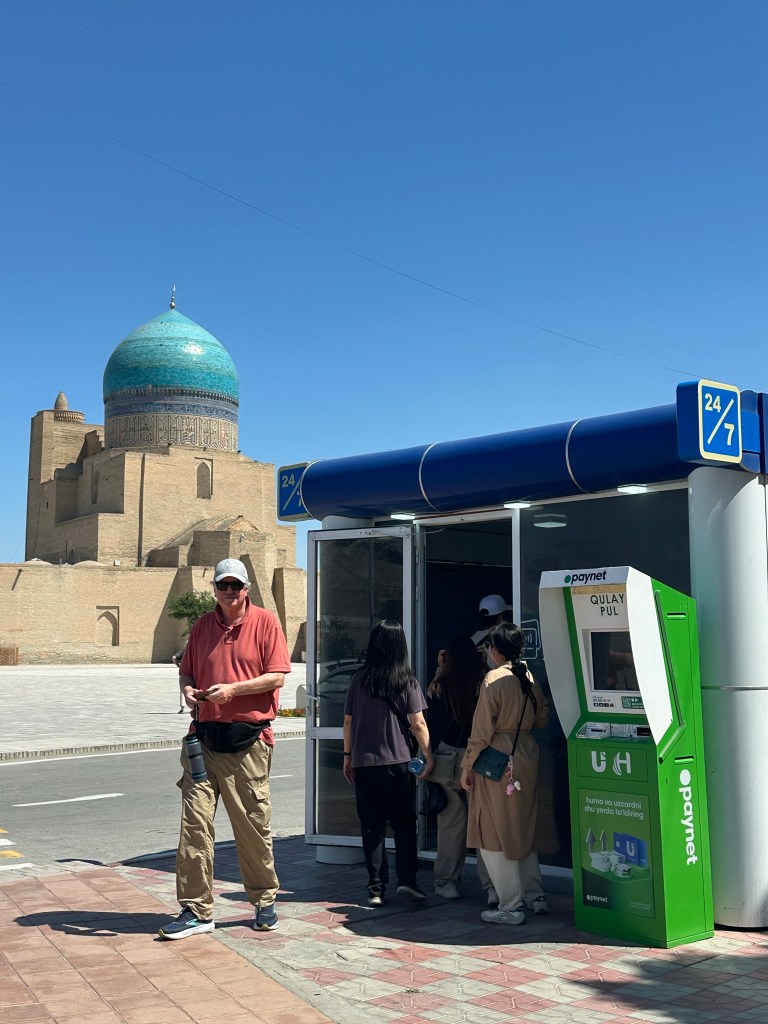
We flew on a domestic flight to Urgench in the west to reach KhivaOur lunch stop in Boston when we visited the desert fortsDrive from Khiva to Bukhara was about six hours, mostly desertKhiva to Bukhara – the river behind is the border with Turkmenistan Roadside services between Khiva and Bukhara with our guide, NodiraWe soon understood why these signs are commonplace in airports and stationsBukhara train station Train from Bukhara to Samarkand, above and below Samarkand railway station Train from Samarkand to Tashkent Samarkand to Tashkent- four hours but varied landscape About £6Because the currency is so devalued and many places only take cash, there are ATMs everywhere
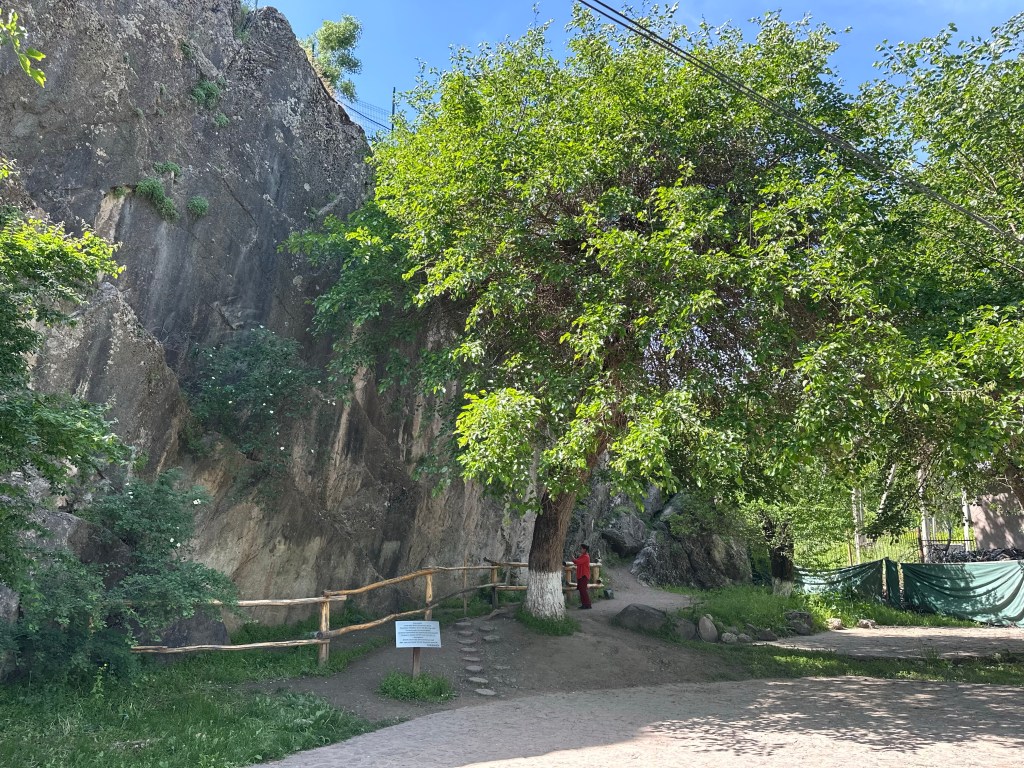
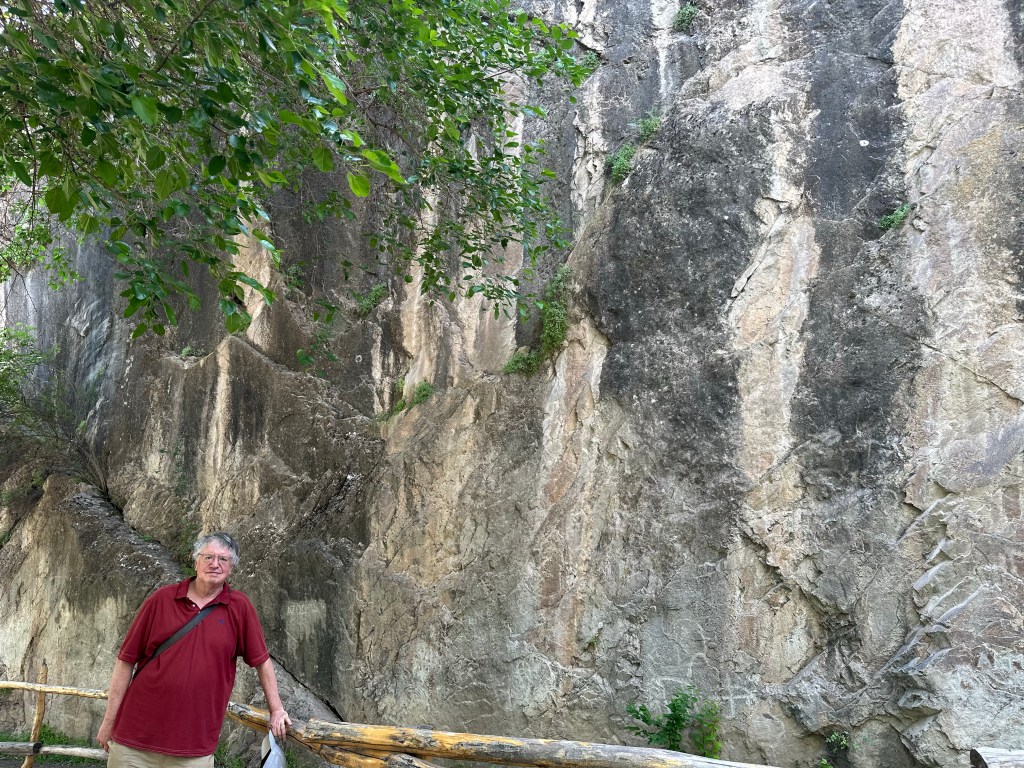
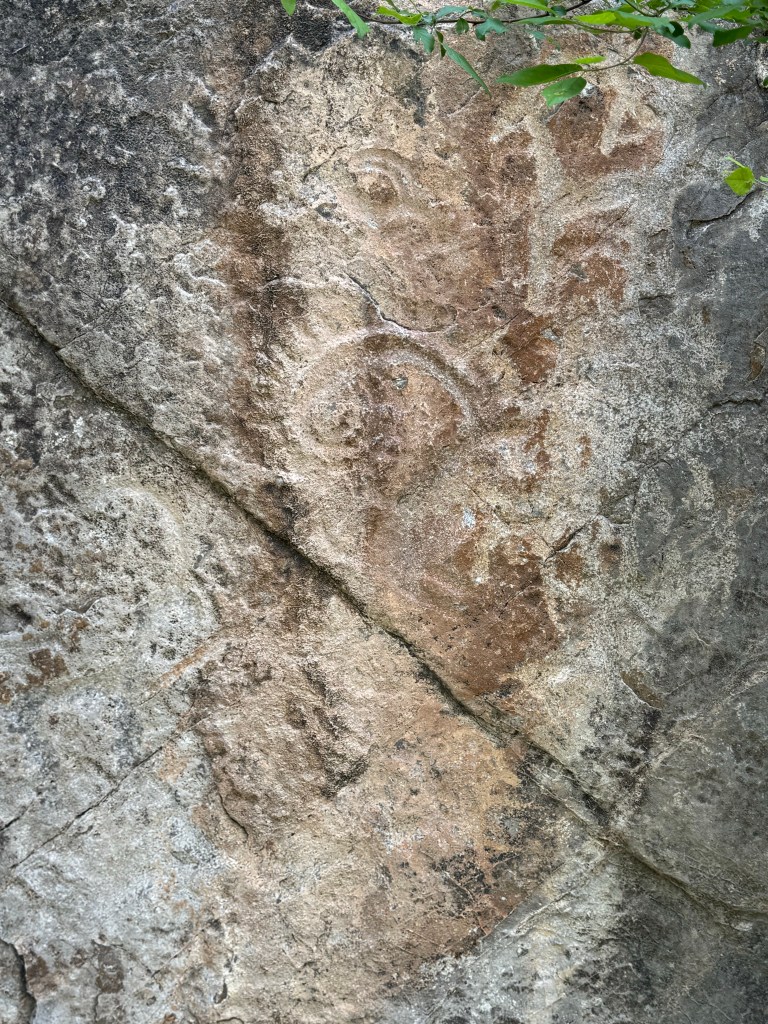
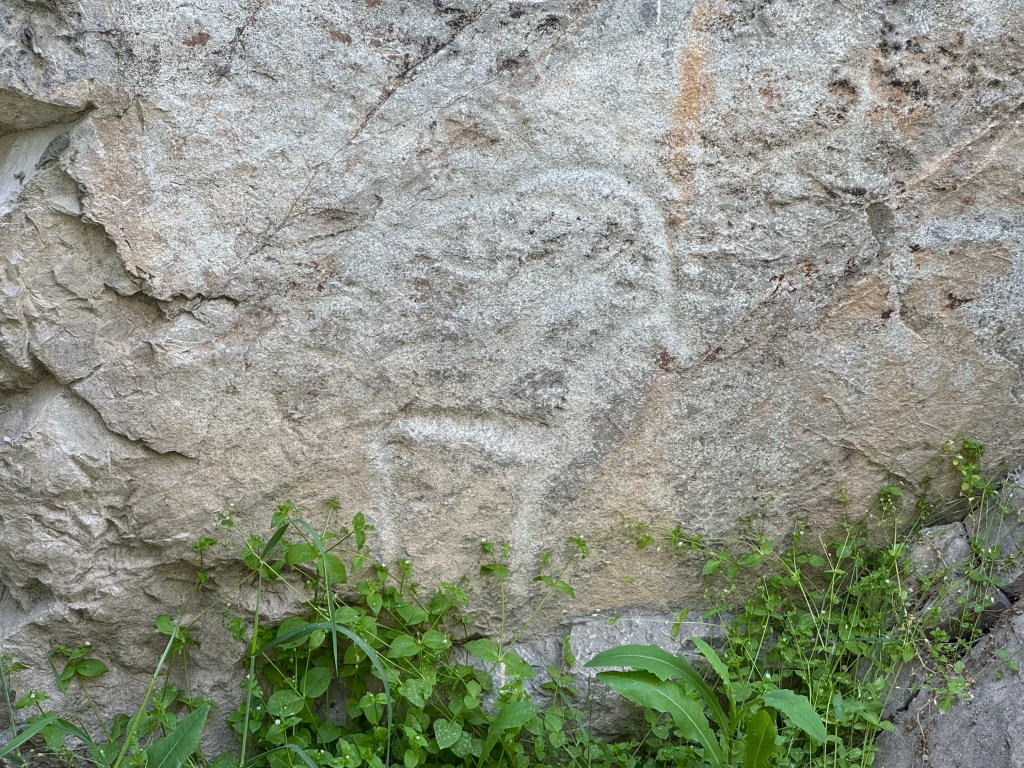
On our return journey to Tashkent our mountain guide took us on a diversion to see the petroglyphs at Hodjikent. The rocks are accessed through the garden of a restaurant with a crystal clear stream which is being used to farm carp.
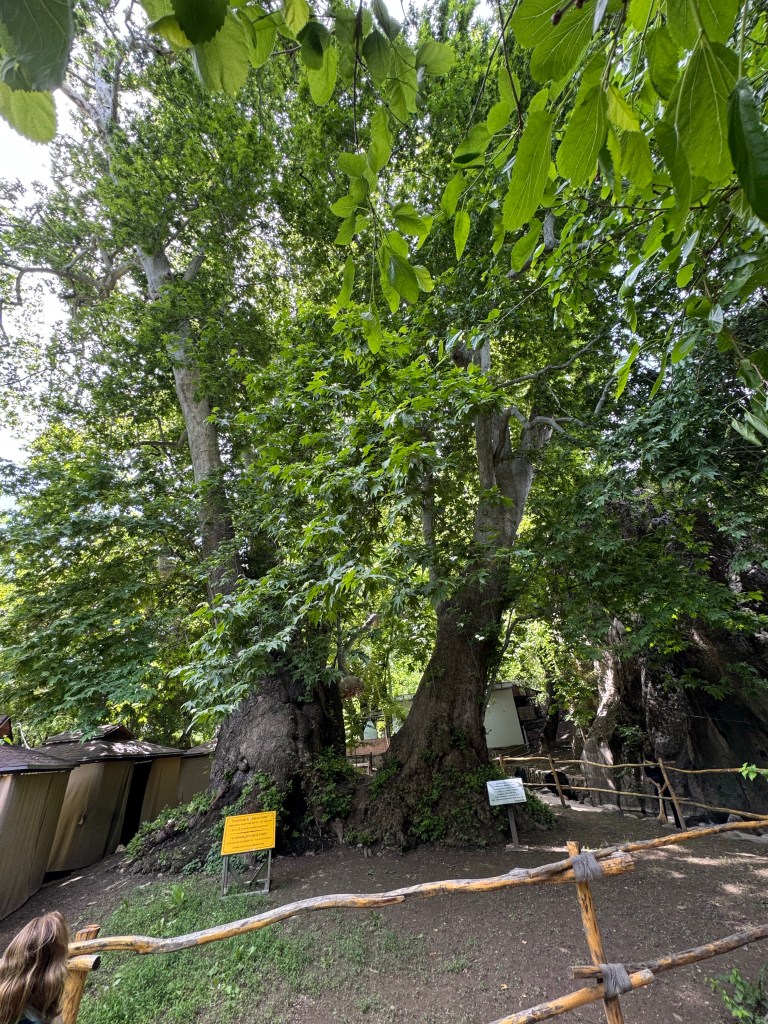
The rock art is believed to be around 10,000 years old. Limited archaeological activity has sought to find other signs of life but unsuccessfully. However, locally it is believed that for almost 1,000 years up to the beginning of the 16th century, the same location was a staging post on the Great Silk Road where goods were transferred from horses arriving over the mountains to the east, to camels for onward travel across the steppes and desert. The evidence is ancient mulberry trees and Asian sycamore trees in the restaurant’s garden which are not indigenous and are up to 800 years old.
The guide spent his childhood in this area and became an adept climber as a teenager practising on the rocks.
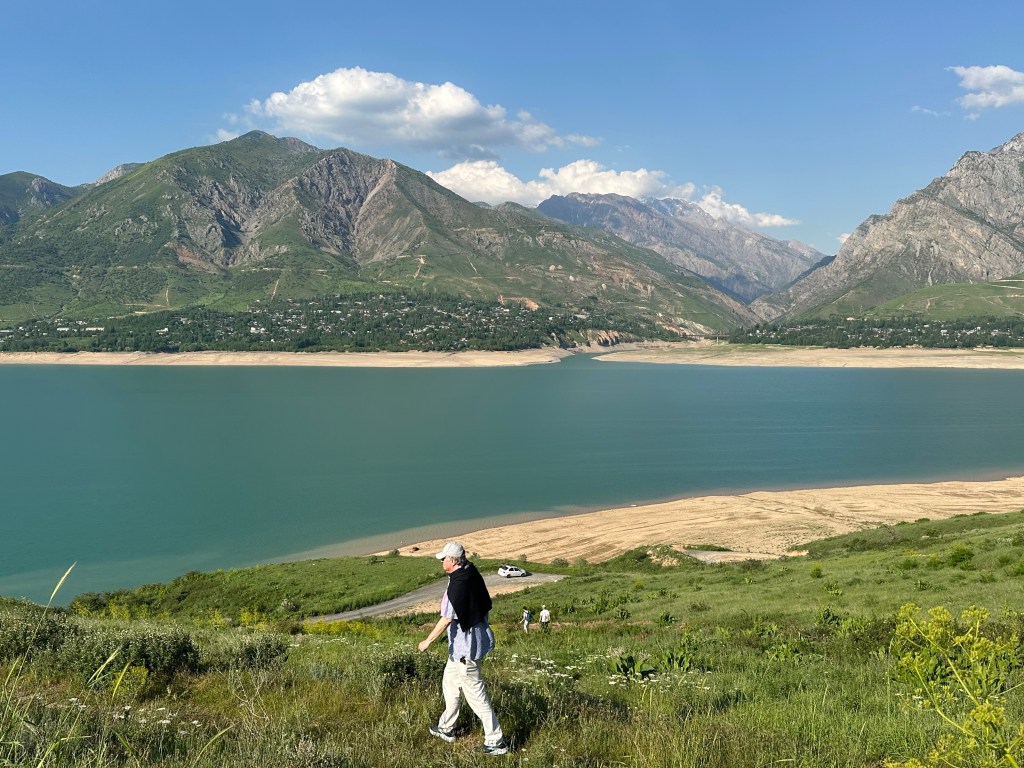
Approximately 60km north east of Tashkent is Lake Charvak; a manmade reservoir created by the damming of four rivers between 1964 and 1970 when Uzbekistan was part of the USSR. The purpose was to enhance the country’s agricultural output through irrigation and generate hydroelectric power.
The lake sits at the western edge of the Tien-Chan mountain range which stretches 2,900 km to China. The area within Uzbekistan is becoming an alpine resort for wealthy people from Tashkent and foreign tourists, mostly Russian. It is less than two hours drive from Taskent and offers cooler weather in the summer and skiing in the winter.
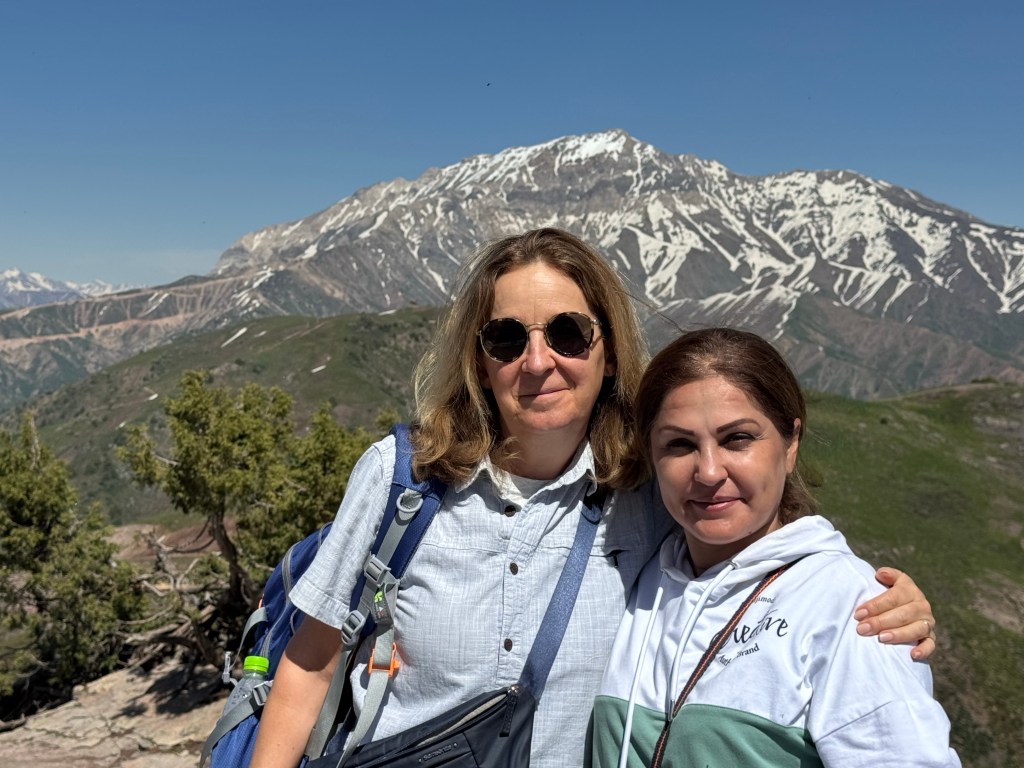
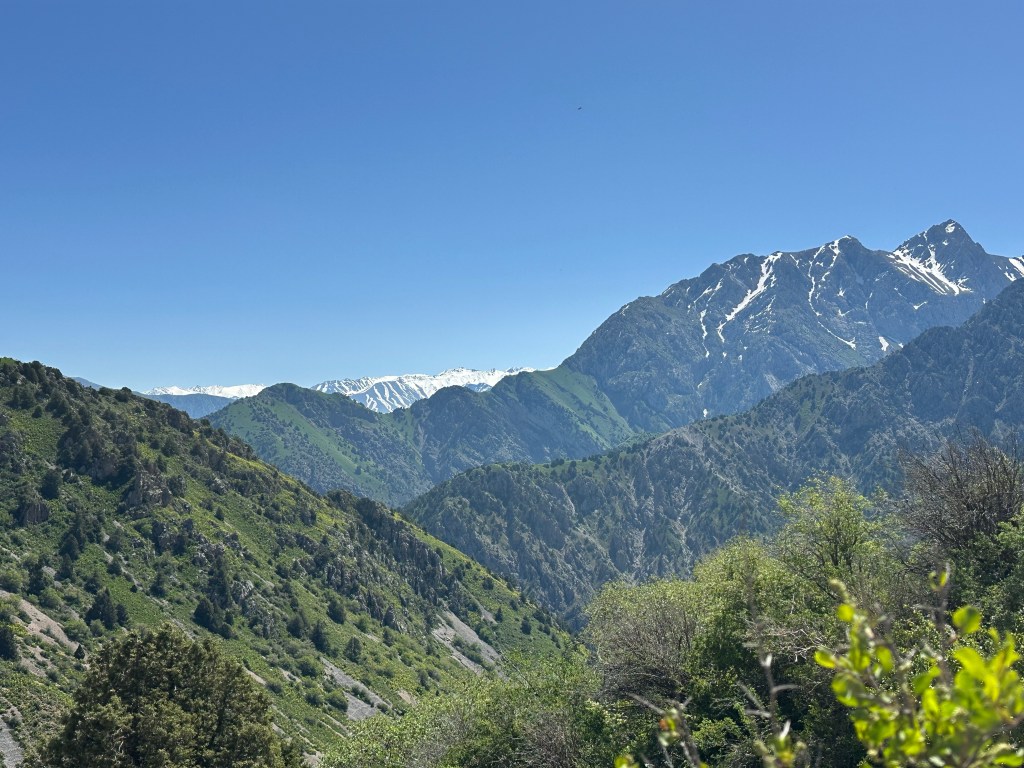
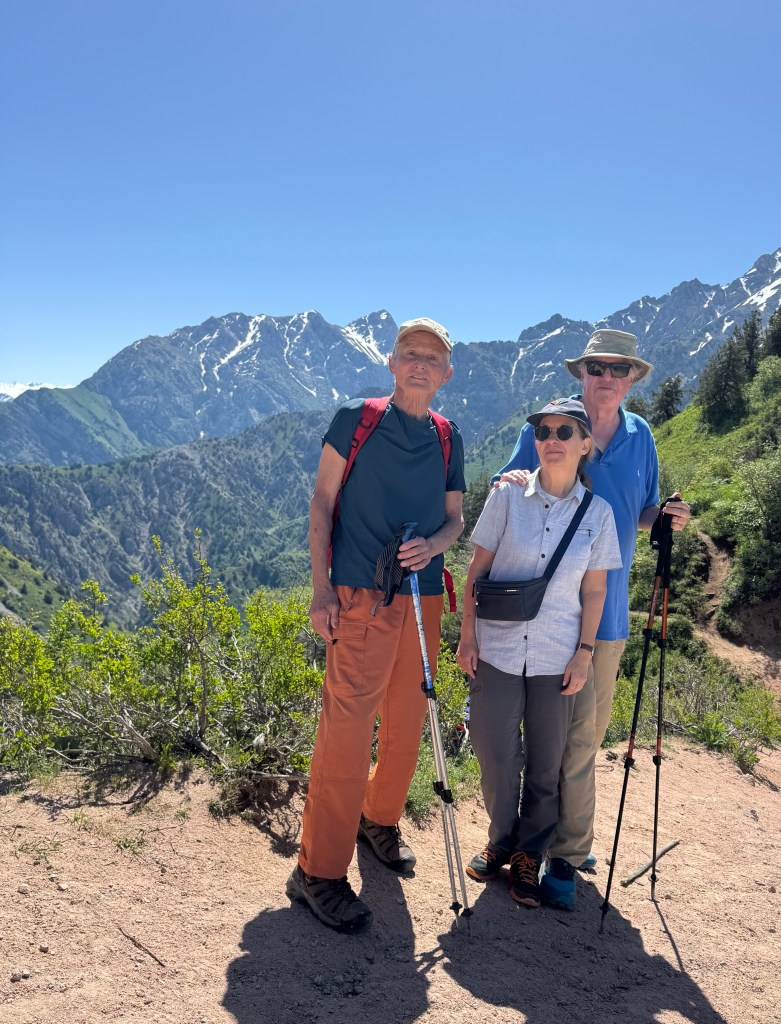
Our planned hike was rearranged by our guide as he felt the area has become spoilt with illegal building work within the National Park (the building “system” reminded us of Turkey). The guide, a 72 year old veteran of the Afghan war in 1979 suggested an alternative “easy” hike. Given his background clearly the term was subjective – our hike to Little Chimgan was quite challenging enough! The hike starts at 1,550 metres and the peak is at 2,099 metres. On reaching the saddle at 1,840, despite the guide’s encouragement to continue we felt that the altitude, strength of the sun and steep slopes had given us enough of a workout.
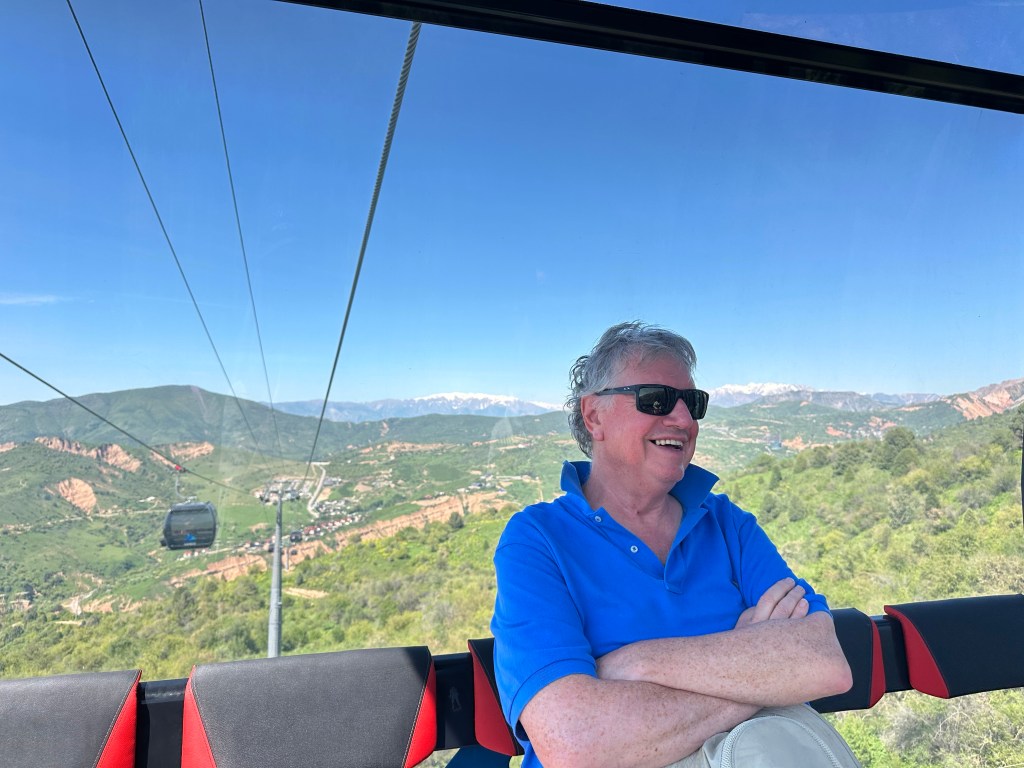
For the rest of the day, we headed to Amirsoy where a cable car took us to a restaurant at 2,290 metres. Although the peak was busy we were the only customers in the restaurant due to its strange pricing, including a 200,000 Som cover charge per table, which puts locals off. Even including this charge the total for three people was less than £40 but this is very expensive for Uzbekistan.
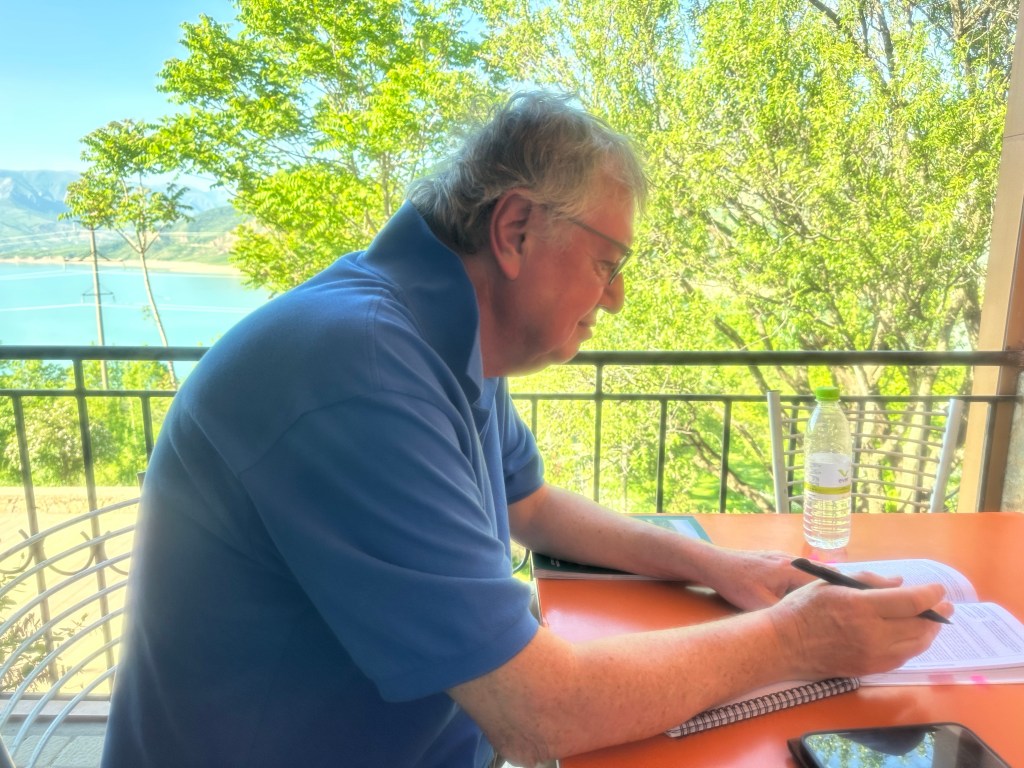
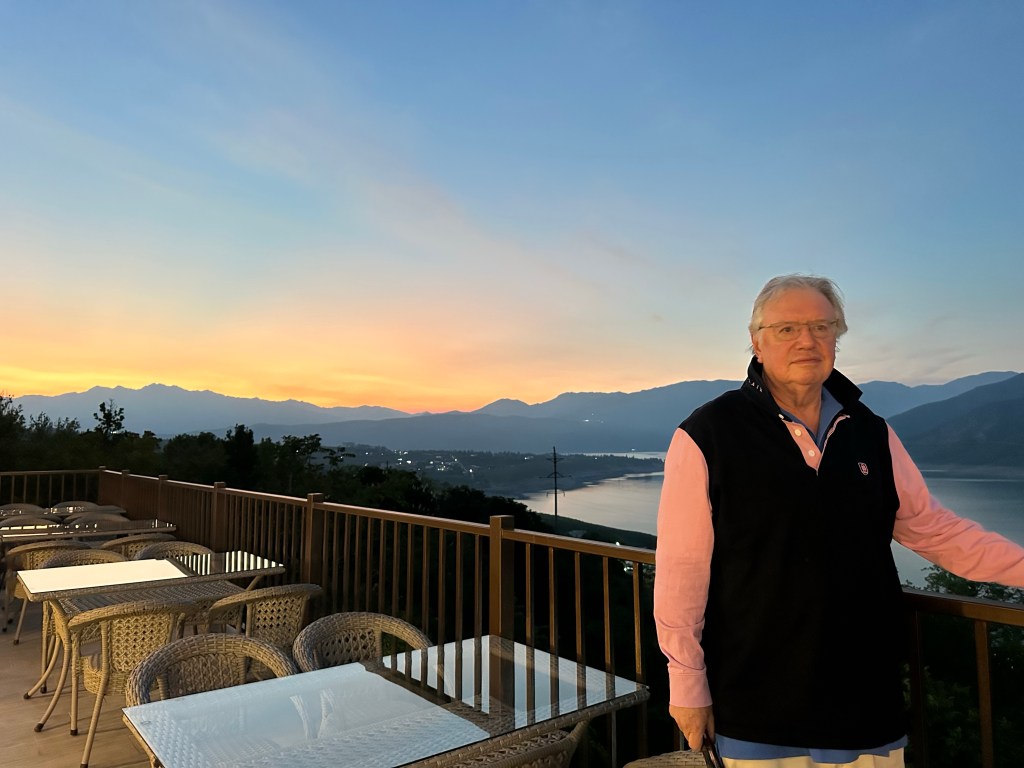
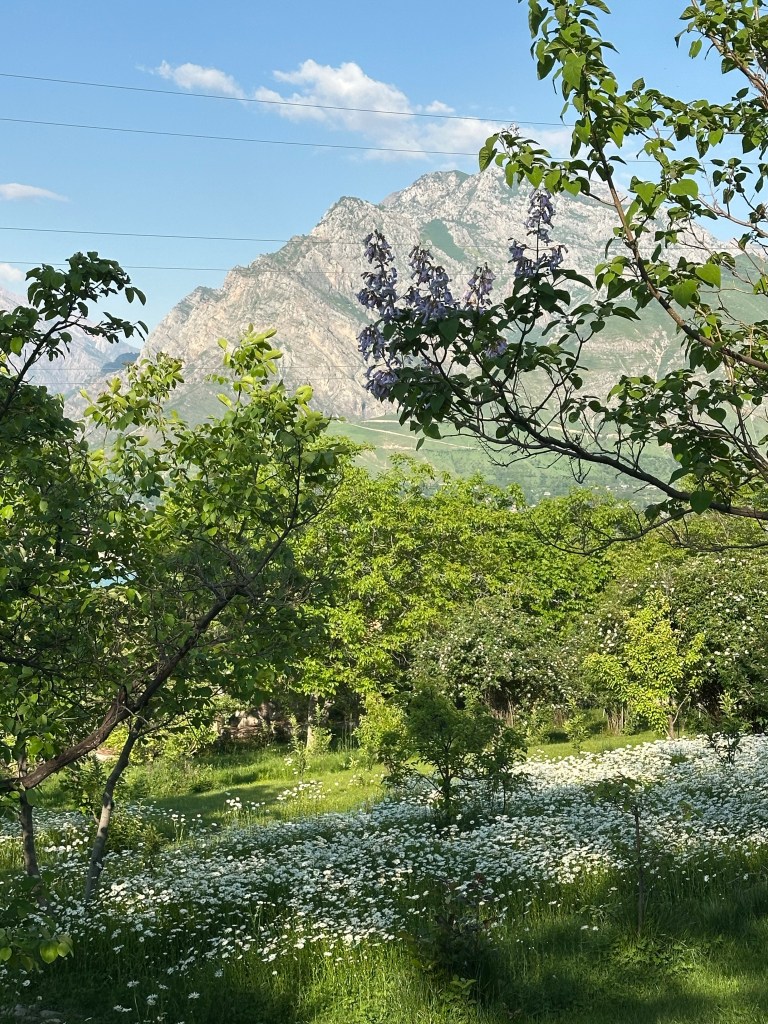
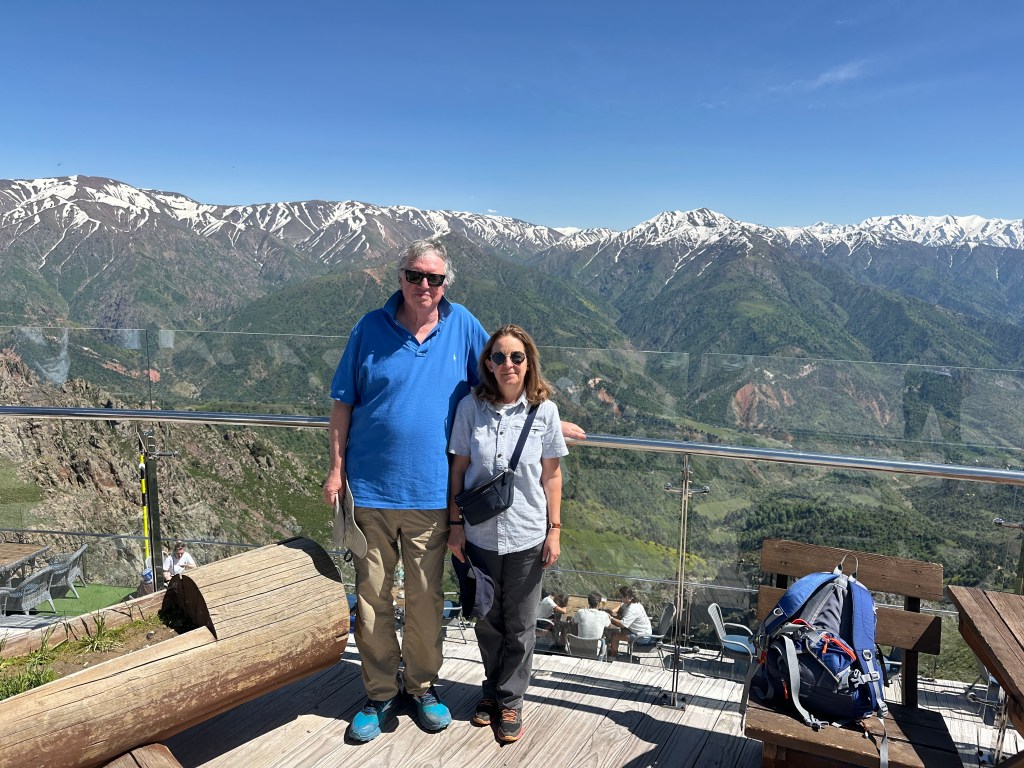
Lake Charvak, by our hotelTerrace of our hotelGarden of our hotel – our guide camped there, telling us that he didn’t like the indoors much !View from our hikeWith our guideEnjoying a relaxing cable car ride!By the top cable car station
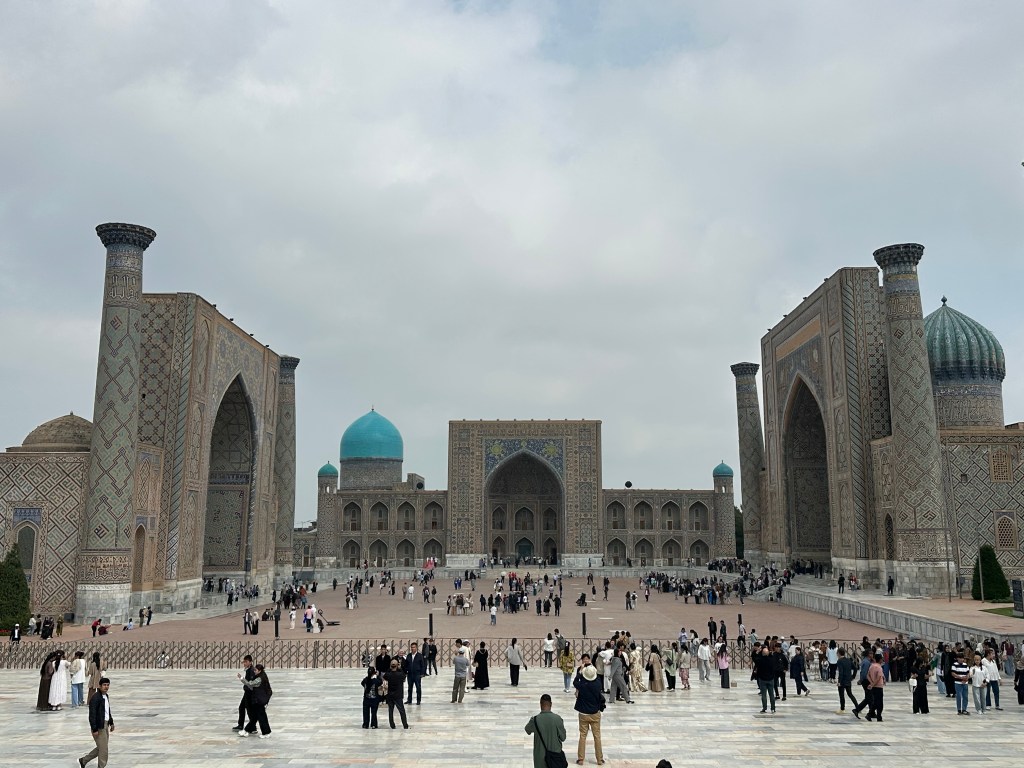
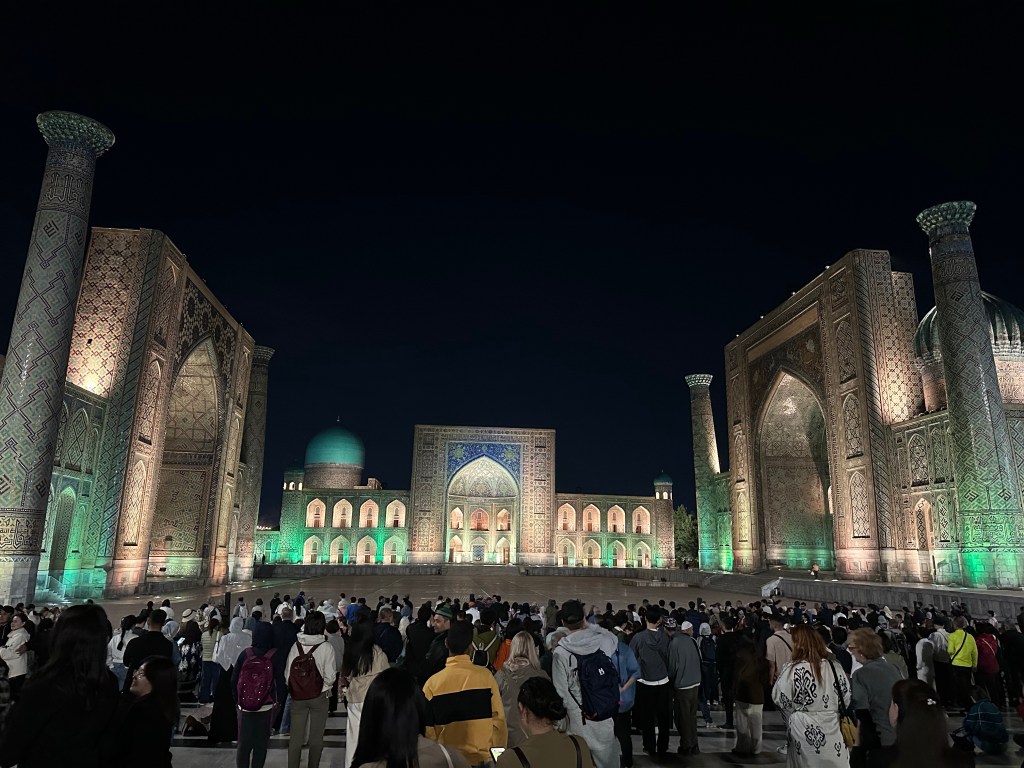
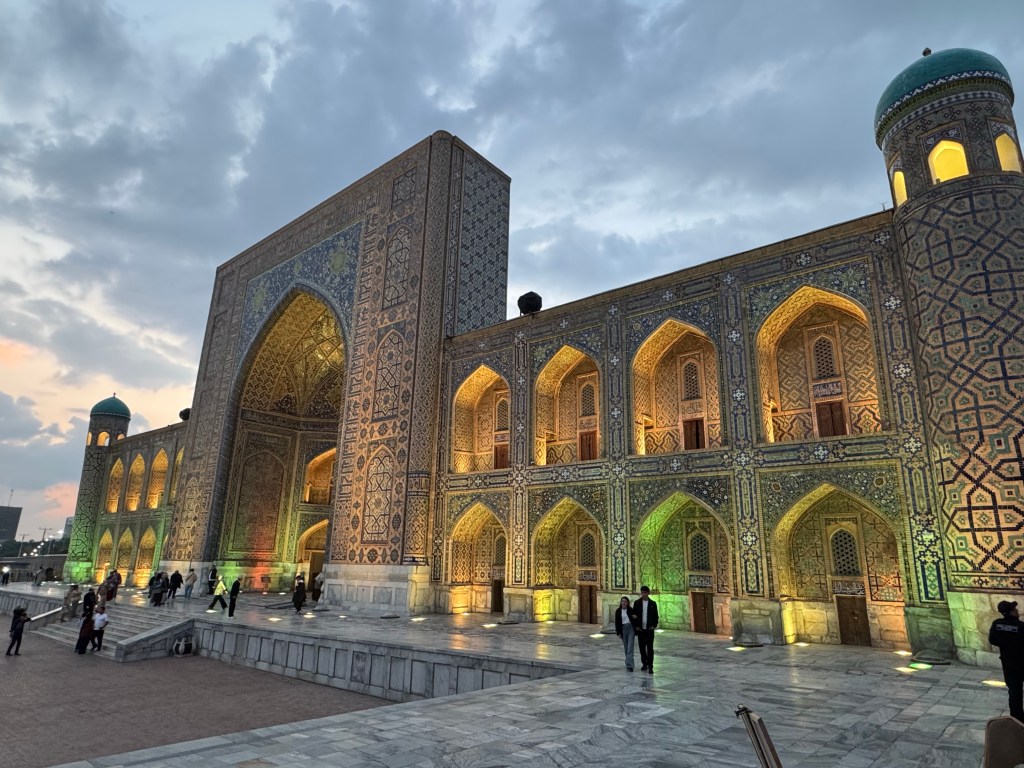
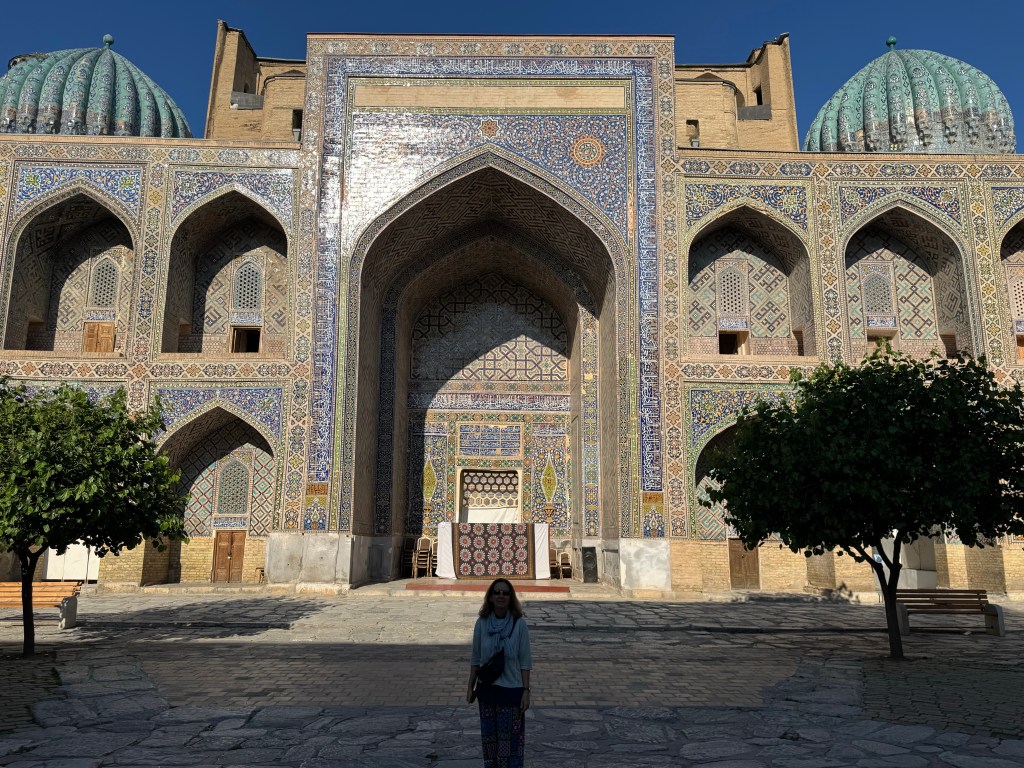
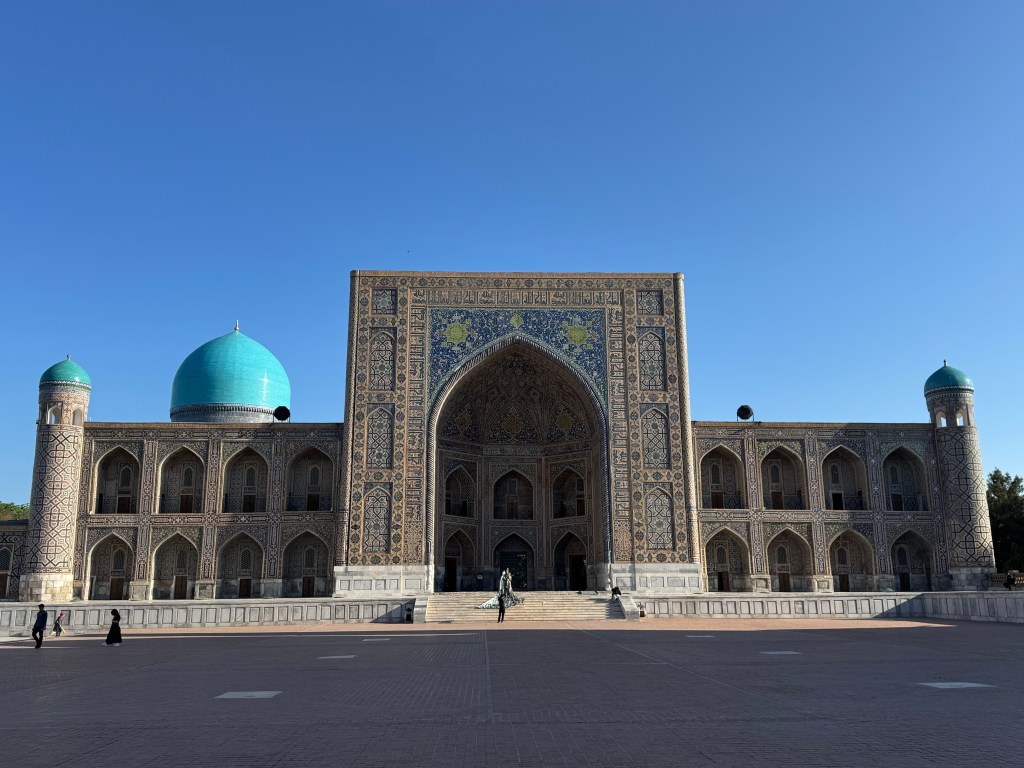
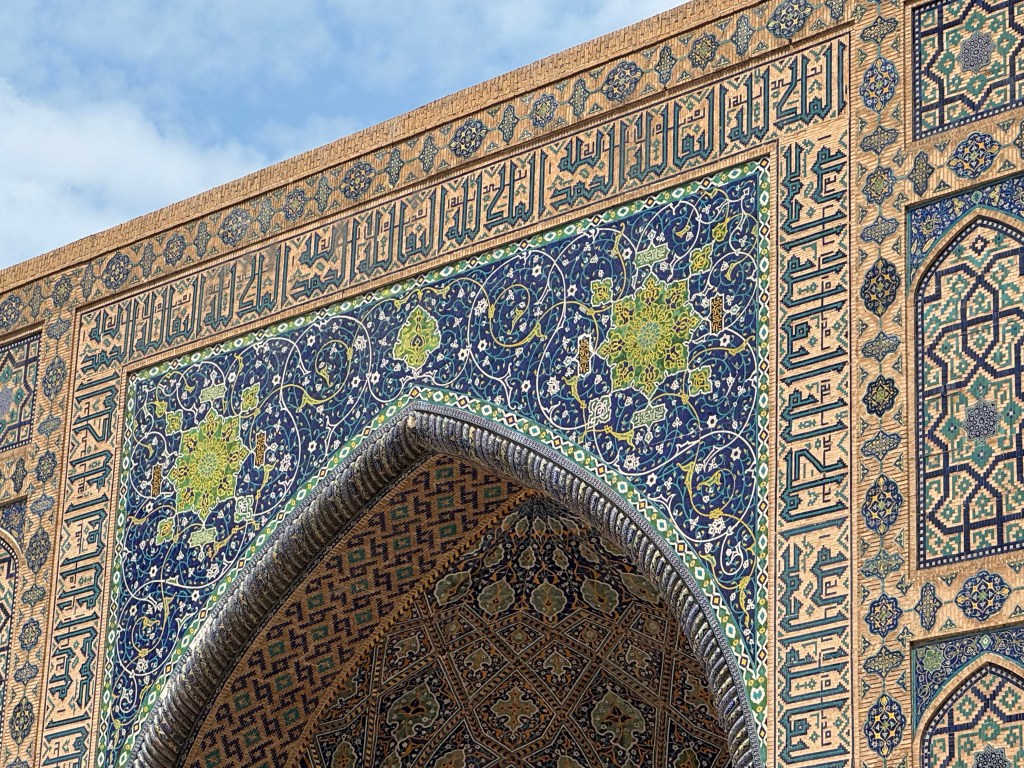
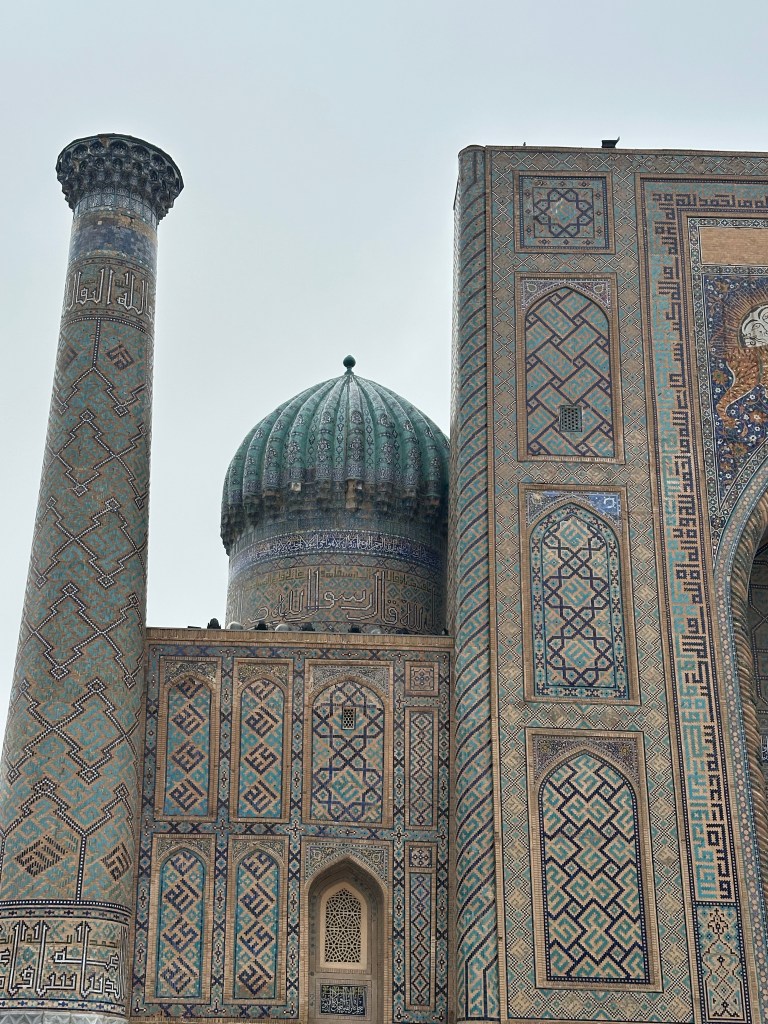
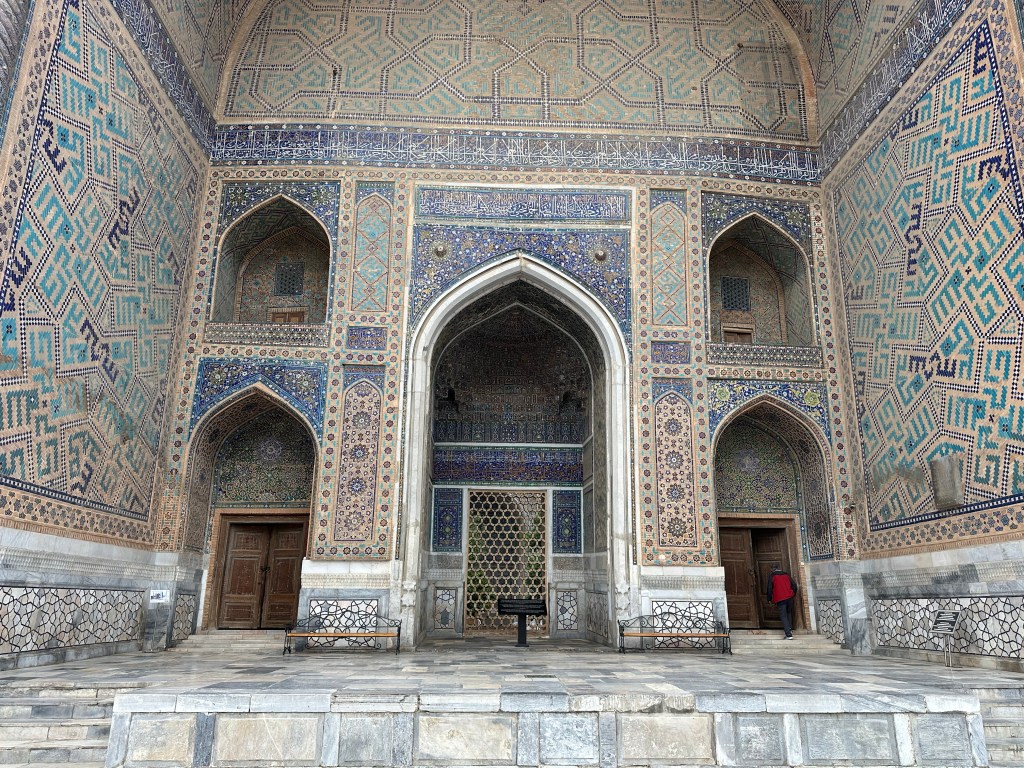
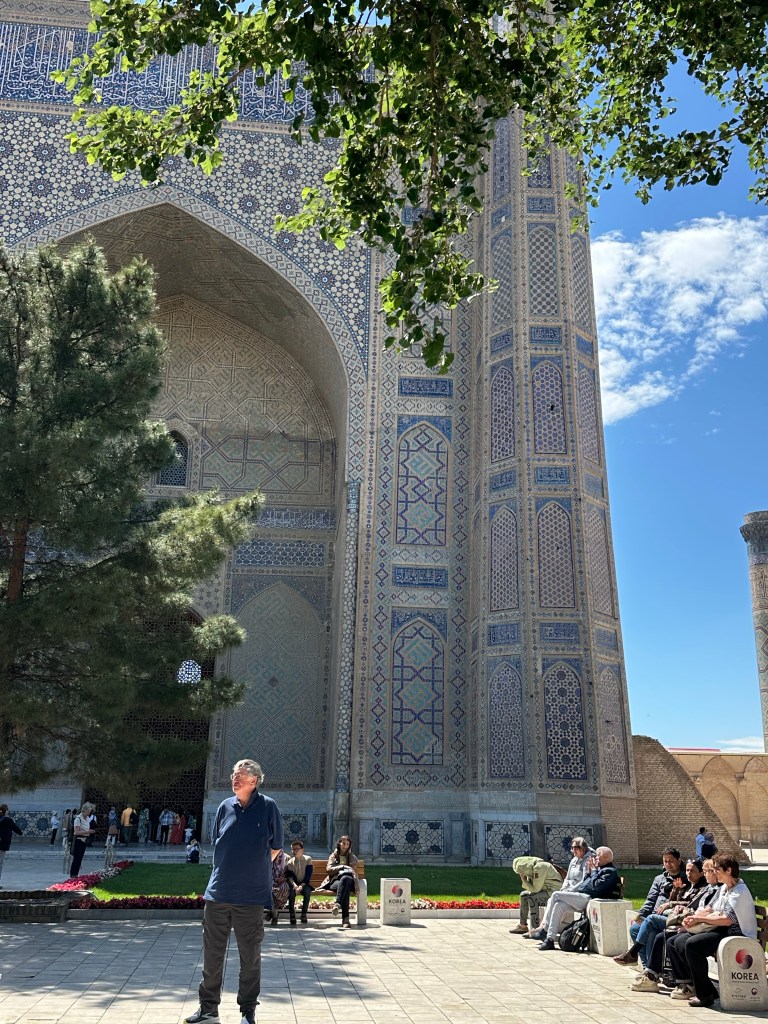
The Registan is Samarkand’s central square, which in Persian translates as “sandy place”. It is made up of three buildings
On the left Ulug Bek Madrasa built between 1417 and 1420
On the right the Sher Dor Madrasa built between 1619 and 1636
In the centre the Tilla Kari Madrasa built between 1646 and 1660
Together they form one of the architectural wonders of the world.
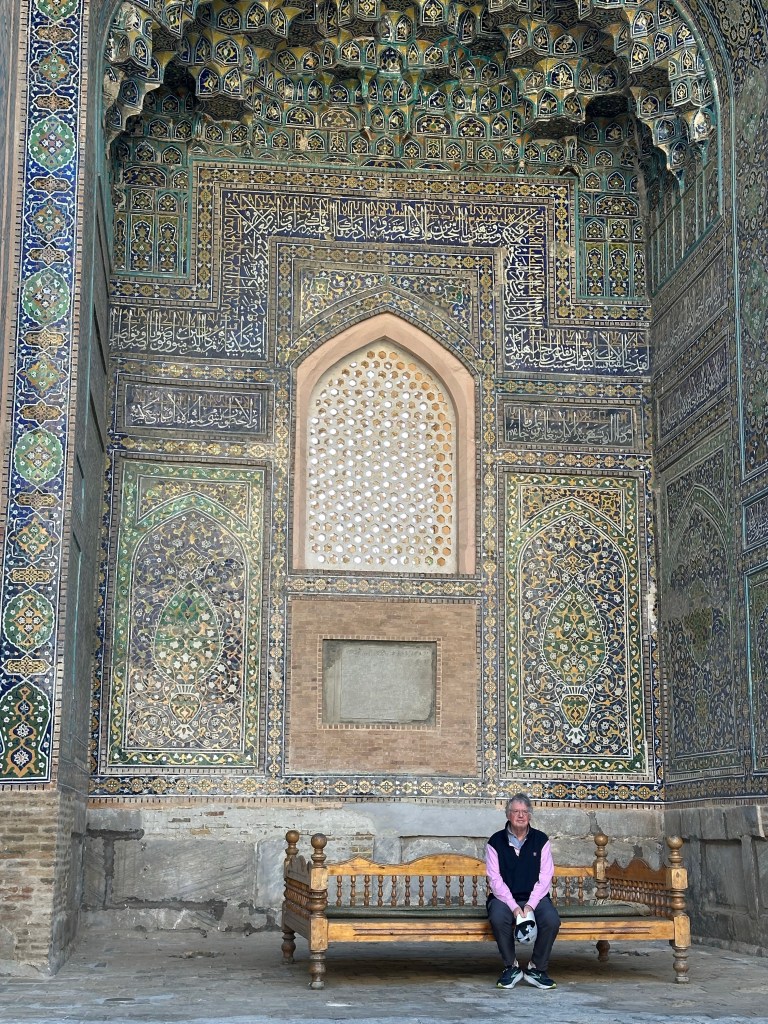
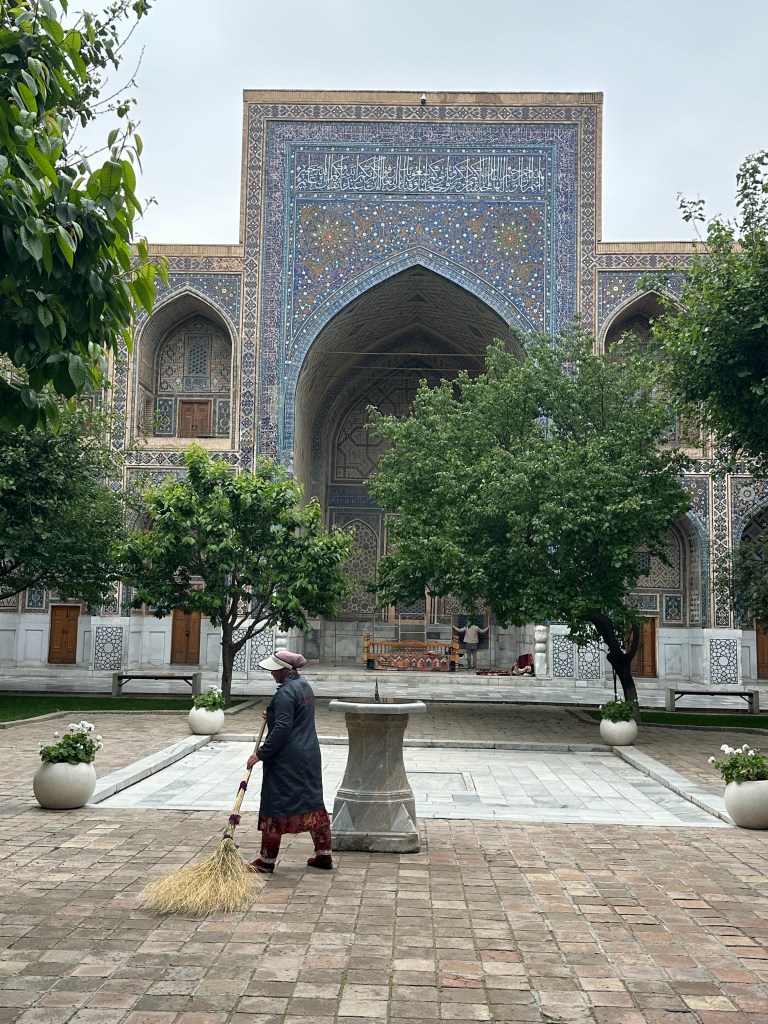
Our hotel was a 15 minute walk from the square enabling us to visit before breakfast and in the evening as well as during the day with our guide. In total we visited five times, seeing different aspects each time. Not surprisingly there was a vast difference in terms of visitor numbers at different times.
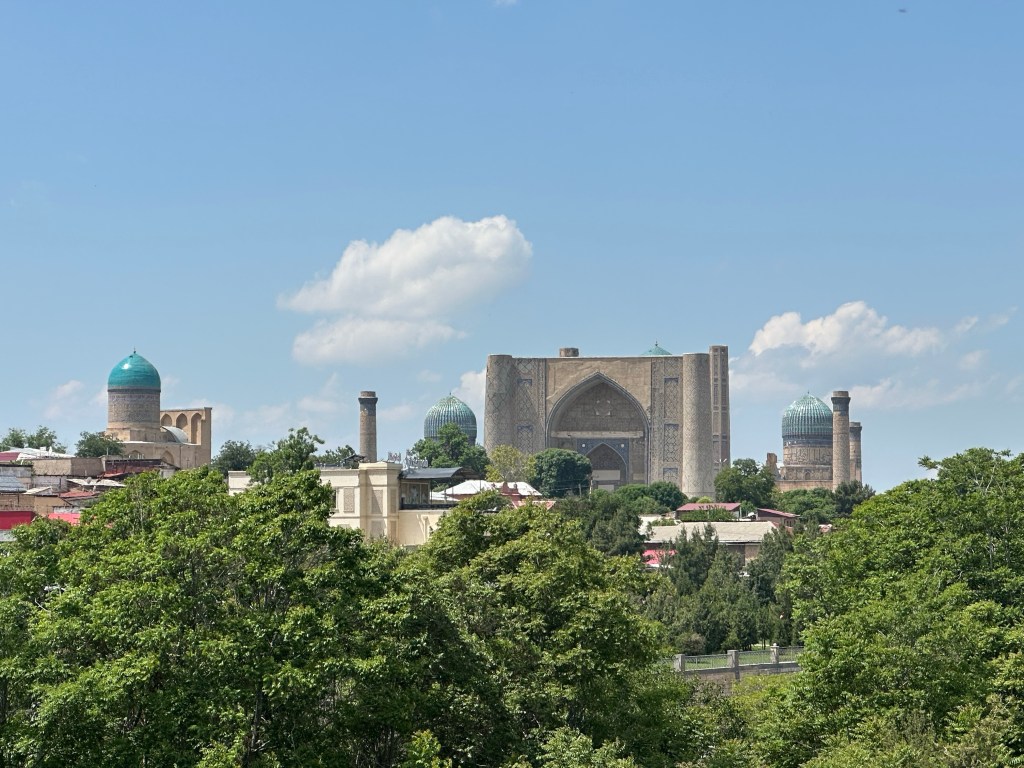
The buildings of the square dominate the skyline, along with the Bibi-Khanym mosque on the left7.30 am10.30 am9pm on the evening of a special light show (only a handful of dignitaries were allowed in the square)At sunset (7.30 pm)
Archaeological evidence dates Samarkand to the 6th century BC around Afrosiab Fort. Alexander the Great took the city, then named Marakanda, in 329BC from its Sogdian rulers saying that it was even more beautiful than he imagined.
It recovered after destruction by Gengis Khan and Marco Polo commented on the beauty of Samarkand during his travels in the late 13th century.
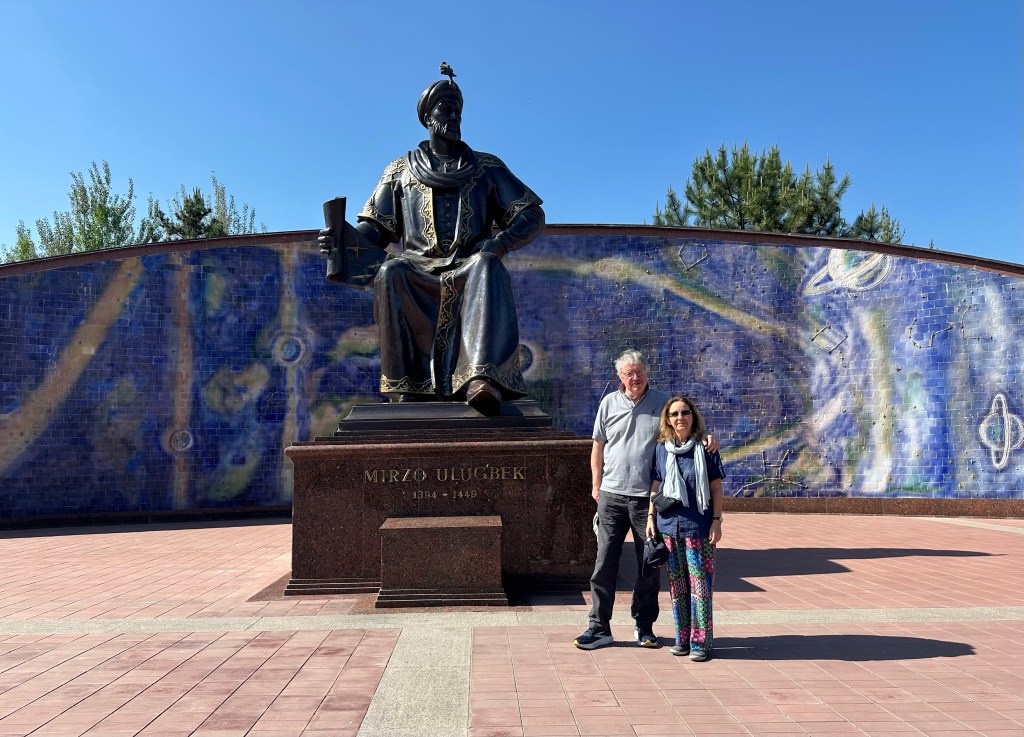
In 1370 Timur made it his capital of one of the largest empires in the world and built madrasas, mosques, palaces, mausoleums, trading domes and caravanserai to recognise this. When Timur’s grandson Ulug Bek obtained control he demonstrated his scientific knowledge by building an observatory in the early 15th century. He is now recognised as one of the world’s leading astronomers.
In 1917 Samarkand fell peacefully to the Bolsheviks and was named the capital of Uzbek SSR in 1925 for five years.
Today it is Uzbekistan’s second largest city with a population of around 650,000. Unlike Bukhara and Khiva, the main buildings of historical interest are less concentrated in a central area, interspersed with Soviet and more recent developments.
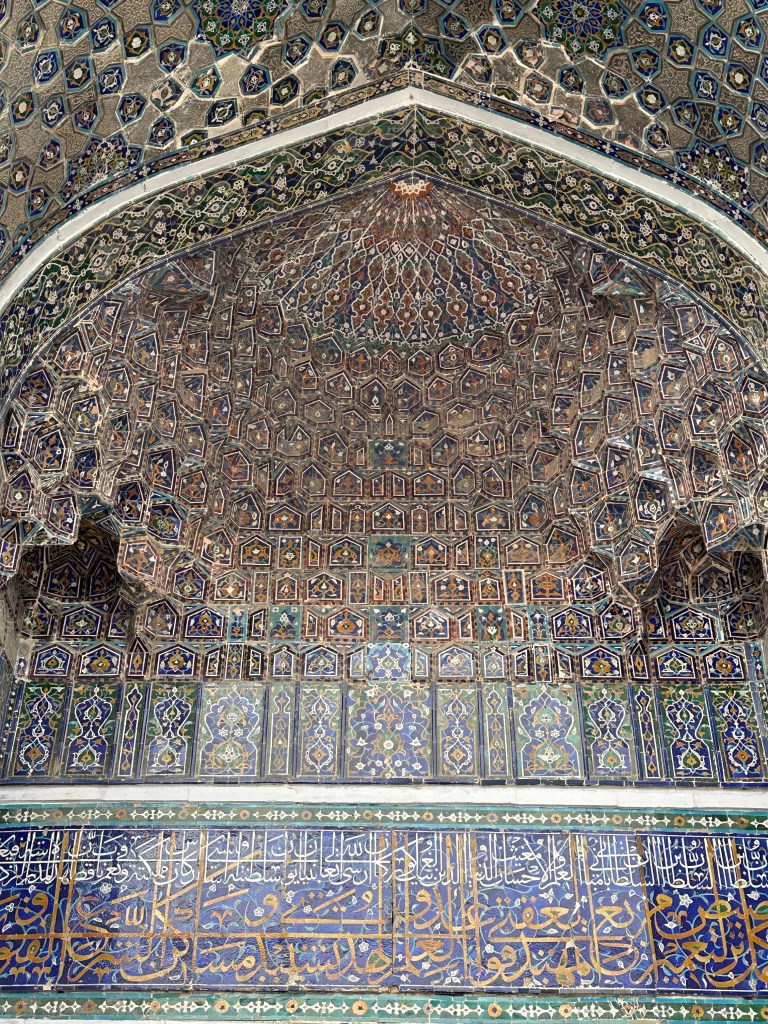
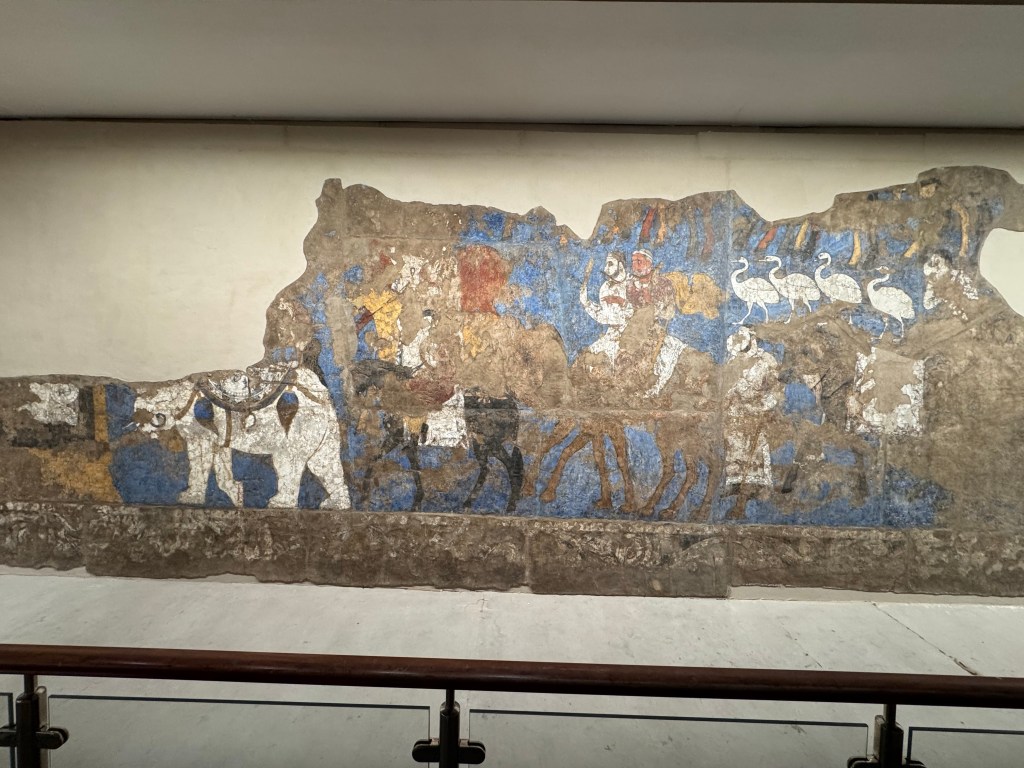
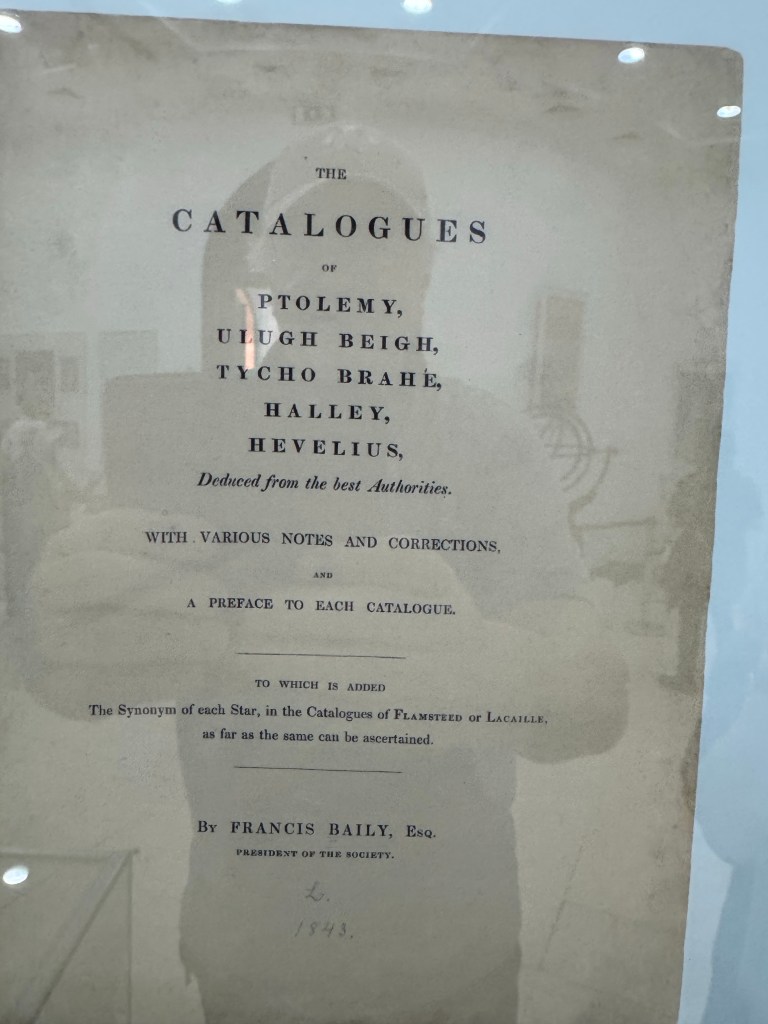
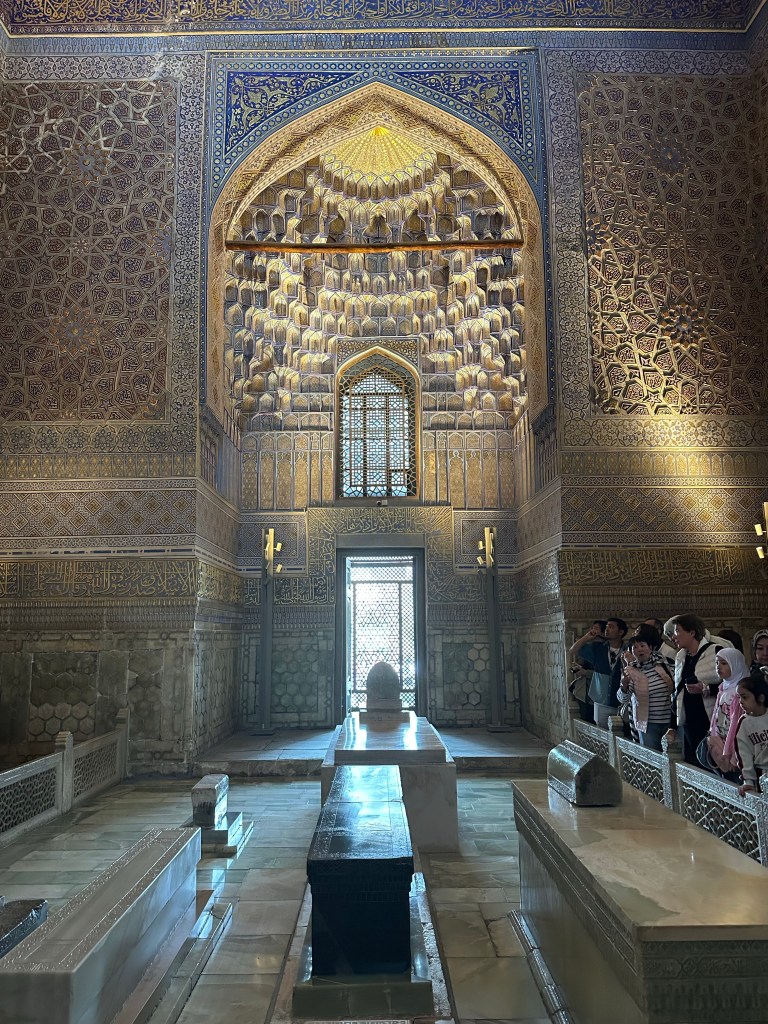
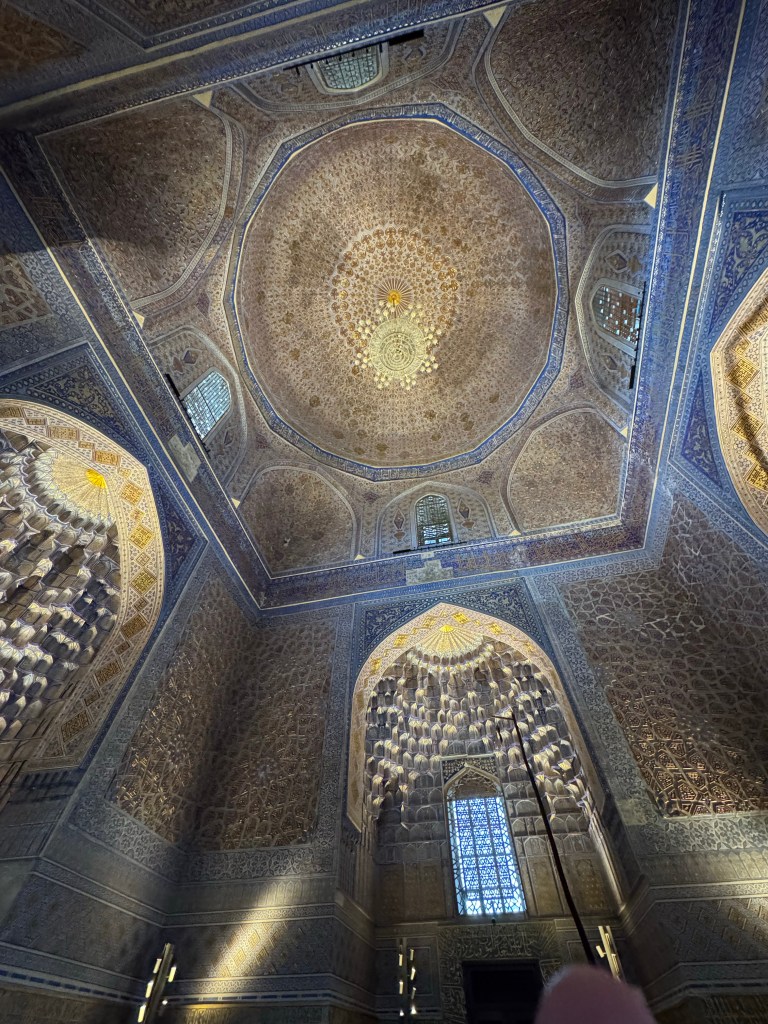
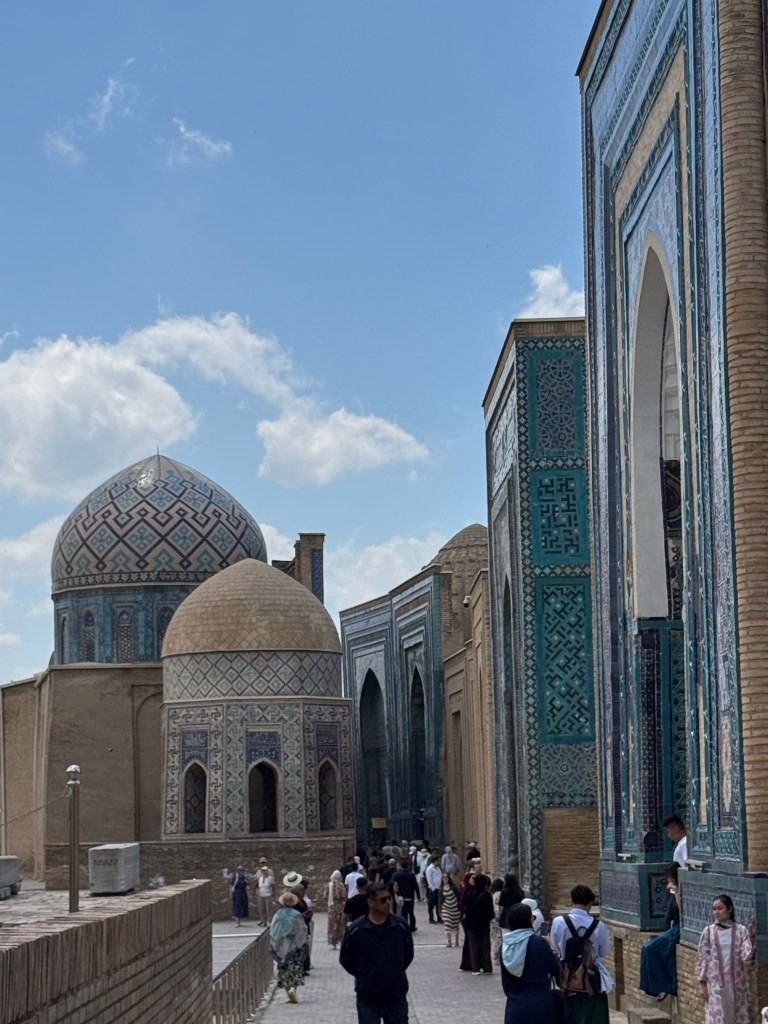
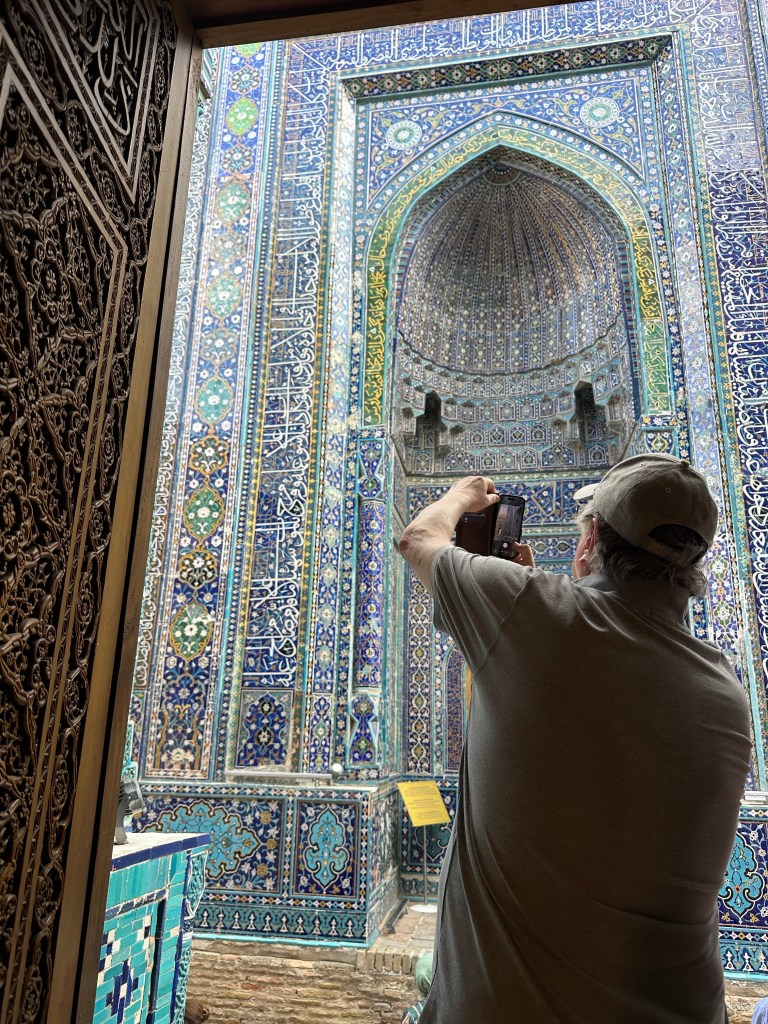
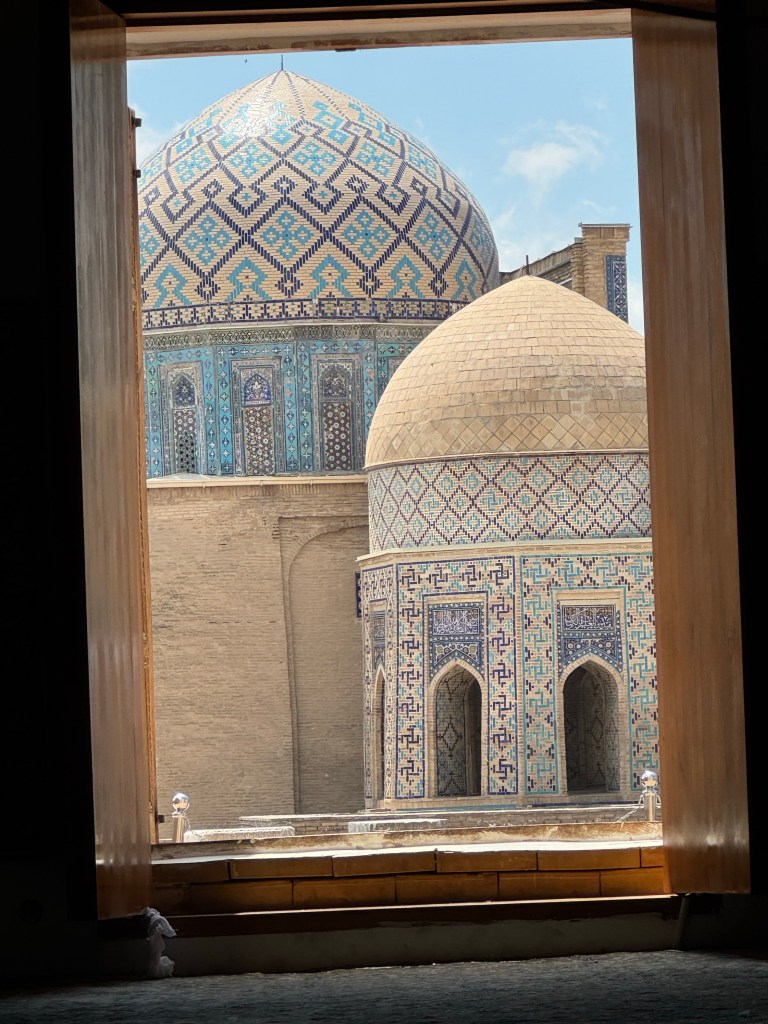
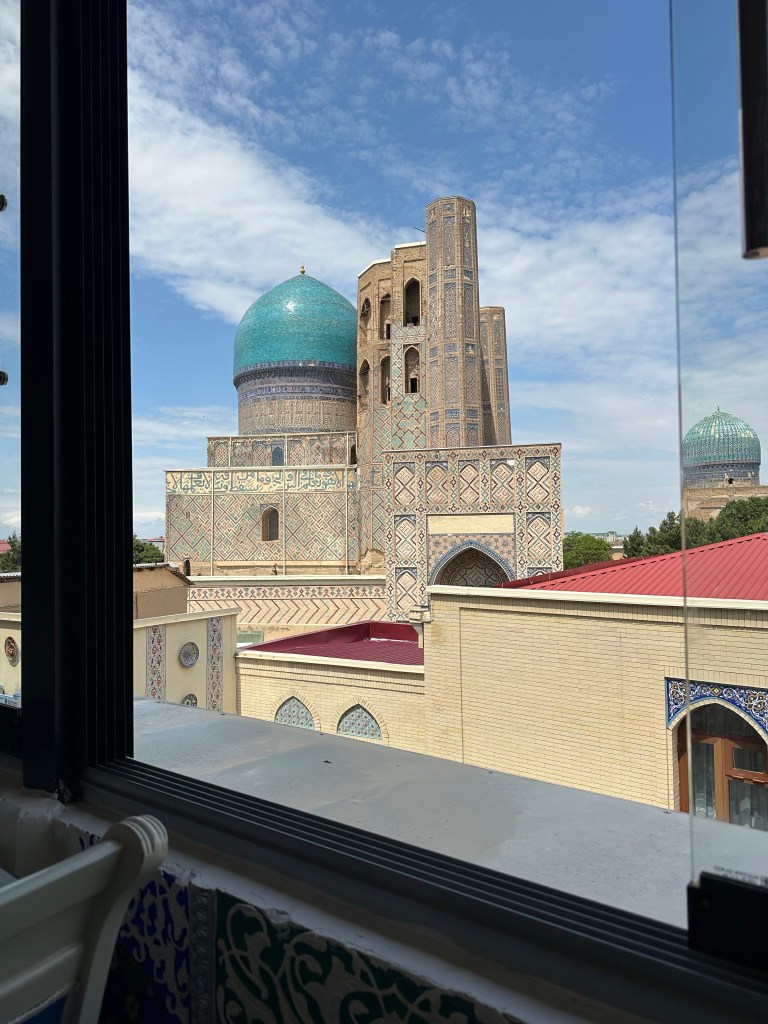
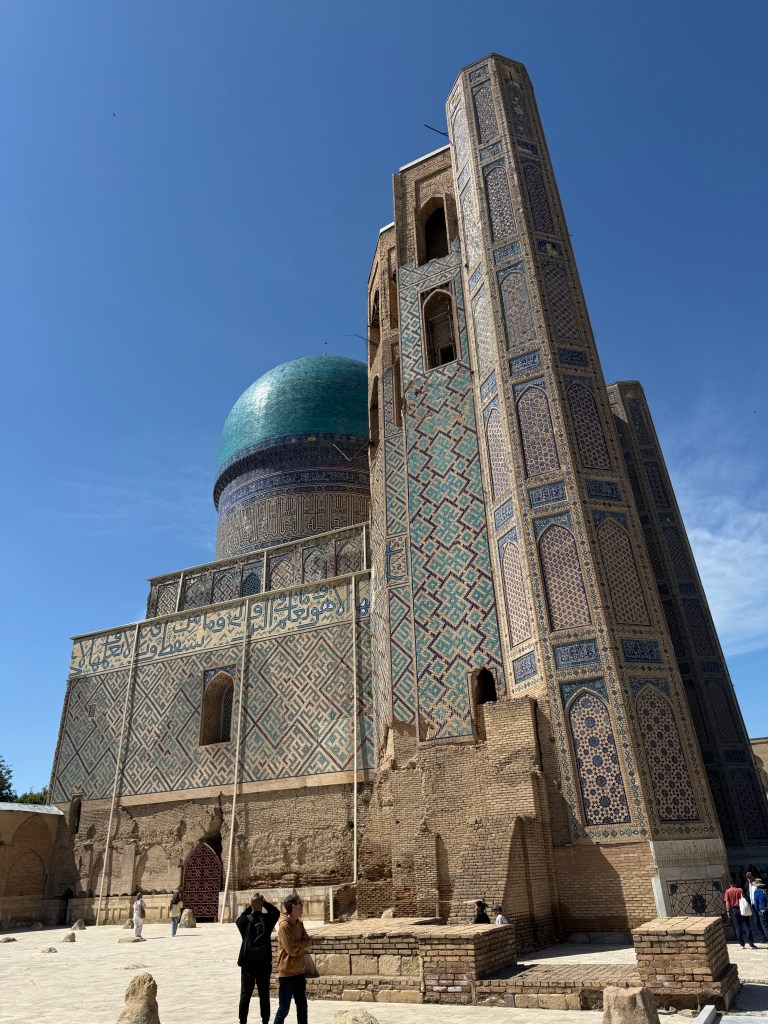
Mural from a royal palace (7th century) depicting Silk Road tradeStatue of Ulug Bek at the observatory museumPublication including the work of Ulug BekNecropolis- Timur, together with close family members and his key advisor. The actual tombs are below ground with public access to replicasCeiling of the necropolis Shahi-Zinda – a complex of mausoleums and mosques, leading to the mausoleum of Kusham Ibn Abbas, the patron saint of Samarkand (above and two below)View from our lunch stop of the Bibi-Khanym mosque (and below). Timur employed the best architects, craftsmen and artists from across his empire. When he returned from his western campaign he was “disappointed” and ordered the reconstruction of the portal with pylons and minarets of 60m
The details of the founding of Bukhara are unknown, however by the 6th century it was thriving mainly due to its location half way between Samarkand and Merv and its access to water from the Amu Darya river.
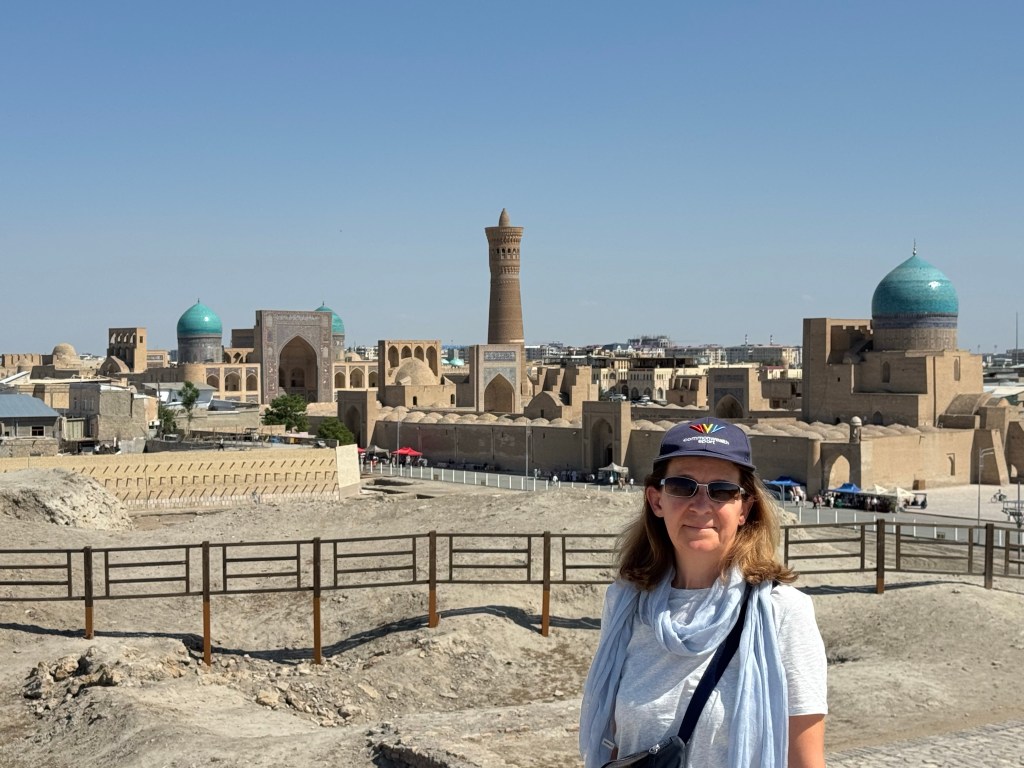
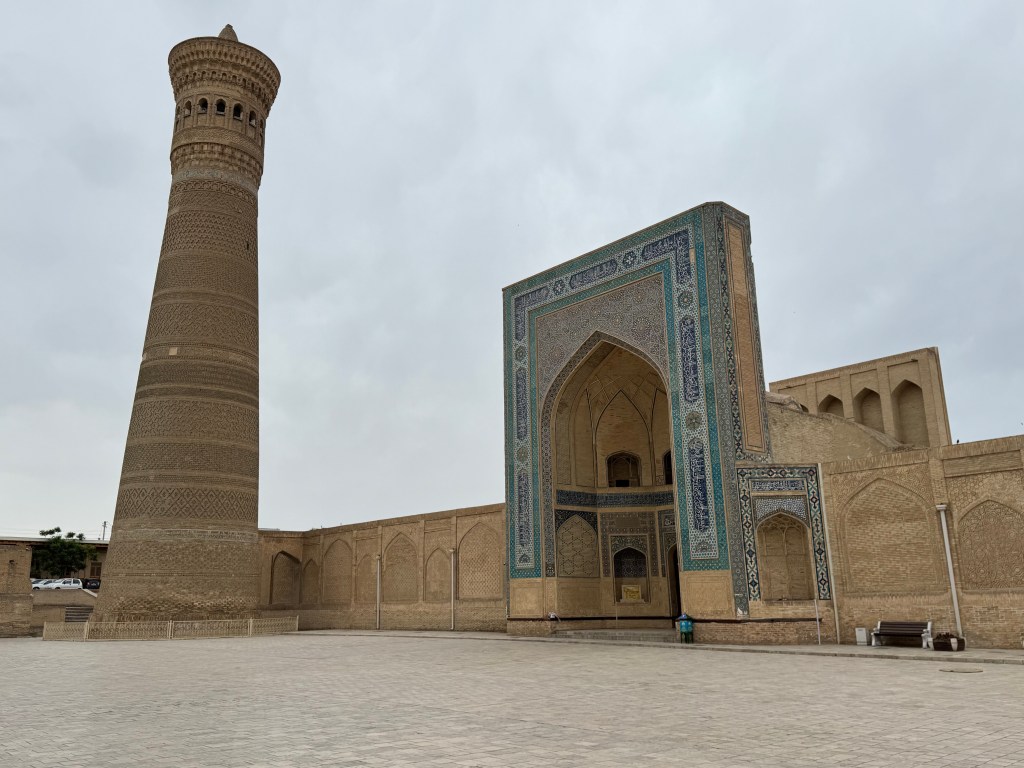
The 9th and 10th centuries were the city’s golden age before the Mongols arrived in 1220. Gengis Khan had been heading towards the 46m high Kalyan Minaret for days. By legend, on arriving at the minaret Gengis Khan’s hat came off and he saw it as an omen, so did not destroy the minaret unlike the rest of the city. He also killed or enslaved the whole population.
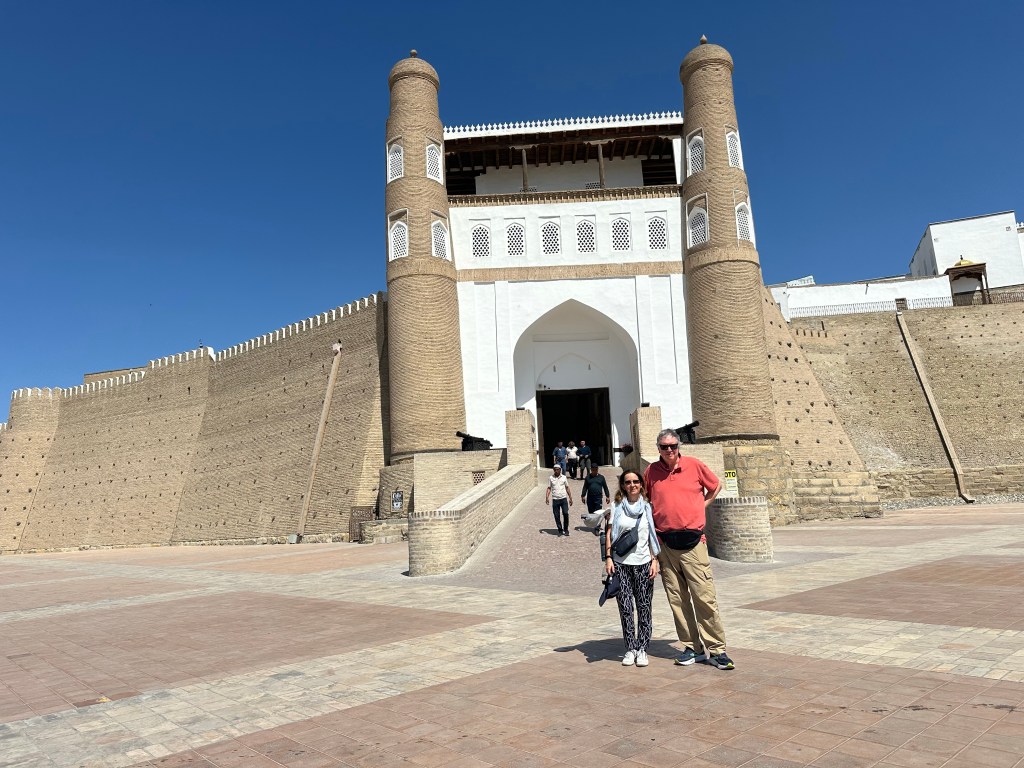
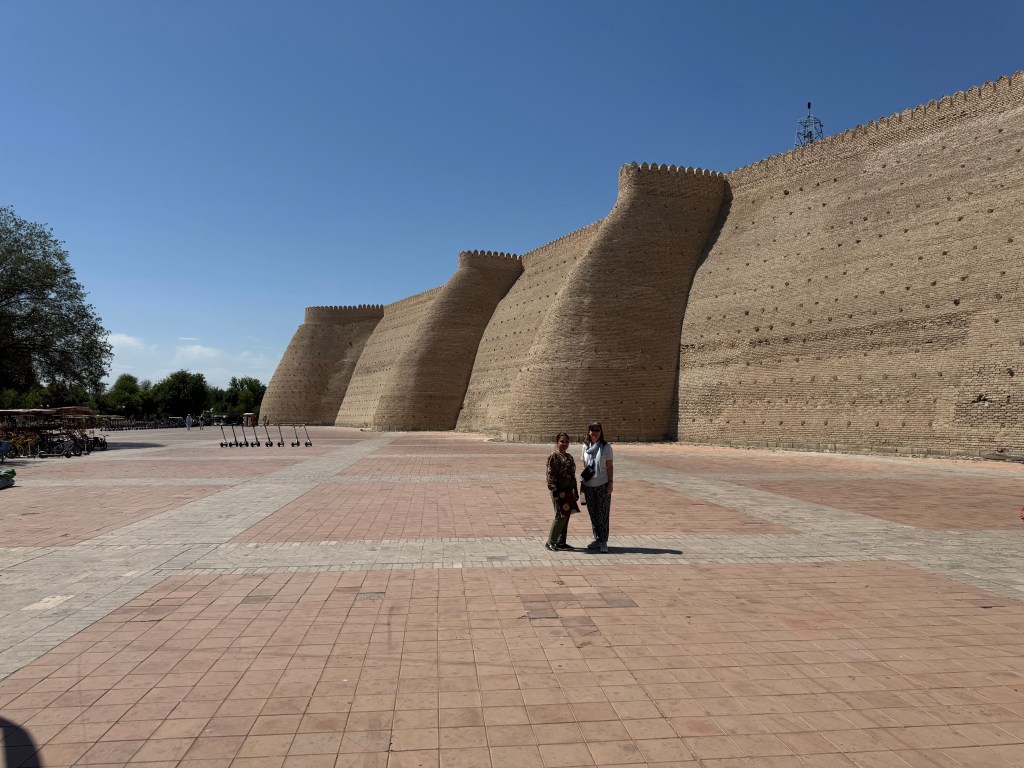
A khanate was established in 1500 and the city became wealthy again. The city fortress (The Ark) was rebuilt for defence, although much was destroyed by the Bolsheviks in 1920.
During the Great Game, British Army officers tried to engage with the Khan of Bukhara. Lt Colonel Charles Stoddard arrived, after weeks of travelling across the desert, but unintentionally caused at least one breach of royal protocol and was thrown in the Ark jail. Captain Arthur Connolly later arrived to try and secure his colleague’s release but was also thrown in the filthy jail. Both men were subsequently executed.
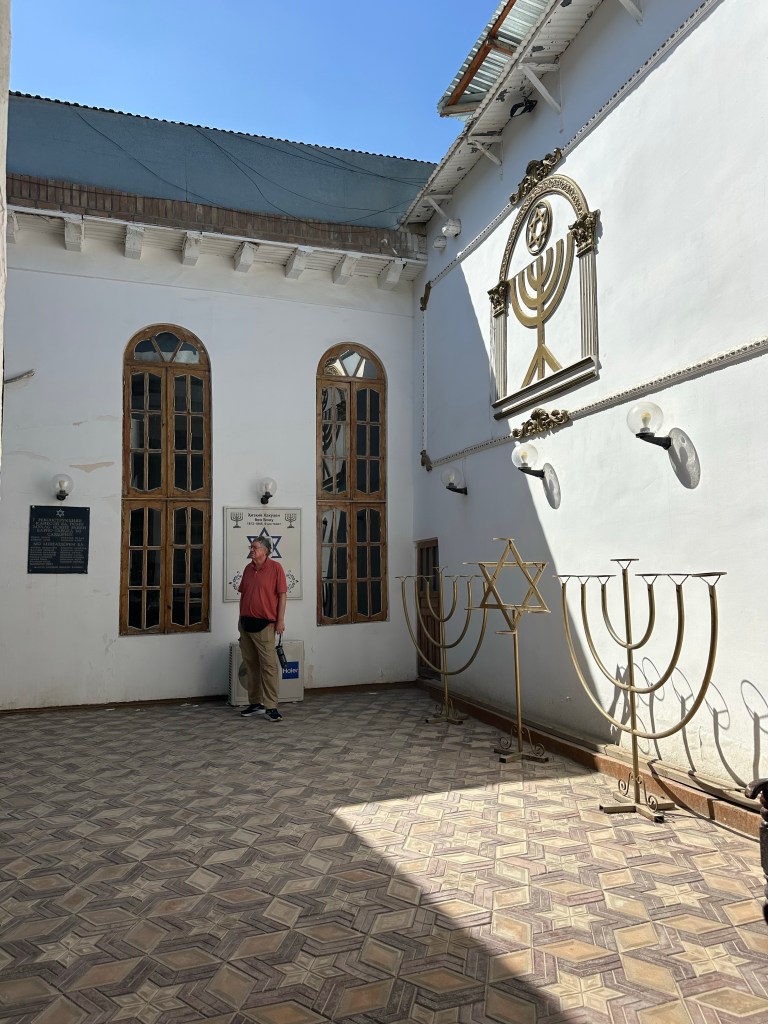
Today Bukhara is a city of approximately 300,000, with the old city centre pedestrianised. The old city has a small Jewish quarter; although a synagogue remains most of the Jewish community have moved away. The Soviets built a railway station and factories in a new town about 10km away.
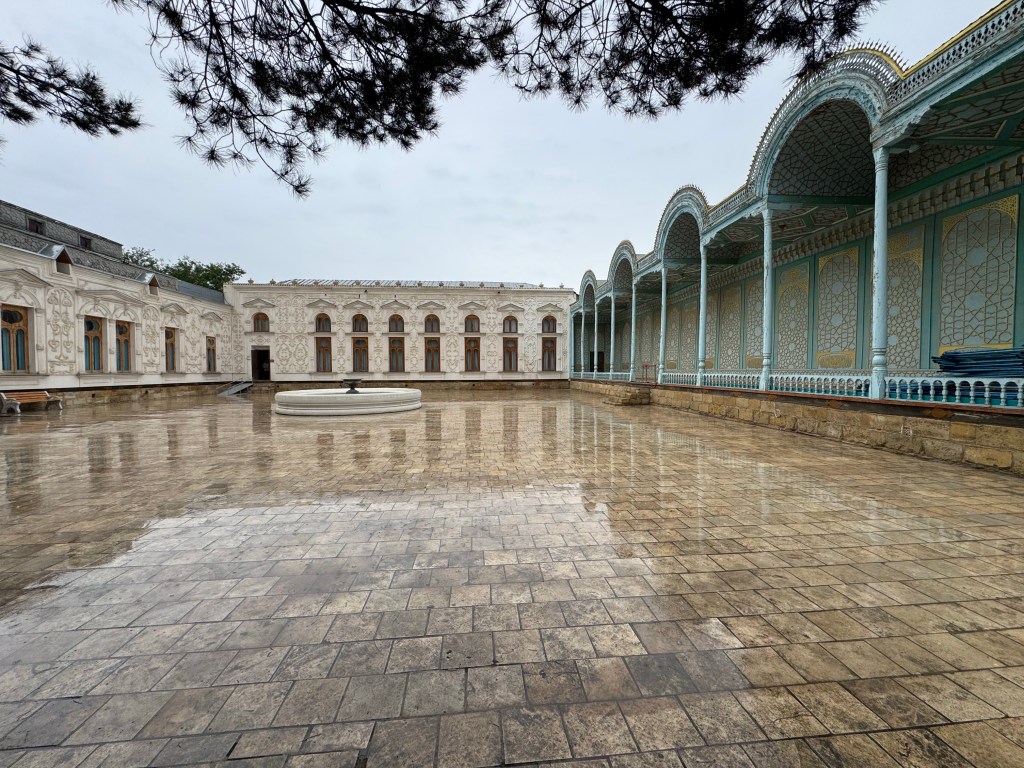
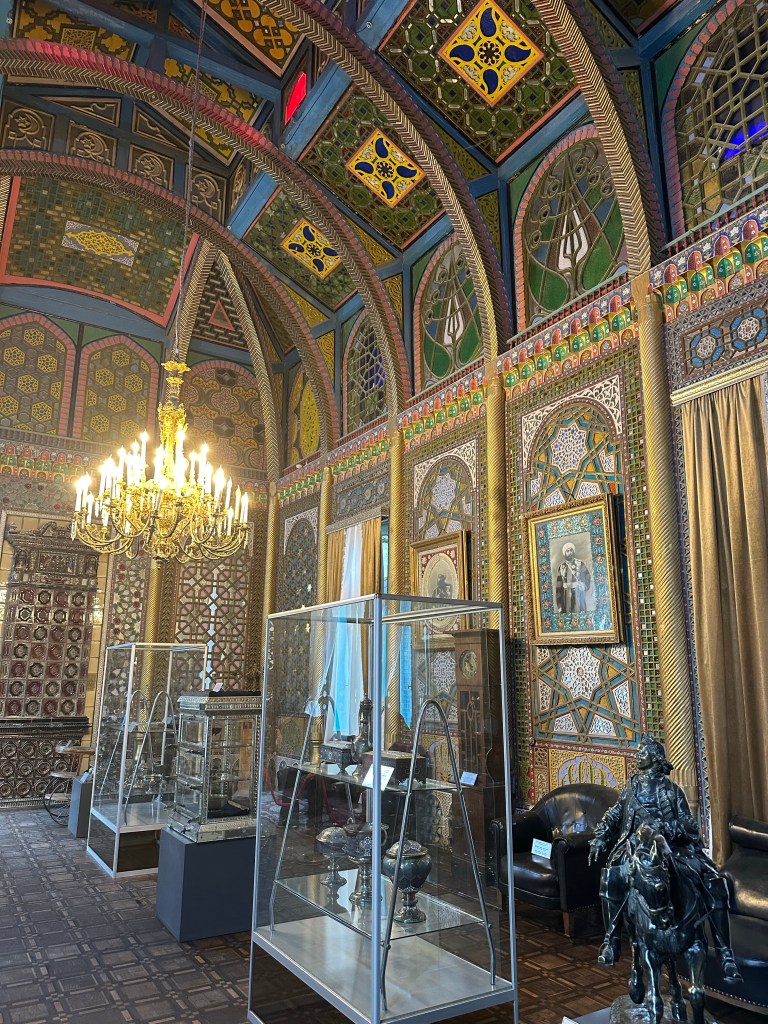
The last Khan of Bukhara built a summer palace just outside the city. Apparently he had travelled to and met people from a number of European countries, so wanted to replicate some of the fashions and architecture. The result, we felt, lost quite a bit in translation!
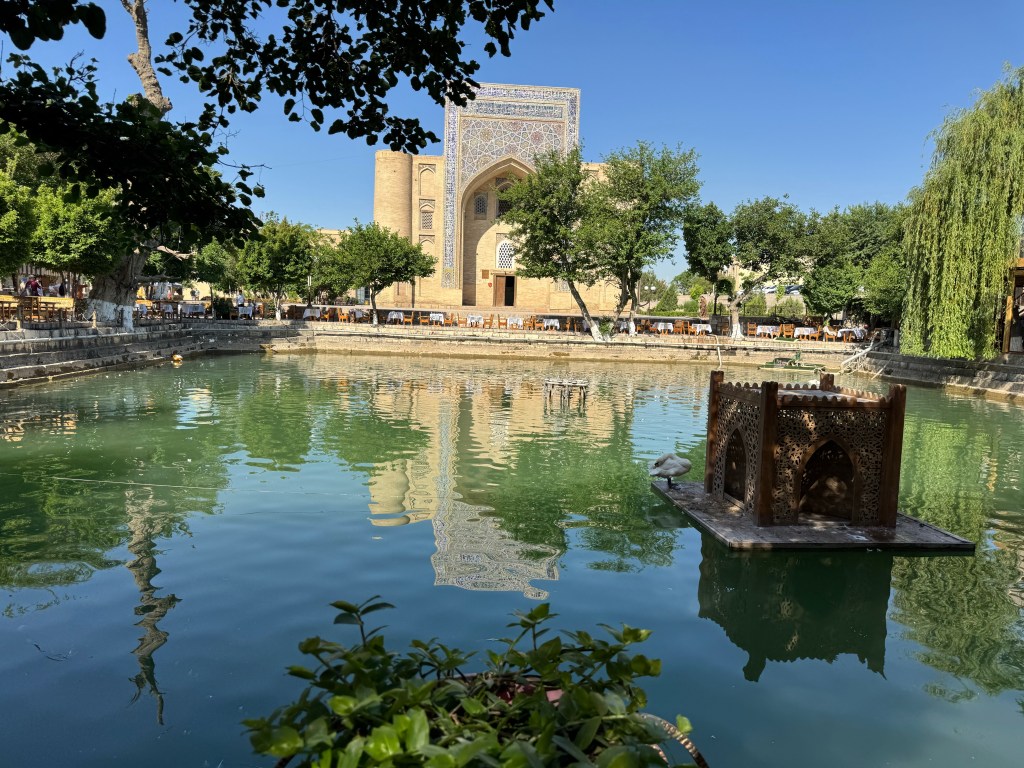
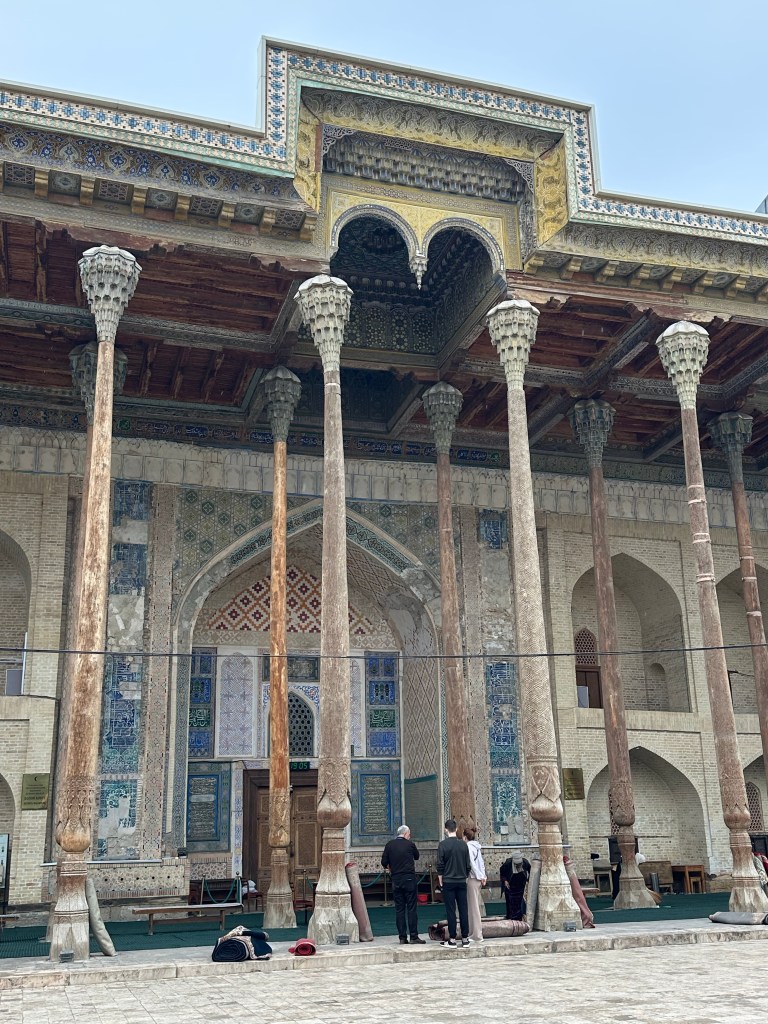
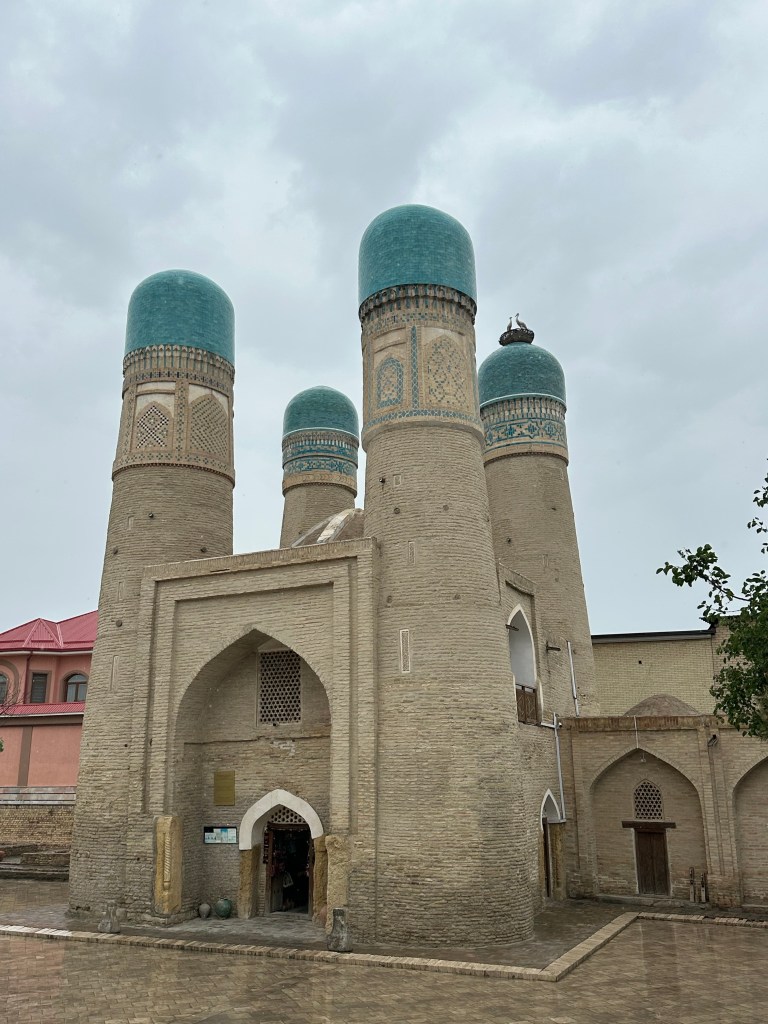
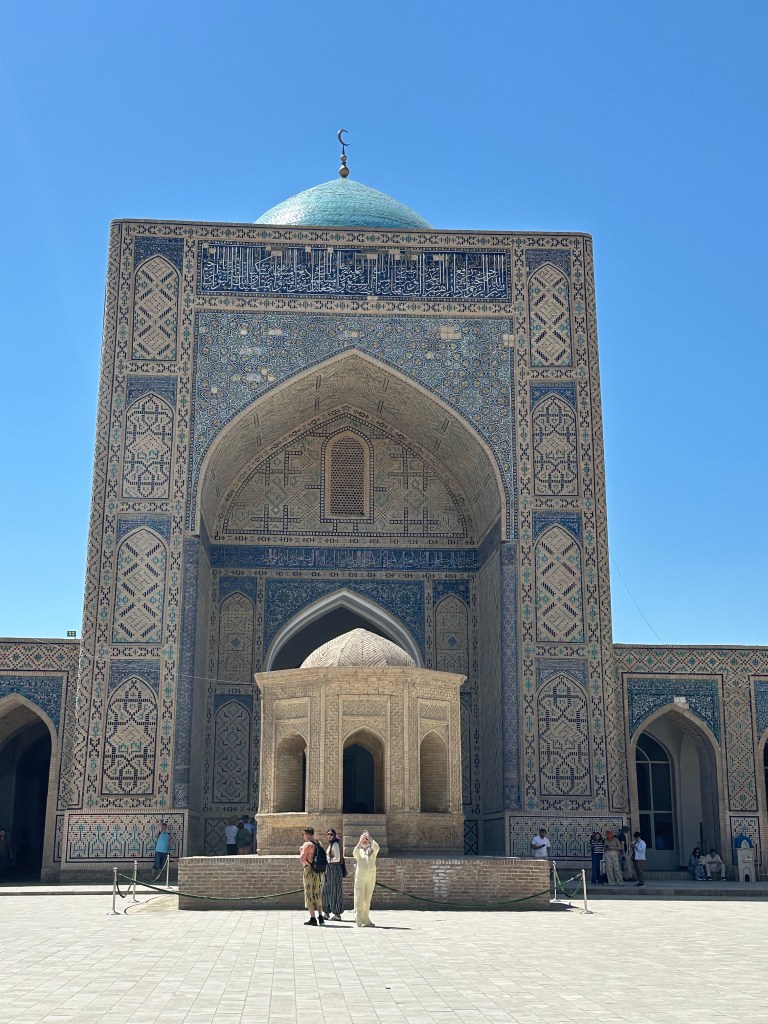
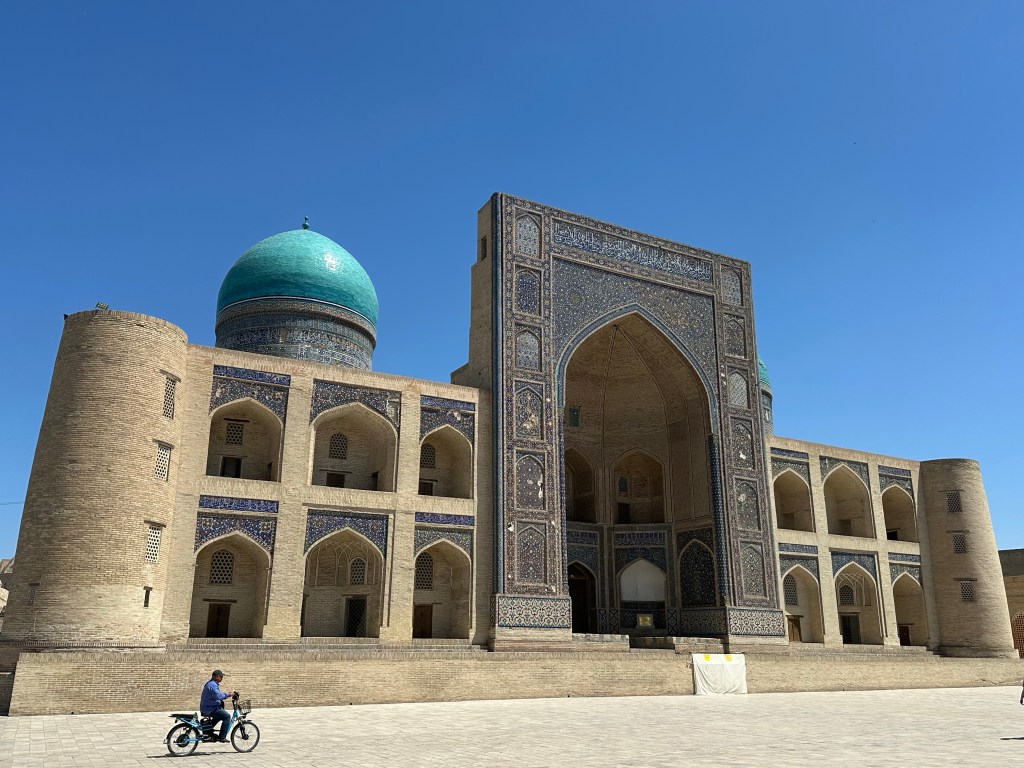
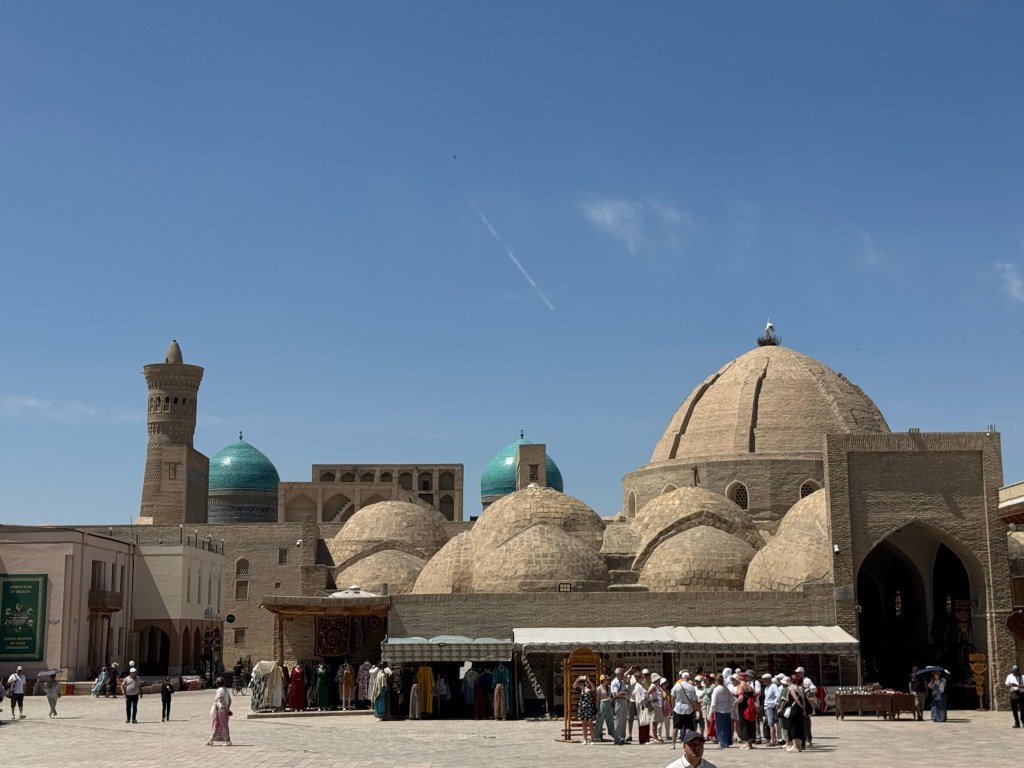
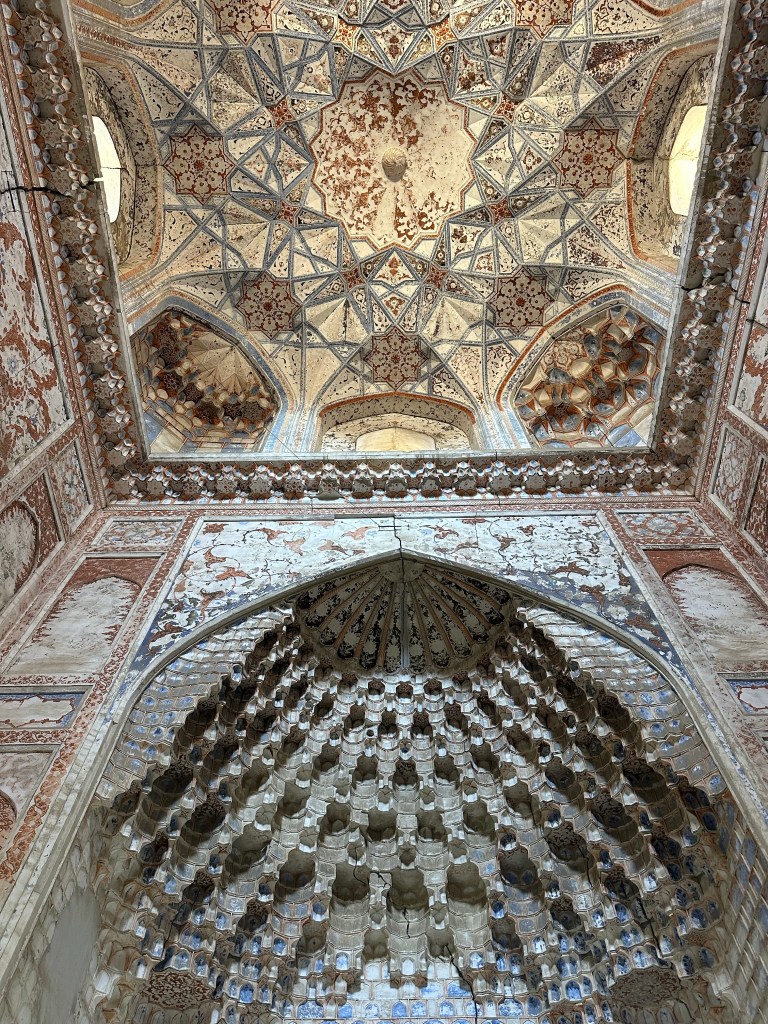
The Ark above and below View of the old city from the ArkRegistan Square (literally translates as “sandy place”, used as a central meeting place) including Kalyan minaretKhanaka – built as a place for Sufis to stay and mediate Juma (Friday) mosque Chor-Minor (four minarets) madrasa. It is thought to be based on a similar, but much larger, madrasa in HyderabadKalyan mosque, the main mosque of Bukhara Miri-Arab madrasa, an active madrasa and one of the most esteemed religious Islamic universities in Central AsiaSynagogueThe trading domes, these are still used for their original purpose Roof of a Ulugbek madrasa Summer palace, above and below
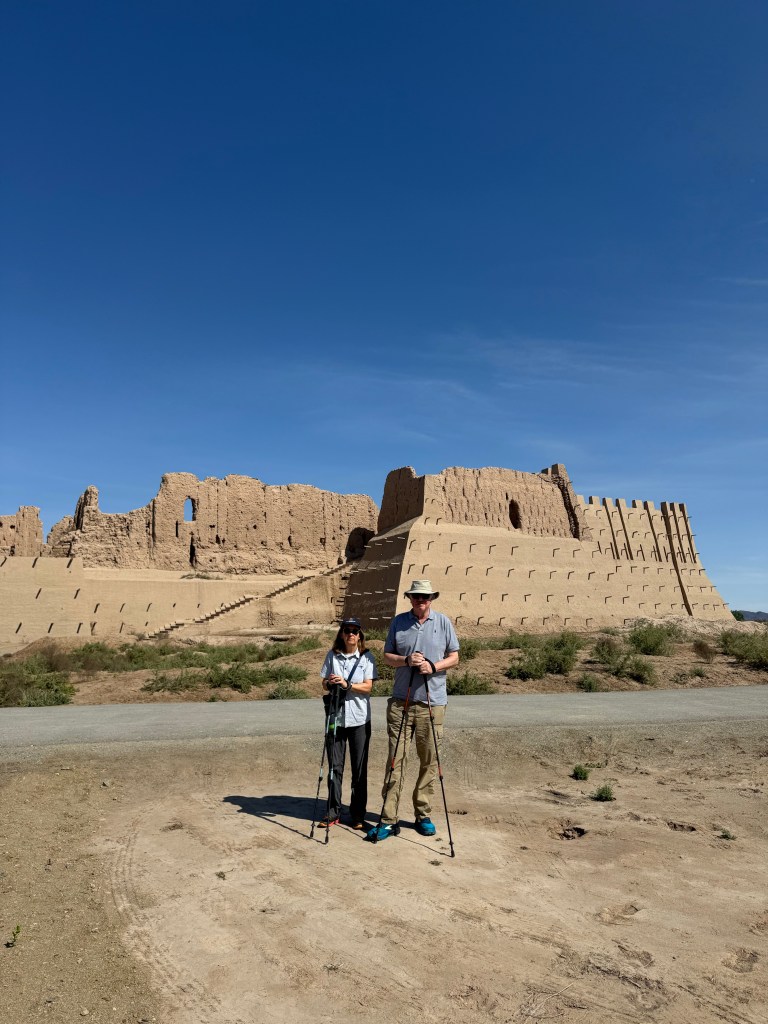
The Khorezm oasis is an area of the Amu Darya river delta, which is situated in Western Uzbekistan north of Khiva and Turkmenistan. Khorezm was an independent state from around the 4th century BC which is when the building of the forts began.
Approximately 50 forts were built; the ruins of eight still survive which were still being fortified until the Mongolian attacks began in 1219.
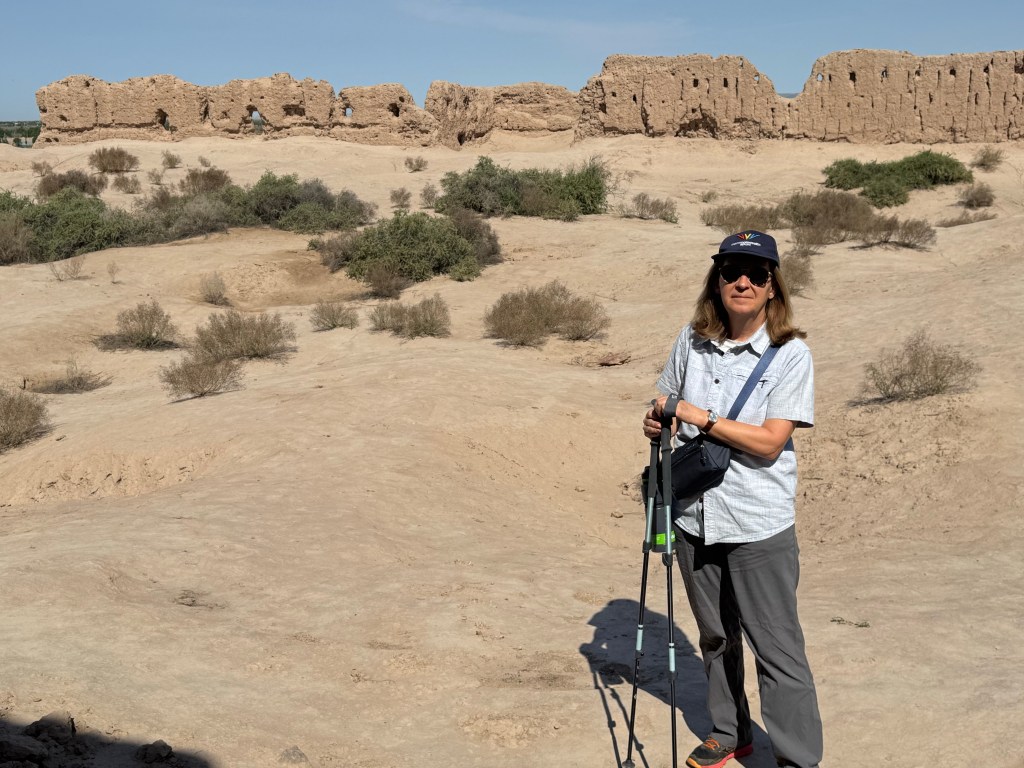
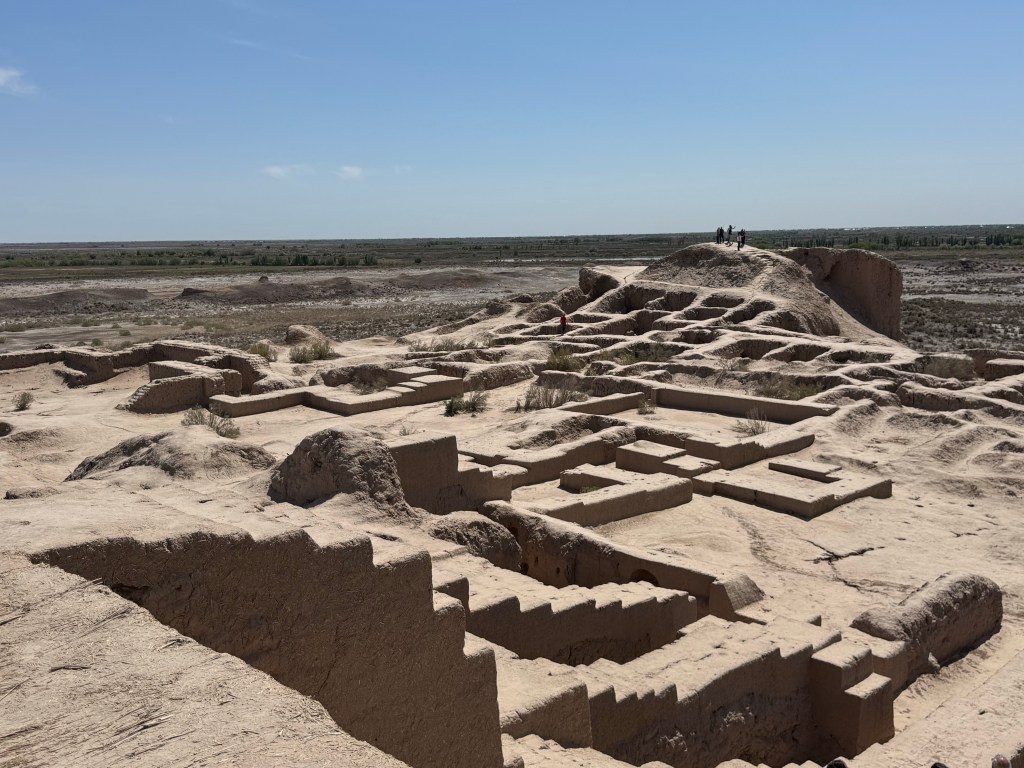
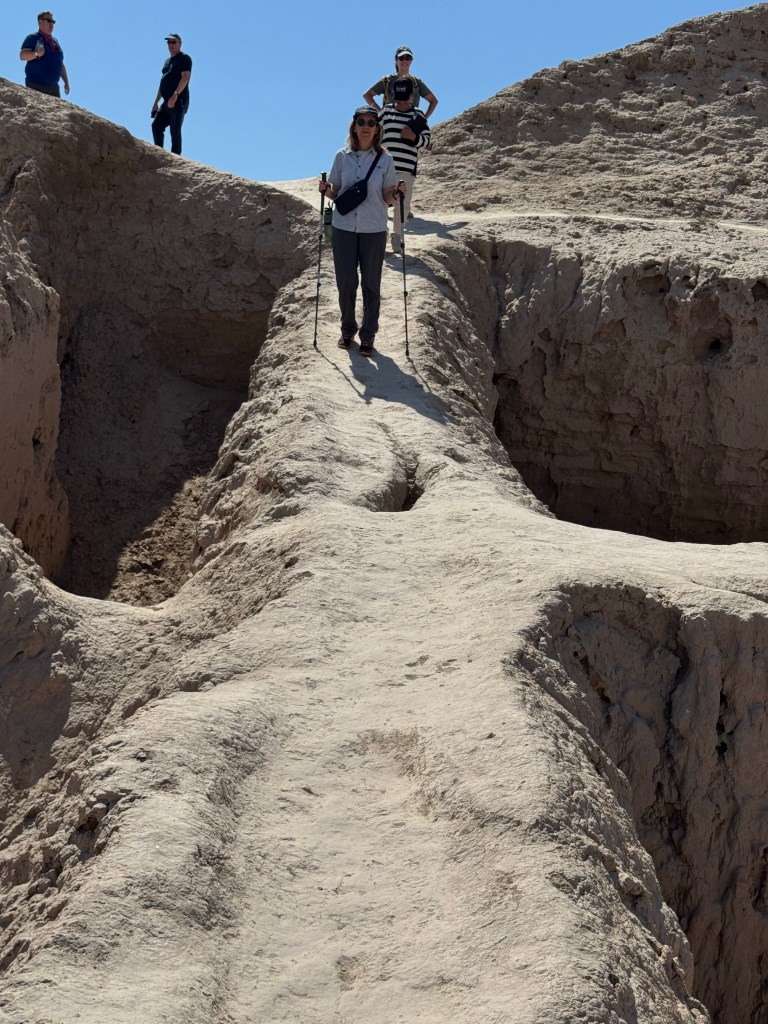
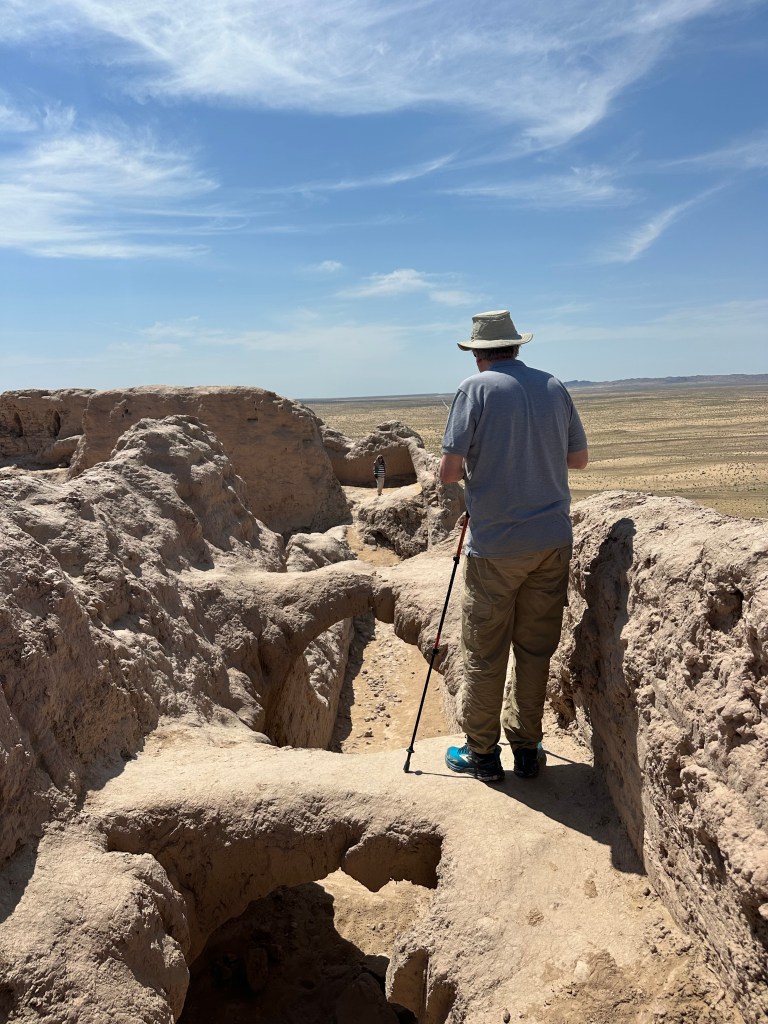
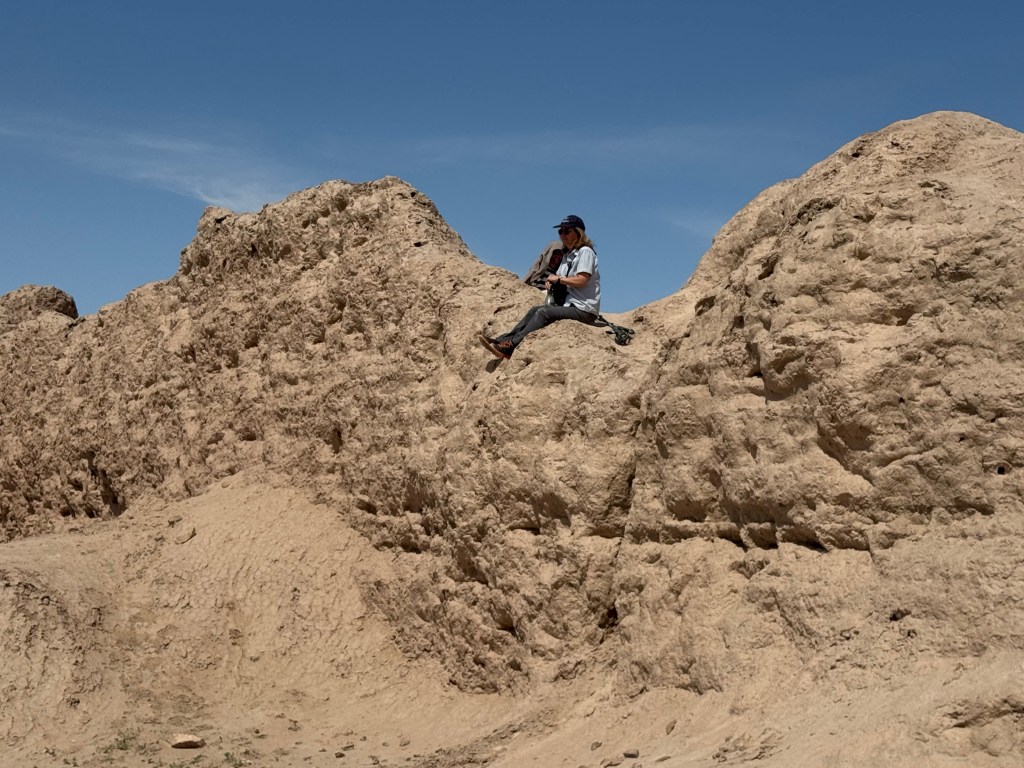
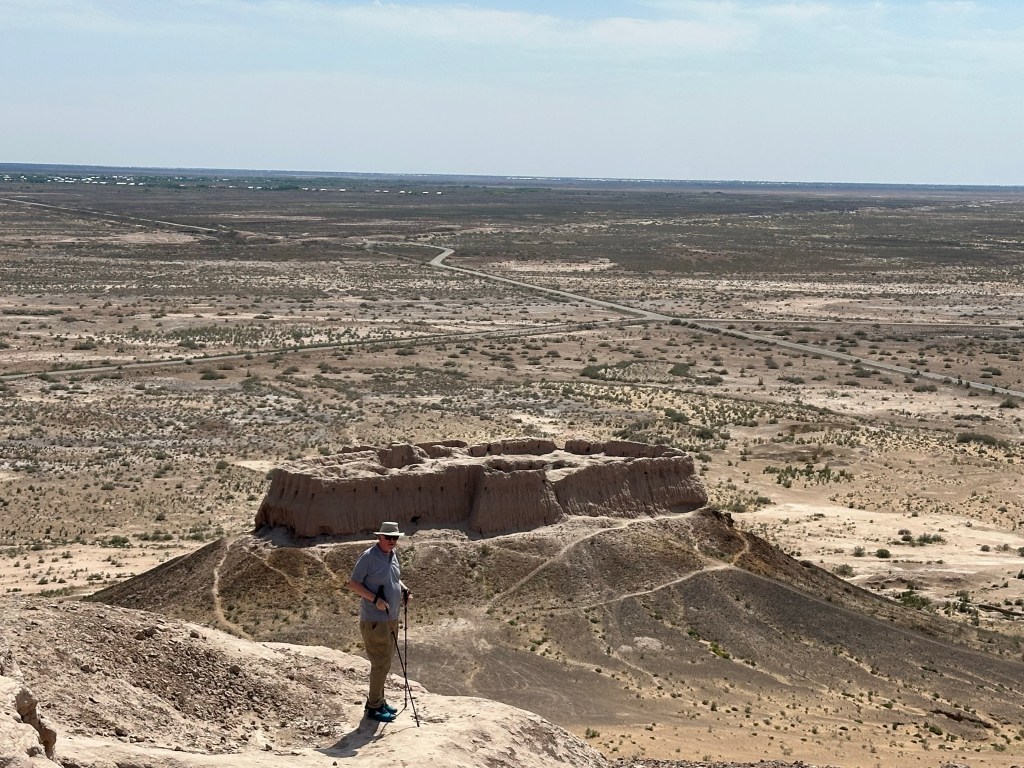
We hiked up three forts including Topraq Kala which archaeologists have discovered also incorporated a royal palace. From the top of Ayaz Kala we had an excellent view of the second Ayaz Kala (there are three in total, the third is visible but a ruin).
Kyzyl Kala (above and below)Toprak Kala above and below Ayaz Kala (one and two) above and below