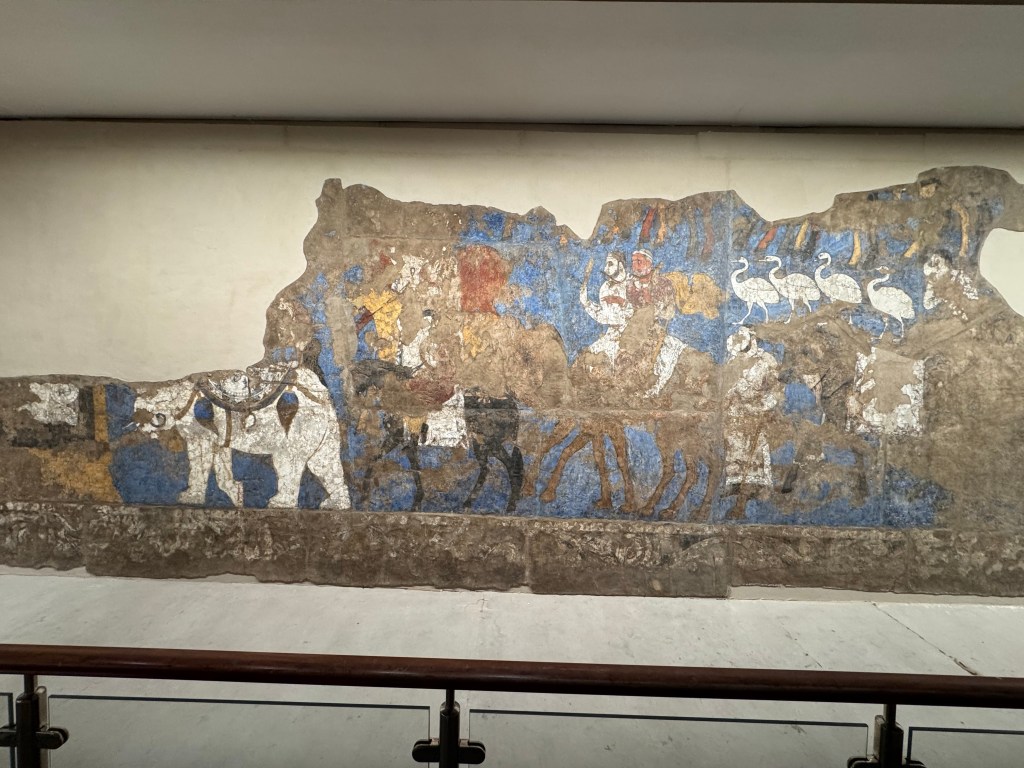
Archaeological evidence dates Samarkand to the 6th century BC around Afrosiab Fort. Alexander the Great took the city, then named Marakanda, in 329BC from its Sogdian rulers saying that it was even more beautiful than he imagined.
It recovered after destruction by Gengis Khan and Marco Polo commented on the beauty of Samarkand during his travels in the late 13th century.
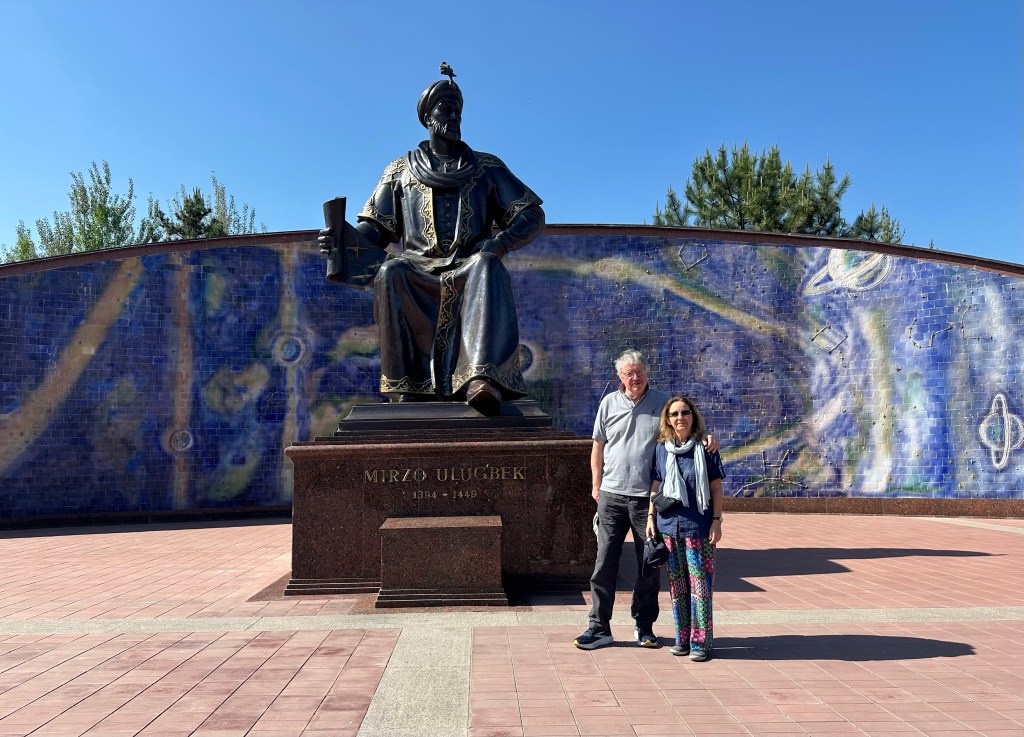
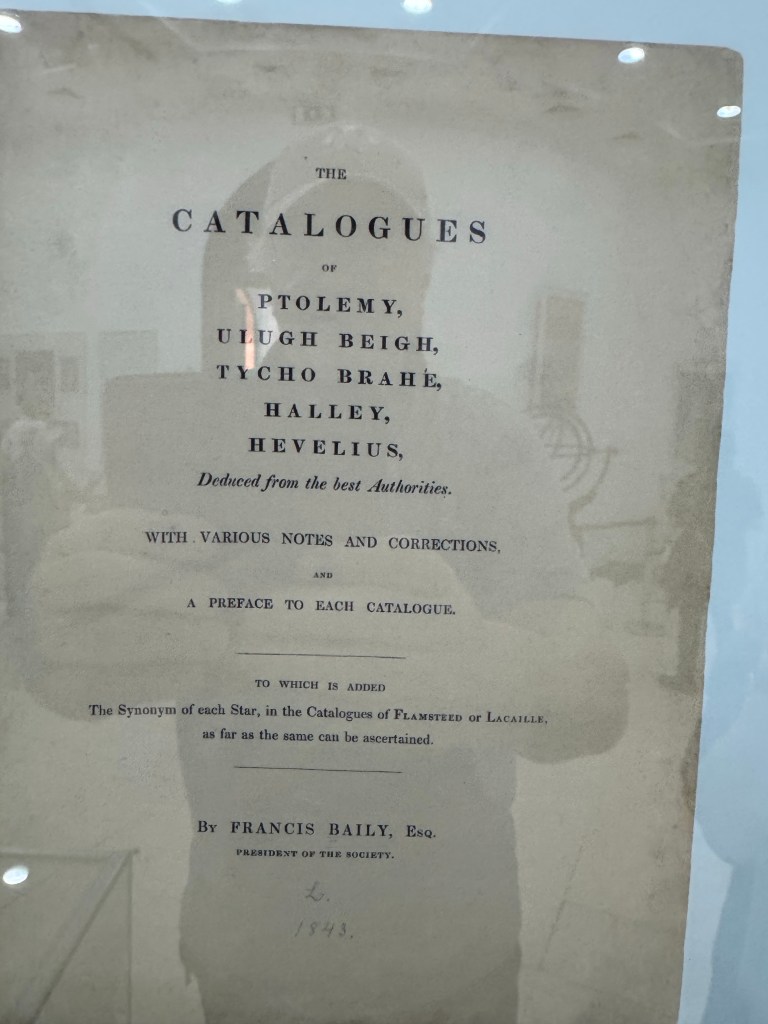
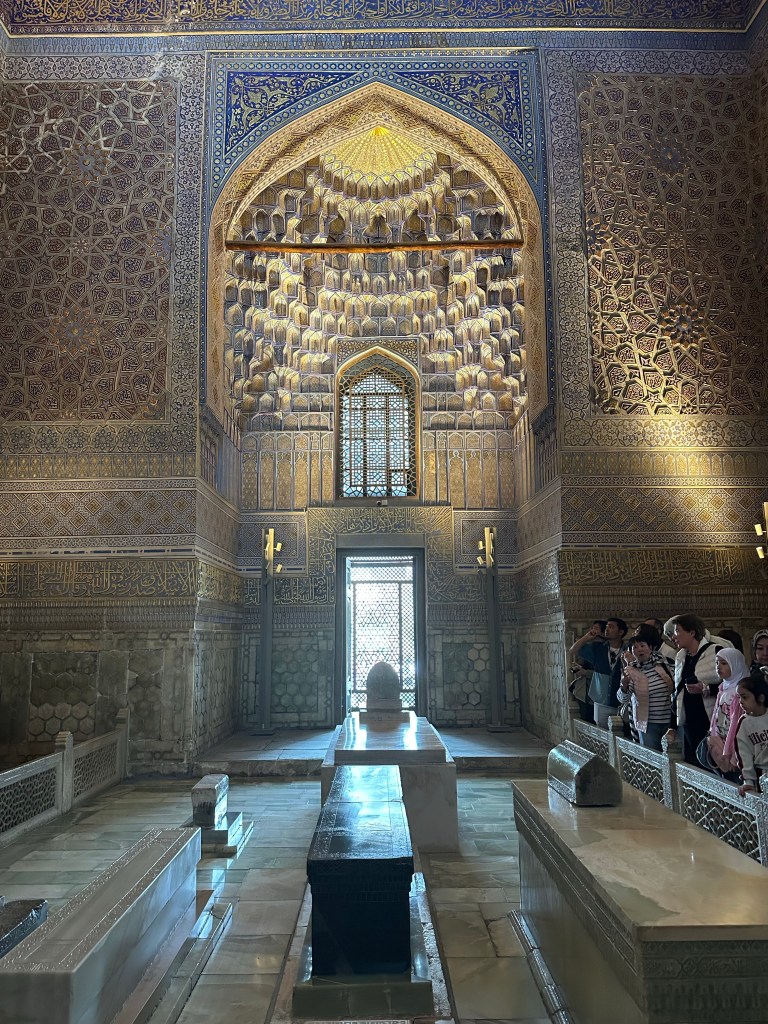
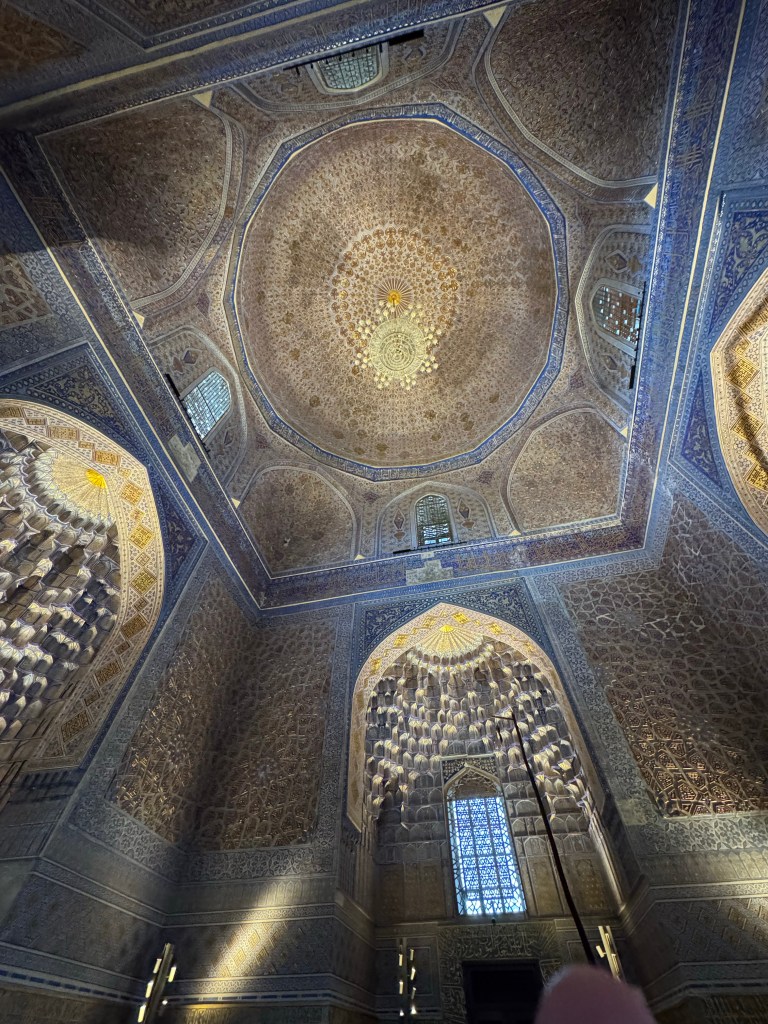
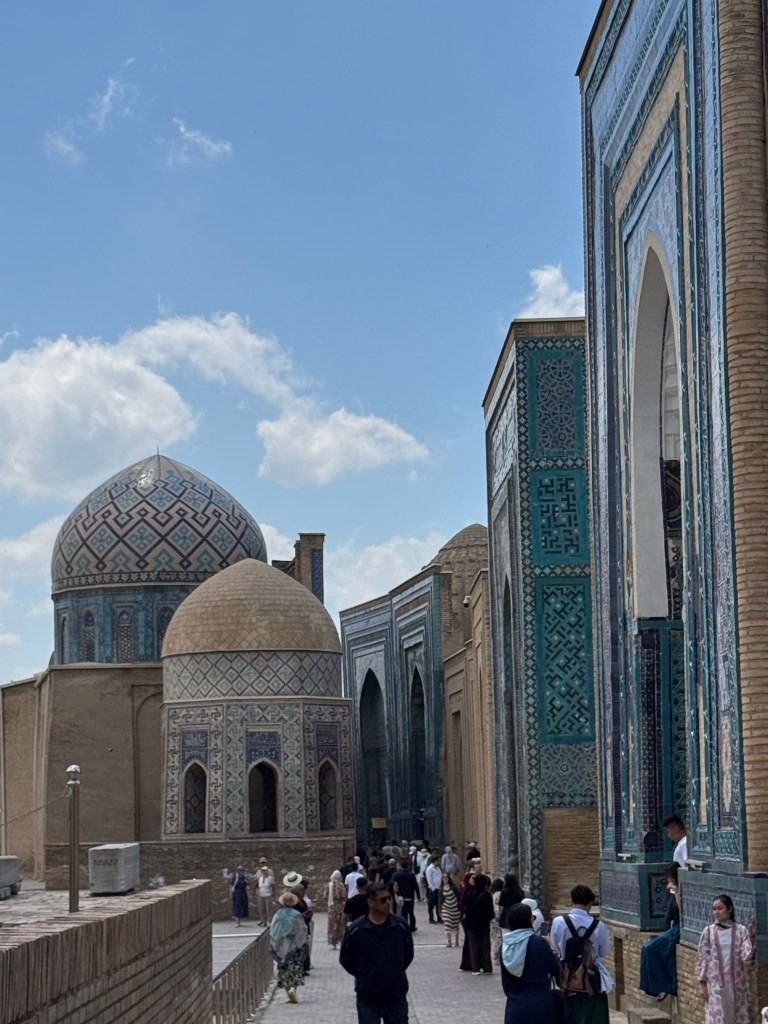
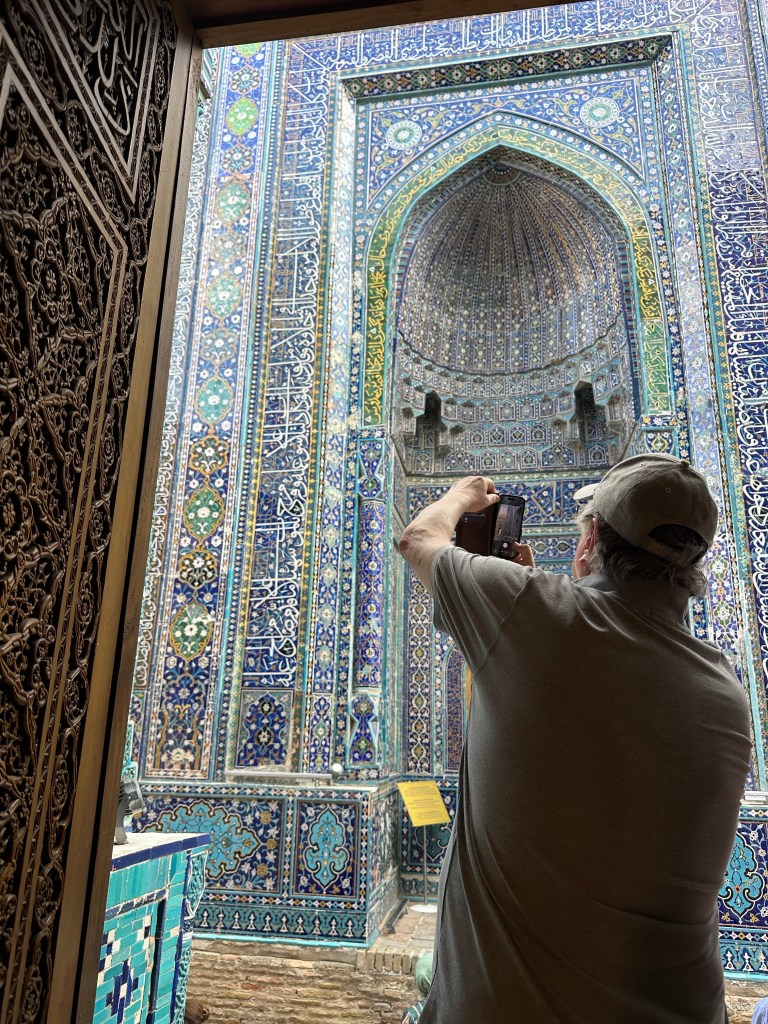
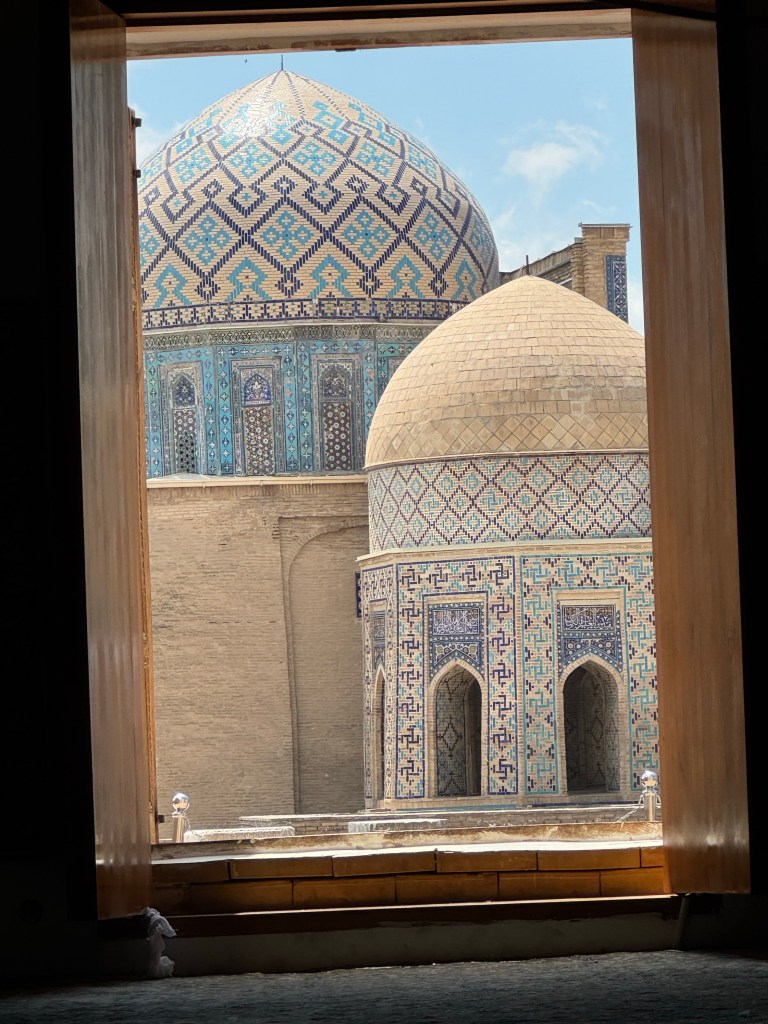
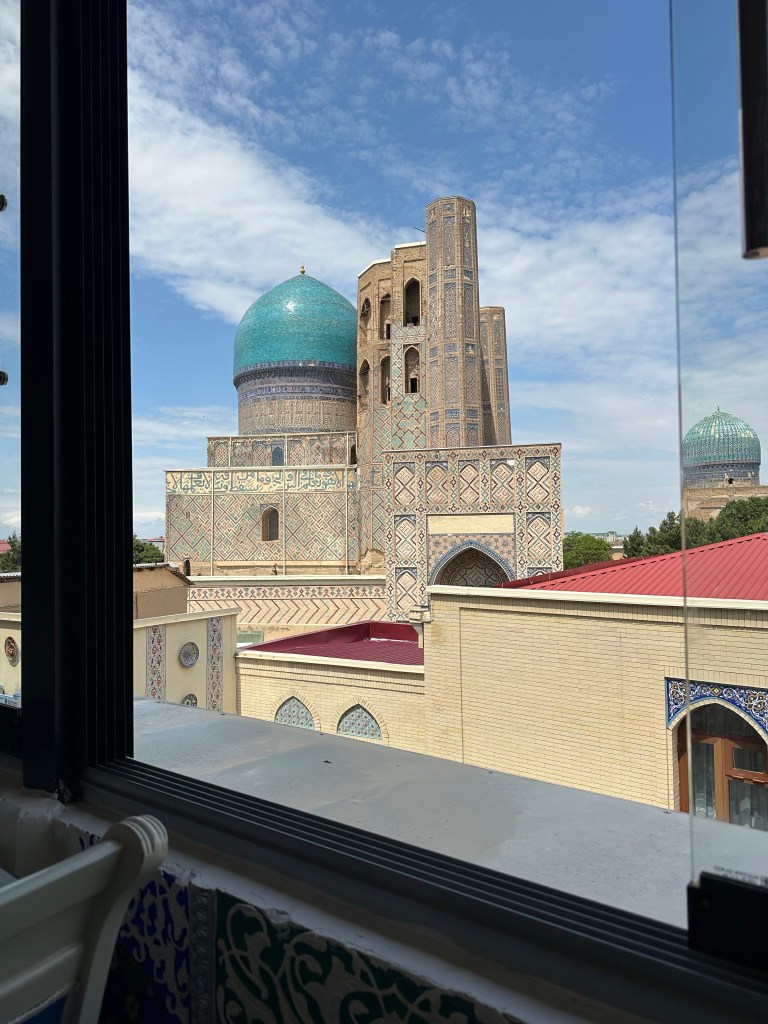
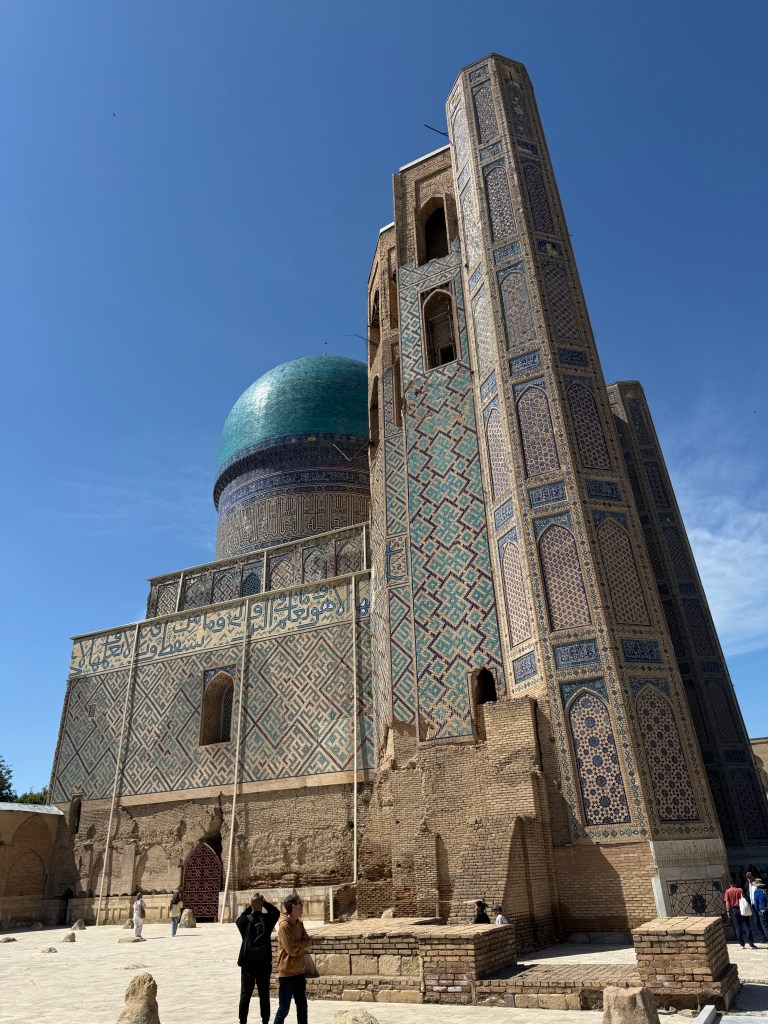
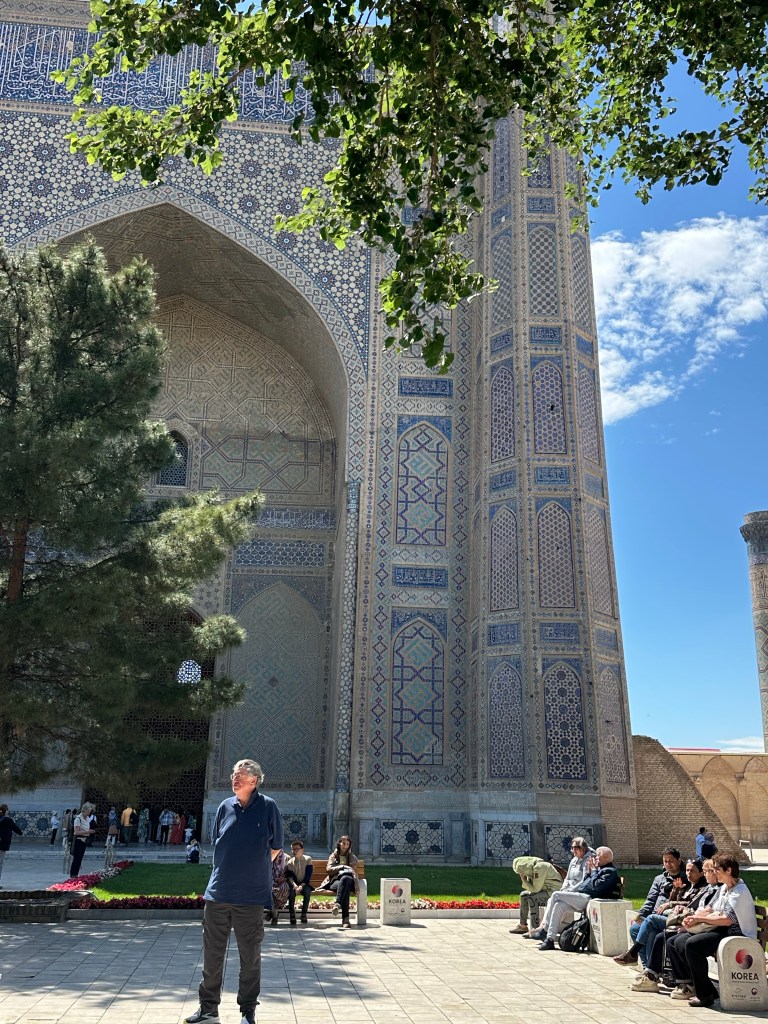
In 1370 Timur made it his capital of one of the largest empires in the world and built madrasas, mosques, palaces, mausoleums, trading domes and caravanserai to recognise this. When Timur’s grandson Ulug Bek obtained control he demonstrated his scientific knowledge by building an observatory in the early 15th century. He is now recognised as one of the world’s leading astronomers.
In 1917 Samarkand fell peacefully to the Bolsheviks and was named the capital of Uzbek SSR in 1925 for five years.
Today it is Uzbekistan’s second largest city with a population of around 650,000. Unlike Bukhara and Khiva, the main buildings of historical interest are less concentrated in a central area, interspersed with Soviet and more recent developments.
 Shilli-Fully Travels