Costa Rica travel

All of the Costa Ricans that we met, especially the guides, were very friendly, proud of their country and committed to conservation. Everyone greats you or says goodbye with “Pura Vida”, literally “pure life”. This is believed to have come into the language following a Mexican film in 1956 and became ingrained in the culture by the 1980s.

Travel in Costa Rica also involves hazards. There are 22 venomous snakes with about 600 snake bites a year being recorded mainly by fer-de-lance, a type of viper. While, unlikely to kill, it would extend your Costa Rican stay by around a month while receiving anti-venom. We only encountered one (enough) which was on a hiking track and very well camouflaged. We were with a well trained guide who had dealt with snakes since he was a child. As well as knowing how to persuade the snake to move on he also took a photo for us, so we could keep our distance!

There are also venous spiders, headed by the tarantula and poisonous frogs. All of which we saw during our trip.

Like most people we have a dislike for mosquitoes but now have more mixed feelings having discovered that they pollinate cacao beans as bees and larger insects are too big to fit in the complex flowers.

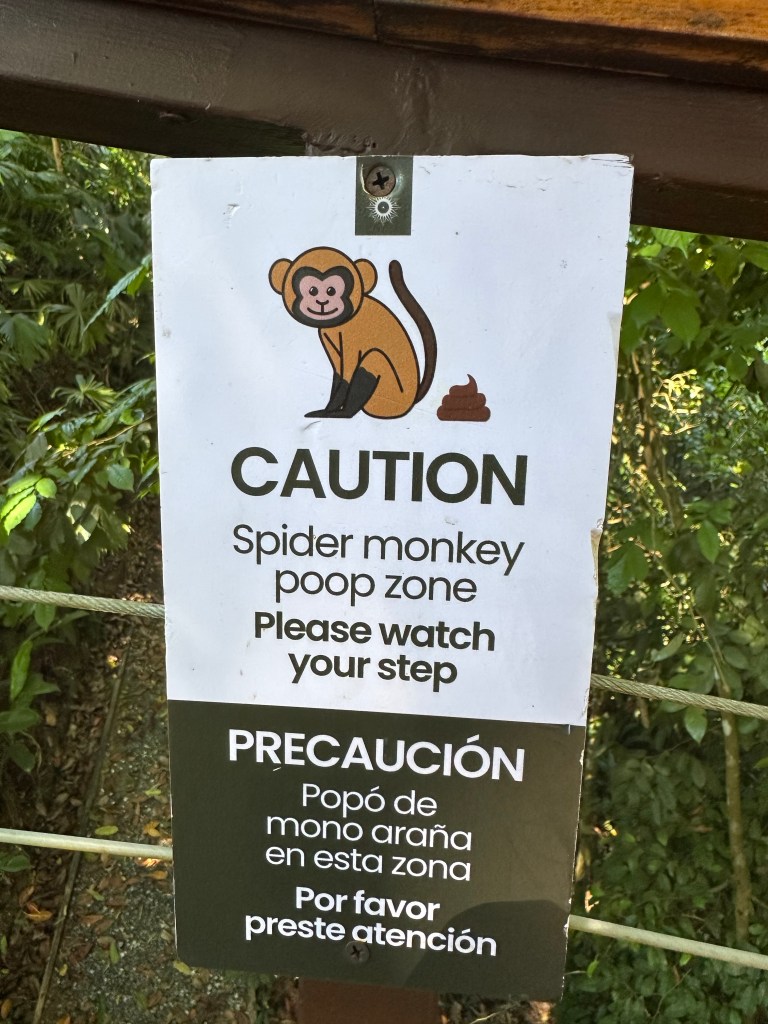
Other hazards, while less dangerous, include monkeys who like to point out that you are in their territory by defecating on you from a tree !
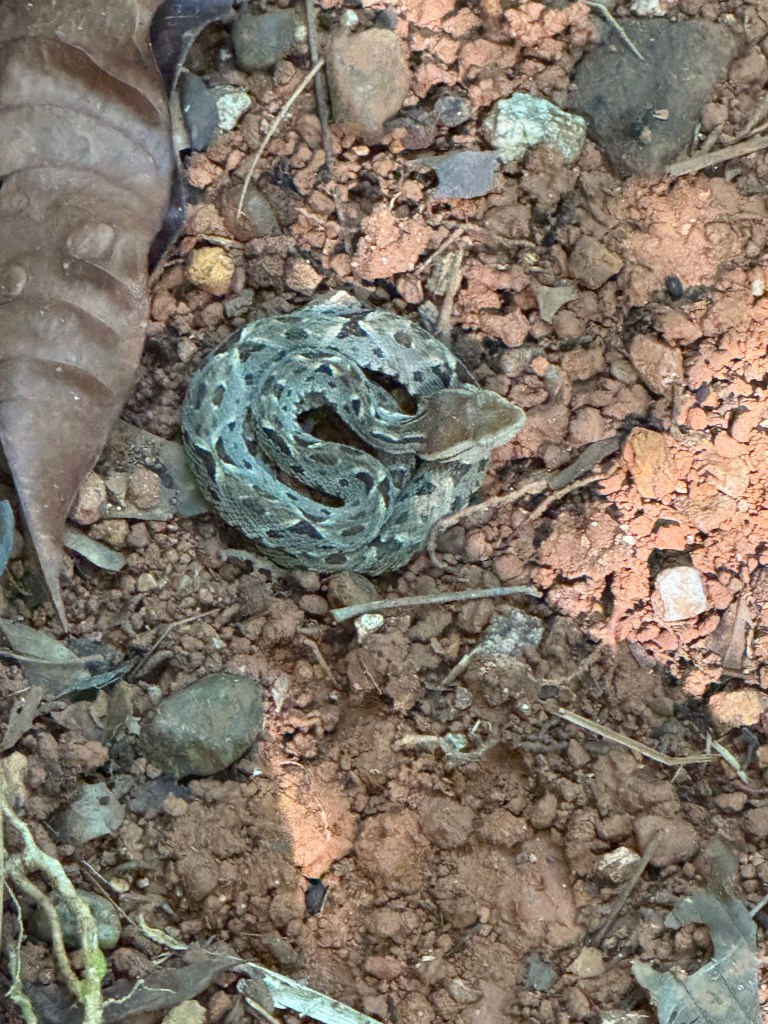
The fer-de-lance

Black-waved flannel moth caterpillar which is toxic
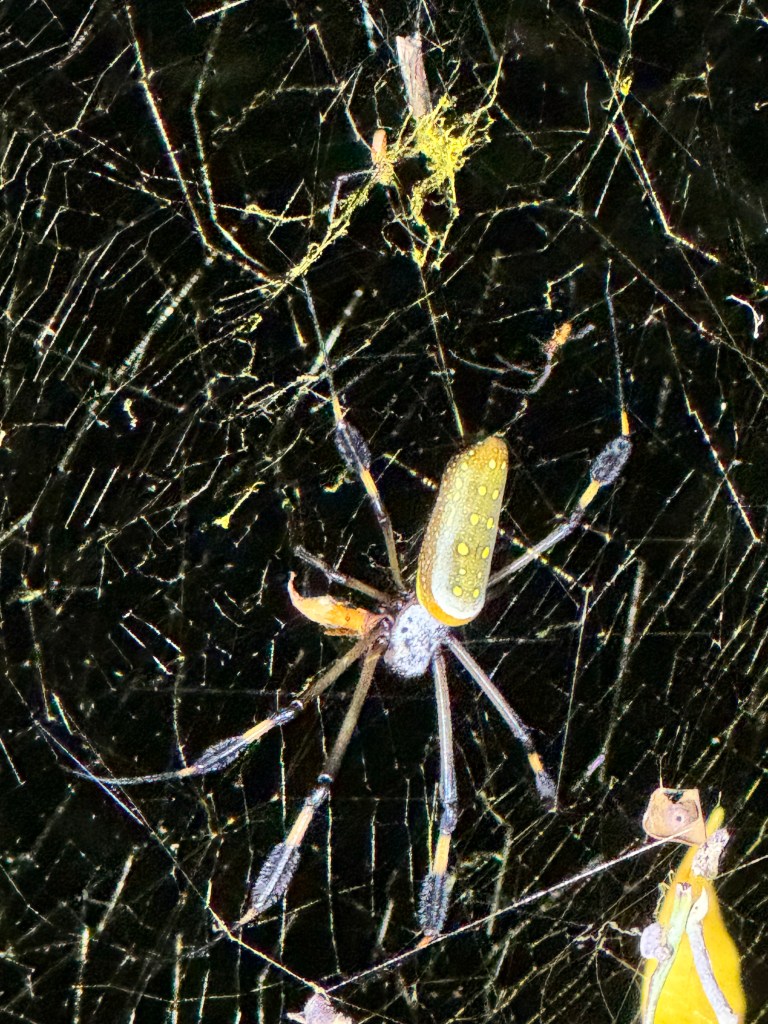
Golden silk orb spider – likely to cause discomfort rather than anything more serious. The web can be up to 2m.
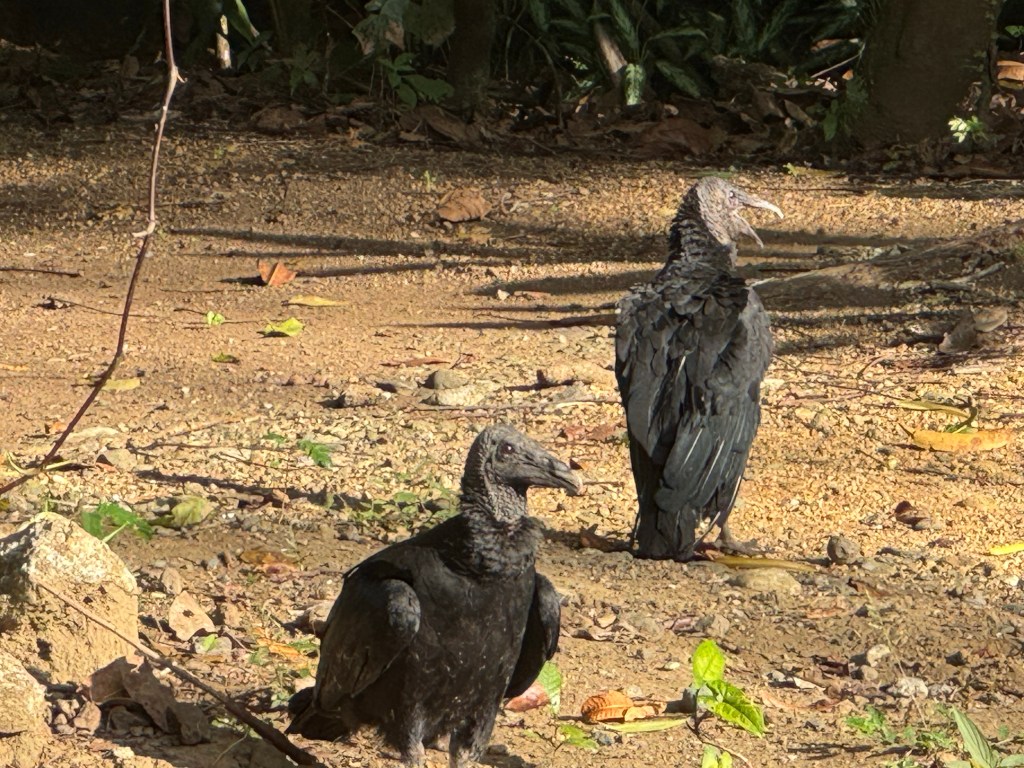
Vultures
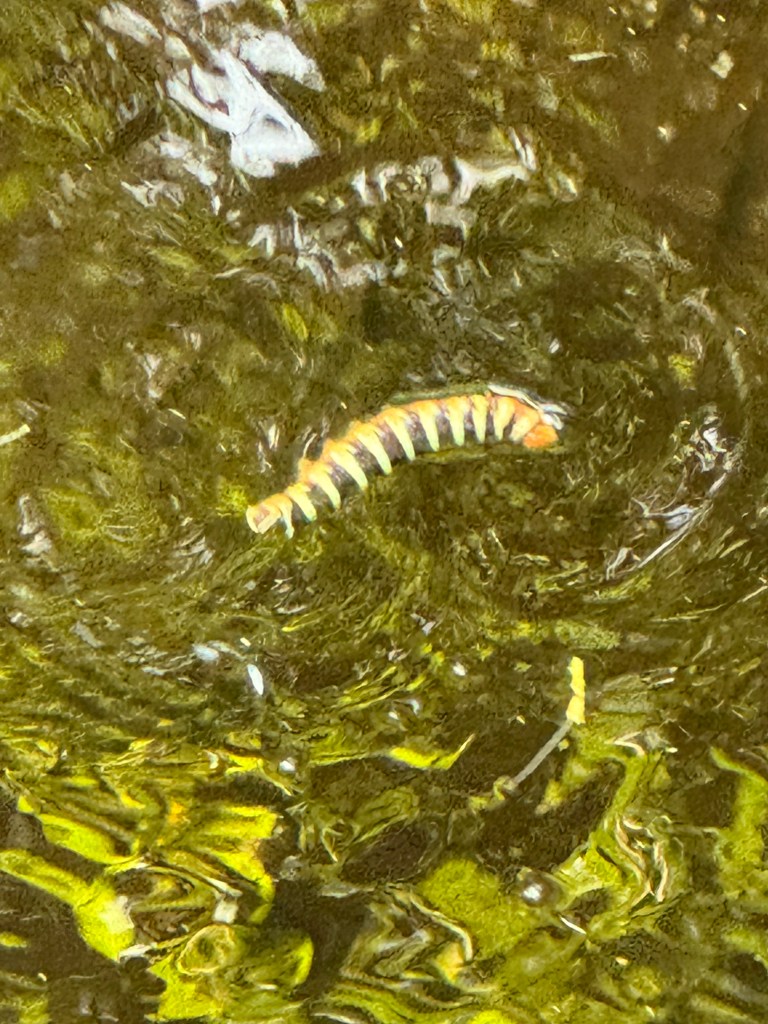
Frangipani hornworm, a toxic moth caterpillar that can float and grows up to 15cm long (this one was about 5cm and in a pond at one of our lodges).
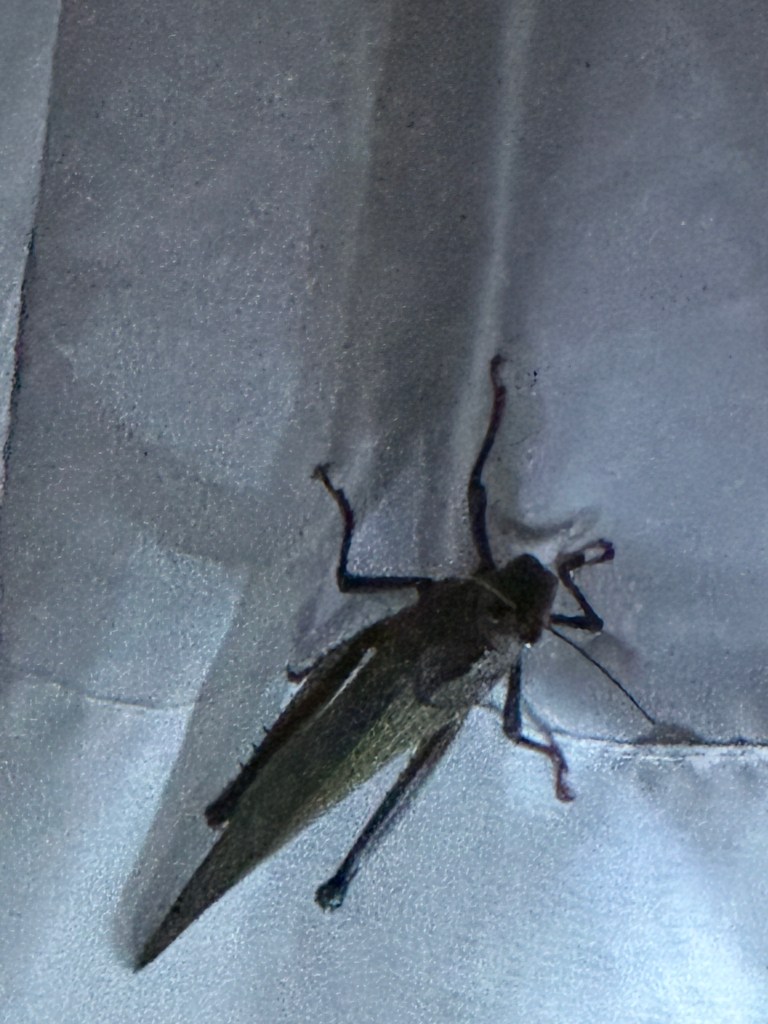
Giant red-winged grasshopper – about 12cm long, not toxic but a surprise if it lands on your head during dinner, as happened!
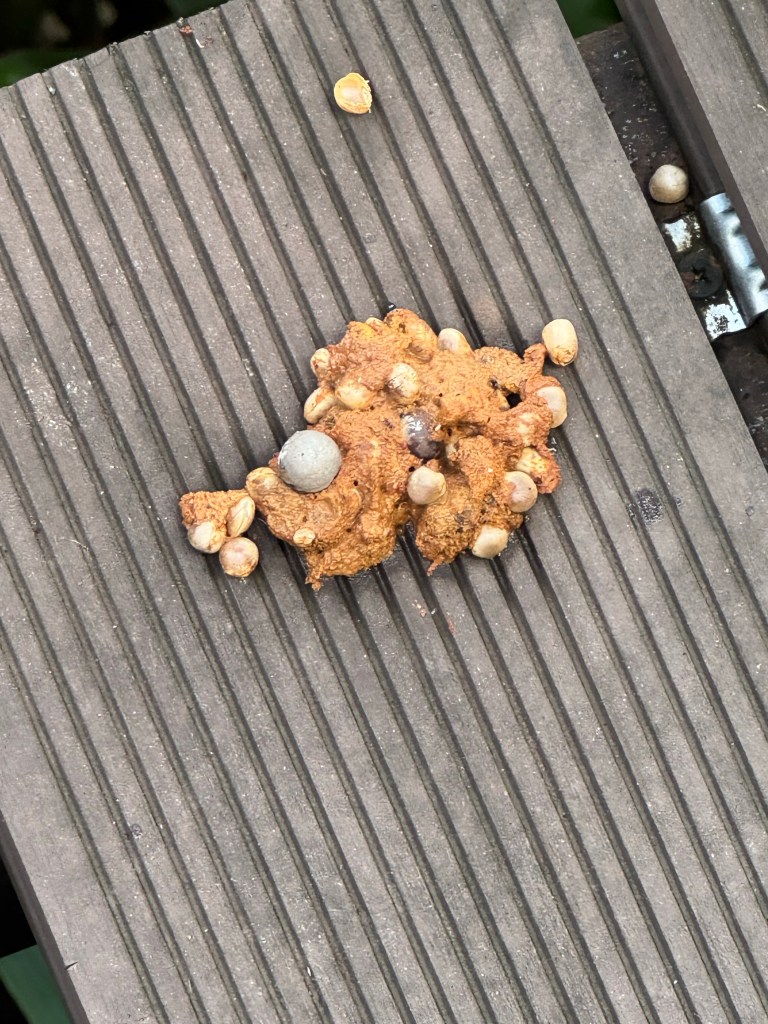
This is what you don’t want on your head (or shoes) but shows the monkeys’ role in spreading seeds
Just by the massage room at one of our lodges !

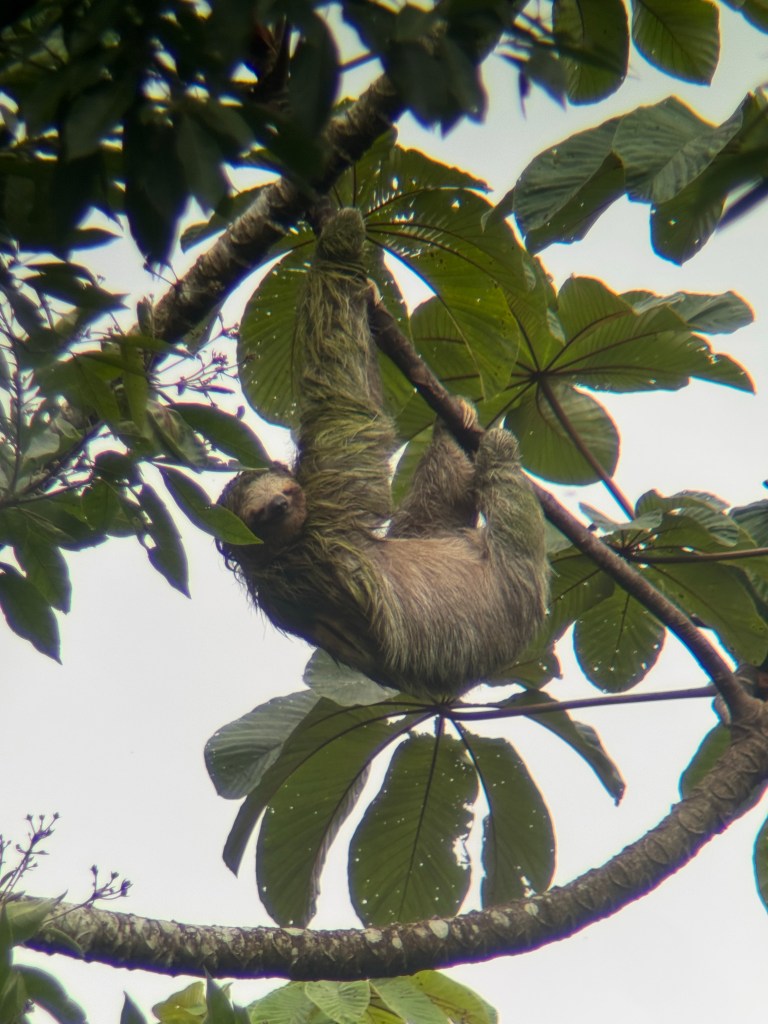
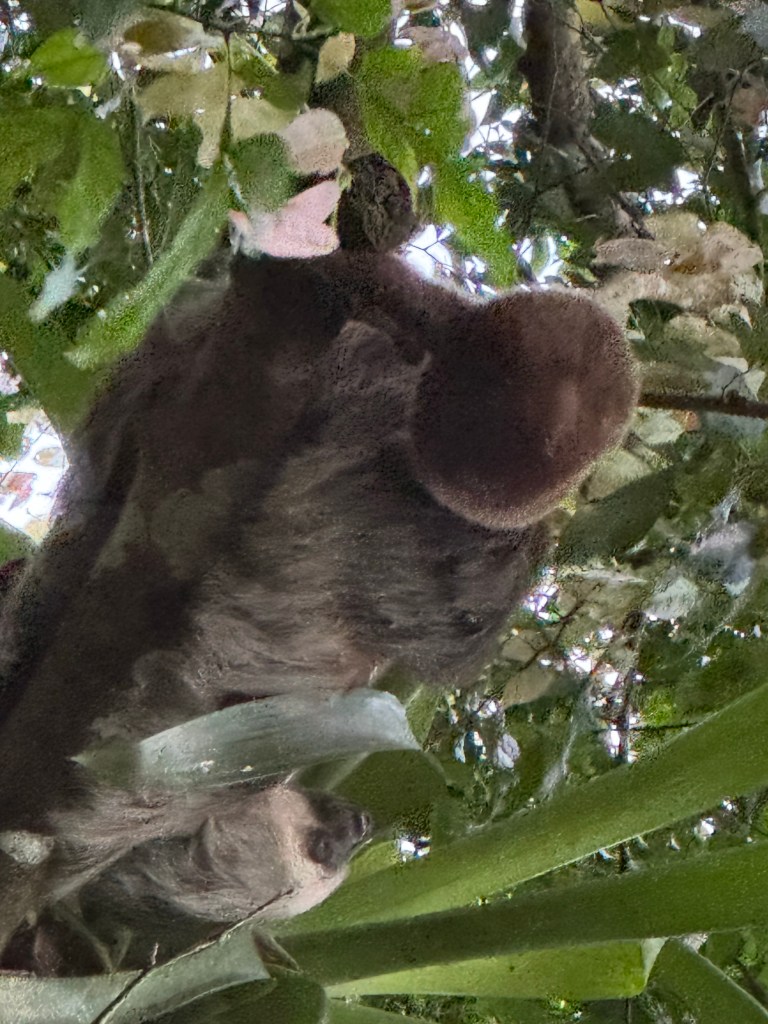
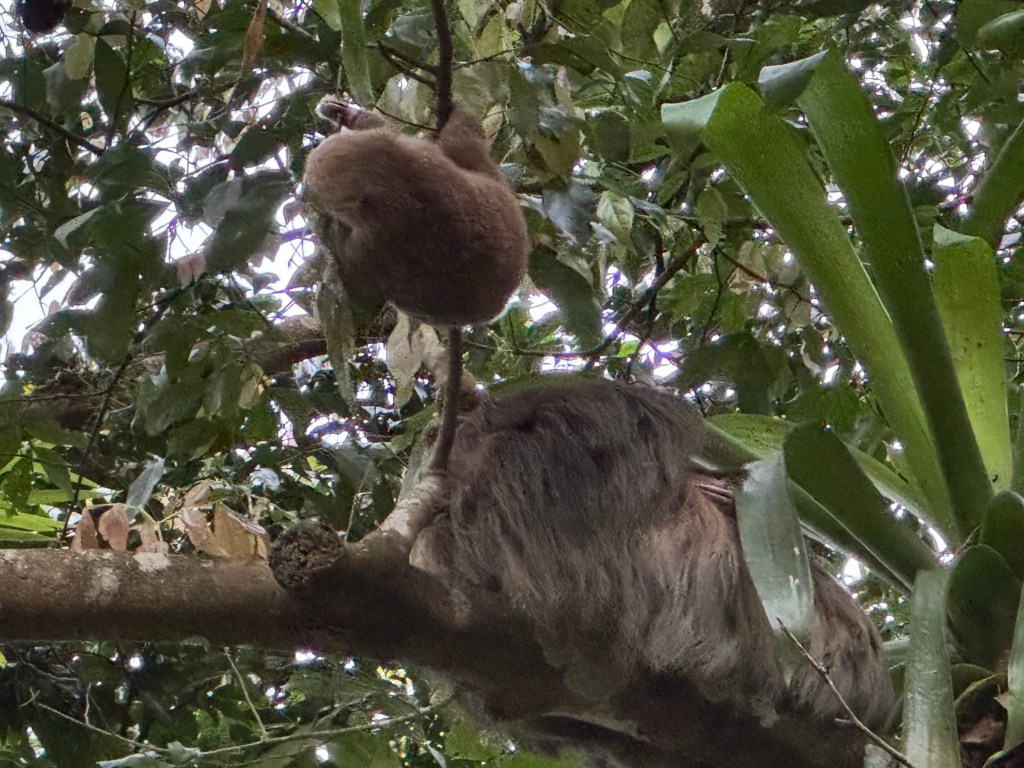
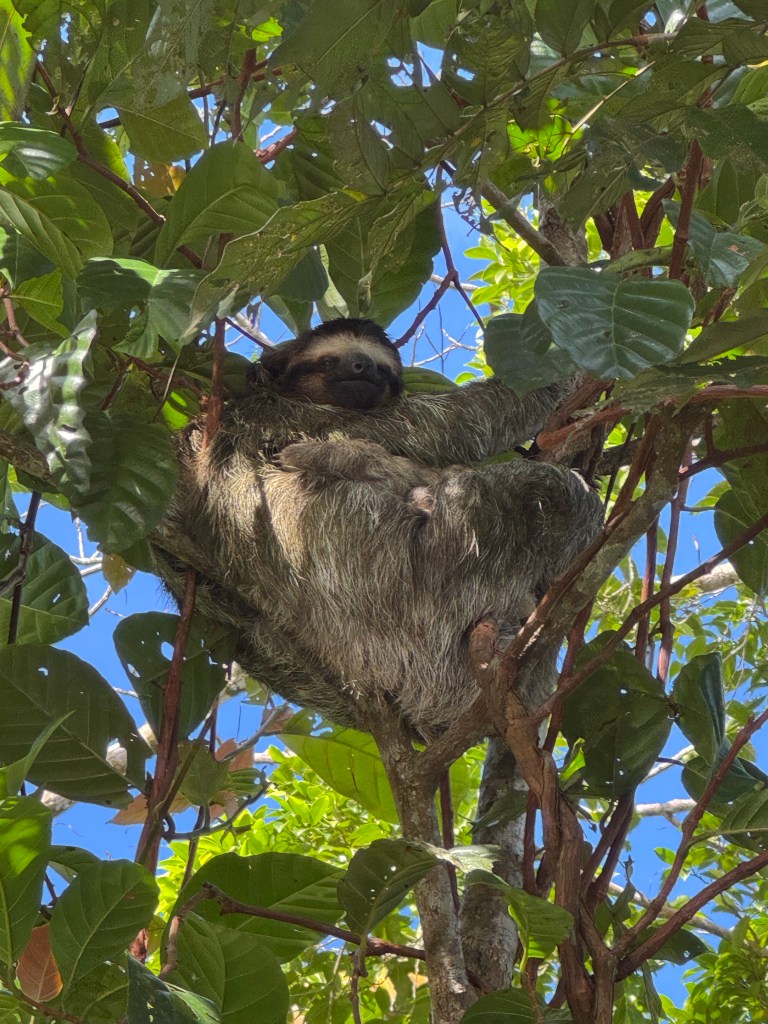
Sloths

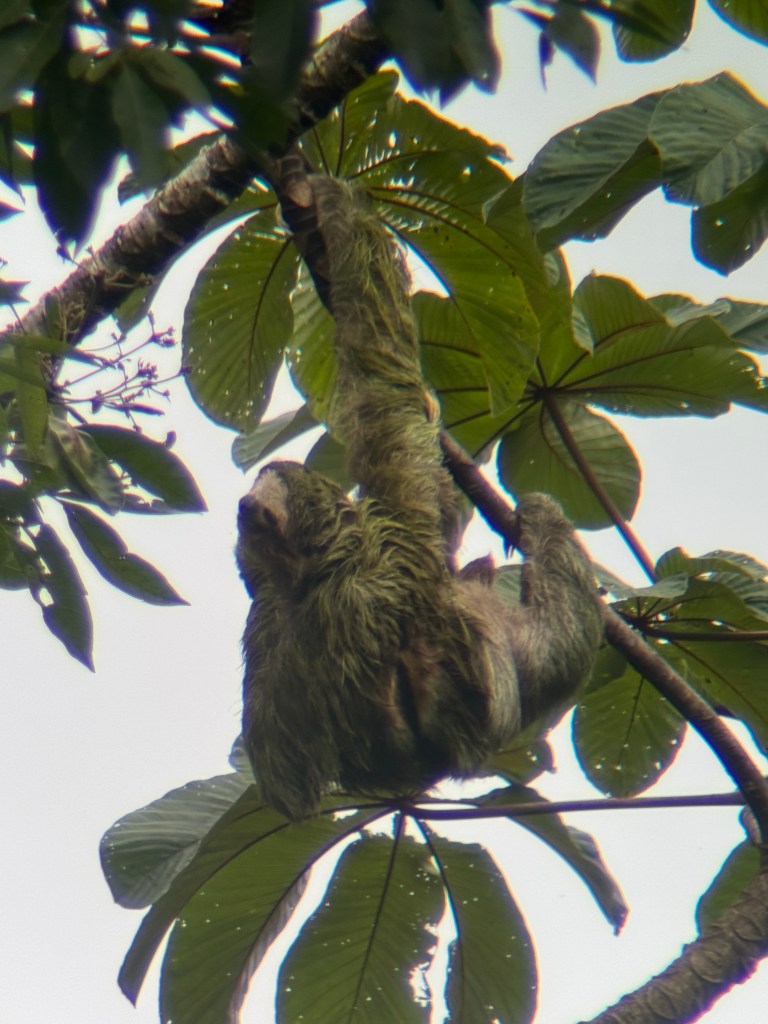
There are six different species of sloth; Costa Rica is home to two of them, the “two-toed” and “three-toed” sloths. Despite the names, it is actually the digits on the fore-limb that differ as the Spanish for fingers and toes is similar. Other than the number of “toes” they are distinguishable by their colour.

Sloths spend approximately 22 hours a day sleeping at the tops of their favourite trees, only coming down to the ground to defecate, which happens approximately once a week, or to move trees. They are solitary animals, only getting together to mate or when females are bringing up their young.

Three toed sloths appear green as they host an algae in their fur which serves as camouflage to protect from predators – large hawks in trees and jaguars on the ground – and to protect them from the sun. The particular algae is only found on the three-toed sloths and is thought to be passed from mother to child shortly after birth. Scientists are investigating the possibility that the algae might have medicinal benefits for humans.

Most of the sloths we saw were on guided hikes, although we also saw them in the grounds of a couple of our lodges.

One of our guides said that the main purpose of sloths in Costa Rica is to sell t-shirts !

Central Valley

Our final stop in Costa Rica was the Central Valley, just an hour from San Jose. The area is more temperate and less humid than the rain forests and is where coffee was first grown in the late 18th Century.

We visited a coffee plantation and learned about the process from seed to the final product. All the plants we saw were Arabica with the final flavour dependent on the roasting process. Coffee trees grow best at over 1,000 metres and enjoy the volcanic fertile soil. The caffeine in the plants provides a natural defence from wildlife. The only danger to the crop is fungus which is becoming more of a problem with climate change.

The fruit is hand picked as machines are not able to cope with the slopes of the plantation. The pickers are migrant workers from Nicaragua paid piece work with minimum wages set by the government. The plantation we visited pays double the minimum and also provides various other worker benefits.

The process for obtaining the seeds (beans) from the fruit was undertaken until 2021 by a machine built in London in the mid 19th century. It is still operational but as it is driven by water which cannot be returned to the river, it has been replaced by a more environmentally friendly Costa Rican machine.

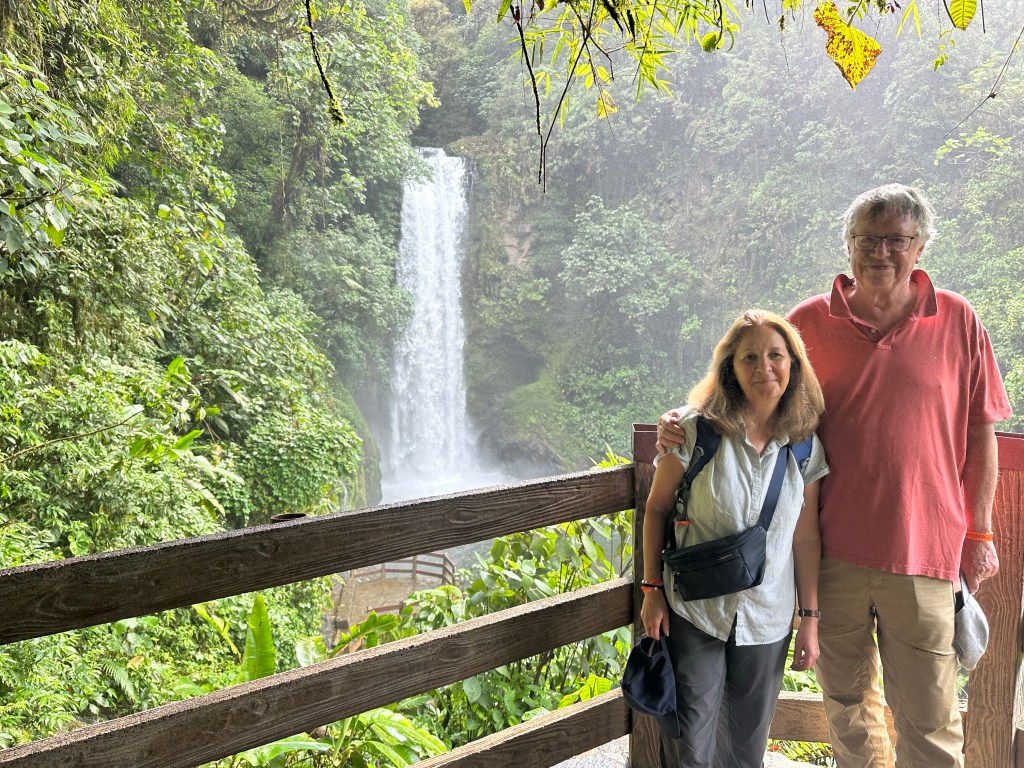
Following our coffee tasting we travelled on to La Paz waterfalls and animal rescue centre. It is illegal in Costa Rica to keep wild animals as pets, so many of the animals are recoveries from law enforcement. The centre returns animals to the wild where possible but some are too domesticated to do so. A jaguar is housed at the centre which was recovered from a travelling Mexican Circus attempting to bring it across the border.

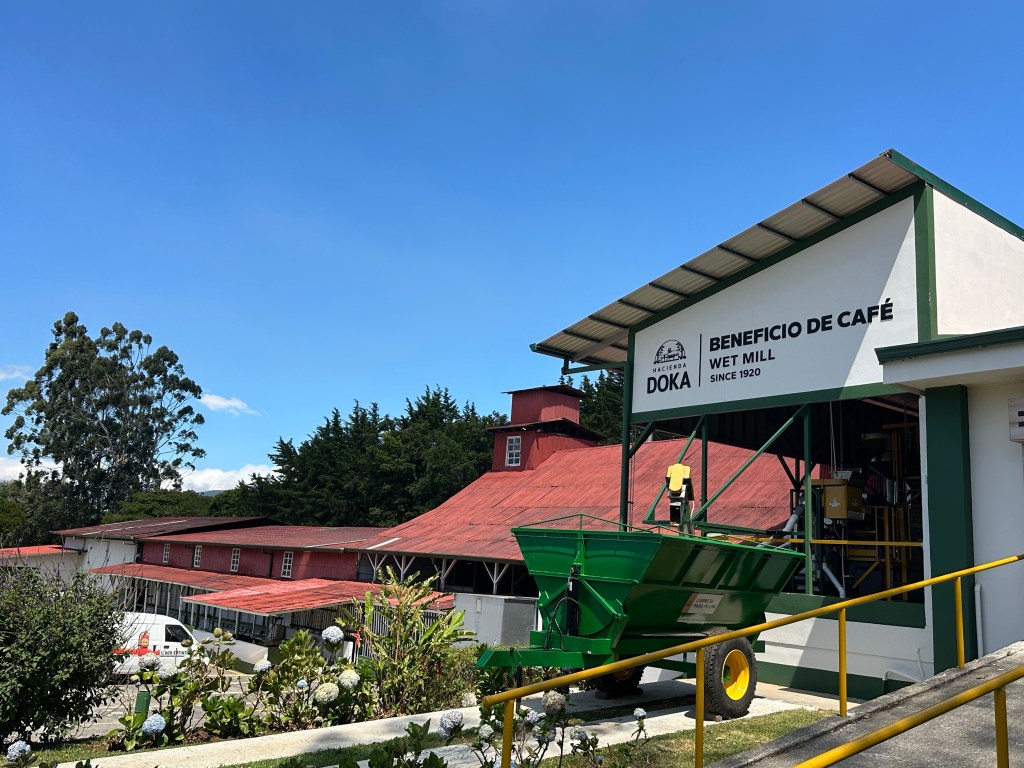
Doka coffee plantation factory
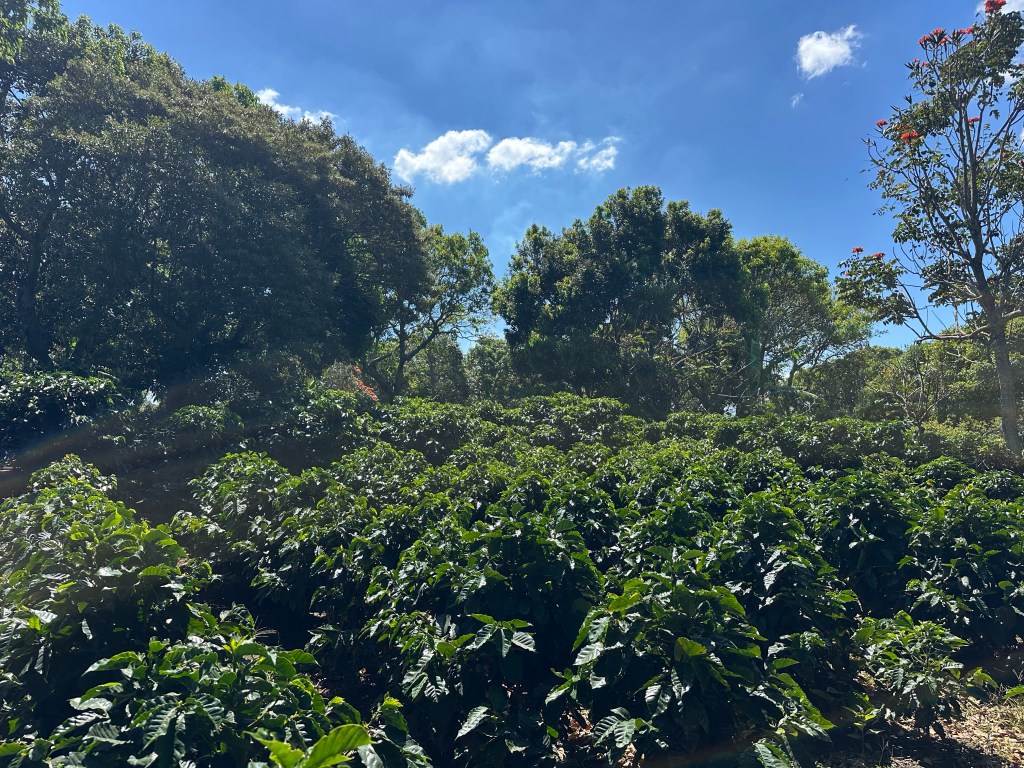
Coffee plants – each year every third row is pruned to maintain air circulation
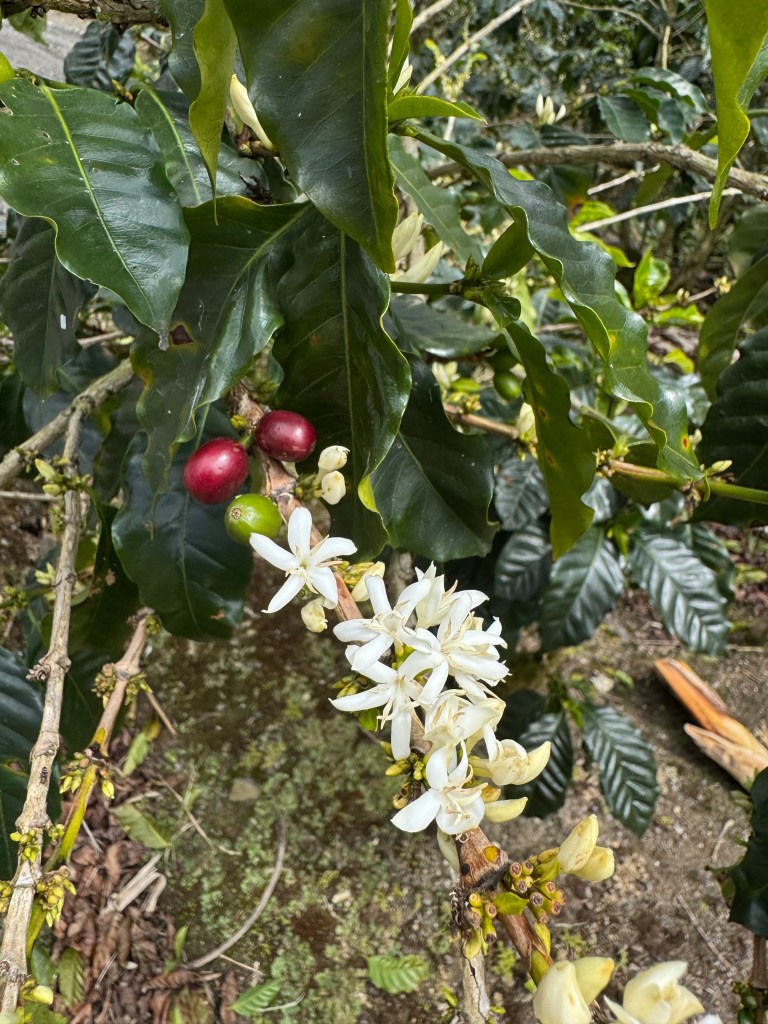
Flower and berry – it’s early to see this as normally the plants flower in April

Golfo Dulce

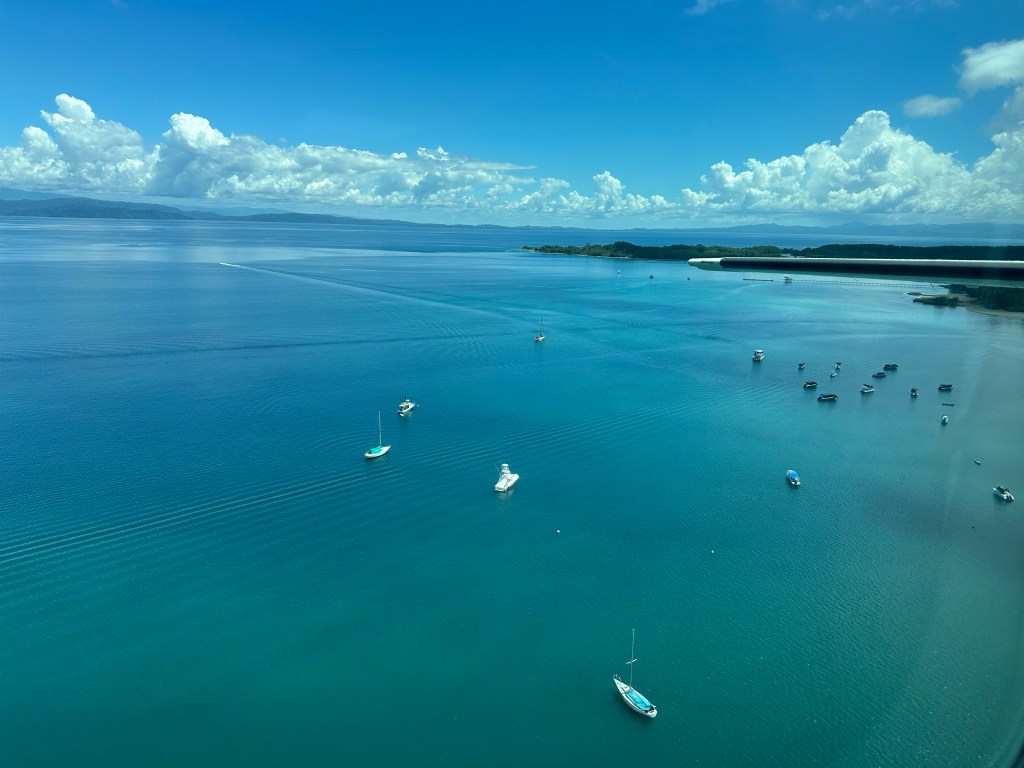
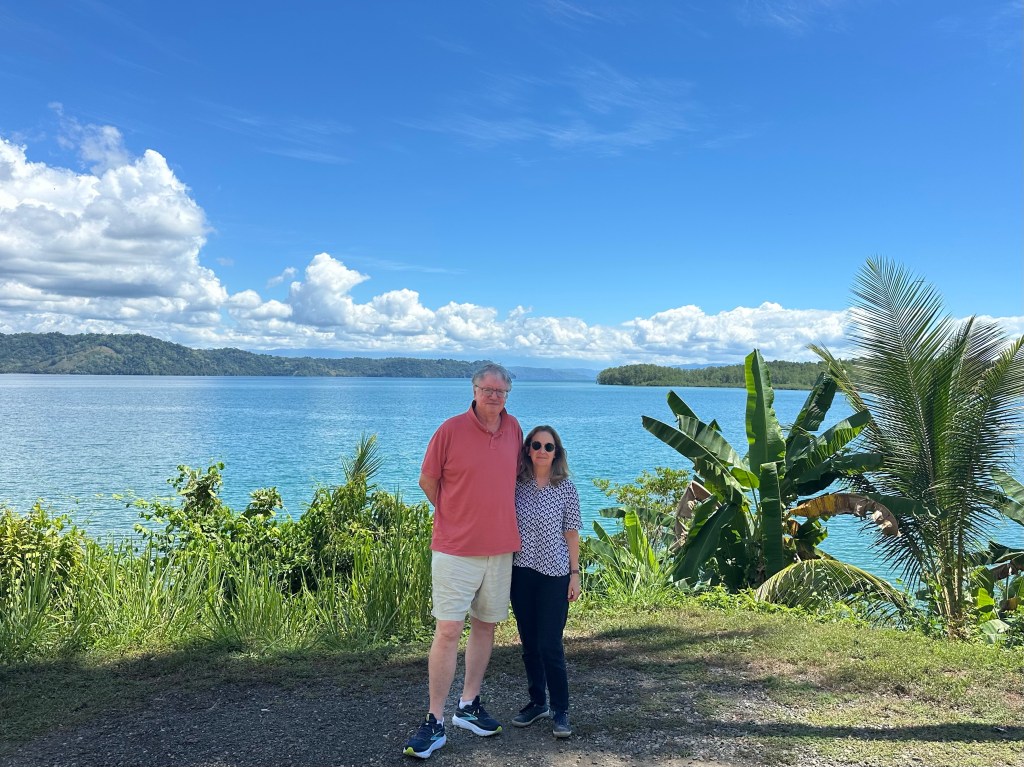
Golfo Dulce is a gulf in the Pacific Ocean which separates the Osa Peninsula from the mainland of Costa Rica. The Golfo Dulce is considered to be a tropical fjord. Most of the gulf and the coast around it is protected with very little development. There are two towns on the gulf – Golfito on the mainland and Puerto Jiménez at the end of the peninsula – both with around 1,000 residents. We arrived by road and departed from the tiny airport at Puerto Jiménez.

The gulf has several species of whales visit to use its warm calm waters as a breeding ground and a nursery.

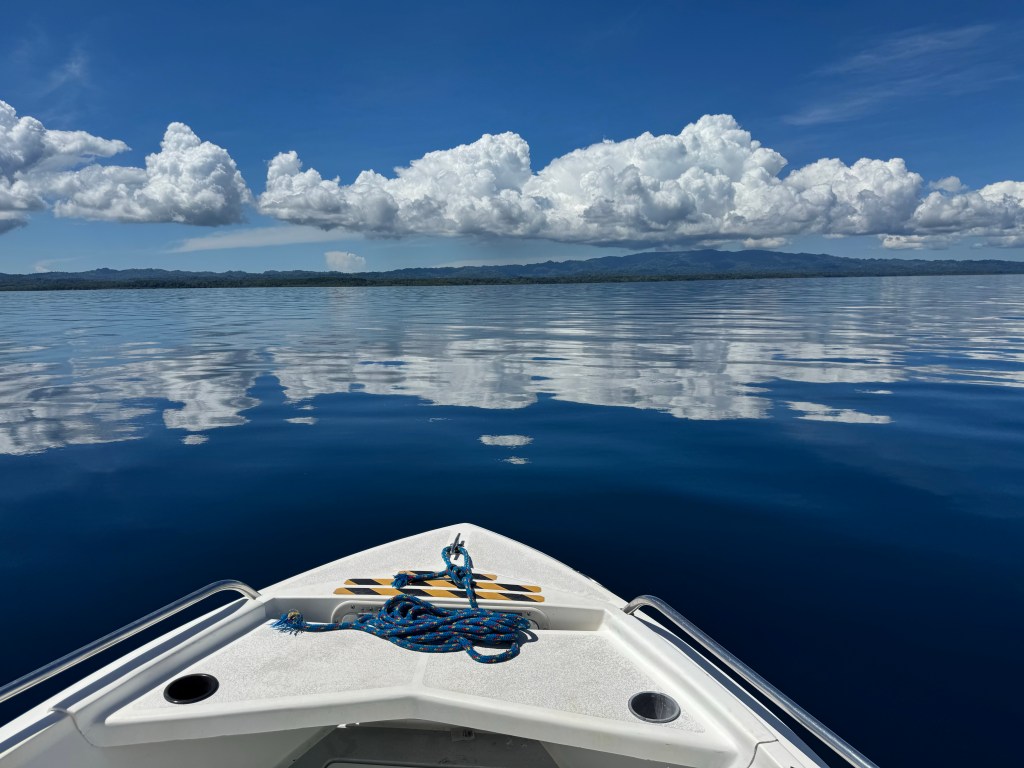
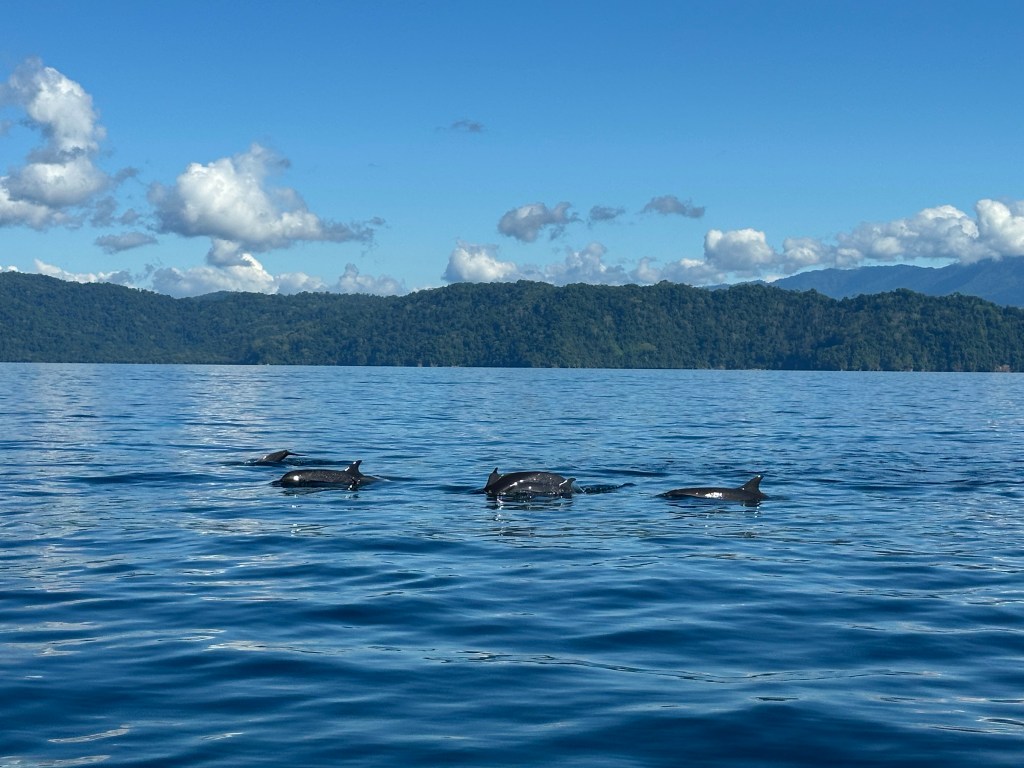
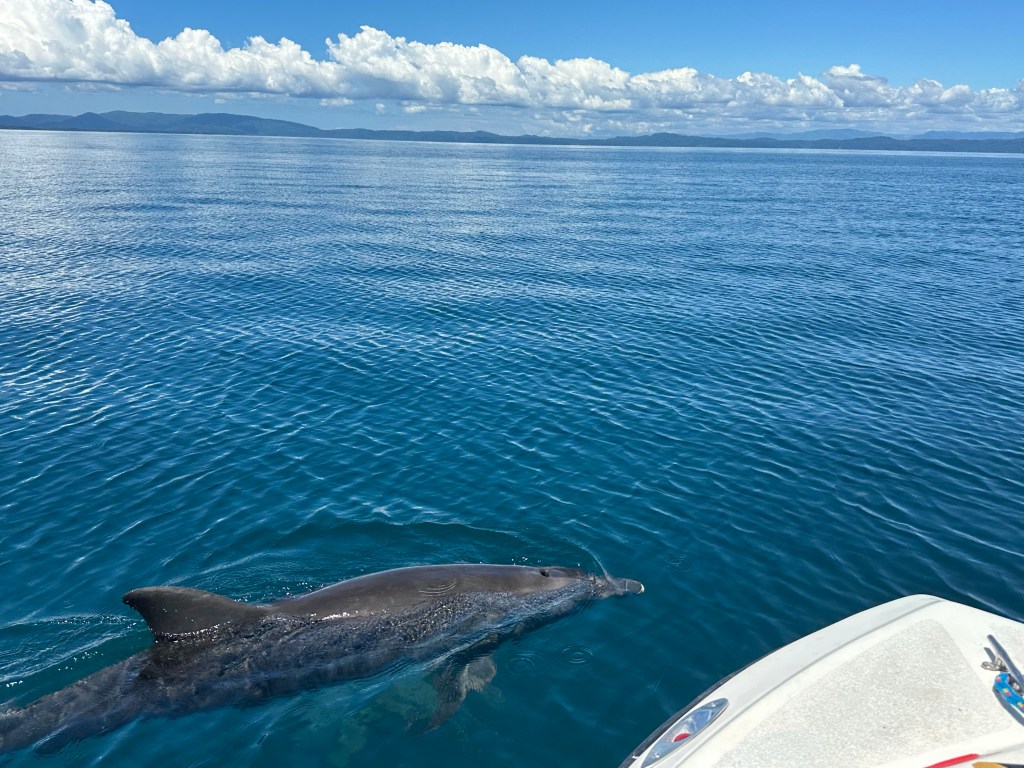
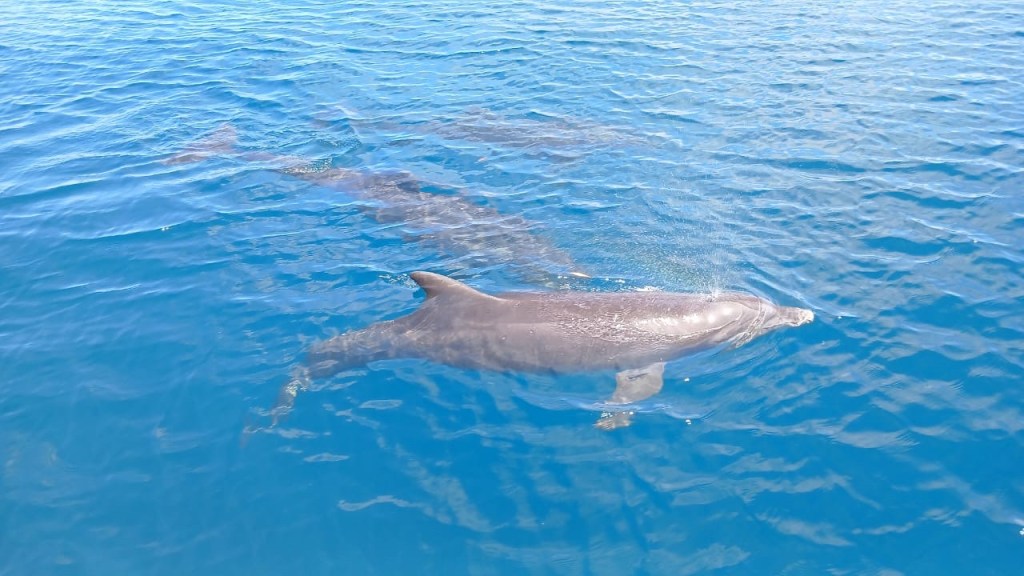
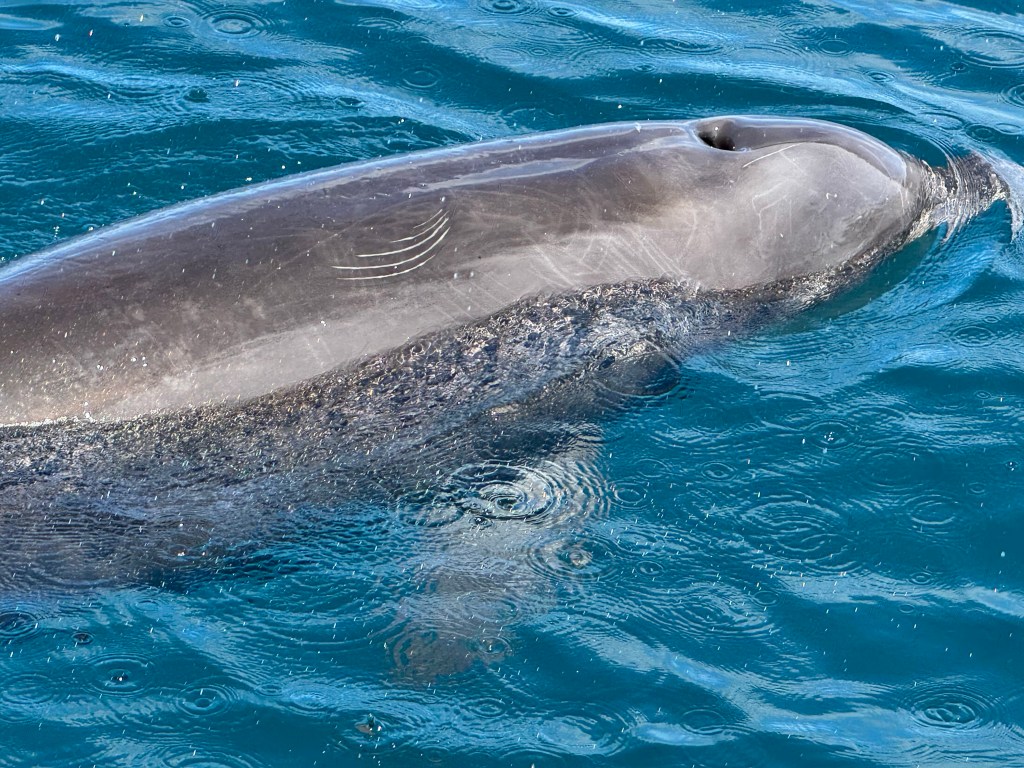
We went on a boat trip to see the two species of dolphin who are year round inhabitants; the bottle nose and spotted dolphins. We saw a group of over 100 spotted dolphins who group together against predators as they are small. The bottle nose are larger and generally found in groups of two to four. We saw several groups very close to our boat, at times swimming under the boat or in its wake. Our guide explained that they approach to boats as they are curious and they enjoy surfing the wake.

The gulf, taken from our flight out of Puerto Jiménez
Spotted dolphins
Bottle nose dolphins (and below)
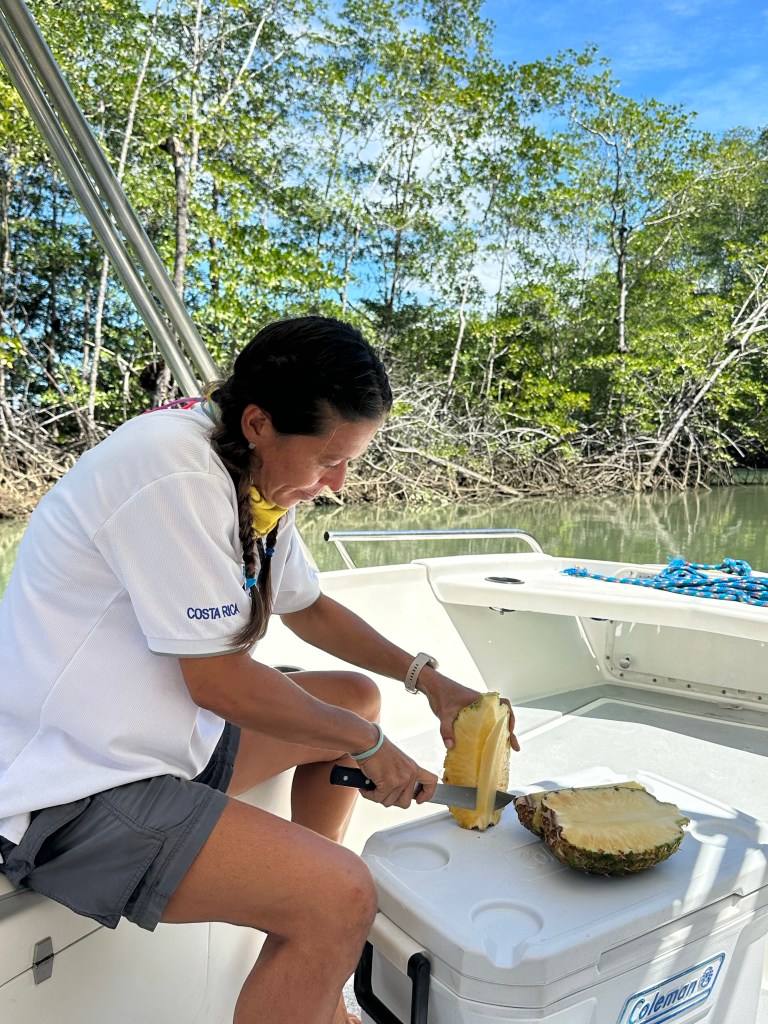
Our guide greeted us with “welcome to my office” and later offered “snacks at the desk”

Osa Peninsula

The Osa Peninsula in south-western Costa Rica is one of the most biologically diverse places on earth with 2.5% of the earth’s species in an area less than 0.001% of the planet.

The lodge we stayed in at the end of the peninsula was founded in 1991 and opened in 1993 on 1,000 acres of rain forest. The land was originally over 80% primary forest with the rest being farmland. The farmland was left to recover and is now natural secondary forest. The lodge became the first privately owned property in Central America to be legally protected, by the owners, in perpetuity to maintain its eco status.

The lodge has resident specialist guides who lead a variety of hikes in the grounds and nearby forests and beaches. We opted for a couple of hikes as well as the “early birds” walk, night walks and “medicine hike”. The guides were very knowledgeable and personable and pointed out numerous animals that we would not have seen ourselves. Mostly this enhanced our knowledge but in the case of a venomous snake on the track, it helped prevent adding a hospital stay to our itinerary!

We were also able to see and hear a huge amount from the lodge itself. This included howler monkeys at 5.30am !

En route from Uvita to Osa
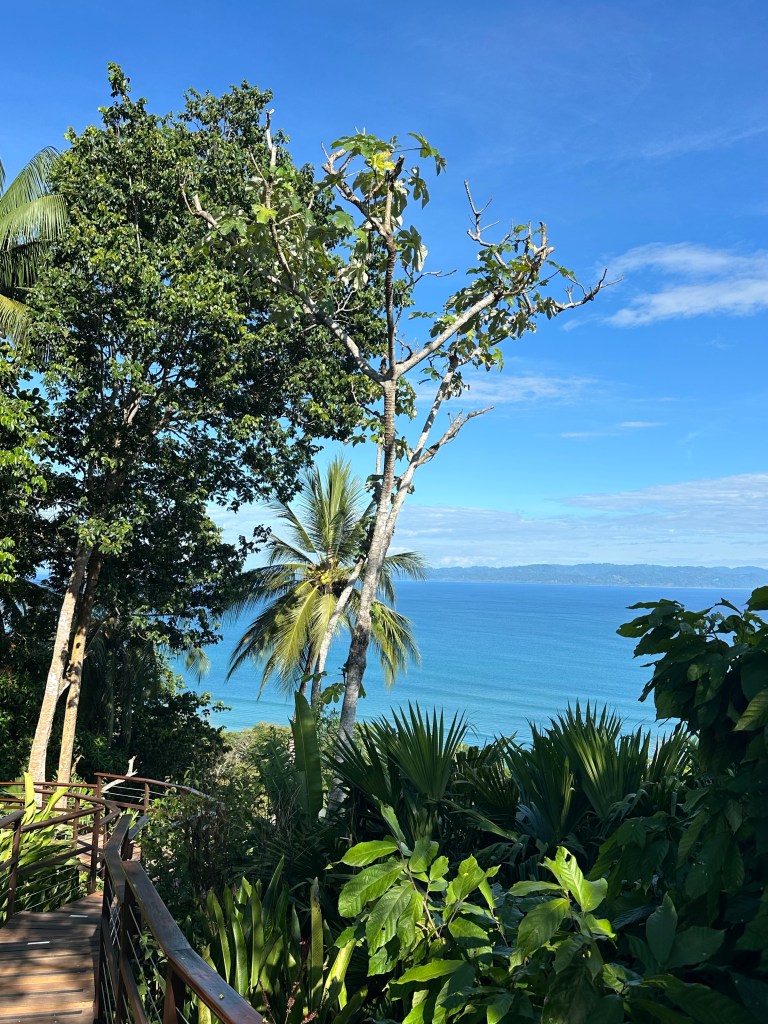
From the walkway of our lodge
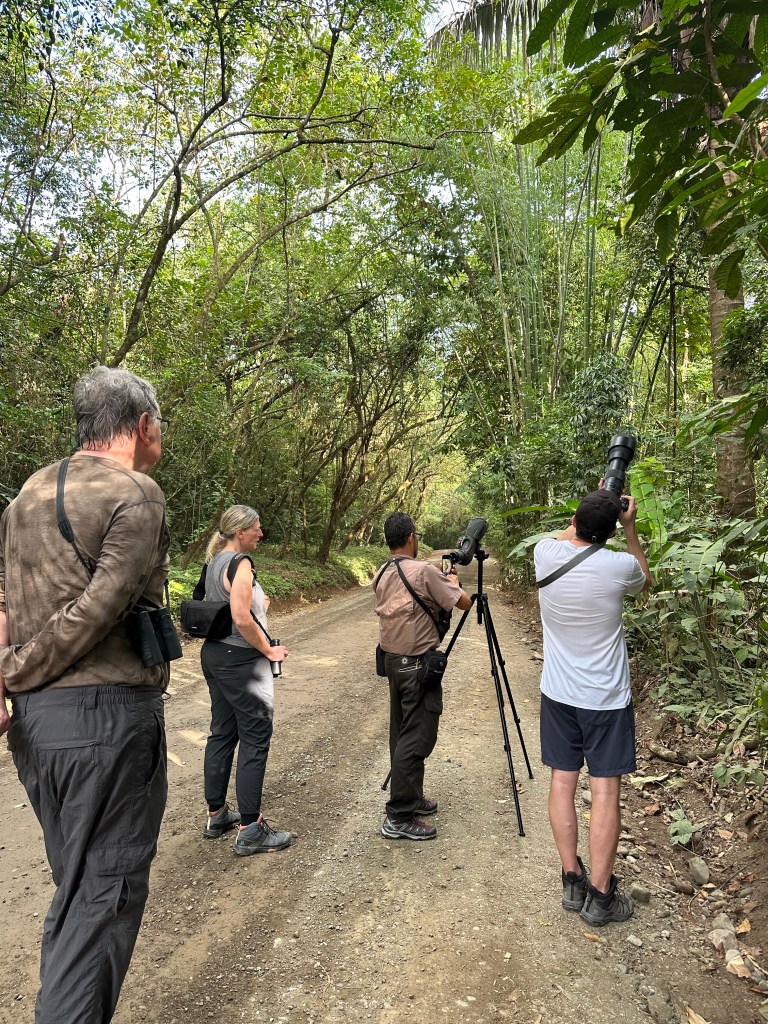
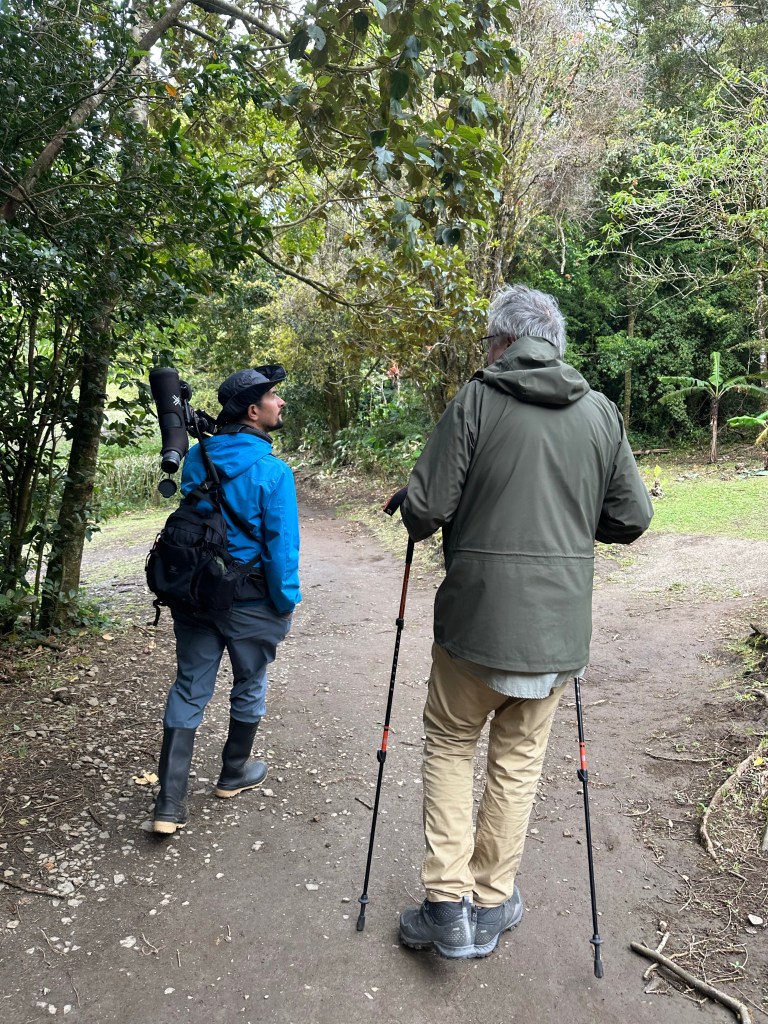
“Early birds” walk – our guide had a telescope and some fellow guests had serious lenses…… i-phones for us !
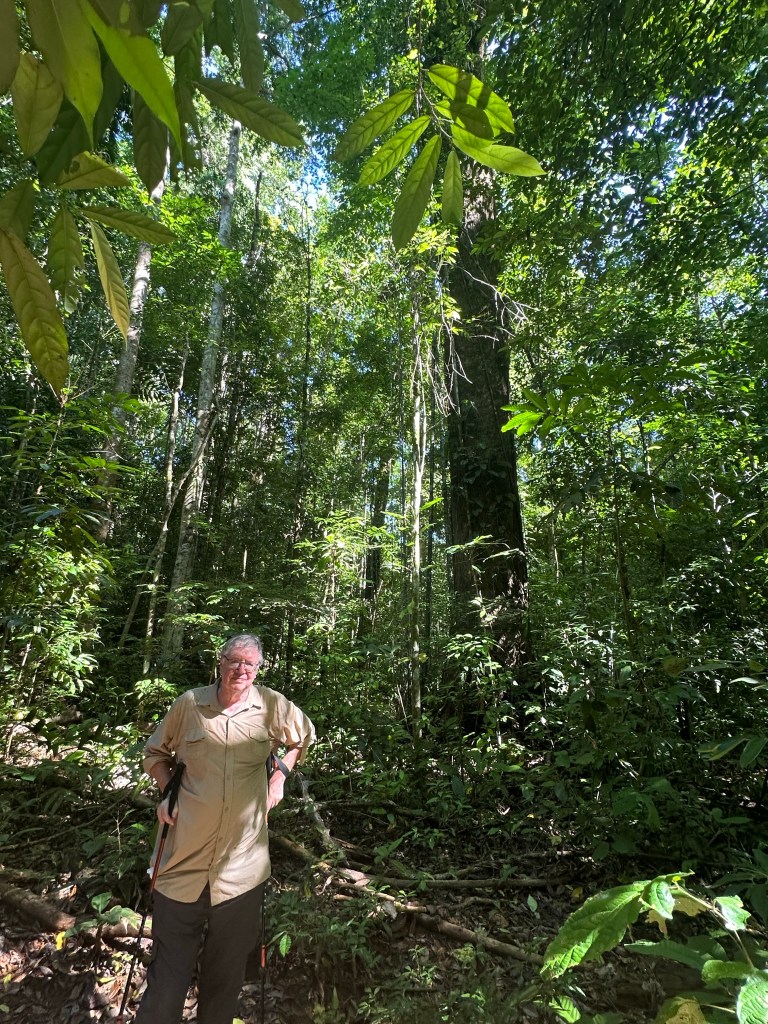
The tree centre right is colloquially known as a “Grandpa tree”
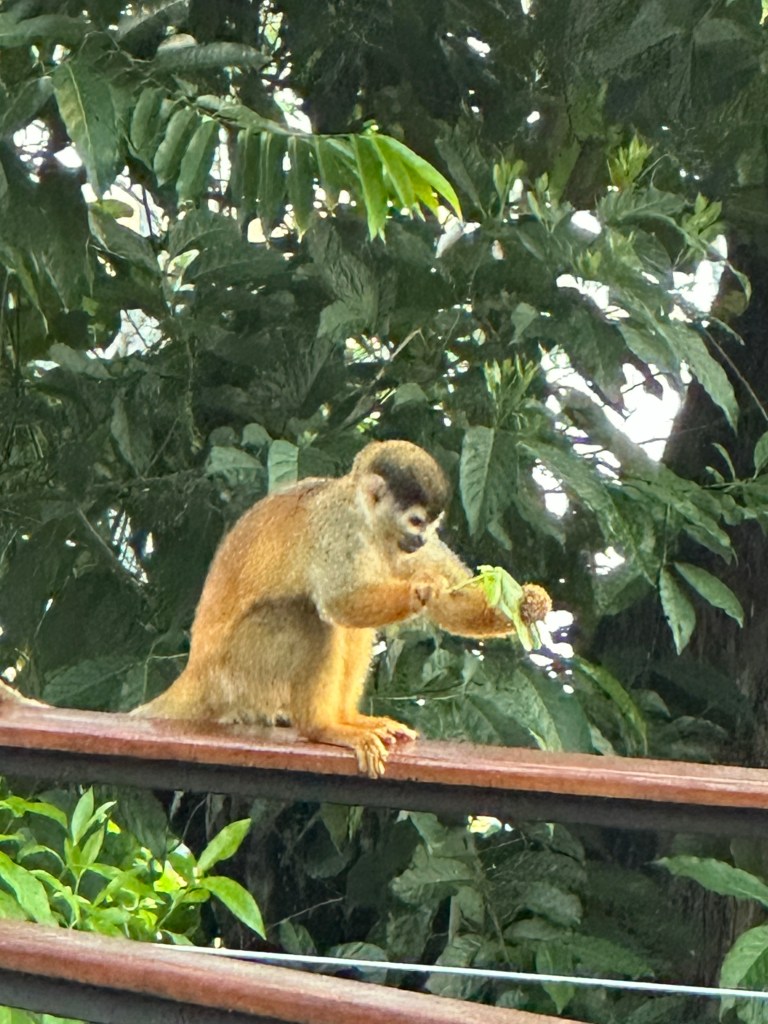
Squirrel monkey – grasshopper for breakfast
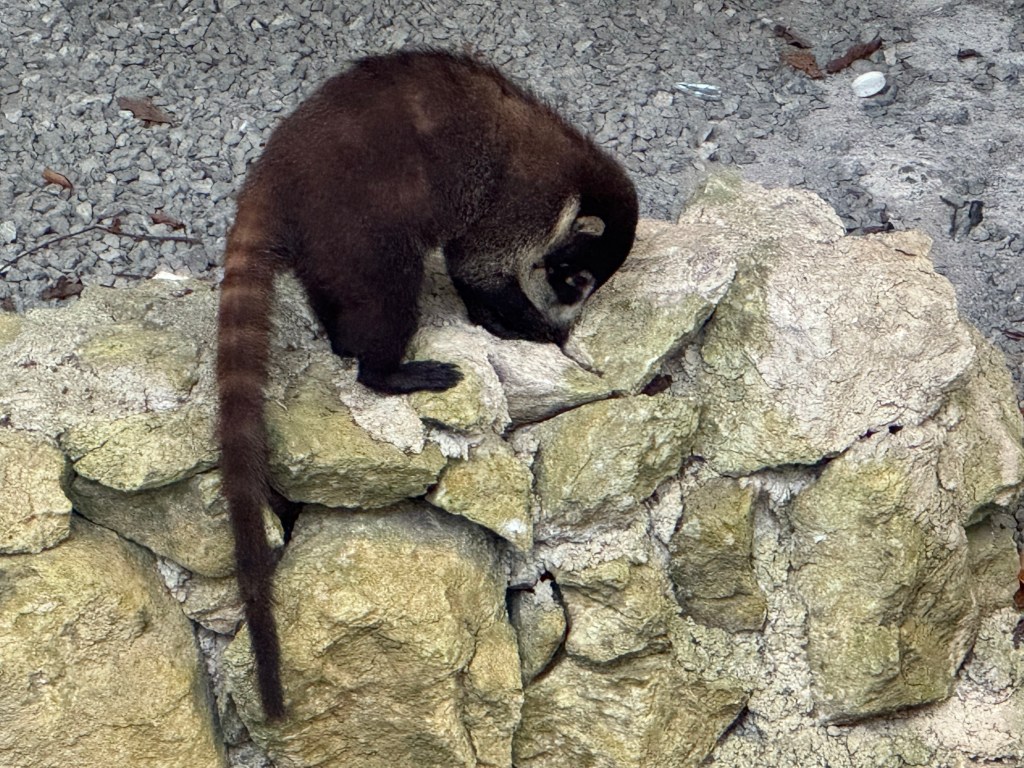
Coati by our room
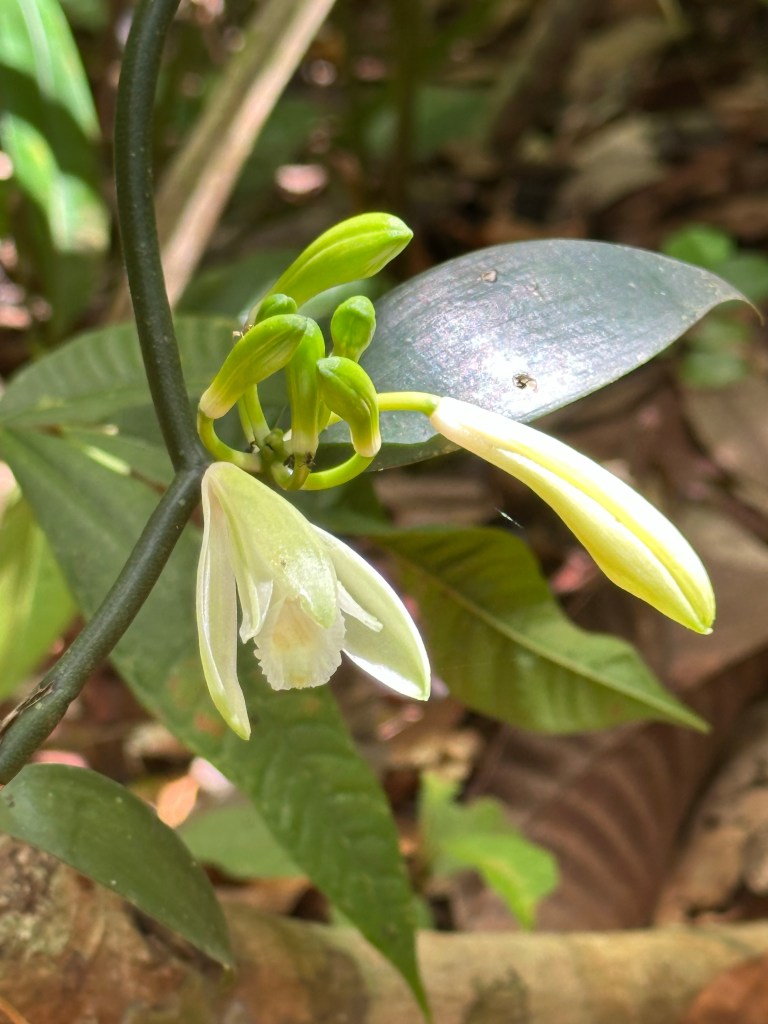
Vanilla orchids- we were told that it’s rare to see the flowers
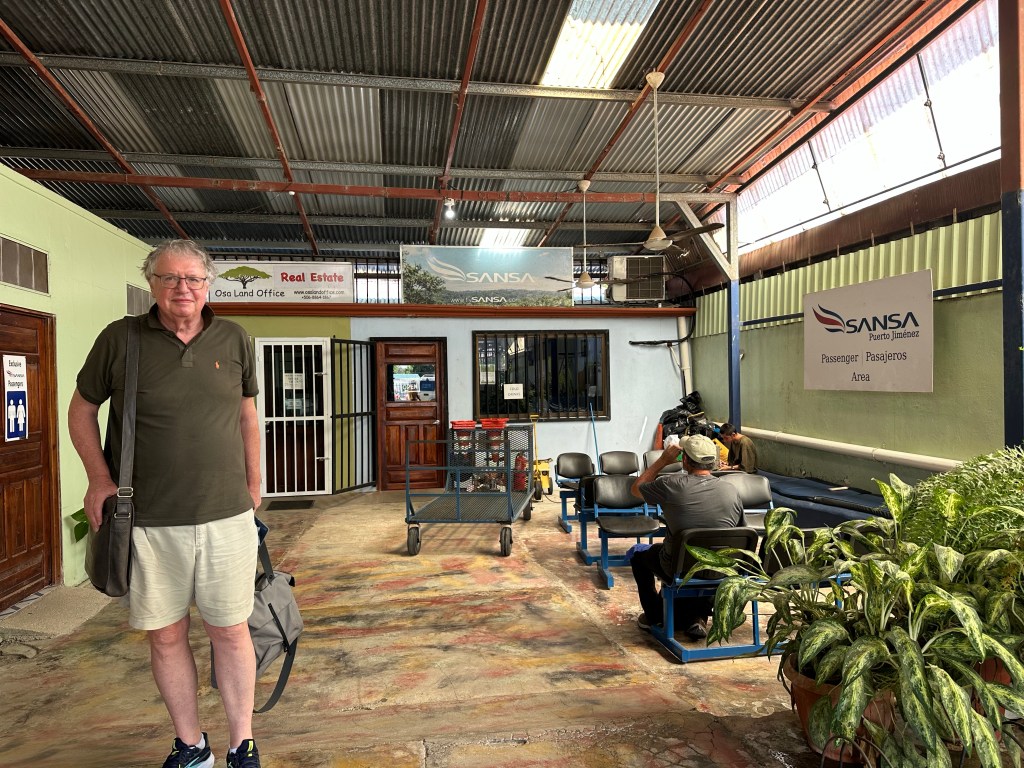
Puerto Jiménez airport
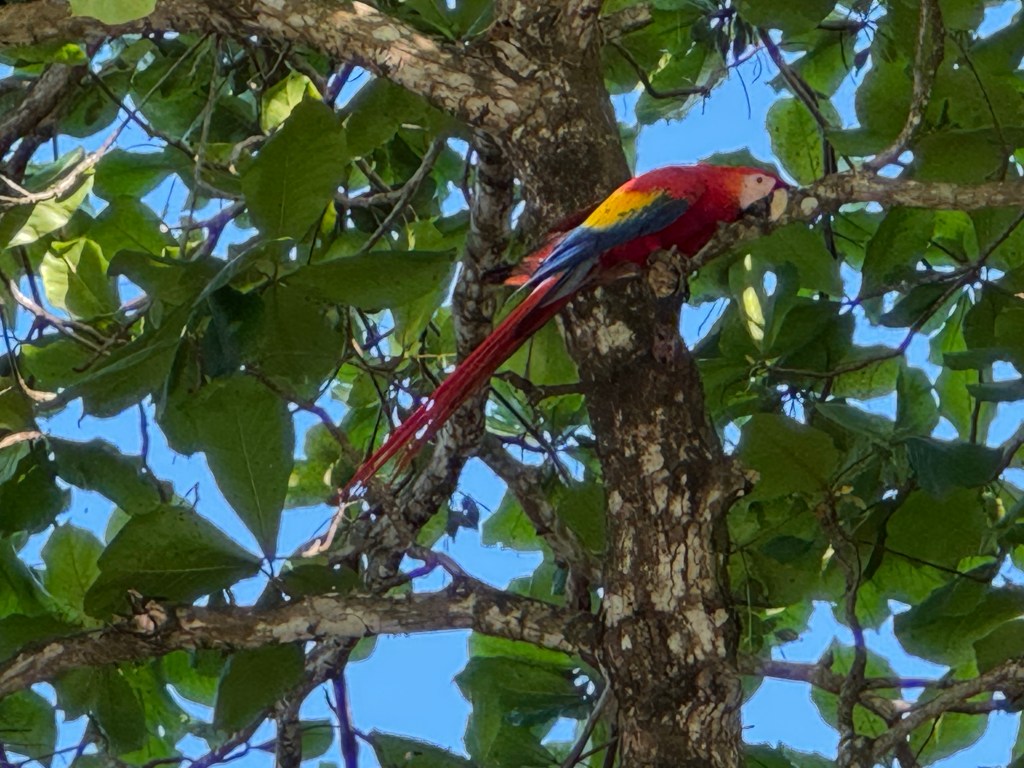
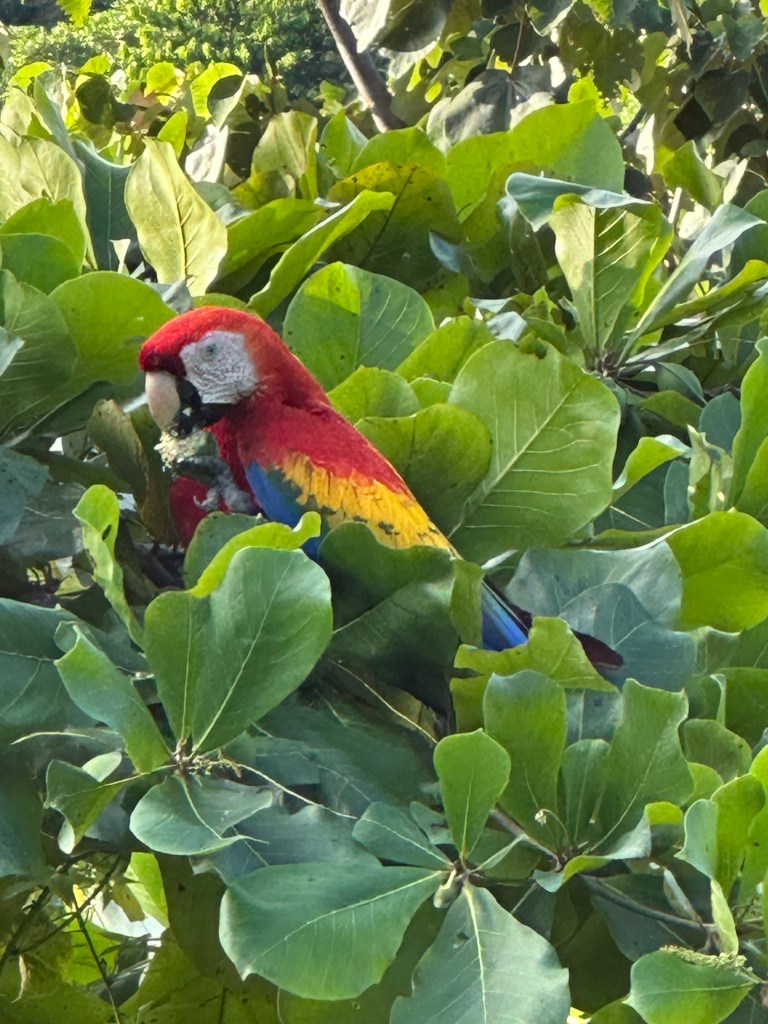
Scarlet macaw

Uvita de Osa

Uvita is a small town in Southern Costa Rica which is situated on Bahia Ballena on the Pacific coast.

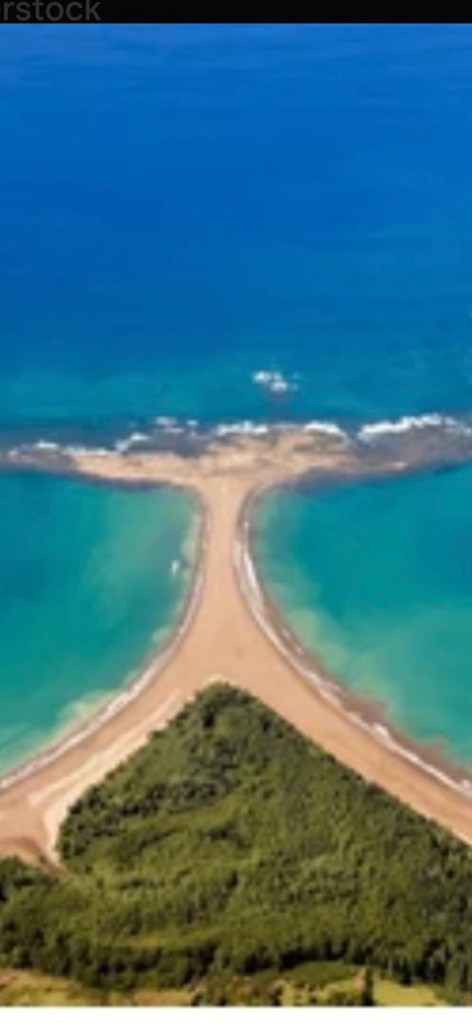
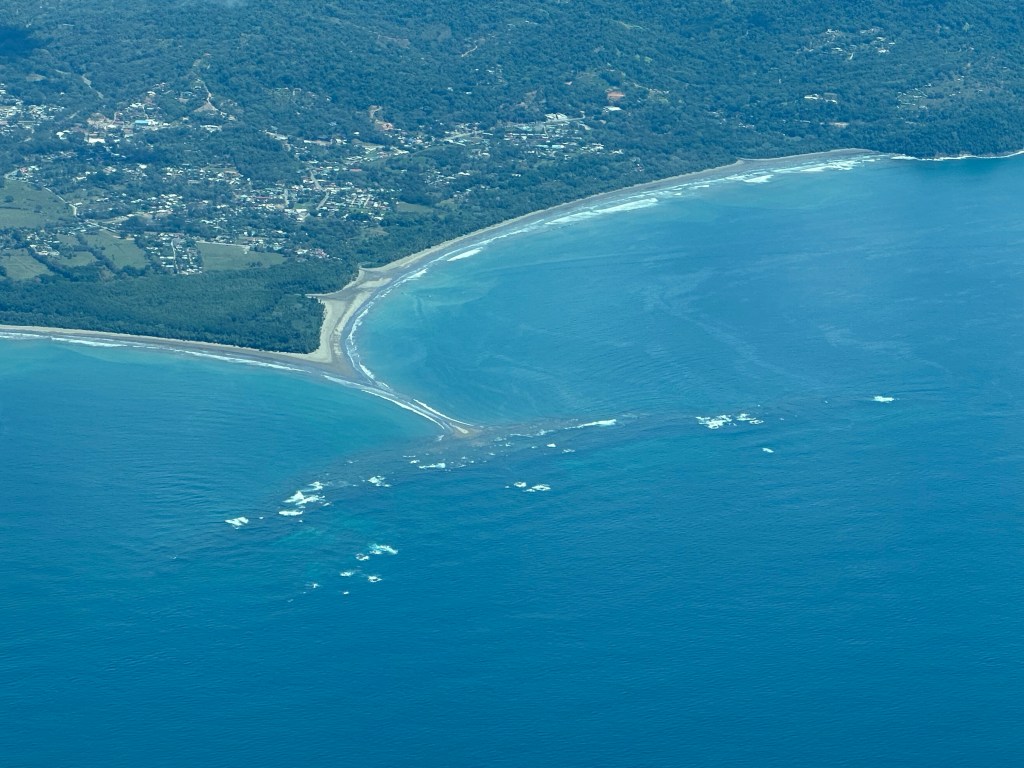
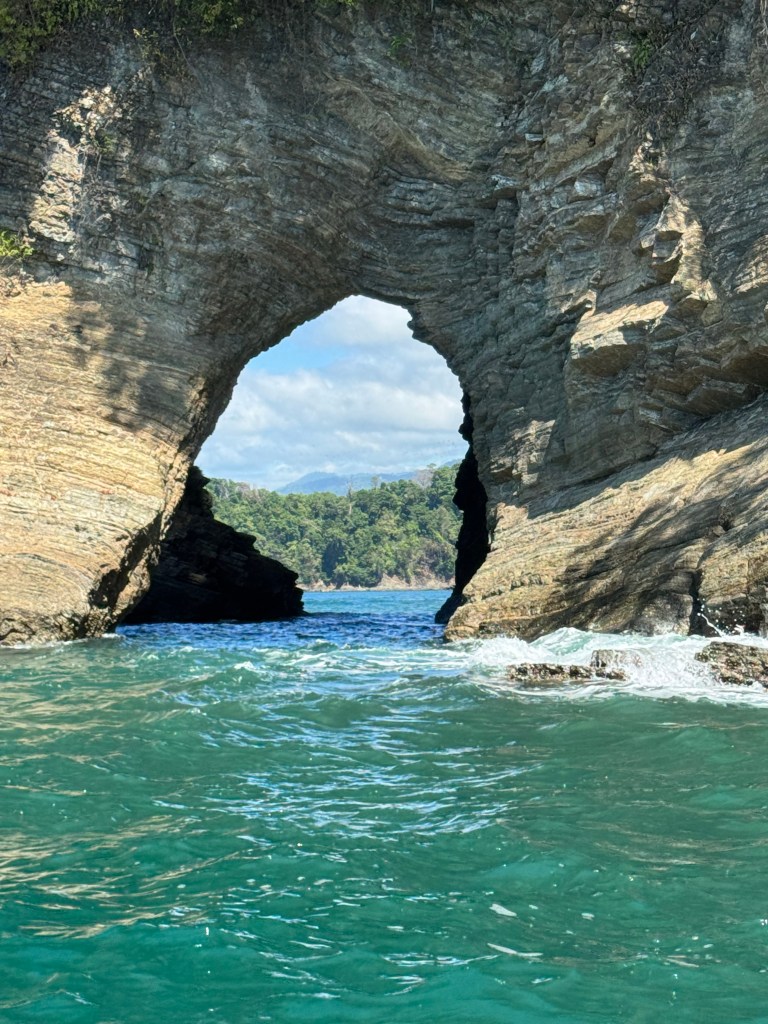
The beach has a natural feature shaped like a whale’s tail at low tide, which is appropriate as it forms part of the Ballena (Spanish for whale) National Park. It was established in 1992, predominantly covering the ocean, to protect the migratory humpback whales. The conservation area has blocked the building of a marina, so all whale watching boats have to be launched from the beach inside the park. There are two migratory seasons, our visit coincided with the migration from Canada and the US. The other season being whales from South America during their winter.

Uvita has become popular for expats, mainly from the US with the vibe of a surfers town. The town adopted bitcoin as a currency and is nicknamed “Bitcoin Jungle”. Our debit card worked too !

Whale tail (photo from the internet- we could see part of it at low tide from our lodge)
Whale tail – photo taken from our flight from Puerto Jiménez to San Jose
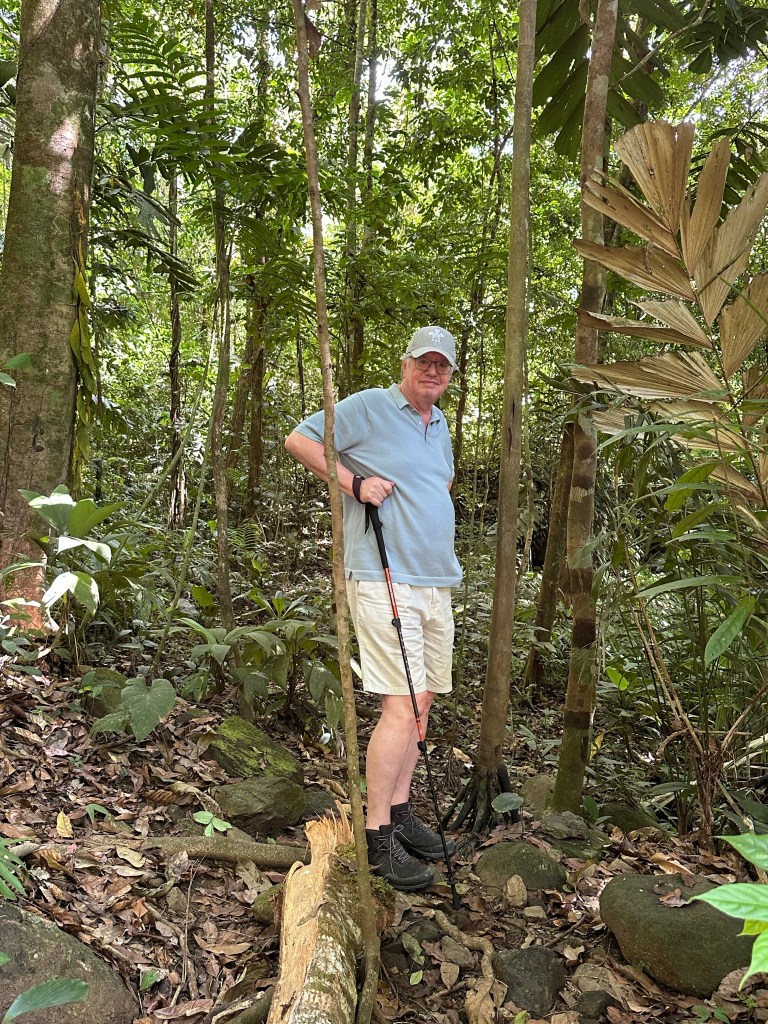
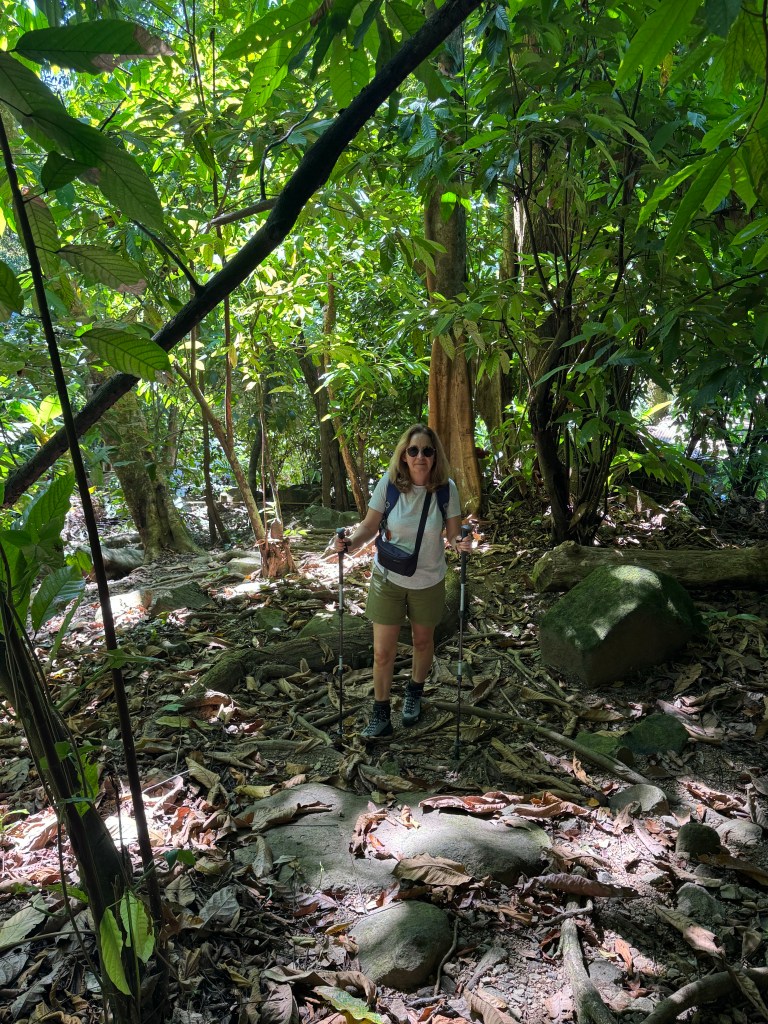
Hike from our lodge
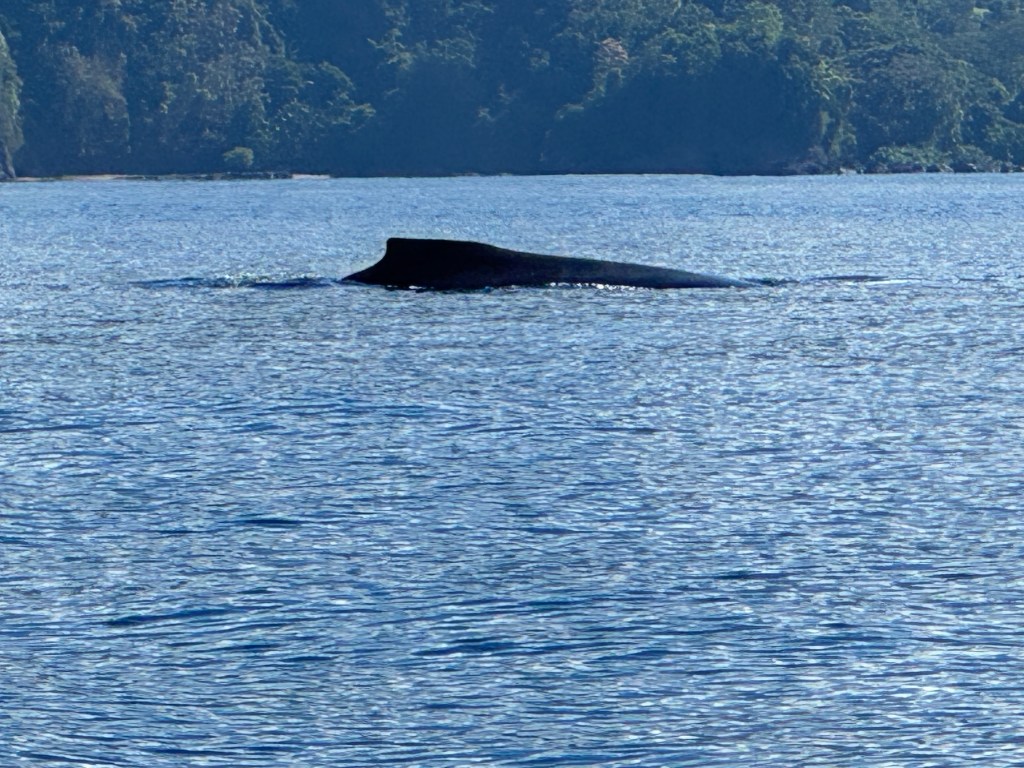
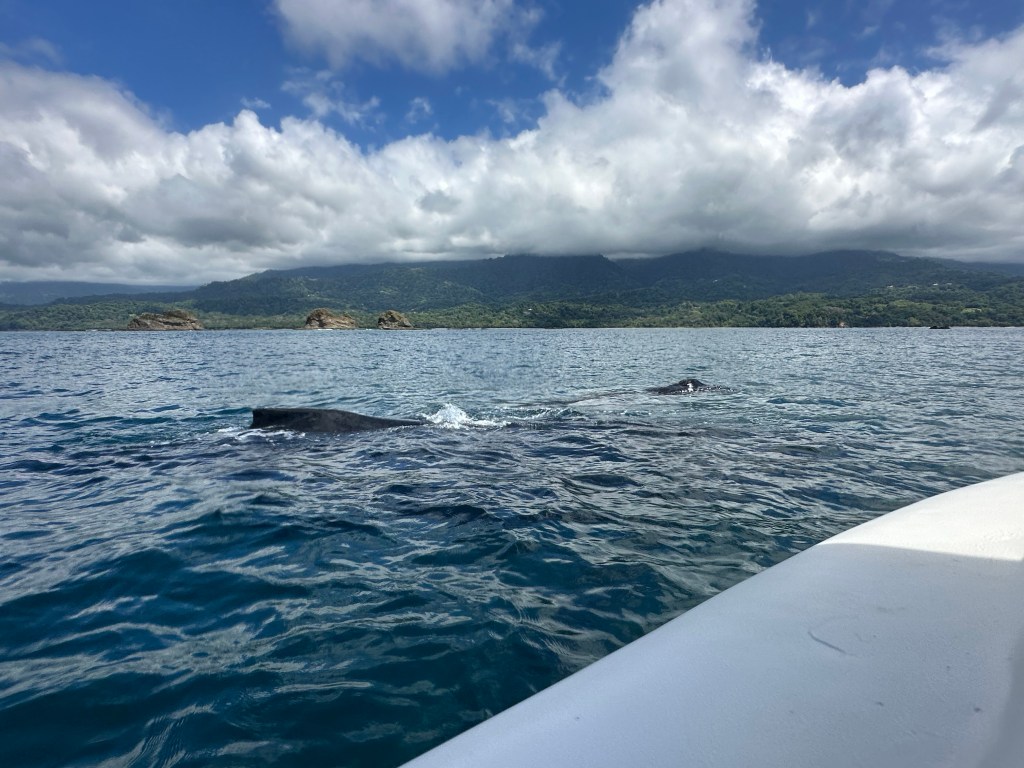
From our whale watching boat (and below)
We saw three whales, a male and a mother with baby
At one point they were very close to our boat, travelling under it. The captain of the licensed boats are very experienced in not disturbing the whales
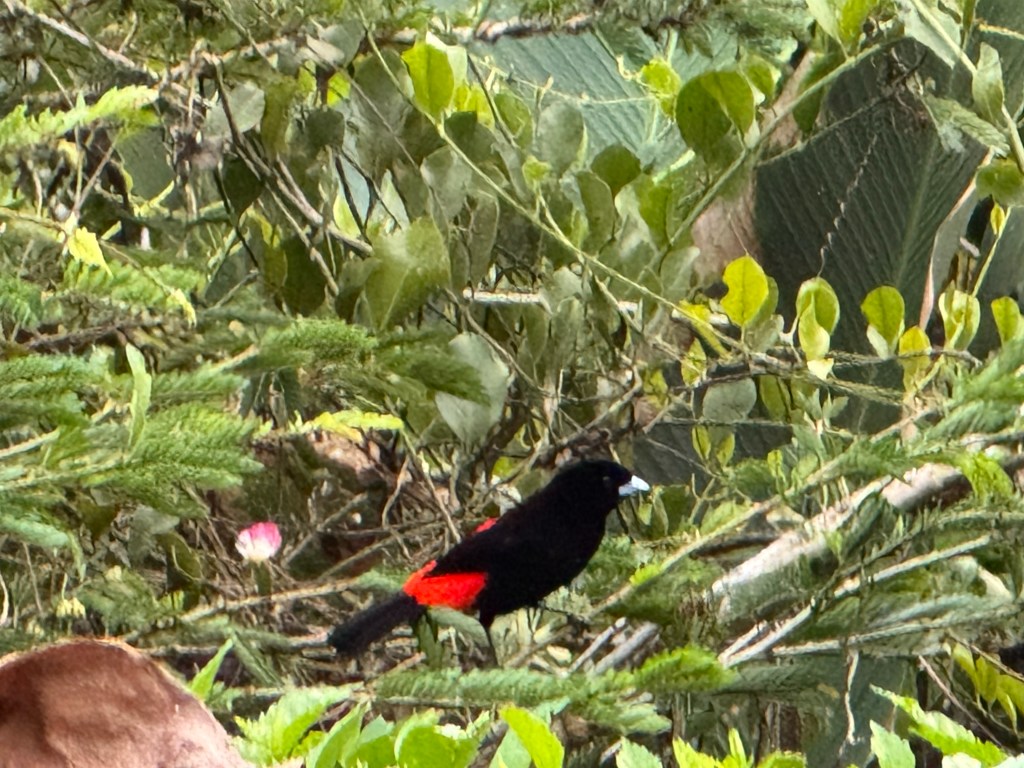
Plenty of wildlife in the grounds of our lodge including this scarlet rumped tanger.
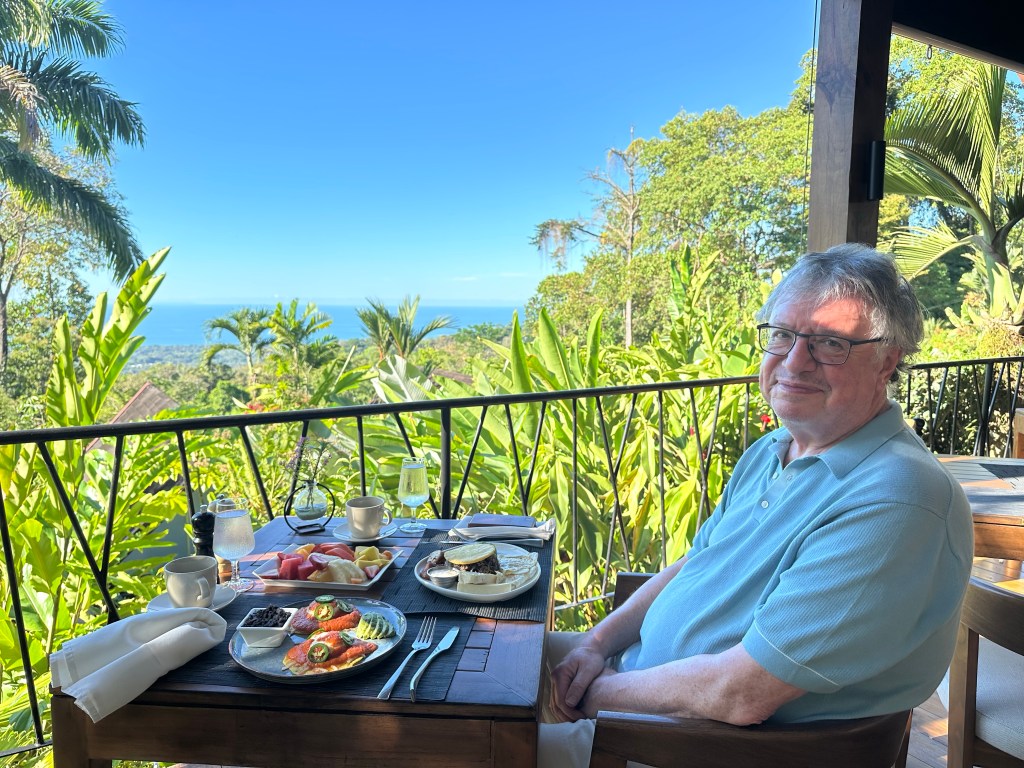
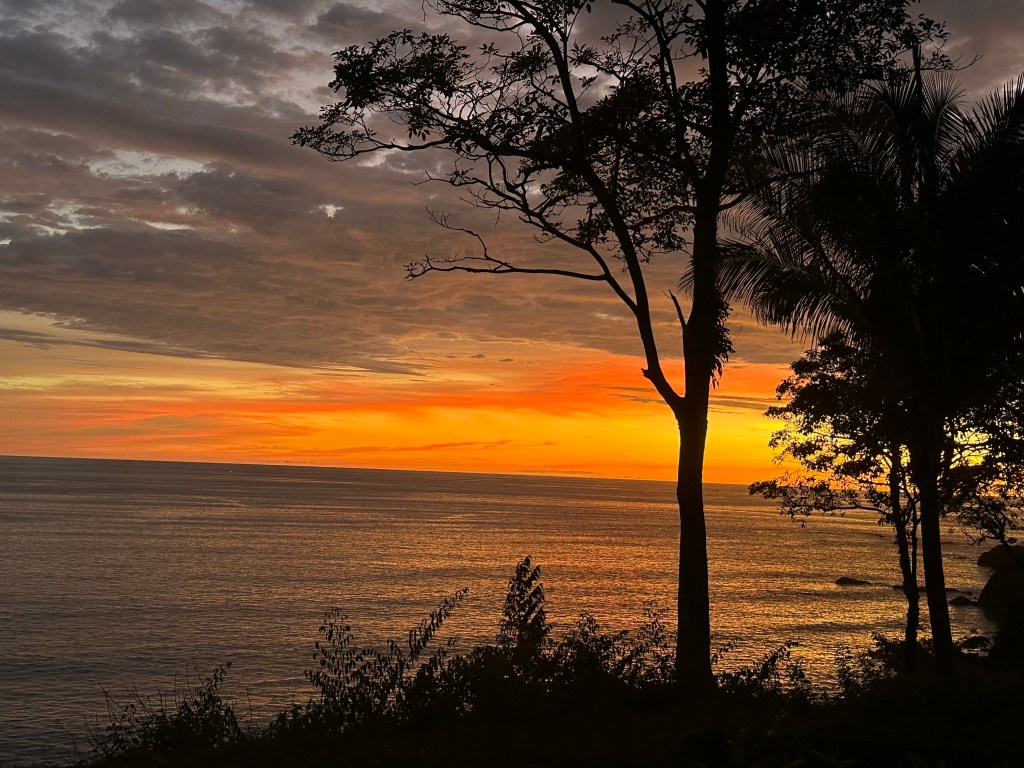
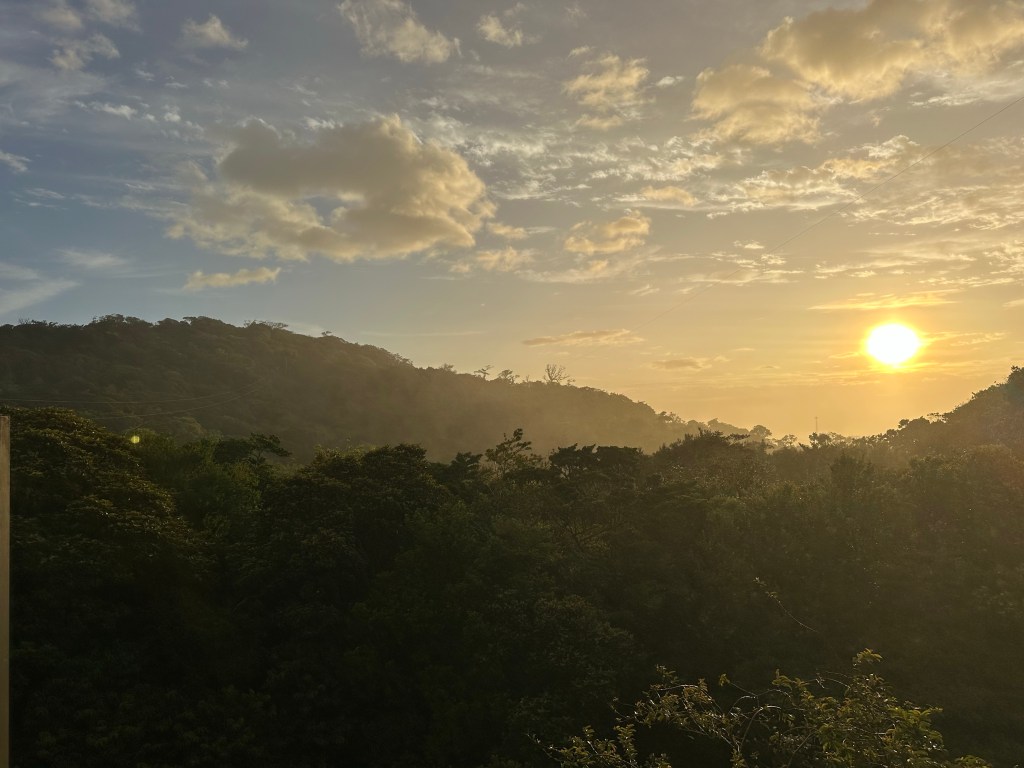
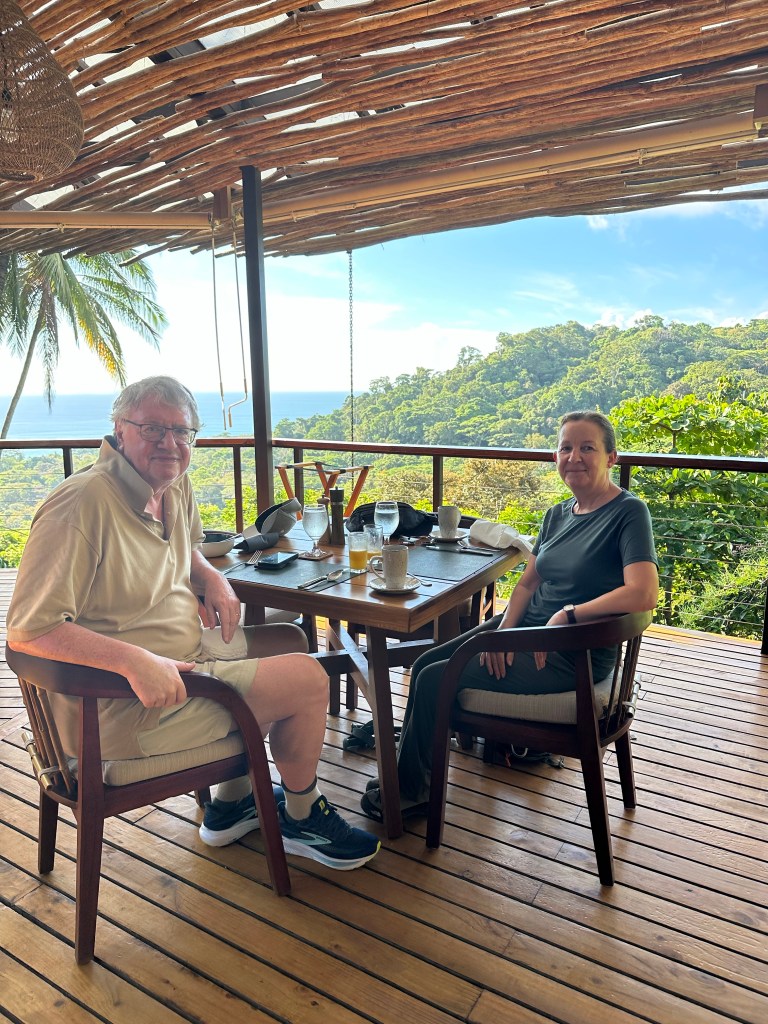
From the dining terrace- we were about 20 minutes out of Uvita up an unpaved track

Manuel Antonio National Park (MANP)

MANP was founded in 1972 to protect the local beaches from development by foreign investors.. It is one of the smallest national parks in Costa Rica but the most visited.

The town of Manual Antonio sits on the Pacific Ocean; because of the beach it has become one of the country’s main tourist destinations. Many North American visitors only come to the Pacific Coast and are described by the locals as “fly and flop” visitors. When not flopping, the MNAP is a popular day/half day excursion, particularly to see sloths and monkeys. Although daily visitor numbers are capped, the income subsidises other quieter national parks.

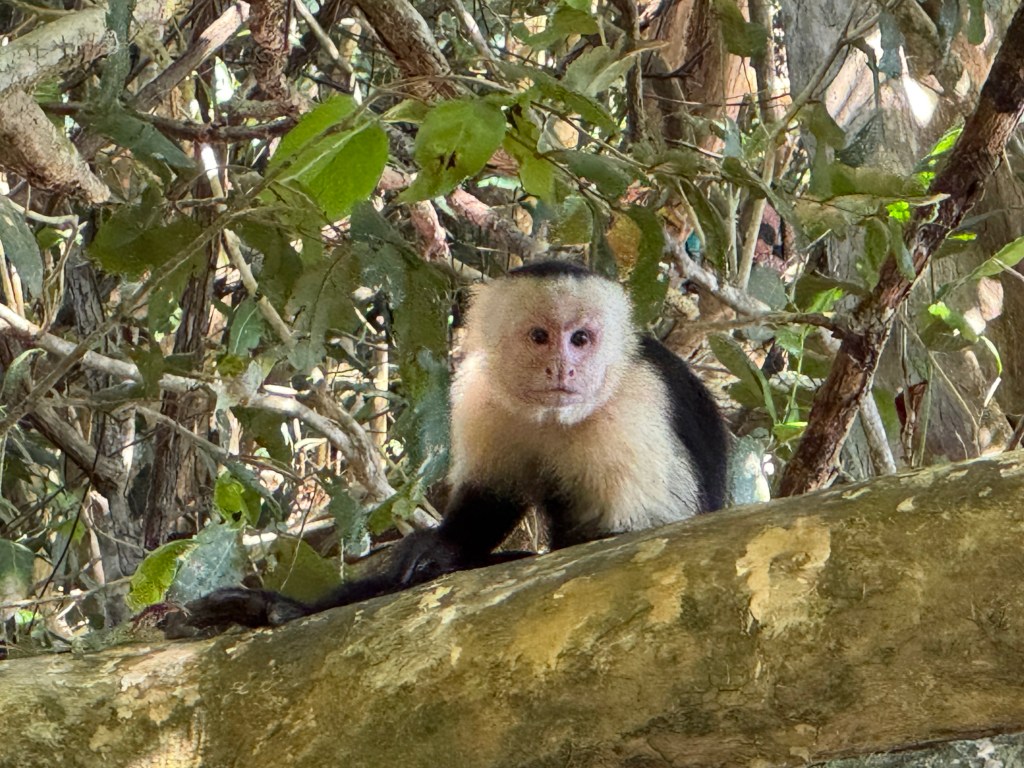
MNAP has been forced to ban visitors from bringing food into the park as the white faced monkeys have become master thieves which came at a cost to them by way of tooth decay and type 2 diabetes. During our stay a monkey broke into our room (our terrace door was shut but not locked – rookie error), opened the fridge, stole a snack and ran away clutching his prize !
We arrived in Manual Antonio from the Monteverde Cloud Forest, a journey of about four hours. We started the day in several layers and 15 degrees; by lunch we were on the beach in shorts with sun and 30 degrees. The majority of the temperature change was in the first 20 minutes.

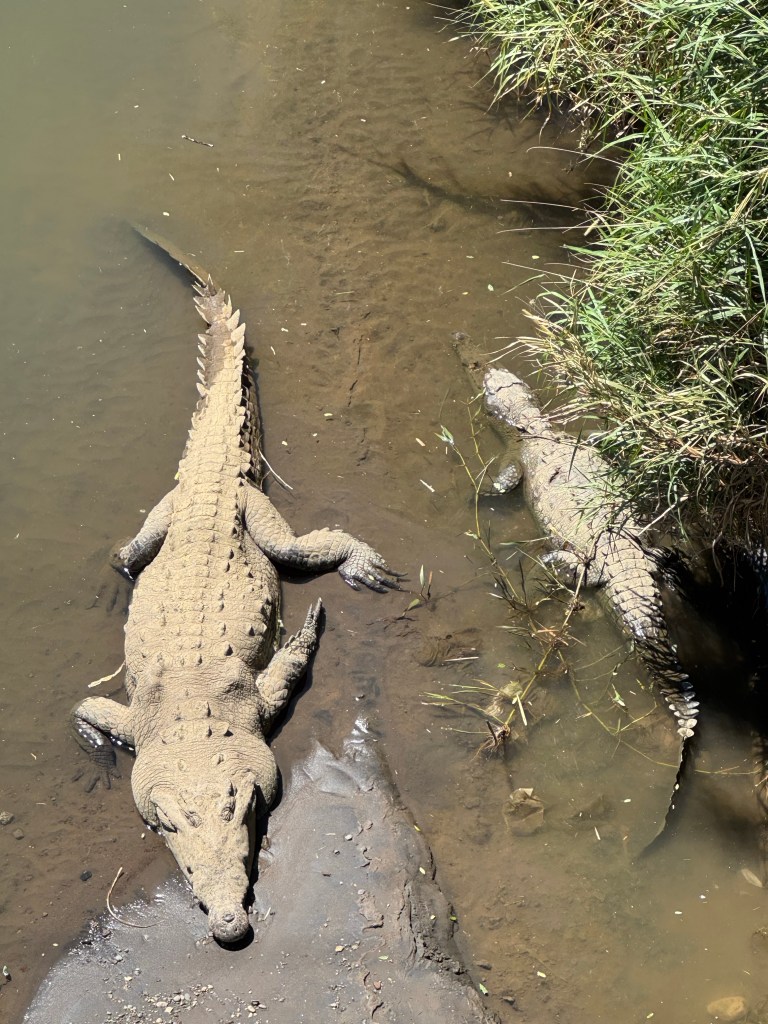
Seen from a bridge on our journey
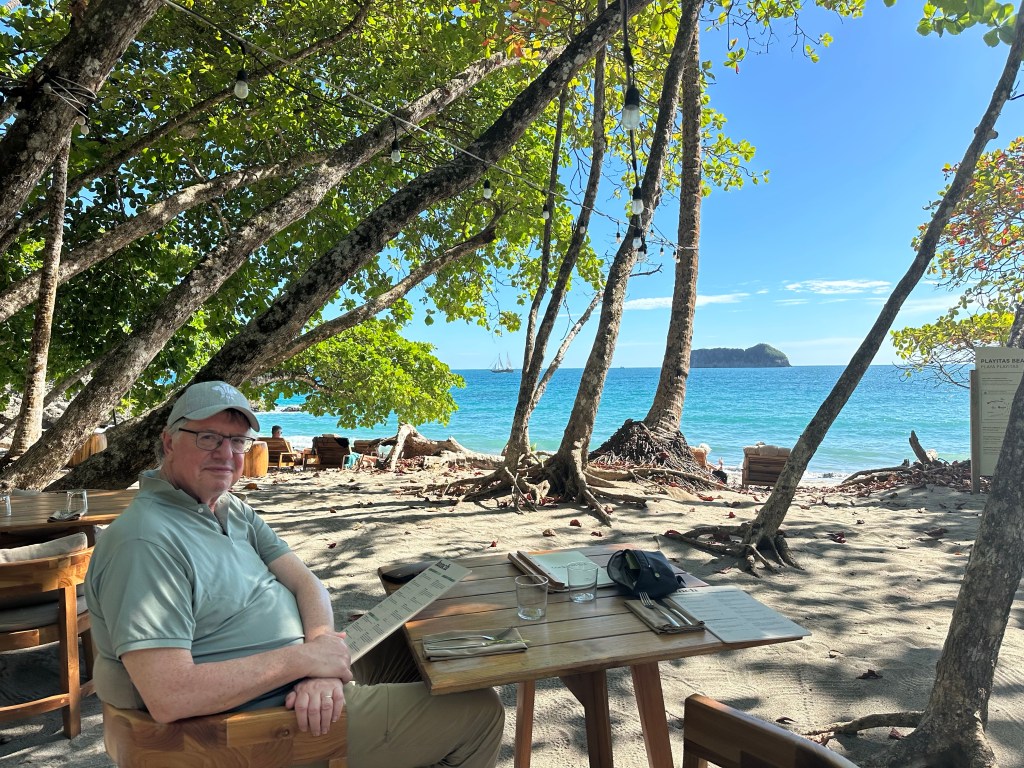
Lunch on our arrival
Manuel Antonio National Park
The cafe in the National Park – it’s in a cage for the humans !
White faced monkey,
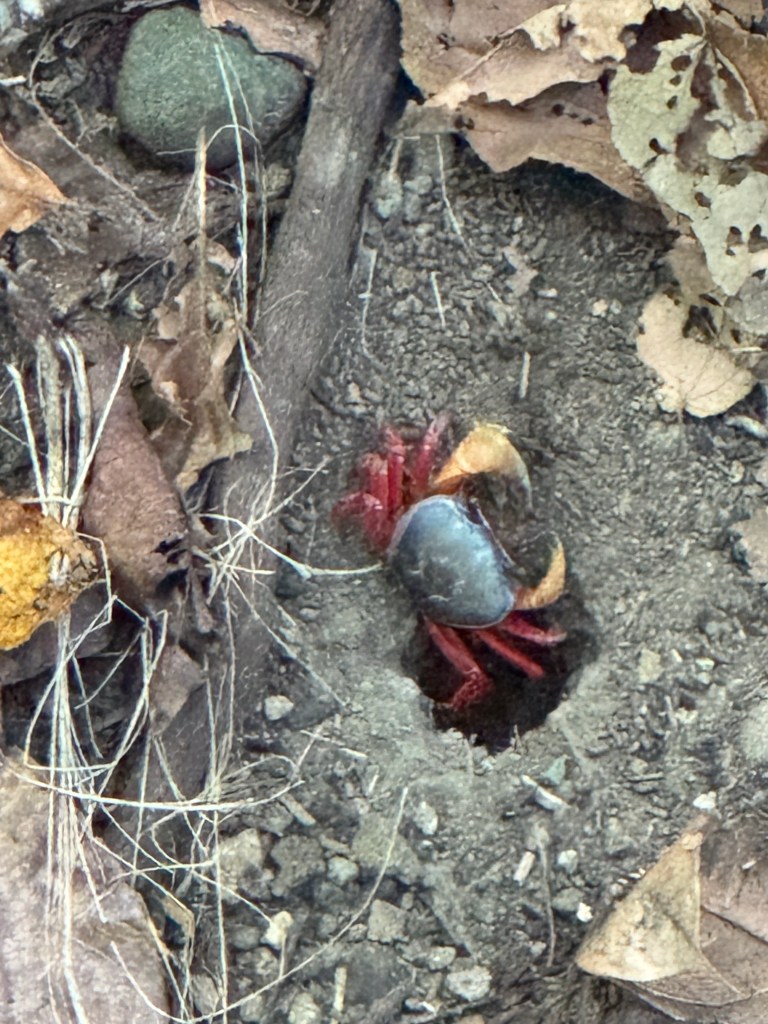
The park comprises ocean, beach, mangroves and forest, creating numerous habitats including for creatures such as crabs
Roble de Sabana, a variety of oak tree, which has a brief flowering season at this time of year
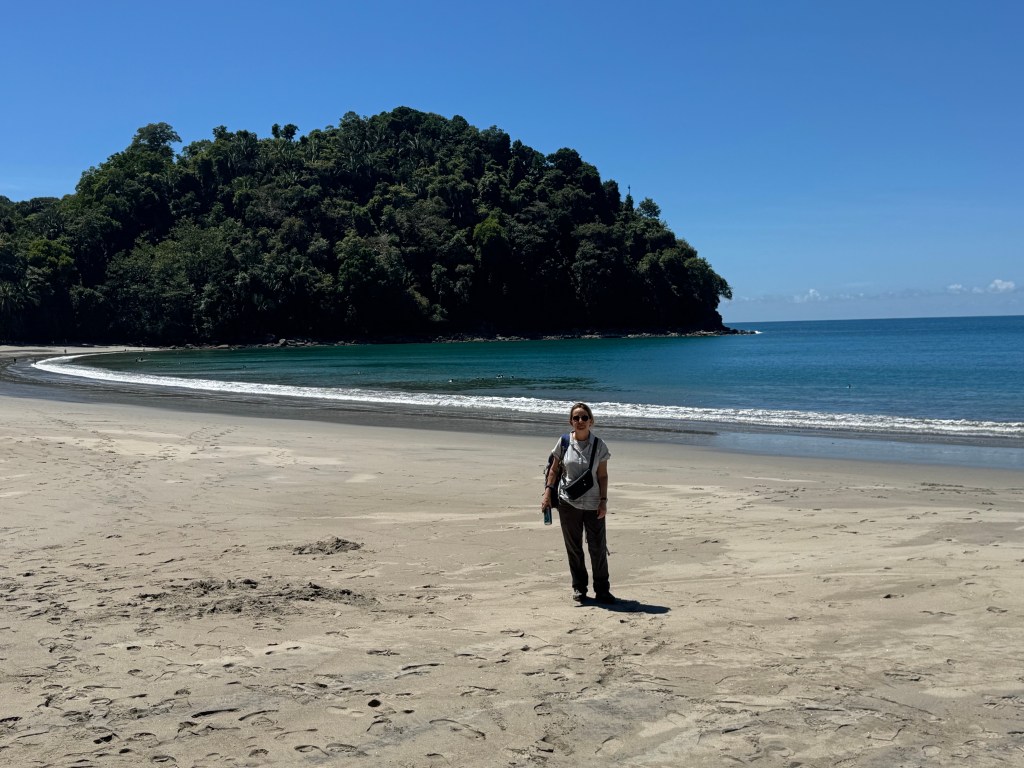
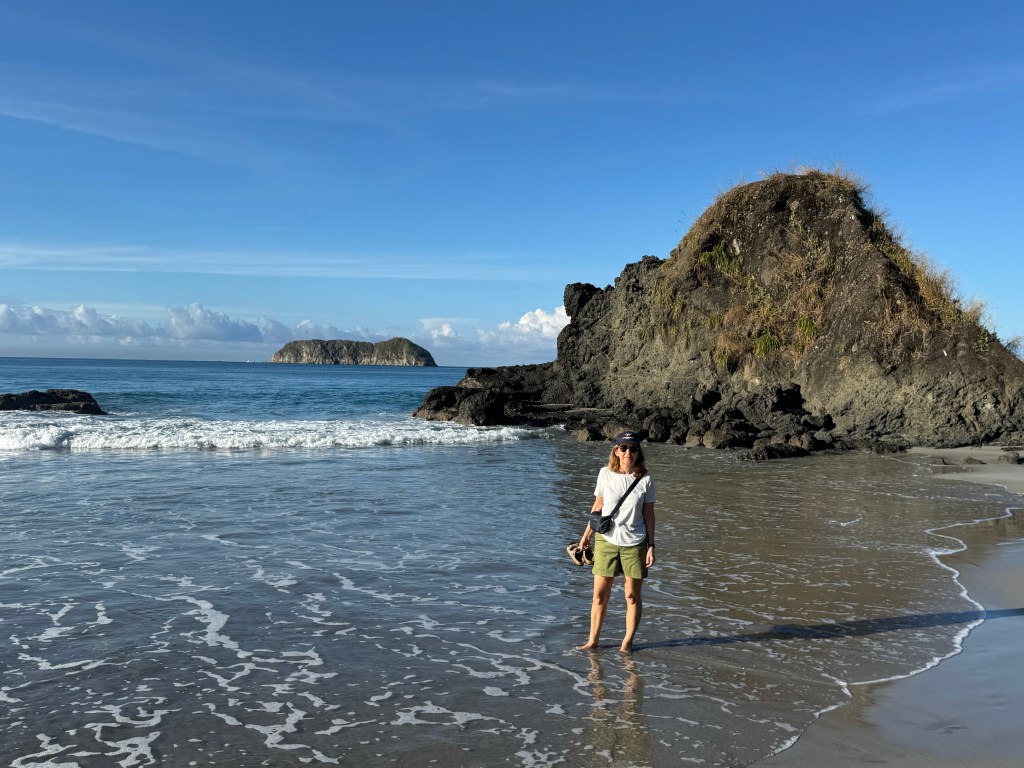
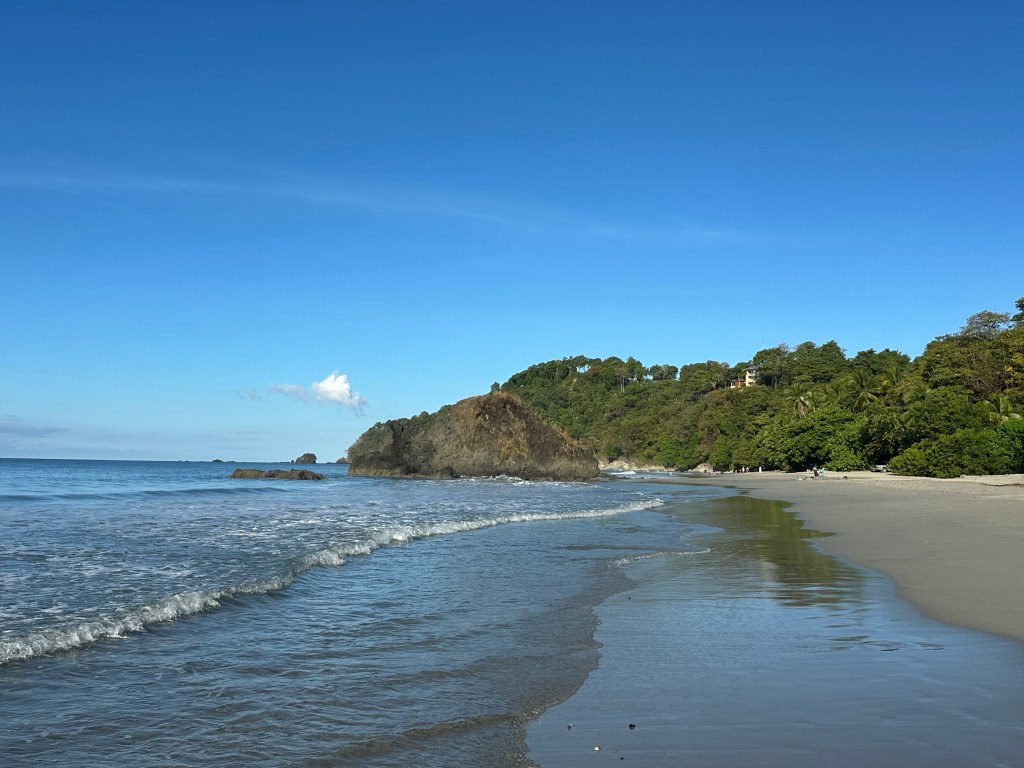
Pre breakfast walk on the beach by our hotel on our final morning
Our hotel is the building on the cliff at the end of the beach, the National Park is at the other end
On our walk we saw a flock of scarlet macaws

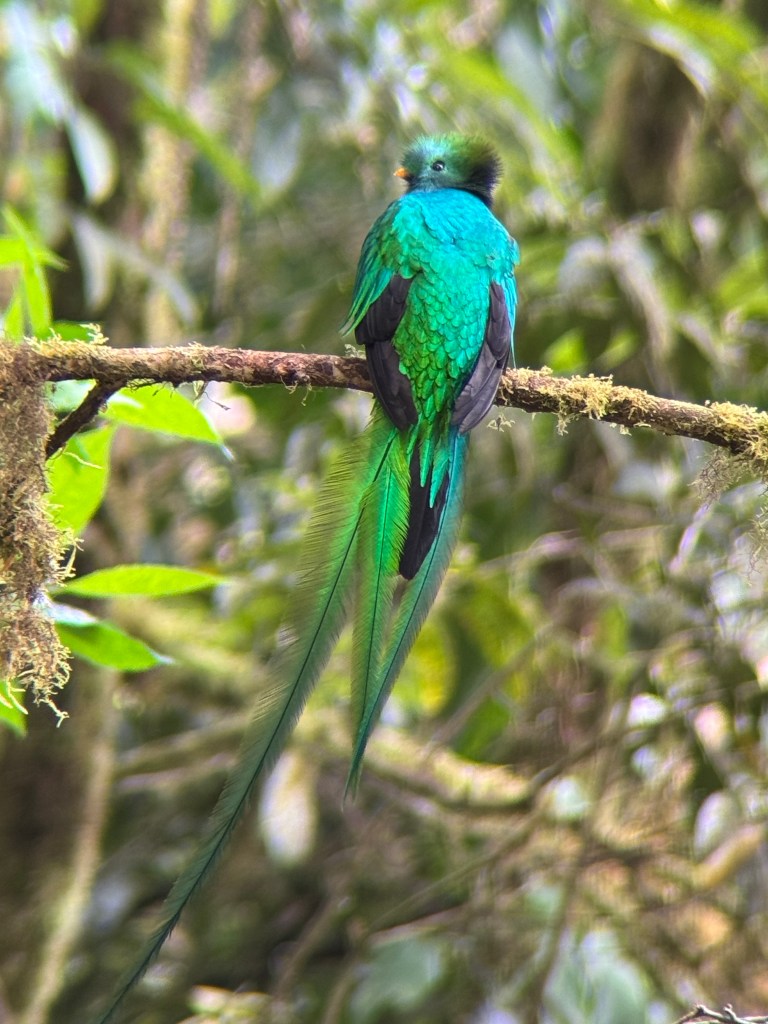
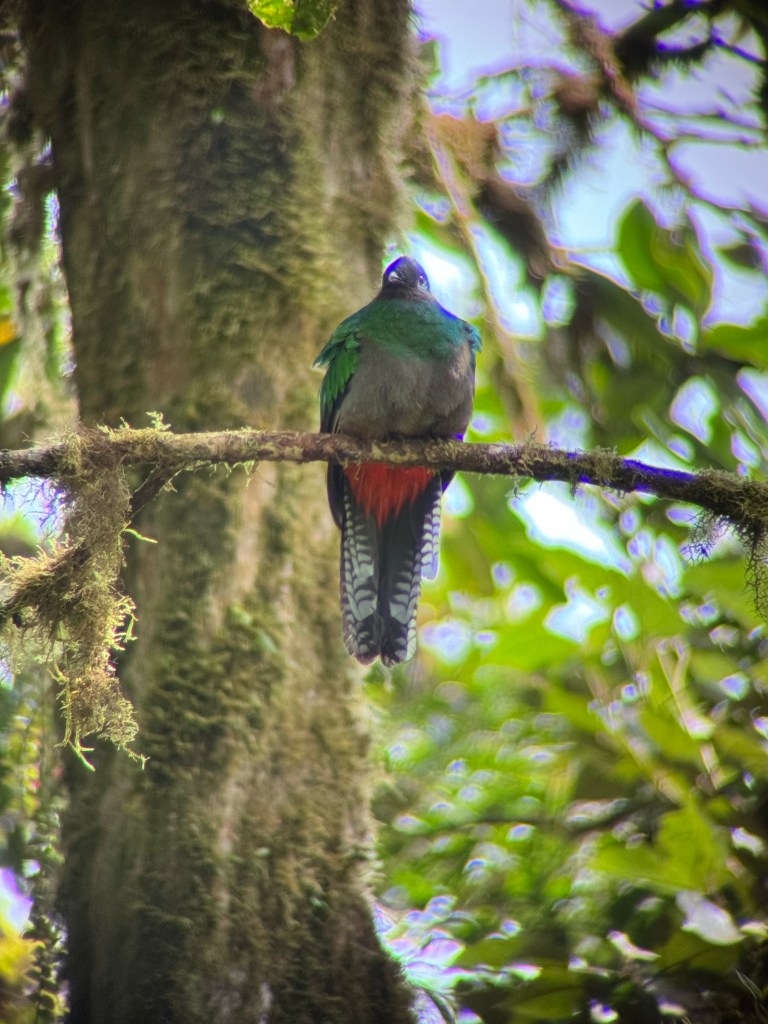
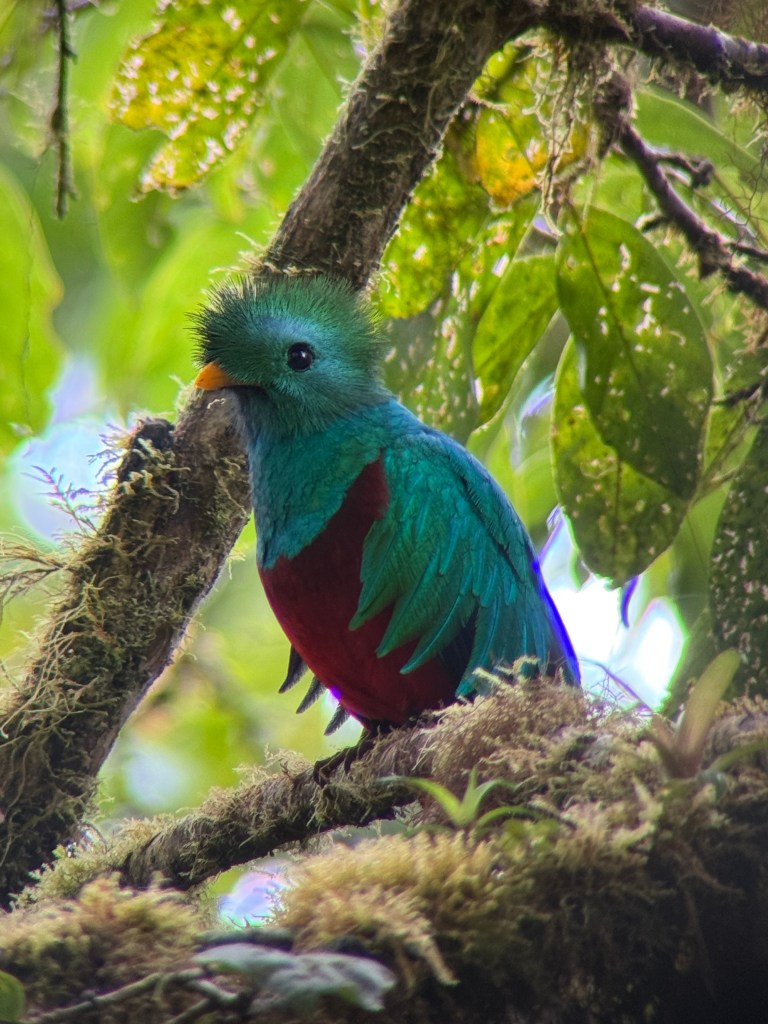
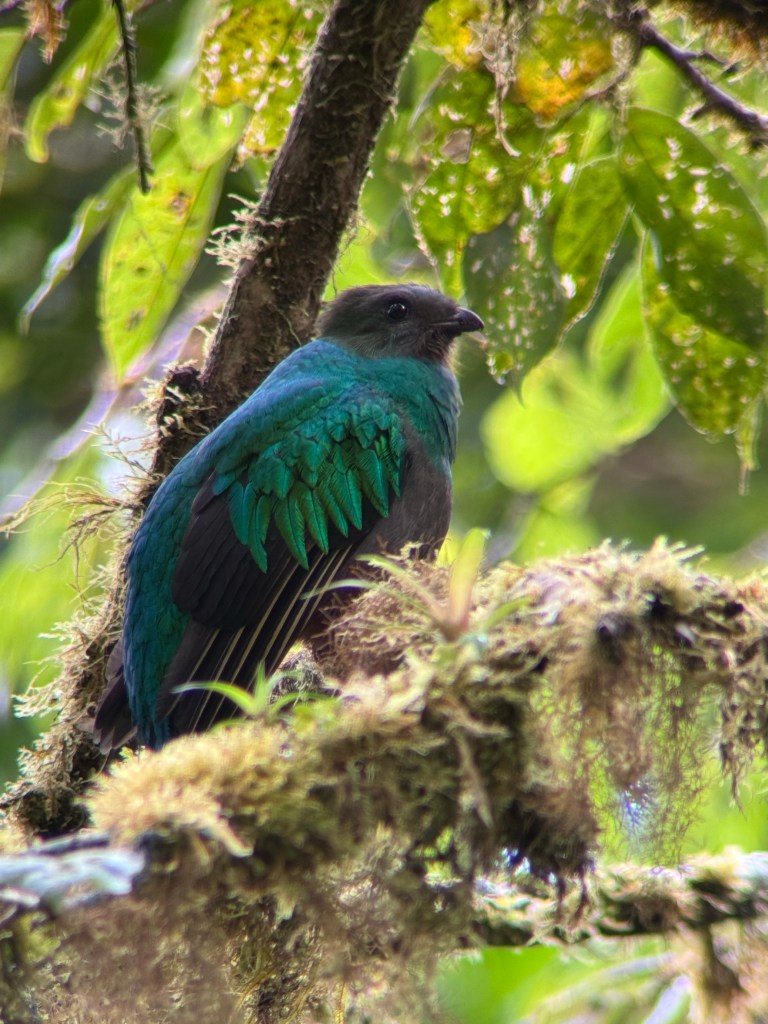
Resplendent Quetzal

The quetzal is on the list of “near threatened” species as much of its habitat has been destroyed, however its population is now stable in the Monteverde Cloud Forest due to conservation steps. It is the national bird of Guatemala (the Costa Rican national bird is a much plainer thrush). A headpiece believed to have been worn by Moctezuma II, the Aztec emperor who met with Cortes in 1519, is made of quetzal feathers and in a museum in Vienna.

The bird is approximately 40cm in size, with the male having long tail feathers. In Monteverde they mainly feed on wild avocados. Although difficult to find due to their small numbers, at this time of year they build their nests (in tree trunks) so don’t fly away as quickly as many birds once spotted. For birders they are considered one of the area’s Holy Grails; once found they are hard to forget.

We booked two guided hikes on our first day in Monteverde. The first a specialist bird hike, with a 6am start. While we saw many species, the quetzal was elusive. We then saw a pair 15 minutes into the afternoon hike, with the same guide, not far from the trail.

With our guide, Danny
Our first glimpse, compared to many birds, it’s easy to spot as it sits guarding the partly built nest
With the benefit of the guides telescope and his skills of photography with an i-phone and telescope
The female
Even in the flesh they don’t look real
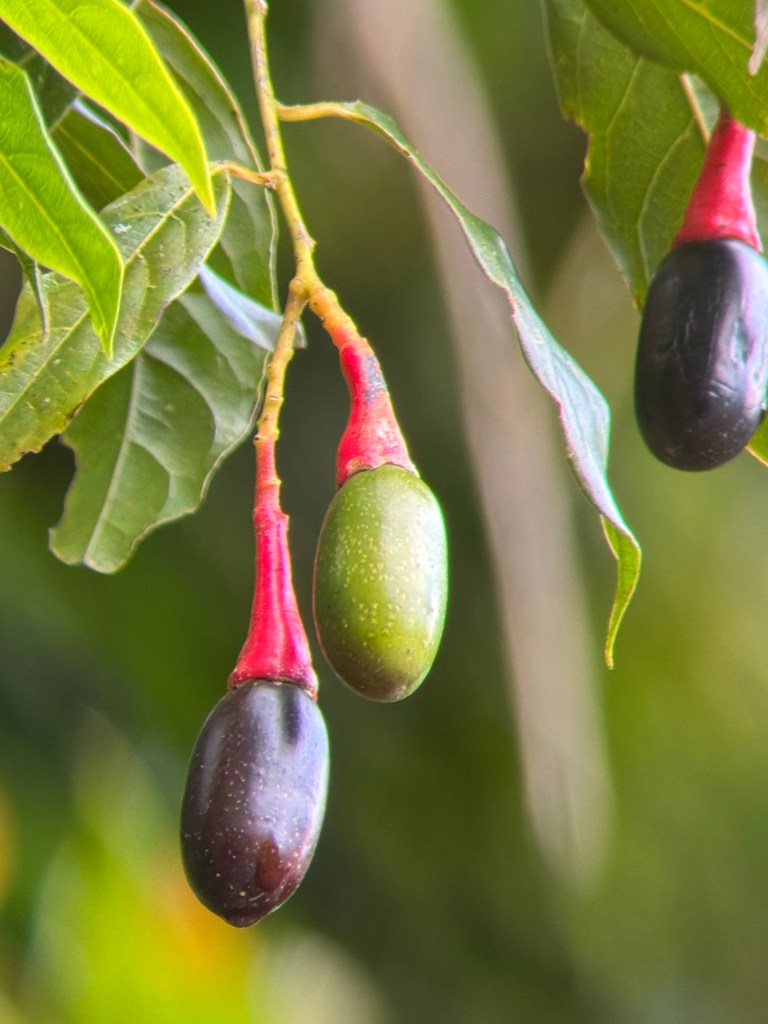
Avocados – Costa Rica has numerous varieties, a few of which are suitable for humans. These are the ones the quetzals eat, about the size of a large olive.

Monteverde Cloud Forest

Cloud forests are tropical forests created by a specific climate combination of altitude and moist sea air. It results in almost persistent fog at the vegetation level creating an environment with almost no sunlight and constant moisture from the air and drips from the vegetation.

They are extremely bio-diverse with most of the vegetation growth at the canopy level; large trees act as hotels for moss, lichen, orchids and epiphytes.

Monteverde Cloud Forest Reserve was founded in 1972 and covers over 26,000 acres with 90% primary forest. It has the most orchid species in a single space together and over 400 bird species.

Our lodge is within sight of the Pacific Ocean (when there is a brief gap in the cloud) where it is currently 30 degrees, however the Cloud Forest is about 15 degrees but feels much colder due to the cloud and winds.

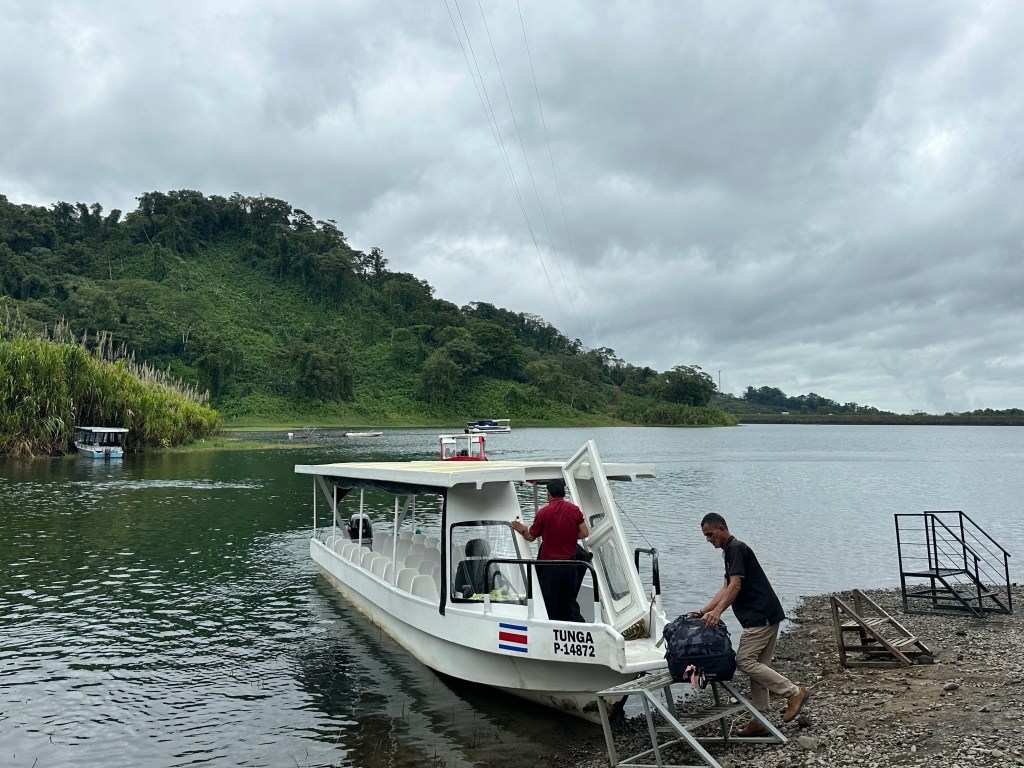
Our journey from Arenal to Monteverde was partly by boat, crossing Costa Rica’s largest lake – man made with the creation of a hydroelectric dam in 1979 and producing 17% of the country’s electricity
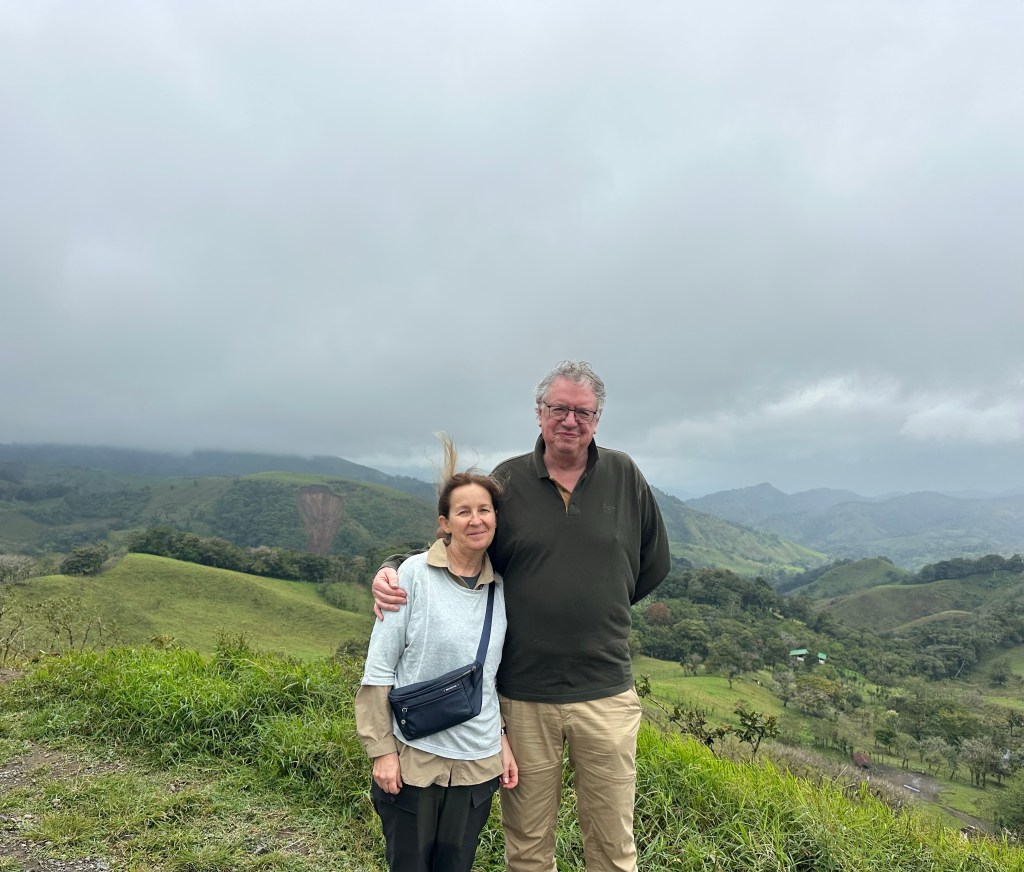
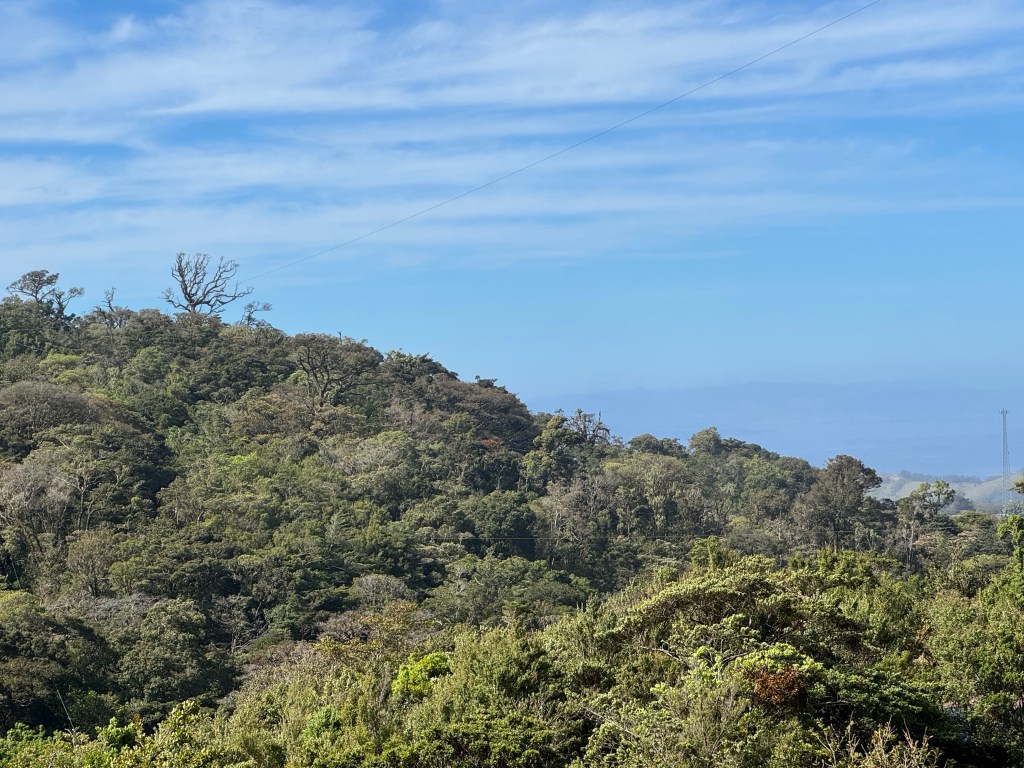
“View point” on the journey up into the cloud
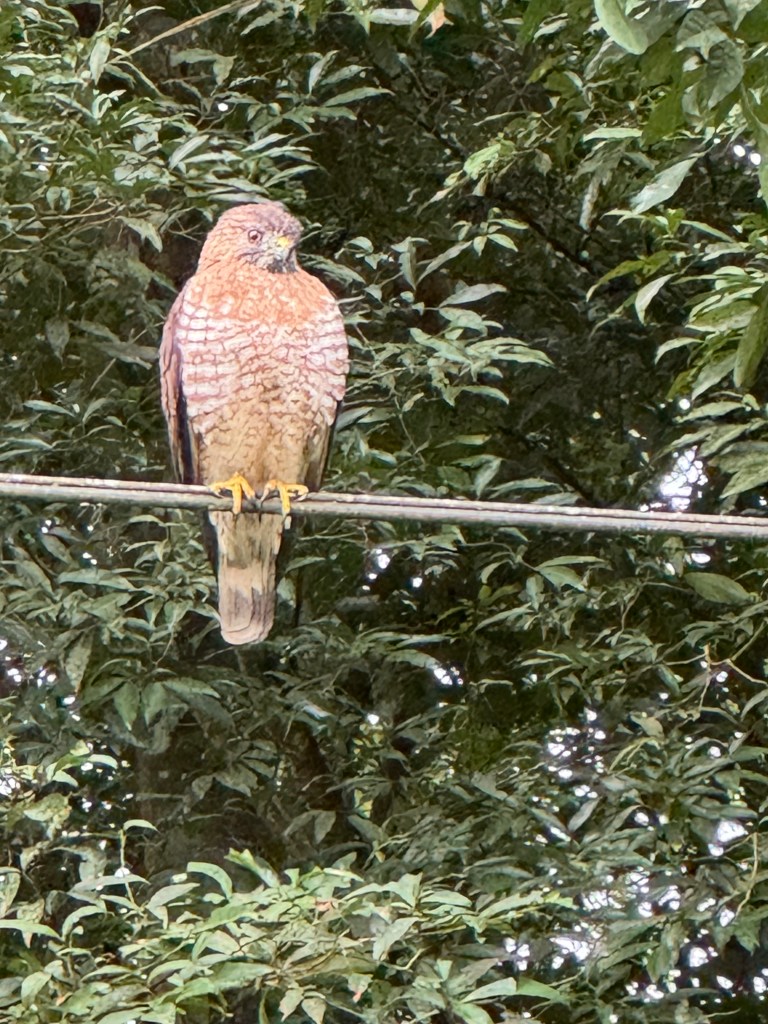
Broad winged hawk by the road side on our journey
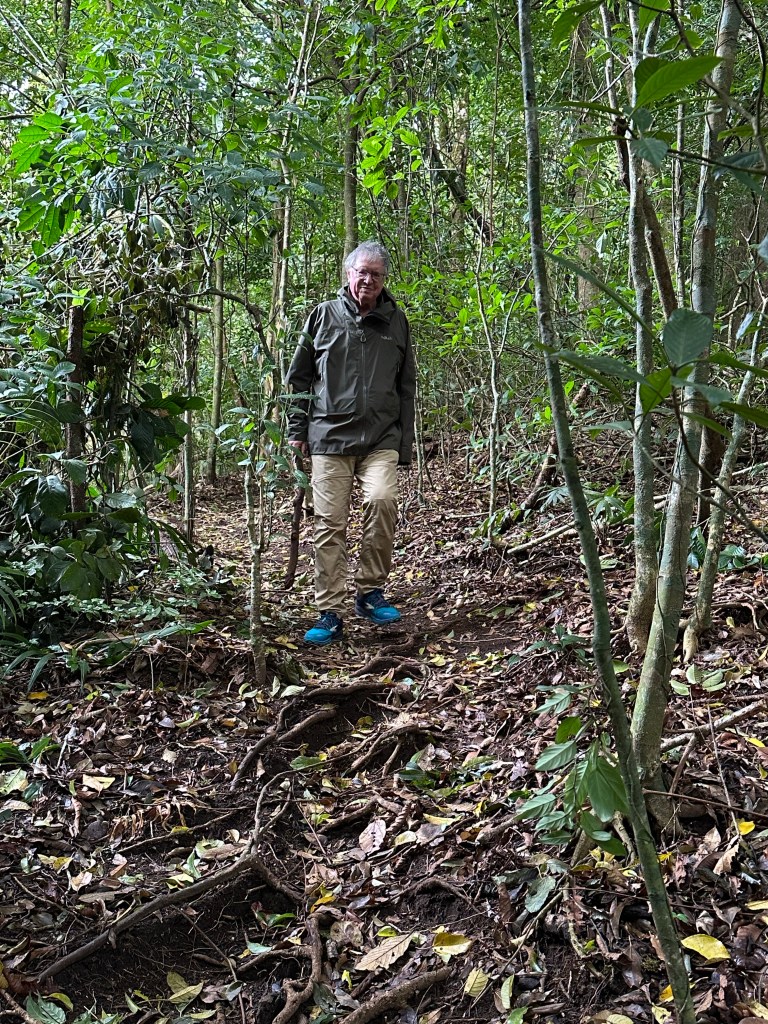
One of the hiking trails around our lodge
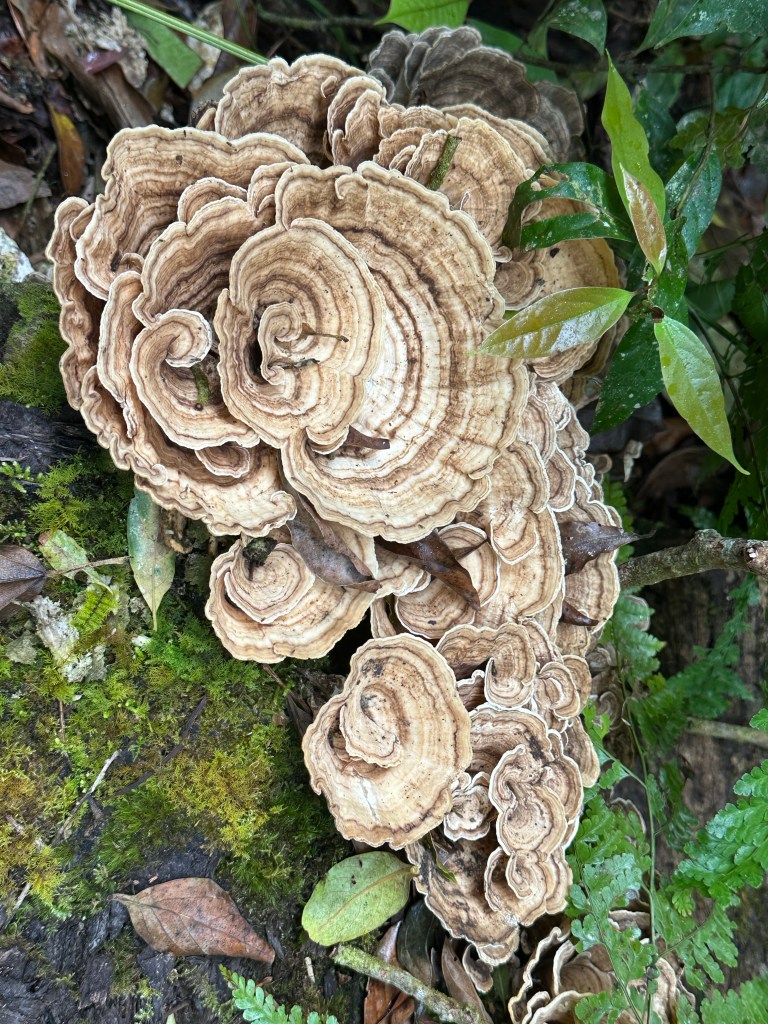
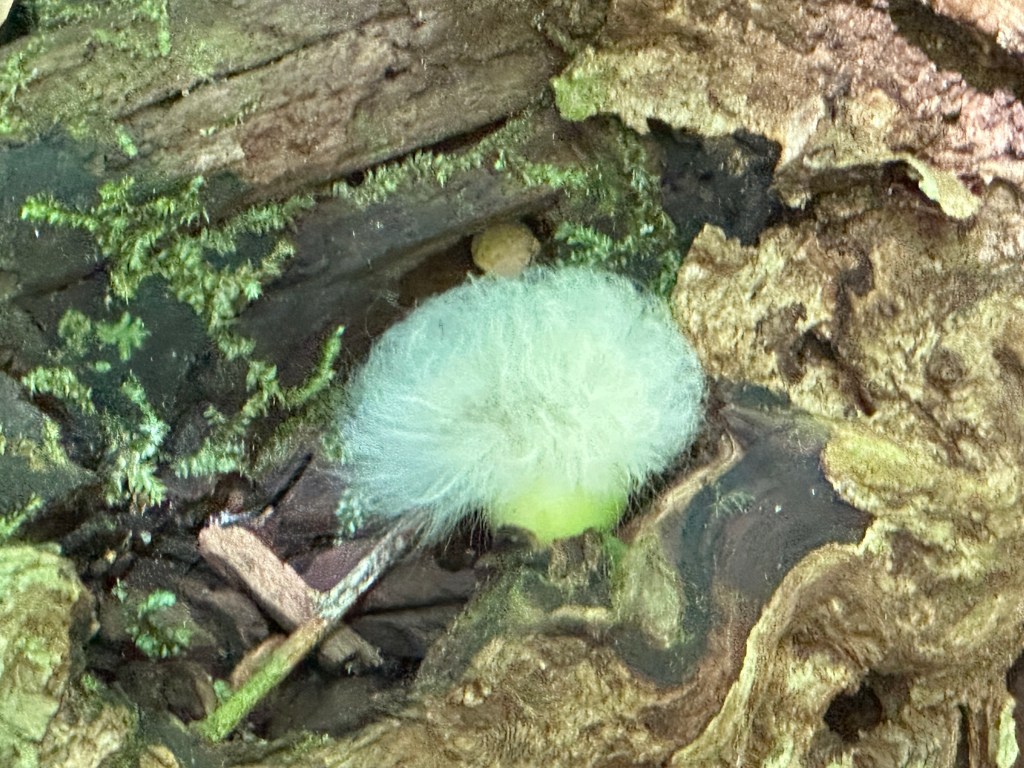
Forest fungi
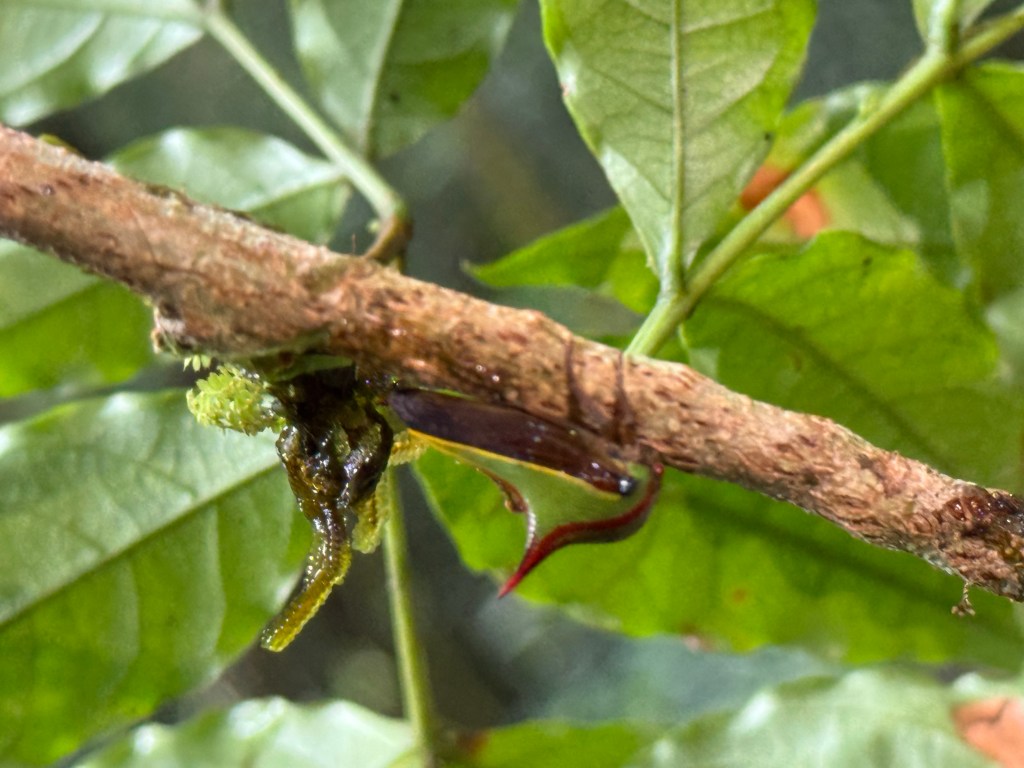
We would have missed many things without a guide such as this thorn insect
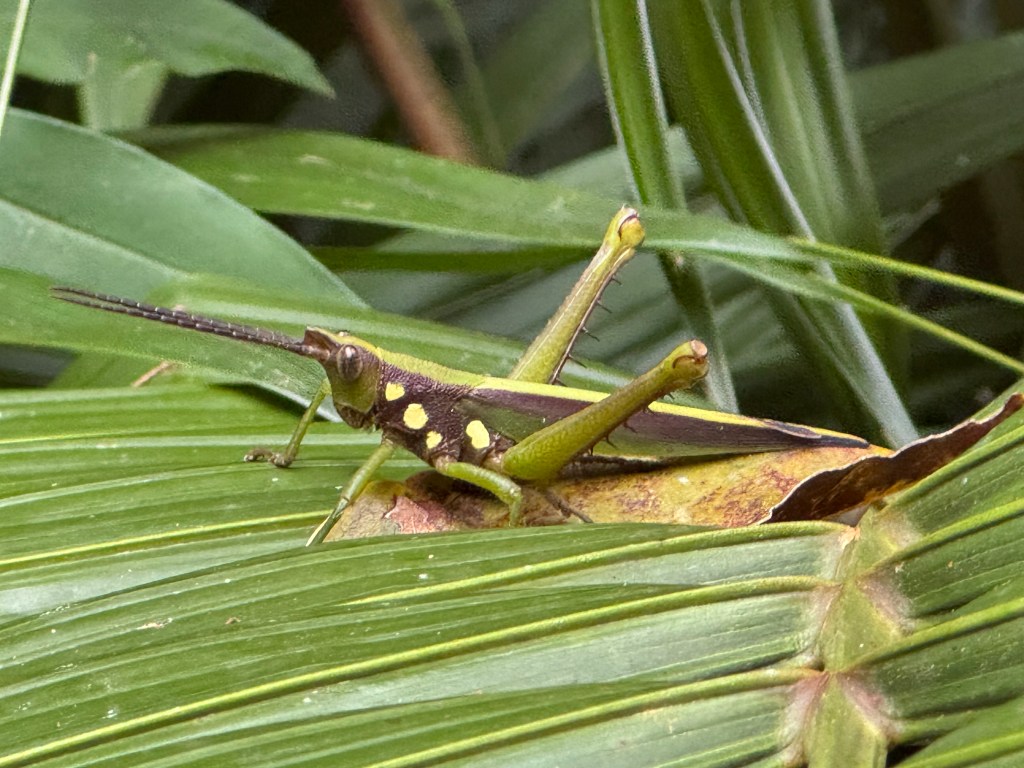
….and this grass hopper
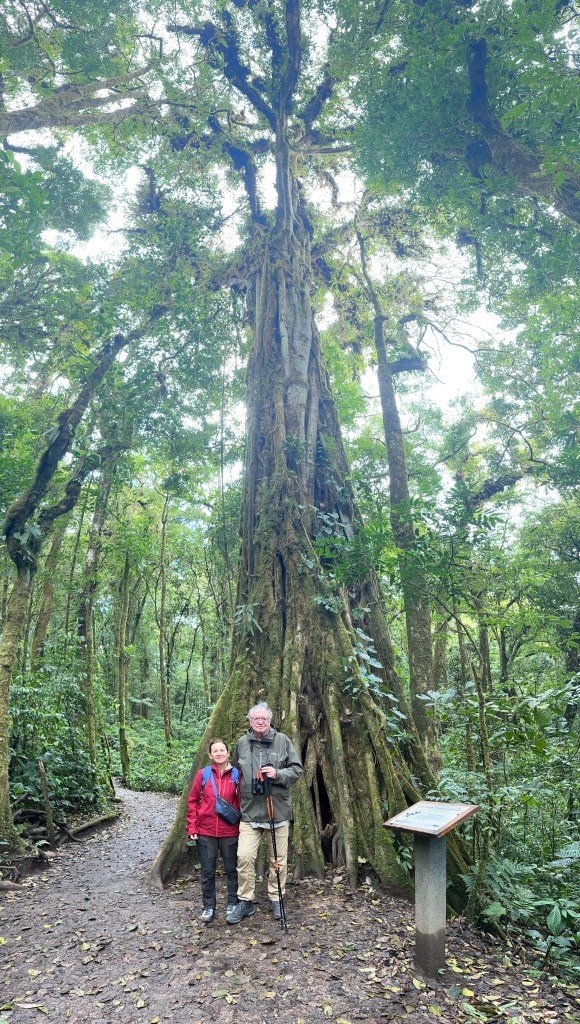
The “strangler tree”
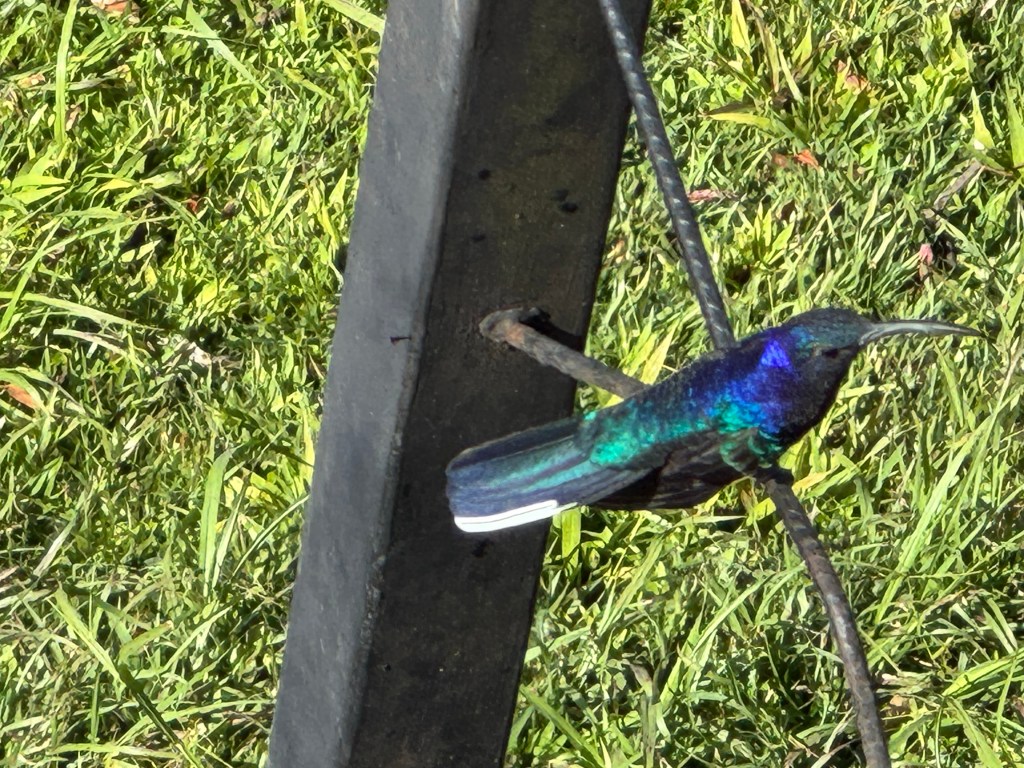
Violet sabre wing hummingbird outside our lodge
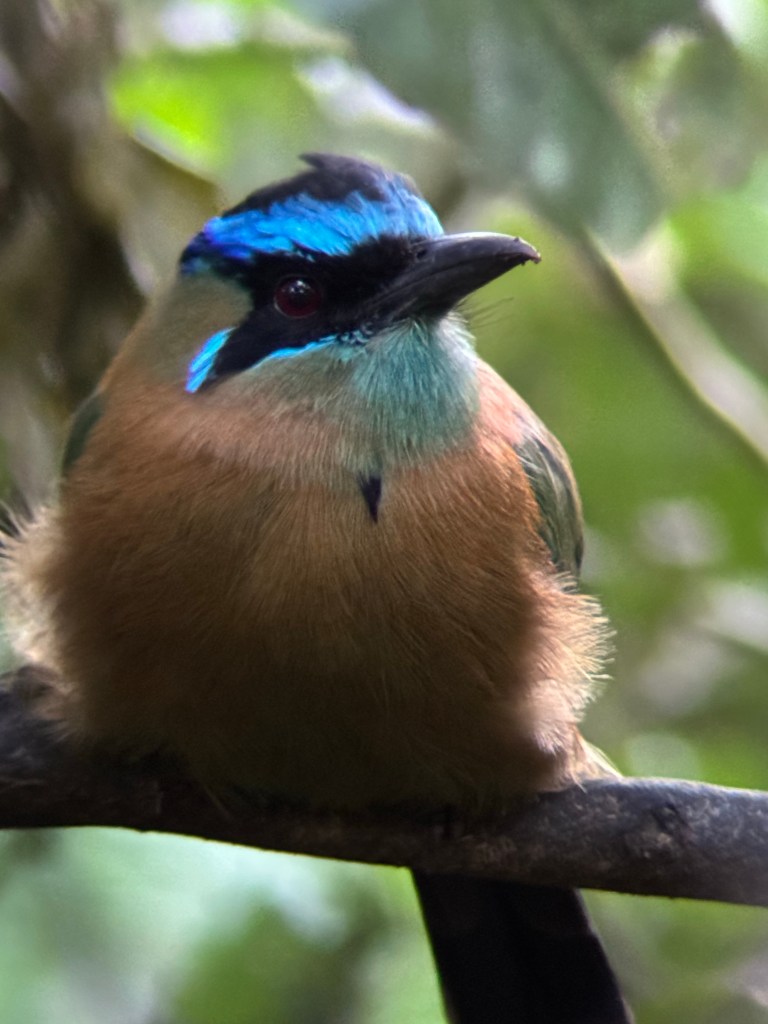
Lesson’s motmot (some of our photos were taken through our guides’ telescopes)
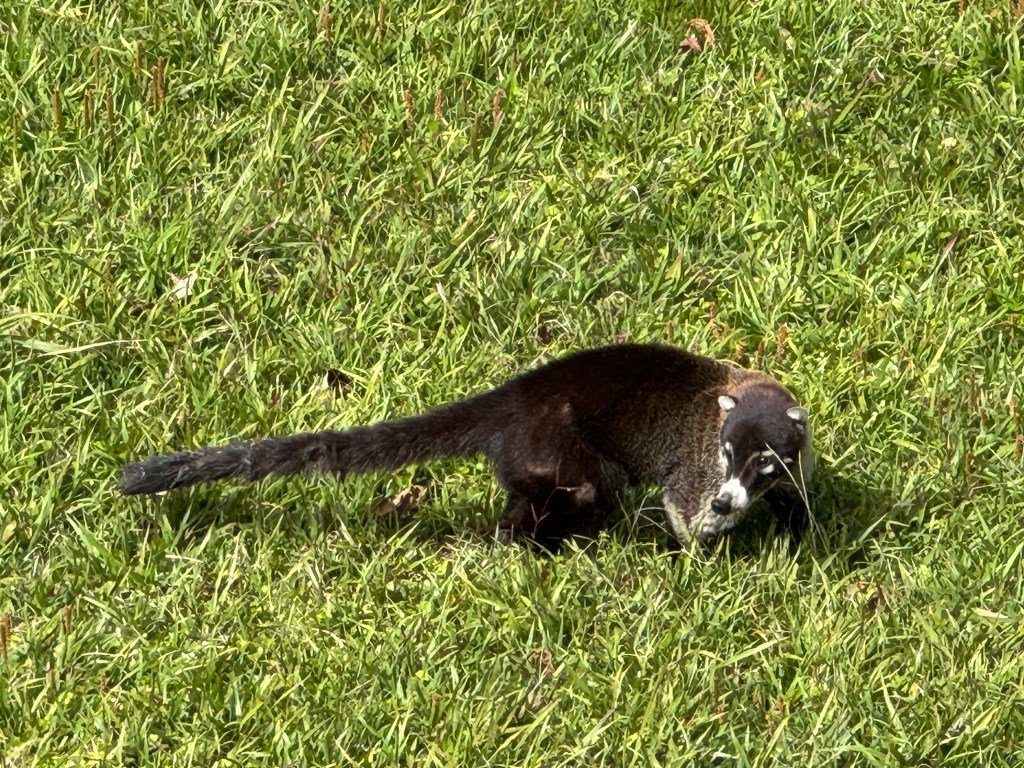
White nosed coati outside our room
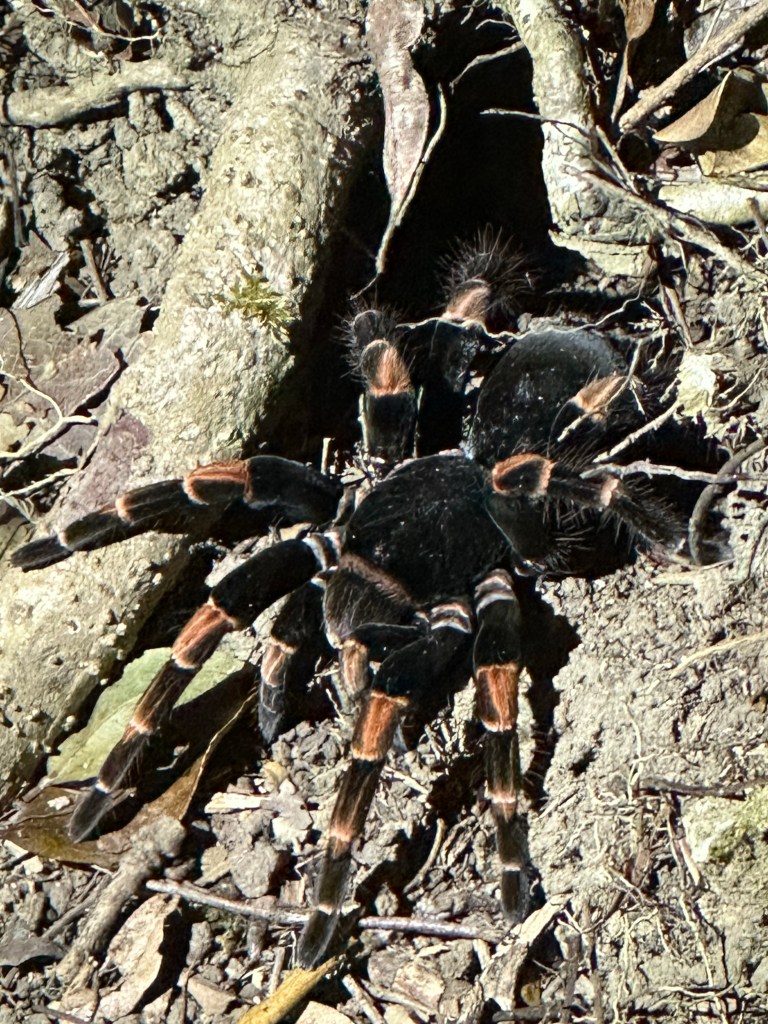
On our final evening we did a guided night hike for around two hours. We saw sleeping birds, insects, an armadillo and tarantulas (at a safe distance).

Arenal Volcano National Park

On 29 July 1968 The Arenal volcano, which had been dormant for hundreds of years, erupted destroying three villages and killing 87 people as a result of rapid pyroclastic flows. The area had been fertile farming land with a small number of farmers unaware of the possibility of eruption. Arenal continued to be active until 2010, being one of the most active volcanoes in the world by duration since 1750. The surrounding area became a National Park in 1991 and is now a major tourist area due to the volcano, thermal waters and rain forests.

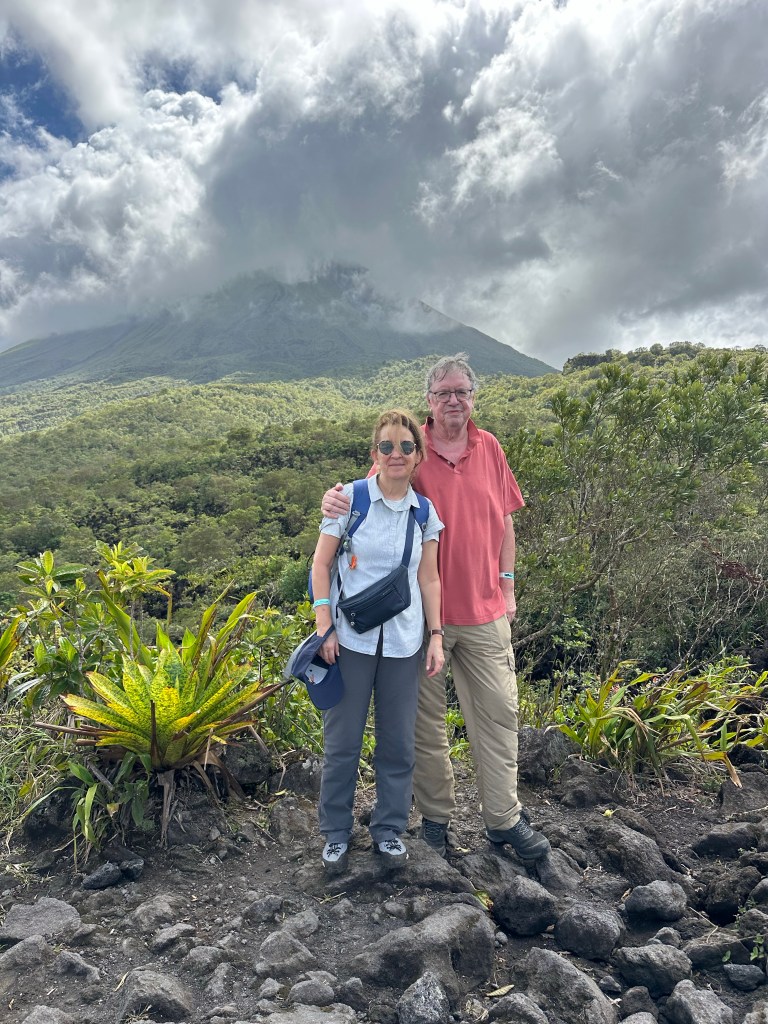
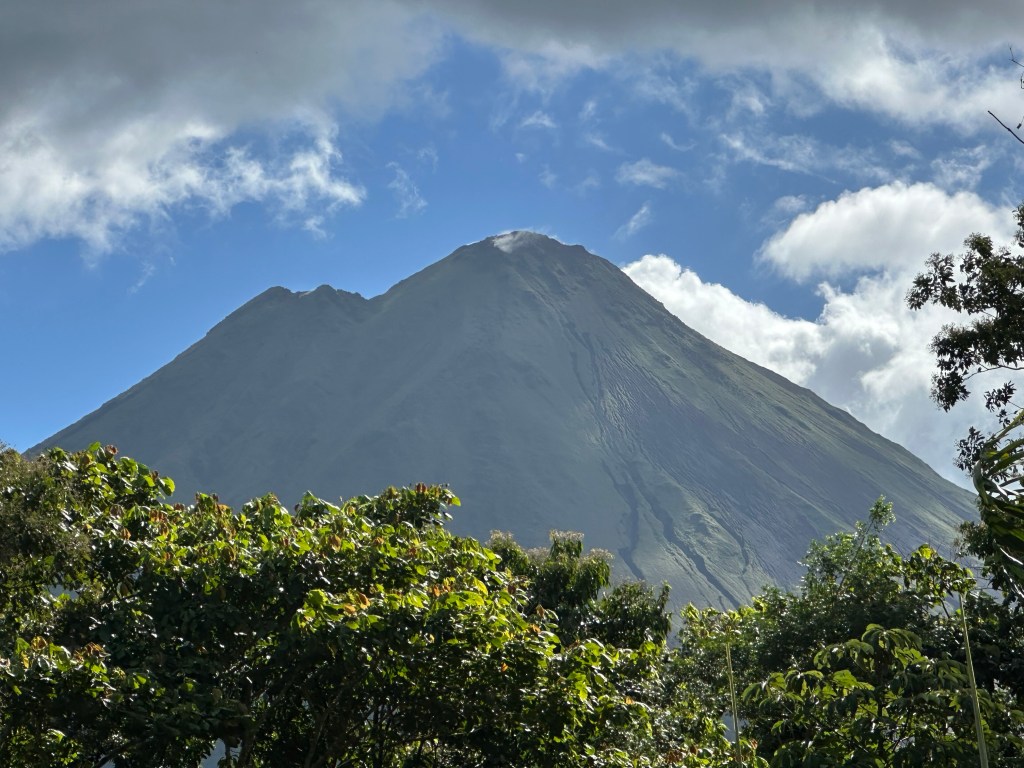
The volcano, being in a rain forest, is often entirely or partially covered in cloud. This was the case the day we hiked to the “viewing point”. We did, however, enjoy the hike in beautiful surroundings with plenty of wildlife. Our best view of the volcano was from lunch in our hotel after the hike !
View from our hike
View from lunch !
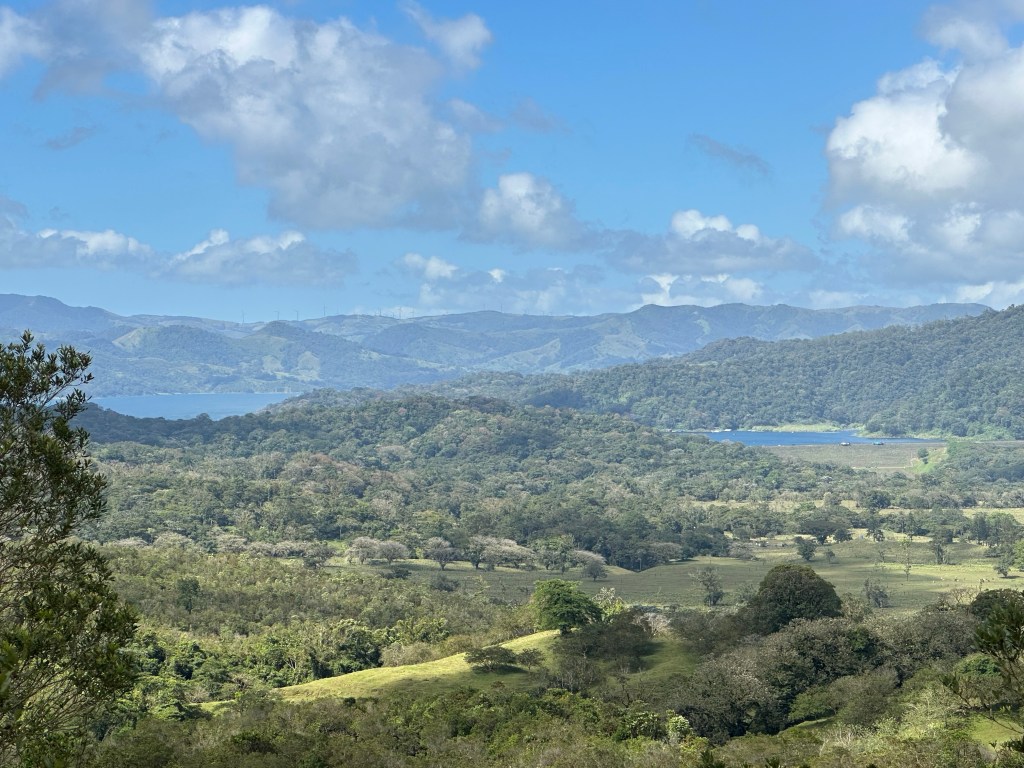
Lake Arenal, from our hike
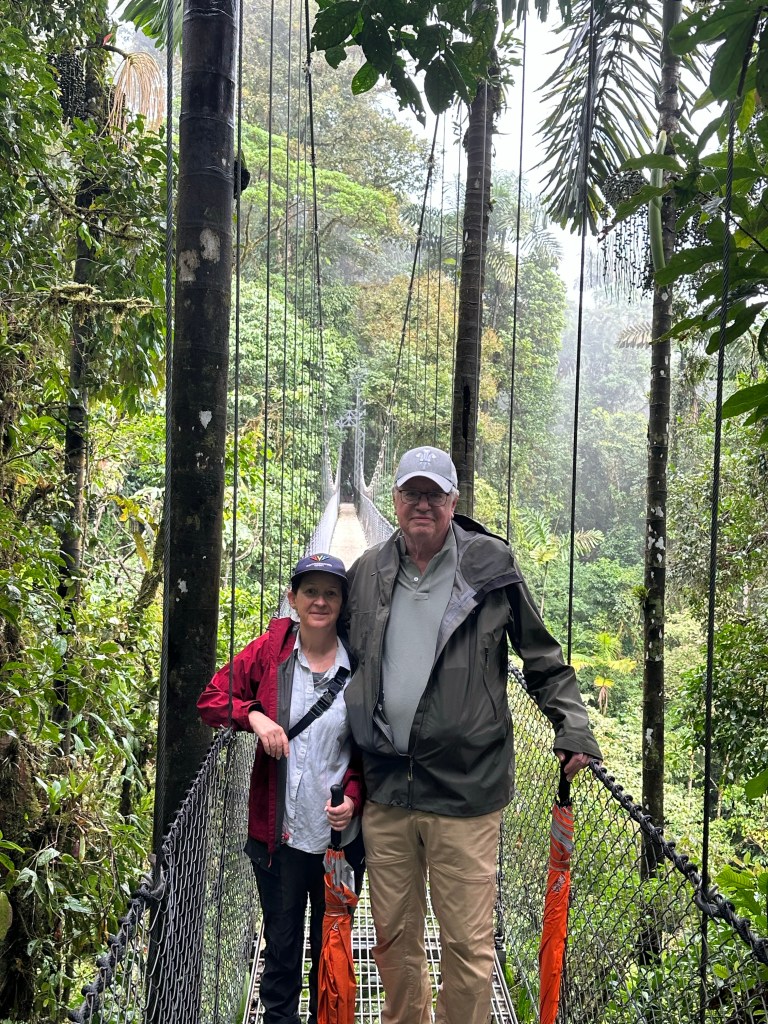
We also hiked through a rain forest, including five hanging bridges
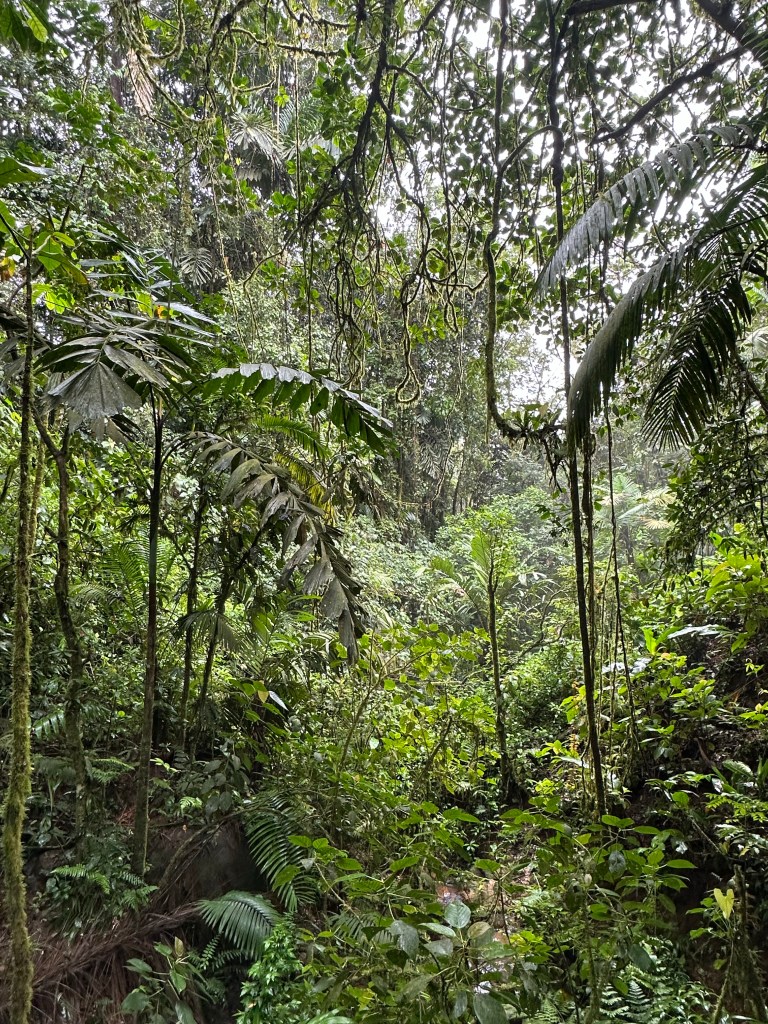
Rain forest; although we are here in the “dry season”, this is relative
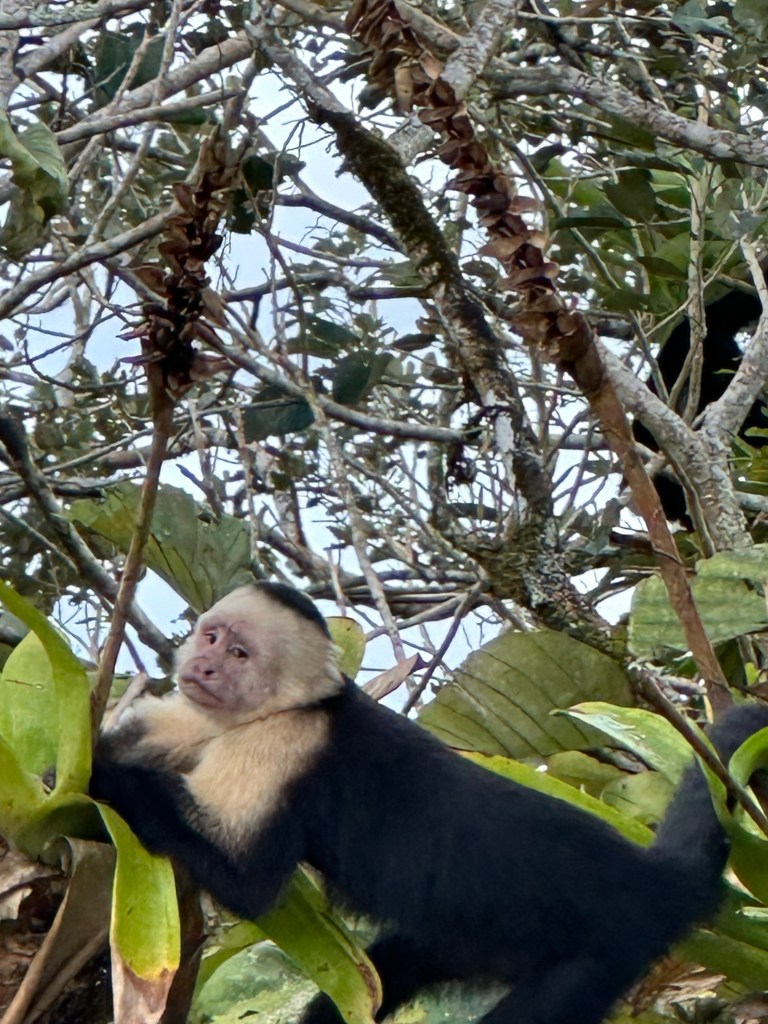
White faced, or cappuccino, monkey
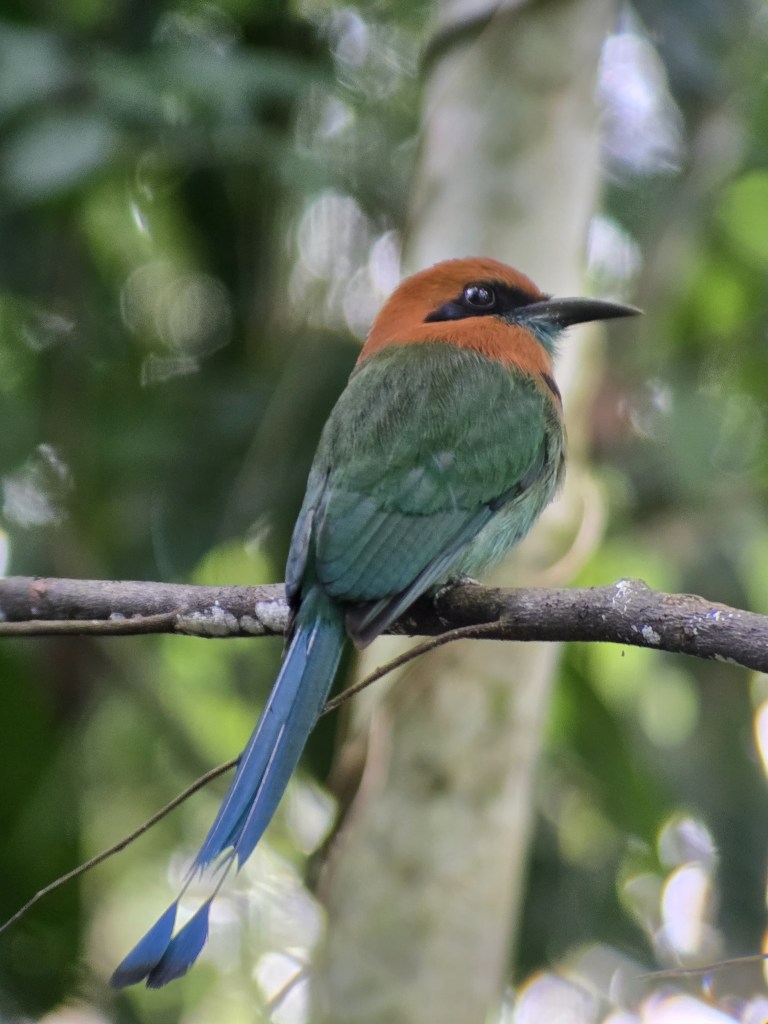
Broad billed motmot
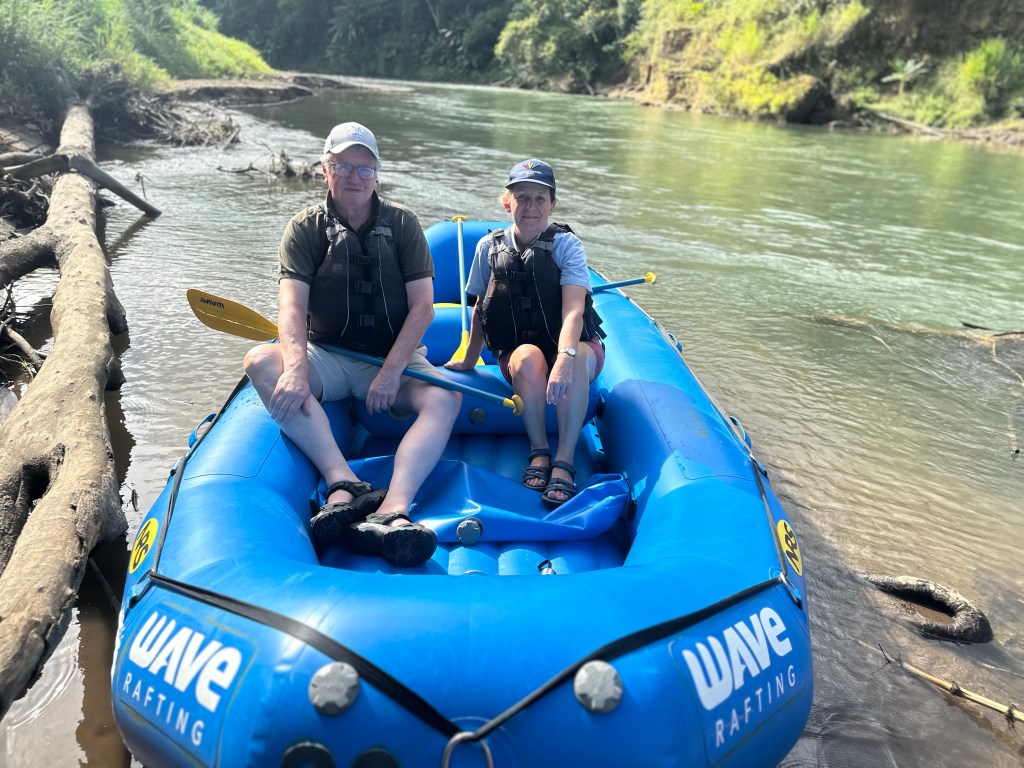
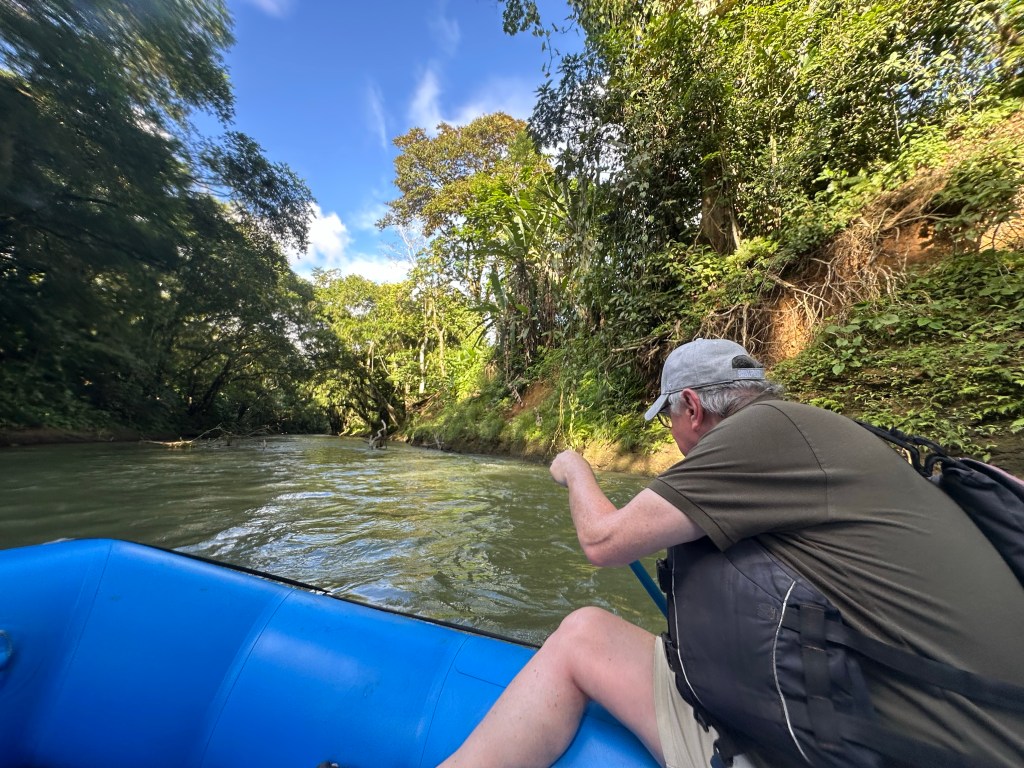
Rafting on a River Penas Blancas