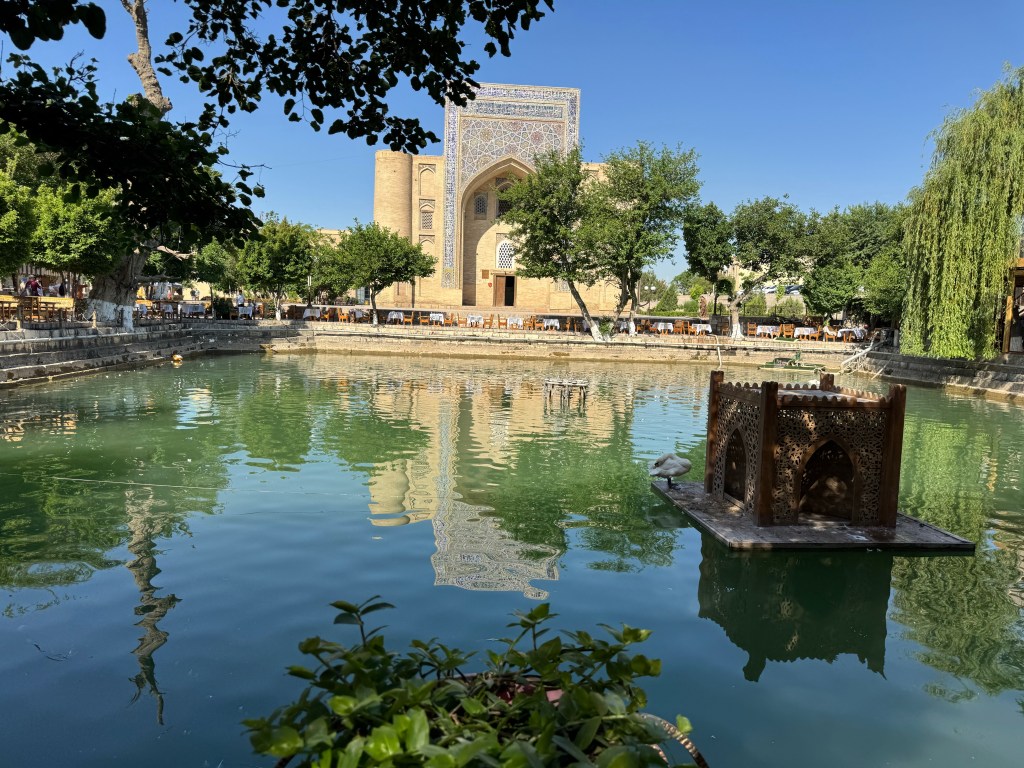
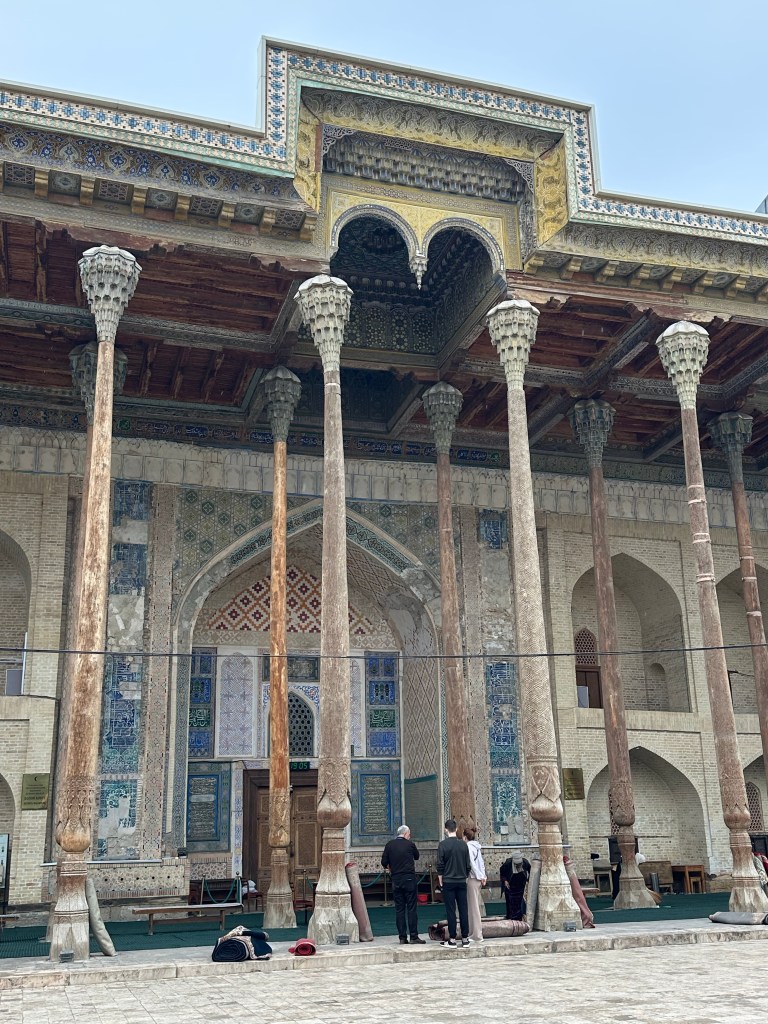
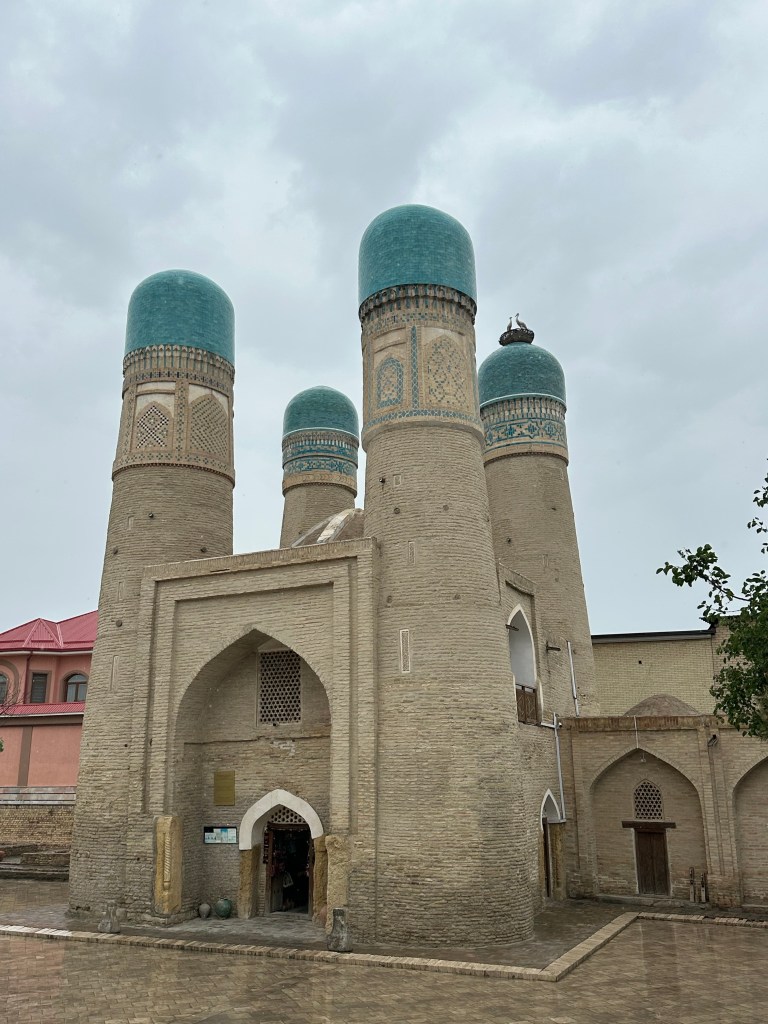
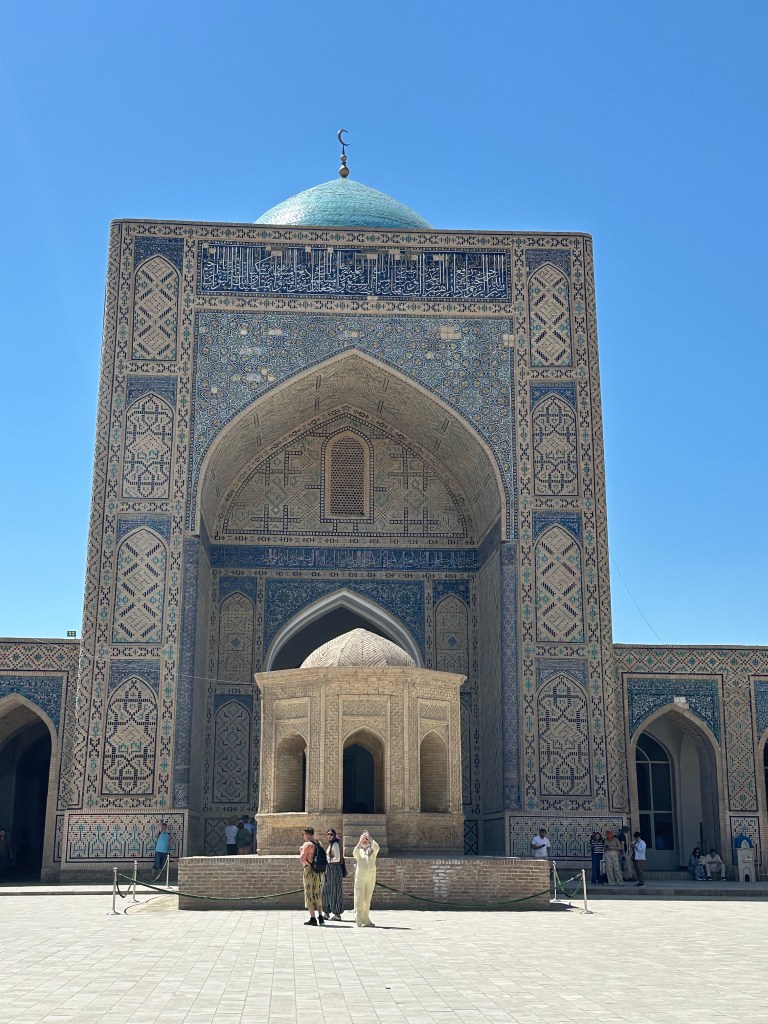
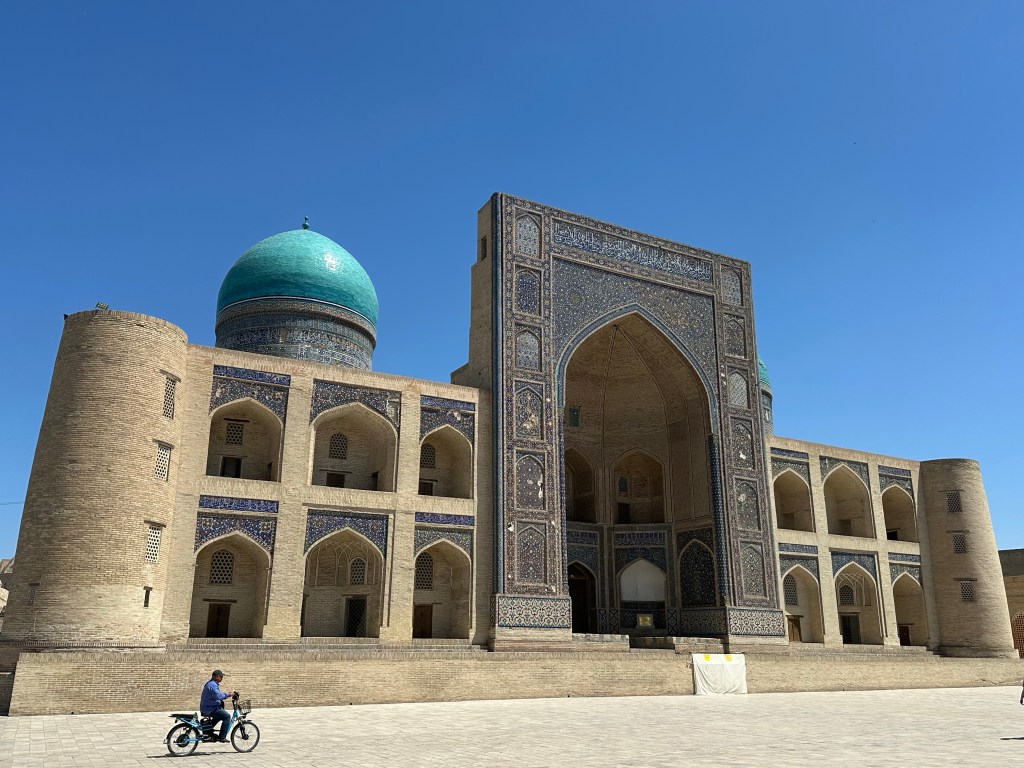
The details of the founding of Bukhara are unknown, however by the 6th century it was thriving mainly due to its location half way between Samarkand and Merv and its access to water from the Amu Darya river.
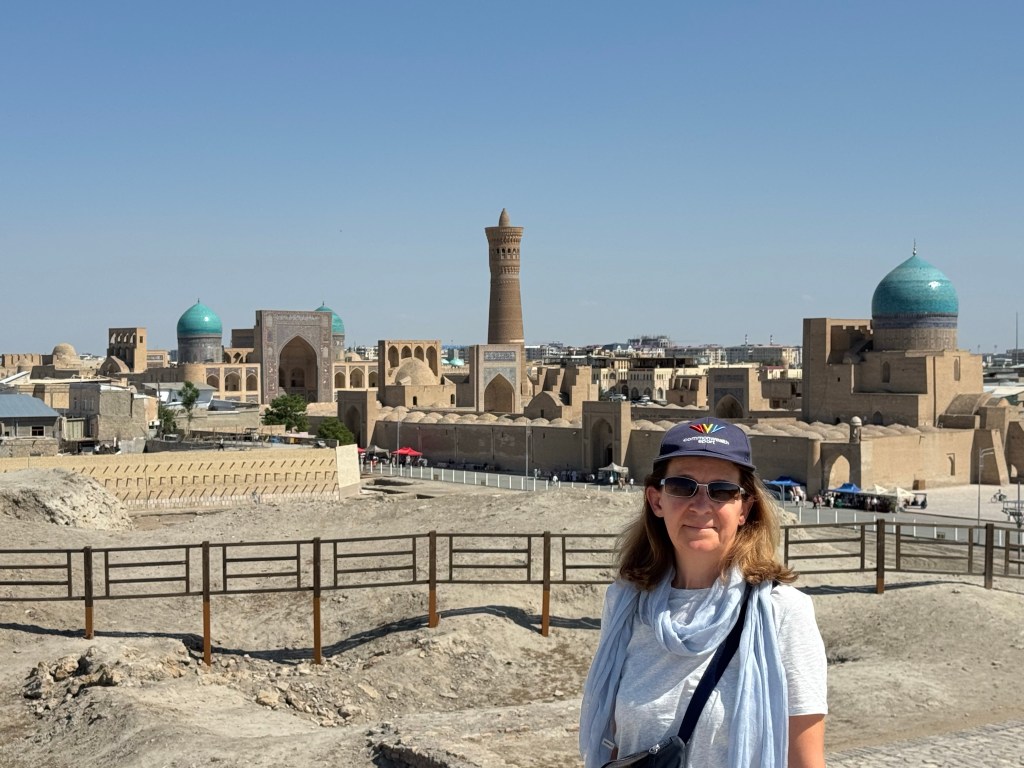
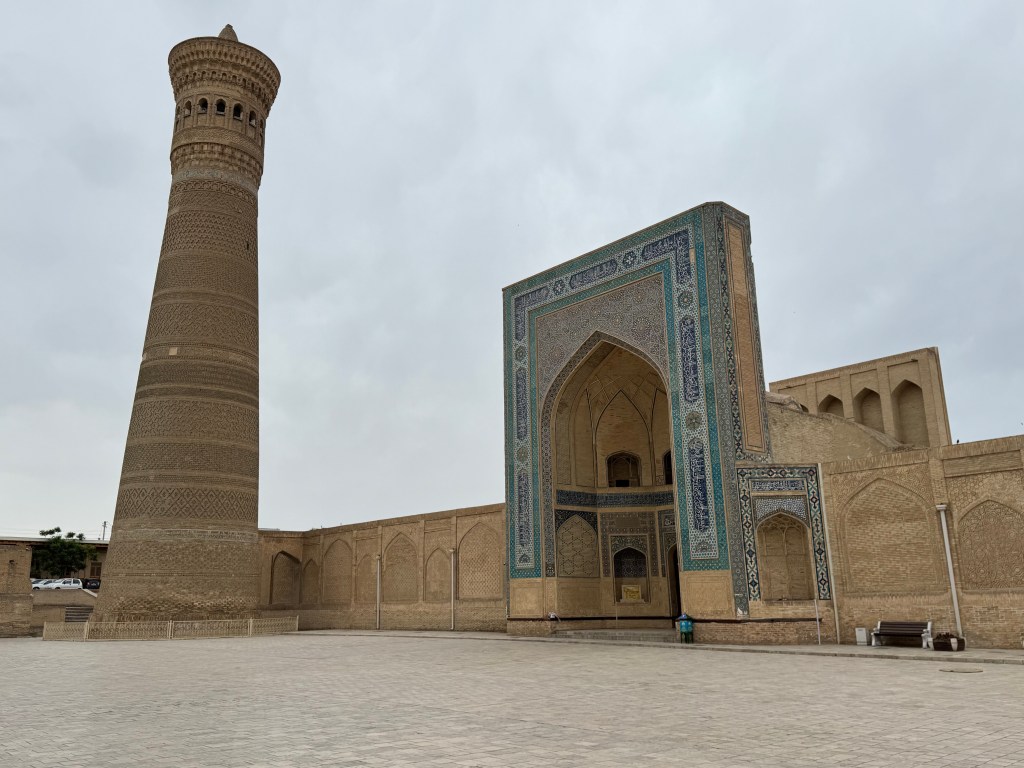
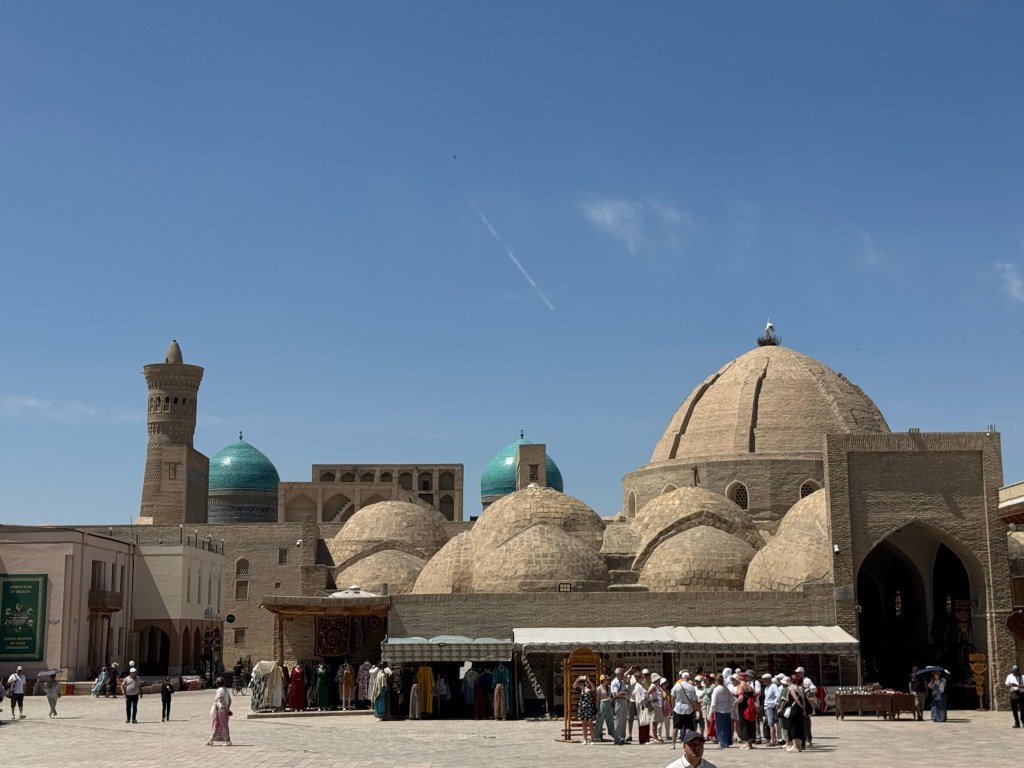
The 9th and 10th centuries were the city’s golden age before the Mongols arrived in 1220. Gengis Khan had been heading towards the 46m high Kalyan Minaret for days. By legend, on arriving at the minaret Gengis Khan’s hat came off and he saw it as an omen, so did not destroy the minaret unlike the rest of the city. He also killed or enslaved the whole population.
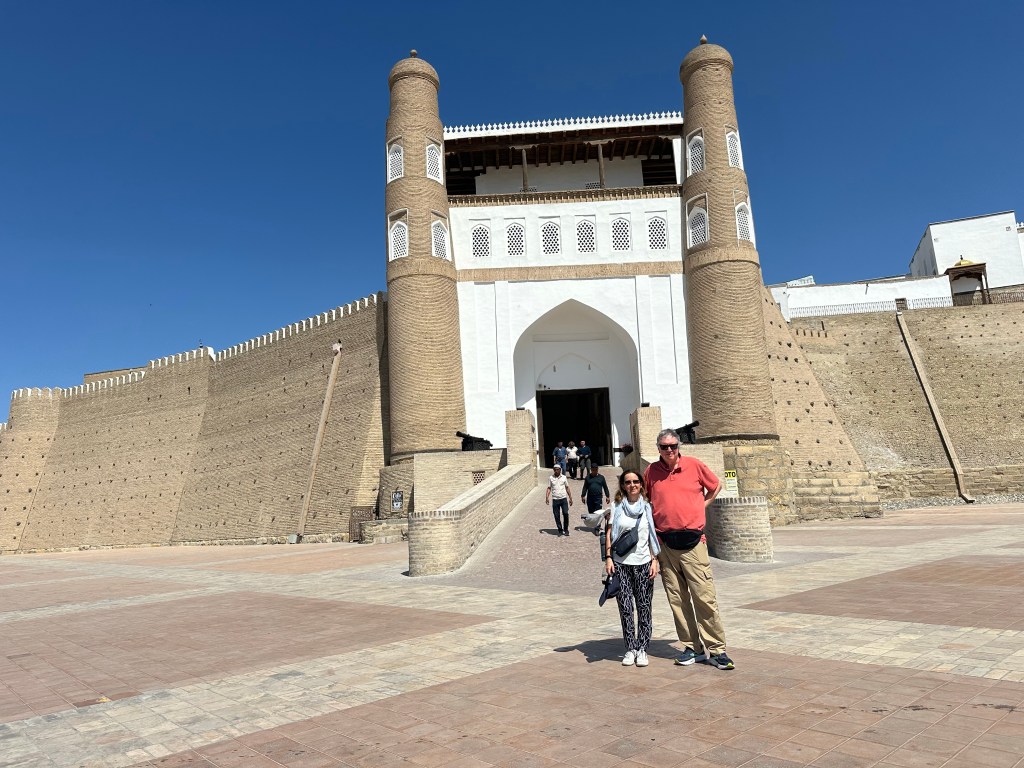
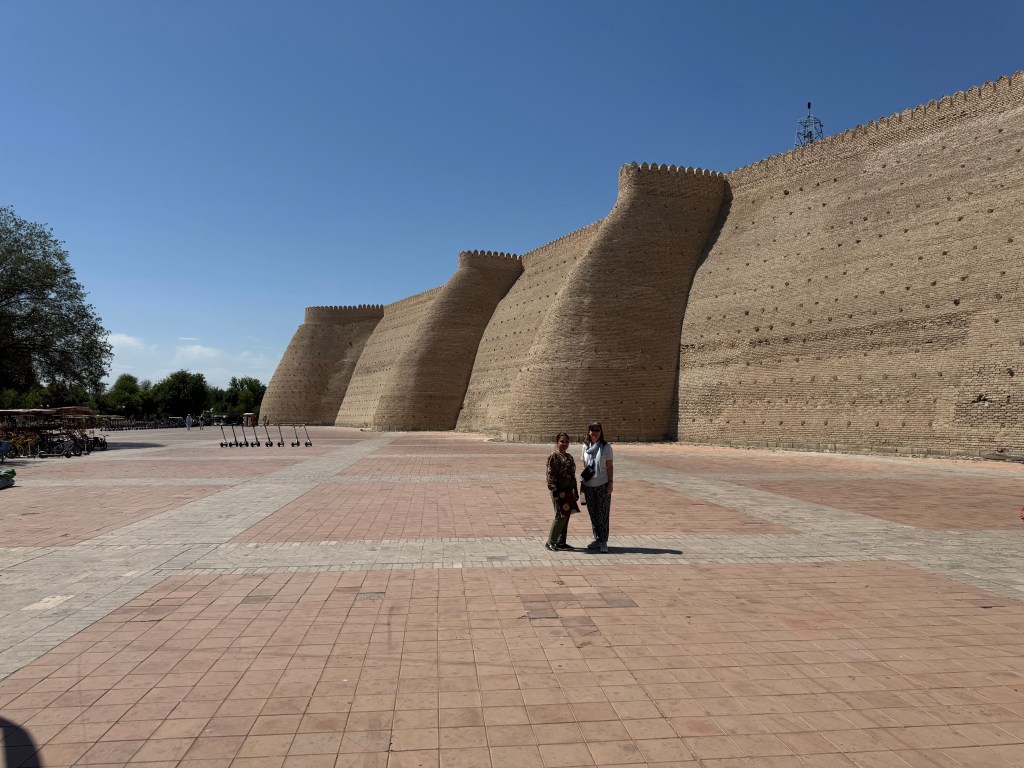
A khanate was established in 1500 and the city became wealthy again. The city fortress (The Ark) was rebuilt for defence, although much was destroyed by the Bolsheviks in 1920.
During the Great Game, British Army officers tried to engage with the Khan of Bukhara. Lt Colonel Charles Stoddard arrived, after weeks of travelling across the desert, but unintentionally caused at least one breach of royal protocol and was thrown in the Ark jail. Captain Arthur Connolly later arrived to try and secure his colleague’s release but was also thrown in the filthy jail. Both men were subsequently executed.
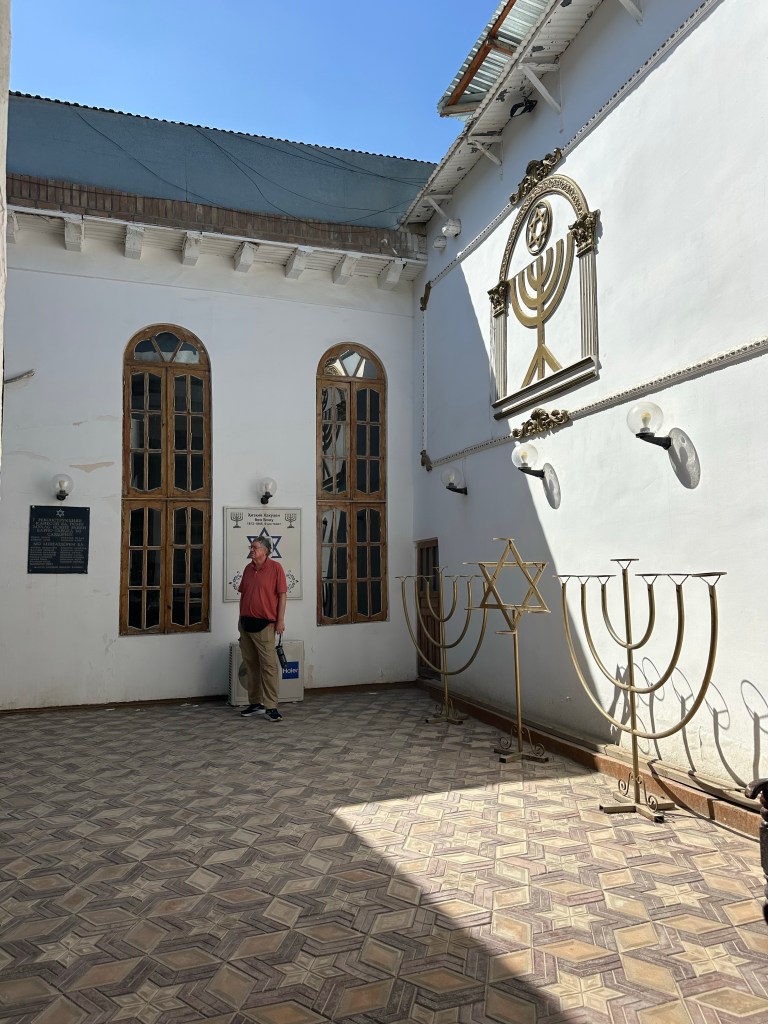
Today Bukhara is a city of approximately 300,000, with the old city centre pedestrianised. The old city has a small Jewish quarter; although a synagogue remains most of the Jewish community have moved away. The Soviets built a railway station and factories in a new town about 10km away.
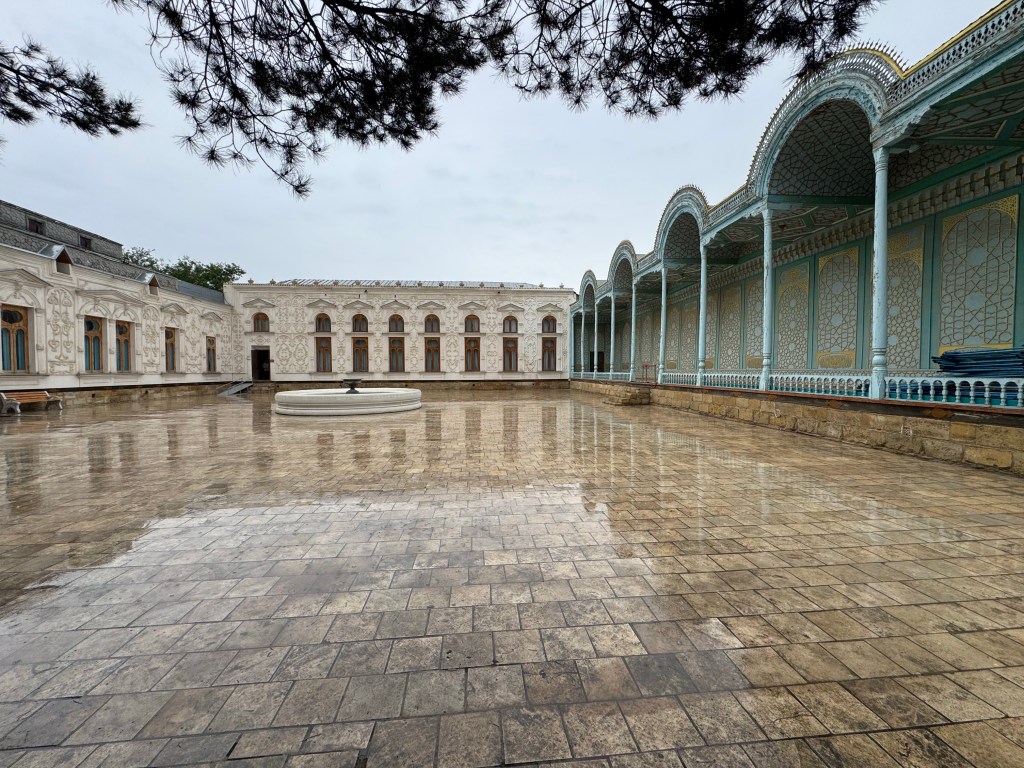
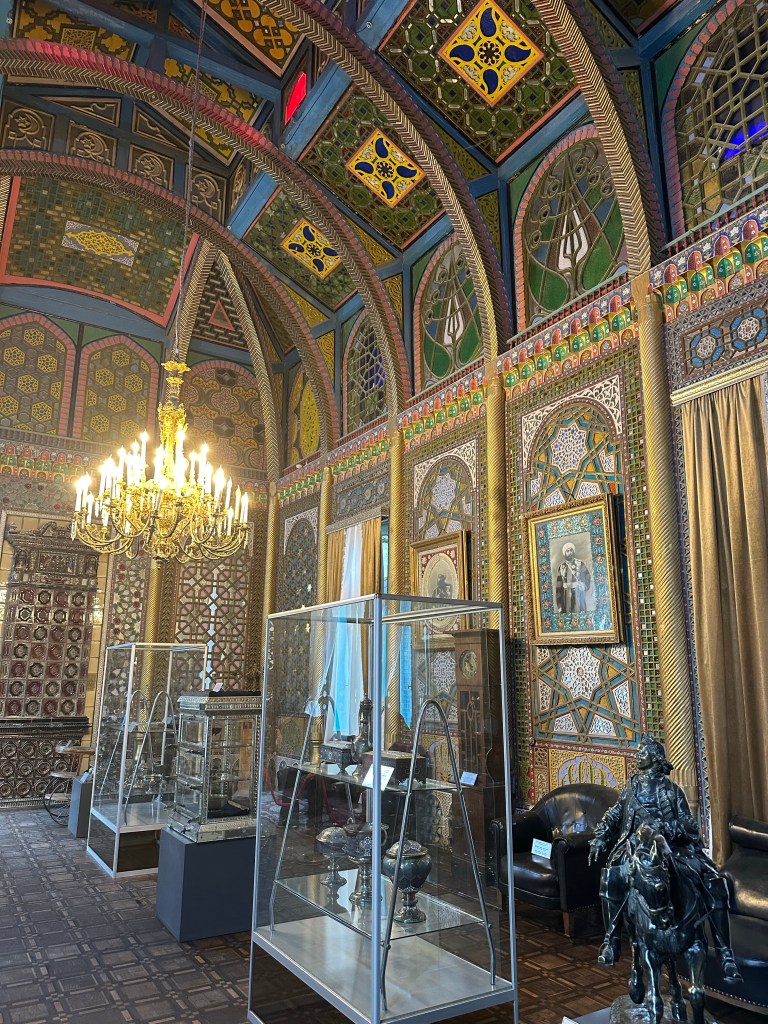
The last Khan of Bukhara built a summer palace just outside the city. Apparently he had travelled to and met people from a number of European countries, so wanted to replicate some of the fashions and architecture. The result, we felt, lost quite a bit in translation!