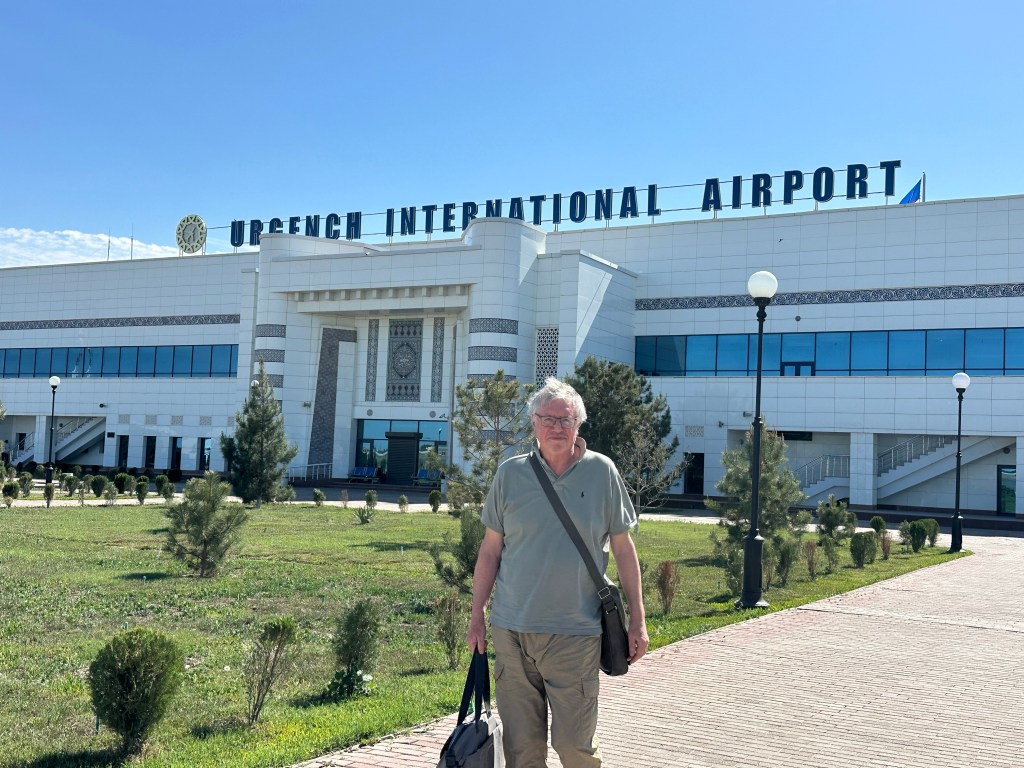
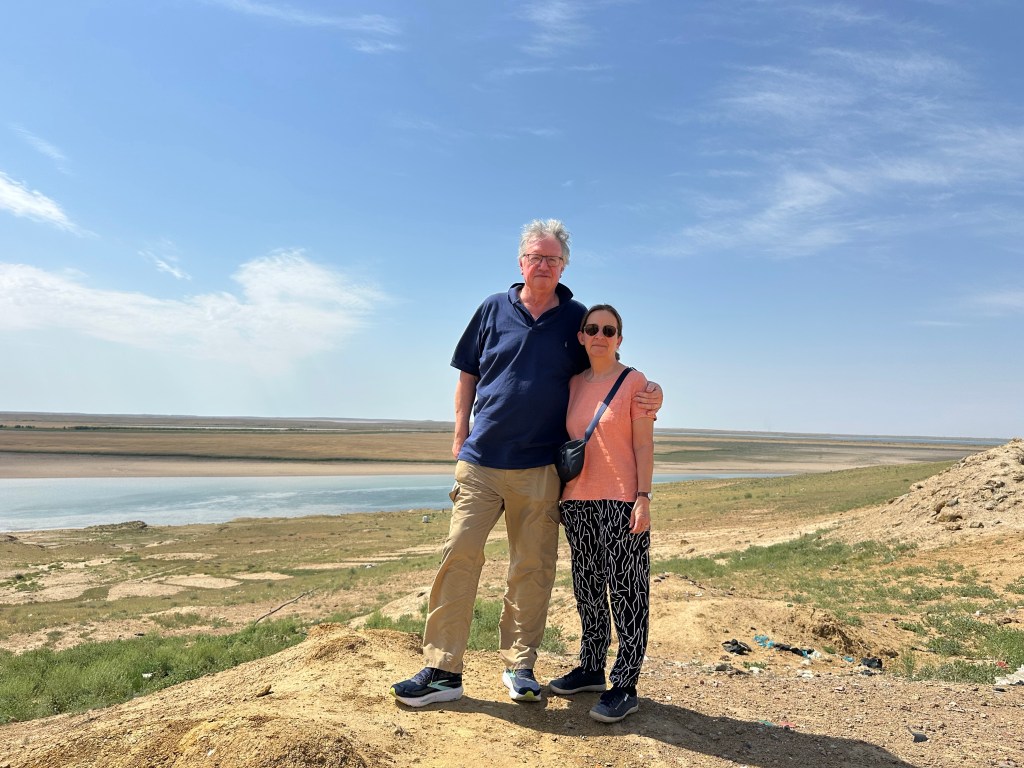
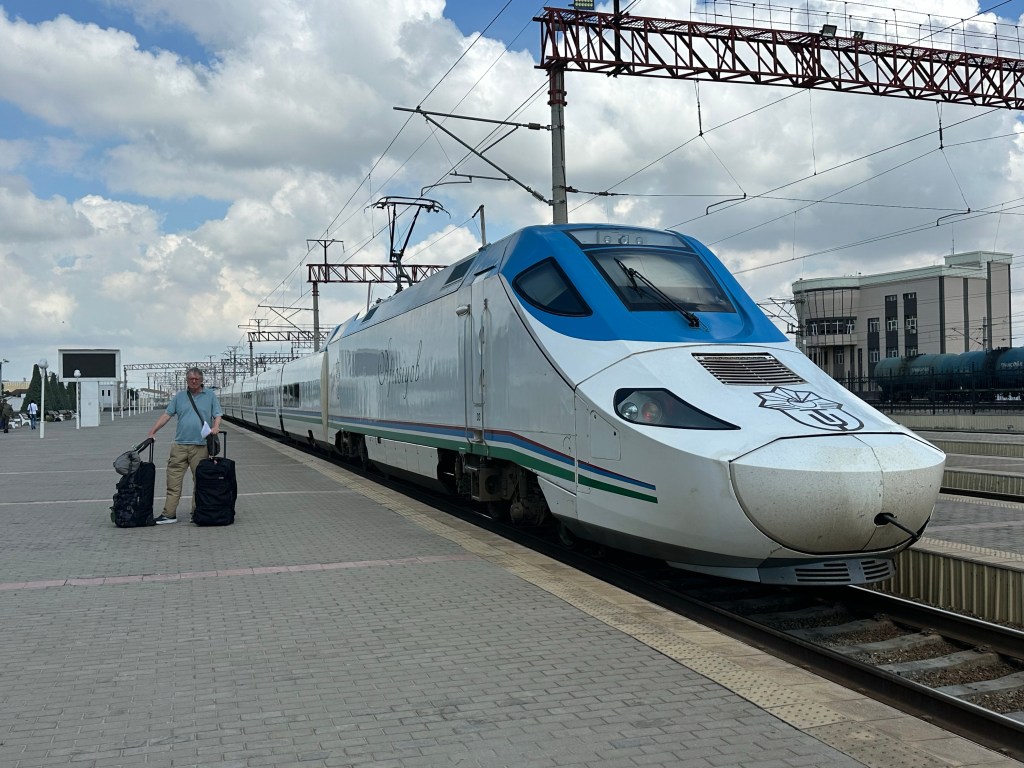
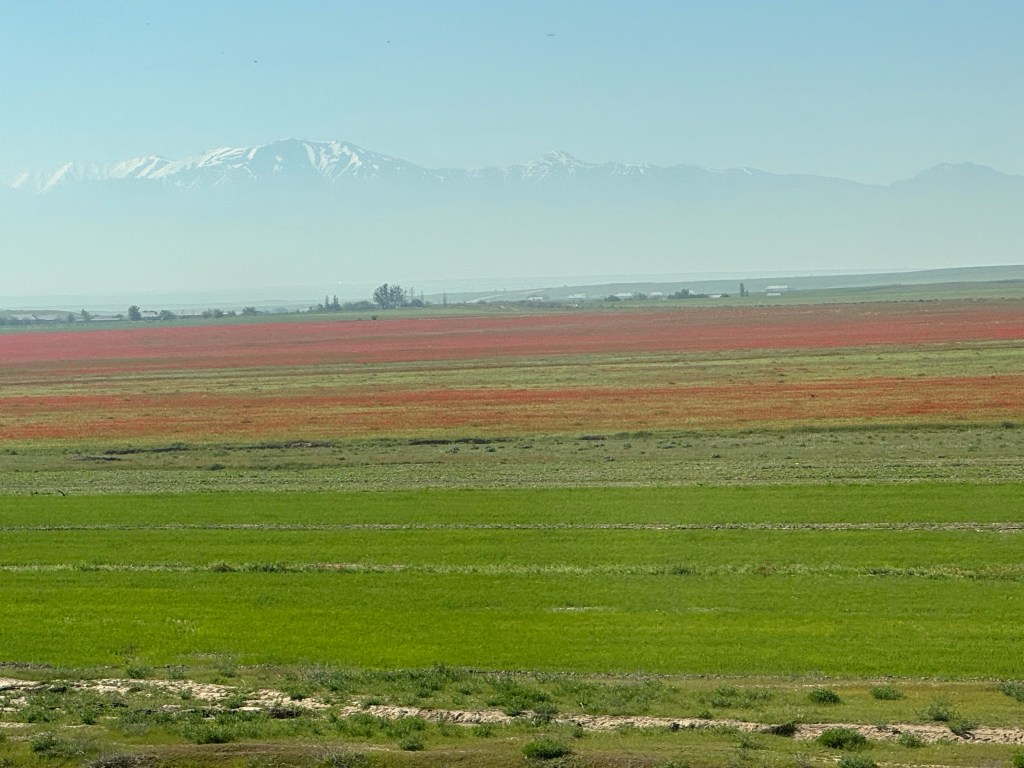
We travelled in Uzbekistan by one internal Uzbekistan Airlines flight, two trains and by road. Our route took us close to the four other former CIS neighbouring countries (a good geography lesson!).
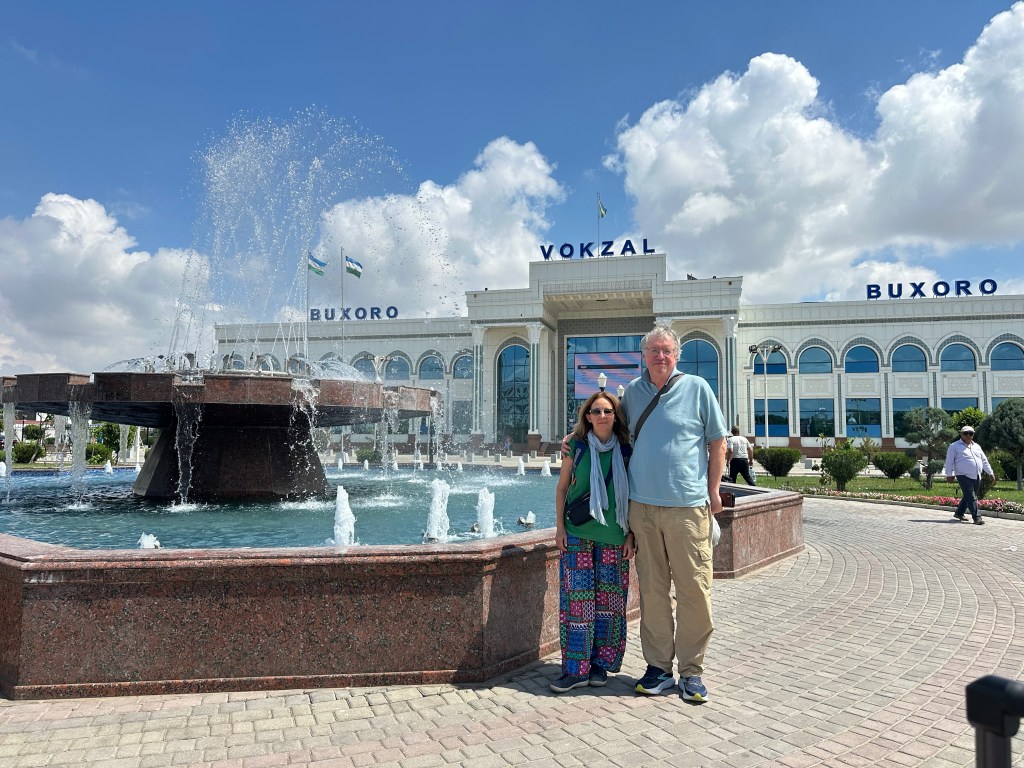
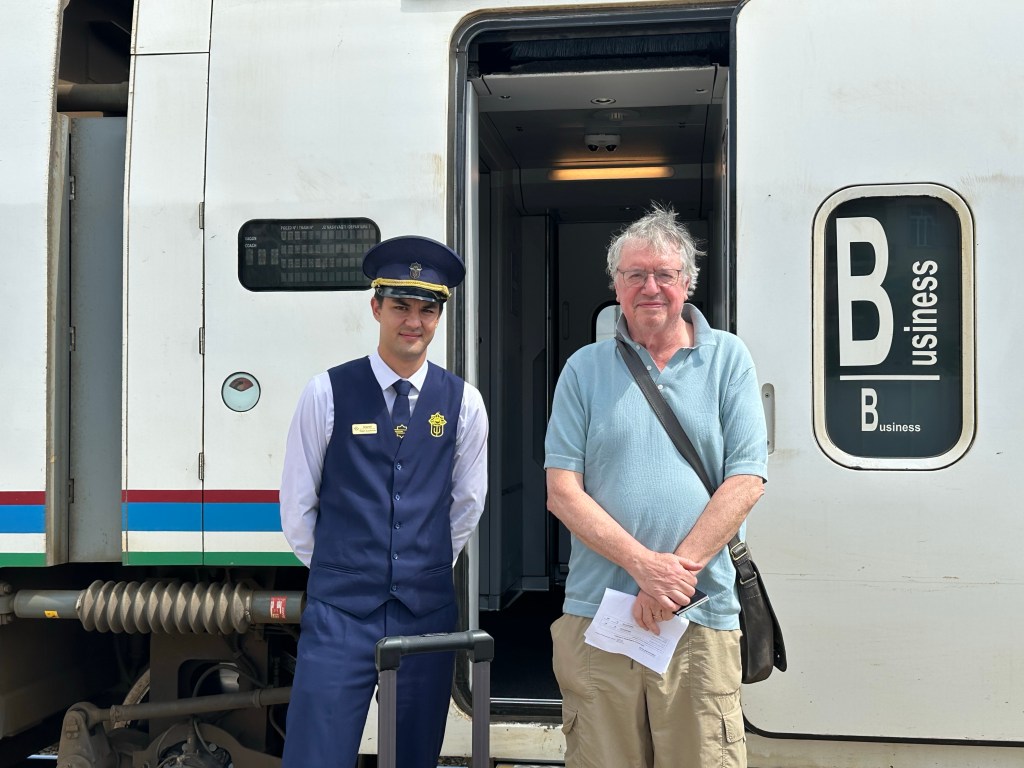
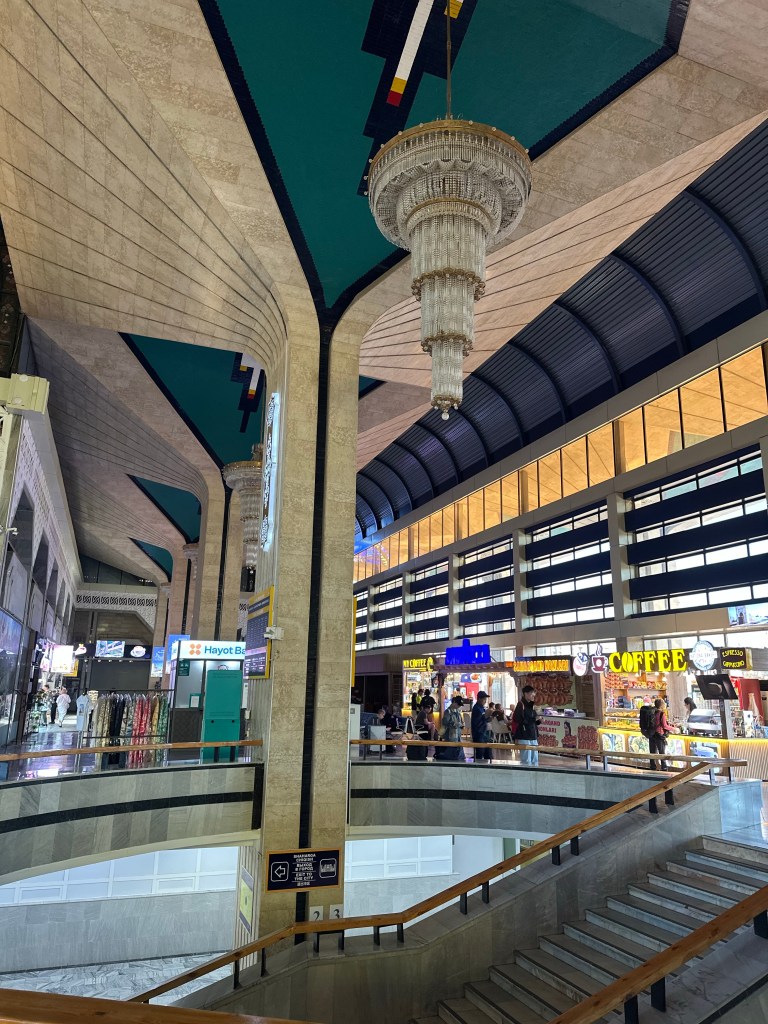
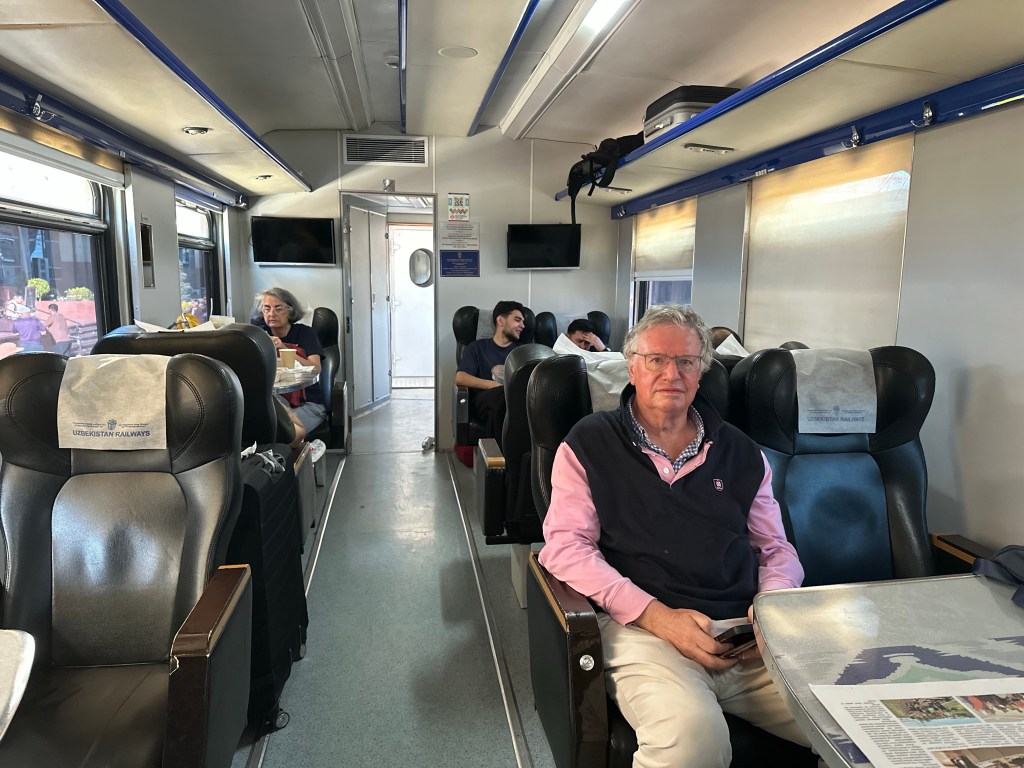
Trains and planes had the feel of Soviet years both in terms of the transport and the level of security checks. The stations also date from Soviet times while airports are very modern, but with rather chaotic boarding arrangements. The trains have numerous staff including a conductor for every carriage. Aside from checking your passport and ticket, the conductor helps with luggage, a welcome novelty.
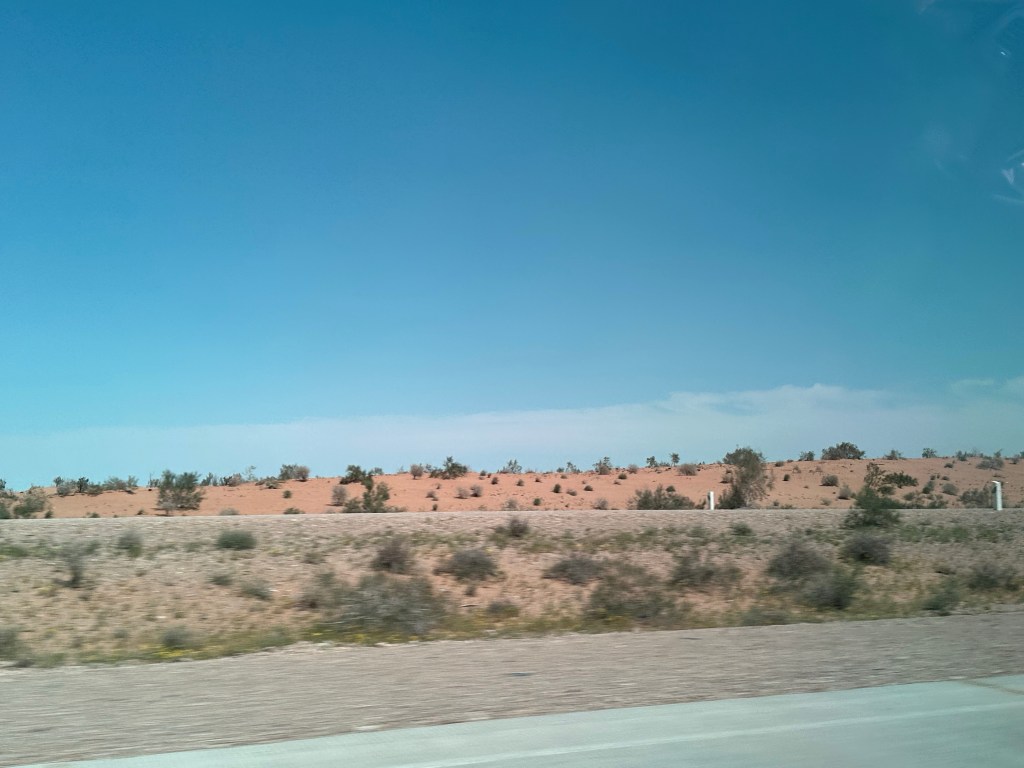
Some of the roads were modern but others provided “Asian massages” which made complaints about potholes in the UK seem frivolous. We also experienced a 30 minute wait at a rail crossing only to discover that trains and vehicles shared a single track across a bridge over a river – this was on the country’s main route from west to east near the the intersection with the road into close by Turkmenistan and a major freight route. On reflection 30 minutes was a good result.
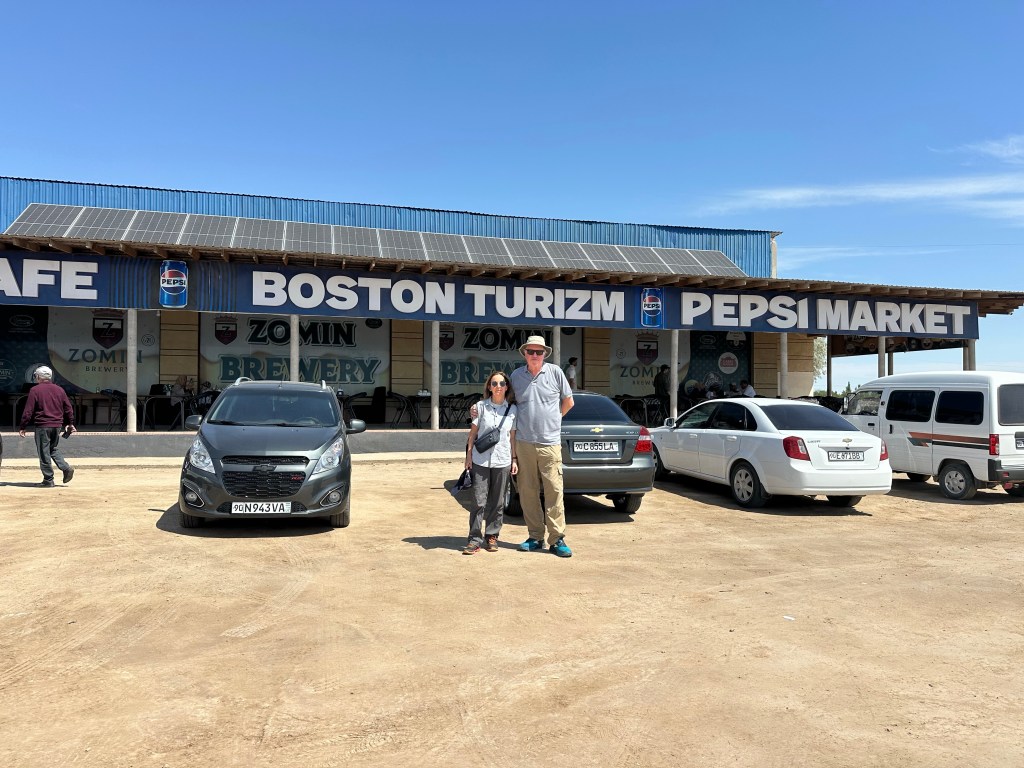
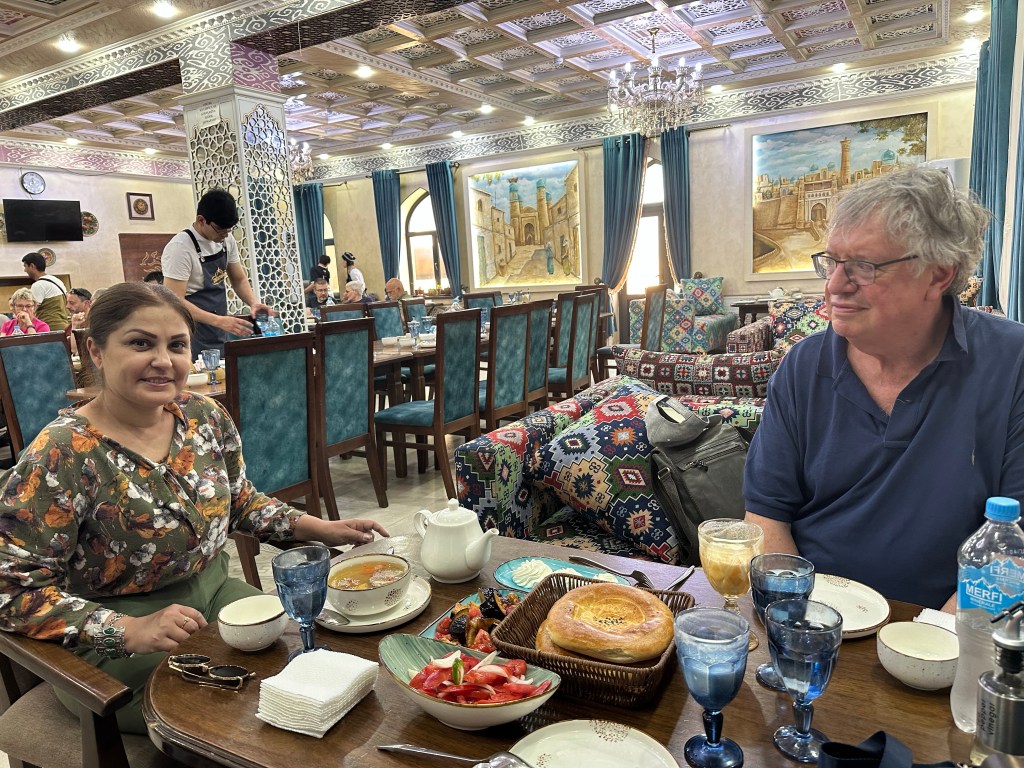
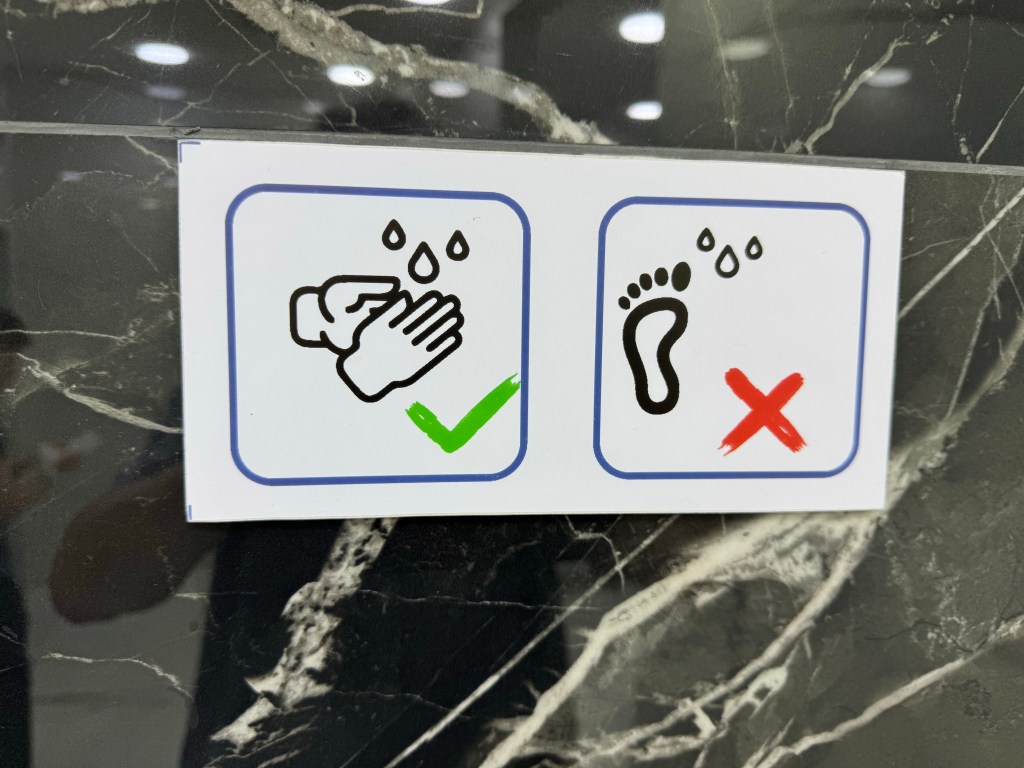
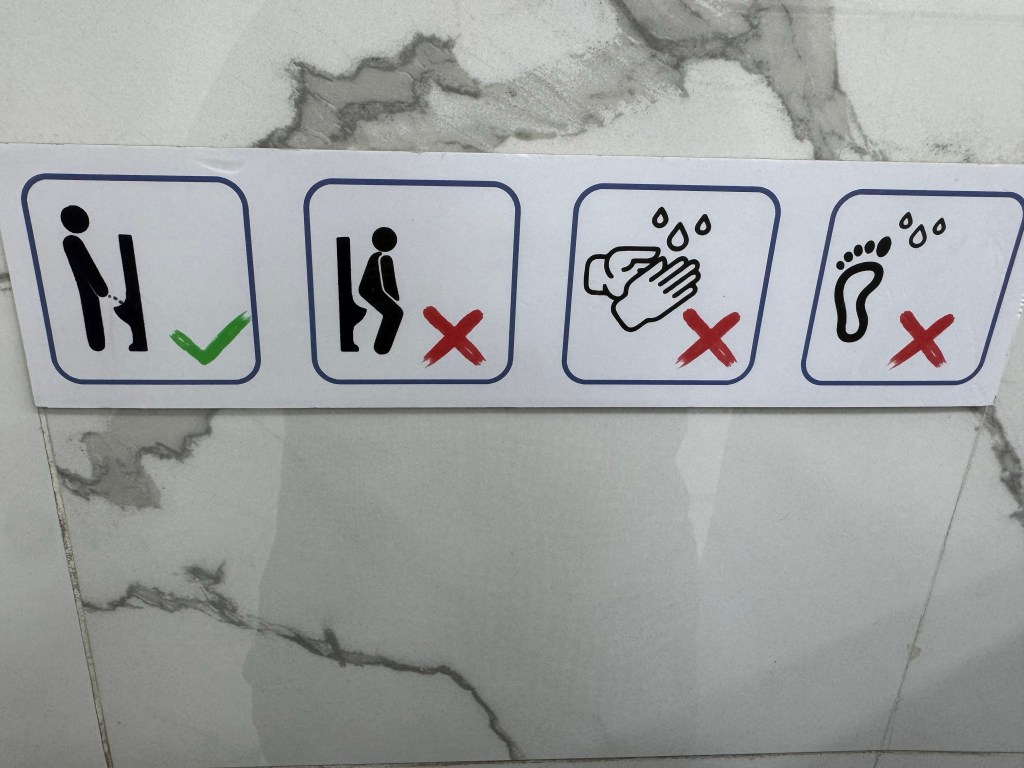
Food at roadside restaurants and cafes was generally good (better than most UK equivalents and a fraction of the price), unlike the toilets. All public toilets require payment of between 12p and 30p, but that does not guarantee cleanliness. However having to pay after eating at the adjacent restaurant at a roadside stop and then having to hold your nose to use the only sink while Uzbeks wash their feet in was a new experience, especially as many people were not sufficiently tall or agile to do so without great difficulty. At another stop the cubicle walls were around shoulder height. Carrying your own toilet paper is an expected part of such travel; where it existed it was Soviet rations style (a greyish crepe paper !).
The Uzbek language is officially written in Latin script but until recently it was written in Russian Cyrillic script and prior to that Arabic. As a result many words, particularly names of people and places have evolved to have multiple Latin scripts spellings. We soon discovered that our knowledge of a bit of Turkish was helpful as around 60% of Uzbek is the same or similar. For instance all the numbers are the same as well as many food items. The Uzbeks were surprised and it soon became a topic of conversation, together with football and British music. Uzbekistan have become the first Central Asian country to qualify for the World Cup and their star player plays for Manchester City.
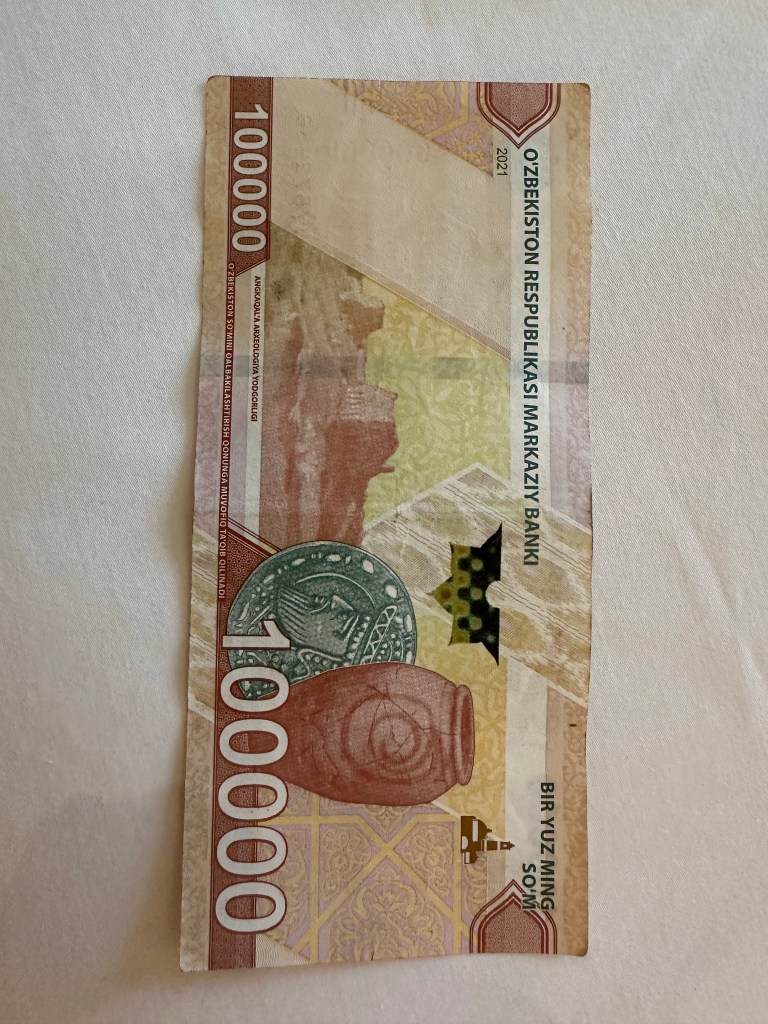
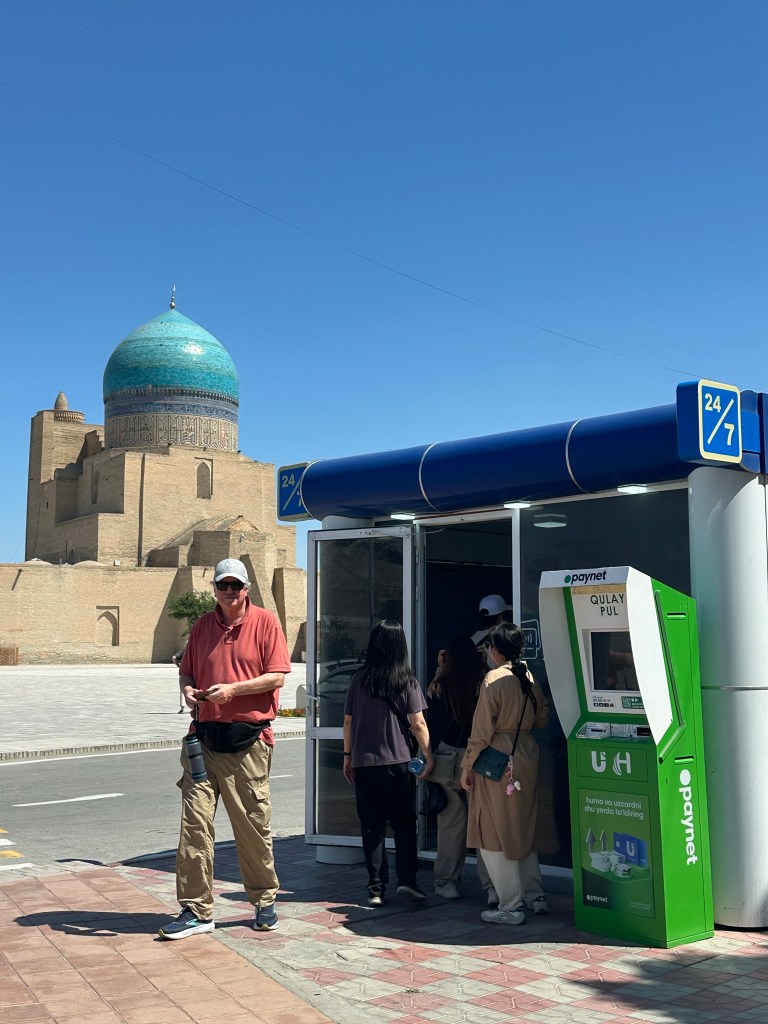
Uzbekistan is a very inexpensive country for Western tourists with the average monthly salary being approximately 500 US dollars. They have suffered from inflation and the currency, the som, is approximately 16,000 to the pound. Lunch for three, including our guide, with service was typically 300,000 som, less than £20. Even with a couple of beers, dinner was not that much more.
We came across relatively few British travellers. Tourists, aside from domestic, most commonly came from other Stan countries, Russia, China, Italy, France and Germany.