Uzbekistan is the largest country in Central Asia by population with 38 million people. The main ethnic group are Uzbeks at 85% and 95% are Muslim.
It is one of only two double landlocked countries in the world, the other being Liechtenstein. It is the only country to border the four other Central Asian former CIS Stan countries.
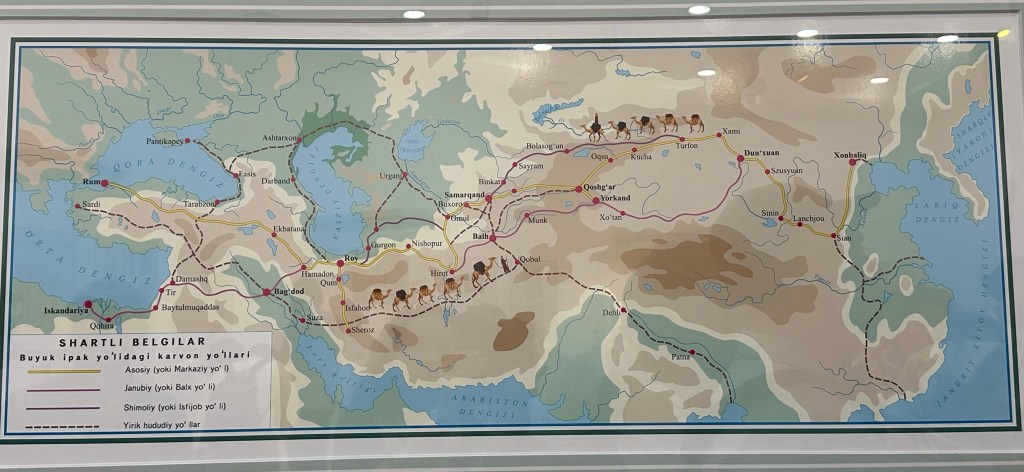
The area has flourished historically because of its two main rivers, the Amu Darya (Oxus) and Syr Darya (Jaxartes), which have created oases and have been used, together with the Aral Sea, for irrigation with increasing environmental problems. However the main source of income over the ages has been trade across the Silk Road, the main trading route (or more accurately “routes” as there were many branches to the “Road”) between China and the West.
Uzbekistan as an independent country has only existed since the fall of the USSR in 1991. However the history of the area is complex.
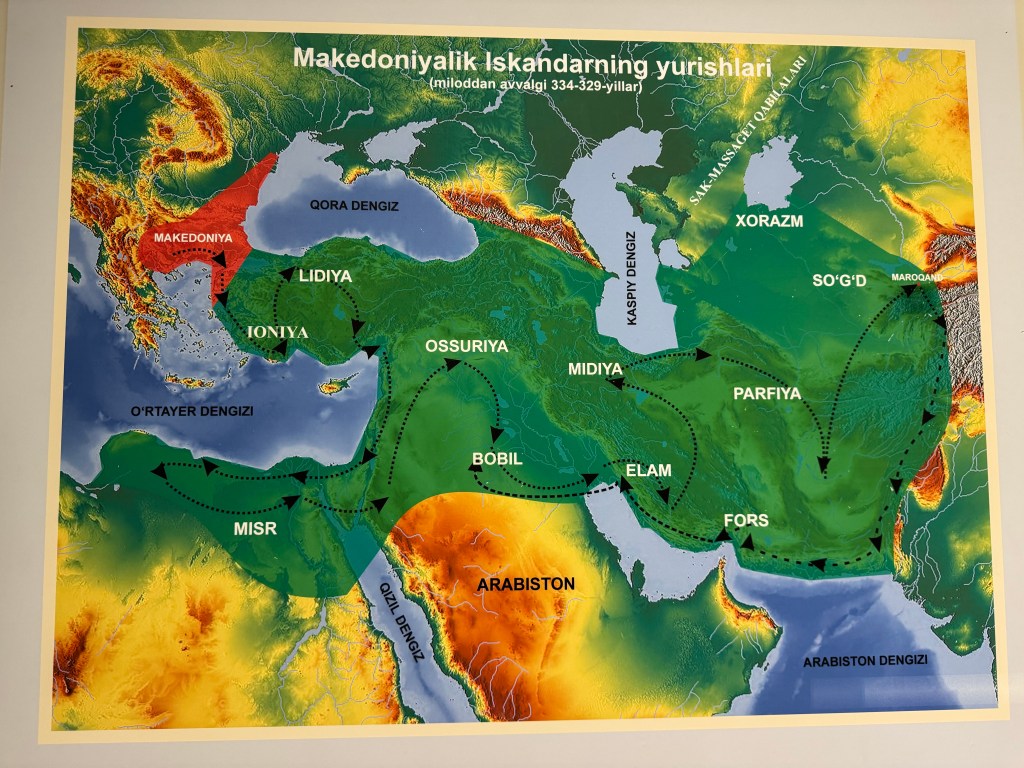
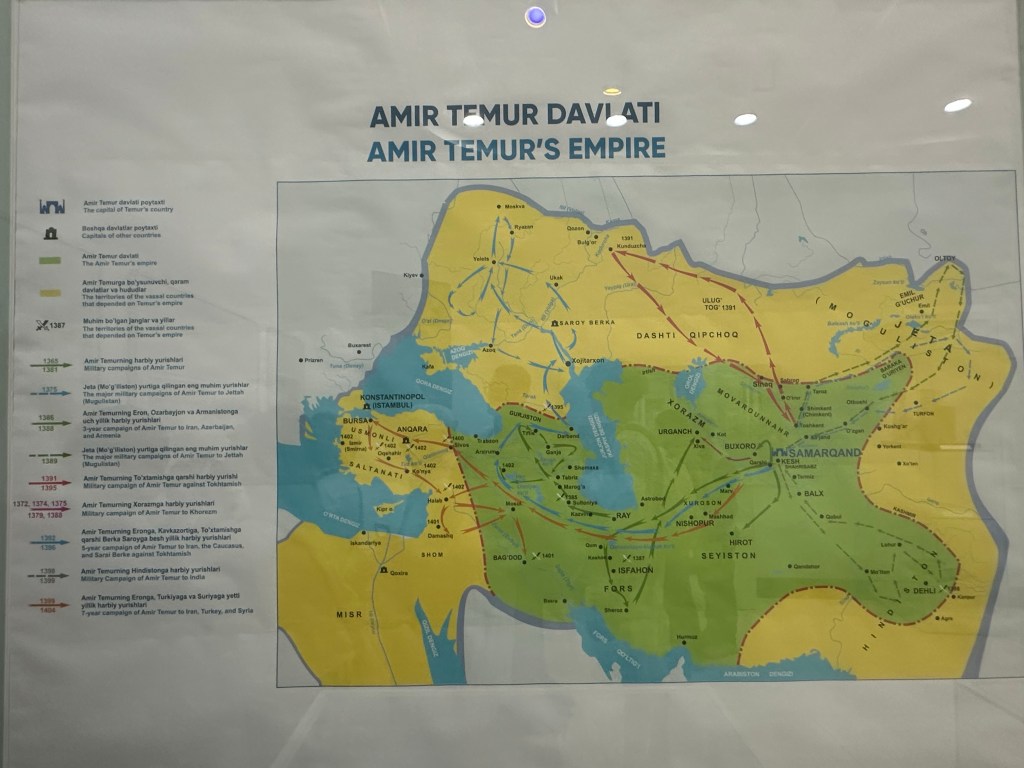
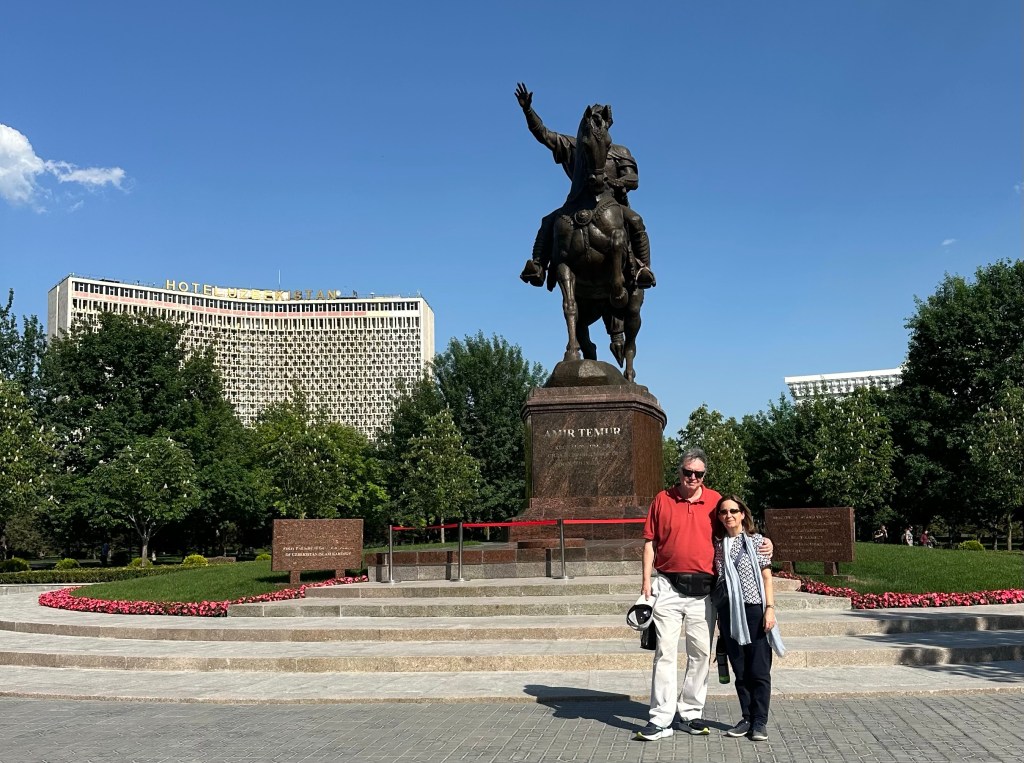
The area was invaded by the Persian King Cyrus in the 6th century BC, before Alexander the Great conquered in 327 BC. This was followed by a period of kingdoms controlling the Silk Road with forts before conquest in the 7th/8th centuries AD by Arabs, bringing Islam in place of Zoroastrianism. The apocalypse arrived in 1219 under Gengis Khan whose army destroyed almost all of the buildings while killing or enslaving much of the population. The saviour arrived in 1370 in the form of Amir Timur (Tamerlane) and the area experienced a renaissance. Today Timur is celebrated in Uzbekistan with statues, public buildings and streets named after him.
Between the 16th and early 19th centuries the area was governed by three Khanates – Khiva, Bukhara and Samarkand. The Khans became extremely wealthy and despotic. The area was invaded by Russians in 1865, partly in response to the expanding British Empire to the south and partly to abolish slavery. During the 19th century the Russians and British were engaged in the area in the “Great Game”, seen as a forerunner of the Cold War.
In 1920, following the Bolshevik revolution the Khans were removed and the Uzbek SSR came into being in 1924.
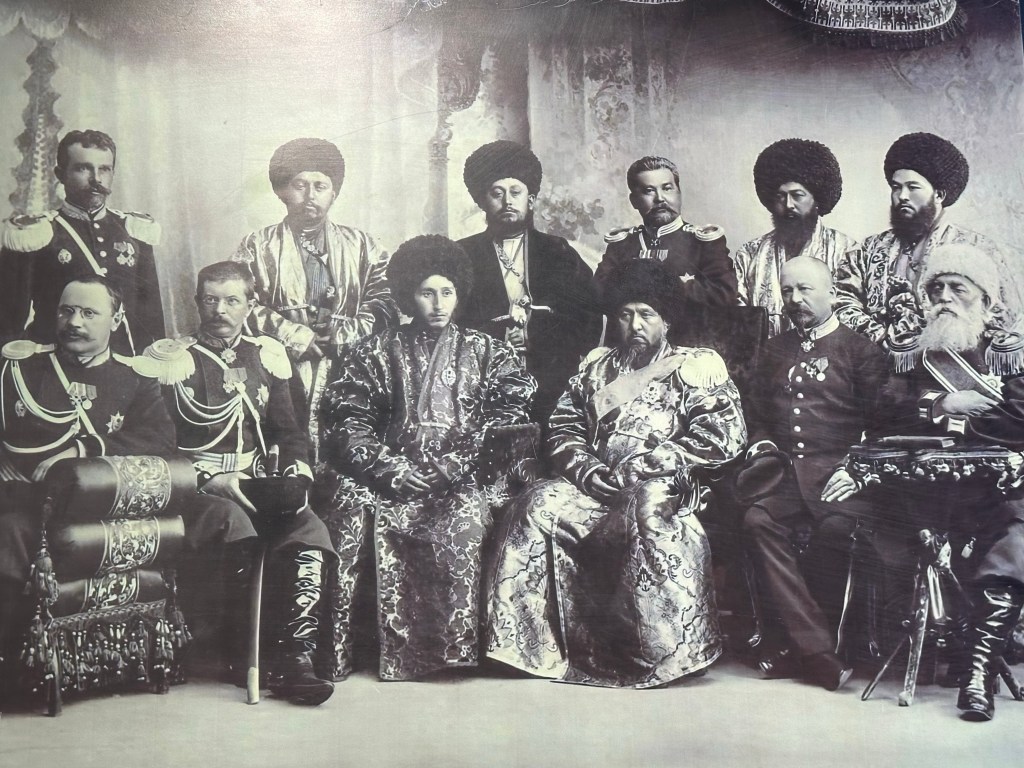
1896, St Petersburg. Meeting of the Khan of Khiva (front row, third from the right) his dignitaries, translator and Russian senior army officers.