Miami Beach – Art Deco

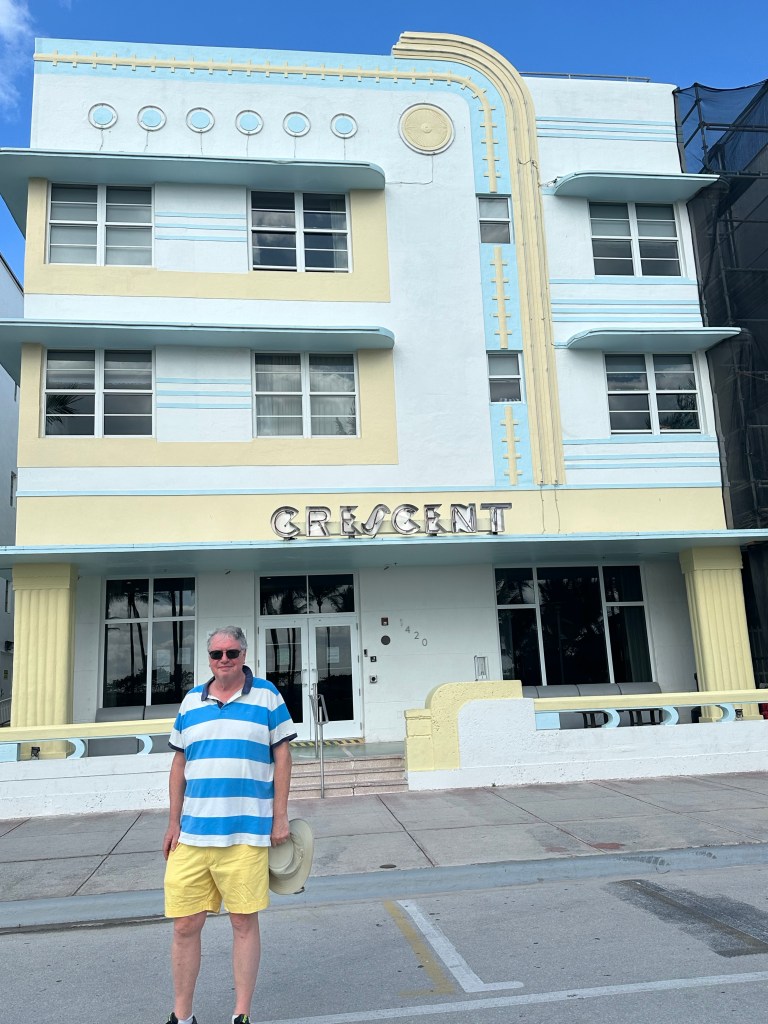
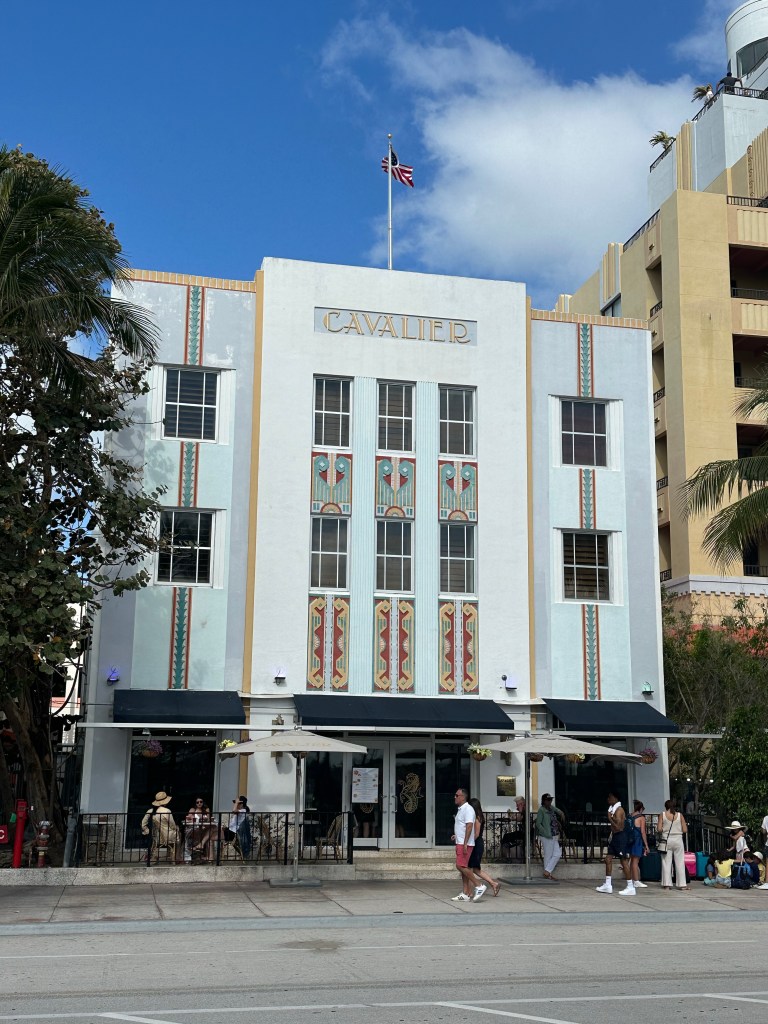
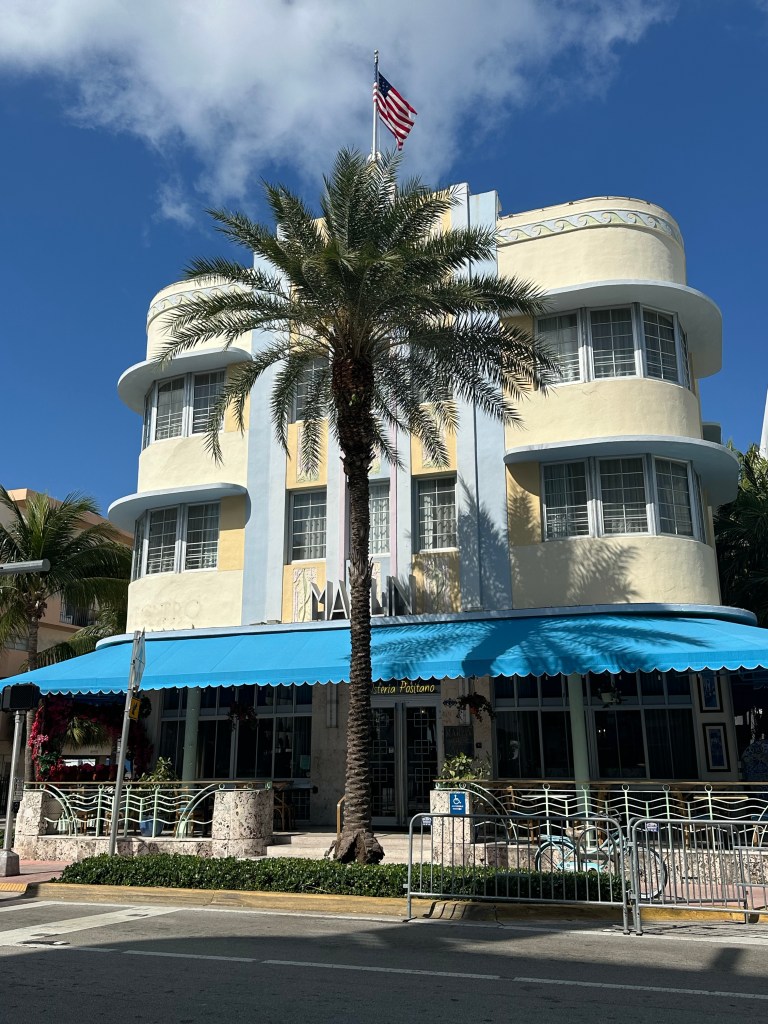
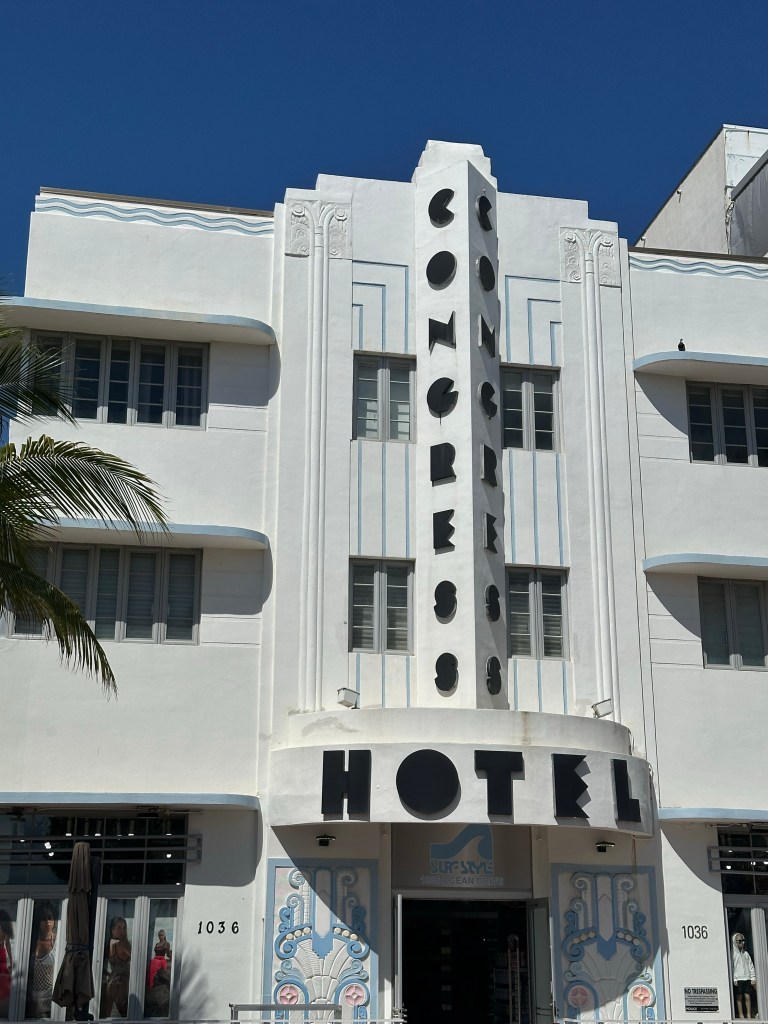
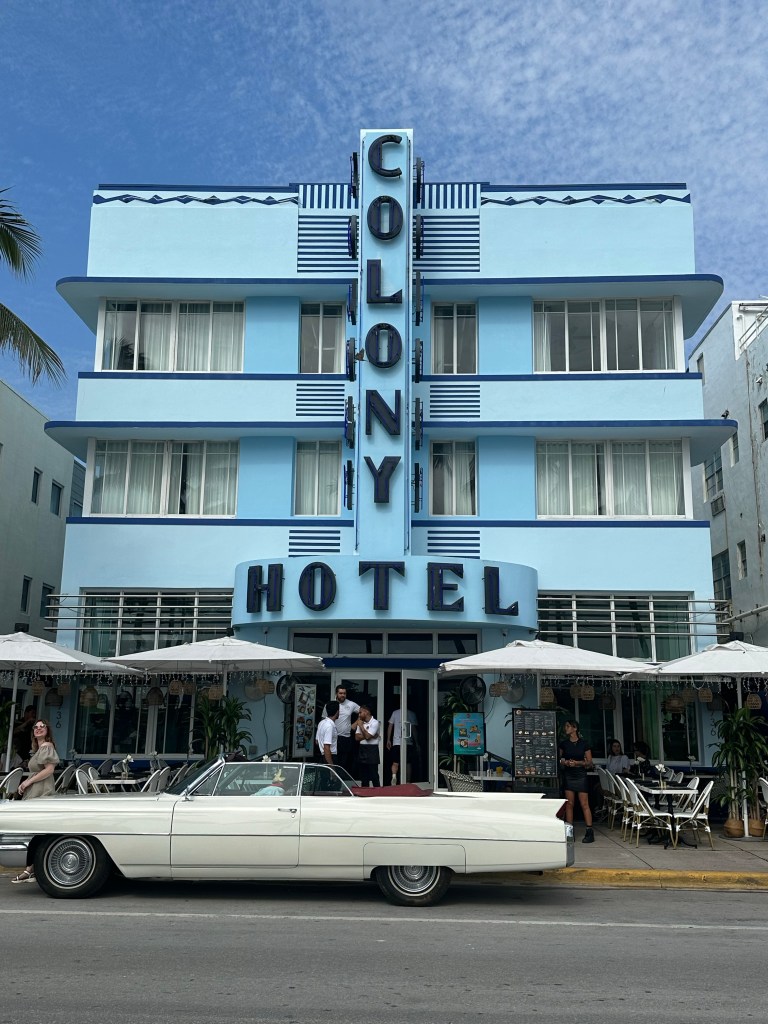
In 1926 much of the infrastructure of wooden buildings of Miami Beach was destroyed by a major hurricane. The Brown Hotel is one of the few surviving wooden buildings. Miami Beach still attracted visitors and in response investors created small scale hotels and rooming houses in the Art Deco style which now represent the historic district of South Beach.

The most noteable architects were Henry Hohauseur and Murray Dixon with building taking place between from 1935 to 1941. For many of the hotels, their first occupants were service personnel training in the area before being sent to the Second World War.

From the 1950s onwards building of much larger hotels along the beach started north of 21st Street, with the Art Deco area remaining between 6th and 21st Streets. Visitor demand in the Art Deco area fell and the district declined into disrepair. There were strong commercial pressures from developers to dismantle the district with large hotels and casinos planned. However, locals led by Barbara Baer Capitman staged a campaign to secure the heritage of the district and in 1979 it was listed on the National Register of Historic Places, with a local preservation society overseeing the successful renovation of the area.

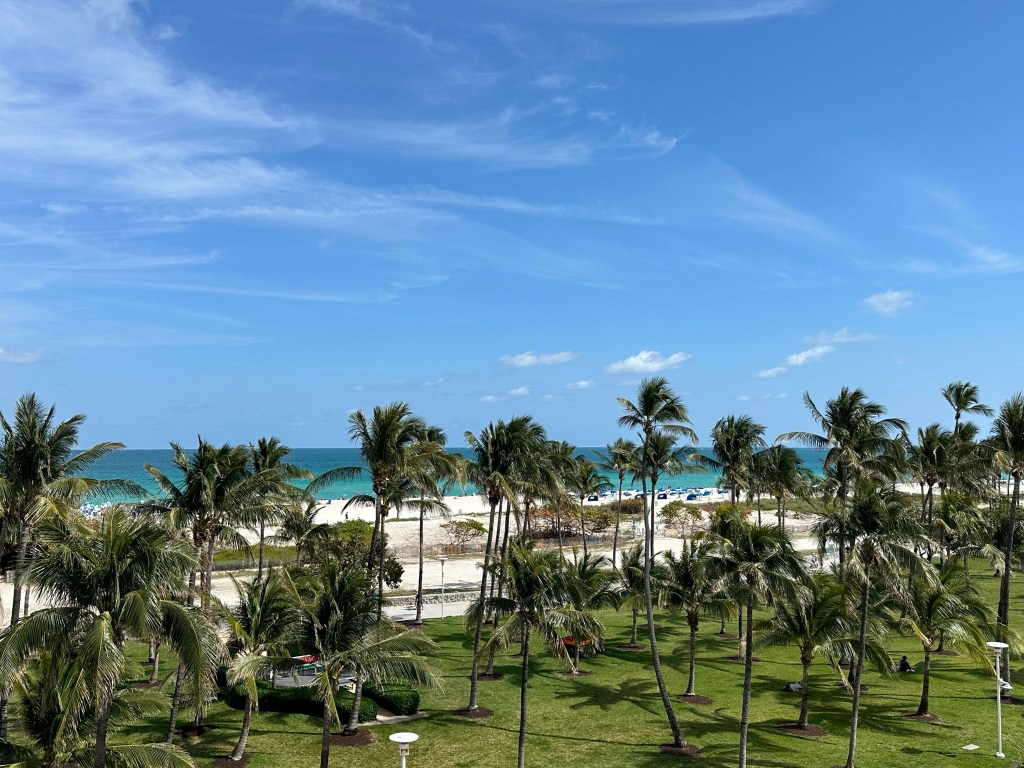
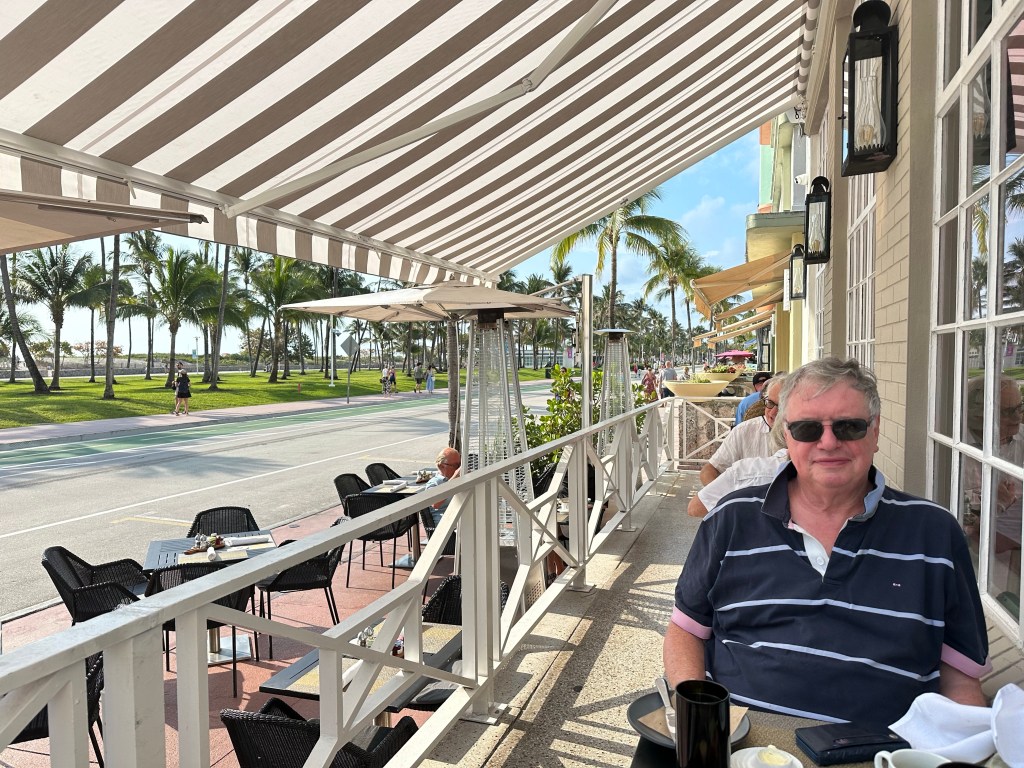
The sea facing promenade, Ocean Drive, closed to traffic during our visit, now comprises an array of restored Art Deco hotels some of which have been expanded by linking them to hotels on Collins Avenue running parallel behind Ocean Drive.
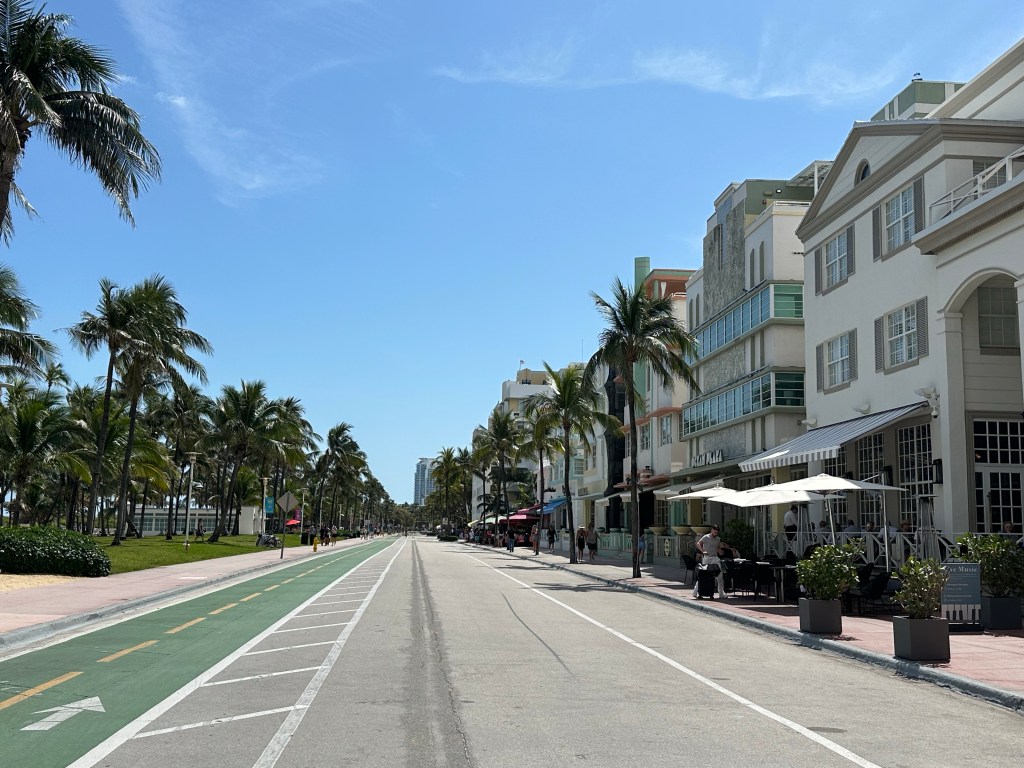
Ocean Drive
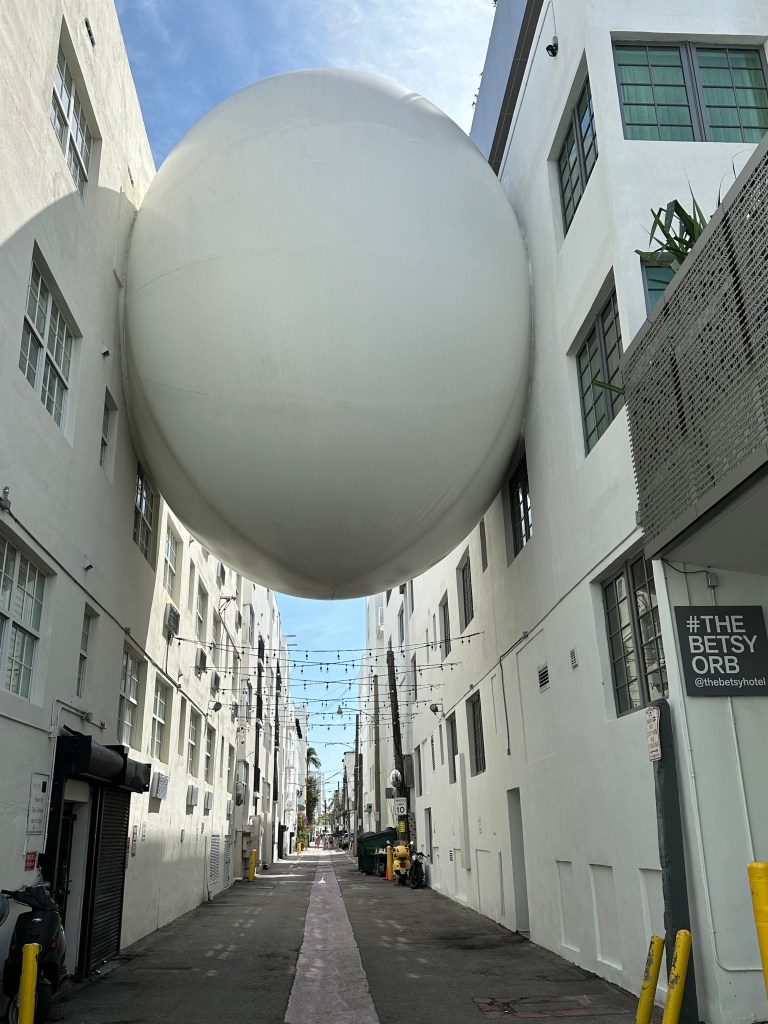
The Betsy Orb – a recent addition linking the Ocean Drive and the Collins Avenue sections of The Betsy Hotel
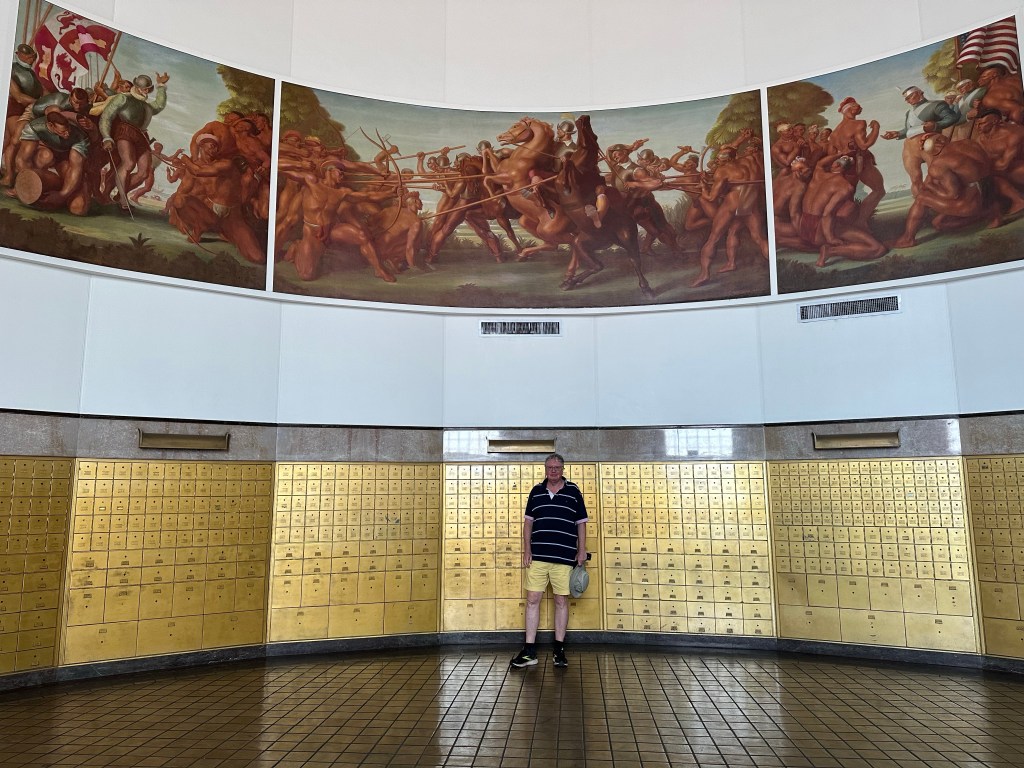
Post Office interior

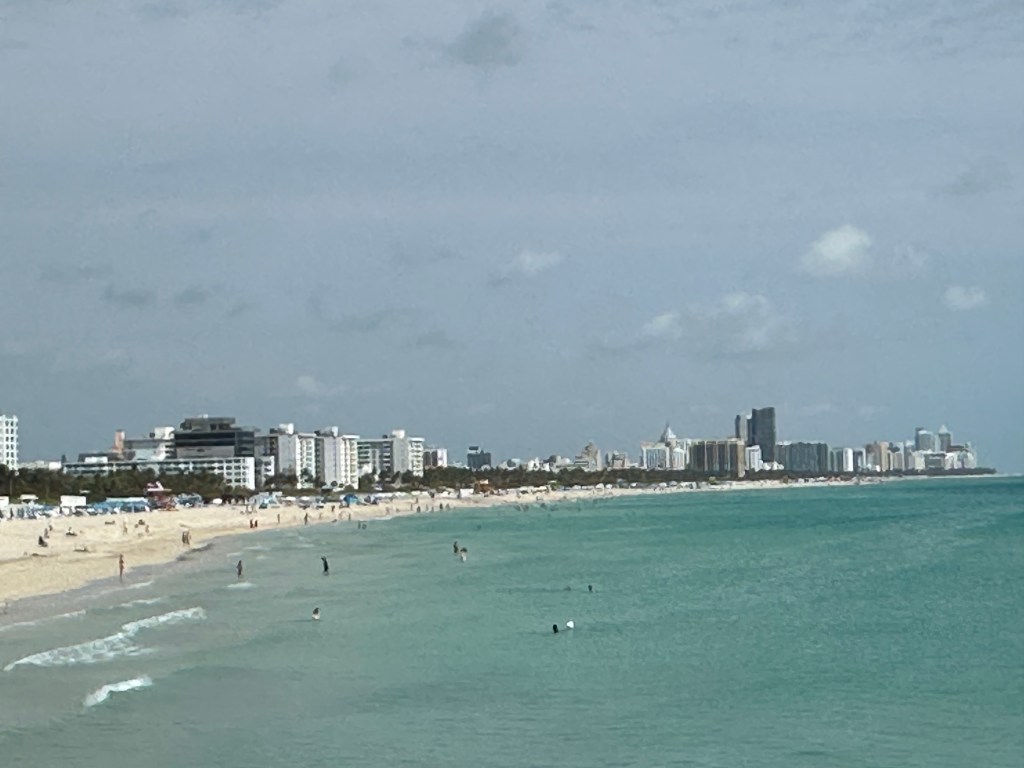
Miami Beach

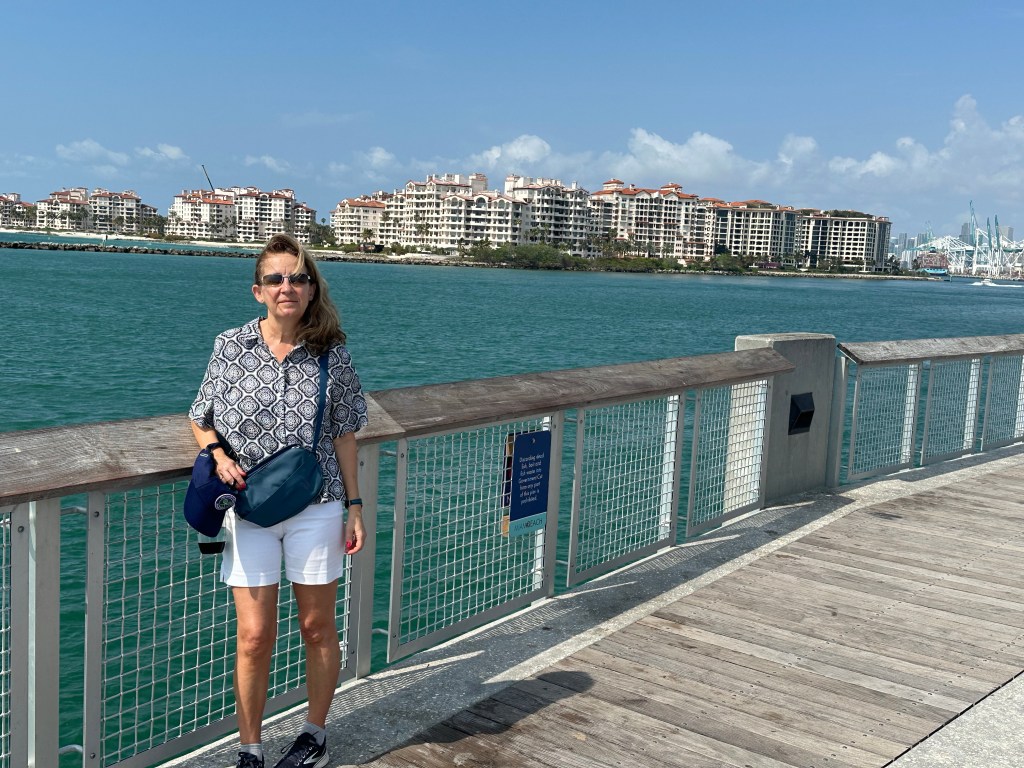
Miami Beach is a city in its own right and is an island situated off the east coast of Florida next to the city of Miami. It was developed initally by John Collins, a farmer, to grow crops such as avocados. This involved clearing the island of mangroves, however the idea of the island as a resort soon developed and the Collins family and financier Carl Fisher began the development of the resort. The water between Miami and Miami Beach, Biscayne Bay, was dredged and the excavated material used to extend Miami Beach and create new islands in the bay. The first hotel, Brown Hotel, was built in 1915 and a two and a half mile bridge made to connect with the mainland.

Visitors were initially locals, but with the advent of the railroad many were soon attracted from the Northern States seeking sun, sea and sand.

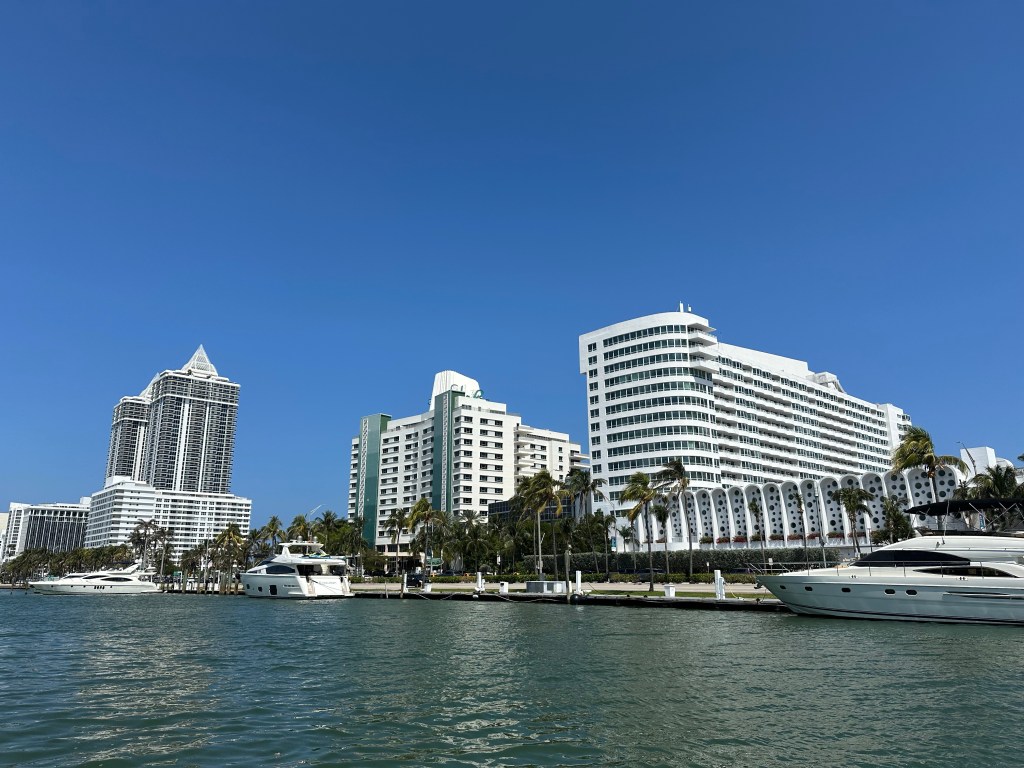
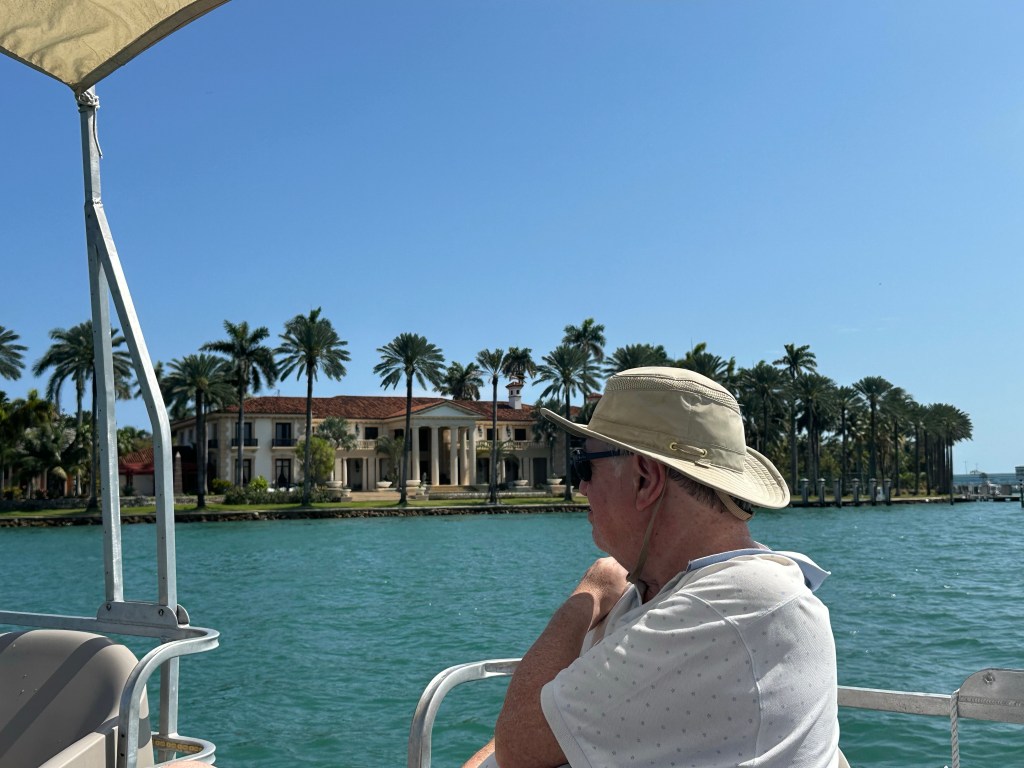
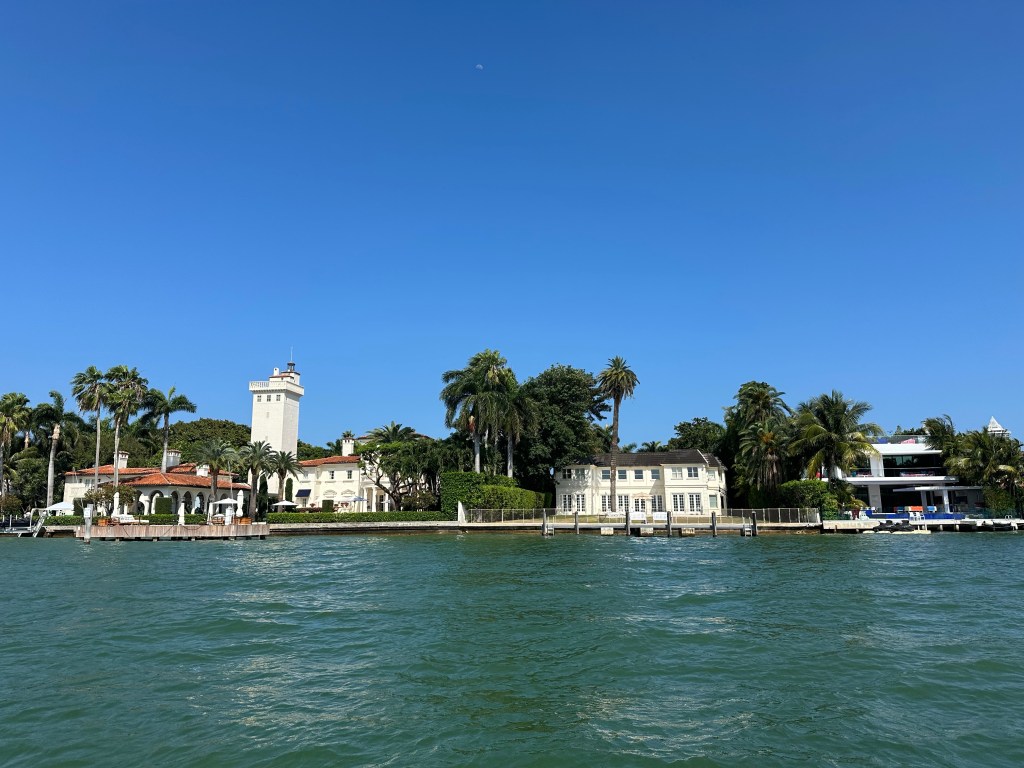
Today the islands include the two most expensive postcodes in the US; many of the homes have super yachts moored outside. We took a boat trip around the islands and our captain was an expert of who owned which house and yacht and how much they paid for them.

Miami Beach, in particular South Beach where we were staying, has become a popular destination for US college students partying during their March Spring Break. The mayor and govenor are now clamping down on “Spring Breakers” due to issues last year; the measures include a heavy poloice presence, curfews, road closures and checkpoints with a strong “go elsewhere” message.

Al Maha desert camp

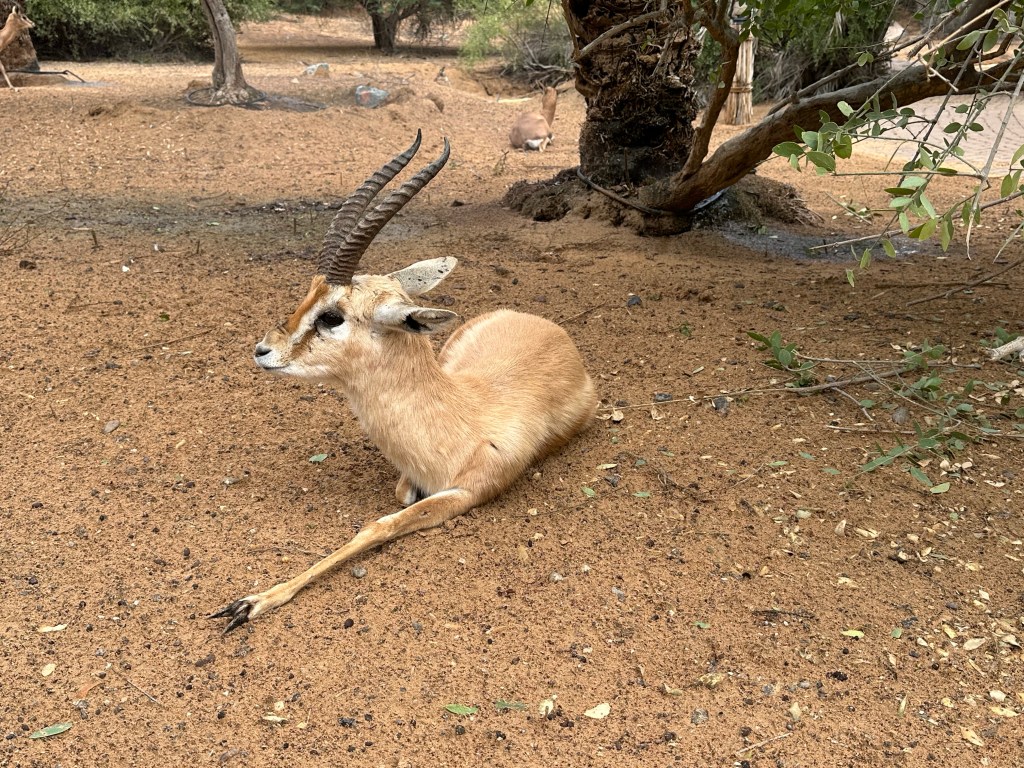
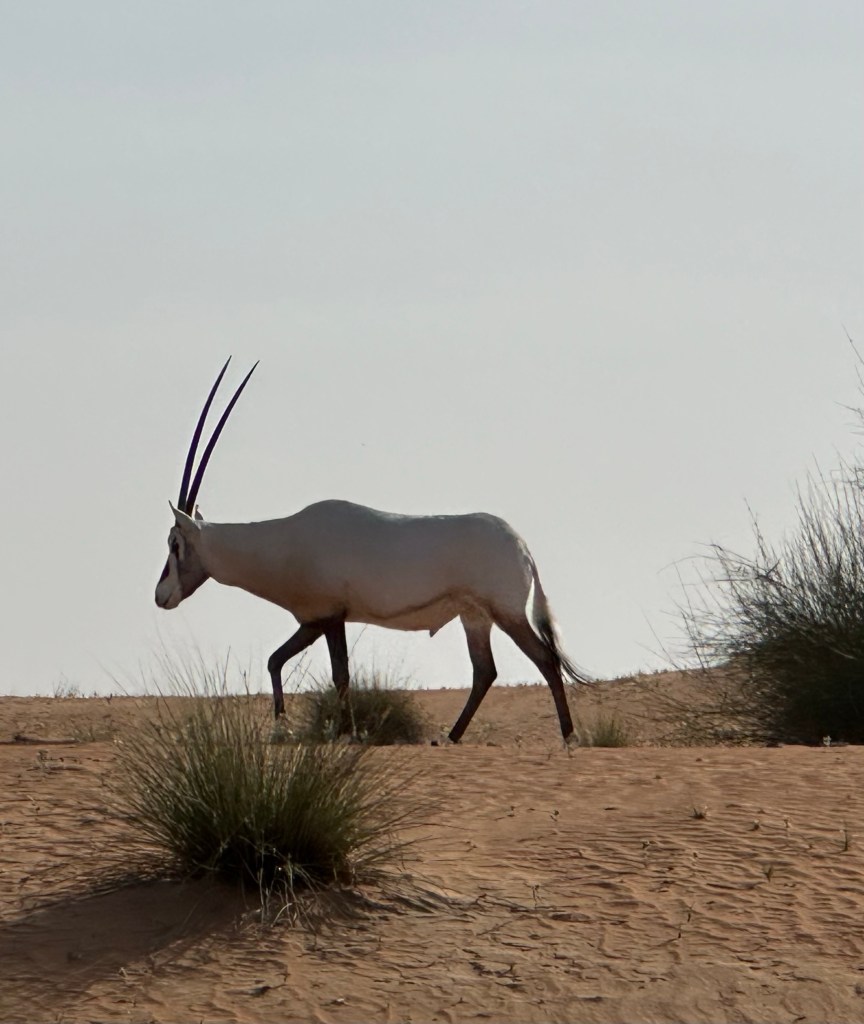
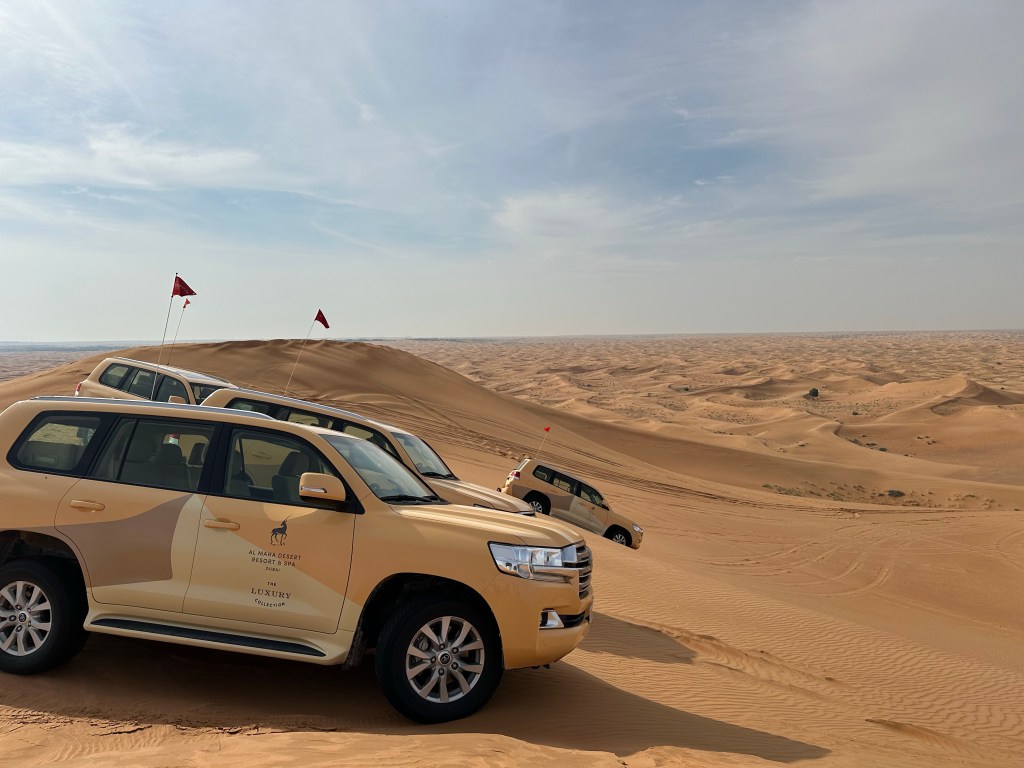
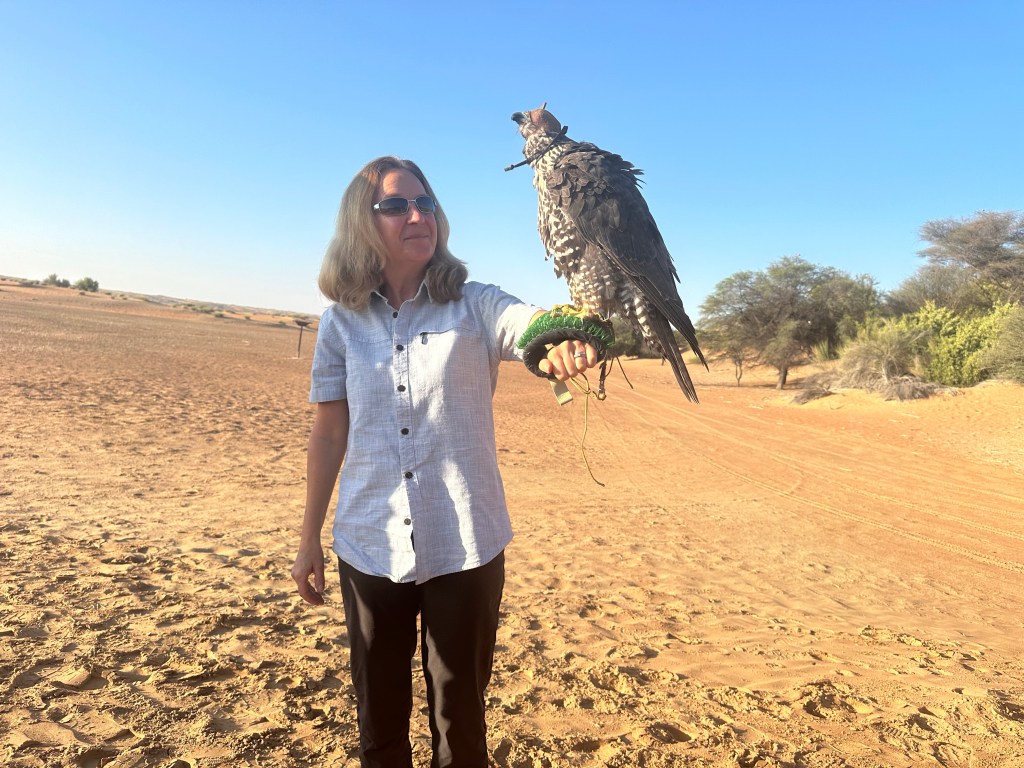
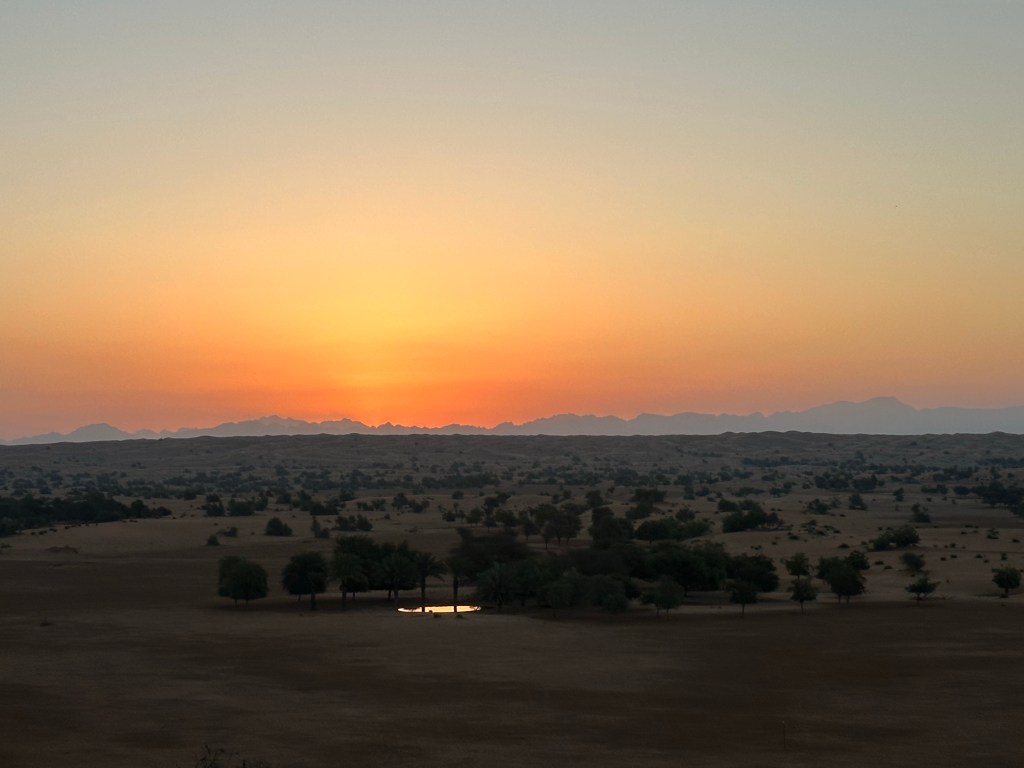
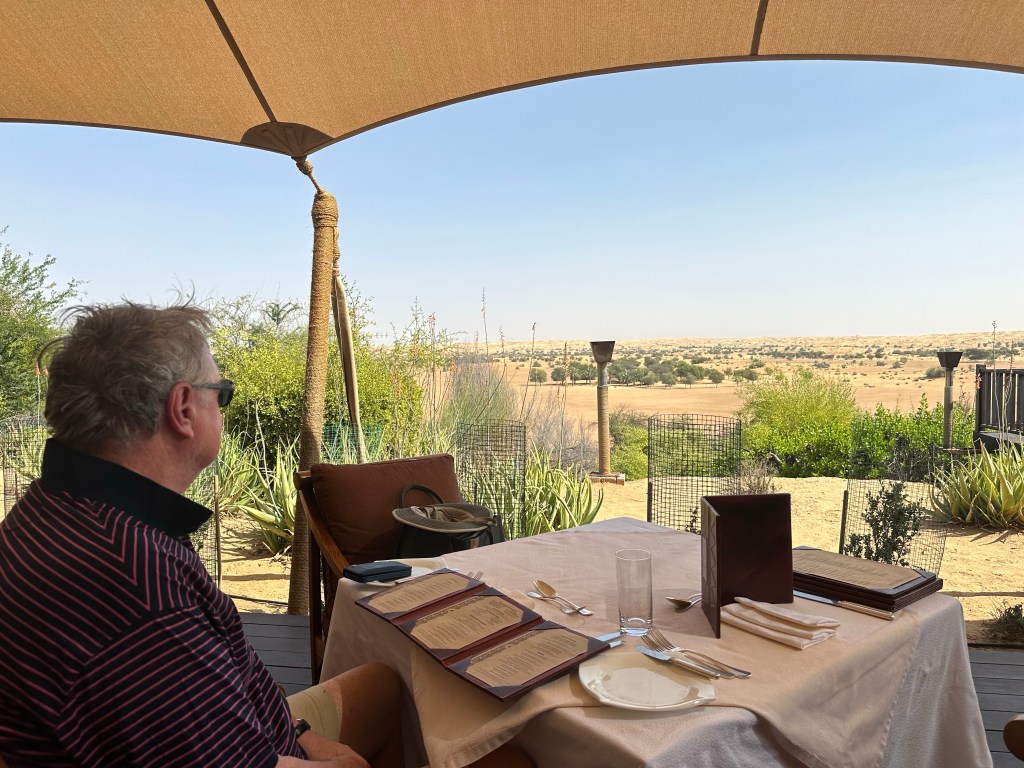
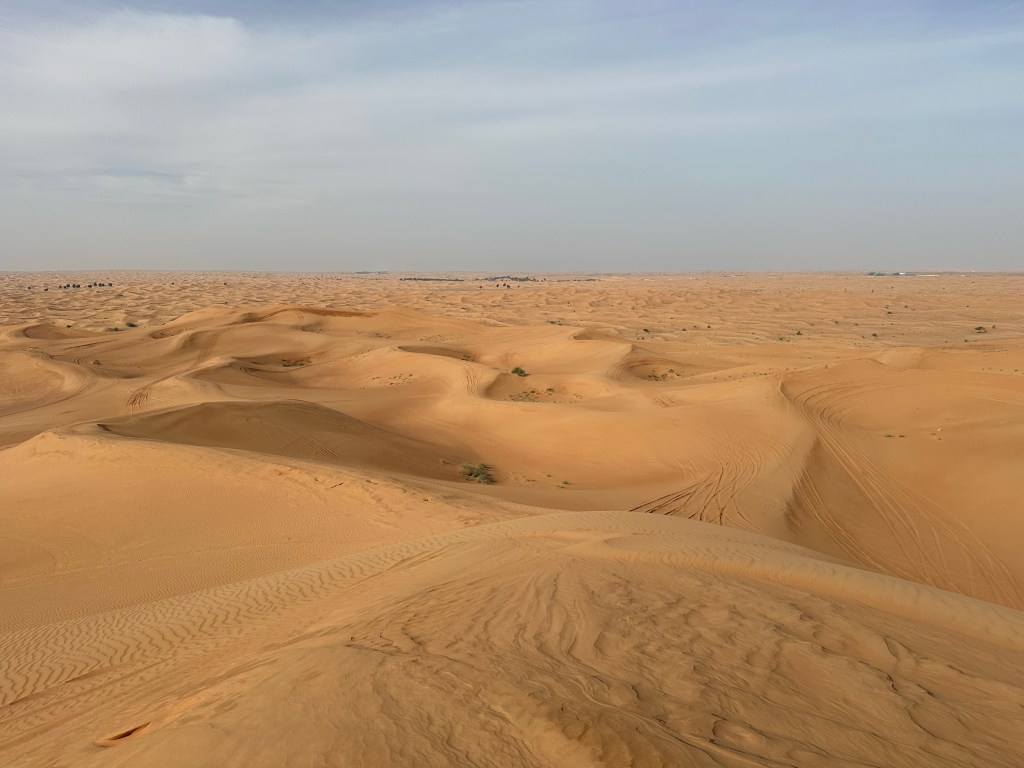
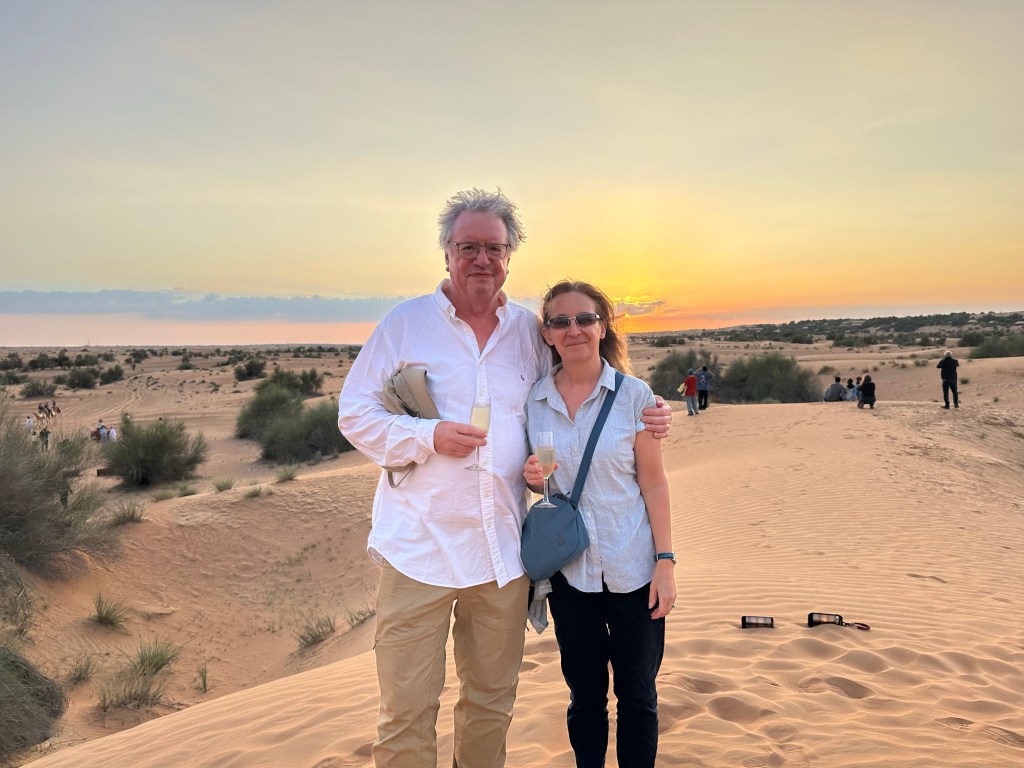
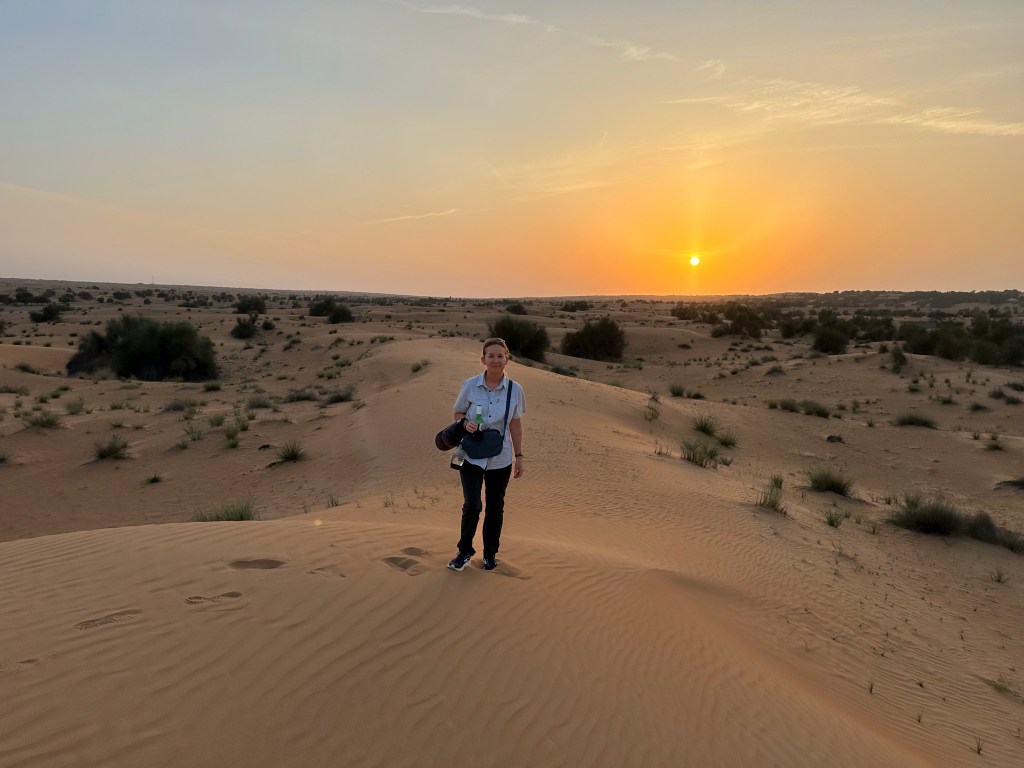
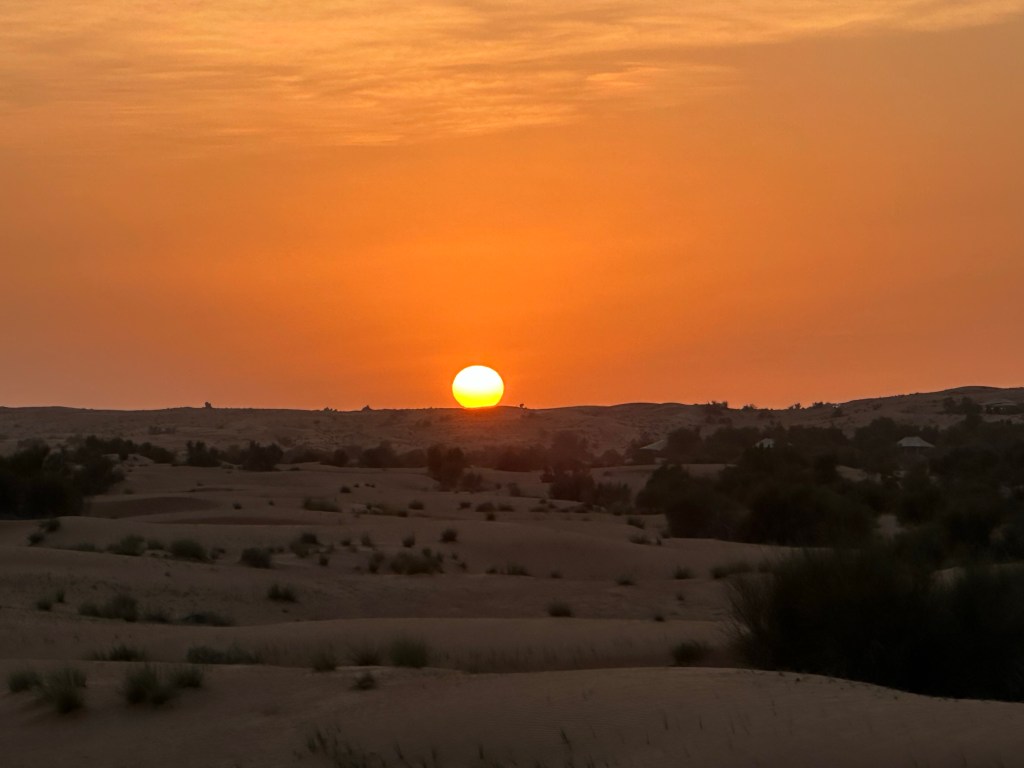
We visited Al Maha two years ago on our way home from Sri Lanka. Since then a new conservation centre has been recently opened to help educate people about the desert, its wildlife and its fauna. The activities remained the same, with the addition of morning yoga. This time one of us decided to ride a camel to the dune sunset drinks….but just once, walking across the desert was preferable.

Dubai cricket

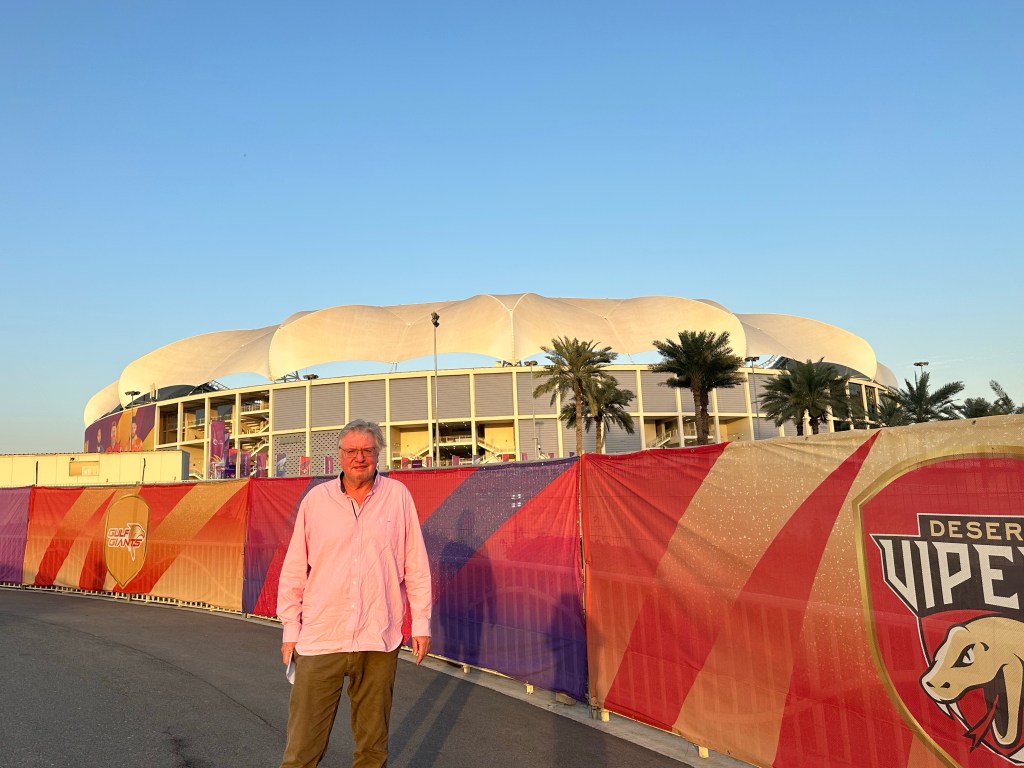
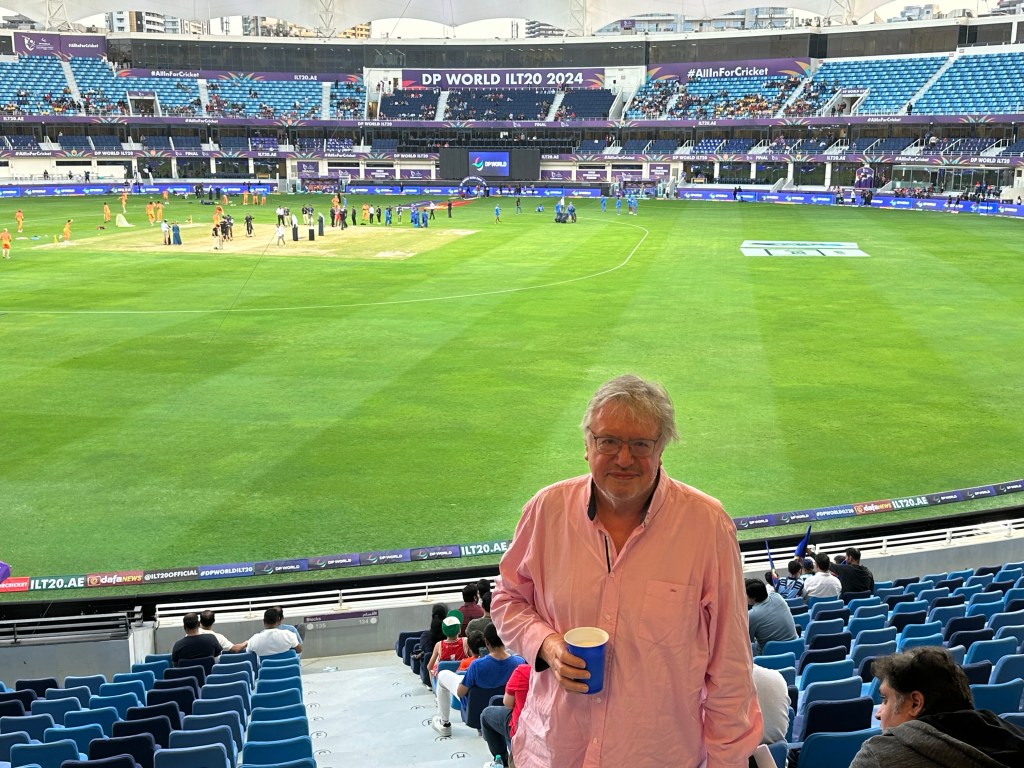
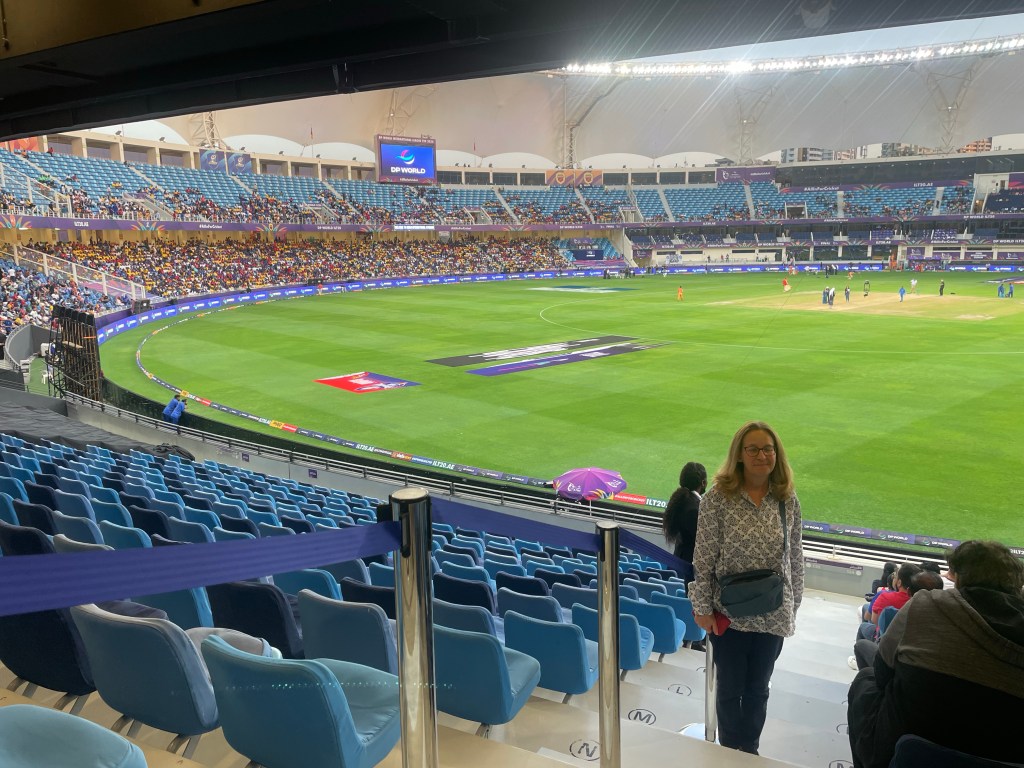
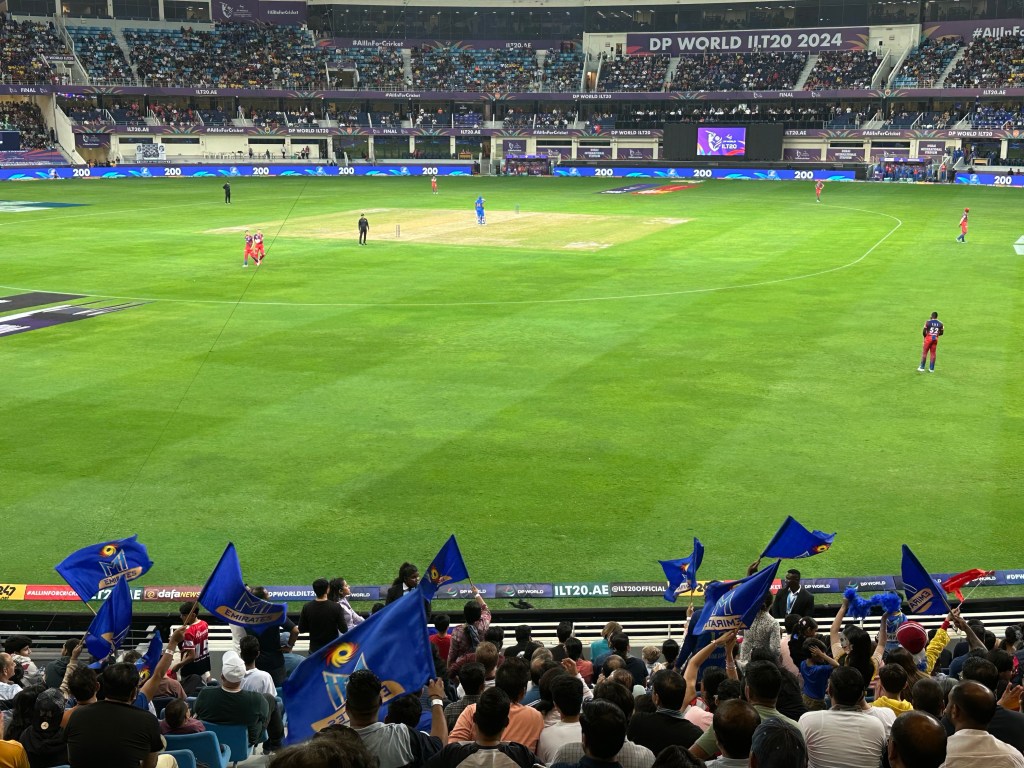
The International League T20 (ILT20) is a professional league set up in the UAE and first played in 2023. The league has six teams and our visit to the UAE coincided with the play-offs and final. We obtained tickets for the final, at the Dubai International Stadium, between the Dubai Capitals (a franchise owned by the IPL team, Delhi Capitals) and the MI Emirates (owned by Mumbai Indians). Each team has to have two UAE players, but the rest of the team is international. DC was captained by Sam Billings and included Tom Abell, Tom Banton, Jason Holder and Olly Stone. MIE was captained by Nicholas Pooran and included Kusal Perera, Kieron Pollard, Dwayne Bravo and Trent Boult.

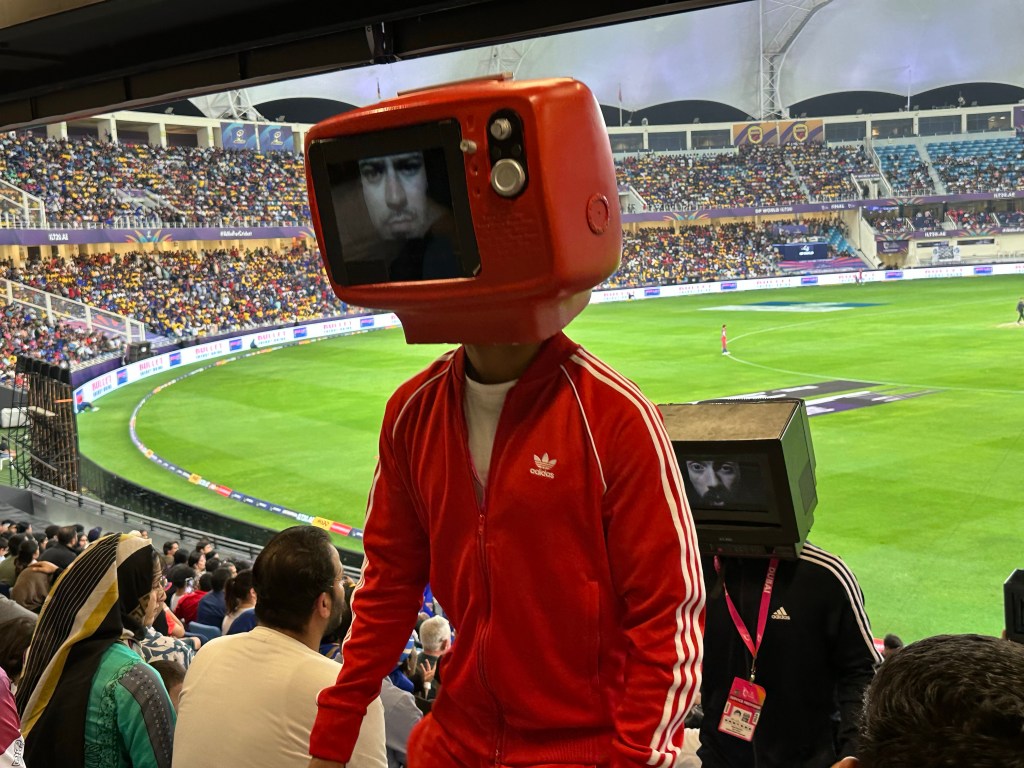
MIE won by 45 runs, having scored over 200, including some big sixes into the crowd, one of which reached the Royal Box to the astonishment of the UAE royalty present. For us, the main entetainment was the crowd of around 20,000, mainly made up of Indian migrant workers who were most excited by the spectacle as a social occasion involving dancing, cheering, moving between seats, calling familiy members in India and trying to make TV appearances. The music was loud and the announcer was louder, successfully revving up the crowd but lacking a bit of accuracy regarding the cricket. There were lots of flags and some unusual costumes. Although available, very little alcohol was consumed, in contrast to our trip to the cricket in Perth where the beer was flowing but the crowd were far calmer.

Enjoyable, but nothing like Lord’s !

WA roads

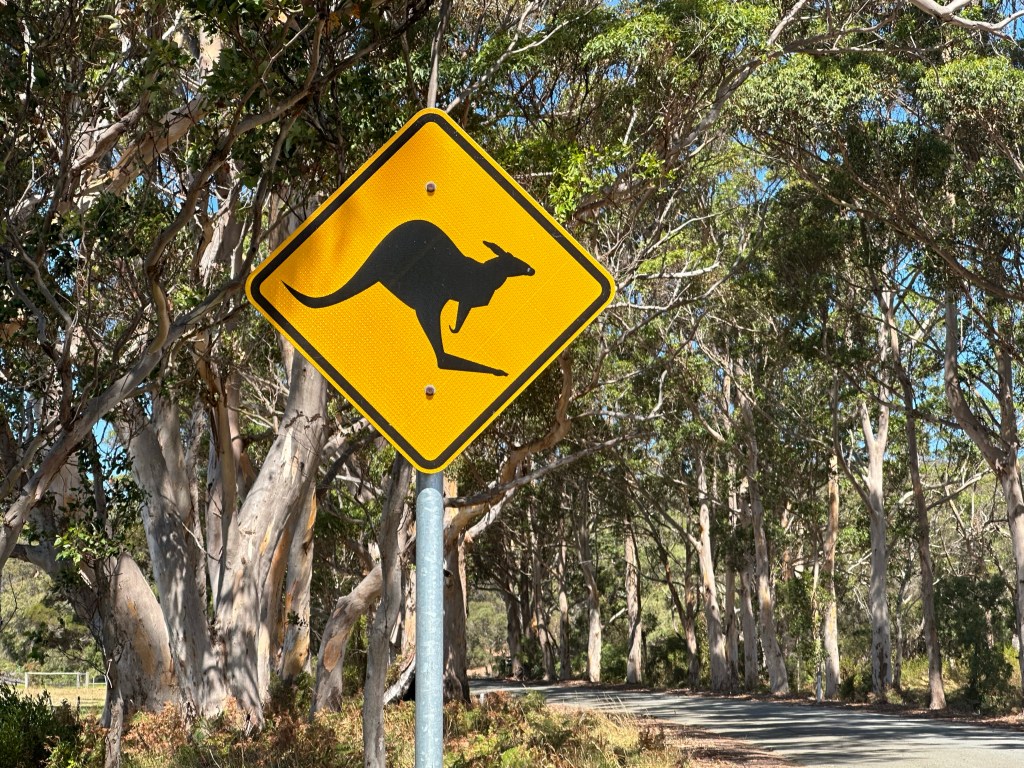
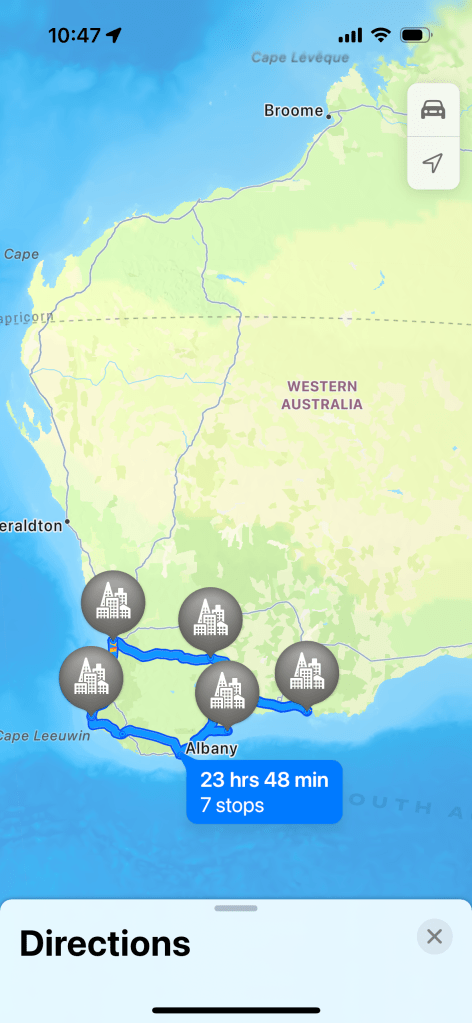
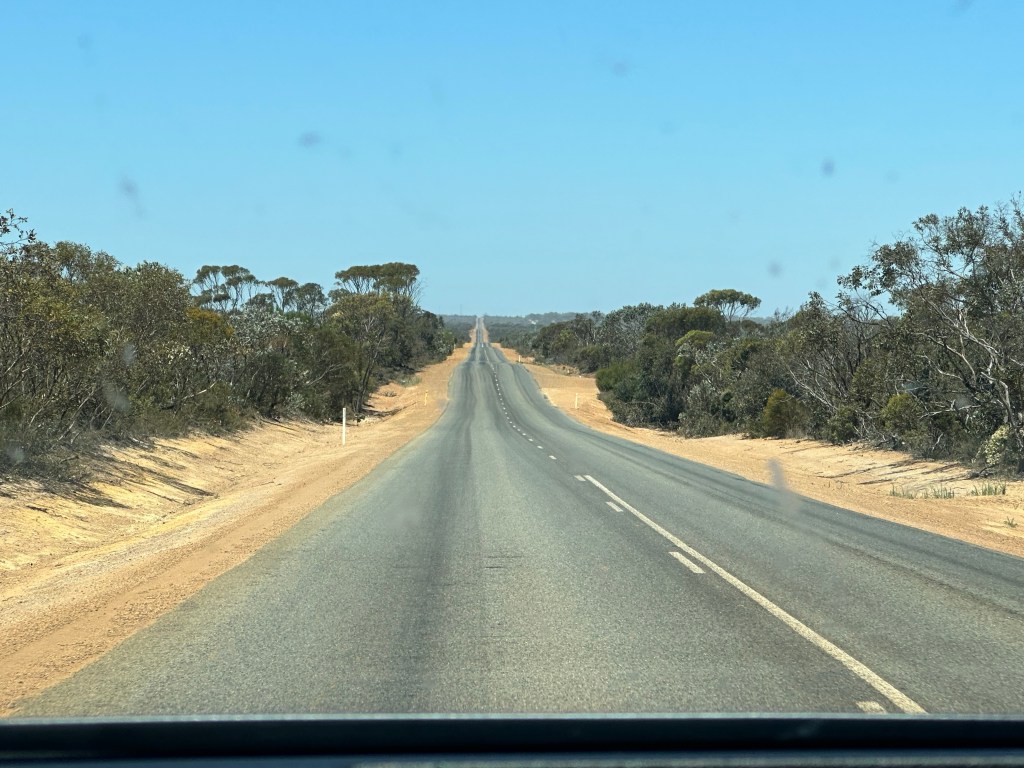
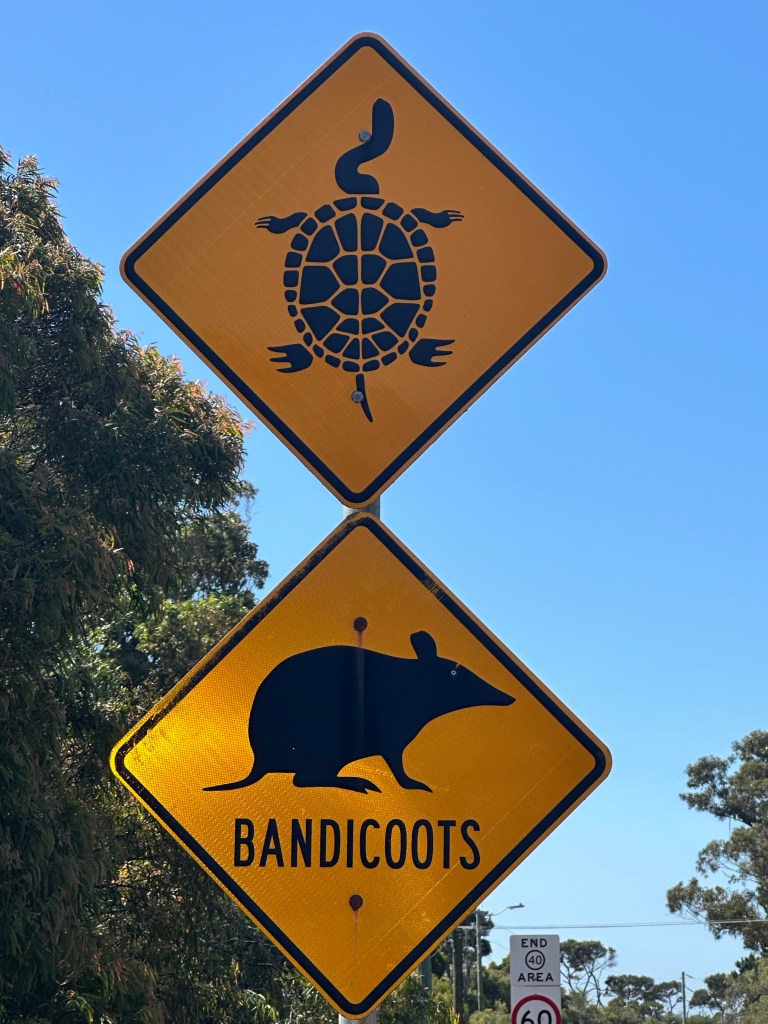
We drove over 3,000km, but still only covered a small corner of WA. It was very different driving to the UK or Europe – a lot of long straight roads, through nowhere, that look like the first Europeans in WA were the Romans, with road signs warning of the dangers of driving when tired. Other challenges include large areas with no phone coverage (but no need for map reading decisions), overtaking 42m road trains, carefully planning petrol stops and dealing with animals on the roads. We saw plenty of evidence of roadkill, mainly kangeroos which are a particular danger at dawn and dusk. At a petrol station in the middle of nowhere, we found ourselves comparing roadkill with a young French couple driving a campervan – ours was a group of malleefowl, theirs was red-breasted cockatoos. Driving any distance in WA, with a speed limit of 110km, near misses are likely – our path was crossed by one kangeroo, thankfully without incident. There are plenty of warning signs, invariably in the wrong places.

One of the benefits of a road trip is the things you see along the way and the encounters that are “day to day” in the context of the environment. We had a number of breaks for refreshments/petrol and took a number of detours, most of which were worthwhile and none felt like wasted time.

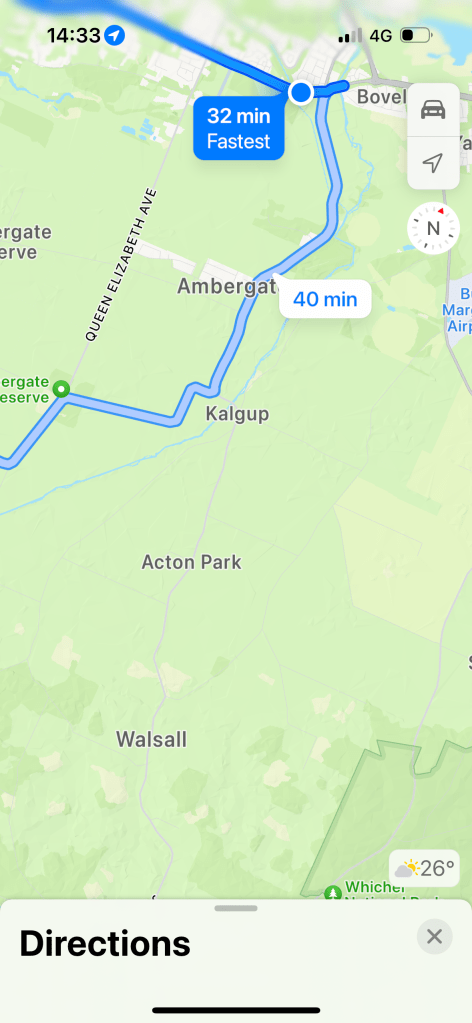
Our route
Road between Albany and Esperance
Coffee stop – Jerramungup
Petrol and takeaway lunch – apparently the best sausage rolls in WA
The Rabbit-proof Fence
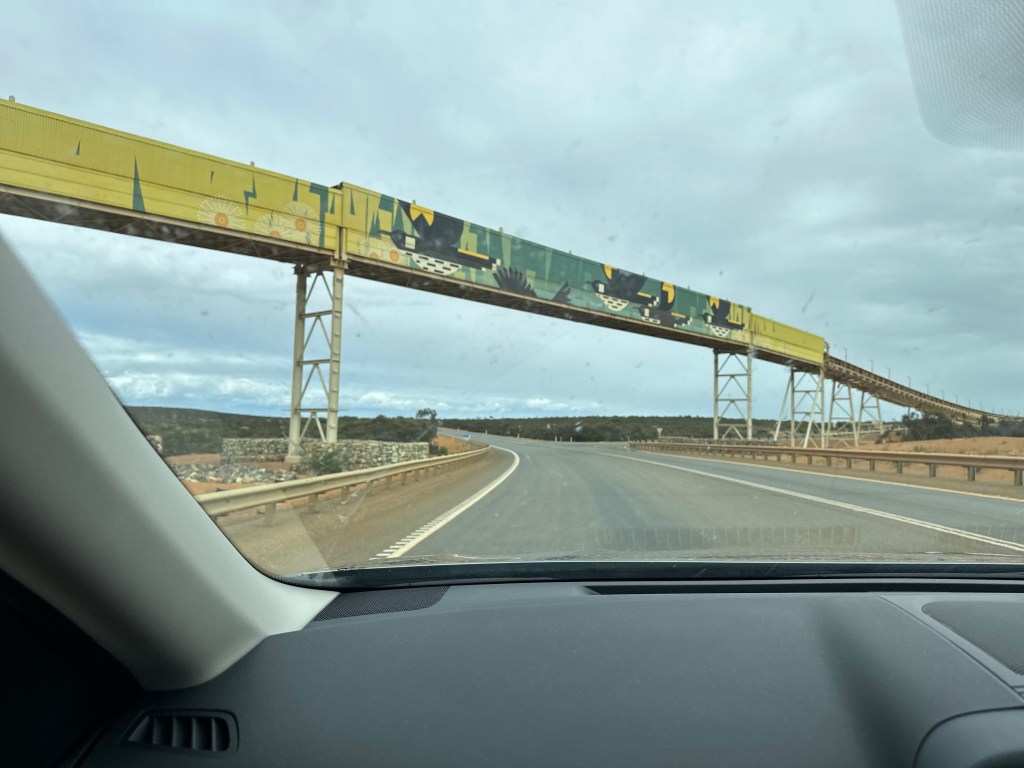
Mining area near Ravensthorpe
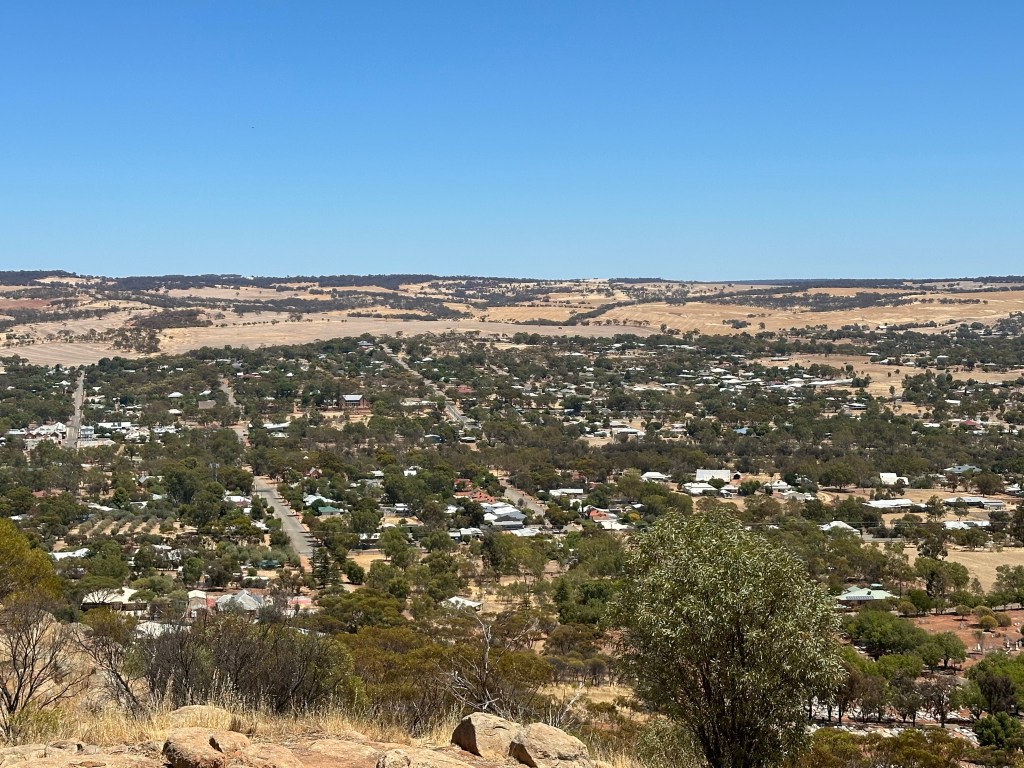
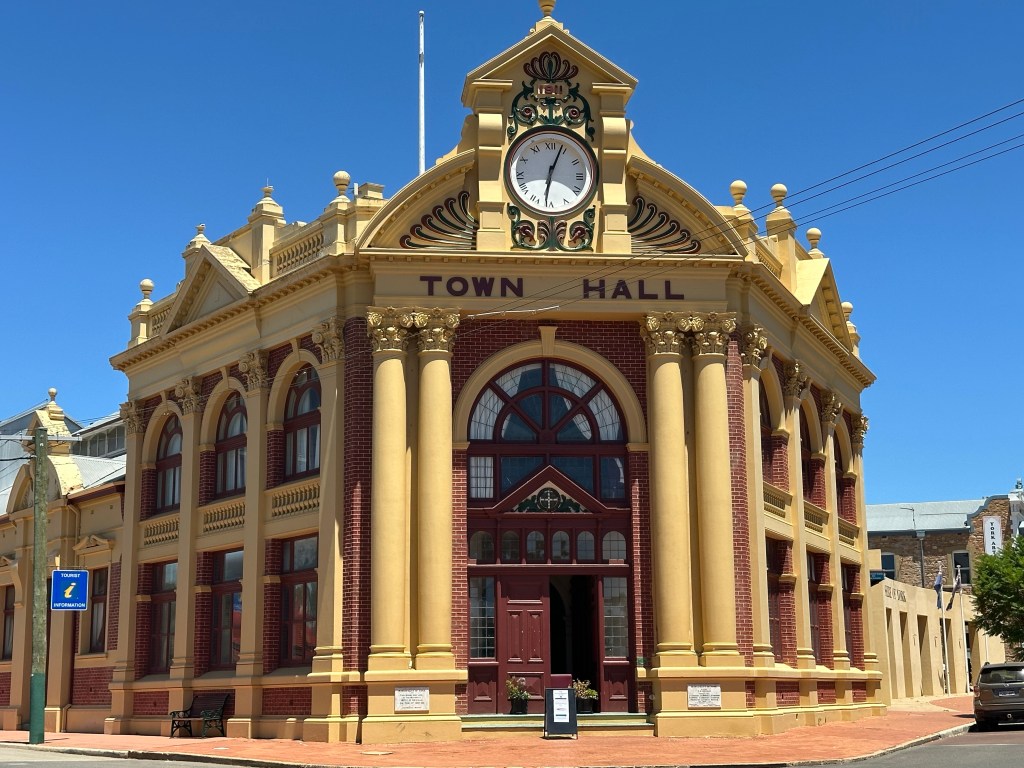
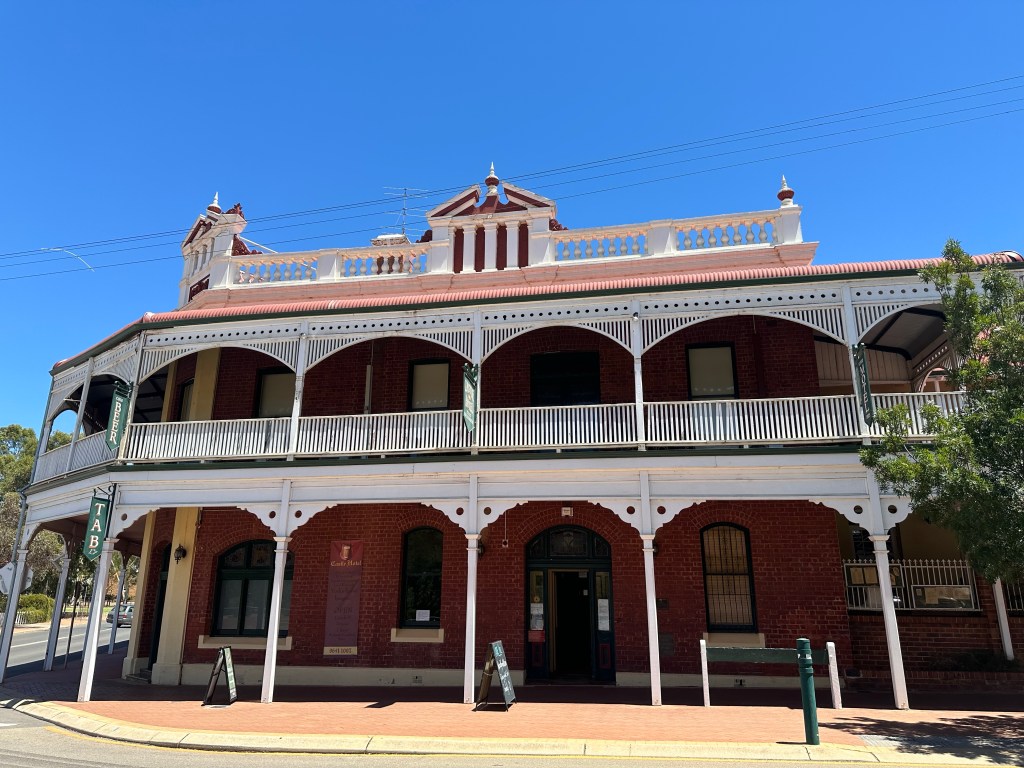
Detour to York, the oldest inland town in WA (it sits on the River Avon)
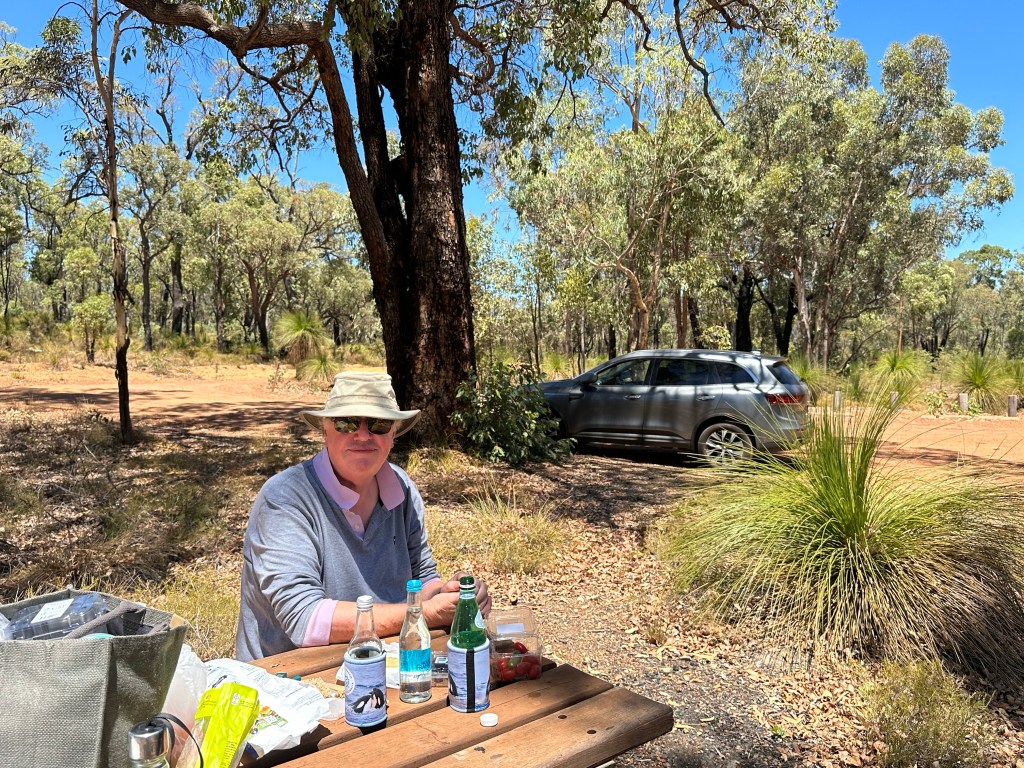
Picnic stop between York and Perth
Never far away from familiar places !

88 days

No, not the length of time we spent in WA (31 days), but a visa term we quickly became familiar with.

In the course of our travels we met a variety of other travellers and people working in hospitality, shops, petrol stations etc. Amongst other travellers and those working in hospitality, we came across a lot of foreigners in their 20’s. For many years, travelling/working in Australia has been popular. Similar to the UK, finding local hospitality staff in Australia is challenging, so hospitality businesses are staffed predominently by foreigners.

As a “young person” it is possible to get a one year work/travel visa, but to stay for a second year you need to have completed “prescribed work” in your first year – for a period of 88 days. Previously this time was a specified type of work, broadly agricultural. However, the roles now need to be in specified “rural” postcodes. Generally these are in agricultural areas, but places such as small islands are included, such as Rotto. Less surprising, Hyden was included; the manager of our motel said she gets 20 CVs a week, compared to almost none before the rule change.

In restaurants and hotels we came across staff, in no particular order, from Argentina, Ireland, UK, France, Spain, Italy, Estonia, Uruguay, Belgium, Sweden and Ecuador. Often they were in enclaves, such as the Irish in Hyden, due to employment by word of mouth. Many had come for shorter periods, but ended up staying longer, falling in love with the beaches, weather and culture, or in some cases obtaining visa extensions which were offered during the pandemic.

Rottnest Island

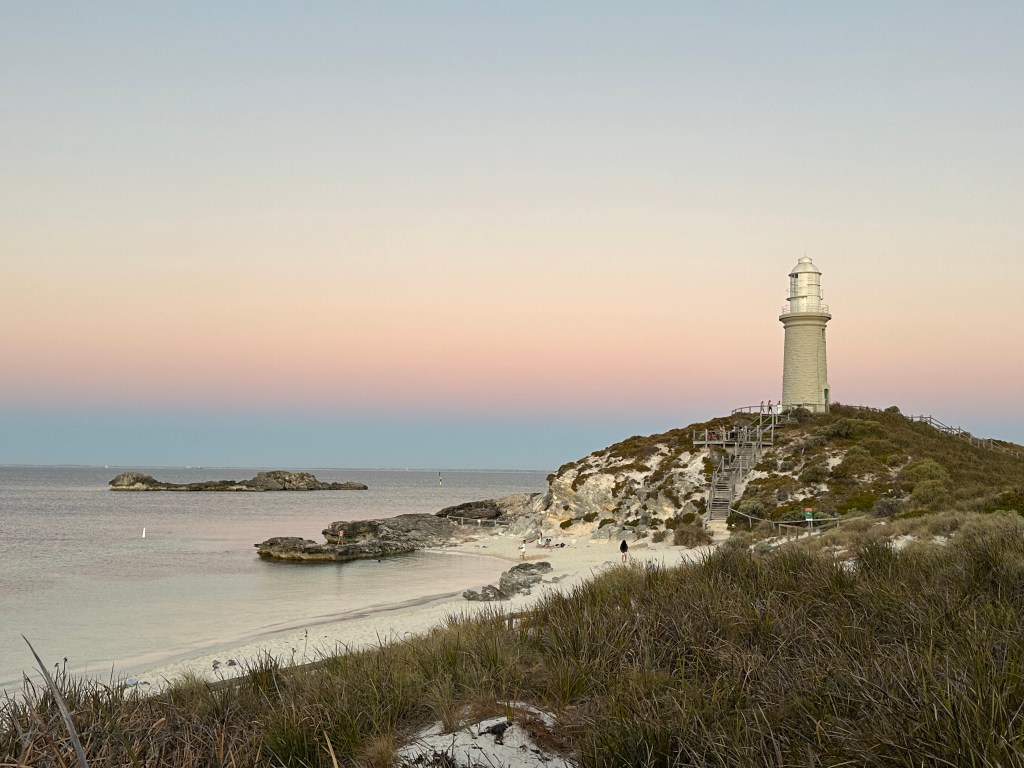
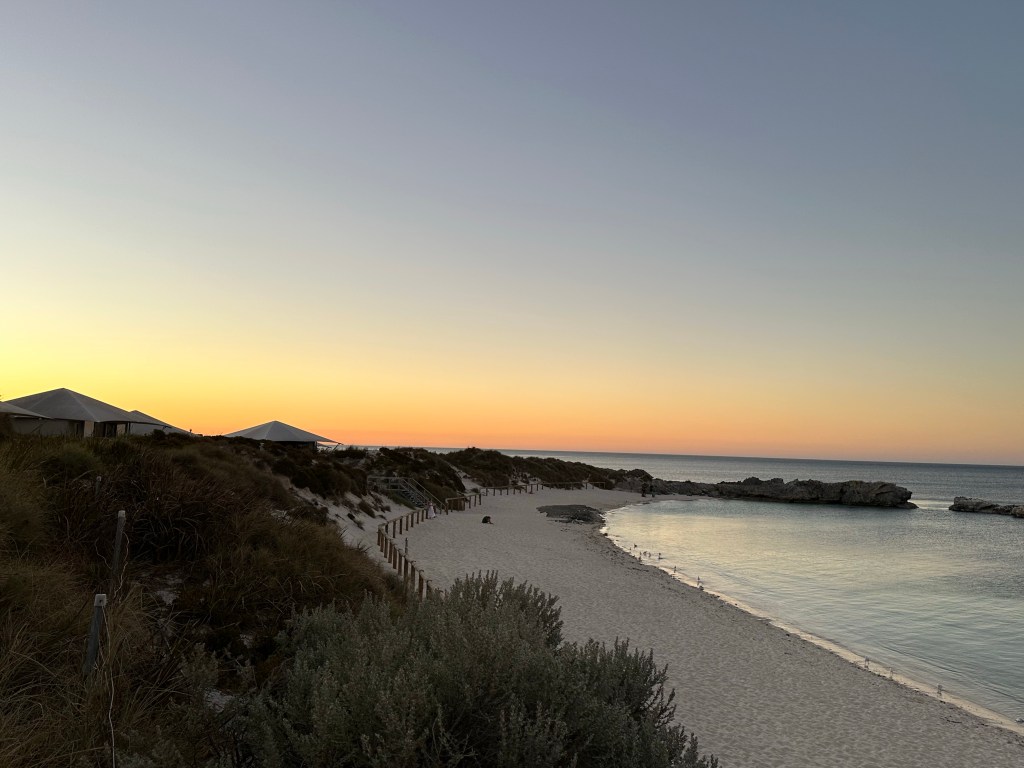
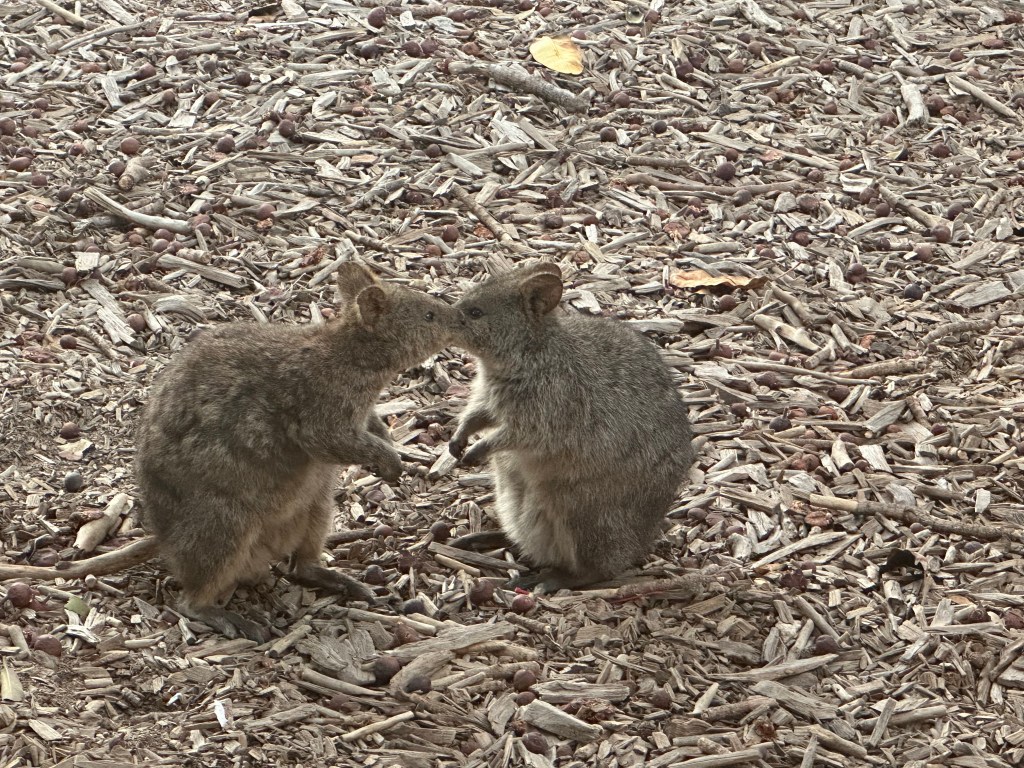
Rotto, as it is called locally, is a 19 sq km island, 18km from Fremantle reached by a 30 minute ferry ride from Fremantle, or a bit longer from Perth. It was named by a Dutch sailor in 1696, meaning “Rat’s Nest” island, mistaking the local marsupials, quokkas, for rats.

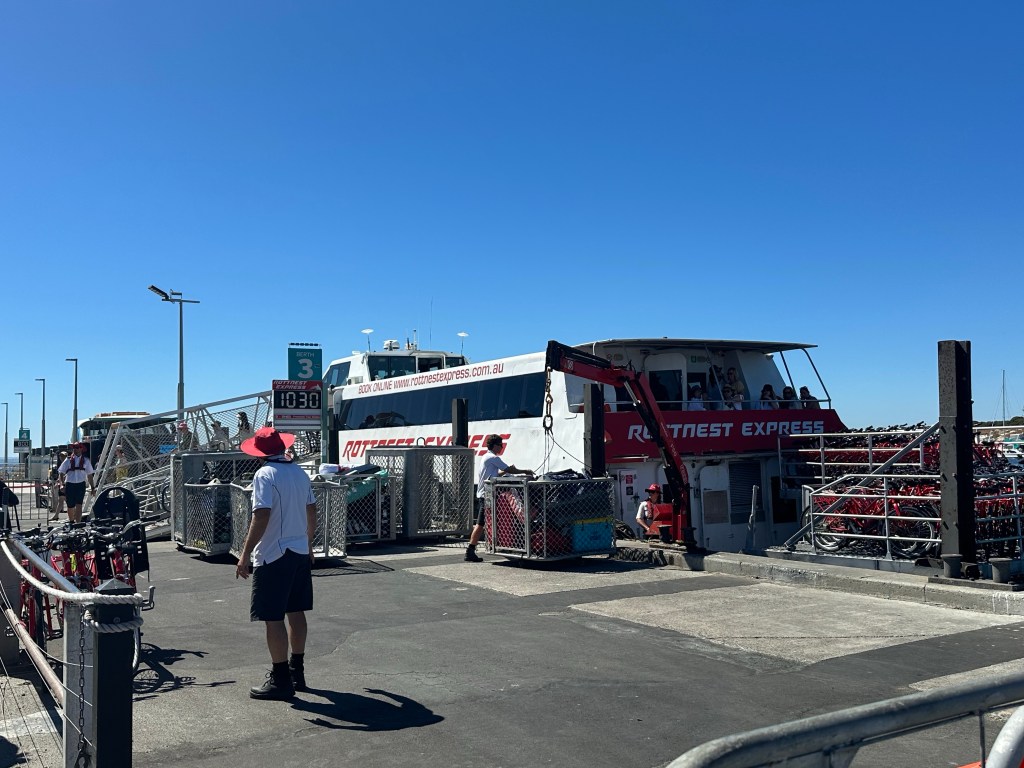
It is now a protected reserve and popular car-free tourist destination. Appromimately 80% of the tourists are day trippers, the remaining being predominently campers, or in our case “glampers”. Most of the overnight visitors are from the Perth area and bring all their gear on the ferry with them – from gazebos to bikes and cool boxes – “checked-in” to cages on the deck of the ferry and transported to/from your accommodation by the ferry operator.

Quokkas can be seen all over the island, especially in the evenings and have no real preditors on Rotto. They are small marsupials, only found in south western WA, mainly on islands with the largest number being on Rotto. They are about the size of a cat but with a commical hop. The females typically have two babies a year, becoming pregnant whilst the first baby is still in her pouch.

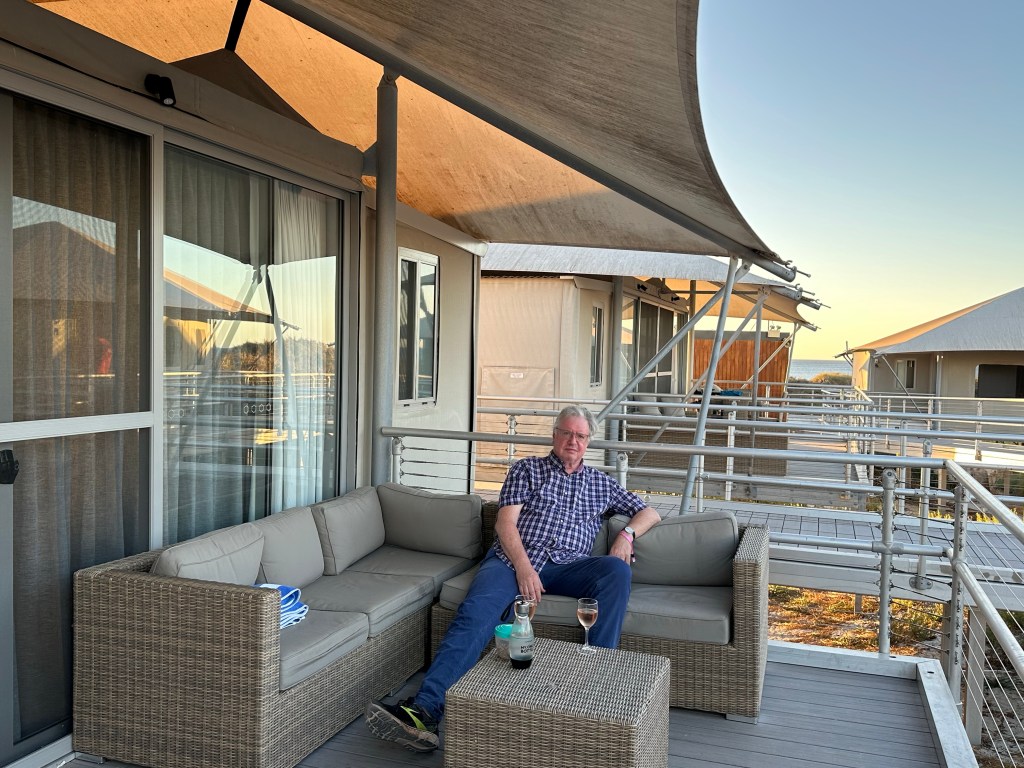
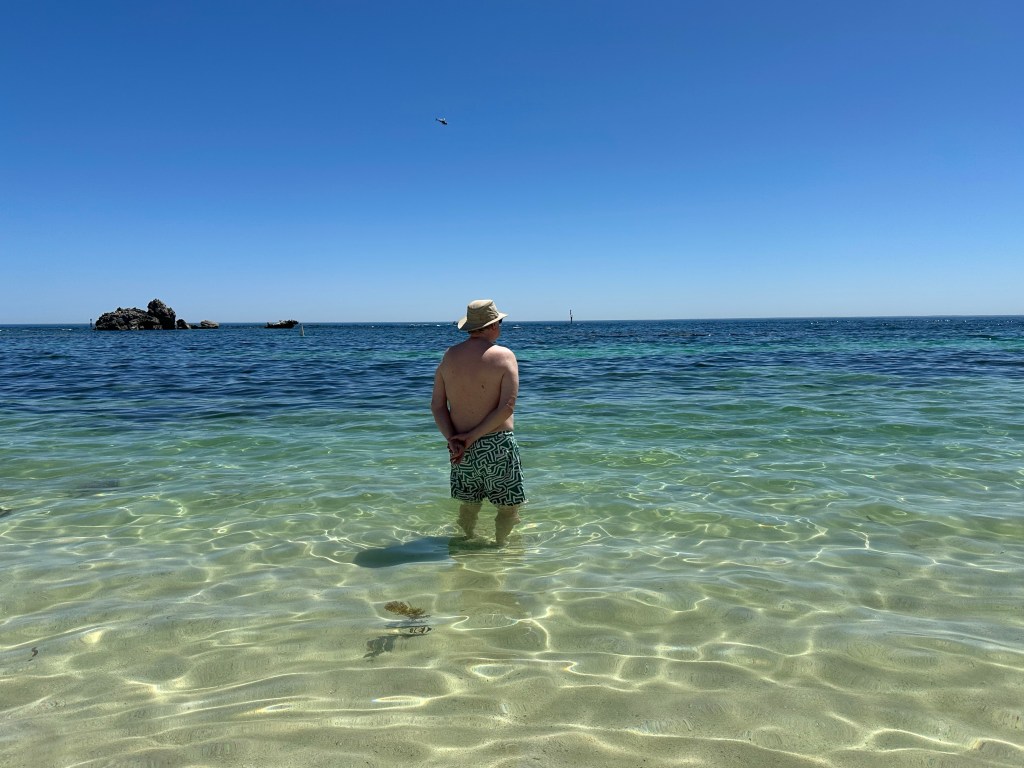
To protect its unique atmosphere as a relaxed family destination within a reserve, Rotto has quite a few rules for visitors. These include limited development – just a few restaurants/bars, one general store, some cabins and a few campsites – a few paths for bikes and pedestrians and “island quiet hours” between 10pm and 7pm. Restaurants have to be empty before 10pm so take dinner bookings for arrival 5.30-7.30pm. We gleaned the local dress code from a Perth uber driver who told Tim to “just pack your thongs (flip-flops to Brits) and a singlet mate”. The beaches were amazing, with one just a few steps from our “tent”, although the sea was colder than we were expecting; refreshing as we were there during a heatwave. We saw dolphins twice, only about 10m from the shore.
Fremantle

After over 3,000km on the roads of south west WA, we returned our hire car to Perth before heading to its harbour city Fremantle, or Freo as the locals call it. It was the first area settled by the Swan River colonists in 1829. The settlement initially struggled until agreement was reached for the transportation of male convicts in the 1850s to build the infrastructure needed for the colony.
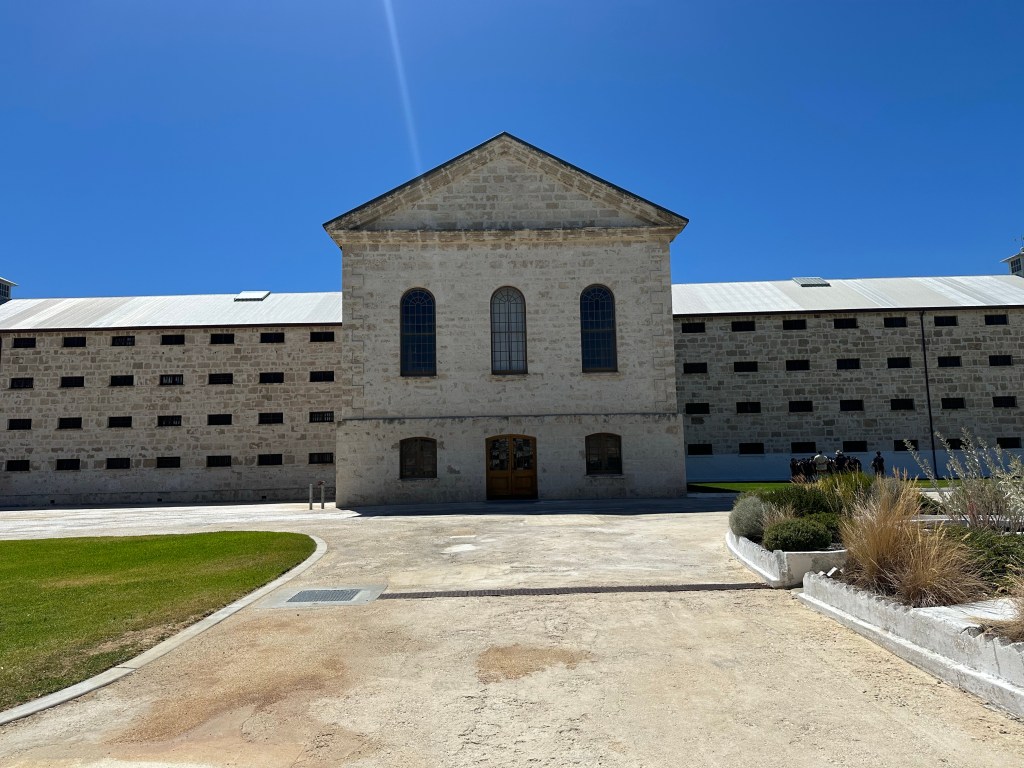
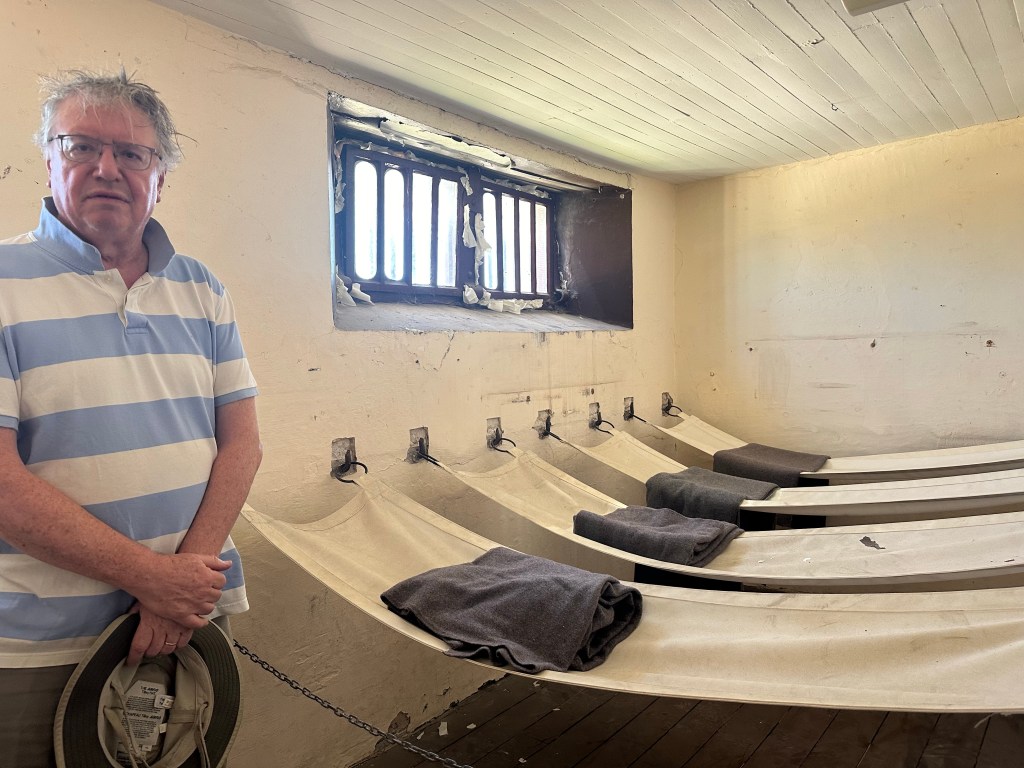
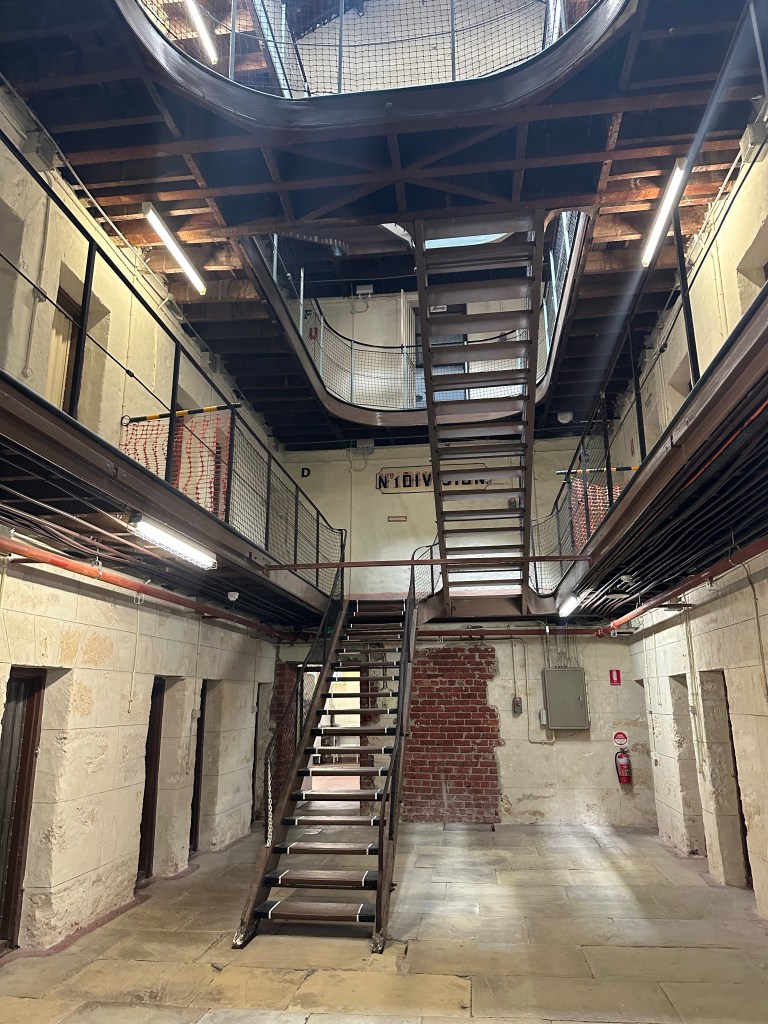
The first thing the convicts built was their own prison, opened in 1855. It continued in use as a prison until 1991, when it became a UNESCO world herritage site. The prison was based on Pentonville prison with Royal Engineers responsible for the design, planning and overseeeing of the construction. During our tour we heard stories of prisioners, including the one successful escape by Irish political prisioners in 1876. Life was very tough for the initial prisioners who had to work hard for long hours to gain their freedom. Punishments were frequent which might include solitary confinement or flogging. If the prison doctor thought that a flogged prisioner was at risk of death, he could call a halt to the flogging; however once the wounds had been treated, the prisioner was subjected to any remaining lashes. On an interactive screen you could check your surname against a list of convicts. Neither of ours matched, but we did find matches for some of our relatives with different surnames and friends !

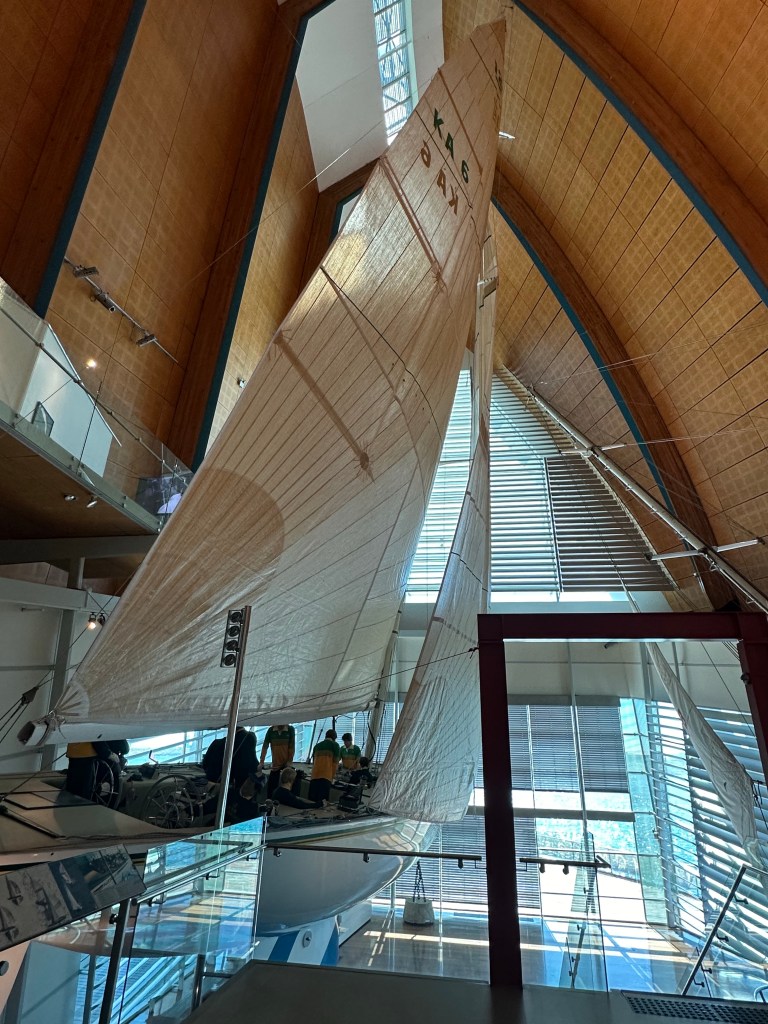
On the harbour front is the National Maritime Museum which covers the history of Frementle as a port and Australia as a maritime nation. During WW11 Fremantle was used as a submarine base by the US navy. More recently it was a base for Australia’s America’s Cup win in 1983 by Australia11. After the victory celebrations, the Australian Prime Minister Bob Hawke said “Any boss who sacks anyone for not turning up today is a bum” !

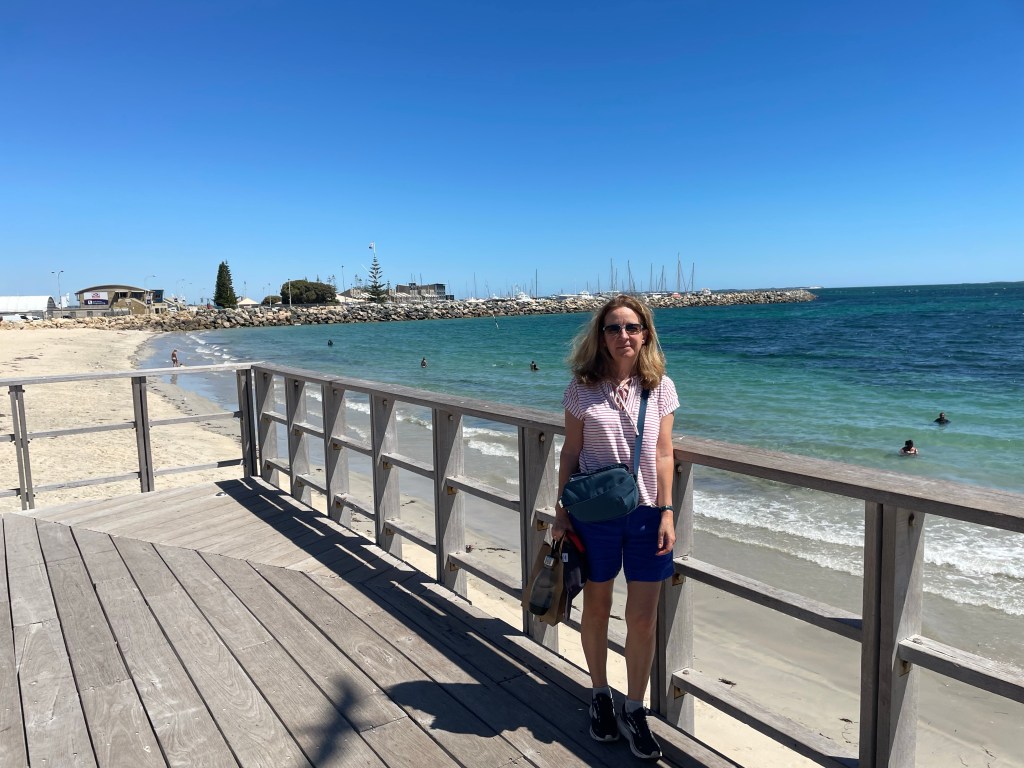
Today, Fremantle is a busy commercial port and a trendy waterside suberb for Perth residents. For us, it was a great base for a “pit stop” after our road trip while enjoying the cafe and beach culture.

Our apartment overlooked the marina
Breakfast spot
Prison
Throughout its use, the prison accommodated far more men than it had been built for
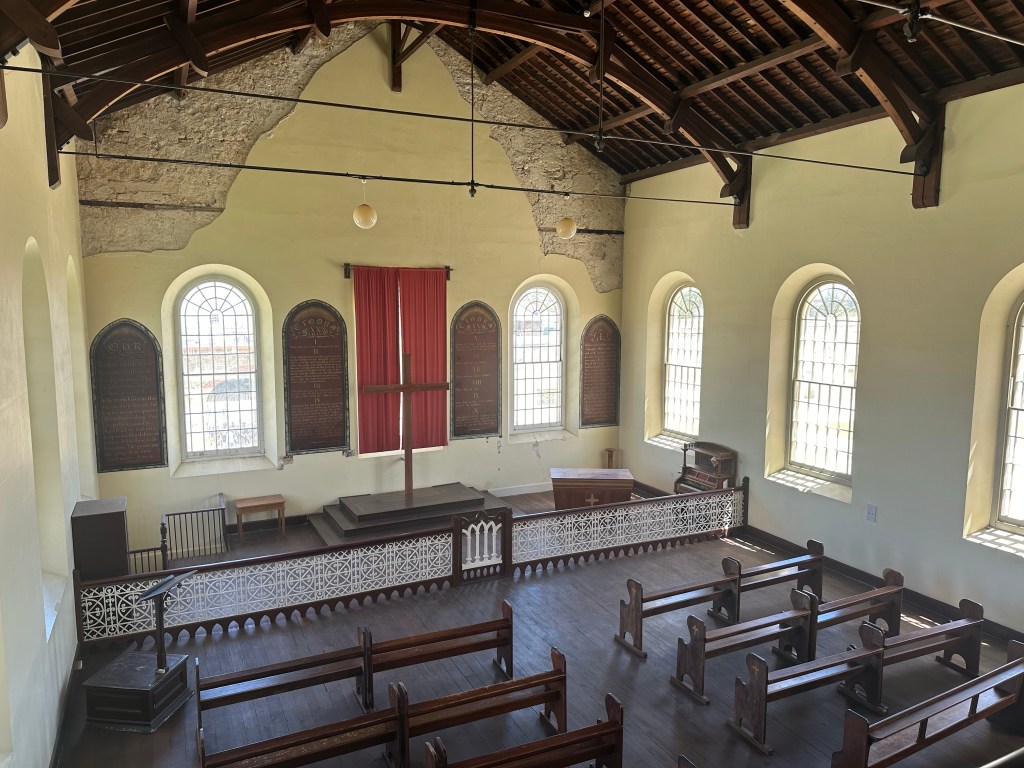
The prison’s Anglican chapel
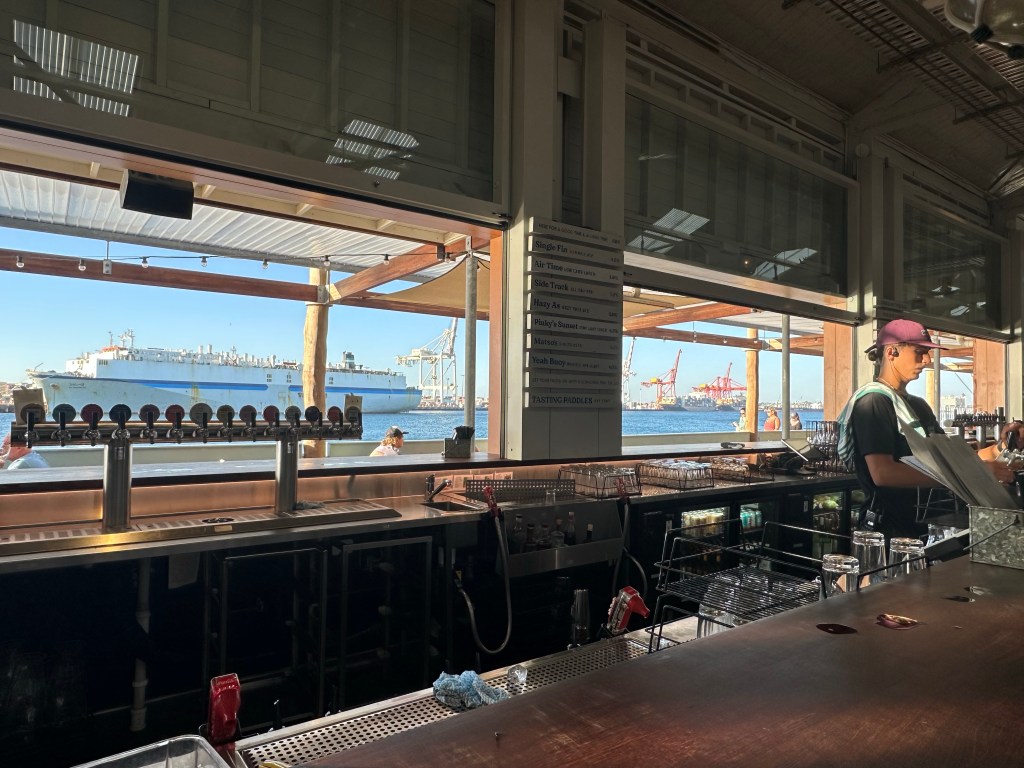
Brewery/bar overlooking the harbour
Australia11
Dinner in North Fremantle

Wave Rock – Hyden

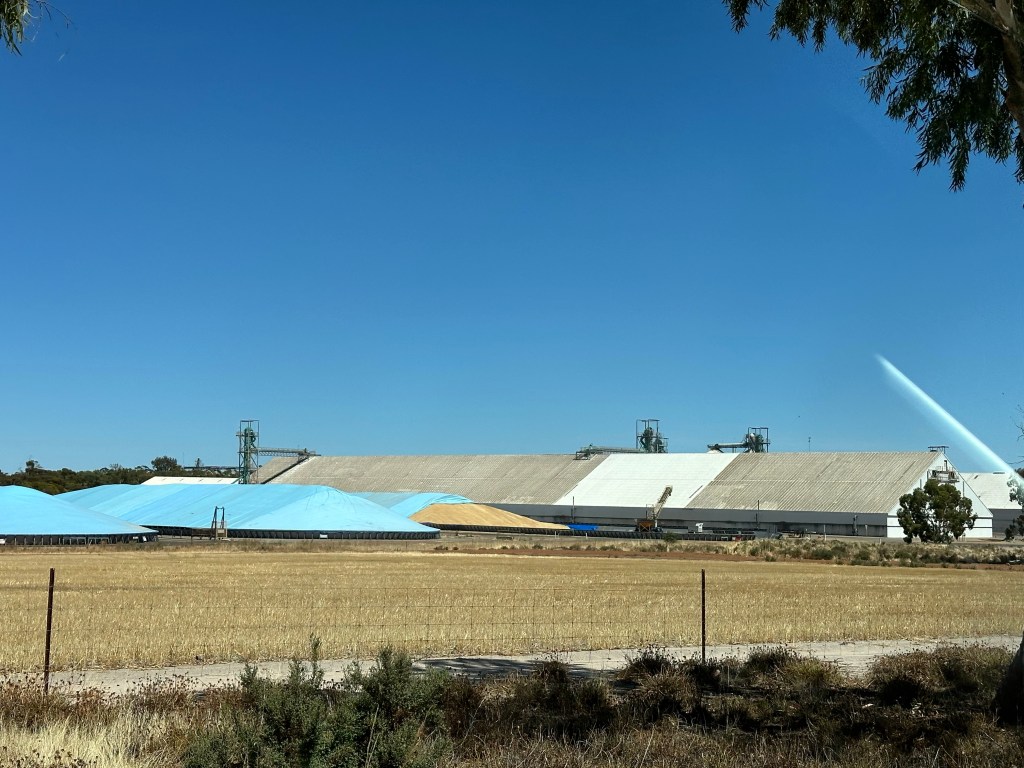
Returning to the Perth area, we had a stopover in Hyden. Throughout this area of WA, we drove through the Wheat Belt, which covers 155,000 sq km (a bit larger than England and Wales). As its name suggests, it comprises what seems like endless fields of wheat dotted with large grain silos and bins. The wheat is transported by road trains upto 42m in length carrying the wheat to railways and harbours.

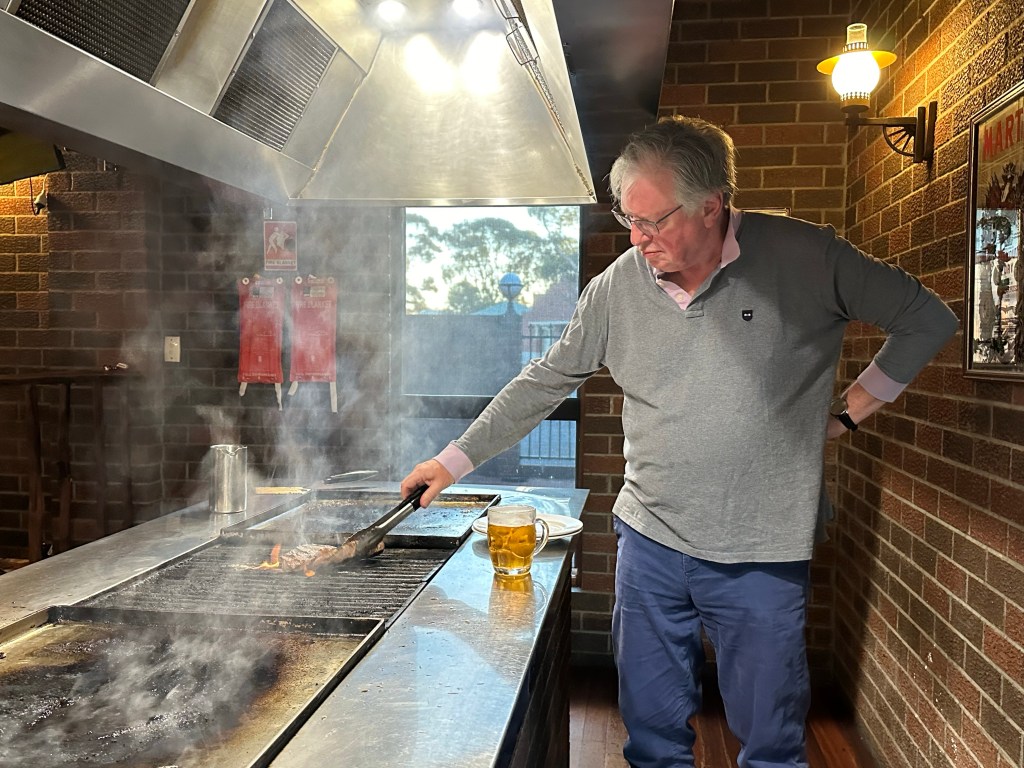
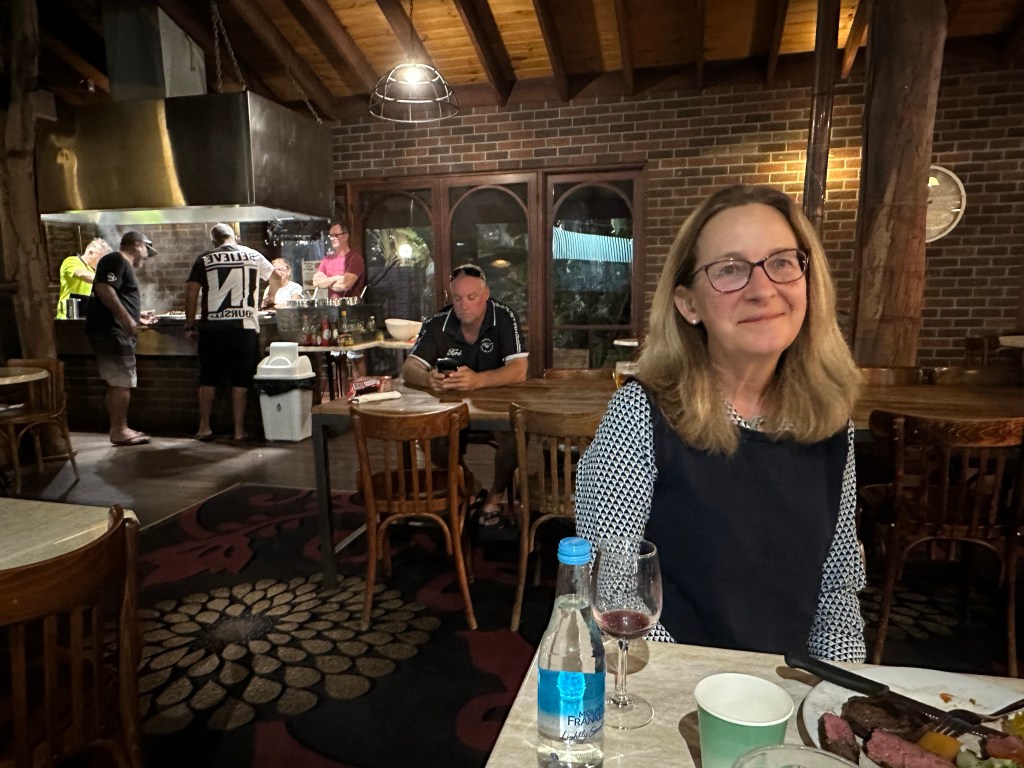
Hyden, with a population of less than 400, has one motel (and a couple of campsites) supporting the tourists visiting nearby Wave Rock and passing truck drivers. At the motel reception we had a lesson on the local poisonous snakes and a request not to park in the truck park. Dinner comprised buying meat from a counter, cooking it yourself, a trip to a salad bar and BYO wine. A simple but very good arrangement.

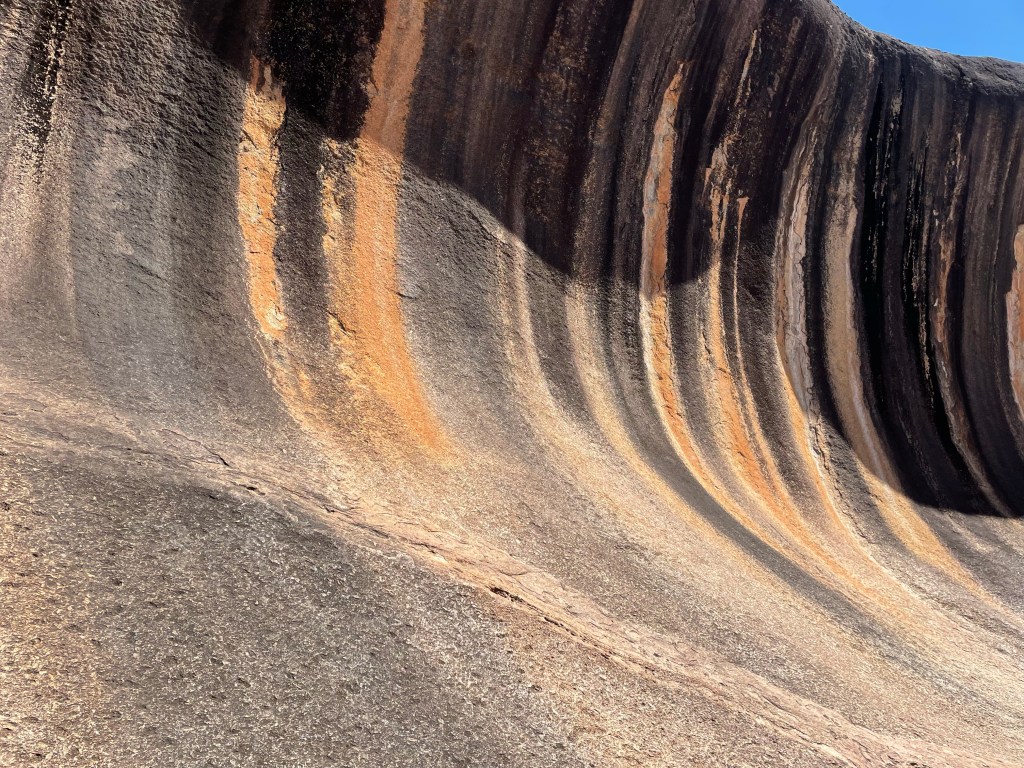
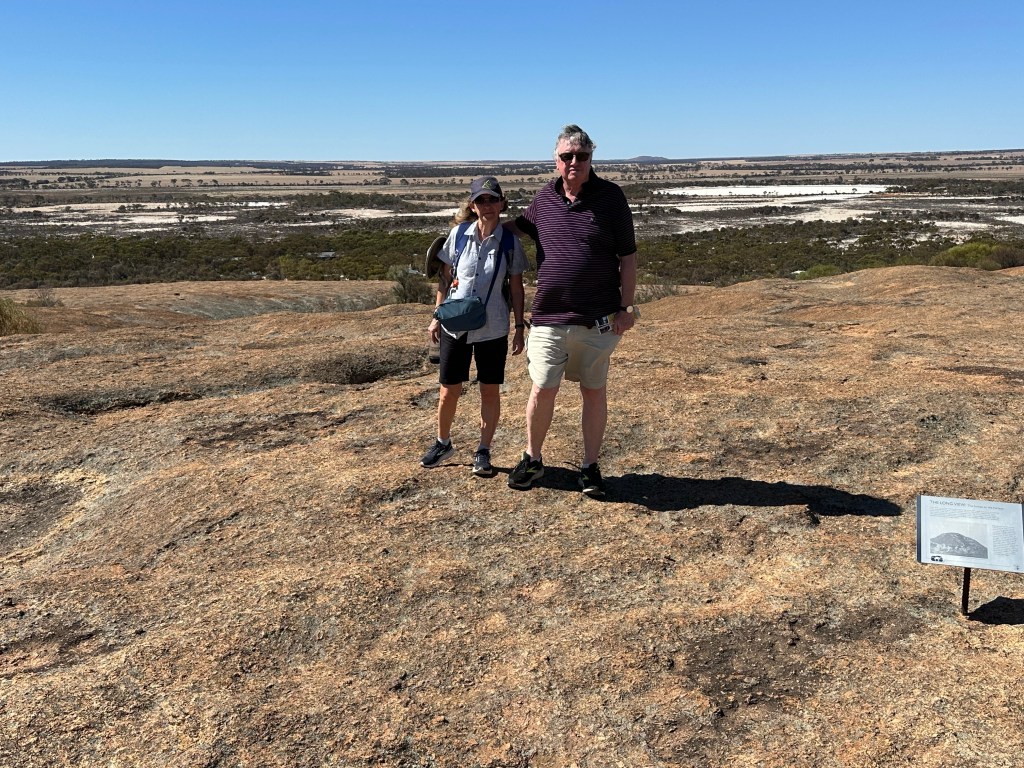
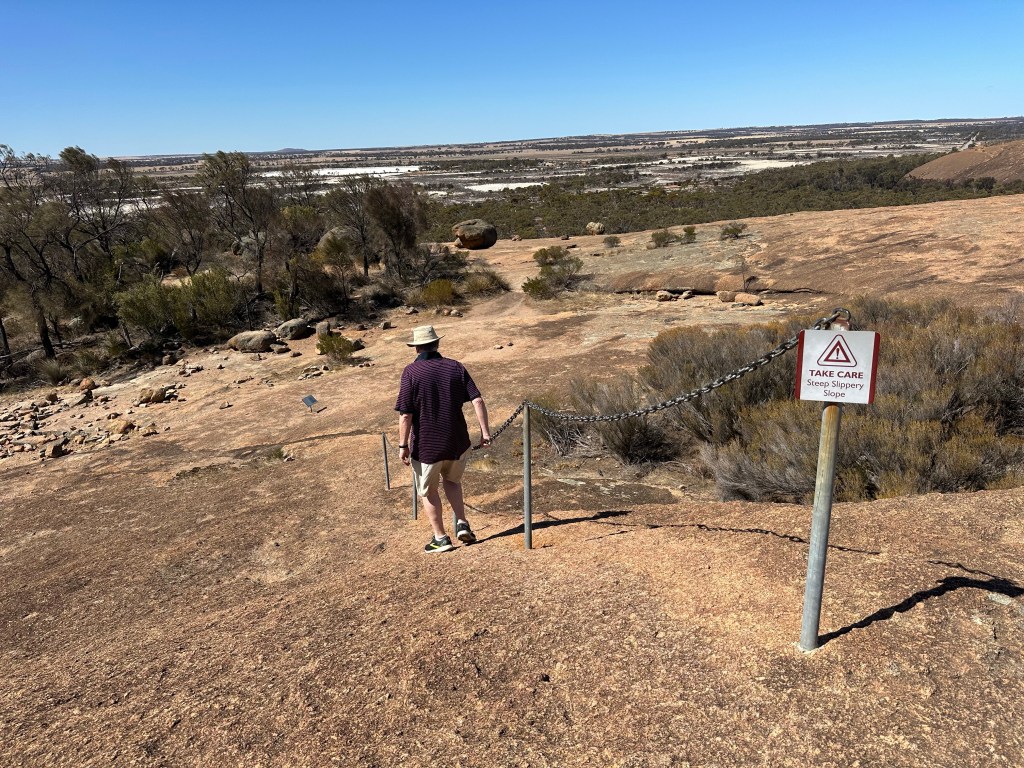
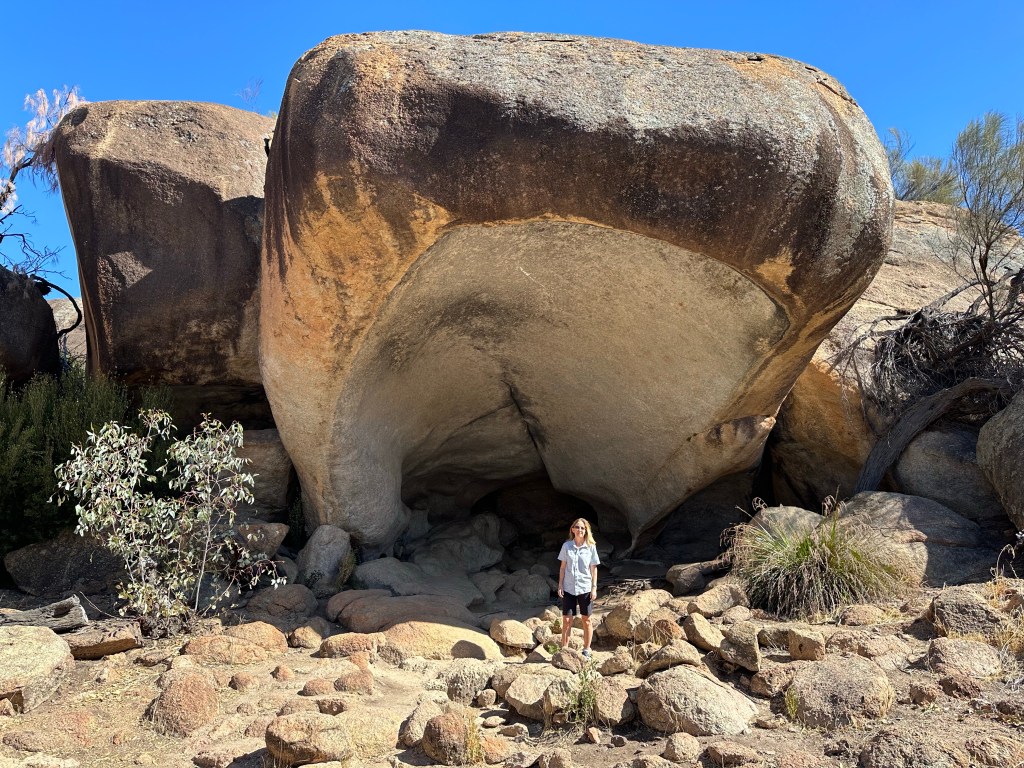
Wave Rock is a geological formation of granite 15m high and 110m long on the edge of a solitary hill. Adjacent is Hippos Yawn, the name being evident from a visit.

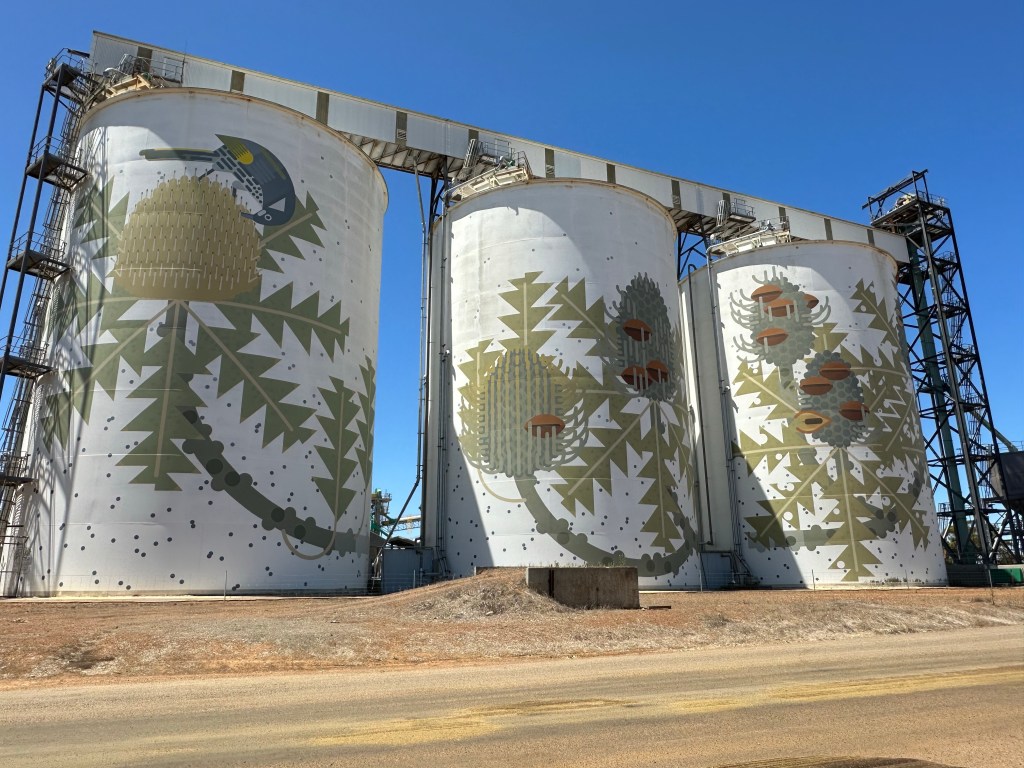
Ravensthorpe silo mural, one of seven in WA
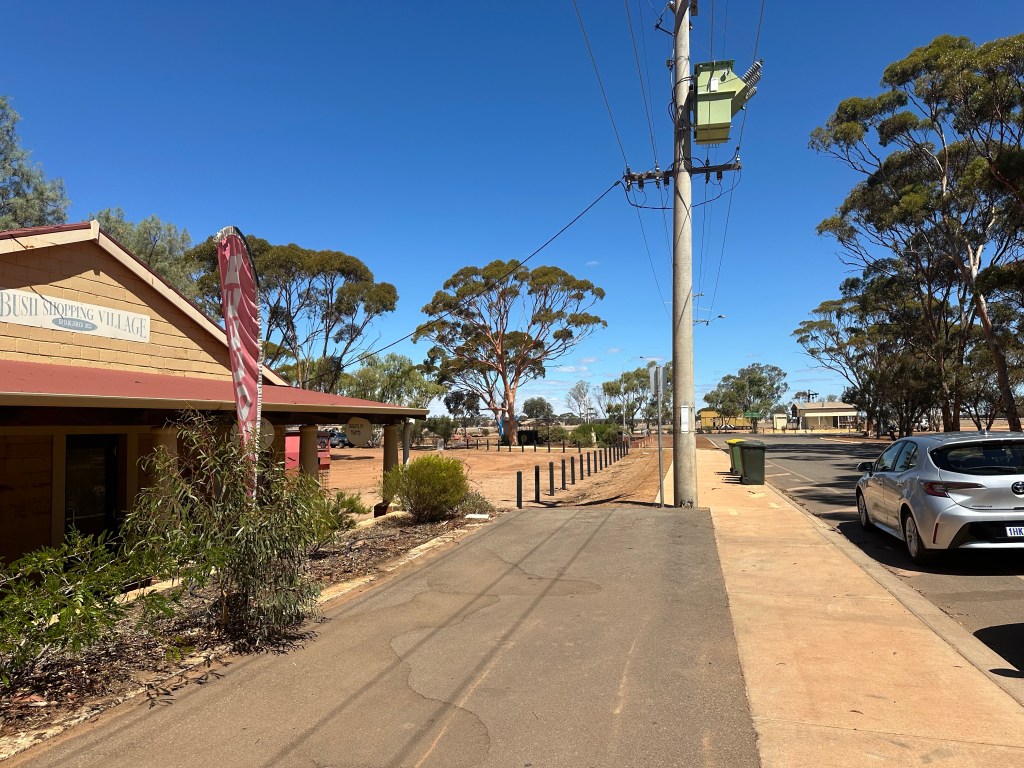
Hyden’s Main Street

Stonehenge (Esperance)

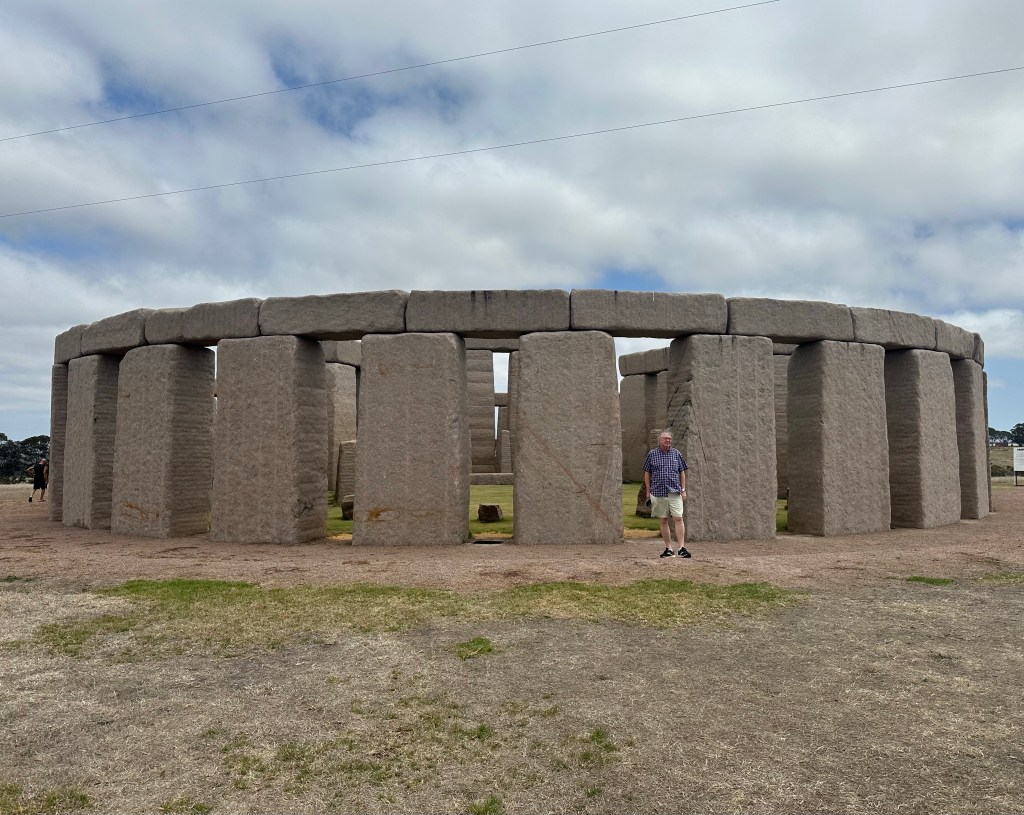
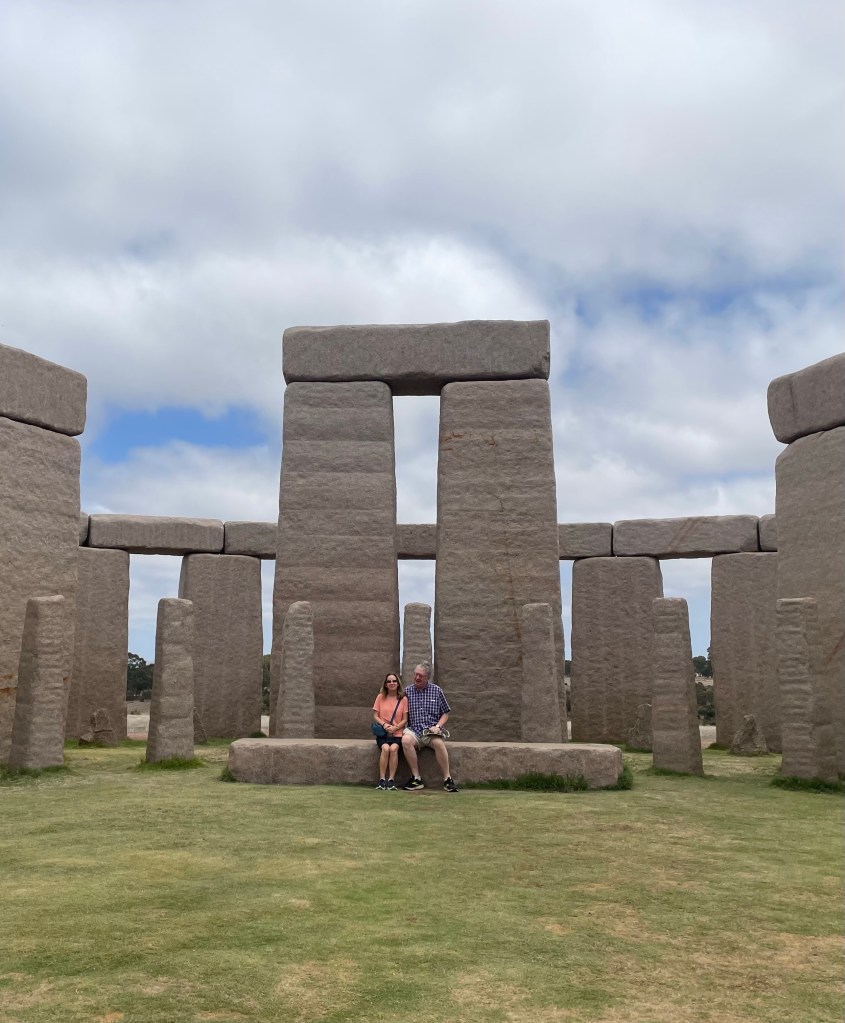
In 2008 a wealthy man from Margaret River decided to build a replica of Stonhenge, as it is thought to have been originally built to the same scale, using pink granite from Esperance. The blocks, weighing upto 55 tonnes, were to be transported 711km by road. The quarrying completed and the money having run dry, it was then realised that this was a bad idea and the project was cancelled. In 2011 a local farmer took over the project and completed it 1km from the quarry and it has now become a local tourist attraction. It is just off the road to Lucky Bay, so the local government decided to build a fence along the road to prevent the dangers of “rubber necking” near the crest of a hill; maybe a solution for the A303.