Alta and Sorrisniva

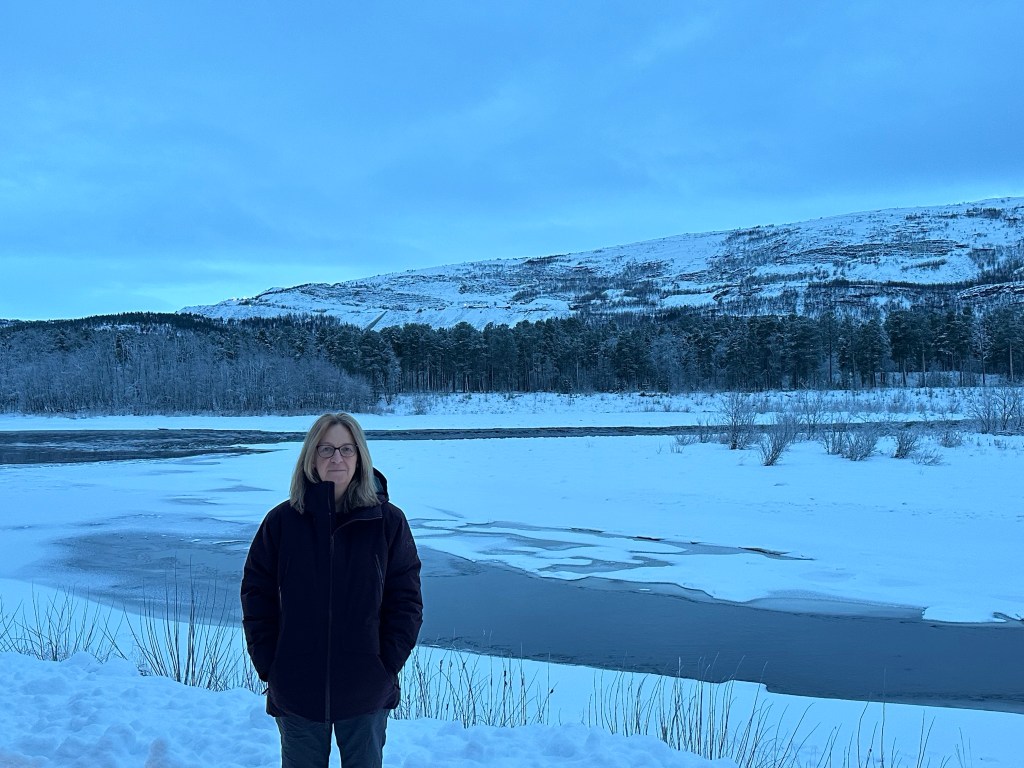
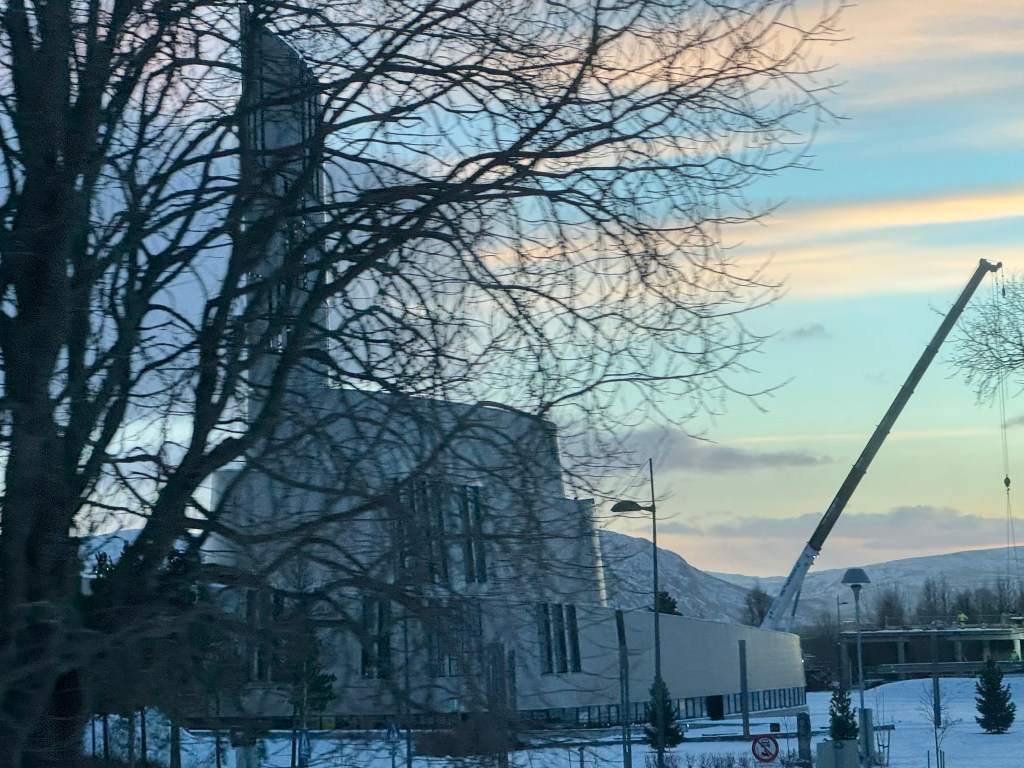
Alta is considered to be the northernmost city in the world situated 70 Degrees North, 400km north of the Artic Circle. Alta was established in 2000, combining several villages, and named after Altafjorden. Its most famous building is the Northern Lights Cathedral completed in 2013, which divides the opinions of the locals. Alta airport is considered one of the most difficult to land at with pilots requiring a special licence.

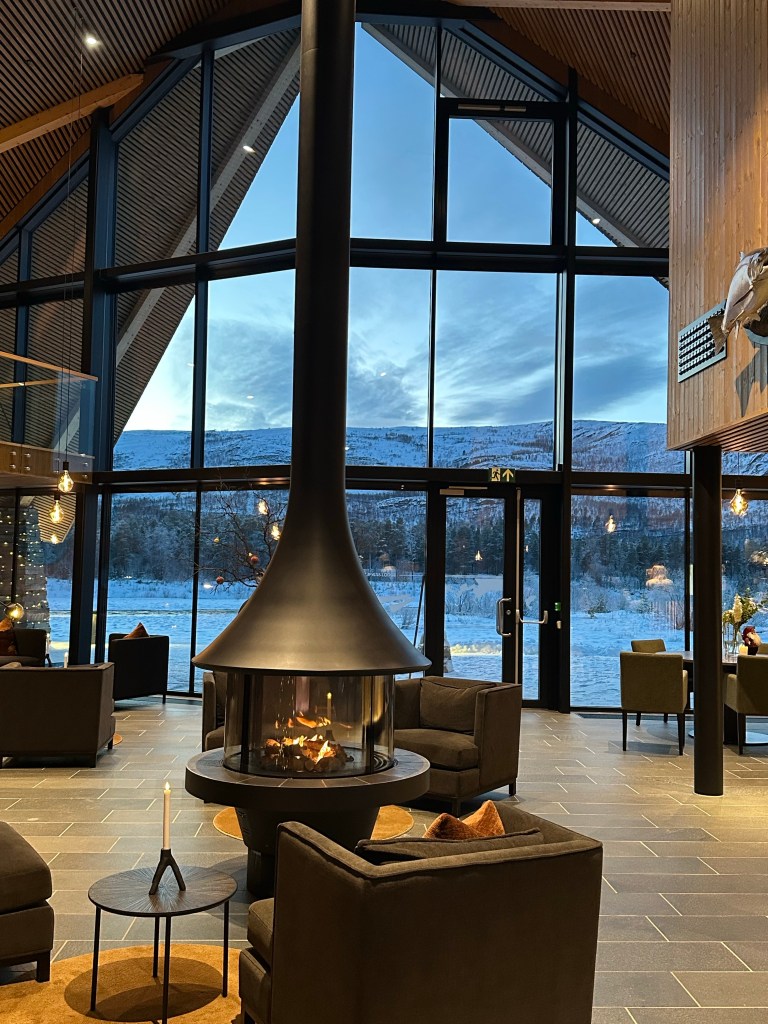
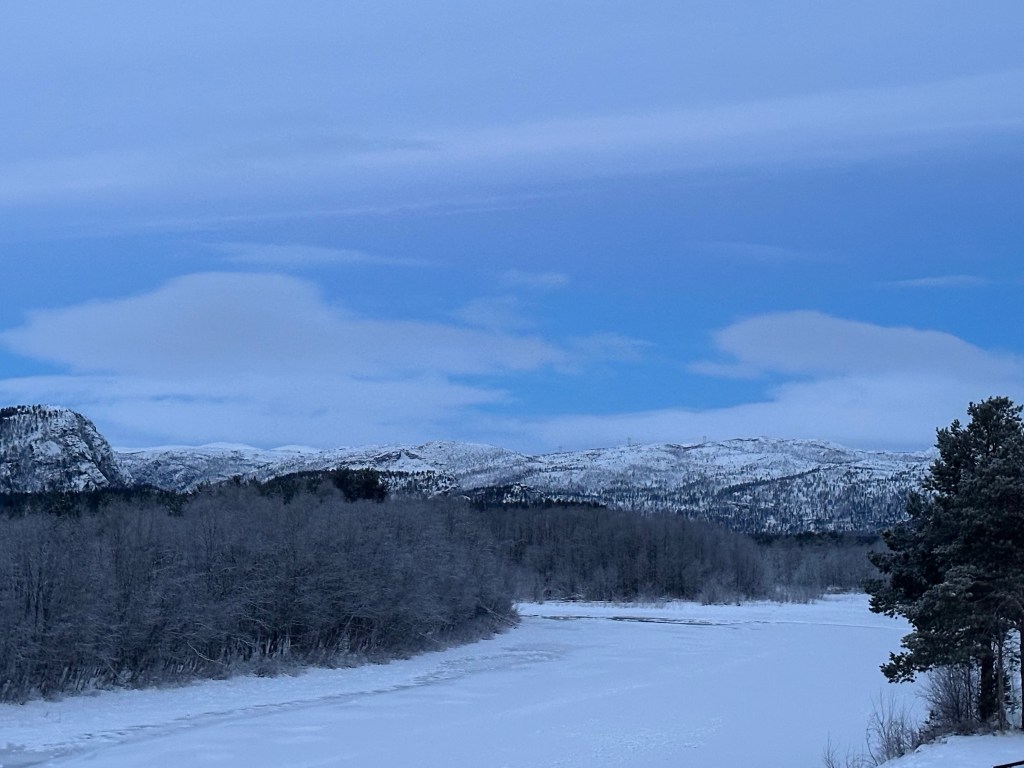
We stayed 30 minutes inland from Alta at Sorrisniva Wilderness Lodge, built three years ago, but its owners have been building an Ice Hotel each year for the last 25 years. The lodge sits on the Alta River which is famous for salmon fishing and the Alta Canyon, the largest canyon in Northern Europe.

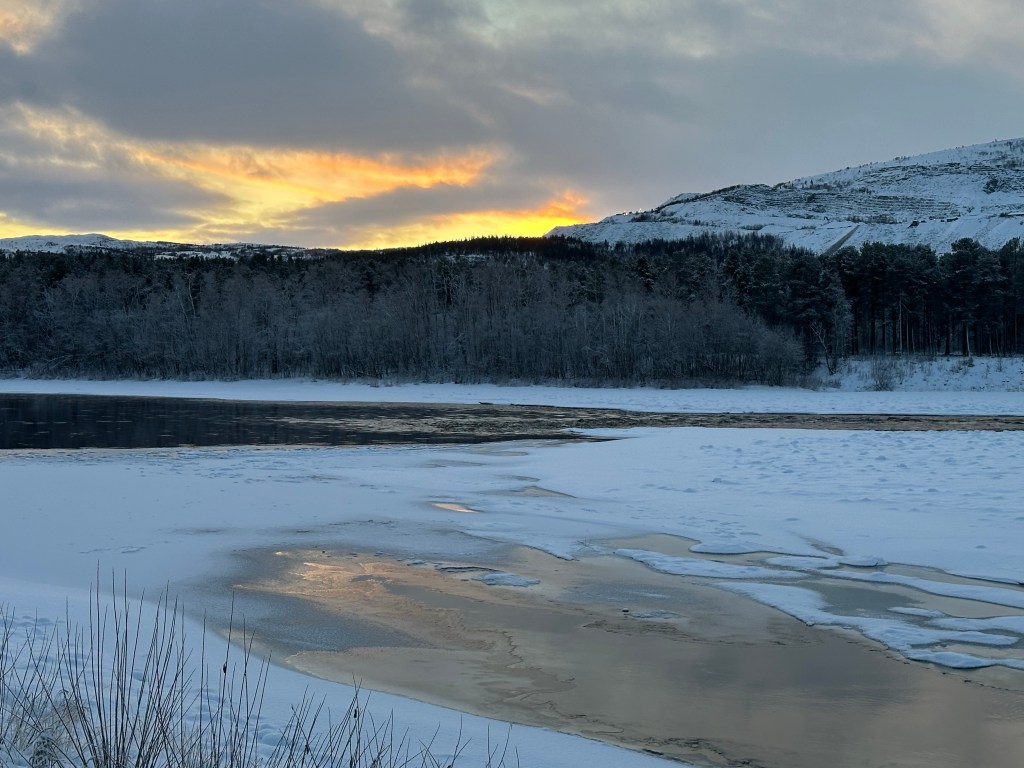
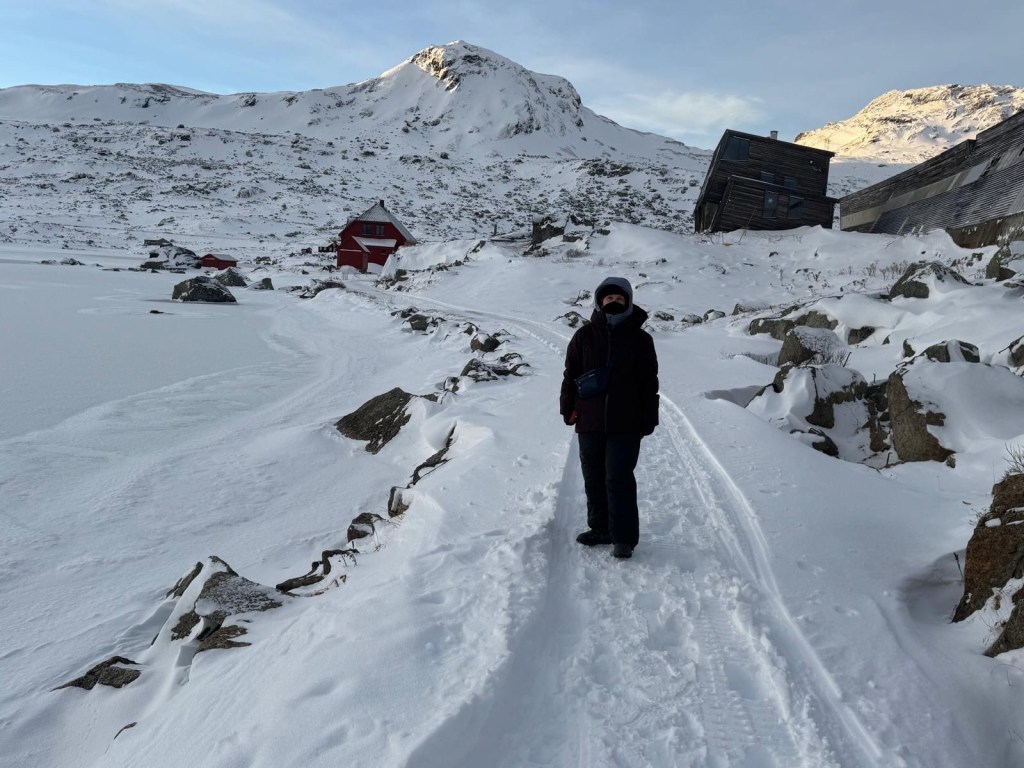
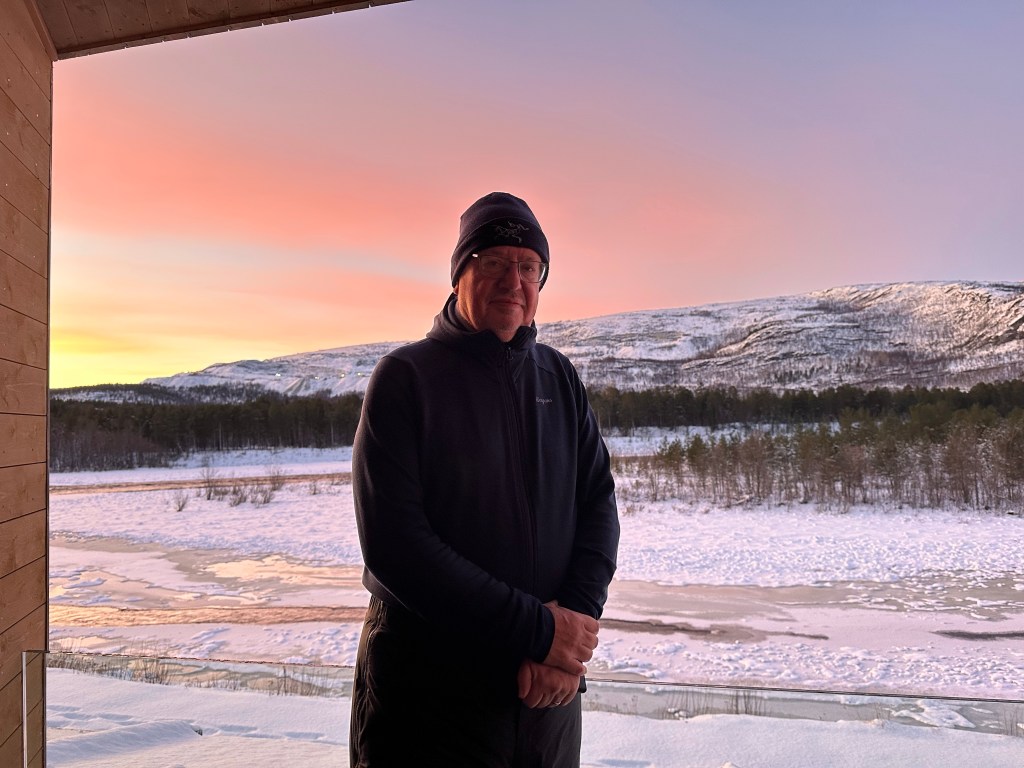
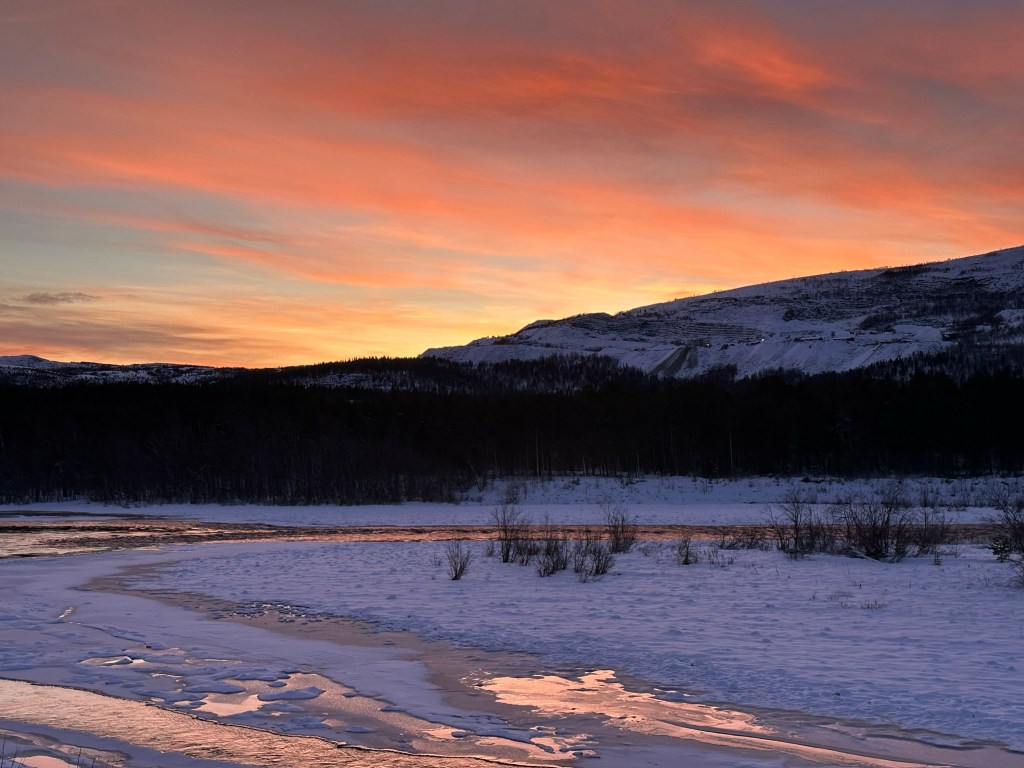
Sorrisniva is a base for outdoor activities, especially viewing the Northern Lights. We visited during the Polar Winter when the sun never comes above the horizon. It does however come close to the horizon for several hours meaning it is light from about 9am to 1.30pm with the extent of the light depending on the cloud cover. Sunrise and sunset tend to merge from one to the other; it was odd watching the sunset at lunchtime ! The temperature was considered “warm” by the locals ranging from minus 1 to minus 10 but with another 5 degrees of windchill at times.
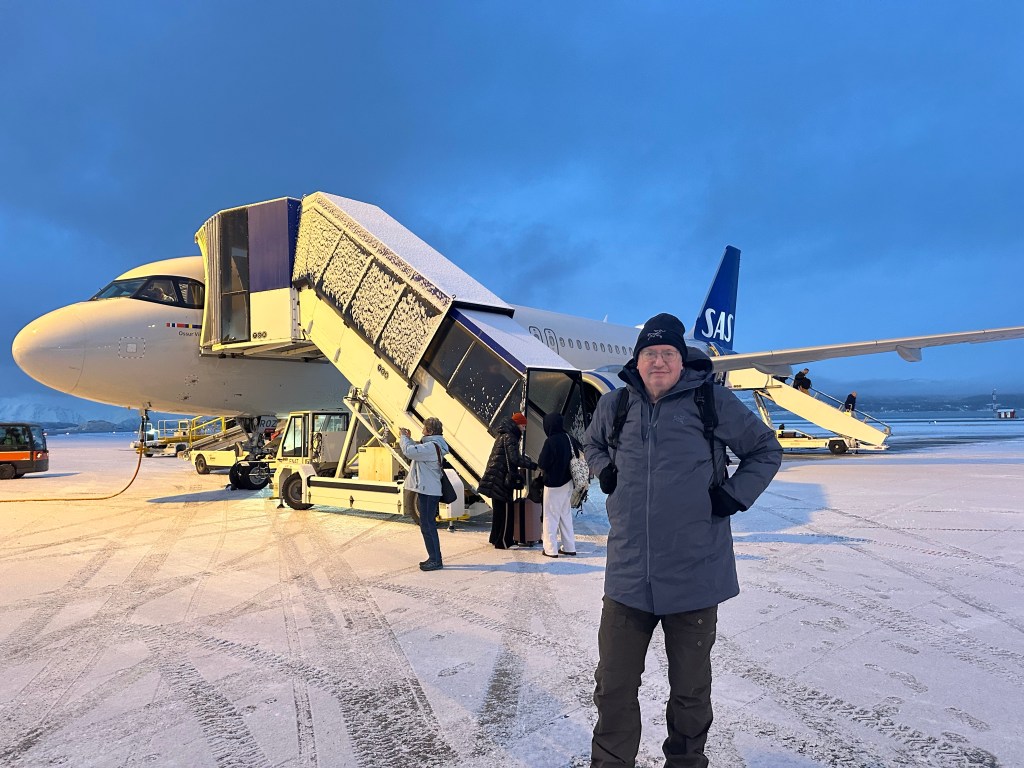
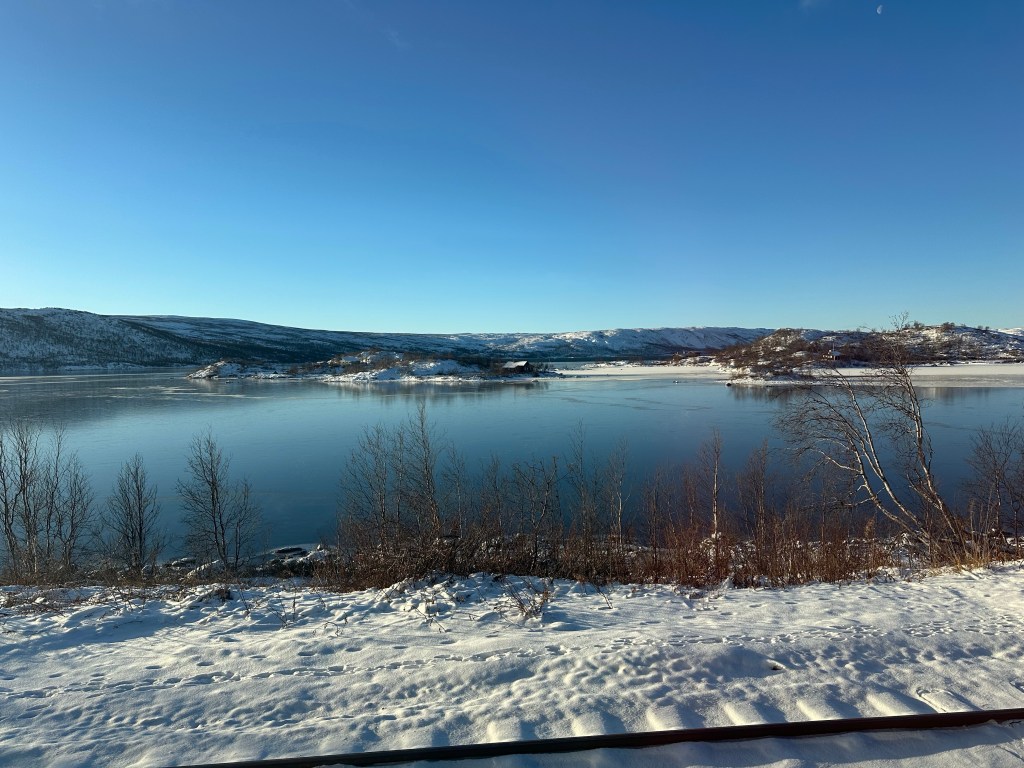
Arrival at Alta (1.30pm)
9am
9.50 am
12pm
Sorrisniva
Sorrisniva
Northern Lights Cathedral (12.15pm)
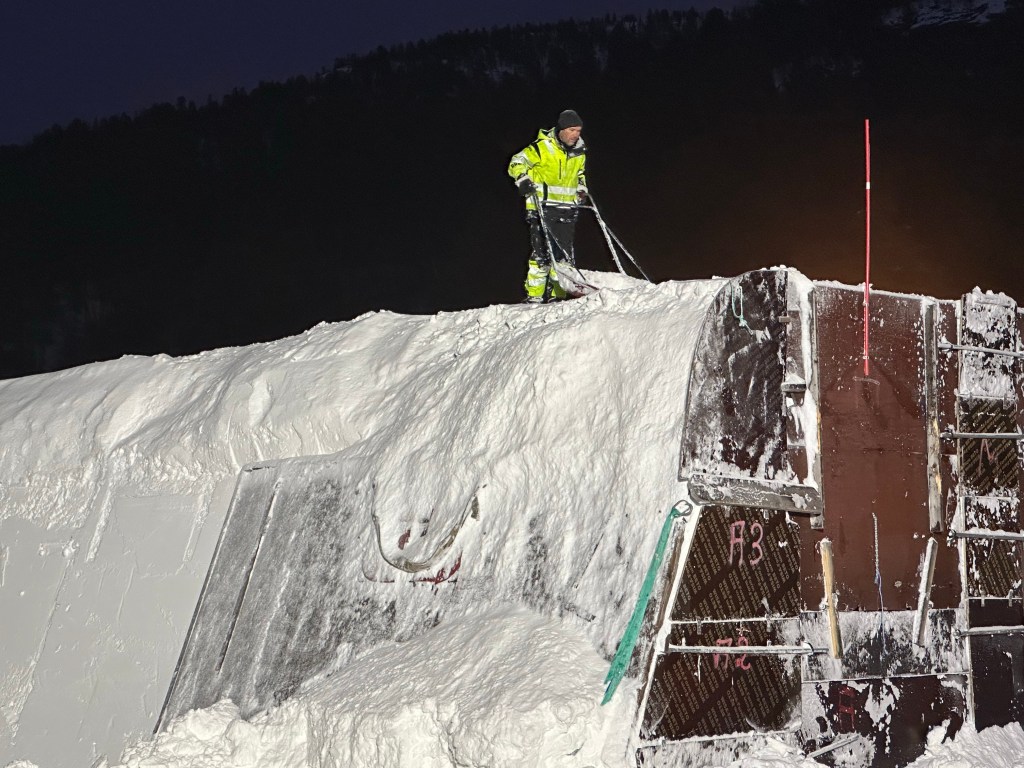
Ice Hotel construction (2pm). It takes 20 workers 3 weeks to construct and comprises 27 bedrooms, a bar and a chapel
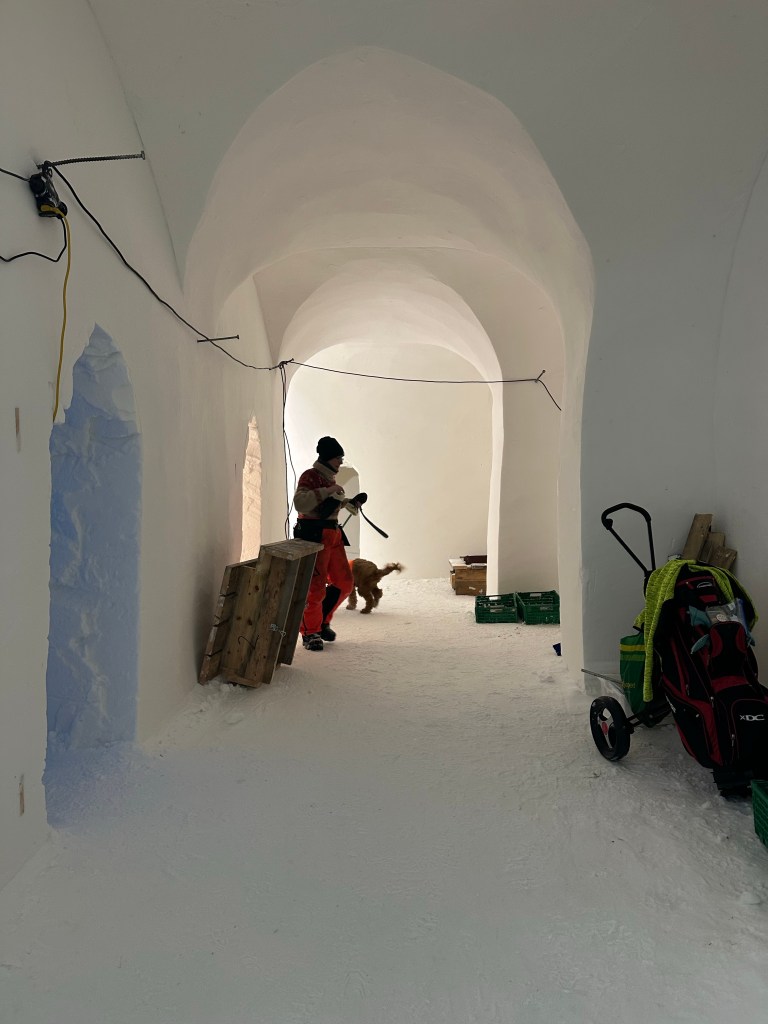
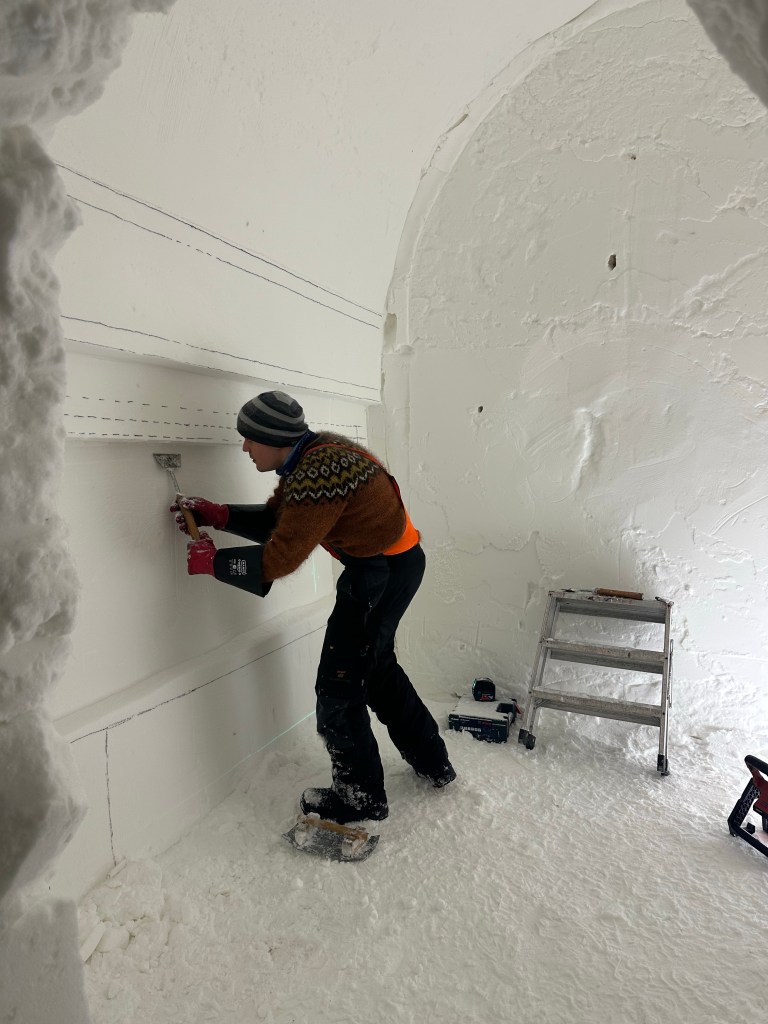
Ice hotel interior, in progress. First guest arrive 19 December

Each year the Ice Hotel has a different theme for its sculptures such as “Africa” and “Vikings”. We were asked not to post this years theme on social media as there is a media “unveiling”
9.30am
12.40pm

Oslo

Norway became an independent country on 17 May 1814, when the constitution was signed to avoid being ceded to either Sweden or Denmark after Denmark/Norway were defeated in the Napoleonic Wars. Norway, although a separate kingdom had a common monarch with Sweden until 1905. The capital was Cristiana which was renamed Oslo in 1925, its original name, as the name Cristiana was associated with Denmark.

Oslo now has a population of just over 1 million, which grew quickly as a result of the wealth generated from oil and gas.

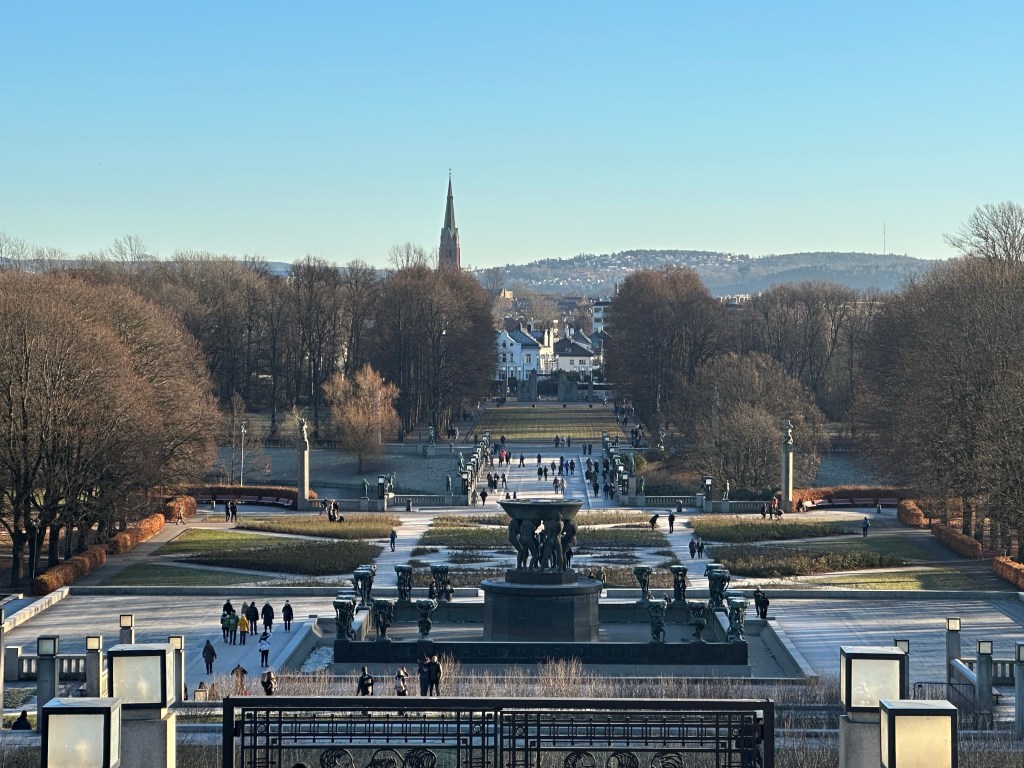
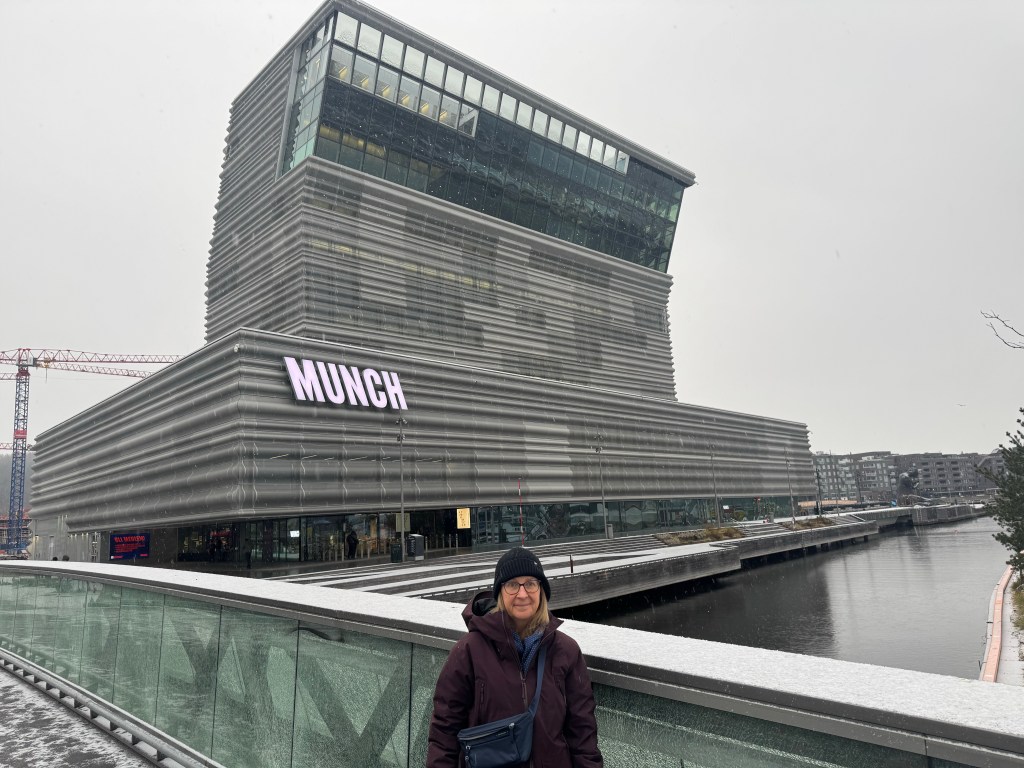
Although the main purpose of our visit was to see friends, we also had the opportunity to see some of the sites including the Munch Museum and Vigeland Park.

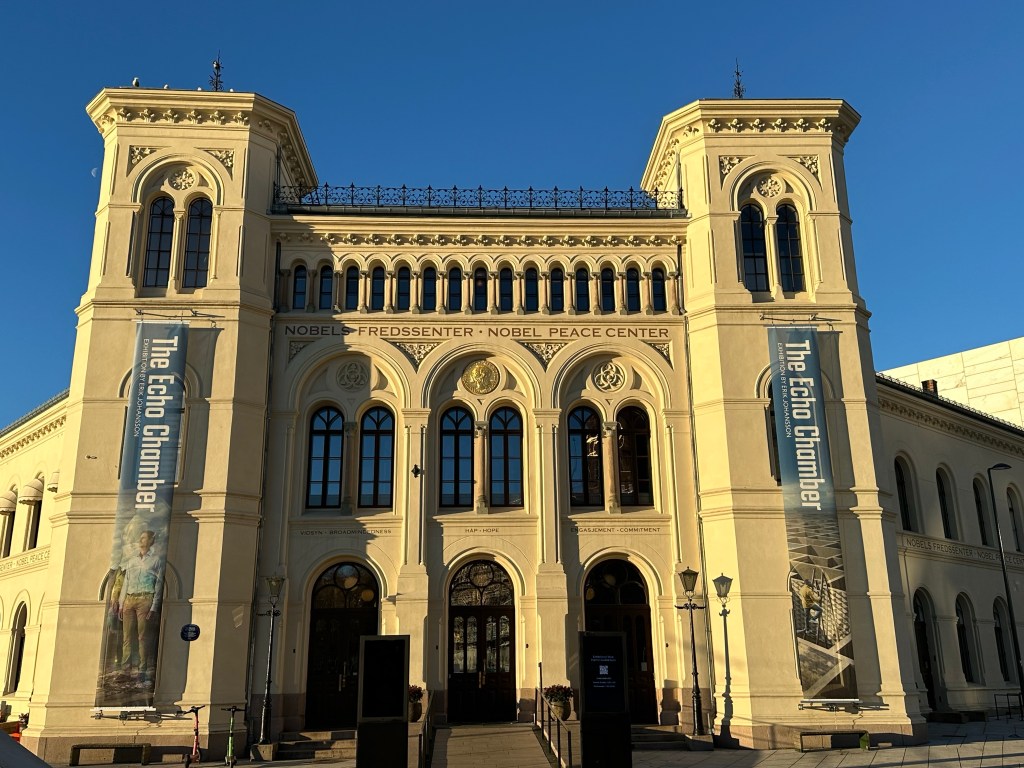
Nobel Peace Centre
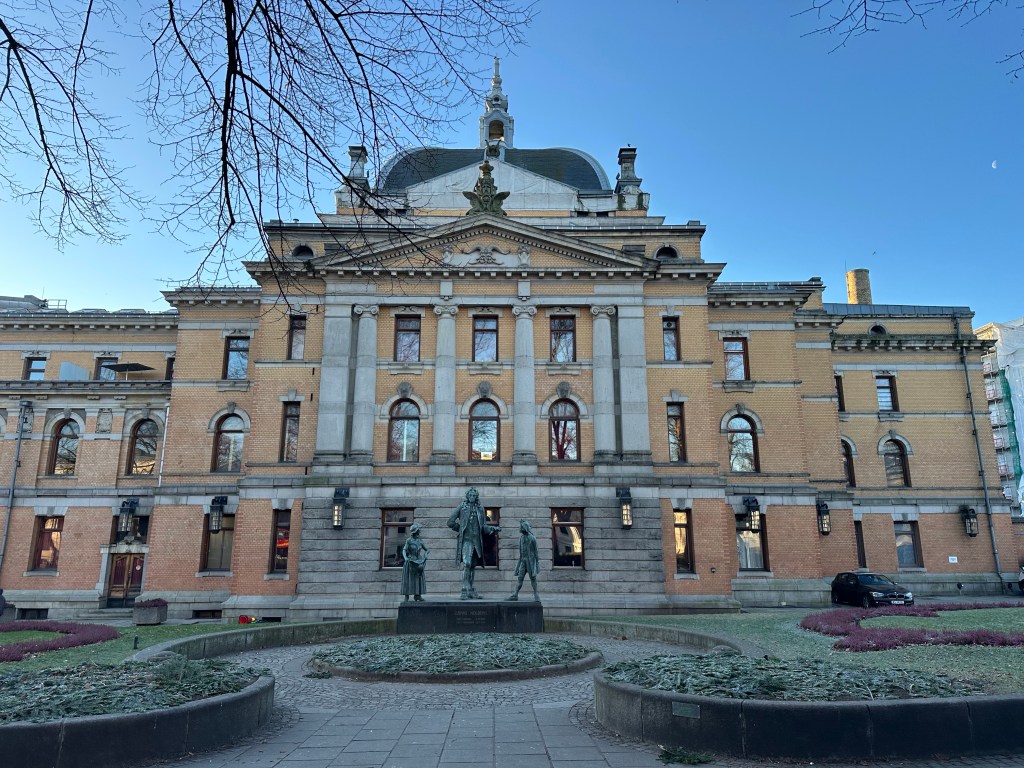
National Theatre
In front of the Royal Palace with Ryan, Marlene and Nico
Harbour and fortress view from our hotel
The Sun by Munch

Finse to Oslo

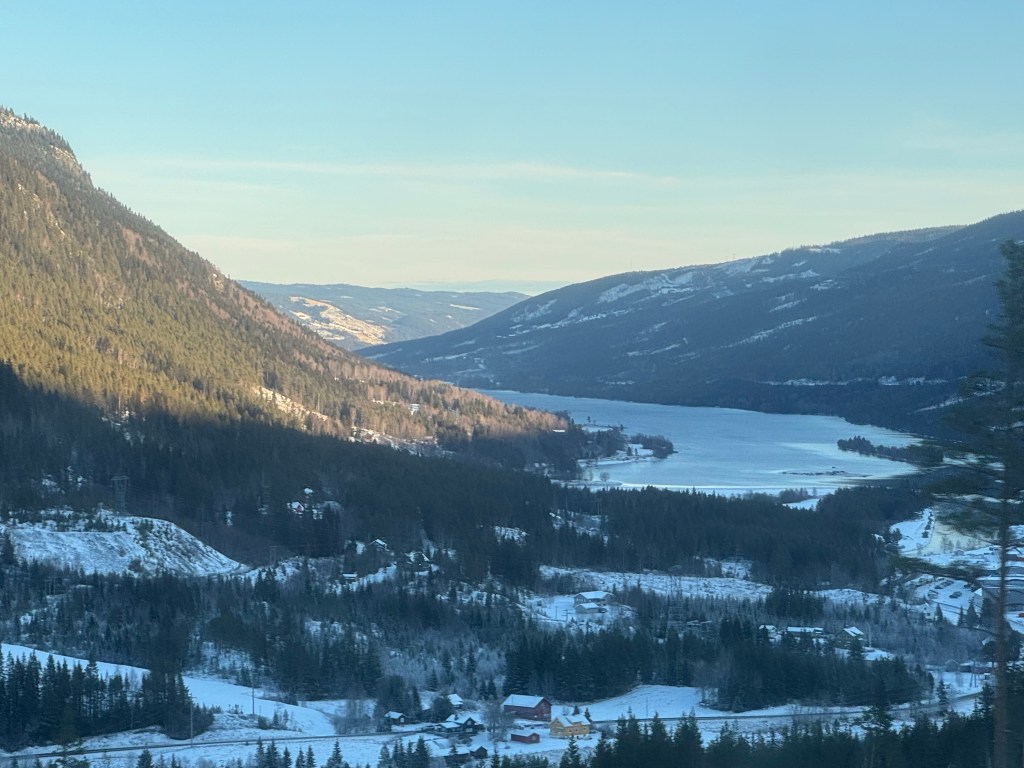
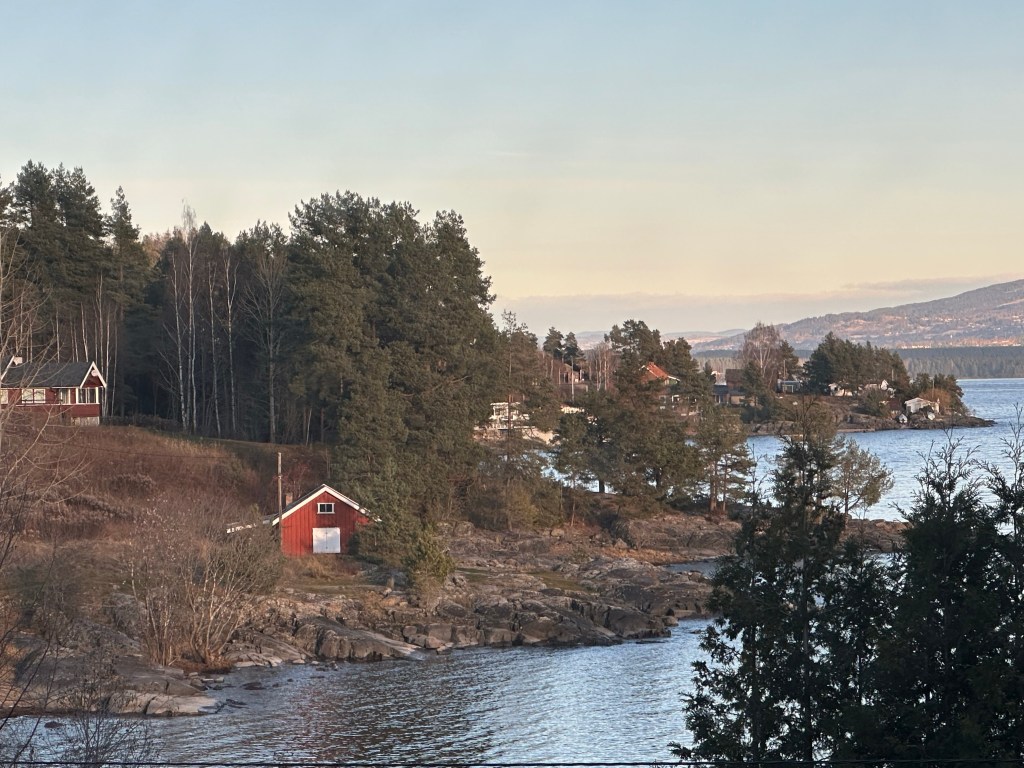
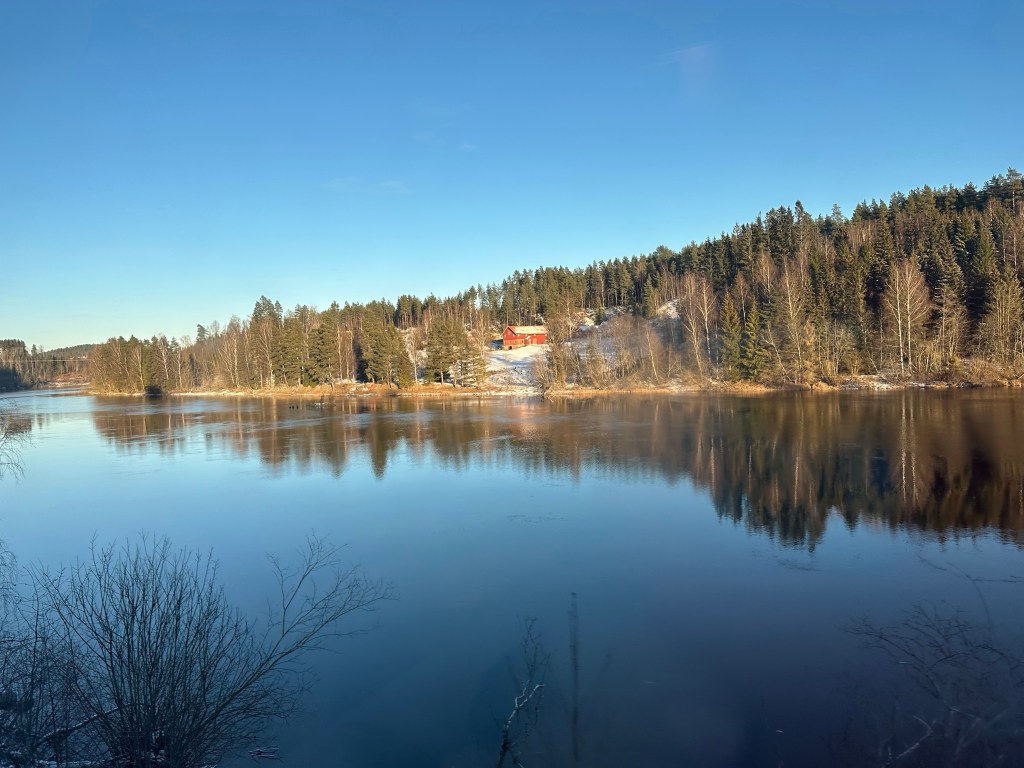
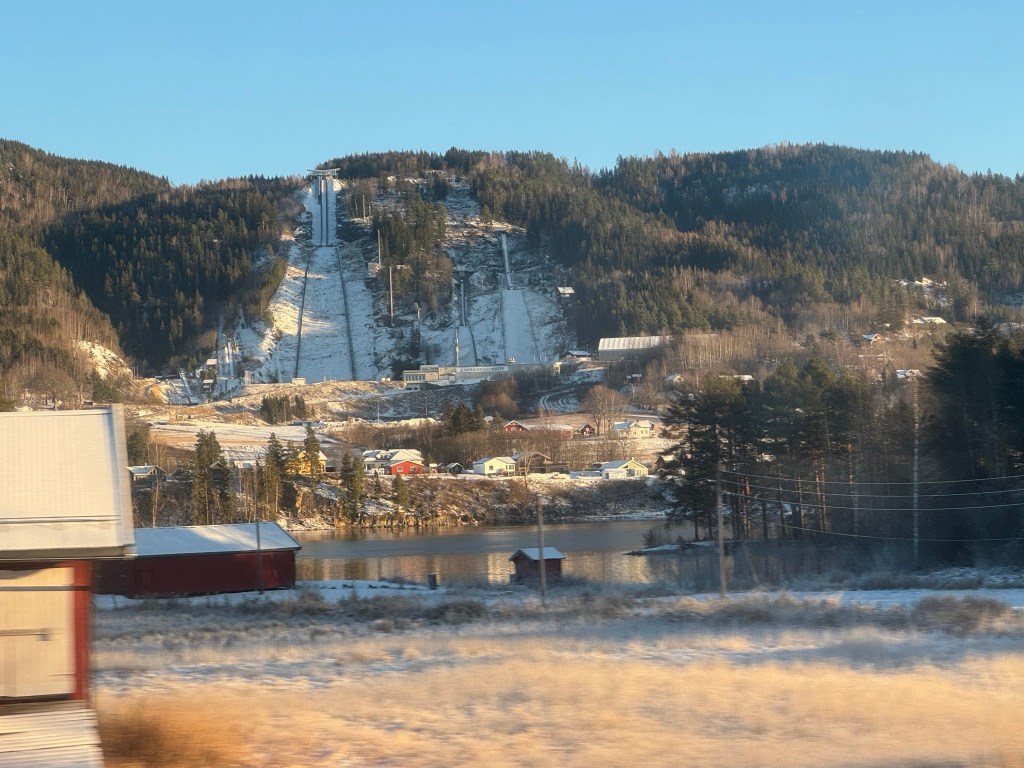
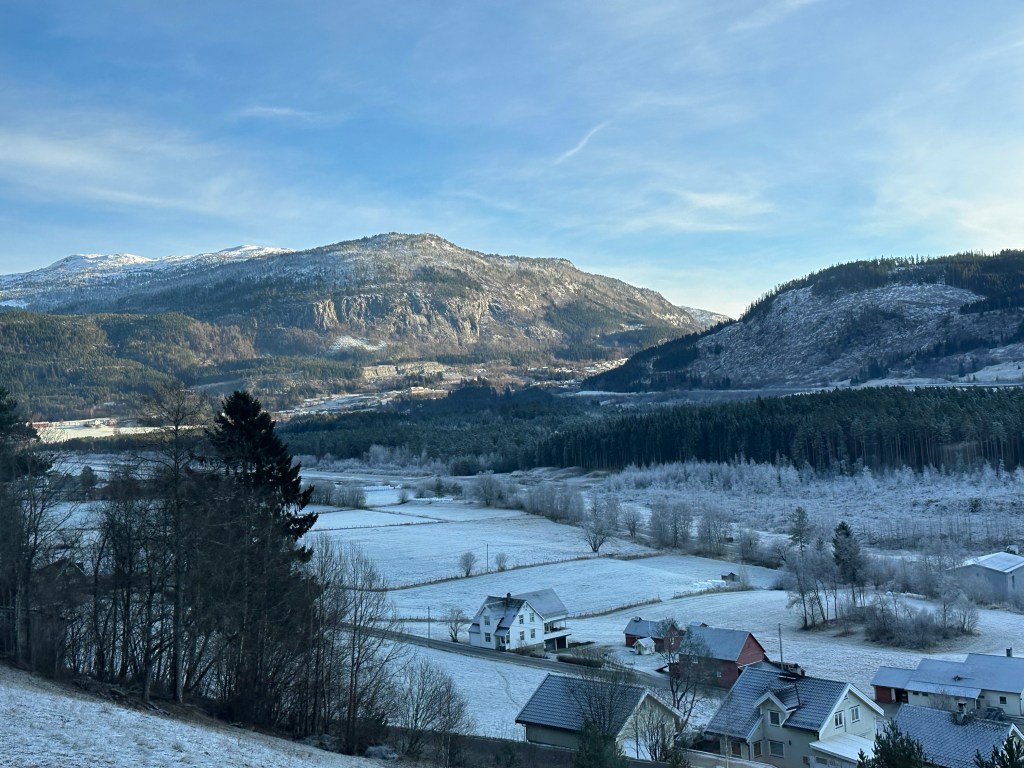
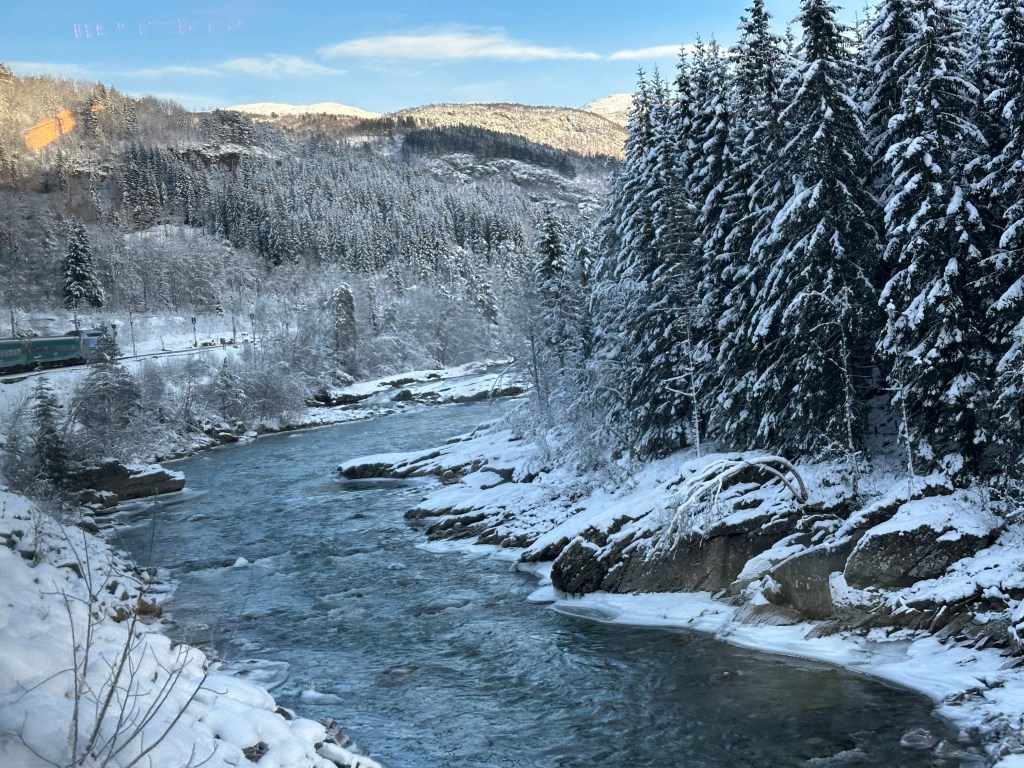
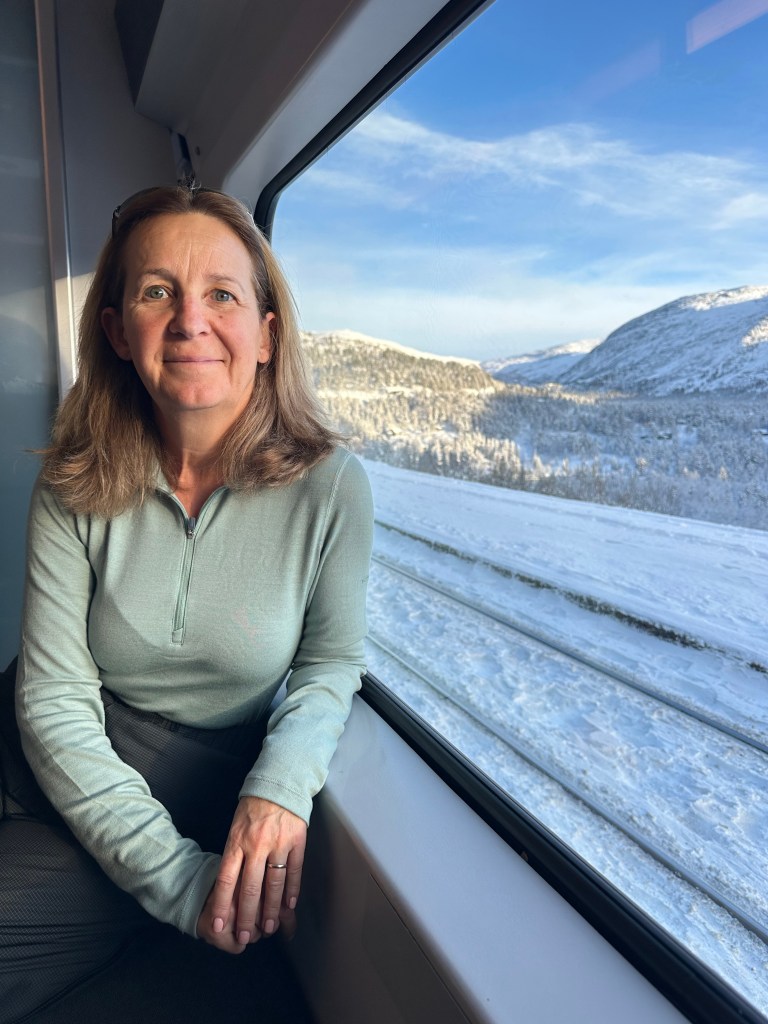
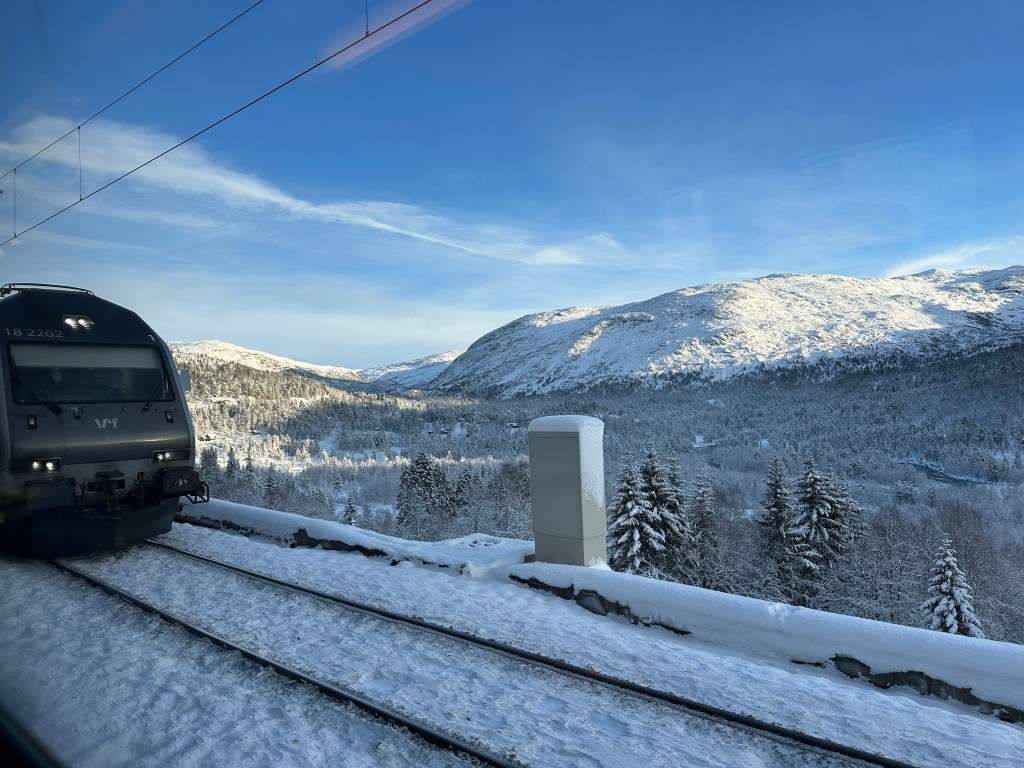
The second part of the train journey is four and a half hours to Oslo. By having a break at Finse it meant that, despite the short days at this time of year, we could do the whole trip in daylight. The first hour to Geilo, a ski resort, is particularly scenic. We also passed the highest ski jump in the world at Vikersund – nine world records have been set there including the current record of 253.5 meters.

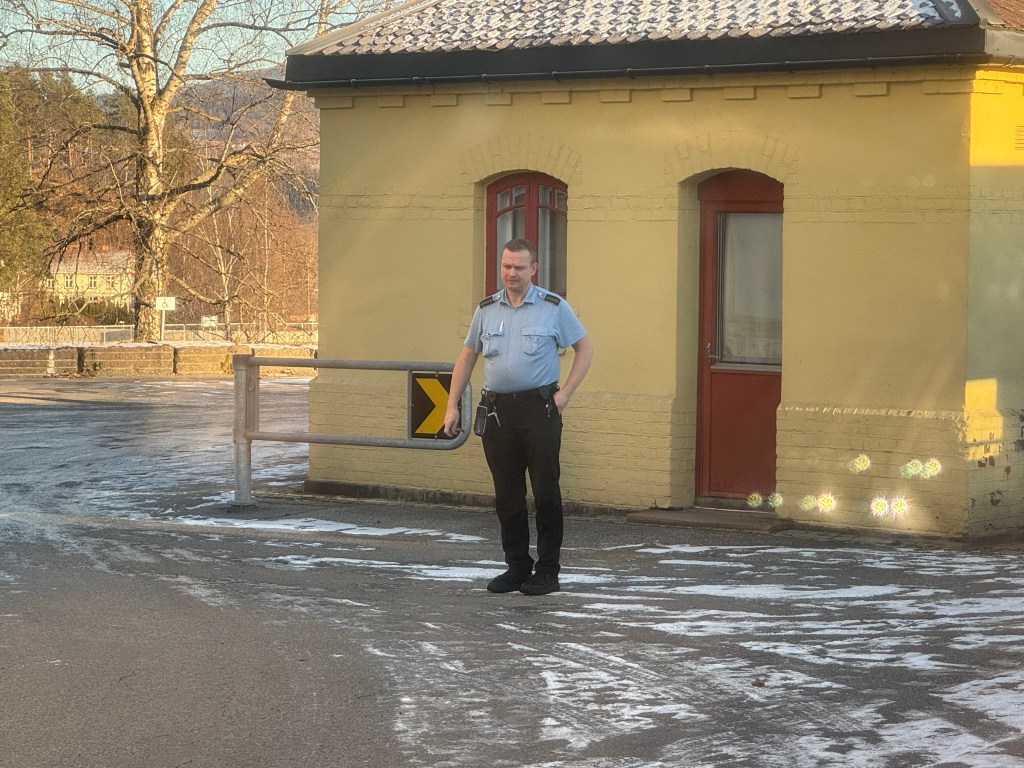
Our train conductor in short sleeves – it was minus 4 !
Vikersund ski jump

Finse

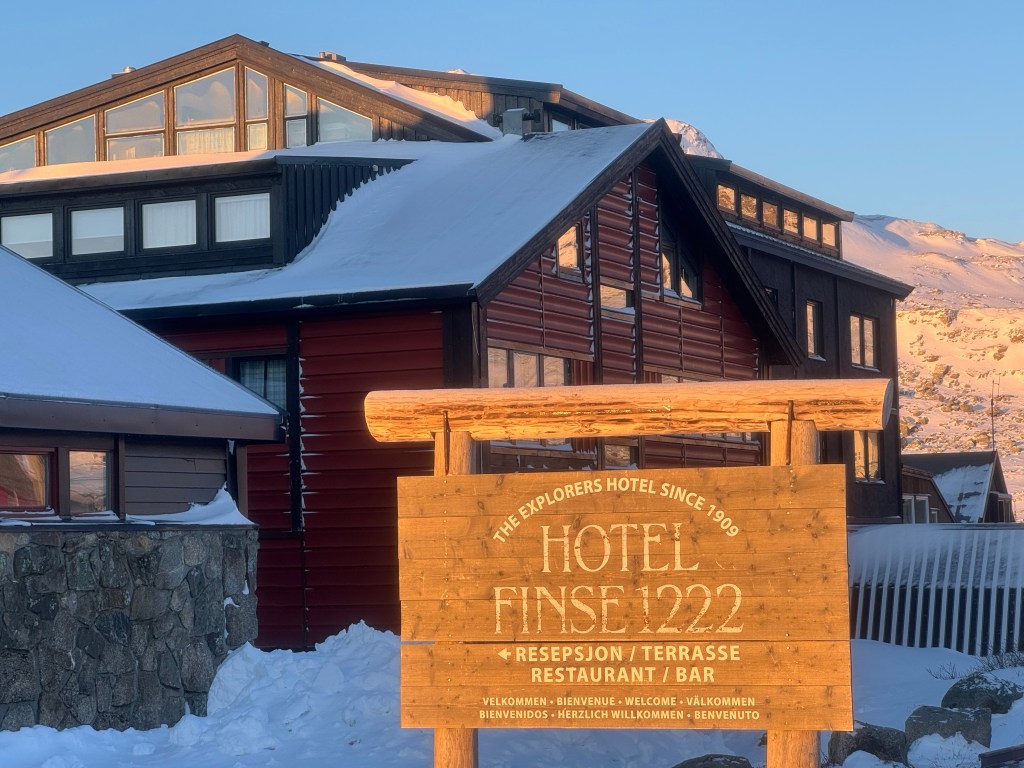
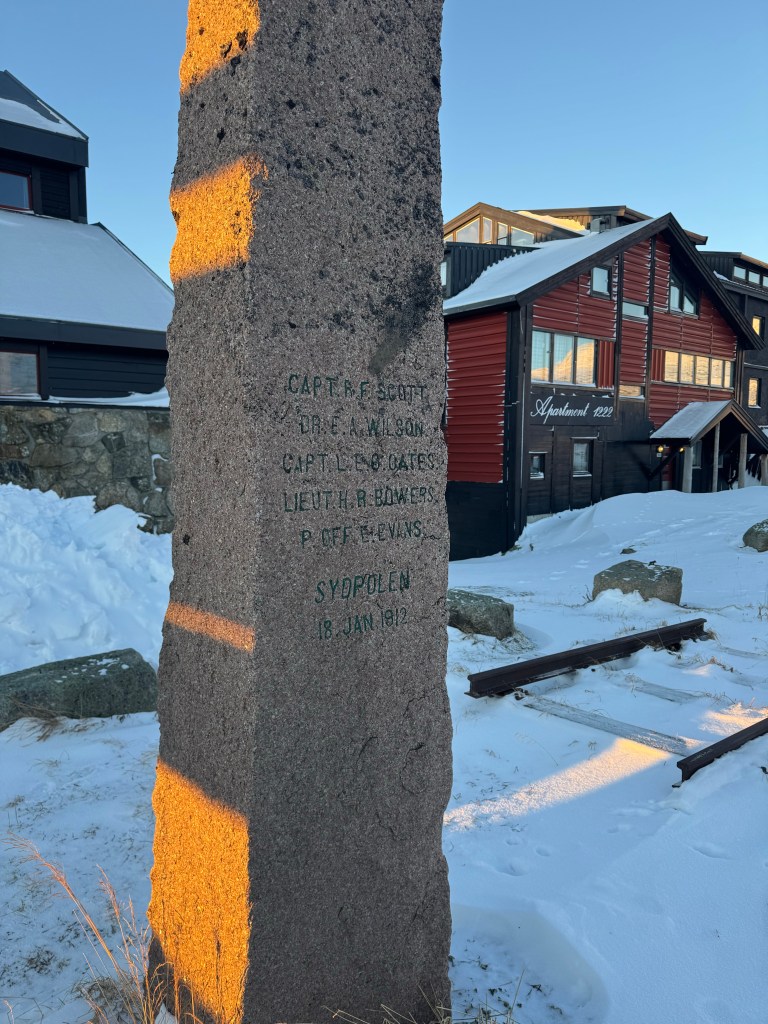
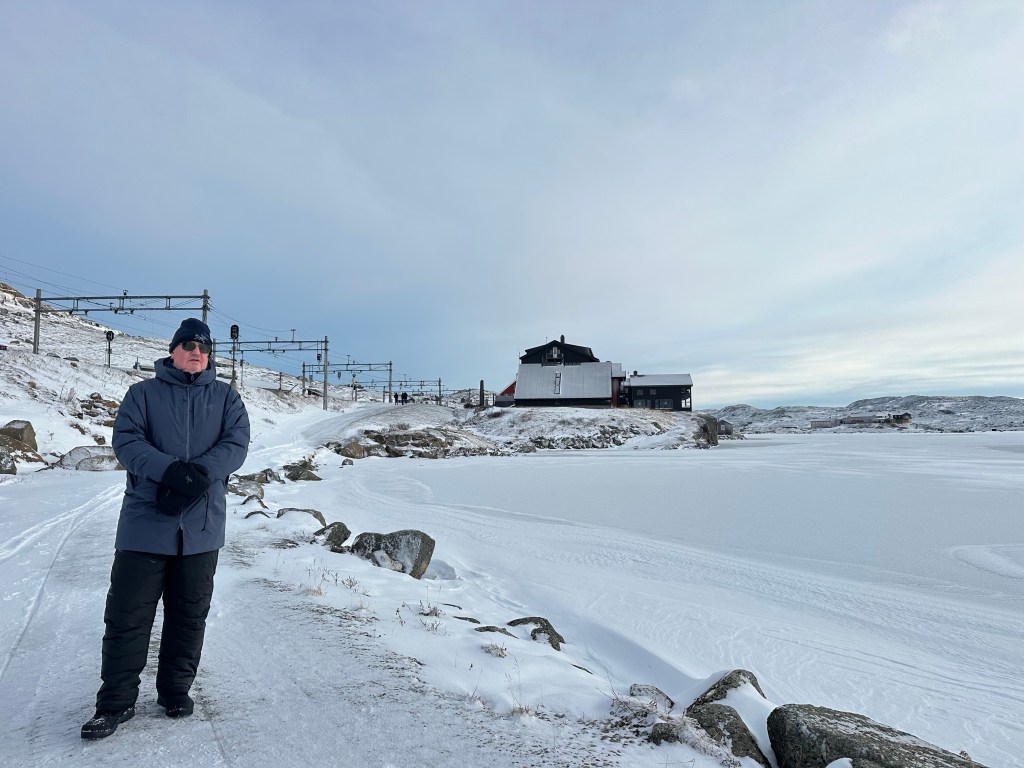
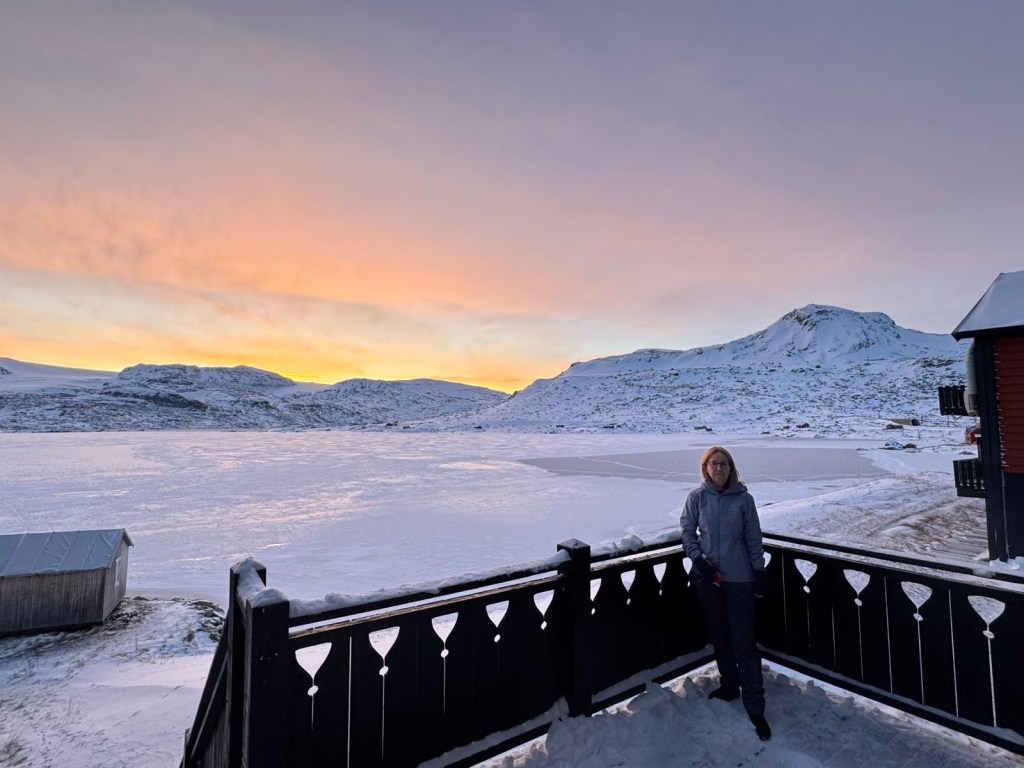
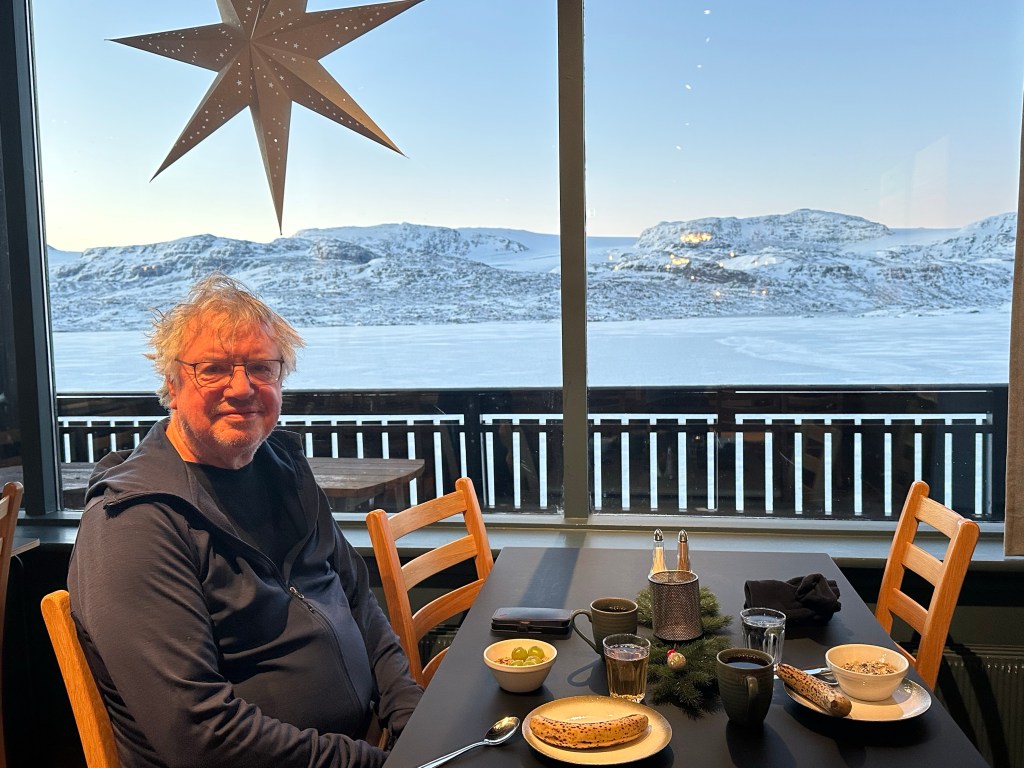
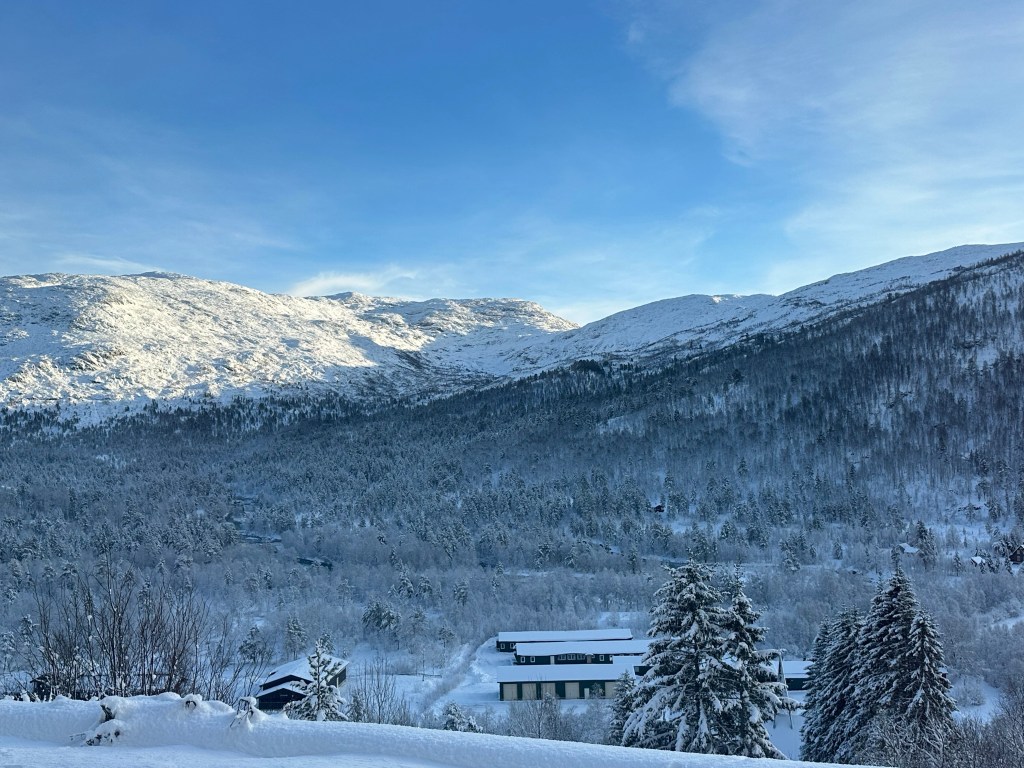
We had an overnight stay at the Hotel Finse, built to attract tourists wanting to visit the lake and go hiking in the summer or experience extreme cold in the winter. There is no road access. Finse was the training base for many early polar explorers. These included Nansen, Amundsen and Shackleton; but not Scott, although a memorial was built to him and his team. The village has seen its population reduce from a height of around 200 to only four today – half of whom we met in the hotel bar (collecting their post as well as enjoying a beer and a chat).

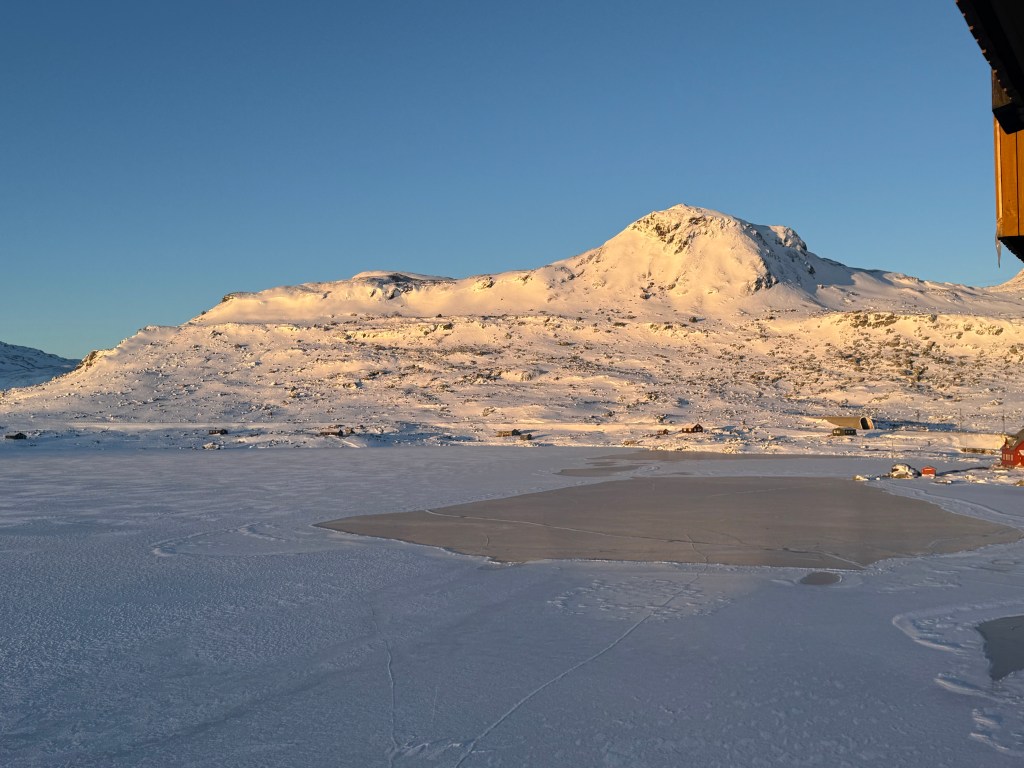
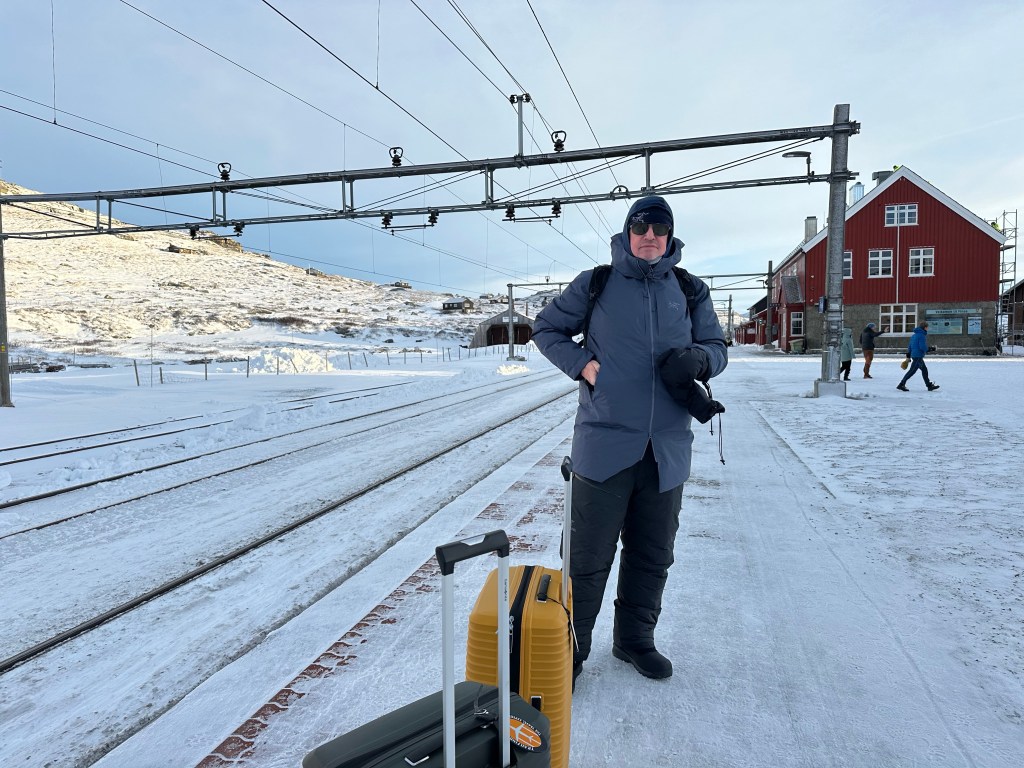
We were almost the only people to disembark the train at Finse with most people using the train for the journey to Oslo in one go. We were pleased that we stayed a night – although the temperature dropped to minus 17, it didn’t feel as cold as we expected – we were properly prepared and it was a dry cold. The Finse “Explorers Hotel” (built in 1909, next to the train station) was very comfortable and seeped in history. The scenery was stunning and we were fortunate to experience clear skies.

Polar explorers memorial

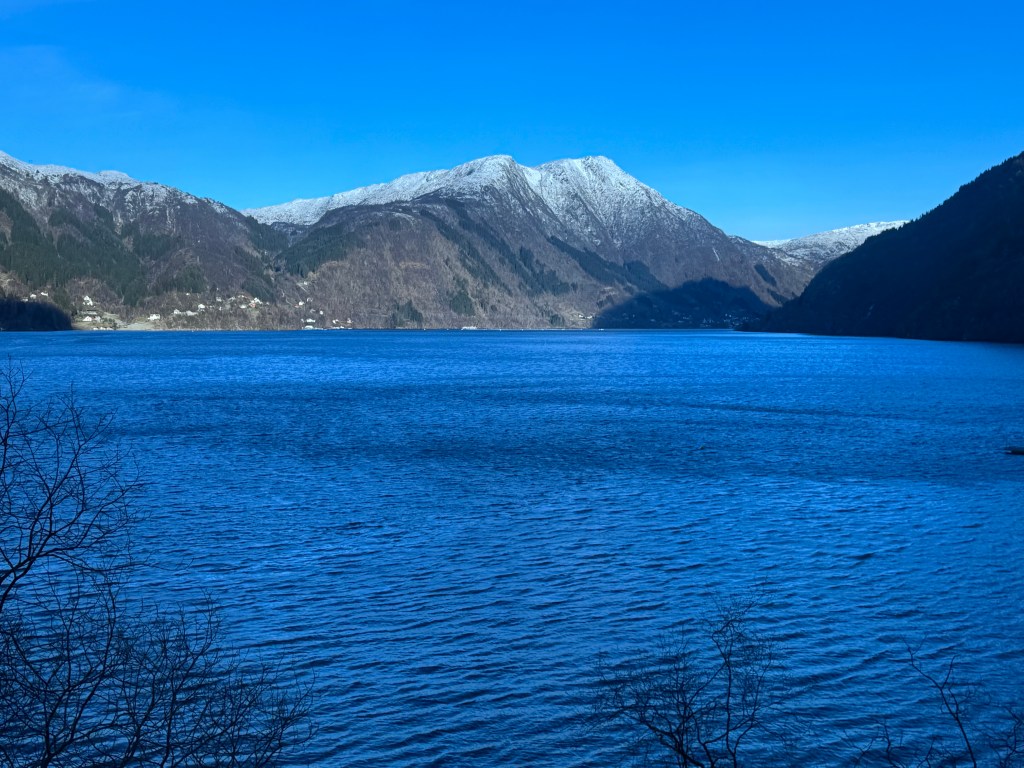
Bergen to Finse

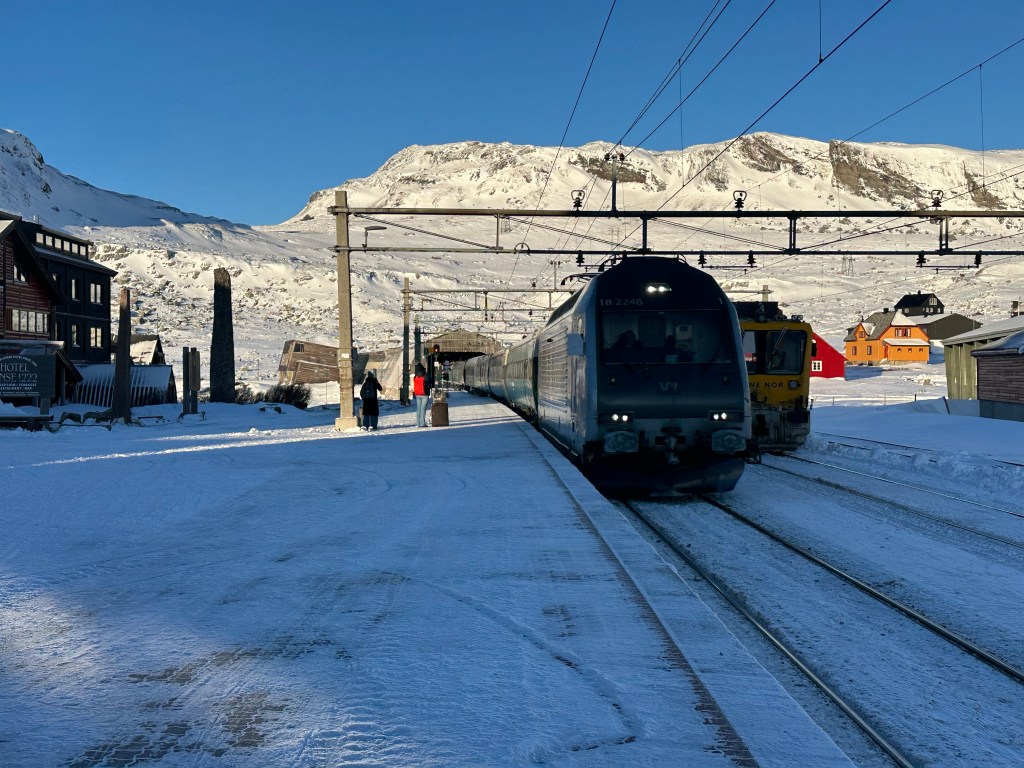
The first leg of our train journey to Oslo was the two and a half hour trip to Finse. Finse is the high point of this route (and the highest point in Norway’s rail network) at 1,222 m. The railway, completed in 1909, was a major infrastructure project to link Norway’s two largest cities. The journey is extremely scenic and the line stays open all year round. When we left Bergen it was 0 degrees and on arrival at Finse it was -7 degrees, but very dry with crunchy snow.

Ready to disembark ….or rob a bank !
Finse station

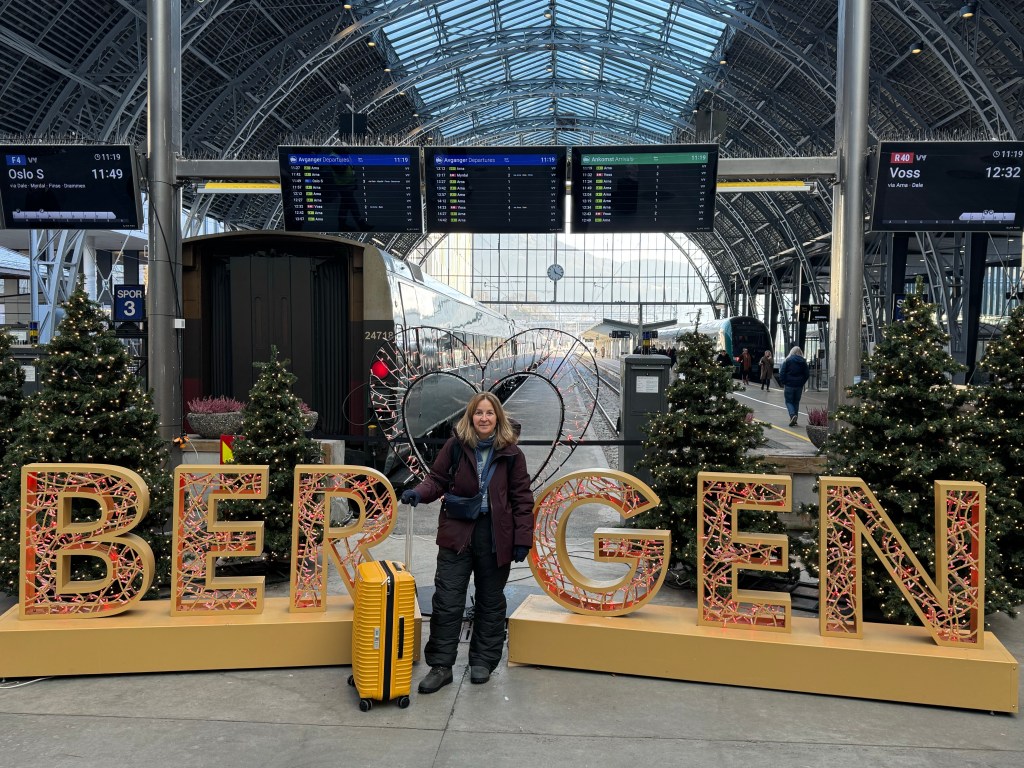
Bergen

Bergen is the second largest city in Norway with a population approaching 300,000. It was founded in 1070 by the son of Harald Hardrade, four years after the battle of Stamford Bridge, which immediately preceded the Battle of Hastings and resulted in the Vikings being thrown out of England. Bergen became an important trading centre and capital of Norway until the early 1300s. The Bergenhus Fortress dates from 1240. It’s main trade was dried fish which it exported as part of the Hanseatic League.

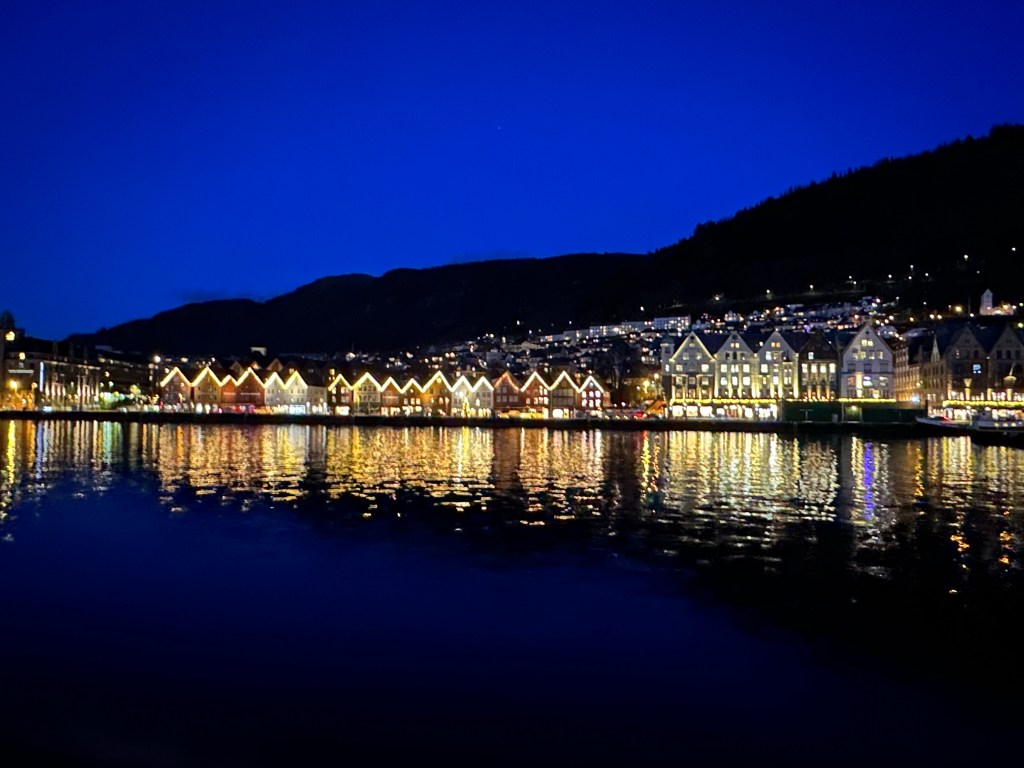
Bergen’s old quayside, Bryggen is a UNESCO World Herritage Site despite being rebuilt many times due to fires.

In World War II, Bergen was occupied by the Germans from 9 April 1940.

It is a thriving city inspite of reputedly being Europe’s wettest city with over 300 days of rain per year. We started our 11 night Norweigan trip in Bergen with, surprisingly, three dry (but cold) days.

Bryggen
Bryggen
The hall (after restoration) at the fortress
Saint Mary’s church – built from 1130-1180
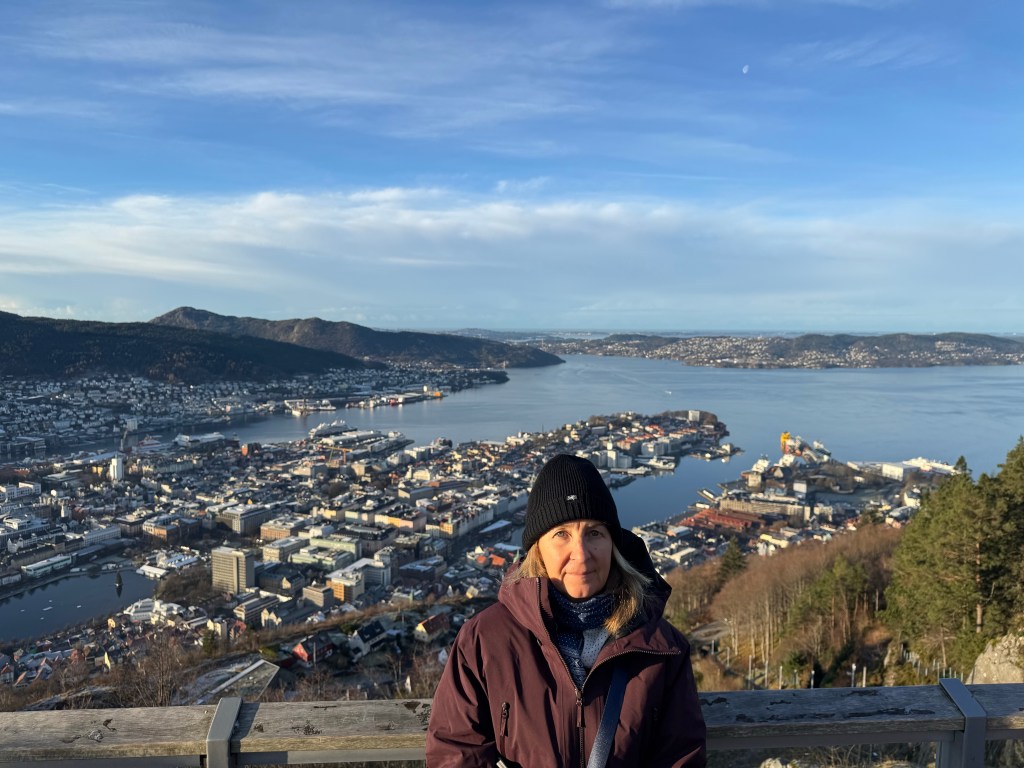
Bergen city from Floyen, 400m above sea level. It is one of Bergen’s “Seven Mountain” reached by funicular
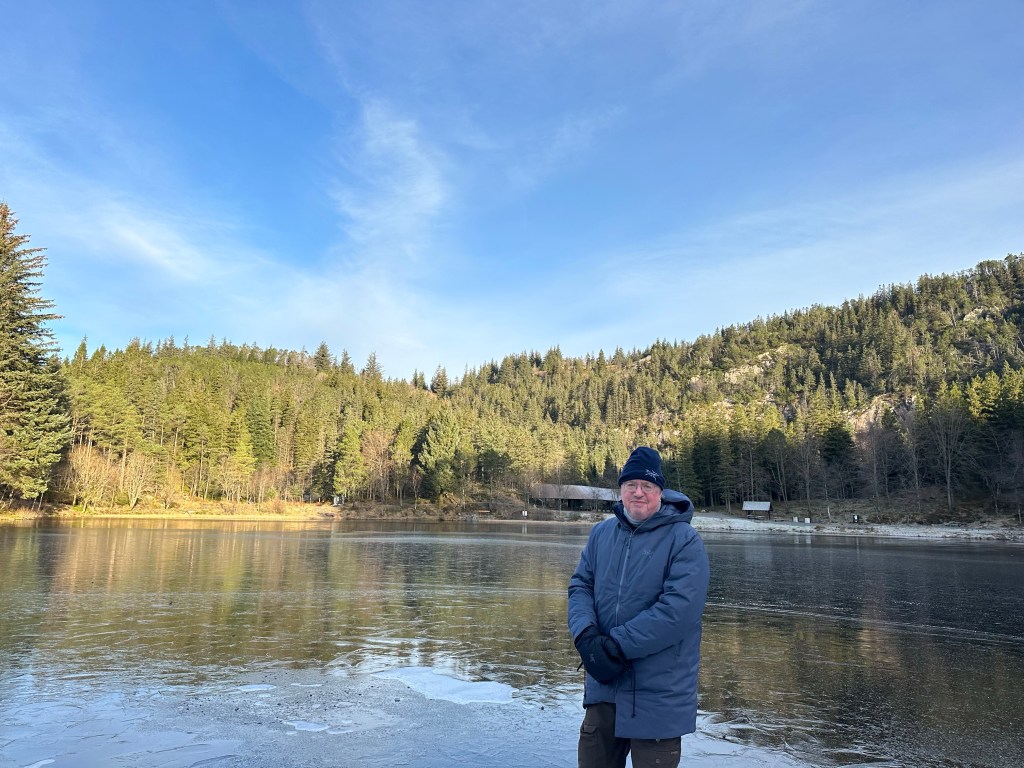
Floyen has numerous walking trails
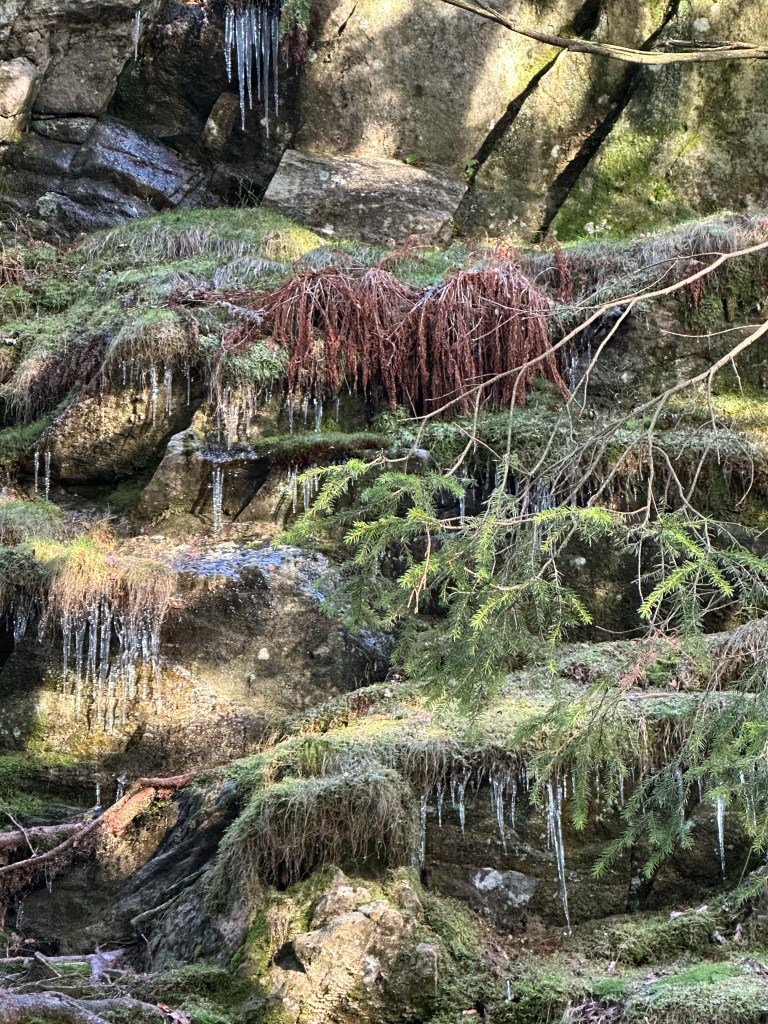
Icicles!
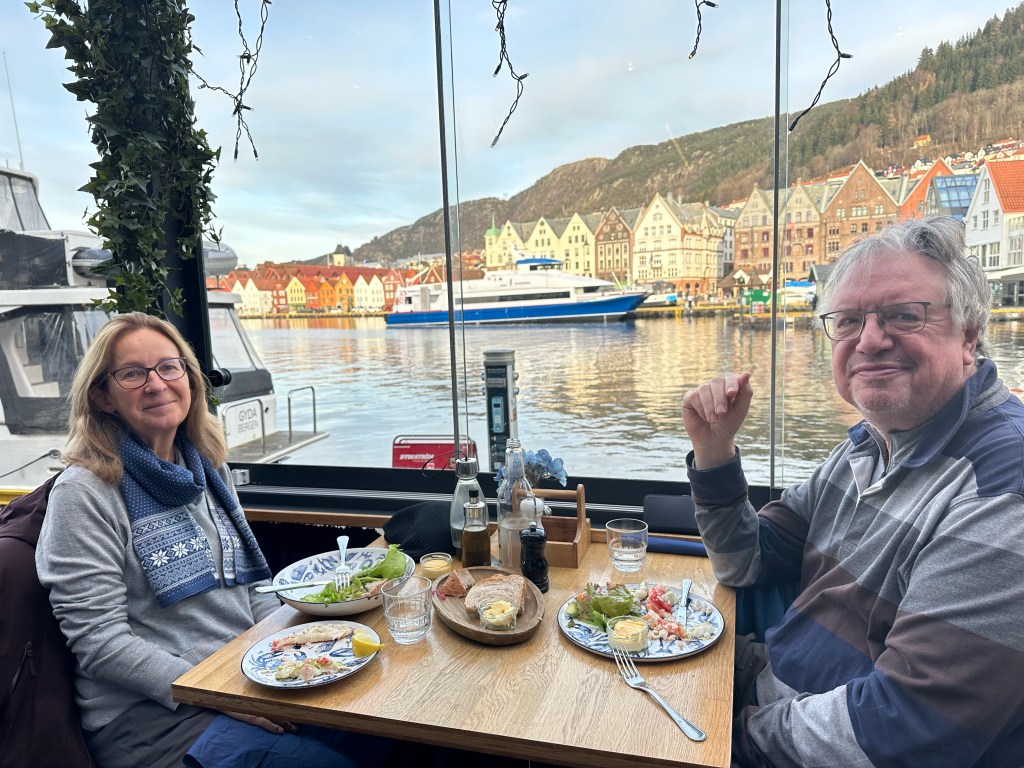
Seafood lunch at the Fishmarket – lobster, langoustine and crab

Paris Olympics

The 2024 Olympics in Paris was the third time the city has hosted the Olympics, the previous time being in 1924. The 1924 Olympics formed the basis for the film Chariots of Fire, with the main stadium being the Stade du Colombe which, although heavily modified, was used for hockey 100 years later. Paris used either existing stadiums or modified locations for events; some not in Paris, with the furtheset away being Tahiti for surfing. This approach enabled the city to show many of its amazing assets and consequently was a great showcase for the city as a whole. Despite scepticism over the ability of the city to deliver, including transport and the water quality of the Seine, those Parisians remaining in the city were joyful and welcoming and the city looked at its best.

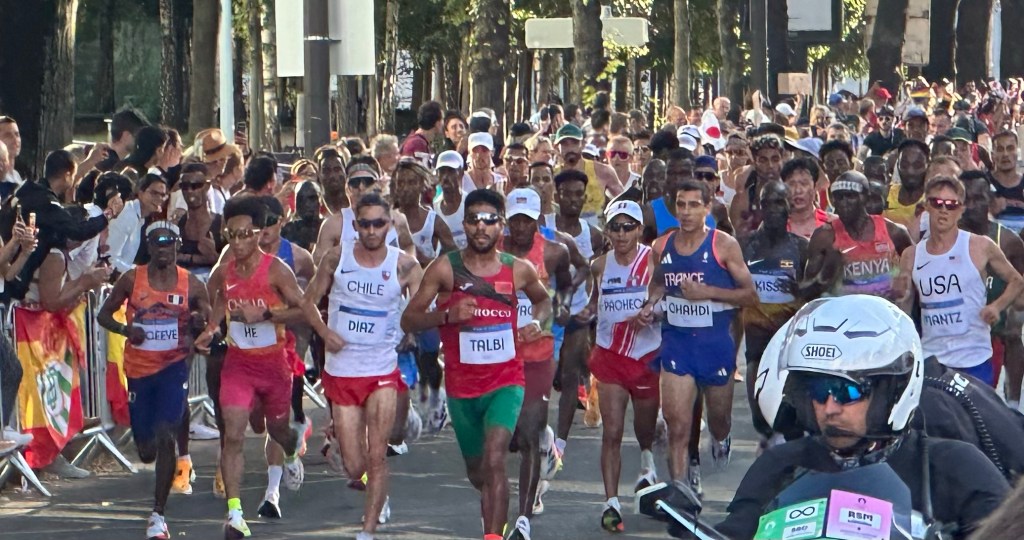
We attended athletics, hockey, waterpolo and the men’s marathon; each event was staged with flair and creativity. The begining of each event was marked with a celebrity making three knocks to the ground with a ceremonial stick (a brigidier), based upon a French theatrical tradition, to gain the attention of the audience.

One of the highlights, which summed up the atmosphere and feeling was 70,000 people in the Stade de France standing and applauding to support Megan Keith of the UK finishing the 10,000m having been lapped by the rest of the field but persevering to finish before collapsing in the arms of teammates.

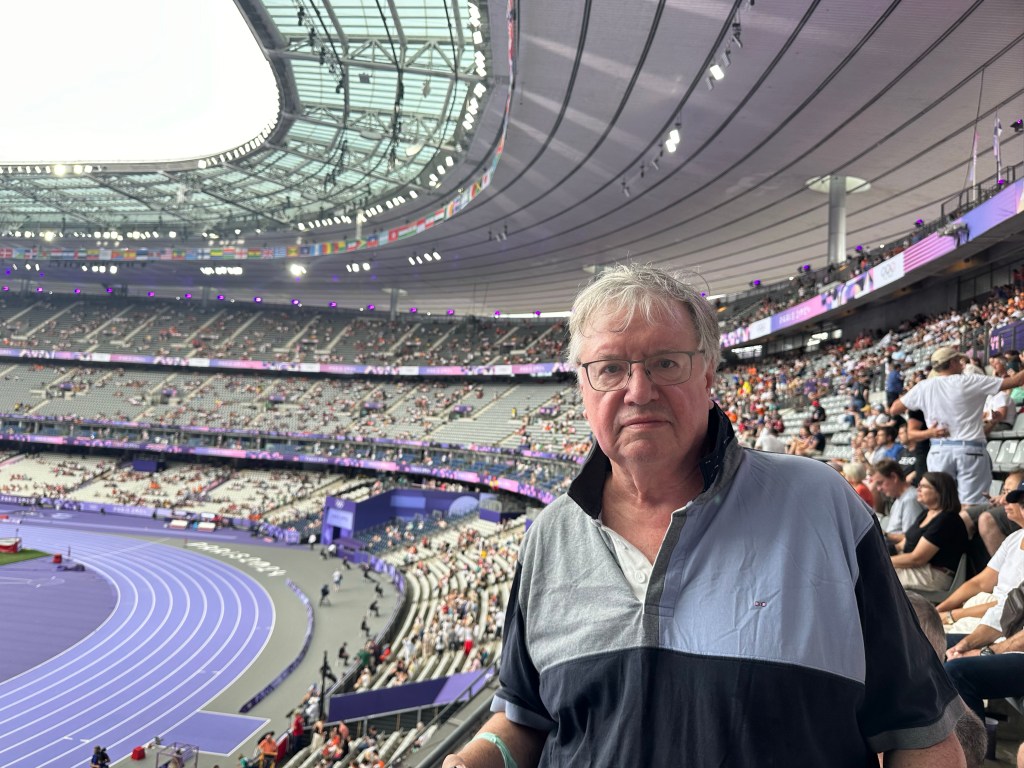
Stade de France
4×100 relay silver medal celebrations
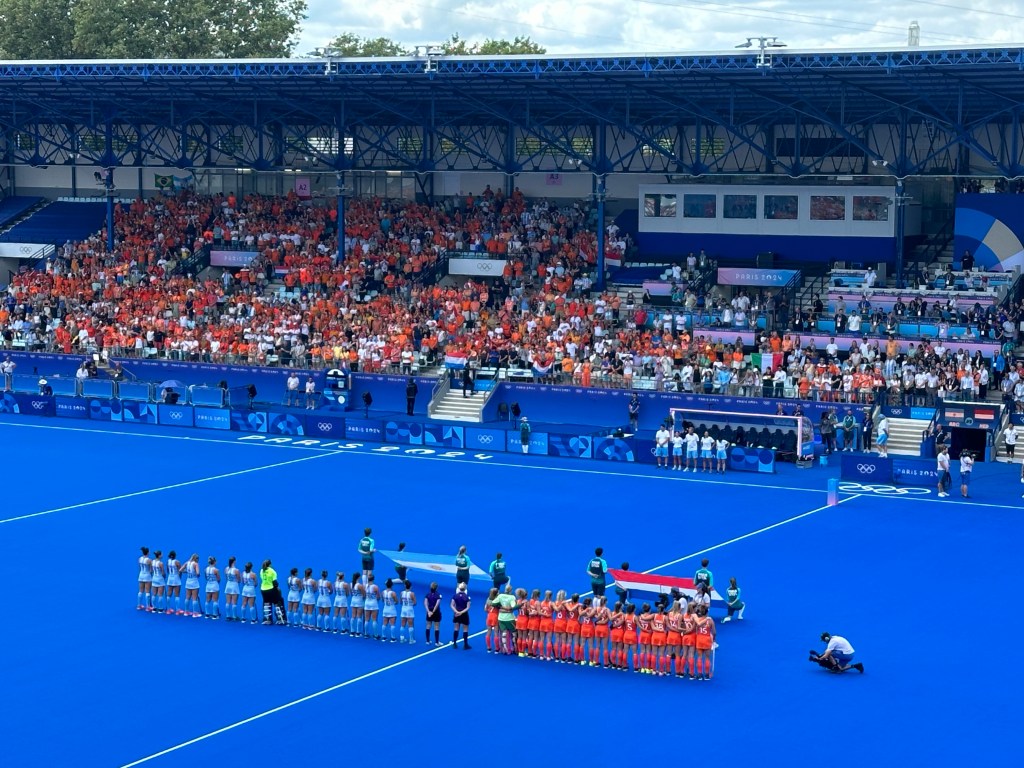
Stade de Colombe – women’s hockey semi/final. Argentina v Netherlands; supporters of the latter creating a sea of orange
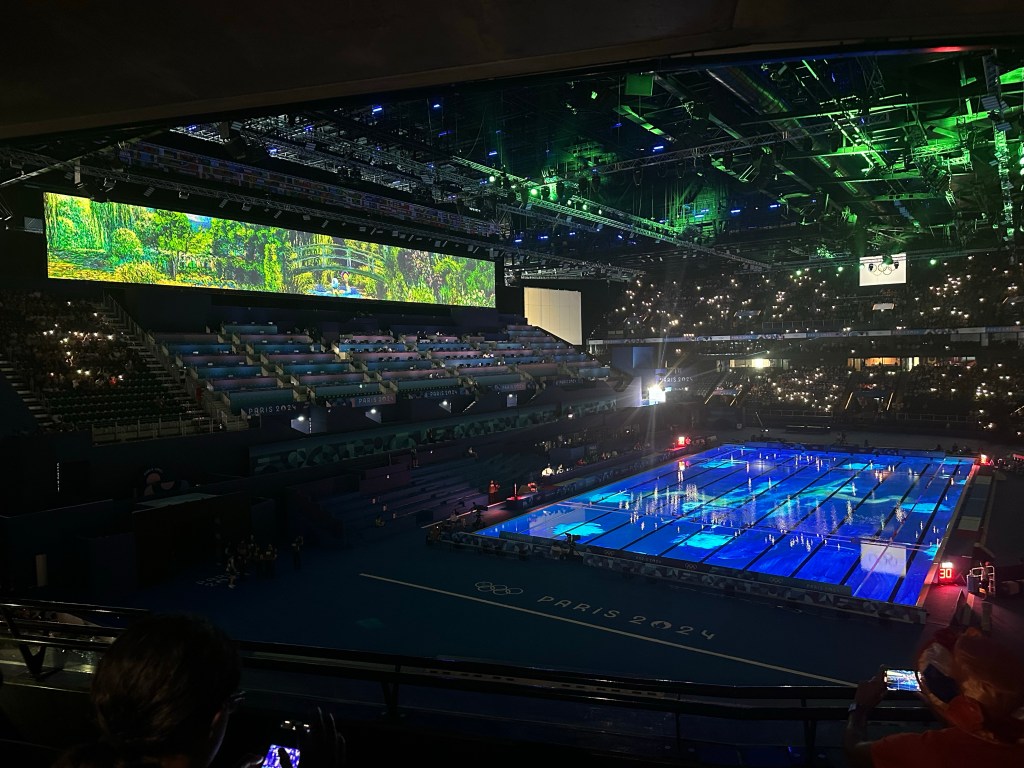
La Défense- waterpolo; light show before the match
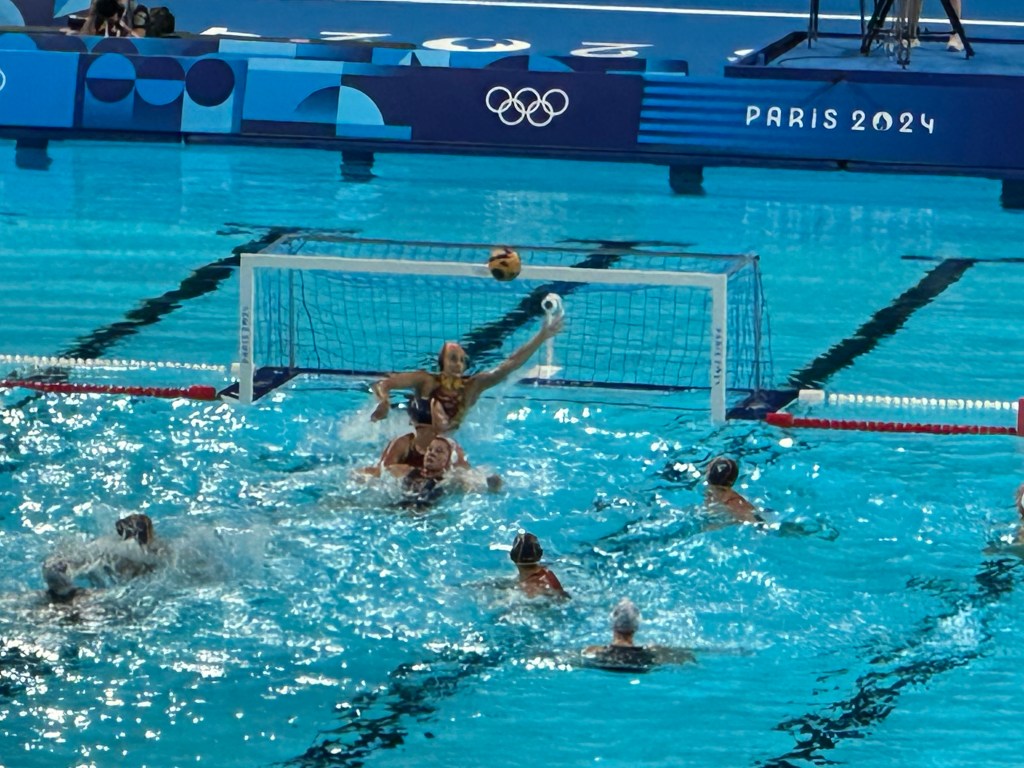
Waterpolo women’s semi final – Spain v Netherlands, Spain won on penalties
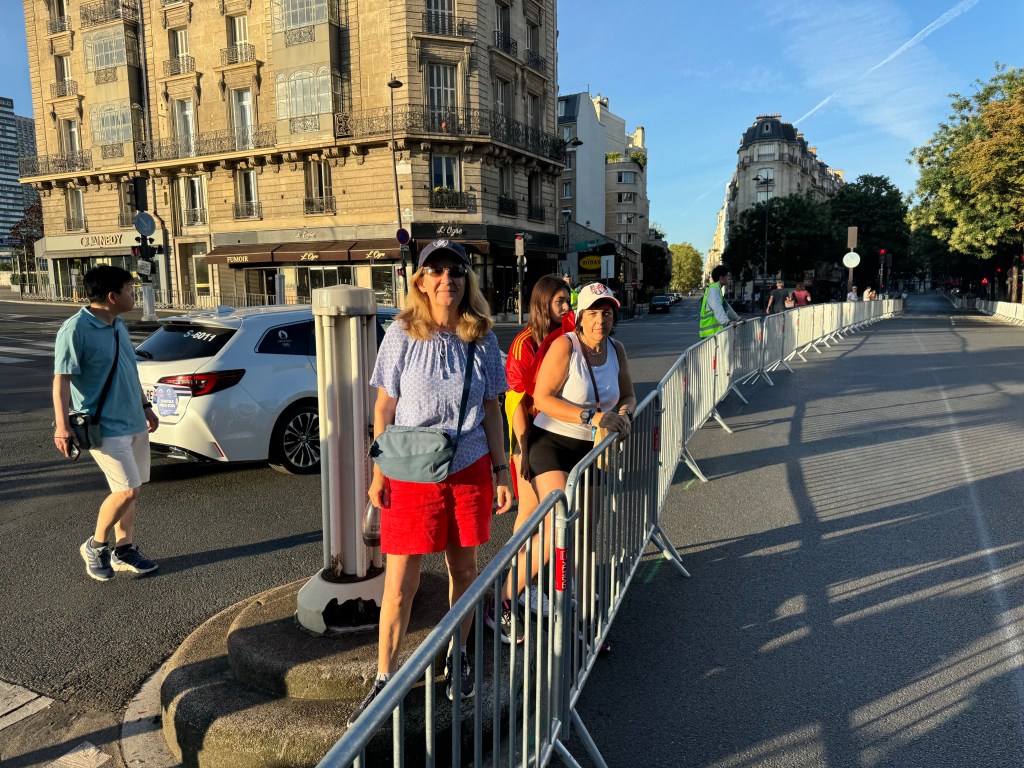
On the route of the marathon
Men’s marathon
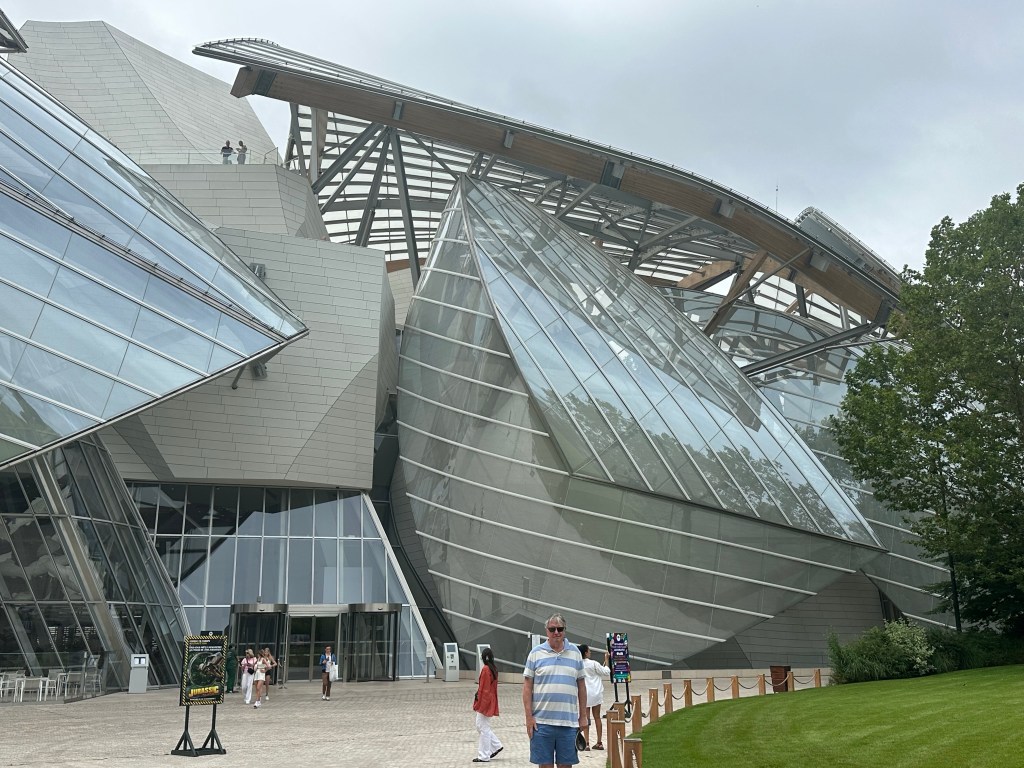
Our schedule allowed time for a visit to the Louis Vuitton Foundation modern art museum
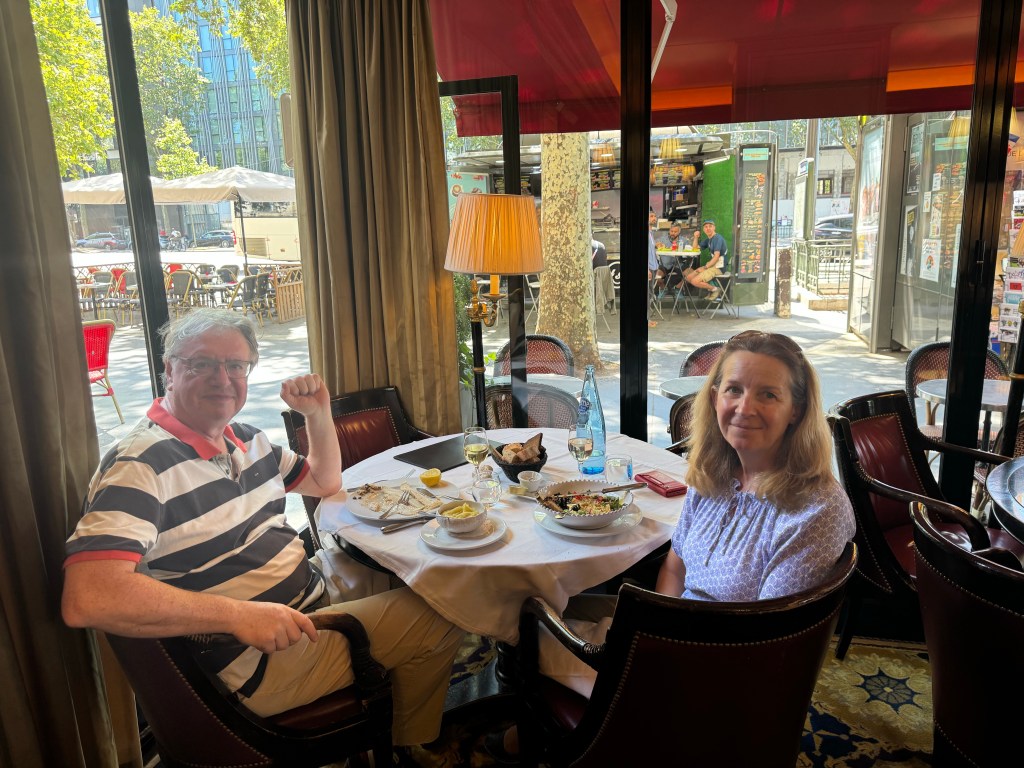
Lunch on our final day
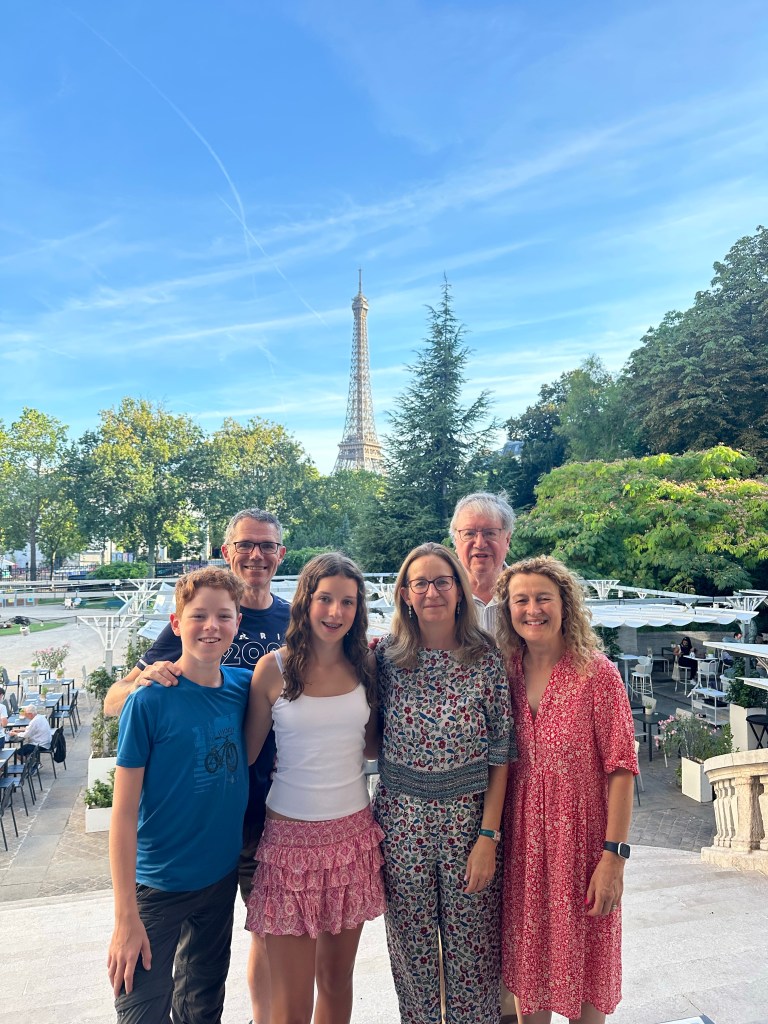
Our visit overlapped by a couple of days with Mary, Adam, Alice and Rory enabling a couple of dinners sharing Olympic experiences
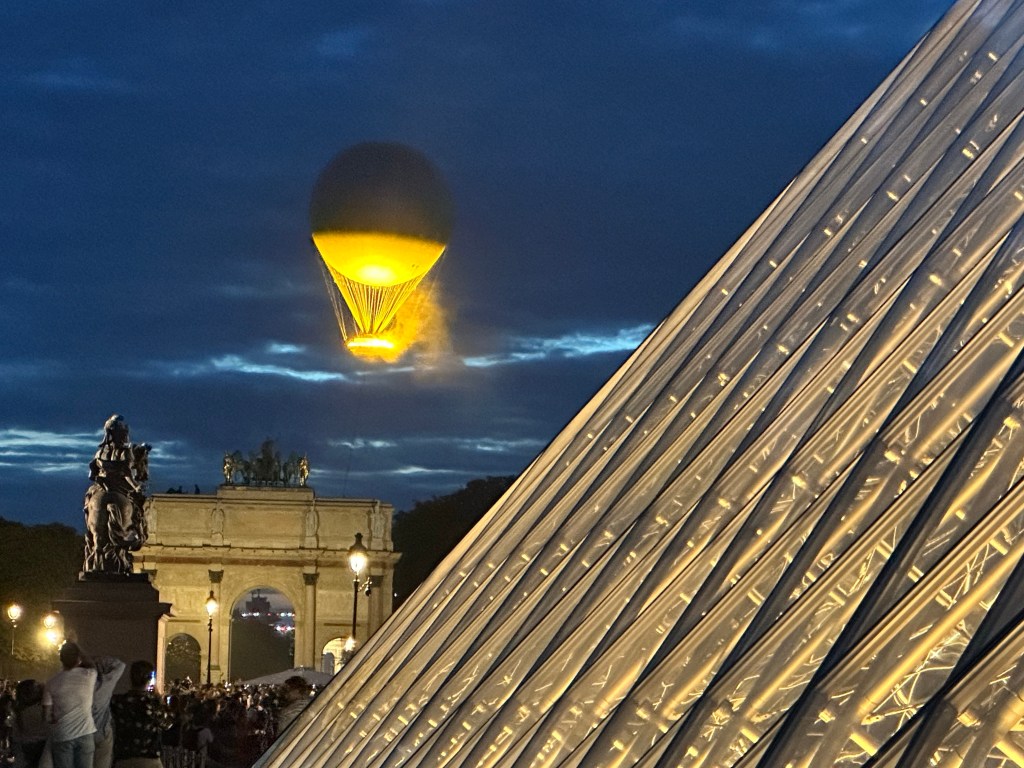
The Olympic flames which flew above the Tuileries Gardens each evening
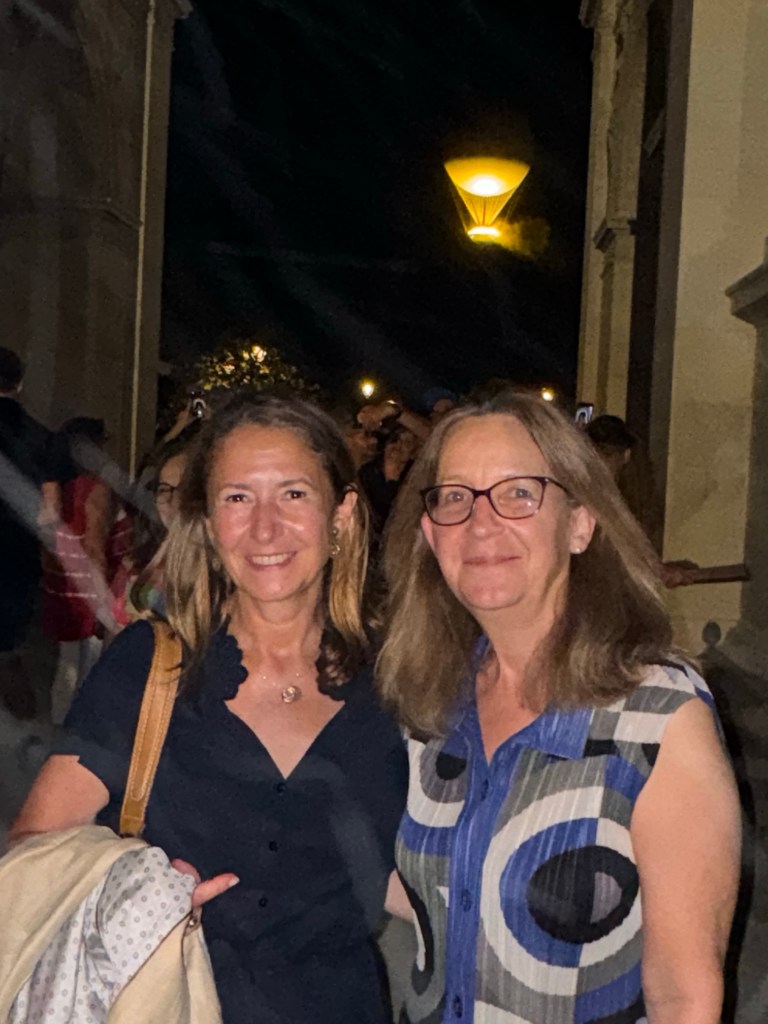
With Emmanuelle’s after dinner at The Louvre; she and Thomas were very kind hosts

Nottingham

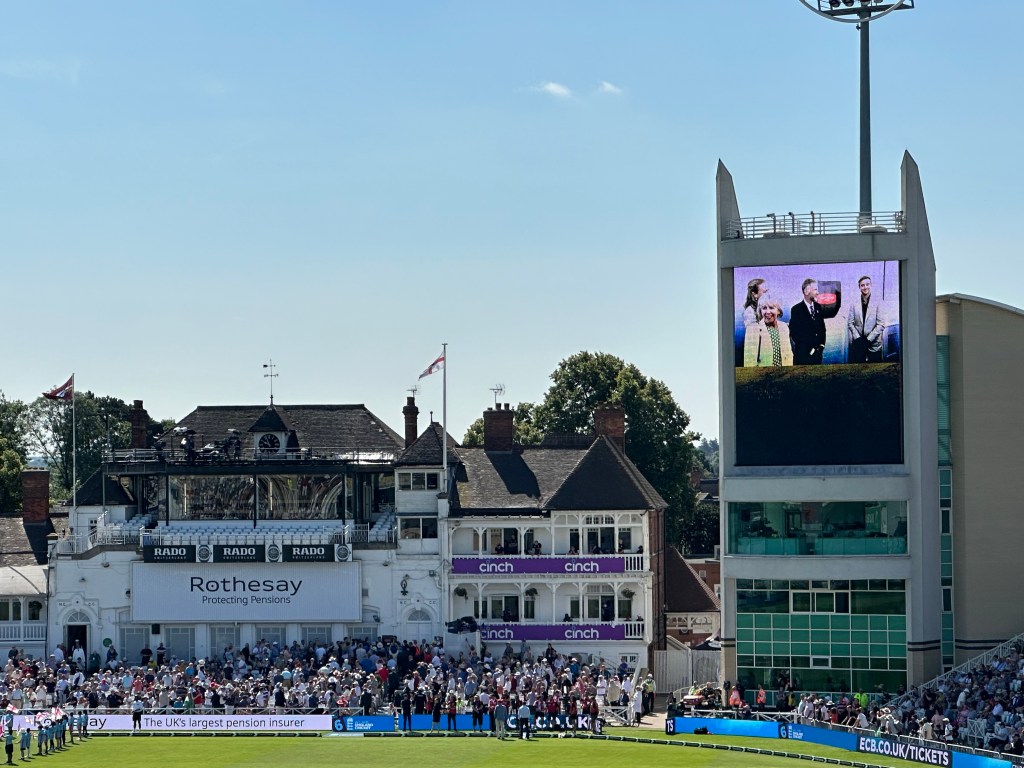
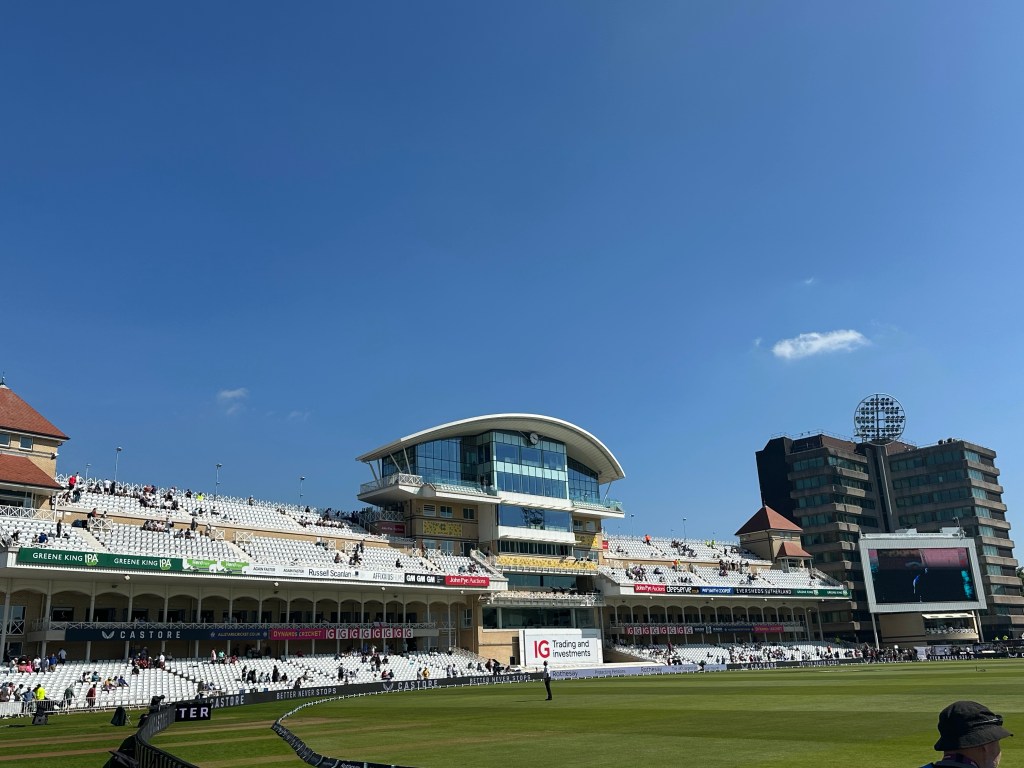
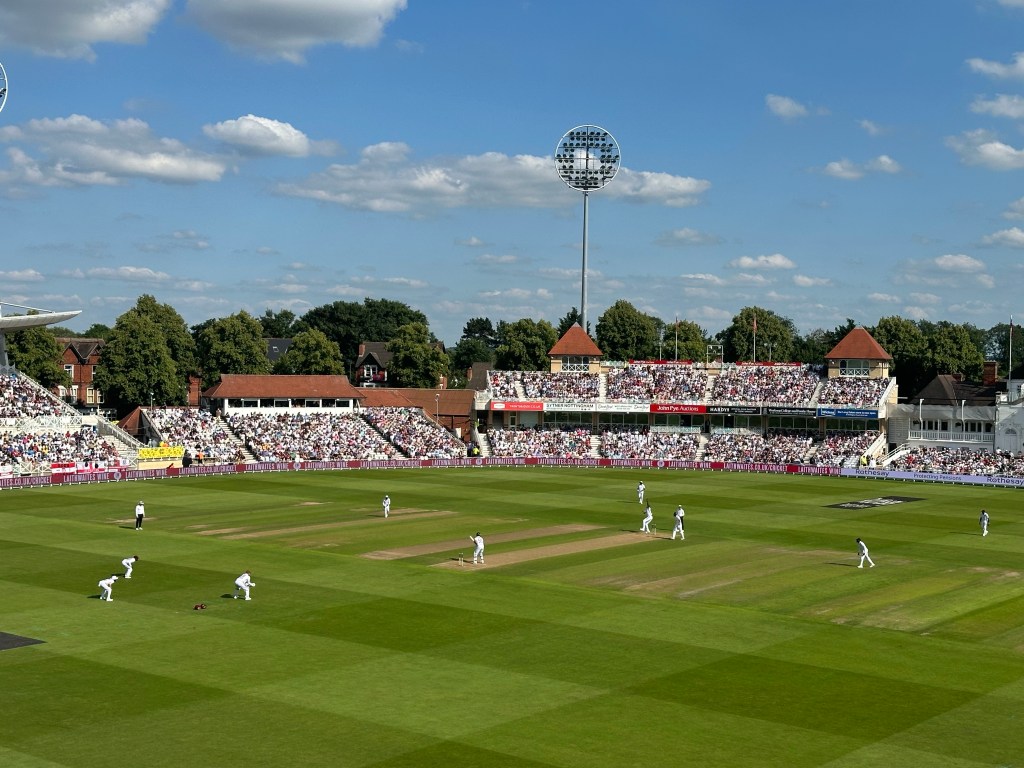
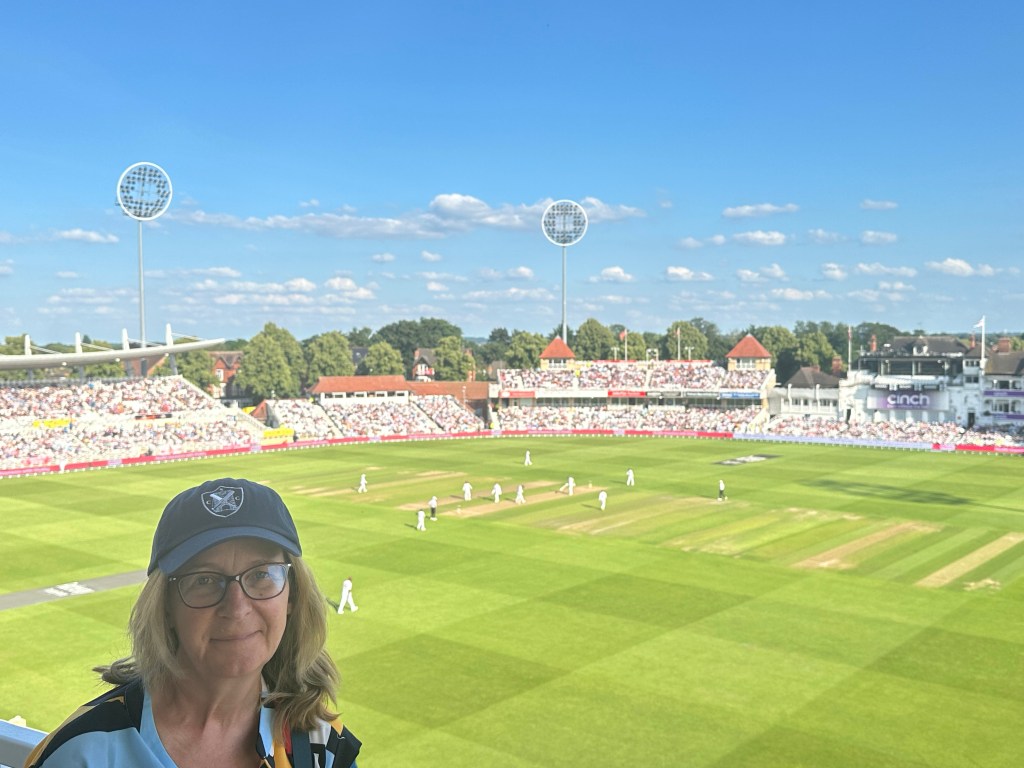
Nottingham is another city we know well and having seen the last appearance of James Anderson at Lord’s we were pleased to be at Trent Bridge for the unveiling of the “Stuart Broad End”. We saw the first two days of the second test against the West Indies, a much tighter contest than the Lord’s test.

Stuart Broad End unveiling
Trent Bridge is the only English Test Ground to boast a pub within the grounds

Bristol

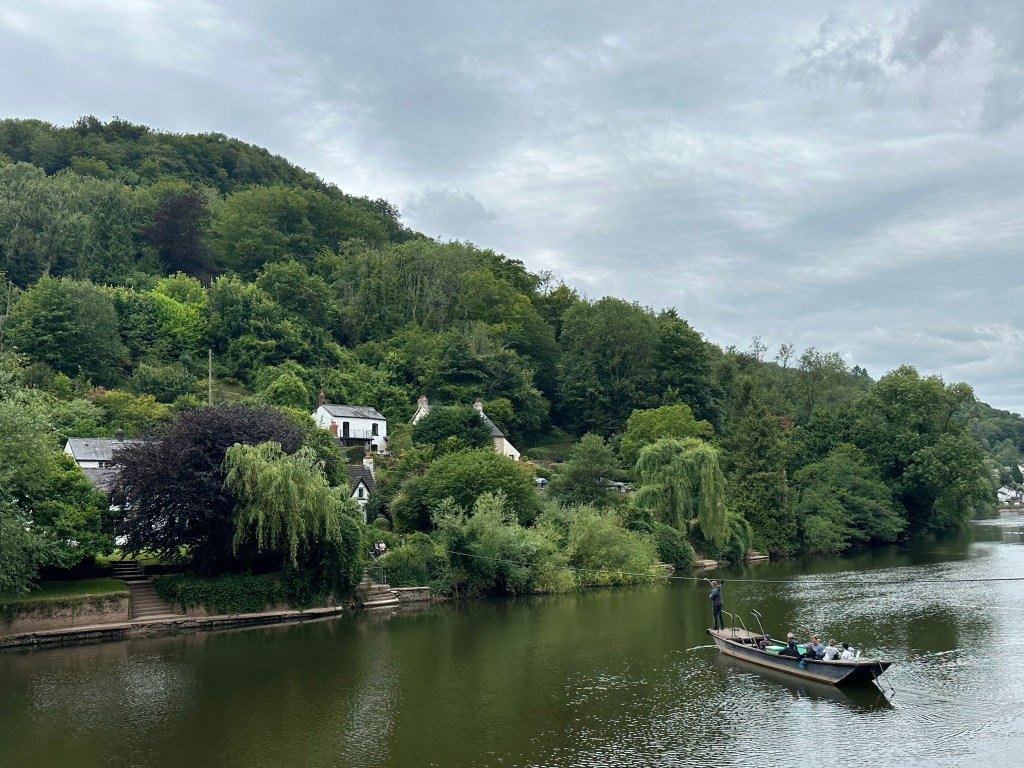
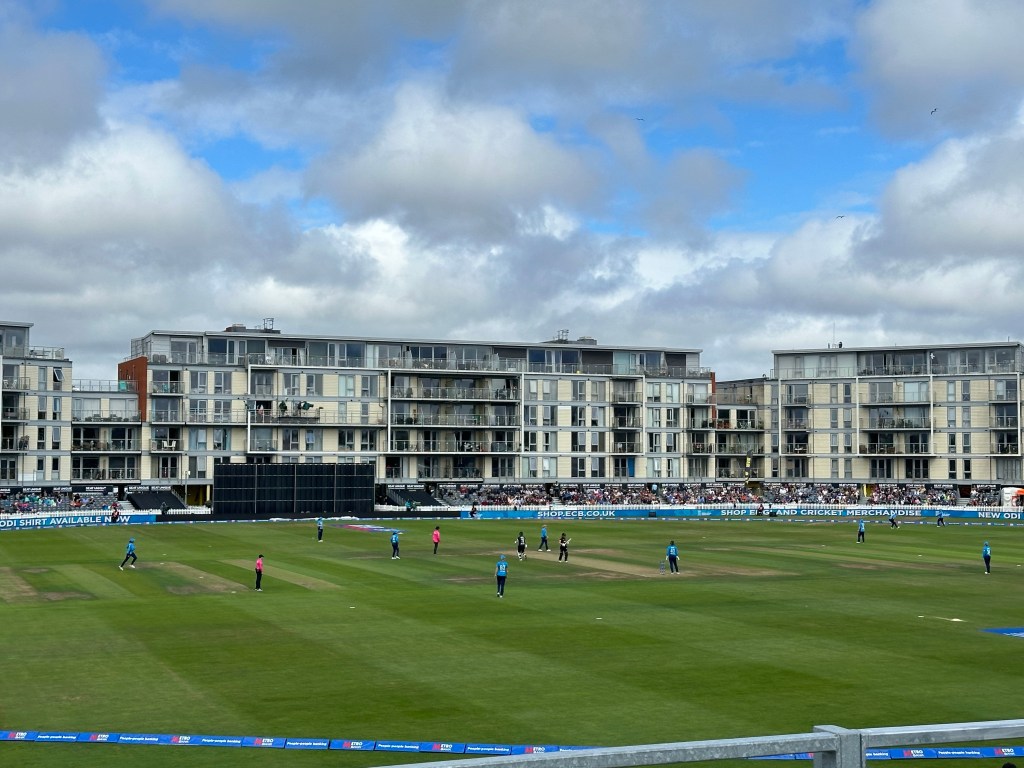
Driving from Ludlow to Bristol meant briefly crossing into Wales, which we managed to escape unscathed. Bristol was the venue for the third women’s One Day International between England and New Zealand. We saw the second ODI in Worcester and England completed a 3-0 win in Bristol inspite of rain interuptions.

Symonds Yat close to the Welsh boarder

Ludlow

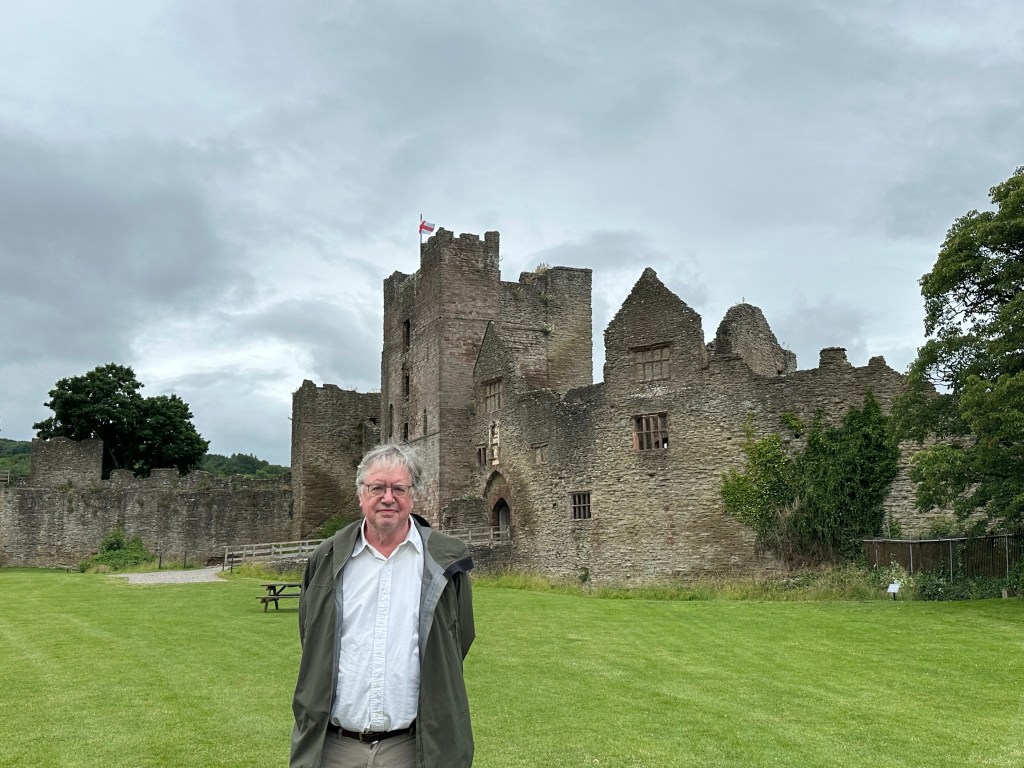
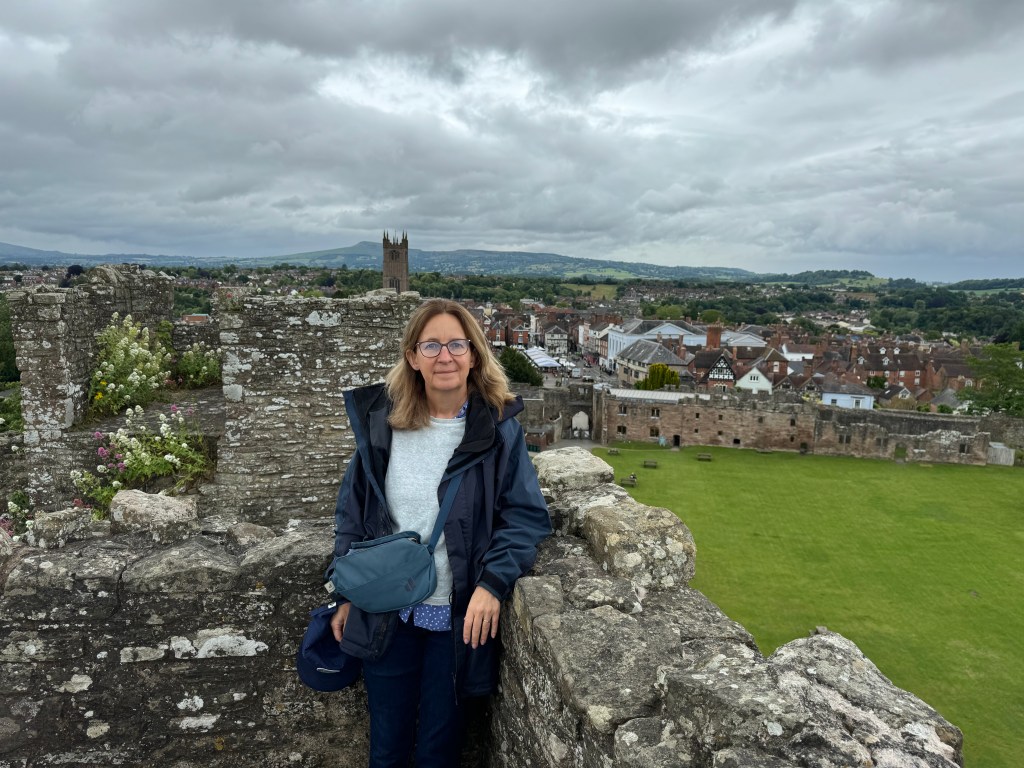
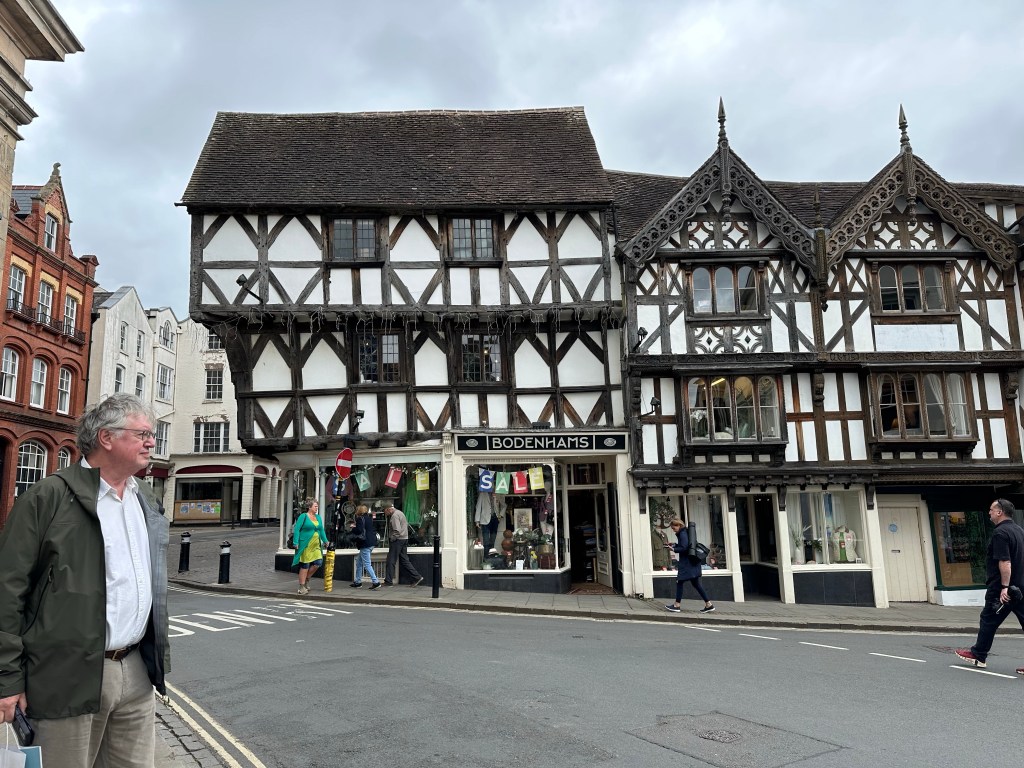
Ludlow is a market town in Shropshire. Up until Covid it was known as a bit of a “foodie” magnet but now attracts visitors because of its listed buildings and castle as many of the top rated local restaurants did not reopen after the pandemic. Sir John Betjeman described it as probably the lovelist town in England. Following the family links, it was also the birthplace of Tim’s grandmother.

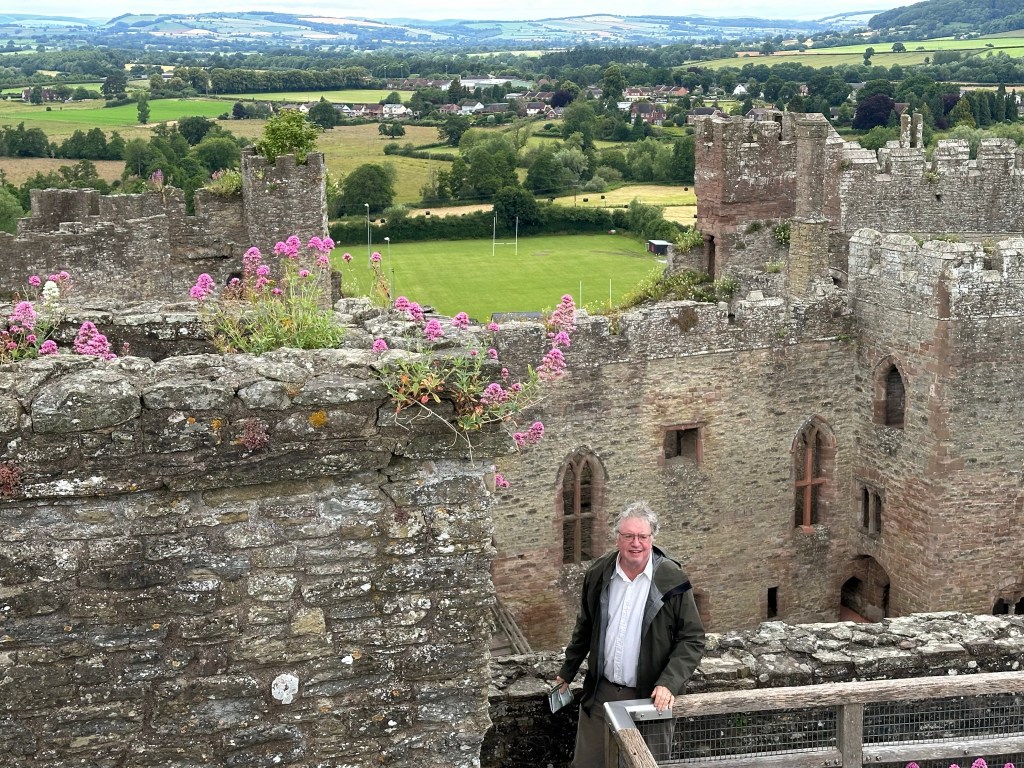
The castle sits close to the confluence of two rivers, the Corve and the Teme and was built as part of the defences of the Welsh Marches, playing significant roles in the Owain Glendower rebellion, the War of the Roses and the Civil War. It was also the site of one of the most controversial honeymoons in English history, that of Prince Arthur and Catherine of Aragon. The “did they/didn’t they” led to the divorce of Catherine from Henry VIII and ultimately the separation of The Church of England from Rome.