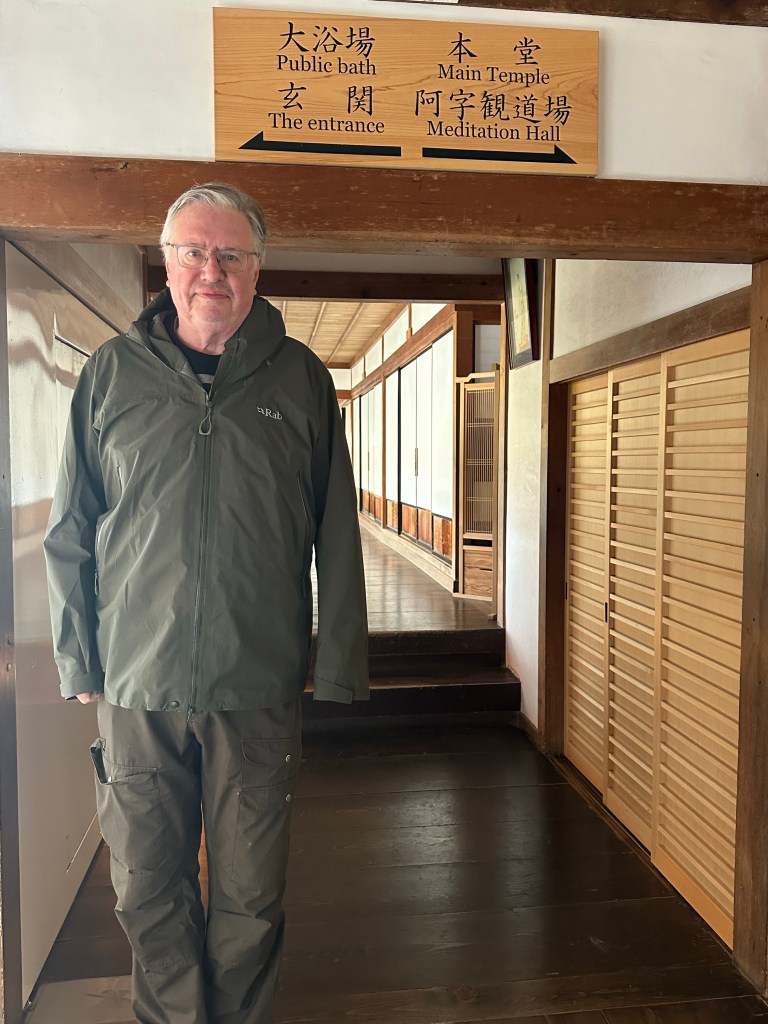
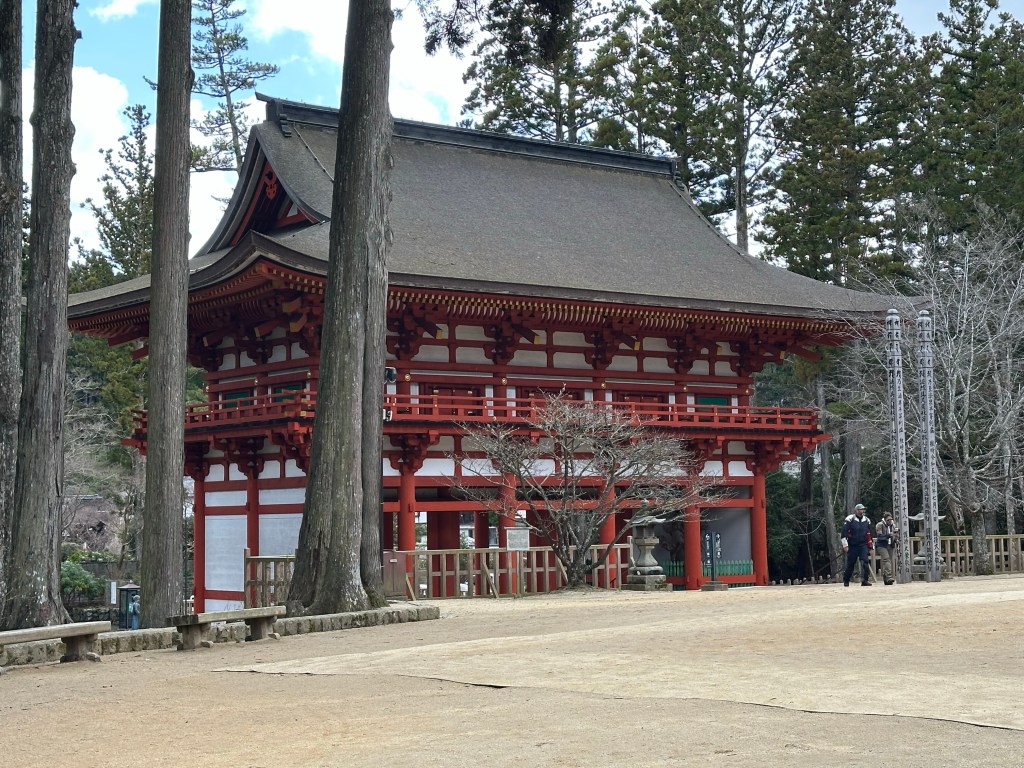
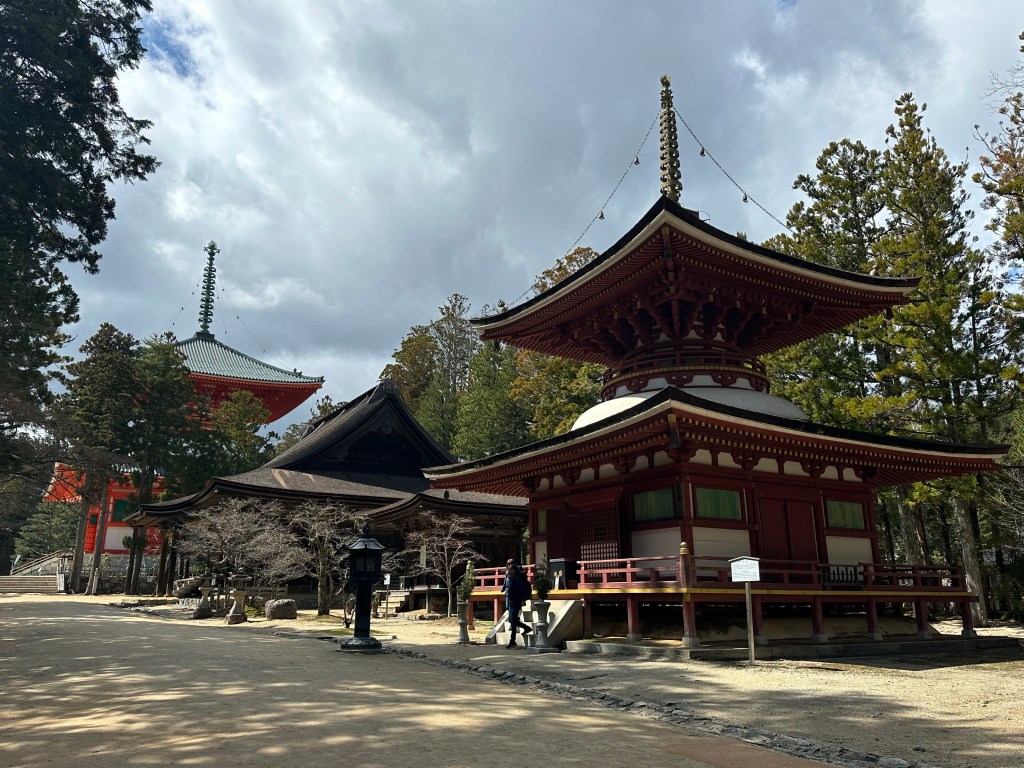
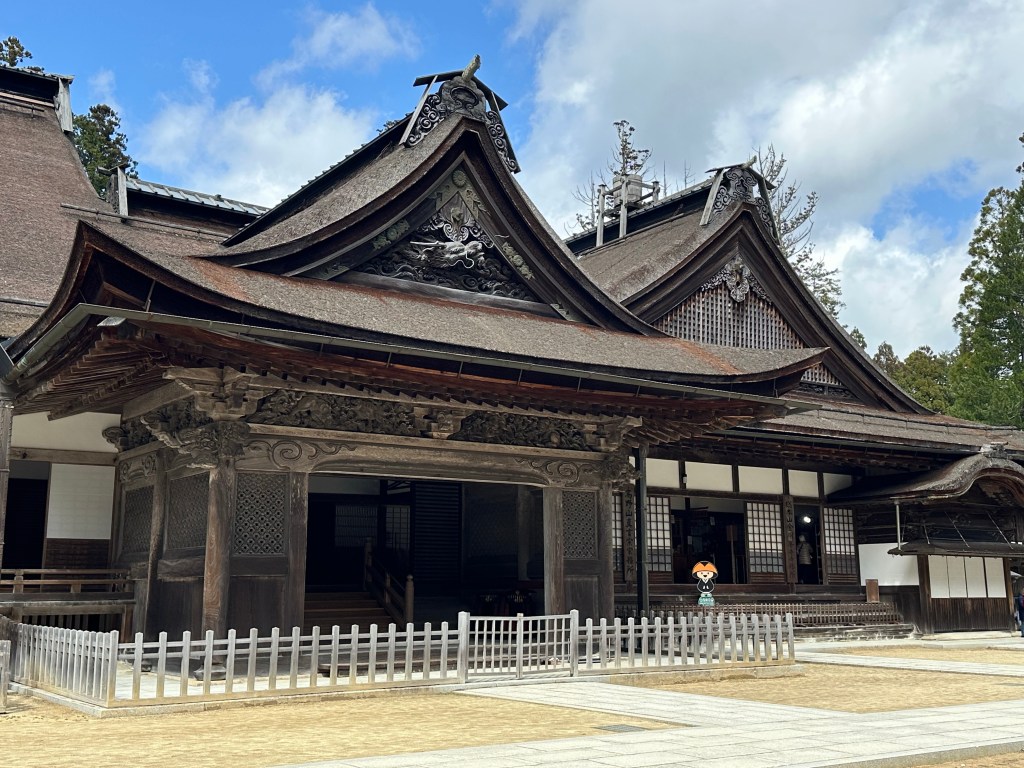
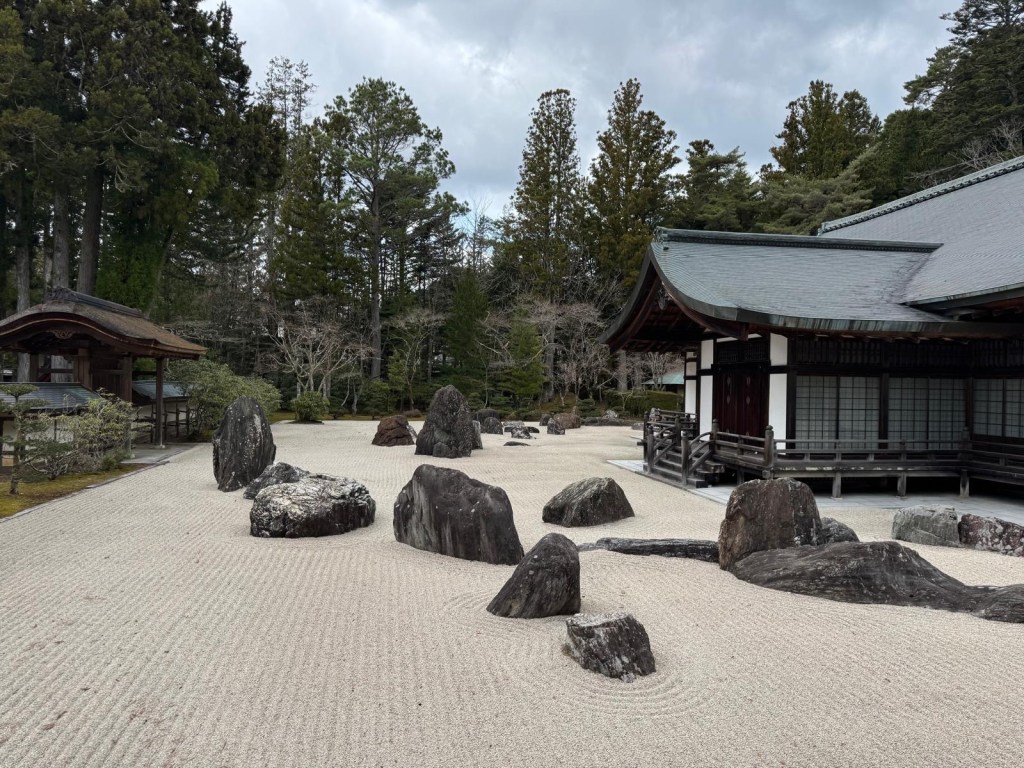
Eko-In Temple

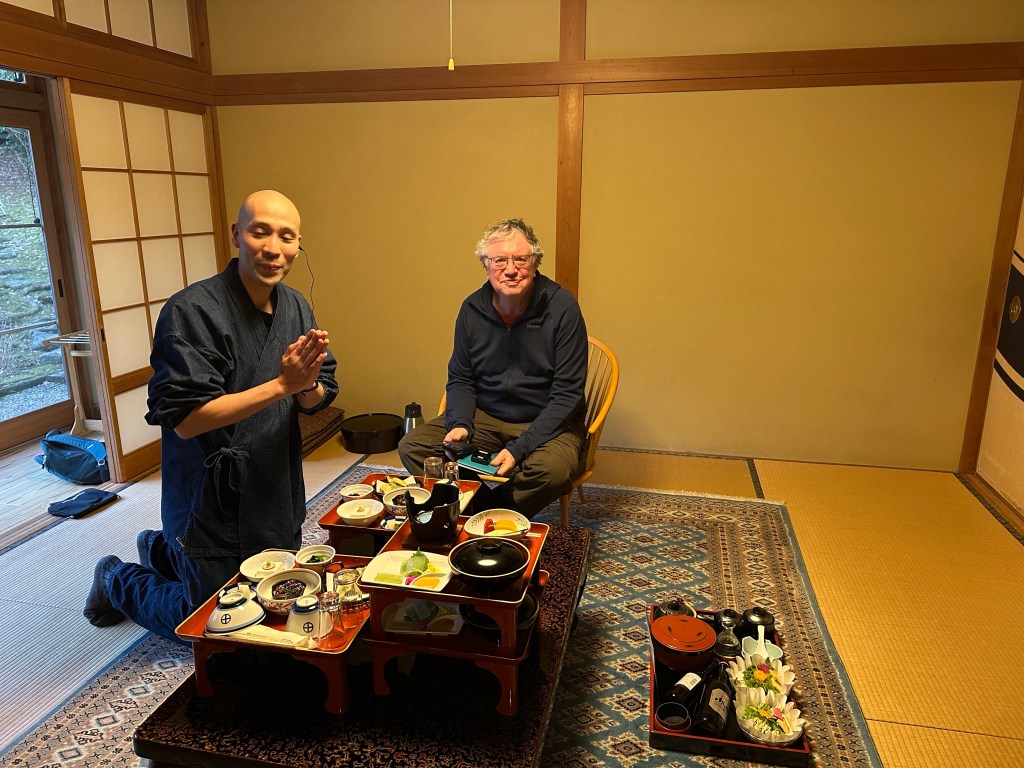
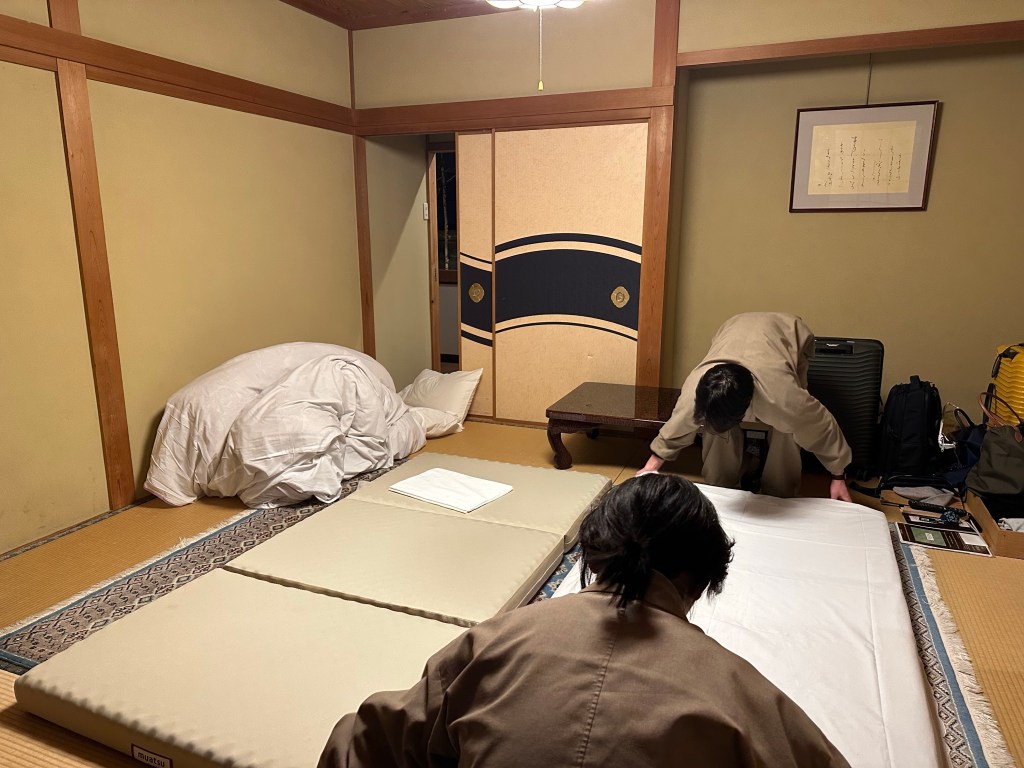
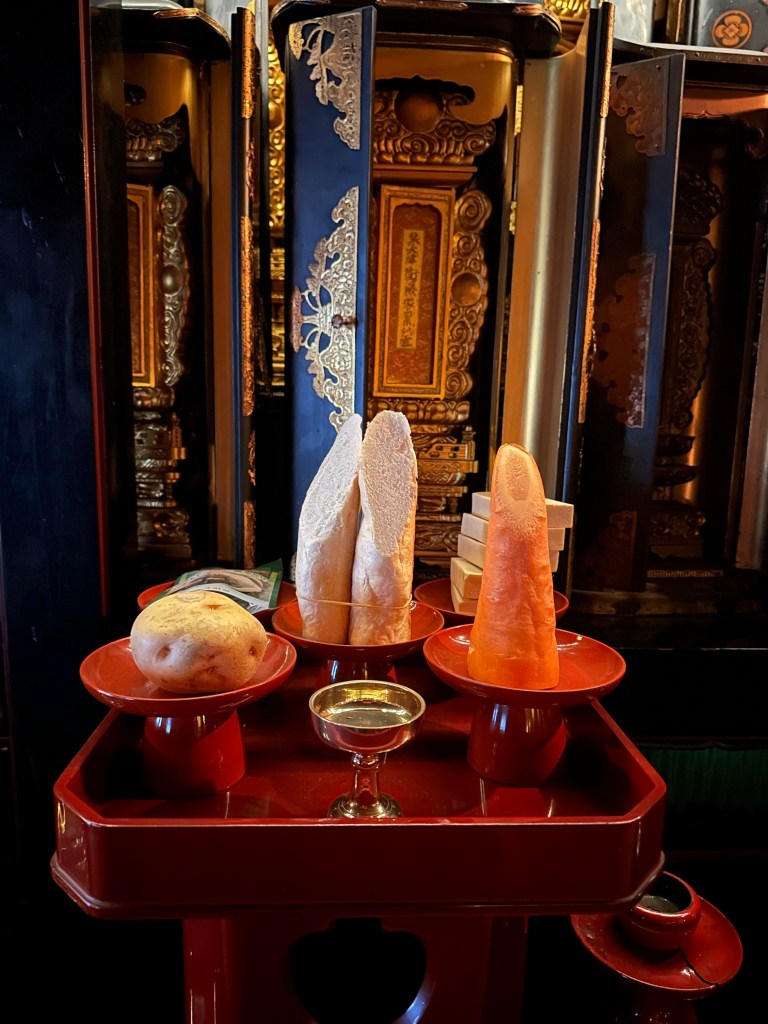
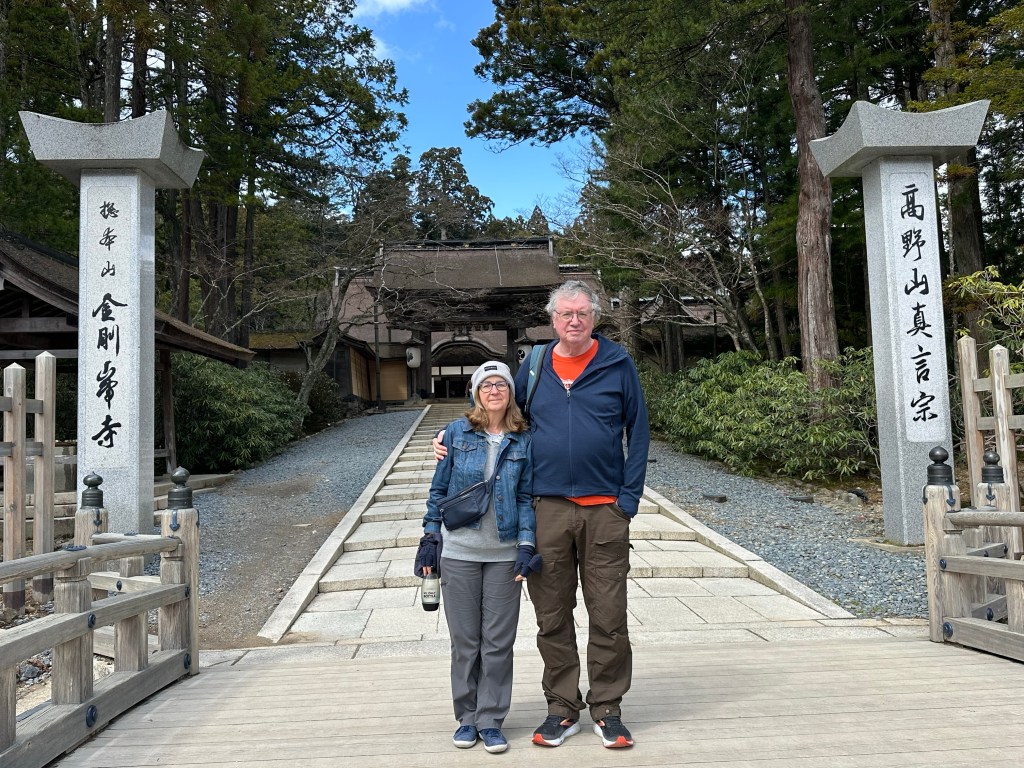
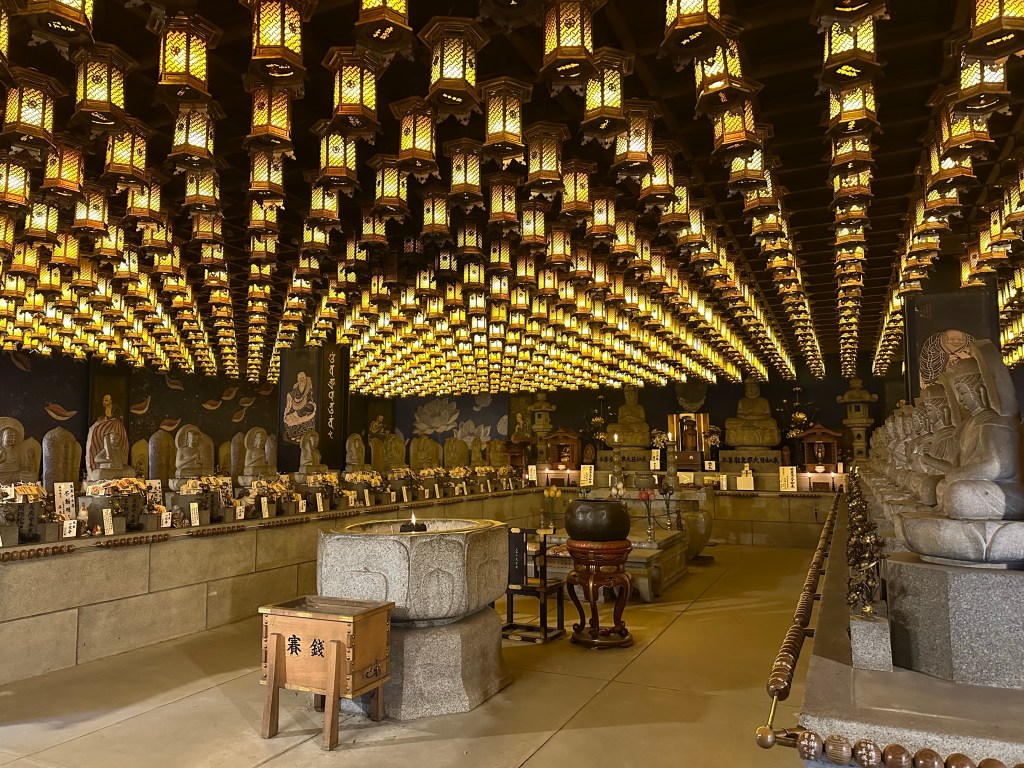
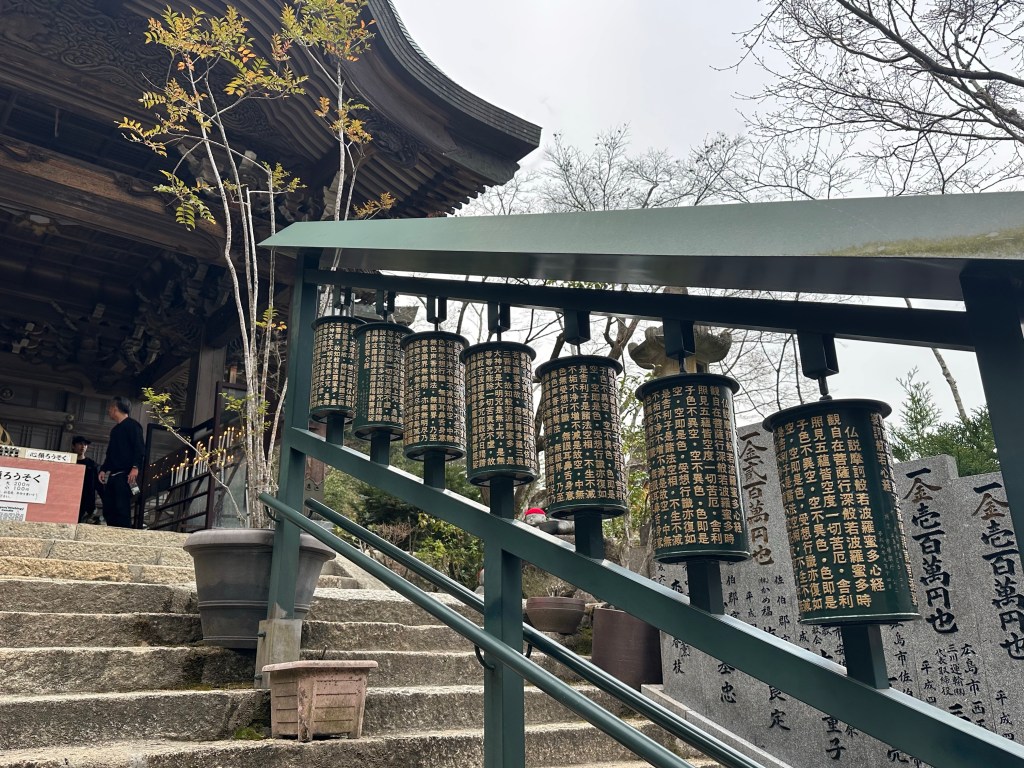
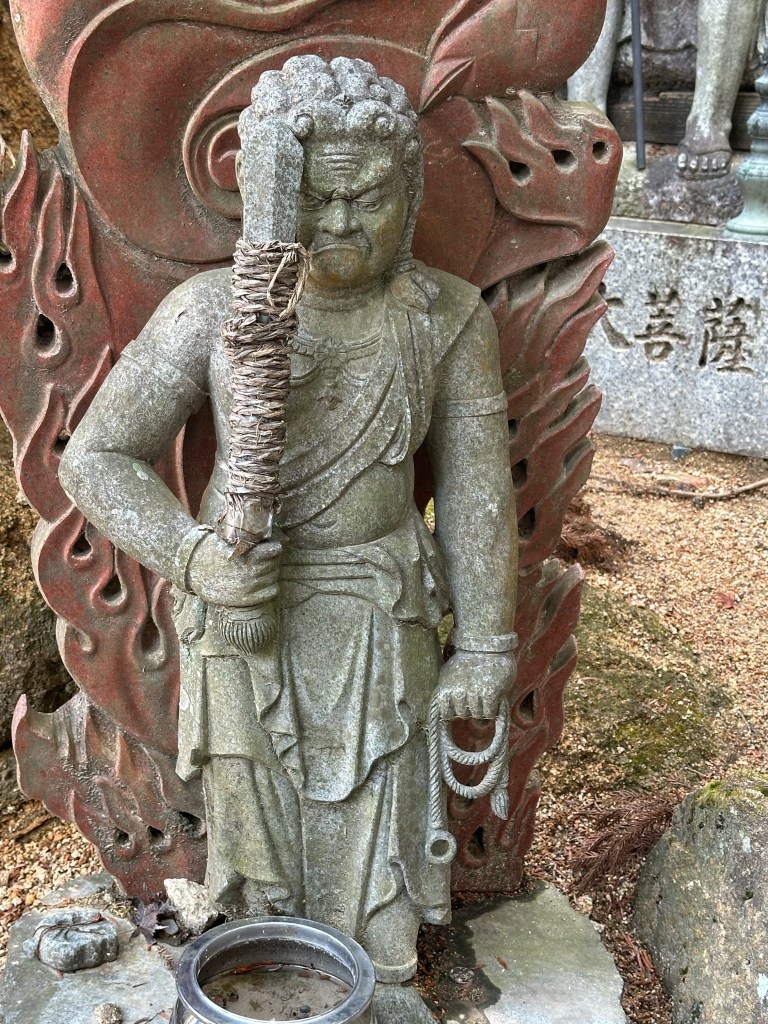
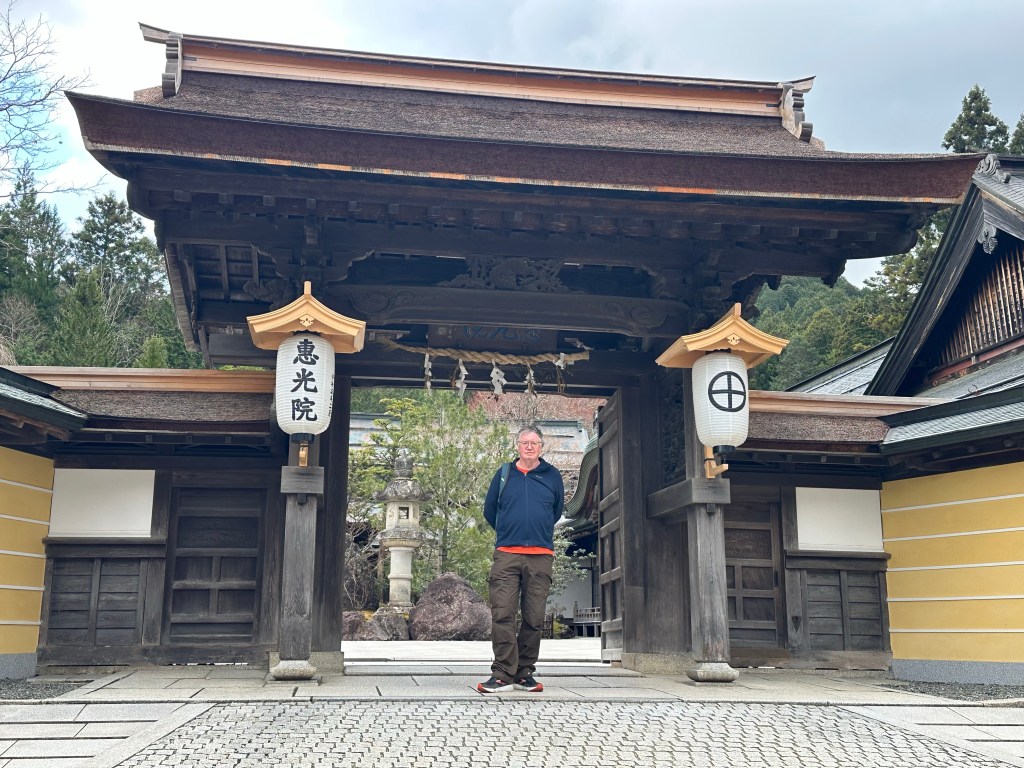
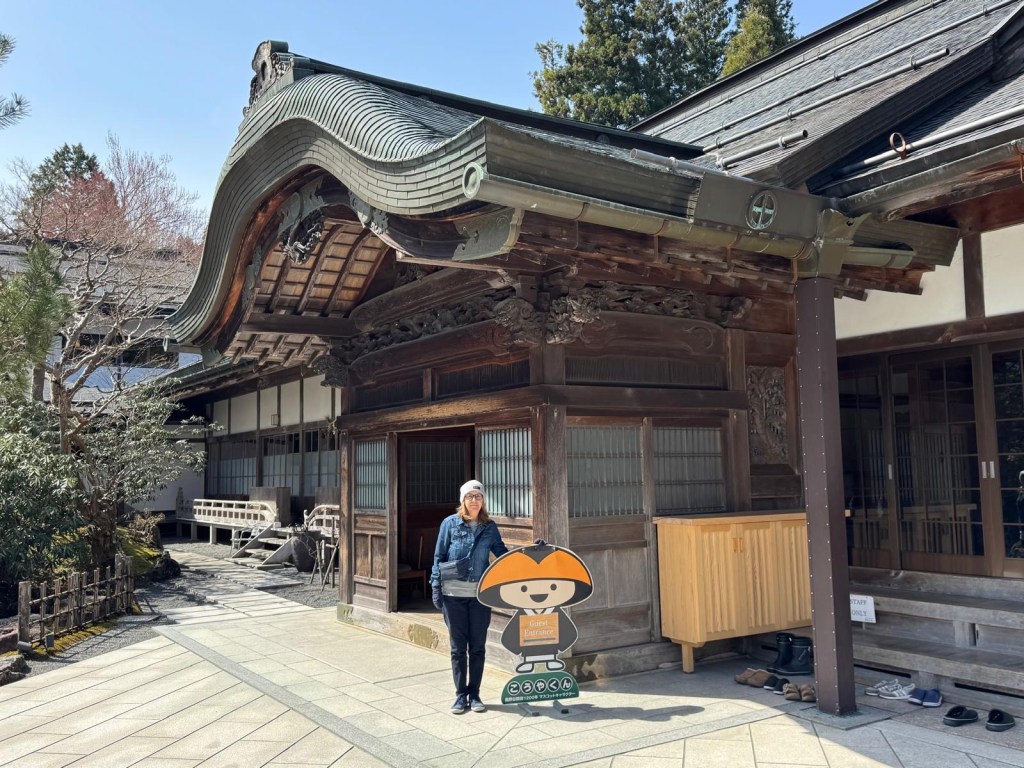
Eko-In Temple, our home for two nights, is one of the 51 temples in Koyasan Lodging. The rooms are simple and each night the staff make up futon beds. Vegan breakfast and dinner are delivered to your room on stacking trays and served with green tea. Most guests use shared bathrooms, although we had one of a few rooms with a private bathroom.

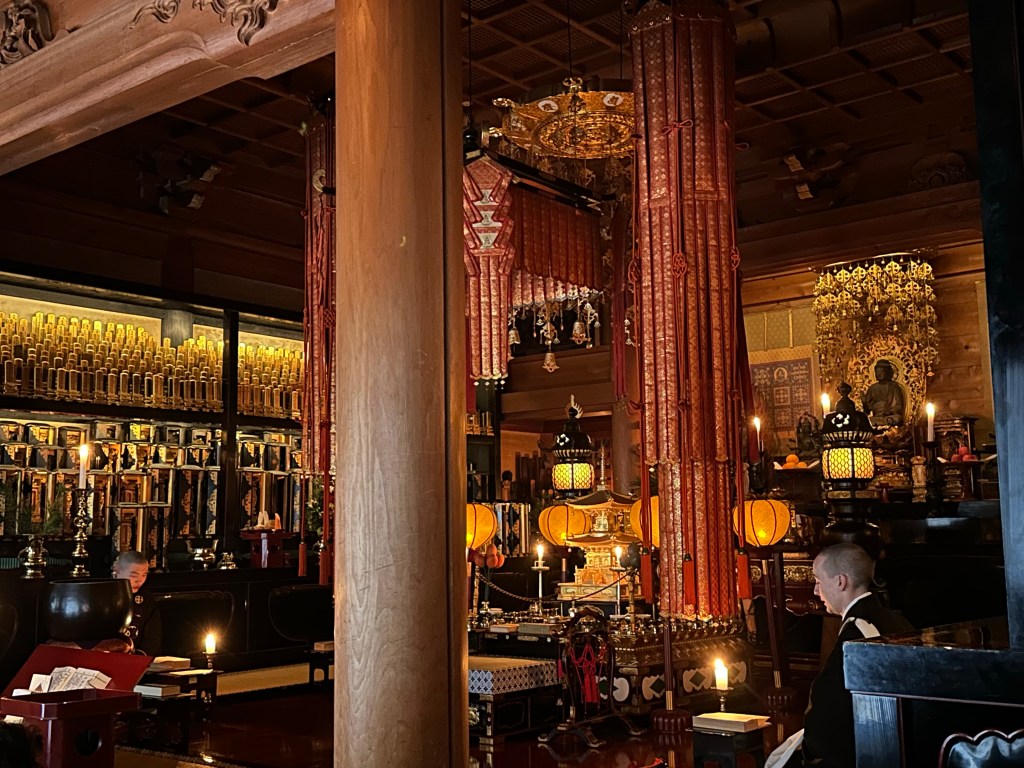
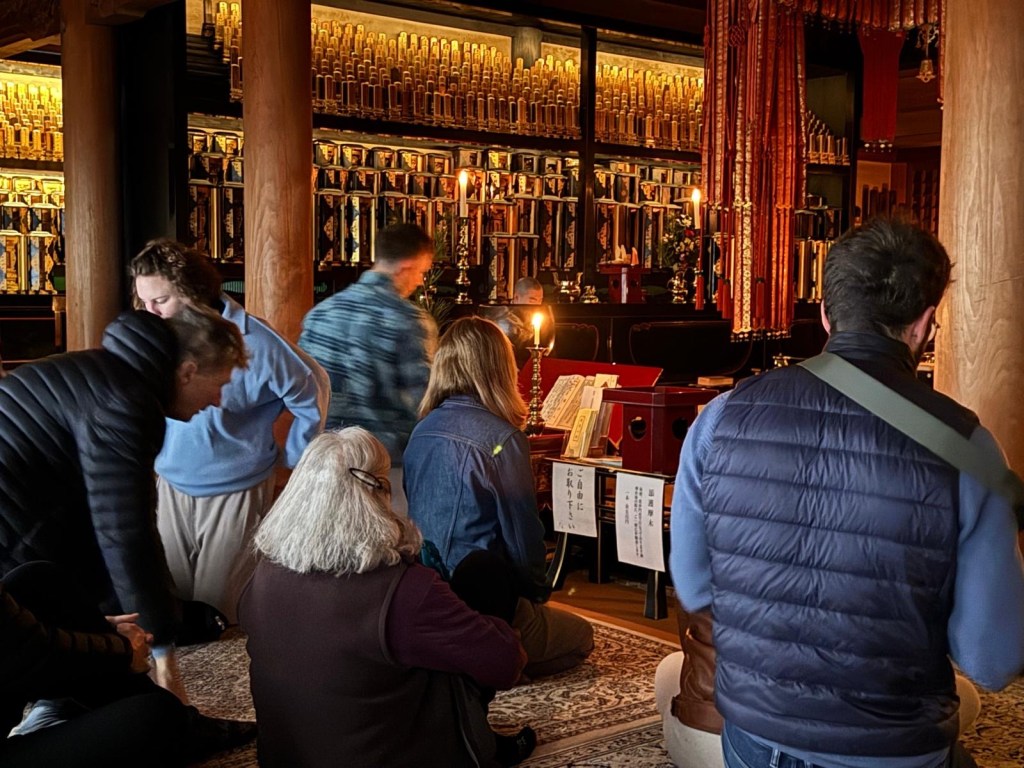
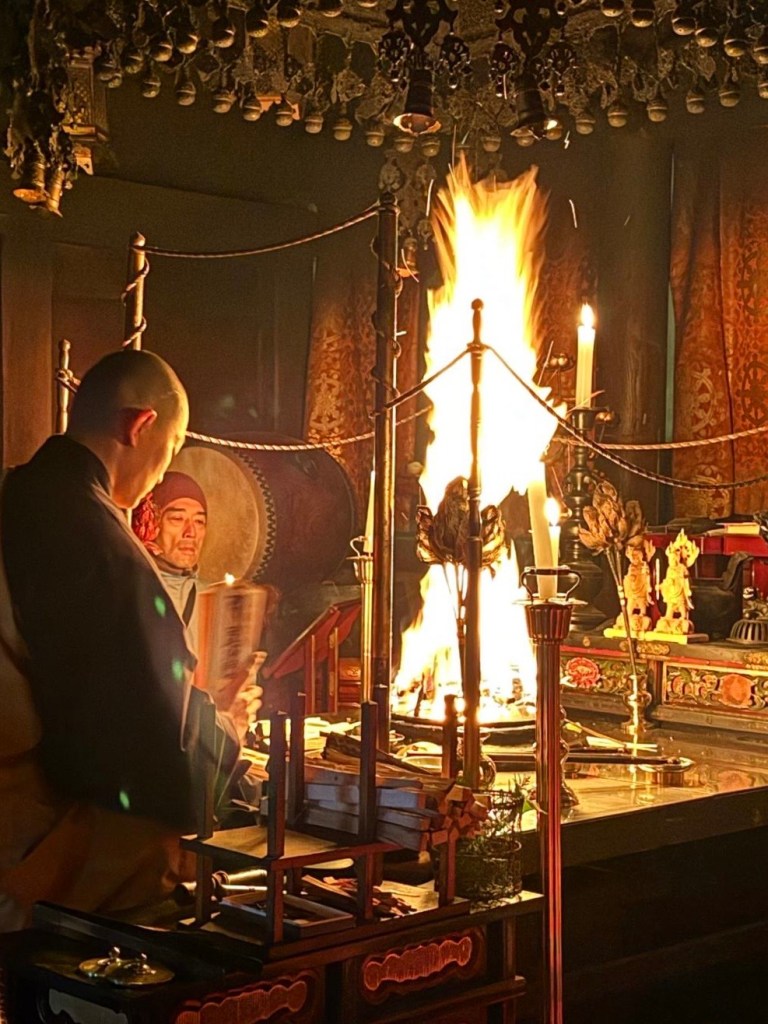
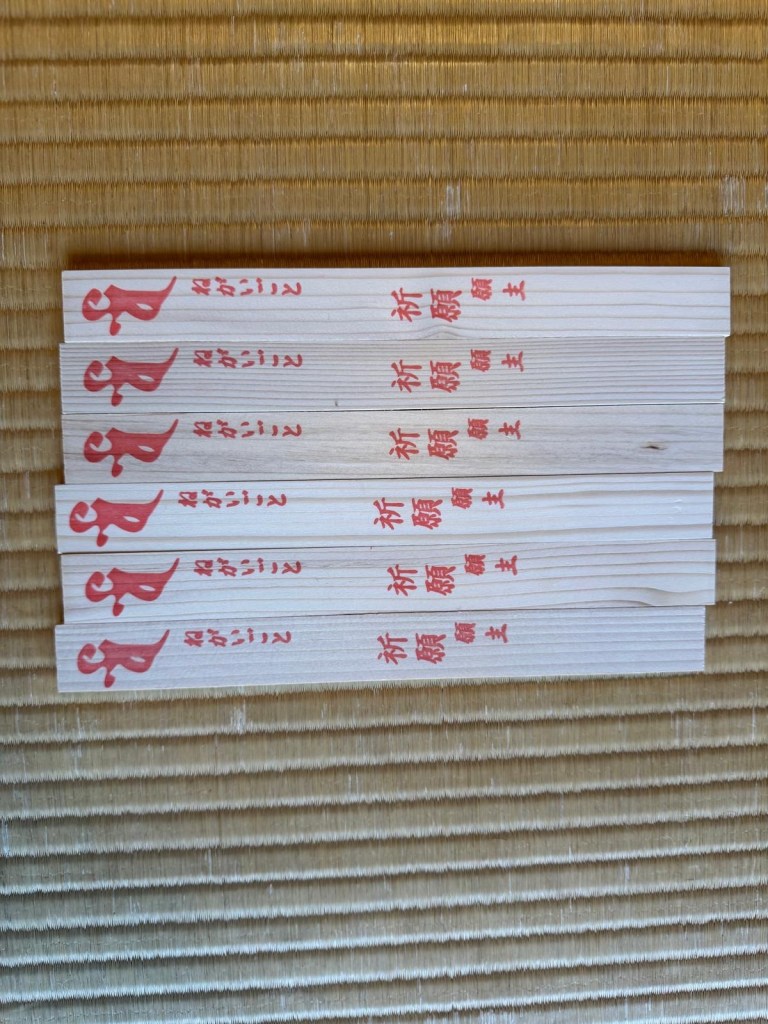
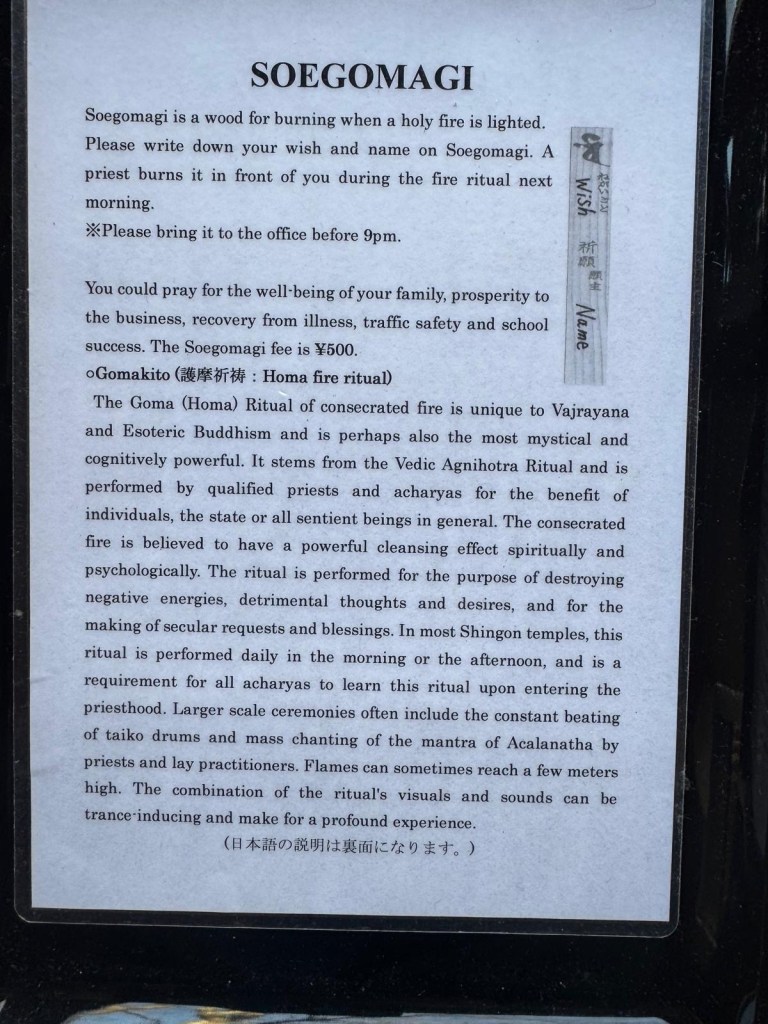
Guests are invited to attend temple rituals and services and the monks and novices were happy to talk about their backgrounds and day to day lives. We attended the 7am prayer service which was followed by the fire ritual and also the evening meditation. At the fire ceremony pieces of wood with wishes written on them are blessed and burned; for a fee guests can write their wishes on one or more.
Koyasan

Kobo Daishi (Kukai) was born in 774; in 805 he returned to Japan after two years in China, from where he introduced Shingon (Esoteric) Buddhism. He was given permission by the Emperor to set up a home for the sect. After searching he chose Koyasan’s mountain top, at a height of around 1,000 meters.

At one point Koyasan had over 2,000 temples but fires caused by lightning have resulted in a consolation to 117 temples today, about half of which provide guest accommodation. The town has 3,000 residents of which 800 are monks or novice monks. Walking down the main street, every other building is a temple, with the remaining businesses supporting the pilgrims and tourists.

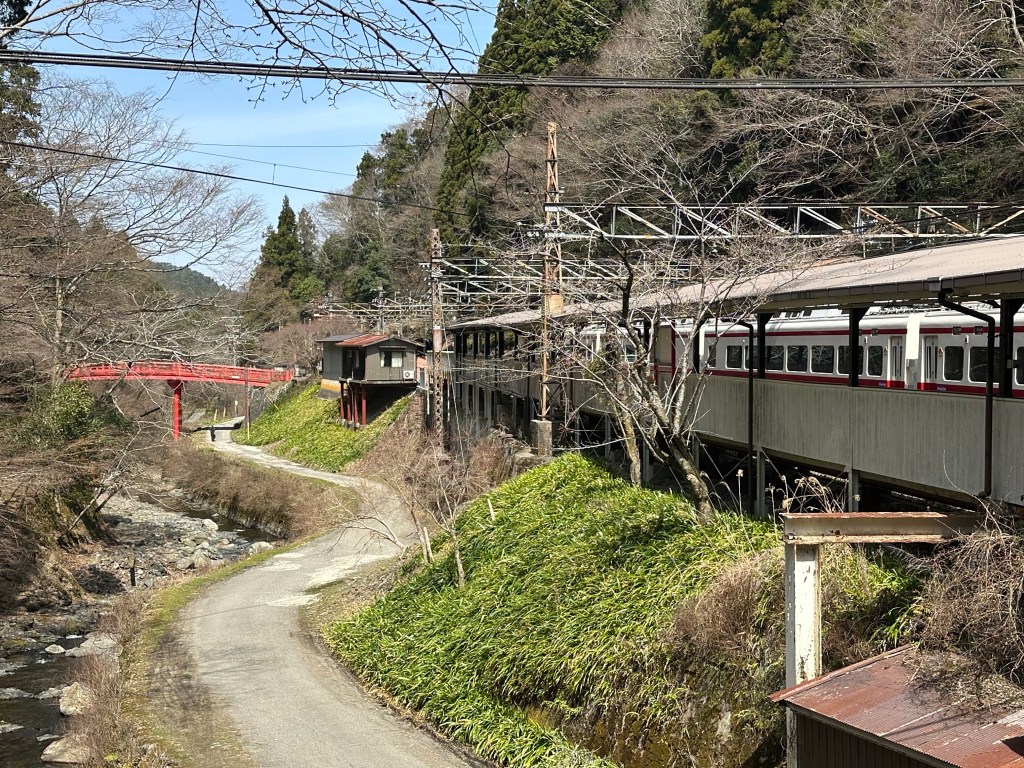
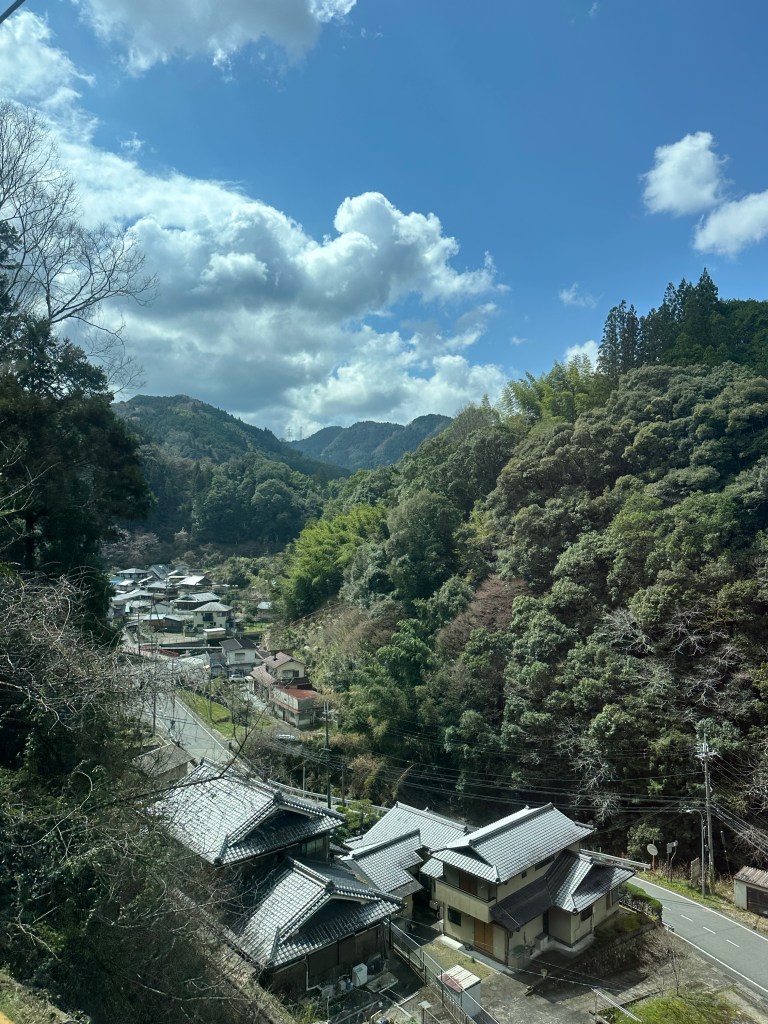
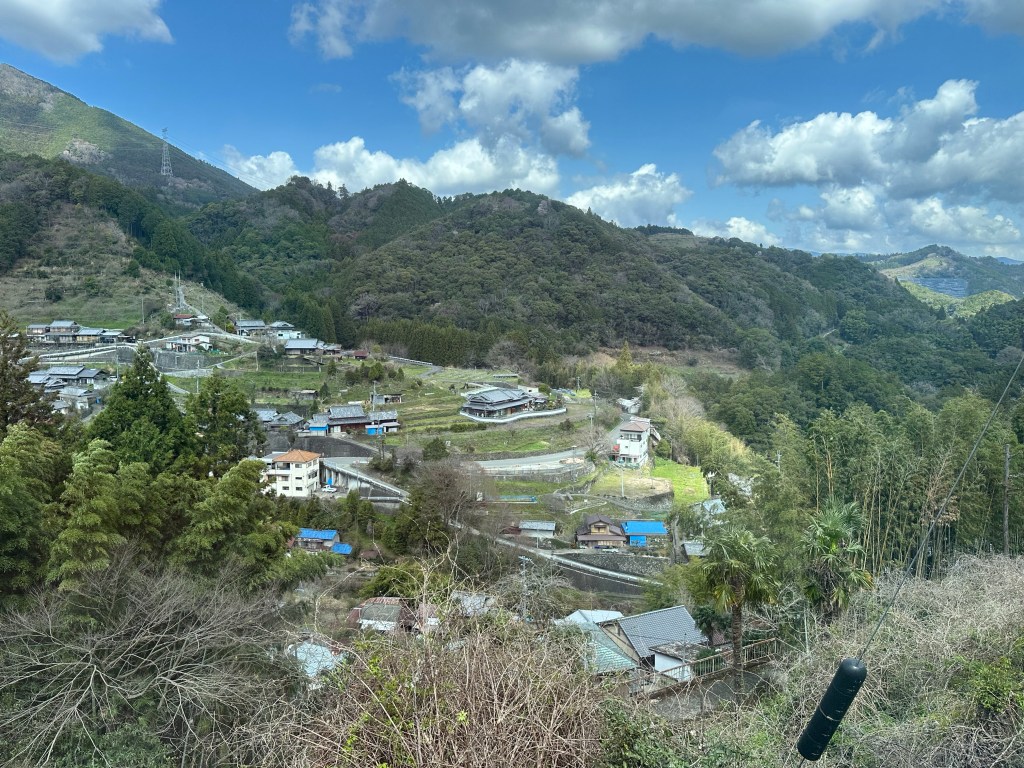
Today Koyasan is reached by train (in our case about two and a half hours from Kyoto) and cable car. The latter stages through the mountains are very picturesque.

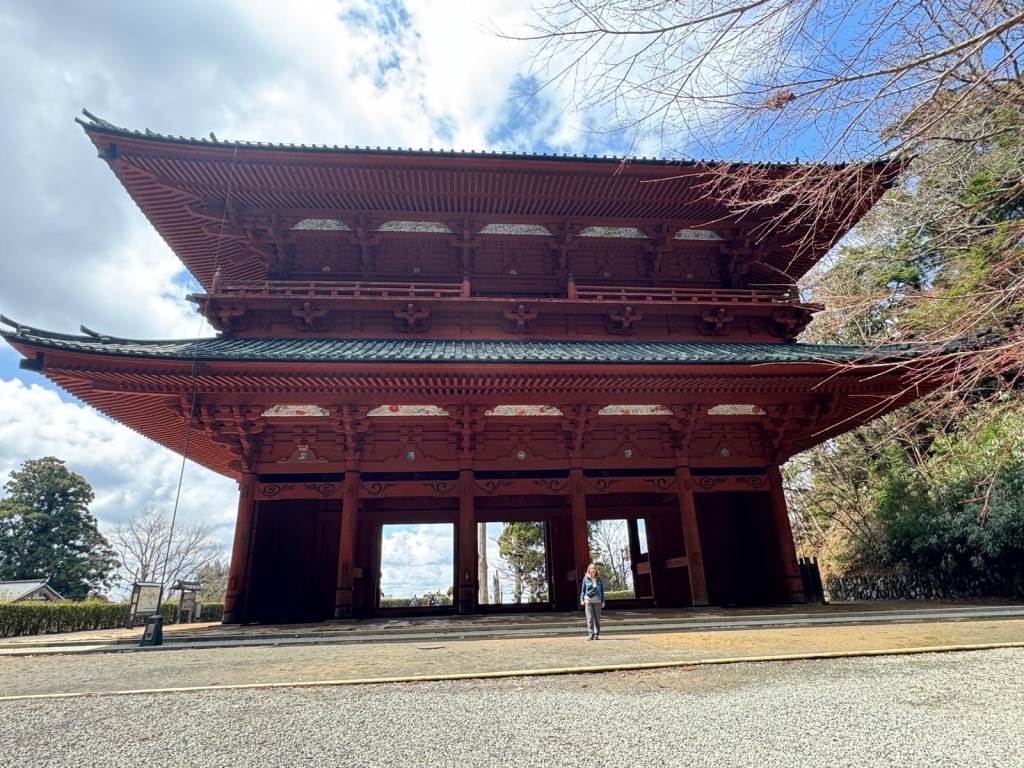
The entrance gate for Koyasan
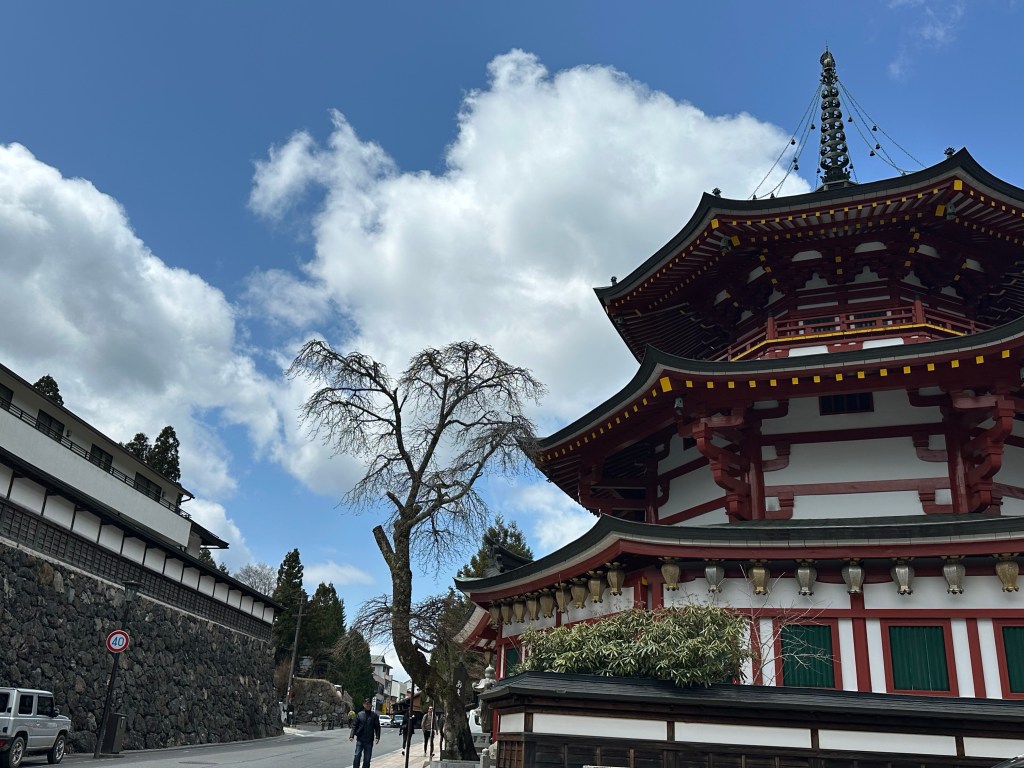
The main street (and below)
A large fire station for a small town- as well as the lightning risk, most of the temples are wood and thatched roofed and one of the main daily rituals involves a fire

Japanese Tea Ceremony

In Japanese the tea ceremony is Chado, literally “the way of tea”. The ceremony and its rules were originally set out in the 16th century. The tea master, Sen no Rikyu, elevated it to an art form reflecting the culture of the country.

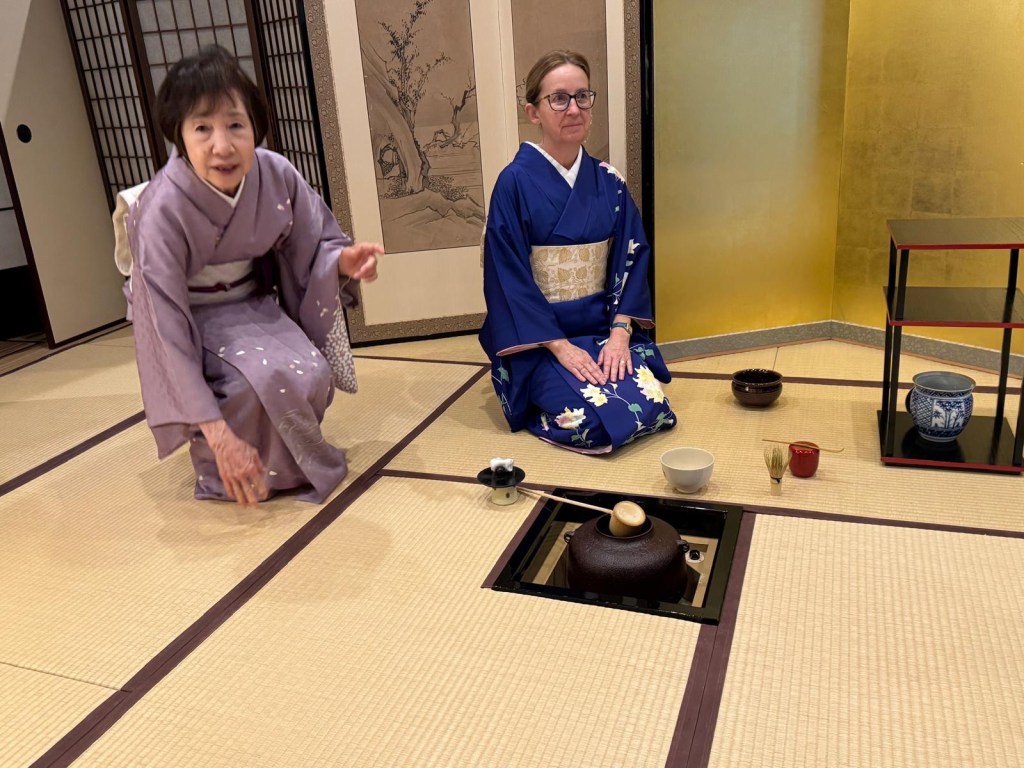
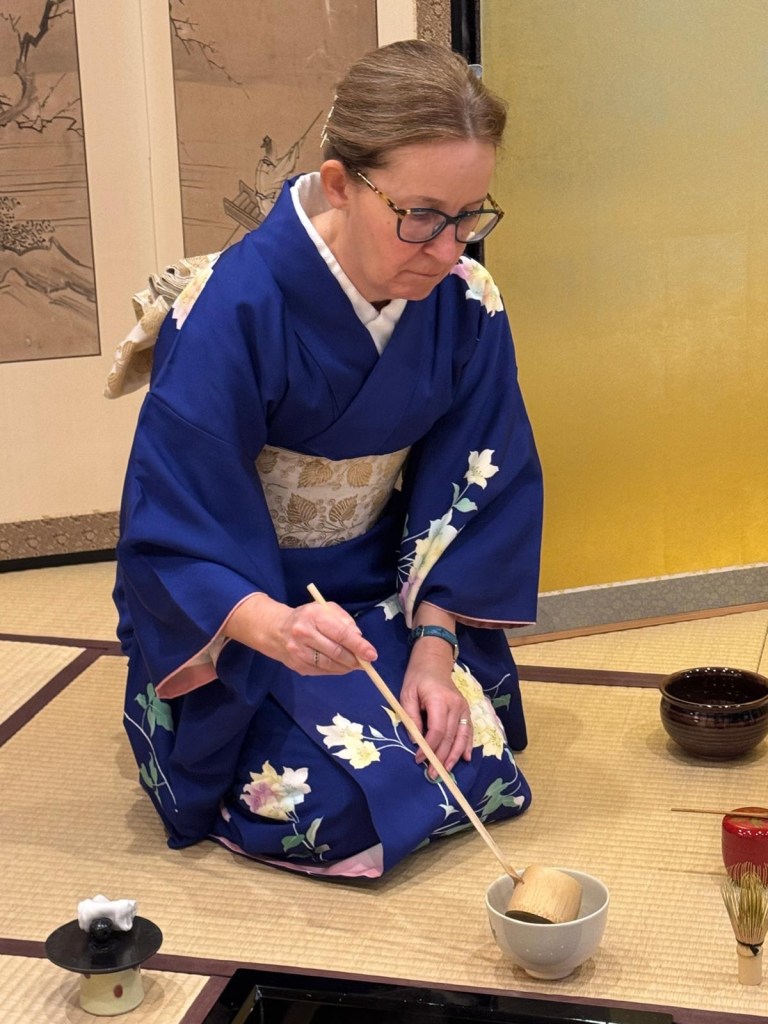
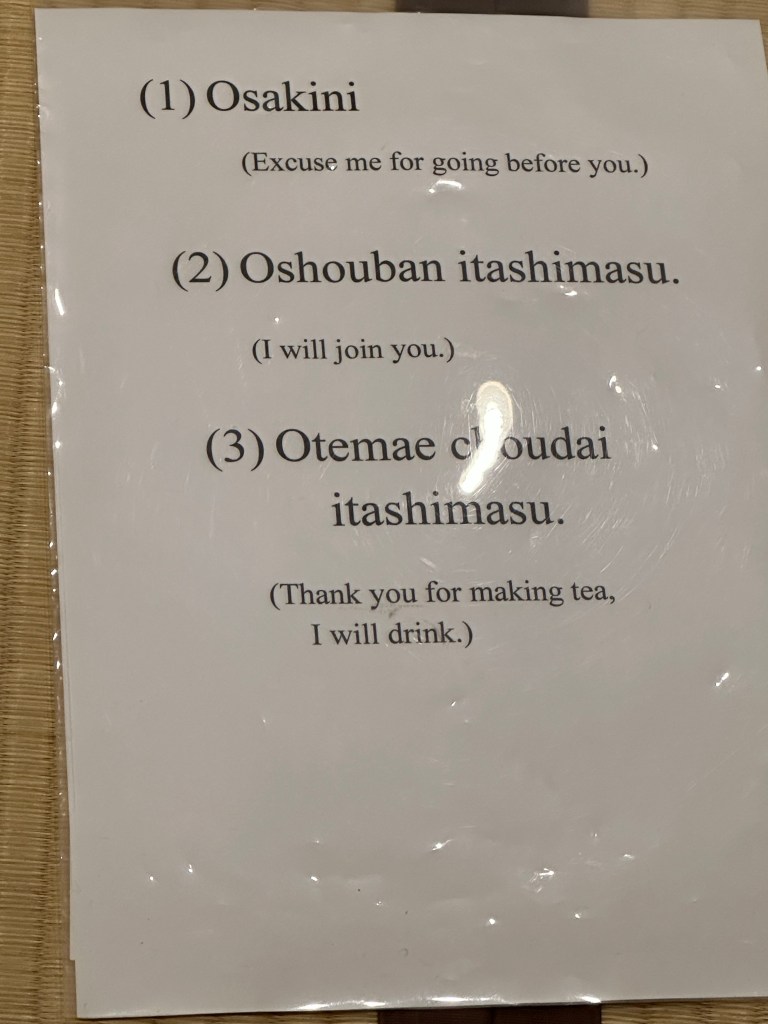
The host prepares matcha (ground green tea) with hot water and presents the tea to each guest in turn. The ceremony emphasises respect between the host and guests, with specific words, phrases and actions, reflecting Japanese culture. Today, there are three branches of tea ceremony, each with their own hereditary grand tea master.
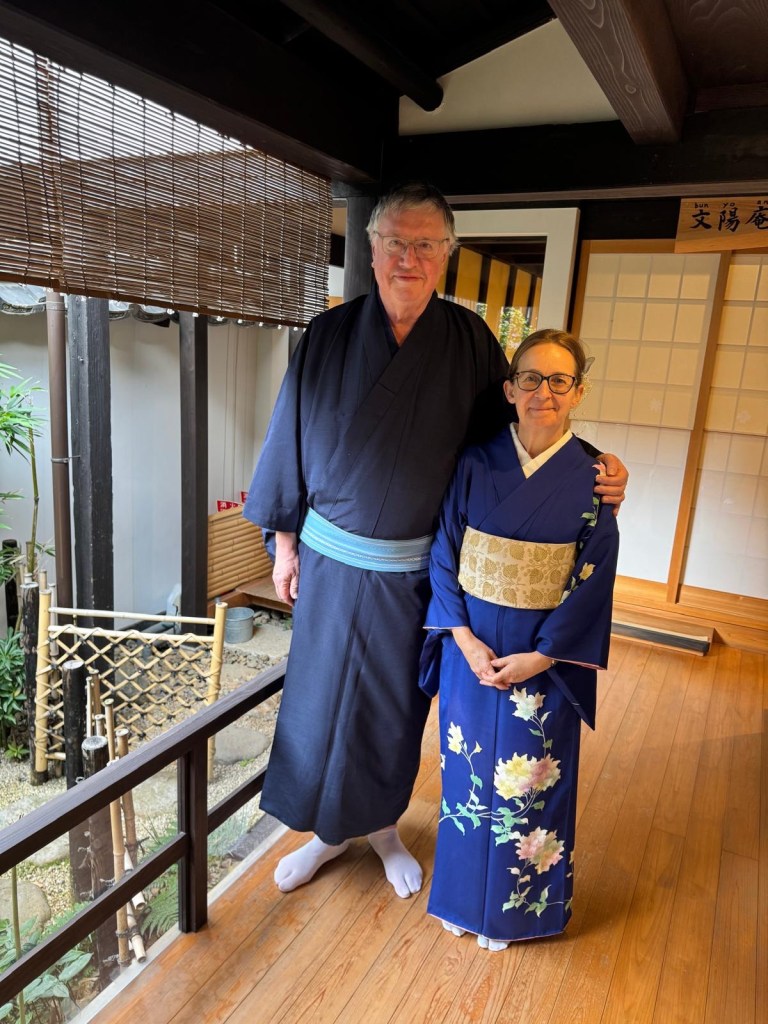
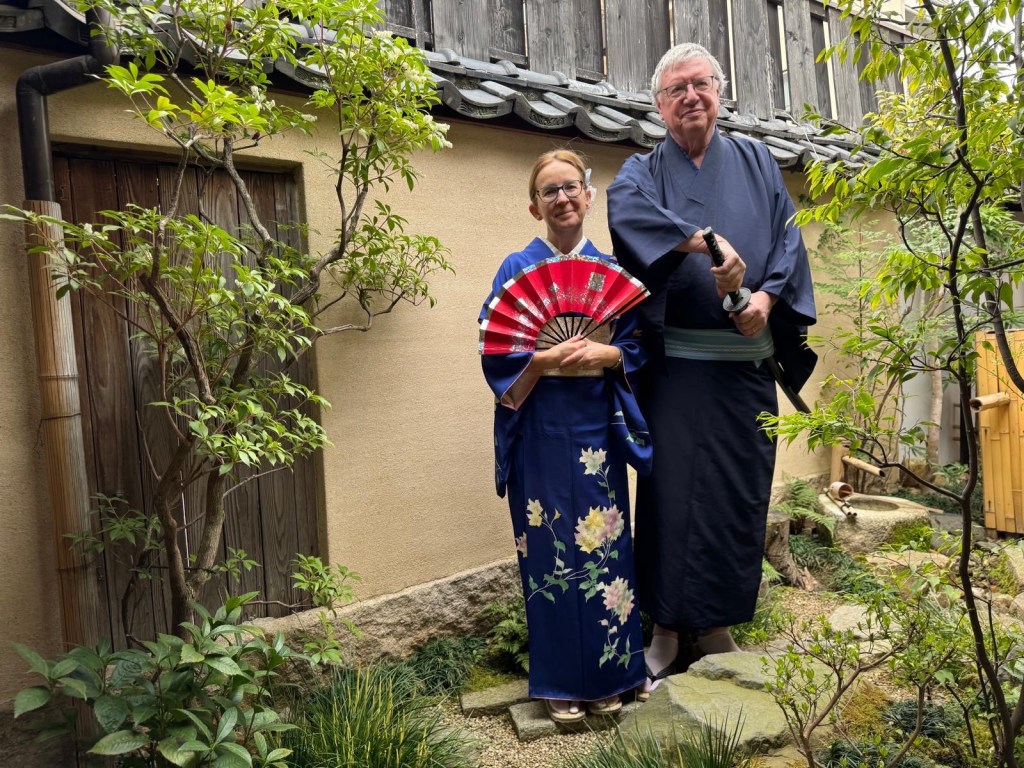
As part of our tea ceremony introduction, we were provided with traditional Japanese kimonos ! It was explained that an important part of the philosophy is that while each ceremony follows the set protocol, no two ceremonies would be the same as every encounter in life is unique.
“Osakini” is also used in other situations such as if you go through a door before someone else

Cherry Blossom

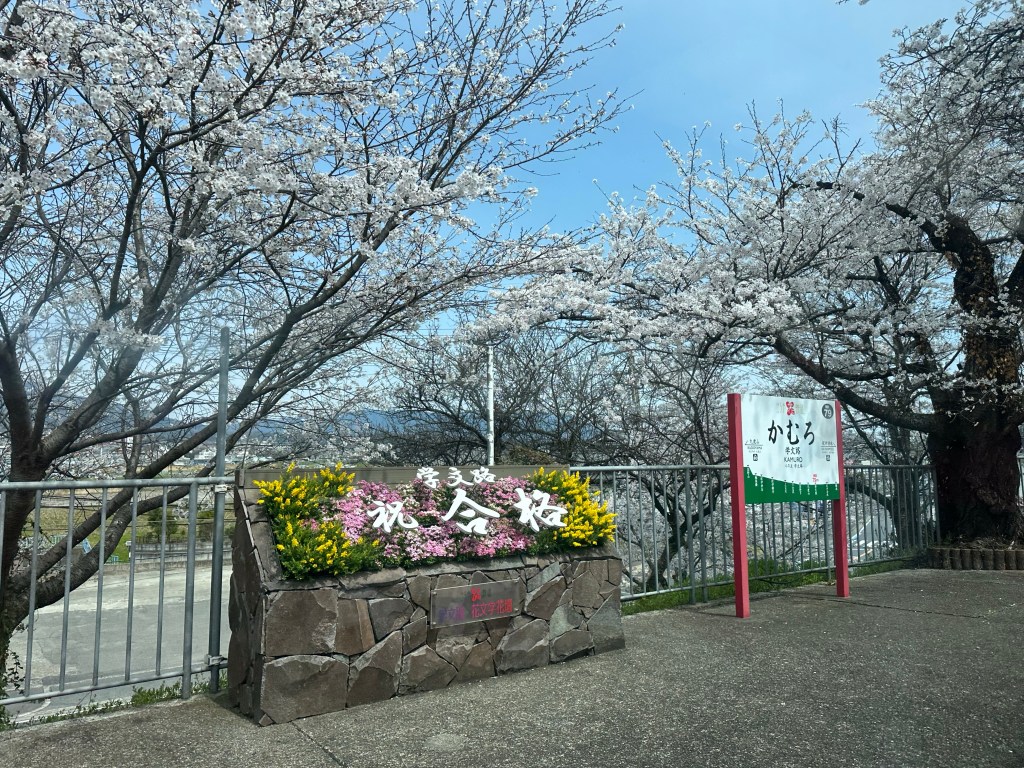
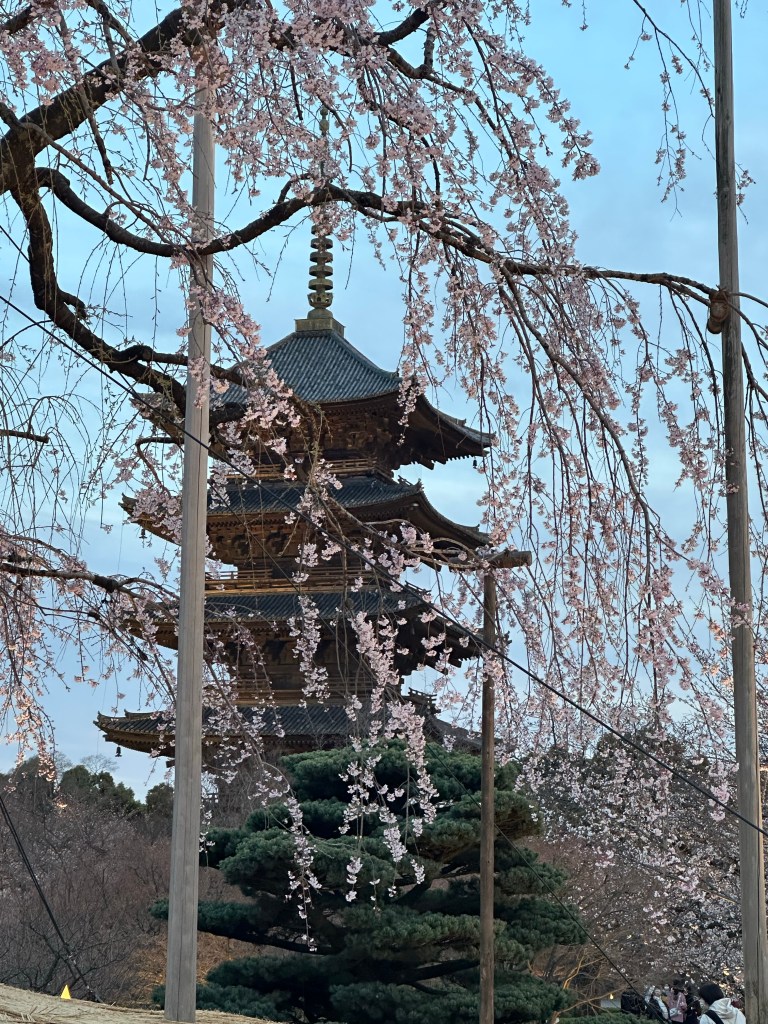
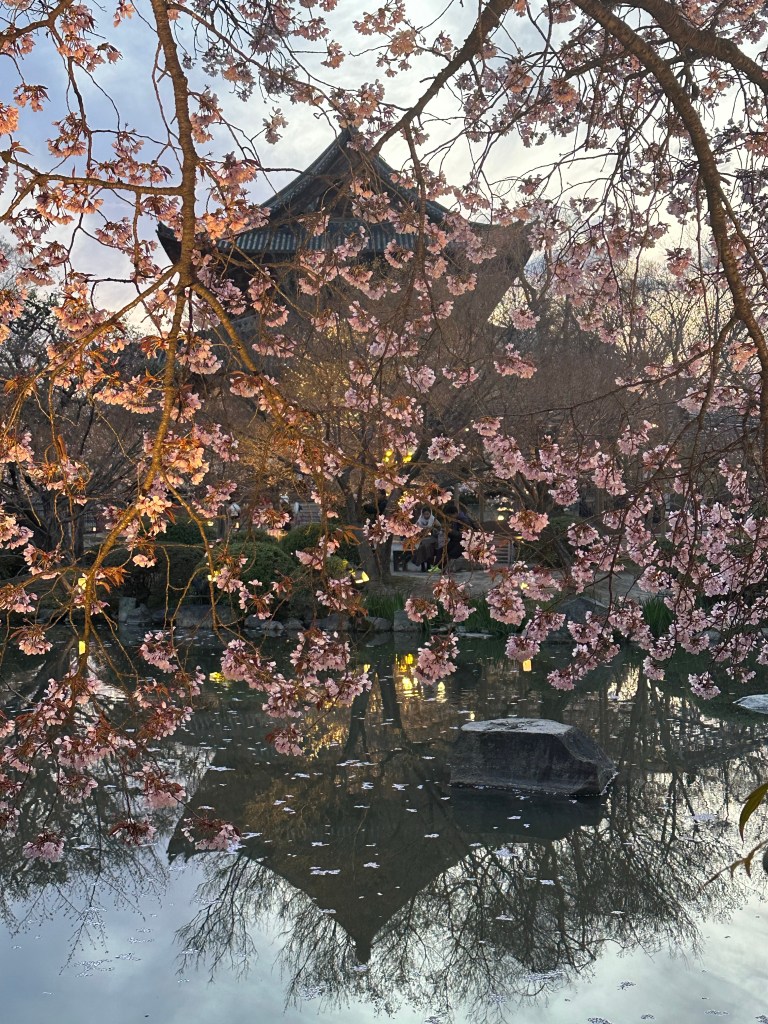
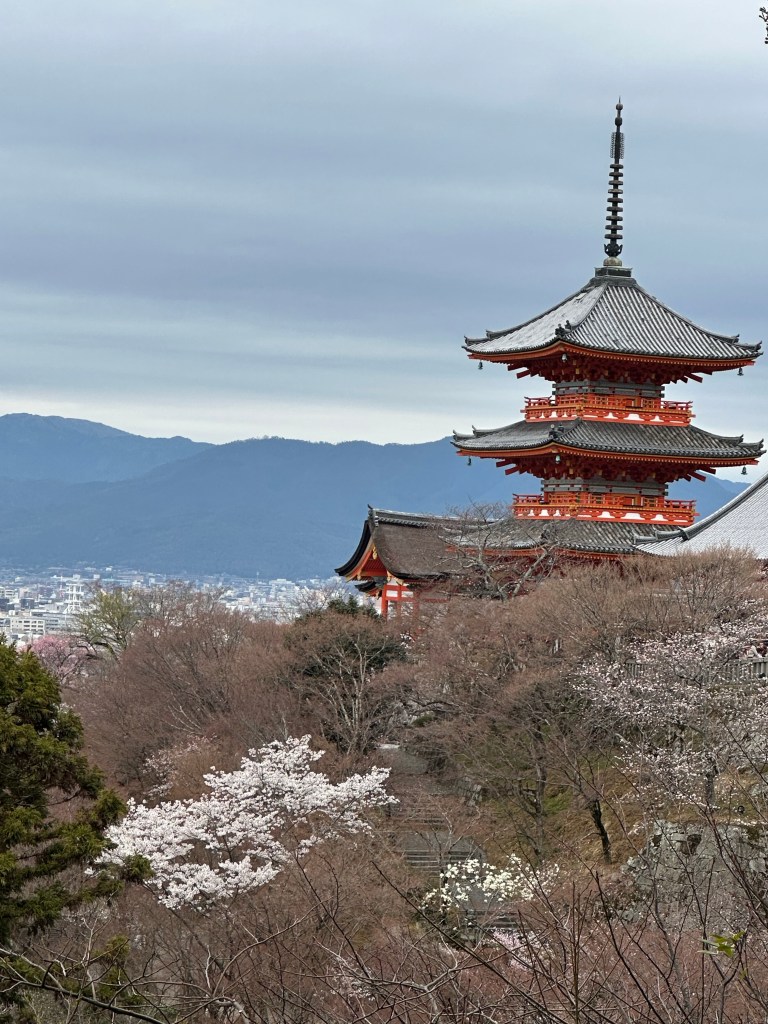
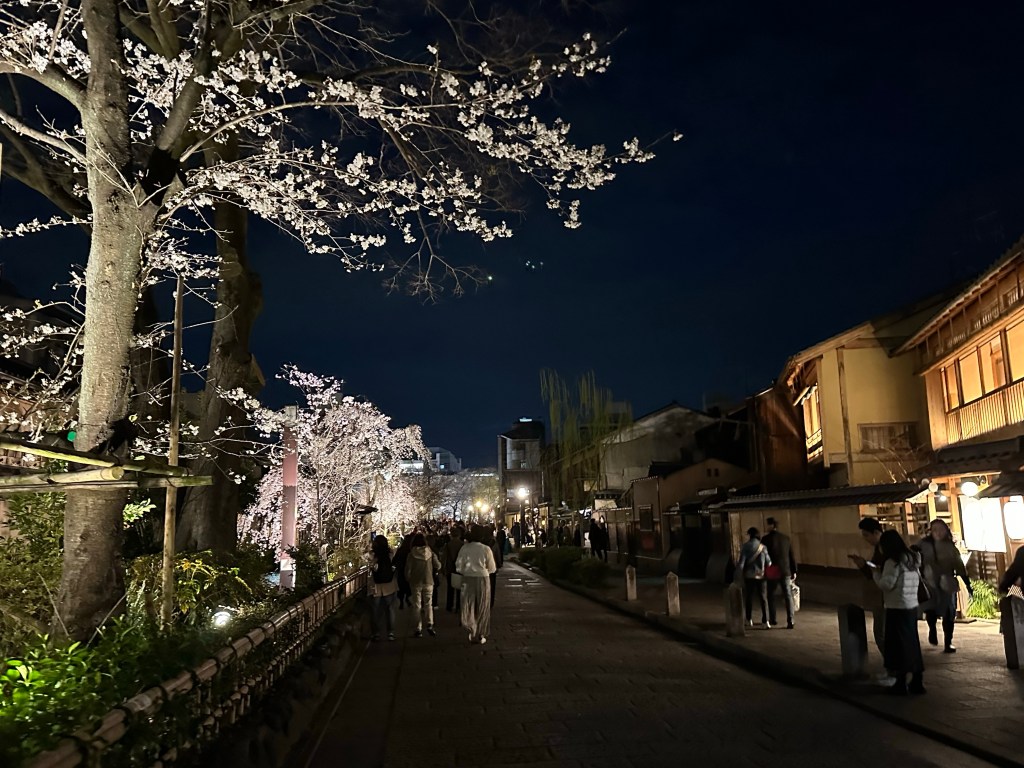
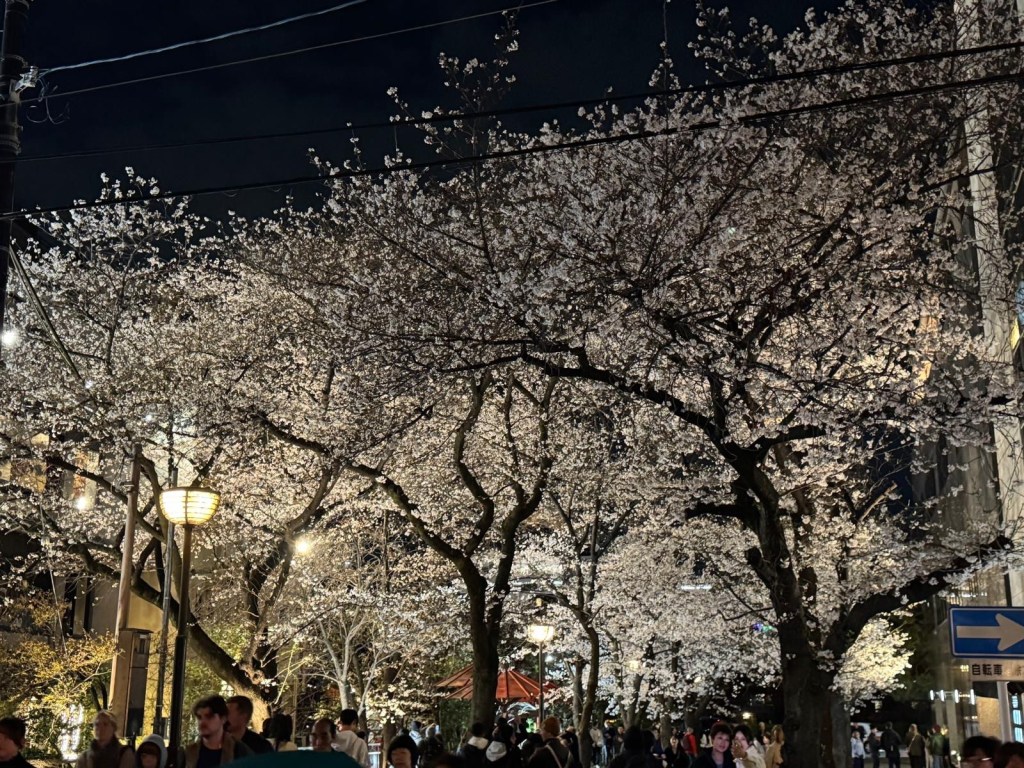
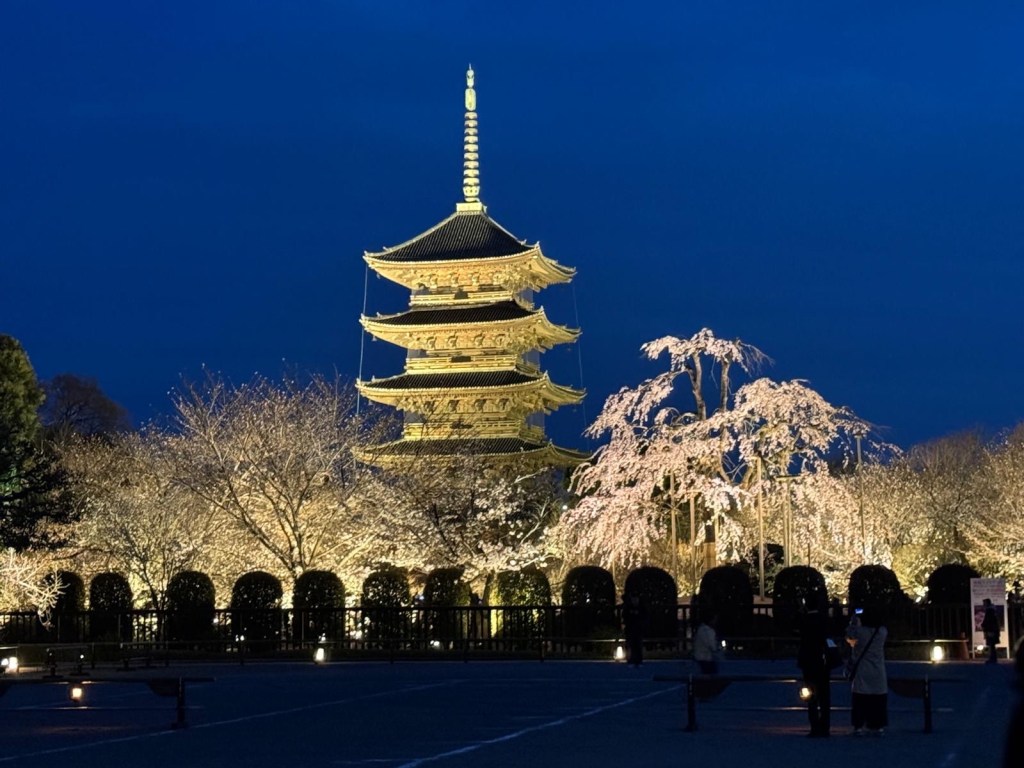
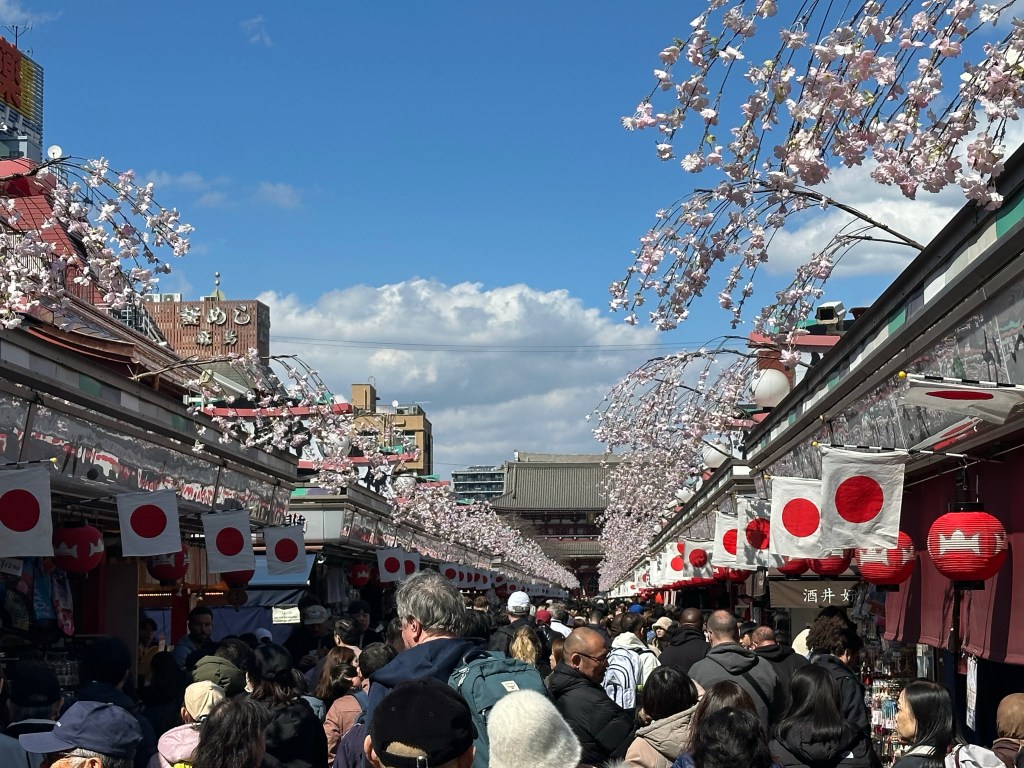
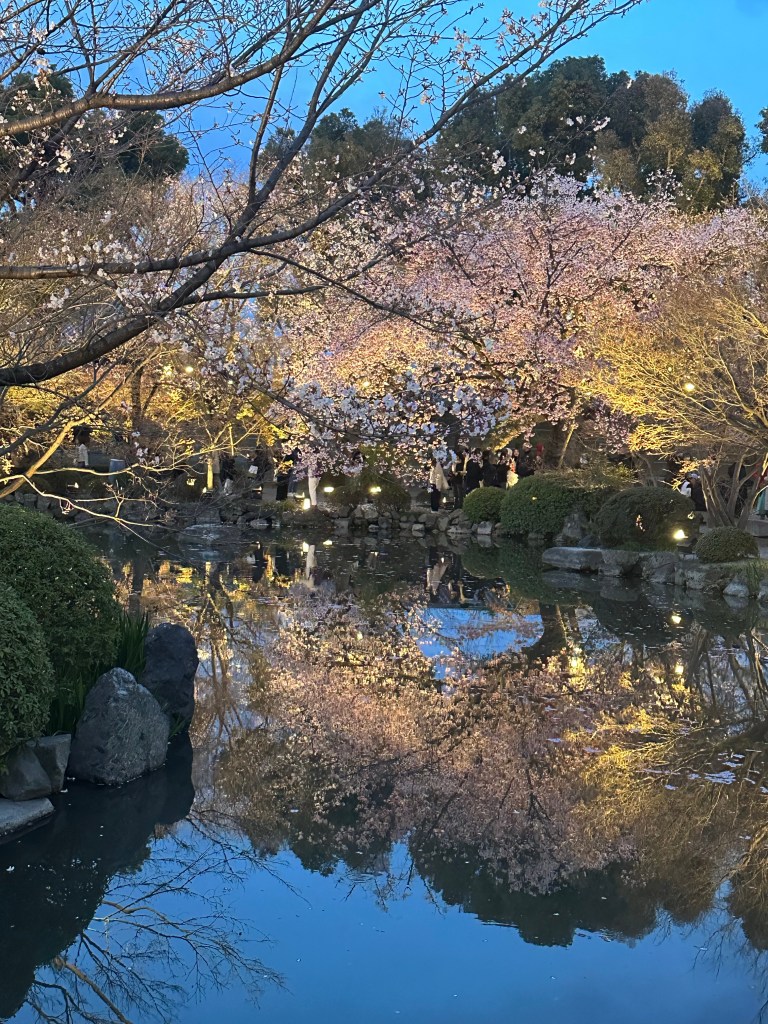
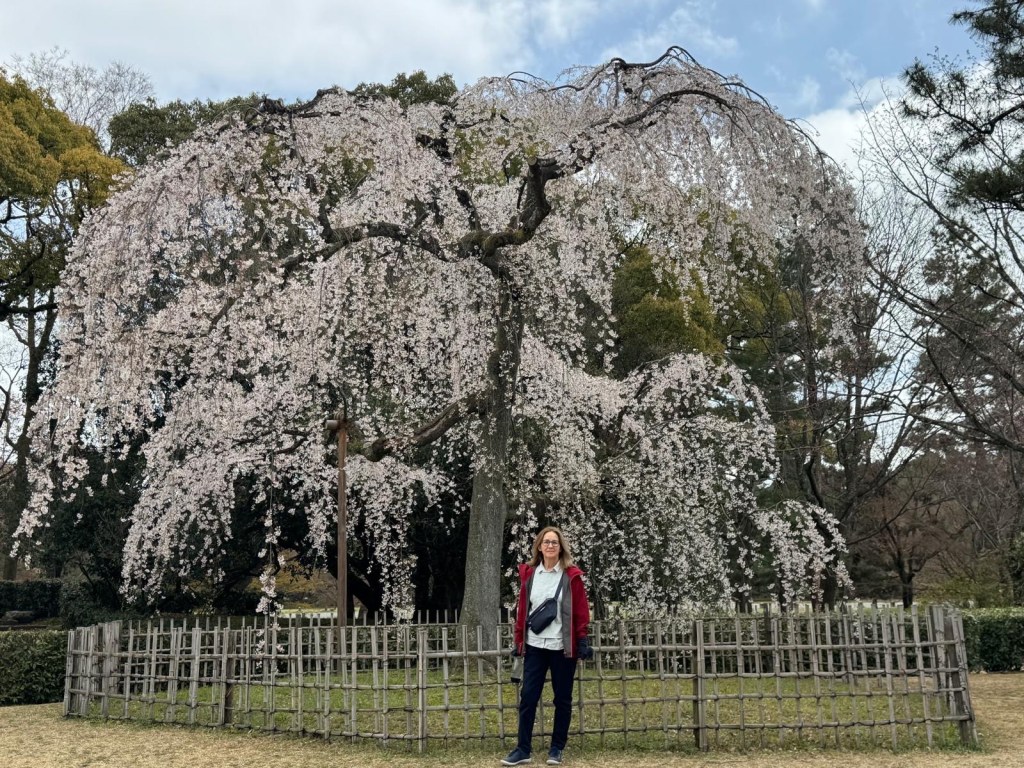
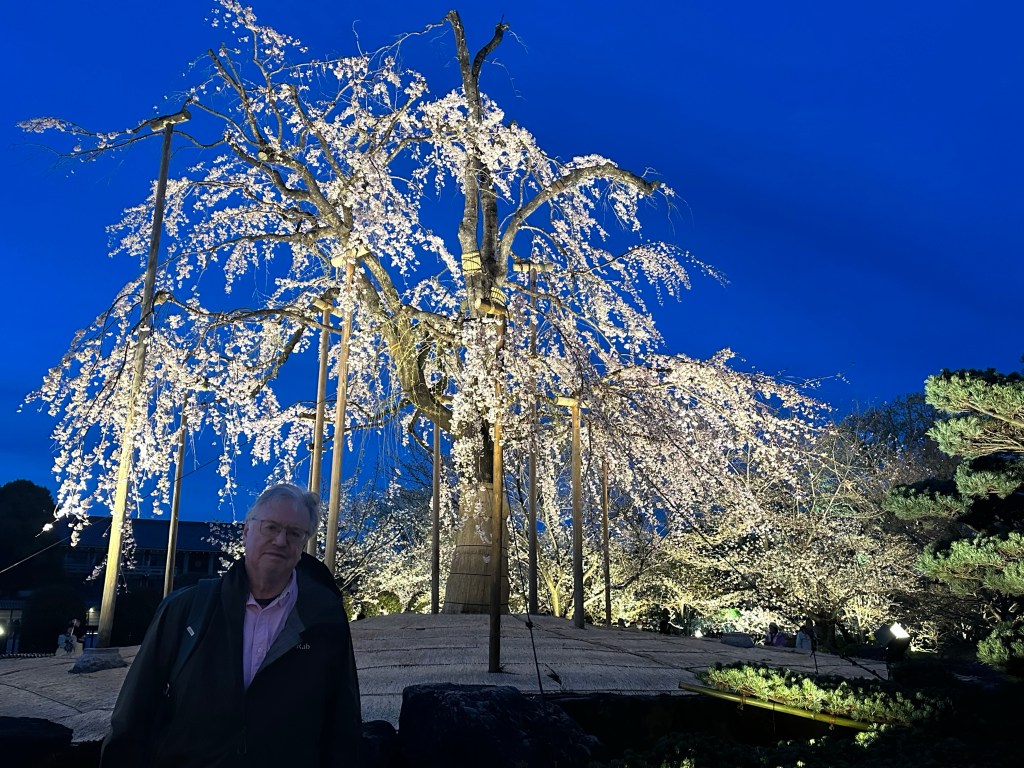
In Japan cherry blossom or Sakura has deep cultural significance, symbolising spring and renewal. The act of viewing the flowers is called hanami, which may date back to the 8th century. There are over 600 varieties of blooming cherry trees none of which bear fruit. Weeping trees are particularly revered.
The transition from bud to bloom is closely monitored by the meteorological office with updates and forecasts published each day. There is a specifically defined data set – which trees (58 preselected nationwide) how many blooming buds (5)etc – to determine that the season has begun in a specific location.

There are a lot of events and festivities centred around the season from food stalls in parks to illuminated displays as well as seasonal food and sake.
We were in Tokyo for the official start of the season and Kyoto for the full bloom.
Kyoto

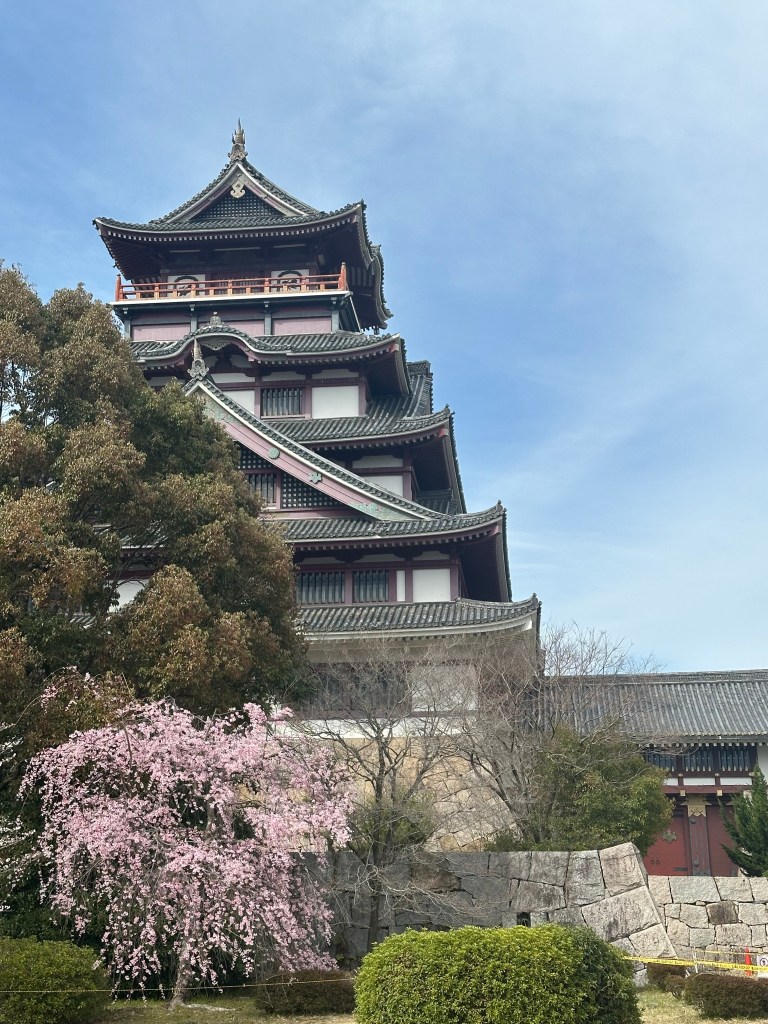
Emperor Kanmu chose Kyoto as the capital of Japan in 794. It remained as such until the Shogun resigned under pressure from the regional Lords and the capital was transferred to Tokyo in 1869.

Unlike many other Japanese cities it avoided most of the bombing of World War II and was removed from the potential list of A bomb targets as a result of pressure from the US Secretary of War Henry L Stimson, who had visited on his honeymoon.

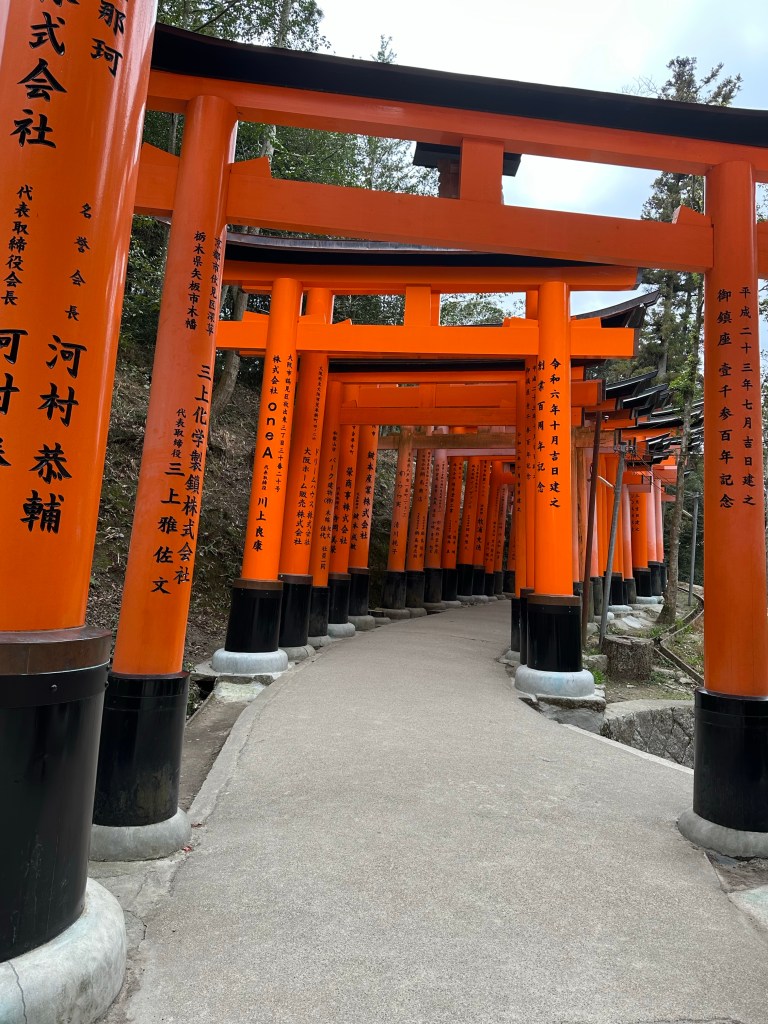
“1,000 gates” – there are more – on the back of each gate is the sponsor that has paid for the gate and its subsequent upkeep

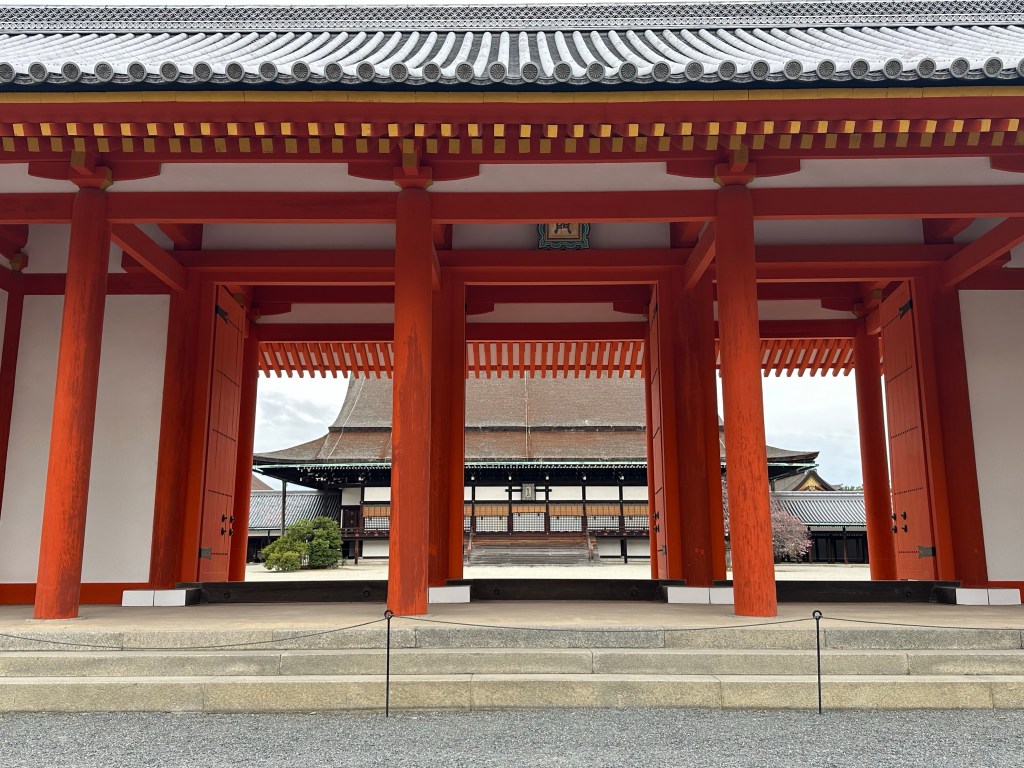
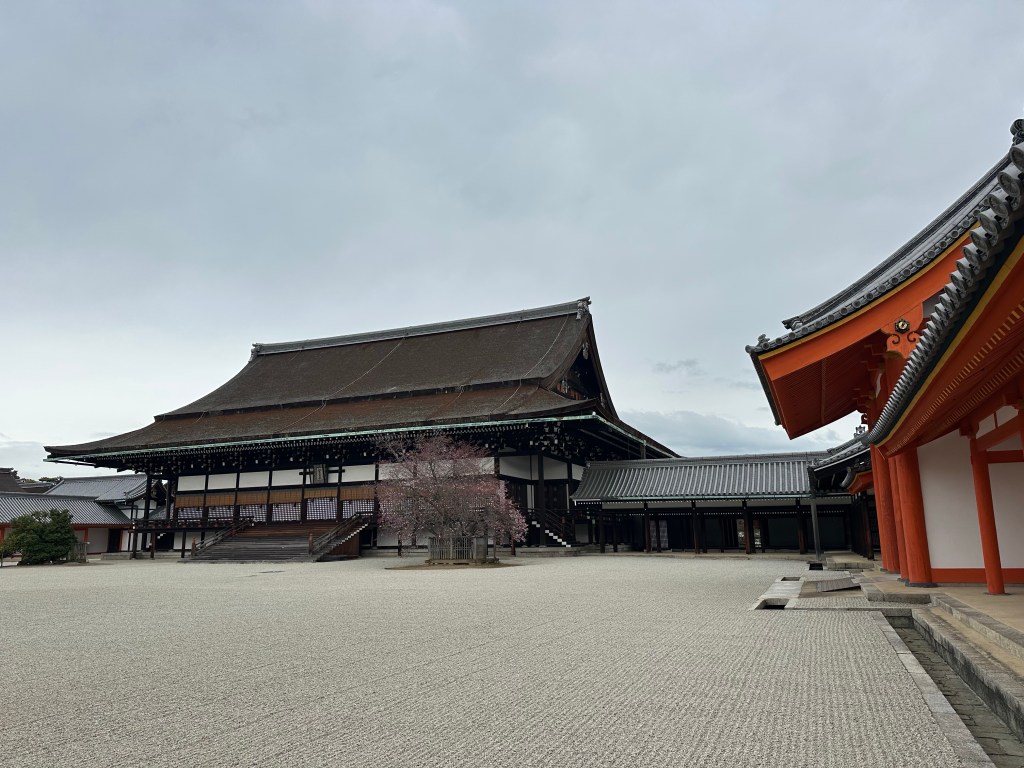
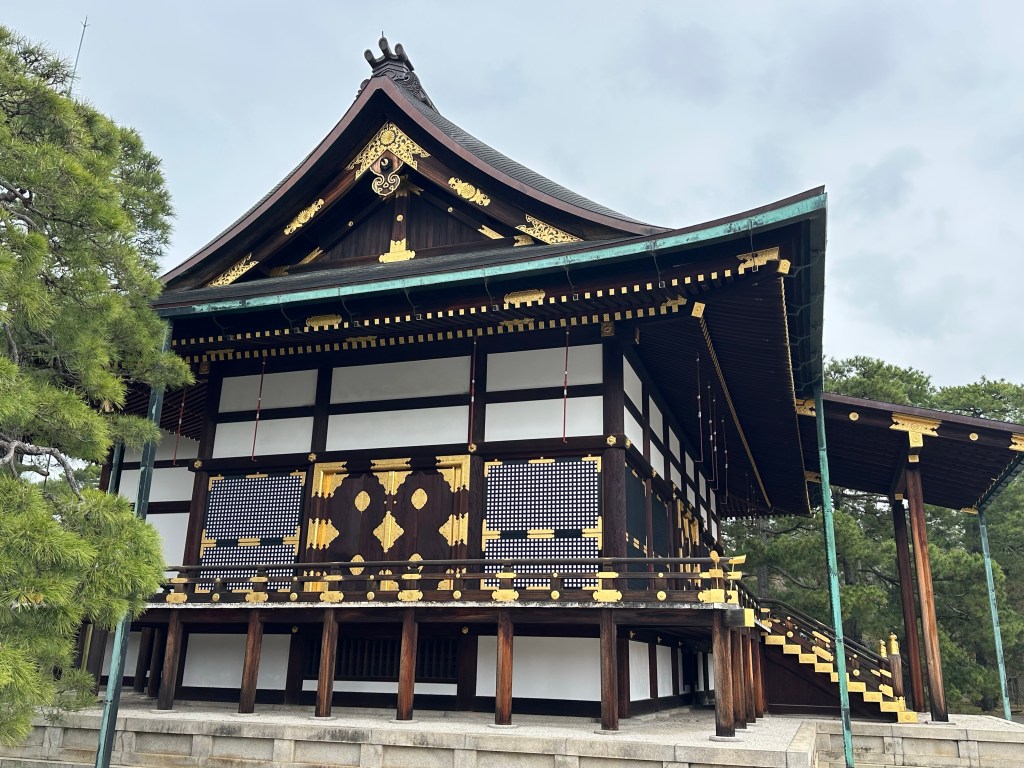
Imperial Palace (and the two pictures below)
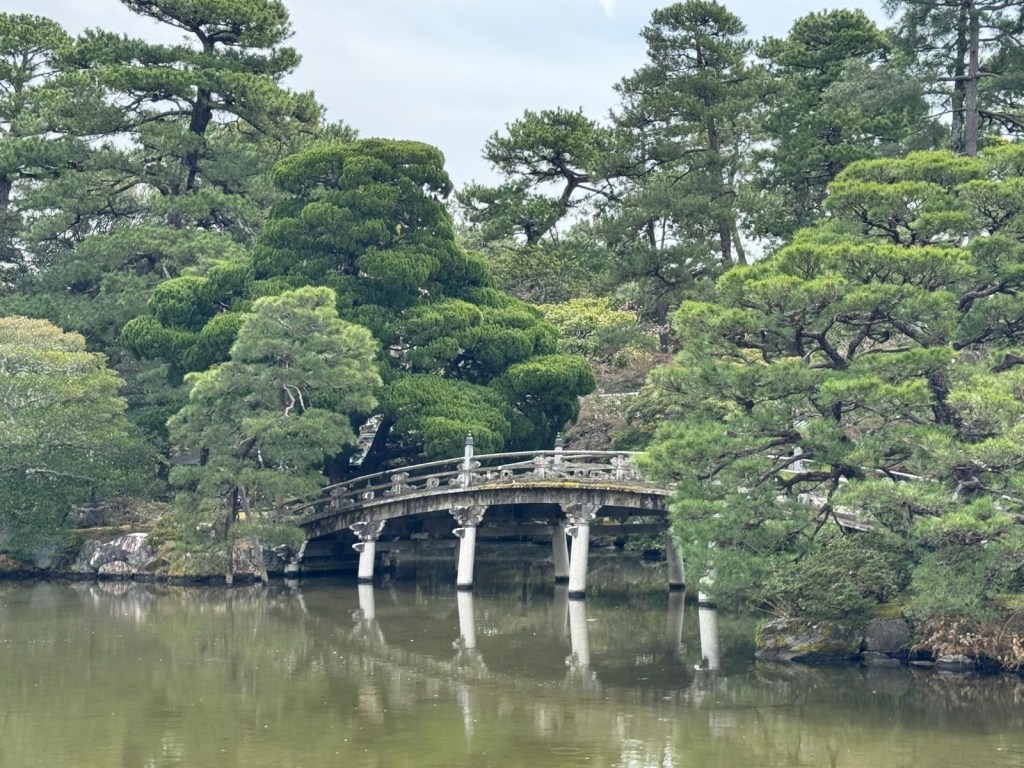
Garden of the Imperial Palace
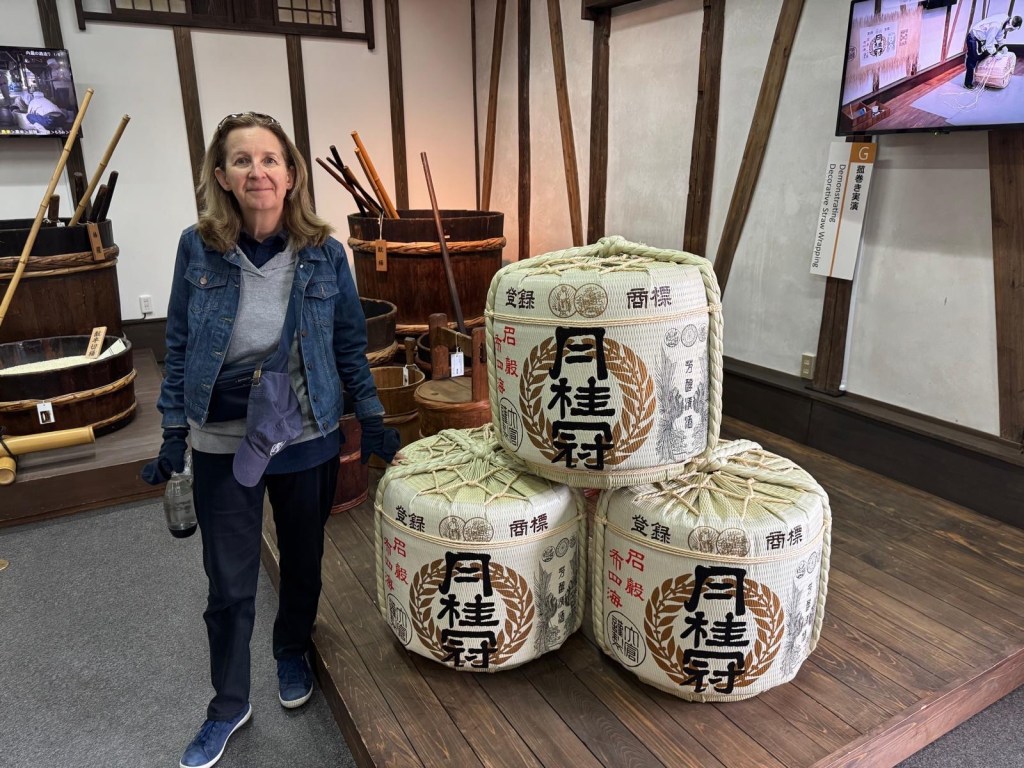
Sake brewery
“Three year steps” – it is said that if you fall over on the steps you’ll die in the next three years (thankfully we didn’t)

Miyajima (Itsukushima)

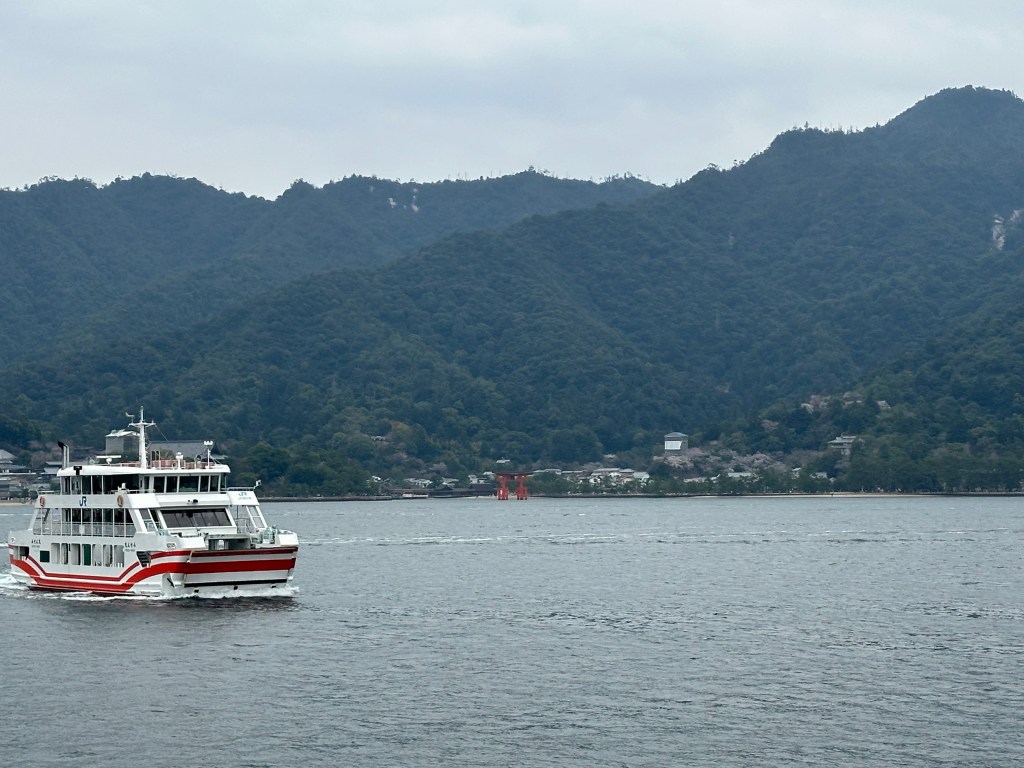
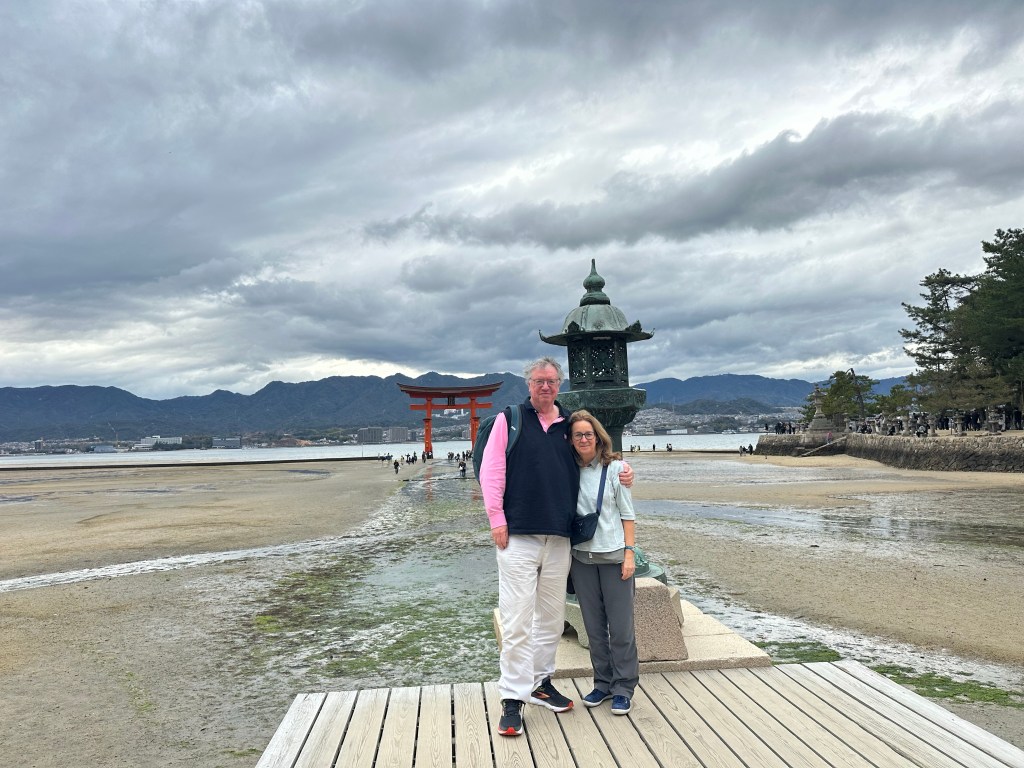
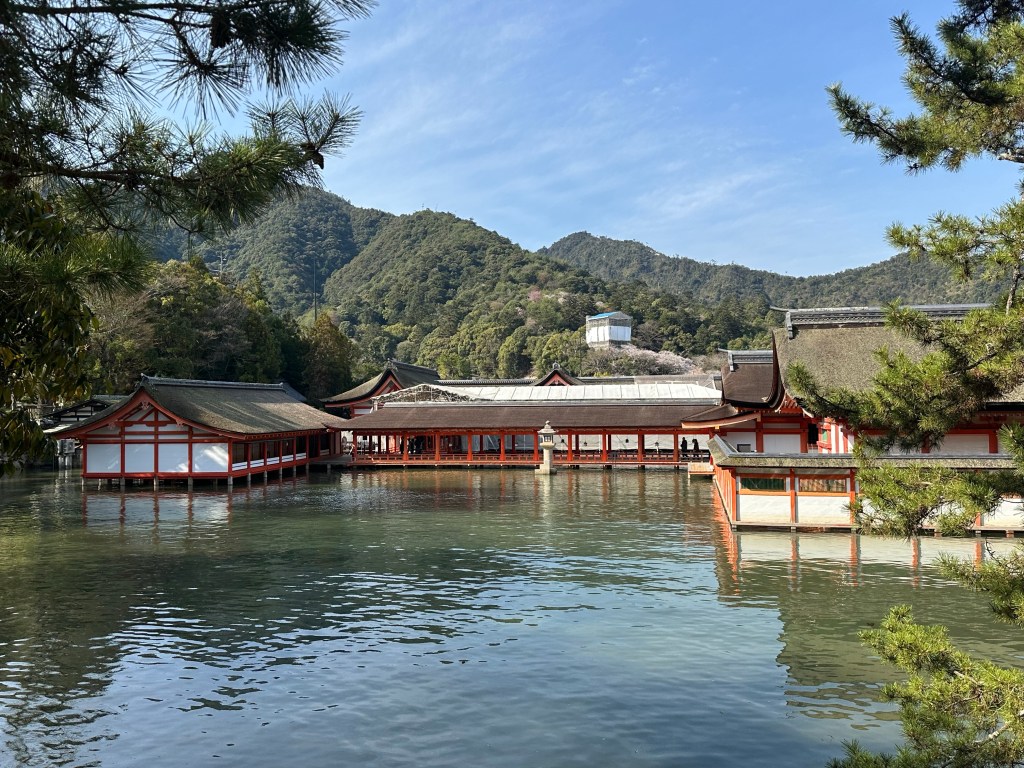
Miyajima translates as “shrine island” and is a small island reached by ten minute ferry from Hiroshima.

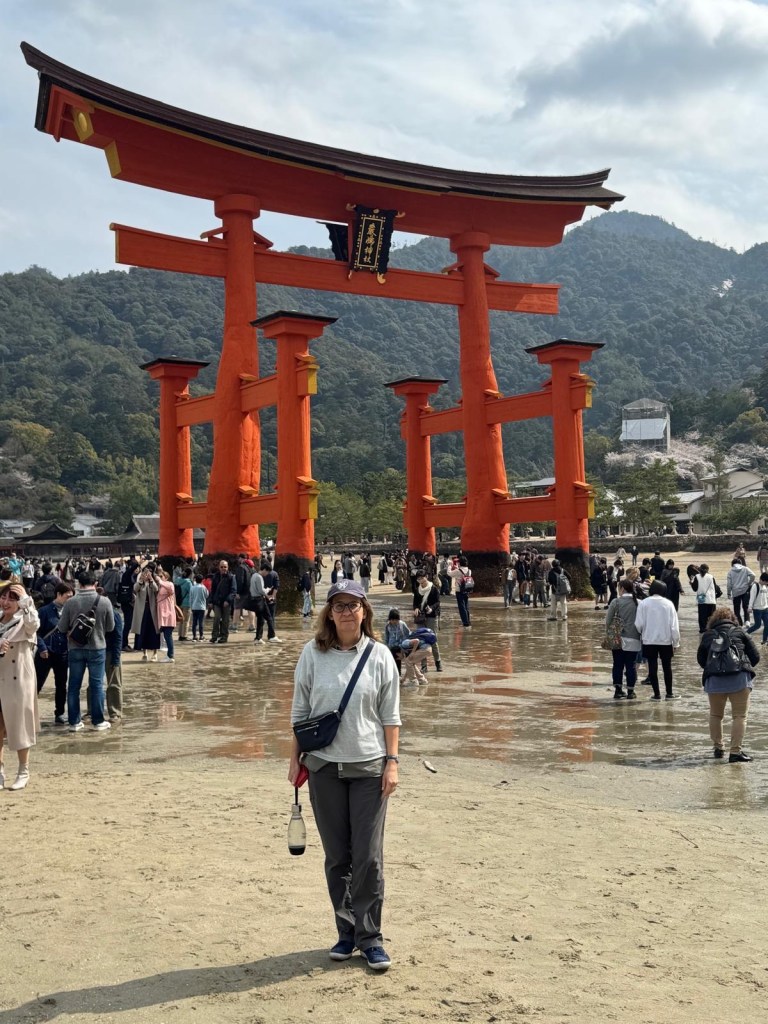
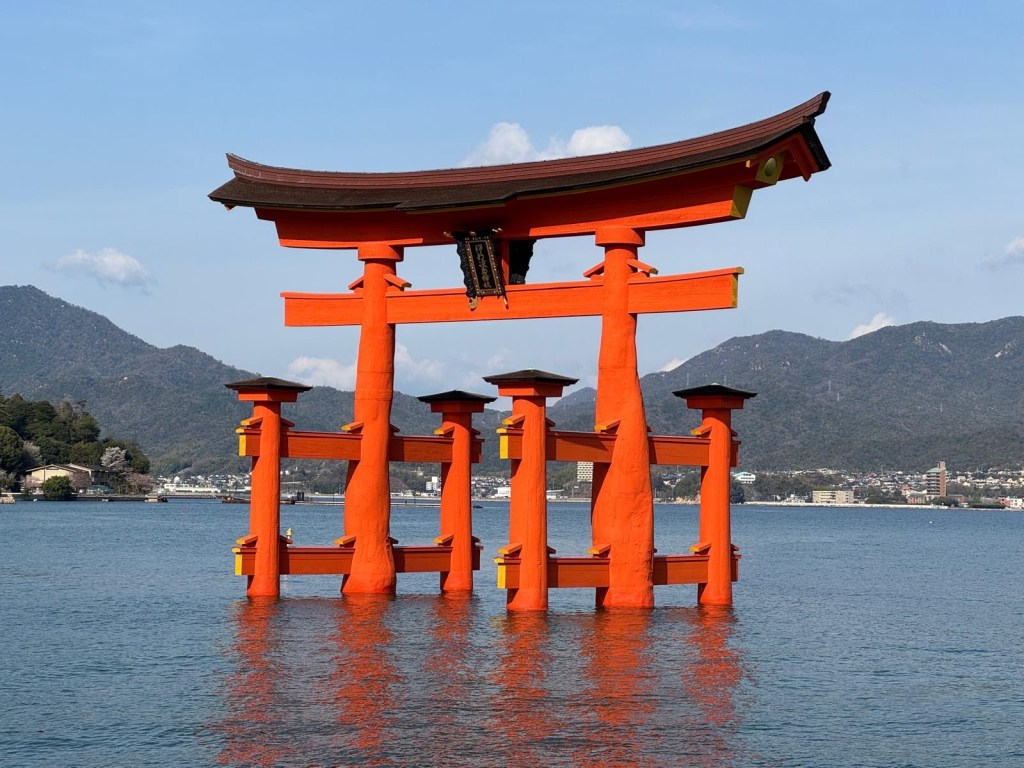
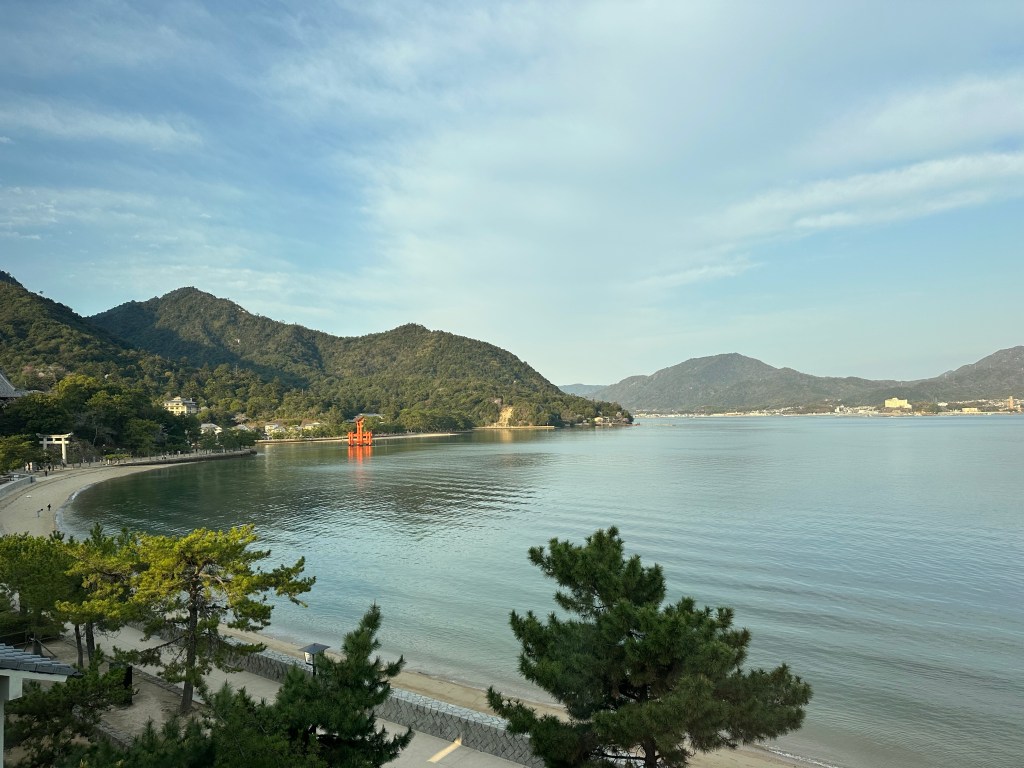
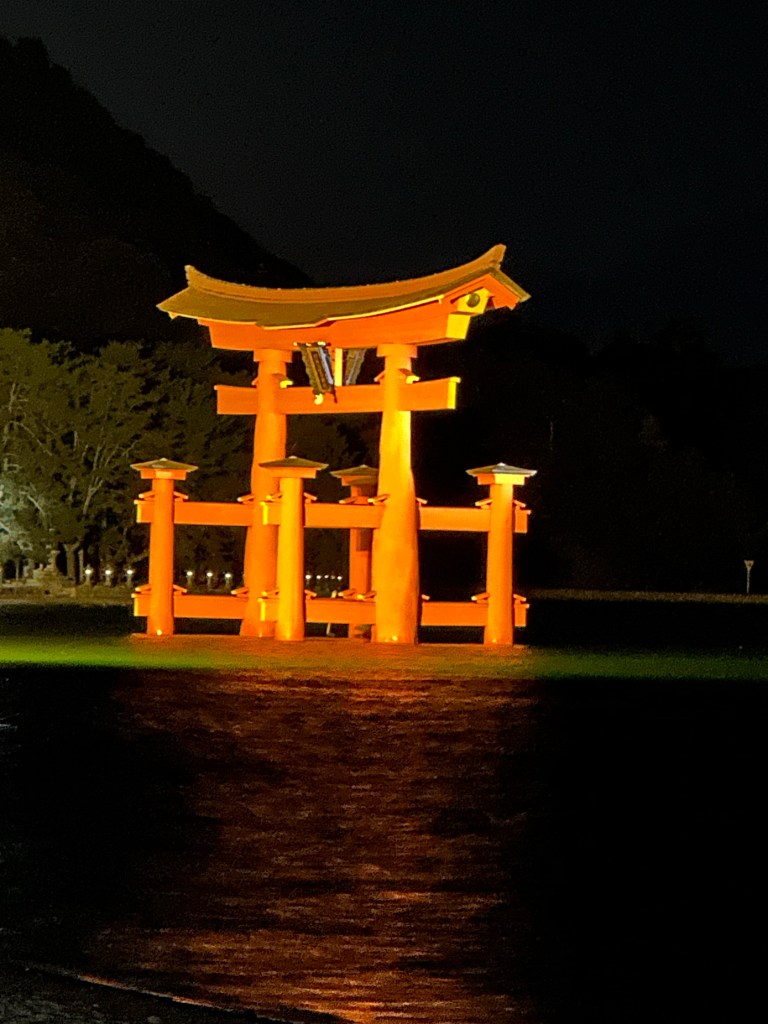
The tori, traditional Japanese gate, of Itsukushima Shinto Shrine sits in the sea, but can be reached at low tide and is one of the most photographed sites in Japan.

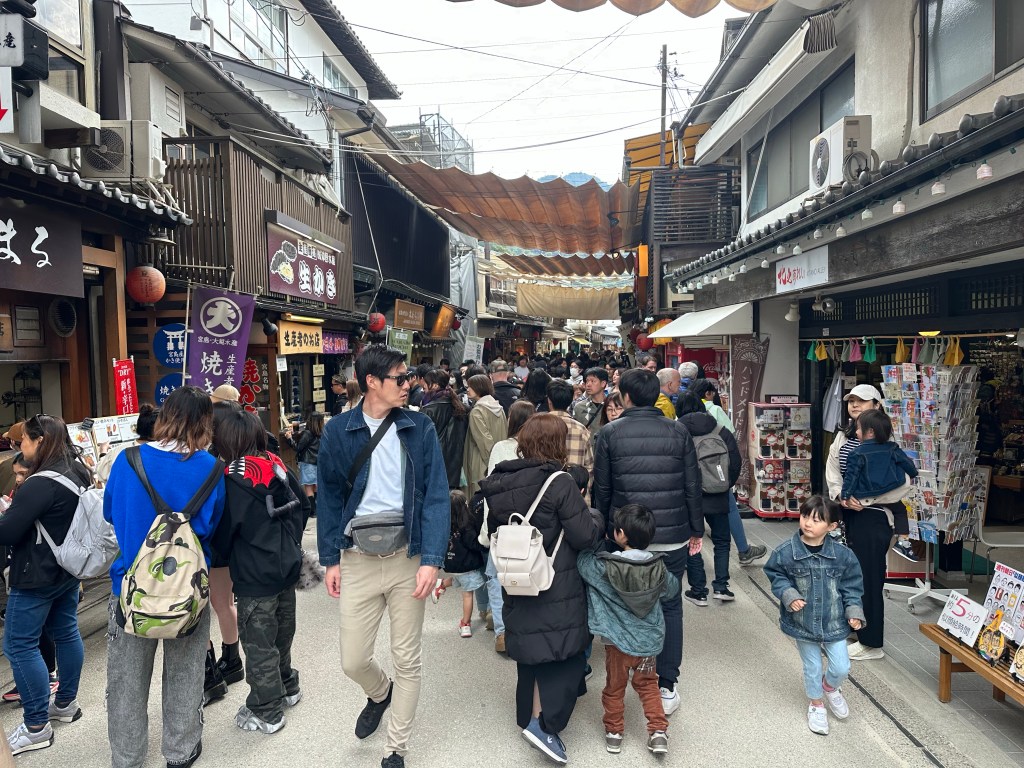
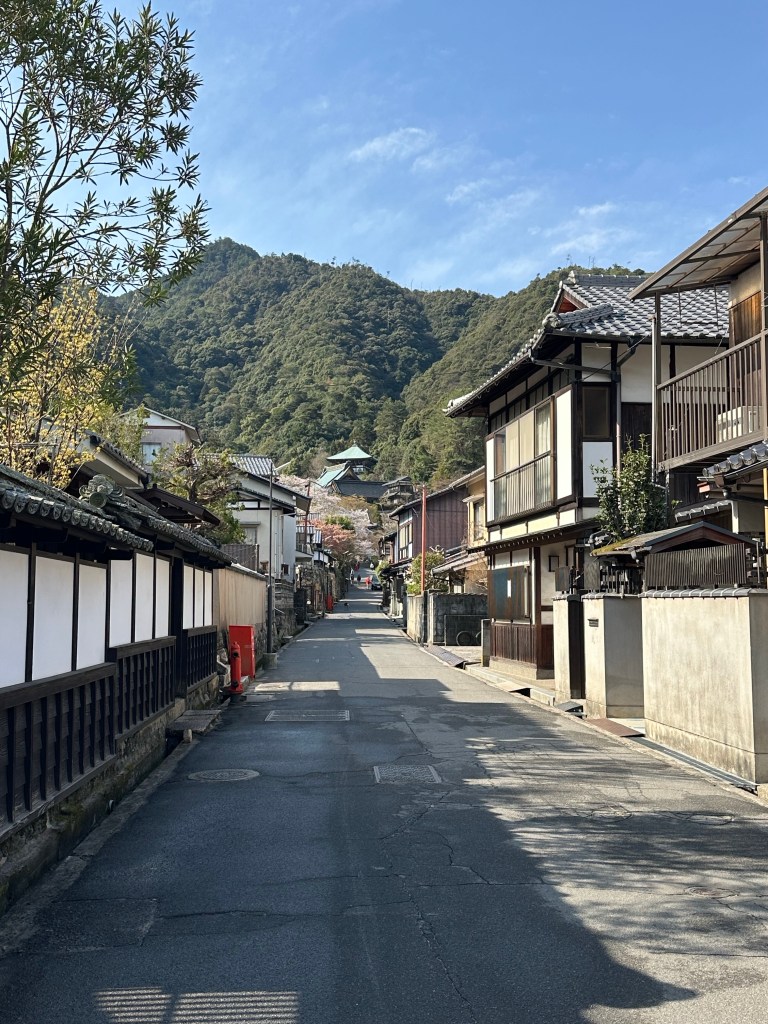
The island is visited by thousands during the day but with limited accommodation becomes very calm for those staying overnight. We stayed for two nights and enjoyed the peace while it lasted!

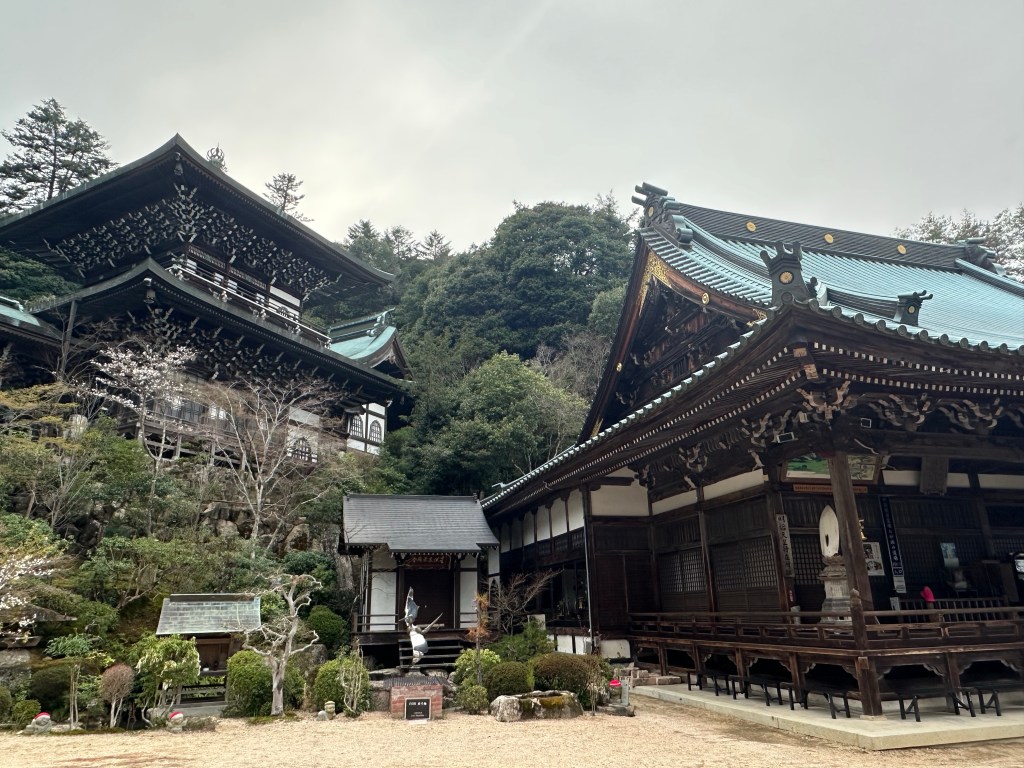
There are a number of Shinto and Buddhist shrines and temples. It is popular for weddings and birth marking ceremonies. However it is forbidden as a location for births and deaths as the whole island is designated as a shrine. With so many visitors and some elderly residents, we were not sure how this works in practice.

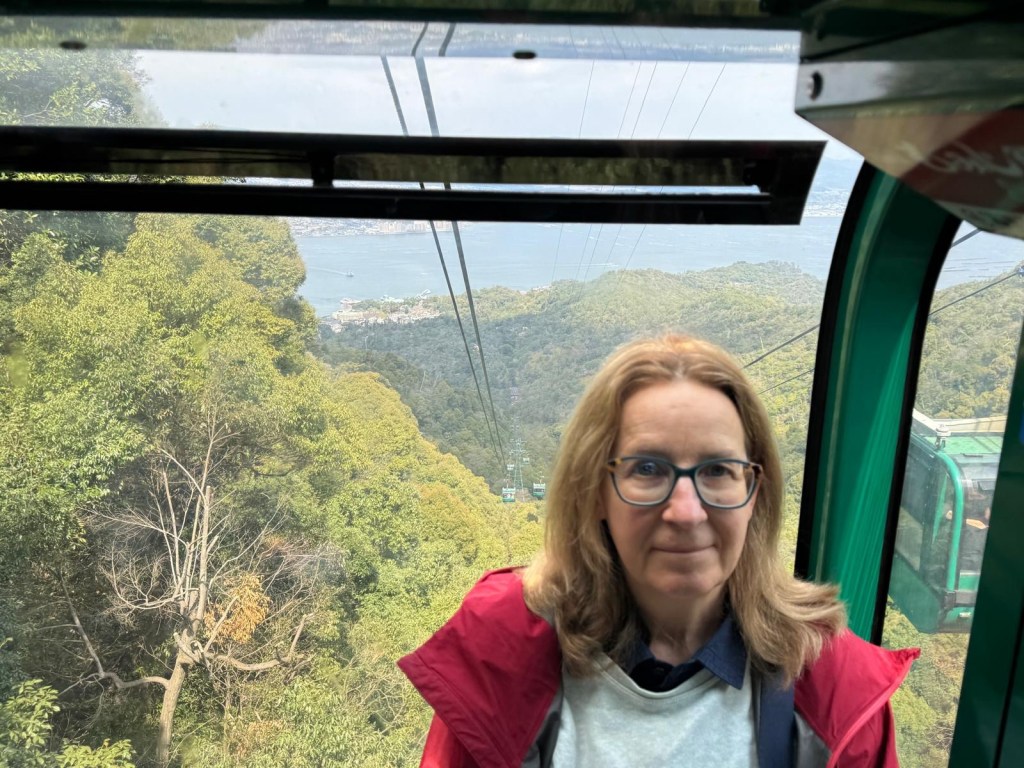
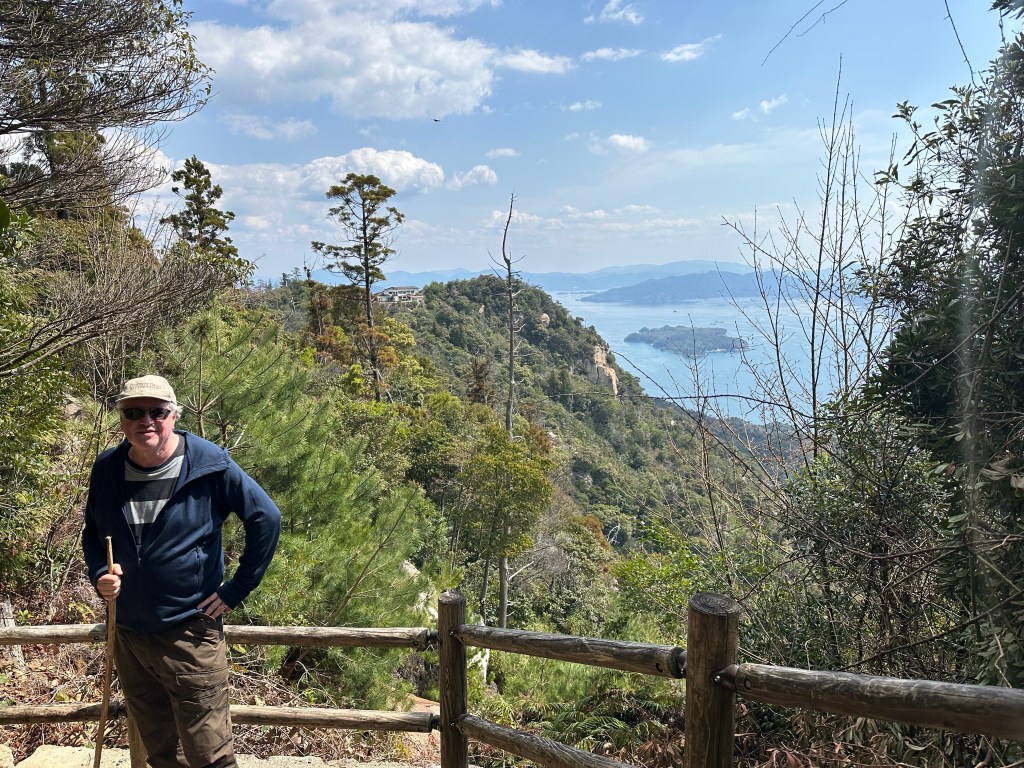
The centre of the island is mountainous, accessed by hiking trails, gondola or (as in our case) a combination.

Hiroshima

A city forever known for a single event.

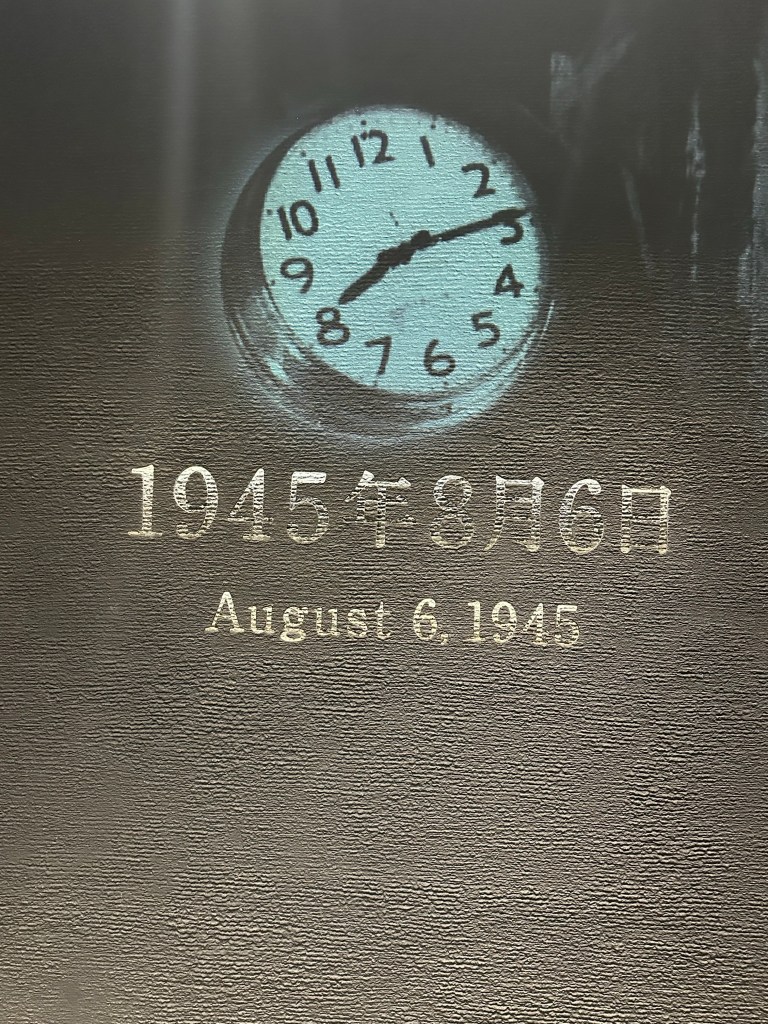
On 6 August 1945 at 8.15am the United States dropped the first atomic bomb, Little Boy, on Hiroshima. The order was given by President Harry Truman on the basis that a land invasion of Japan would give rise to total casualties in the millions.

Within a year of dropping the bomb it is estimated 140,000 mainly non combatants had died from the effects.

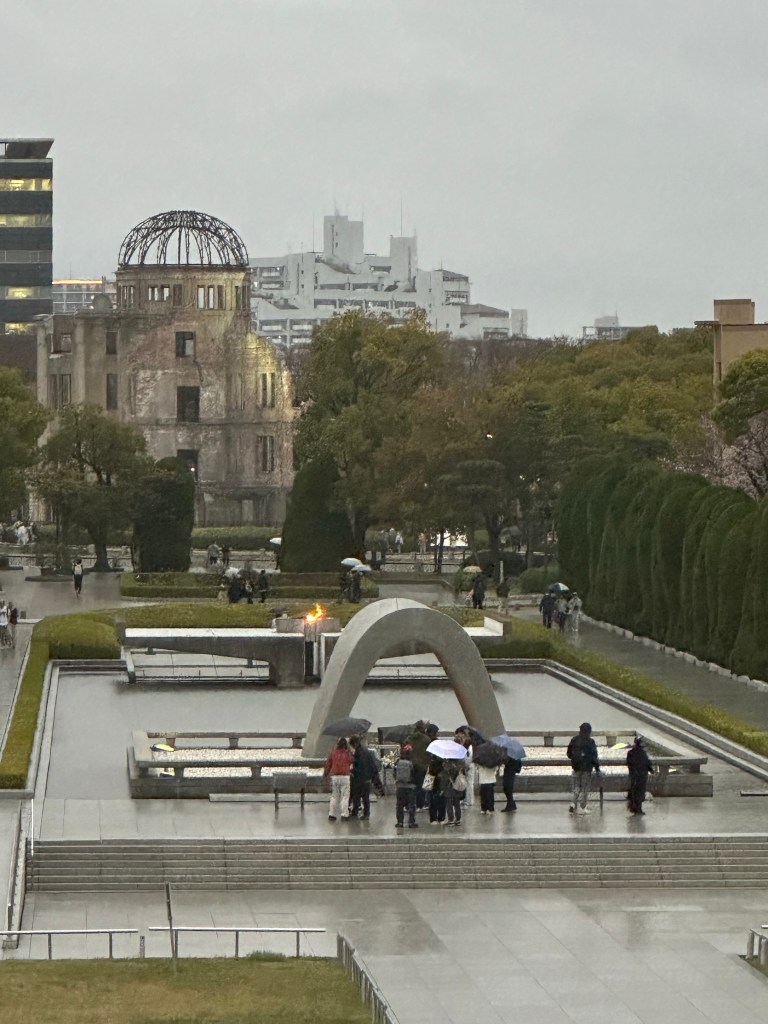
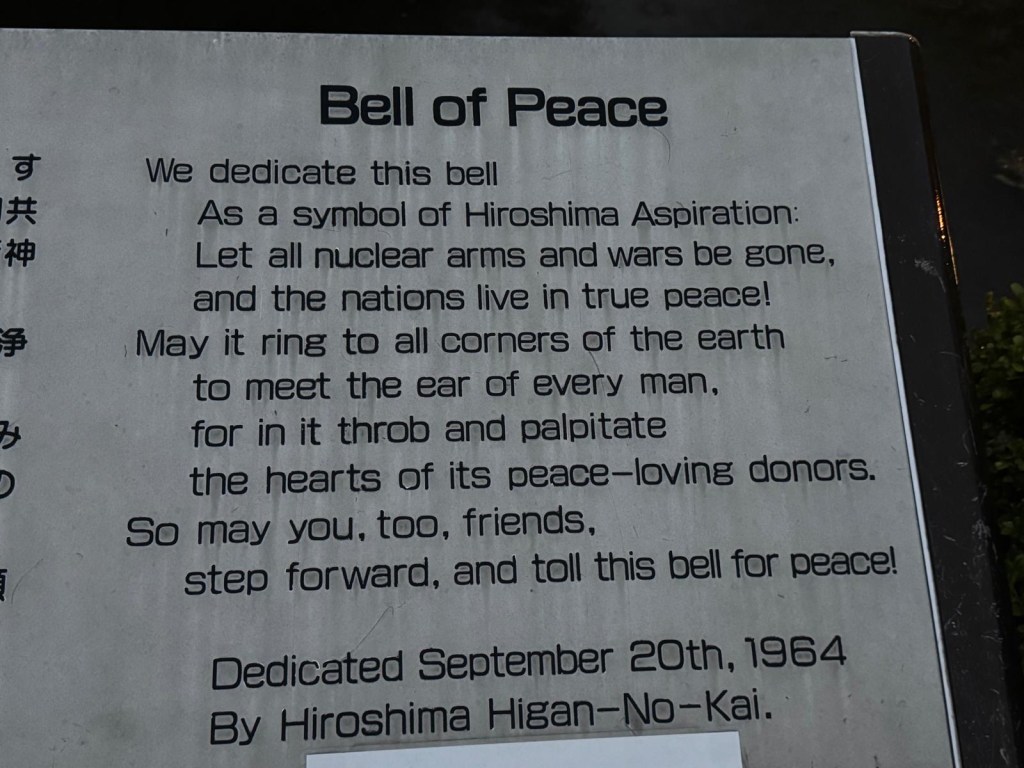
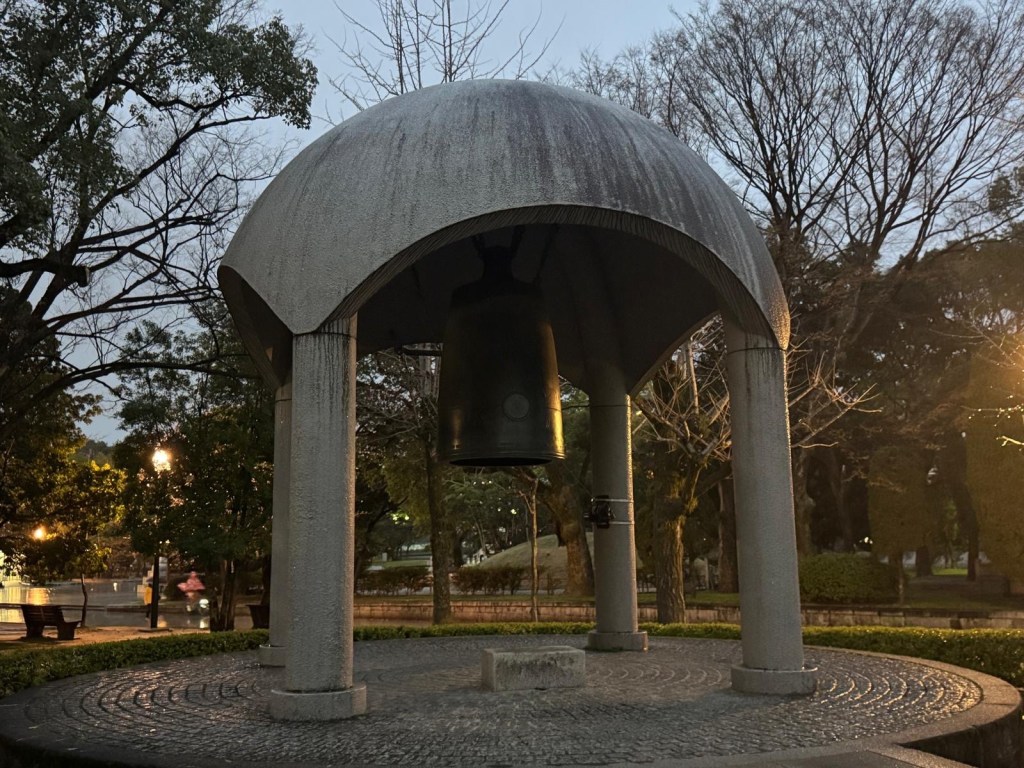
After the end of the war a Peace Memorial was built. The memorial comprises a museum, a park with a number of memorials and “The A Bomb Dome”, a concrete building constructed as an exhibition hall in 1915 to withstand an earthquake, which was almost directly below the blast.

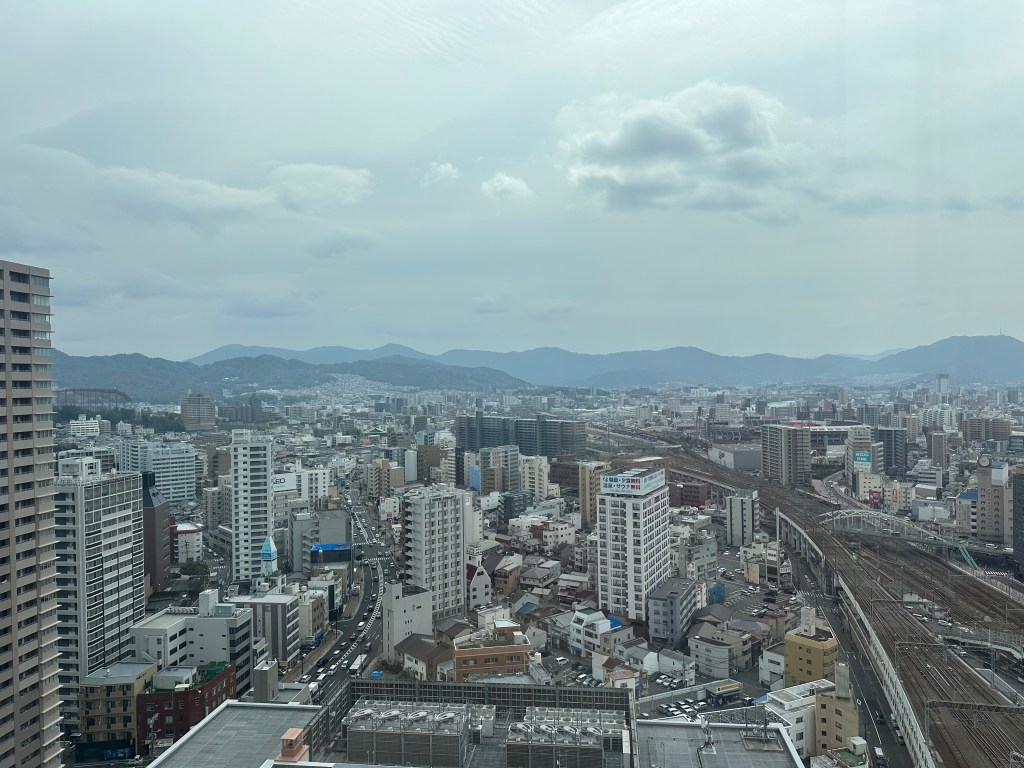
Today Hiroshima is a city of just over a million almost entirely built since its near destruction in 1945. It was the southern most point of our trip, reached by two Shinkansen trains.

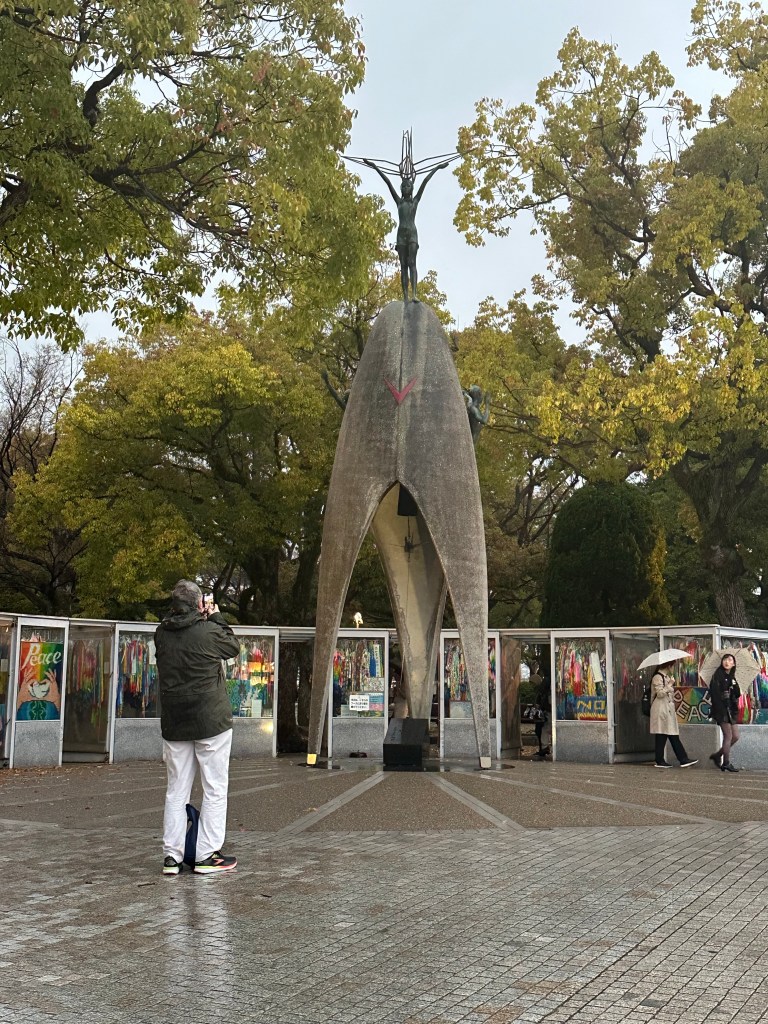
Children’s memorial

Gora

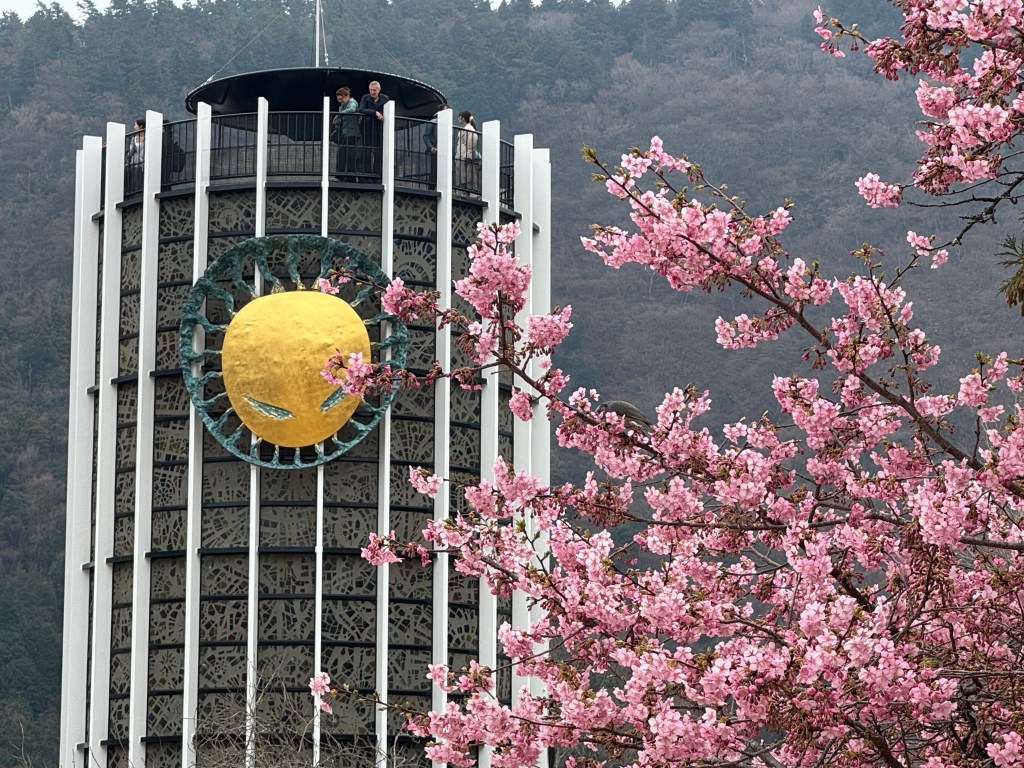
Gora is a major tourist attraction (predominantly domestic tourists) with hot springs as the source of onsen (traditional hot baths). The public onsen comprise male and female only pools where clothes and tattoos are forbidden.

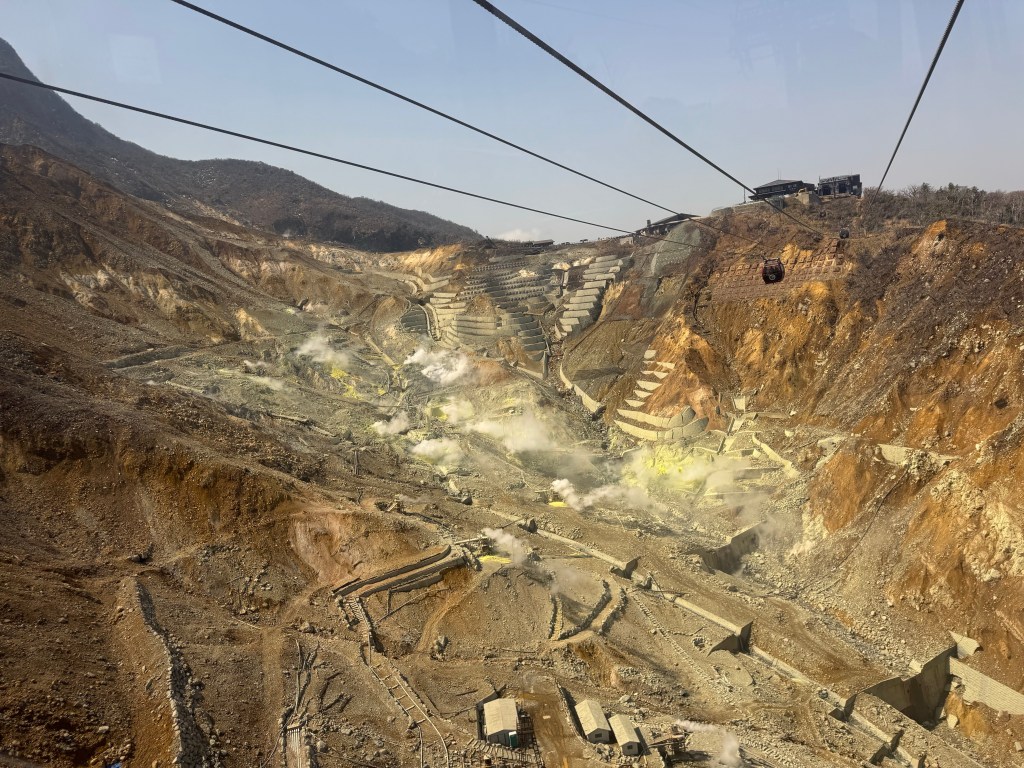
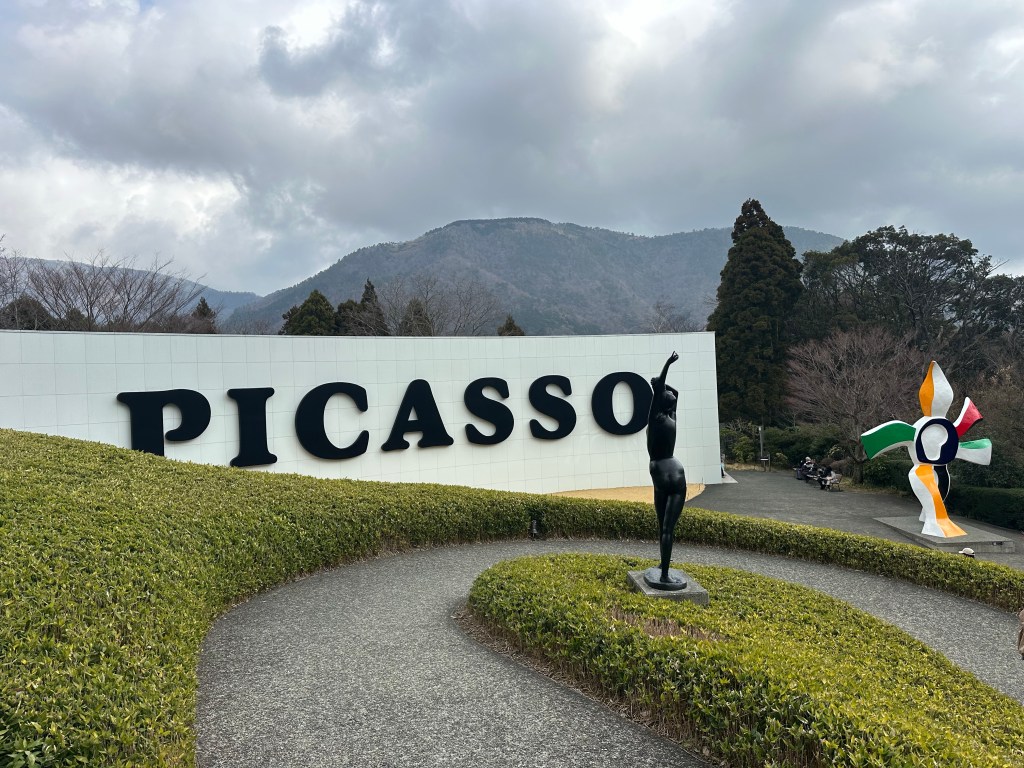
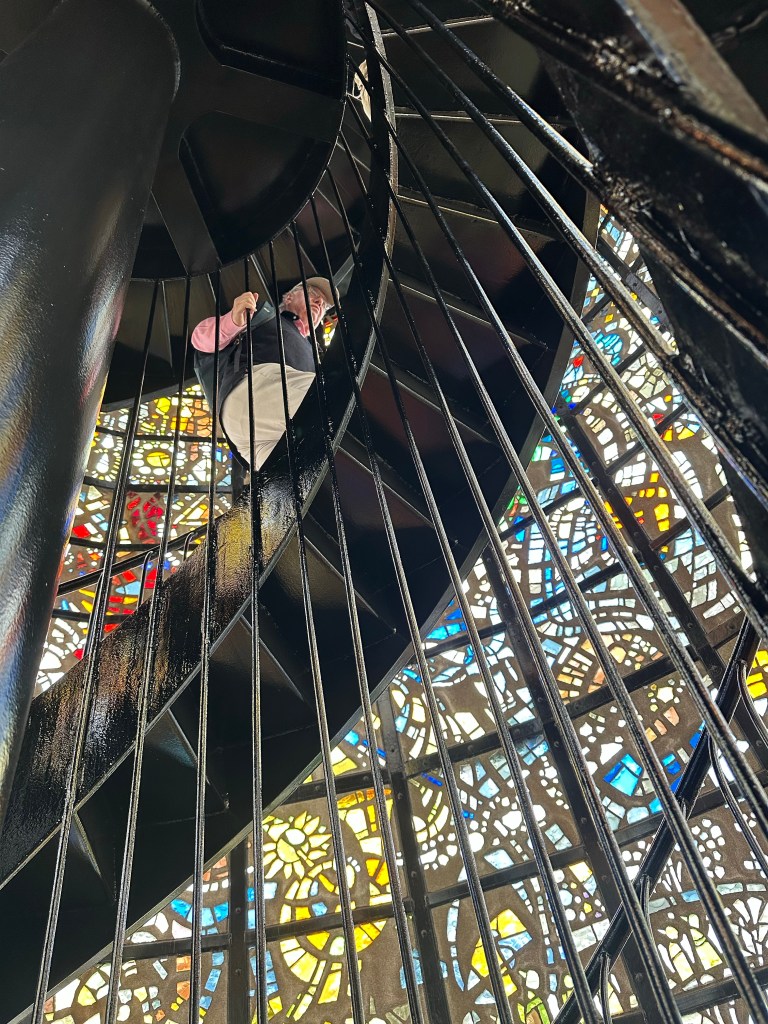
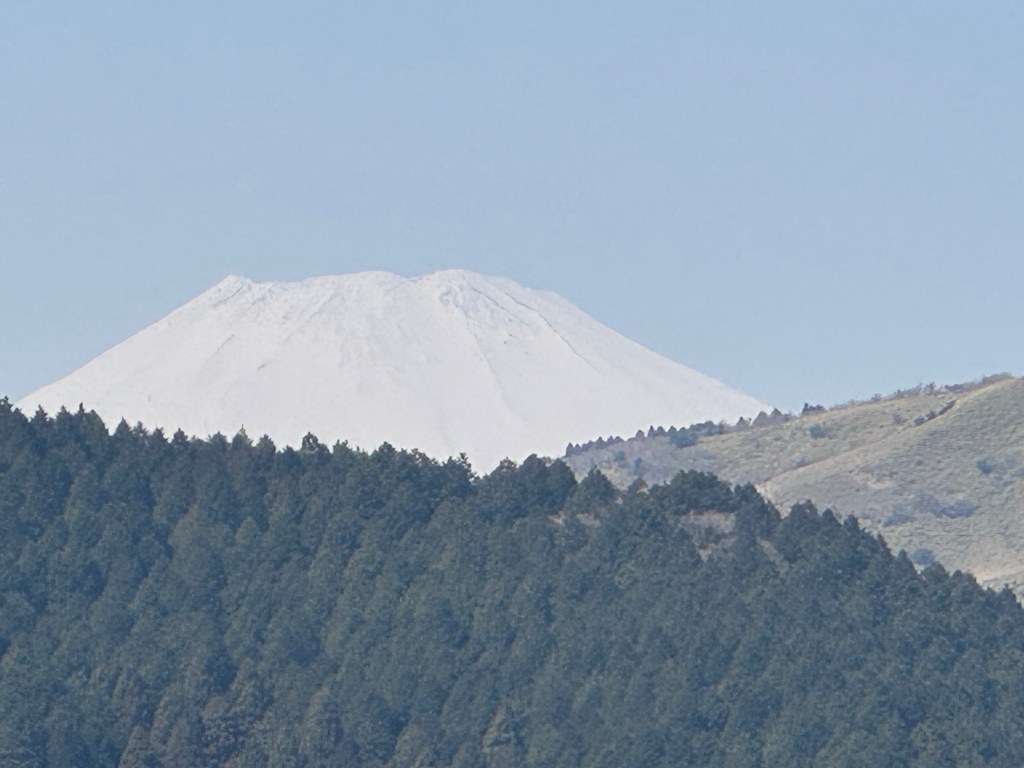
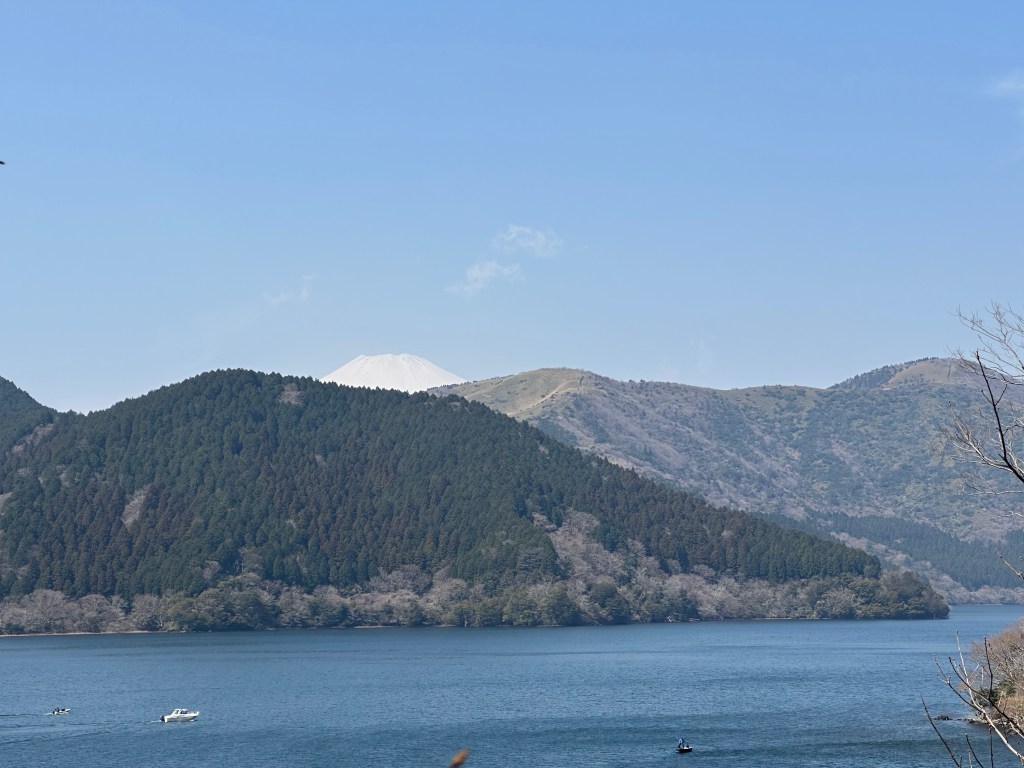
Gora has several art museums including an impressive open air museum but the highlight is the trip to Sounzan by cable car followed by the ropeway (gondola) to Lake Ashi. The ropeway passes over a volcanic valley with active sulphur vents, smelling of bad eggs before, on a clear day, giving views of Mount Fuji.

Mount Fuji is an active volcano and at 3,776 m the highest mountain in Japan. Lake Ashi also gives views of Mount Fuji as well as temples and shrines around its shores.

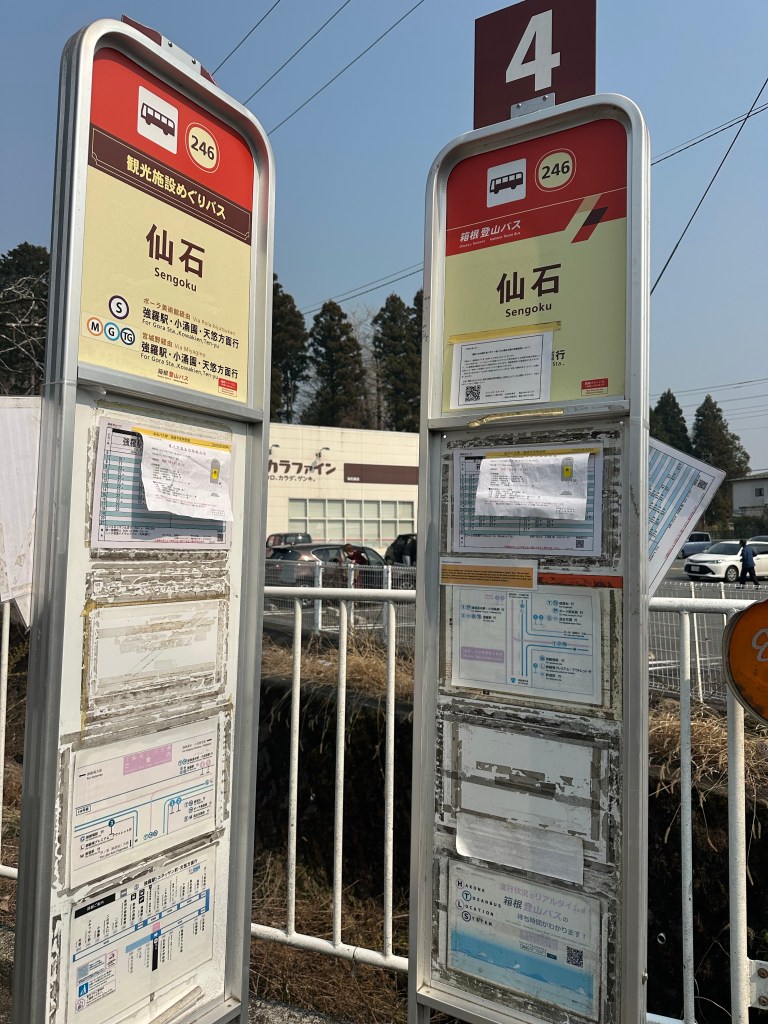
On our second day the ropeway was closed due to high winds giving us an “opportunity” to try our luck with local buses!

Bus stop and timetable !
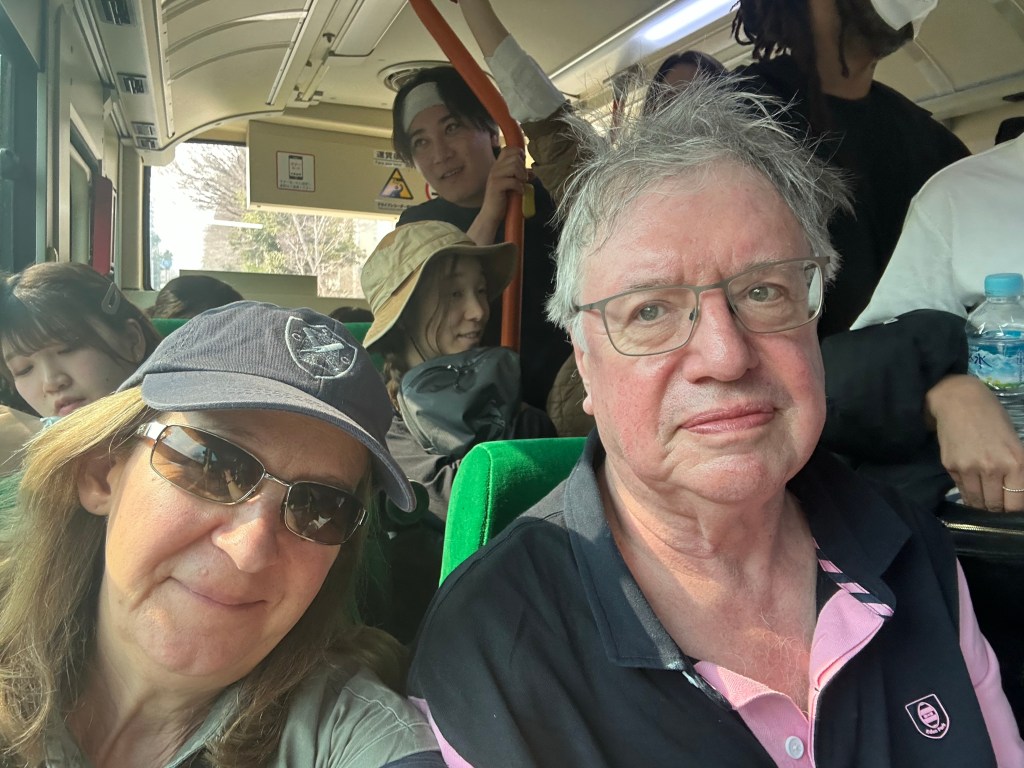
Somehow we managed to get on the right bus. With the ropeway closed, it was very cosy

Tokyo to Gora

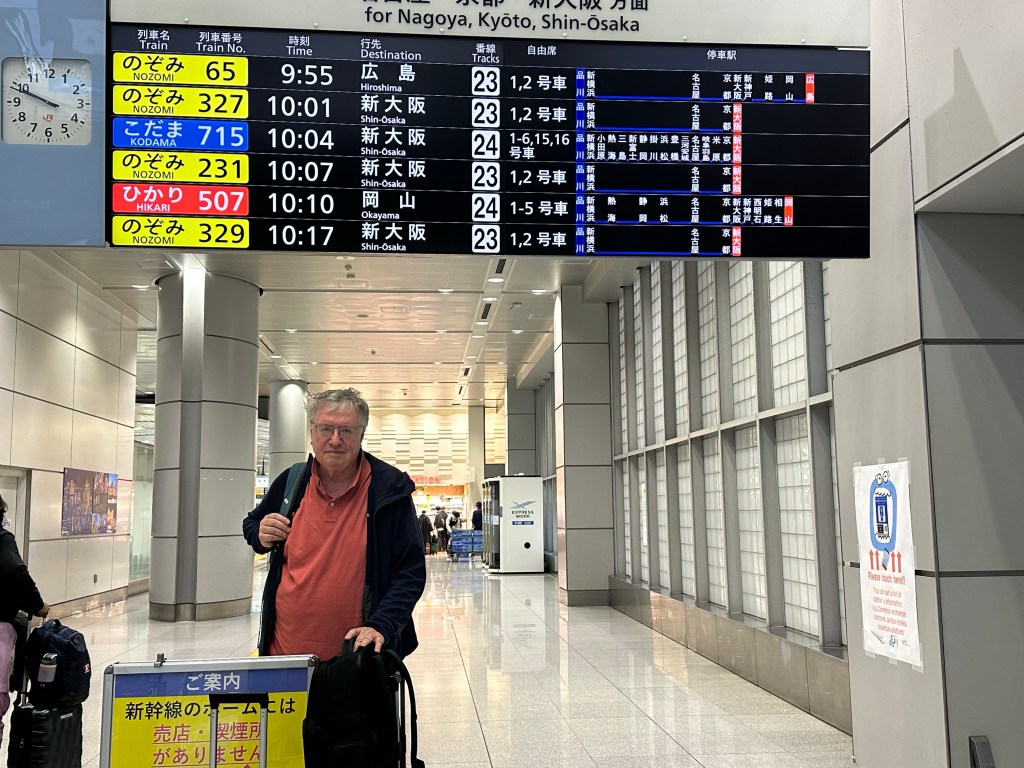
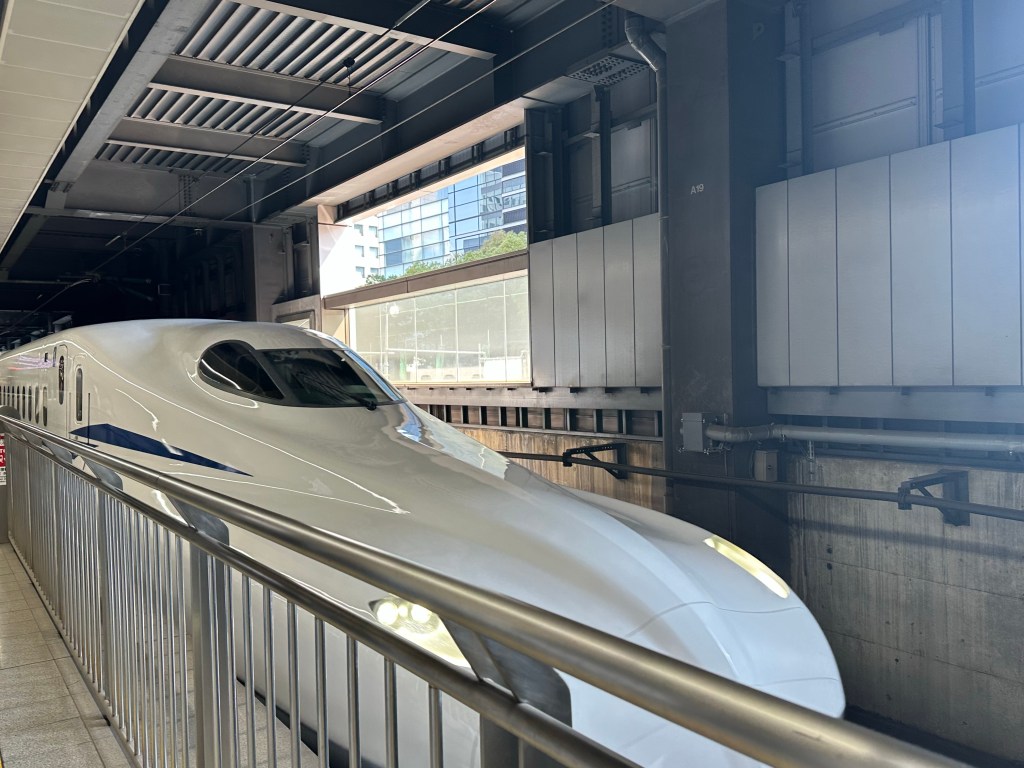
Gora is about 120 km south west of Tokyo and reached by three trains. The first is the famous bullet train (Shinkansen) which first came into service in 1964. It has a maximum speed of 320 km per hour, is the most punctual service in the world and has never had a fatality.

The train is in each station for only a couple of minutes with the passengers already in orderly queues in designated parts of the platform depending on your carriage. Getting on and off the train is helped considerably by the absence of steps or gaps – platform and trains are at the same level with only a few cm between the two.

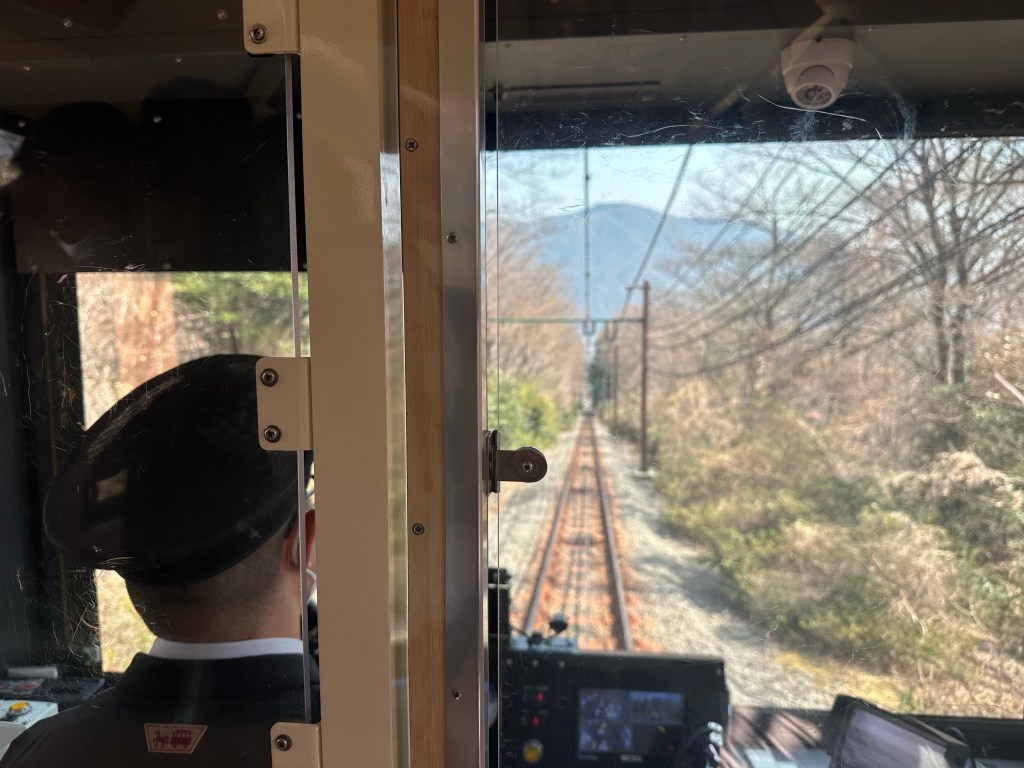
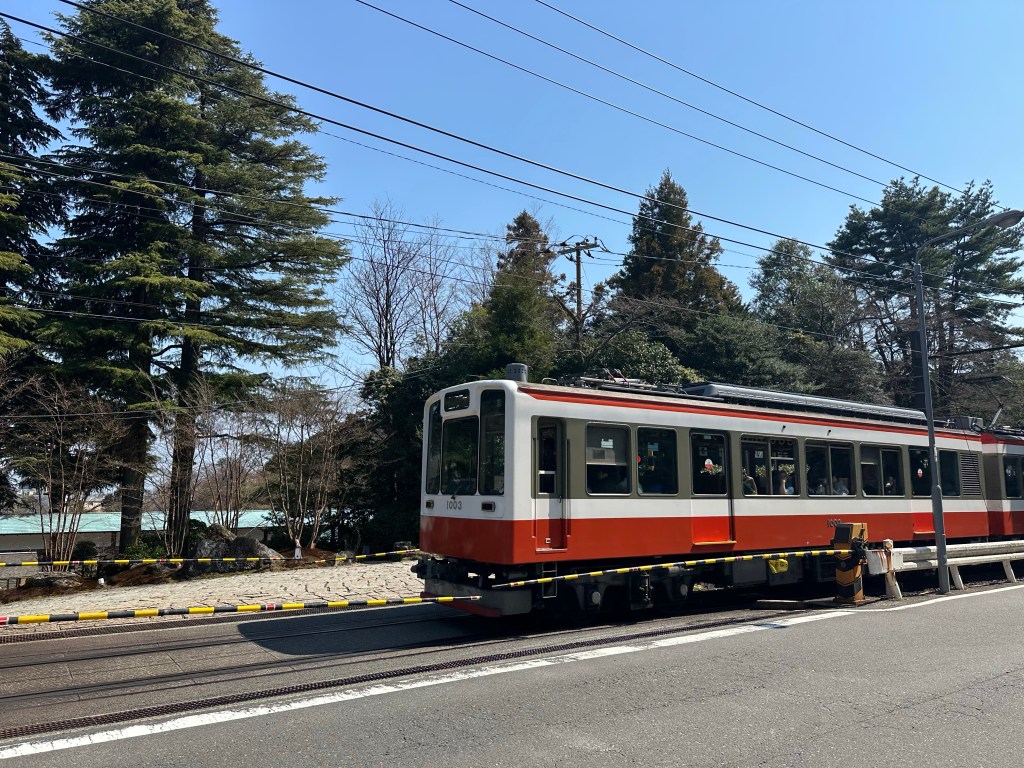
The next two trains run on the Hakone Tozan Line, with the section from Hakone to Gora being a spectacular mountain railway including three switchbacks.

Tokyo

Tokyo became the capital of Japan, replacing Kyoto, following the resignation of the Tokyo based Shogun and the Emperor moving to the new capital. With a population of 37 million it is the world’s largest city.

Much of Tokyo was destroyed in World War II and few buildings remain from prior. From the 1950s many Buddhist temples and Shinto shrines were rebuilt along historic lines but with modern materials.

The city does not have a major problem with traffic as most locals do not own cars due to the lack of parking, so use public transport. We avoided rush hour and found it easy to get around by metro or taxi. The metro introduced more English signage and announcements in preparation for the recent Olympics which then sadly could not host spectators.

Tokyo metro, outside rush hour
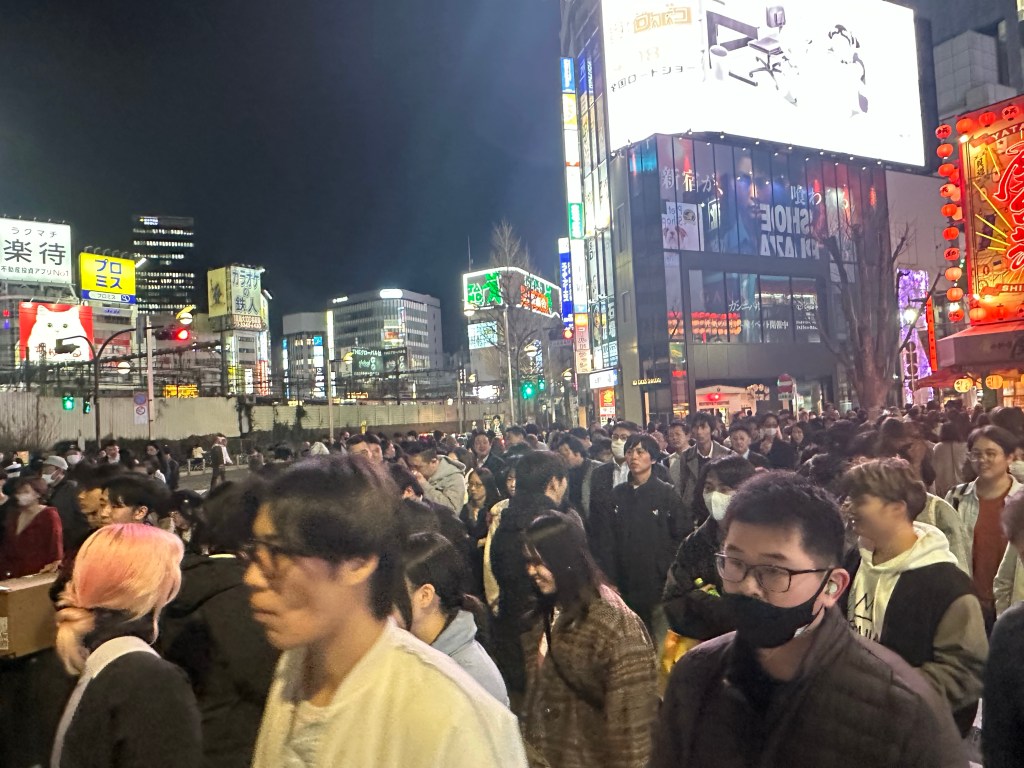
Pedestrian crossing- very organised and disciplined- at about 9pm
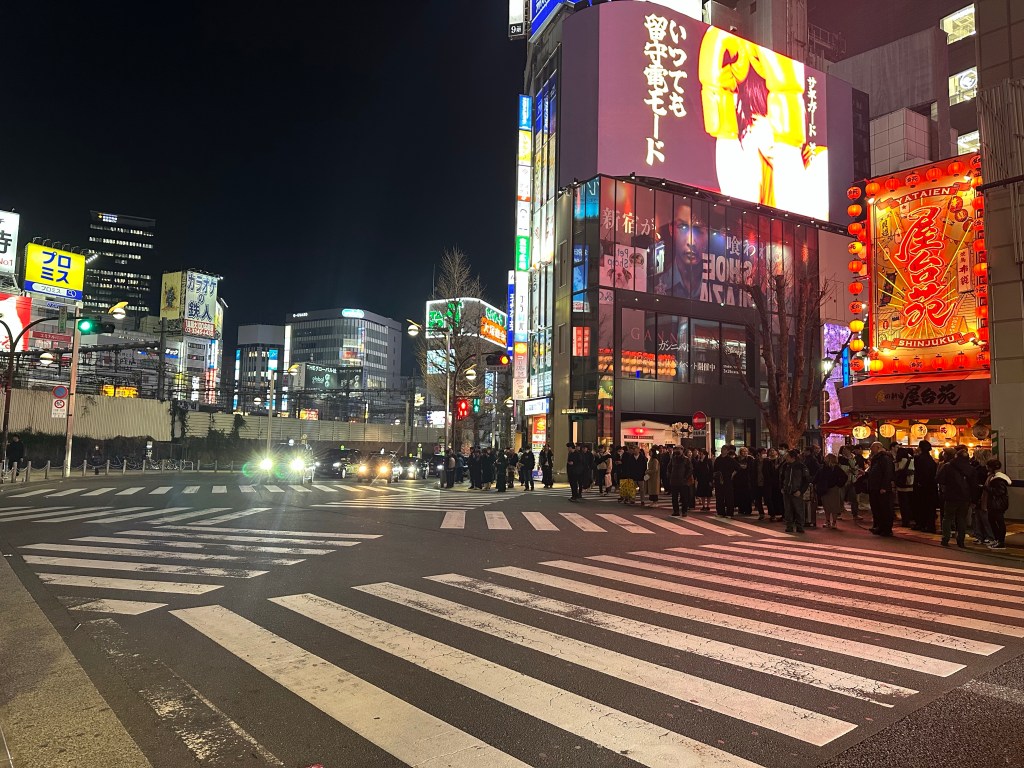
The same crossing less than a minute later
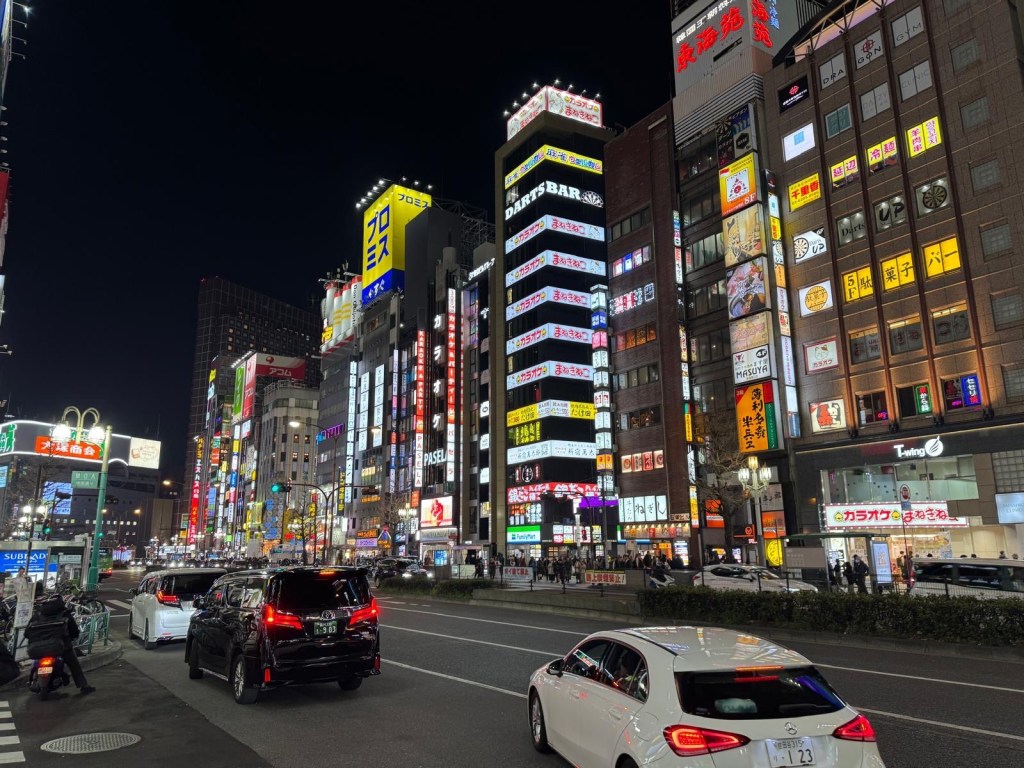
Typical city centre street (this one features in the film Lost in Translation)
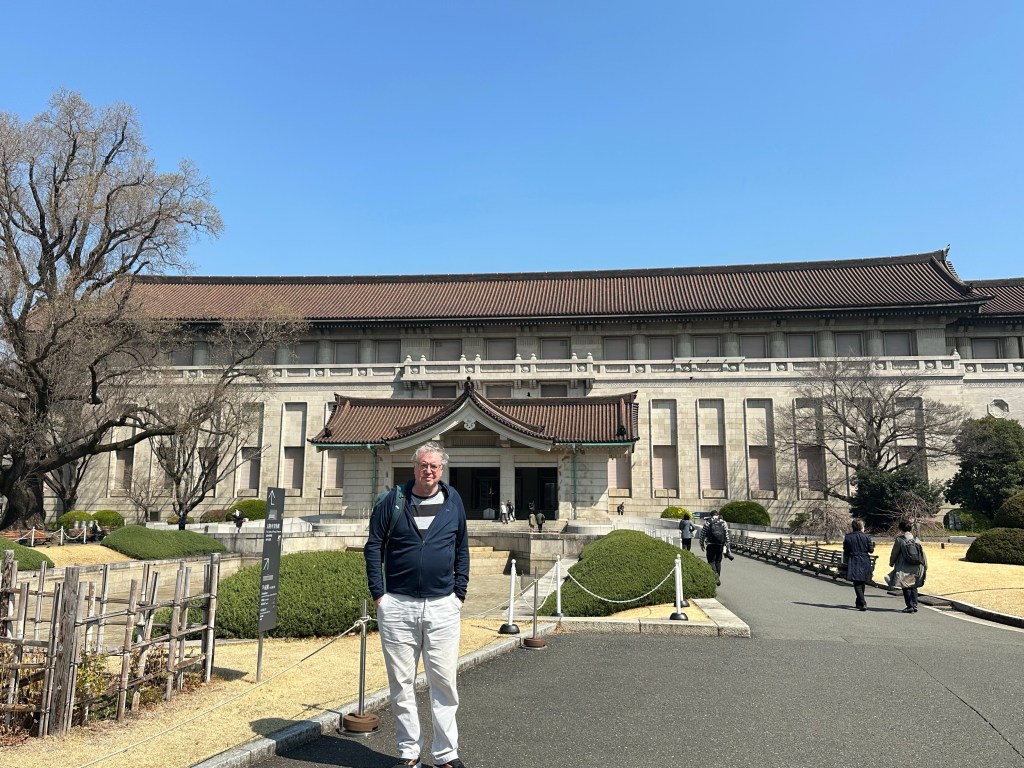
Tokyo National Museum
Merchants house that survived World War II (now an excellent bakery)
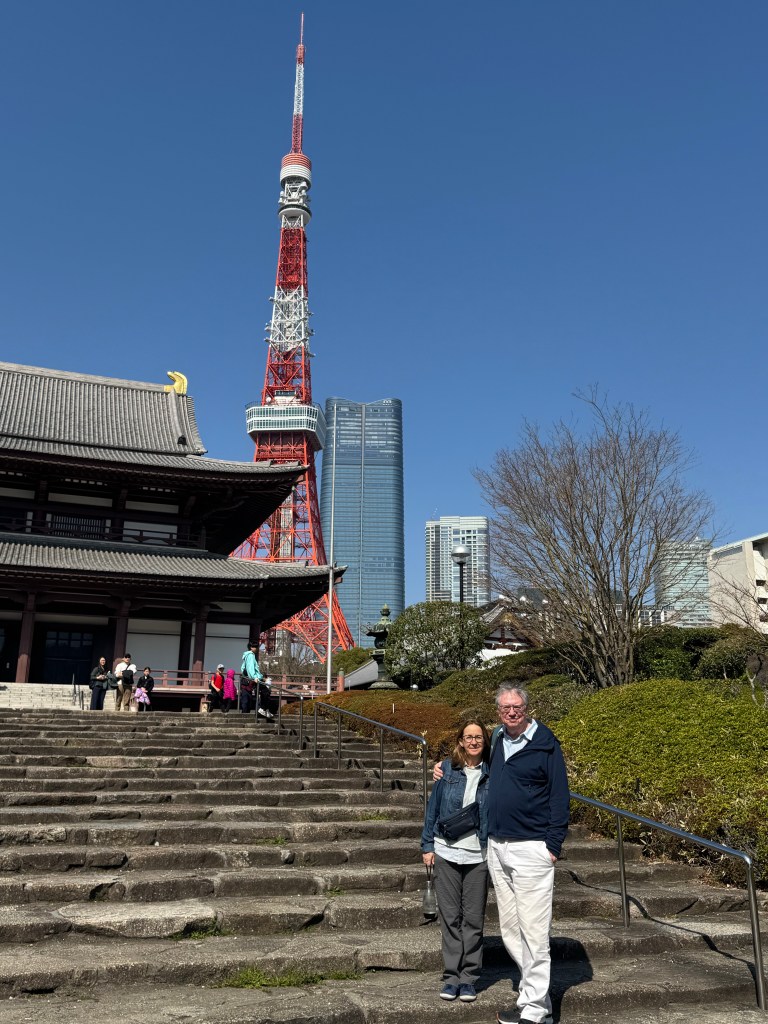
Shinto shrine with Tokyo tower in the background
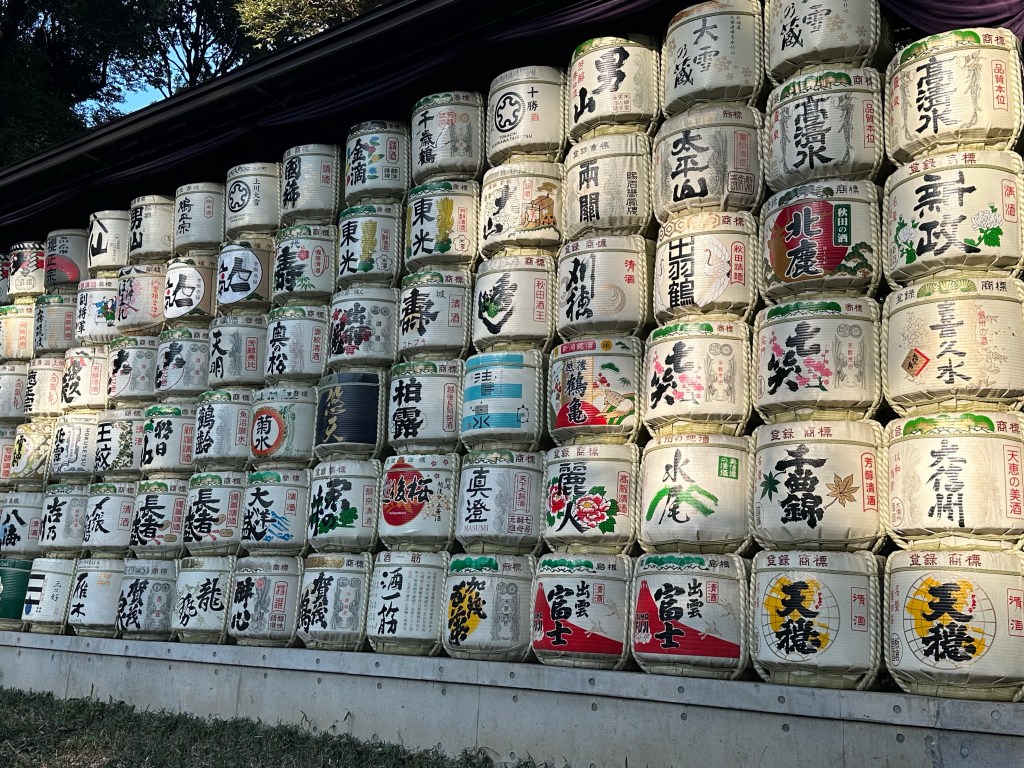
Sake barrels outside a Shinto Shrine
Buddhist temple and pagoda
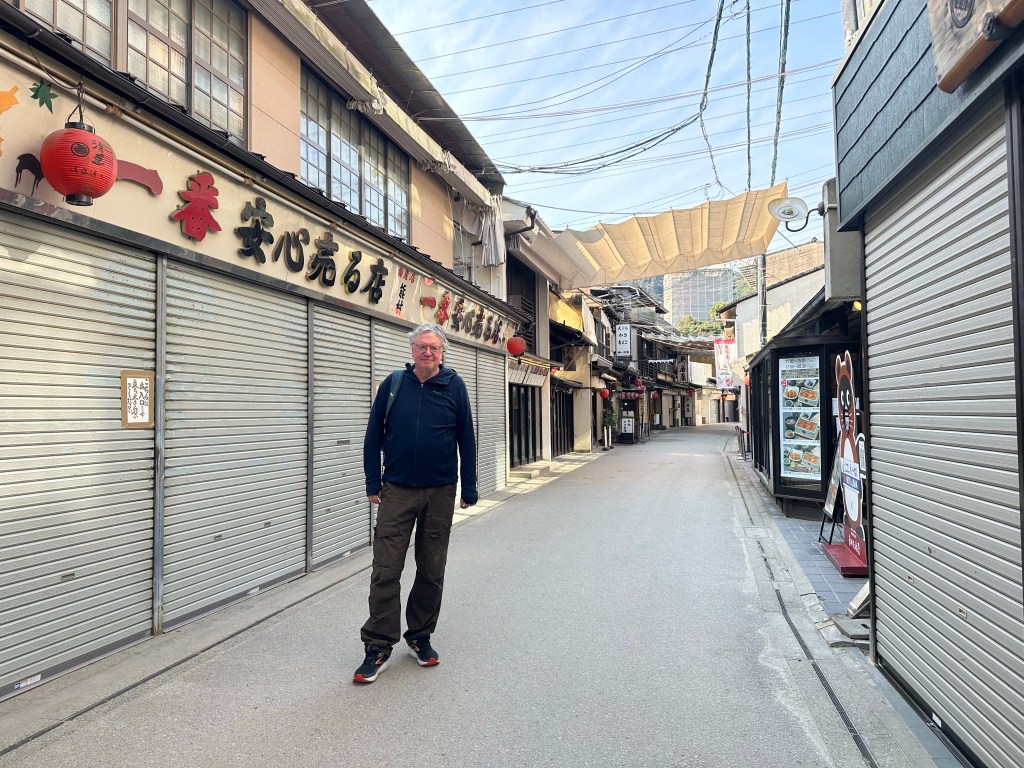
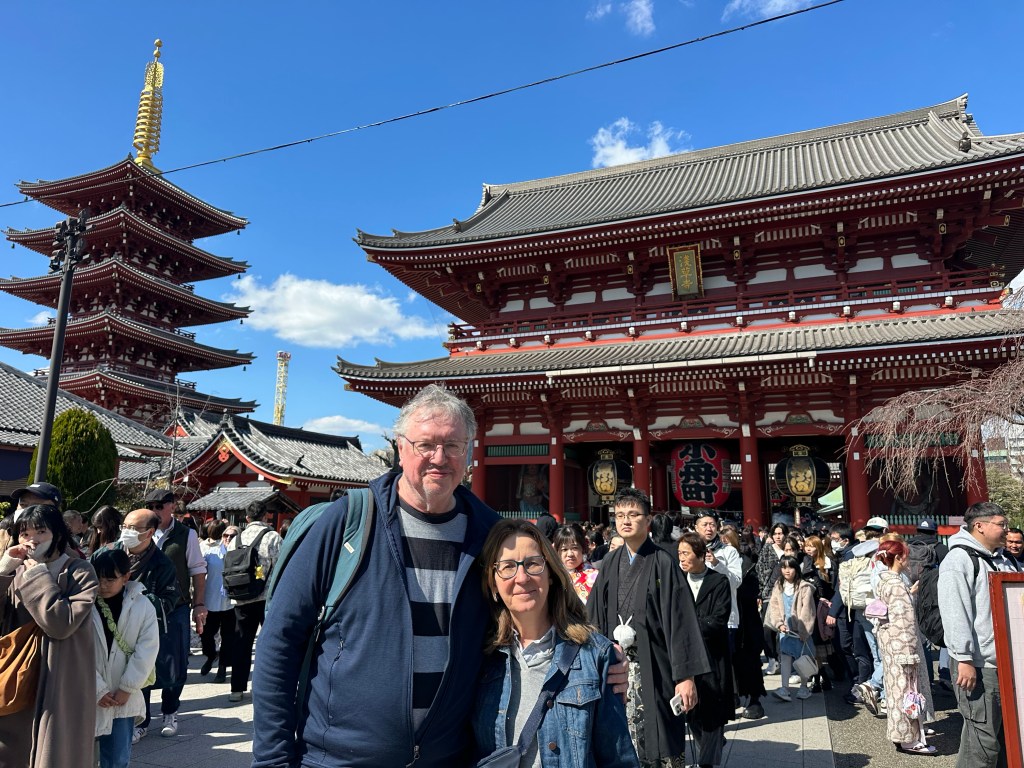
We visited the above on a busy public holiday- luckily Tim stands out in a crowd in Japan!