Polonnaruwa

Polonnaruwa was the capital of Sri Lanka’s 2nd Kingdom, which lasted from 1056 to 1232. It was a large city with a Royal Palace and extensive elaborate temples, statues and stupas. The city was burnt by invaders from India.

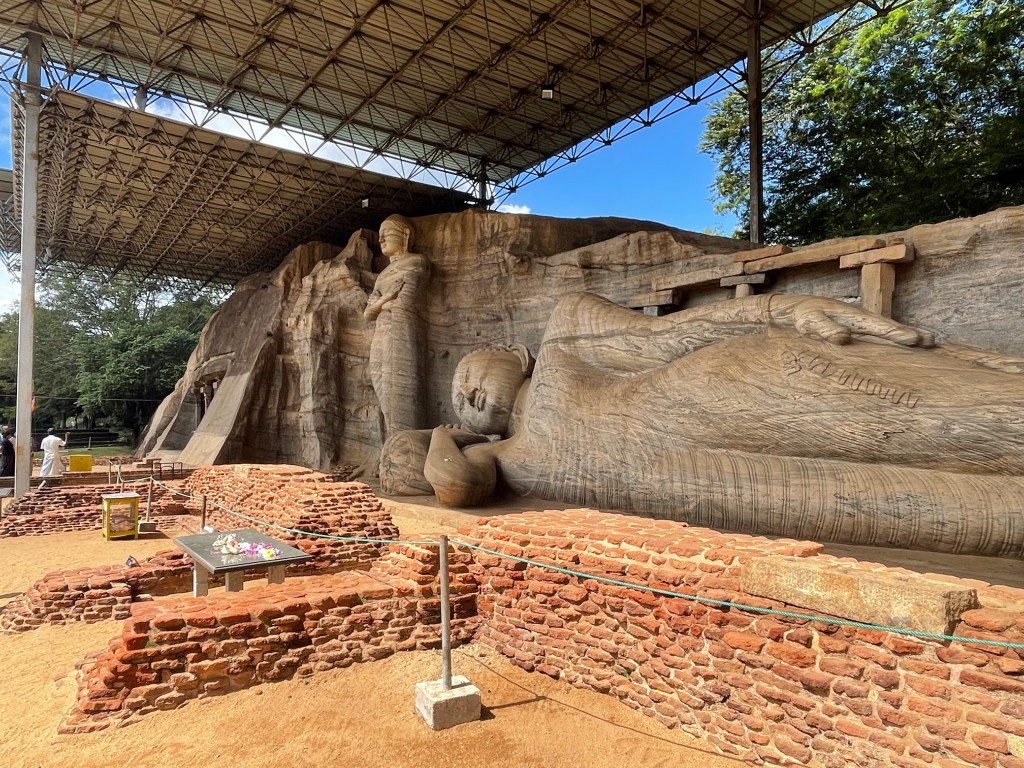
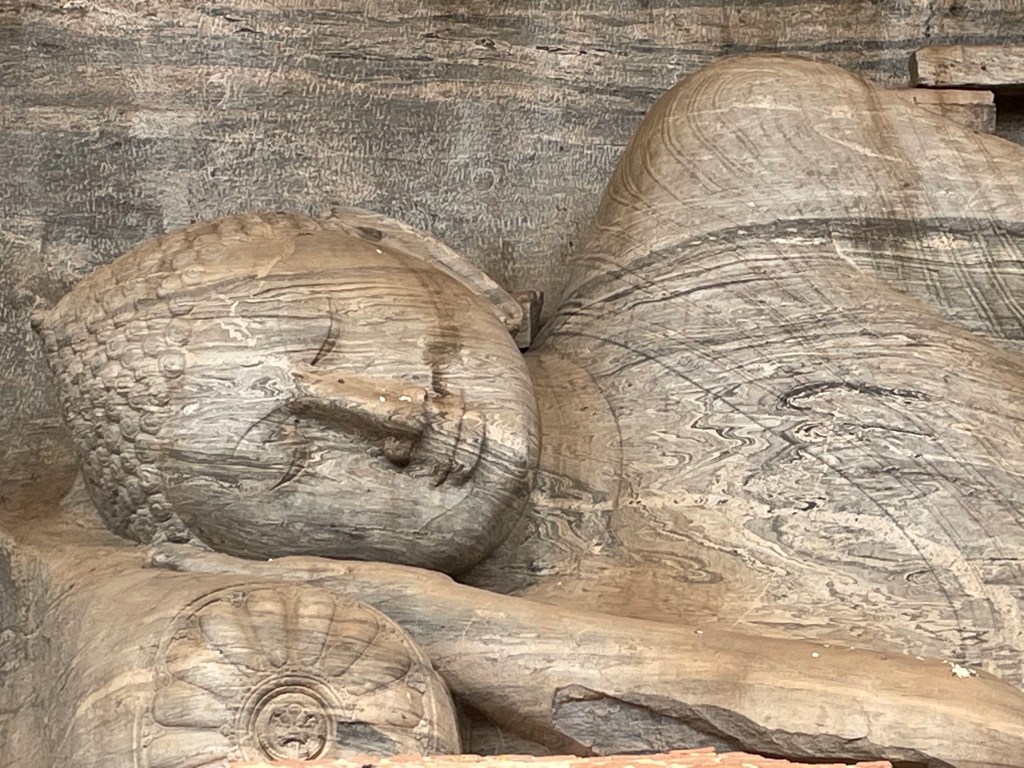
The most sacred part of the site is four Buddha images carved from one long slab of granite; the largest being a 14m reclining Buddha which depicts him entering parinirvana (nirvana after death). The statues were prevented from destruction by covering with clay and were not rediscovered until the 19th century by HCP Bell.
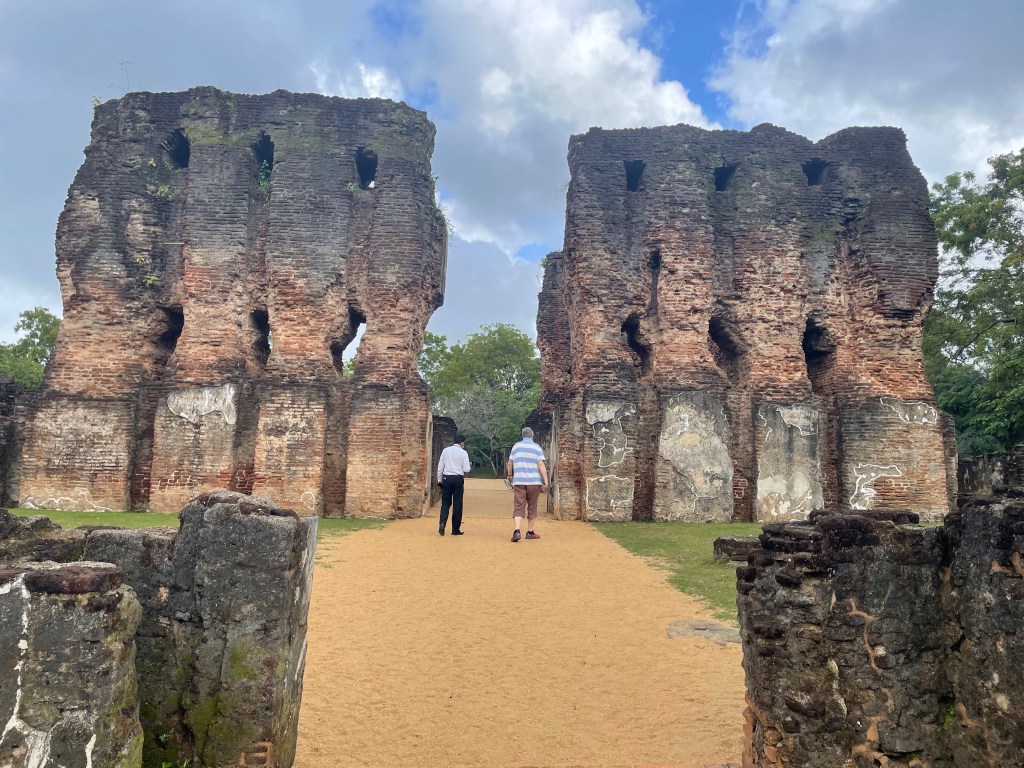
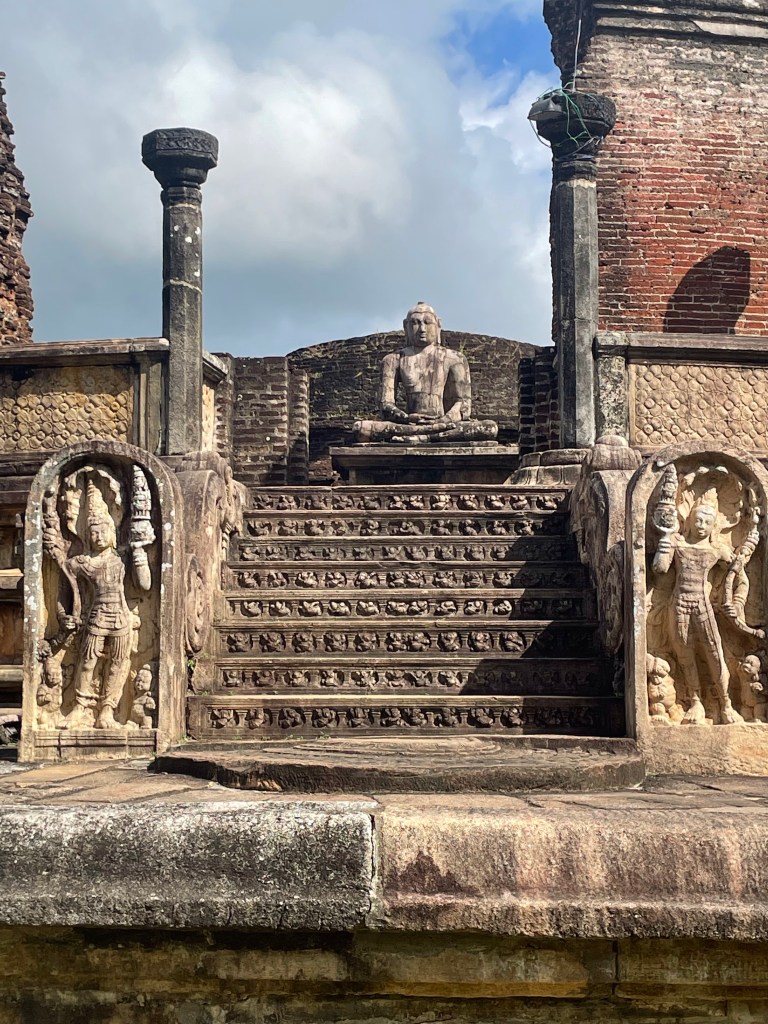
The Royal Palace – originally seven floors, now two
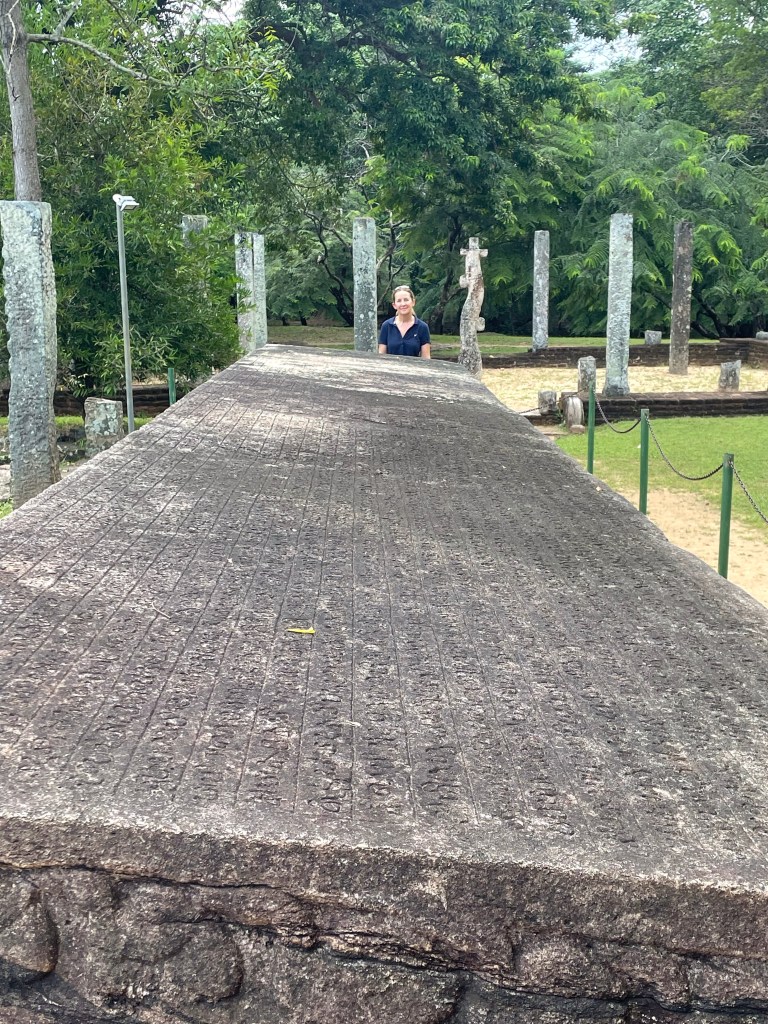
The Gal-Potha inscribed stone slab – moved 100km during the 12th century
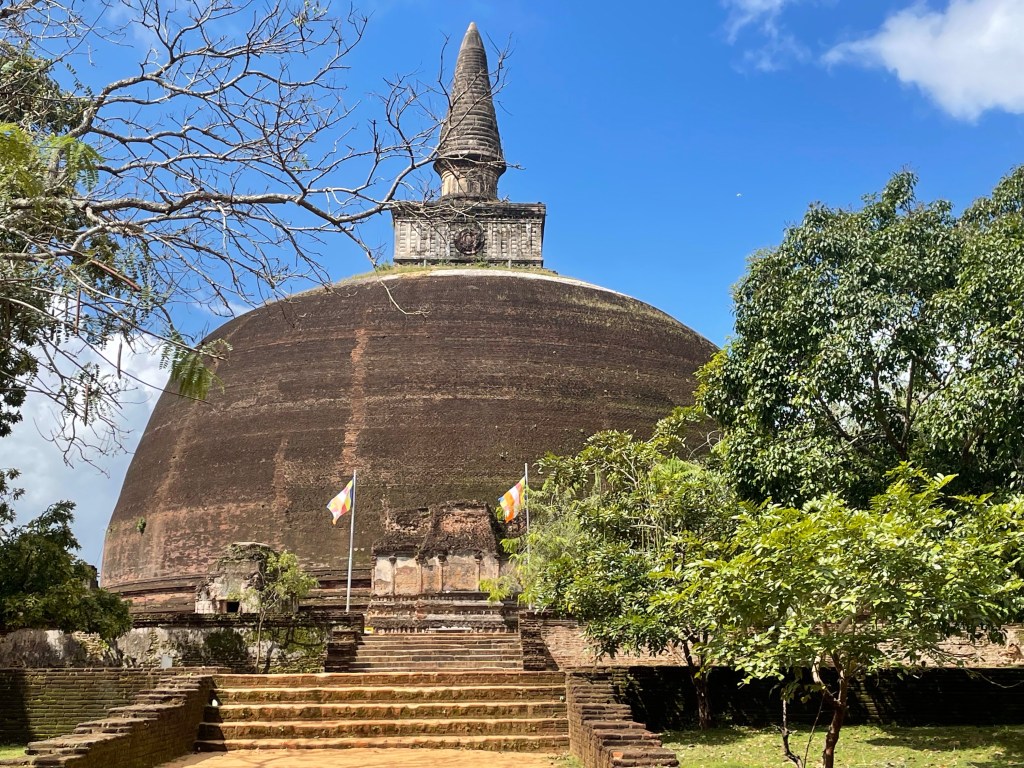
Fourth largest stupa in Sri Lanka

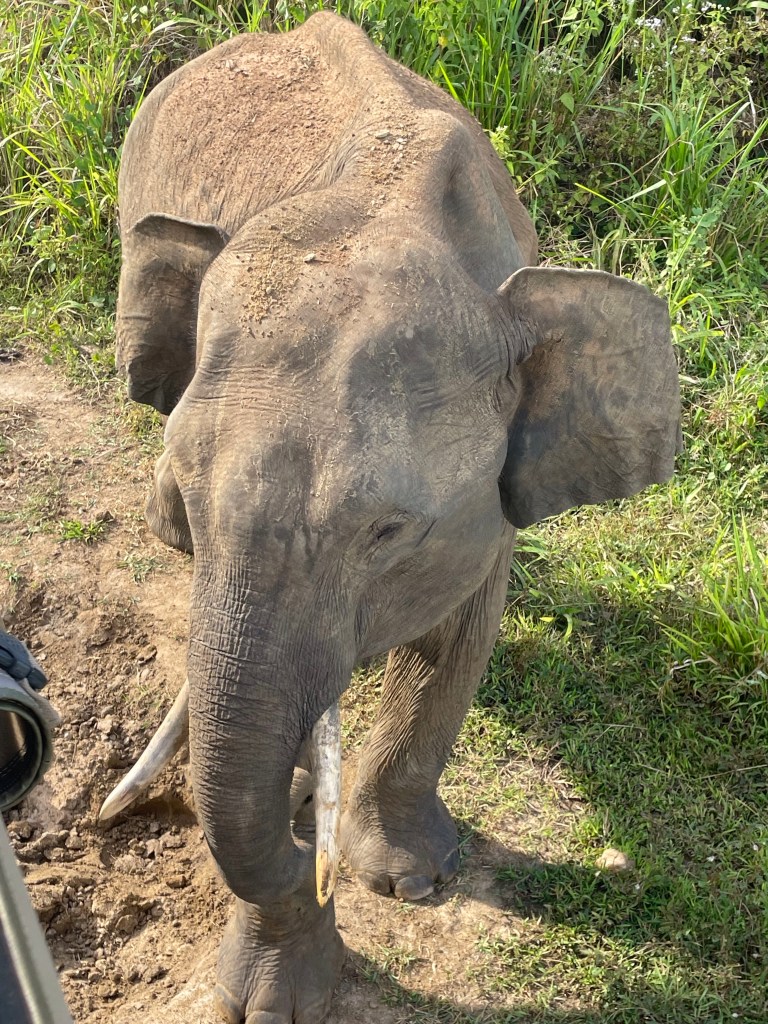
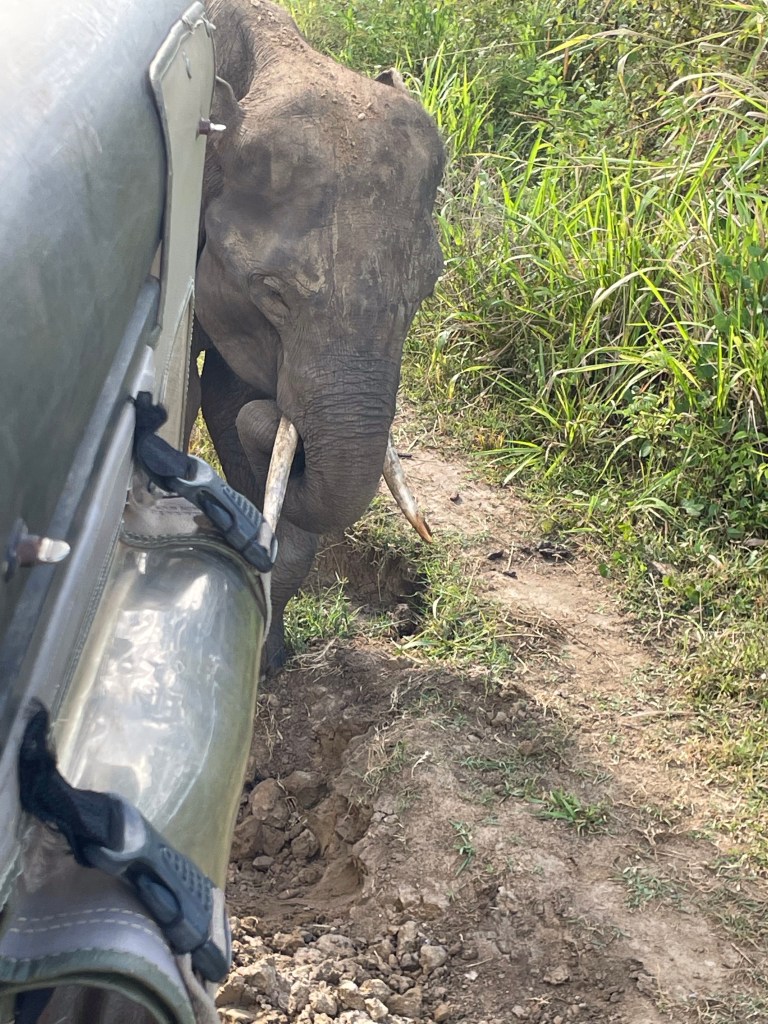
Elephants

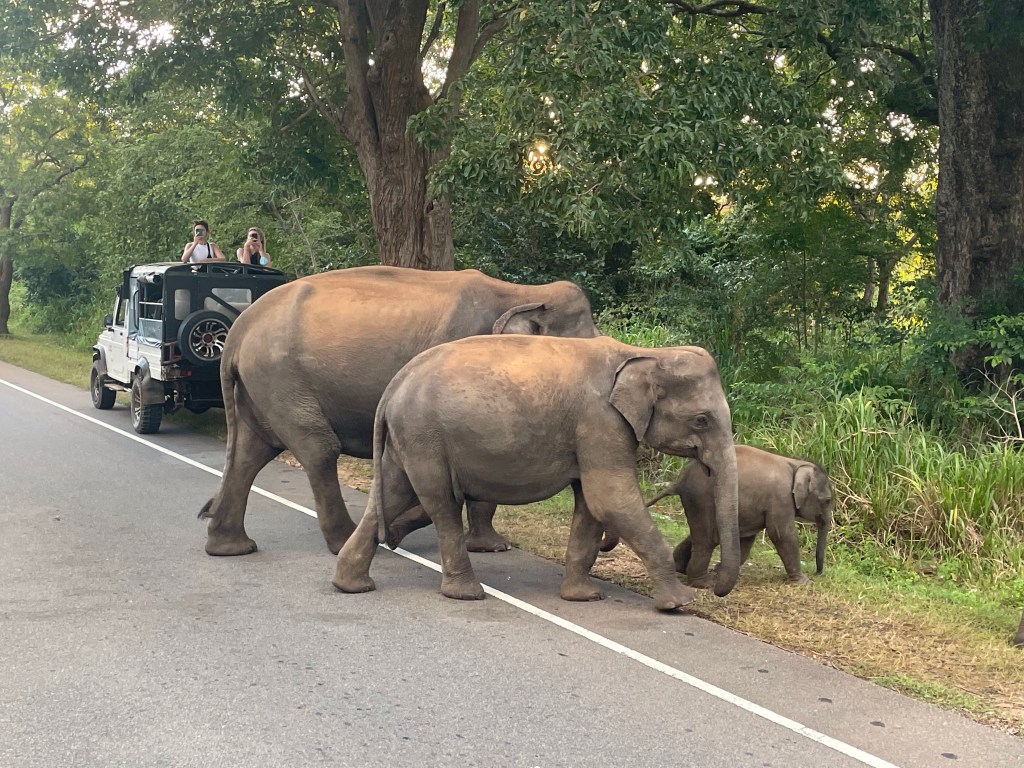
The Sri Lankan elephant is one of three subspecies of Asian elephant. It is endangered as a result of habitation loss created by growth in human population leading to the expansion of the rice paddy fields. With human encroachment elephants have been killed to protect property, in road and rail accidents and in the civil war by land mines. Sri Lankan elephants are smaller than African elephants but can still grow to 3.5m and 5,500 kg. Only 7% of males grow trusts; referred to locally as tuskers.

Baby elephant (weeks old) learning the green cross code
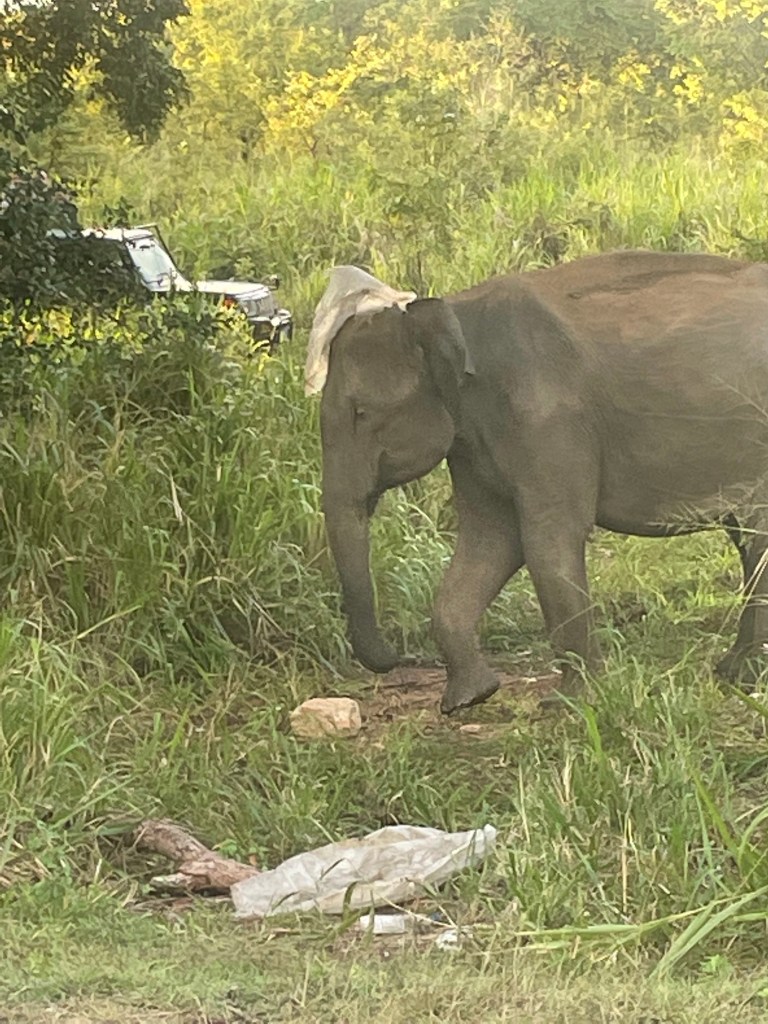
Another human threat, but thankfully in this case the elephant did not try to eat the plastic bag

Sigiriya

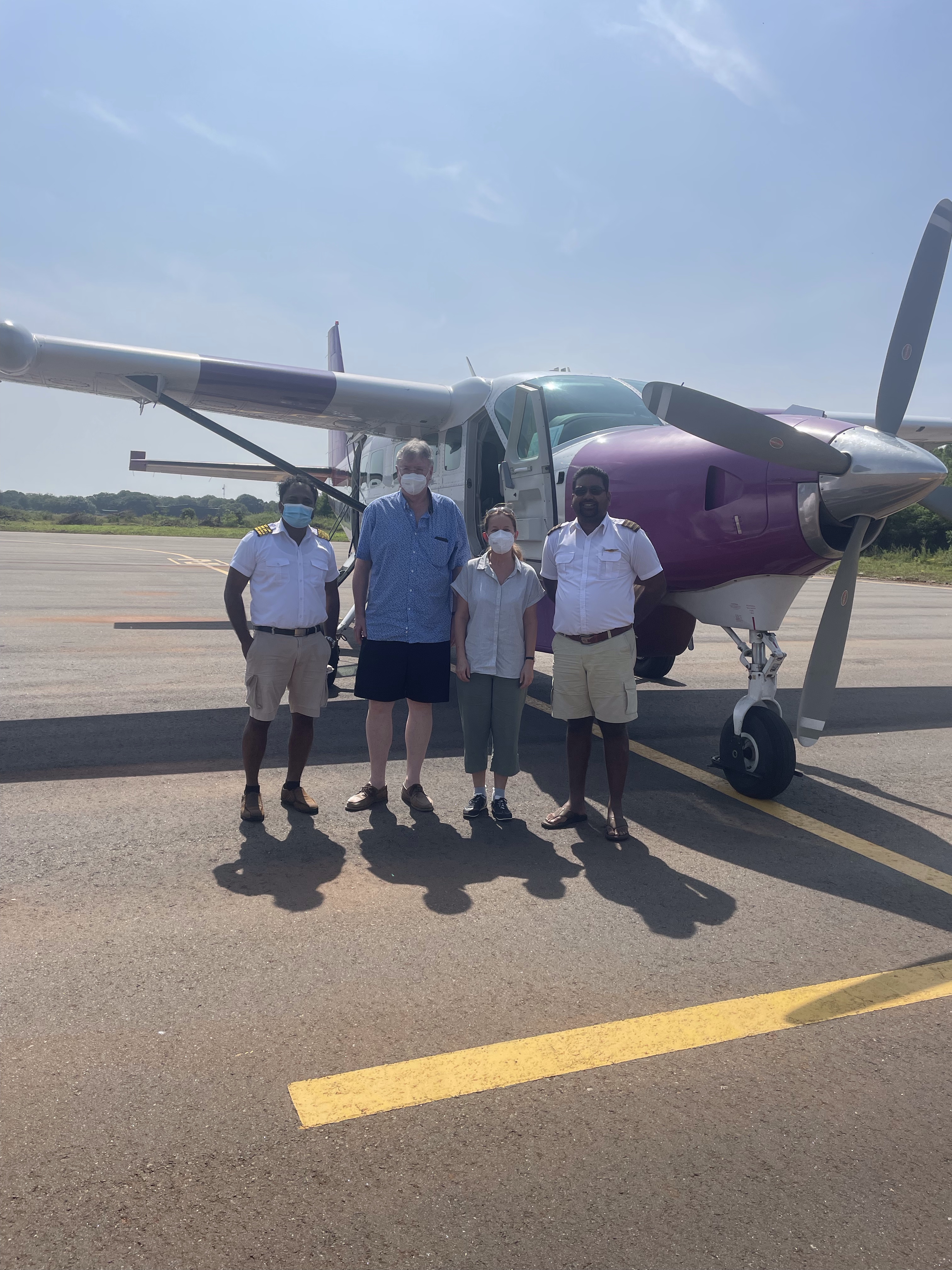
We left Jaffna in the same manner as our arrival; with farewell committee, same plane and same pilots all treating us like long lost friends. We flew into a RAF base close to at Sigiriya.

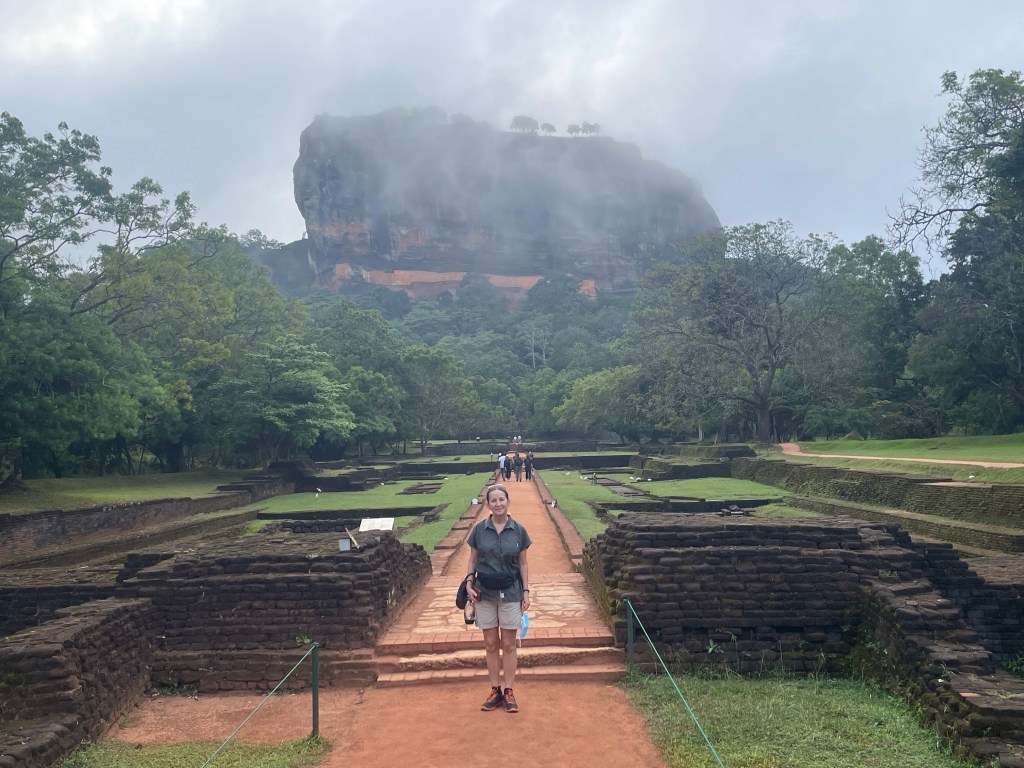
Sigiriya is a world heritage site rediscovered at the end of the 19th century by British archaeologist HCP Bell. Its centre piece is a 180m high rock which is a manga plug from a long eroded volcano. The peak can be attained in 1,222 steps, some very narrow, steep and clinging to the edge of the vertical face. We were grateful for our early start avoiding the crowds of predominantly locals on these paths.
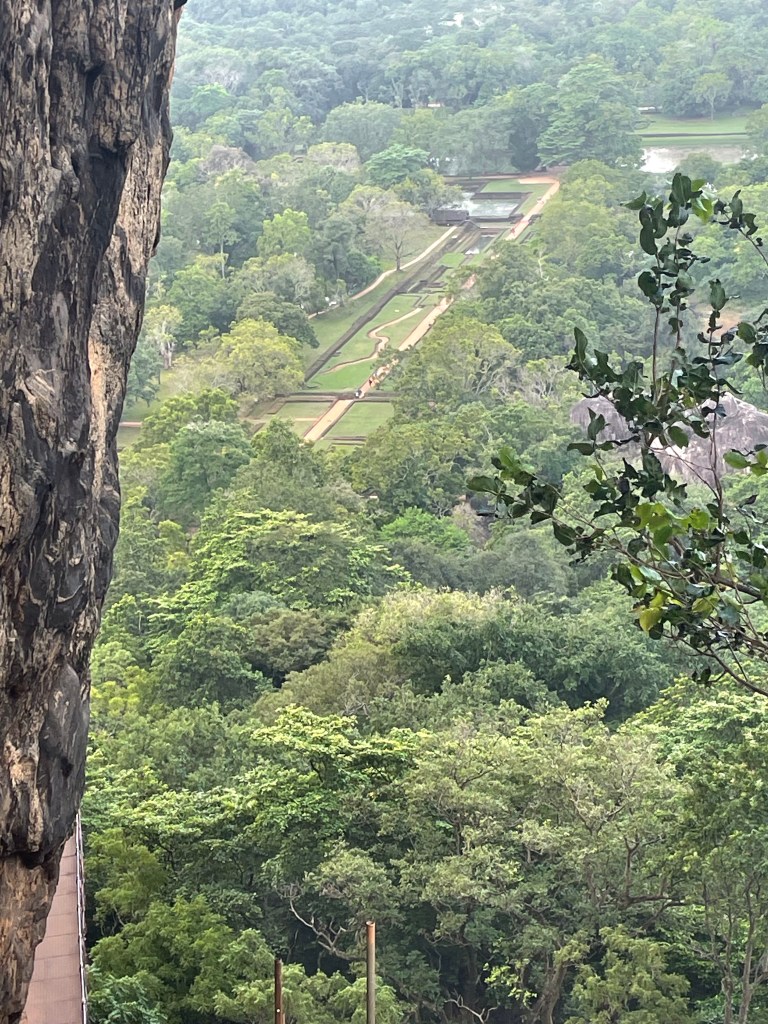
The building works at the site were developed in the 5th Century on the top of the rock (Kings Palace), on the rock face (frescos of half naked women) and at the base of the rock (water gardens). The water gardens include underground conduits transporting water around the site for lily ponds, fountains and a moat inhabited by crocodiles for added defence.

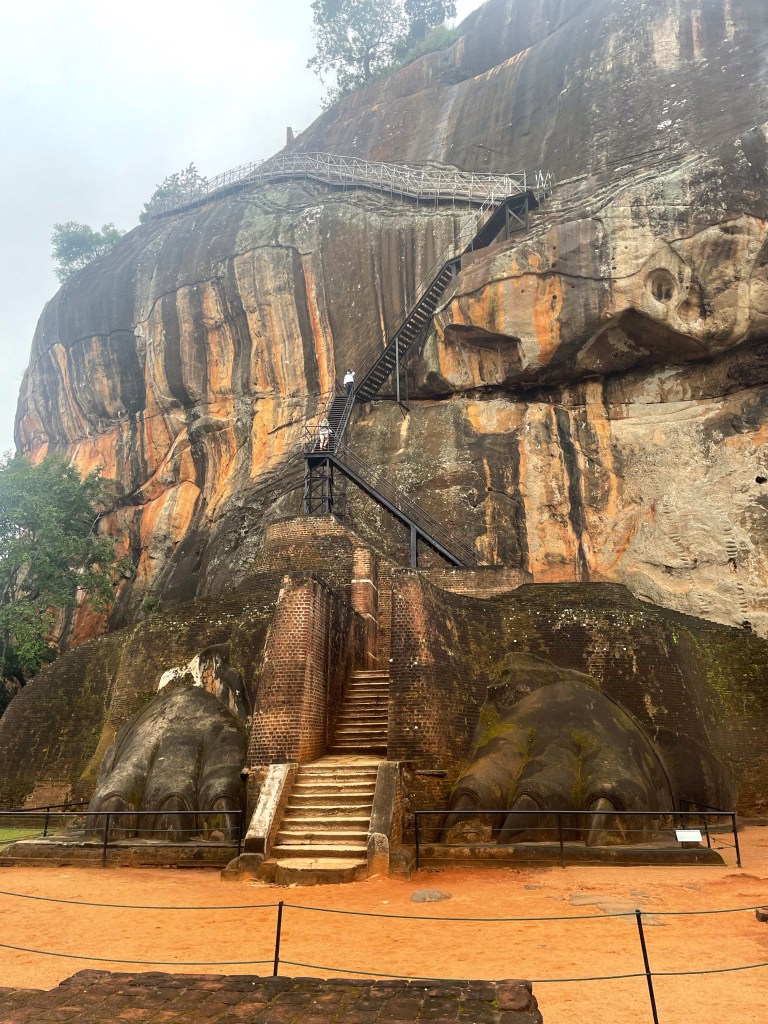
Two thirds of the way up – the paws remain from the original vast lion carved into the rock
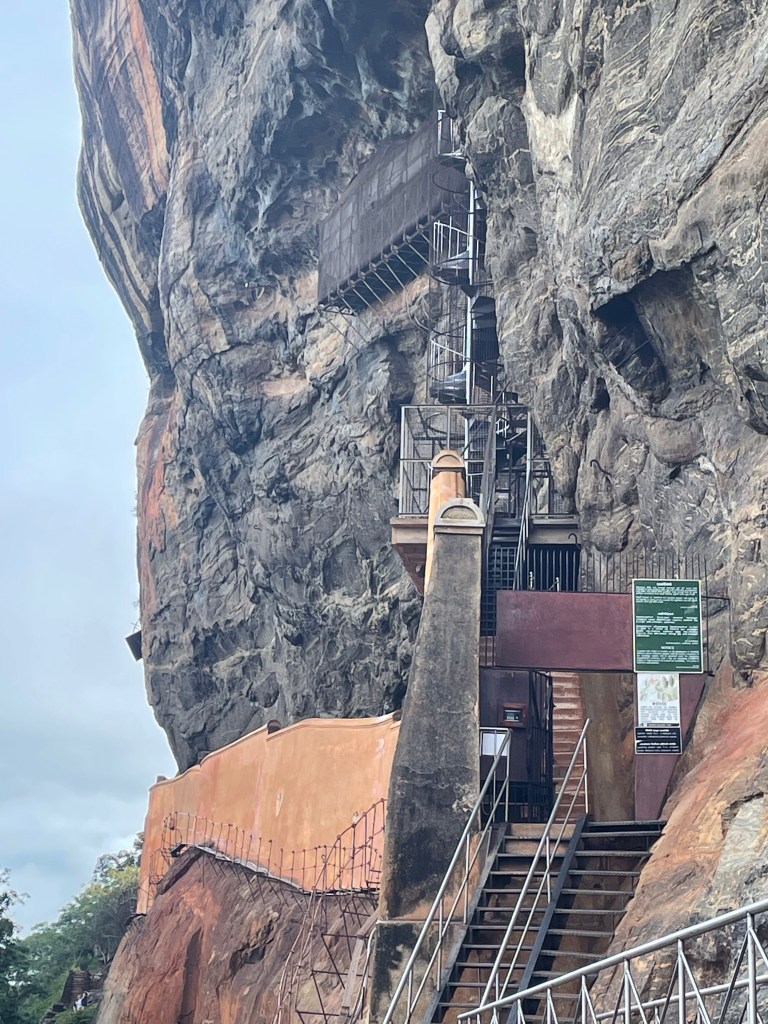
The spiral staircase leads to the frescos which cannot be photographed due to their religious significance
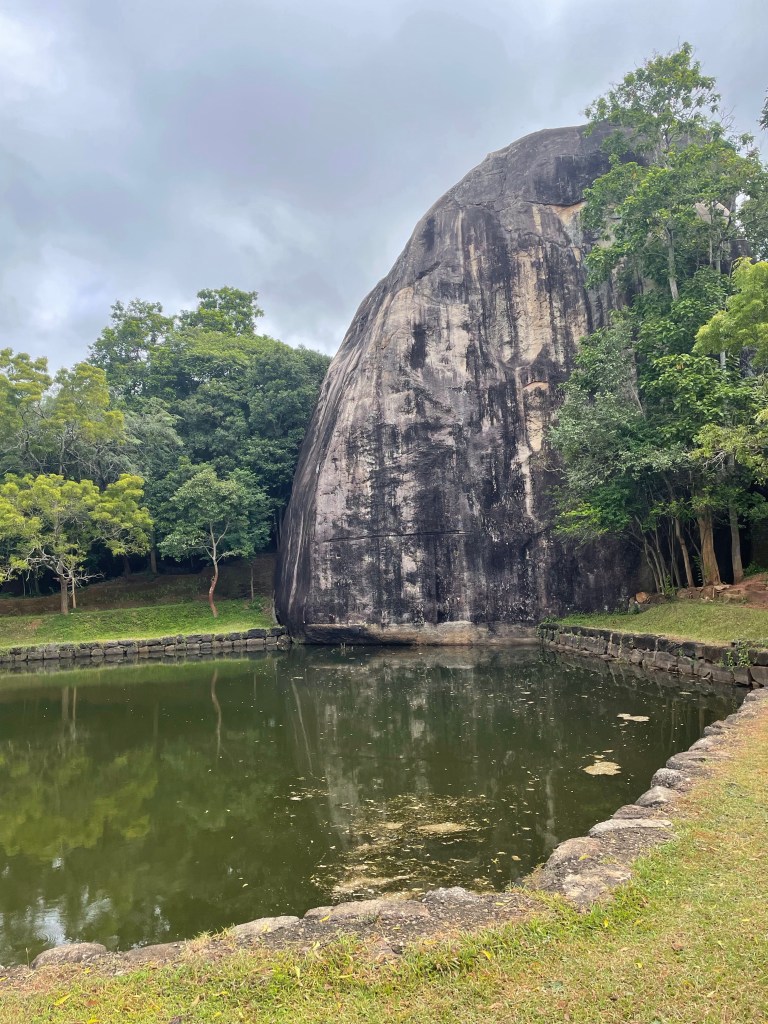
Octagonal pond in the water gardens
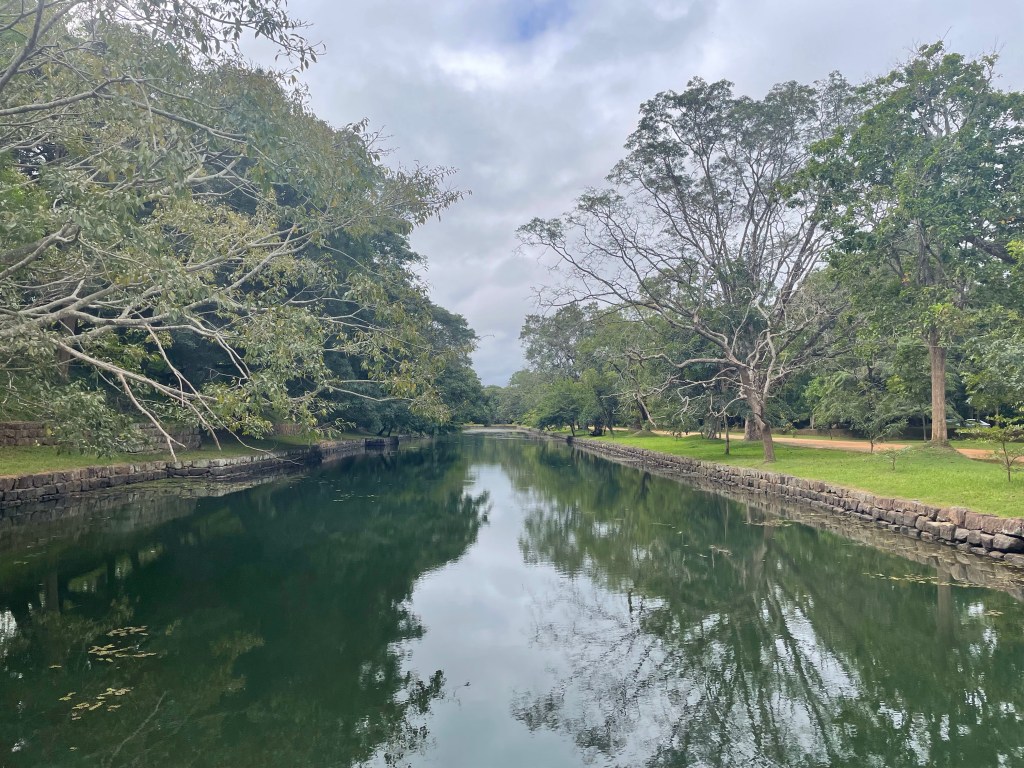
The moat
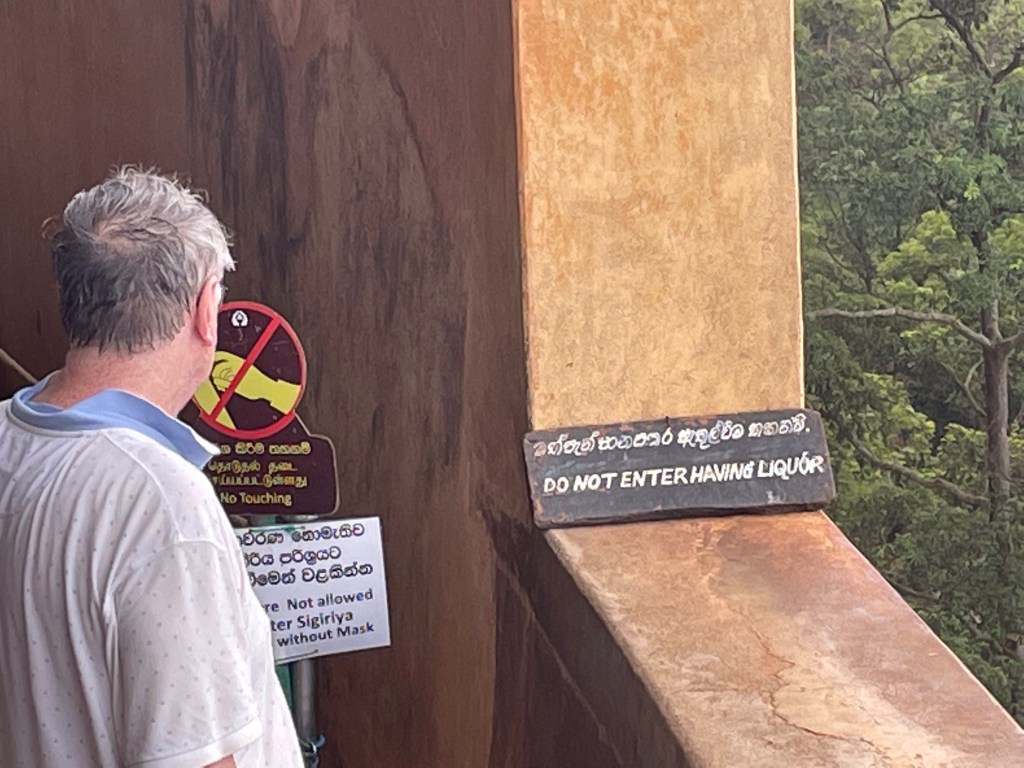
Wise advice, but it’s given half way up the rock !

Jaffna

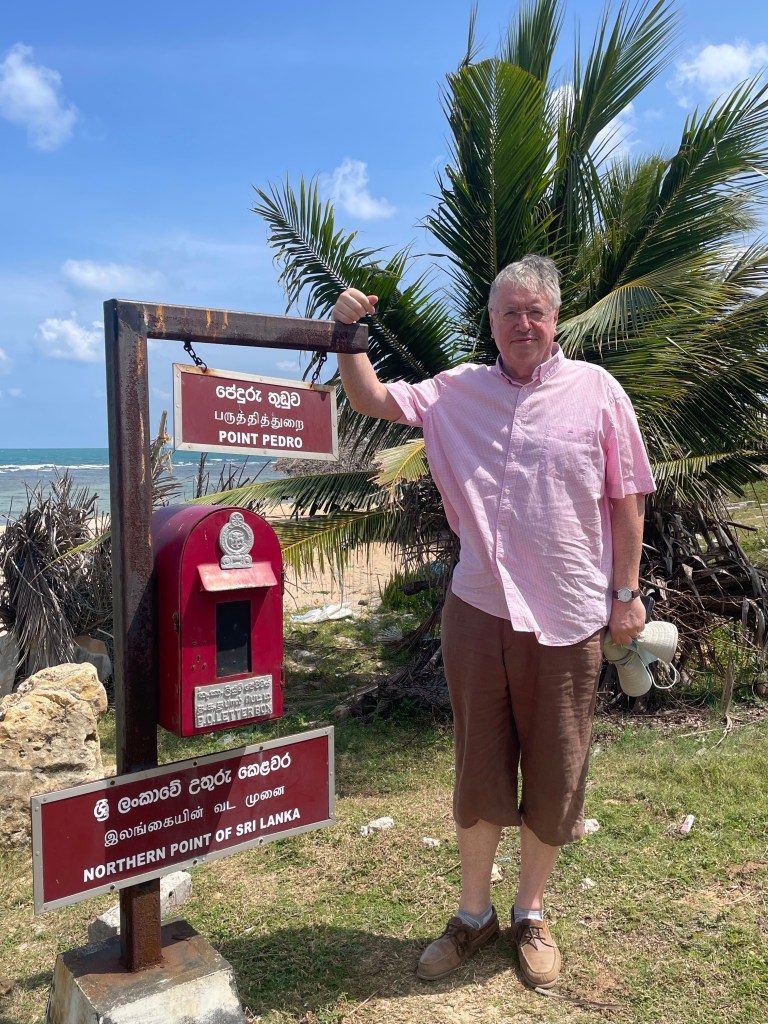
Jaffna sits at the northern point of Sri Lanka, approx 40km from India. The Northern region was off limits to visitors during the civil war (1983-2009) and for a period after, only beginning to open to travellers shortly before the pandemic. It has taken many years to clear the land mines, work which remains on-going and is heavily militarised.

Colombo to Jaffna takes at least nine hours by car or 70 minutes by internal flight. We chose to fly not realising that we would be on one of the first flights since early 2020 and the only passengers. On arrival at Jaffna we were met by 20 people including the airport director and treated as celebrities.

The north of the island is mainly Hindu and is still recovering from the effects of the 2004 Tsunami as well as the civil war. The pandemic has hampered the recovery and many capital projects have been put on hold due to the resulting economic issues.

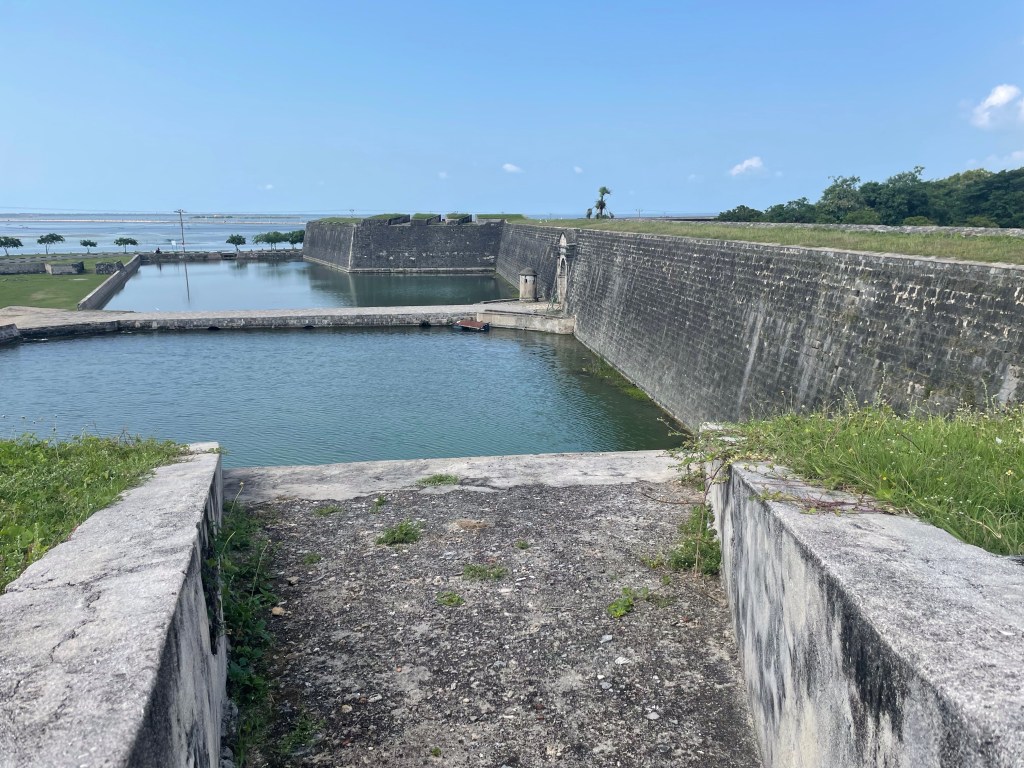
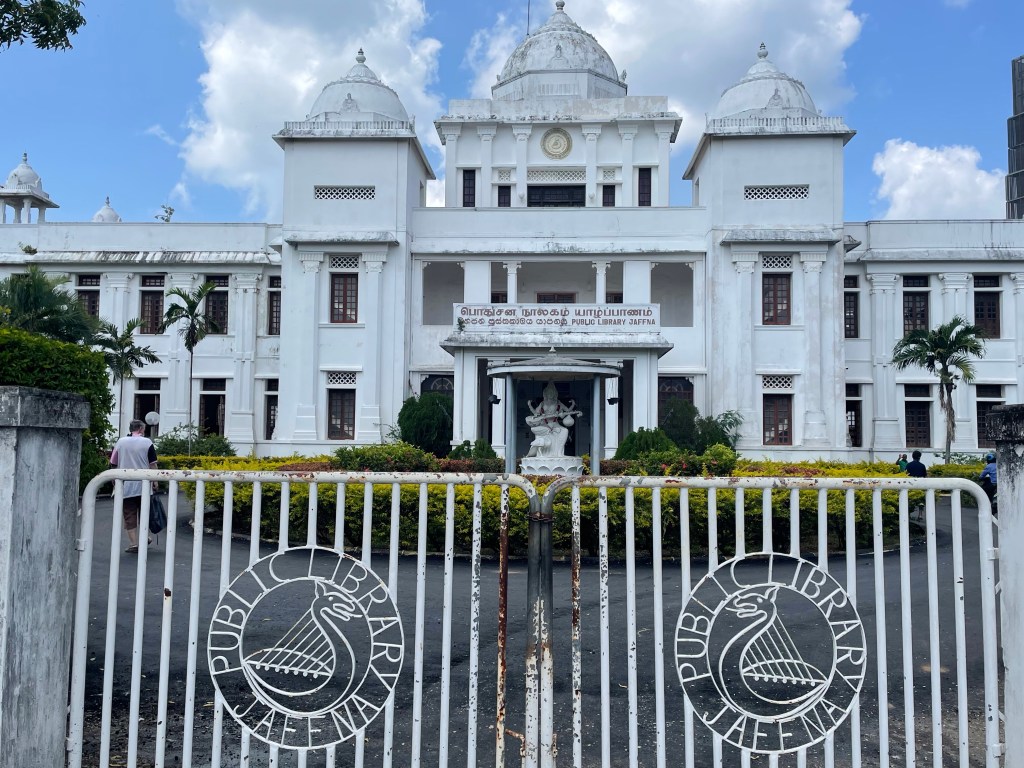
We visited the Dutch Fort (built in 1680), the Public Library (burnt down in the lead up to the civil war and a catalyst for violence), Hindu and Buddhist temples and the northern coast.

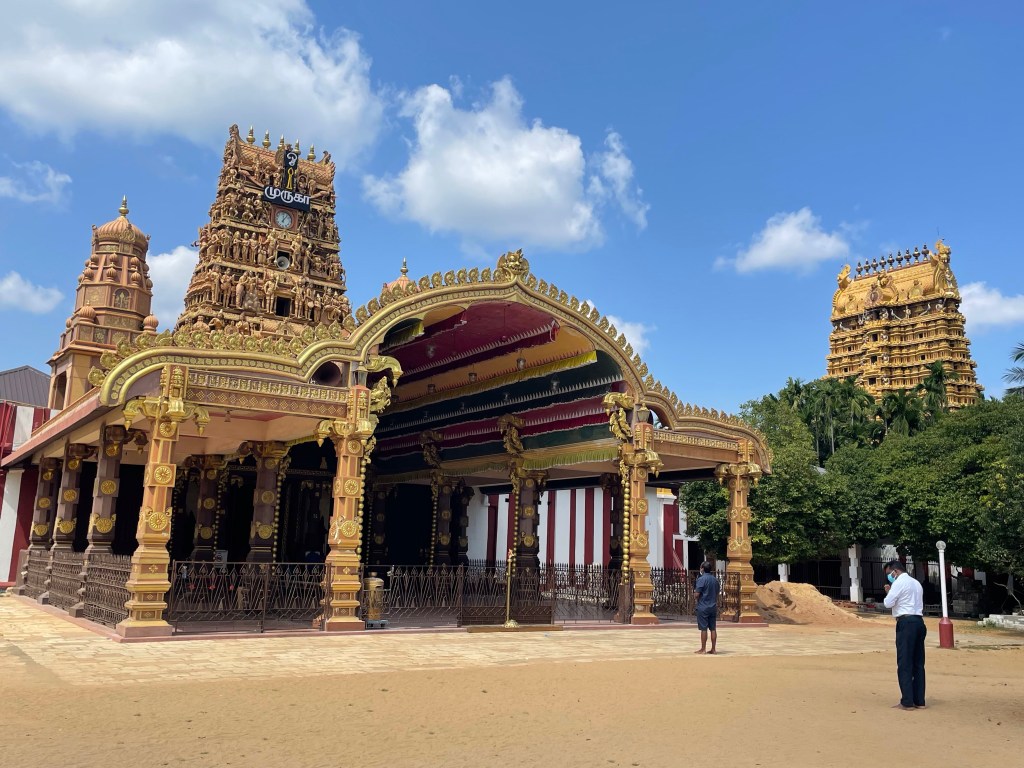
Nallur Kandaswamy Kovil Temple
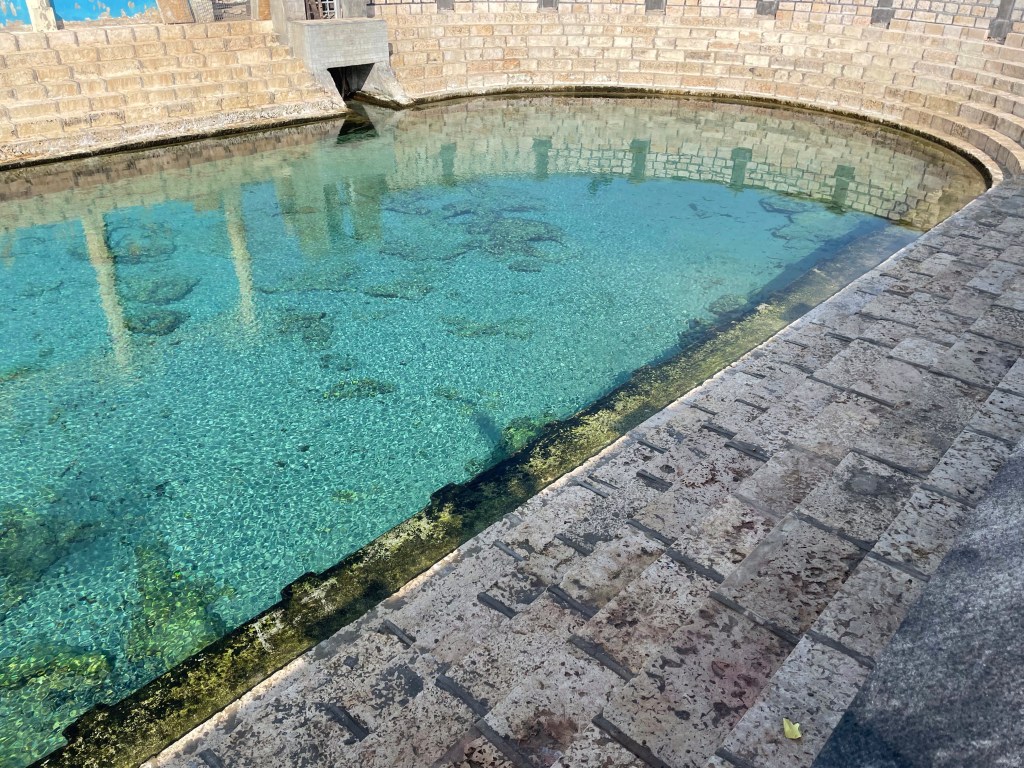
Keerimalai Springs healing baths – mens’ pool
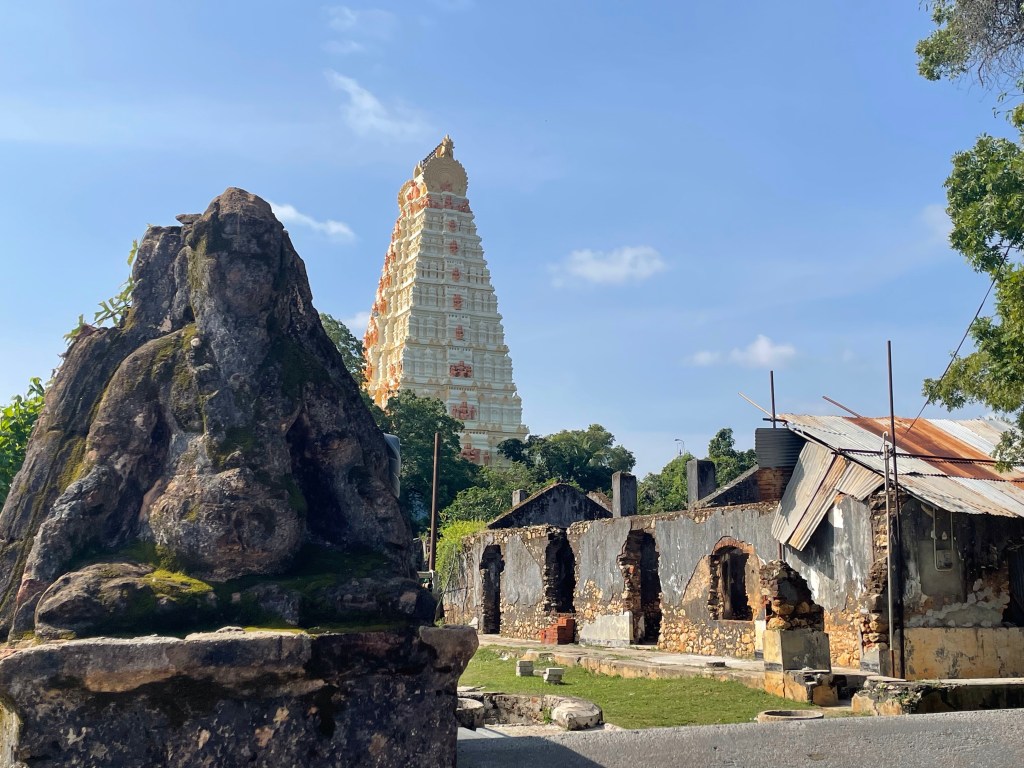
Naguleswaram Shiva Kovil temple – partially reconstructed after being bombed in 1990
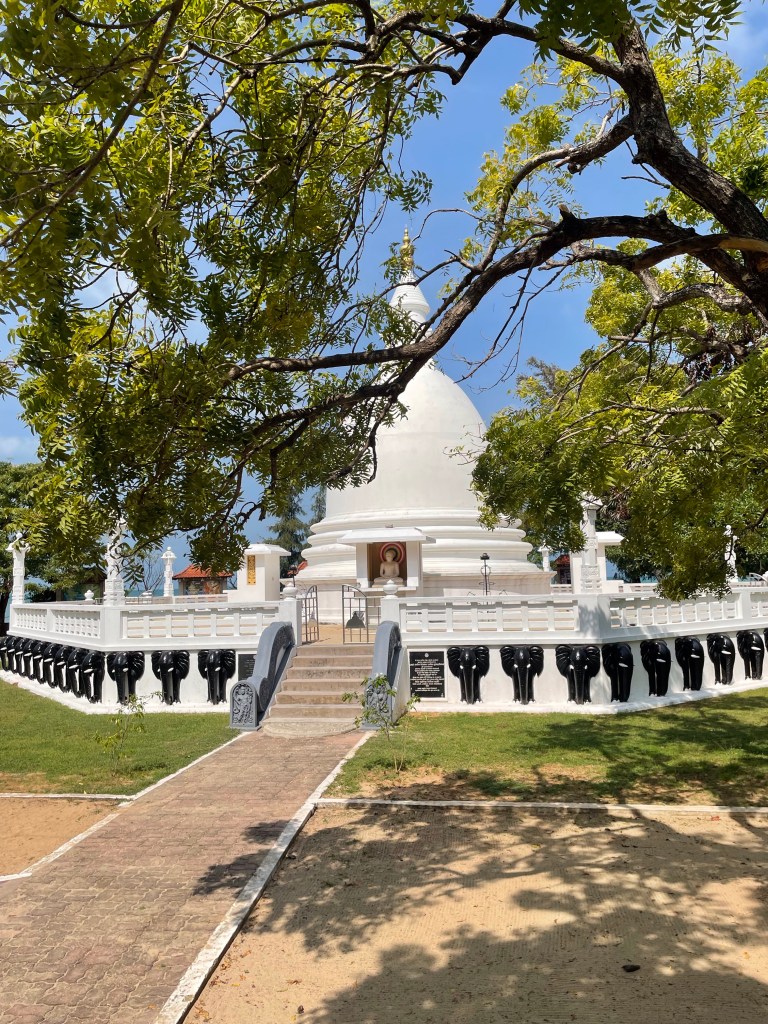
Dambakola Patuna Bhudist Stupa
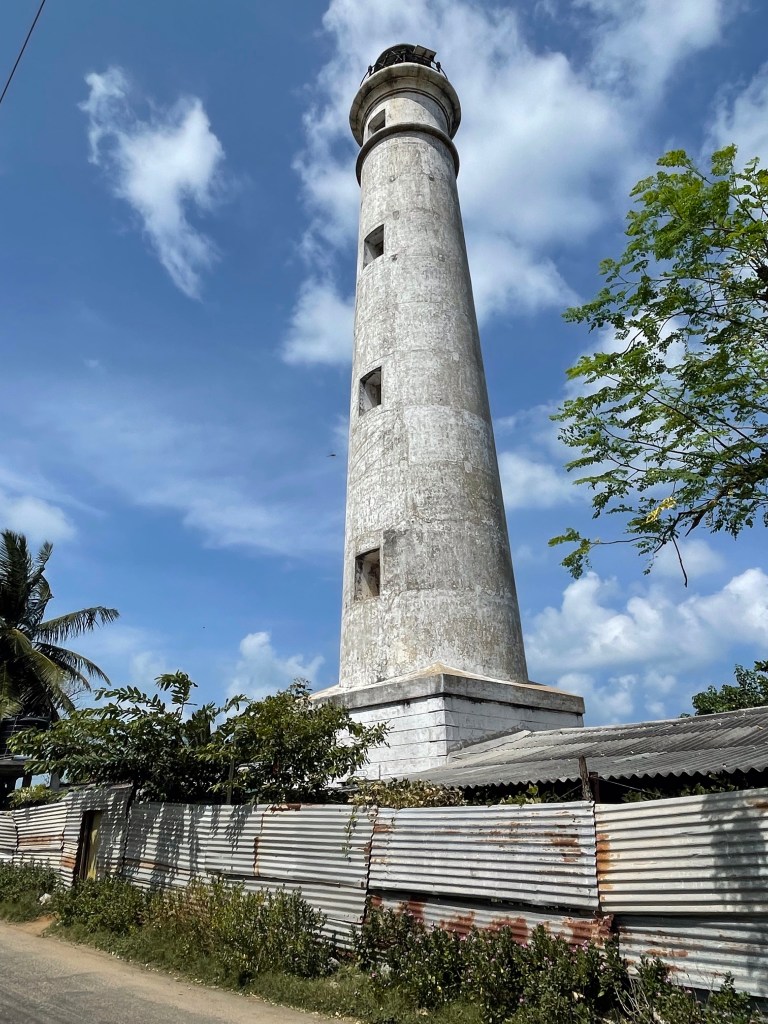
Point Pedro lighthouse – entry is via the gate in the corrugated iron fence, with military permission

Negombo

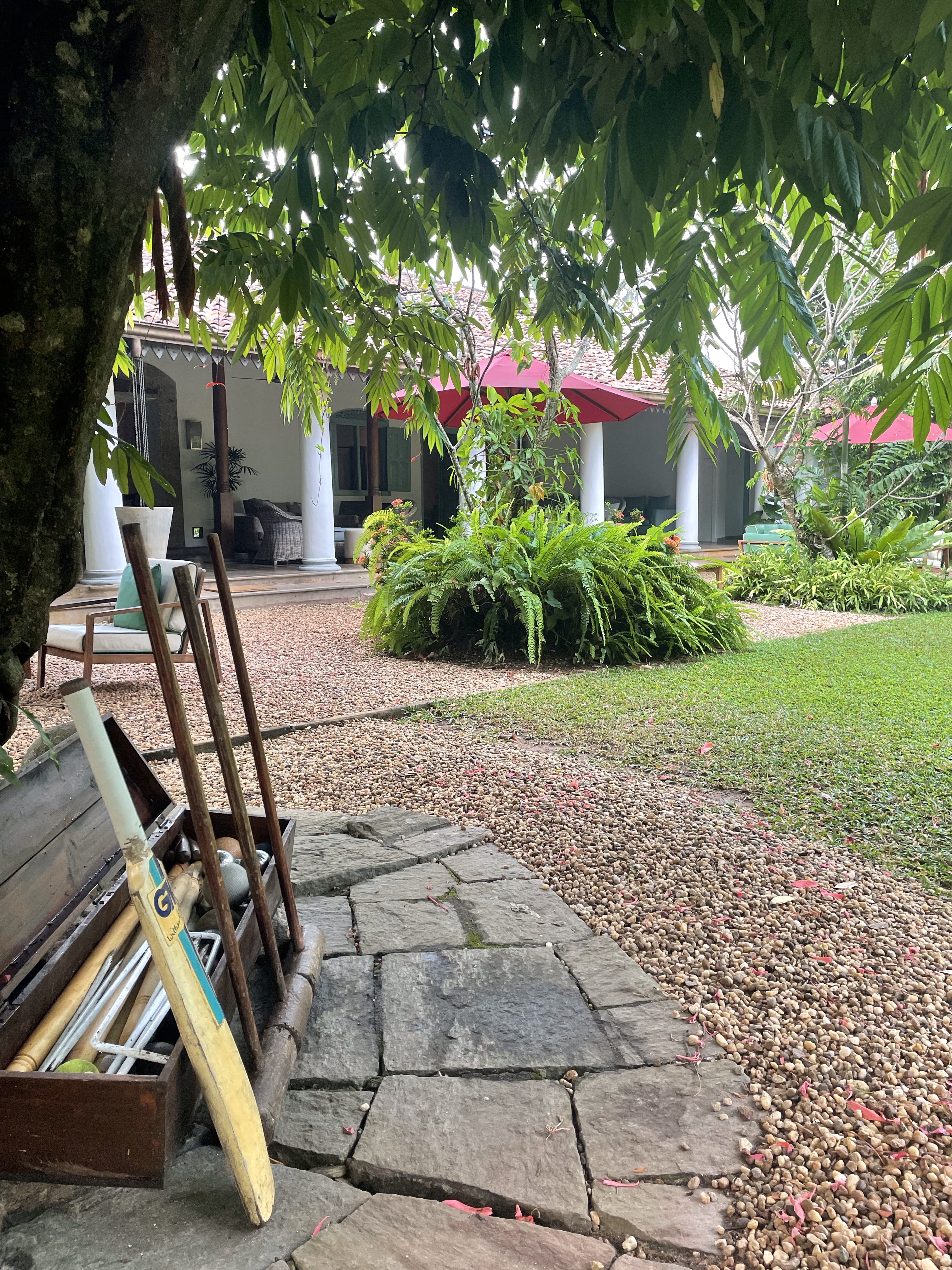
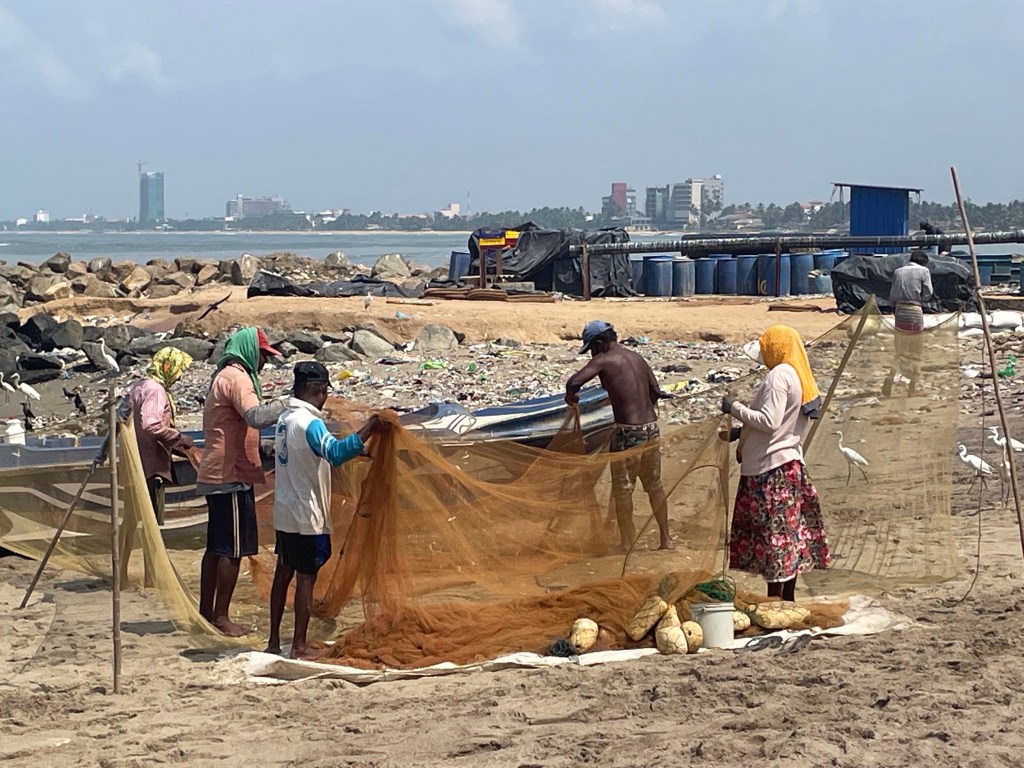
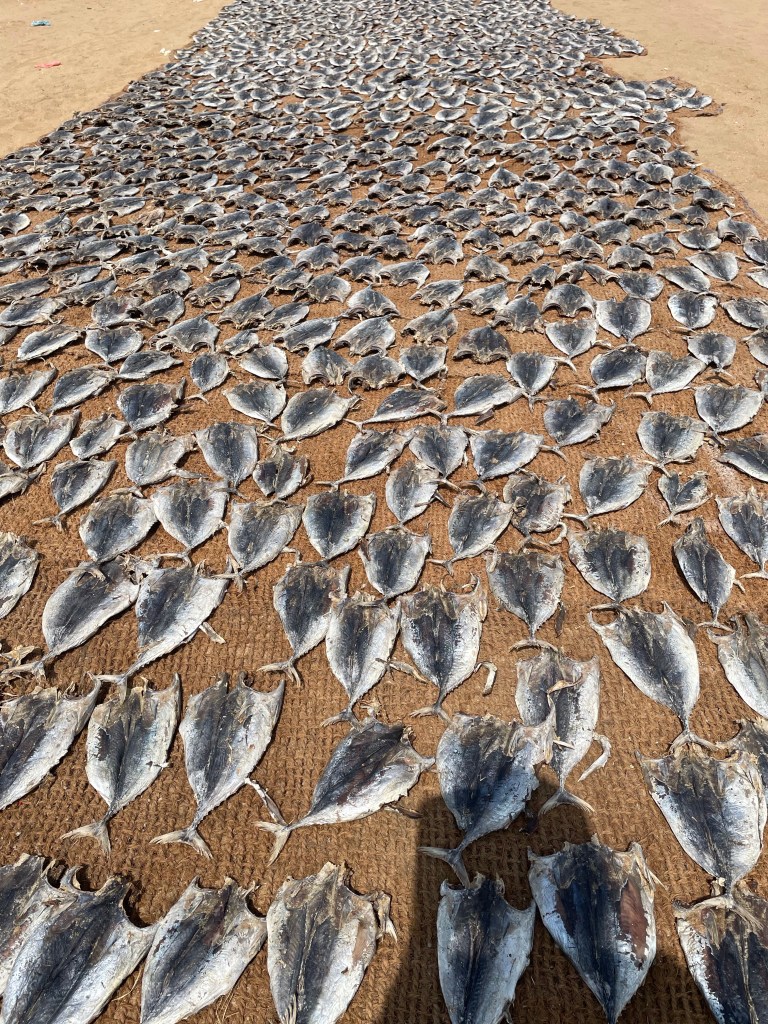
First stop was The Wallawwa hotel, 20 minutes from Colombo airport, ideal to acclimatise, get over jet-lag and do a bit of sightseeing. Nearby, Negombo is a fishing port connected to the interior with a canal which the British used to transport cinnamon. The fish are sold at a market on the shore, with the smaller ones salted and dried in the sun for three days. Negombo has an old Dutch fort which is now a prison.

The main religion in Sri Lanka is Buddhism (70%) followed by Hinduism (13%) and then Islam (10%) and Christianity (7%). Negombo, with its roots in fishing, is predominantly Catholic with churches outnumbering all other temples.

Pemba Island

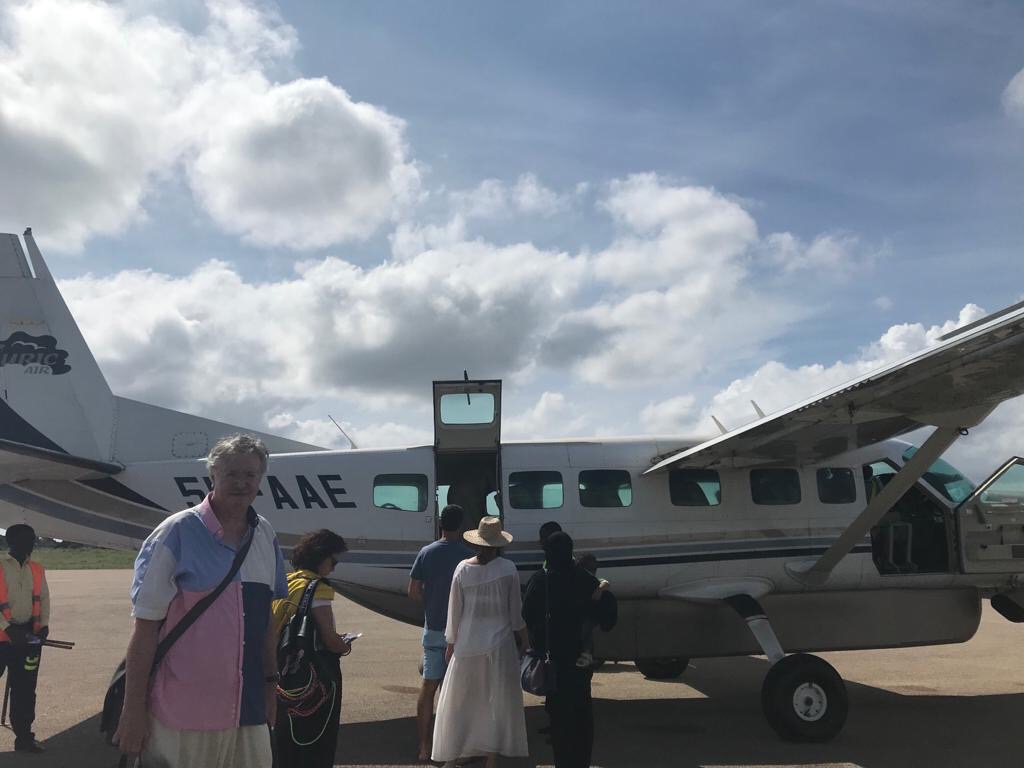
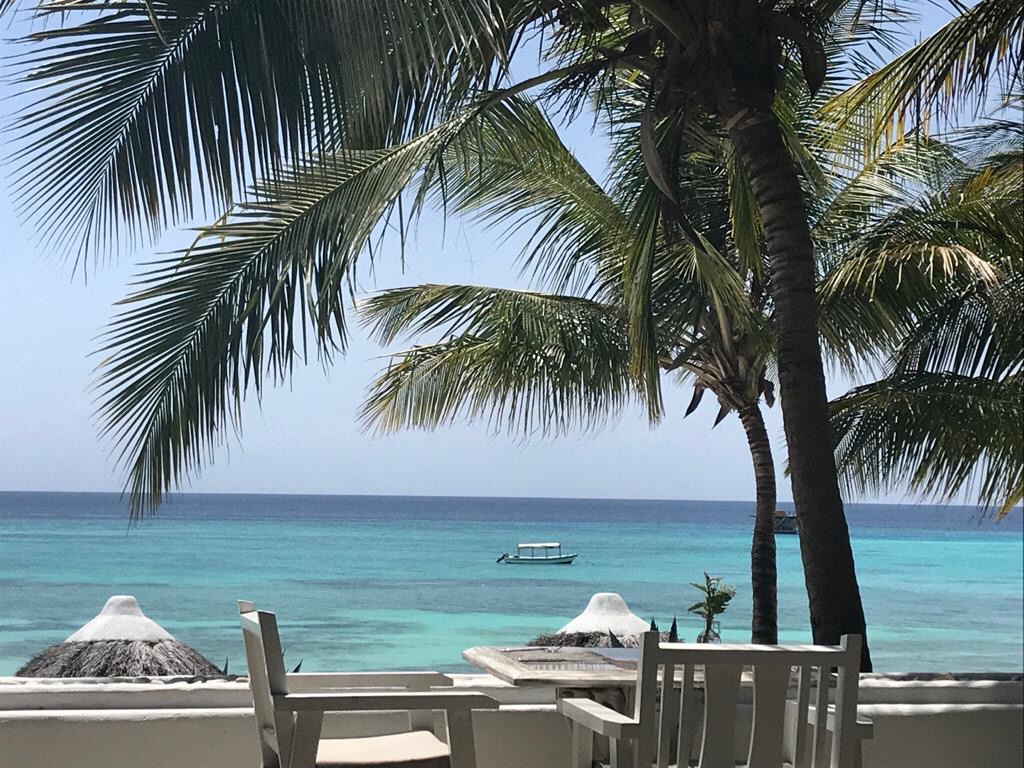
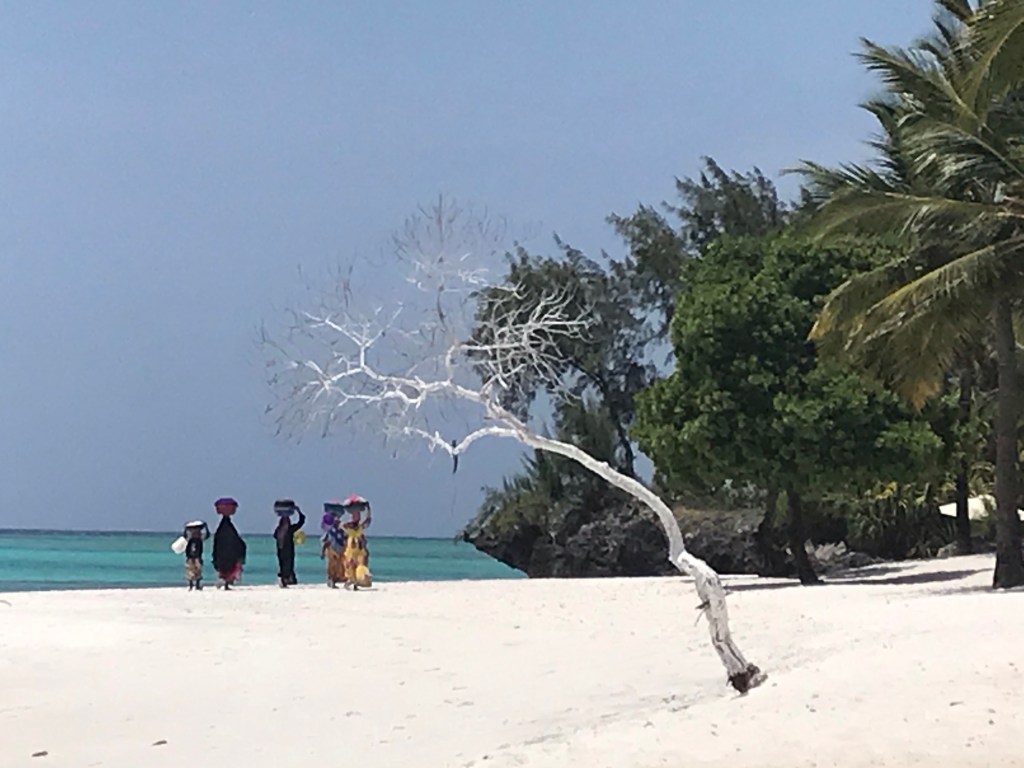
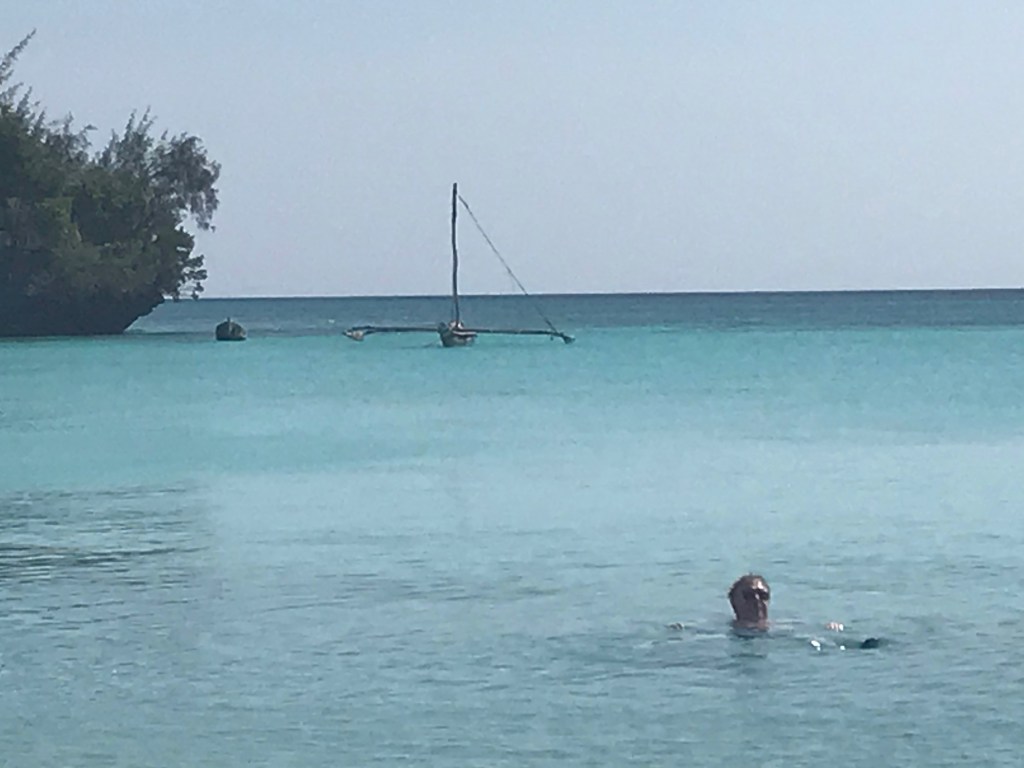
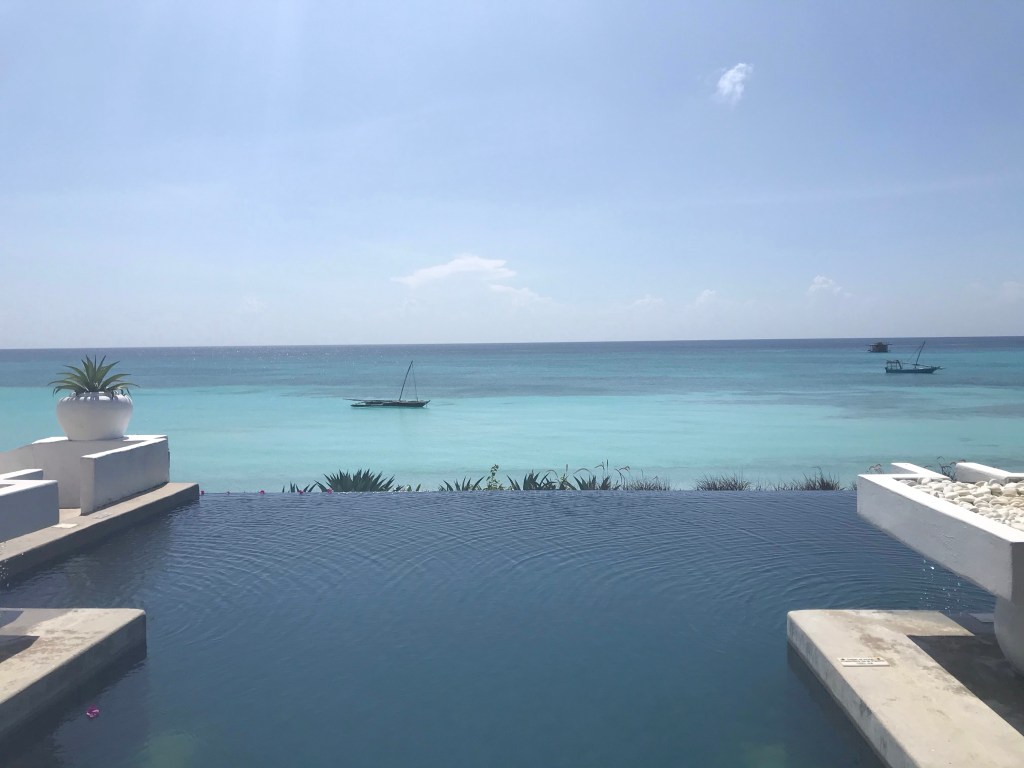
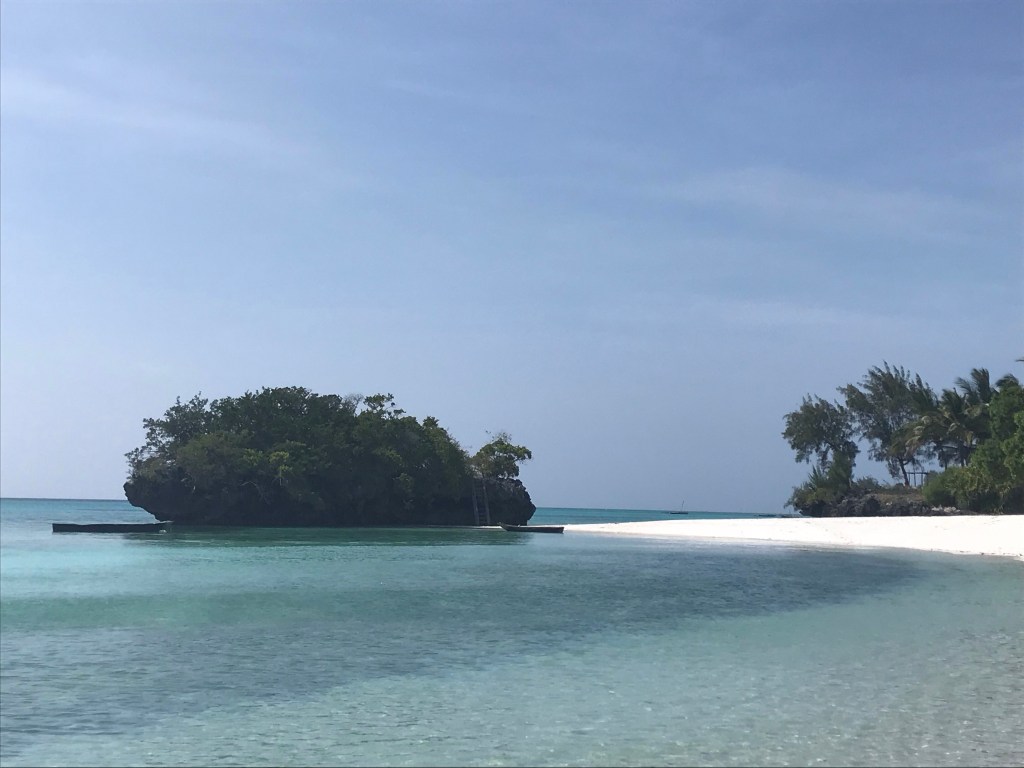
Following our hectic but enjoyable schedule in South Africa and Namibia we headed to Pemba Island, part of Zanzibar. This involved a flight from Windhoek to Johannesburg then to Zanzibar, followed by a short flight in a 12 seater plane to Pemba Island. The land transfer involved a 1.5 hour “African massage”, culminating in a drive through a dense rain forest by which time it was dark. We were wondering what we had let ourselves in for, just as we arrived at an idyllic resort – warm Indian Ocean, white beach and plentiful fresh fish – for nine days of relaxation before heading home, via Nairobi, to a cold England.

Flying in Namibia

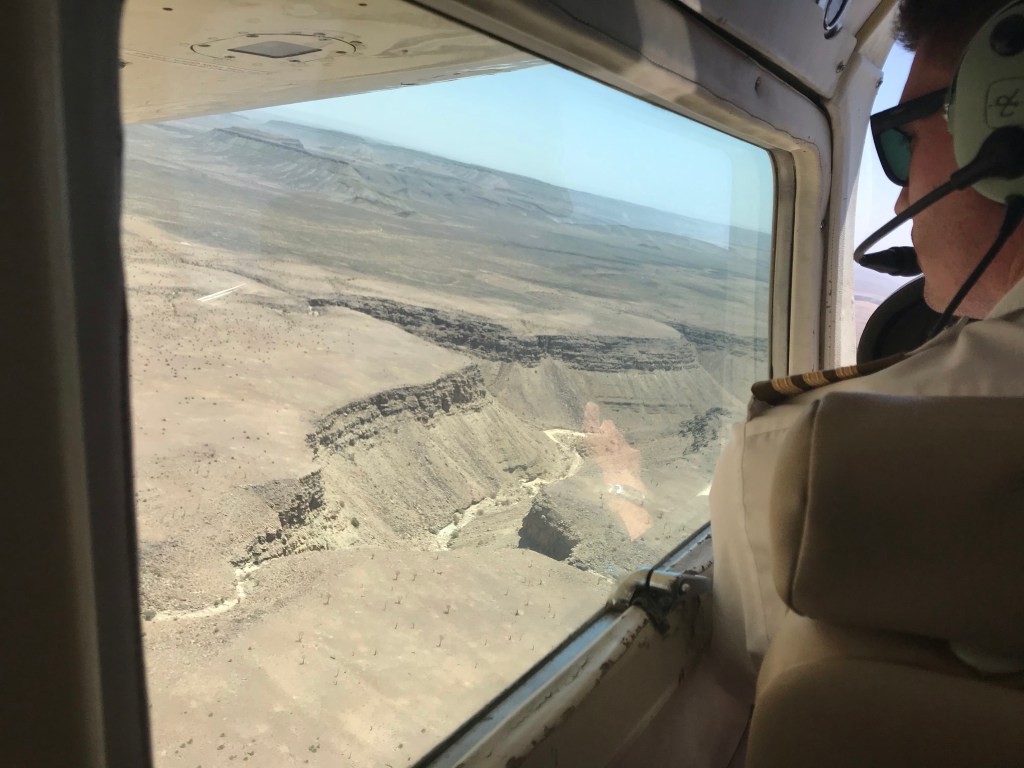
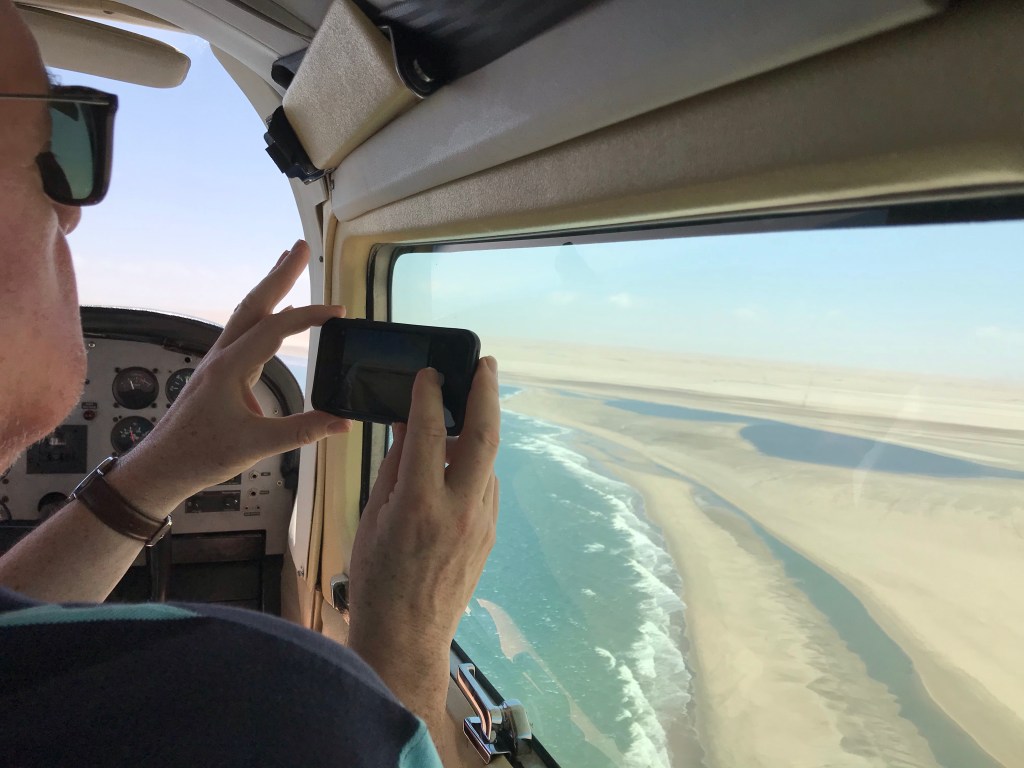
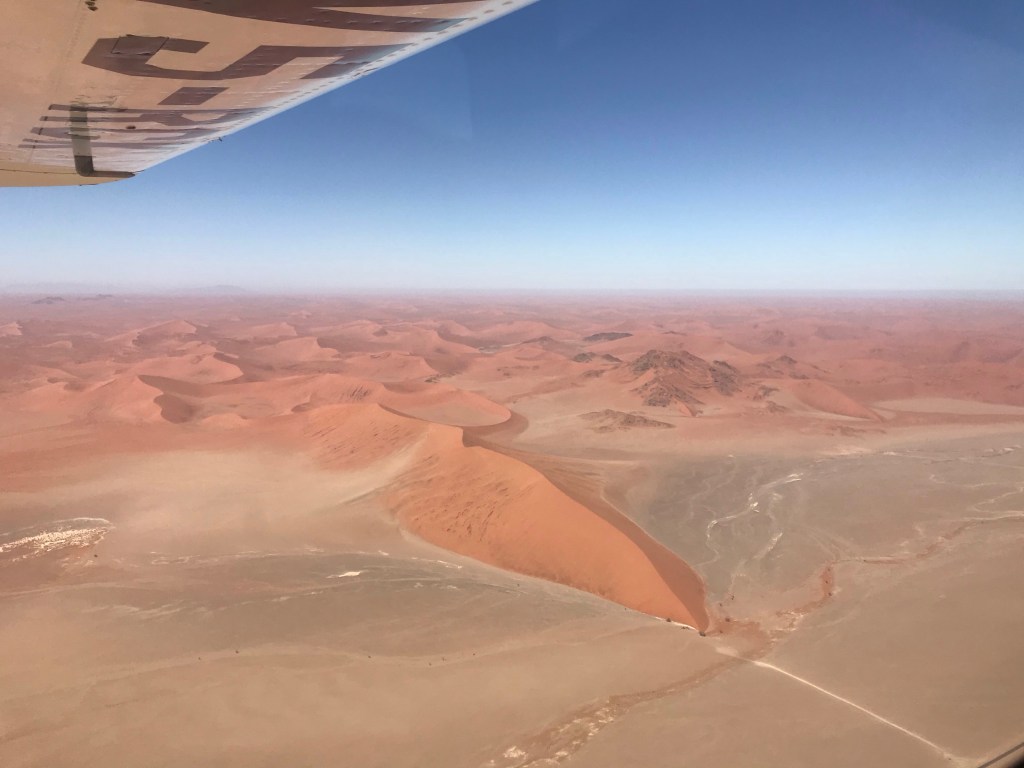
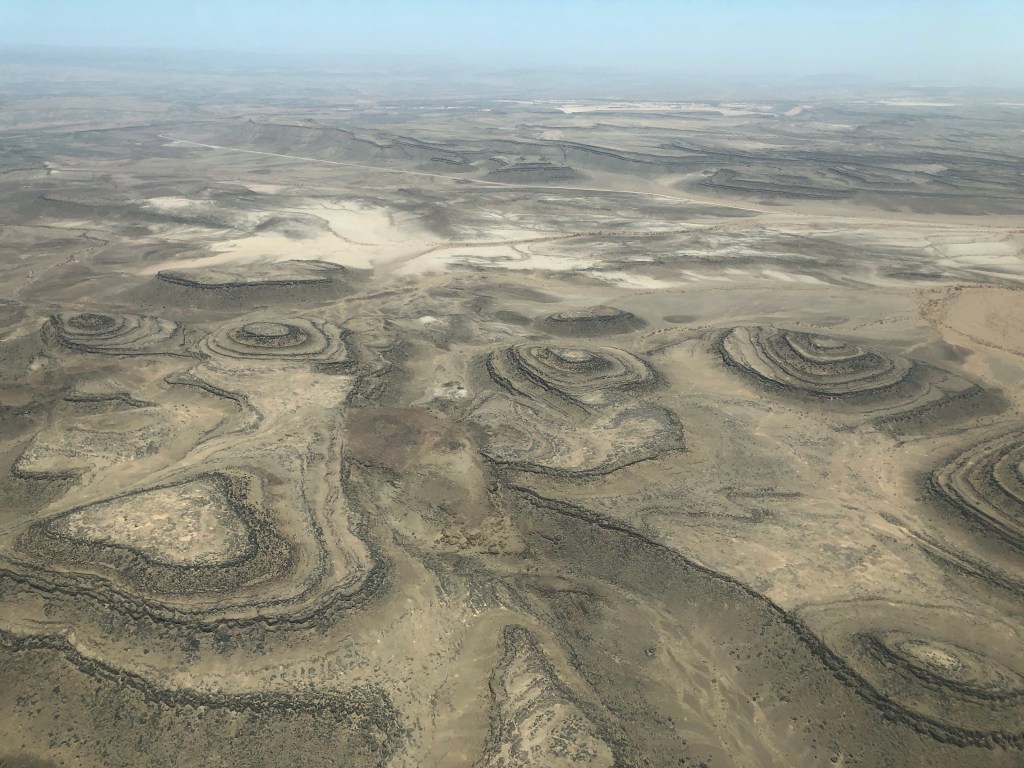
Travelling by car in Namibia is very time consuming and bumpy (locally termed “free African massage”). While the scenery is spectacular you can drive for several hours on a gravel track with limited variety. We therefore decided to maximise our time by flying between most of our stops, enabling an itinerary that included Fish River Canyon in the South and Skeleton Coast in the North.

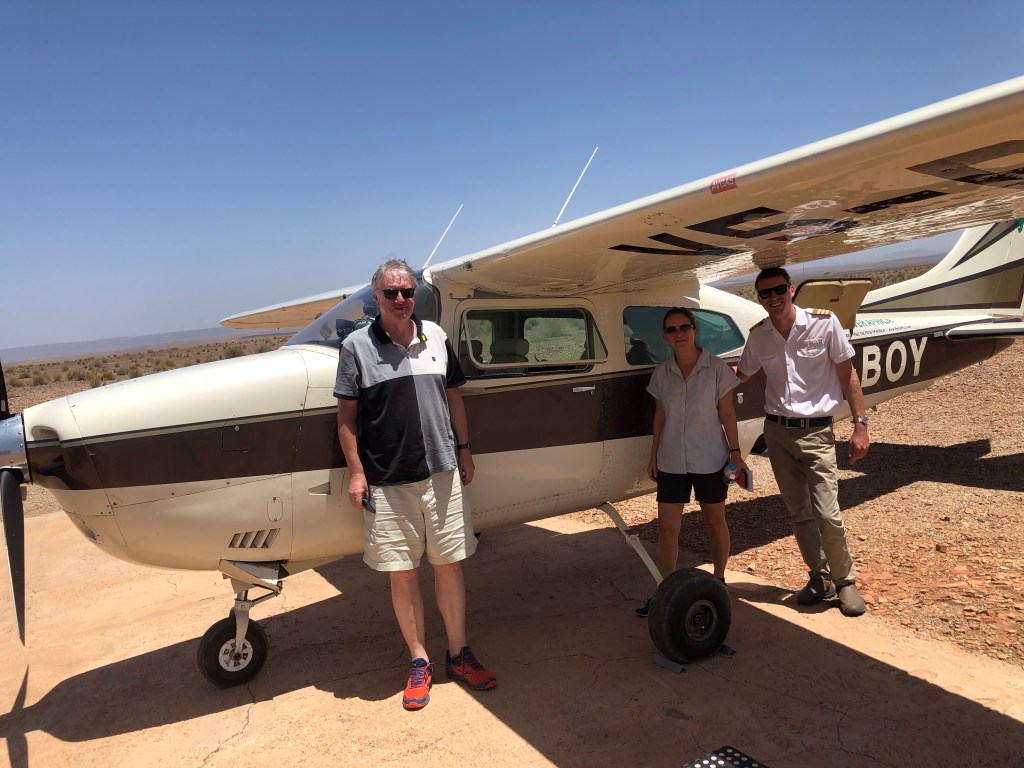
A number of charter companies operate fleets of Cessna 210 planes built in the 1970s and 1980s, seating between two and four passengers. We flew in V5-BOY and V5-RCK, built in 1975 and 1974, for our six internal flights, lasting between one and two hours. Flying mainly between eight and ten thousand feet, generally in clear conditions, we were able to see a variety of terrains.

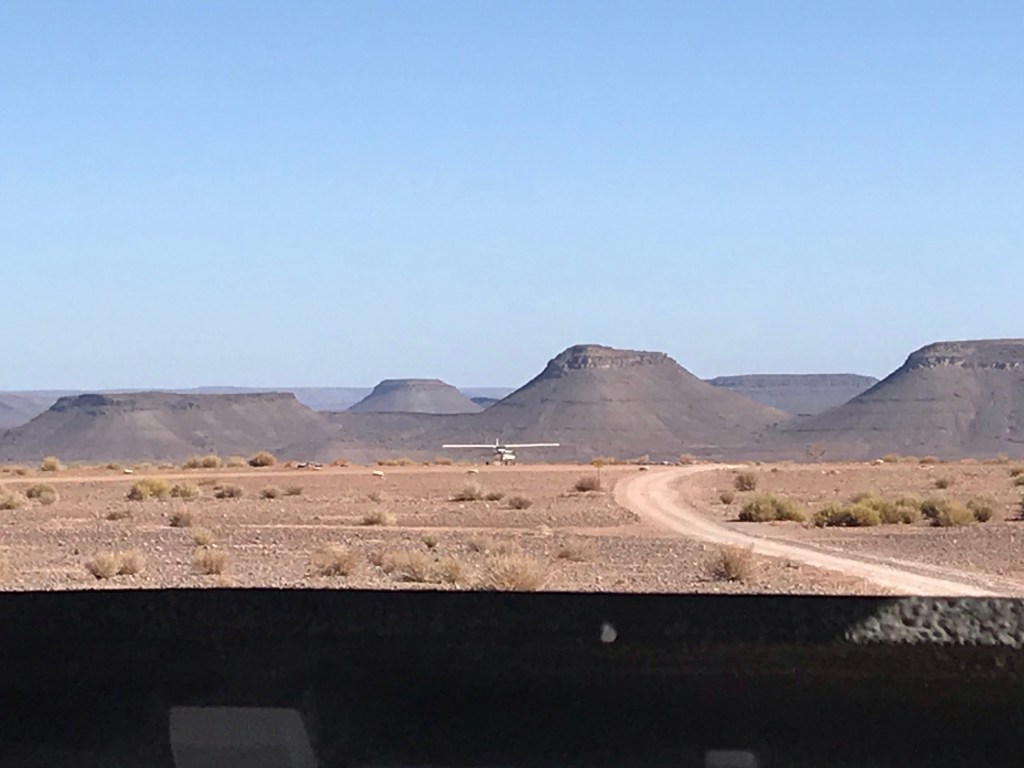
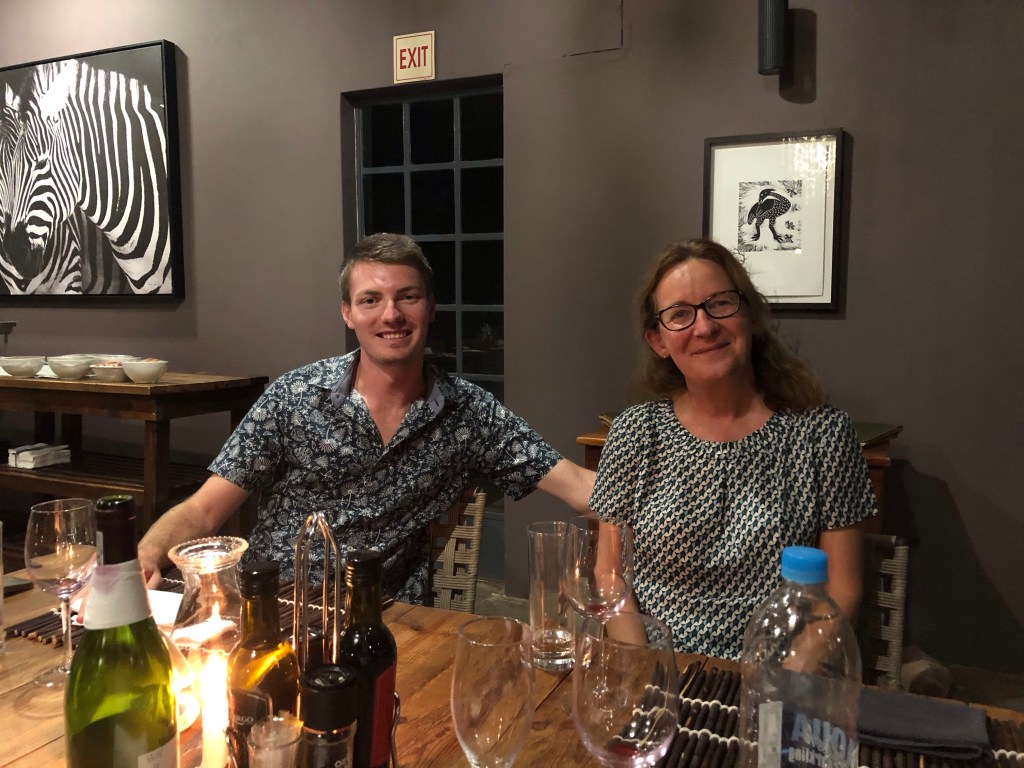
The planes land on gravel strips with no air traffic control or other staff; the pilots therefore do a pre-landing circle of the strip to check it is clear of wildlife or other obstacles. Where necessary the pilots stayed with us at the lodges which all provide guide accommodation. We flew with three different pilots – having dinner with our pilot the night before a flight was a new experience.

We started our first flight with some trepidation but ended up relishing the experience.

Otjimbondona

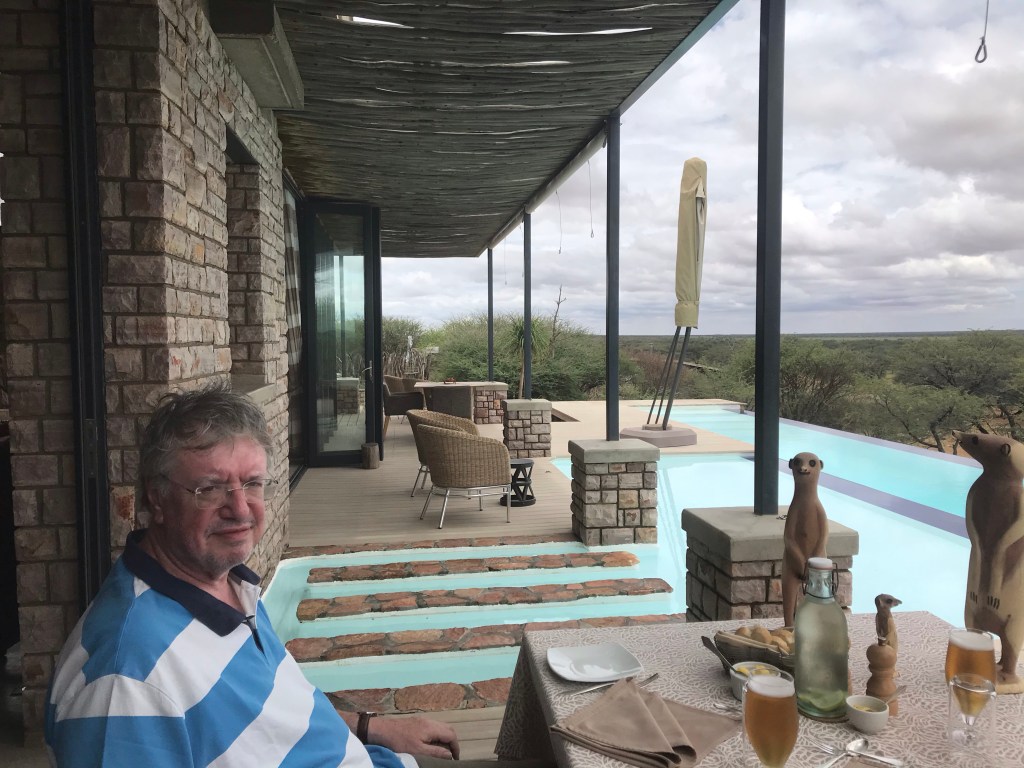
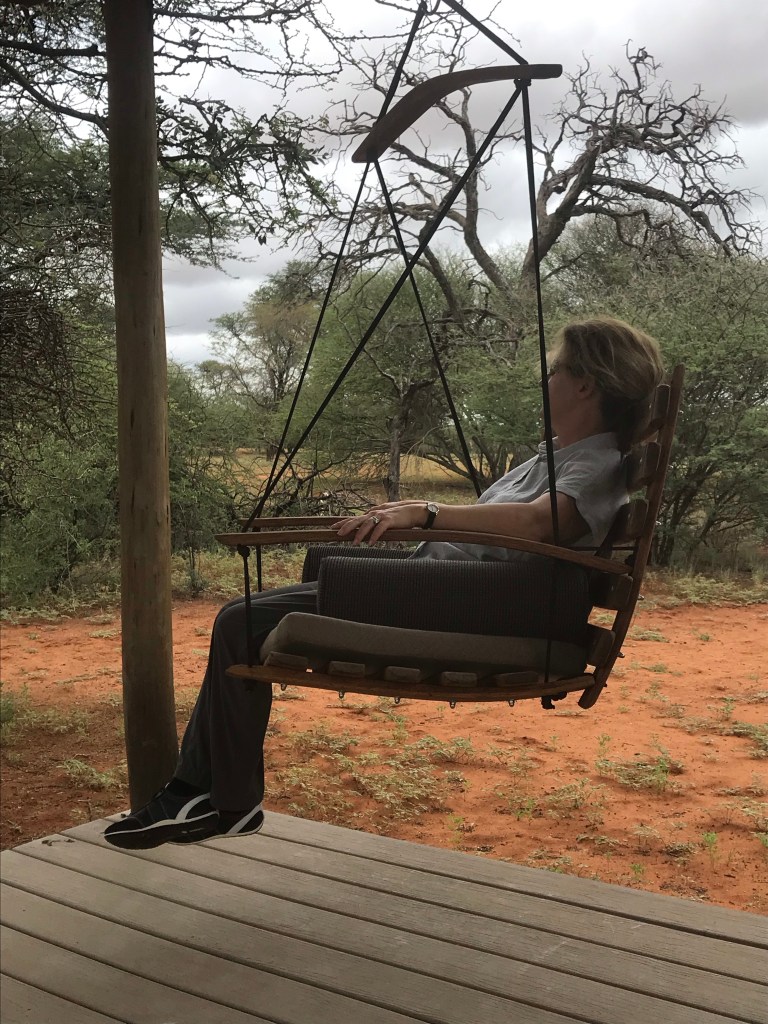
Our last stop in Namibia was at Otjimbondona – meaning “the place where the small camel thorn trees grow” in Herero – a small private reserve with four villas, an hour from Windhoek airport.

The lodge has been built around the old family farmhouse dating back to 1923. It represents a solution to a common dilemma – a livestock farm badly affected by years of drought. Here, the third generation has turned a third of its land into a reserve, acquiring and managing an interesting collection of game whilst trying to keep the cattle farm going on the balance of the land.

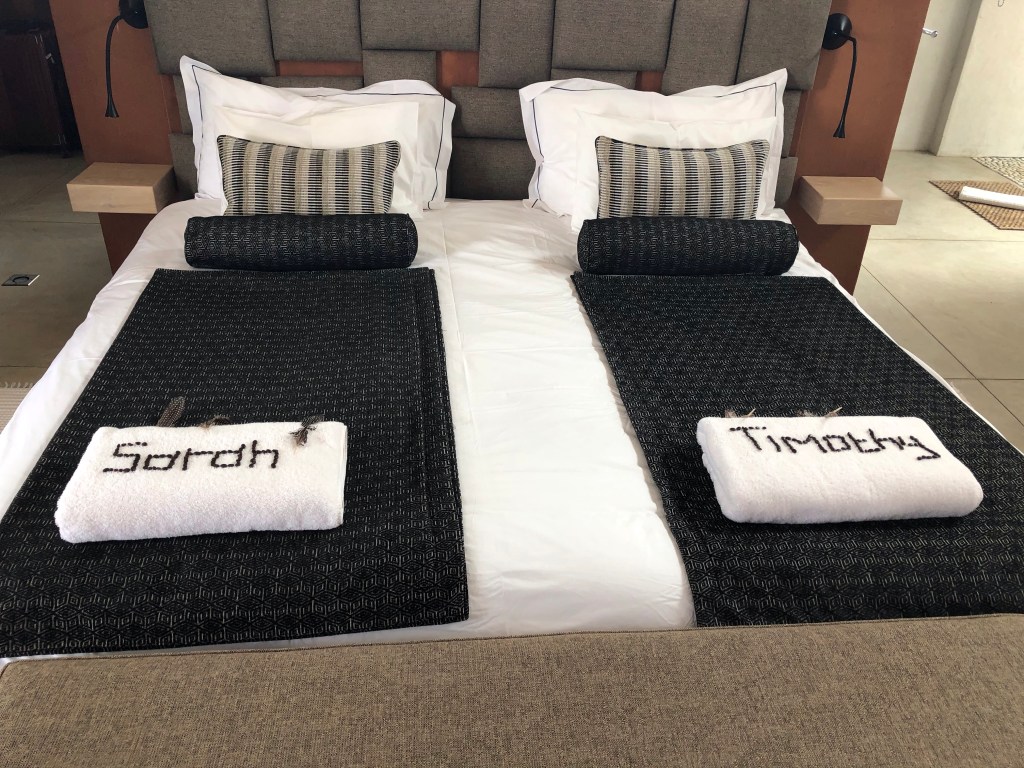
The lodge and villas have been built to the highest standards with relaxed but first class hospitality from the owners and their staff. It was a perfect place to spend our last night in this incredible country.

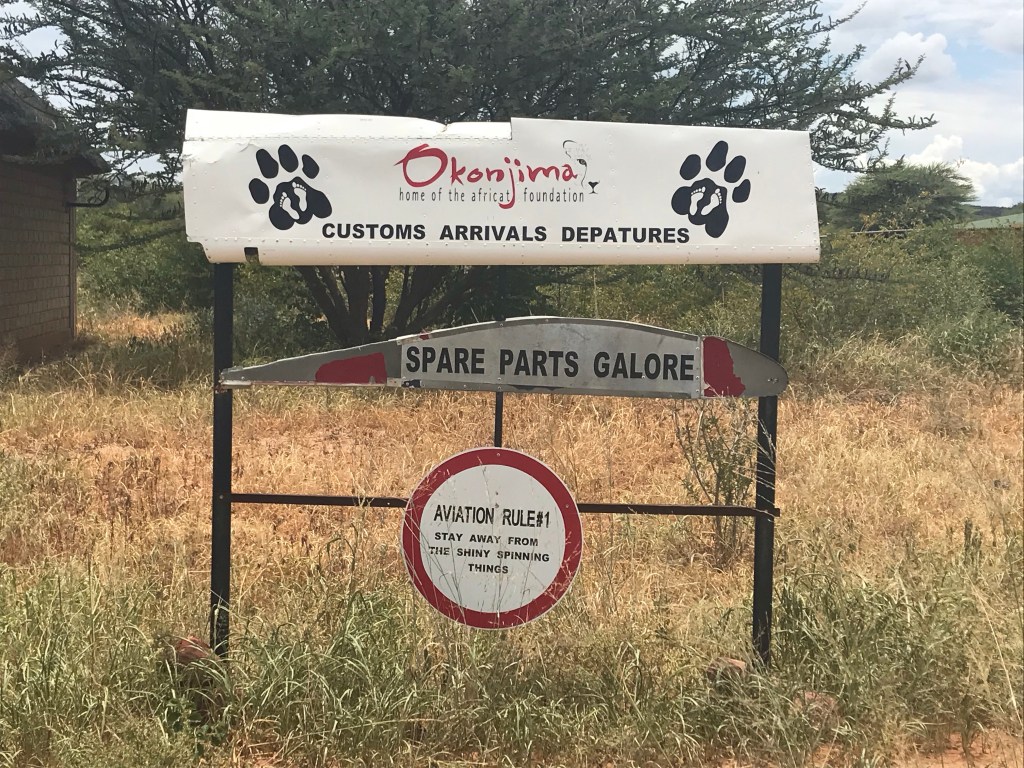
Okonjima and Africat

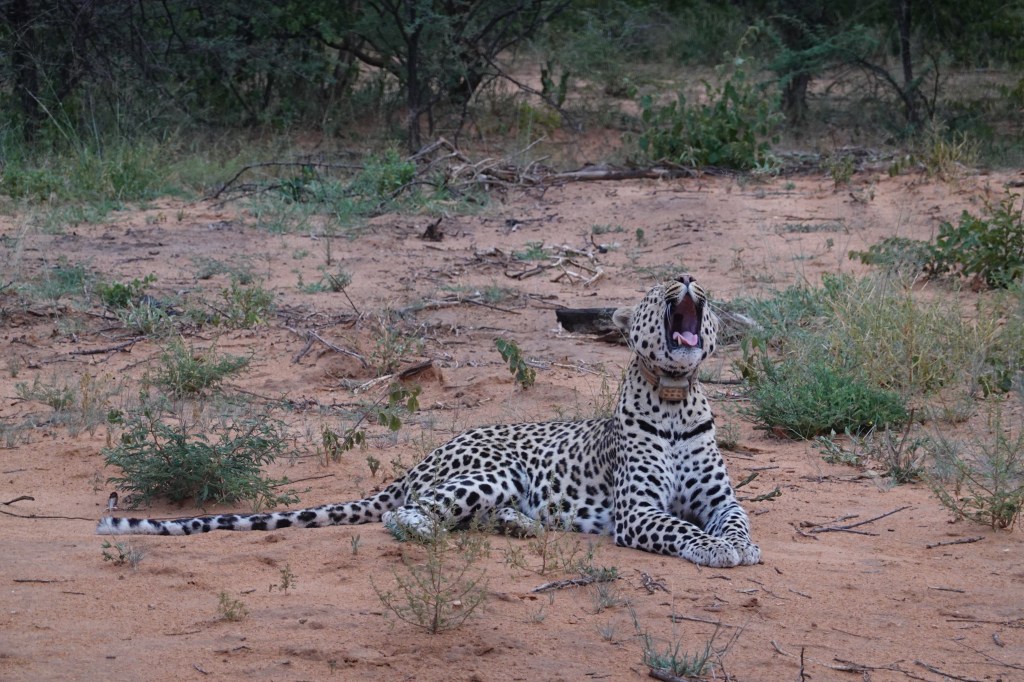
Okonjima is a large privately owned (by the Hansen family for three generations) game park. As well as many other animal, the park has approximately 30 leopards roaming freely, with twelve collared to enable tracking for both research and tourism. Thus there is a chance of the ranger finding them, but it still involves some skill and luck.

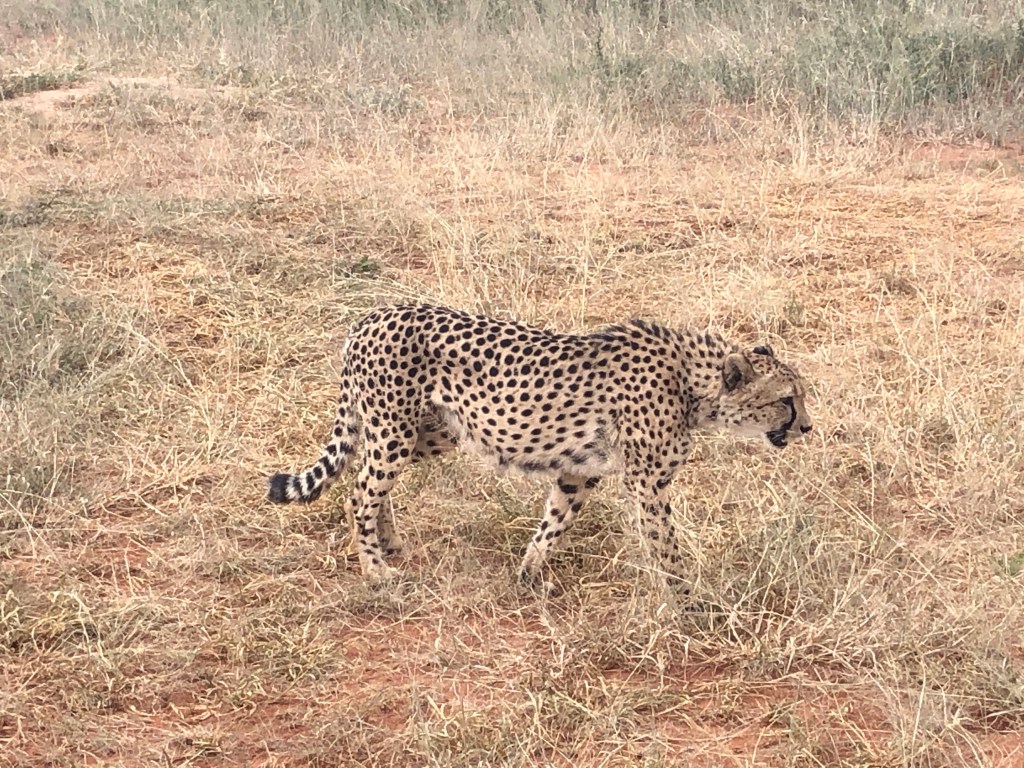
In addition they have a separate small reserve for rescued cheetahs as part of the Africat Foundation. This charity was set up to protect big cats by educating farmers and school children whilst rescuing orphaned cubs, injured cats and removing cats from farmland where they are endangered from being shot.

We learned , leopards cannot change their spots as they have rosettes, not spots; cheetahs have spots.

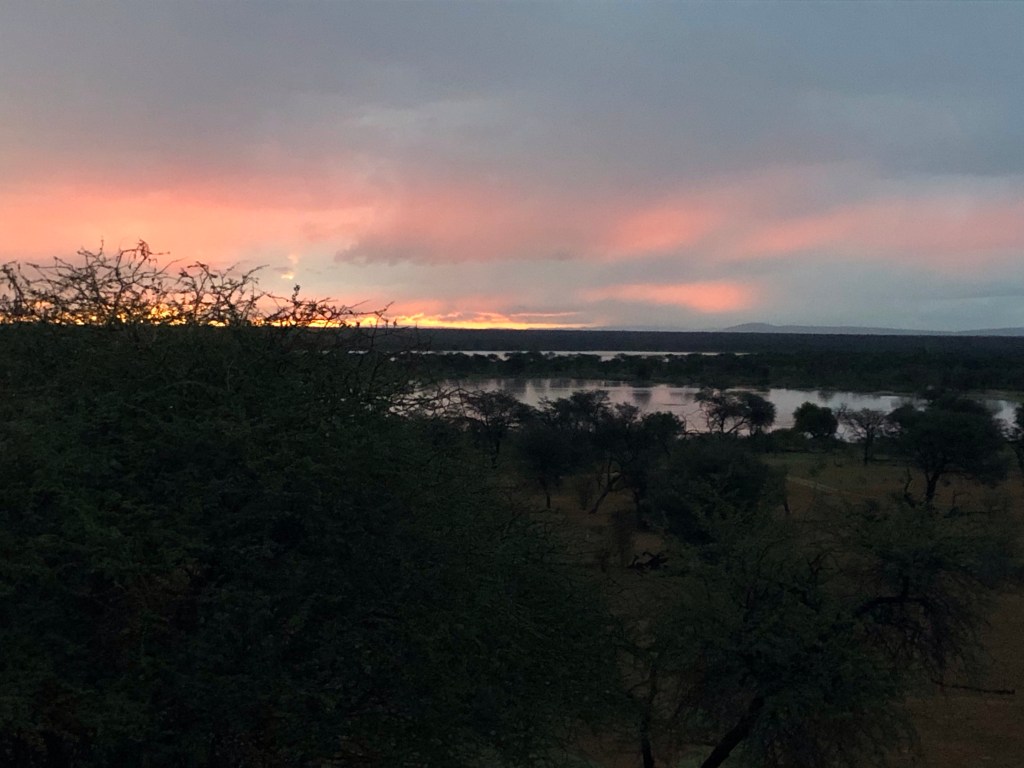
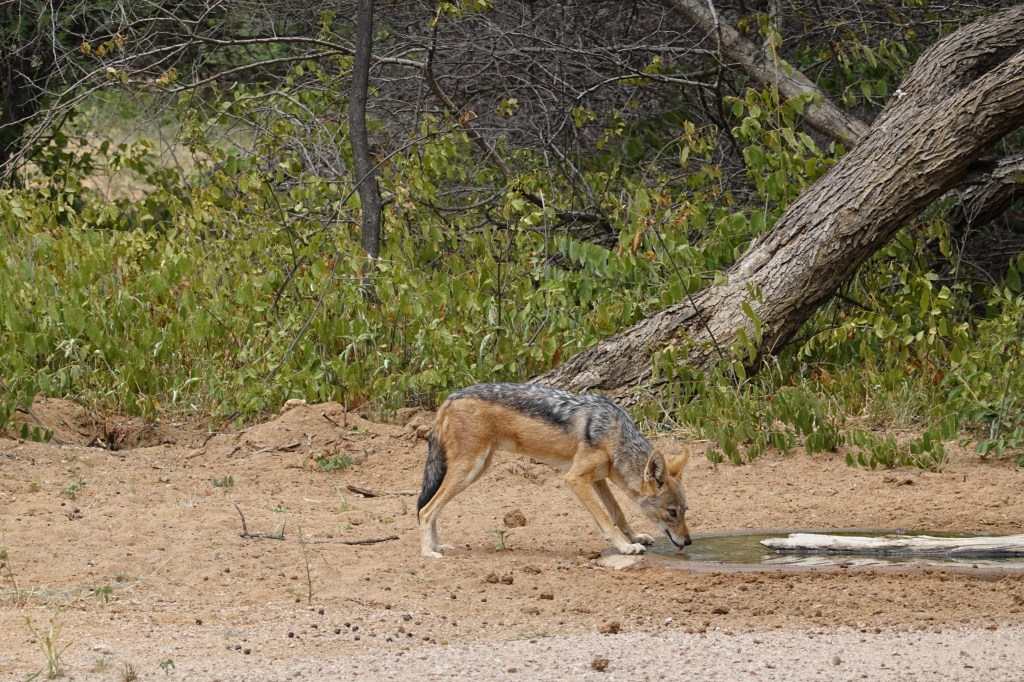
Our lodge room had its own lookout from which we were able to see a number of animals roaming and enjoying the waterhole.