Temple of Abu Simbel

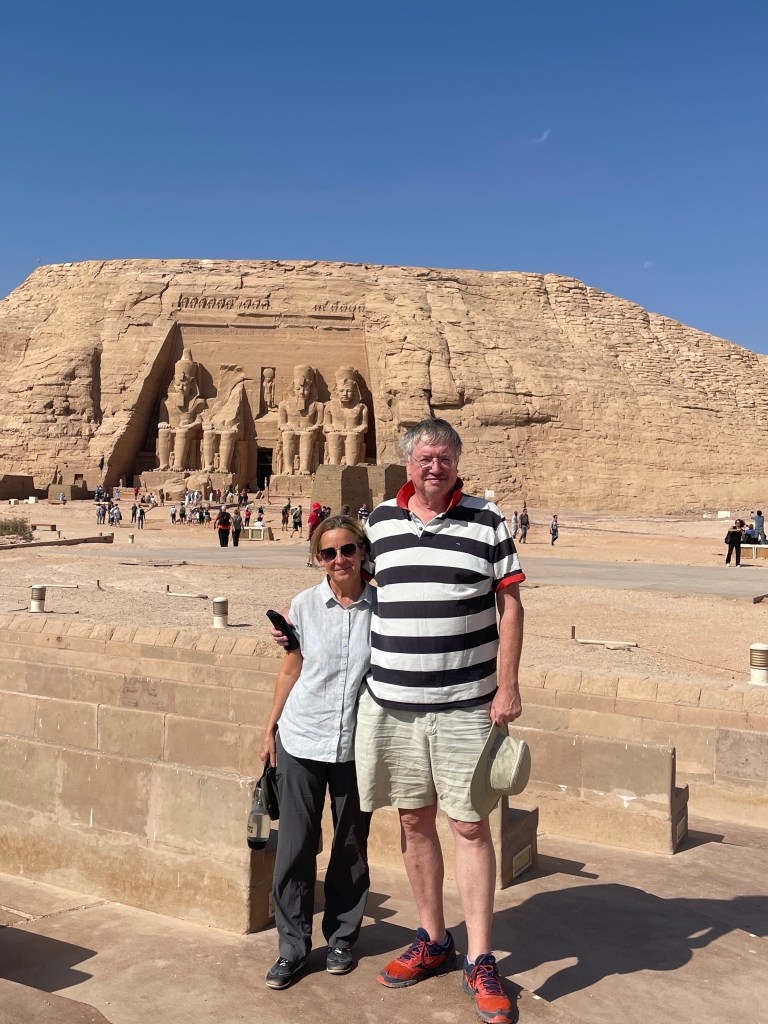
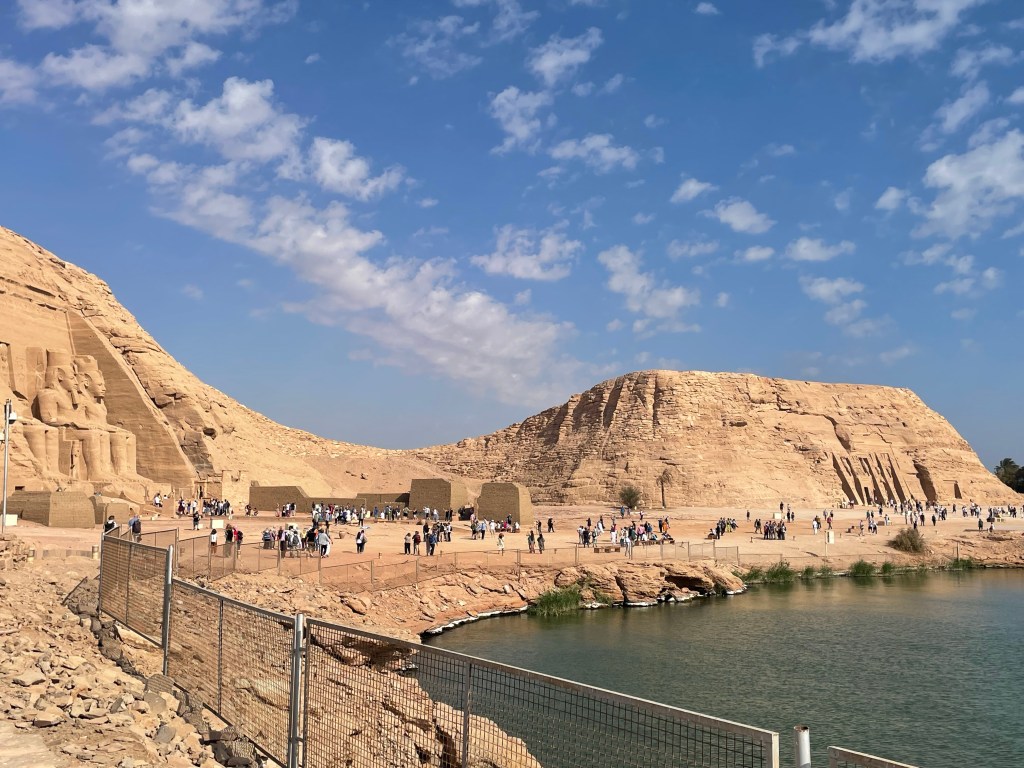
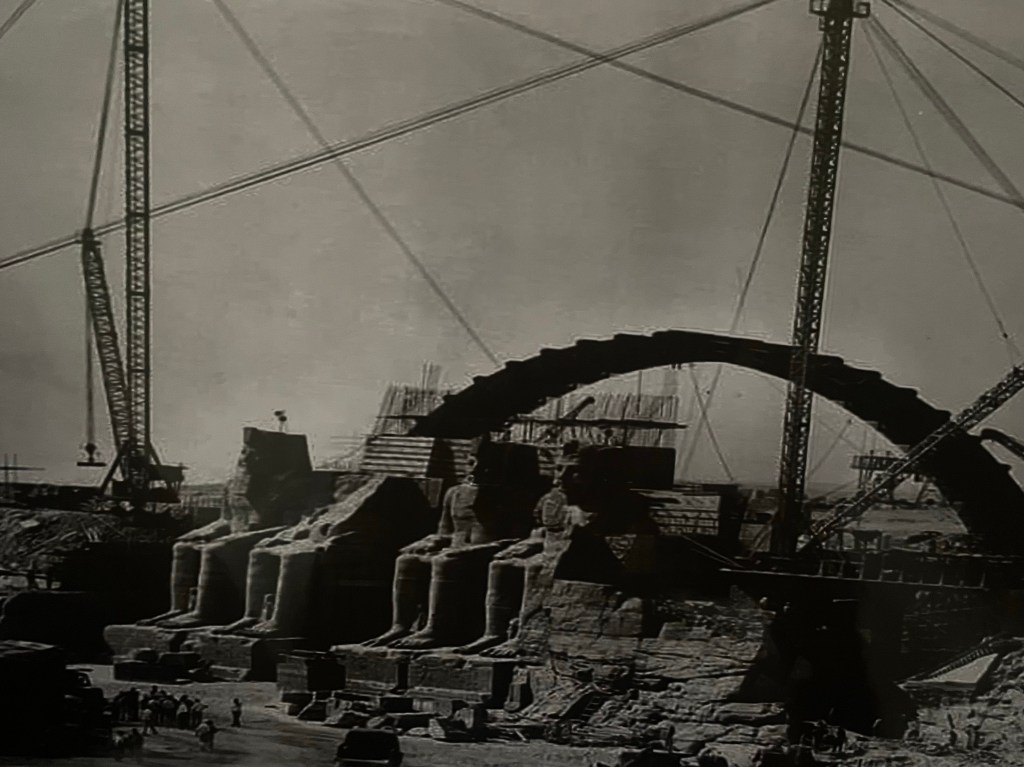
Abu Simbel lies on the shore of Lake Nasser on the the southern border of Egypt with Sudan. While the visit involved a 7 hour round trip from our base in Aswan, it was well worth it for the spectacle of the site as well as the incredible engineering involved in moving the site.

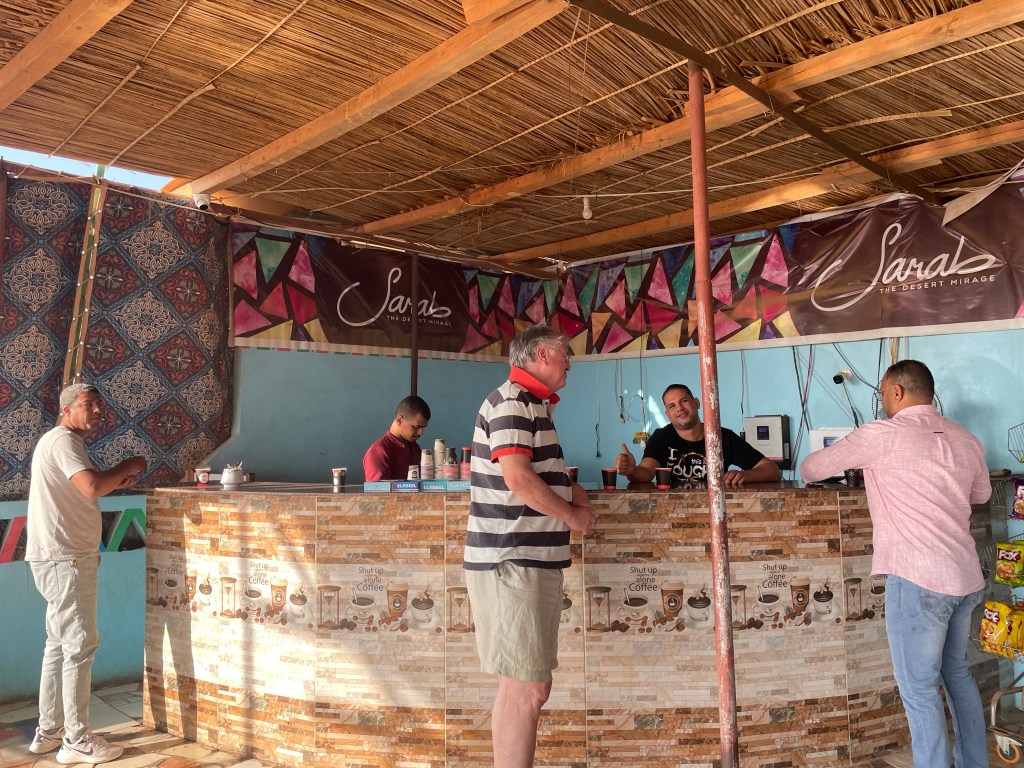
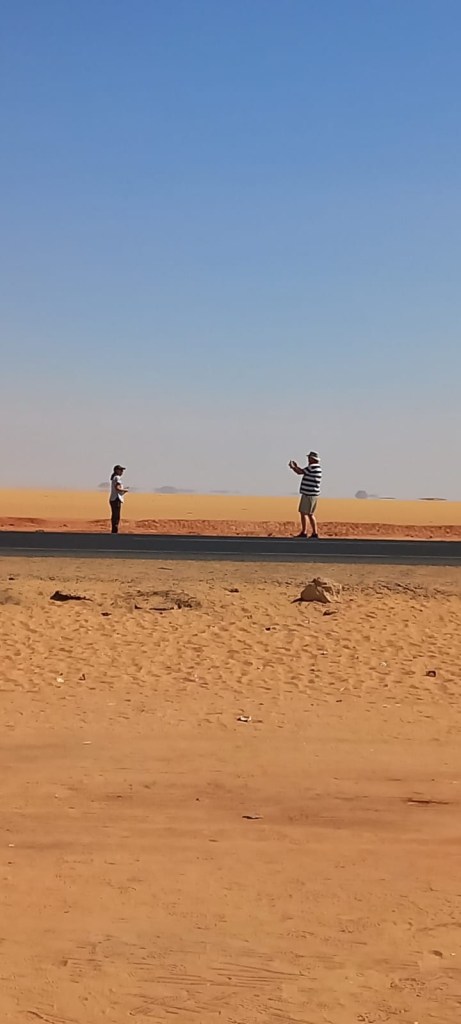
The route from Aswan to Abu Simbel is predominently desert, although the roads are straight and we were able to break the jourey at the “Mirage Cafetieria”. Police road checks were a regular feature of our trips, but they were more frequent on this route with various rules concerning times that tourist can travel, taking note of the passenger numbers and nationalities as well as the vehicle and driver details. It was also a requirment to use two drivers given the distance involved.

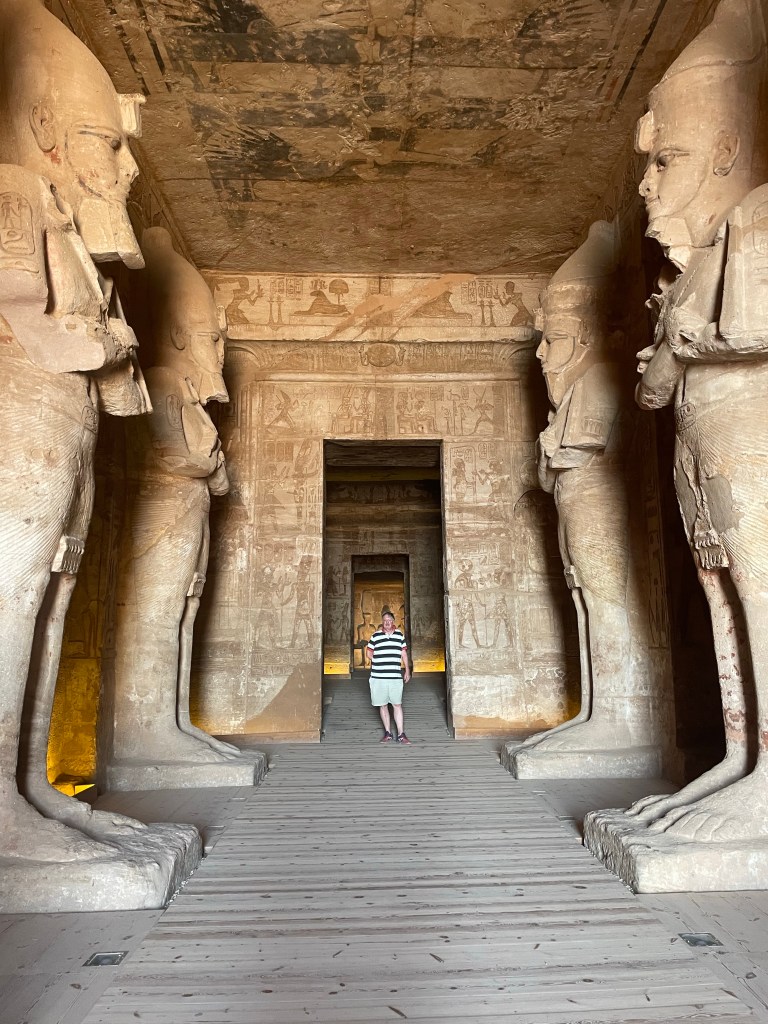
The Great Temple of Ramses II and Temple of Hathur, dedicated to his wife Nefertari, were built between 1274 and 1244 BC. The temples were moved 210m and raised 65m before being reopened in 1968 during the building of the Aswan High Dam. In total 22 monuments were moved, including those at Philae, but Abu Simbel is considered the greatest achievement. The temples were originally built into the rock-face, so the reconstruction involved building two false mountains, as well as moving 2,000 blocks weighing 10-40 tonnes. The original alignment with the sun was maintained.
Philae/Agilika Island

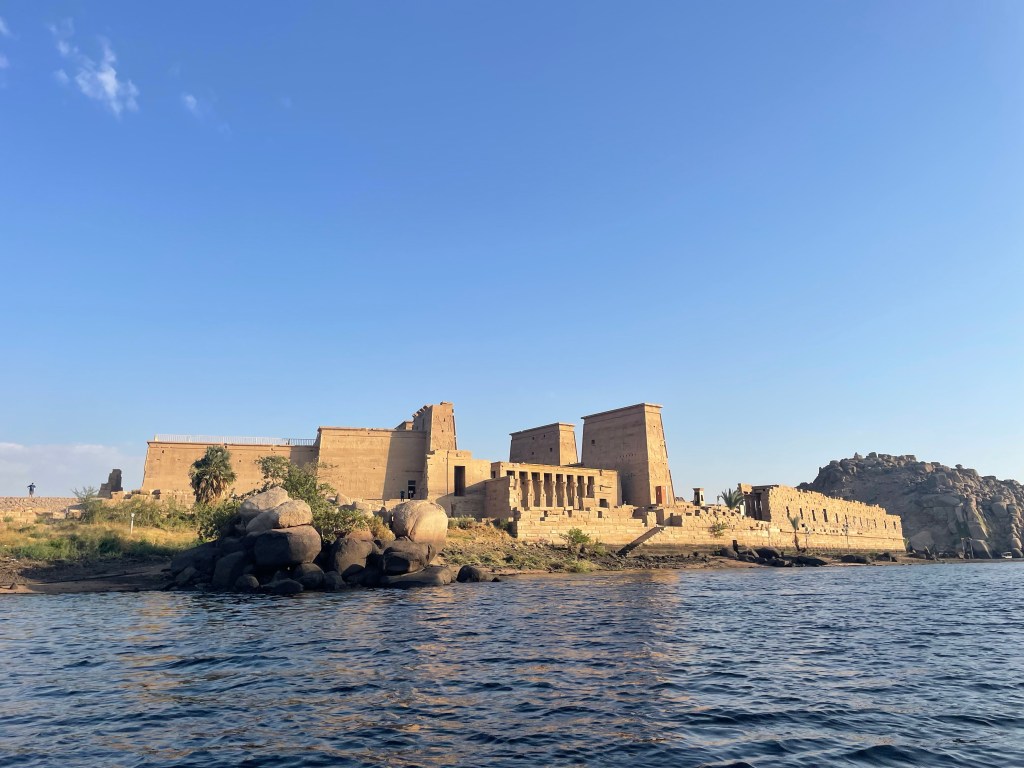
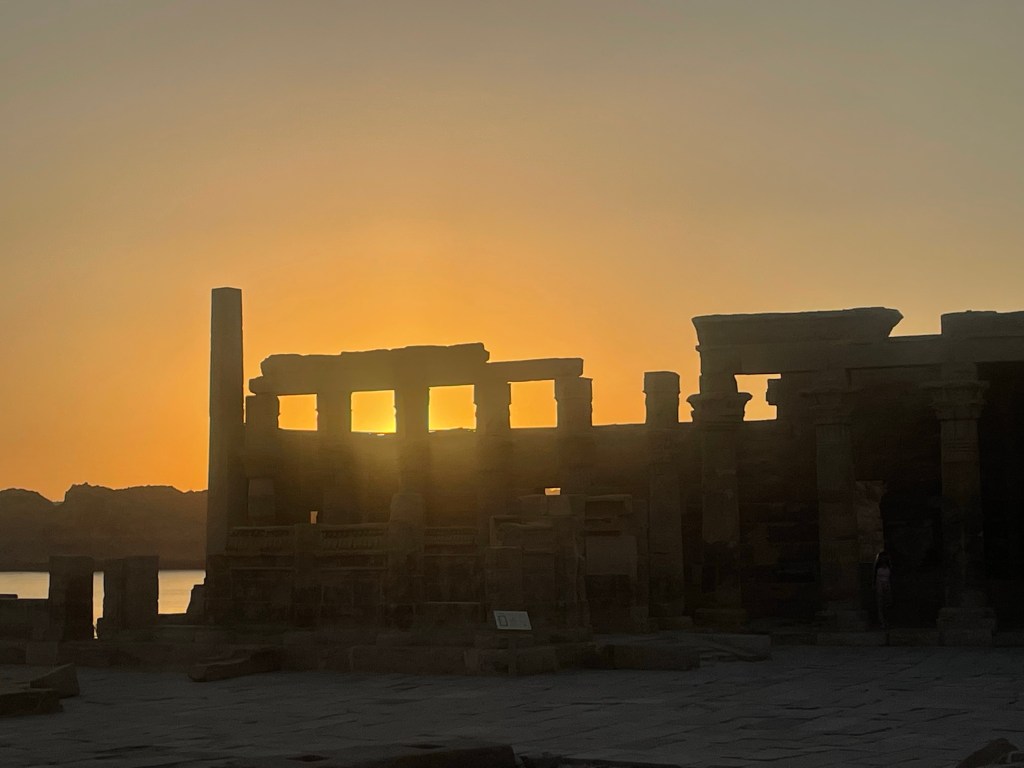
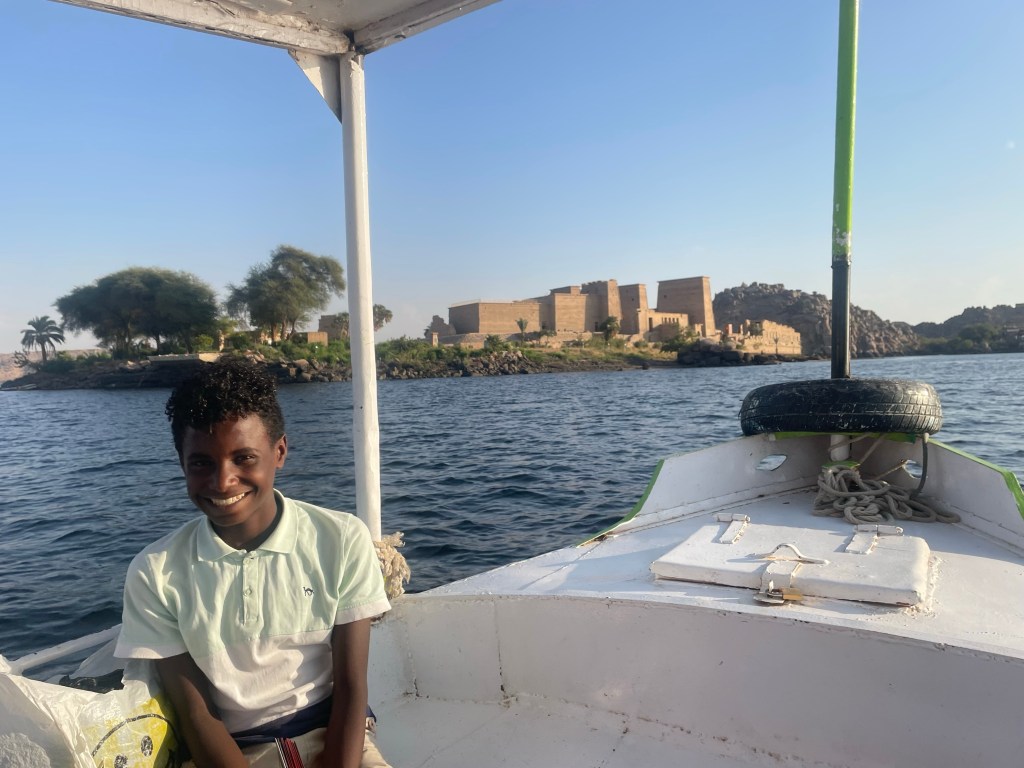
The temple of Isis, temple of Hathor and kiosk of Trajan were moved from Philae Island to Agilika Island between 1972 and 1980 as part of the Aswan High Dam project. The site would have disappeared below the new level of the Nile if UNESCO had not intervened. The buildings were moved stone by stone and rebuilt on the new site 20m higher.
Kom Ombo

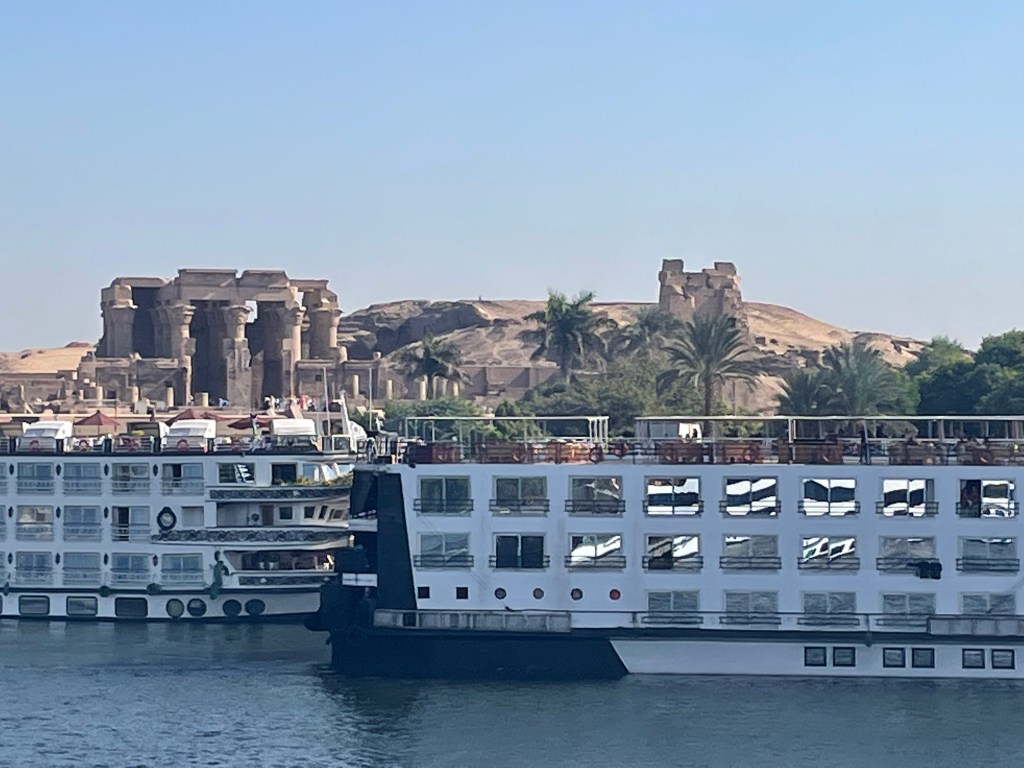
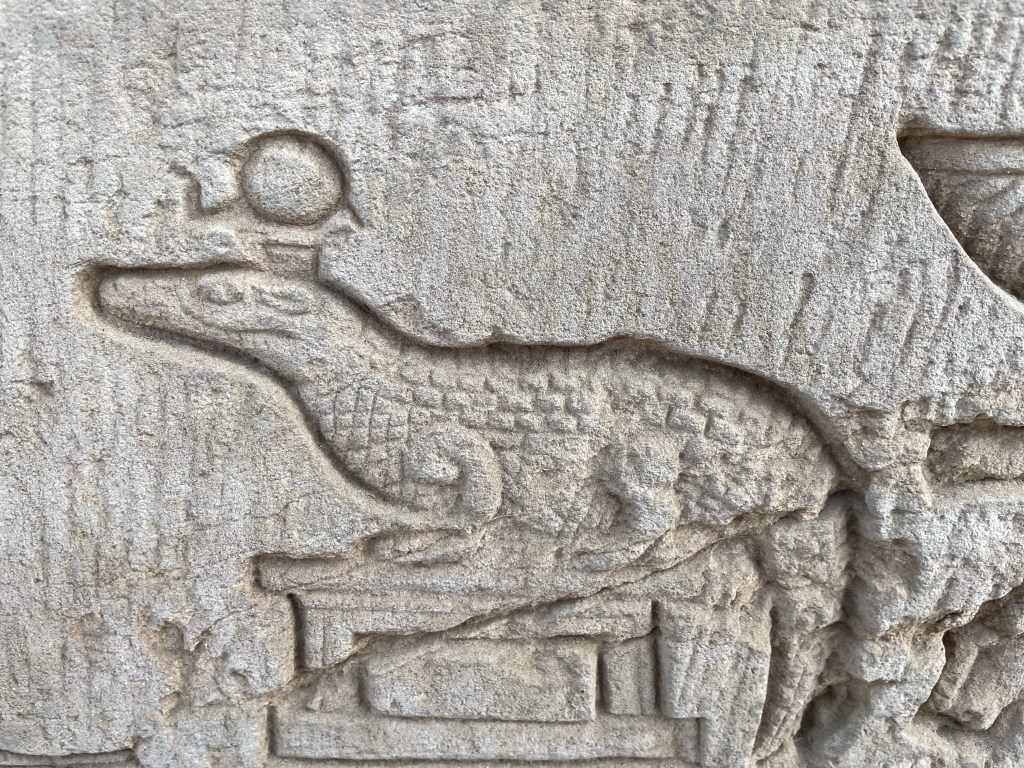
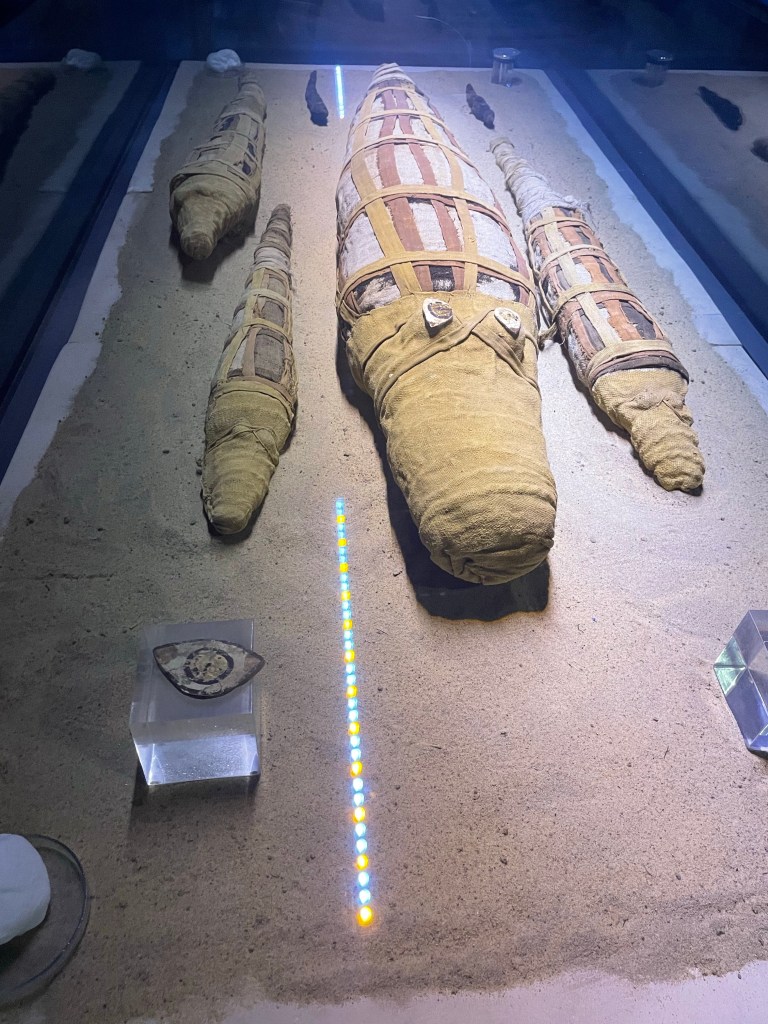
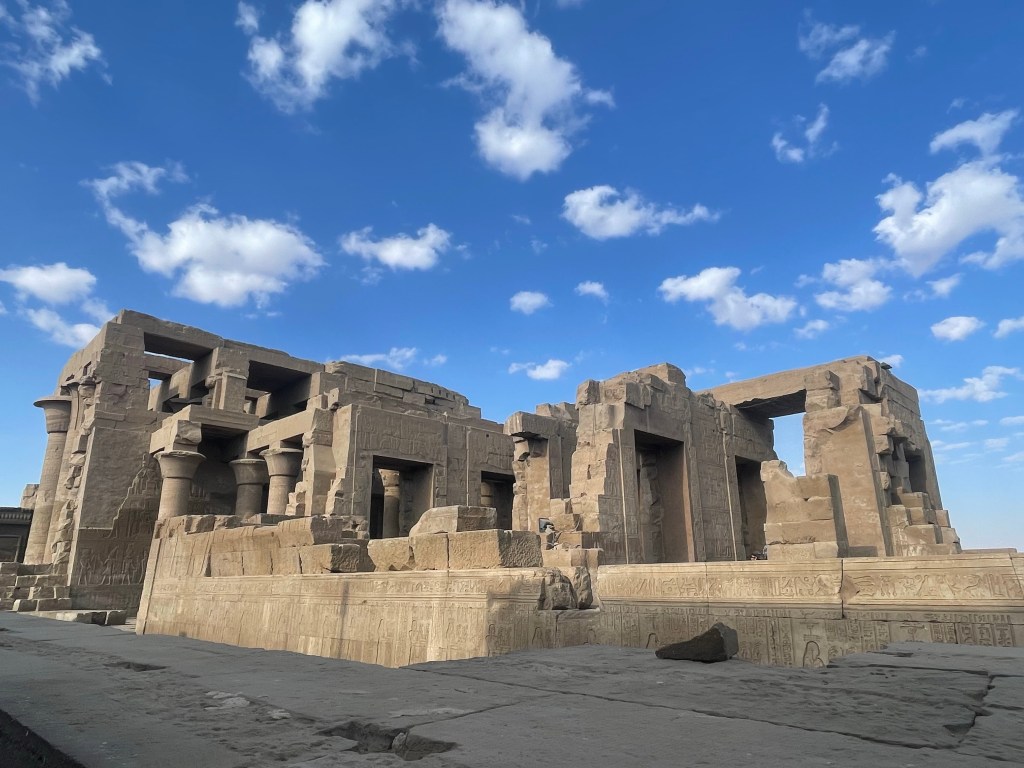
Kom Ombo lies on the east bank of the Nile just north of Aswan. Its temple is another Ptolemaic temple, but unusually dedicated to two gods; Sobek, the crocodile god, and Horus. It is symetrical with a dividing line down the centre with each half dedicated to the respective gods. The site has a crocodile museum housing crocodile mummies.

Edfu

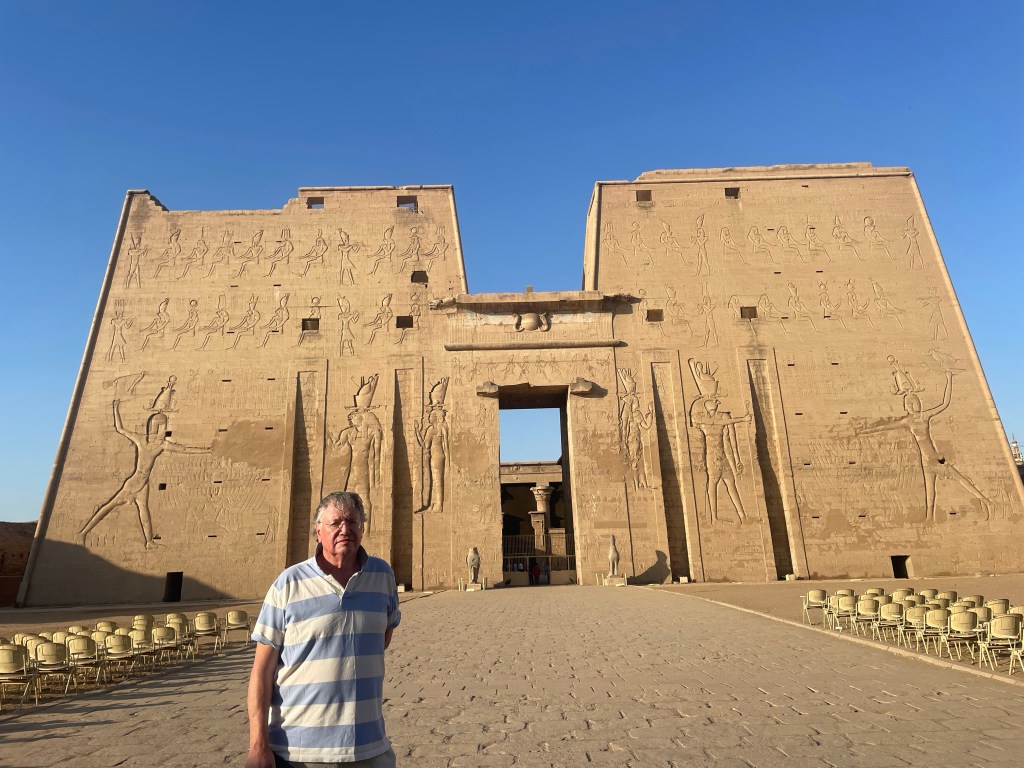
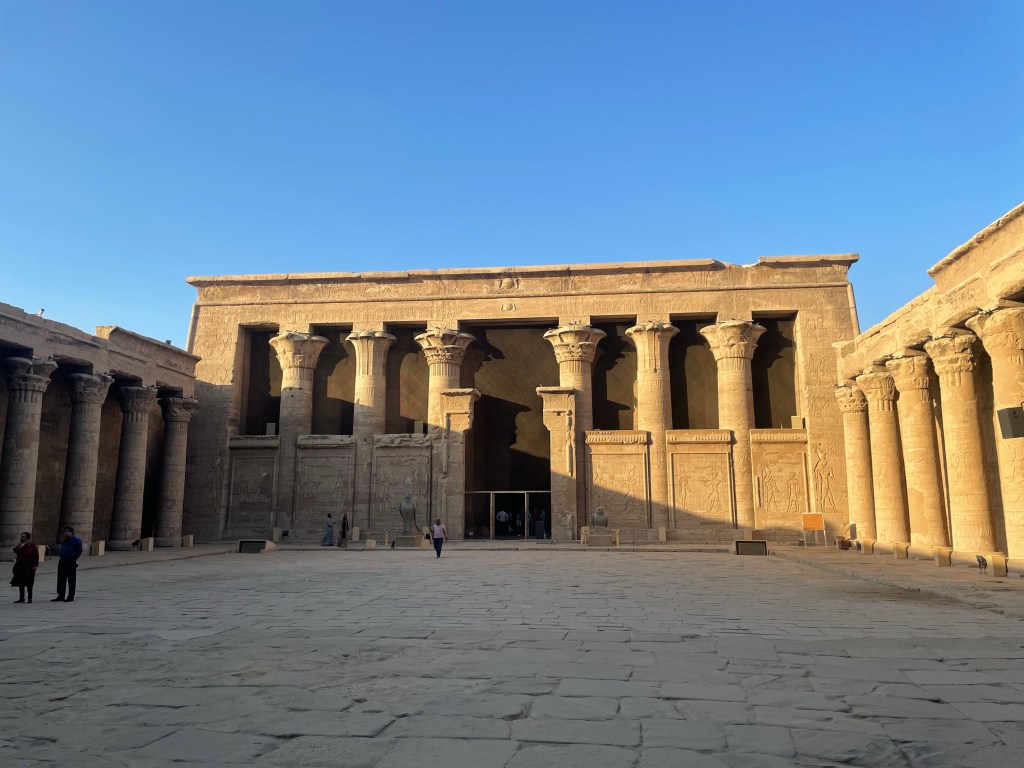
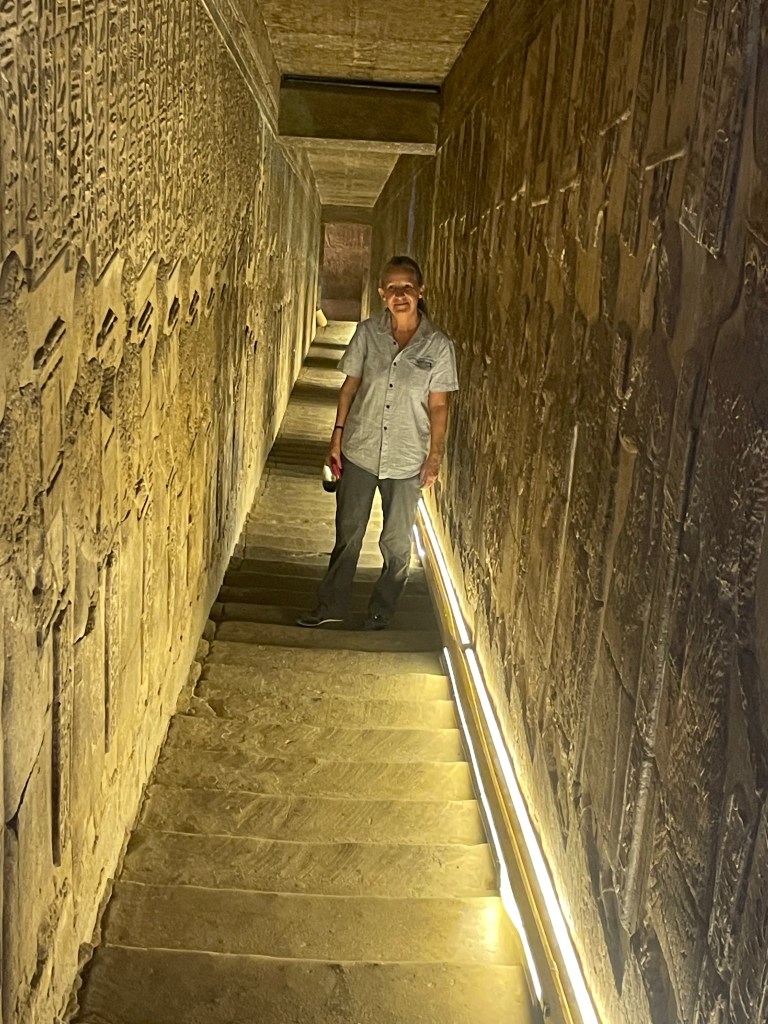
Edfu lies approximately half way between Luxor and Aswan. Our ship birthed there for the night and we visited the temple in the late afternoon, with few other tourists. While this meant we had the site to ourselves, it also meant that the traders in the bazaar outside didn’t have any other punters to hassle !

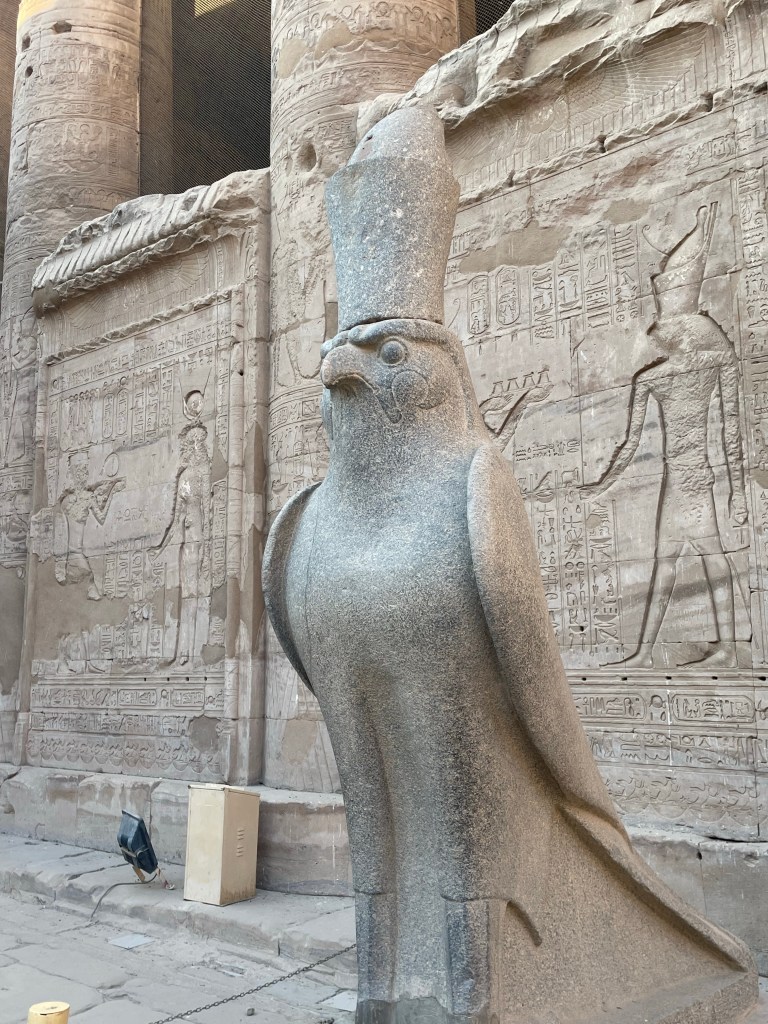
The temple is dedicated to Horus, the son of Isis and Osiris, the falcon headed god, commonly seen branding current Egyptian companies. The temple was built in the Greek Ptolemaic period and completed by the father of Cleopatra VII (the one played by Elizabeth Taylor). It is one of the best preserved.

Dendera

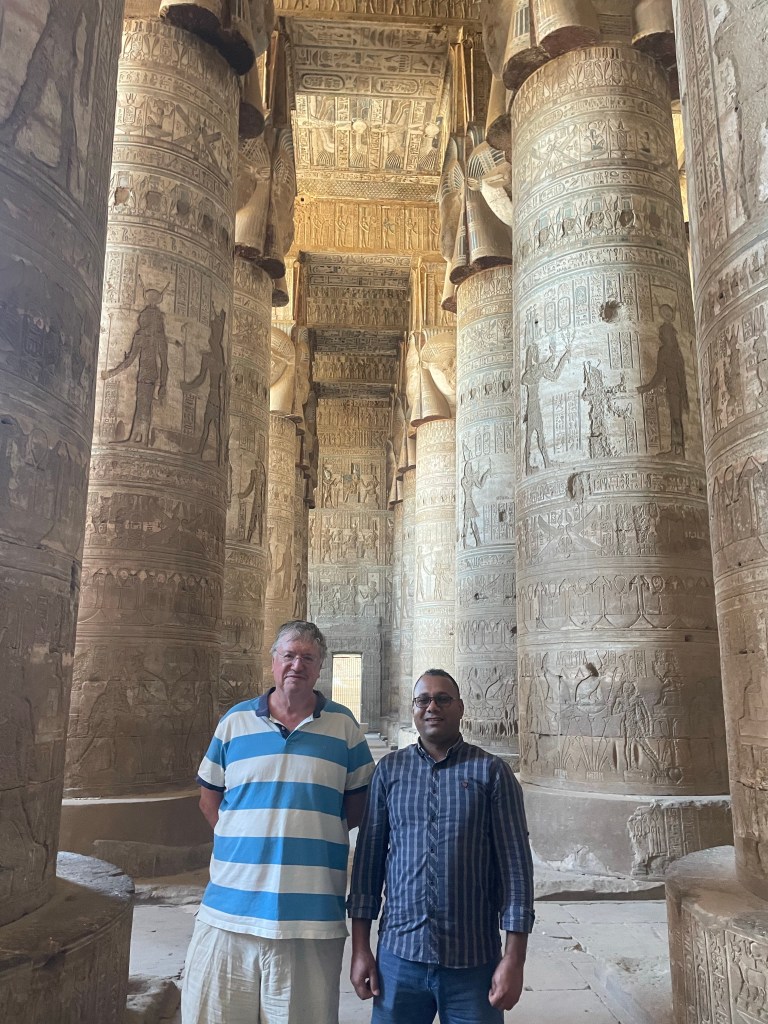
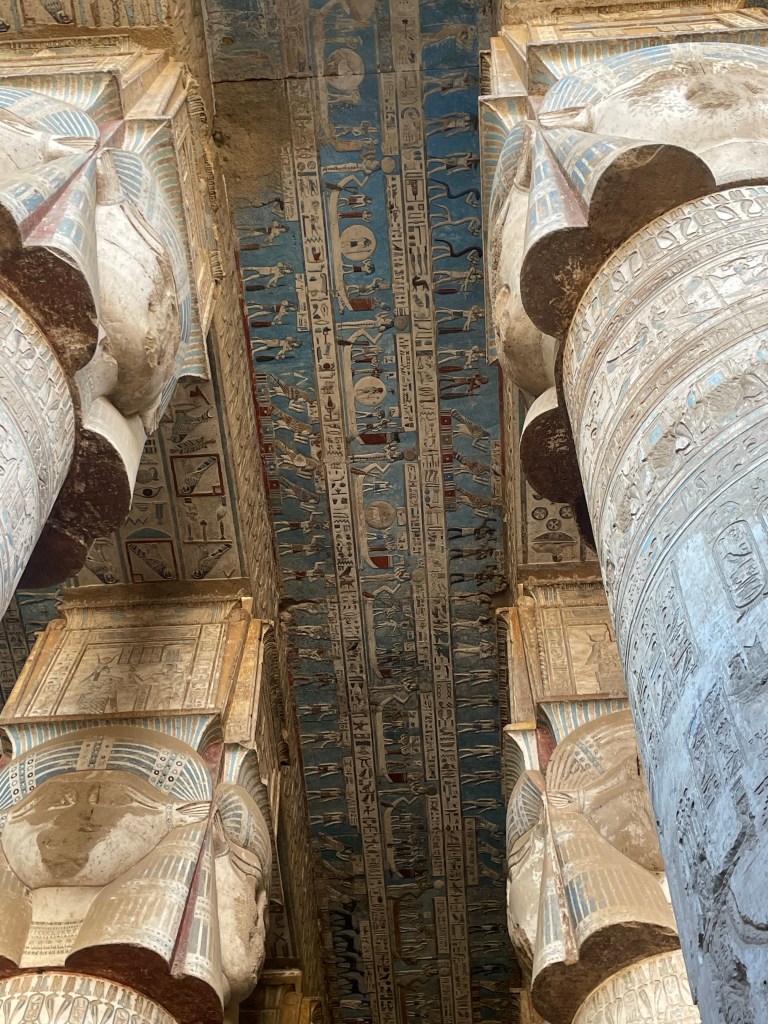
The Temple of Hathur, the Egyptian goddess of the sky, of women, fertility and love, was built by Egyptians during the reign of Greeks/Romans. The temple was built at Dendera to demonstrate that the Romans were accepted by the Egyptian gods.
As our ship had not been able to sail north of Luxor travelled by minibus (the other four of our group skipped the trip), although the journey was made quicker by the police allowing us to use the newly built desert highway which we were told is not always the case for tourists. We were rewarded by having the site almost to ourselves.

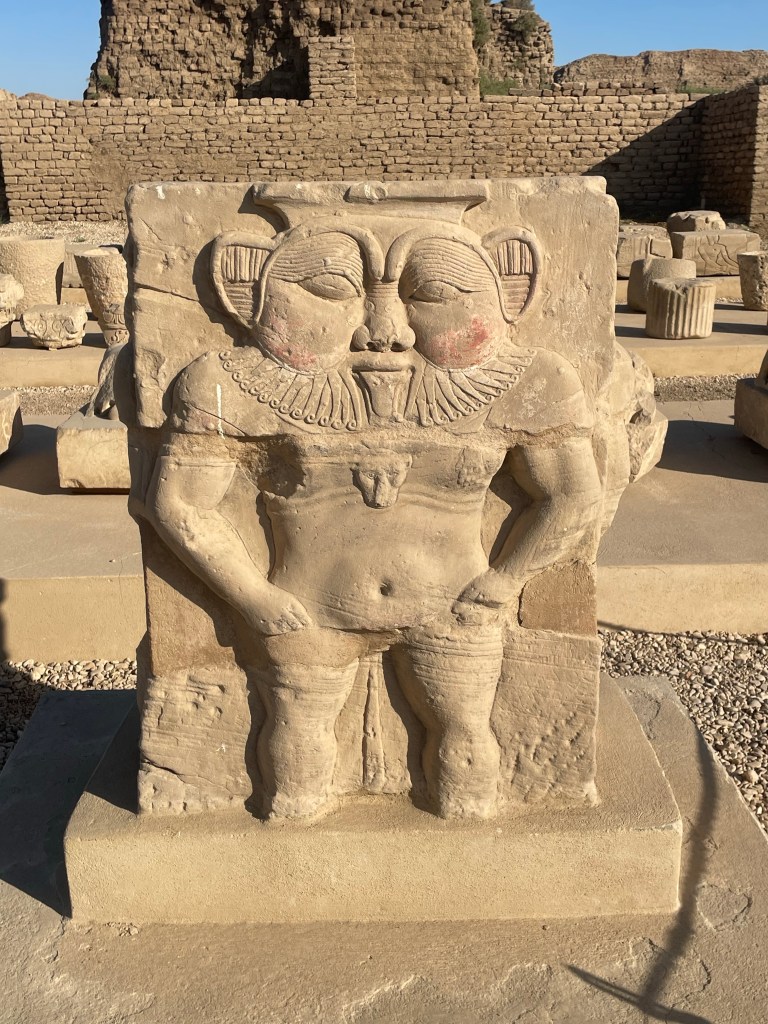
Bes – god of ‘all things good’ !

Memorial Temple of Hatshepsut

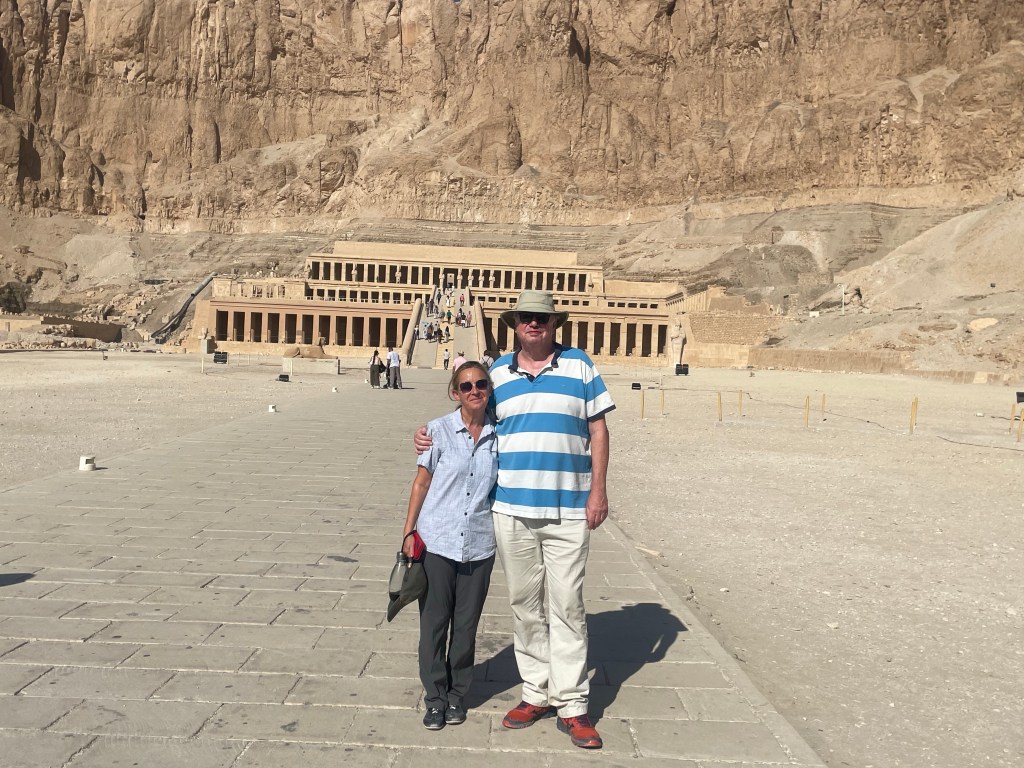
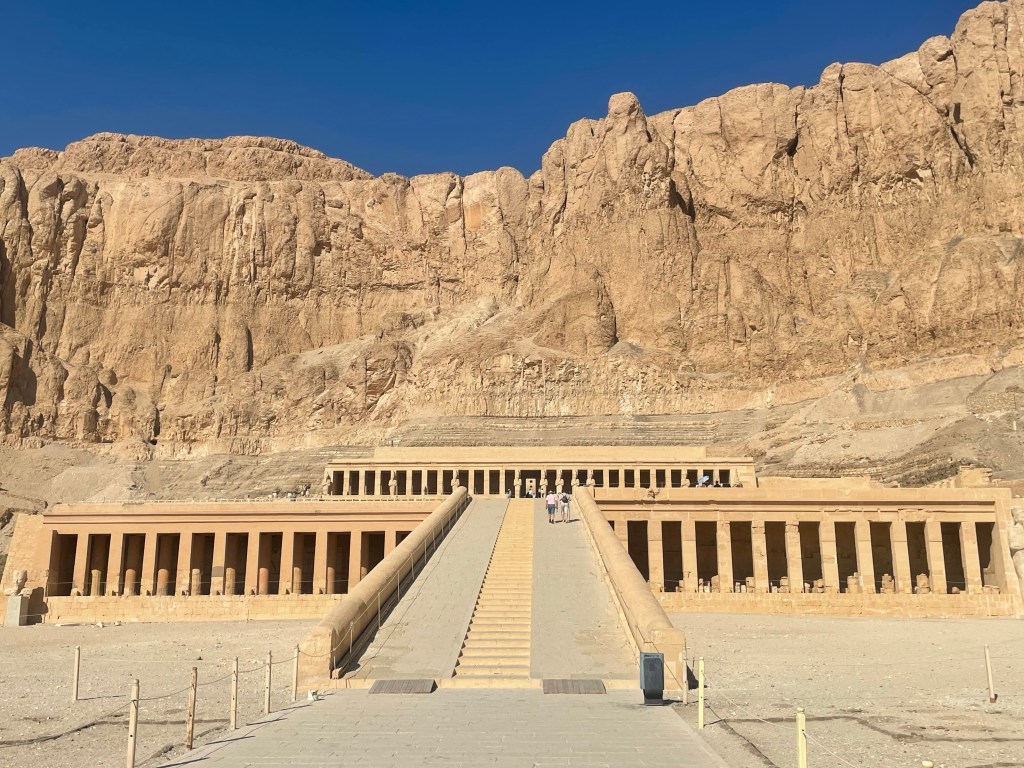
Hatshepsut (1473-1458 BC) was rare in being a female pharaoh. Initially she ruled as regent for her infant nephew and step-son, the future pharaoh Tuthmosis III (1458- 1425 BC) but then became pharaoh in her own right. It is believed that the temple was defaced by Tuthmosis III in an attempt to erase her from history.

Our guide suggested a way of remembering her name “It’s like hot chicken soup” !

Medinet Habu

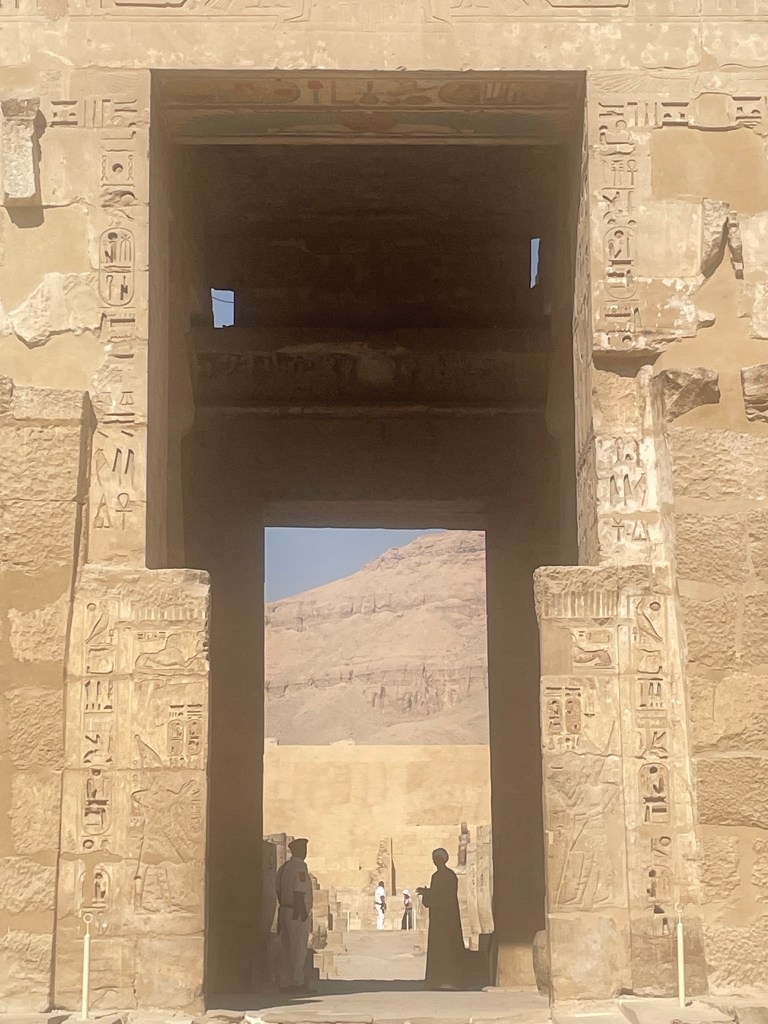
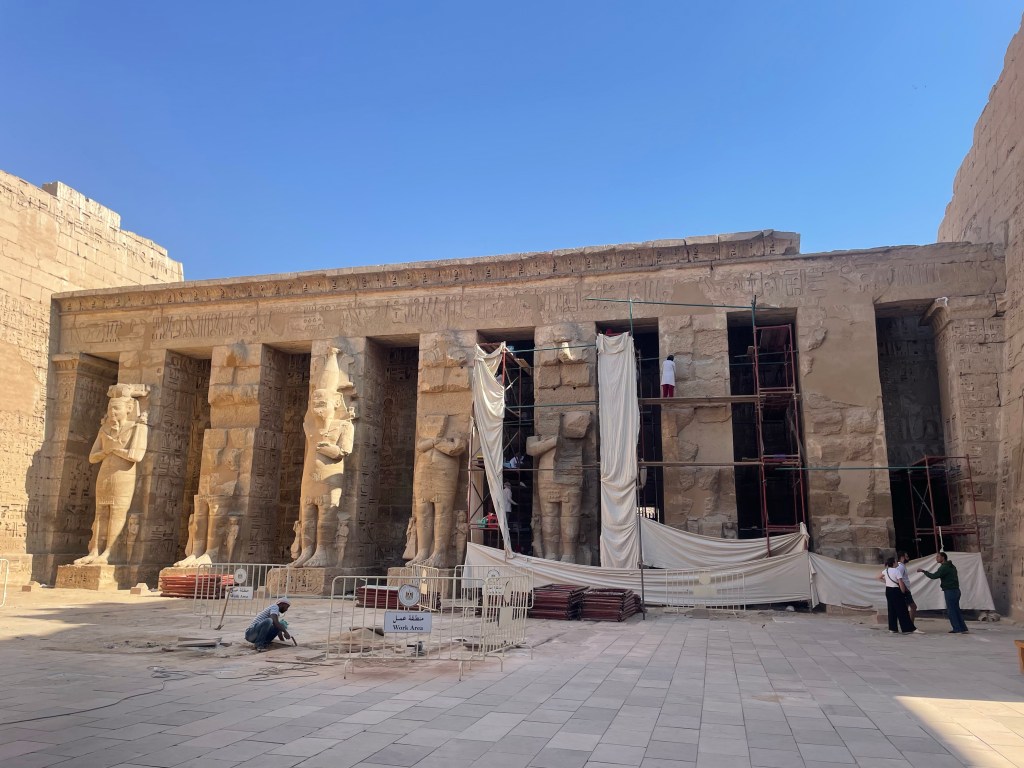
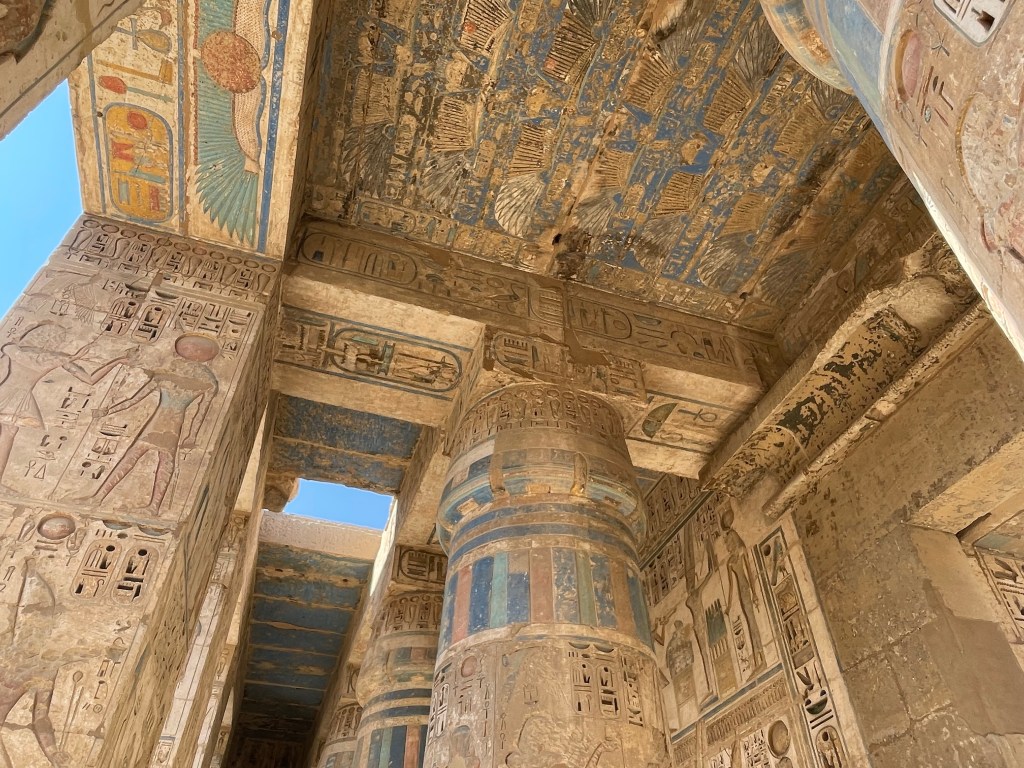
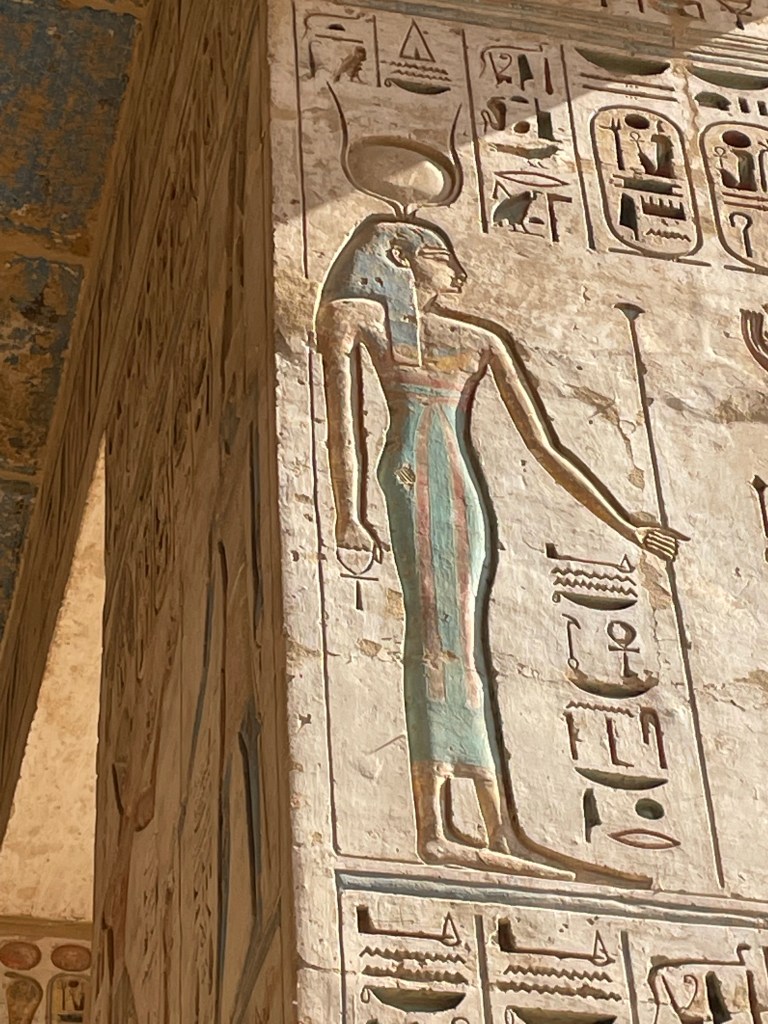
This is a memorial temple built by Ramses III (1186-1155 BC) dominated by Funery Temple. It is close to the Valley of the Kings on the “West Bank” of the Nile, opposite the main city of Luxor which is predominently on the “East Bank”.

Luxor Temple

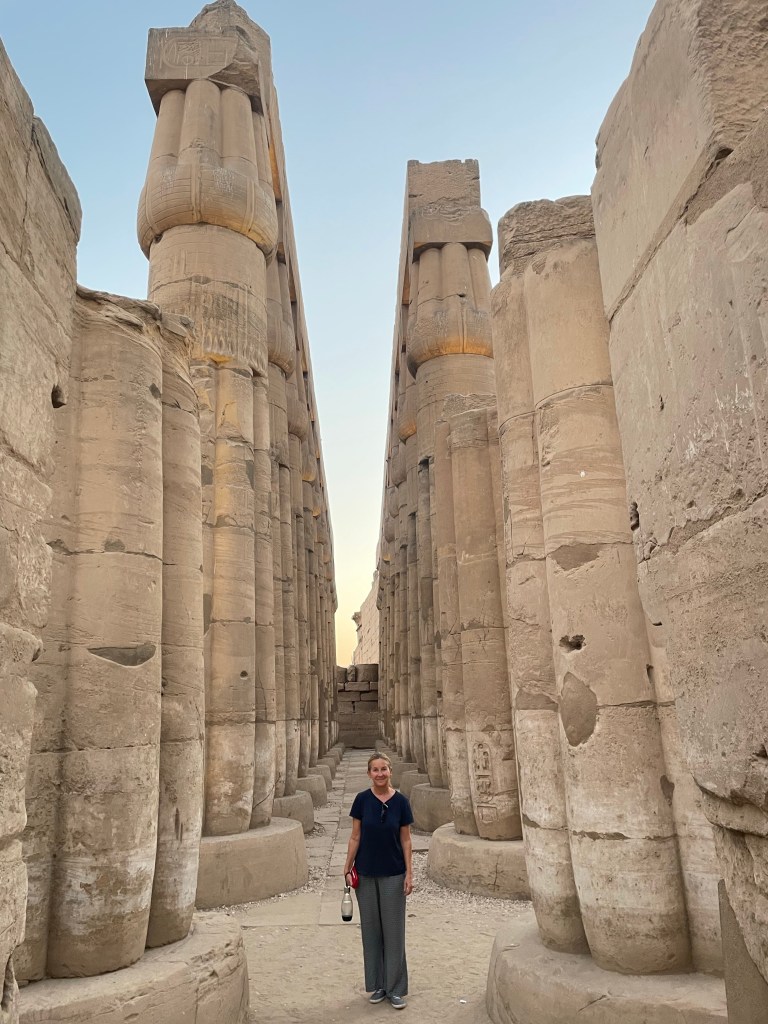
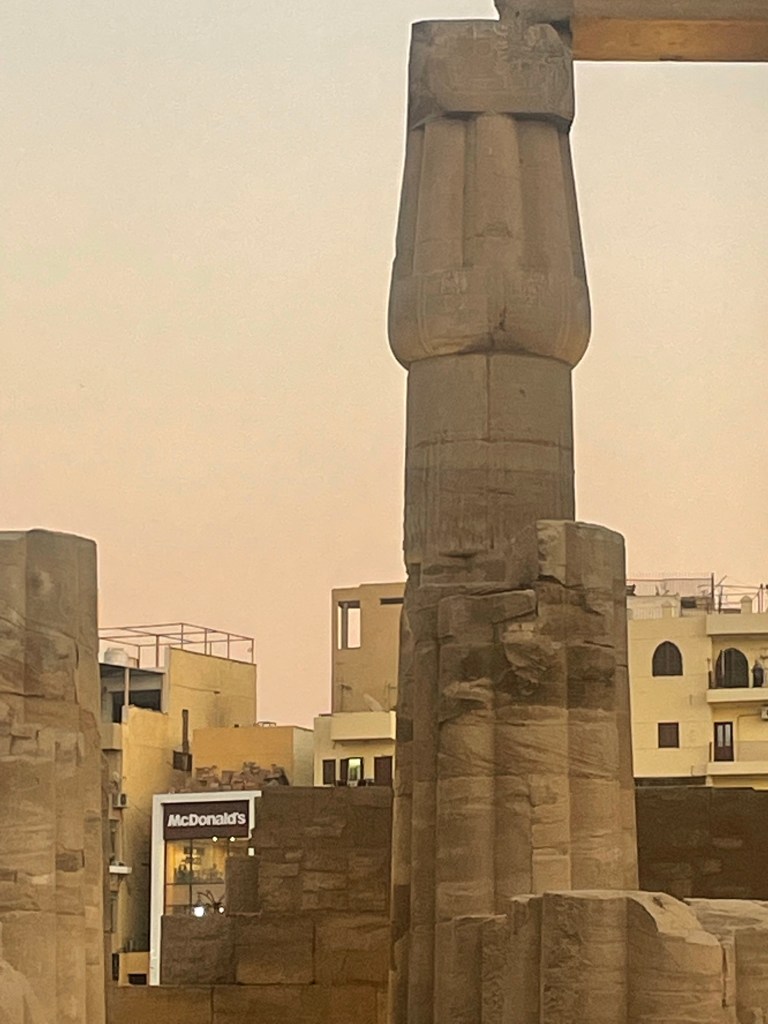
Largely built by Amenhotep III (1390-1352 BC) and Ramses II, the longest reigning pharaoh, (1279-1213 BC). It is connected to Karnak by the 3km avenue of the Sphinx. The temple sits close to the Nile and surrounded by the current city of Luxor.

Tutenkhamun and his wife
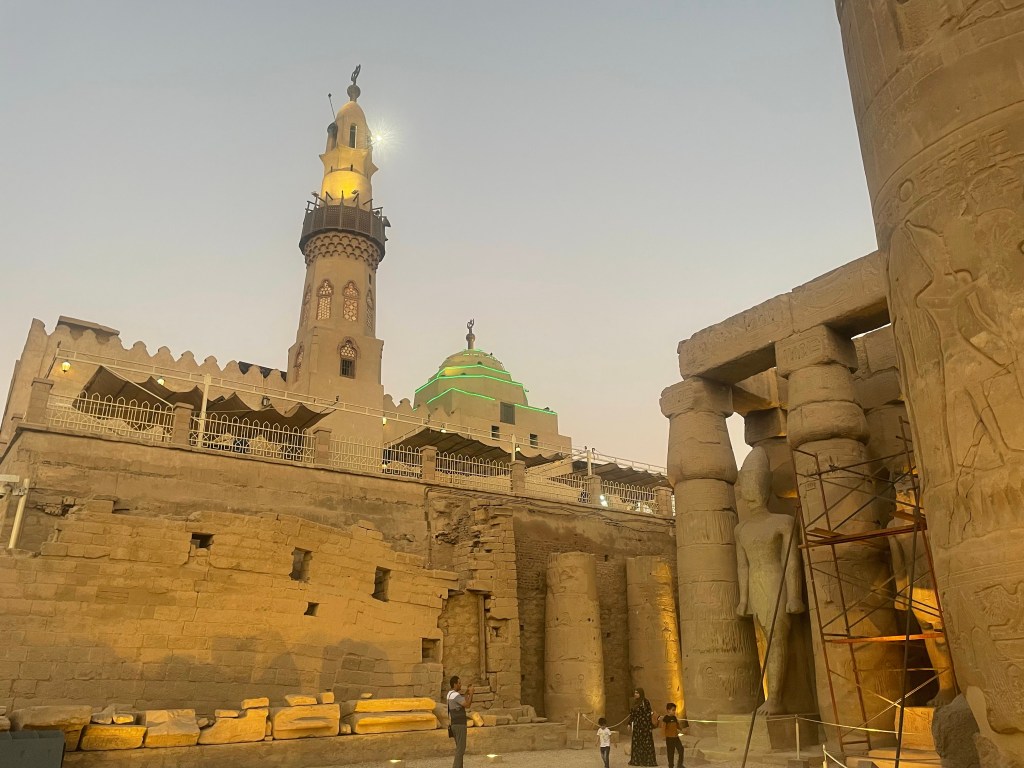
Abu Haggag mosque, still in use, sits within the temple. Built in 640 AD on the same site used as a Coptic church for the previous 250 years
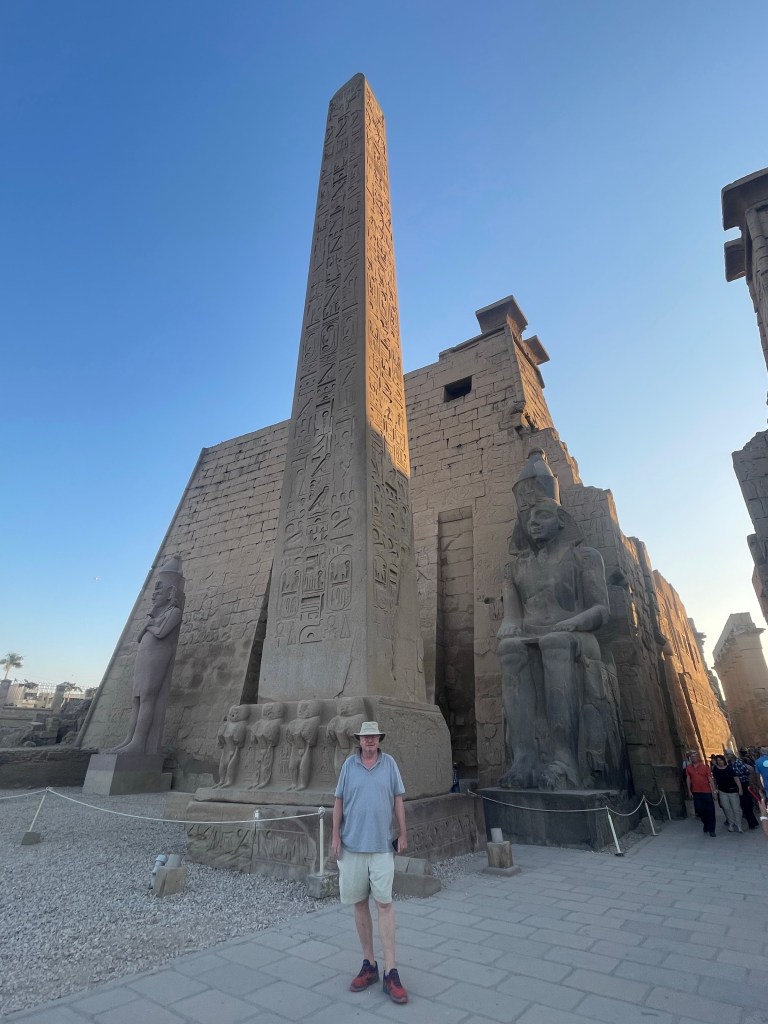
The second obelisk is in the Place de la Concorde

Nile Cruising

We flew from Cairo to Luxor and joined our ship for a week on the Nile. Due to low water levels in the river, initially we did not go very far as it was not possible to navigate the section north of Luxor. However, we were straight into our schedule of early starts, temples and tombs.

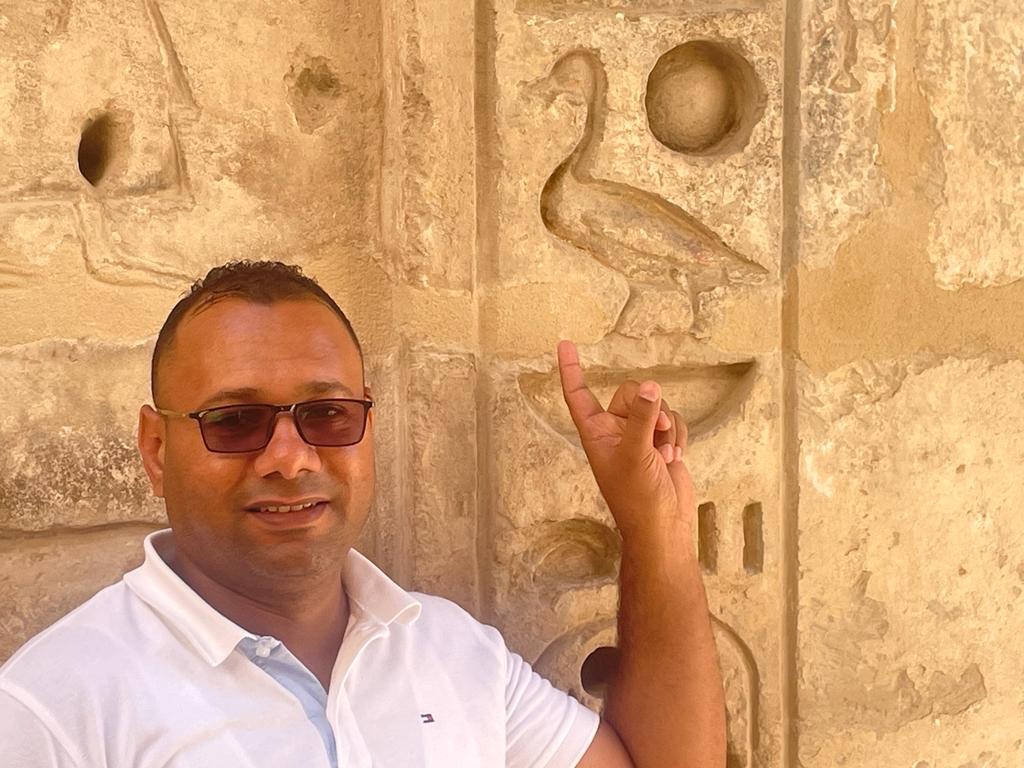
We were in the same group of six with the same guide and driver for all the sight seeing. Our guide, Wael was quick to pick up the pace and sense of humour of our all British group. Wael qualified at Cairo university in tourism, guiding and Egyptian history/archeology sixteen years ago. Sadly, though due to the impact on tourism in Egypt of political unrest and the pandemic, he has only had around six years of good work.

Wael
Crew catching an 8kg Nile perch
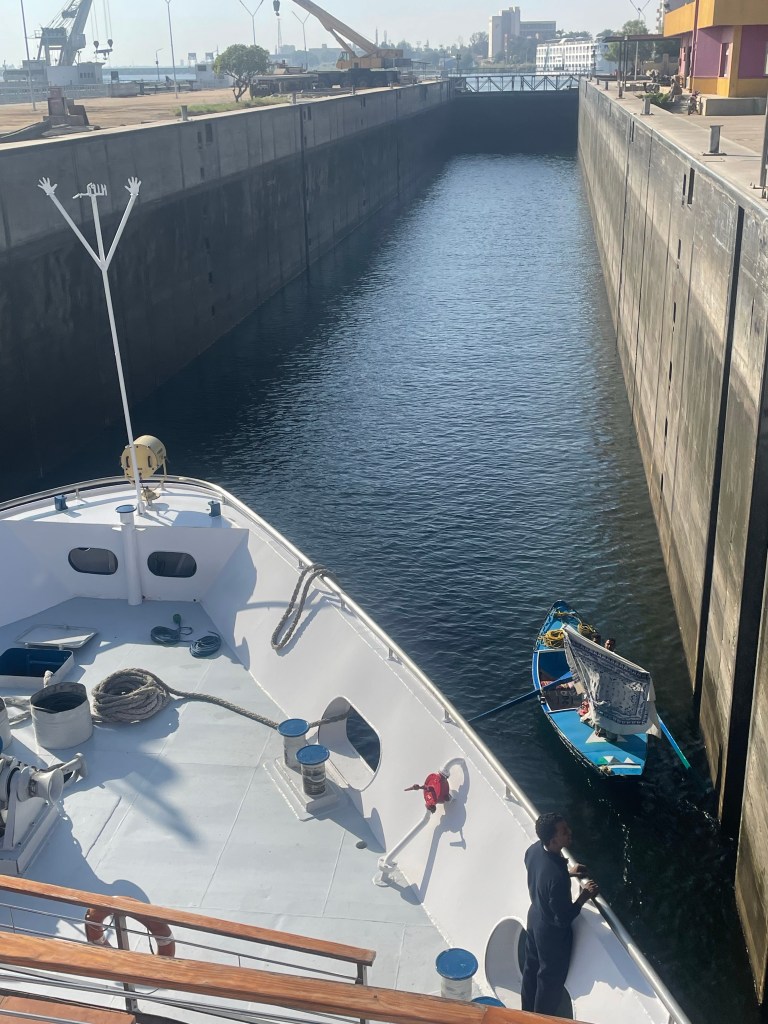
Passing through the lock at Esna, accompanied by a man selling tablecloths (thrown up from his boat onto the deck)