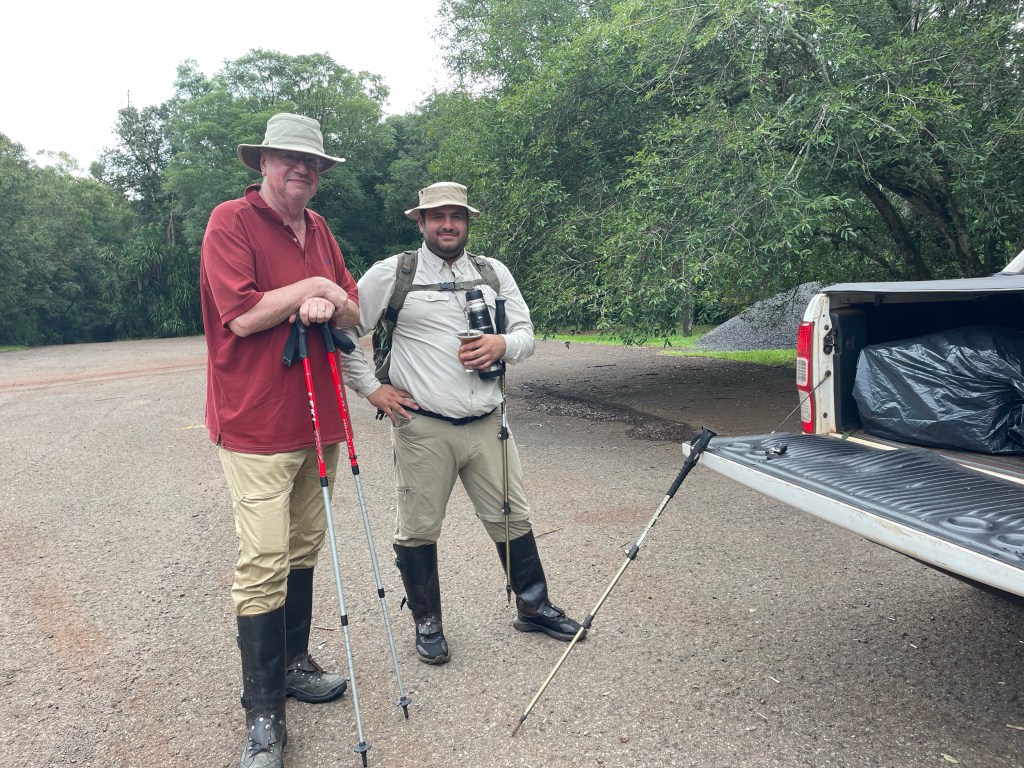
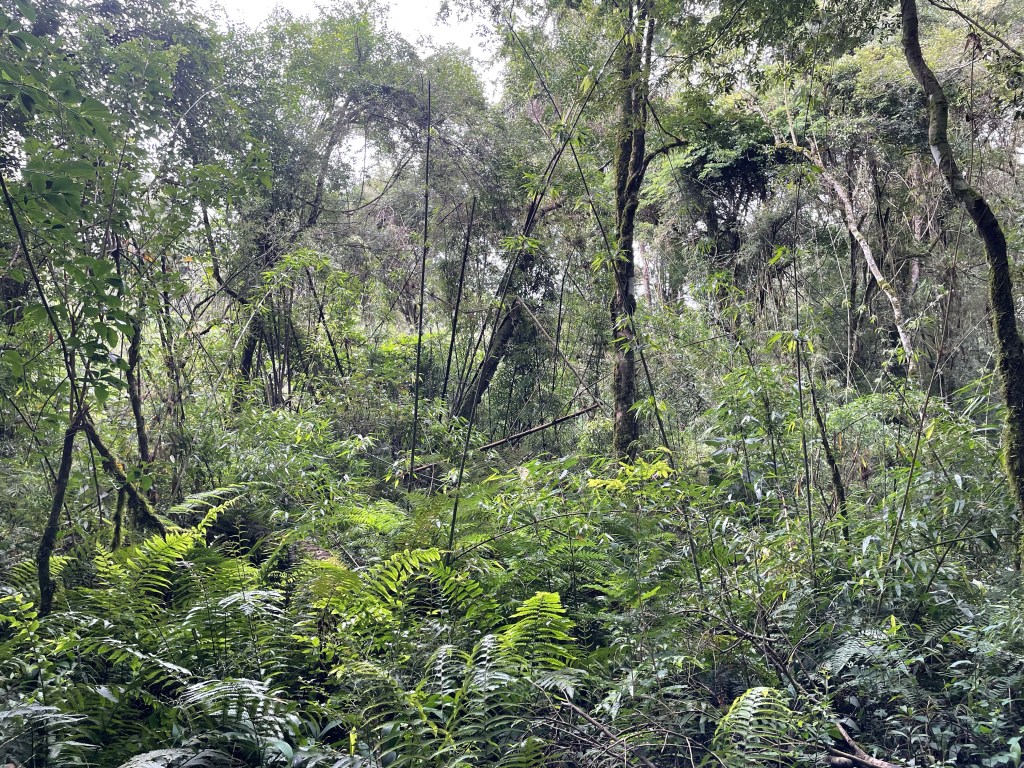
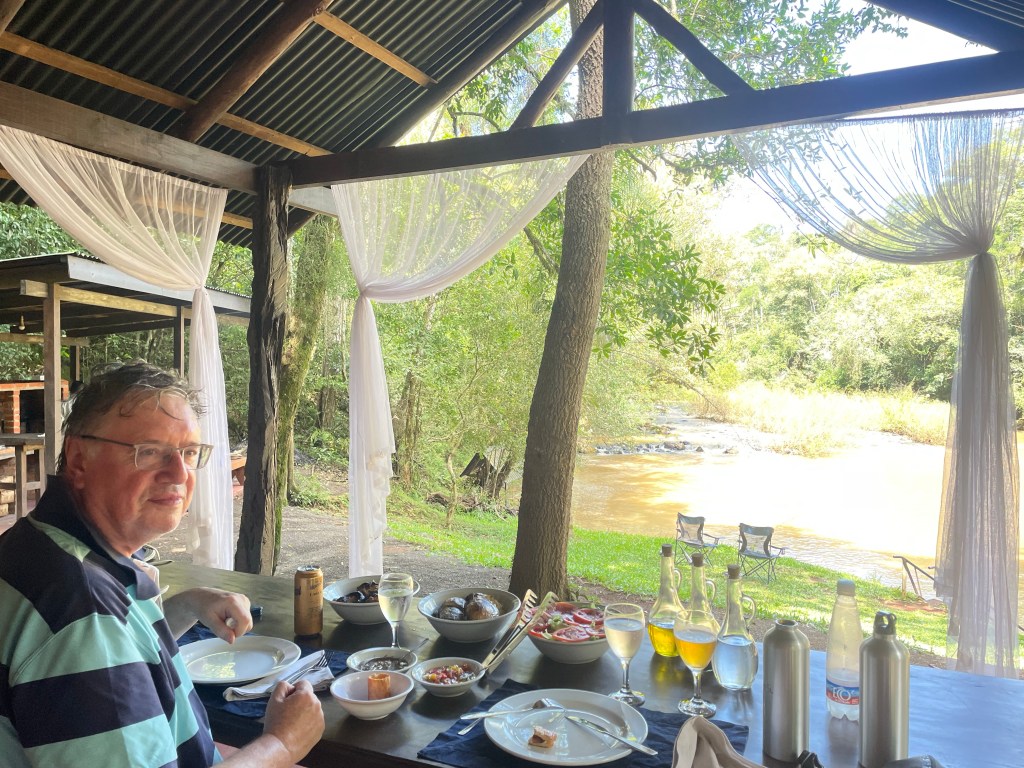
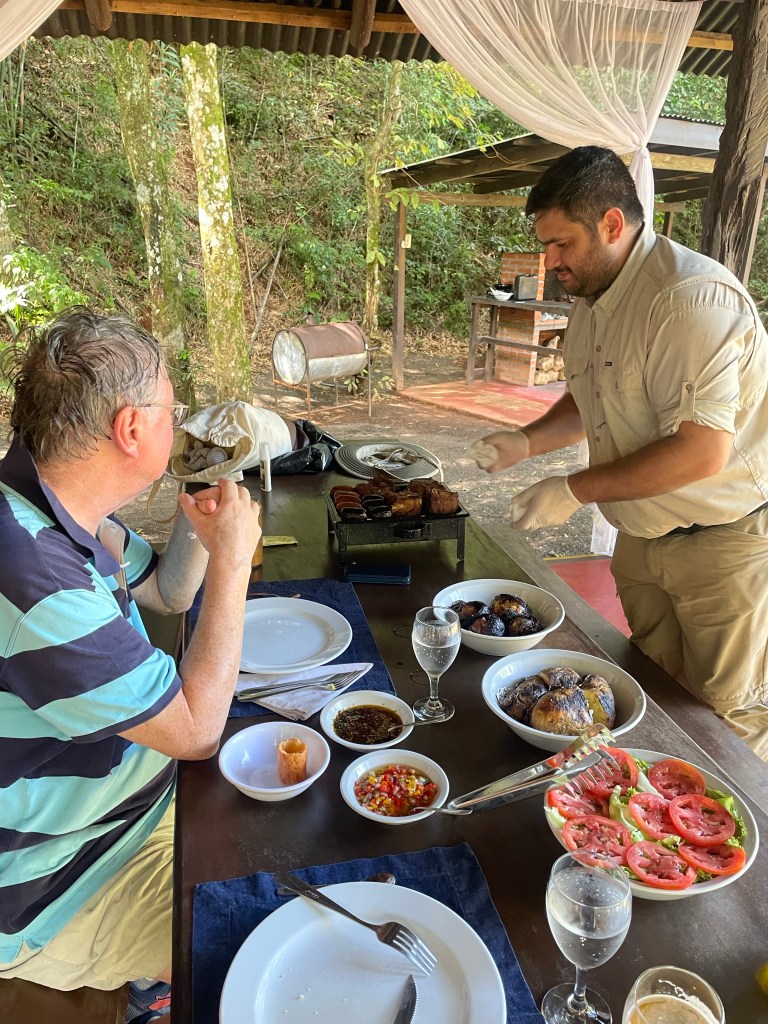
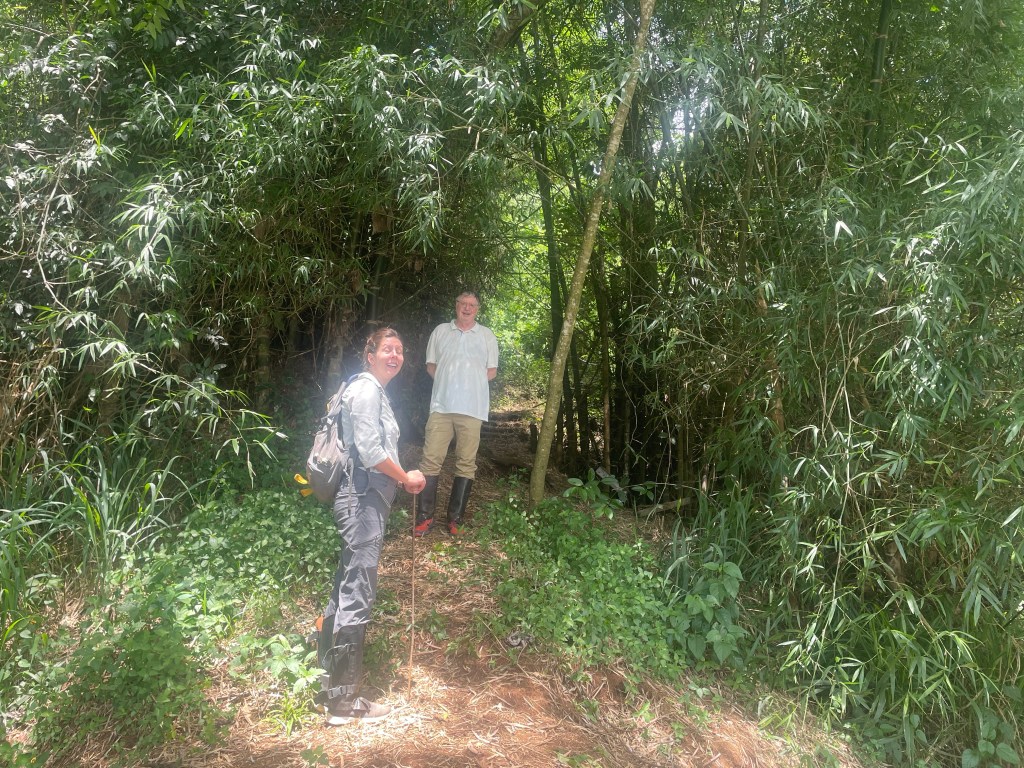
The falls is situated in the south of the Atlantic rainforest. Most people visit solely to see the falls. However we were able to do two forest hikes, followed by a barbeque. We were accompanied by our guide, Cami, and Toto. Toto is an ex-military, part-time ranger, member of the local search and rescue team, snake expert, path clearer, driver and and grill chef. The path we took was not in regular use and the rainforest grows very quickly – without Toto’s expertise and machete our route would have been impossible.
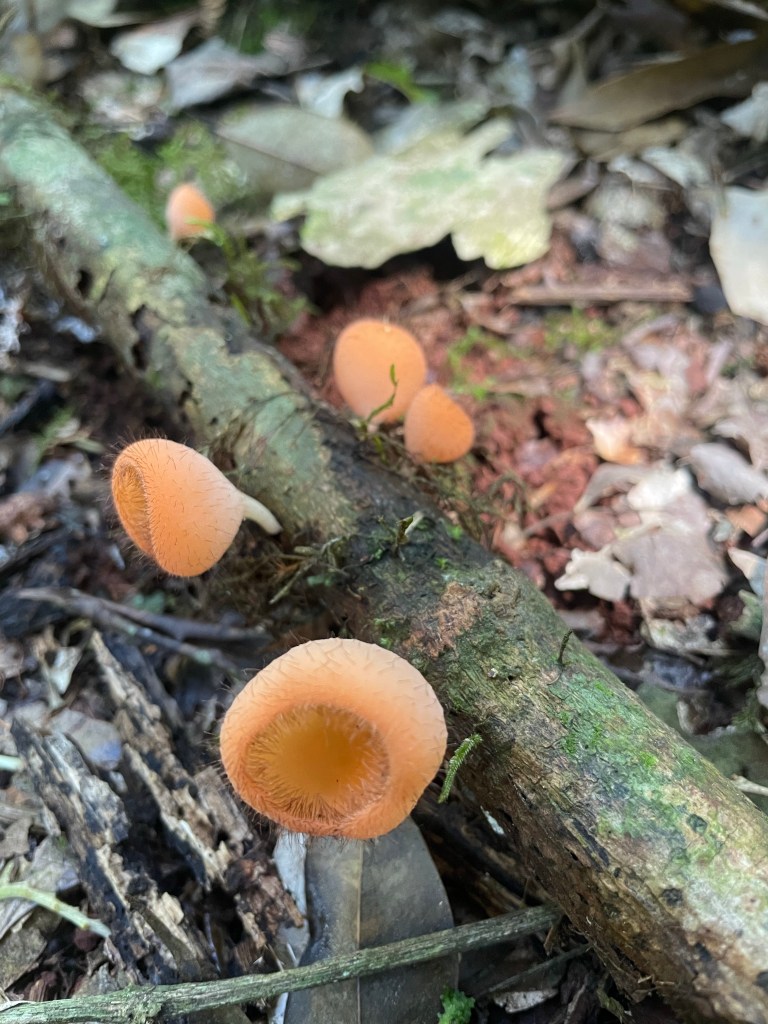
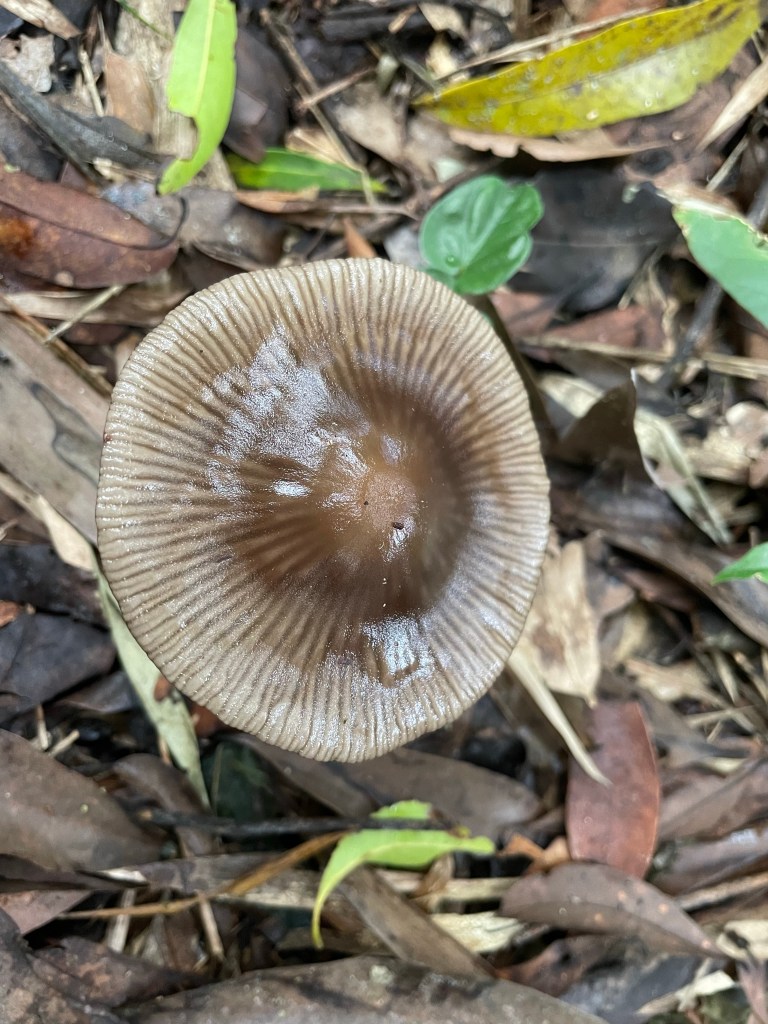
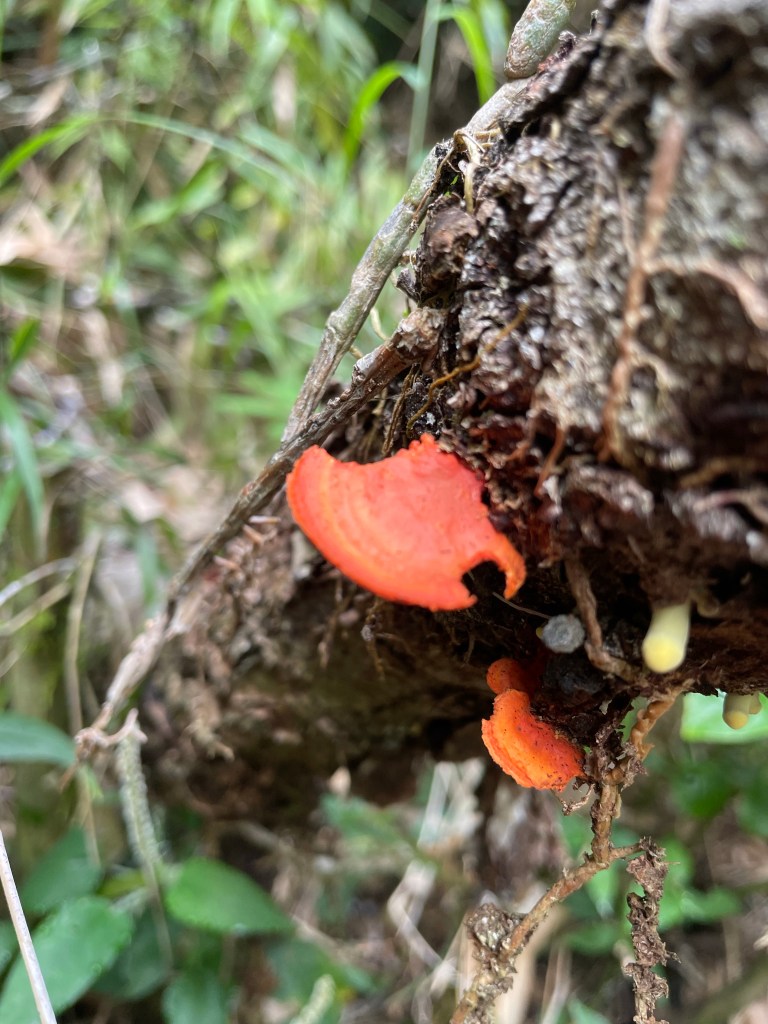
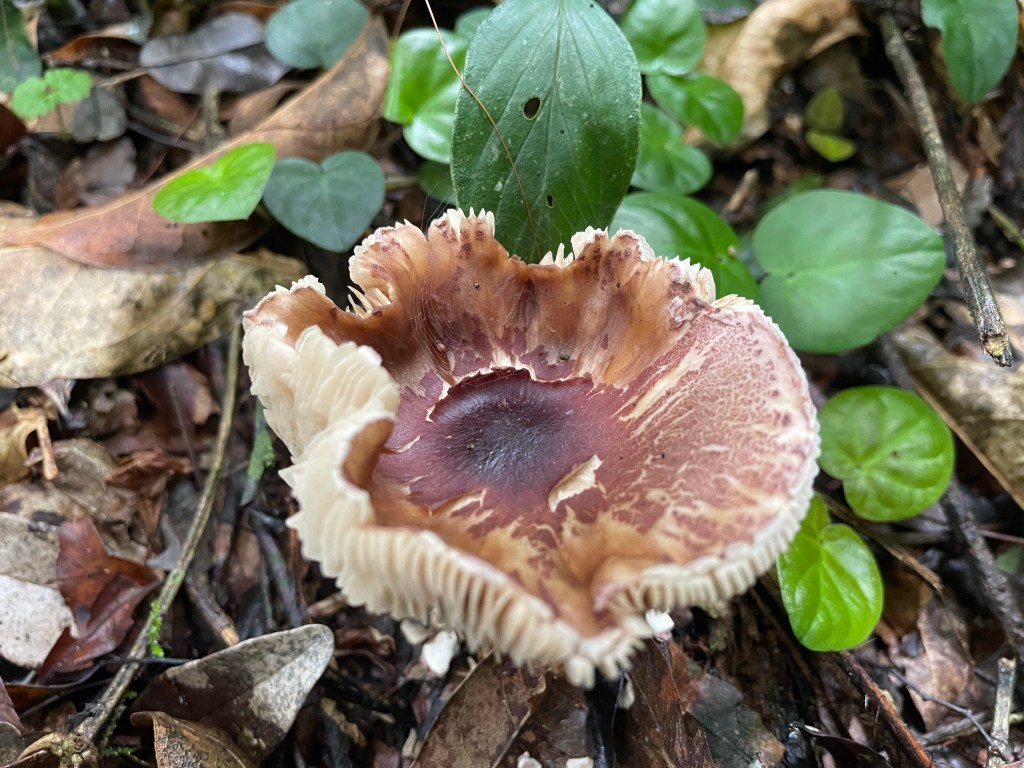
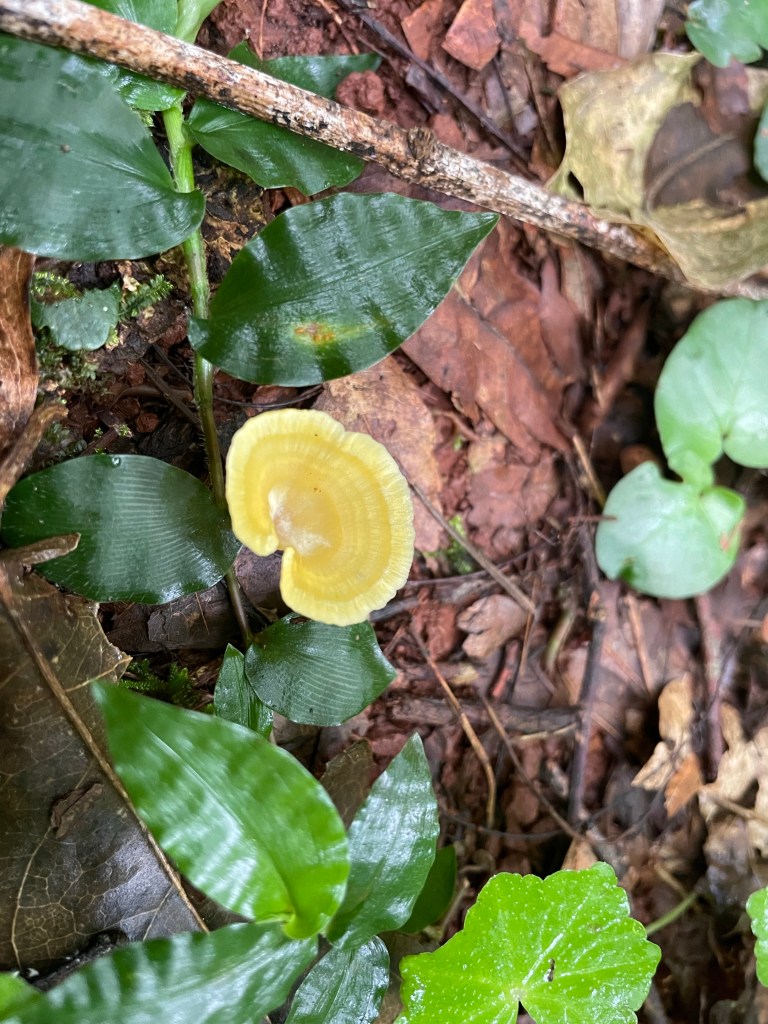
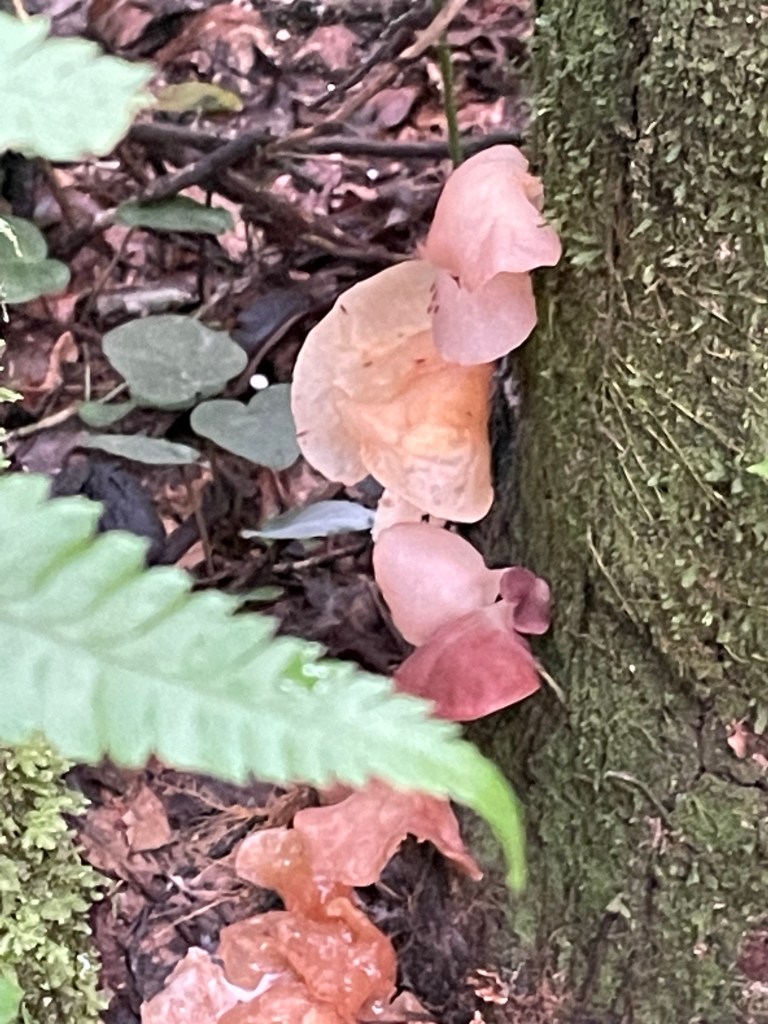
A selection of the numerous mushroom species we saw
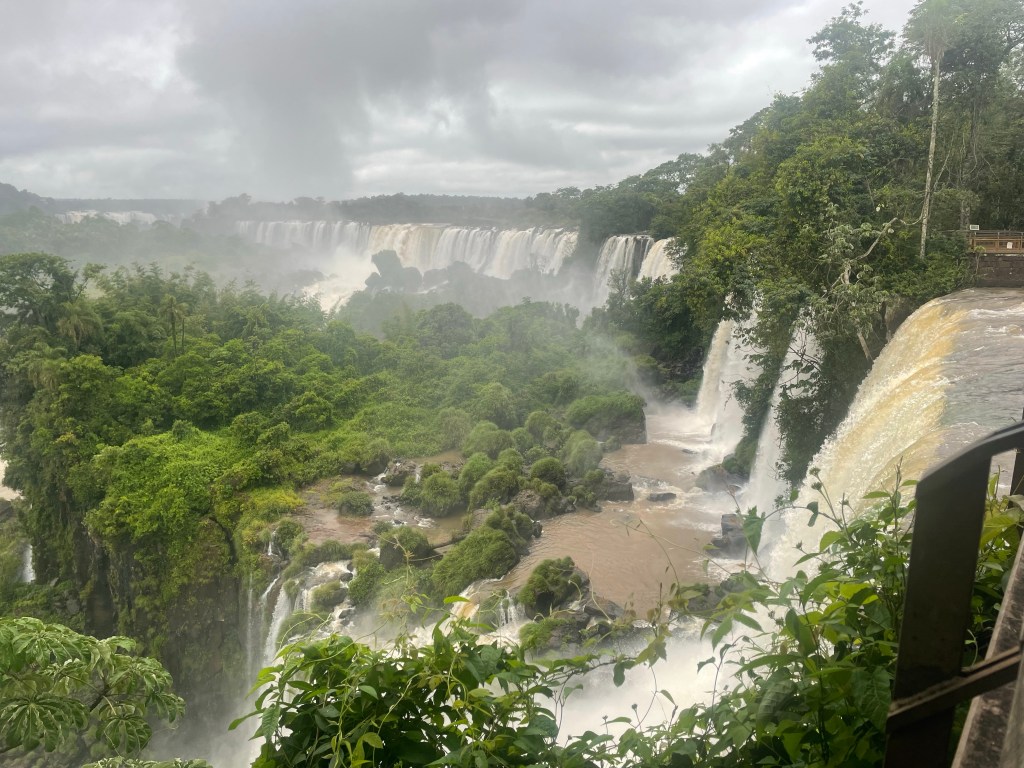
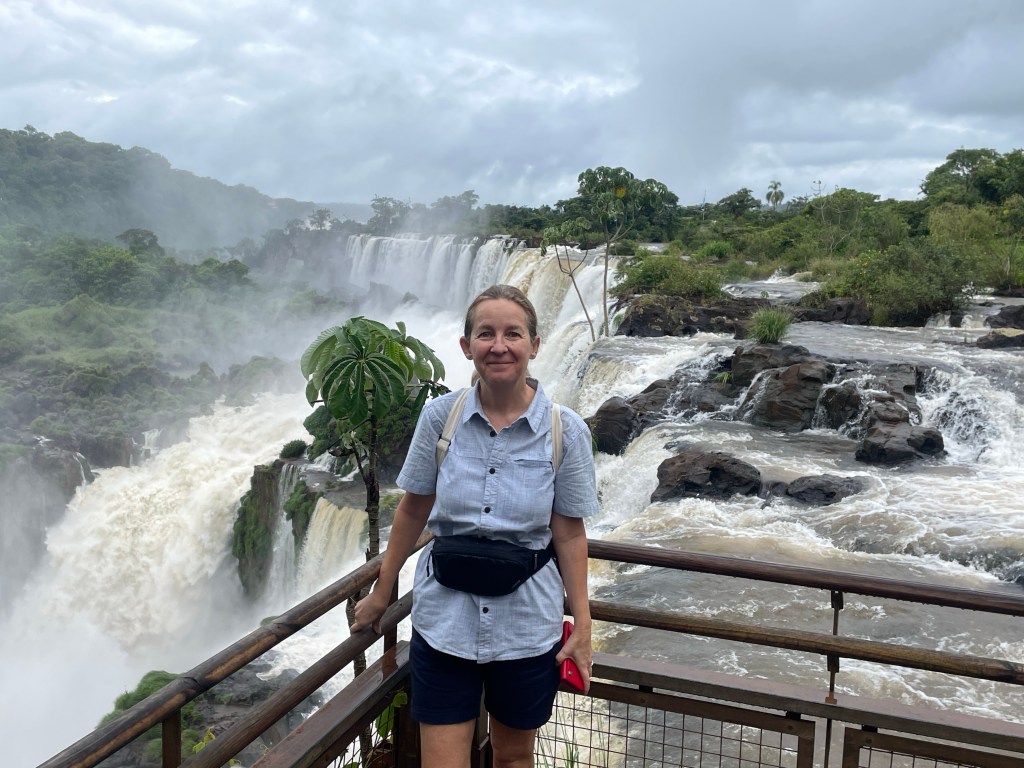
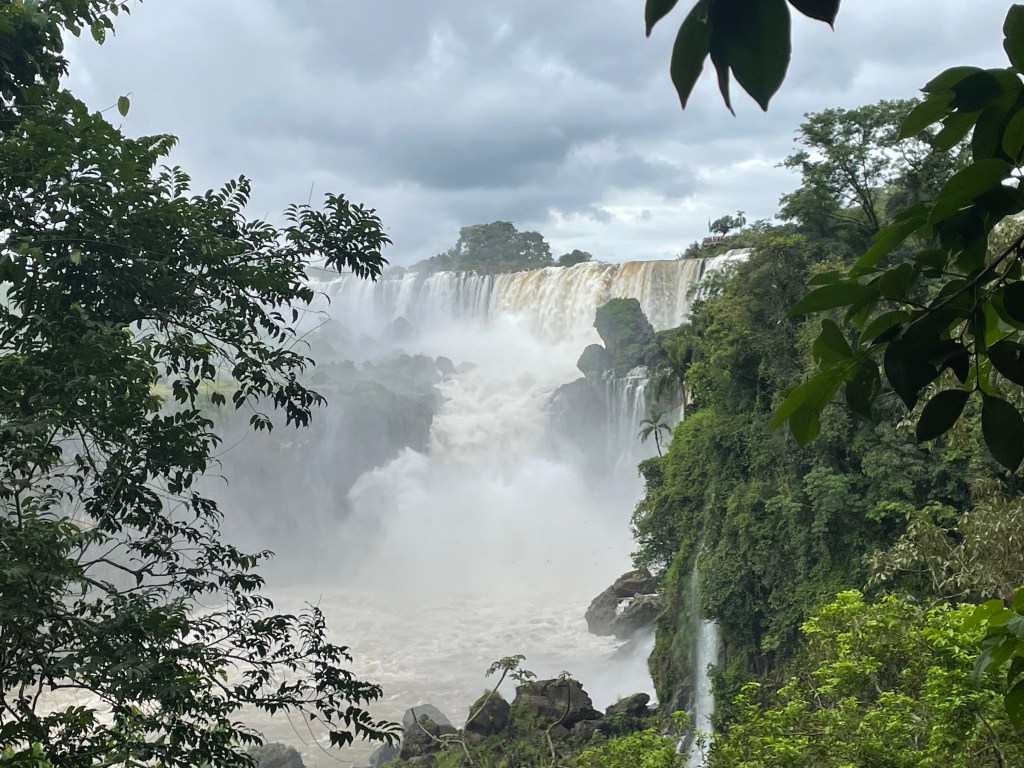
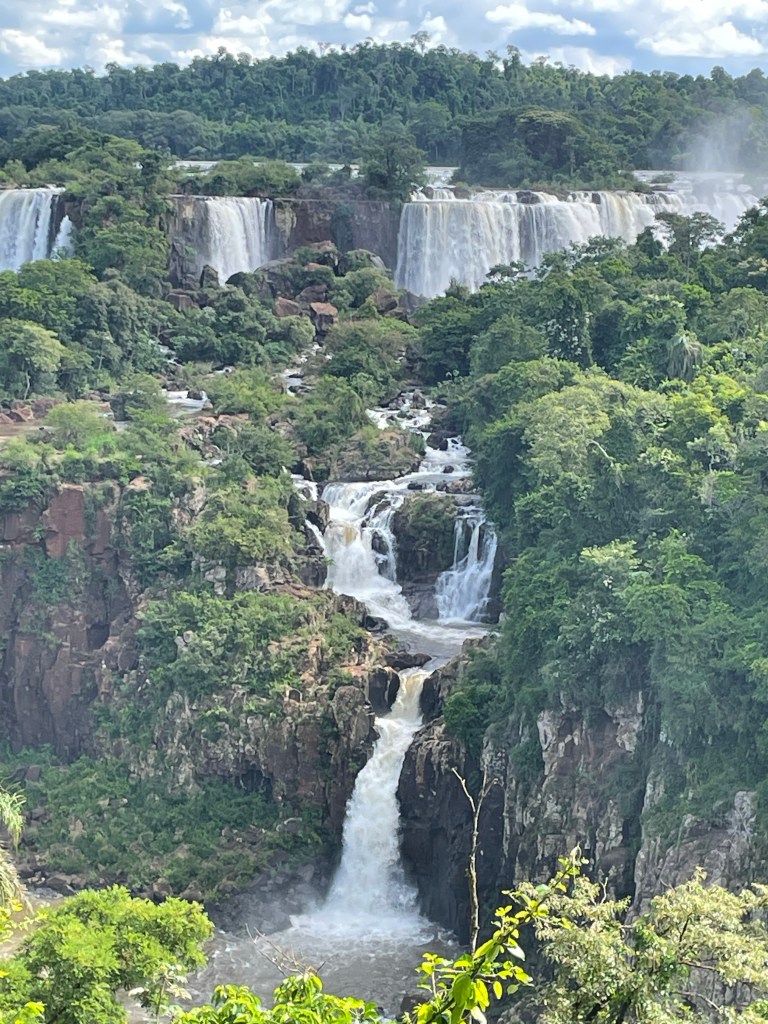
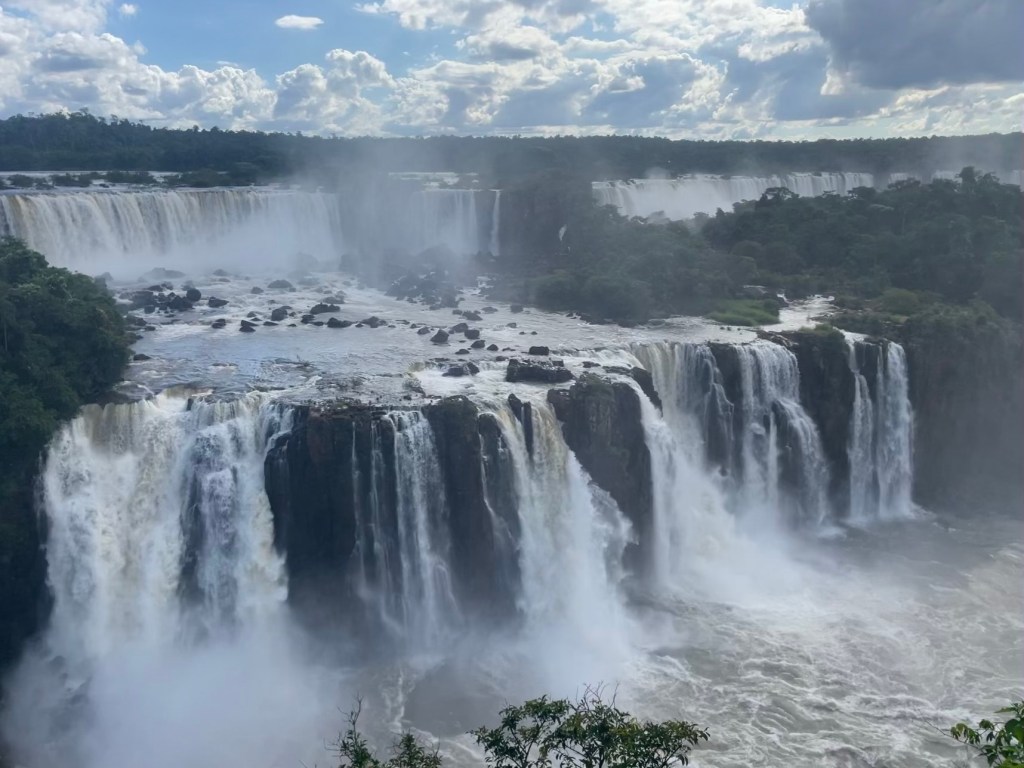
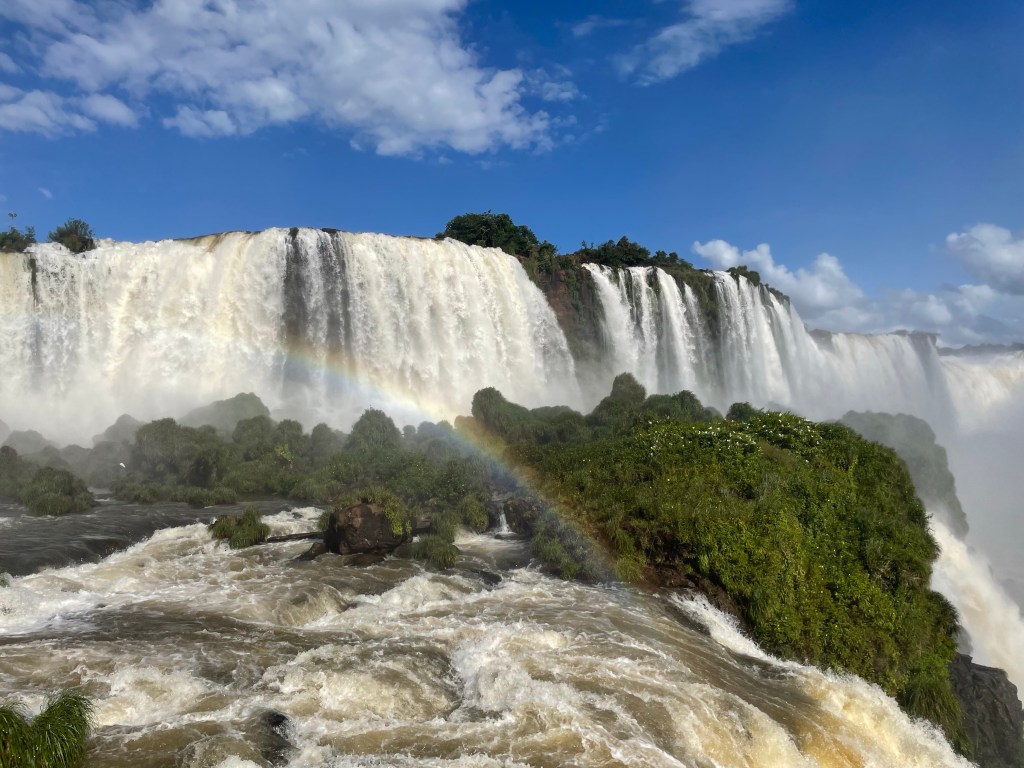
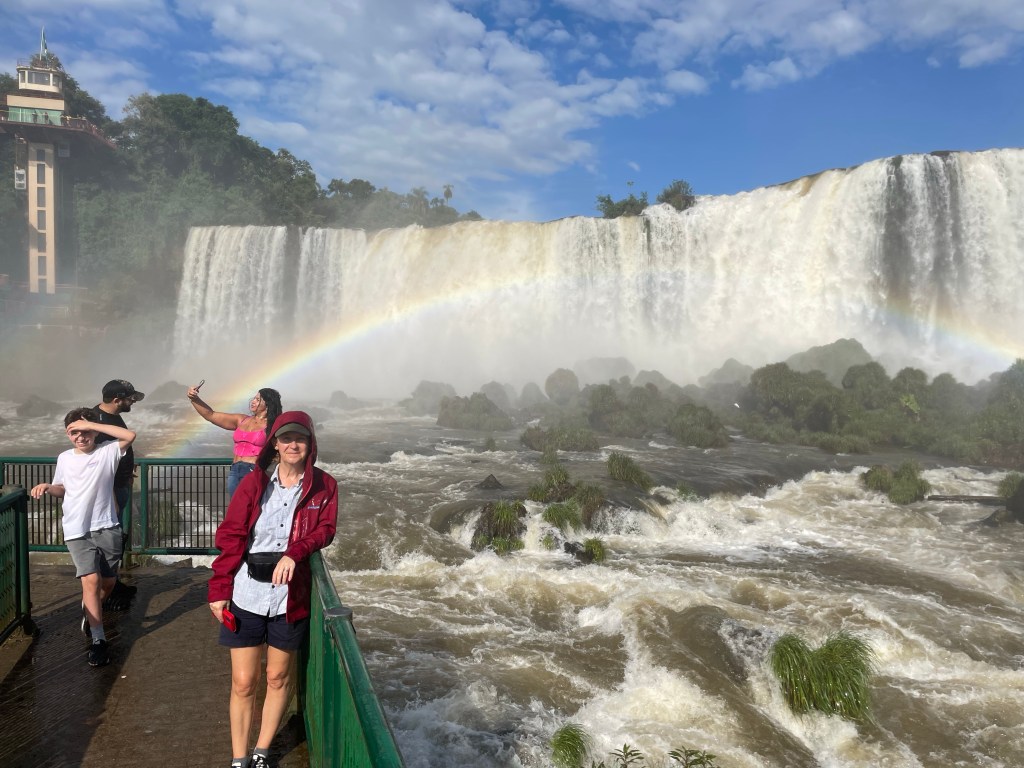
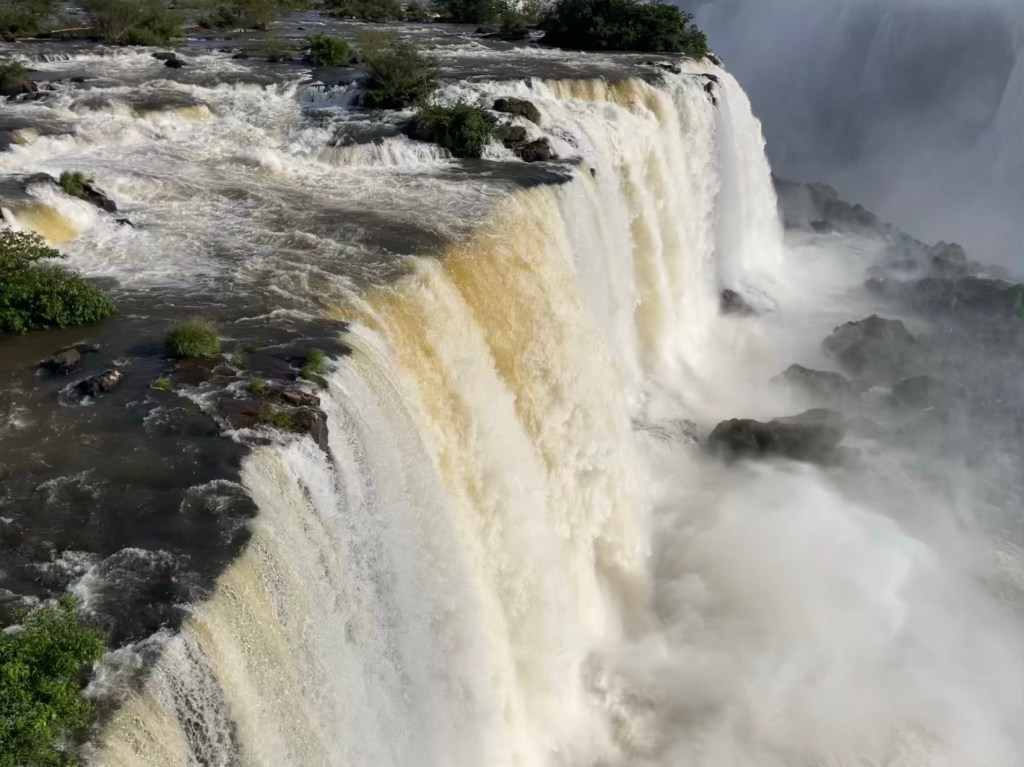
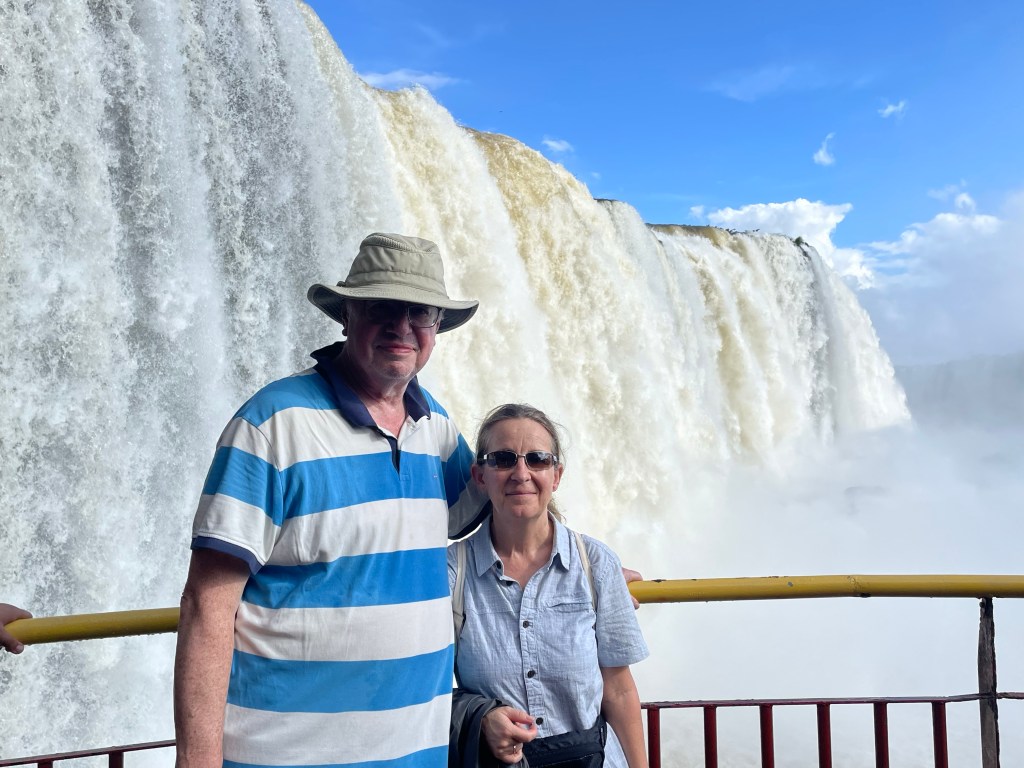
The Iguazu Falls are the largest falls system in the world with 275 drops over almost 3km. The longest drop is the Devil’s Throat at over 80 m. The guides say that although the majority of the falls are in Argentina, the best views are from the Brazilian side, so we visited both sides. On the day, the waterflow was slightly above average at 1.7 million litres per second (an Olympic swimming pool holds 2.5 million litres).
Both sides have extensive trails, along, under and behind the falls. Part of the Argentinian trail was closed due to a storm in October 2022 which created waterflow of 14.5 million litres per second and washed away the boardwalk.
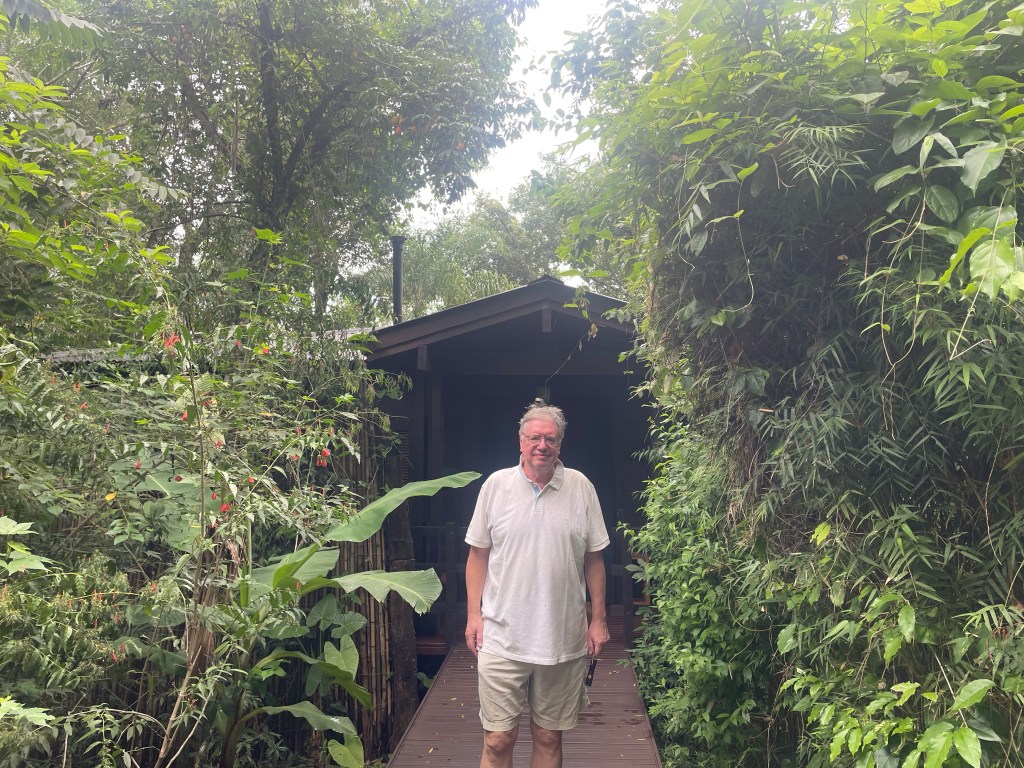
A long day with three internal flights took us from Patagonia to the province of Misiones, in north east Argentina, for a late arrival at our new hotel and our “cabin” in the rainforest.
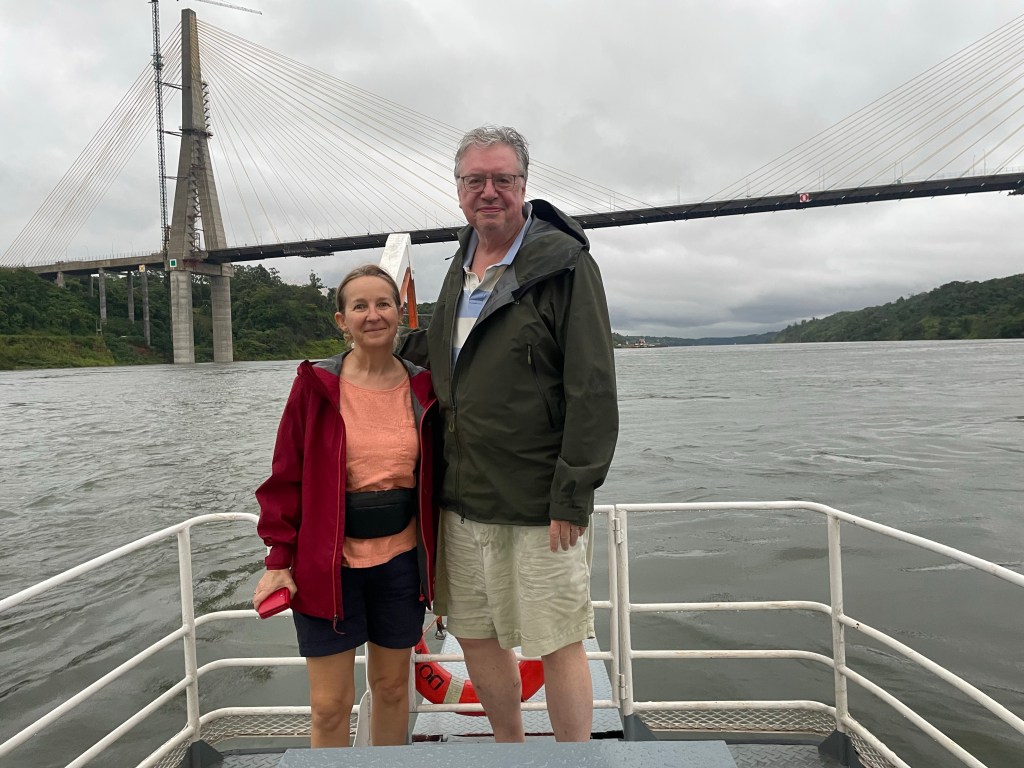
The highlight of our first day, despite torrential rain, was a boat trip to the junction of the River Iguazu and the River Parana where Argentina, Brazil and Paraguay meet. This is one of 175 tri-points in the world; there are no instances of more than three points meeting but this has been the subject of some debate as there are borders where more then three countries meet within close proximity.
The River Parana is the second longest in South America after the Amazon and is the subject of tensions with Brazil as the flow is controlled by a dam 9km north of the border.
Outside our ‘cabin’In the rainforest surrounding our hotel with our guide Cami. The gaiters are to protect from snakes (a poisonous yarara had been seen on this path an hour before) and Cami’s stick is to alert the snakes.At the tri-border
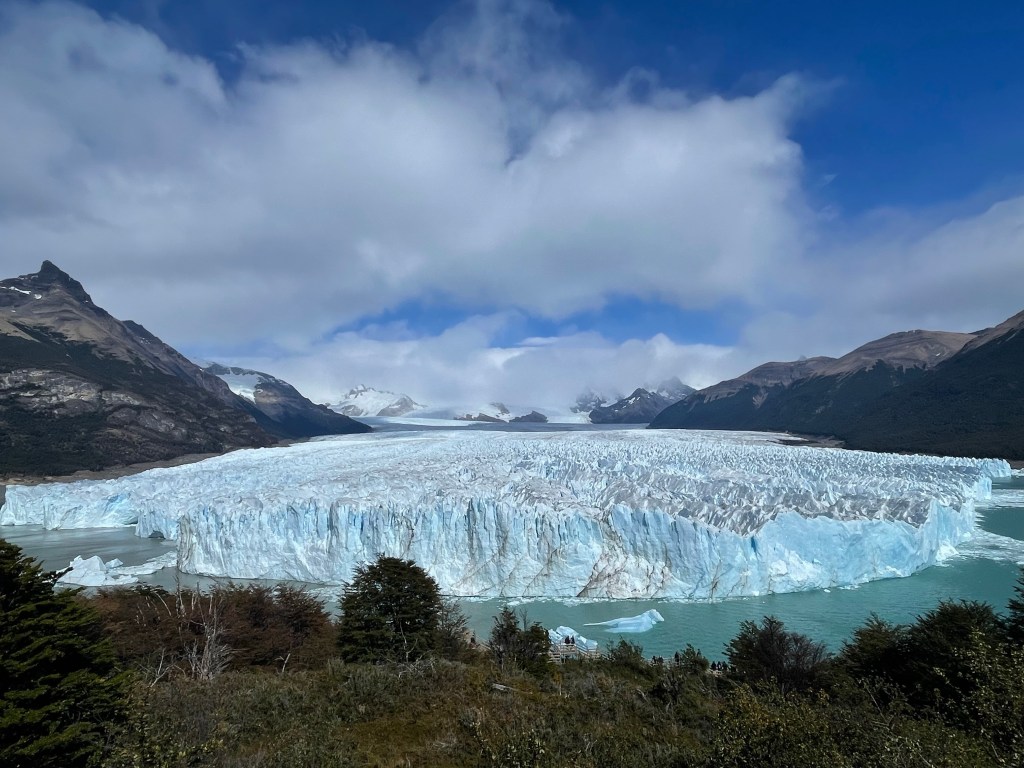
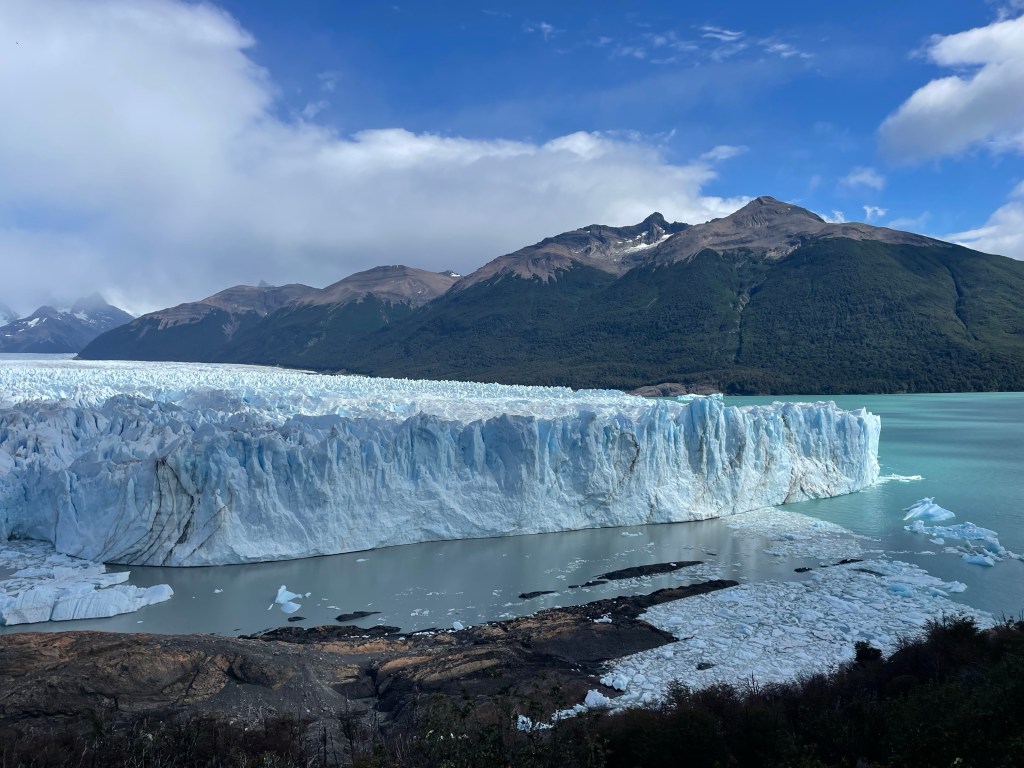
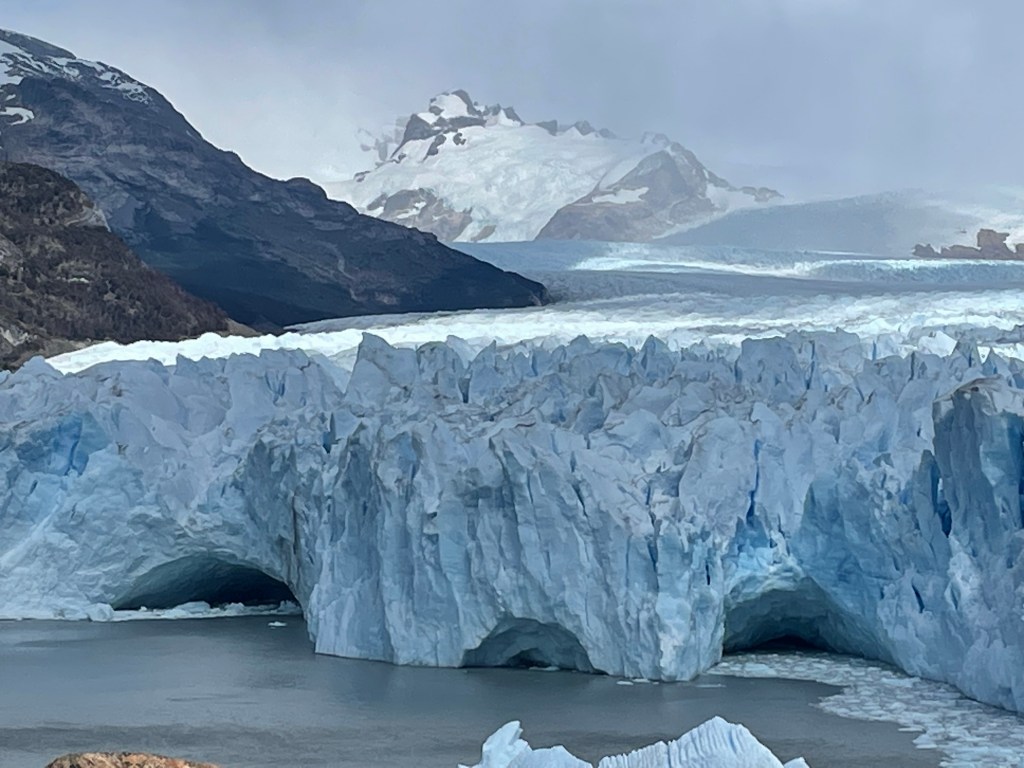
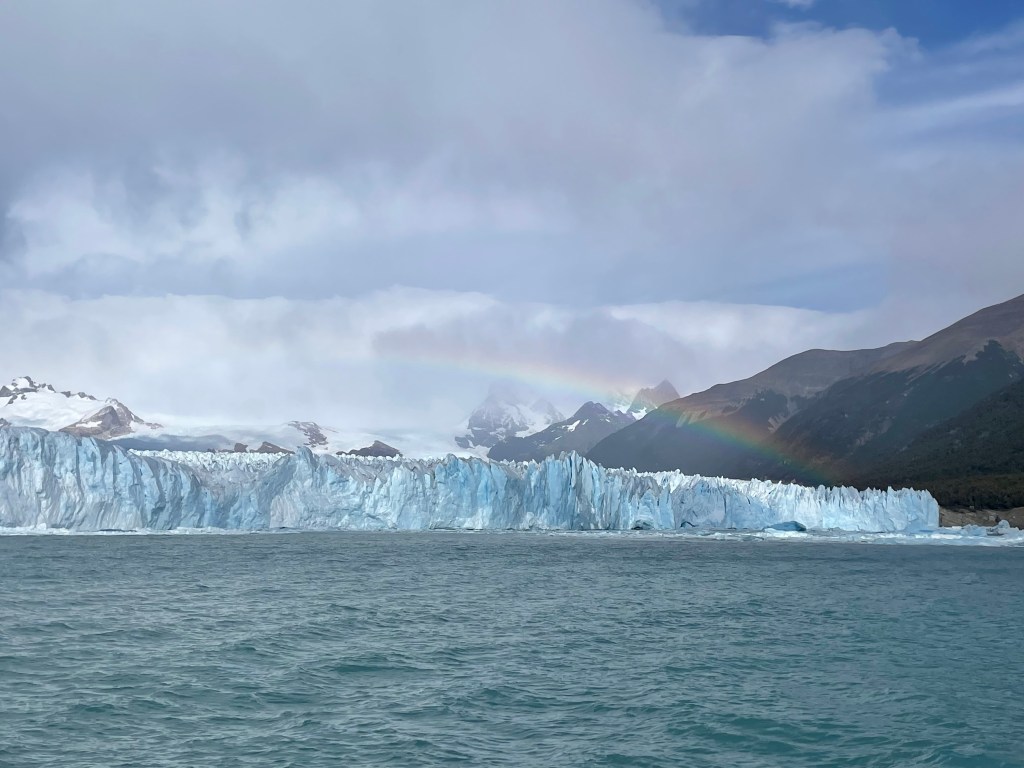
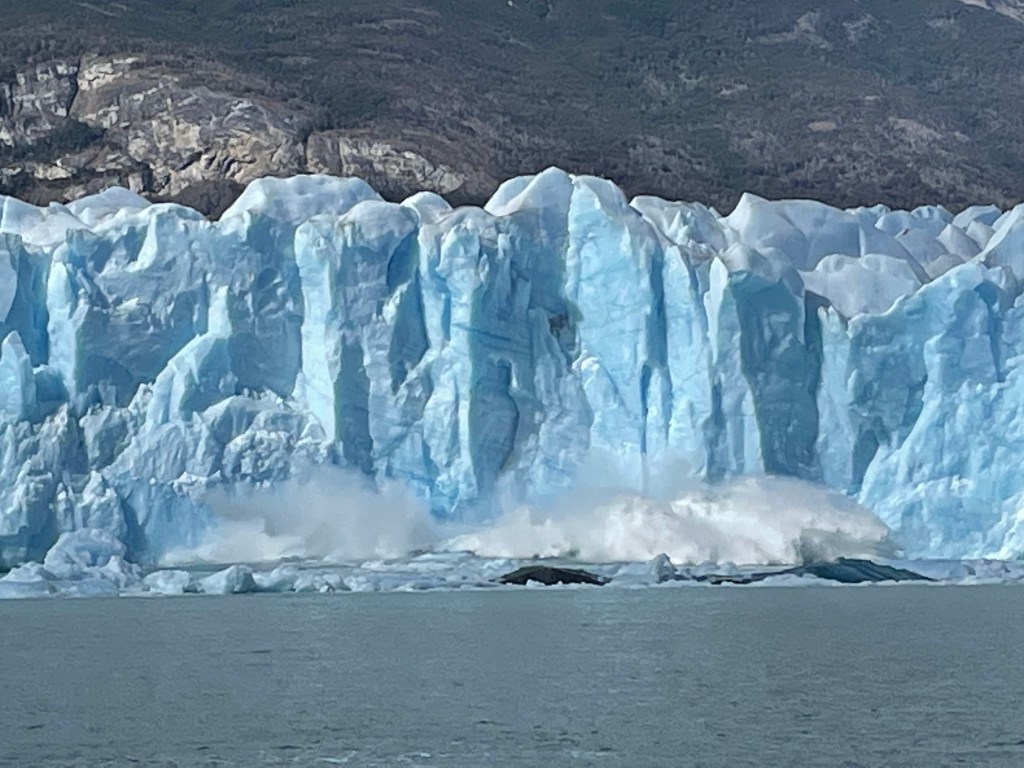
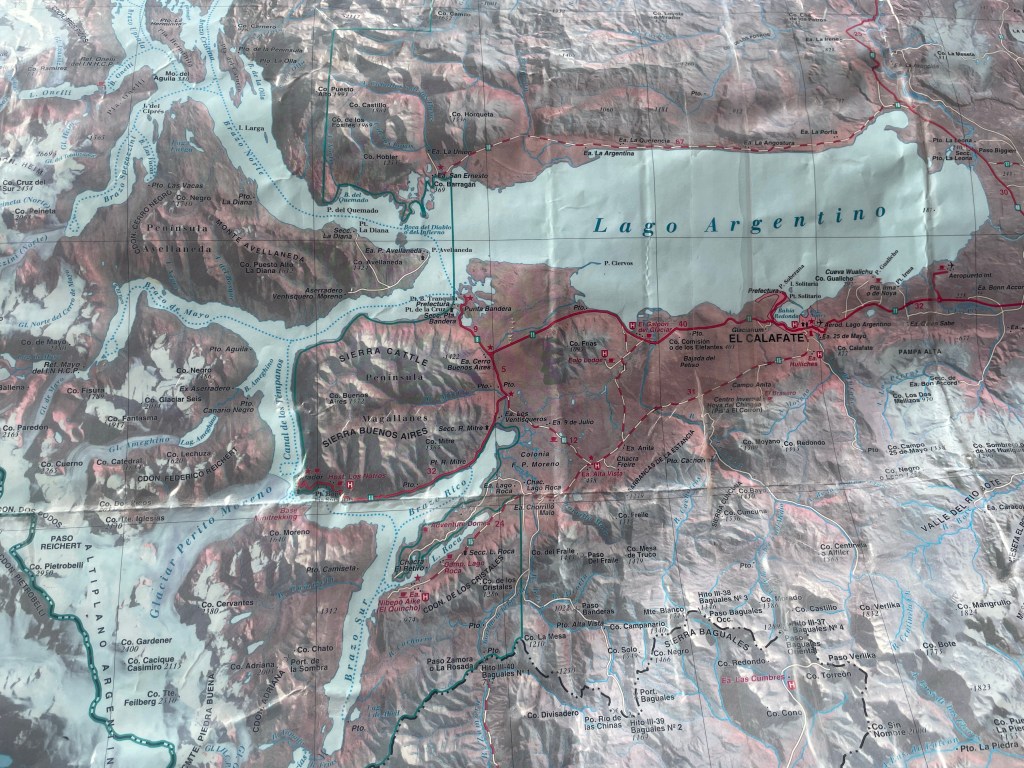
Perito Moreno is the main attraction in the Los Glaciers National Park. Named after the explorer who discovered Lake Argentina (“Perito” is a nickname meaning explorer), but who never saw the glacier. It is 30km long, 5km wide and at its highest 70m (Nelson’s column is 51m). It is one of the few glaciers considered stable, although this is currently under review (the locals think it is shrinking). It moves at two meters per day at its centre and is regularly producing icebergs. It can be viewed from a boat, at a safe distance, and from 4.7 km of walkways on the opposite land. We did both.
The glacier today and over 100 years ago from the same location showing the stability Glacier ‘caves’As our boat departed a Patagonian shower resulted in a rainbow The splash of a ‘calving’
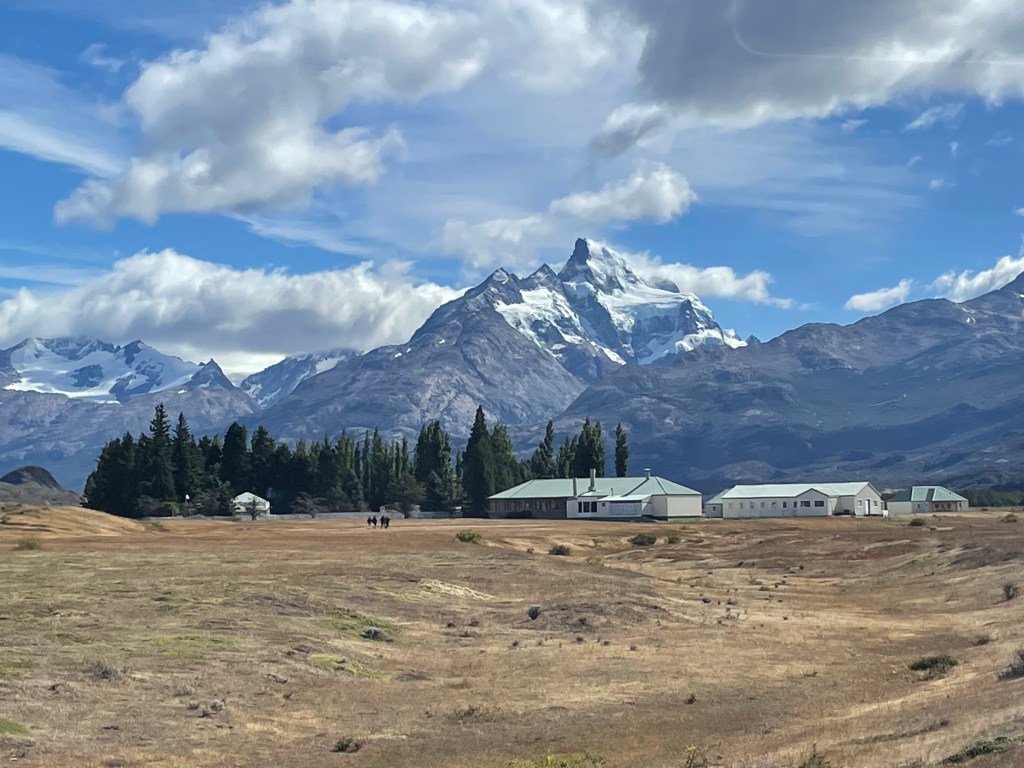
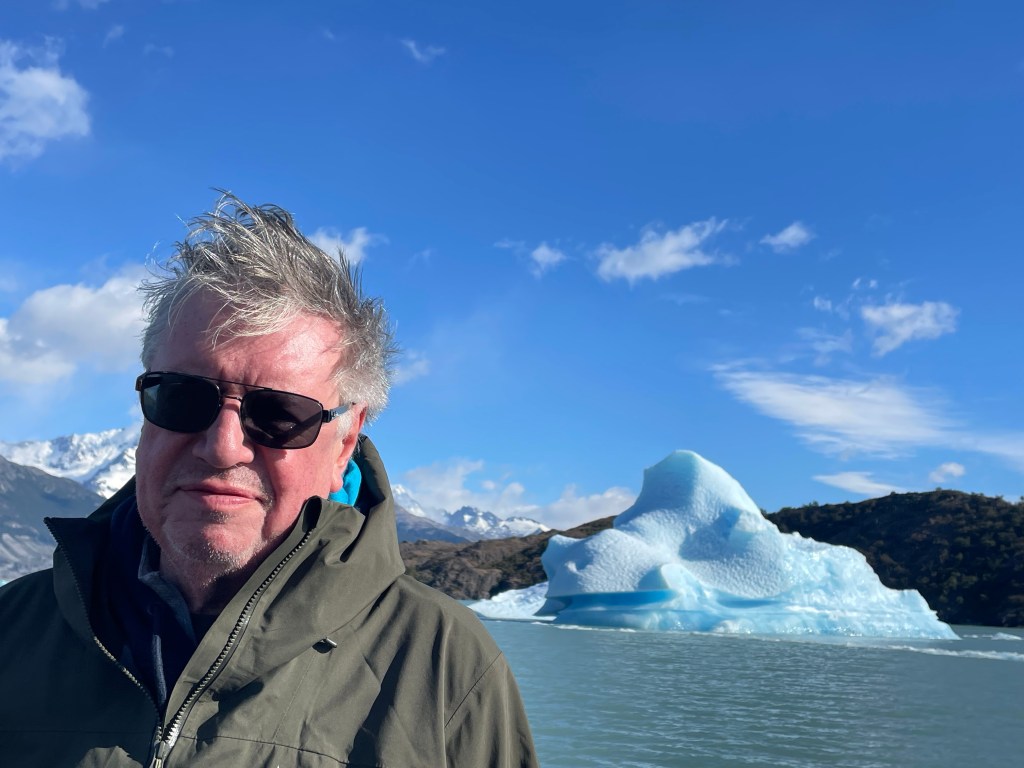
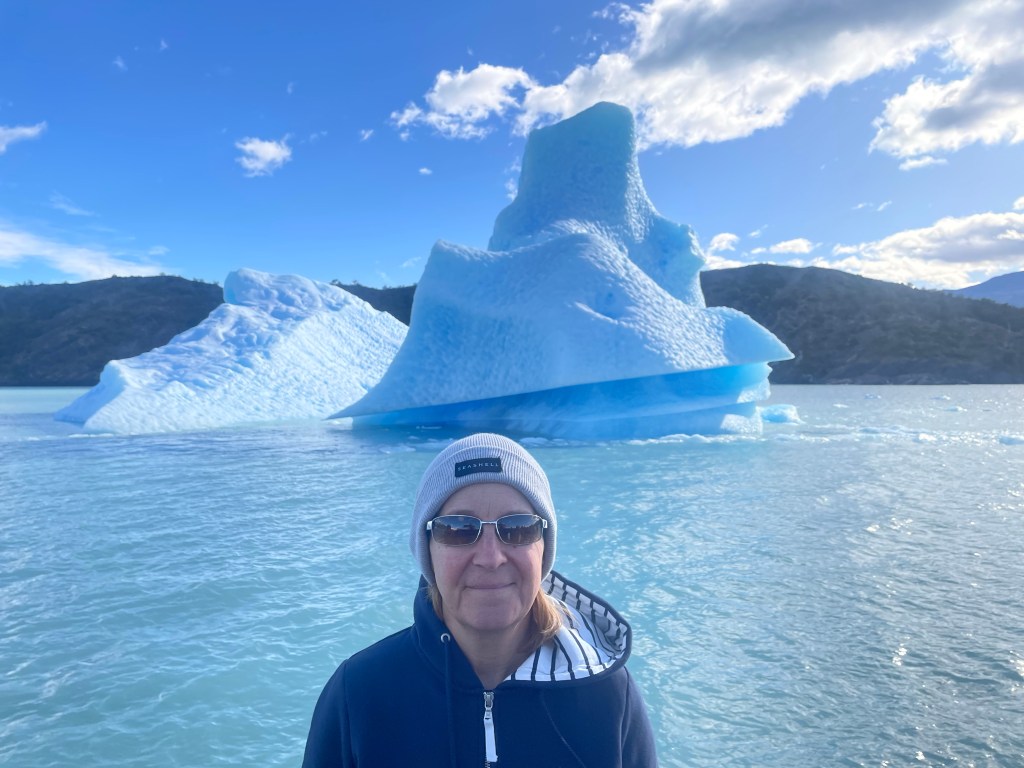
Estancia (a ranch) Cristina was founded in 1914 by Englishman Joseph Masters who came to Argentina, with his wife and young family, in search of gold but only found iron pyrites. His daughter, Cristina died at the age of 22 and the Estancia was named after her. His son had no children, so the Estancia became part of the Los Glaciares National Park. It can only be reached by boat across Lake Argentina – a two hour journey but in the days of the Masters much longer and therefore essentially cut off. Furthermore, the Masters would have not had the sonar equipment used by our boat to understand the underwater dimensions of the icebergs.
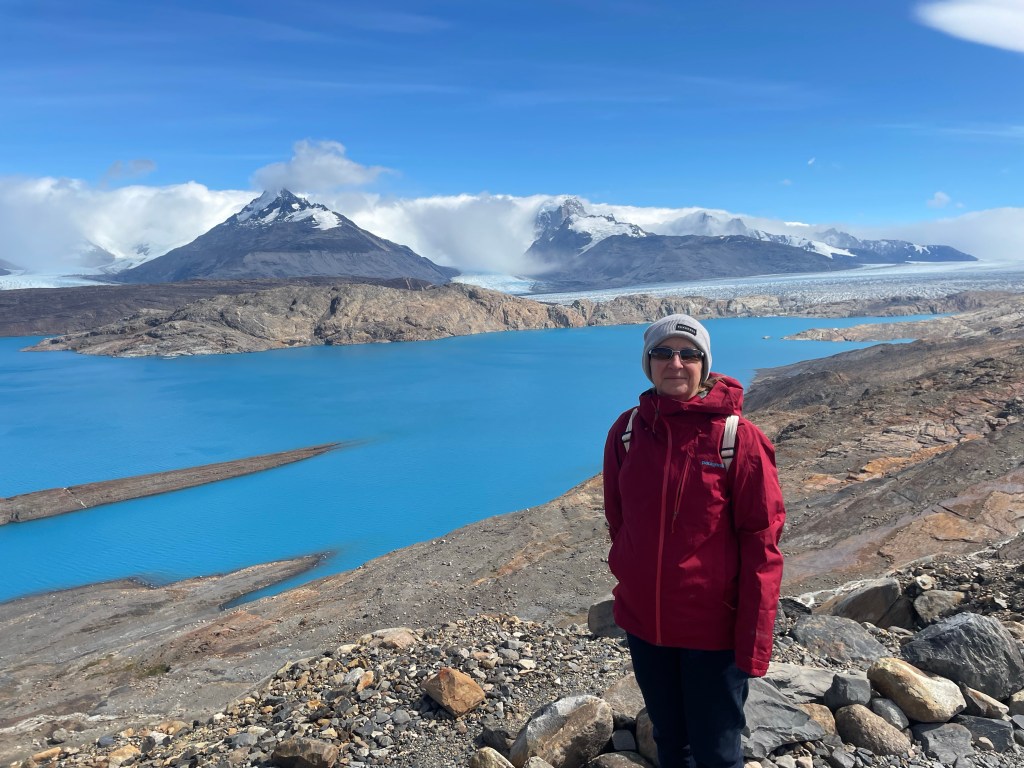
From the Estancia, Upsala Glacier can be reached by a combination of a precarious drive in a 4X4 and a hike. The track was opened up by scientists observing the glacier. We had lunch at the Estancia before the boat trip back across the lake, but it has a few cabins used by hikers and scientists.
We travelled from Chilean Patagonia to Argentinian Patagonia by car. In a direct line 60 miles, but by road over 170 miles and six hours, including the border crossing. We arrived at the border just after two local coaches (it was the weekend and there was a festival), so it took an hour to leave Chile. In the five miles between the the Chilean and Argentinian border controls, our driver earned his tip by overtaking one of the coaches, so the Argentinian control took a matter of minutes.
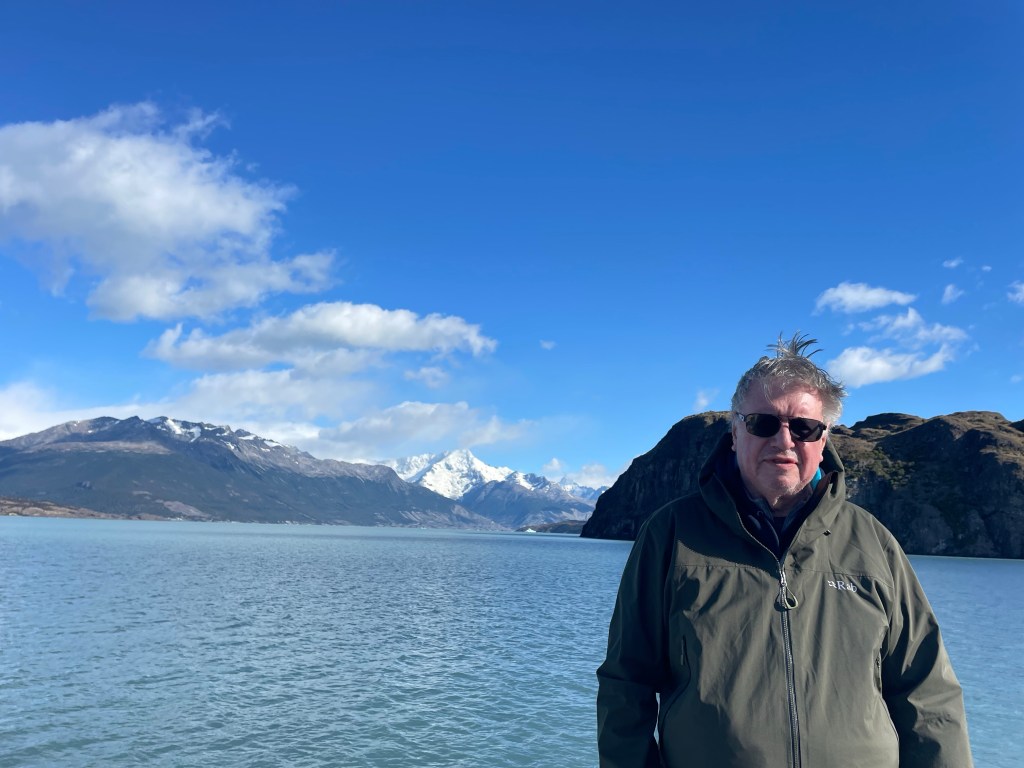
Our first hotel in Argentina overlooked Lake Argentina. The lake would have been discovered by Charles Darwin, who was travelling up the Santa Cruz river, searching for its source, but he was forced to turn back due to dwindling supplies. The lake was discovered 40 years later (but in Darwin’s lifetime) in 1877 by the Argentinian explorer, Francisco Moreno. He named it Lake Argentina, in part, to ensure it sat on the right side of the border with Chile in a treaty of 1881.
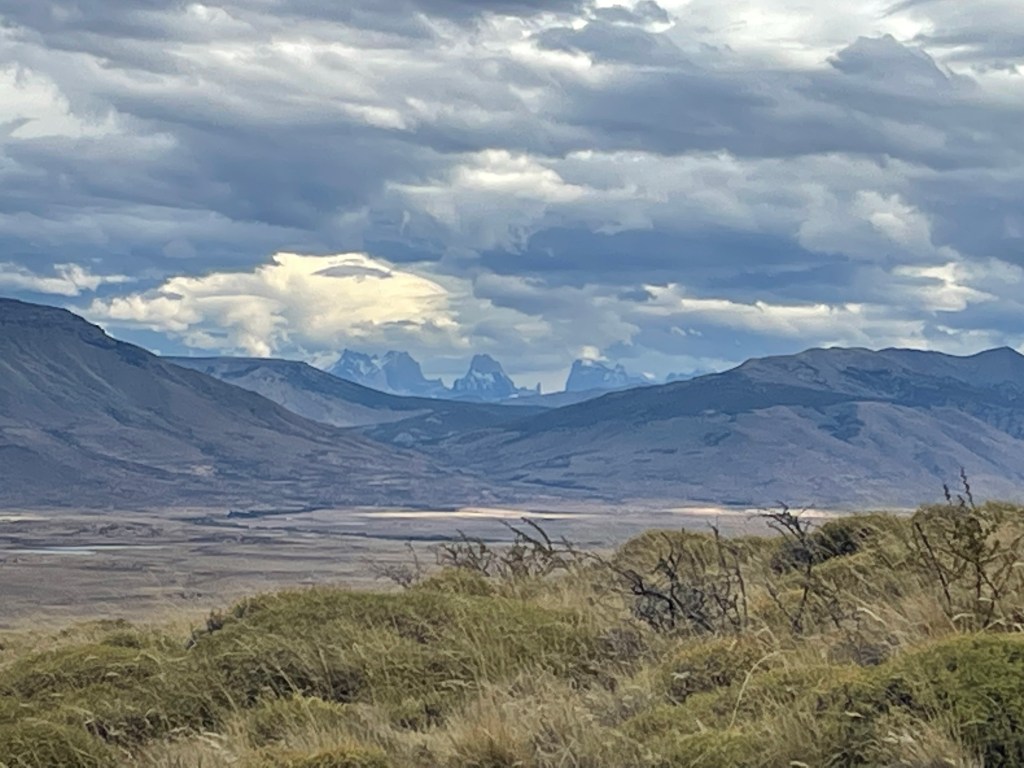
The Argentinian border control Lake Argentina is 60 km long and up to 20 km wideWe departed from the airport at El Calafate on the shore of Lake Argentina We could see the three towers, close to where we had stayed in Chile, from our hotel Hiking above our hotel
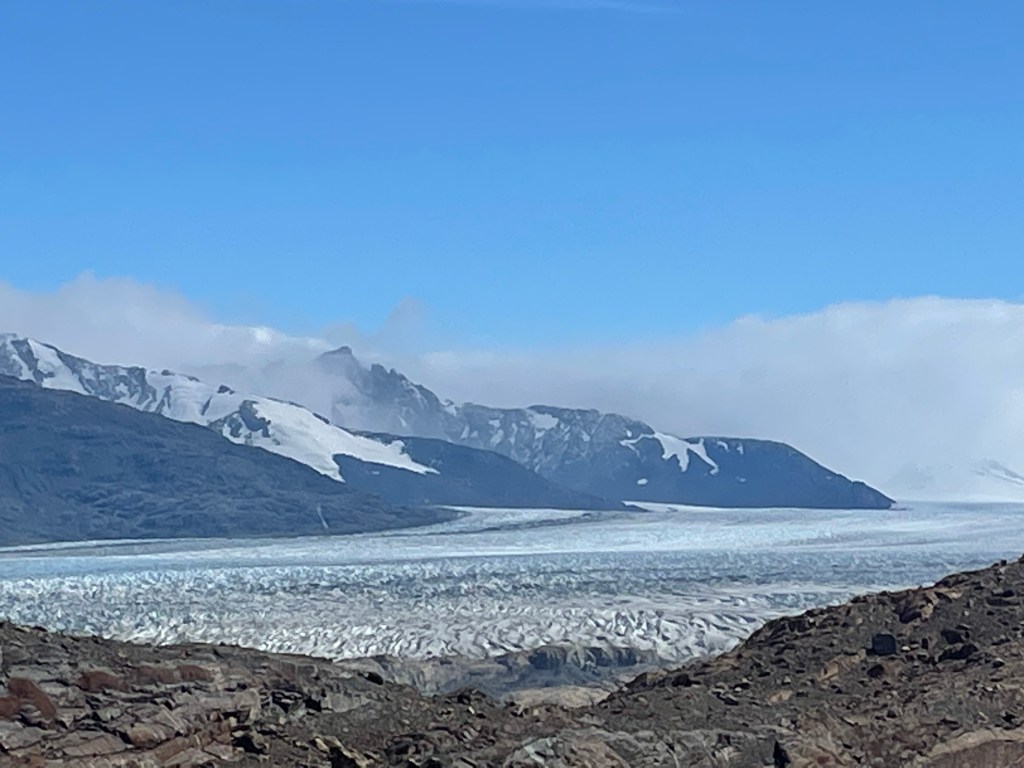
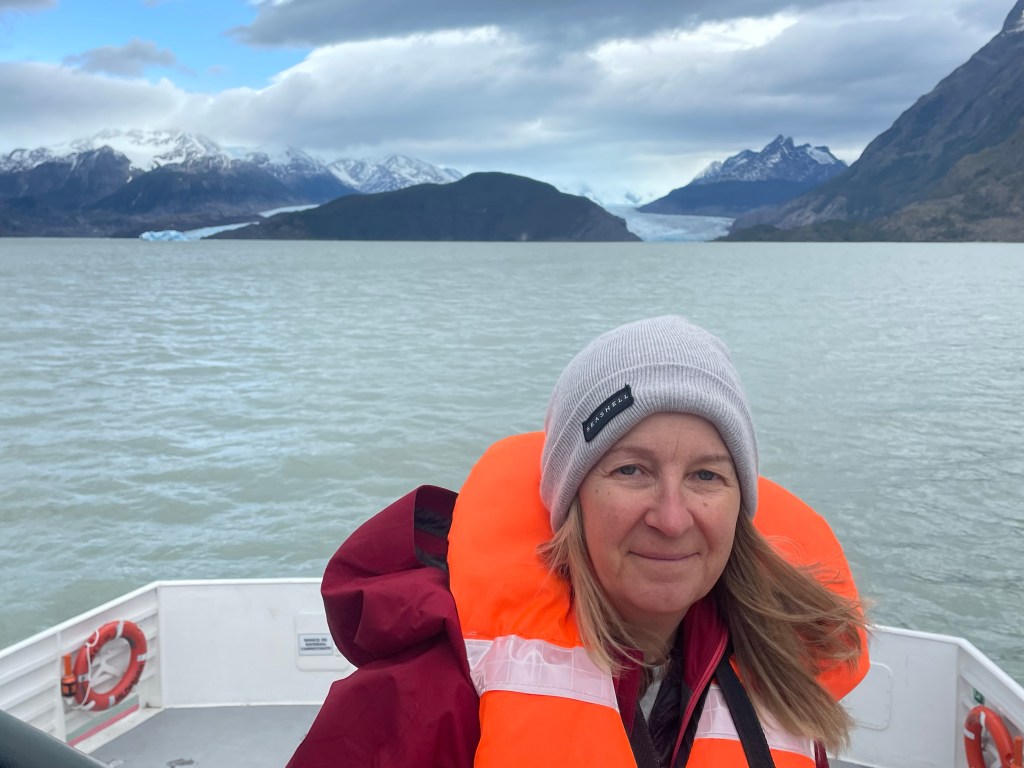
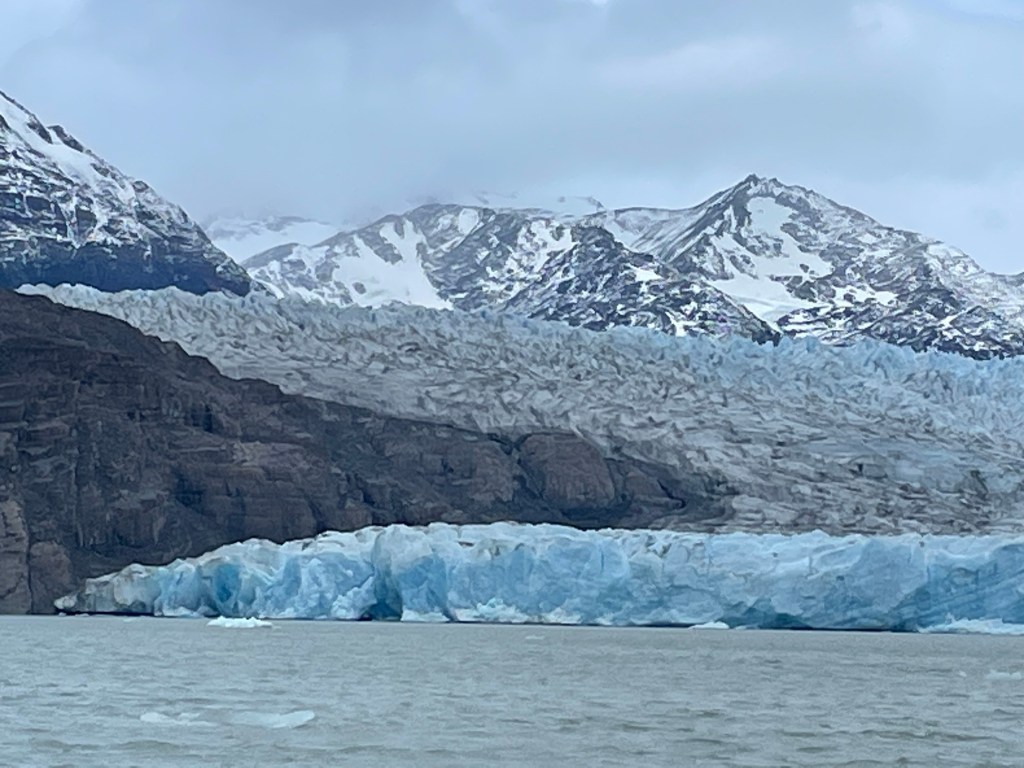
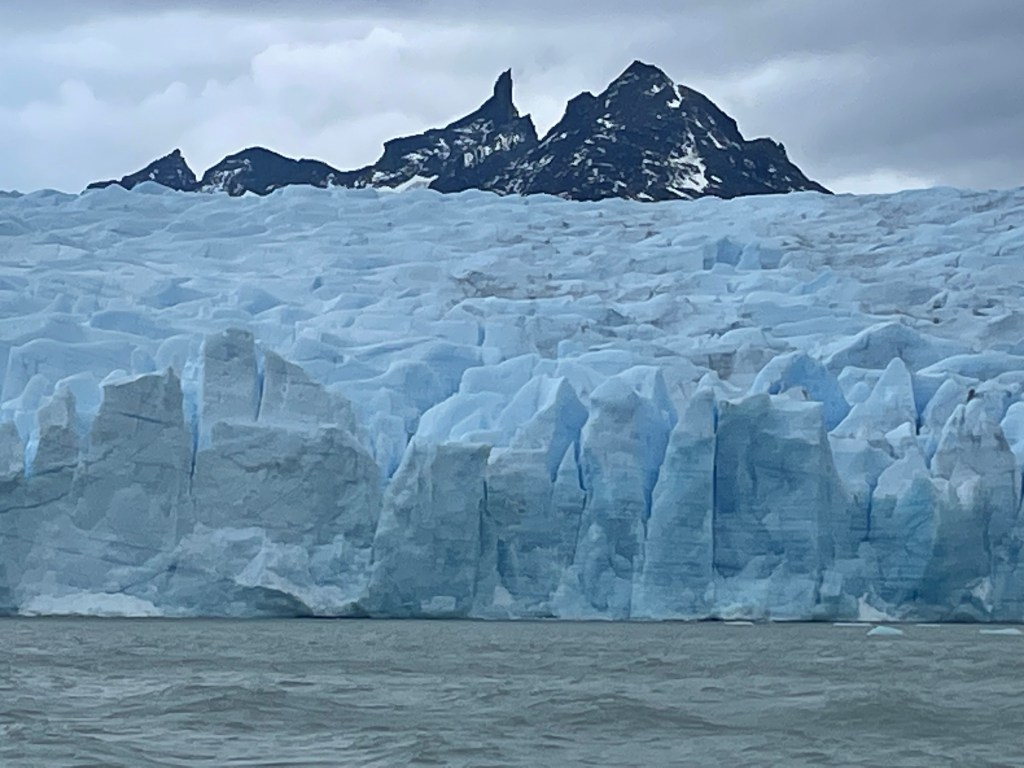
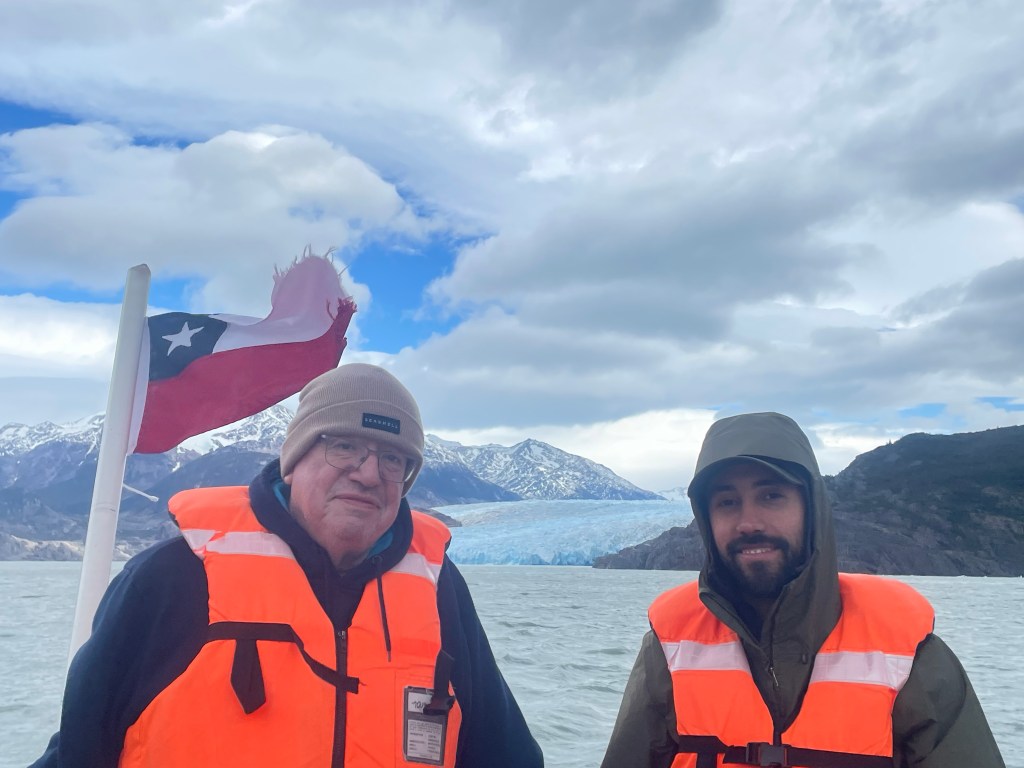
The Southern Patagonian Ice Field is the second largest non-polar ice field and has many glaciers in both Chile and Argentina. We visited three, the first being Grey Glacier in Chile. It feeds Grey Lake which gets its name from the colour created by the sedimentary silt deposited by the glacier.
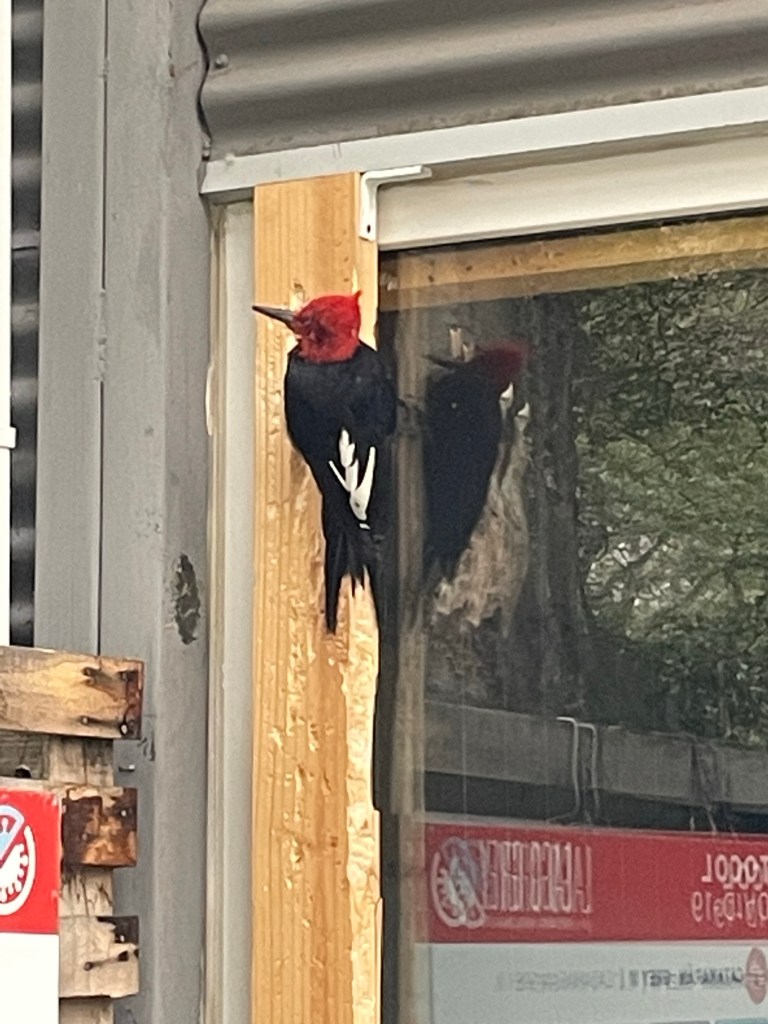
With our guide, DiegoA fellow visitor at our lunch stop – a Magellanic woodpecker
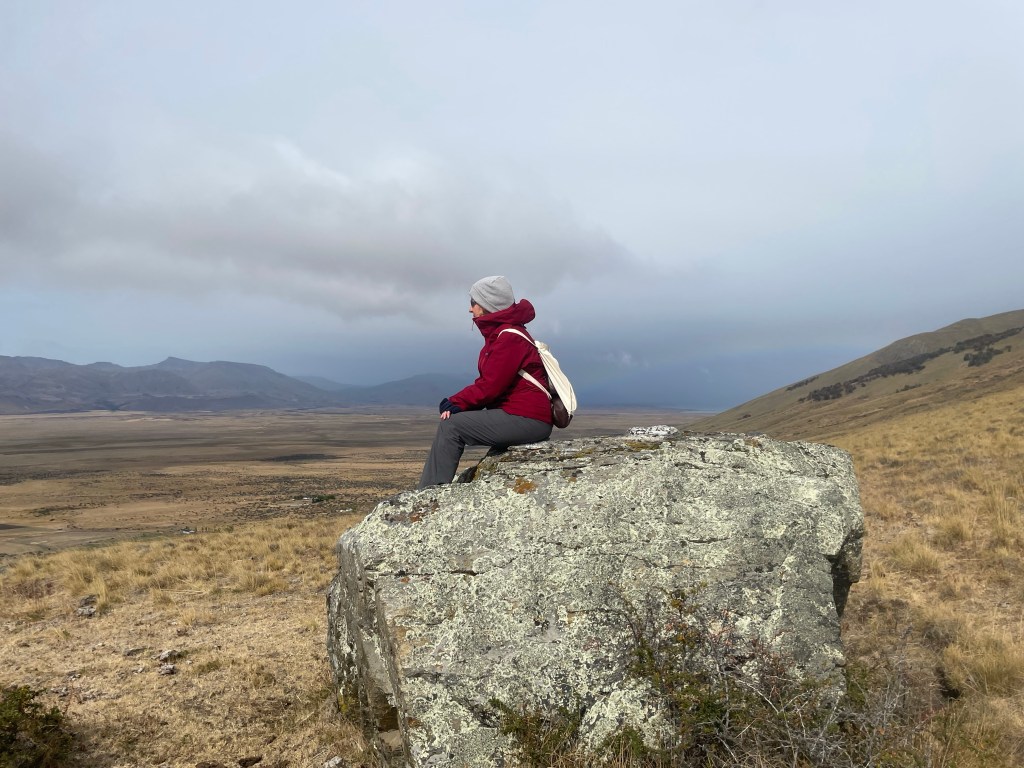
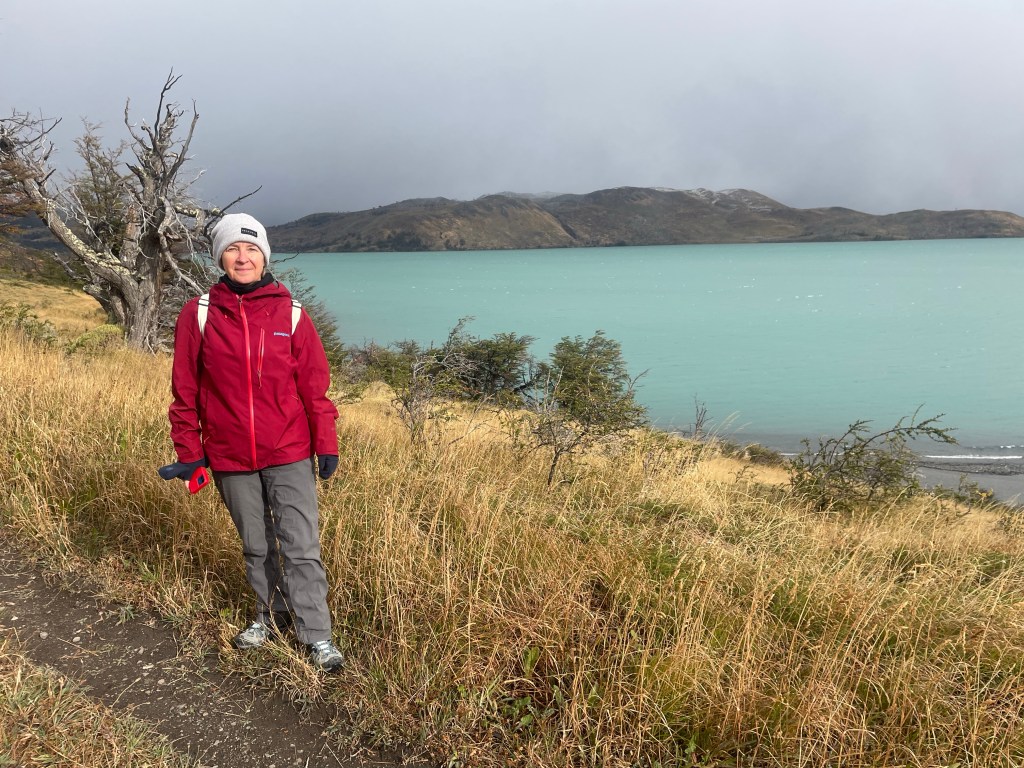
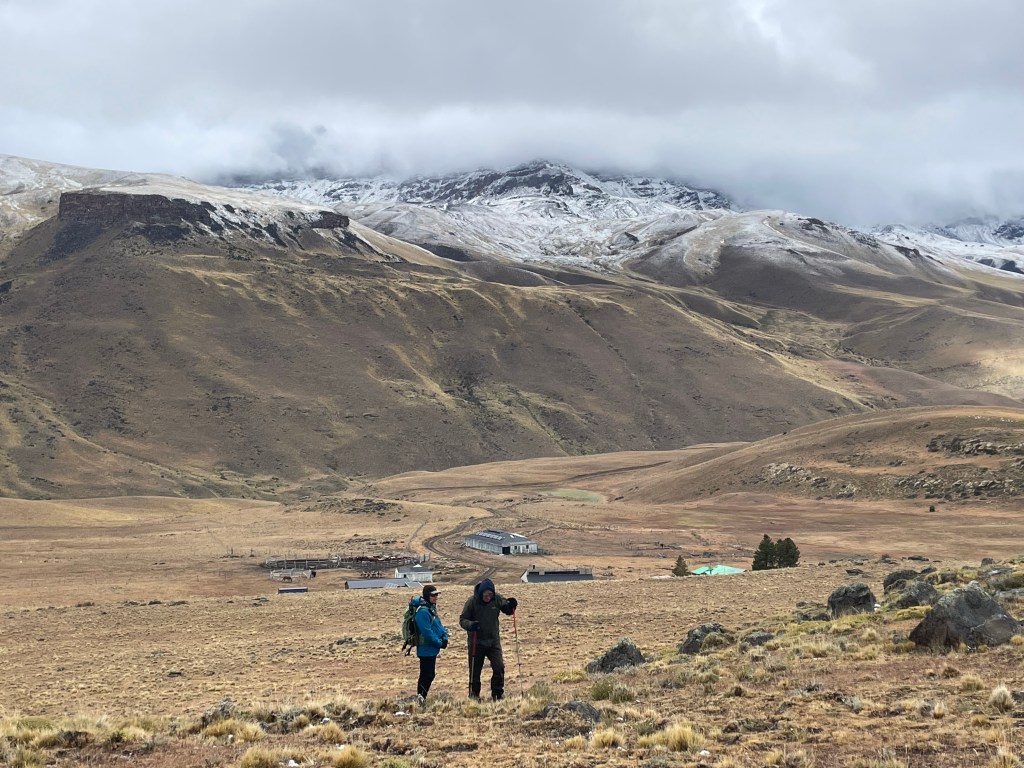
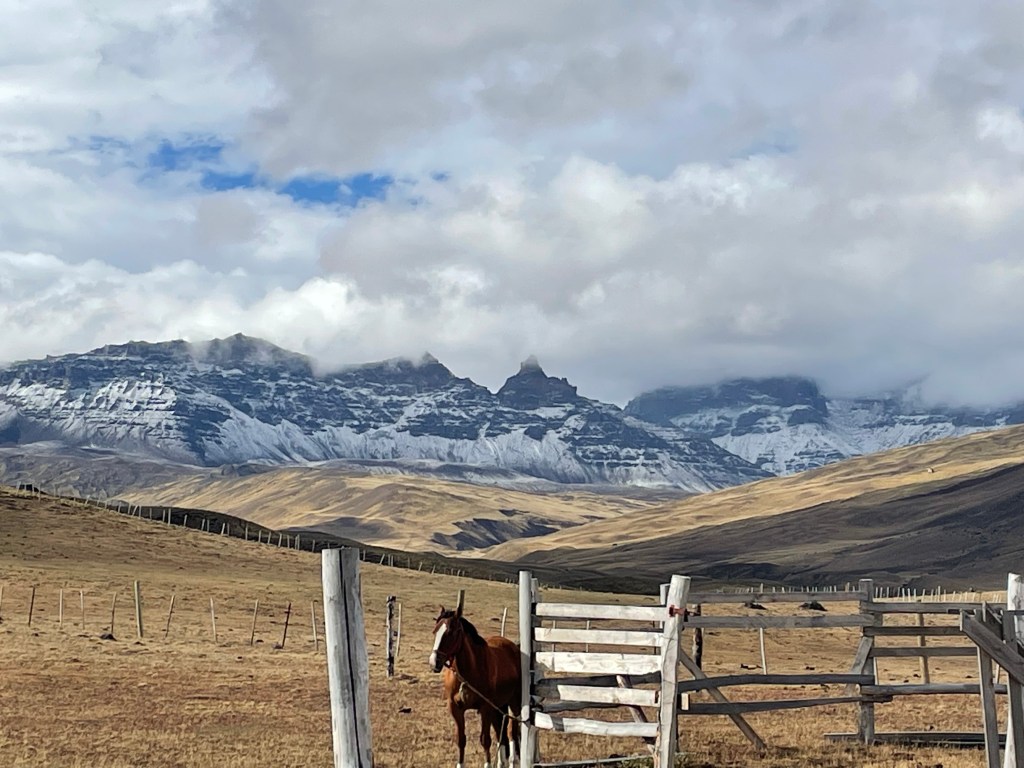
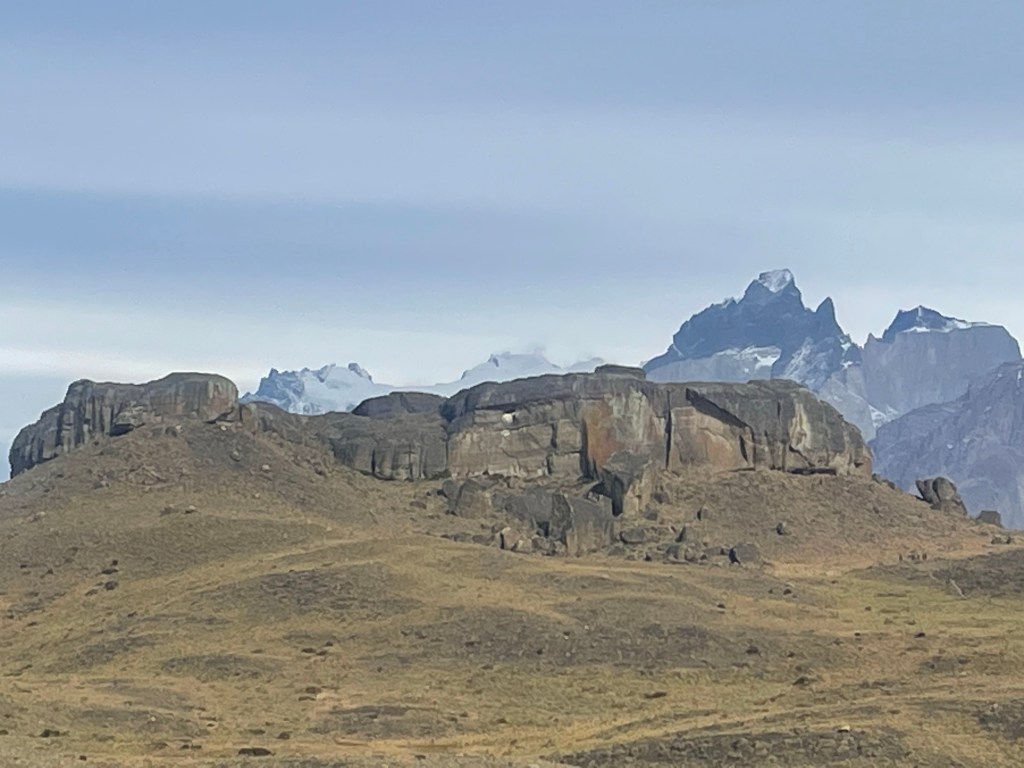
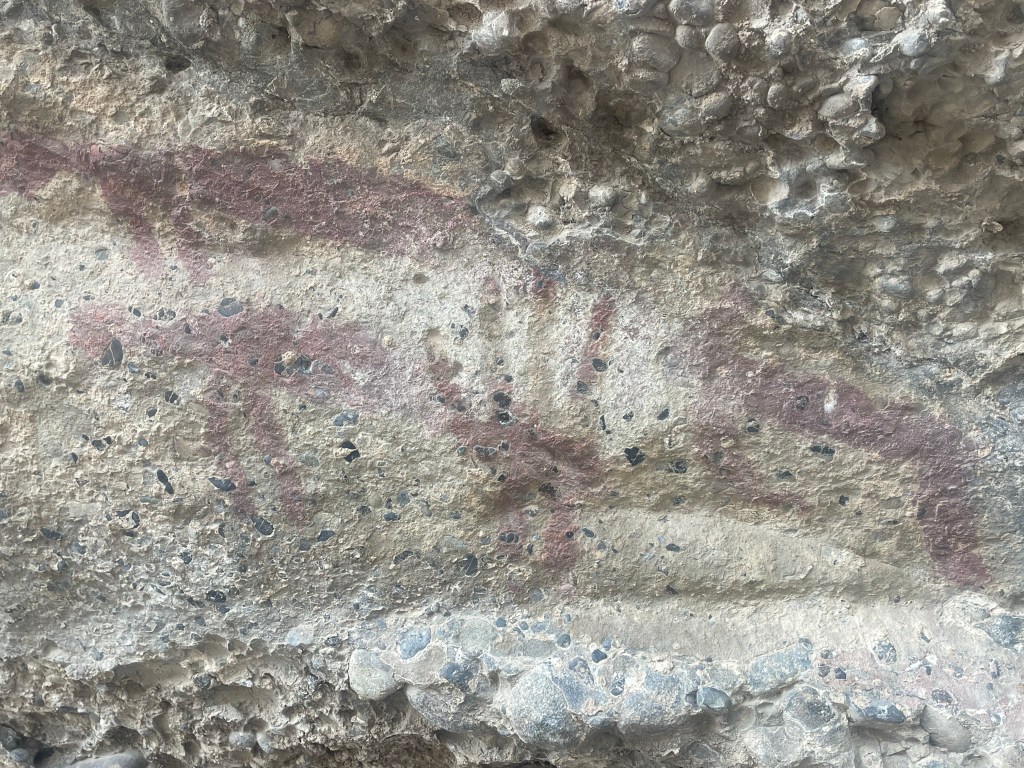
Our lodge organised hikes, which ranged in difficulty from easy to “you must be joking”. The scenery and wildlife was incredible. One of the highlights was seeing a pair of pumas with a cub lying on their backs in the grass – sadly too distant for a photo on an iphone.We completed four easy/medium difficulty half day hikes in all weather conditions, the most challenging being a visit to a site with ancient rock art. We rarely saw other hikers as the National Park is so vast.
Short eared owl (photo credit to our guide)Location of the rock paintings
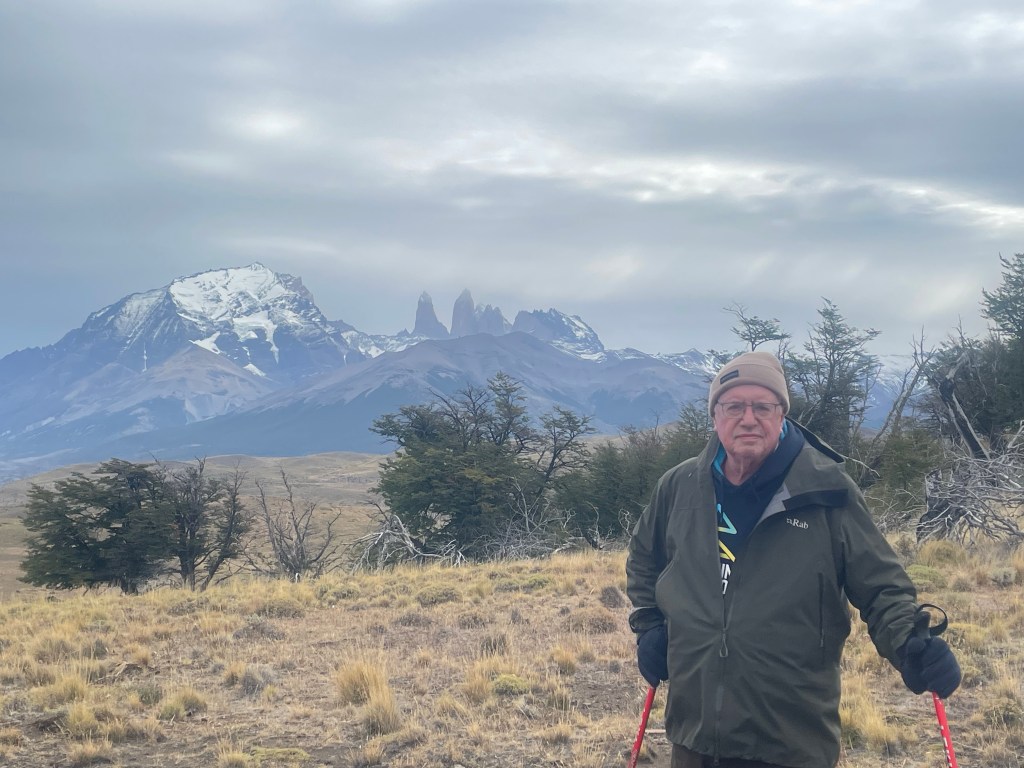
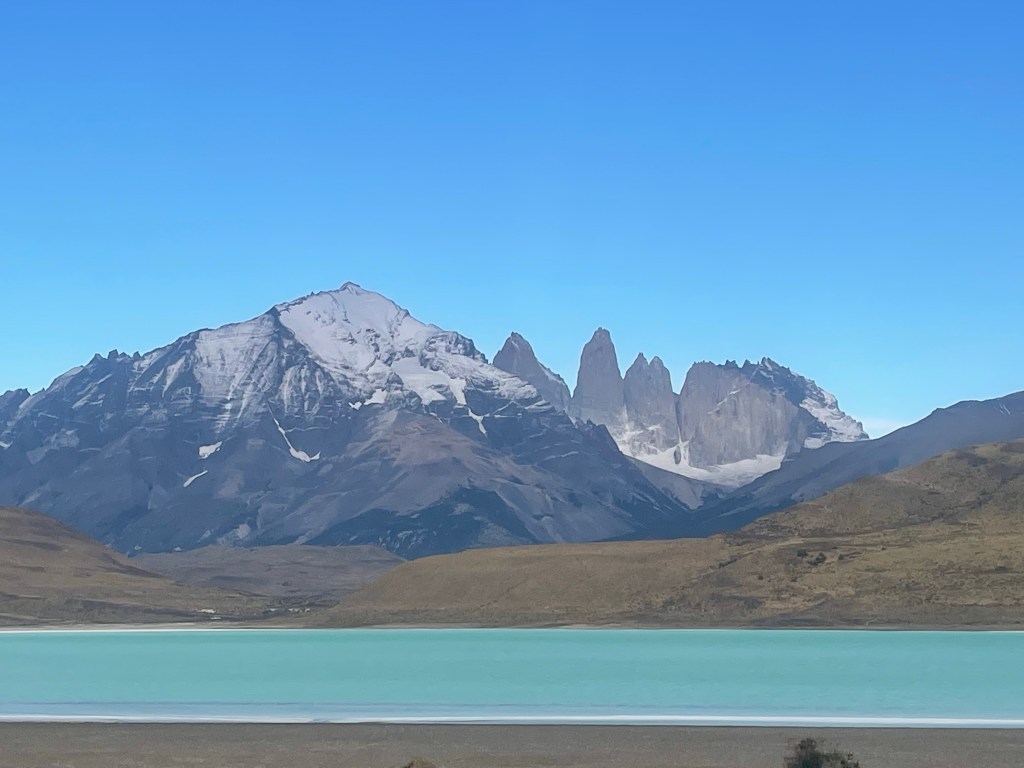
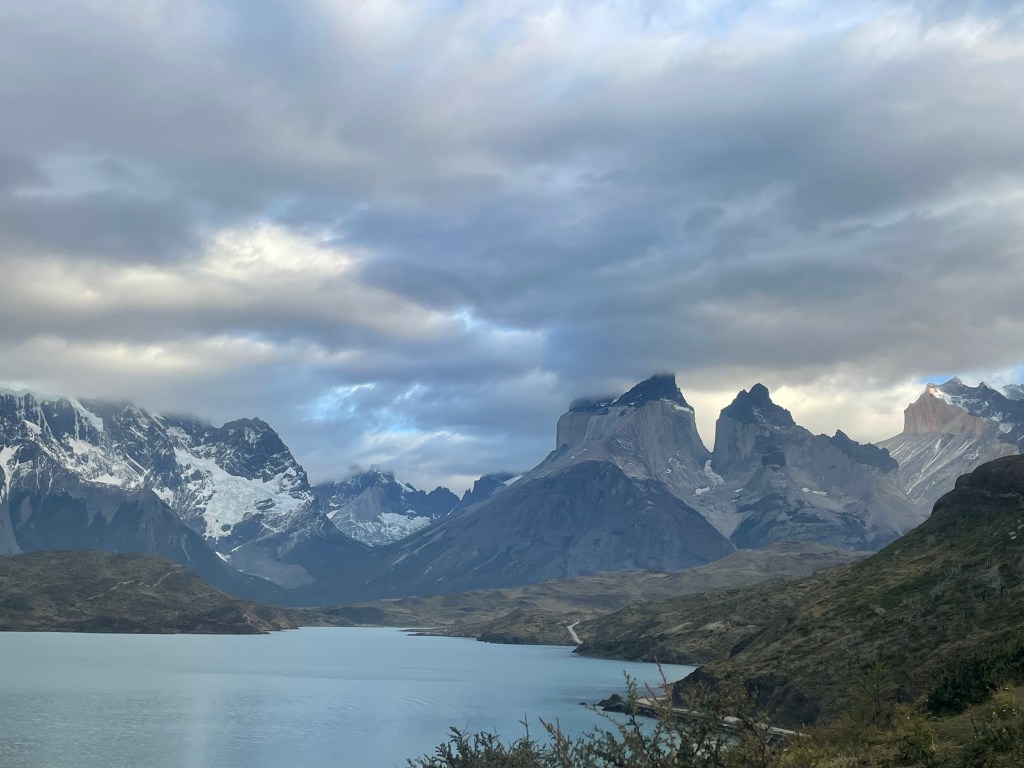
Torres del Paine is a national park in Southern Chilean Patagonia. It is almost 200 miles from Puento Arenas and is an area of mountains, glaciers, lakes and forests. At 1,800 square km, it is similar in size to Hertfordshire. The centrepiece is the Paine Masif with its three grantite towers, which are at an altitude of around 2,500 metres. The middle tower was first climbed by Chris Bonnington and Don Whillans in 1963.
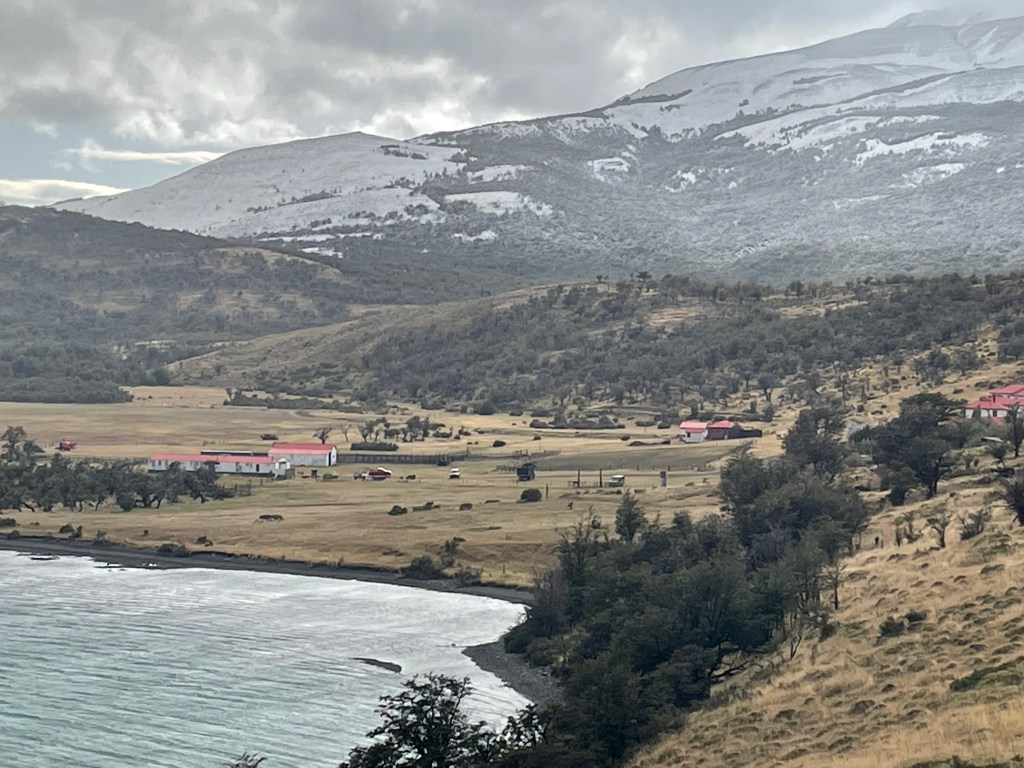
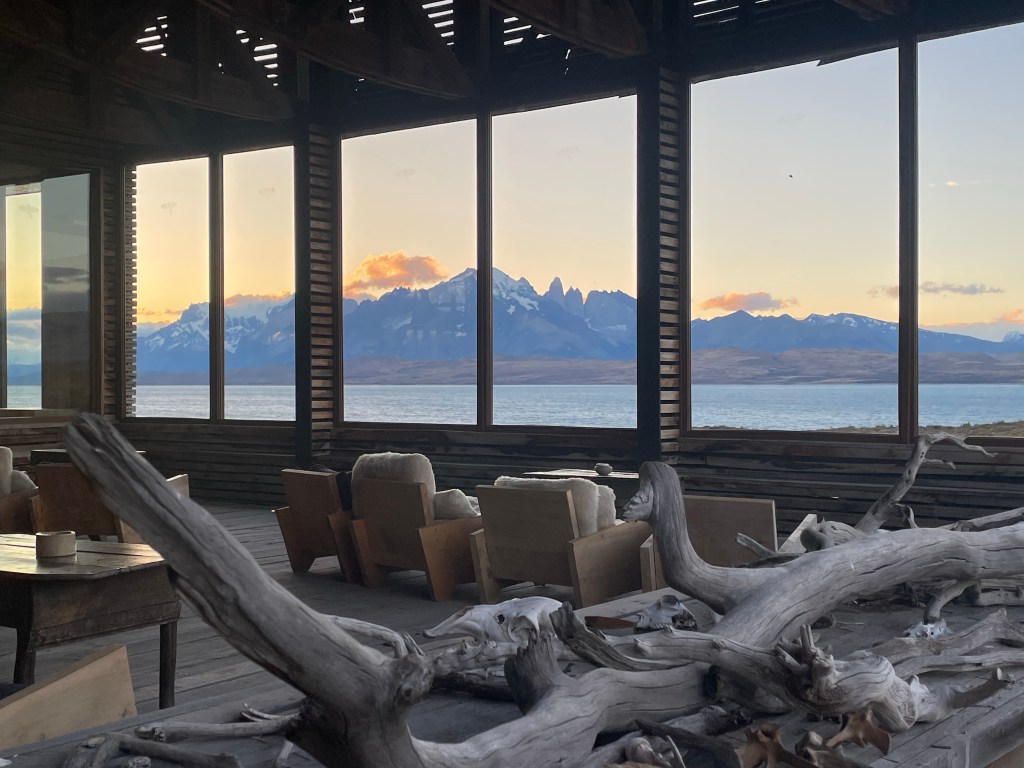
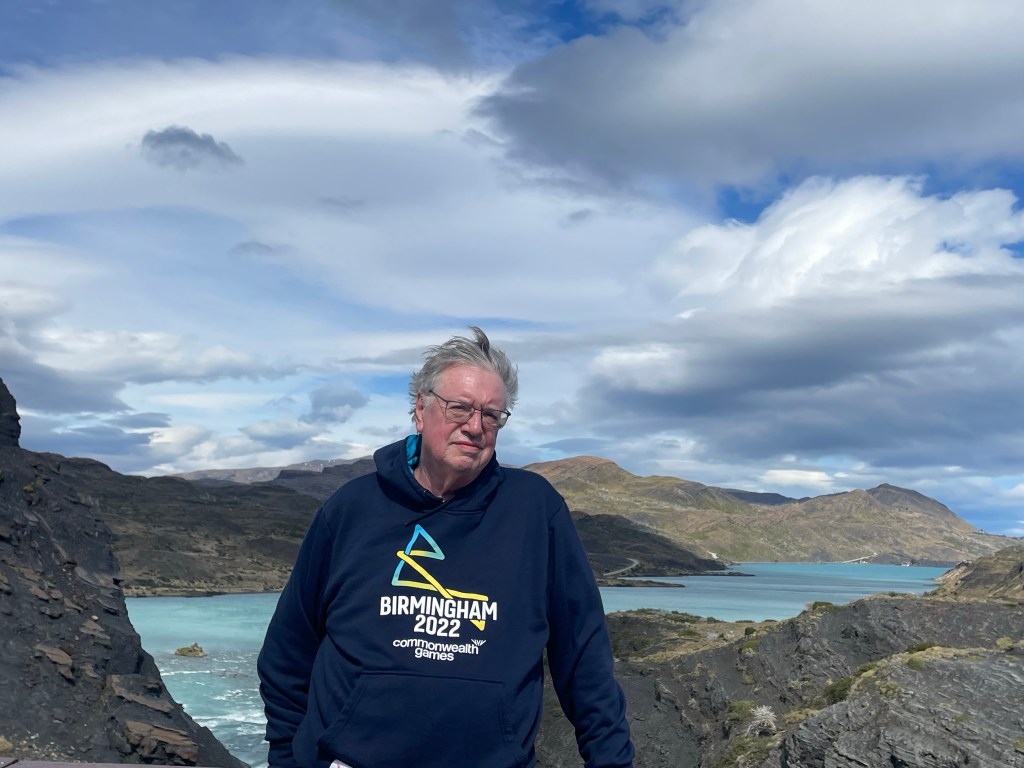
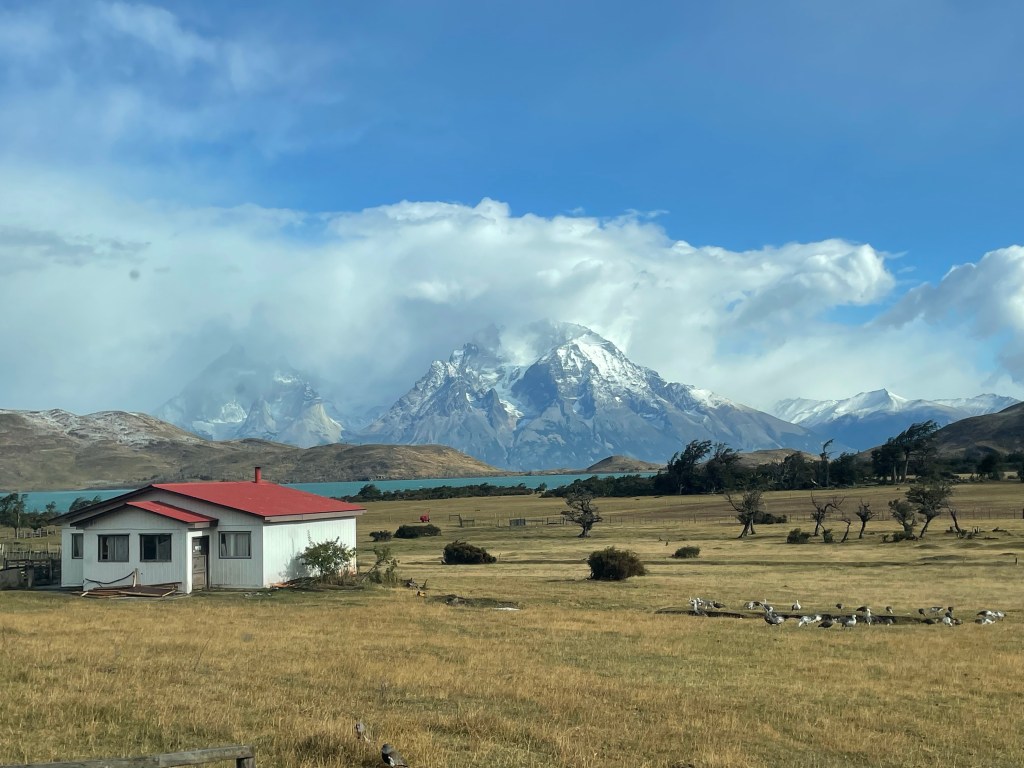
Our lodge, just outside the park, with spectacular views of Lake Sarmiento and the three towers provided guided hiking excursions.
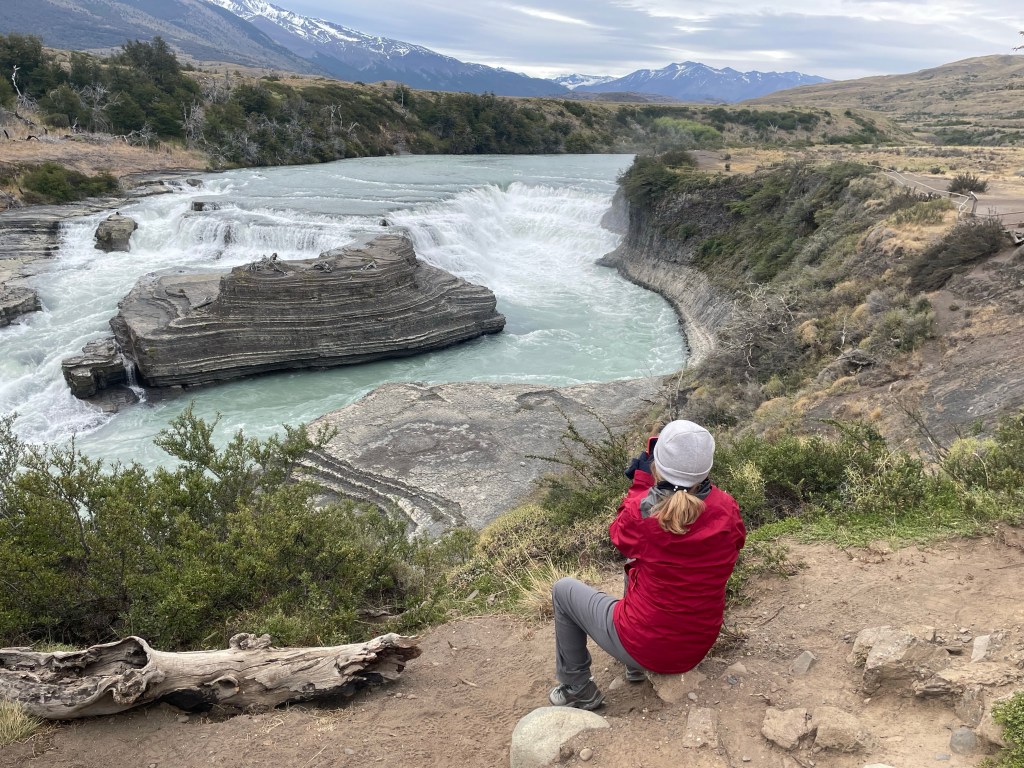
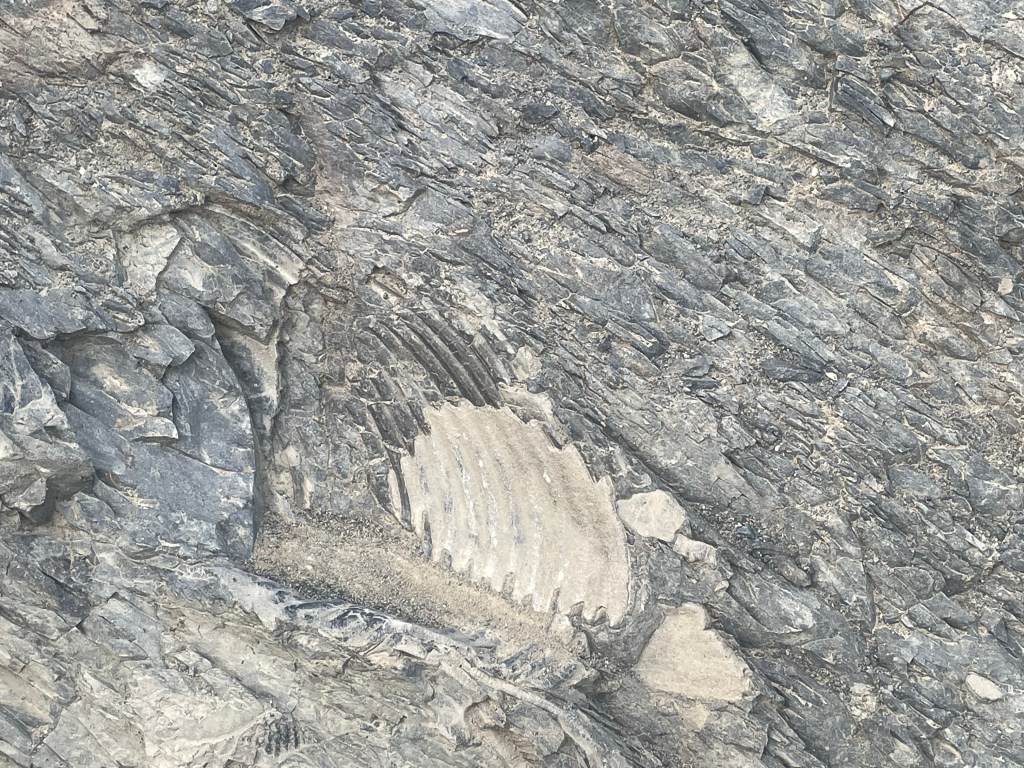
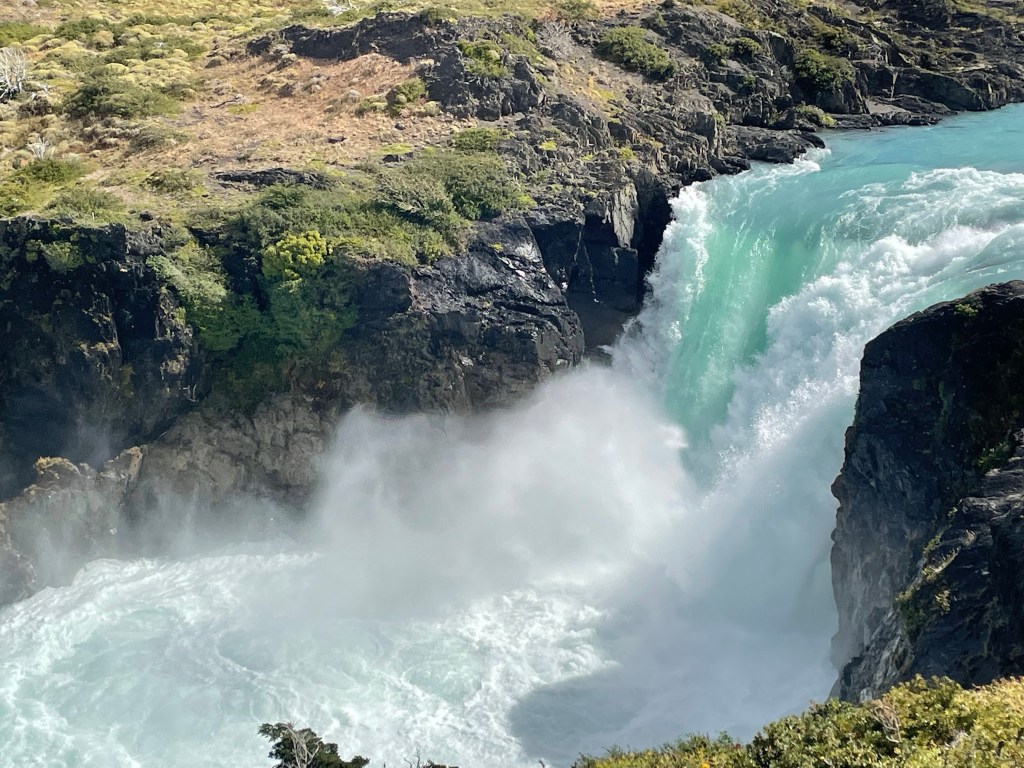
The lodge – built into the landscape with local materials and no roads or other buildings in sightView from one of the sitting roomsThe three towersA fossilised shell Salto Grande waterfall
Patagonia is a region of over 1 million square km – over four times the size of the UK and a third larger than Turkey. Approximately 90% of the region is in Argentina, with the rest in Chile. It sits at the south of South America and is surrounded by the Atlantic and Pacific Oceans with the Andes providing a backbone down the western side and acting as a border. Over the years there have been various disputes over the border with the most recent being adjudictaed by the Pope in the 1980s. With a population of just under 2 million, it is one of the least populated areas of the world (similar to Mongolia).
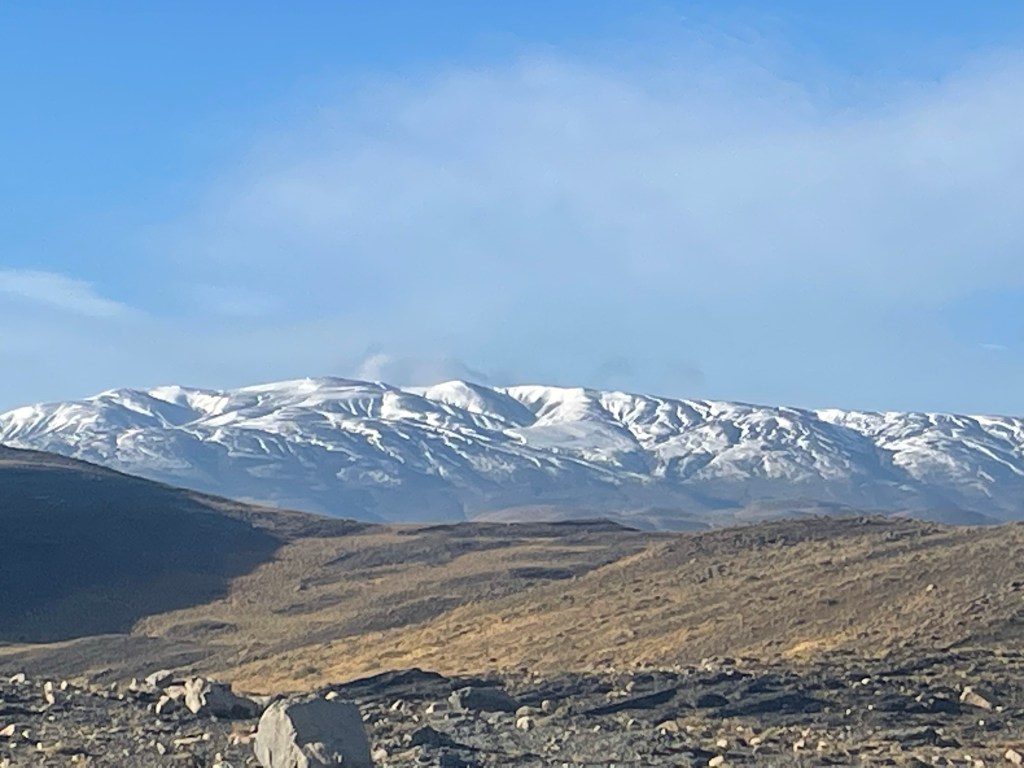
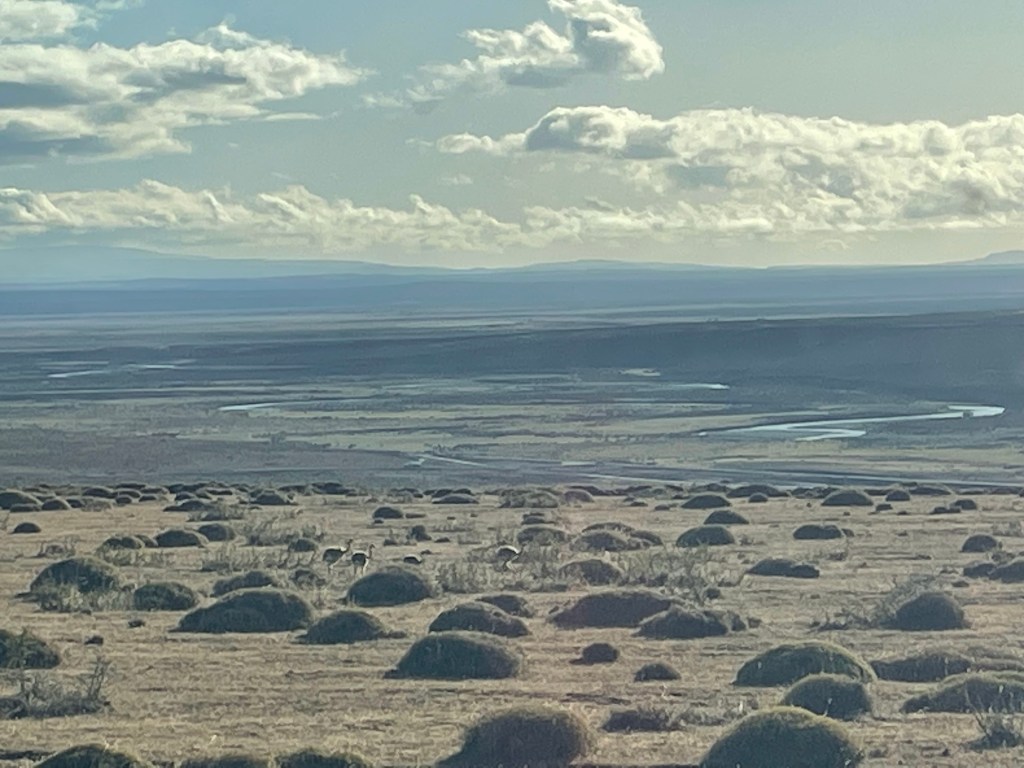
Despite the mountains, most of the land is designated a steppe. The combination of mountains, steppes and oceans creates very varied weather condistions, frequently with all four seasons in a day. Although we visted in summer, we experienced sun, showers, snow and wind. Temperatures ranged from just above freezing to mid teens but with considerable wind chill at times. We soon discovered that a “Patagonian breeze” is the sort of wind that you have to lean into to stay upright !
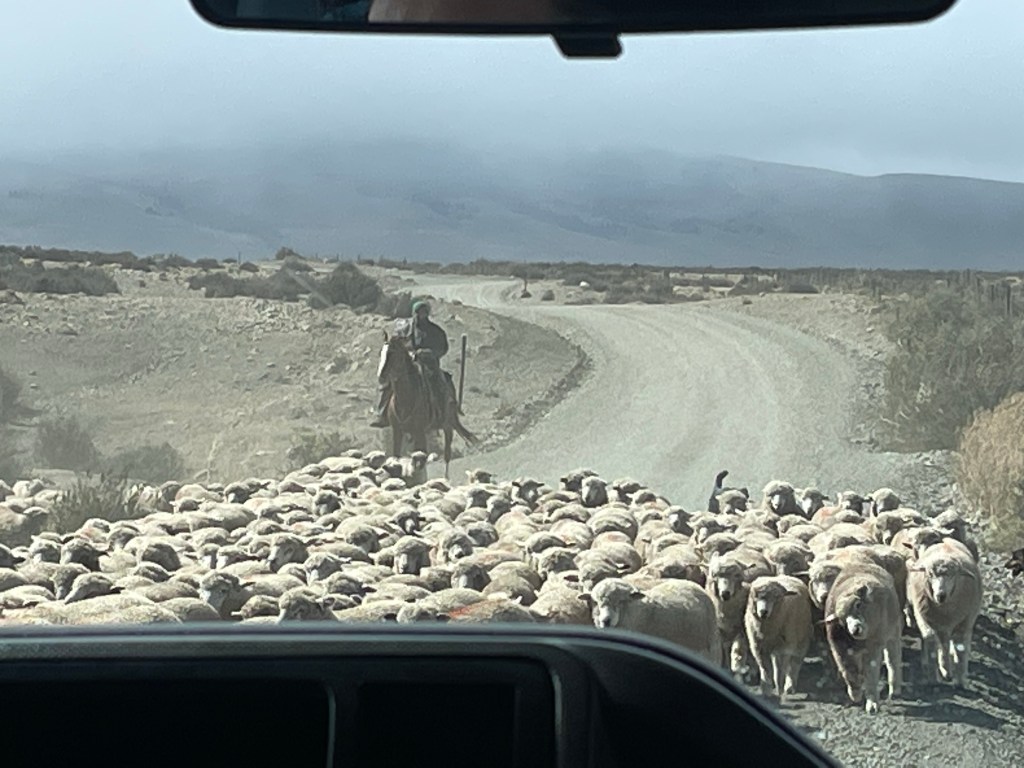
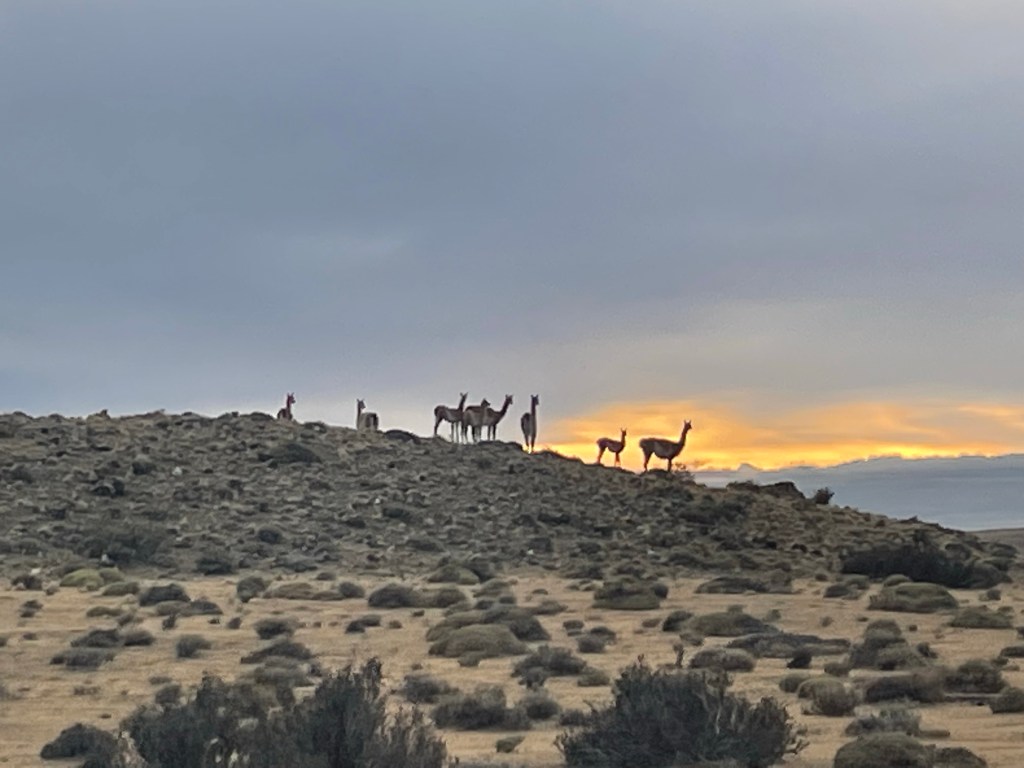
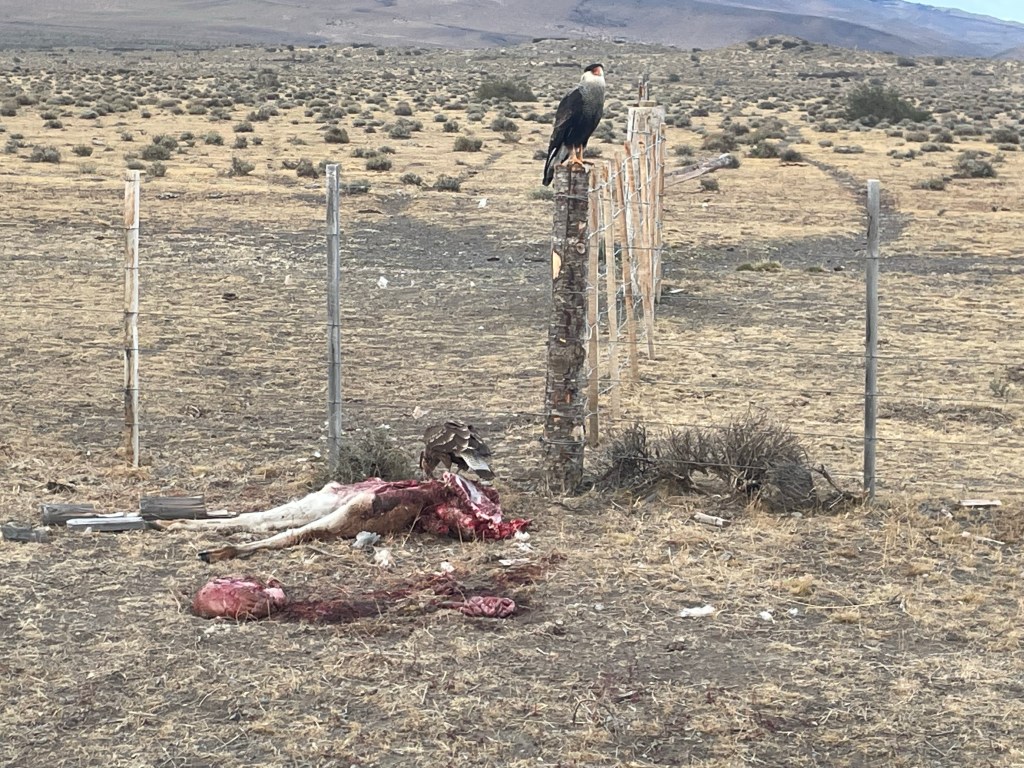
A Patagonian traffic jamA typical ‘Estancia’ – small holding/ranchSteppesGuanaco (similar to Lama)This Gunaco was killed by a puma – once the puma had enjoyed a meal or two the scavenger birds move in – this one is a caracara



















 Shilli-Fully Travels