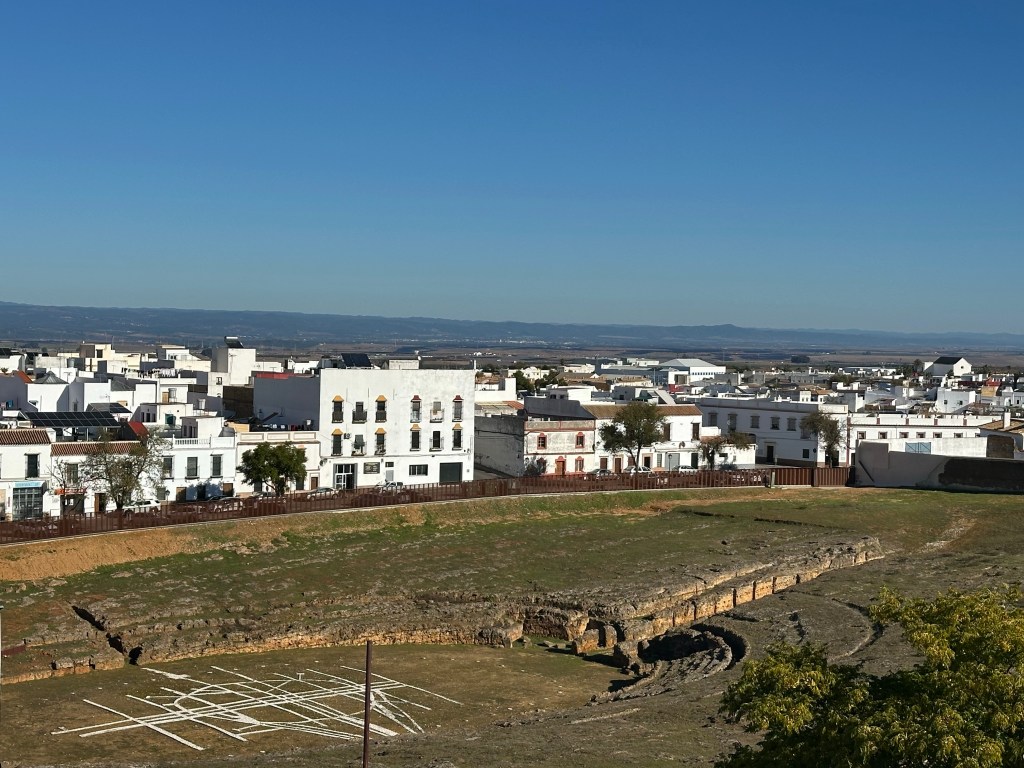
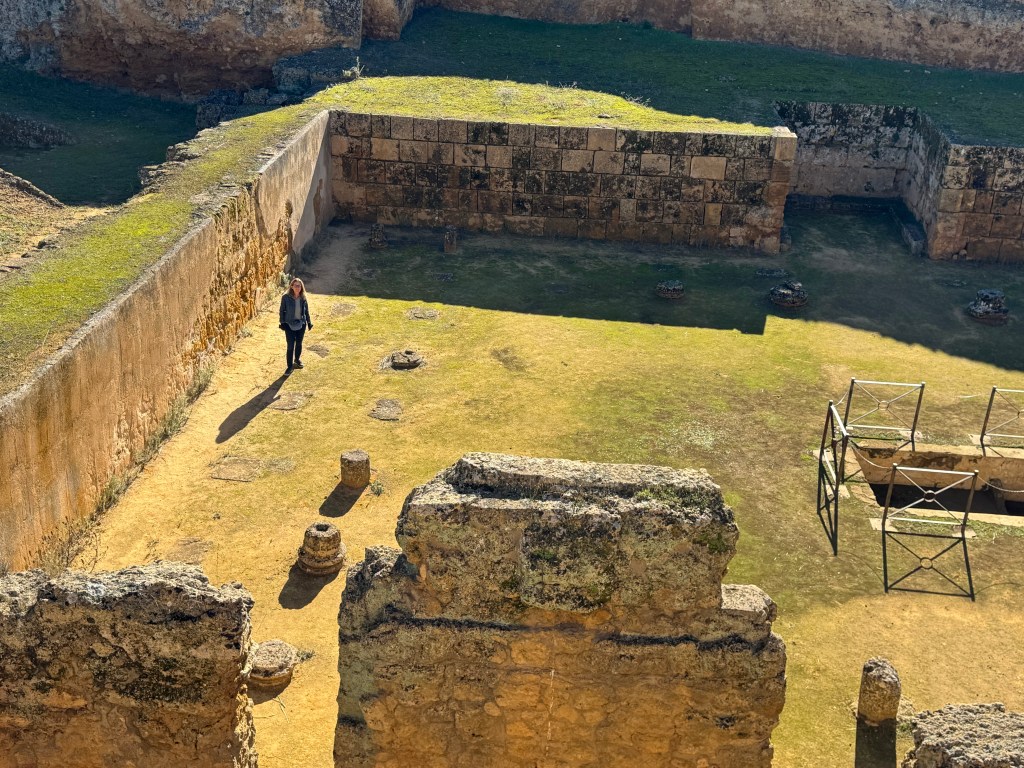
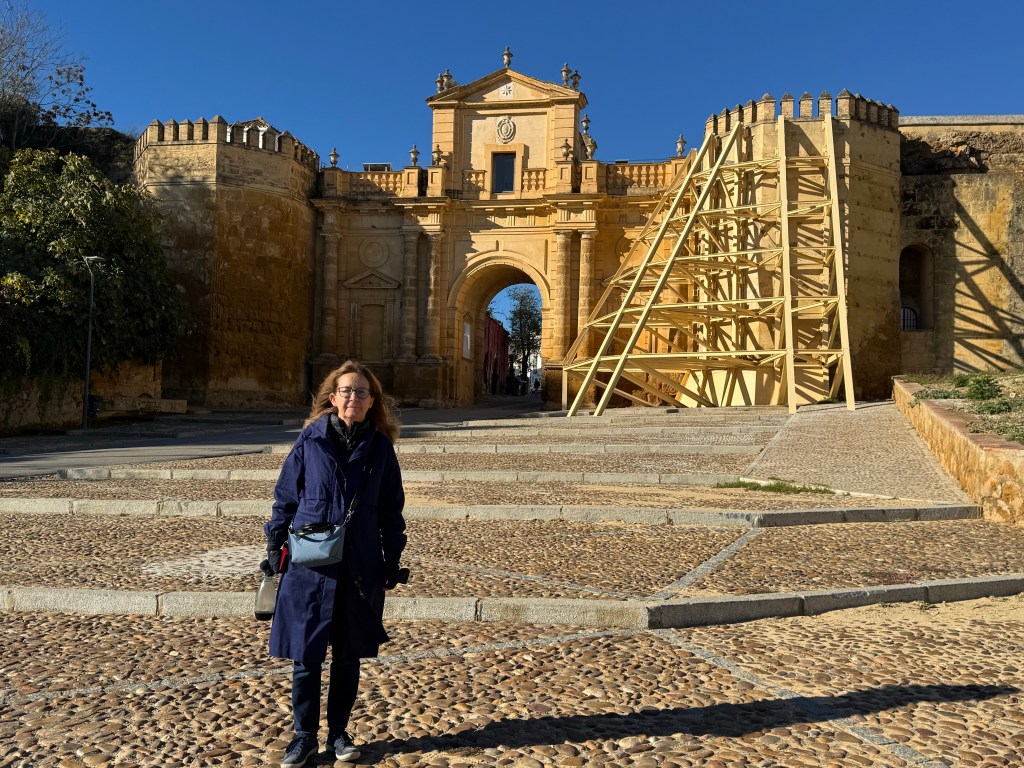
Carmona sits on the Augusta Roman Road, which connected Cadiz with Rome. In 1881 a necropolis and amphitheatre were discovered on either side of the road just outside the medieval town.
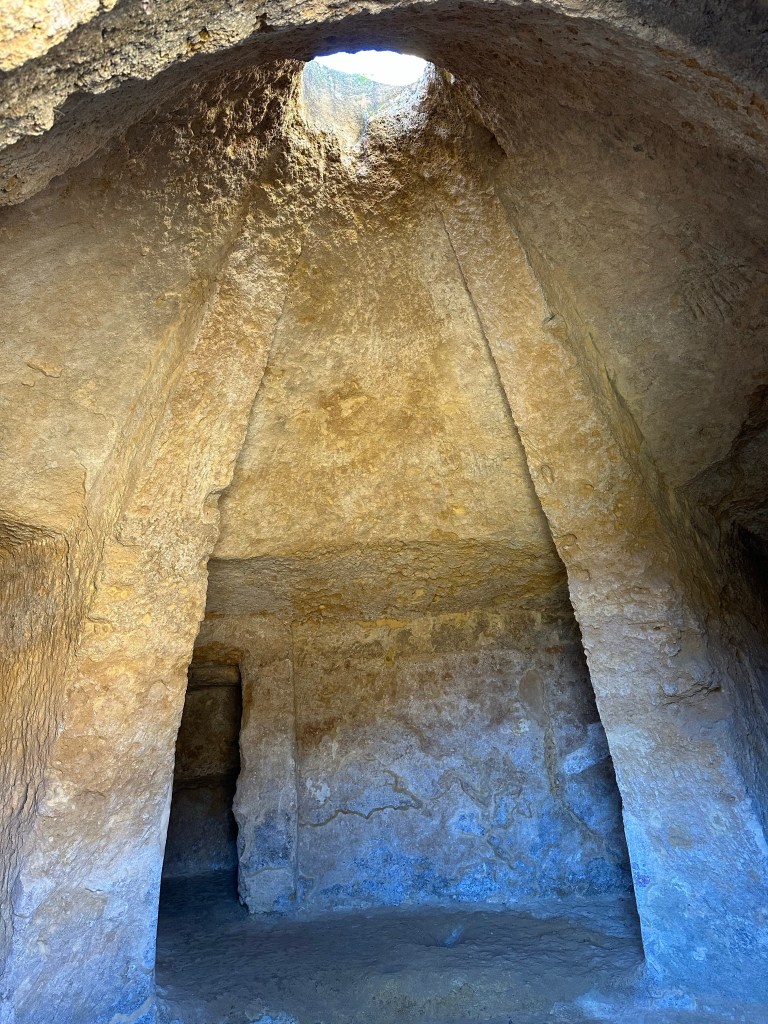
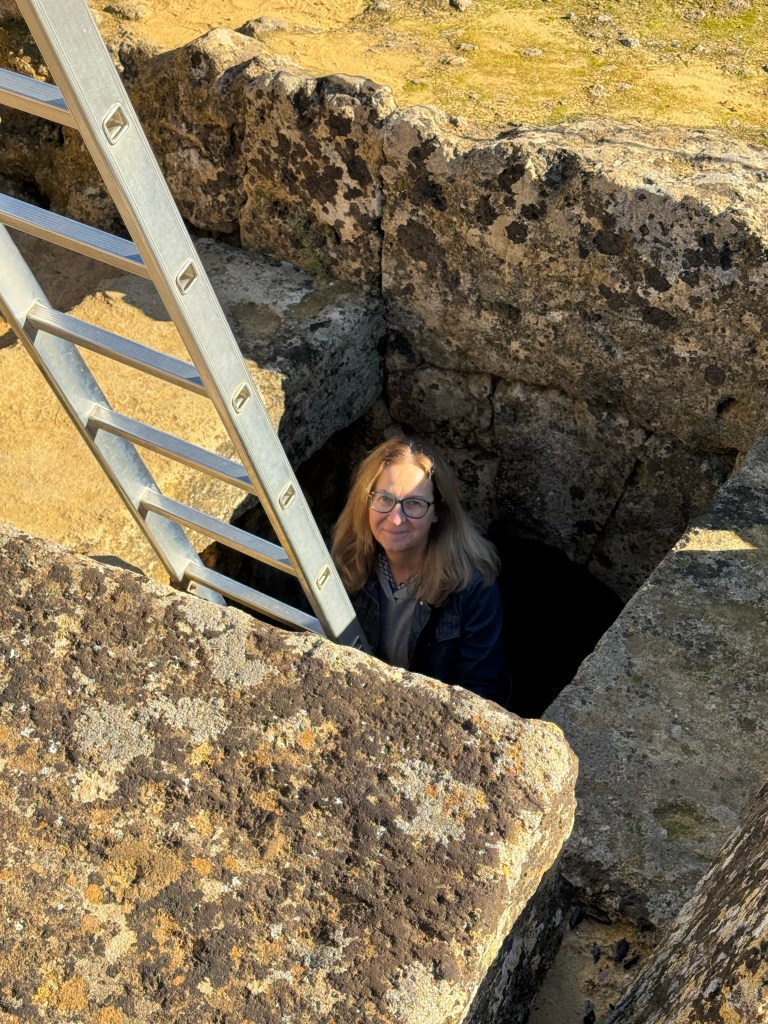
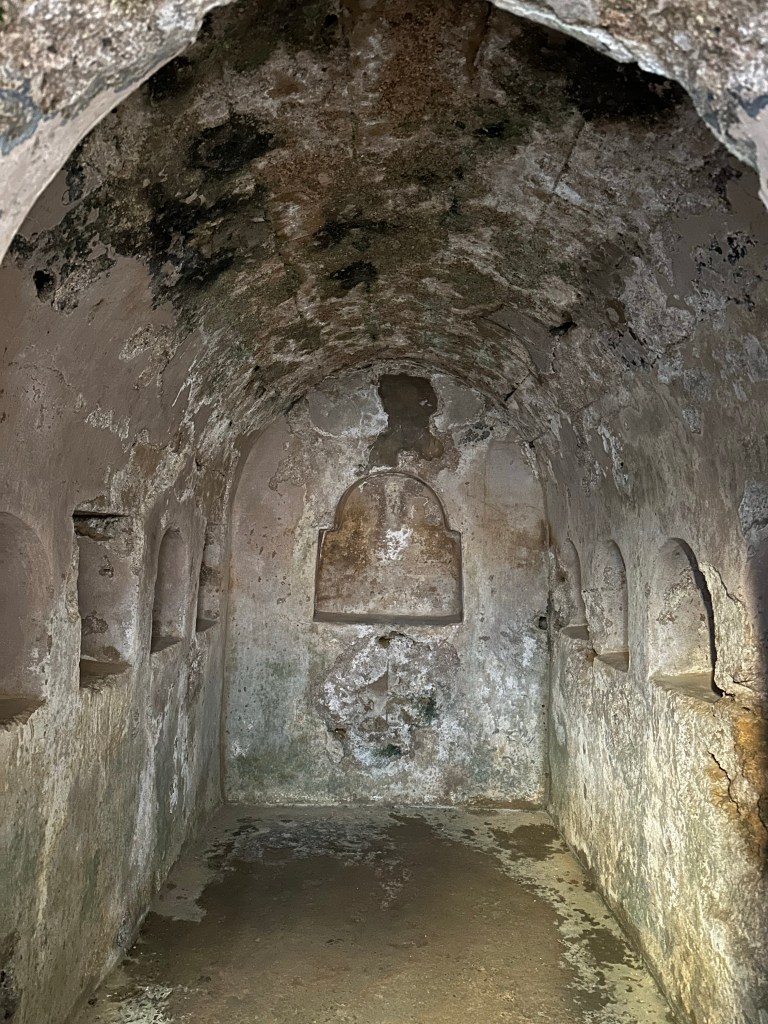
Romans cremated bodies and buried the ashes underground. Descendants would visit the tombs and honour their ancestors with feasts. One of the tombs is named Tomb of the Elephant because of a statue found. There is one tomb which can be accessed via a ladder for those inclined!
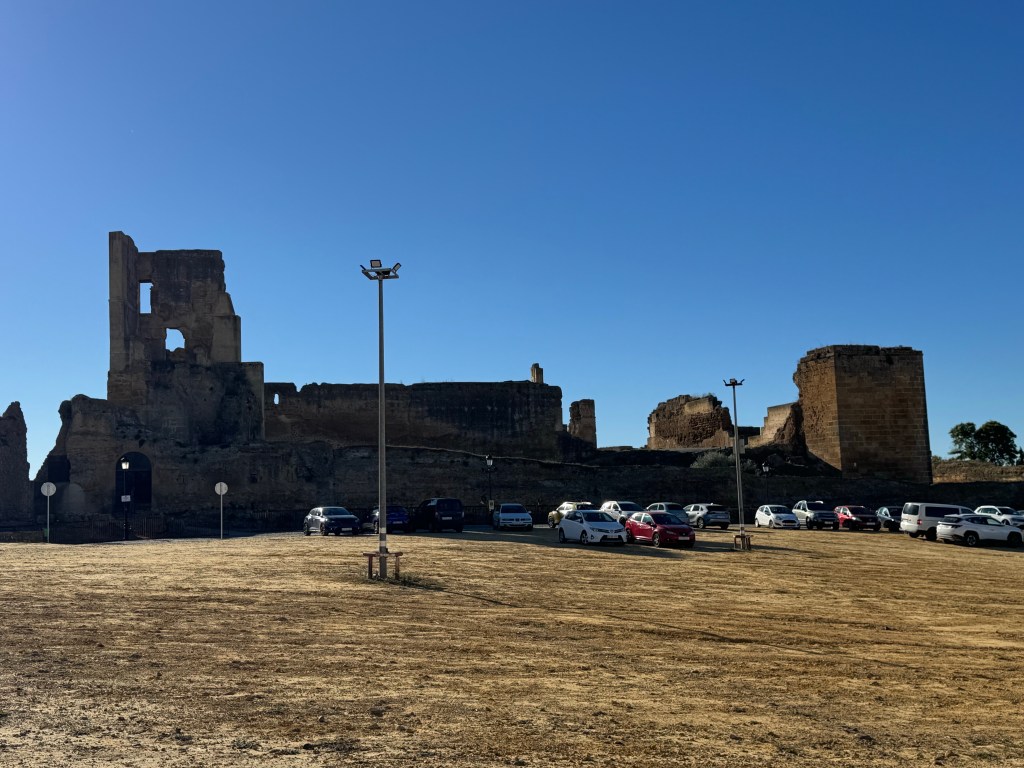
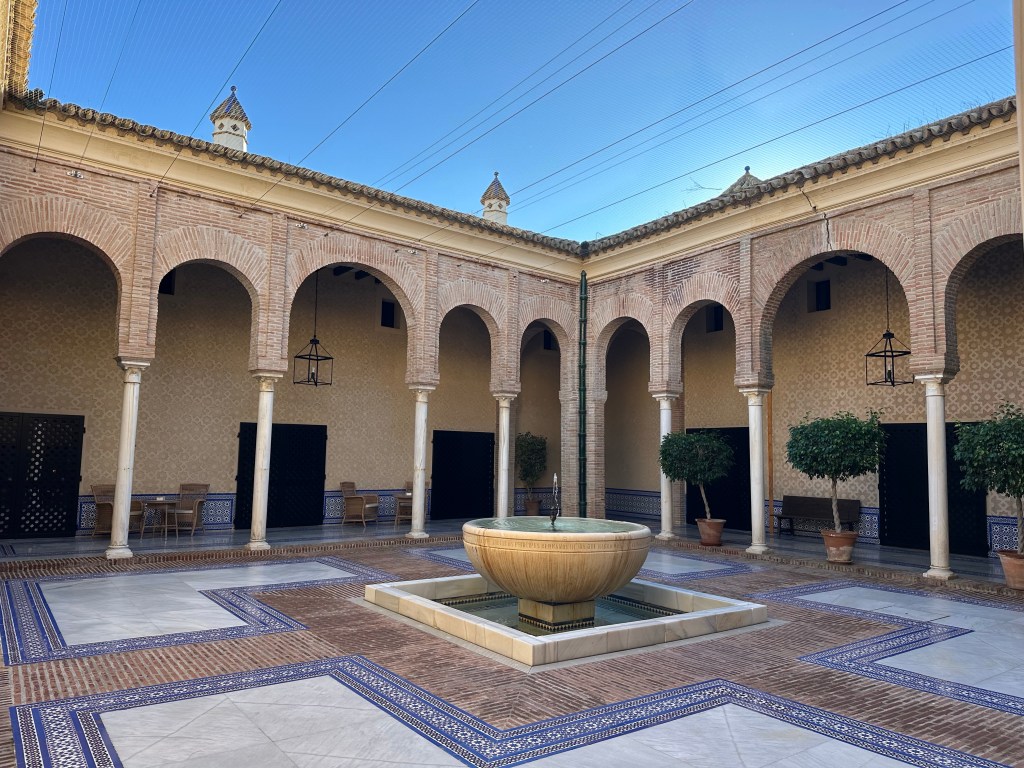
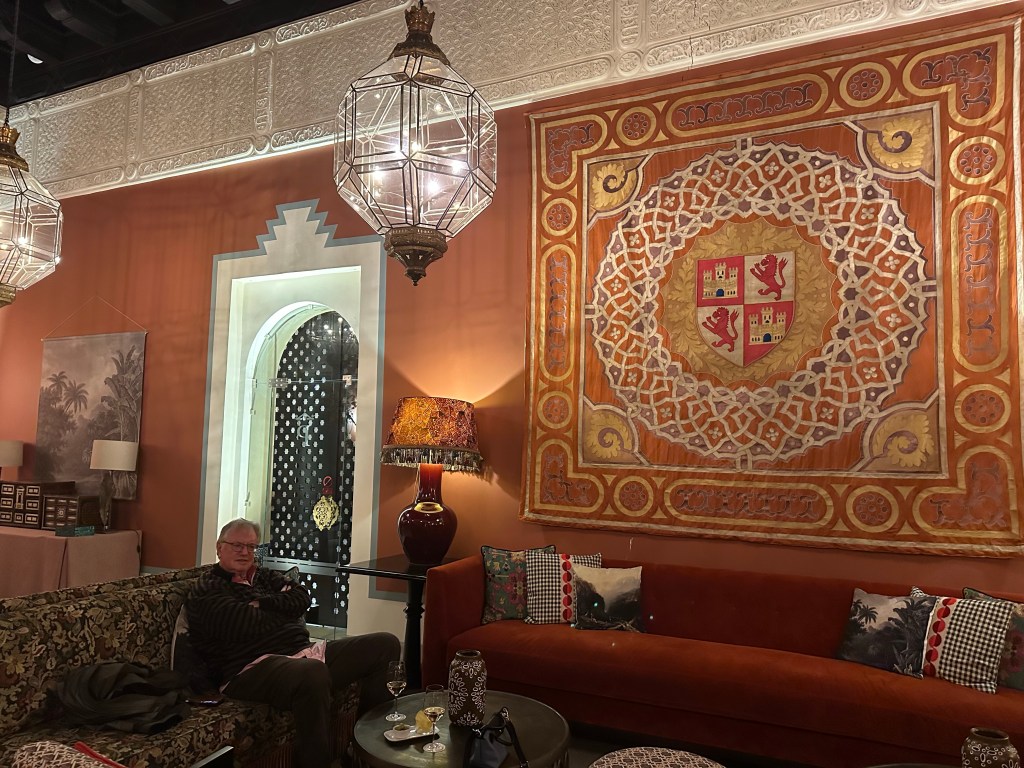
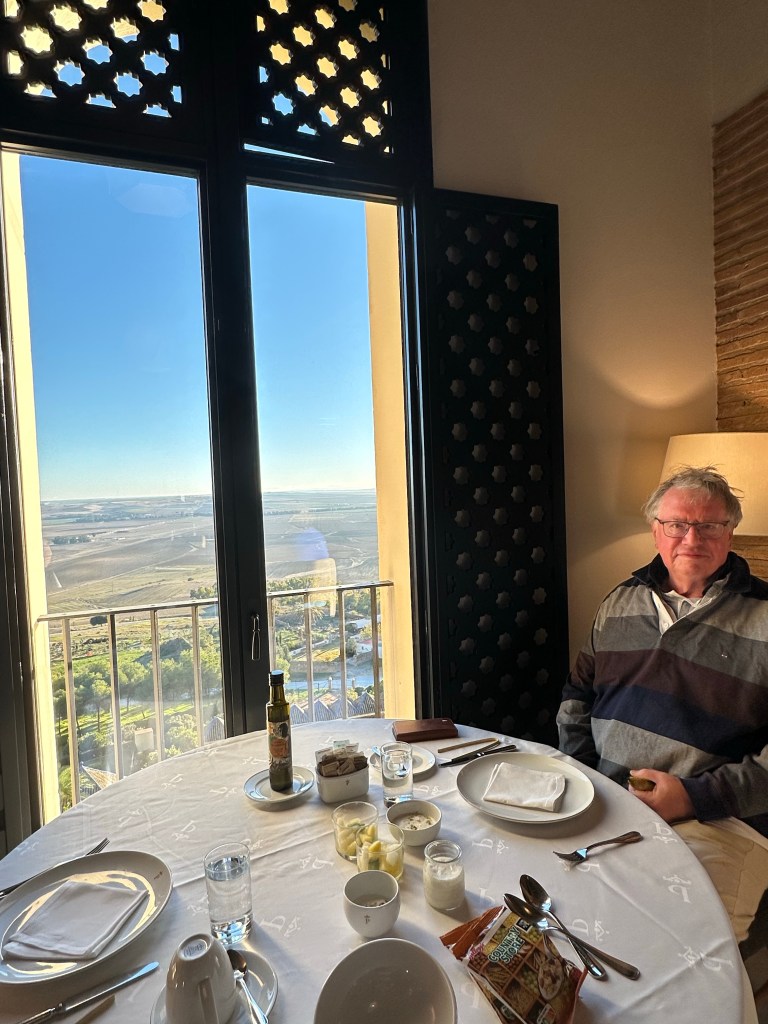
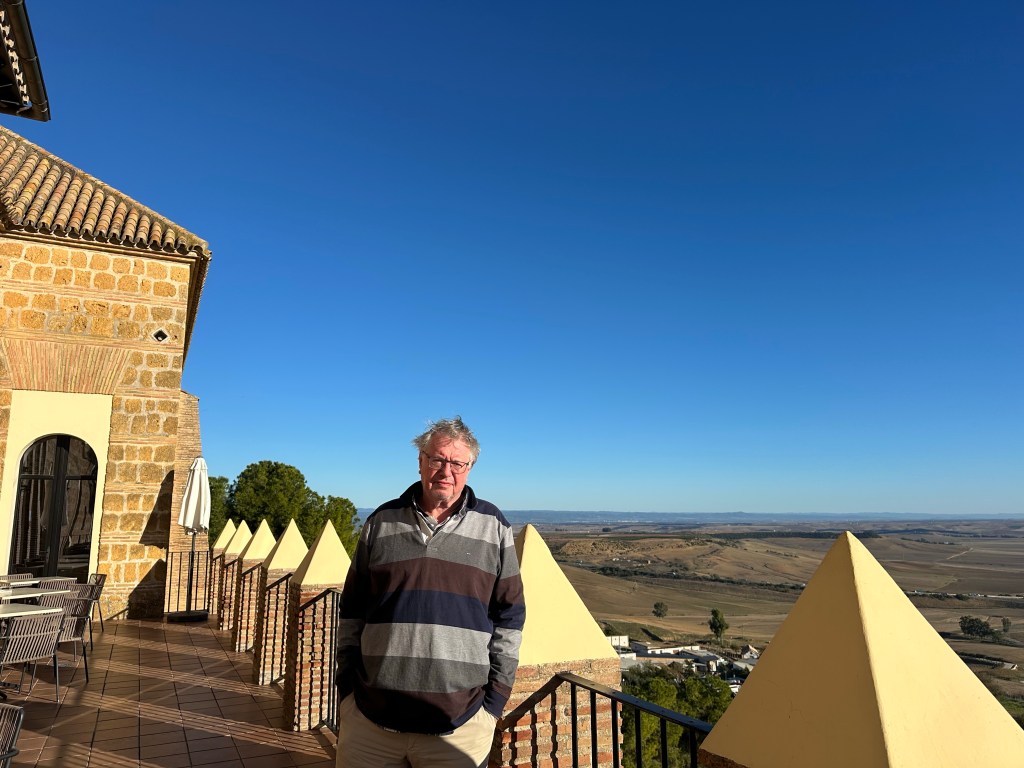
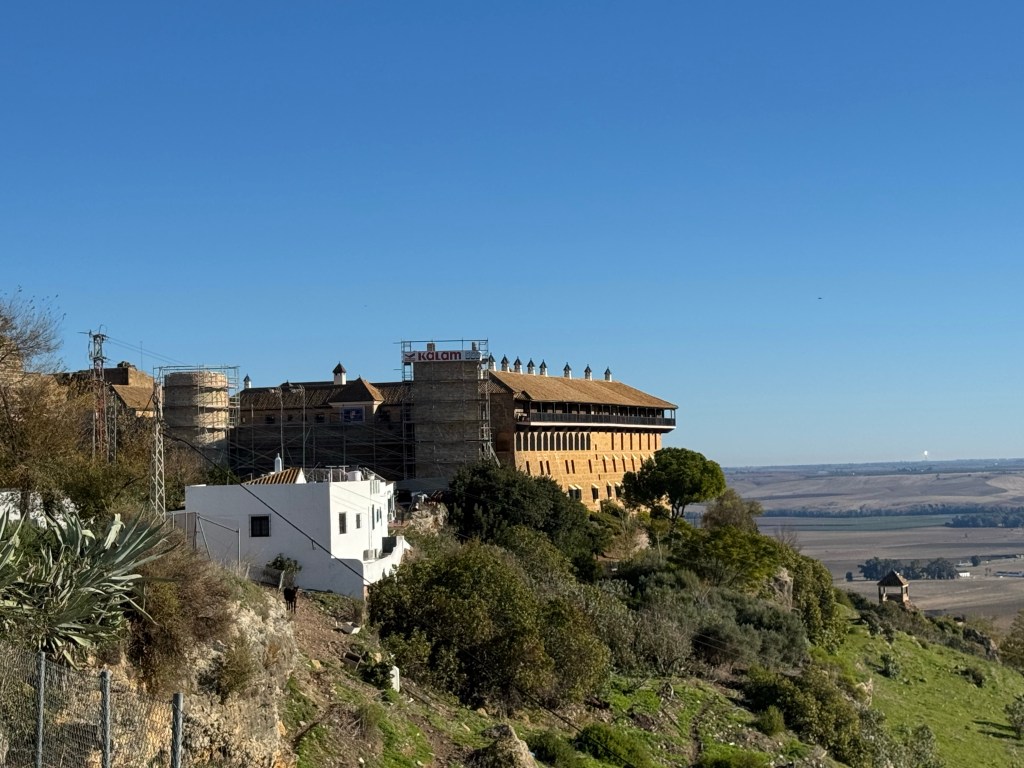
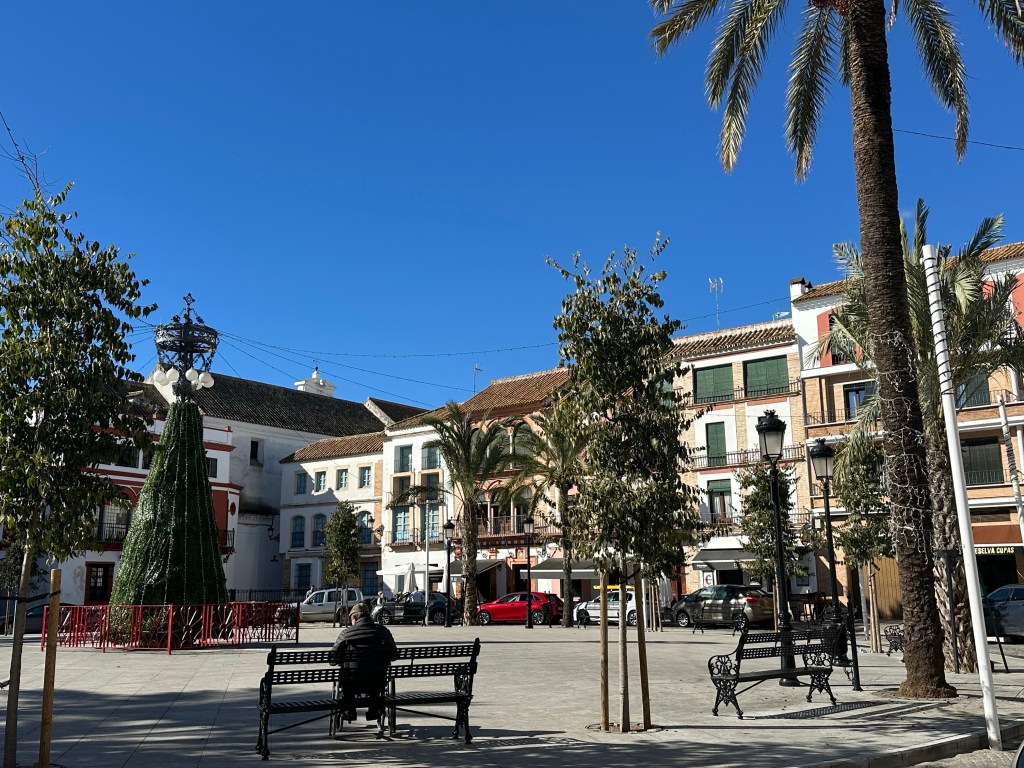
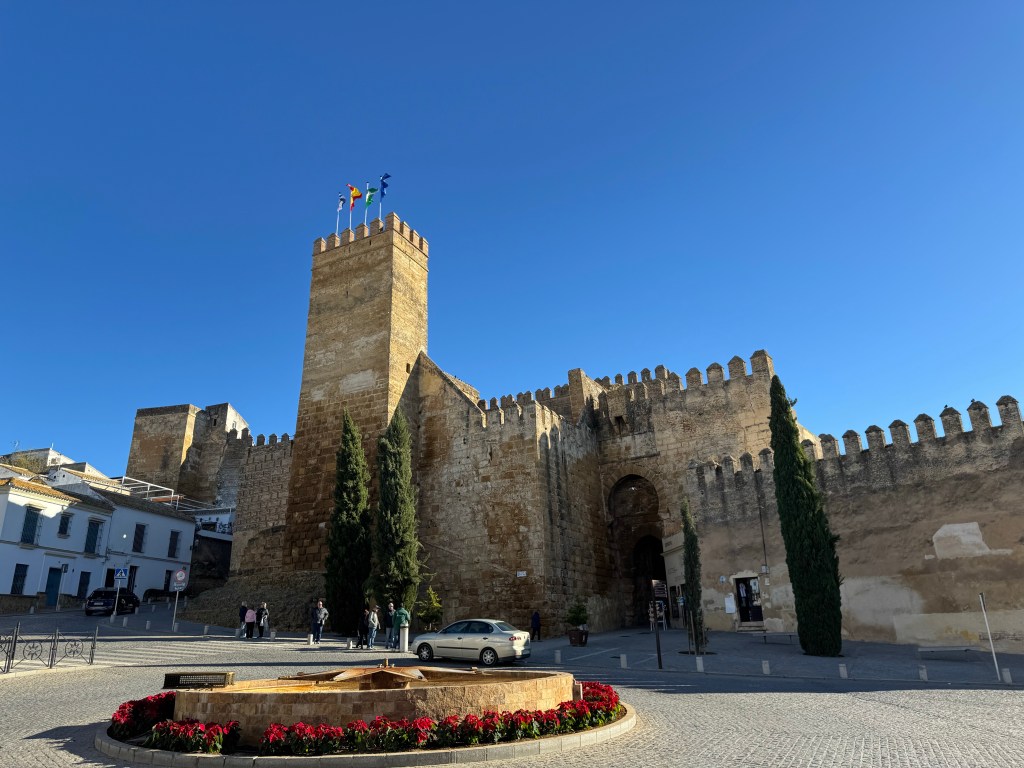
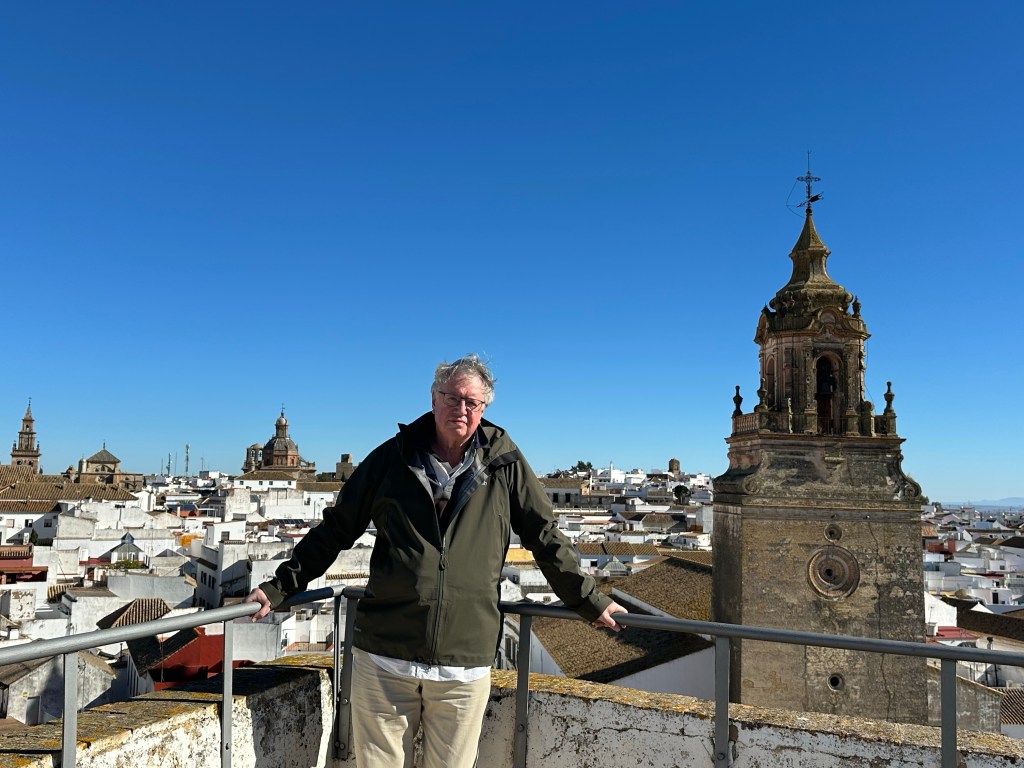
Carmona is a town 33km north- east of Seville, sometimes described as a mini- Seville. The citadel of Carmona was the main fortress of “Peter the Cruel” or Pedro I. His fortress containing a palace built in the mid 14th Century is now a ruin, except for a small part which has been renovated as a Parador Hotel, where we stayed.
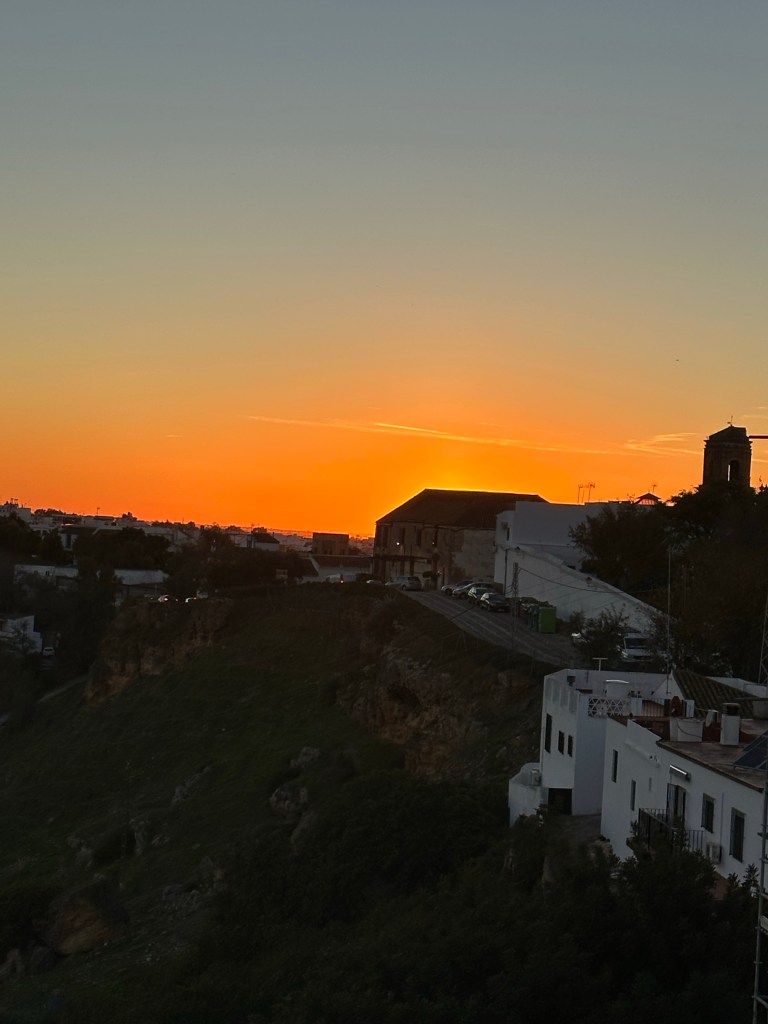
Carmona is unspoilt by tourism and feels very Spanish with excellent tapas bars, cafes and restaurants. Only 30 minutes from Seville airport, it was an ideal final stop on our trip.
The Caliph was a title held by the political and religious head of Muslims and belonged to the person controlling the sacred cities of Mecca and Medina. Upto 929 the head of the Umayads had been happy to be an Emir but with the division between the branches of Islam, alongside increased power and wealth in Al-Andalus, Abd al-Rahman III declared himself Caliph of Cordoba on 16 January 929.
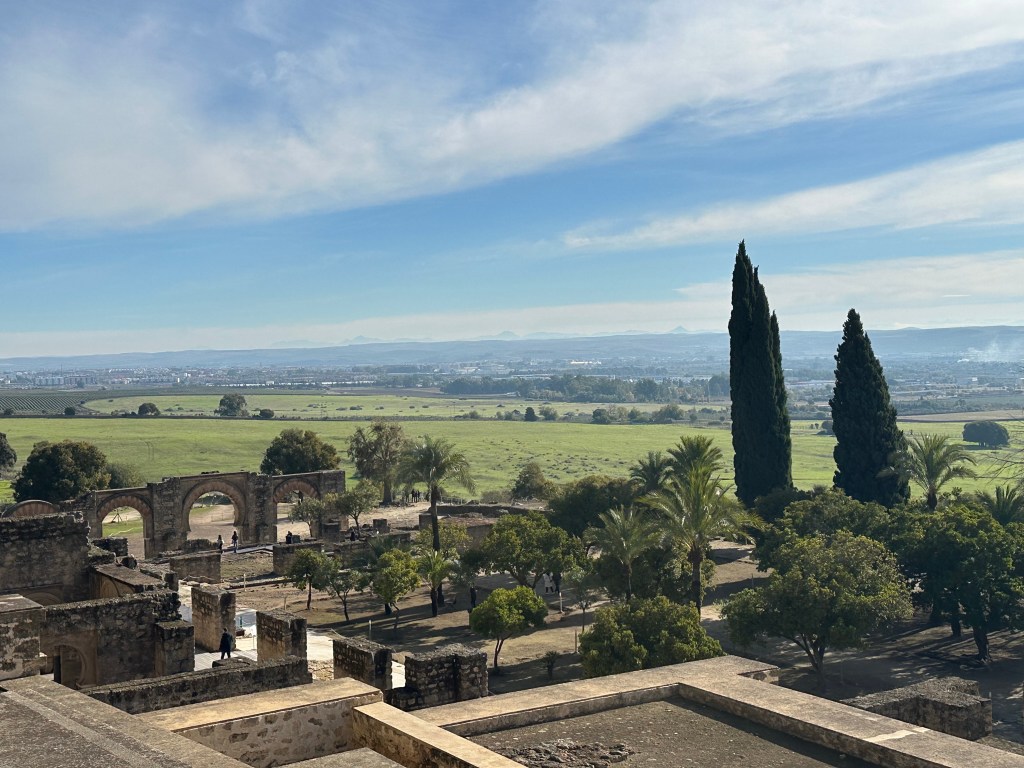
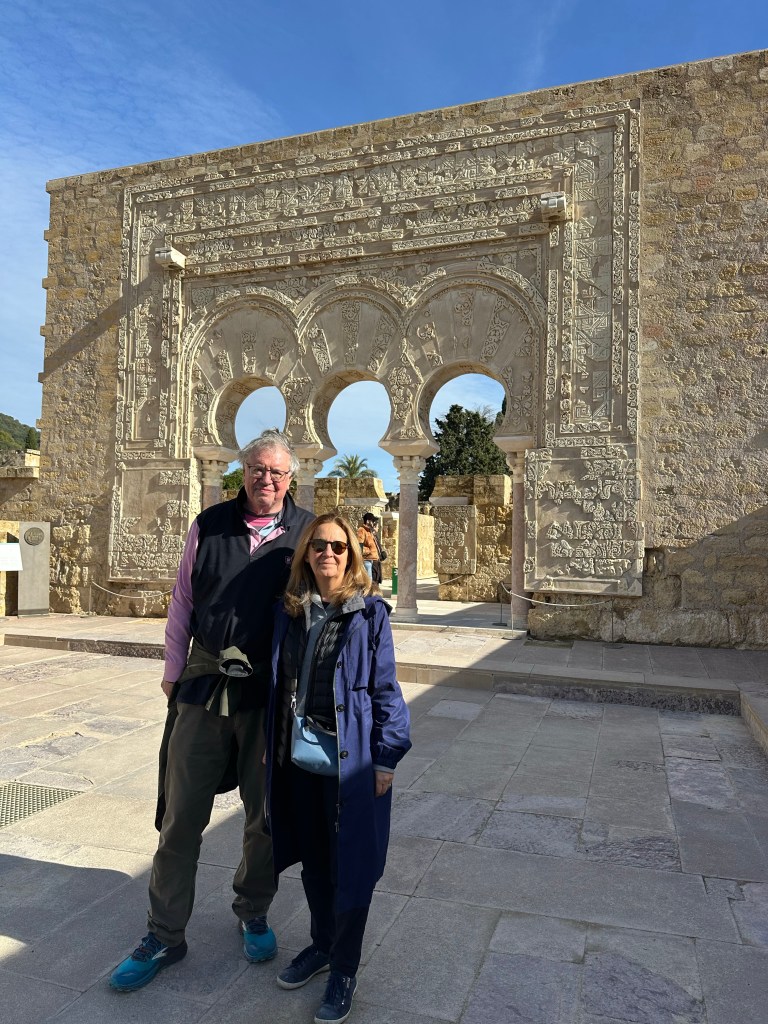
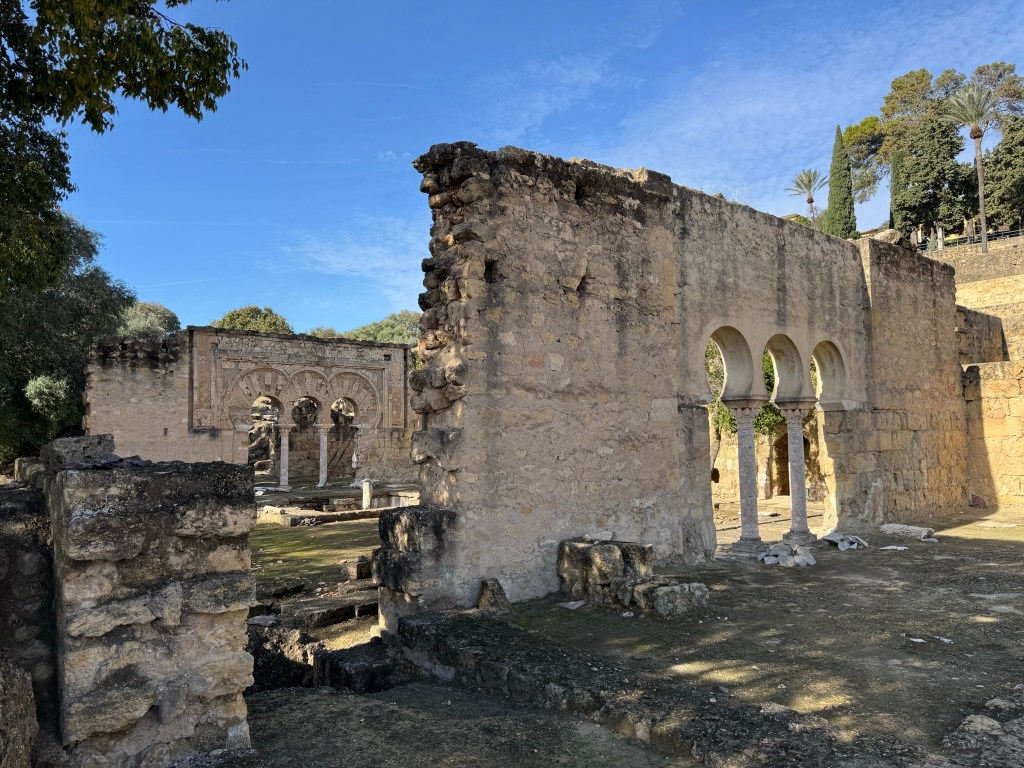
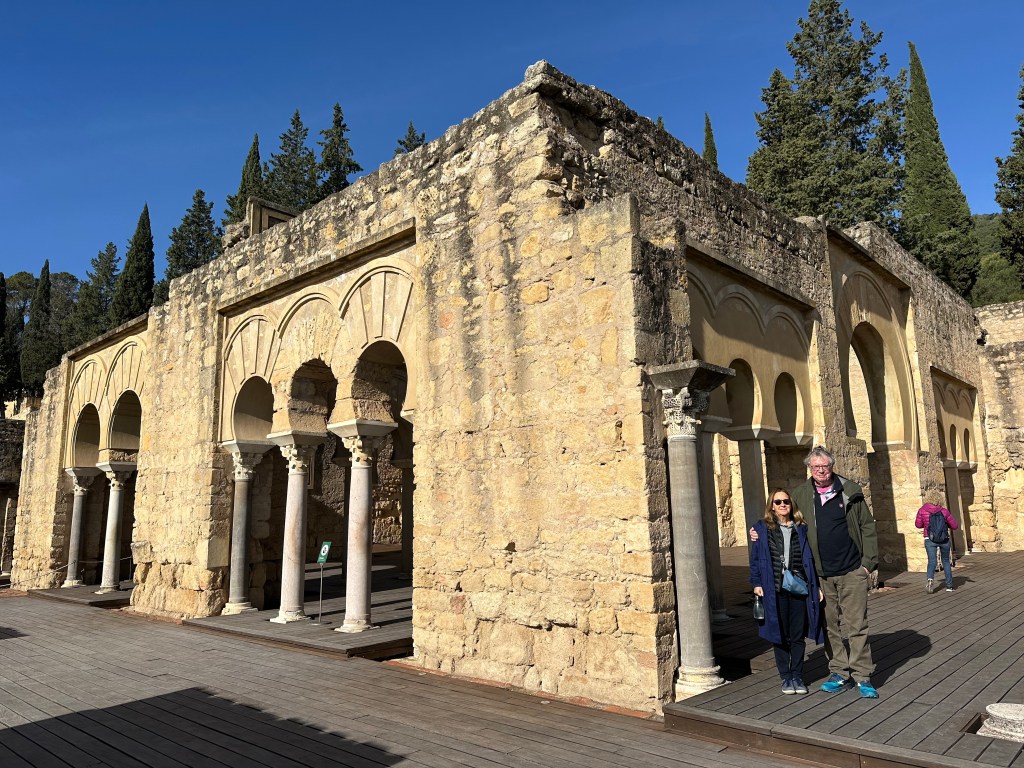
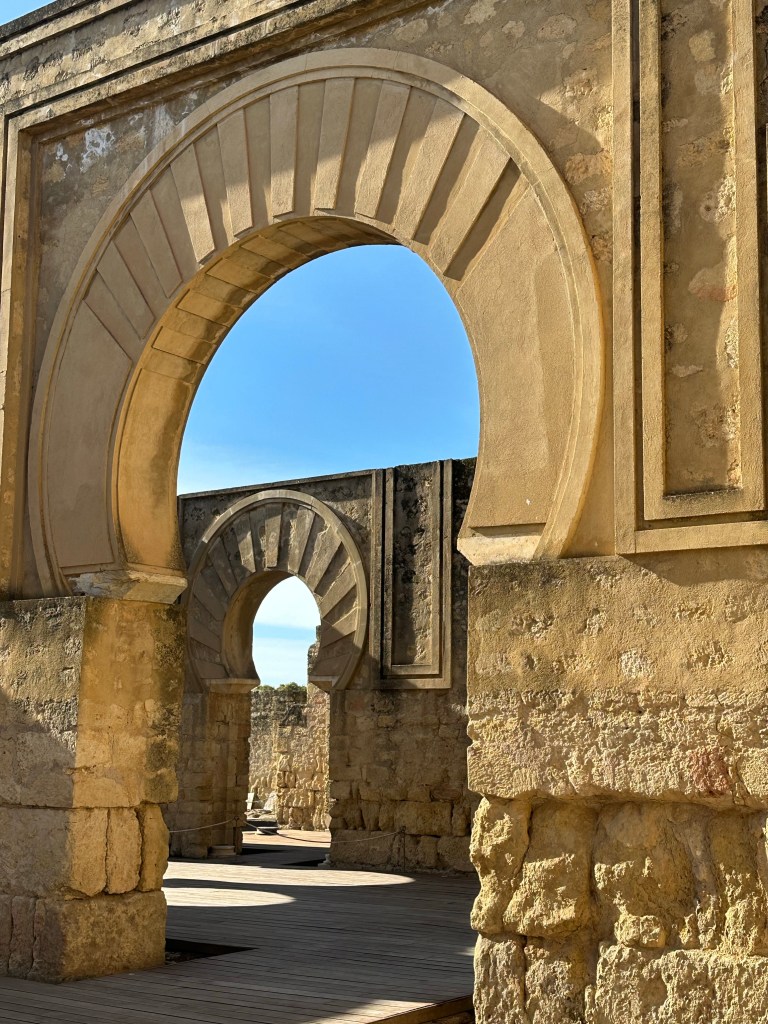
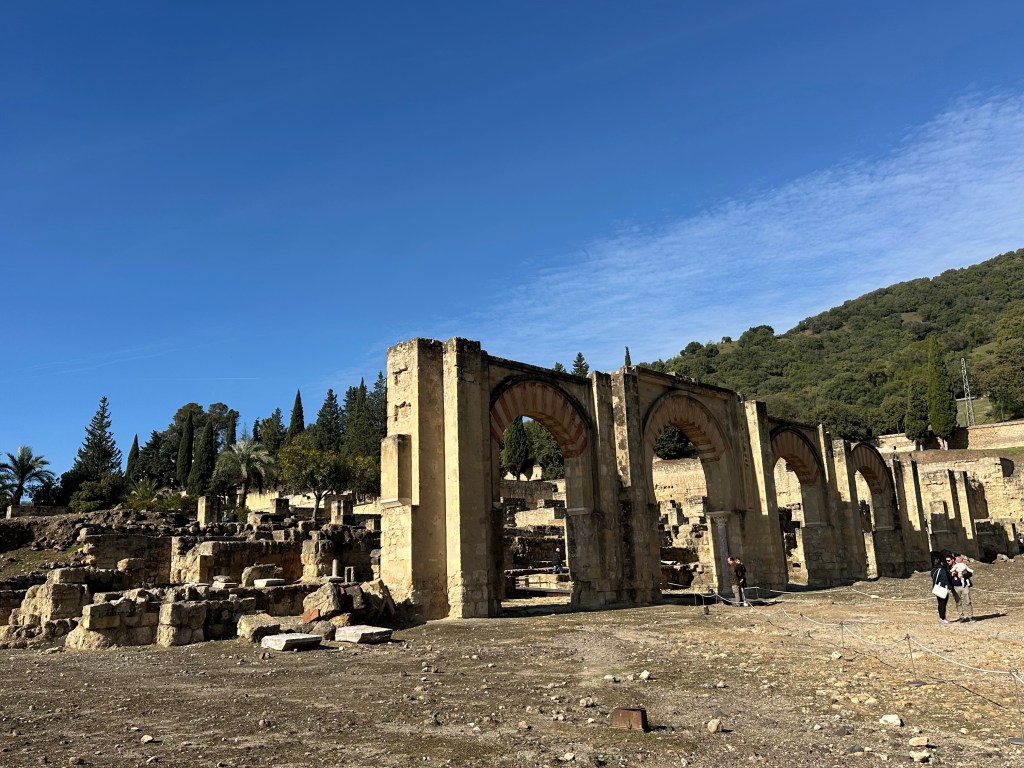
To reflect this he set about building a new fortified palace-city outside Cordoba, Medina Azahara. It served as a capital and administrative centre of the caliphate for less than 100 years before being sacked during a period of civil war amongst the Moors.
Through the centuries the city was taken apart and the building materials reused, including for a monastery further up the hill. It was long forgotten, with the remains thought to be Roman by the farmers whose land it became, until rediscovered in the 20th century. The site is still in the process of being excavated but there is plenty to see for visitors making the journey about 4 miles west of Cordoba.
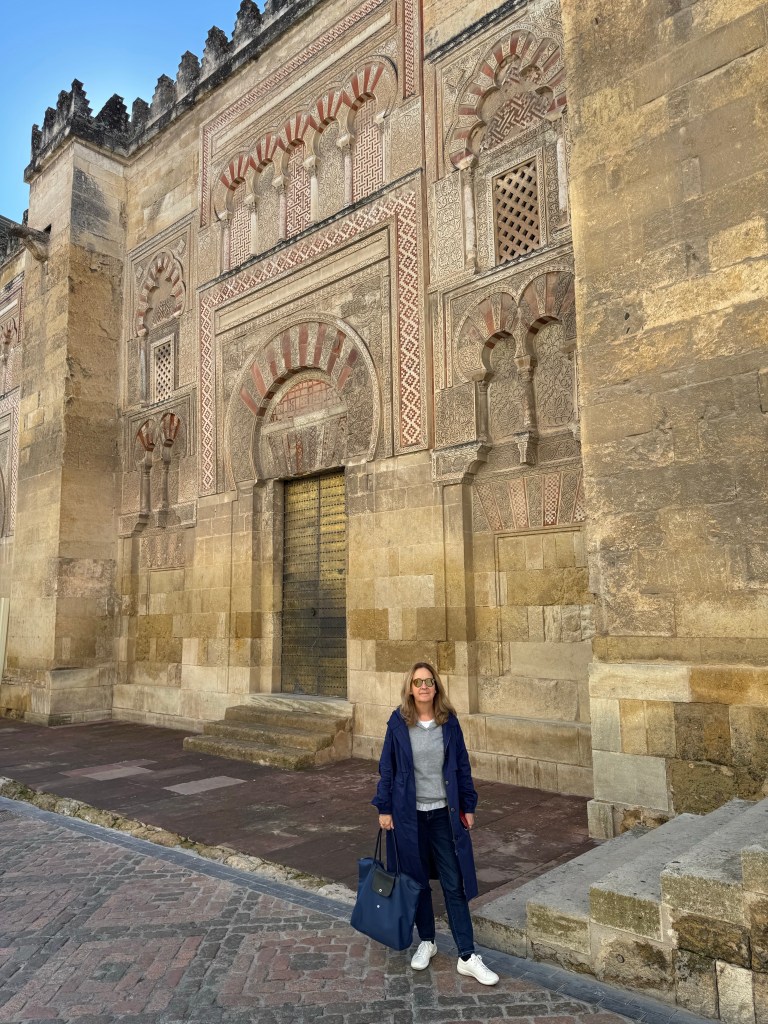
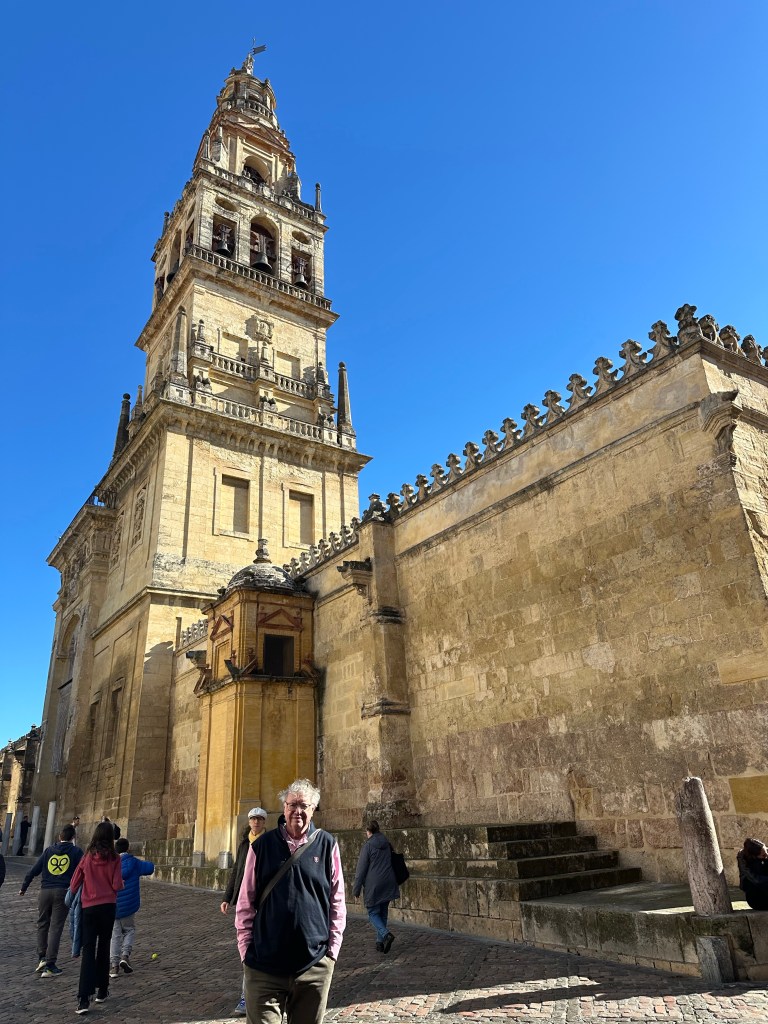
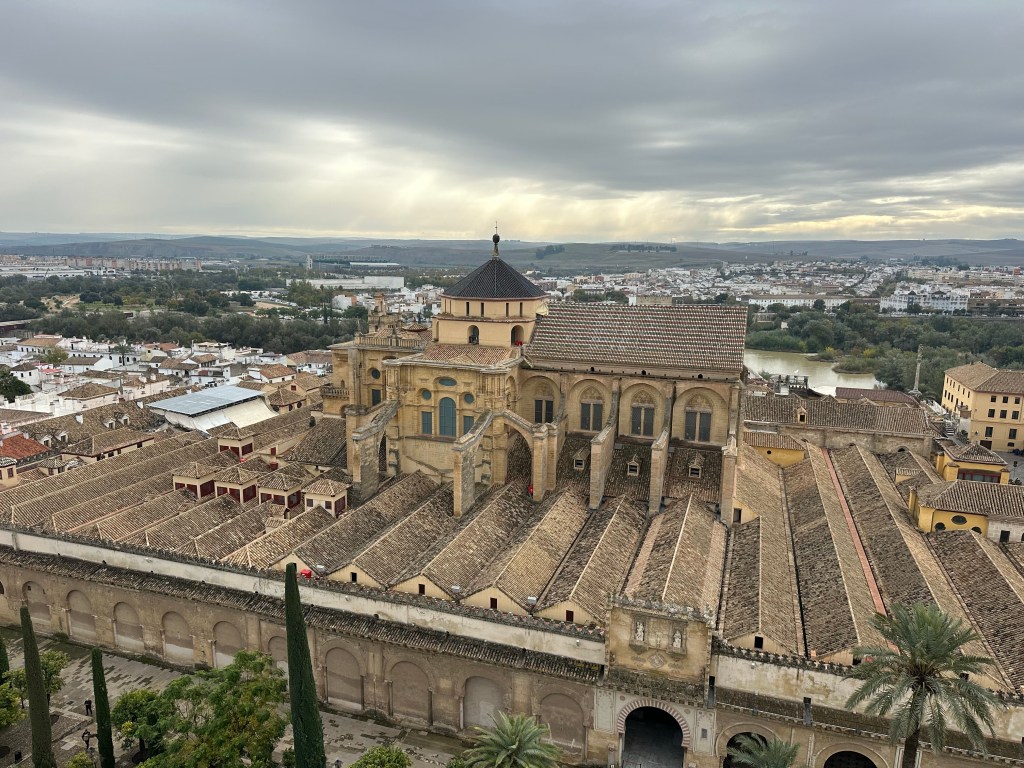
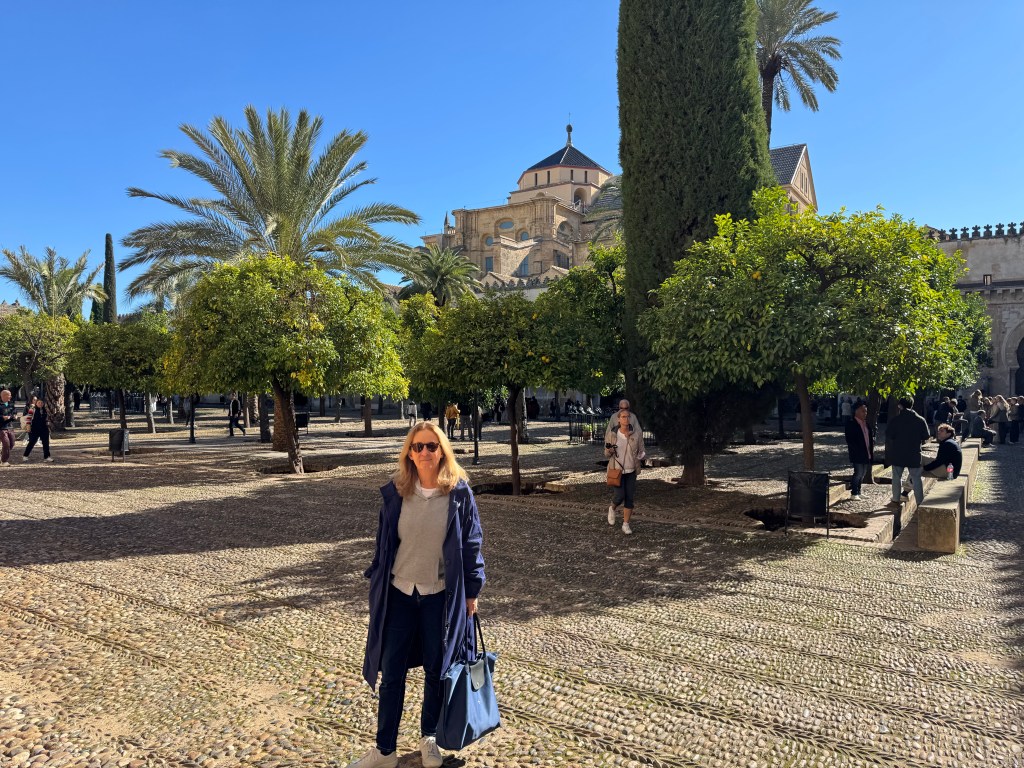
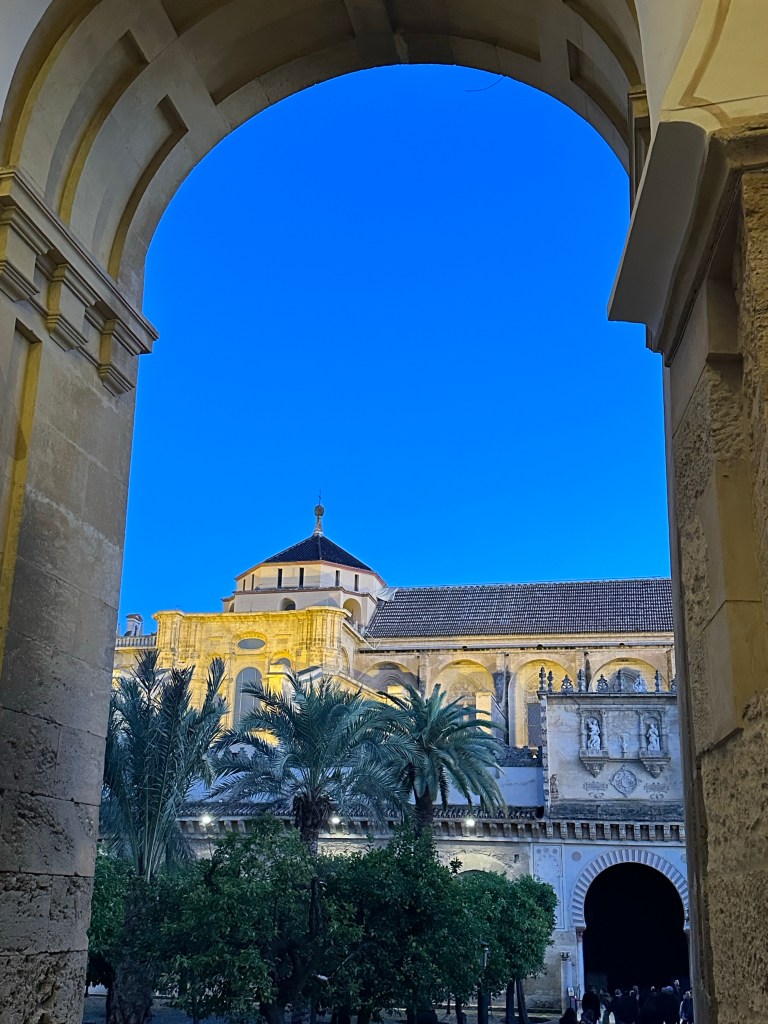
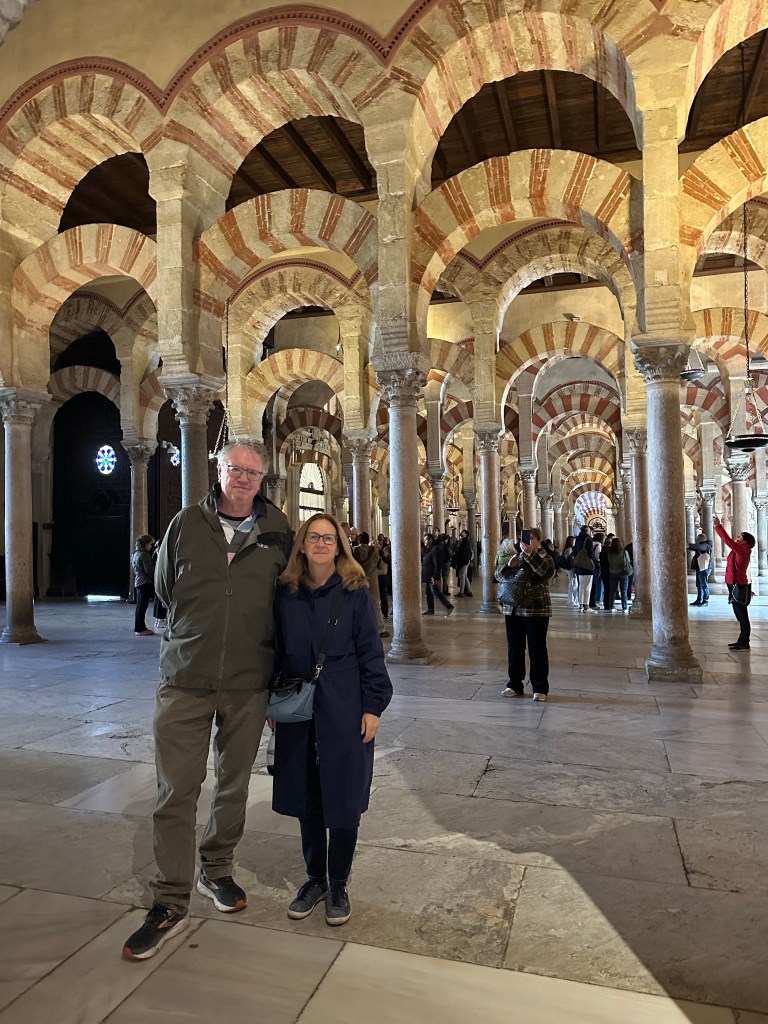
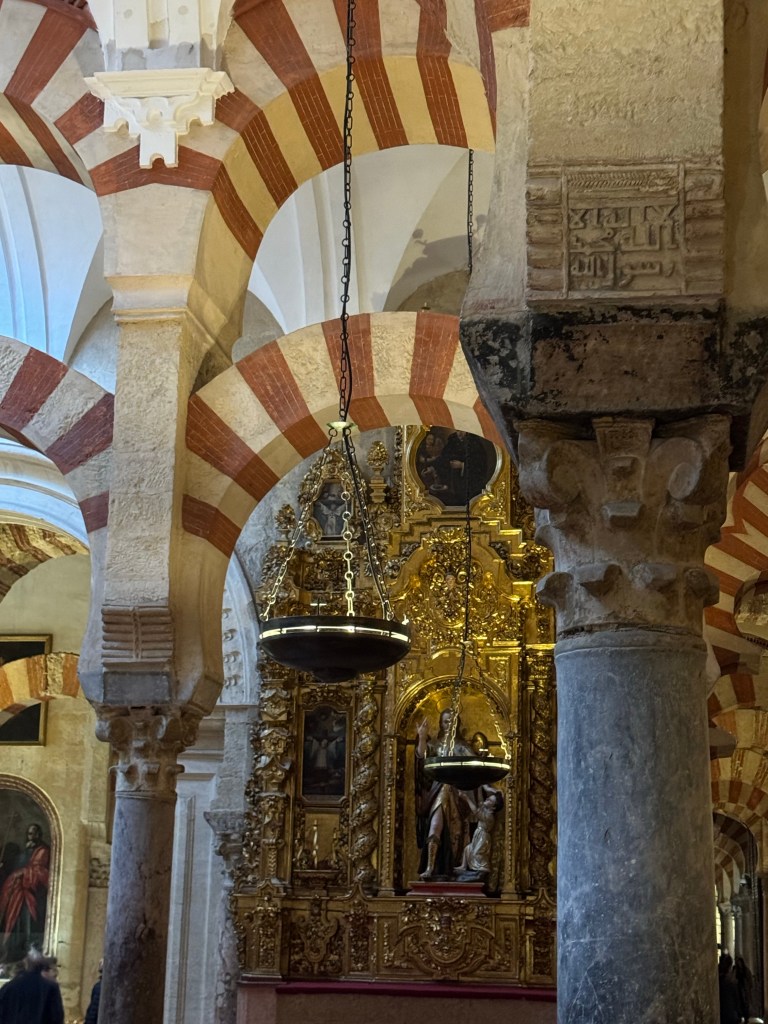
The Great Mosque of Cordoba (Mezquita) was built in 785, with subsequent expansion upto 971 as the population of Cordoba grew. The Mezquita was built along the street pattern established by the Romans resulting in the direction being 43 degrees out of alignment with Mecca. During prayers the Iman, but not the other worshippers, puts his mat at an angle so as to correct this.
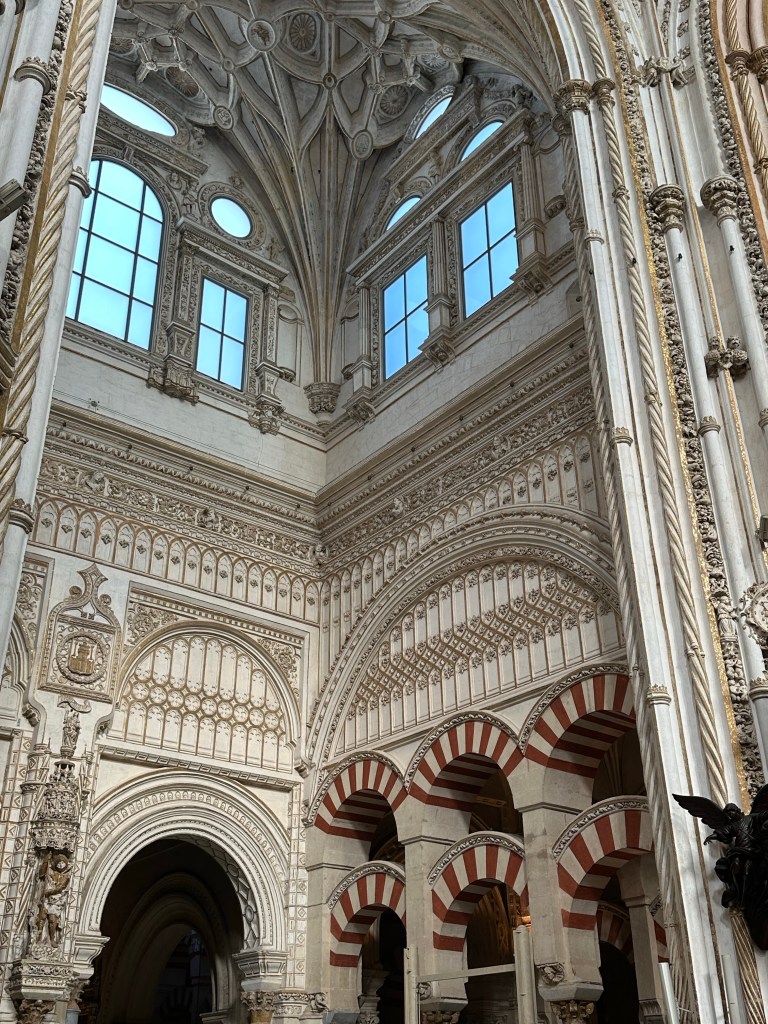
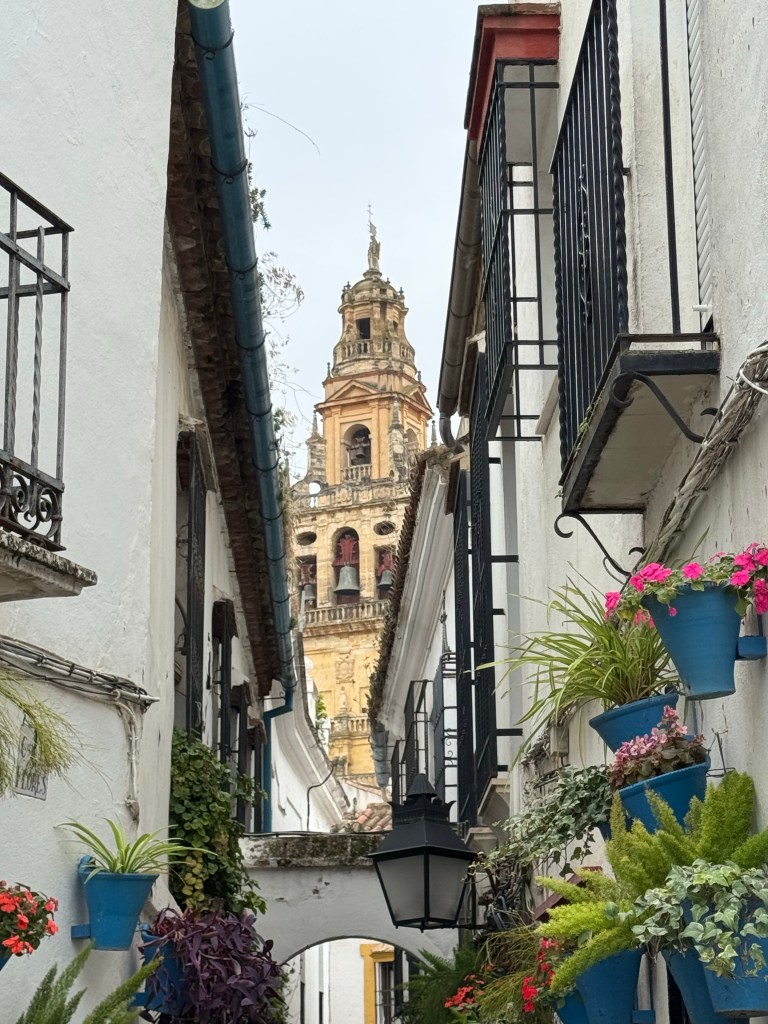
In 1236 it was re-designated as a cathedral but unlike Seville the Christians remodelled it rather than destroying it. The remodelling was completed in the 16th century with the building of a classical quire and nave in the centre of the mosque structure, with a dome to let light into the space. The minaret was converted into a bell tower which can be accessed today by around 200 steps in small groups.
Members of the local police force on a run around the city
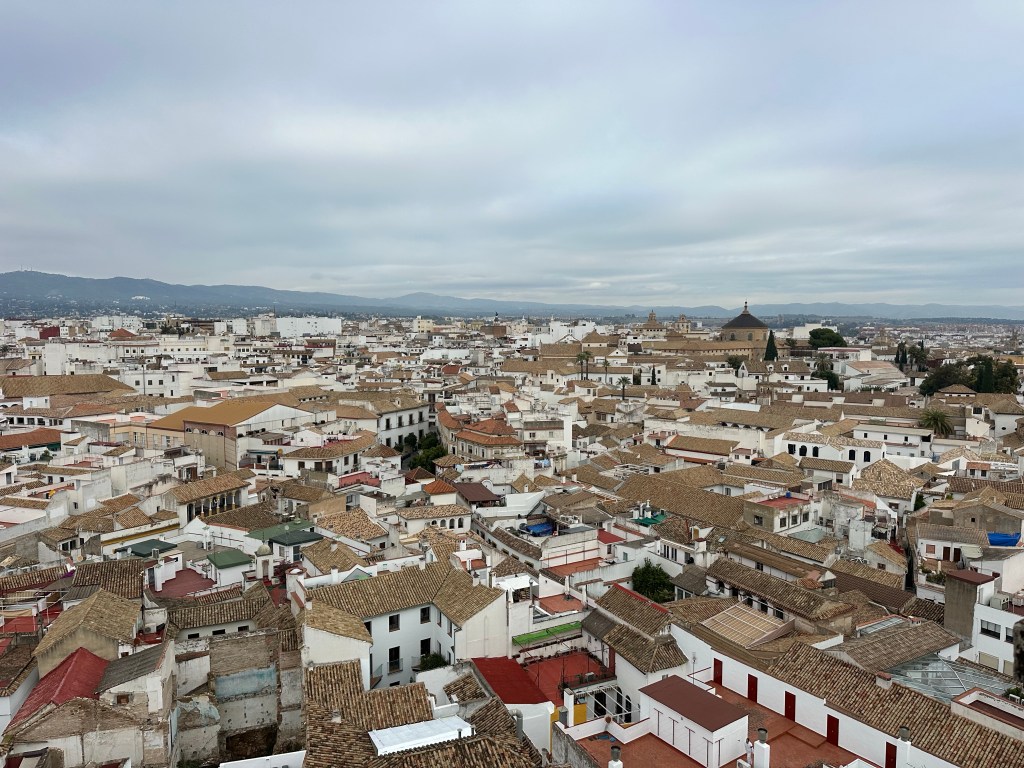
Cordoba replaced Seville as the most important city in Al-Andalus after Islamic conquest was completed in 716. It became a centre for culture and commerce.
By the middle of the 10th century, Cordoba was vying with Constantinople to be the largest city in Europe, with a population of around 500,000. At the time it was larger than Rome, Florence and Venice combined and forty times the size of London. It was taken by Christians in 1236.
Today Cordoba is Spain’s 12th largest city with a population around 350,000.
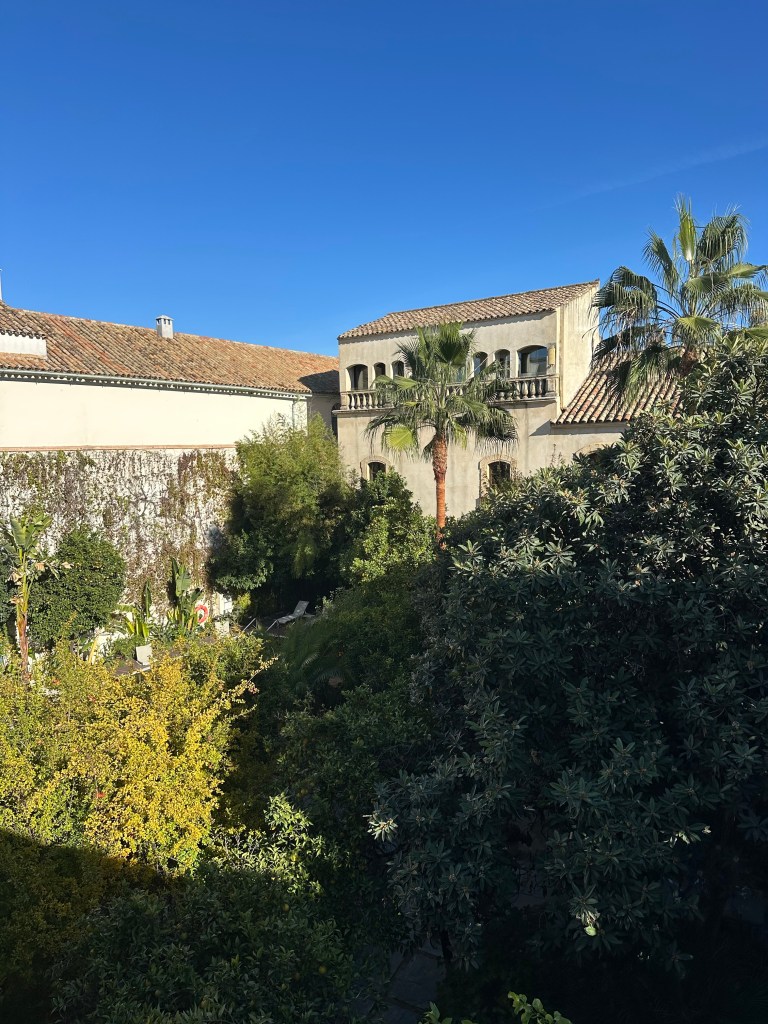
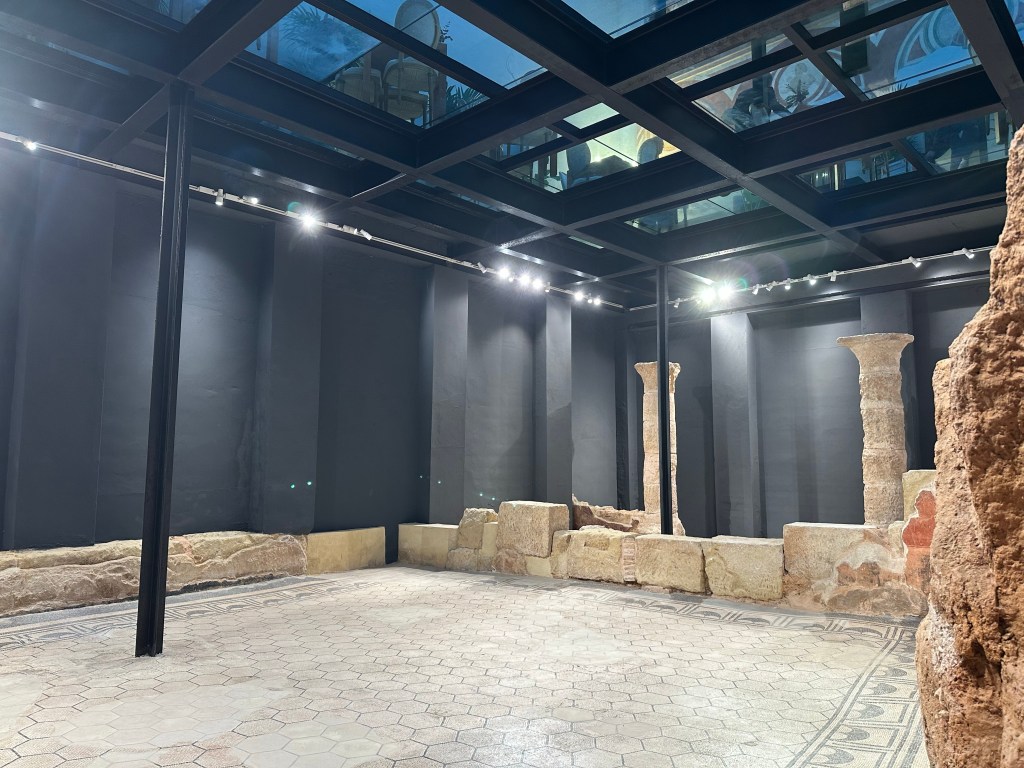
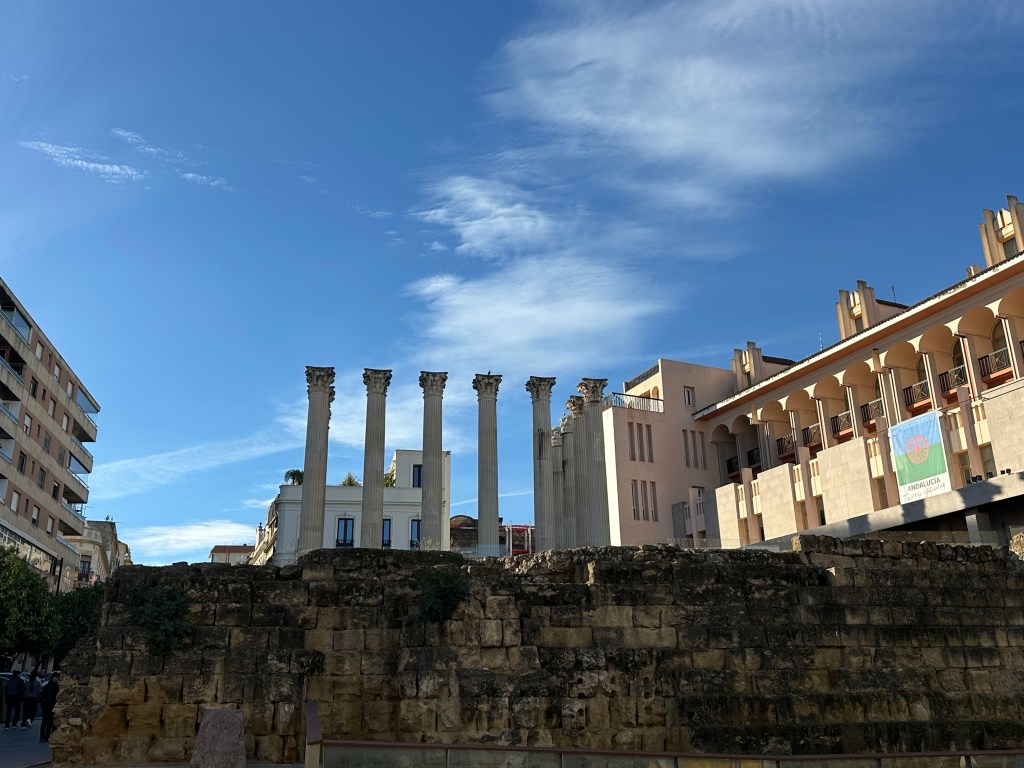
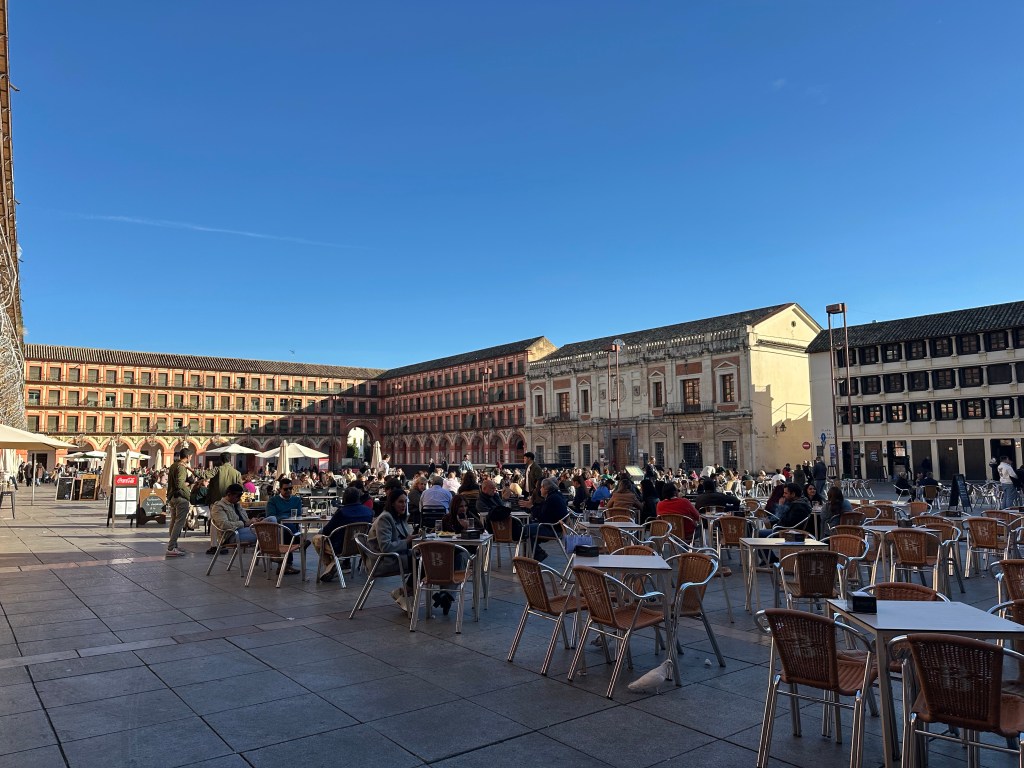
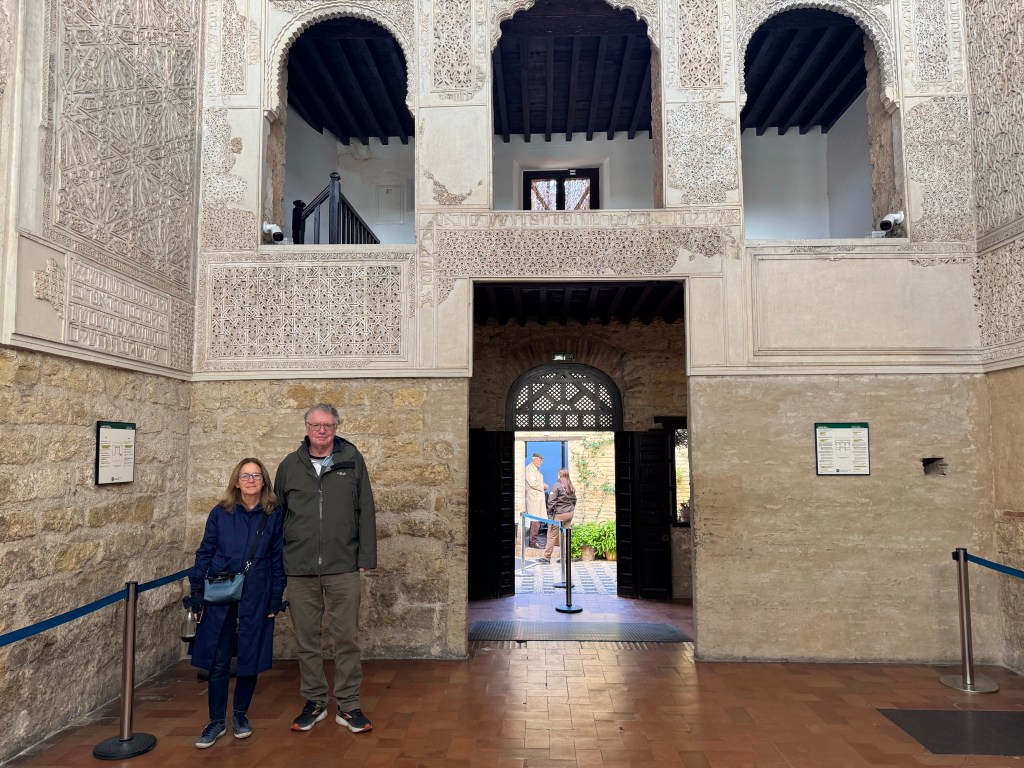
We stayed in a former palace. Like many places in Cordoba, Roman ruins were discovered under the building. In this case they were found when a former owner was trying to build a wine cellar. The ruins are now under the glass dining room floor.Roman ruins next to the modern City HallA square, formally used as a Bull RingFormer synagogue Tapas bar close to our hotel
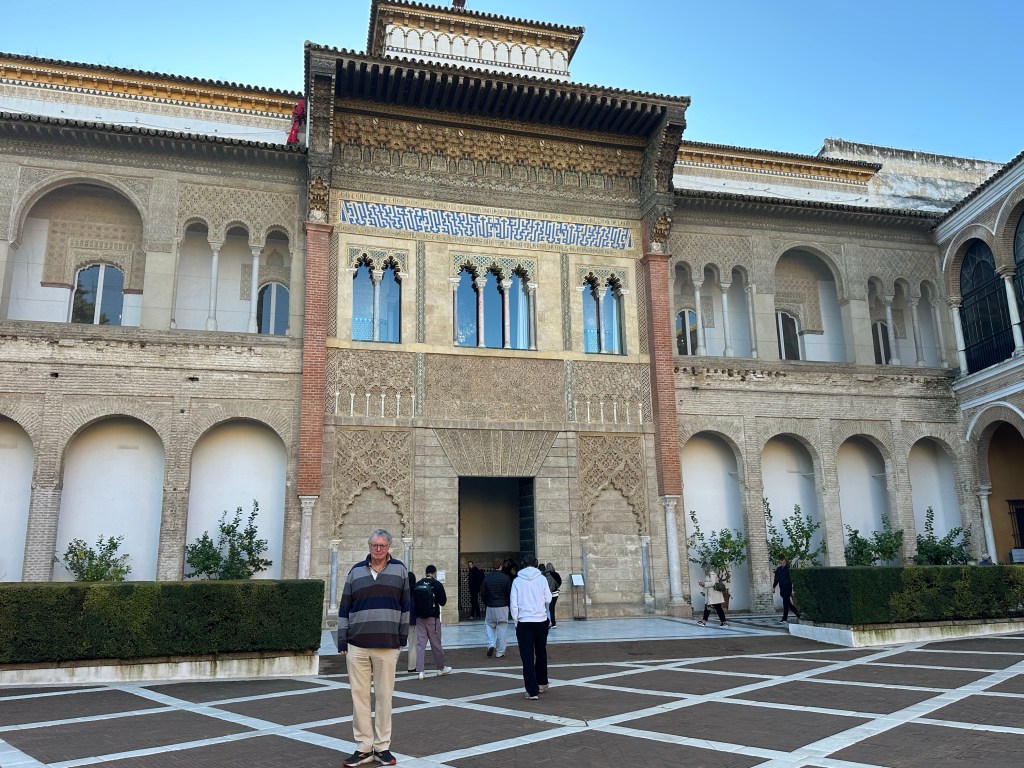
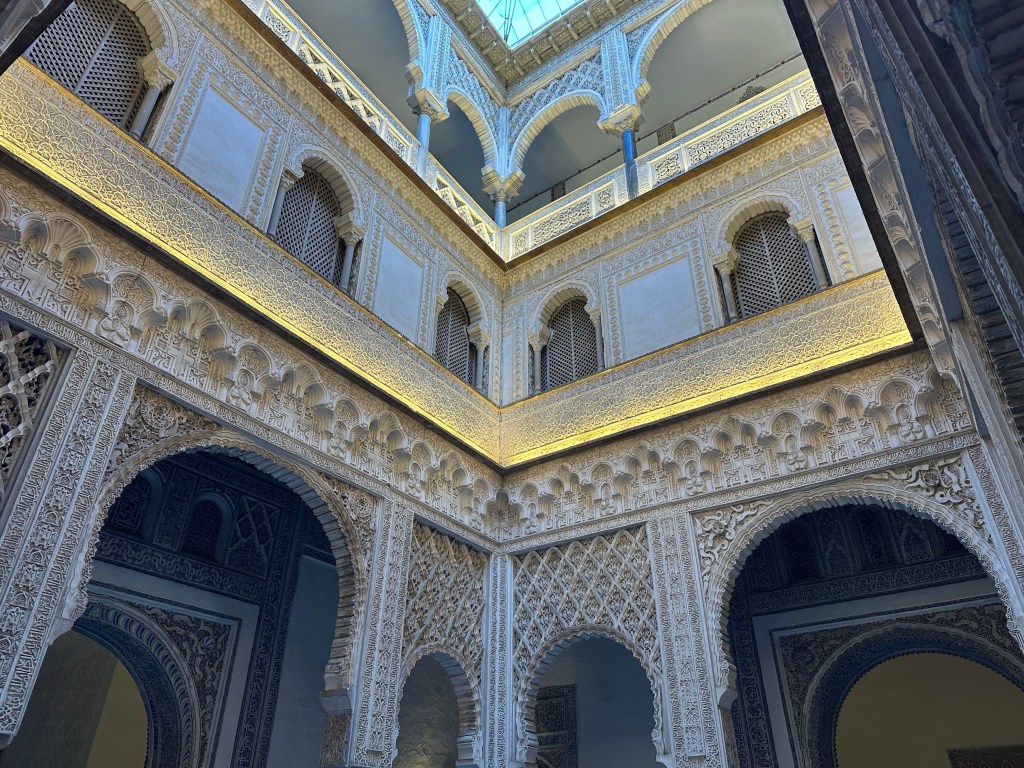
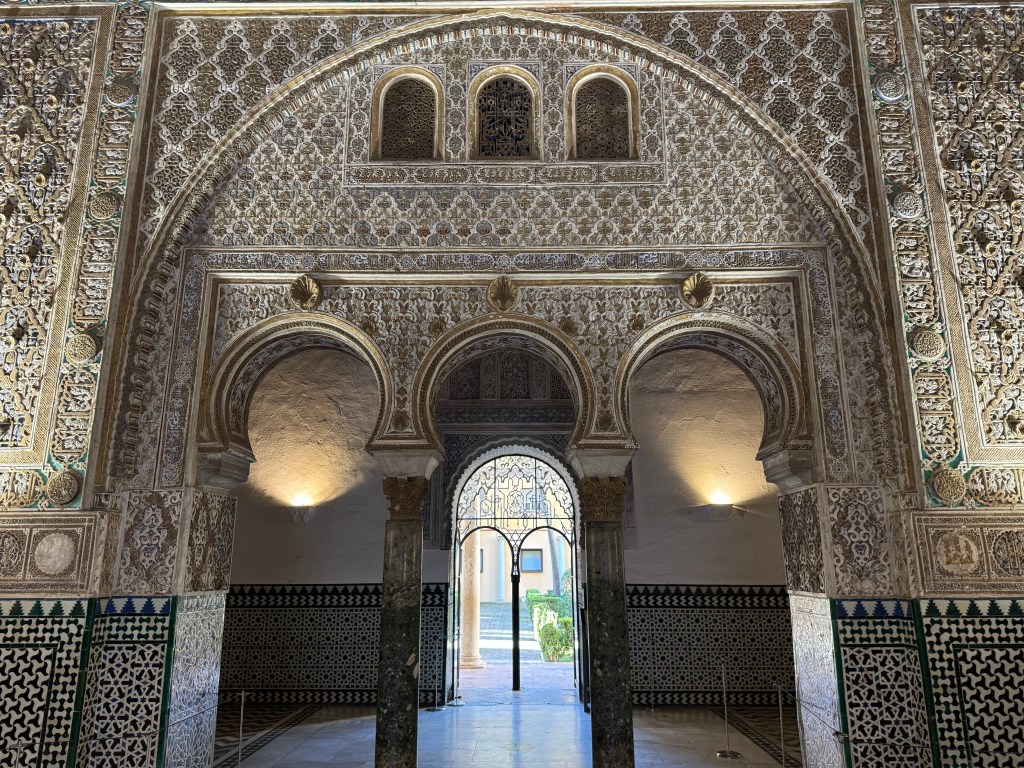
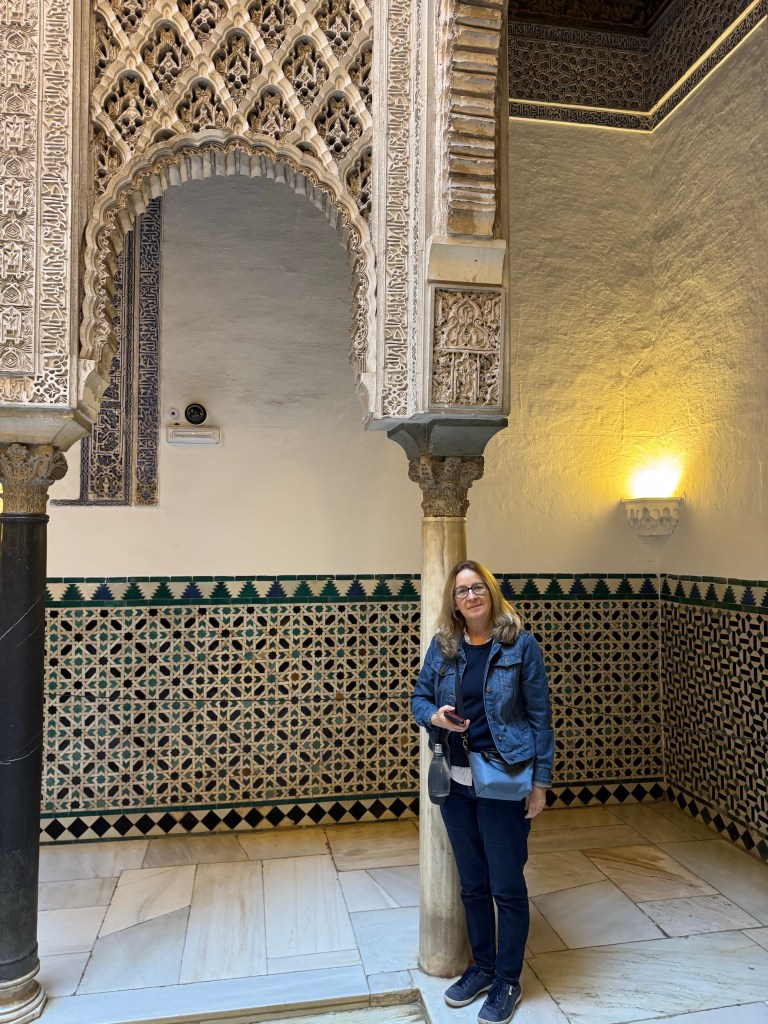
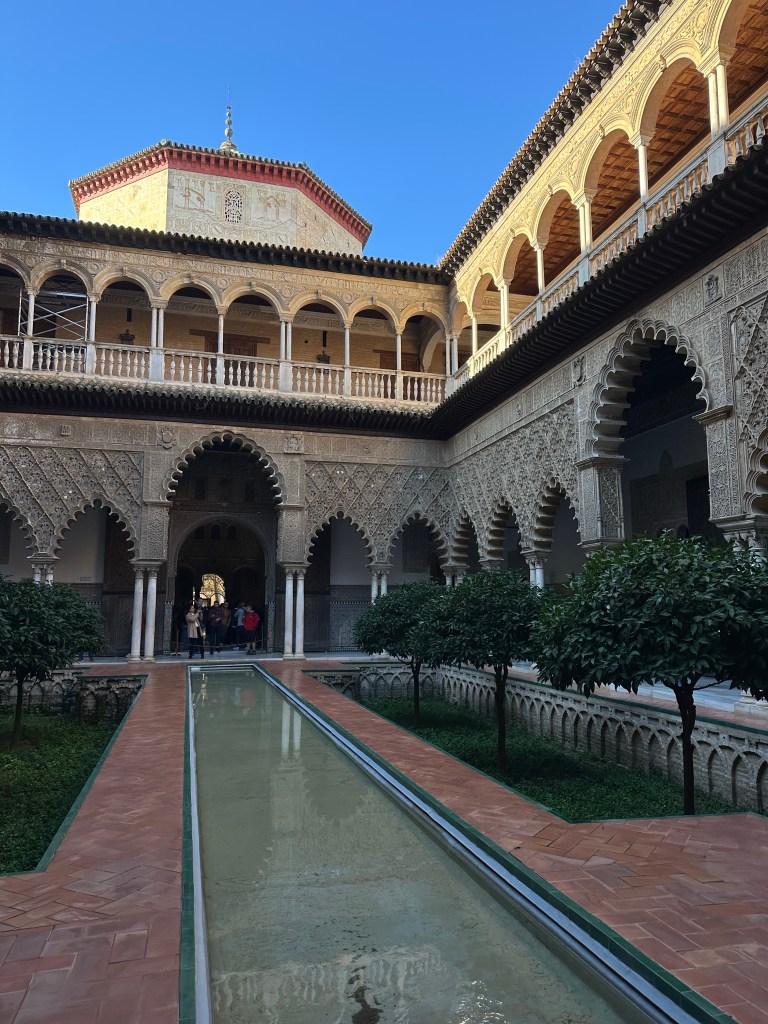
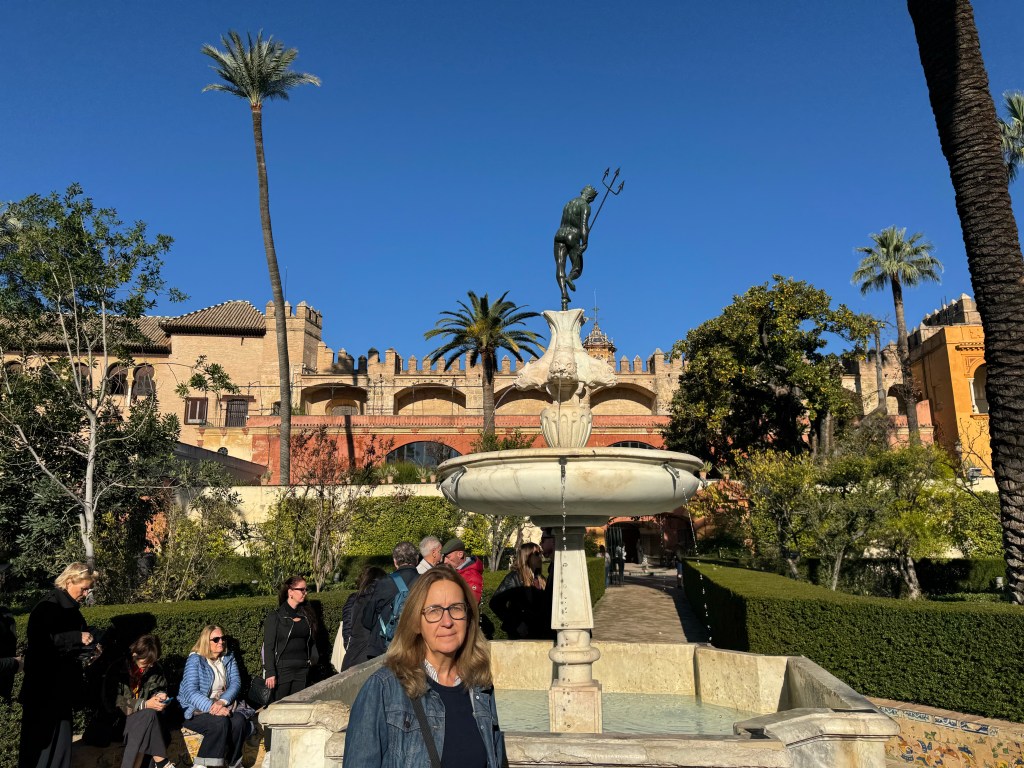
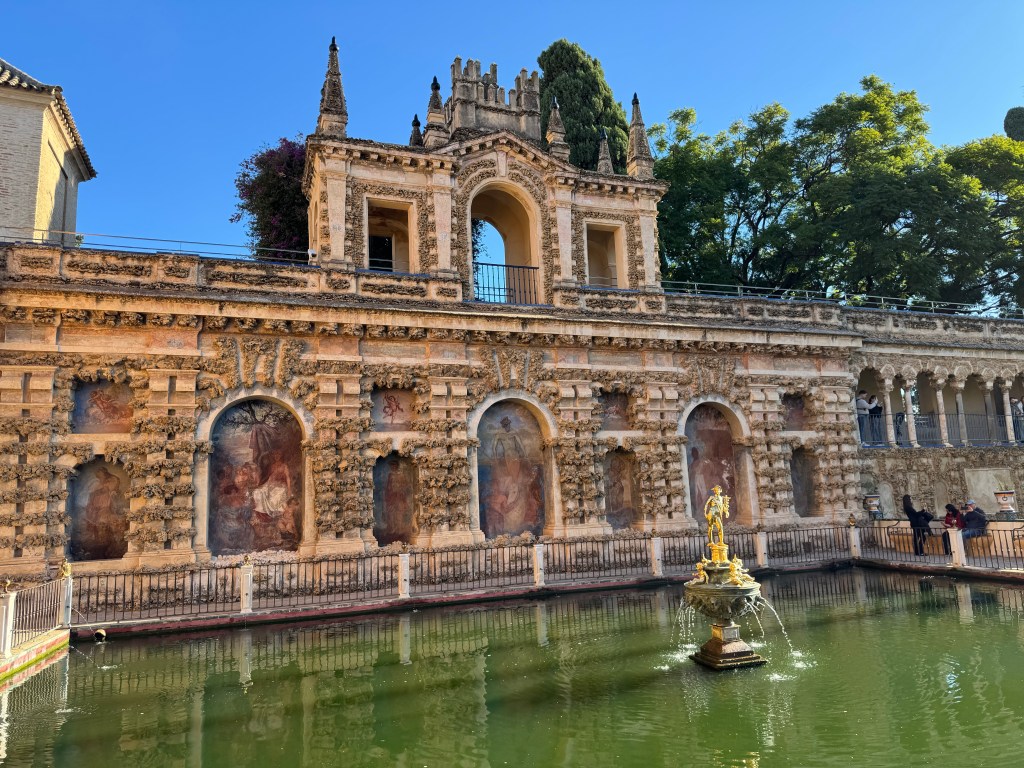
The Alcázar is a Spanish Royal Palace and one of the official residences of the Spanish Royal Family. As with the cathedral it is situated on the site of a Moorish citadel for the city. It was progressively rebuilt from 1248 following the conquest of the city but most of the important decorated parts date from the 1360s, built by Pedro I. It is a little confusing as the building was constructed in the Mudejar style- Moorish.
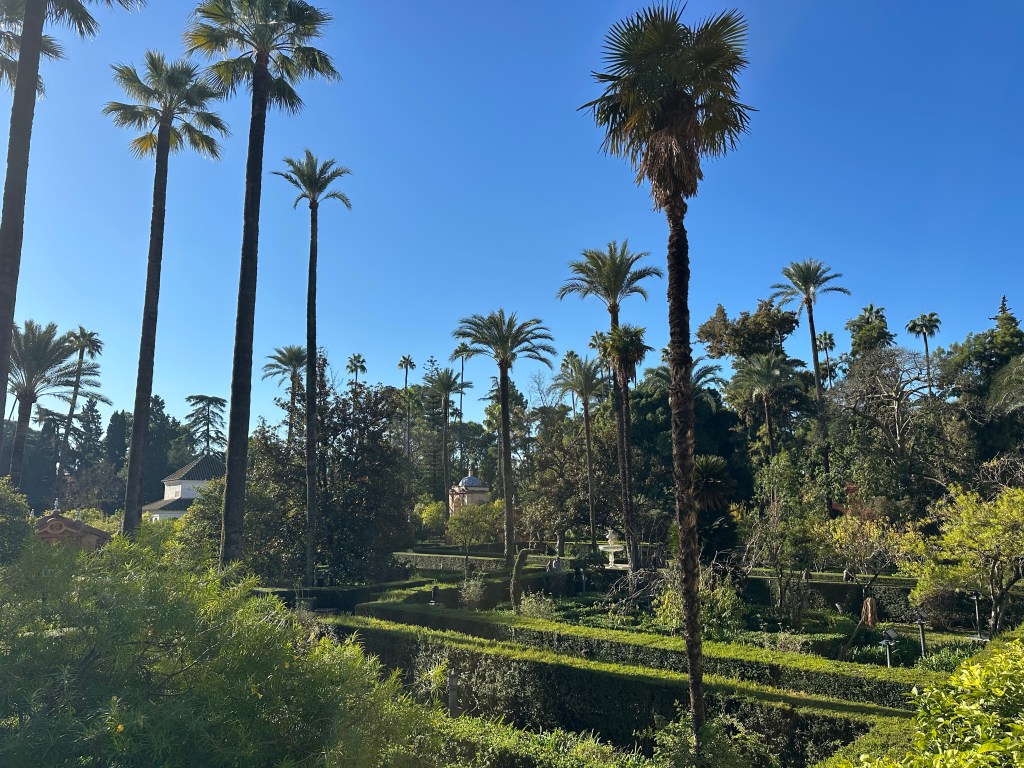
The palace has numerous sections and courtyards as well as extensive gardens. We were pleased that we purchased tickets for different days for the cathedral and Alcázar, both at one of the earliest entry times. The sites needed plenty of time and a lunch break afterwards!
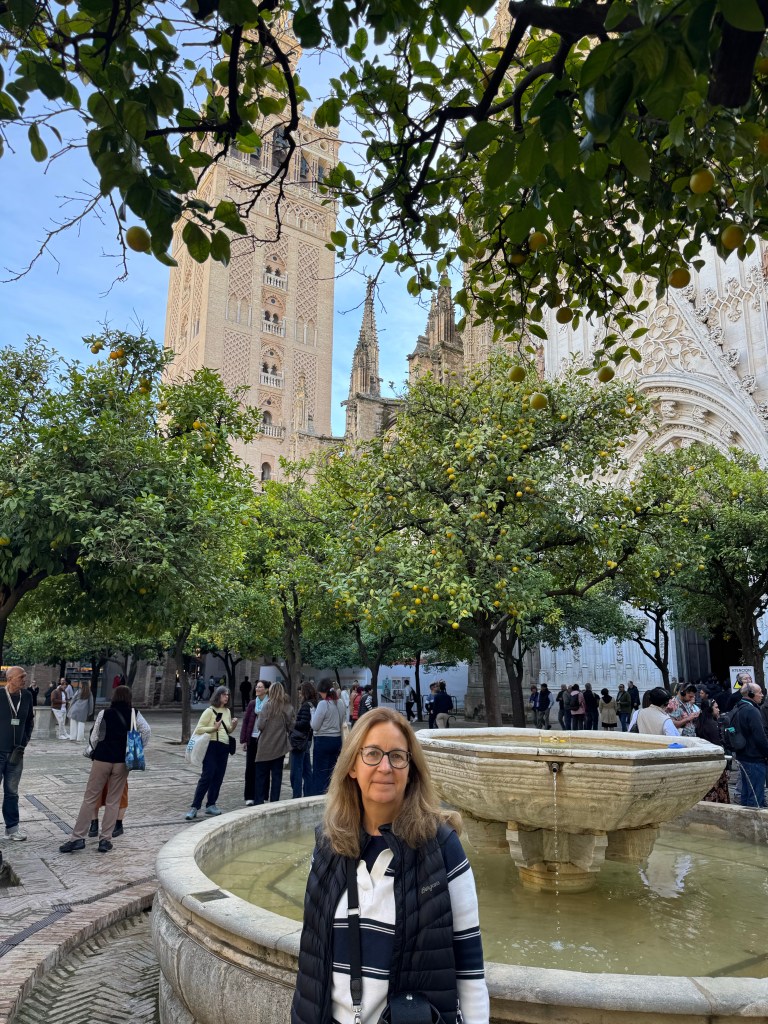
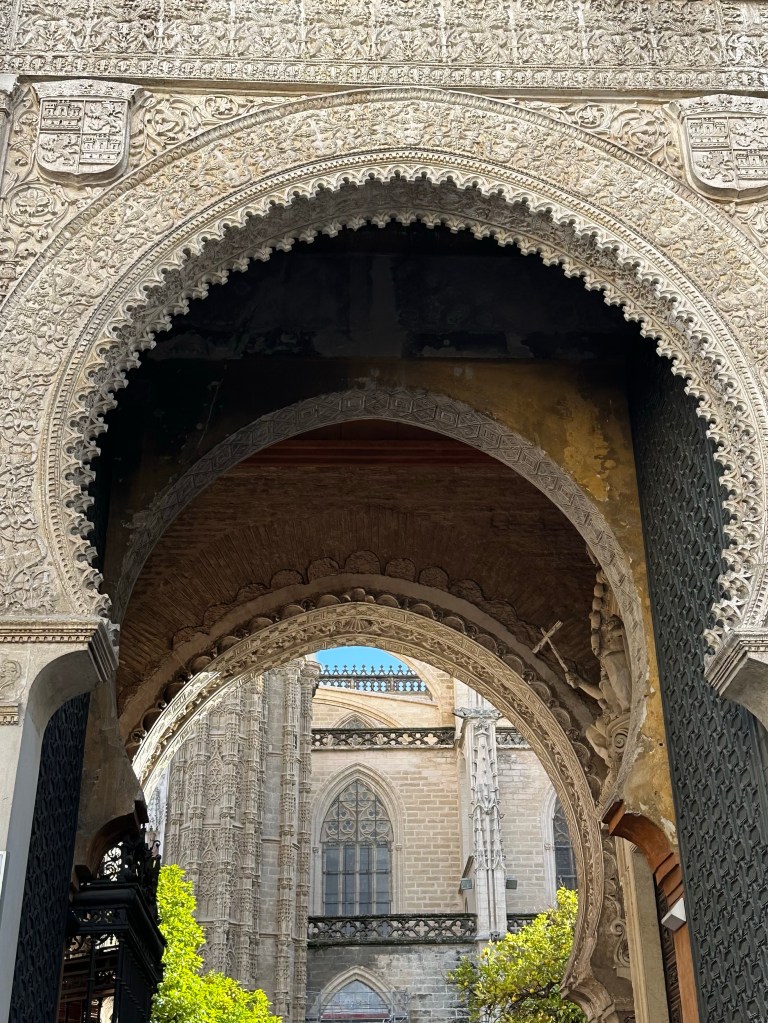
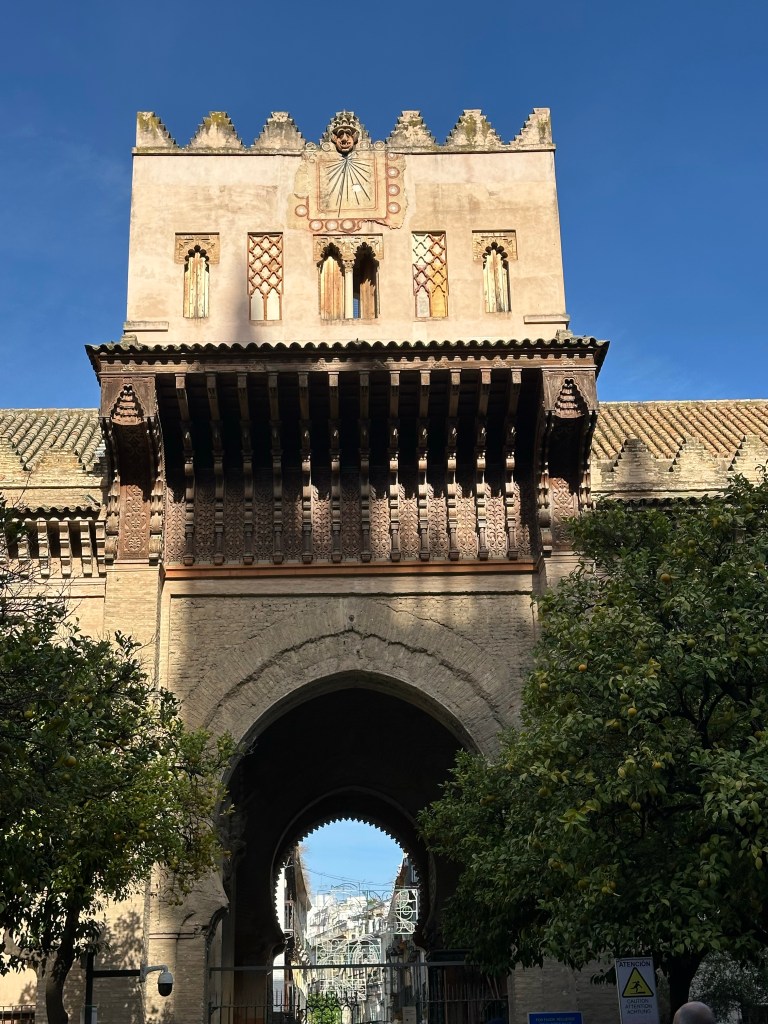
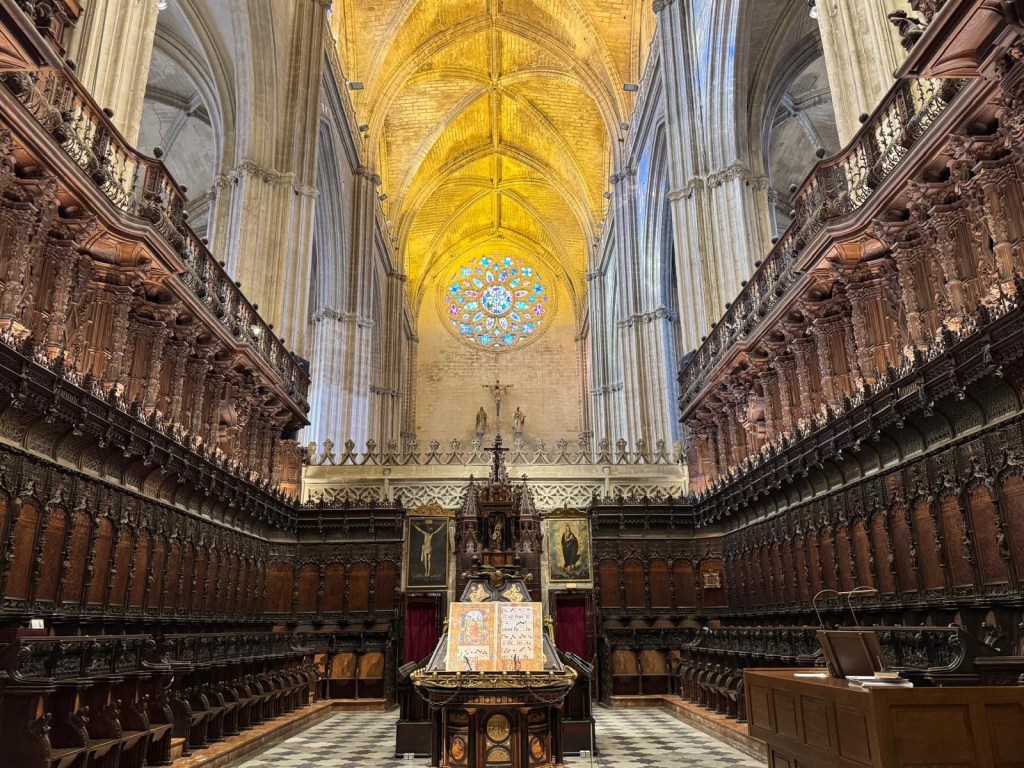
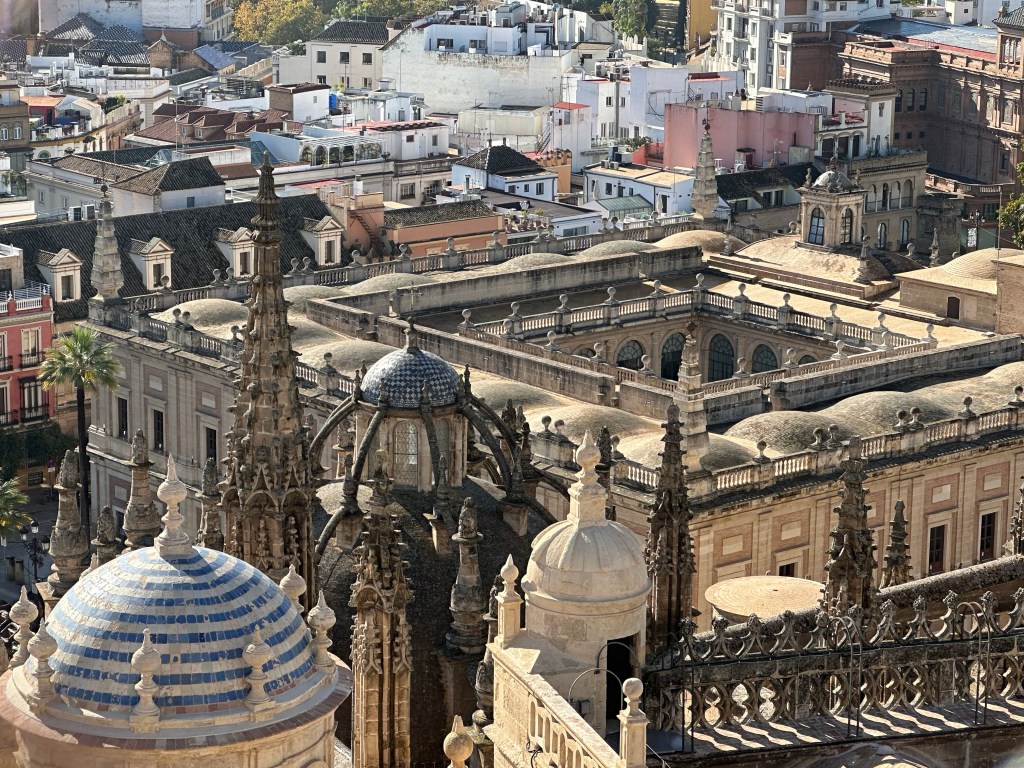
The cathedral was built in the 15th Century and is the largest cathedral in the world by area. It is gothic and stands on the former site of a mosque.
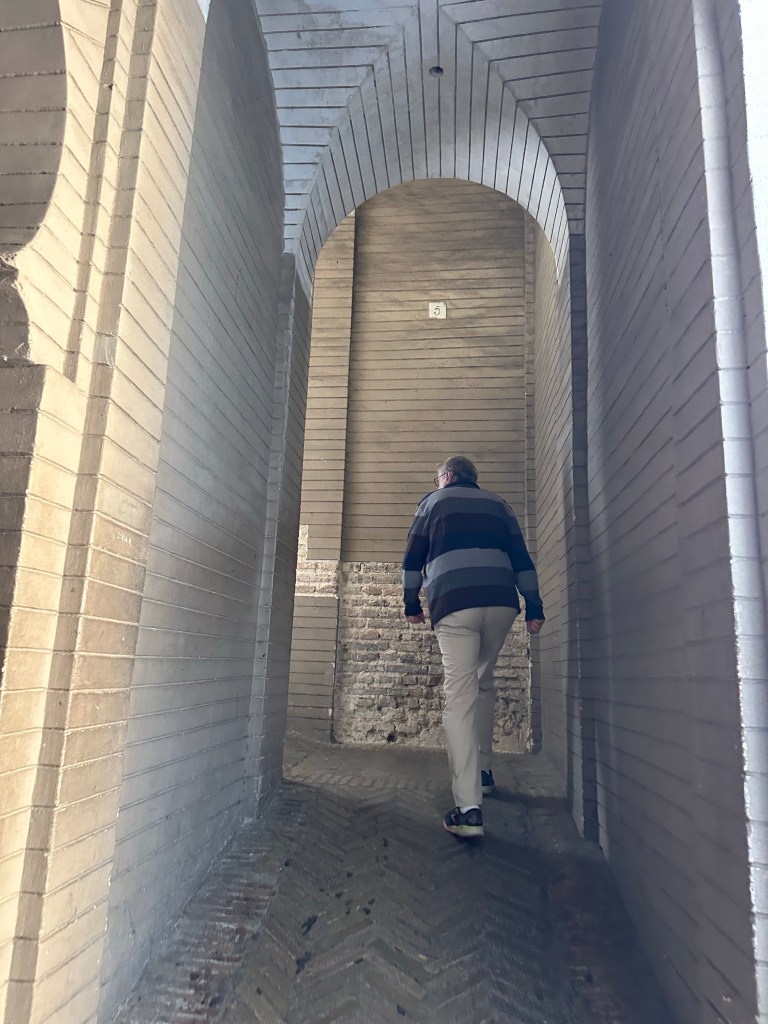
The bell tower, The Giralda, is the former minaret of the mosque, which has been remodelled at the top to fit in with the cathedral. The tower was originally based on the minaret in Marrakesh’s main square. There is access to the tower which is ascended by a ramp rather than stairs as it was designed to be accessible by horses !
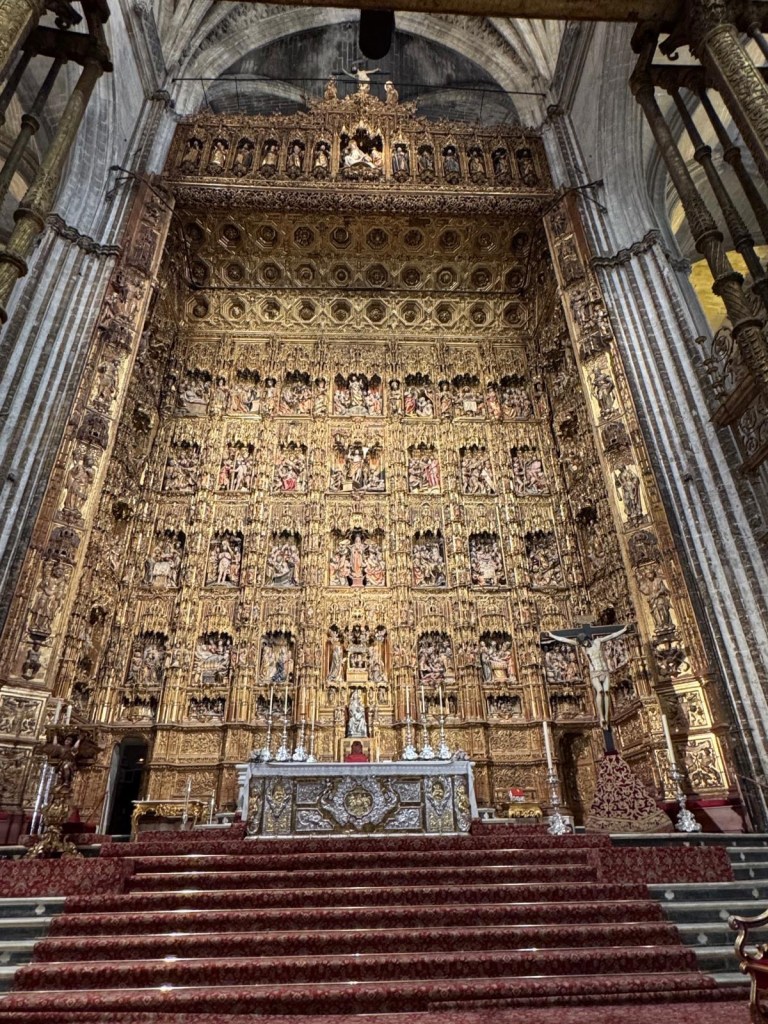
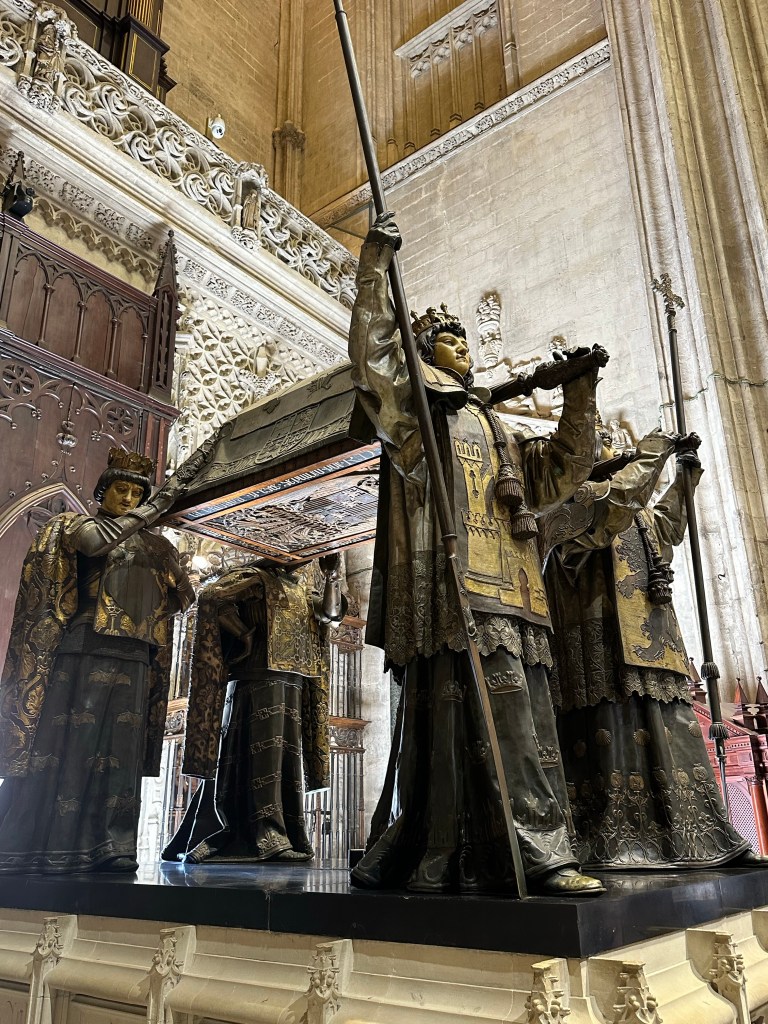
The cathedral includes a very ornate altar screen, many pieces of art and sculpture, numerous side chapels and the tomb of Christopher Columbus.
Seville is the capital of Andalusia and the fourth largest city in Spain.
Its size and importance grew after it was retaken in 1248 by the Christians from the Moors. At the time, in common with other Andalusian Cities, it had a Jewish community which had thrived under Islamic rule. The Jews formed the middle class administrators and artisans. The Christian government maintained the status quo until 1391 when Jews were forced to convert, although some retained their faith.
In 1478 Seville became the first city to bring in the Spanish Inquisition (“no-one expects the Spanish Inquisition”) resulting in the expulsion or death of heretics, remaining Jews or supporters. A number of customs derive from this period including adding diced cured ham as a topping to a local cold tomato soup, done originally by Jews trying to hide their faith. Some people also changed their names and invented new family histories.
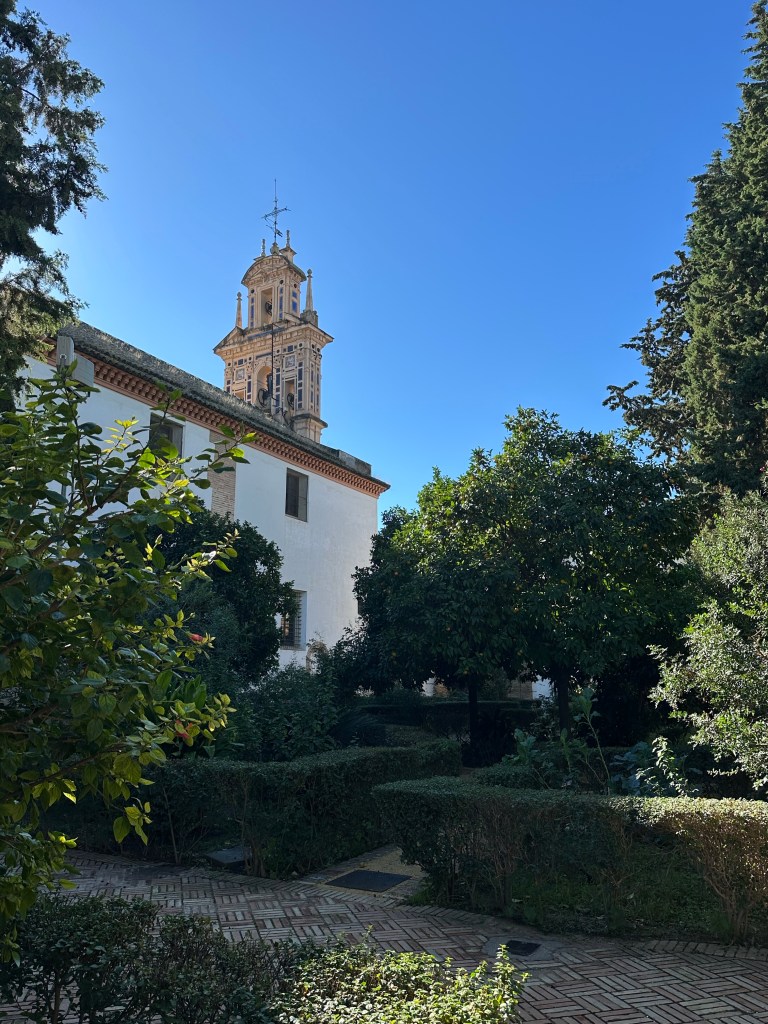
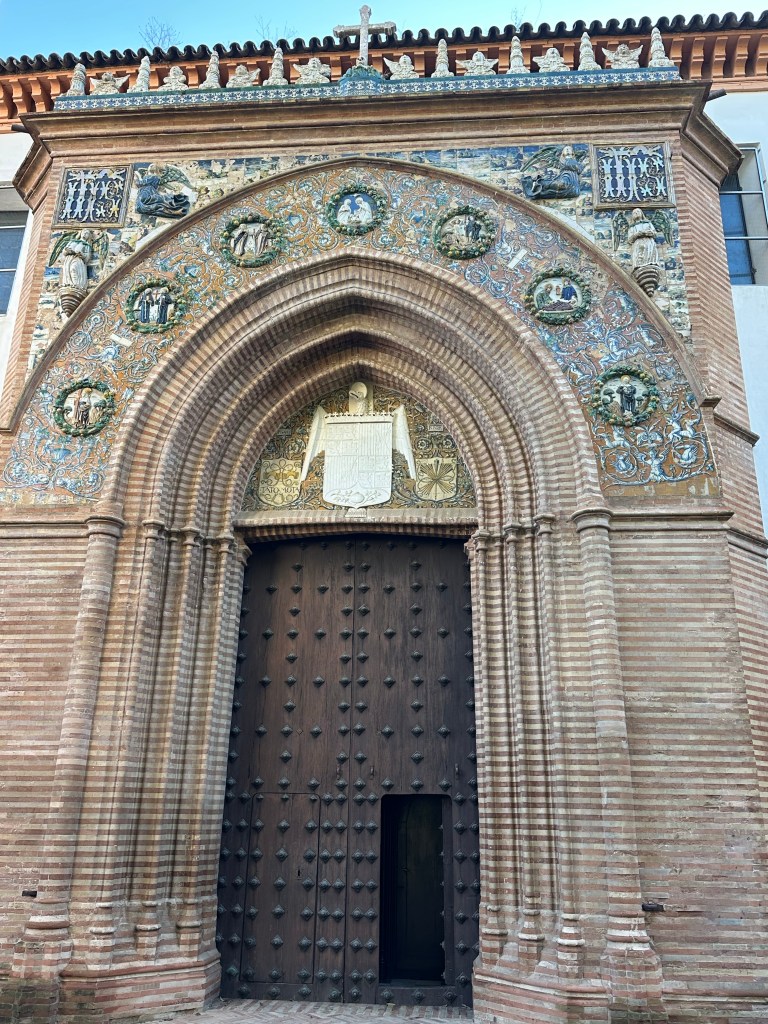
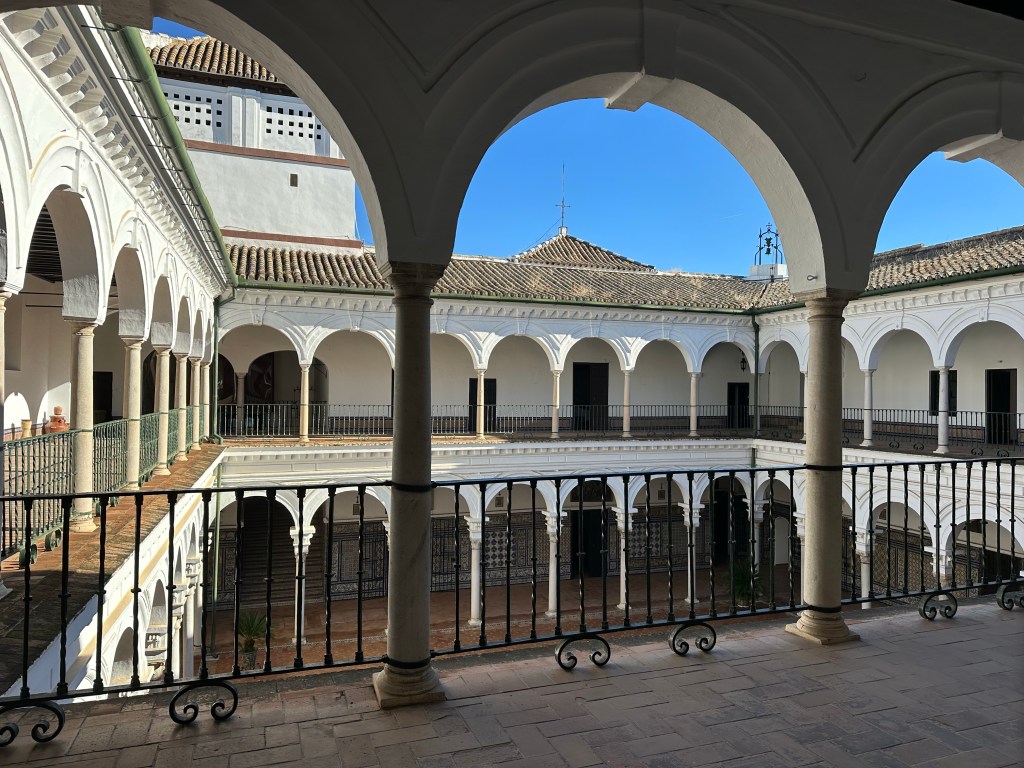
We visited a convent founded in 1473 by wealthy families which housed widows and unmarried daughters as nuns, Monastero de Santa Paula. It is a spectacular building behind an unassuming door and continues as a working convent.
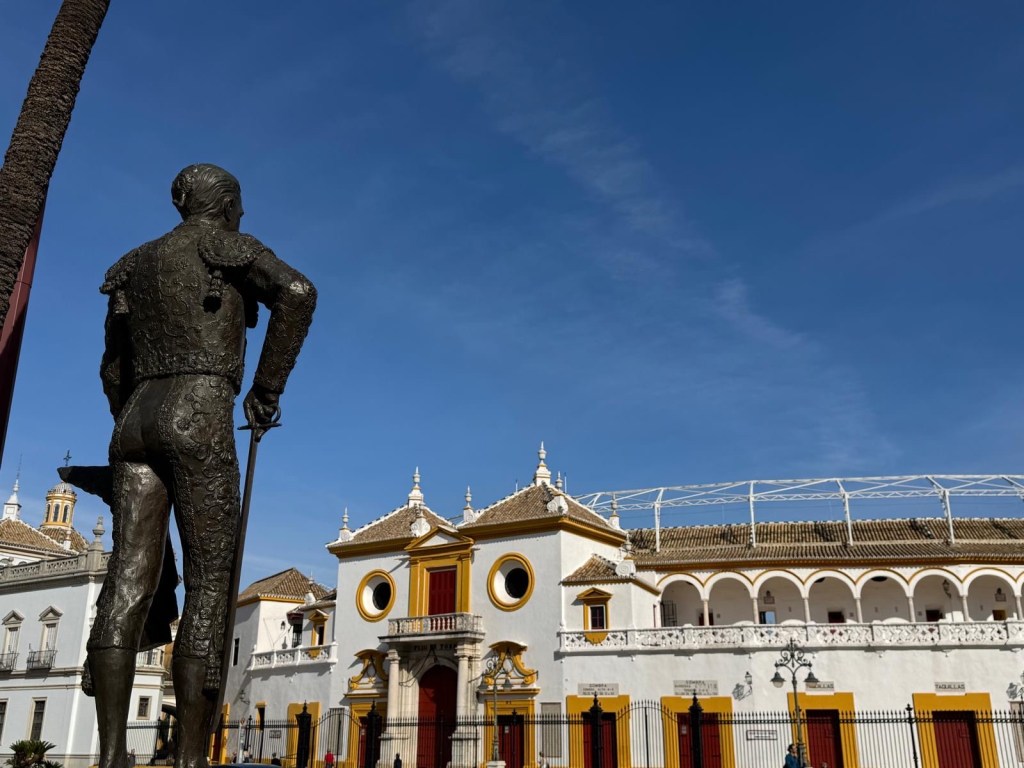
The Bull Ring“The mushrooms” – locally controversial as not to everyone’s taste and paid for/maintained with council funds
The convent
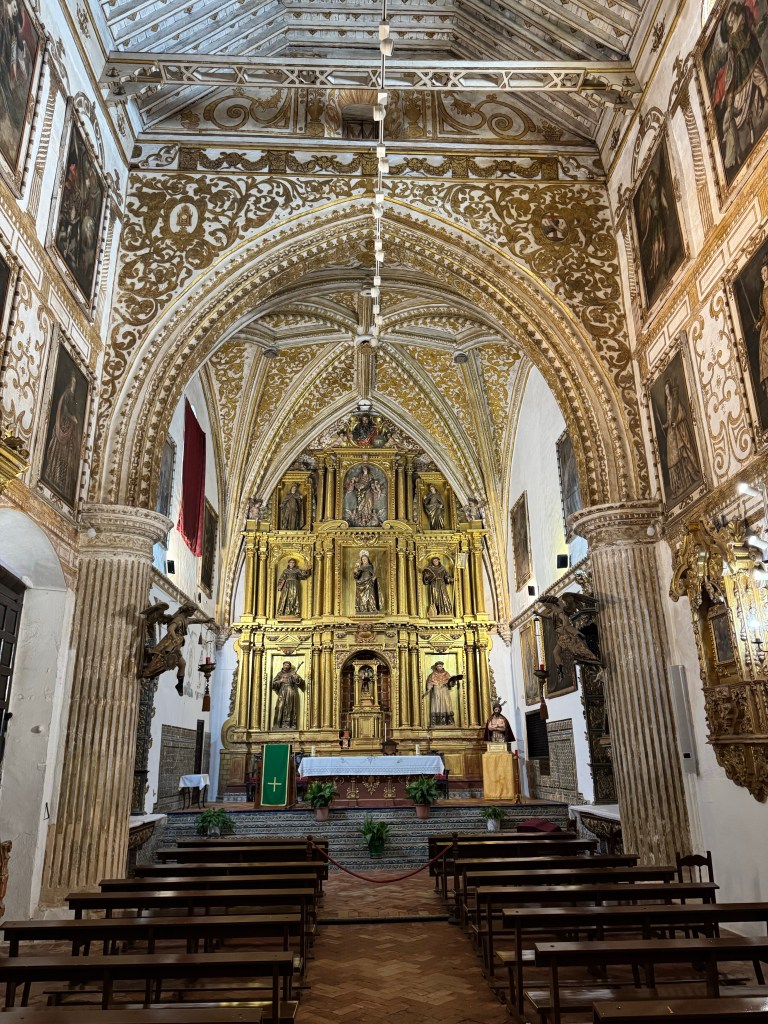
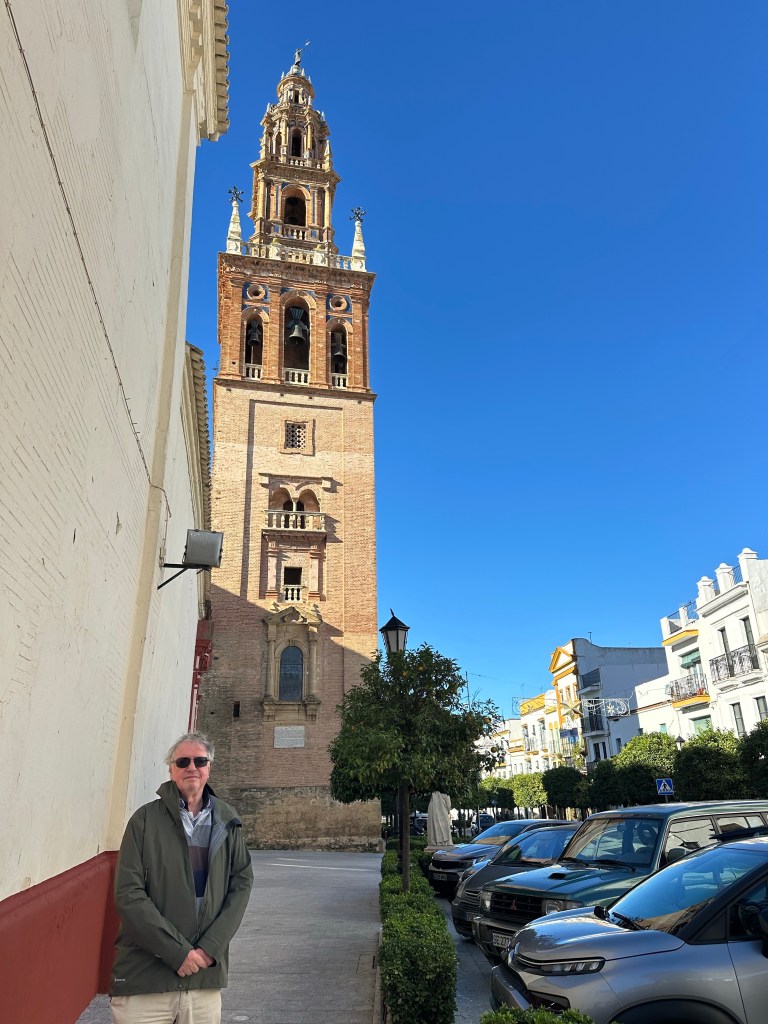
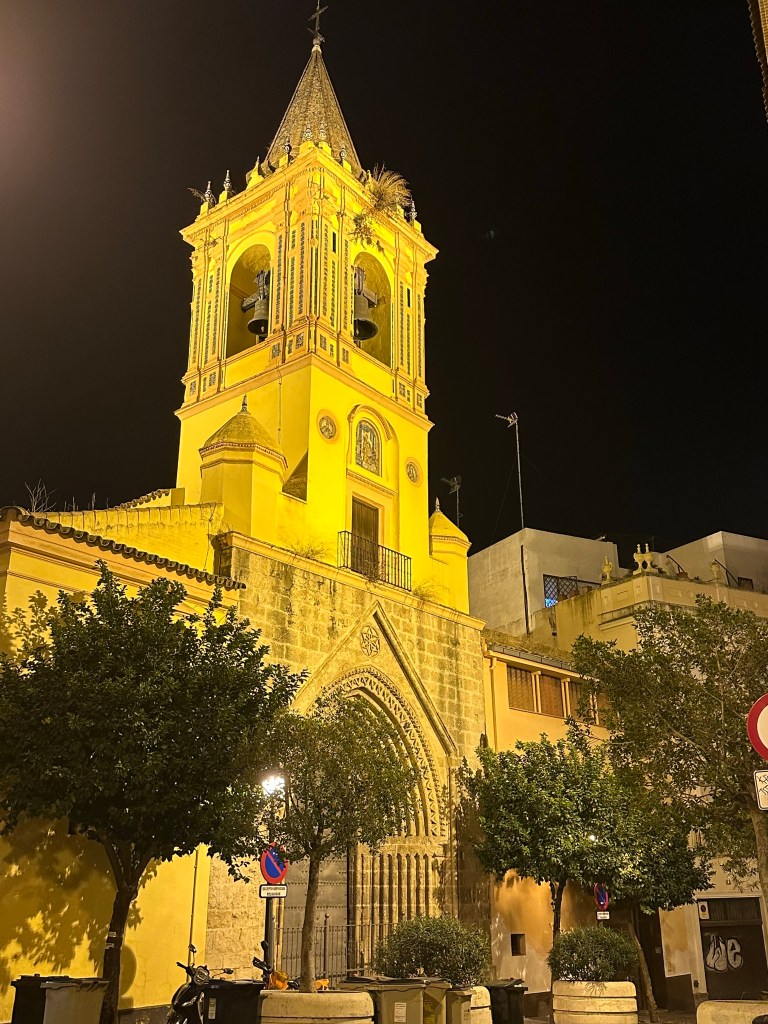
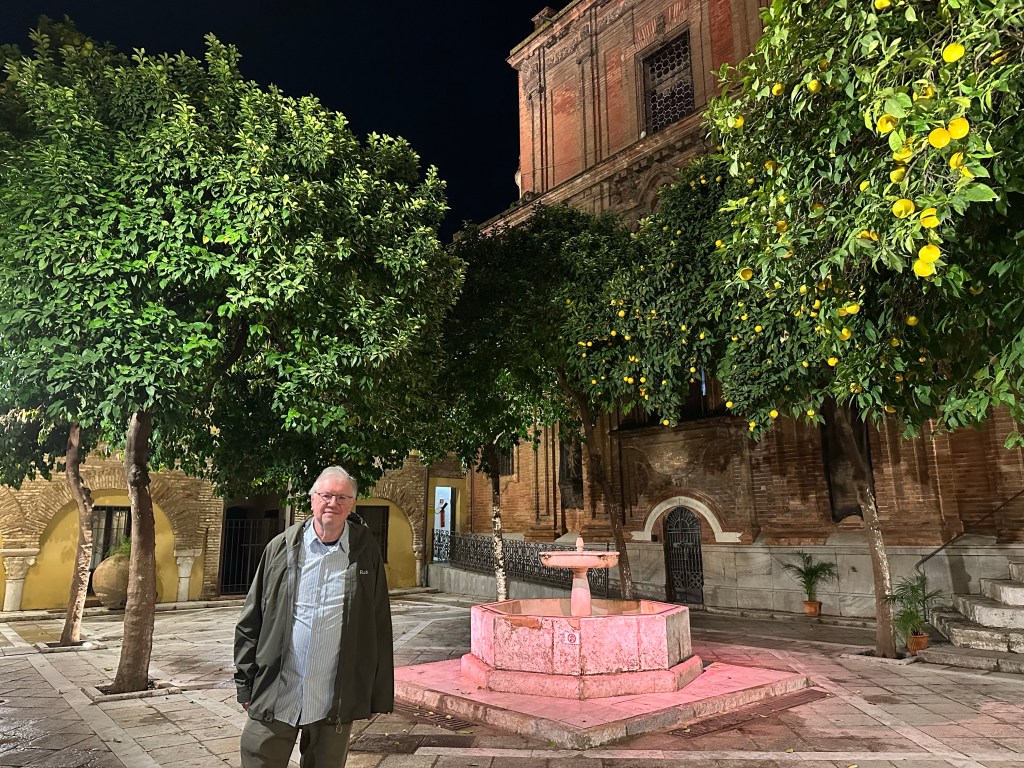
There are, reputedly, 125 churches in Seville. The one above was around the corner from our hotel; the one below was one we came across on our walk to dinner one evening

















 Shilli-Fully Travels