Battle of Isandlwana

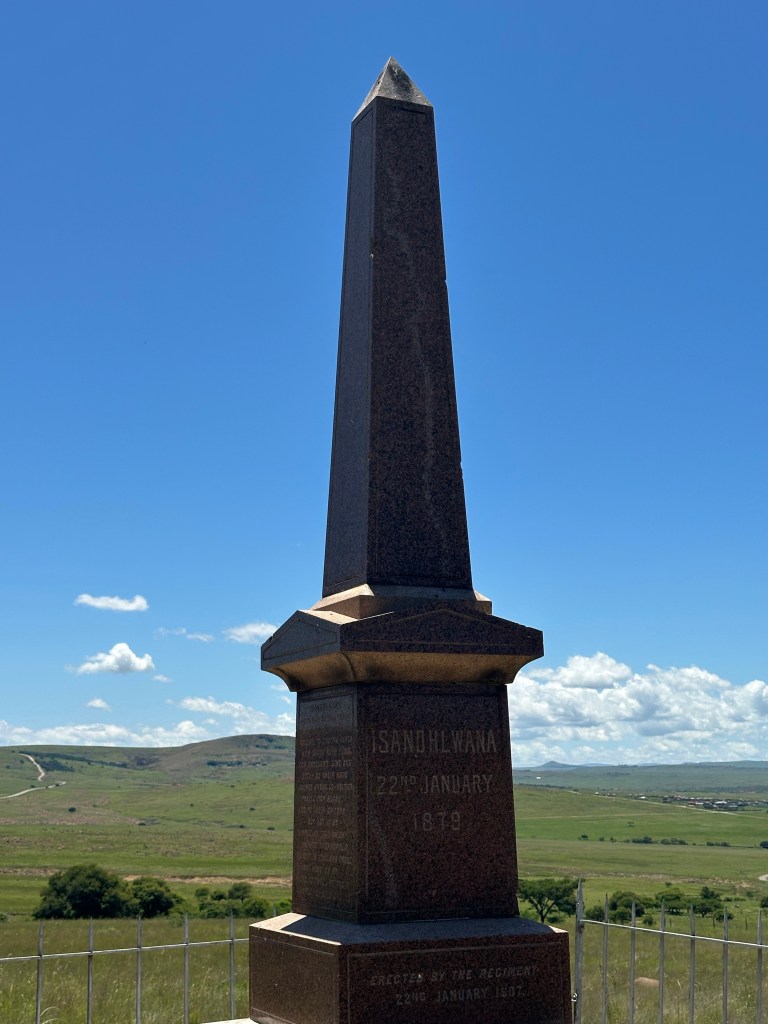
The middle column of Lord Chelmsford’s invading force travelled the 10km from Rorke’s Drift to Islandlwana. At 3.30am, following reports of Zulu movement, Chelmsford set off in persuit with 3,000 men leaving behind a camp of 1,300 men. The camp had no agreed leader nor proper defences, so was unprepared for battle with the main Zulu army, which had by passed Chelmsford’s force. The Zulu army, in a buffalo formation (two horns with a chest) were armed with assegai (spears) and shields and some old muskets. The centre and left wing, around 20,000 men, attacked around noon and by 3pm it was all over, with the added confusion of an almost total eclipse towards the end.

Aside from 55 men, all the British troops were killed. The dead were disembowelled, as a result of Zulu ritual to free the soul, and left on the battlefield. Chelmsford returned after dark, so was unable to see the full carnage until dawn.

Lt Melville, given the task of trying to save the regimental colours, set off on horseback looking to cross the Buffalo River. At the crossing he was assisted by Ltd

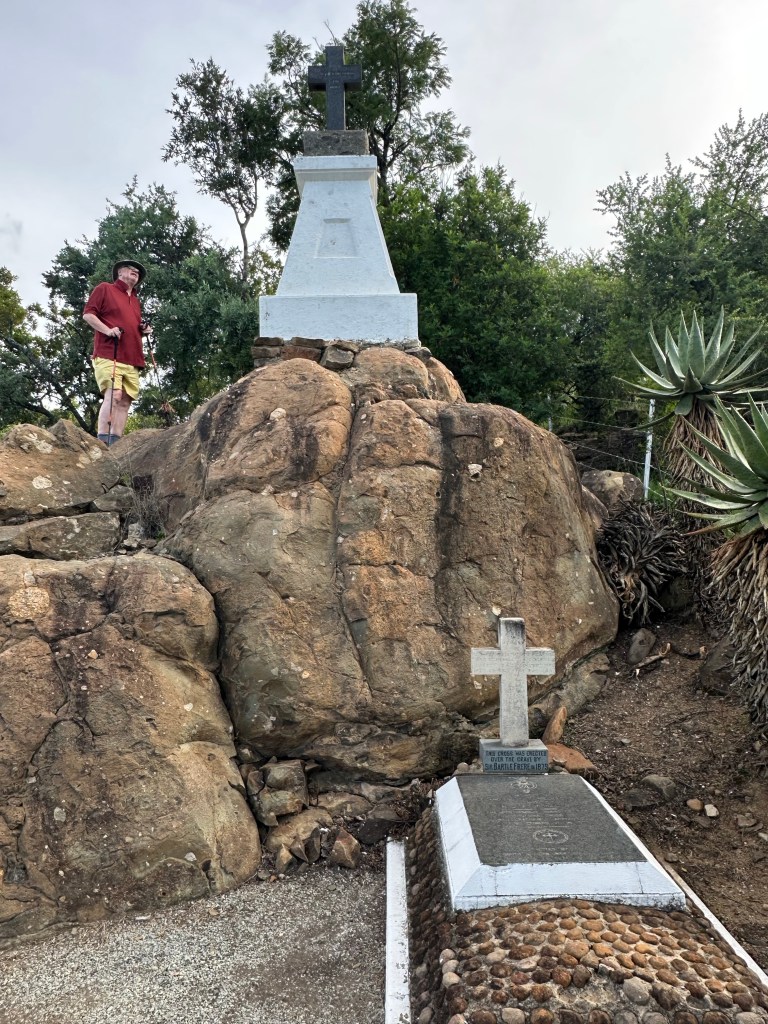
Lt Coghill who had suffered an injury chasing a chicken for Chelmsford’s dinner. They lost the colours crossing the river under Zulu pursuit, although they were subsequently recovered from the river. They lost their lives on the Natal side, overcome by Zulus and became the earliest recipients of posthumous VCs when they were first awarded in 1907. Their bodies are buried where they died, which now lies within the property of the lodge where we stayed, Fugatives Drift.
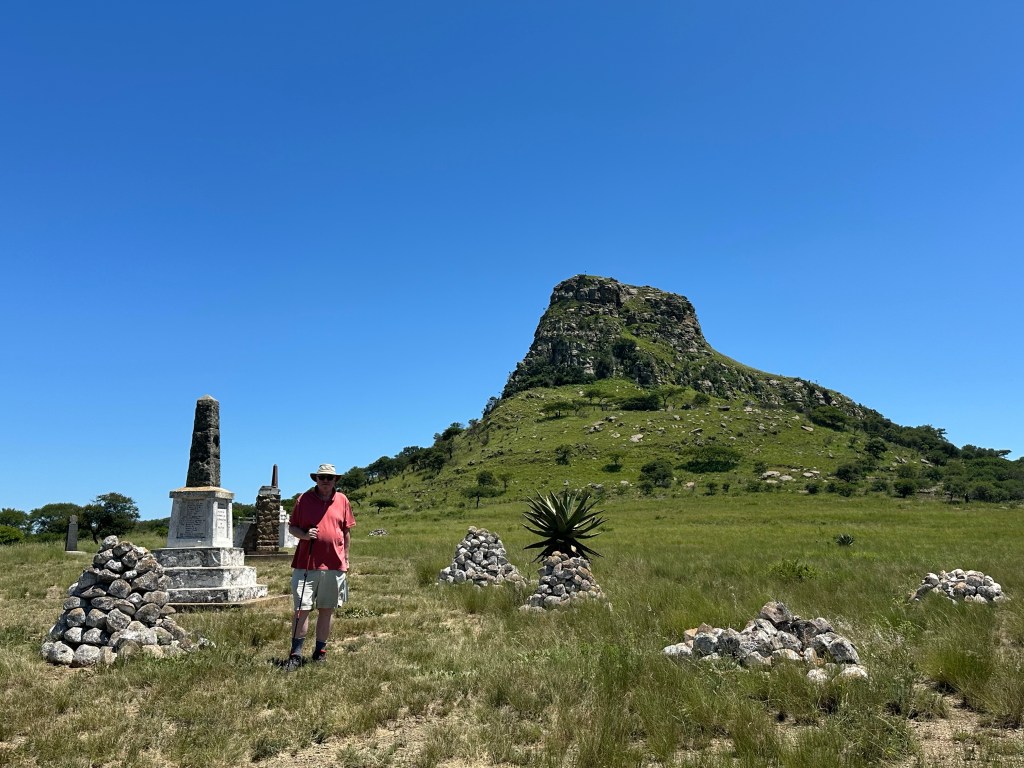
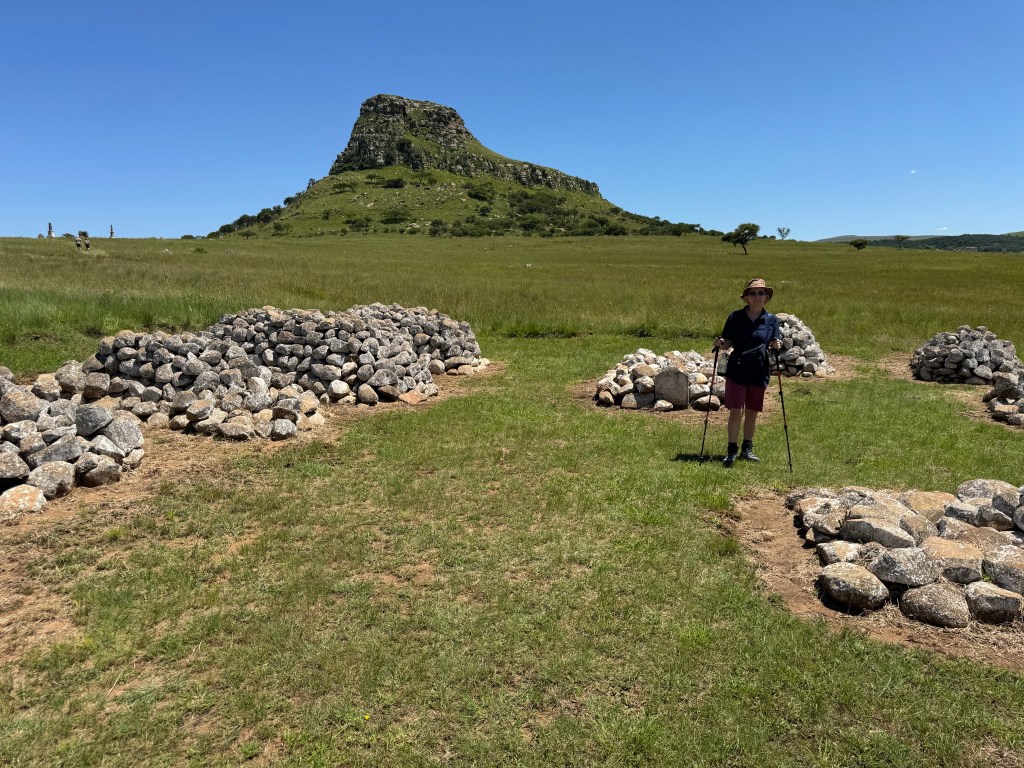
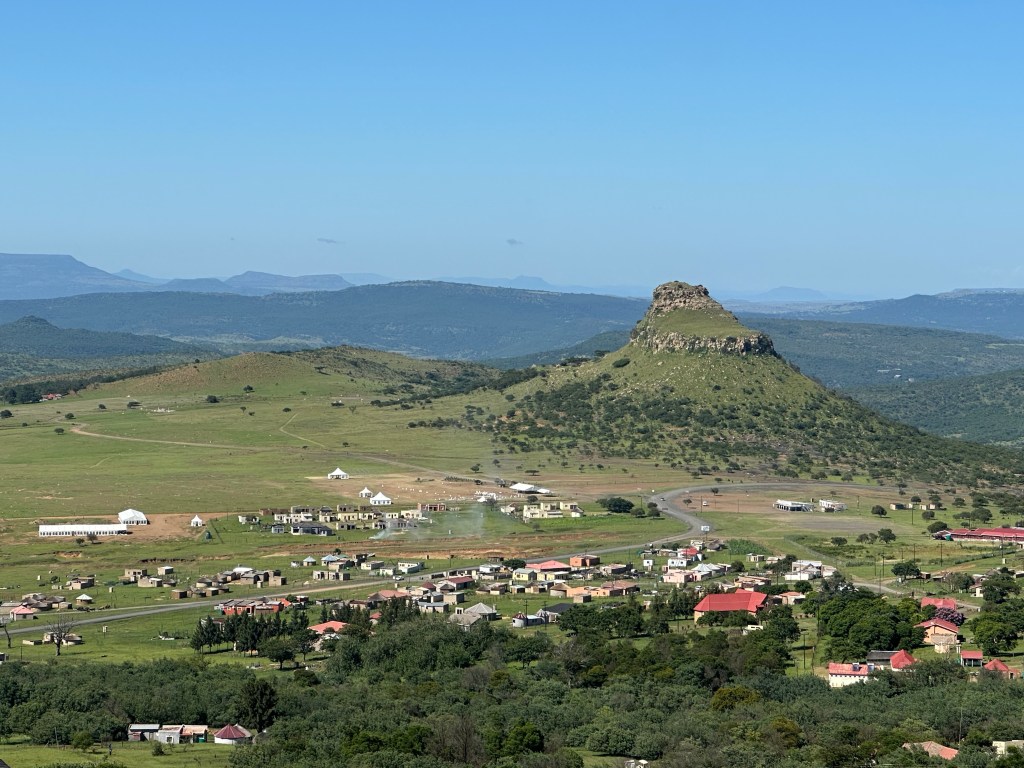
The Isandlwana site. The dead were buried by colleagues who returned to the site four months after the defeat. Due to the scale of casualties and difficulties identifying individuals the graves are mass graves marked by piles of stones
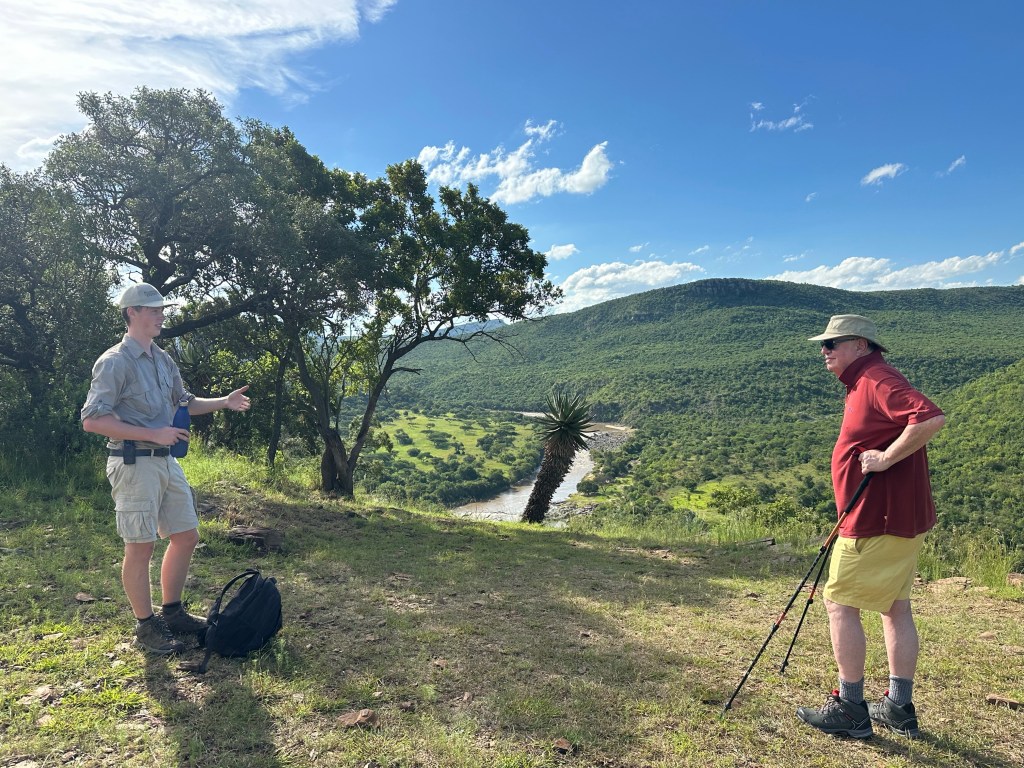
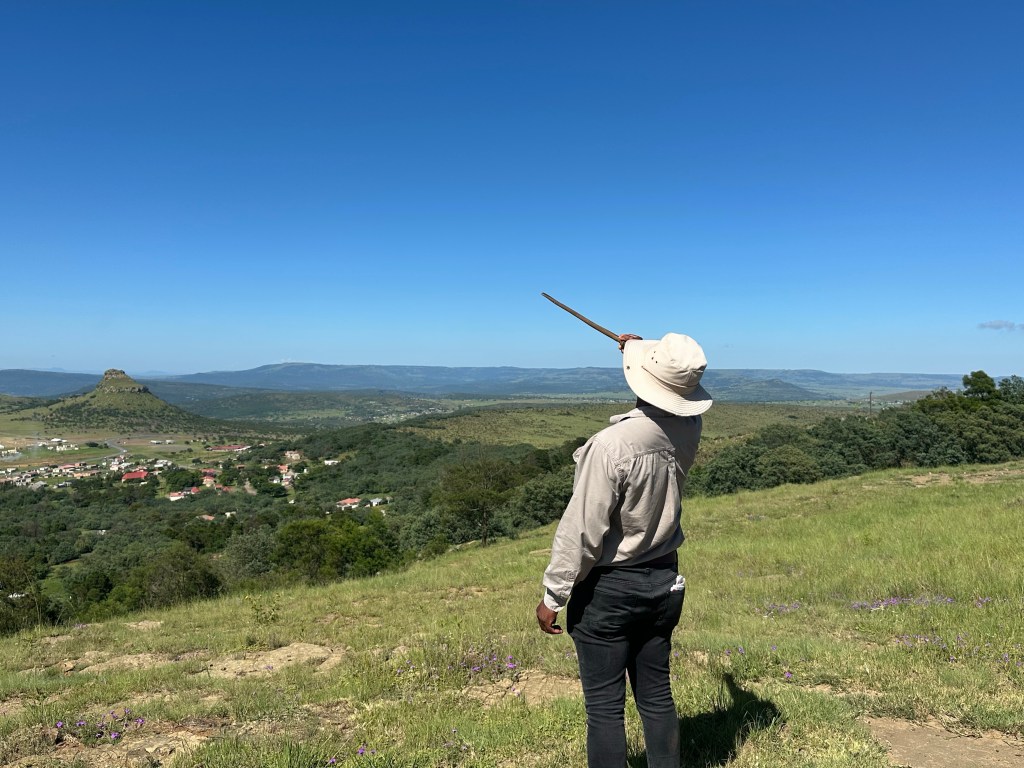
Overlooking Buffalo River where Melville and Coghill crossed. Our guide for the hike from the lodge was a “gappie” working at the lodge prior to starting his history degree
Graves of Melville and Coghill where they fell soon after crossing the river.

Anglo-Zulu wars

The first Zulu king, Shaka, built from a small tribe the Zulu nation through war and conquest so that by 1825 it covered 30,000 sq km, roughly the same size as Scotland. Following assassinations by his half brothers, in 1830 the Zulus fell into conflict with Boers looking for more land. The British were also looking to expand from their base in Durban and laid claim to land called Natal, named by Vaso de Gama as it was discovered on Christmas Day. Natal bordered Zulu land, separated by the Buffalo River. The discovery of diamonds north east of Cape Town in 1867 and the successful confederation of Canada in 1874, led Lord Carnarvon to seek a plan of confederation in South Africa.

As a result of spurious border infringements by the Zulus, across the Buffalo River, the British issued an ultimatum to the Zulu king, Cetshwayo, which included the disbandment of the Zulu army and other totally unacceptable demands. The British in Natal had been instructed not to start a war because its forces were stretched at the time. However communication to and from London took over a month, giving the comander, Lord Chelmsford some leeway. The ultimatum ran out on 11 January 1879 and Lord Chelmsford led the middle of three columns across the Buffalo River at Rorke’s Drift. The column comprised 4,700 men and Chelmsford was looking for a quick victory over the 25,000 Zulu army.

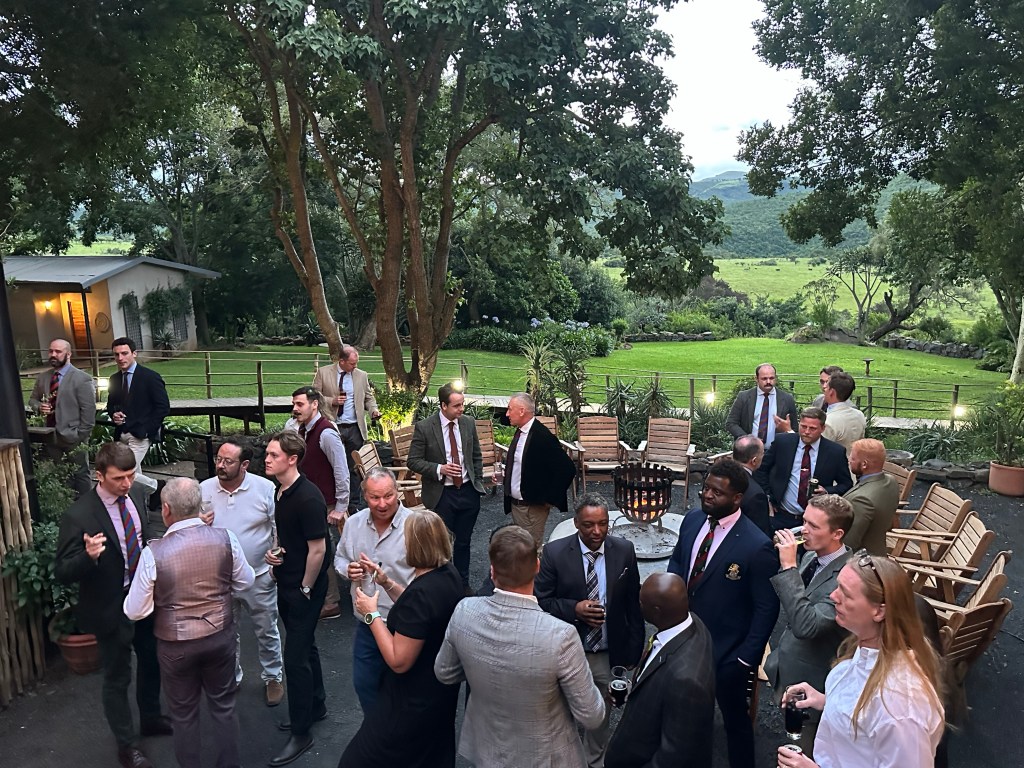
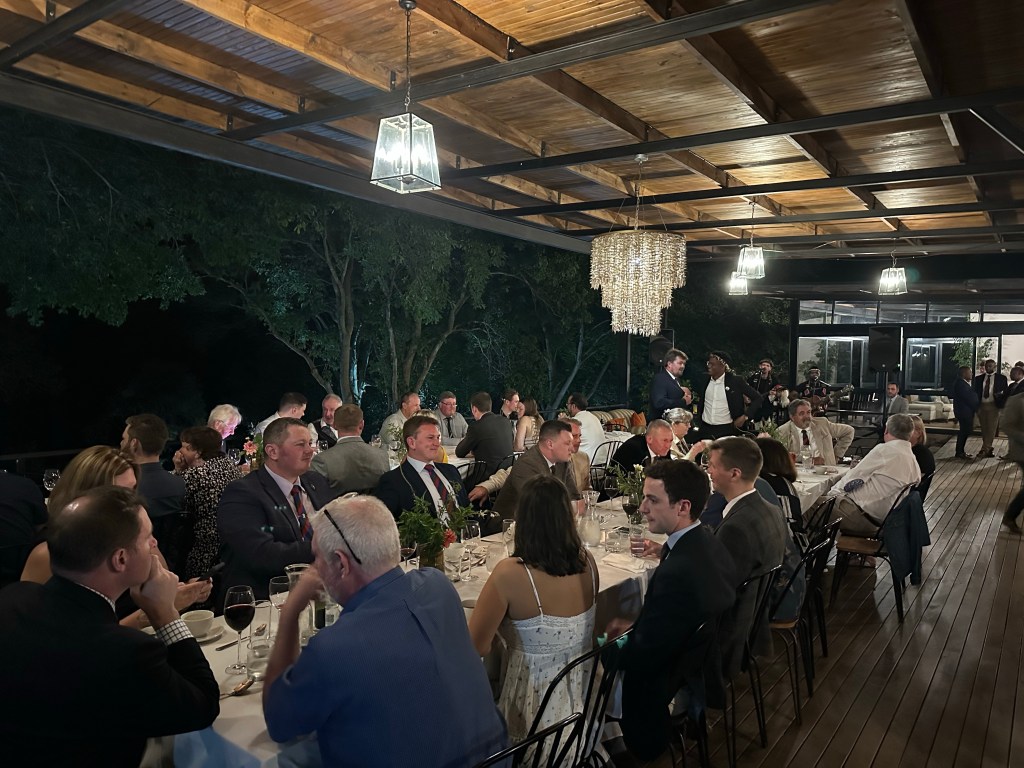
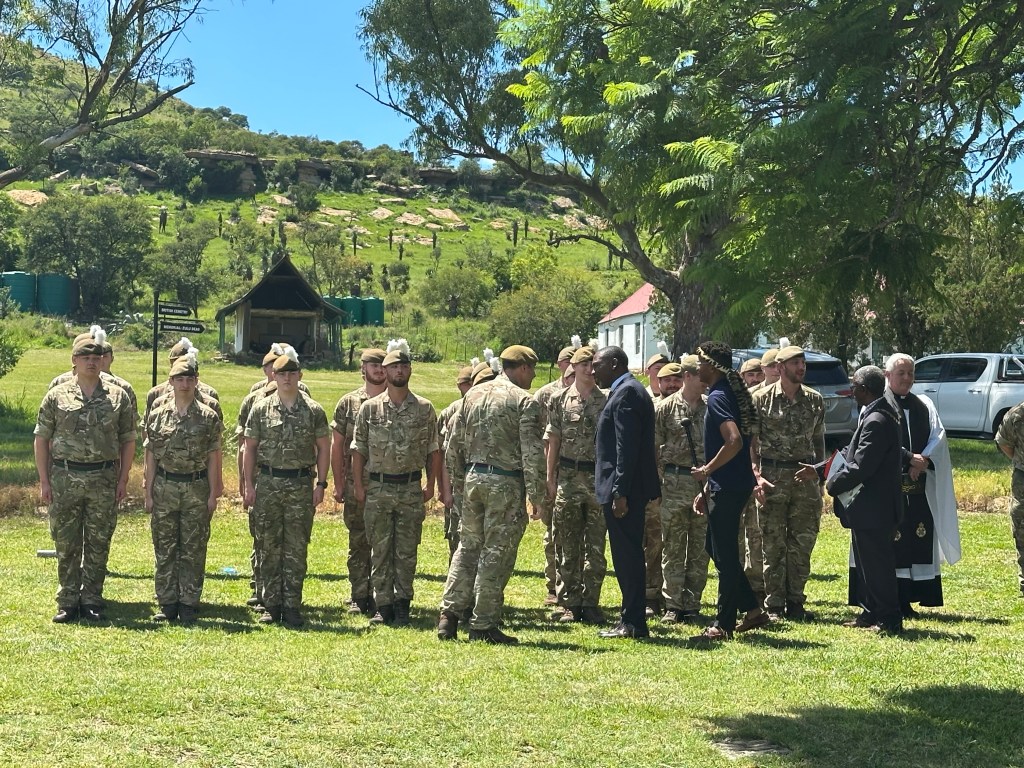
The lodge where we stayed has become a centre for visiting the sites of two of the battles, Isandlwana and Rorke’s Drift, both famous in British military history – respectively as a spectacular defeat and equally spectacular victory. The battles took place on 22 and 23 January – we arrived (coincidentally) on the anniversary. We missed the reenactment at Islandlwana at which the current Zulu King and 45 British troops were present. However we were invited to attend a regimental dinner hosted by our lodge for the troops and local dignitories, around 90 in all. We also attended the rememberance service, wreath laying and inspection of the troops the following day at Rorke’s Drift.

This fortunate coincidence, together with the vivid story telling by the lodge’s expert guides made for an extremely interesting and memorable experience; far better than any classroom history lesson !

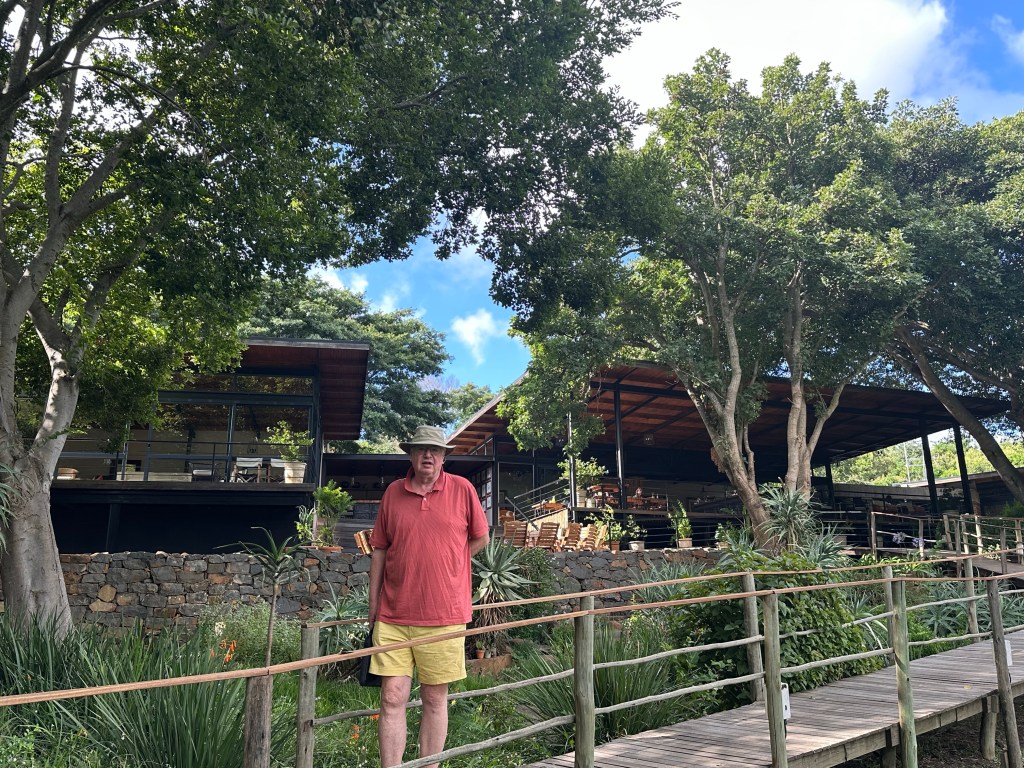
Fugitive’s Drift Lodge
Commemorative dinner
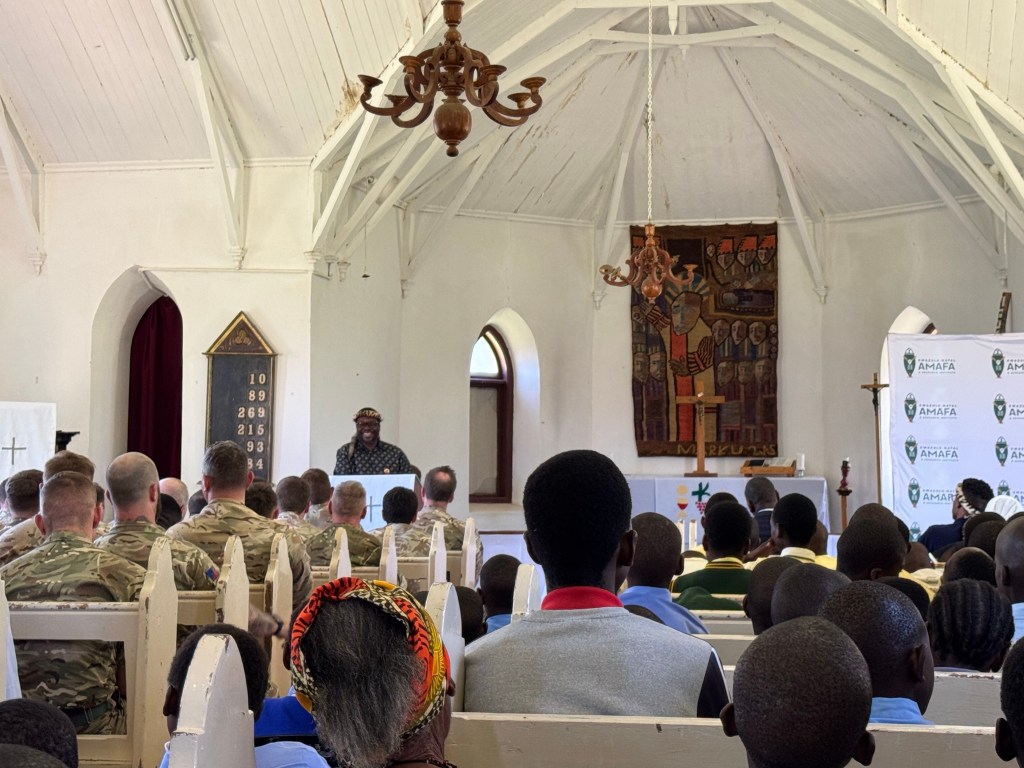
Commemorative dinner – we sat with the lodge owner, a Zulu prince, the Royal Welsh pardre, lance corporal and several senior officers
Inspection of troops, including by our new acquaintance, Zulu prince “Zac”
Service of remembrance, conducted jointly by the local pastor and the Royal Welsh pardre. A fusion of British Army precision and timing and the Zulu equivalent (being polar opposites !). The Zulus prevailed including a 45 minute delayed start for the VIPs to finish breakfast
Overlooking the Isandlwana battle site, from where our guide (below) explained the unfolding of events. The white marquees were still there from the reenactment
Our guide’s grandfather and great grandfather fought for the Zulus at Isandlwana

Durban

Durban is the third largest city in South Africa with a population of 600,000. It sits on the east coast on the Indian Ocean. It was sighted by Vasco de Gama in 1497 but colonisation began after Henry Fynn befriended the local Zulu King Shaka and the British were granted land in 1824. Durban was named in 1835 after the Cape Govenor Sir Benjamin D’Urban. Because of the sub-tropical climate it became a centre for planting sugar cane and the production of sugar. To enable this many indentured Indians were brought in to run the plantations. The conditions of the indenture were such that the Indians were little more than slaves. The population still has 25% with Indian heritage and is consequently known as the curry capital of South Africa.

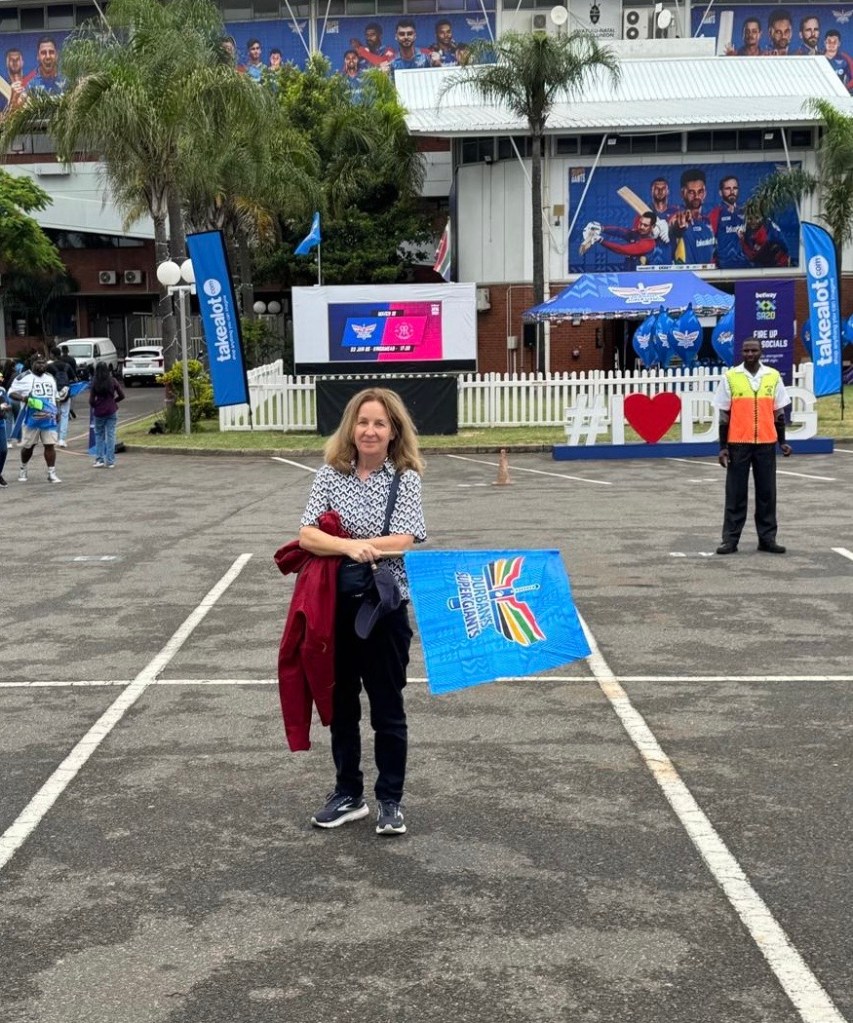
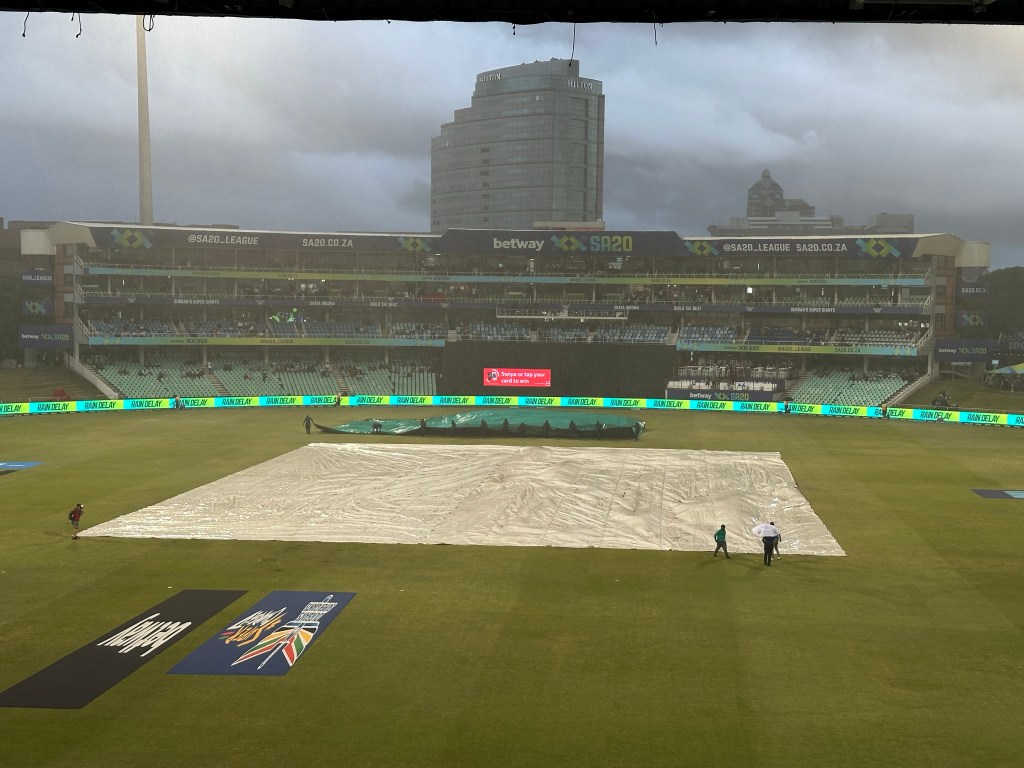
When we attended the T20 cricket between Durban and Cape Town the majority of the spectators were of Asian origin. Unfortunately the gamed was rained off after 11 overs.

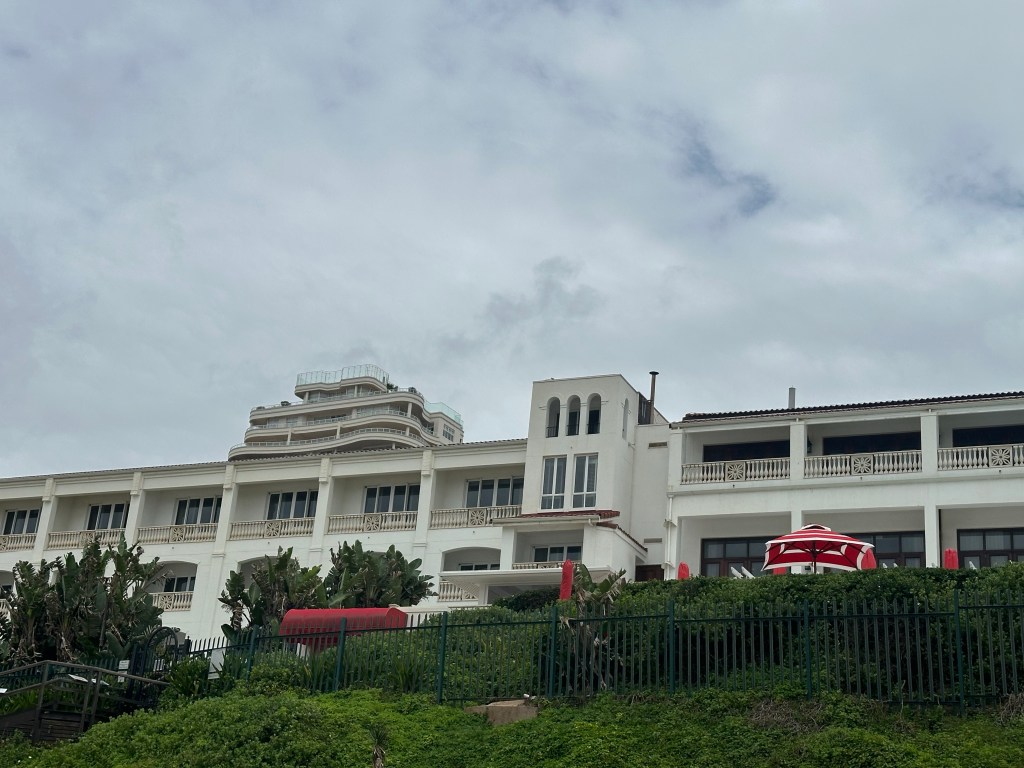
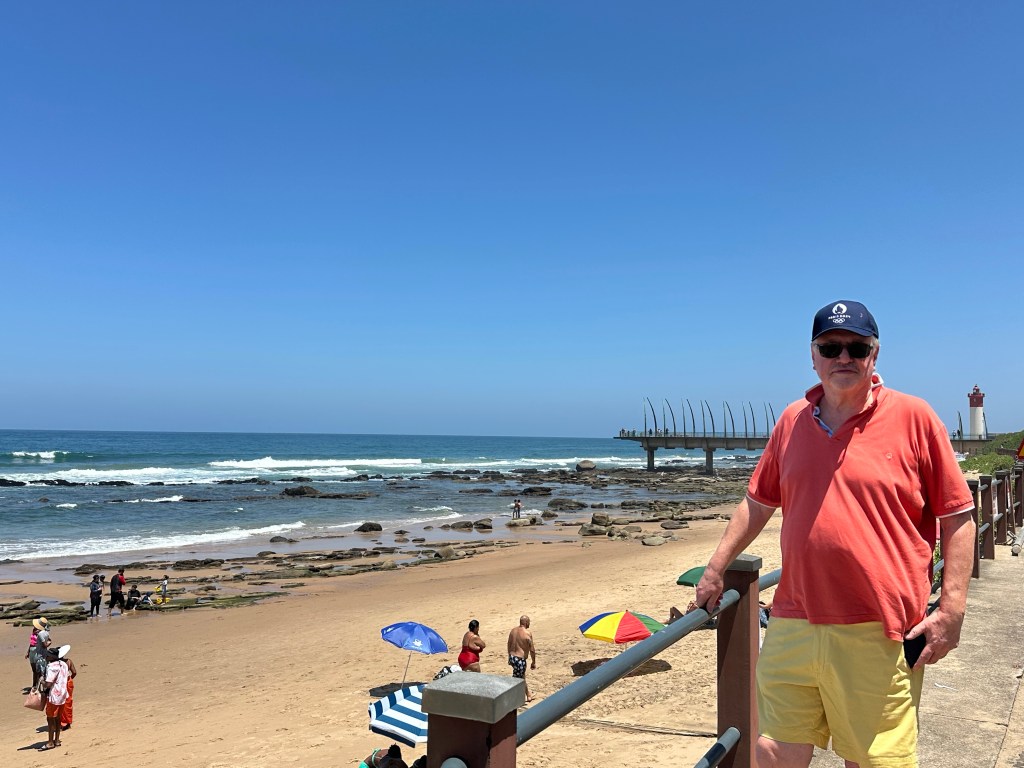
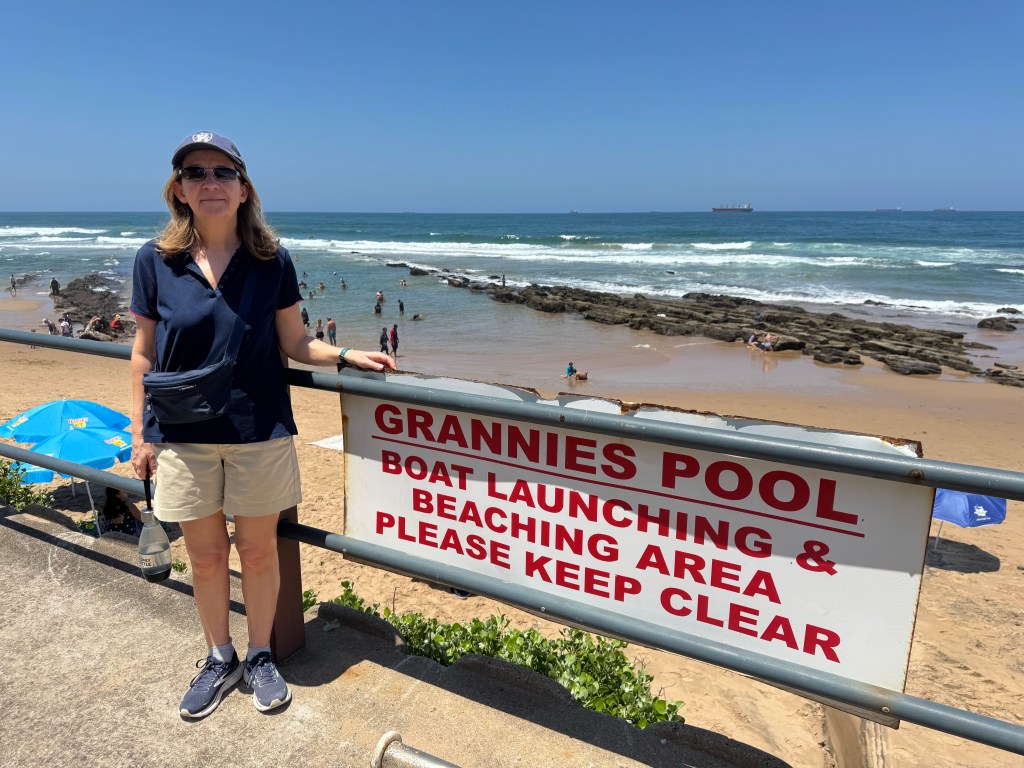
The main purpose of our stay was to recover from the flights to get here (London-Johannesburg-Durban); we stayed in a residential and tourist town north of the city, uMhlanga, which means place of reeds. Our art deco style hotel, built in the 1940s, has a sea front location next to an unmanned lighthouse built in 1954.