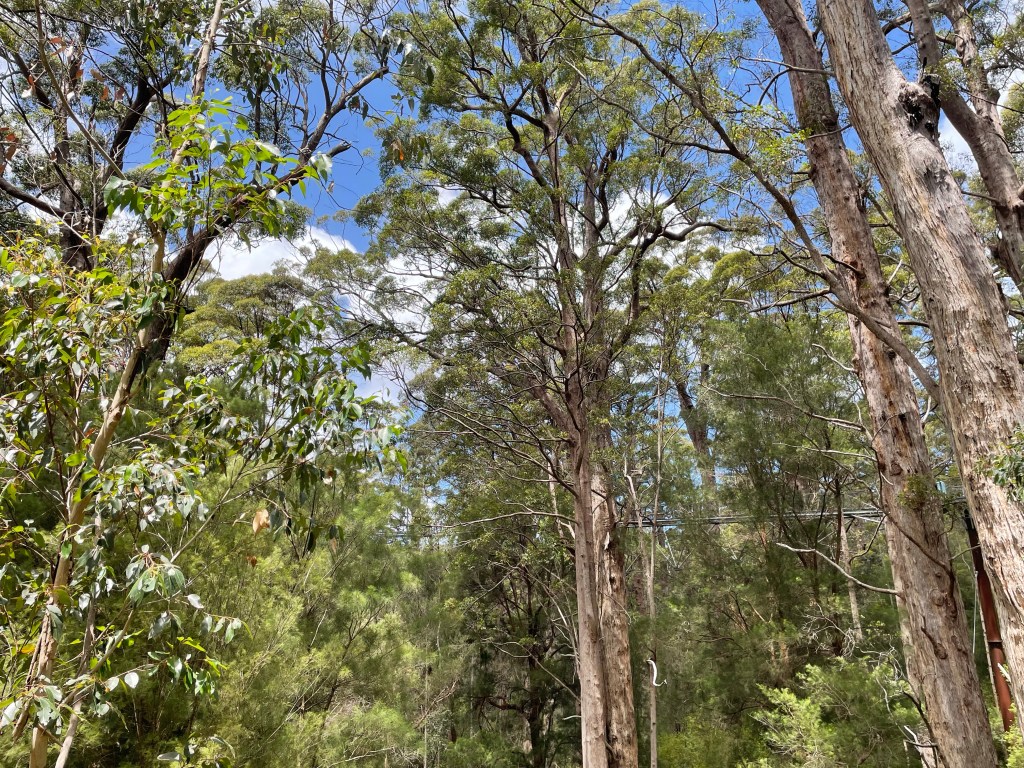
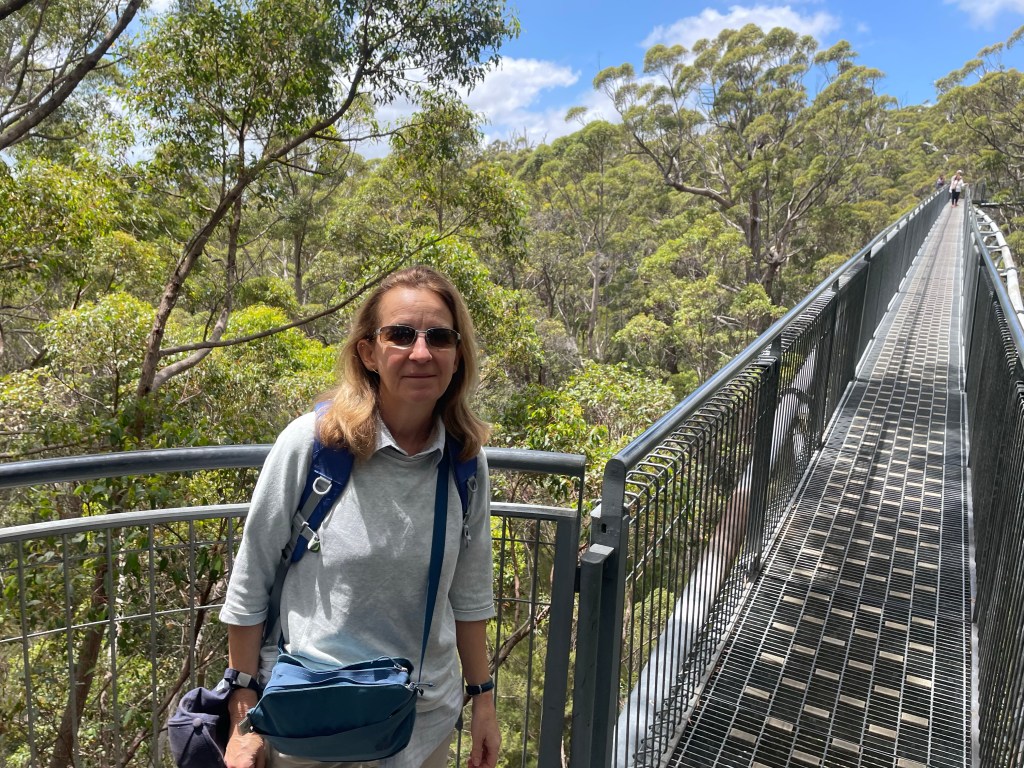
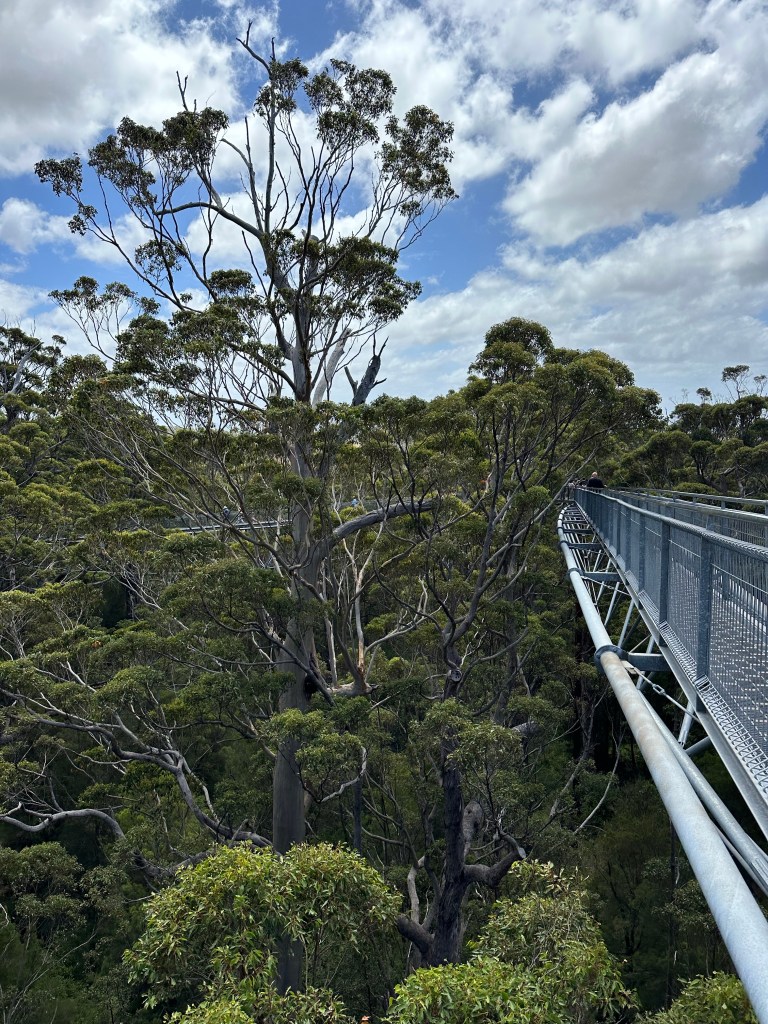
The Valley of the Giants is a National Park situated between Walpole and Denmark which are both small towns on the south coast of WA. The Giants are red tingle trees, another type of giant eucalyptus. Typically the trees grow to 45m (Nelson’s column is 51m) and can have a base circumference of 24m. The main feature at the Valley of the Giants is a 600m tree top walk amongst the canopy.
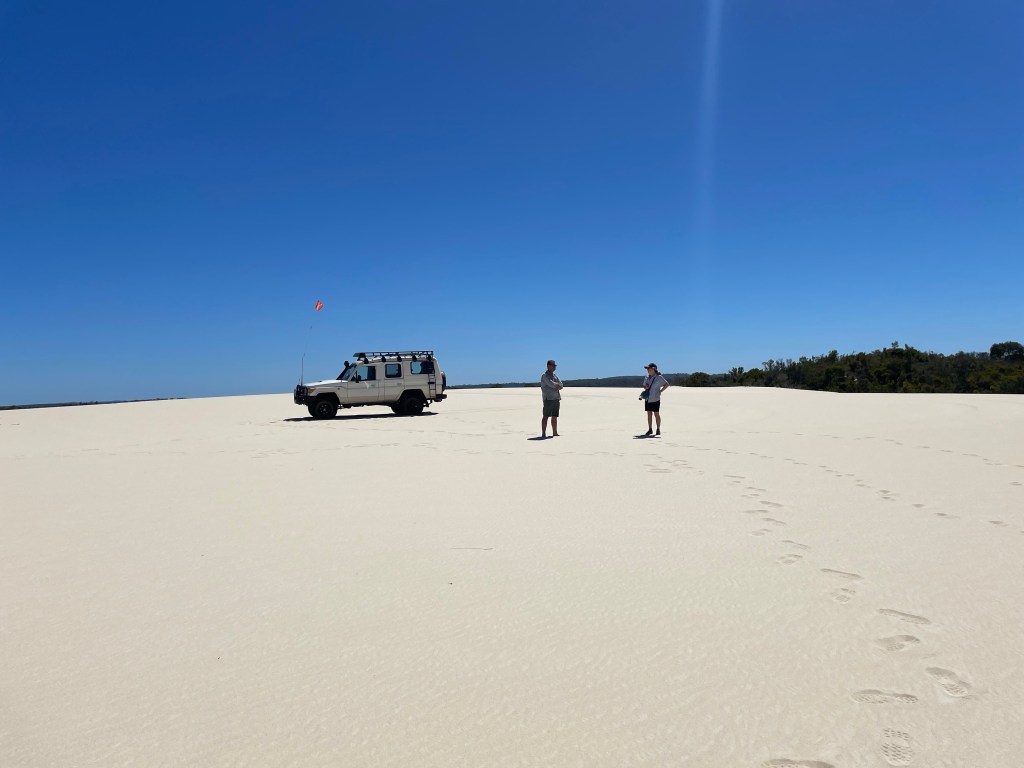
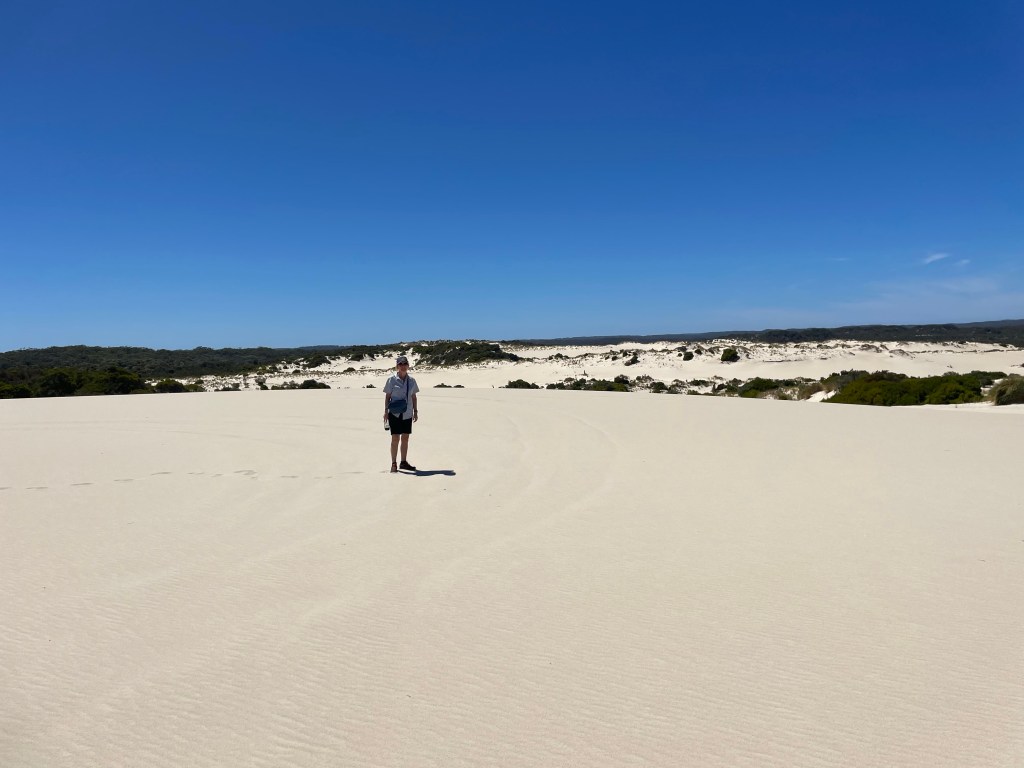
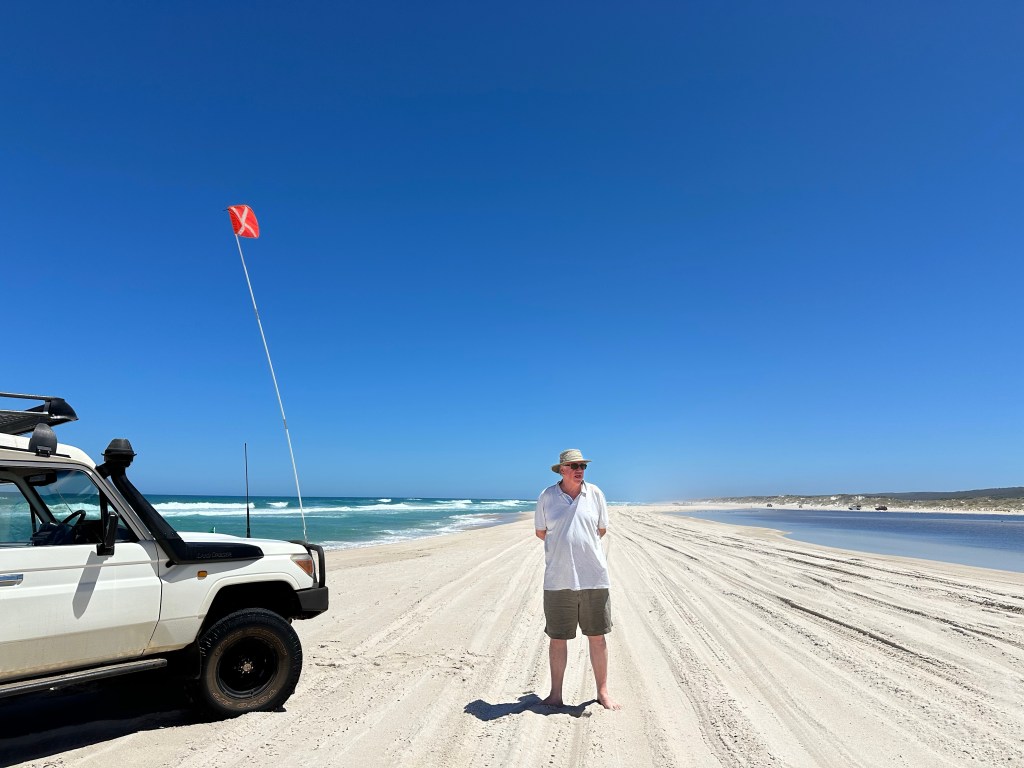
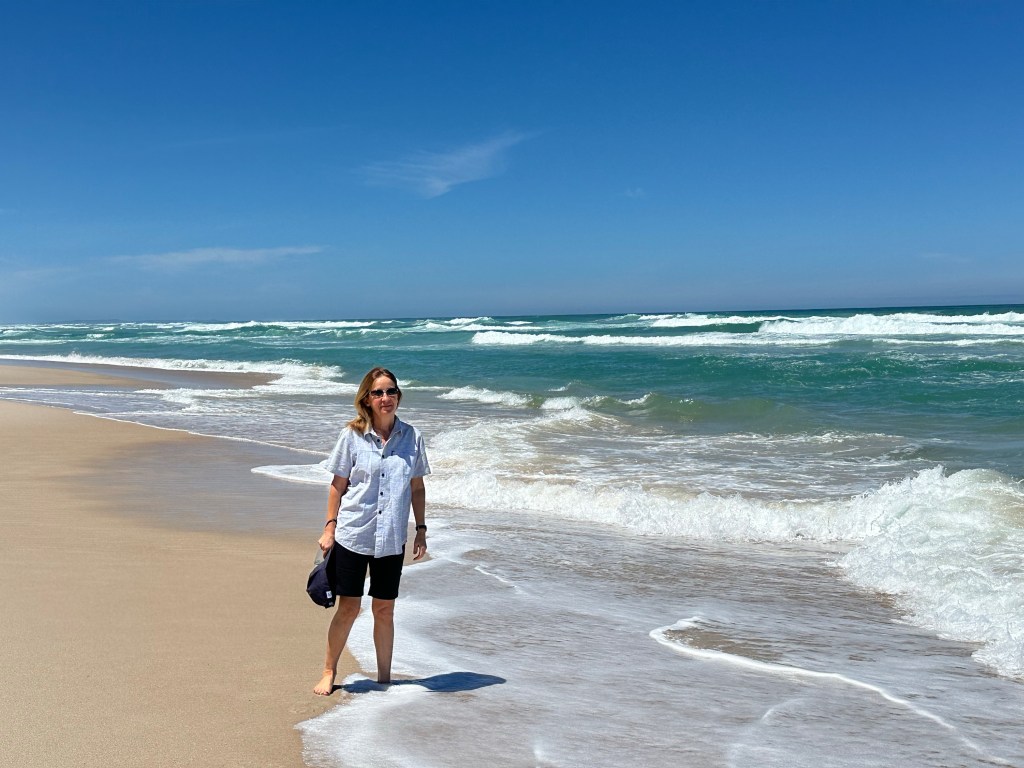
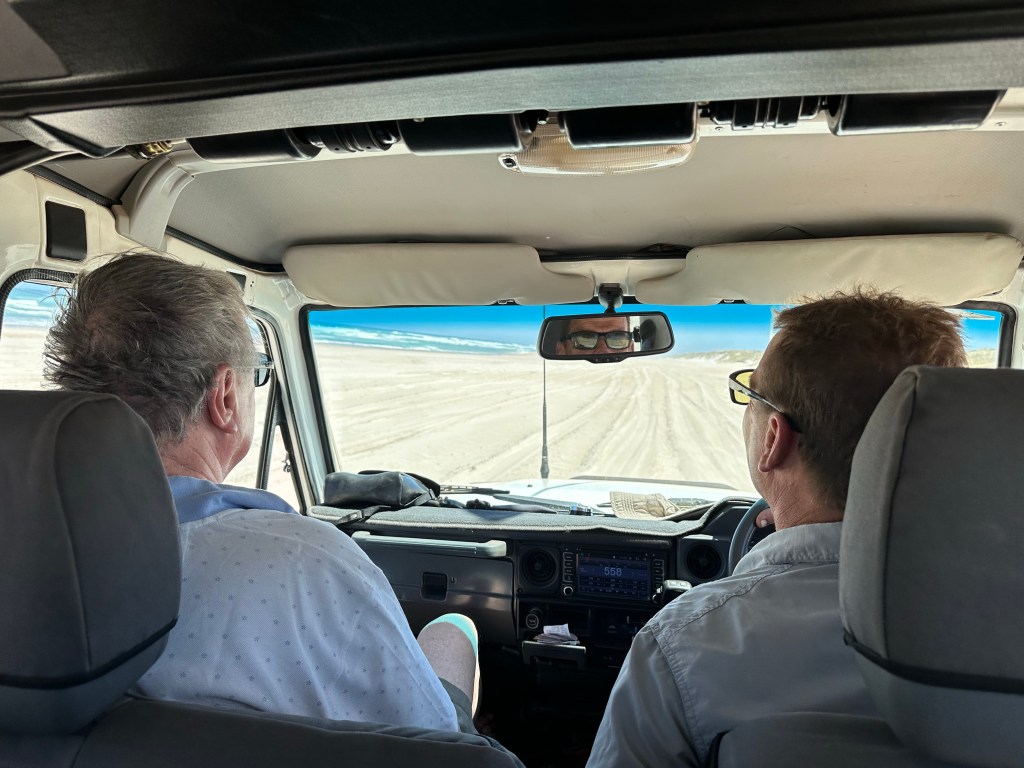
DNP is 130km long stretching along the south coast of Western Australia. It is named after a French admiral who was the first European to sight the area in 1792. To the chagrin of the locals he never actually set foot on the land bearing his name. The park contains beaches, dunes, forests and rivers. Much of the DNP is only accessible by 4WD vehicles which have had their tyre pressure reduced. There is a map symbol for such roads, of which there are quite a few in Western Australia. As our hire car was far from suitable, we found via the internet Graeme, a guide and local eco expert with all the gear required to take us across rough terrain, through the dunes and onto a 30km almost empty beach.
Karri trees are a type of eucalyptus and the tallest trees in Western Australia. Just over 20% of Western Australia is forest, with lots of it in the area we were visiting in the south west. The tallest living karri tree is just over 80m high. In the karri forest near Pemberton unsealed roads have been created to assist firefighters, together with fire lookouts on the top of some of the taller trees. The lookout trees were pegged to reach the lookouts. Since the introduction of technology such as drones, the remaining lookout trees became tourist attractions and are named – The Gloucester Tree, Diamond Tree and Dave Evans Bicentennial Tree. The trees could be climbed by intrepepid tourists and locals until they were closed recently over health and safety concerns. The Dave Evans tree is 65m high with 130 pegs.
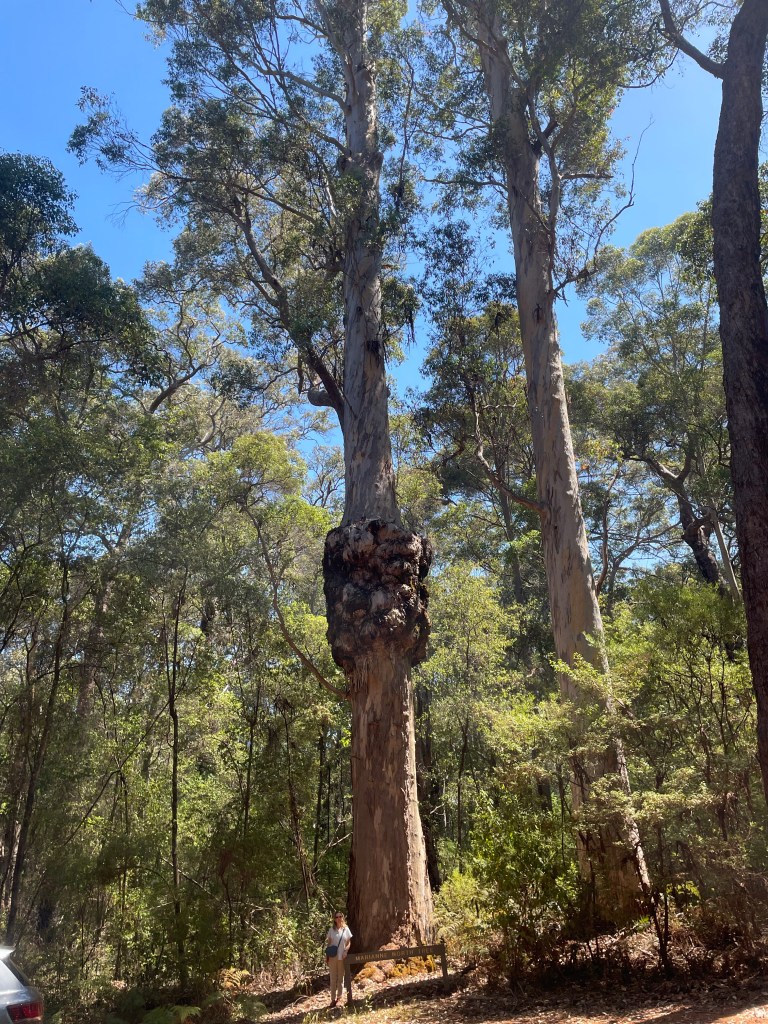
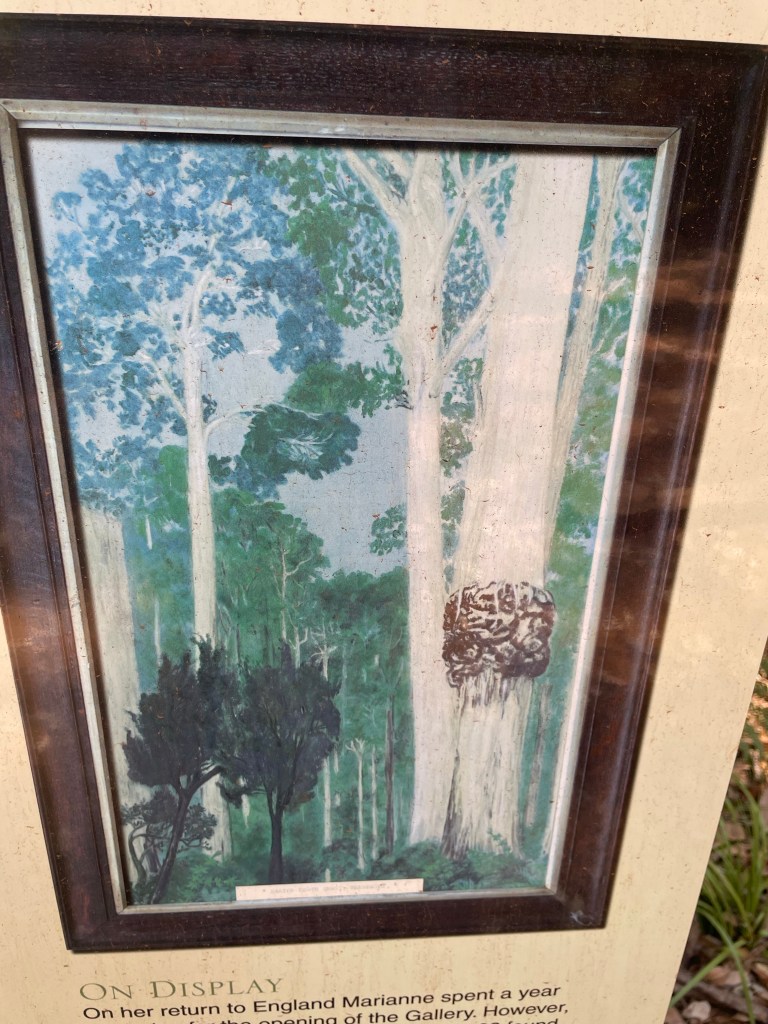
Marrianne North was an English artist who travelled extensively; many of her paintings are on display in the gallery named after her in Kew Gardens. She visited the area in 1880 and painted a karri tree with a large bulbous growth around its trunk. The tree she painted is still alive and named after her.
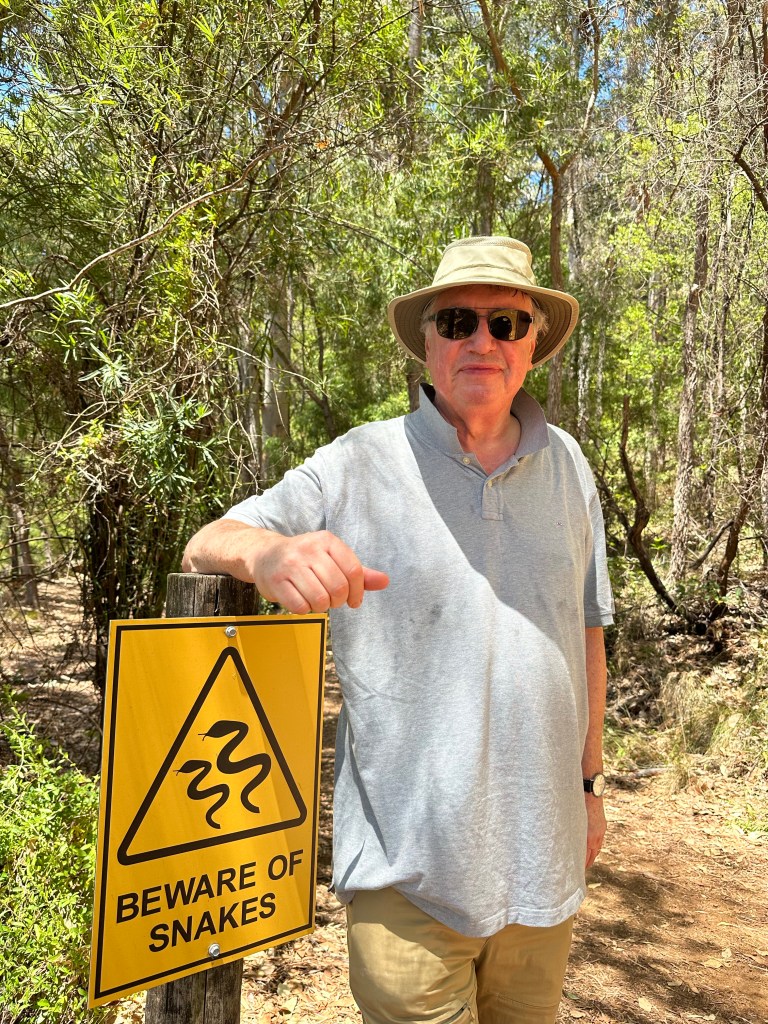
We did a number of hikes in the karri forests, including a few sections of the Bibbulmun Track, a l,000km walking trail stretching from the Perth Hills to Albany in the south coast.
Pemberton was established in 1862, following an expedition a year earlier and is named after one of the members of the expedition. The town was built in the centre of hardwood forests, mainly Karri, which was felled and used to make railway sleepers, including apparently for the London Underground. The surrounding area remains heavily forested, as clearing the forests has been tightly regulated for a number of decades. The areas that have been cleared are mostly used for farming, including wineries and a lucrative avocado industry and tourism.
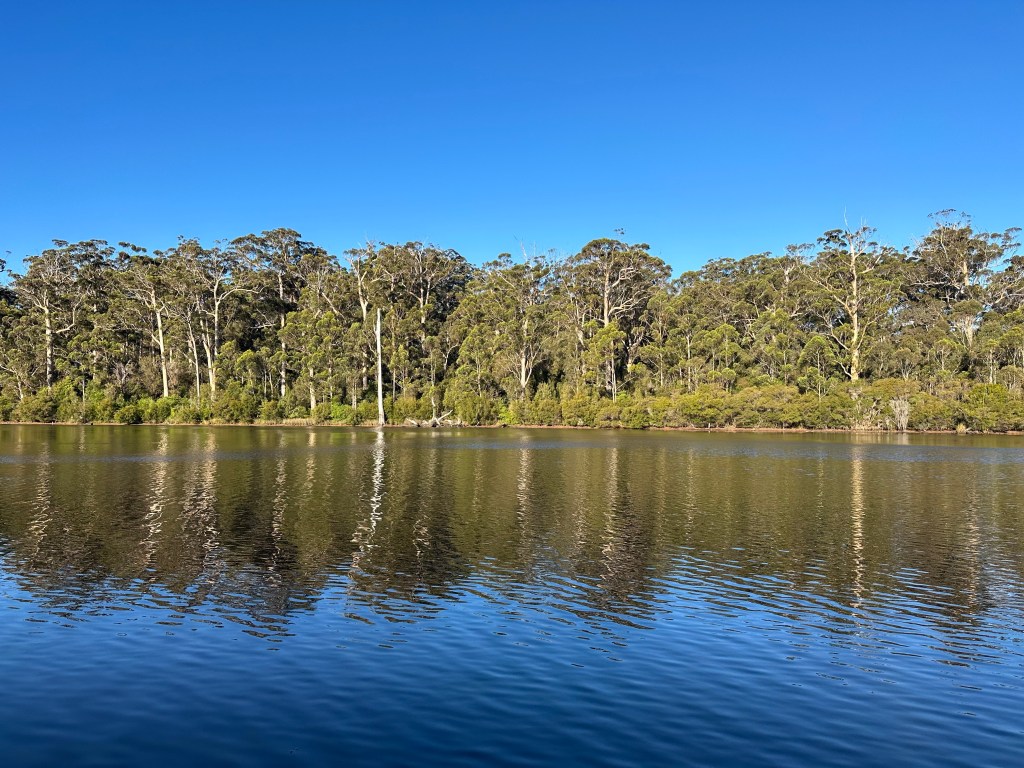
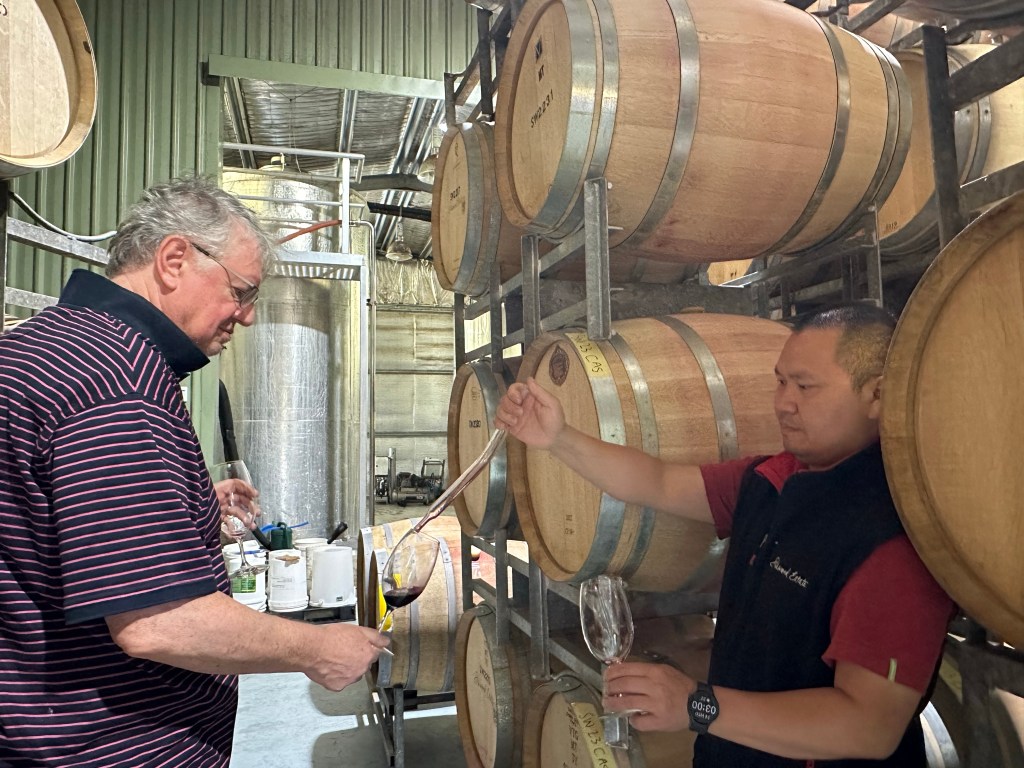
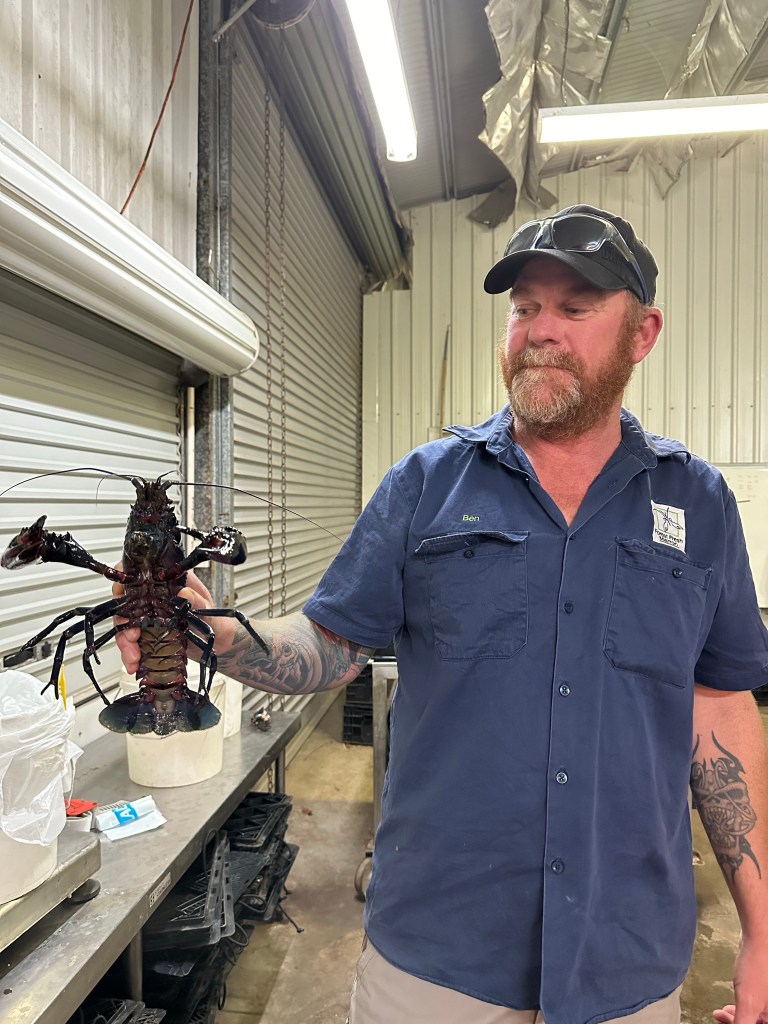
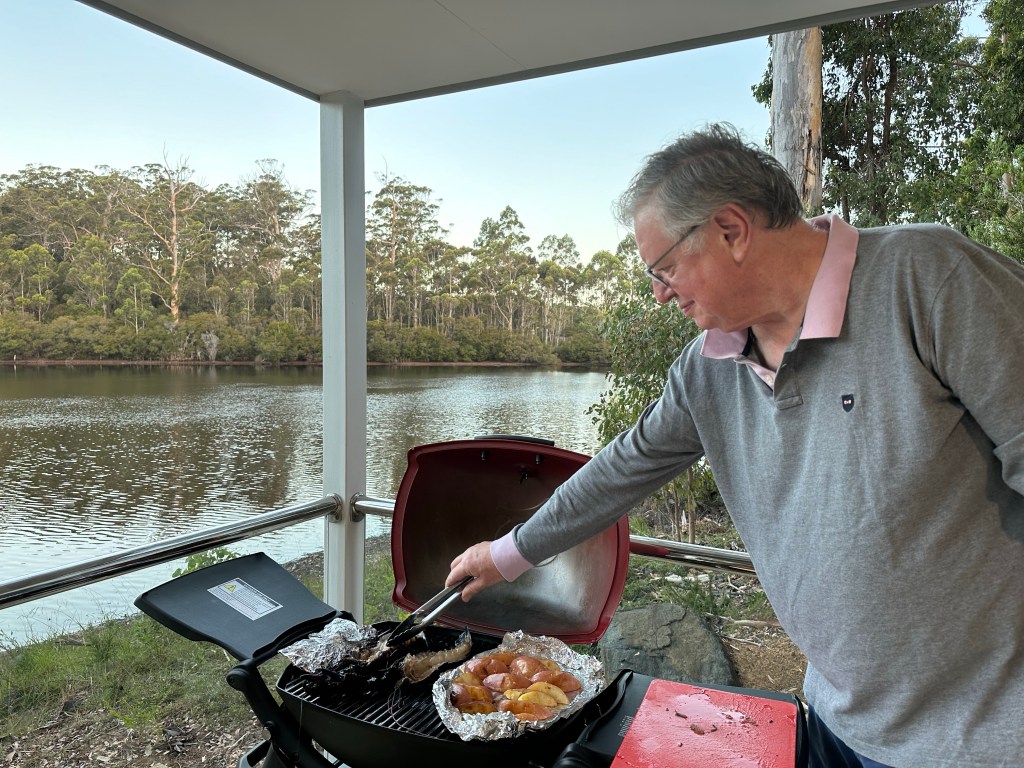
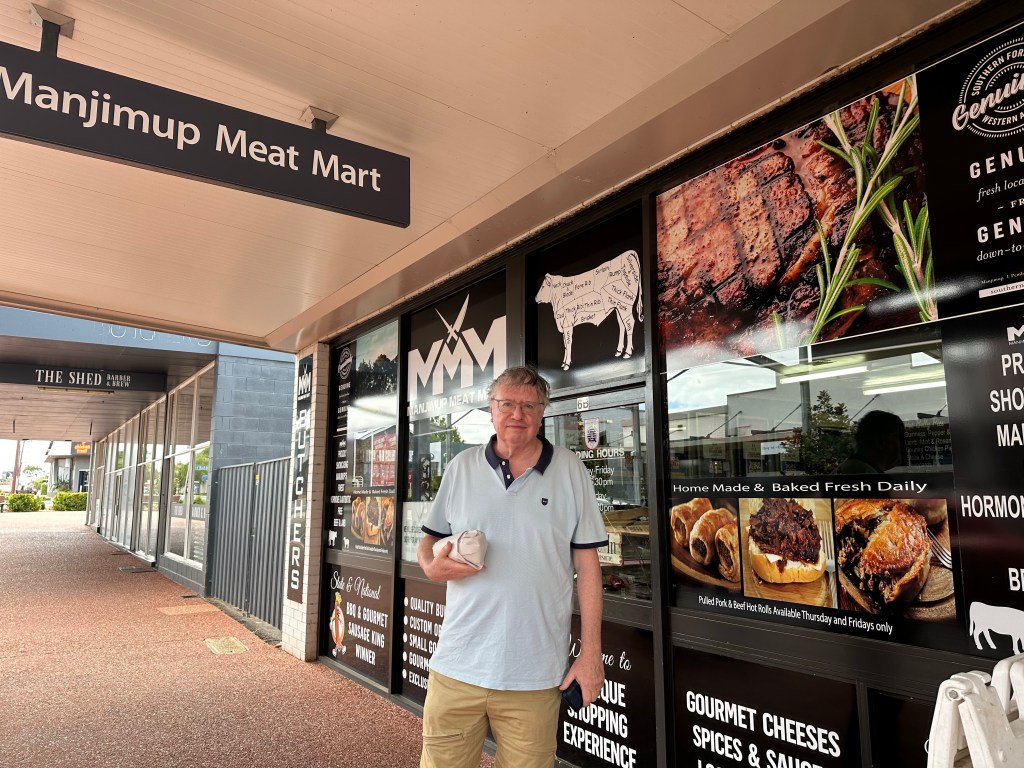
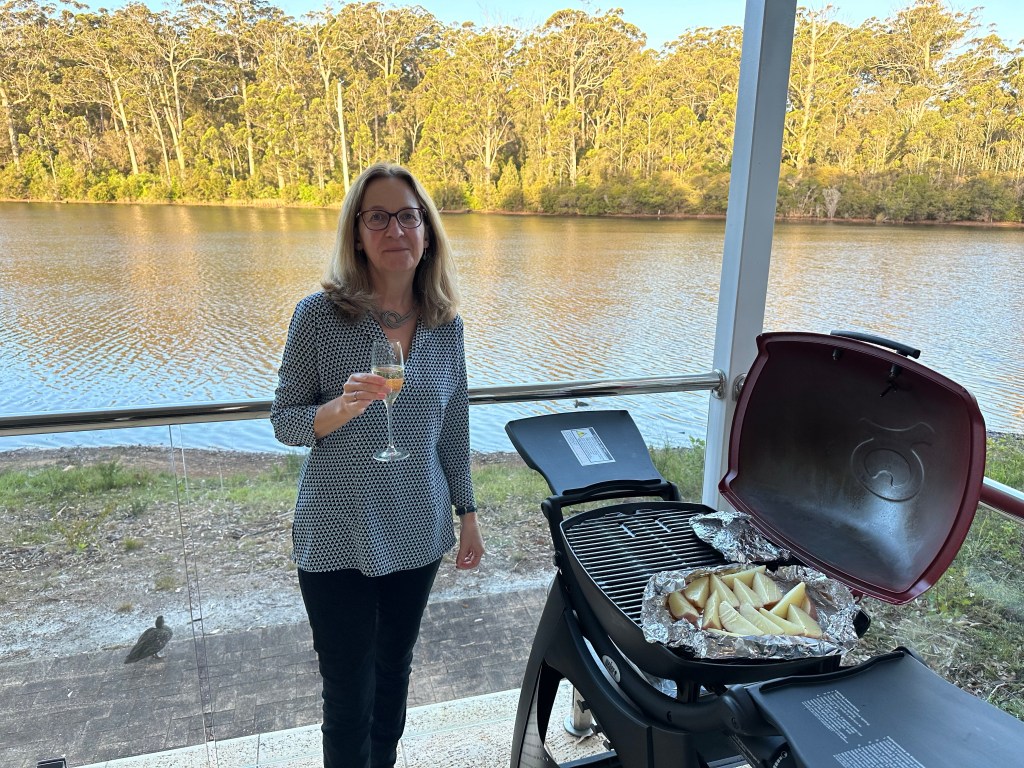
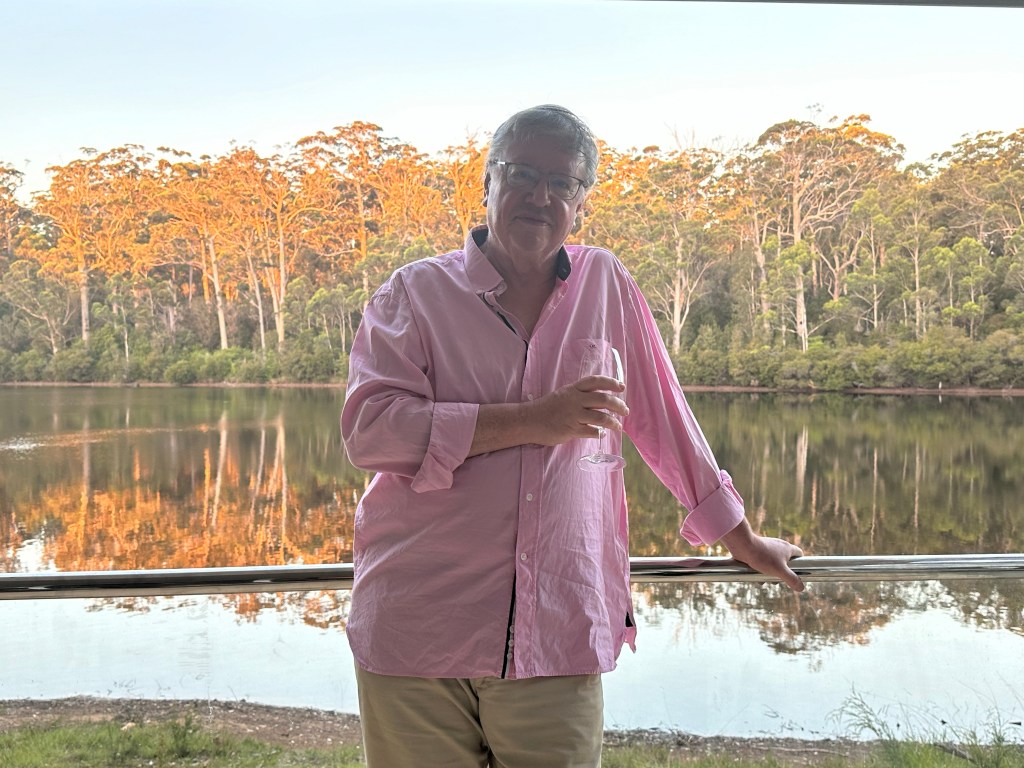
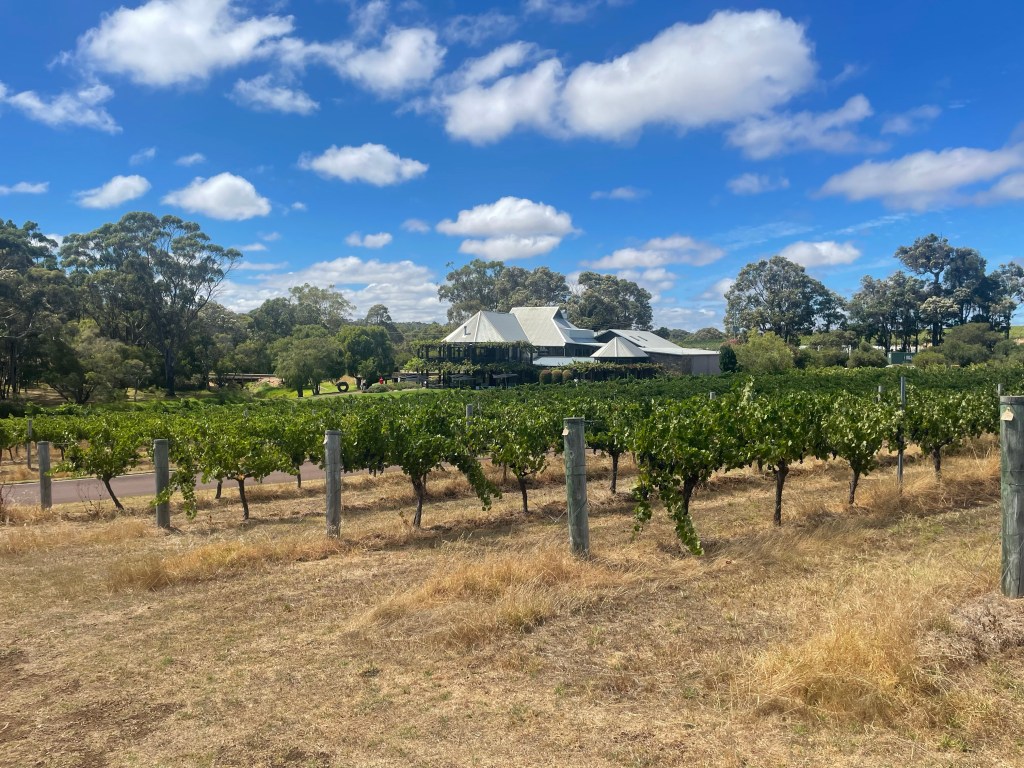
The town has a population of around 600. We stayed for five nights about 10km from Pemberton in a cabin, next to a lake, on a vineyard owned by a Perth (Australia) engineer, originally from Scotland. We were given a tour of the winemaking facility by the winemaker, tasting the wine directly from the barrel. With limited restaurants, generally only opening a few nights a week, we relied on the cabin’s barbie. We were there for Sarah’s birthday and Australia Day, celebrated respectively with marron (600g, similar to a crayfish, purchased live from the producer) and steak from the local “meat mart” in Manjimup. Our marron had been farmed in fresh water dams, but they can also be caught in local lakes but only between 8th January and 5th February, with a long list of applicable regulations.
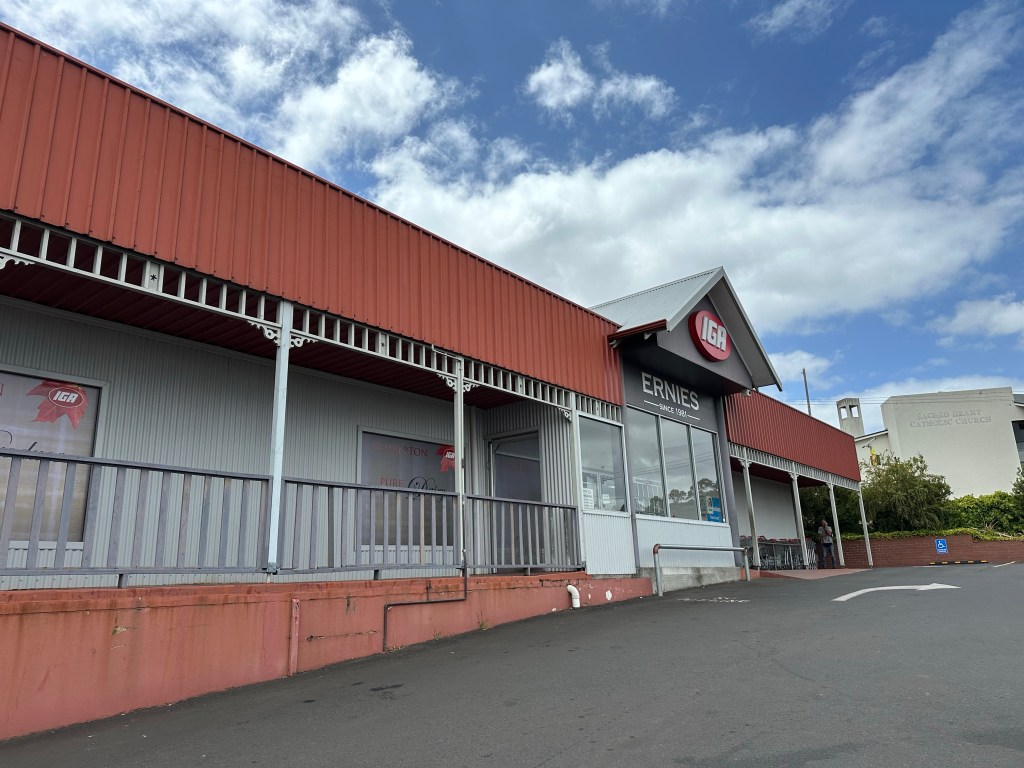
View from our cabin‘Ernie’s’ IGA supermarket in Pemberton
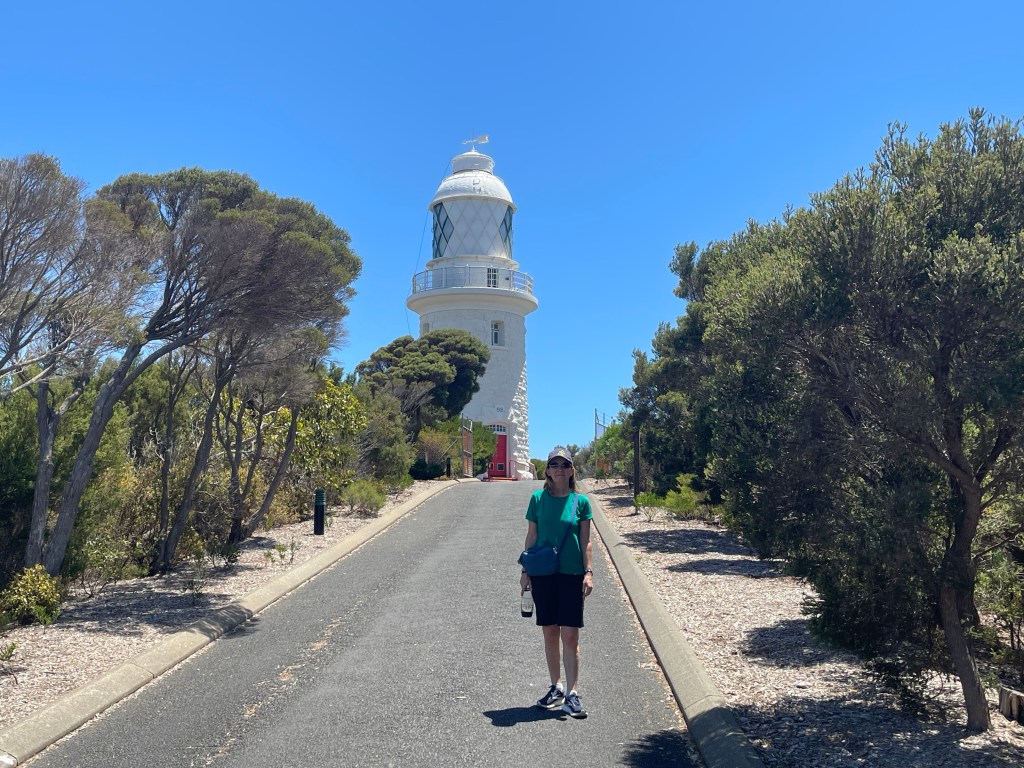
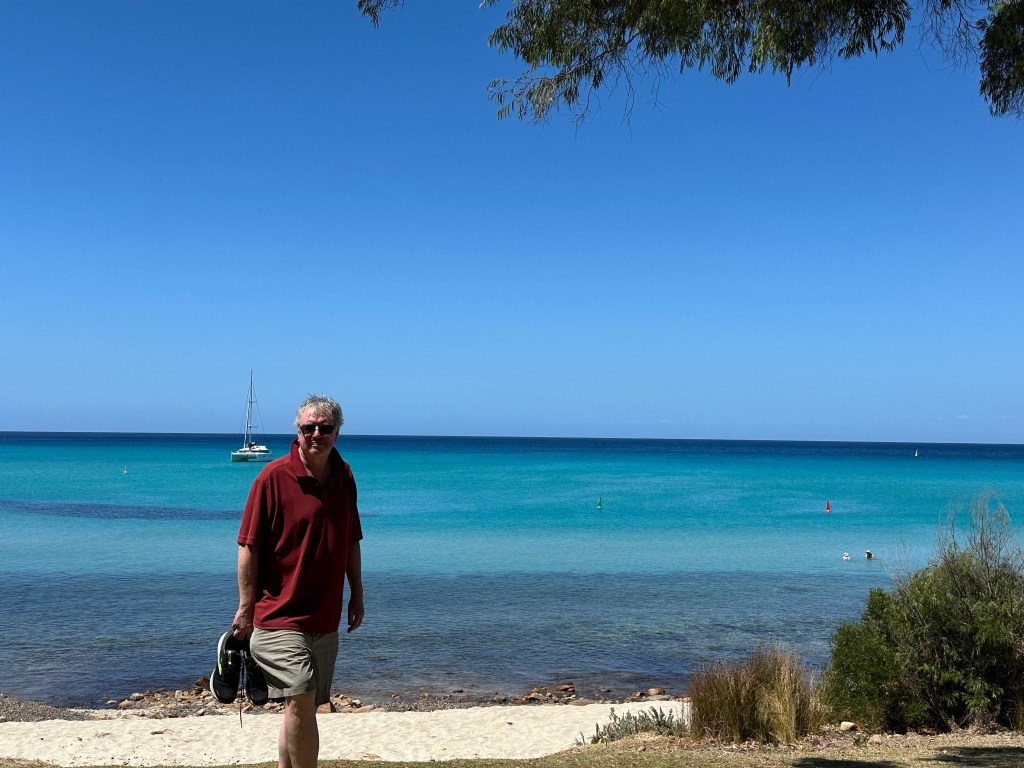
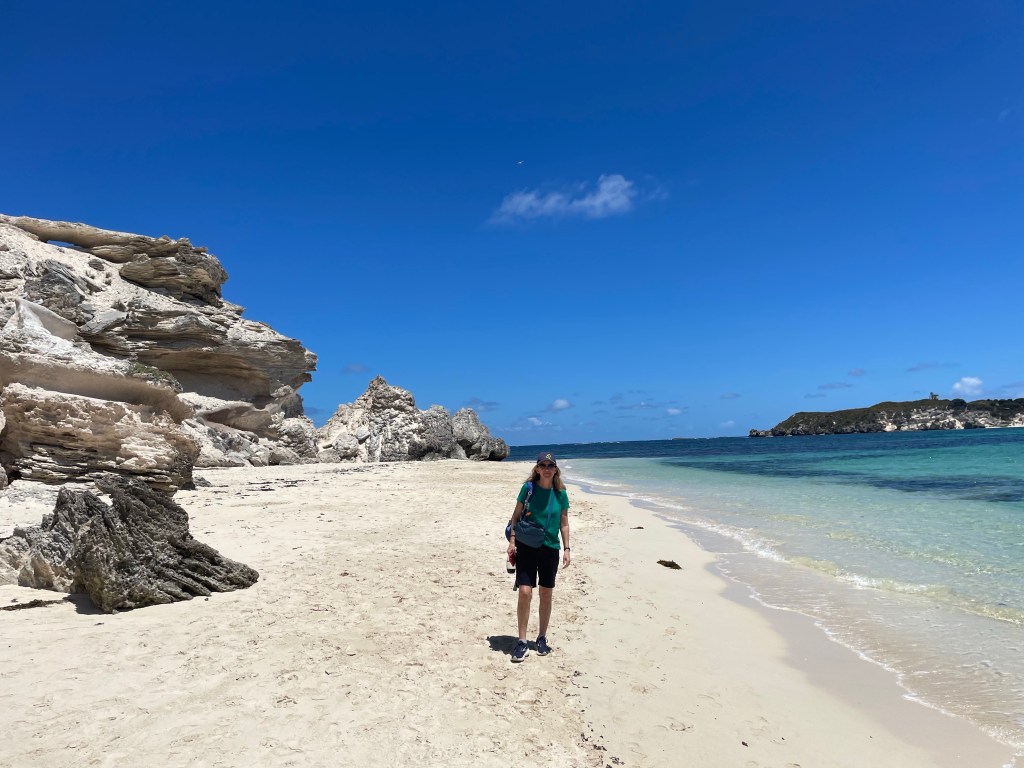
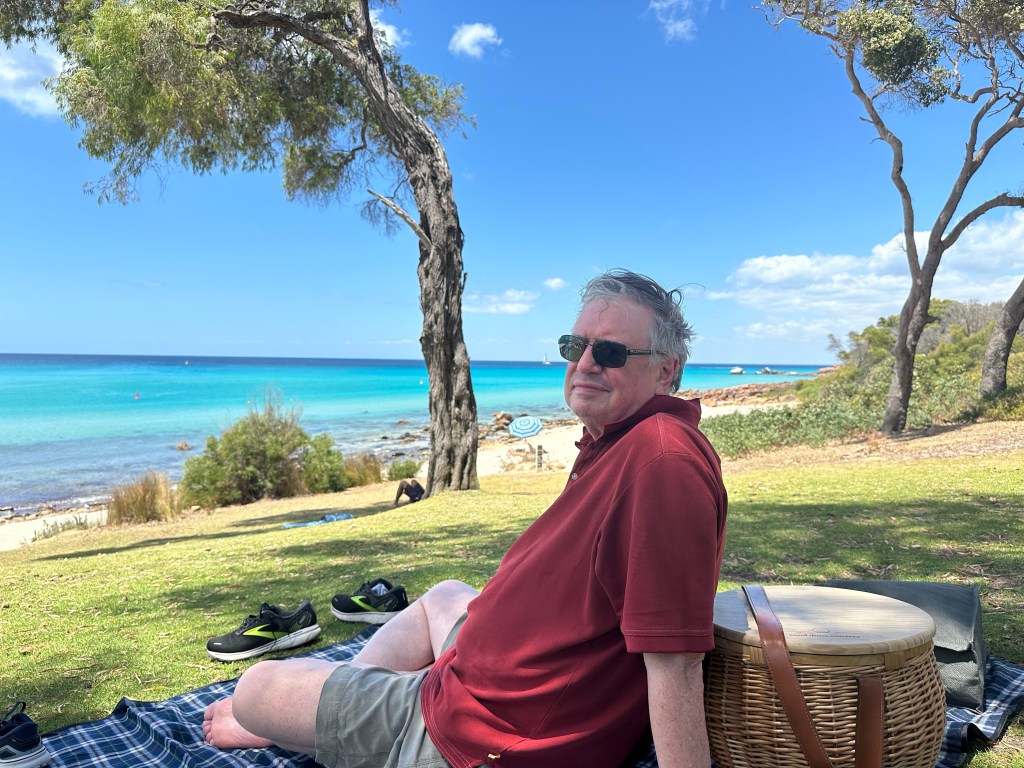
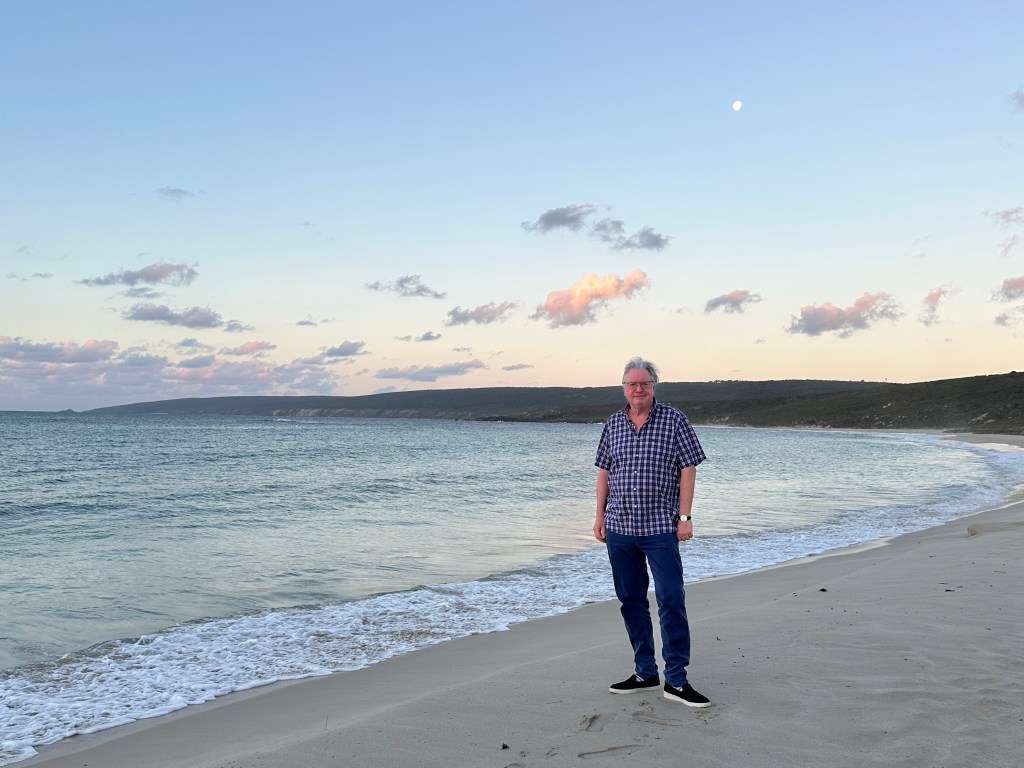
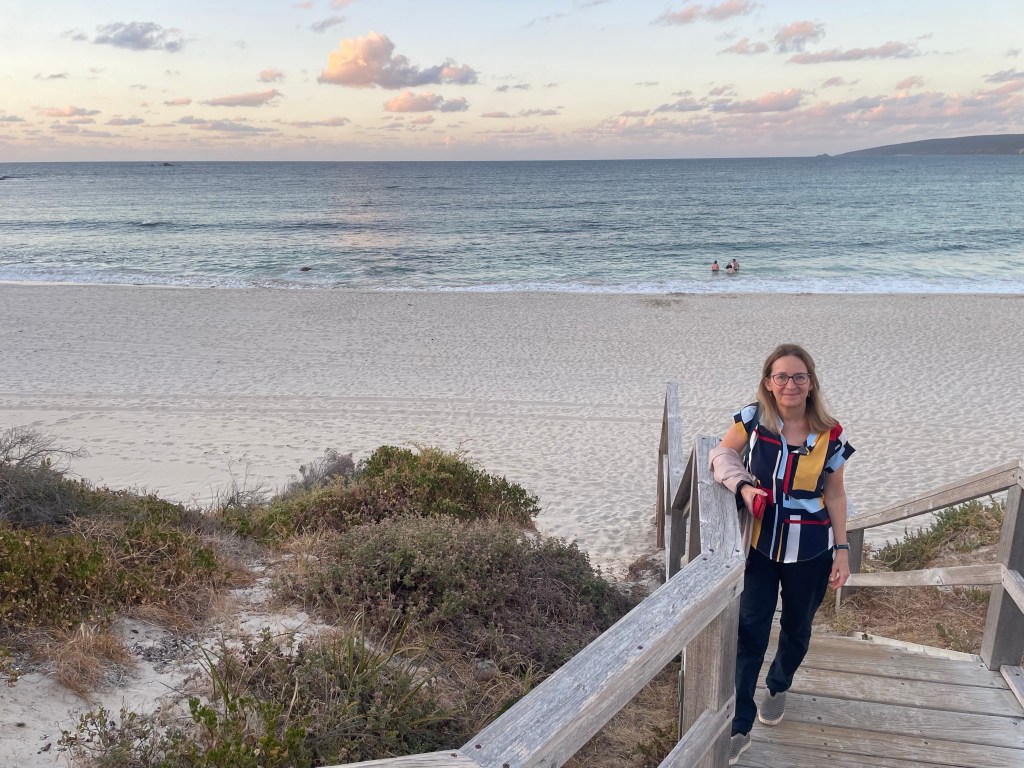
The Margaret River Wine Region runs between the two capes; each cape has a lighthouse and they are connected by Caves Road and a coastal walking trail. The coastline has beautiful beaches with waters from challenging surf to family friendly swimming depending on the geography of the bay. The coastline is carefully managed and protected with minimal development and designated areas for swimming, surfing, fishing etc. There are popular and well equipped picnic/barbie areas, although finding a near deserted beach is not difficult.
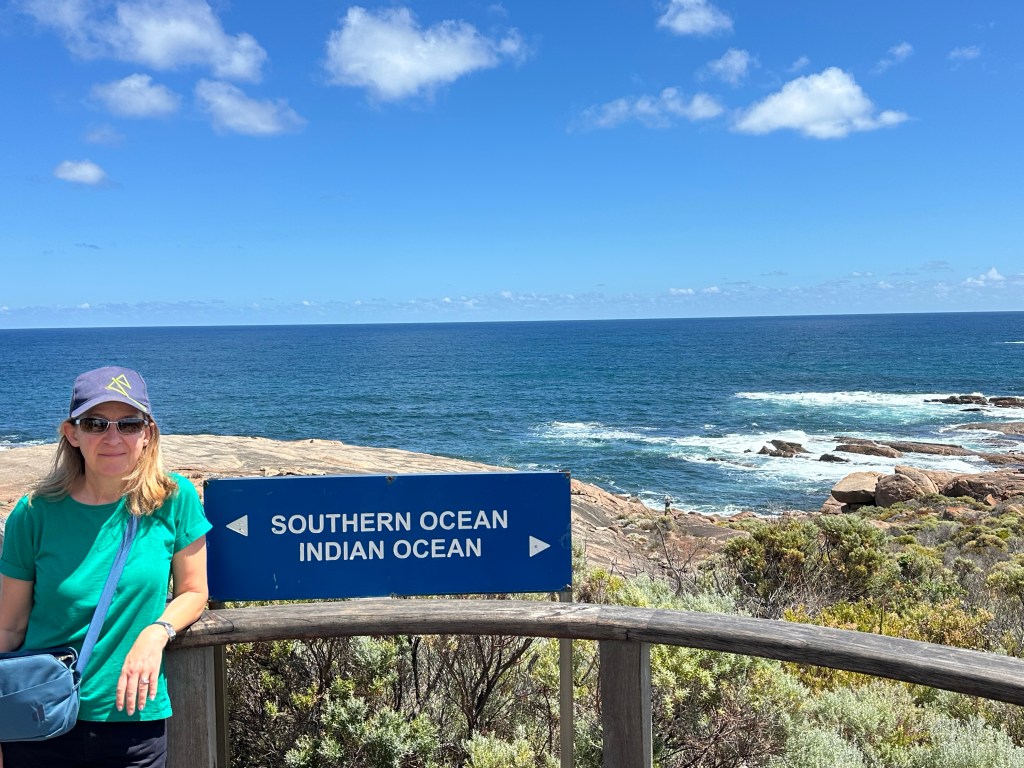
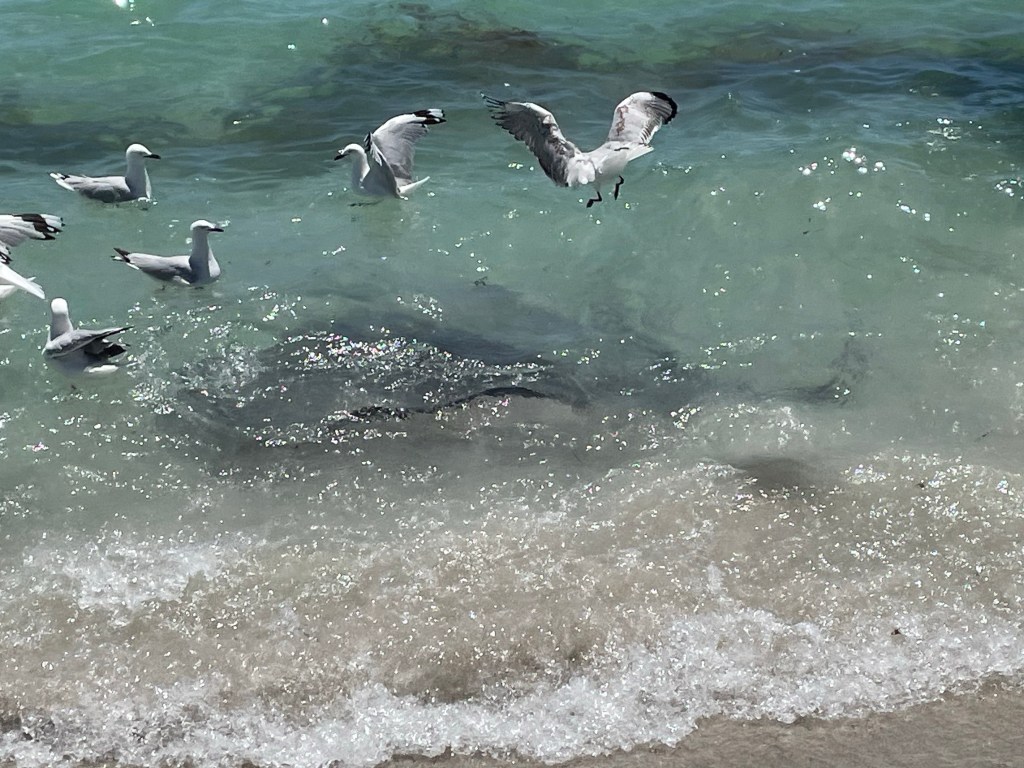
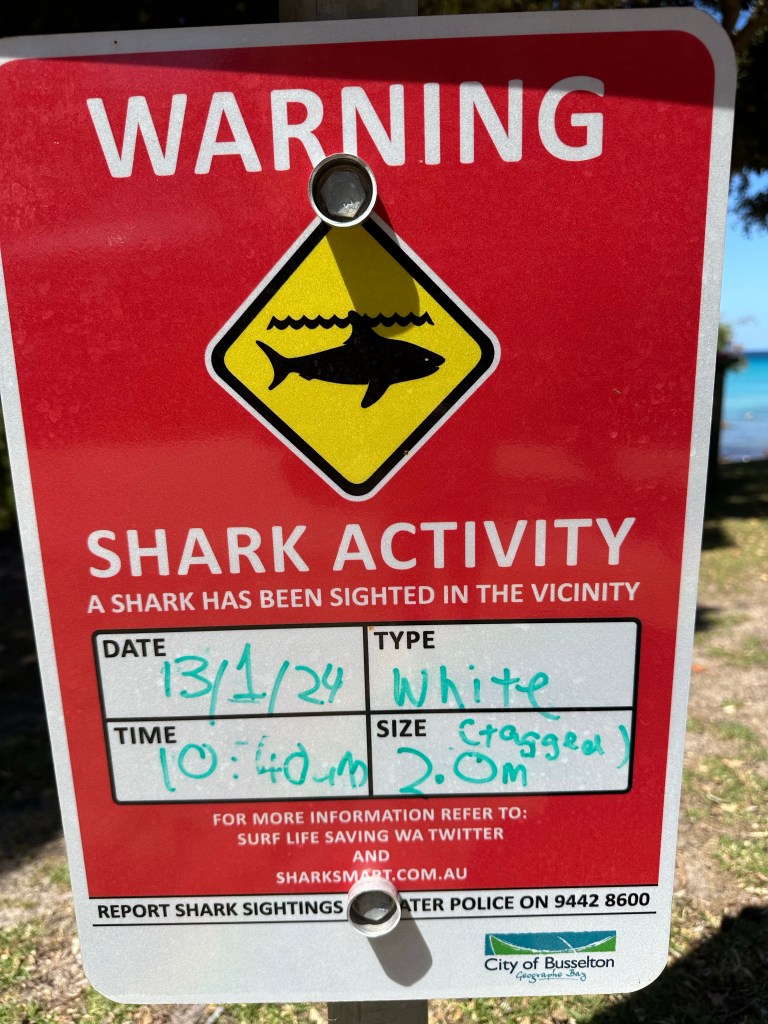
The Indian Ocean runs down the length of the Cape to Cape route, until in the south at Cape Leeuwin it meets with the Southern Ocean. The area is famous for dolphins, whales and rays; because of the season we visited, we only saw the latter….and thankfully no sharks, although the helicopter patrols showed the risk was being carefully monitored.
The Margaret River Wine Region is a strip of land in the very south-western part of Australia. It gets its name from the river in the central part of the region which flows into the Indian Ocean; confusingly there is also a town called Margaret River which is the administrative and tourist centre for the region.
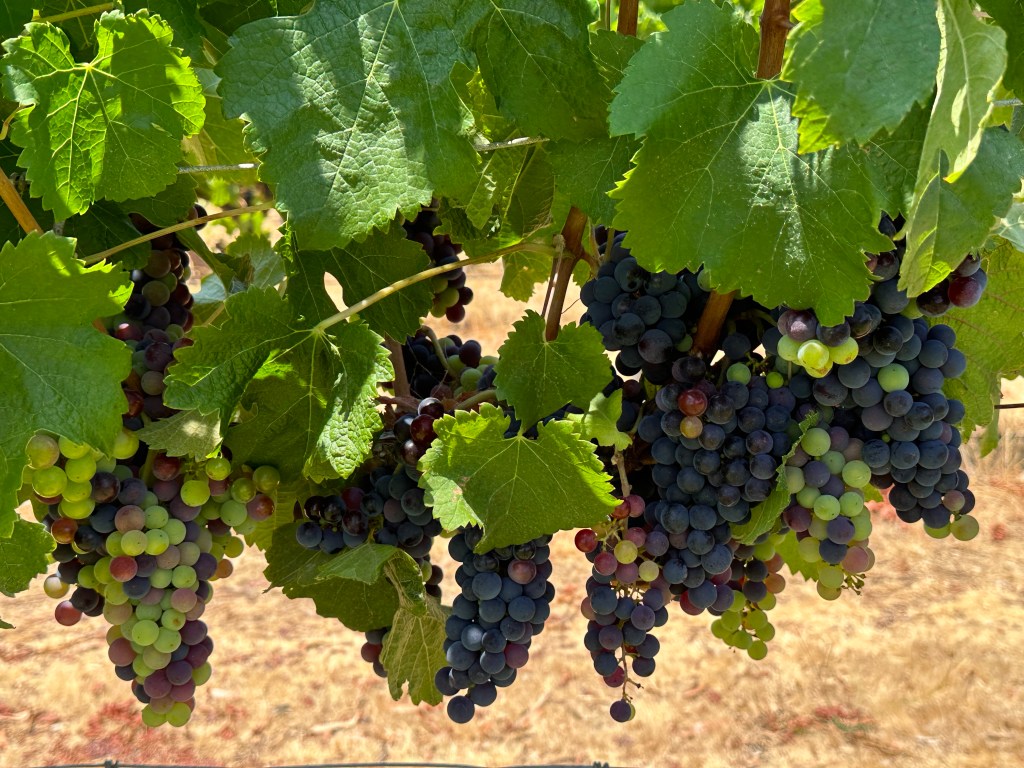
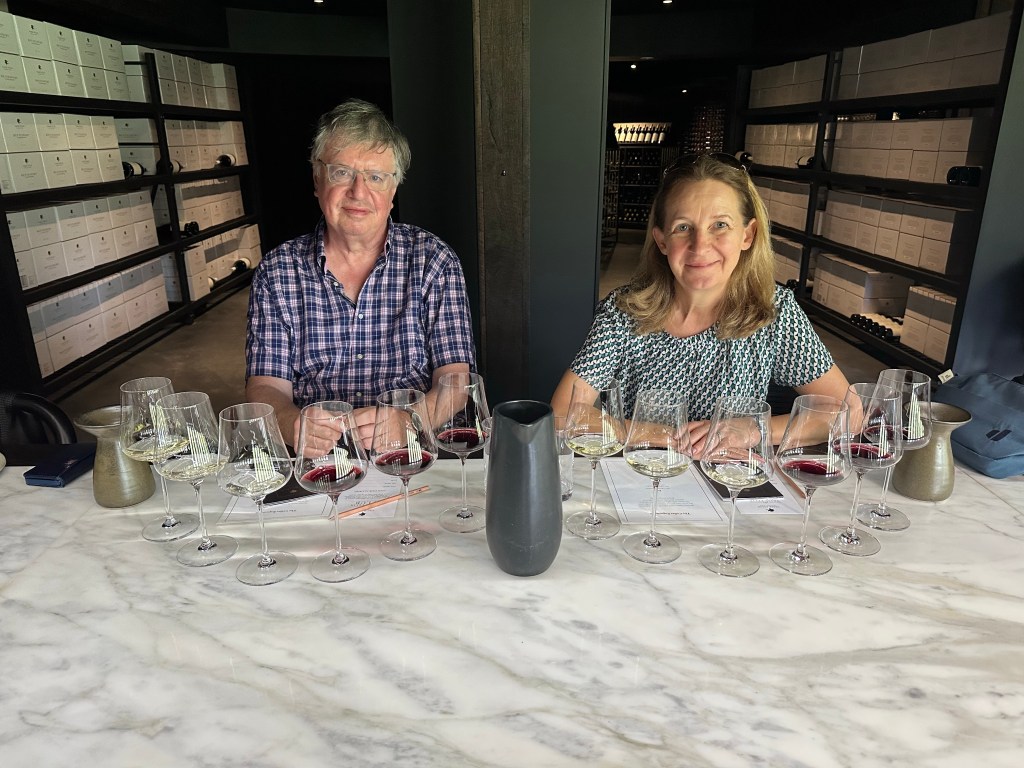
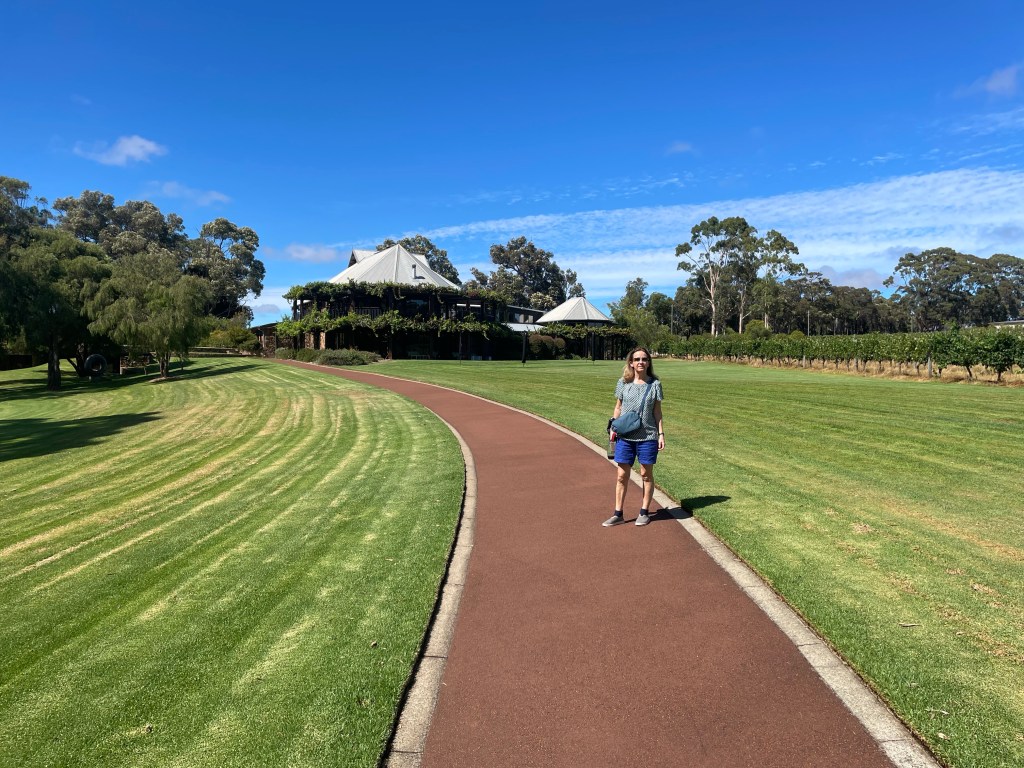
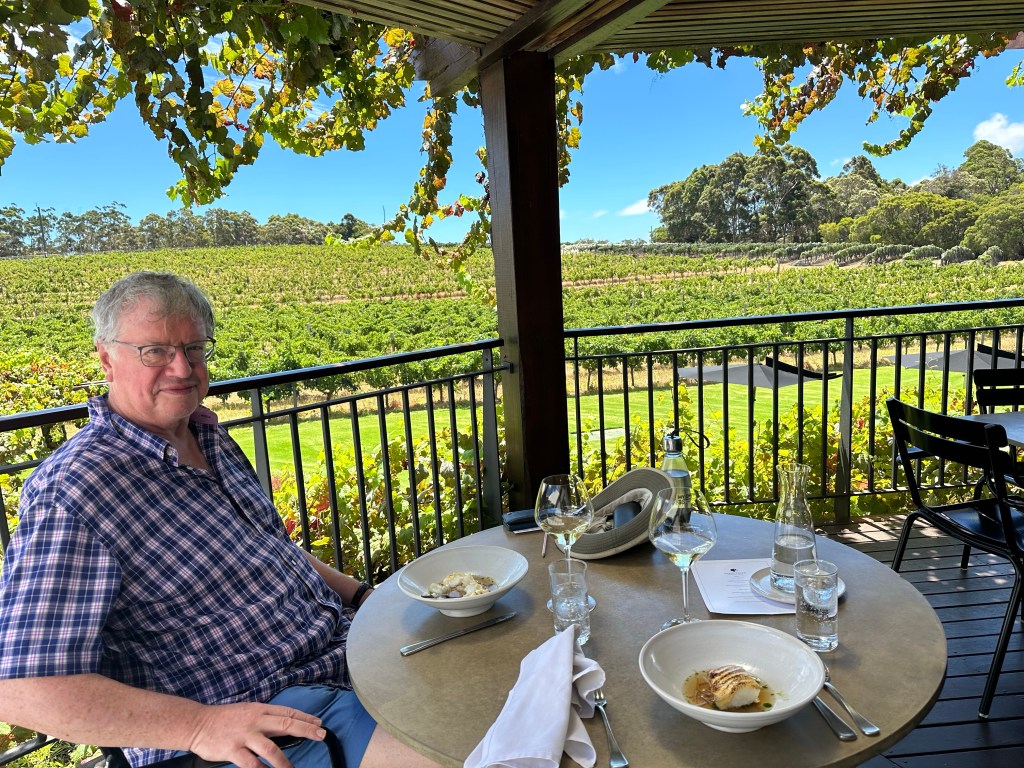
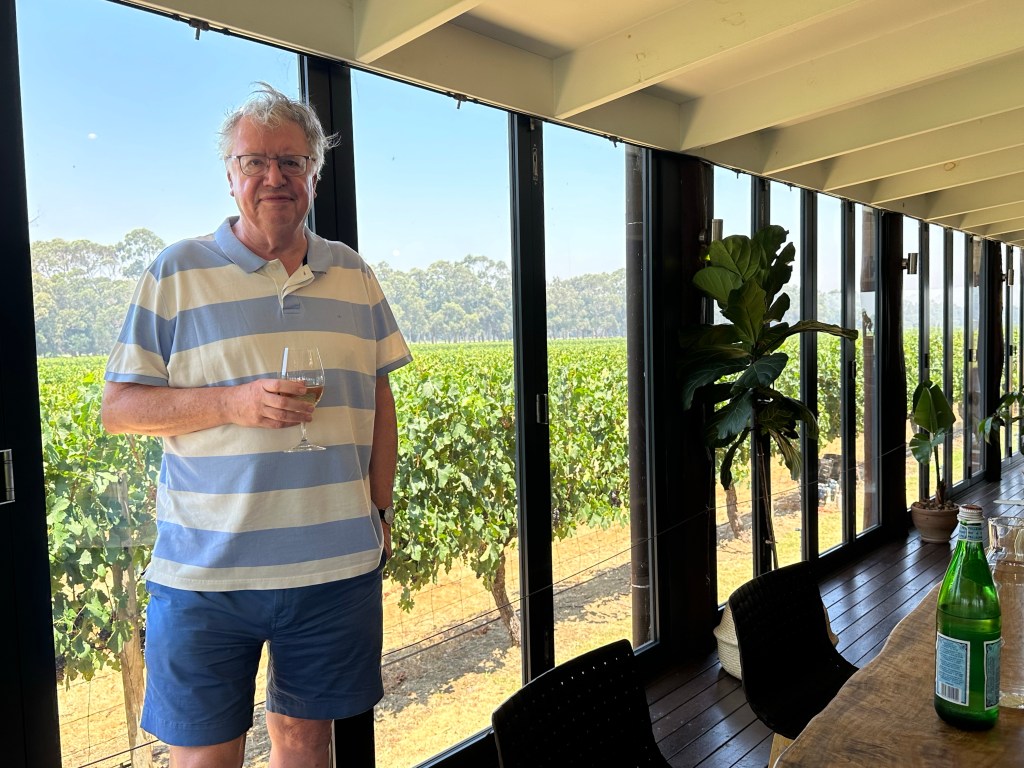
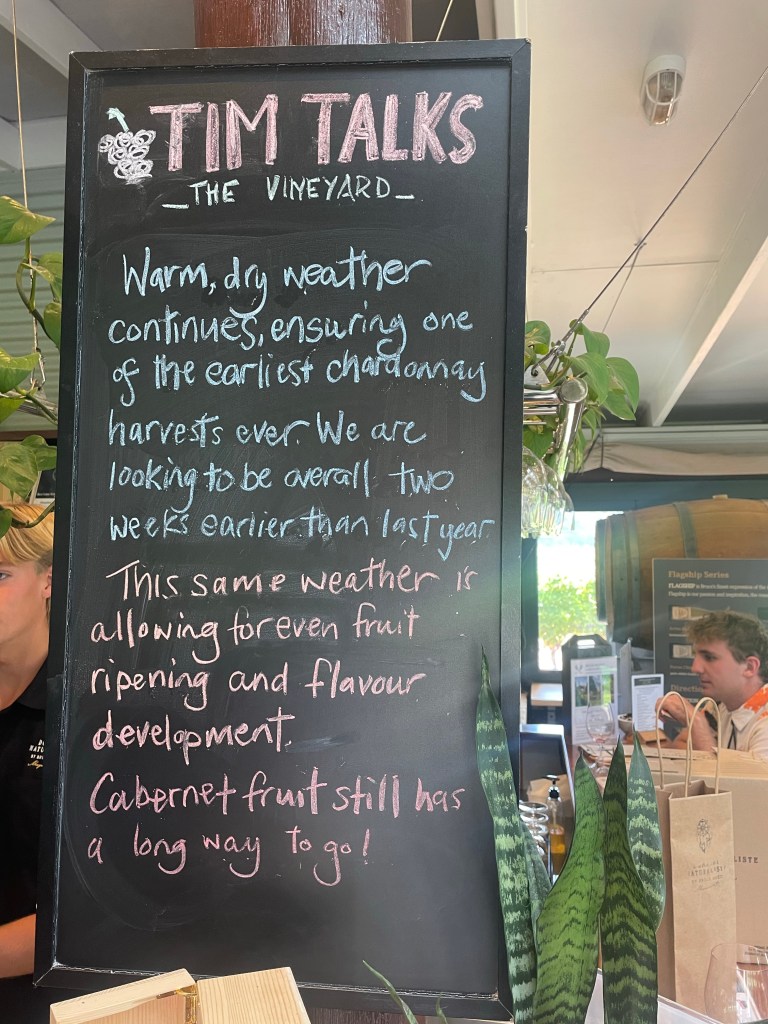
In the 1950s and 1960s scientists examined the soil and determined that, together with the climate, it was suitable for growing vines. Vasse Felix, founded by Dr Tom Cullitty (a cardiologist from Perth), claims to be the first winery in the area with vines first planted in 1967. There are now over 150 wineries in the region, mostly small owner managed boutique establishments. Generally, the business model is – grow grapes, make wine, sell wine to local restaurants and at the cellar door through tastings accompanied by cheese and charcuterie. Financially, many are closer to hobbies than businesses. The quality of the wines is variable but mostly good to excellent. Some vineyards have added accommodation and/or a restaurant and a number at the larger/top end (dominated by Vasse Felix, Cullen, Xanadu, Voyager and Leeuwin) make excellent wines, some of which are exported. The main grapes are Chardonnay and Cabernet Sauvignon.
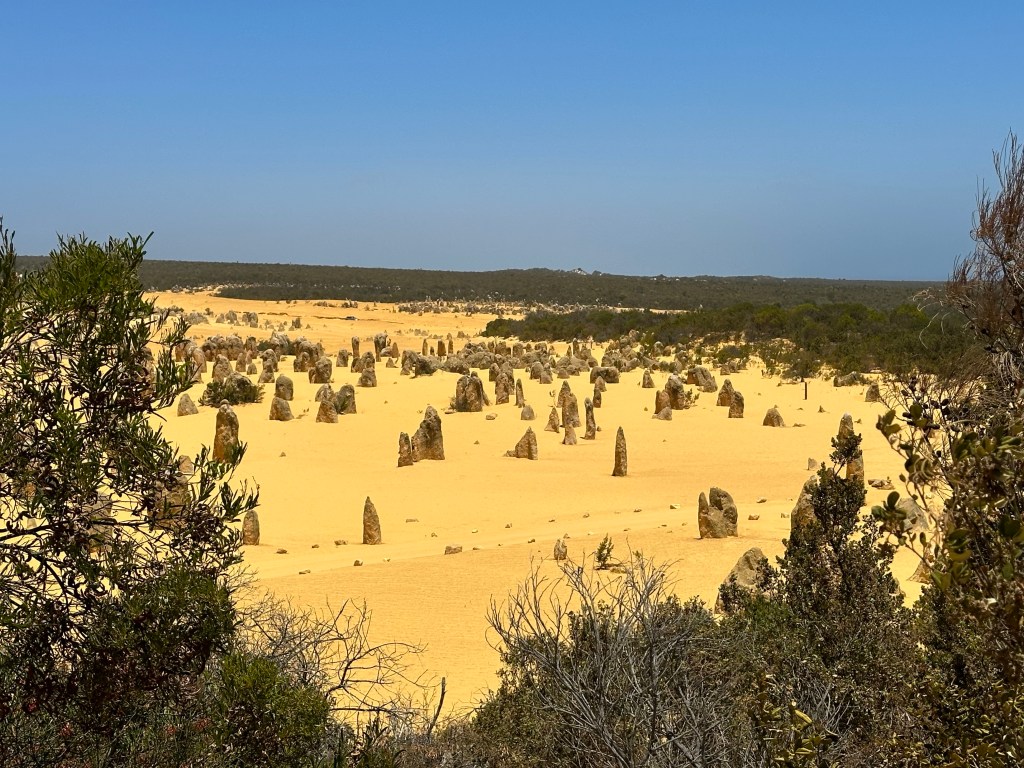
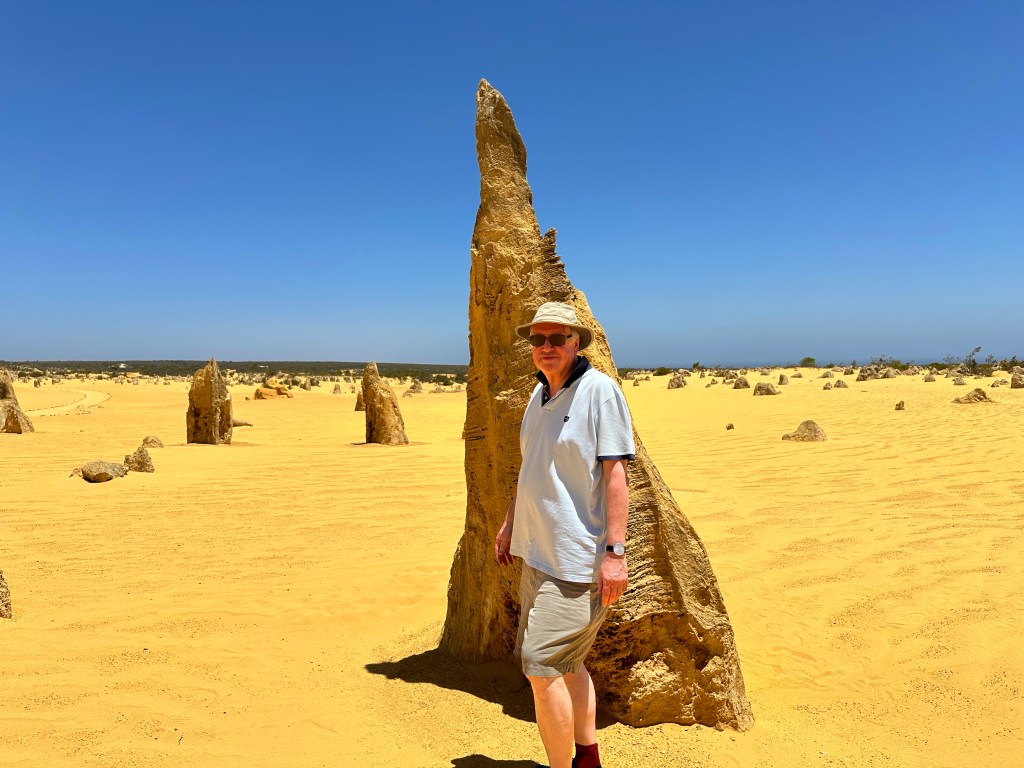
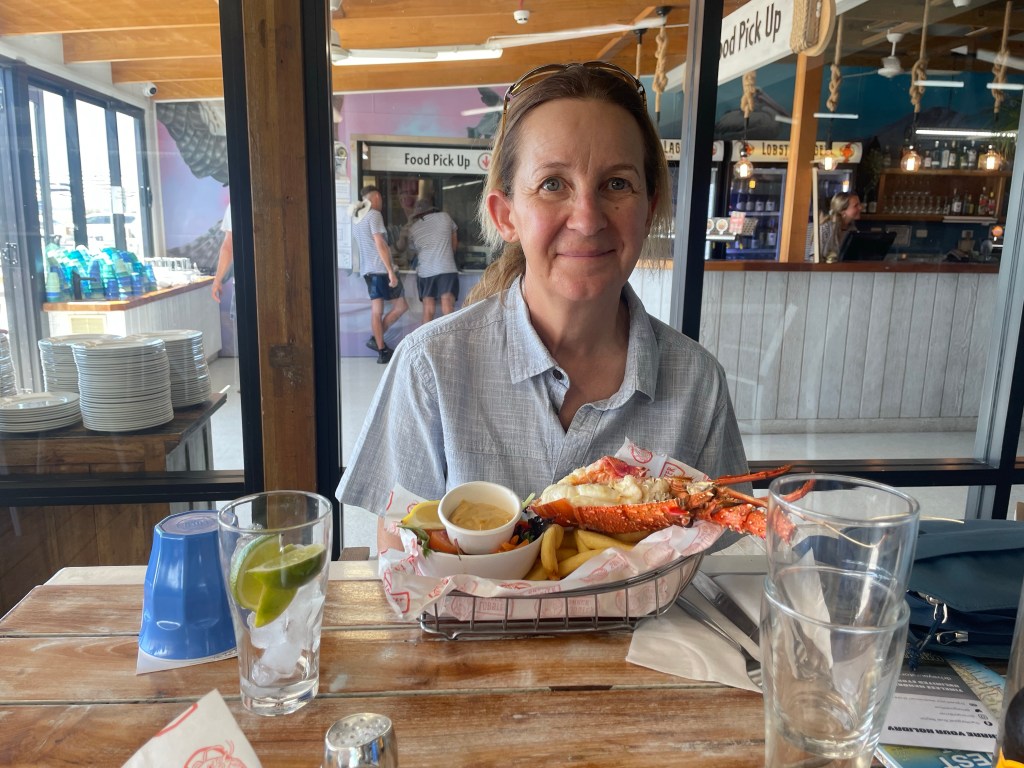
The Pinnacles desert is about a two hour drive north of Perth. As we were jet-lagged, we hired a driver/guide, Peter, who turned out to be a trivia expert as well as a font of local knowledge, including an excellent lunch recommendation – The Lobster Shack – on the way back to Perth.
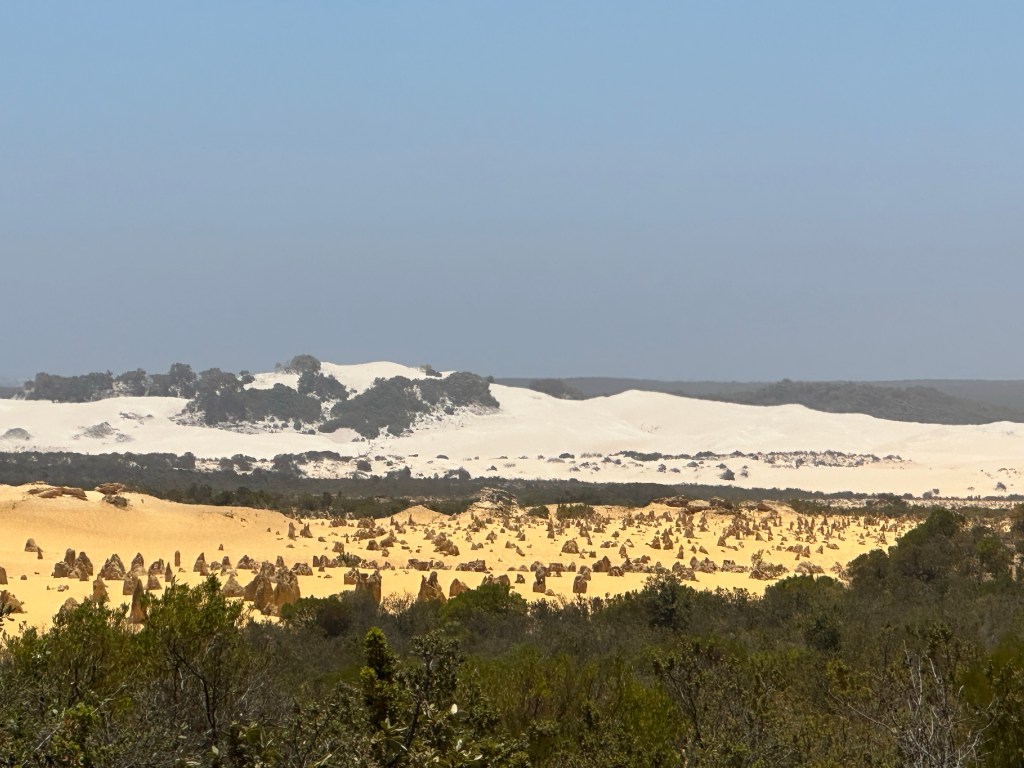
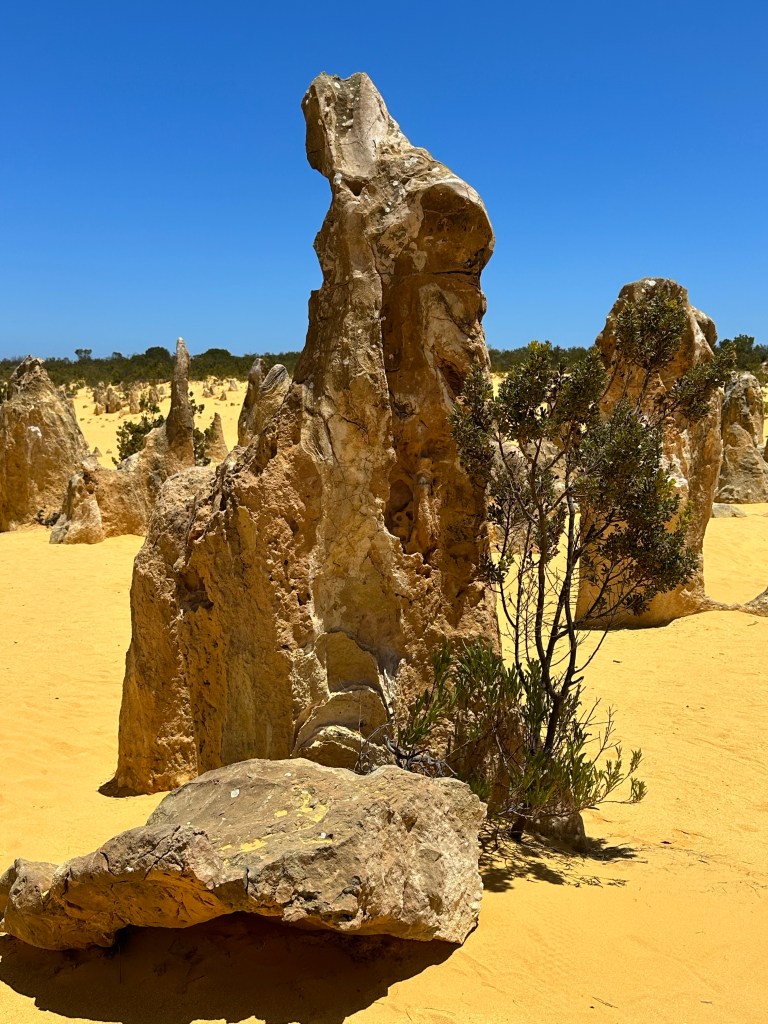
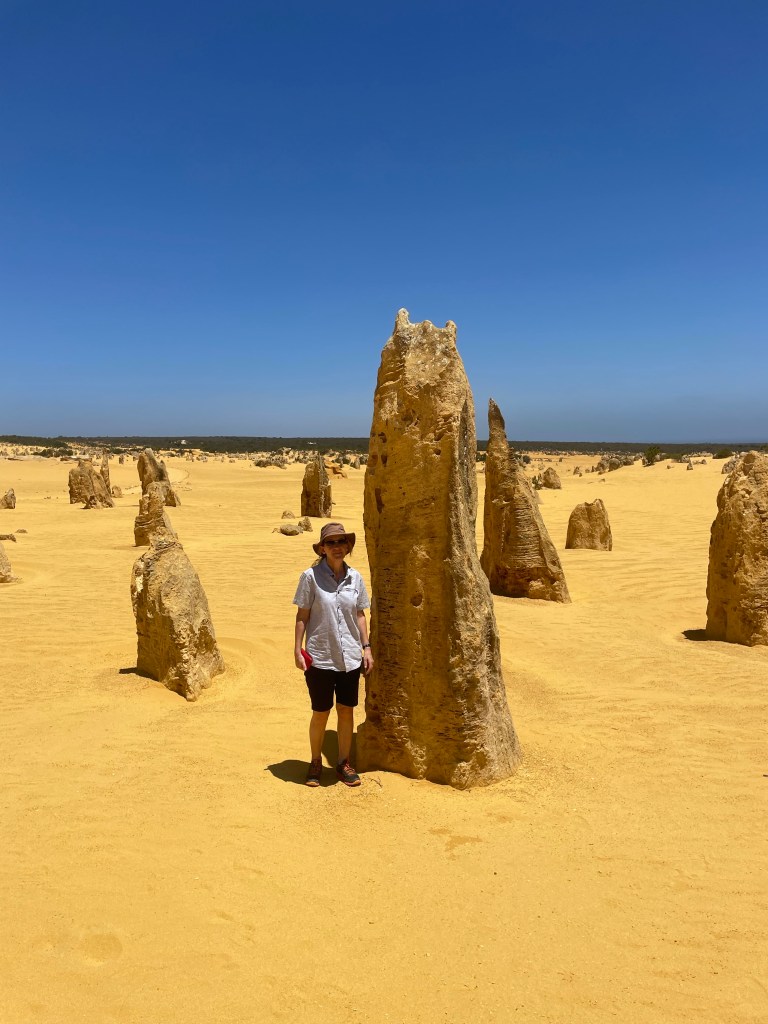
The Pinnacles are a strange collection of limestone rocks, over which there is much debate as to how they were created. The most compelling theory seems to be that they are fossilised remains of an ancient forest. However Peter likes to think that they were built by aliens before building Stonehenge. We visted in a 40 degree heatwave, but this did have the advantage that noone else was there.
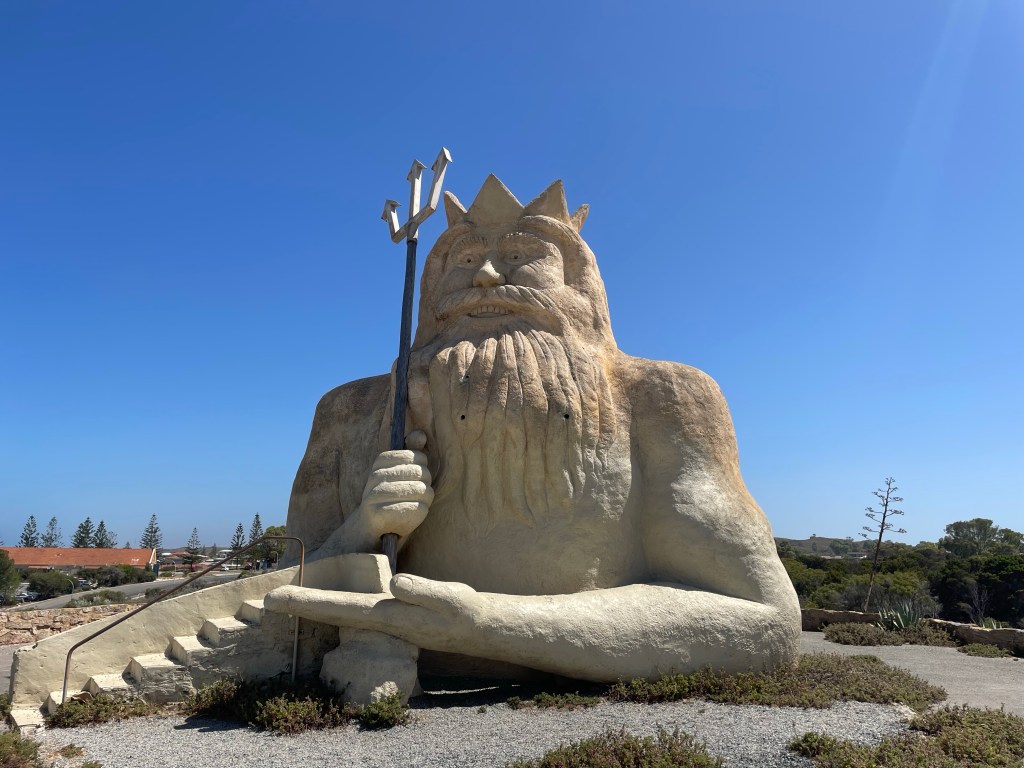
On the way we visited Two Rocks, the home of the failed Atlantis Marine Park, a 1980s venture of Alan Bond. The “attractions” have all been flattened, other than a massive statue of Neptune.
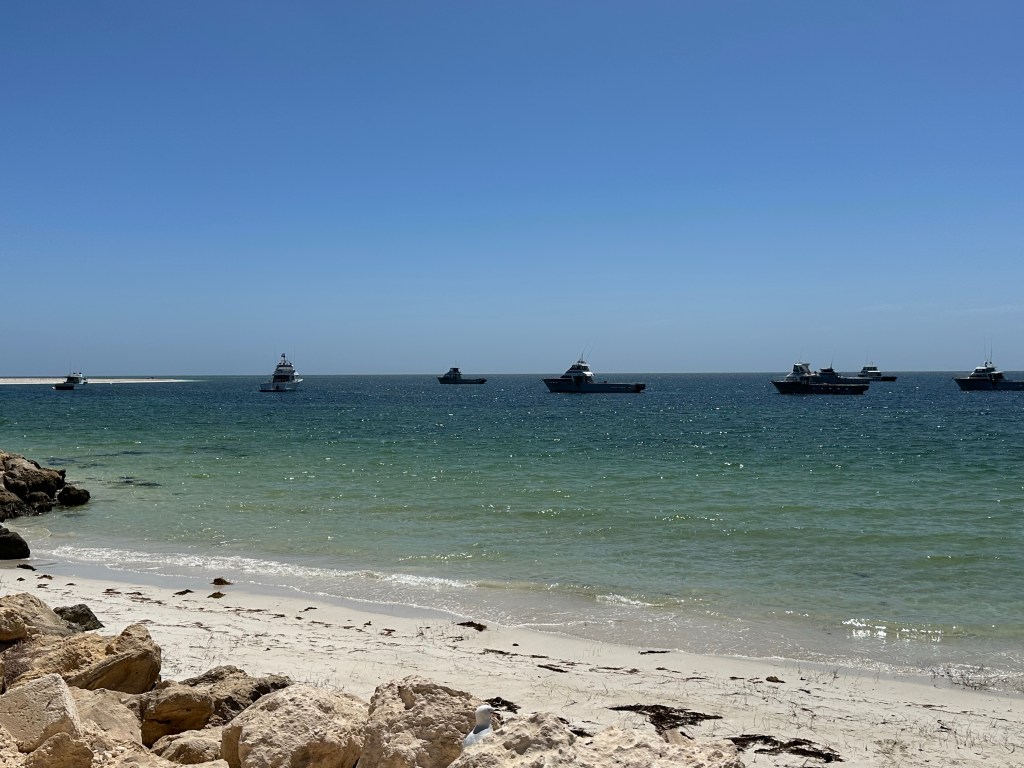
The desert has two distinct sand colours from limestone and sandstone View from the Lobster Shack
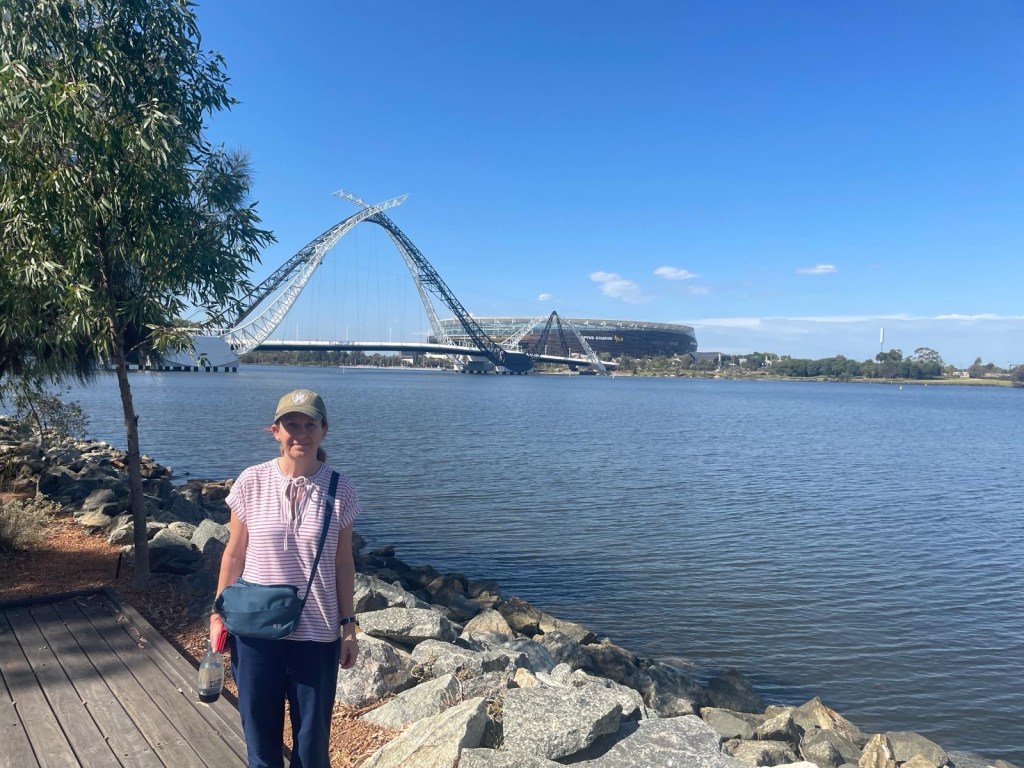
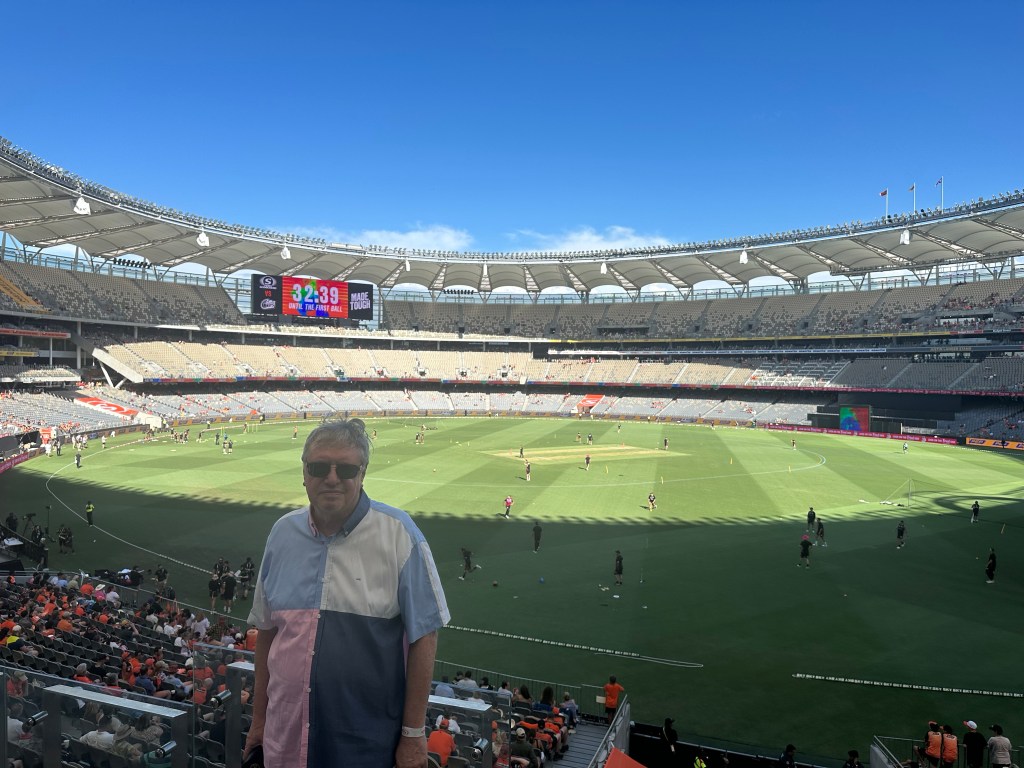
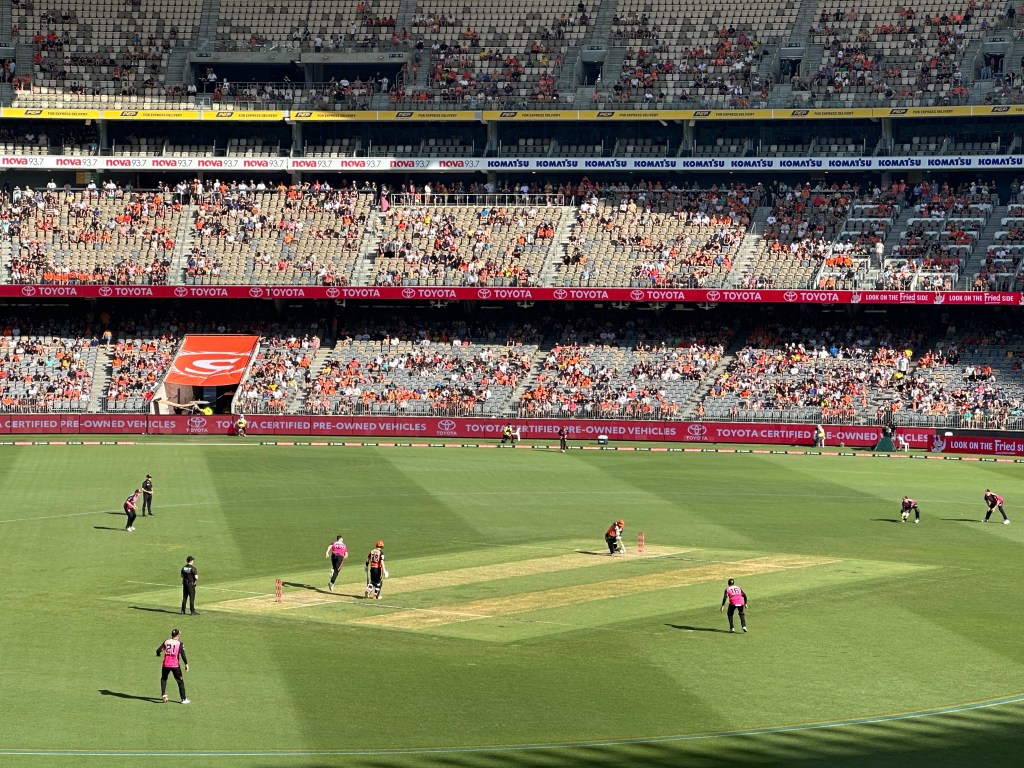
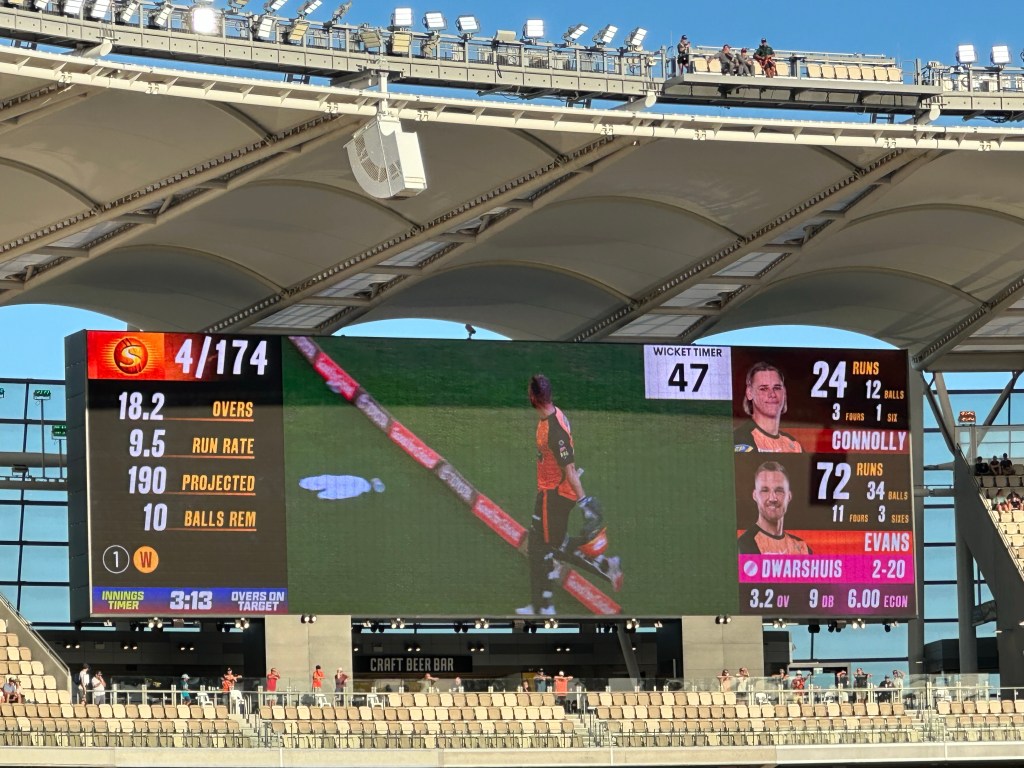
Whilst in Perth, we watched the Perth Scorchers play the Sydney Sixers in their last game of the Big Bash regular season to determine second and third places for the play-off rounds. The Optus Stadium, on the Swan River, opened in 2017 with a capacity of 61,000, purpose built for Aussie Rules Football and cricket. It was a high scoring games, with Sydney winning on the last ball. We’d arrived in a Perth heatwave, so at over 40 degrees, the local team’s name was apt.
Valuable contribution from Andrew’s former pupil and local fan favourite
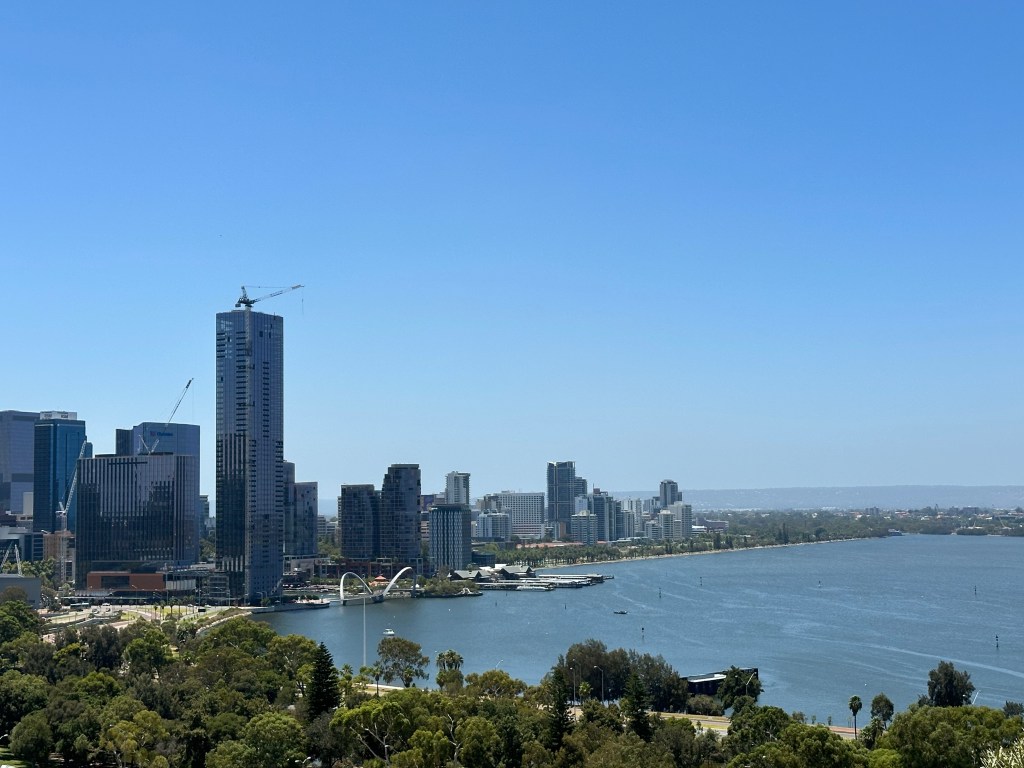
WA is one third of Australia in size measuring 2.5 million square kilometres (ten times larger than the UK) and would be the tenth largest country in the world, but only has a population of 2.8 million (UK is 24 times larger), 80% of whom live in Perth.
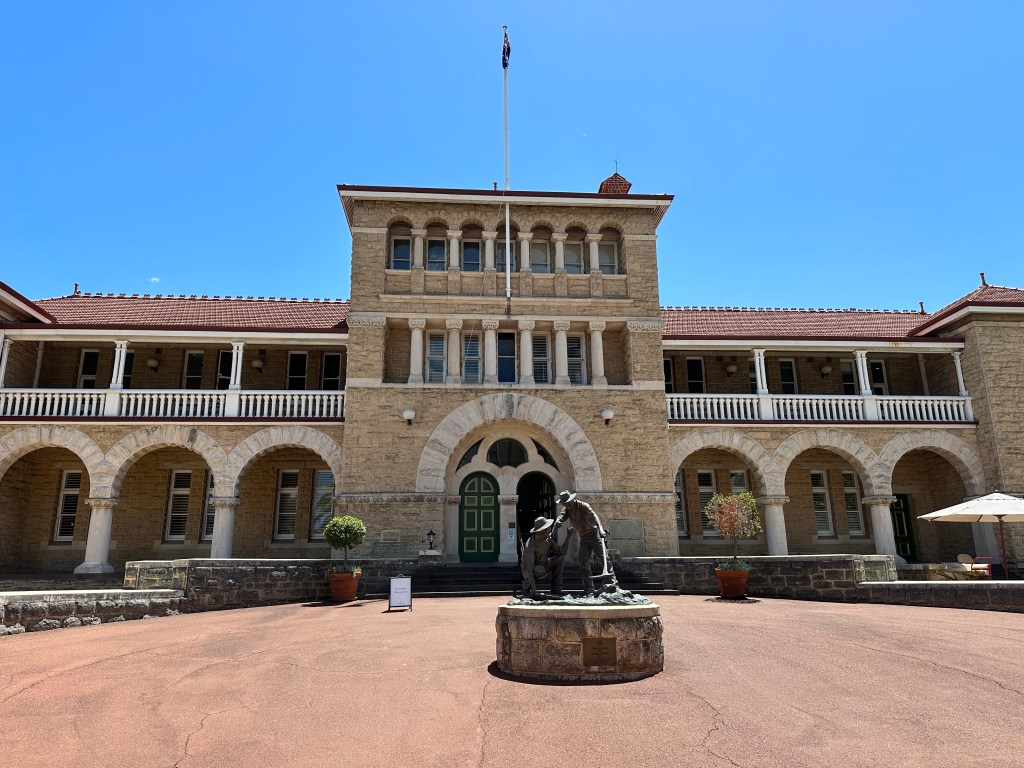
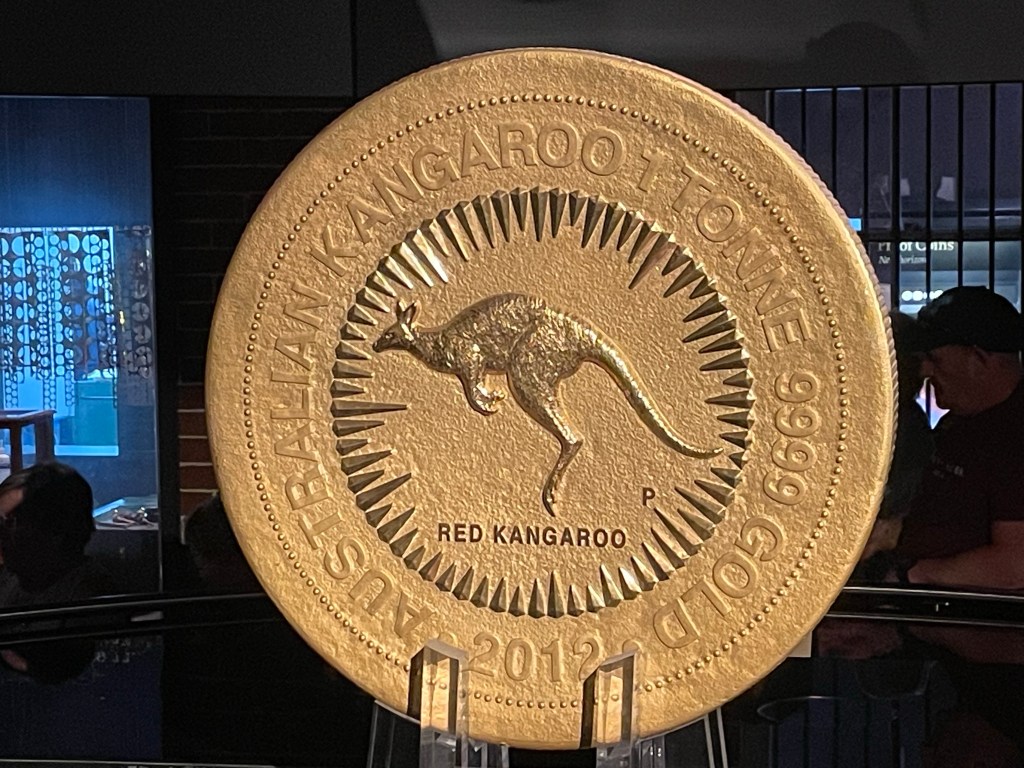
It was first encountered by Europeans in 1616, with the first colony, The Swan River Colony (now part of Perth)set up in 1829 by the British. In 1892 gold was found in WA, creating a boom and in 1899 The Perth Royal Mint was created to buy gold and mint coins. The Mint remained under British control until 1970; while Britian was on the gold standard, until 1931, the Perth Mint produced over 100 million gold soverigns. In 2011, the mint produced the world’s largest gold coin at 1,012kg made of 24 carat gold which is displayed at The Mint.
WA is Australia’s wealthiest per capita state driven primarily by mining and petroleum extraction, which represents almost half of Australian exports.
Our trip was a case of “third time lucky” having cancelled twice due to pandemic travel restrictions. With only two roads into the state, the government of WA chose to close the borders to other Australian states as well as other countries for almost two years earning it the nickname “hermit state”.
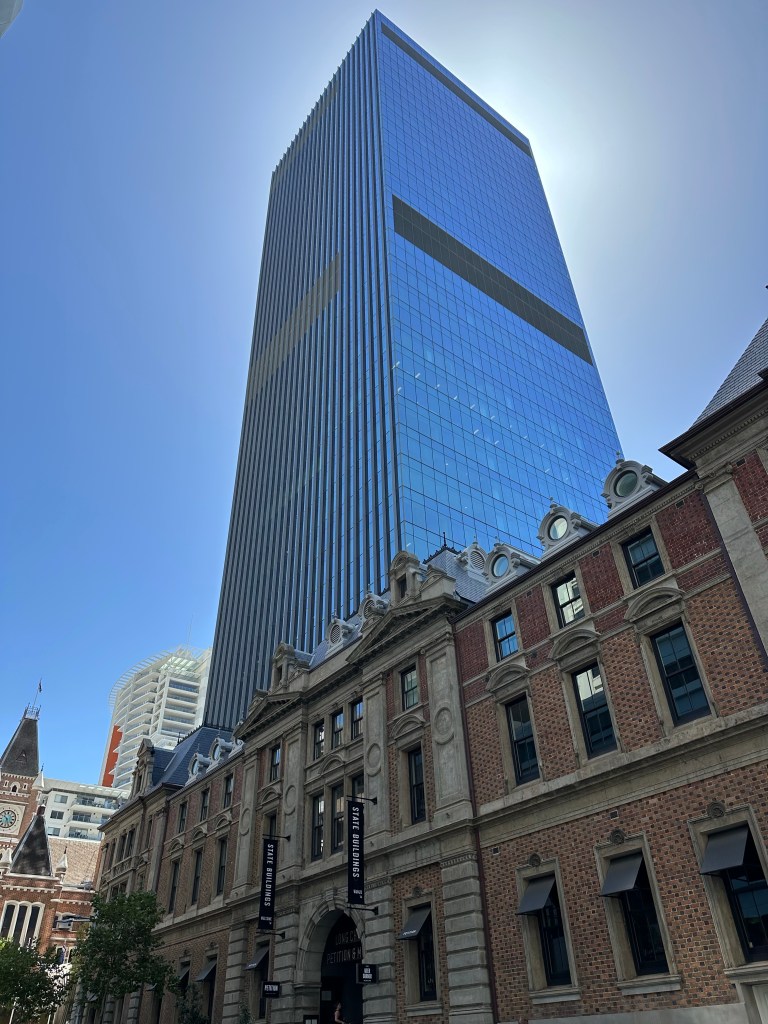
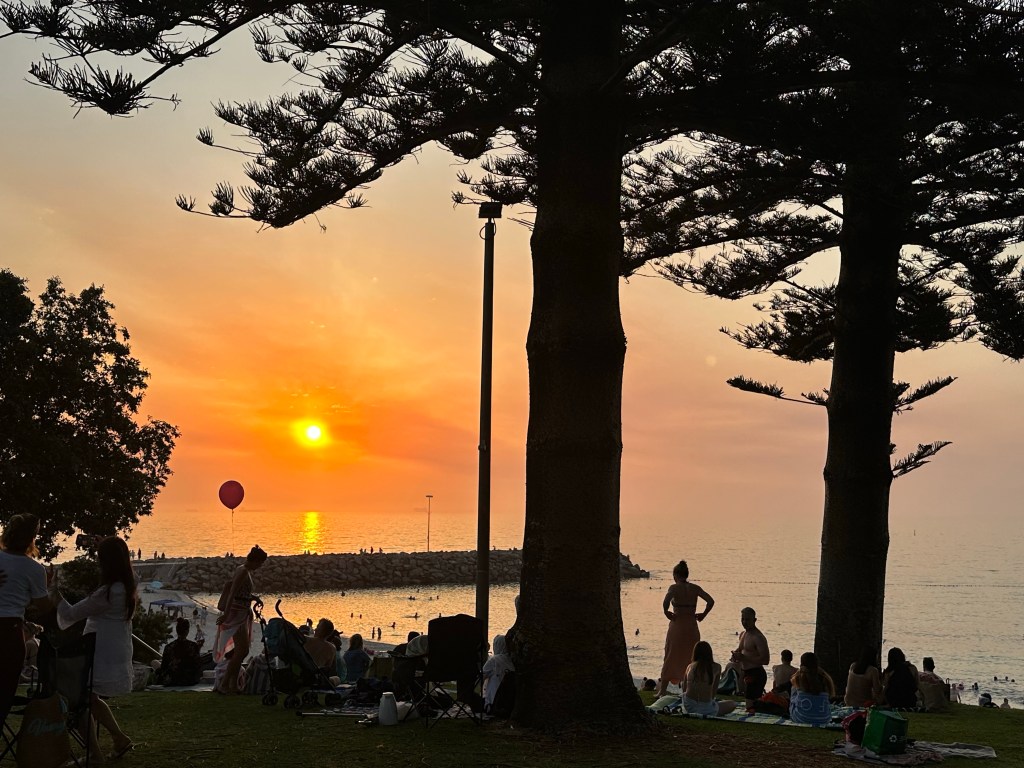
The Perth Royal MintThe worlds largest coinThe former state buildings, now restaurants and the hotel where we stayed in the former Treasury Sunday evening at Cottesloe beach






 Shilli-Fully Travels