Rhodes

Rhodes, being 18km off the Turkish coastline (but 363km from Greek mainland) , is a less than a two-hour ferry crossing from Fethiye, itself less than an hour and a half from Kalkan, so it’s an easy place for us to visit. Rhodes’ history is similar to much of the Eastern Mediteranean – Greeks, Persians, Alexander, Roman, Byzantine – however in 1306 the island was occupied by the crusaders in the guise of the Knights Hospitaliers. The knights were responsible for the fortification of Rhodes Town which are still visible today. The knights fought off several attempts to take the island until in 1522 Sulieman the Magnificent besieged Rhodes for six months. The knights were forced to surrender, but allowed depart to Sicily then settling in Malta.

The island was colonised by the Italians in 1912 and remained under their control until 1947. Following the Italian Armistice the allies sought to take control of the island but were defeated by Germany in the Dodecenese Campaign. Under German occupation approximately 2000 Rhodean Jews were sent to concentration camps with 200 being saved by the island’s Turkish Consel. At the end of the war the island was given to Greece and 6000 Italian repatriated.

Today Rhodes has a population of around 125,000. In 2022 tourist numbers reached 2.5m with over 400 cruise ships visiting. We visited in May, splitting our time between Rhodes Town and a coatal hotel and timed our visit to take advantage of a gap in the cruise ship visits. As most tourists stay on the coast, Rhodes Town has a very different atmosphere before 11am and after 5pm. Our family run hotel was inside the fortifications of the Old Town. As well as walking the ramparts, visiting the archealogican musuem and a number of historical sites, we enjoyed some delicious meals with local wine and shopping (thanks to our hosts’ recommendations, as most shops were selling tourist “tat”).
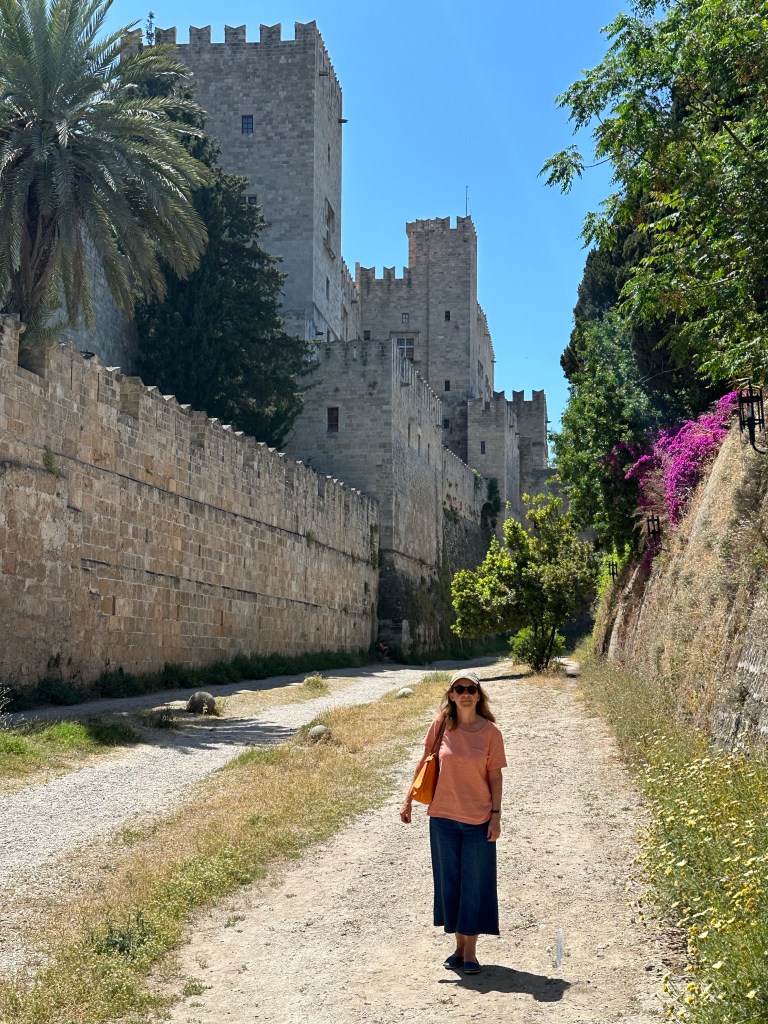
The former moat of Rhodes Town
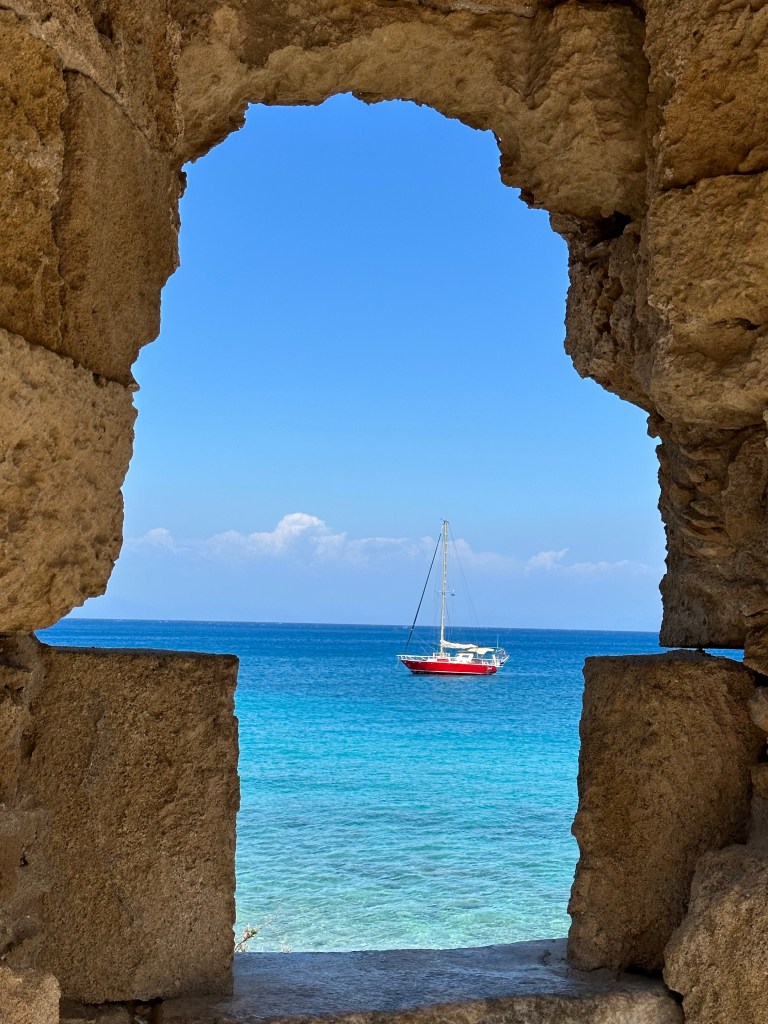
From one of the Rhodes Town gates
Knights of Rhodes street
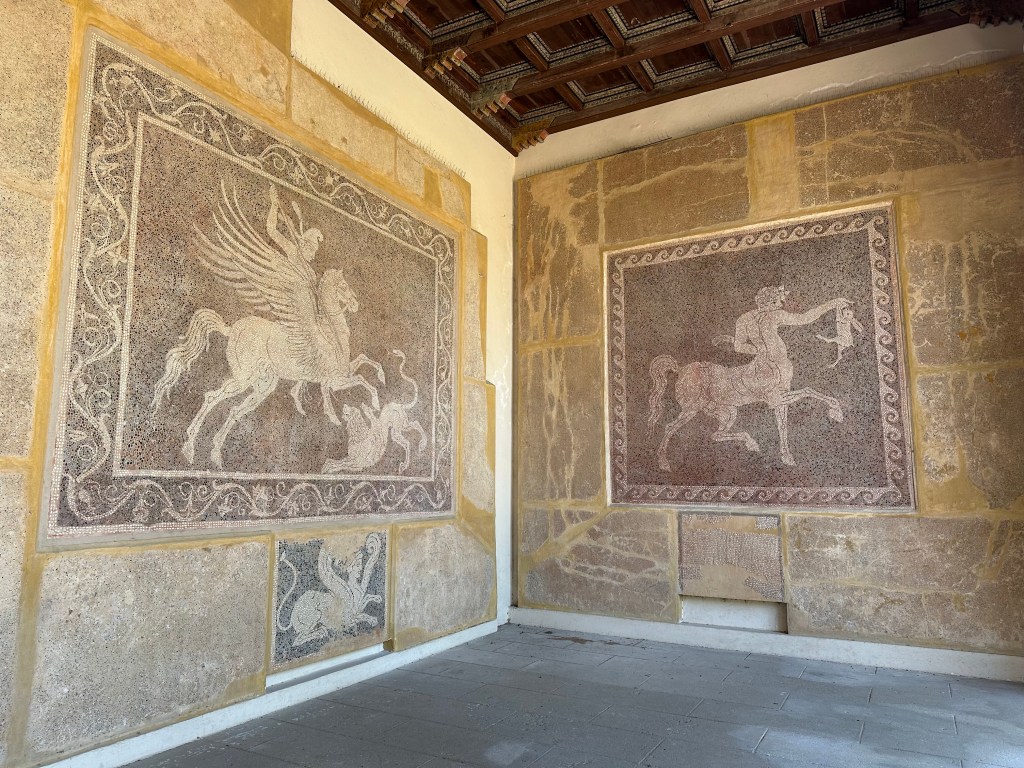
Archaeological museum
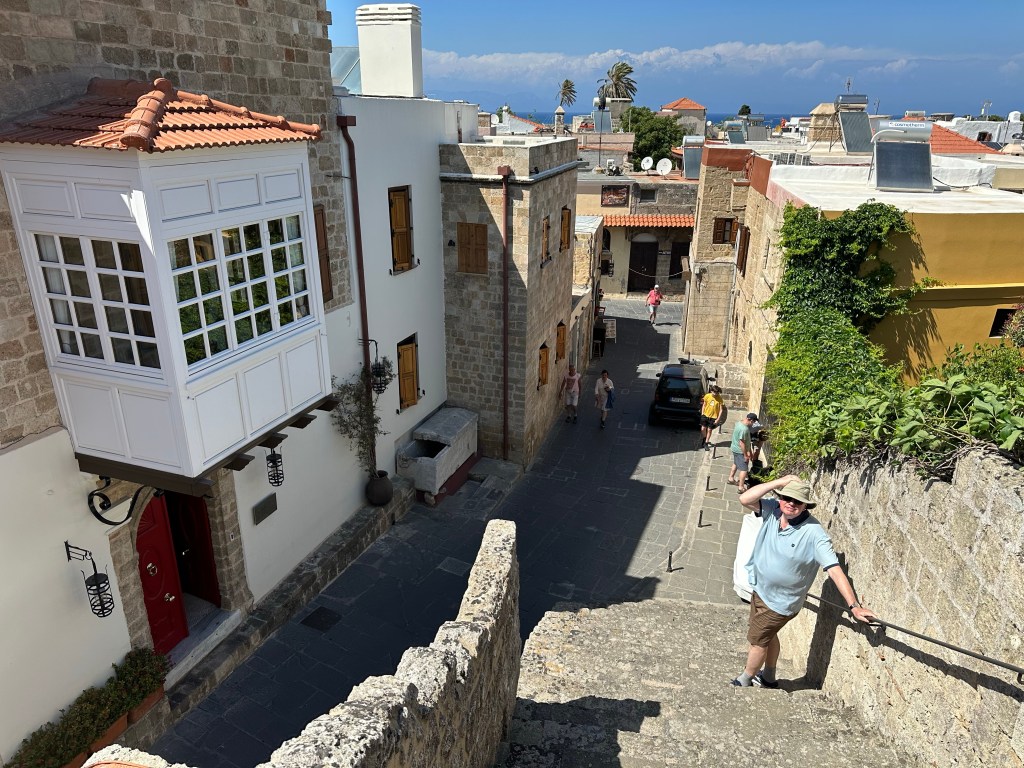
Steps up to the ramparts; our hotel on the left
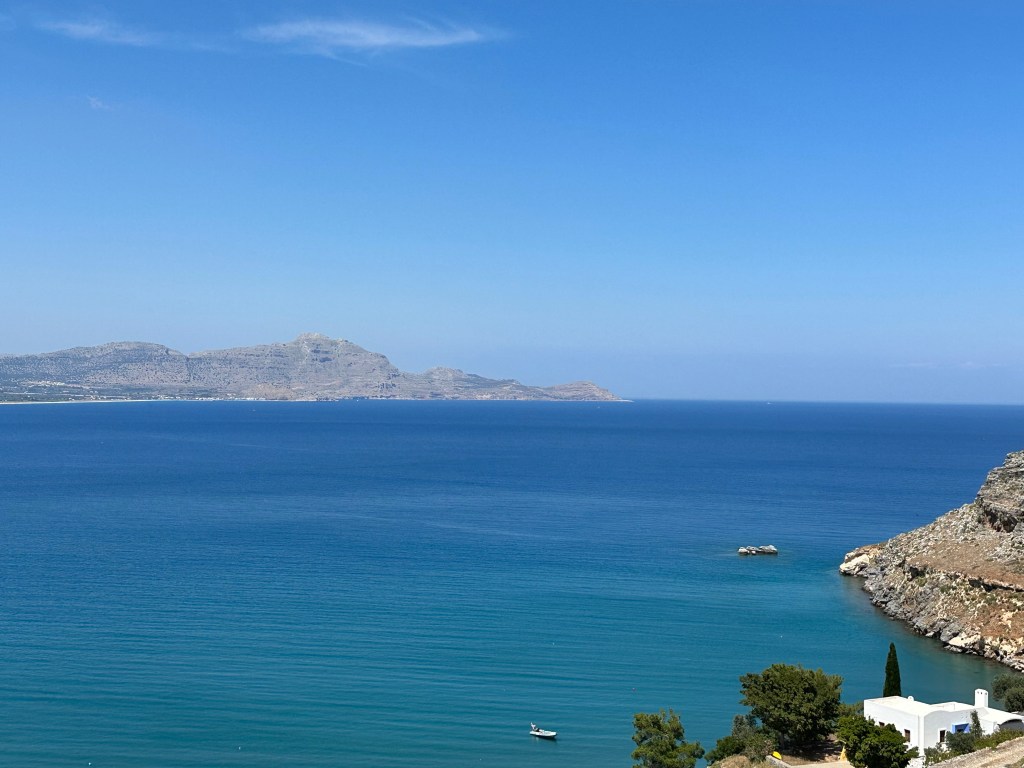
From our hotel

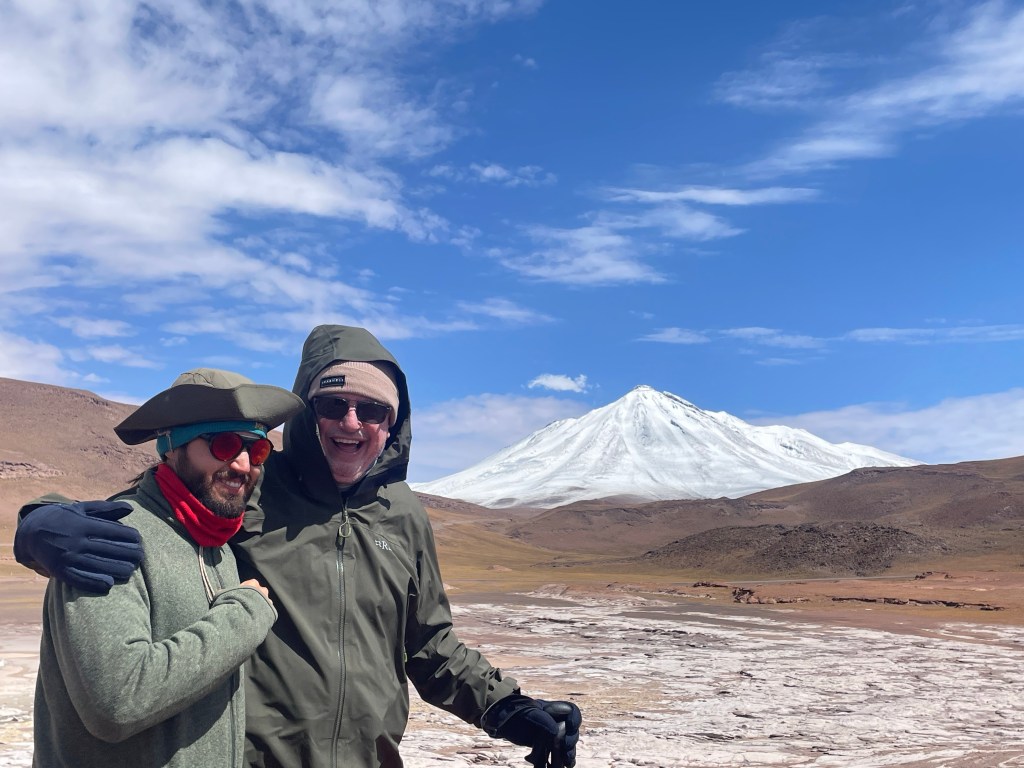
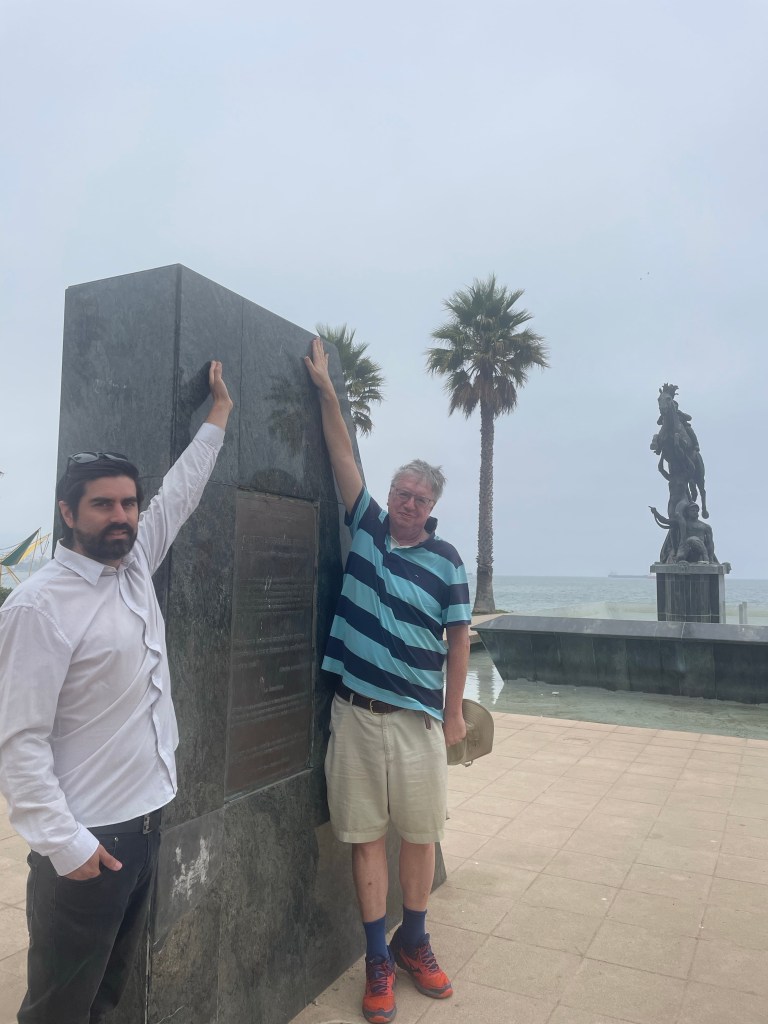
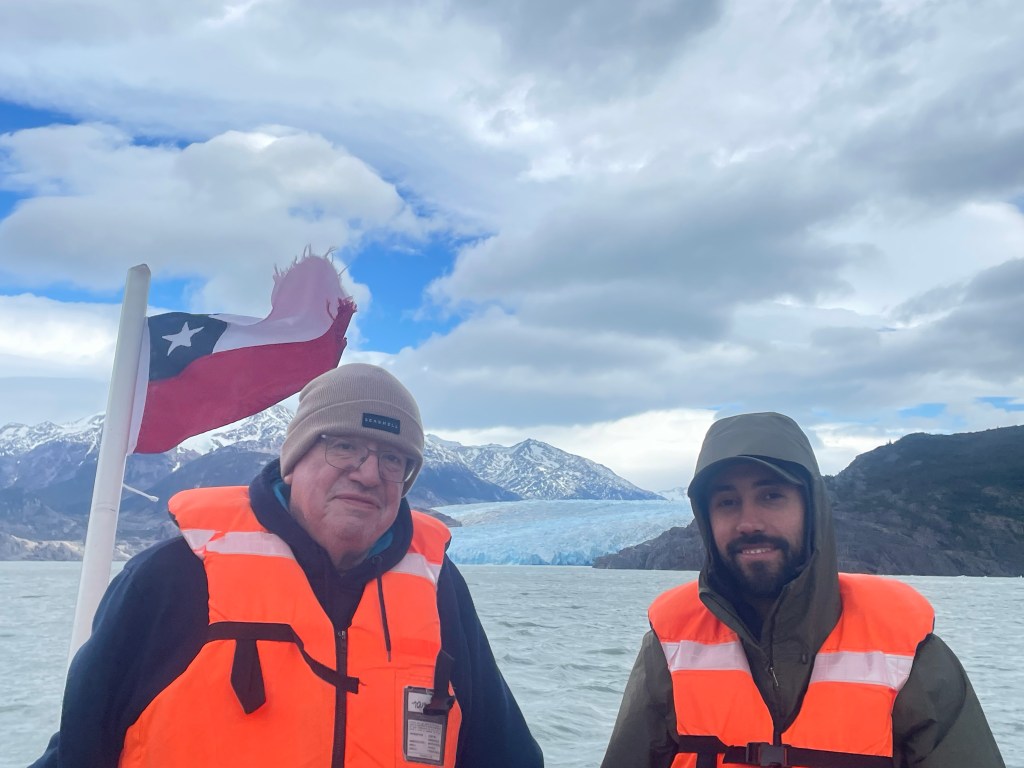
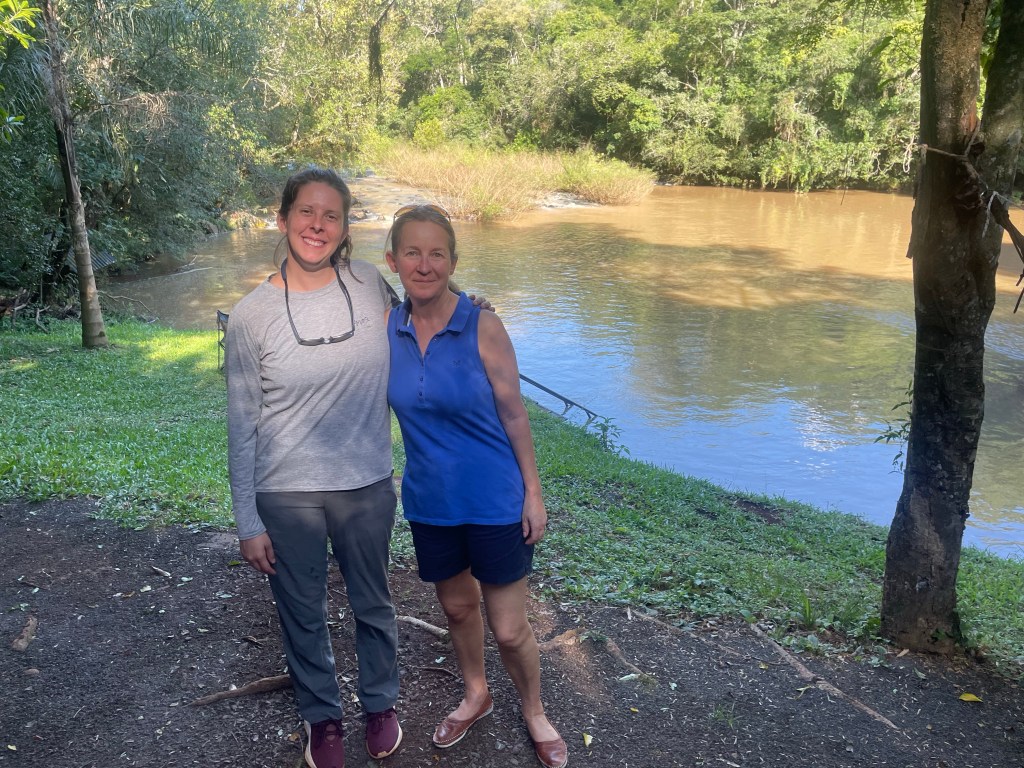
Guides

The guides who looked after us were all incredibly knowledgeable and passionate about their environments. Although we felt that we were always learning, it was never heavy going; they were all interesting and many were very entertaining. We learned a lot about the politics, economy and culture/sports of their city/island/country that we would not have been able to glean from a guidebook or the internet. Many of the guides found alternative work during the pandemic, with one setting up a bakery. In Puenta Arenas, the tourist season only lasts a few months – during the other months our guide works as a car mechanic, as well as being a grandmother.

Kineret who organised our excursions in Patagonia kicked off a conversation, after seeing Tim’s Birmingham Commonwealth Games hoodie, about the Midlands as she has friends in Leicester who she visits. Diana, our guide in Buenos Aries started most sentances with “This is a true story…” (just like one of our friends in the UK, although we think that Diana’s were all true !).
With Mario in The Galapagos
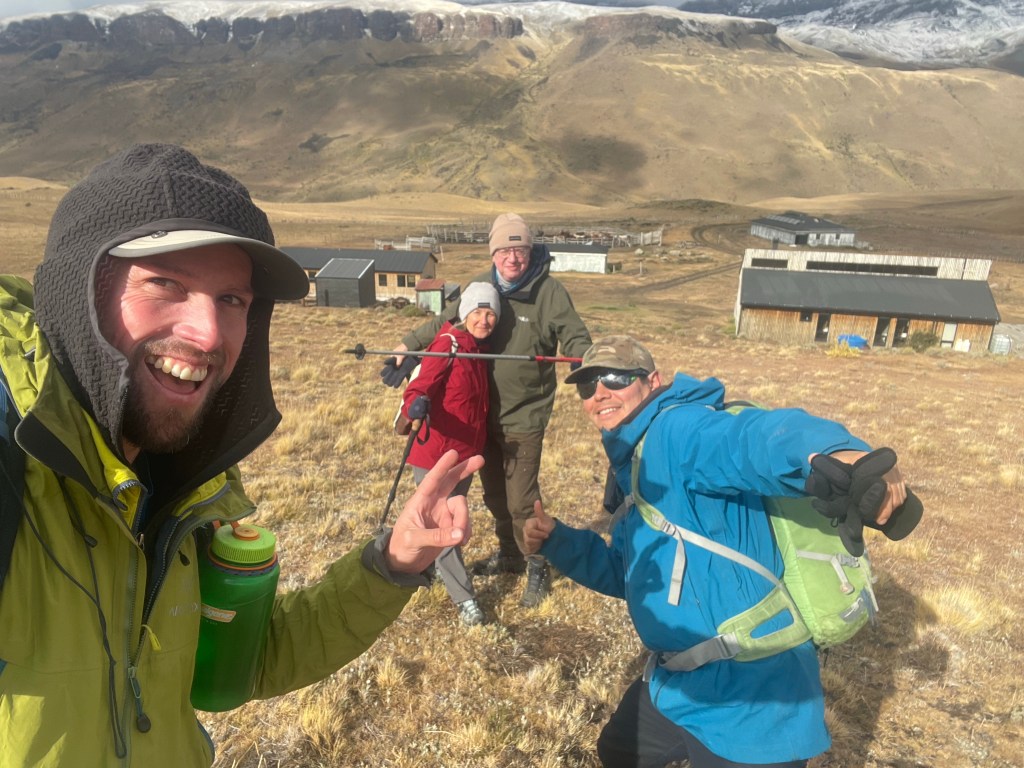
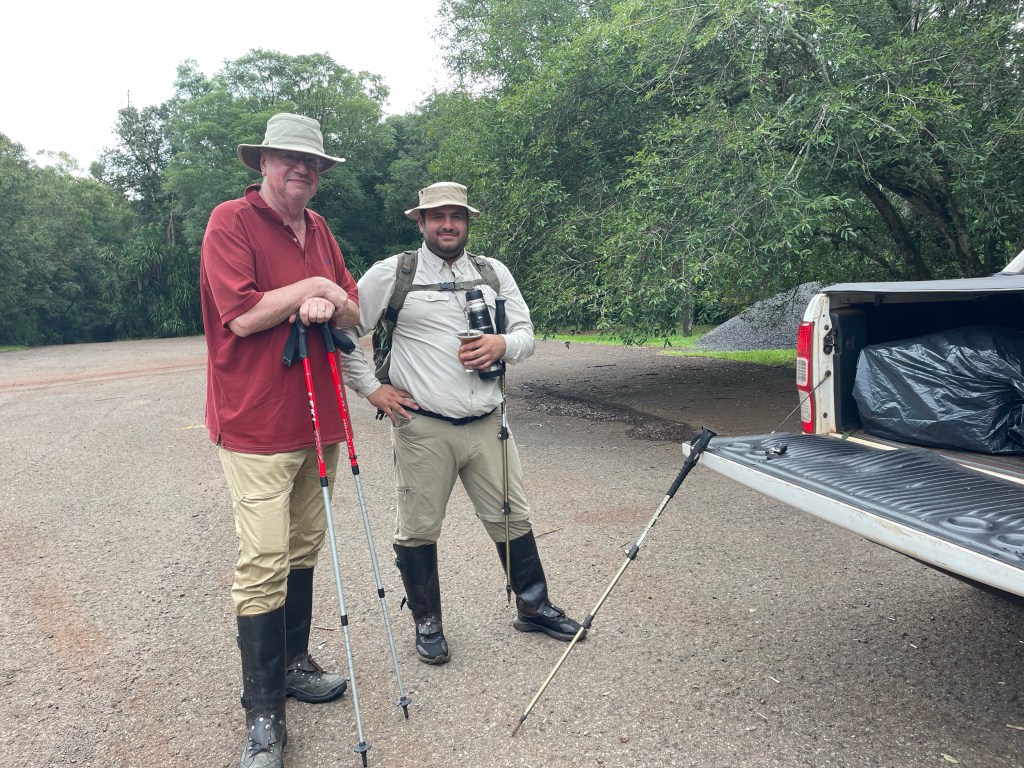
Hiking with Nacho and Rod
With Gaspar in The Atacama
With Joaquín at La Vina del Mar
With Diego in Chilean Patagonia
With Cami our guide at Iguazu

Colonia del Sacramento – Uruguay

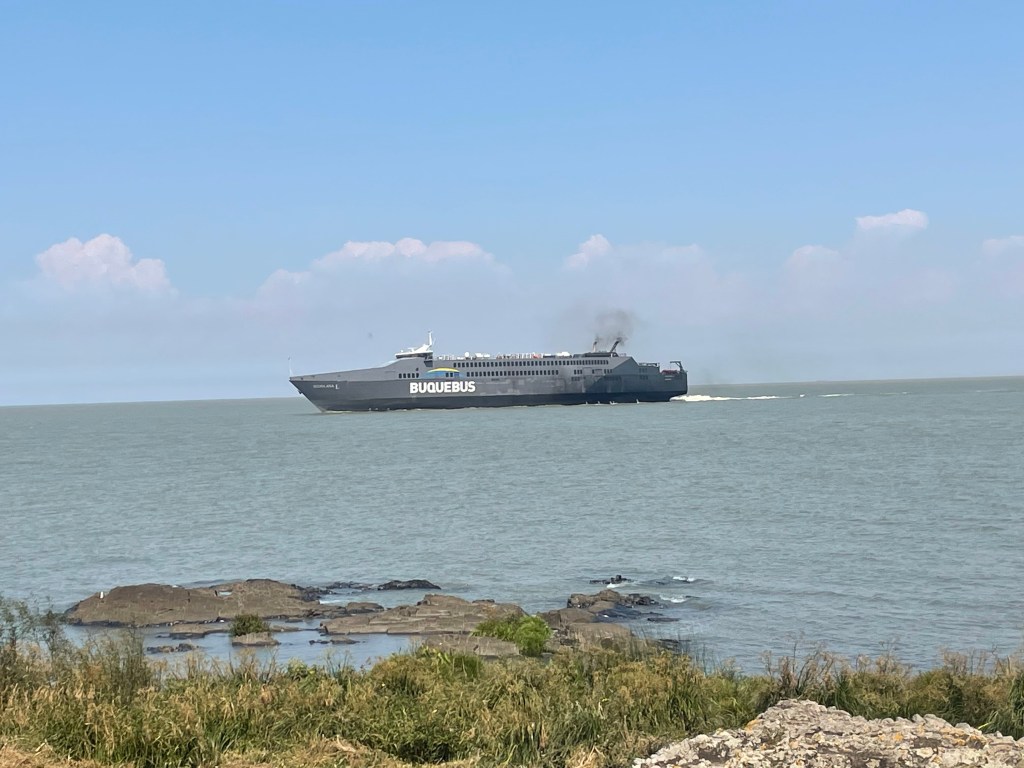
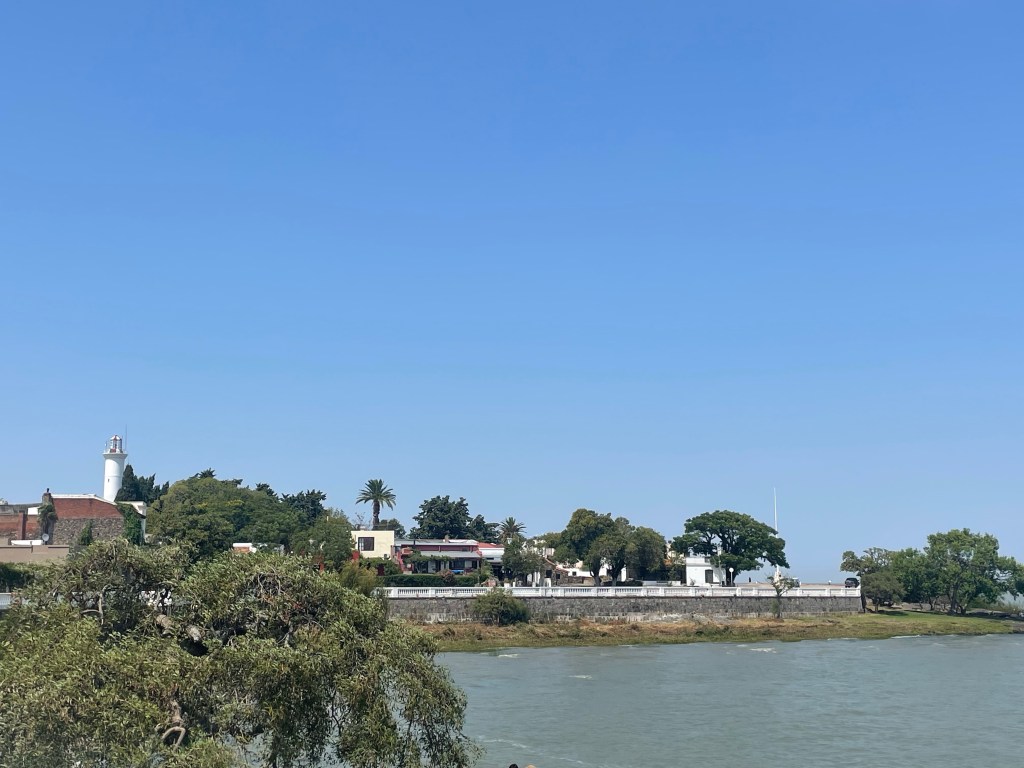
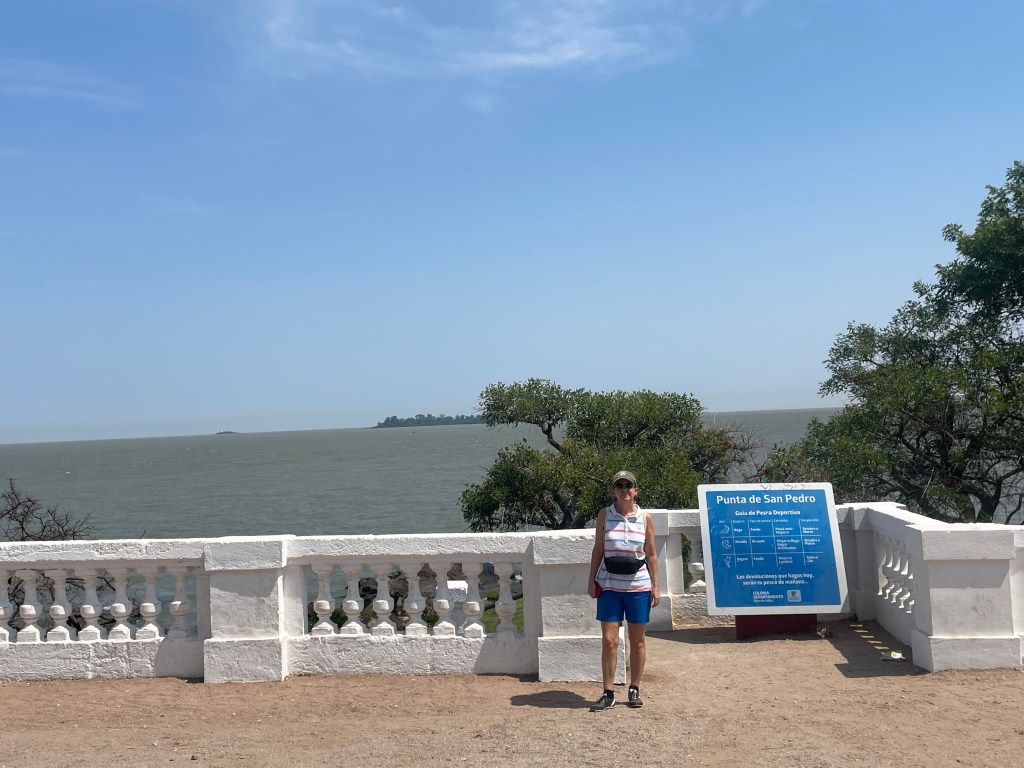
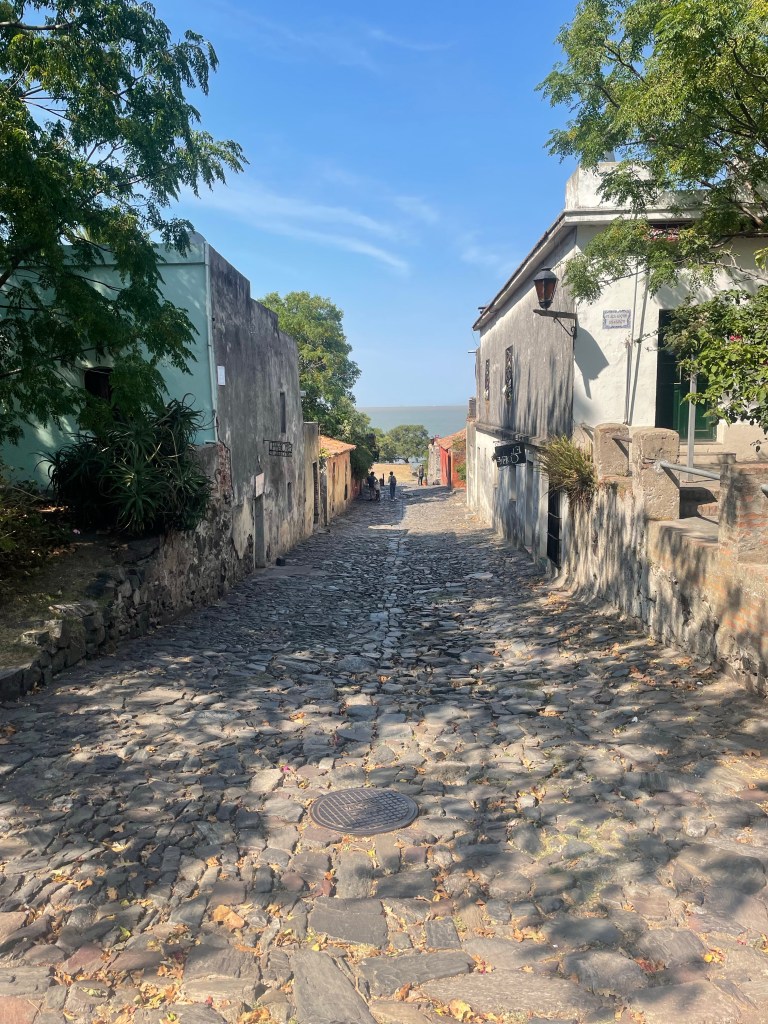
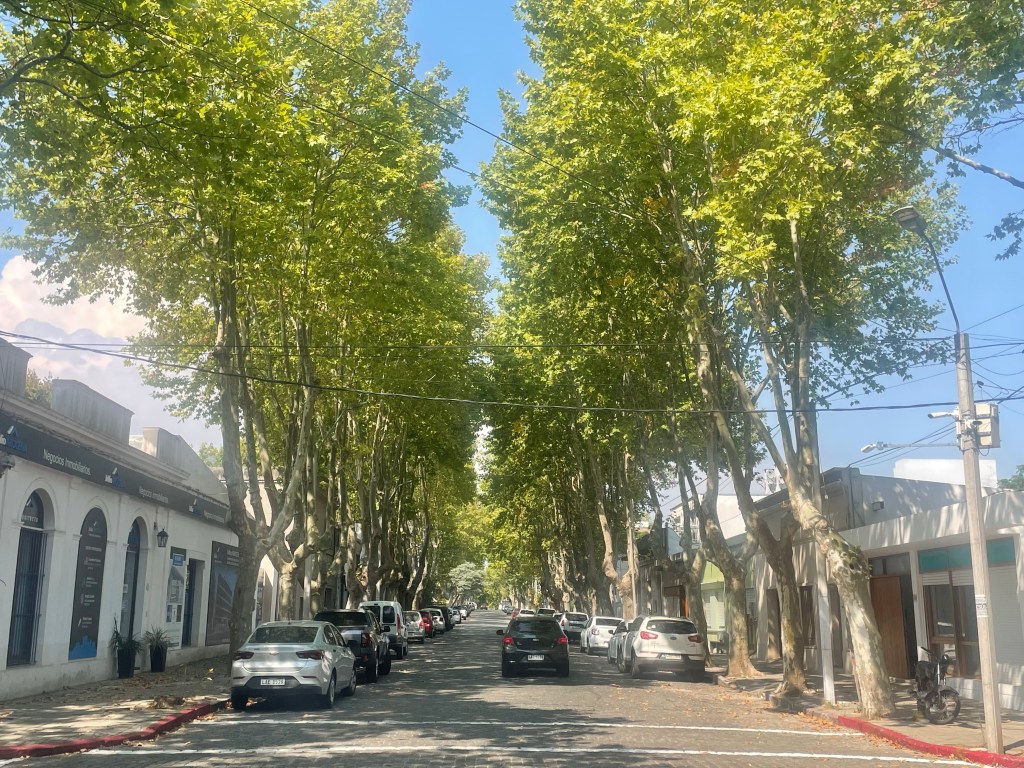
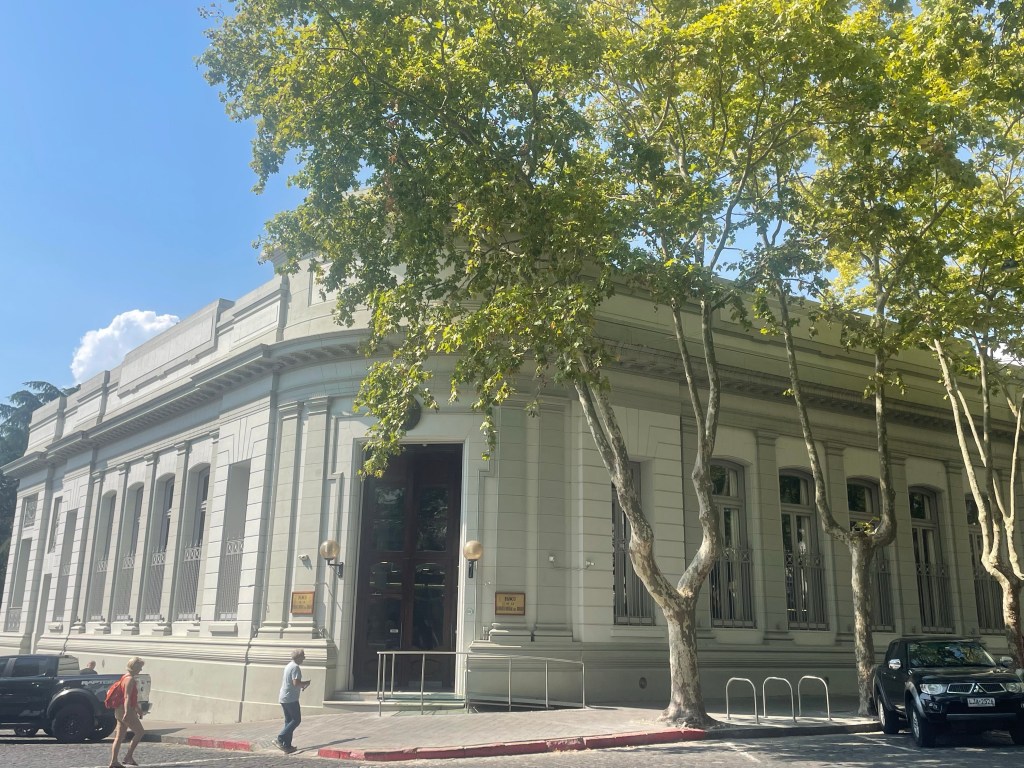
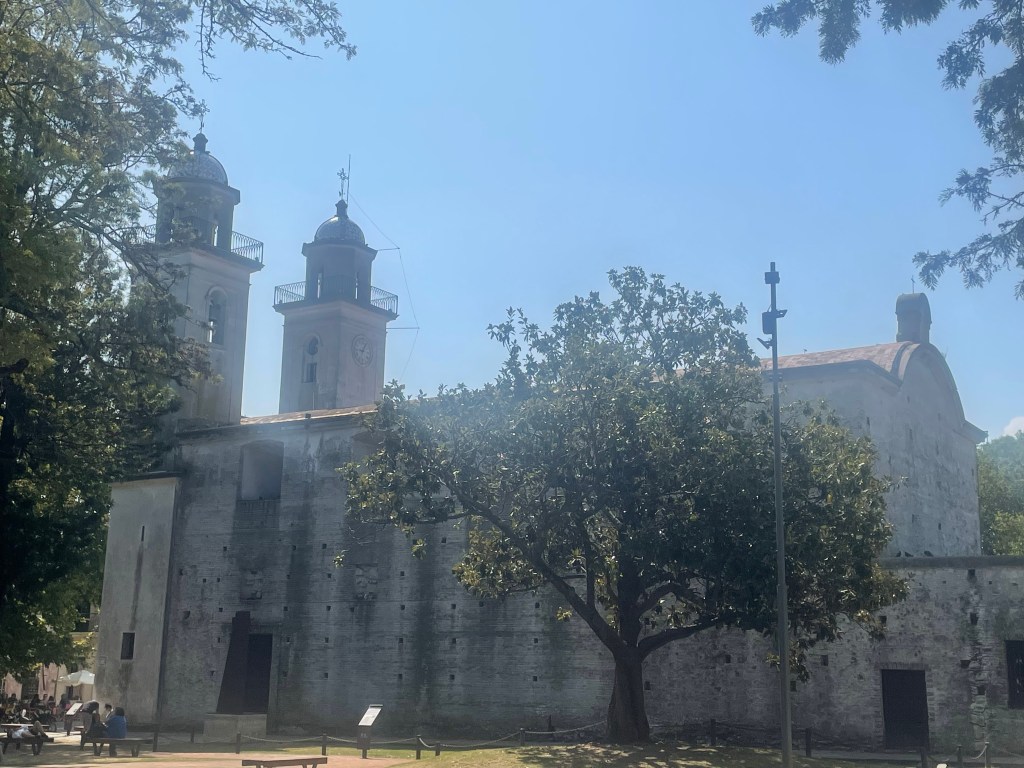
The River Plate is the widest river in the world, at a maximum width of 230km. On the bank opposite Buenos Aries, a one hour ferry ride, is the city of Colonia del Sacremento in Uruguay. Colonia was founded by The Portuguese in 1680 and its fort, while smaller, resembles that built in 1588 in Galle, Sri Lanka. Colonia changed hands several times between Portugal and Spain with its historic quarter retaining evidence of the influence of both countries, contibuting to its recognition as a World Herritage Site.
Uruguay, with a population of 3.5 million people is the most democratic and least corrupt country in South America. It is also the country in South America with the smallest percentage of people living in poverty. Its economy is based around agriculture, with beef being its largest export – as well as each adult consuming 85kg per annum (with the resulting health issues). We did not realise that Fray Bentos, the centre for meat processing, is a city in Uruguay.

We visited for the day by ferry; very few of the other passangers were international tourists with most people making the journey from Uruguay to buy much cheaper goods in Argentina and in the opposite direction to have a break from the bussle of Buenos Aries. That said, we did find oursleves next to a Turkish family at the Argentinian passport control on our return – this was the third time we had crossed the border into Argentina, with very different levels of control and questioning each time.

Argentinian currency exchange

Confession – it took us about three days to work out how currency (peso) operates in Argentina. It started with us getting about 190 pesos to the pound when we took cash out of an ATM. Our Buenos Aries guide explained that we were doing it wrong and that she would provide us with cash for dollars or euros (not pounds) at a rate that equated to 350 pesos. This is known as the “blue market” (sounded black to us), the reason being that Argentina has 100% inflation and no foreign currency reserves so everyone wants hard currency. The cash she provided was accepted without any questions and “blue” seemed a commonly used term.

So far so good, but we then realised that there was a further twist to the story when paying on a debit card in shops and restaurants. The transaction went through at the official rate, but two or three days later we received a rebate from our bank representing approximately 40% of the transcation value. We discovered that late in 2022, the government introduced the MEP dollar rate for foreign debit and credit cards in an attempt to defeat the cash based blue market while encouraging foreign currency spend by tourists. The MEP rate is fixed at about 95% of the blue rate. This is further complicated by different arrangments with different credit/debit card companies. Our rebates were from mastercard, however VISA uses the MEP rate for the originating transcation and it appears that AMEX use the official rate with no refund.

Dinner in Buenos Aries – Marti

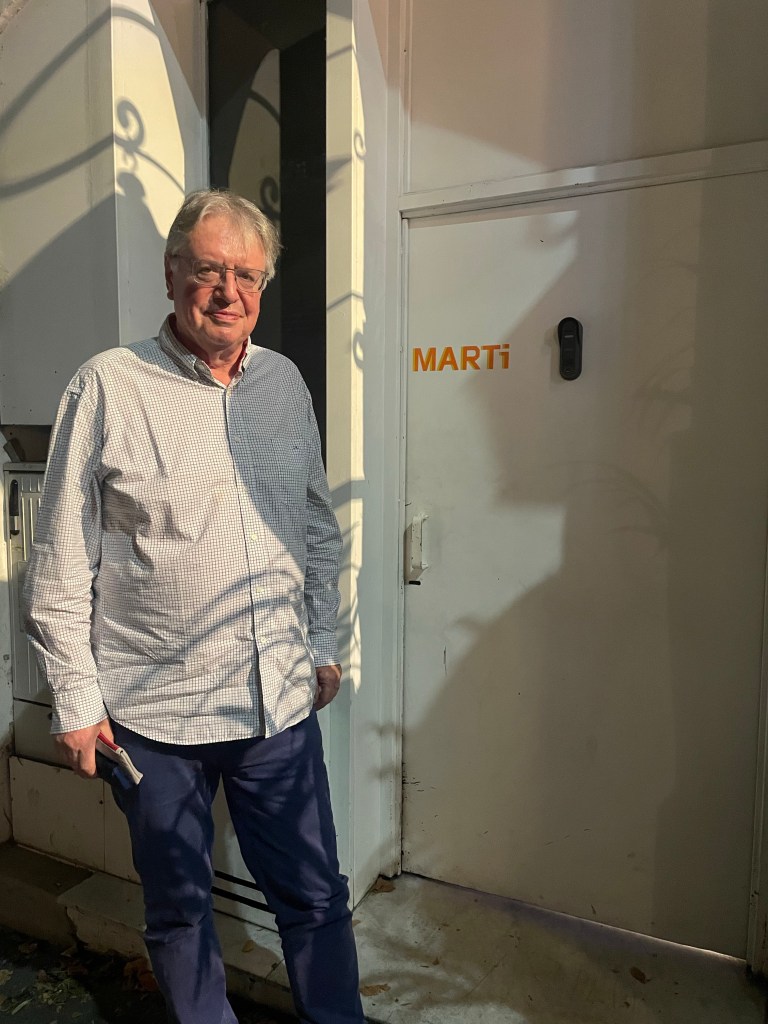
Meat is the staple diet in South America; in Patagonia lamb and in Northern Argentina, beef. We were told that Uruguayans eat 85kg of beef per year and suffer the consequential health issues. After our excellent barbeque in Misiones and an outstanding steak in a Buenos Aries restaurant, we decided to have a vegetarian night out. Our hotel recommended a nearby restaurant, Marti. This turned out to be one of the best but most unusual dinner experiences we can remember.

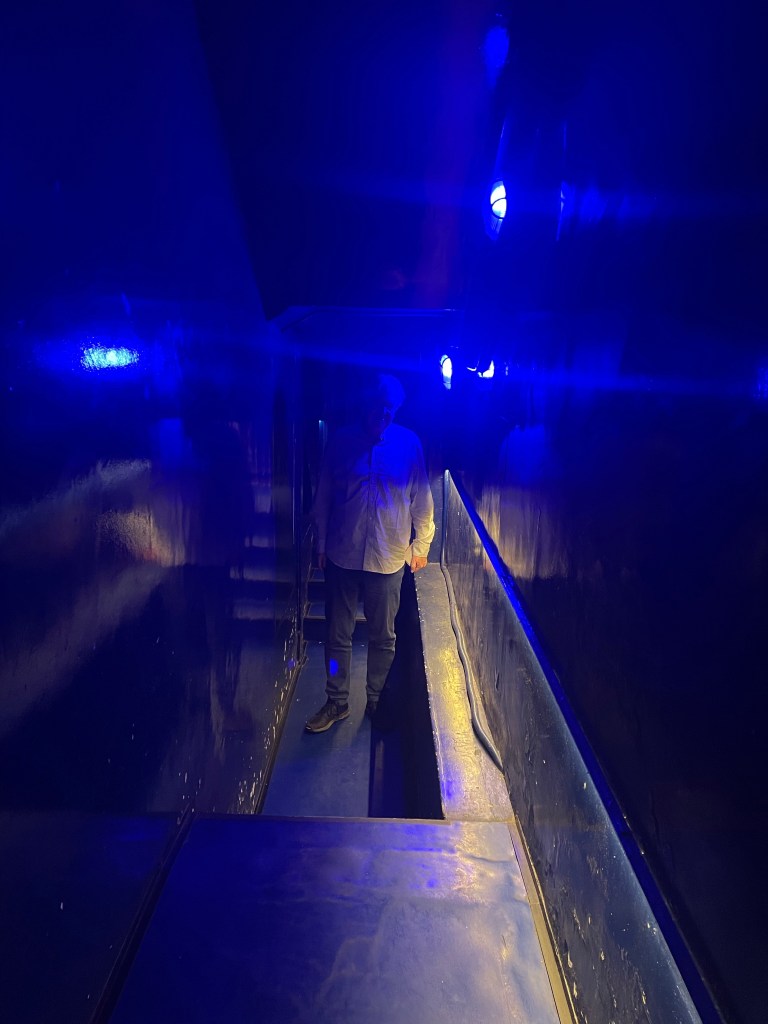
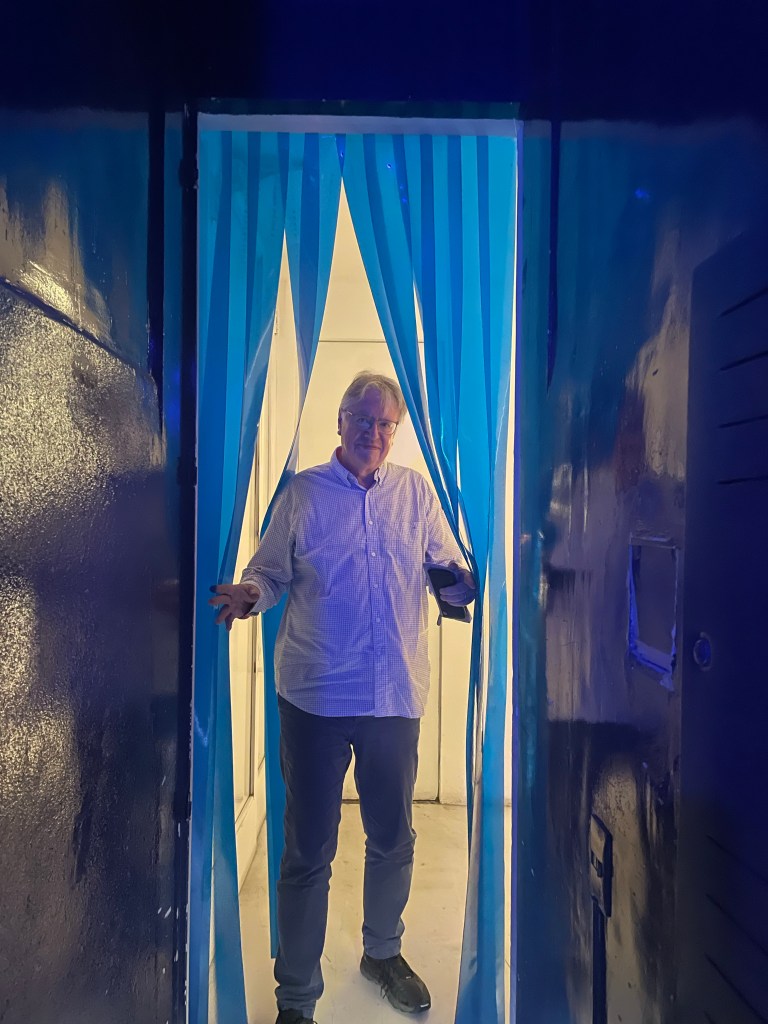
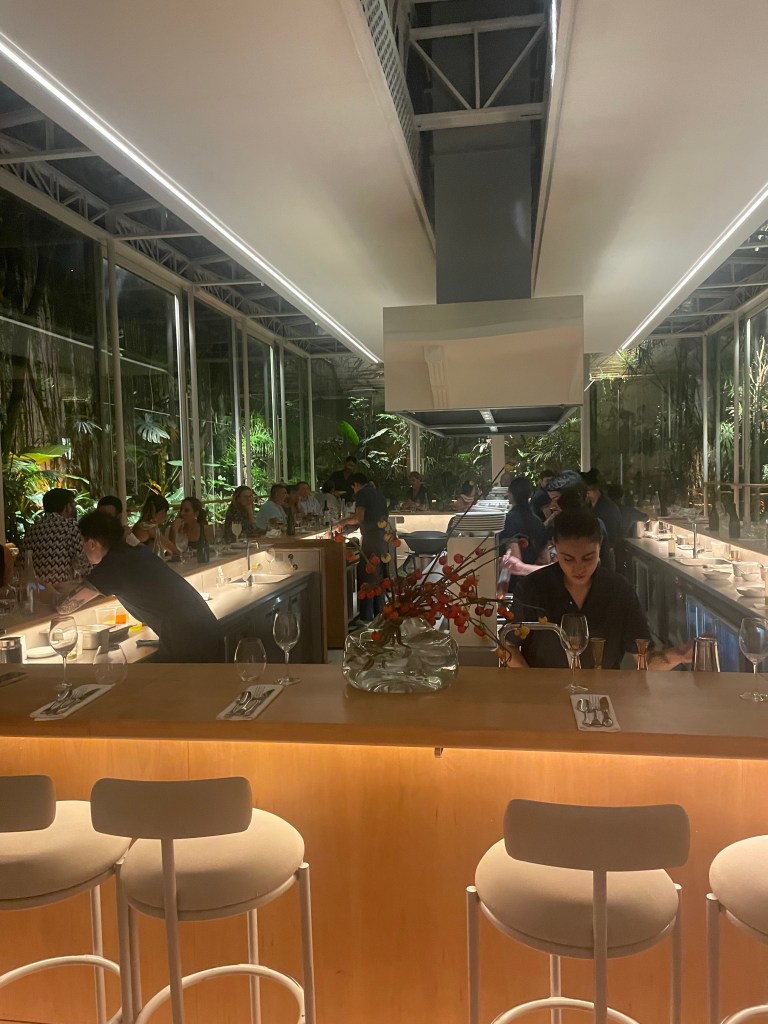
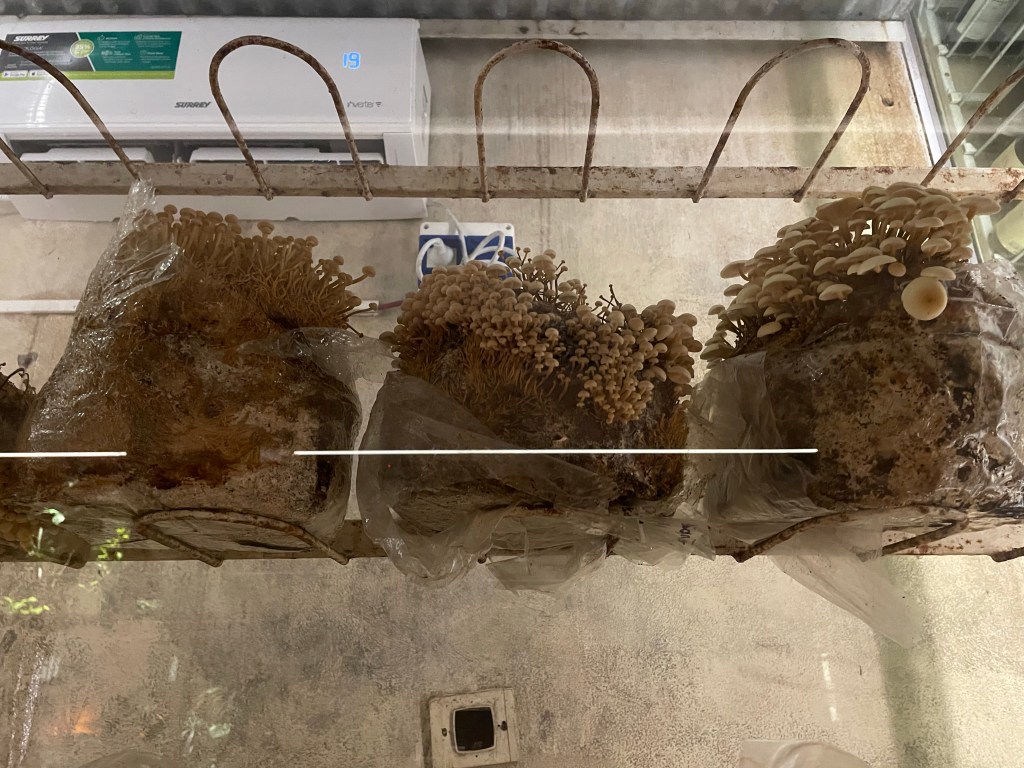
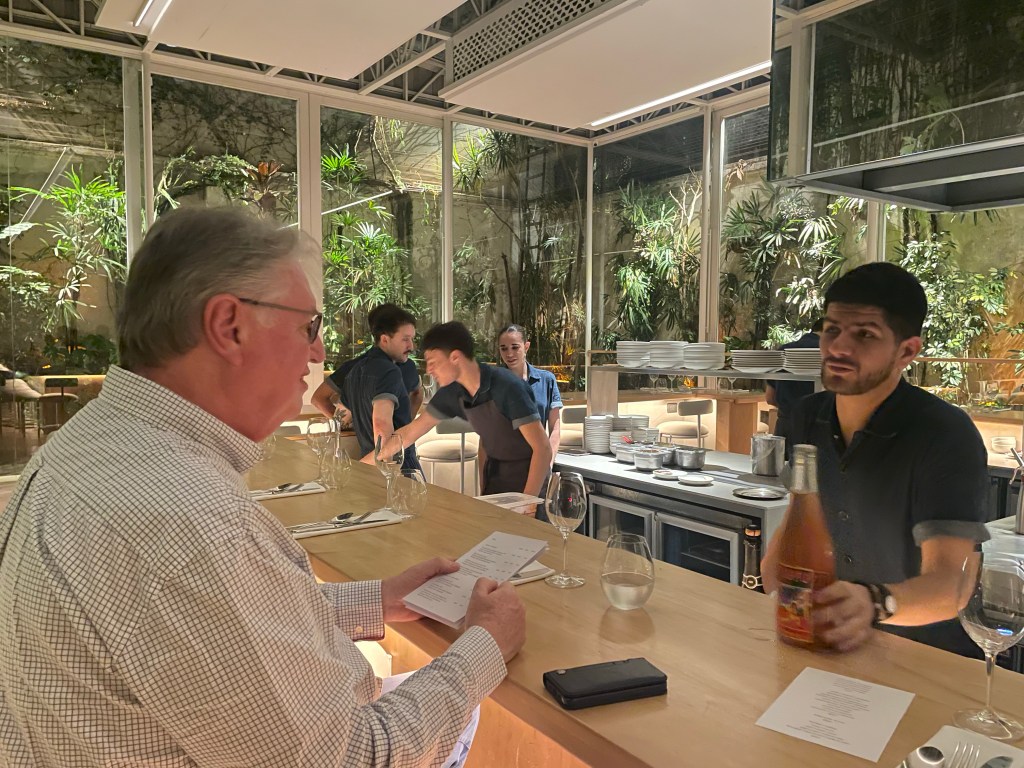
Entering via a side door resembling a goods entrance, we walked down a dingy corridor, through a trendy ladies boutique and through a “door” similar to the entrance to a cold storage facility; all while listening to nightclub style music. Following this arrival, we found ourselves in a swish glass walled restaurant with modern counter seating surrounding an open kitchen. The vegetarian menu was innovative and delicious with a focus on mushrooms which were grown on site.

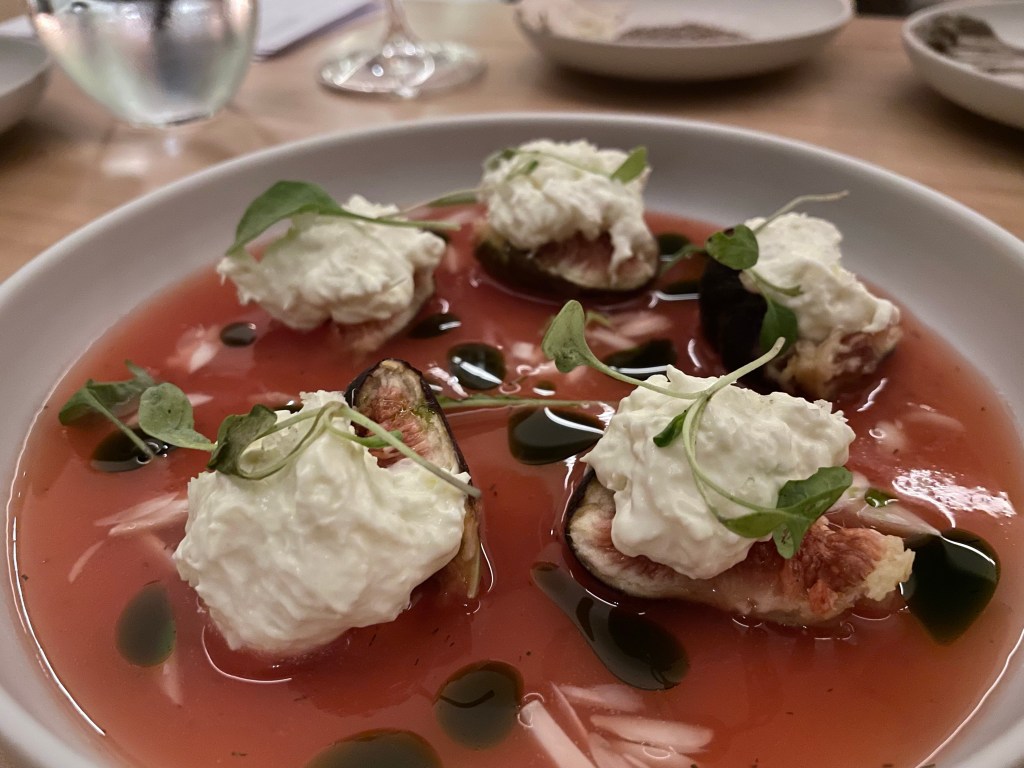
Fig, burrata, gazpacho and dill
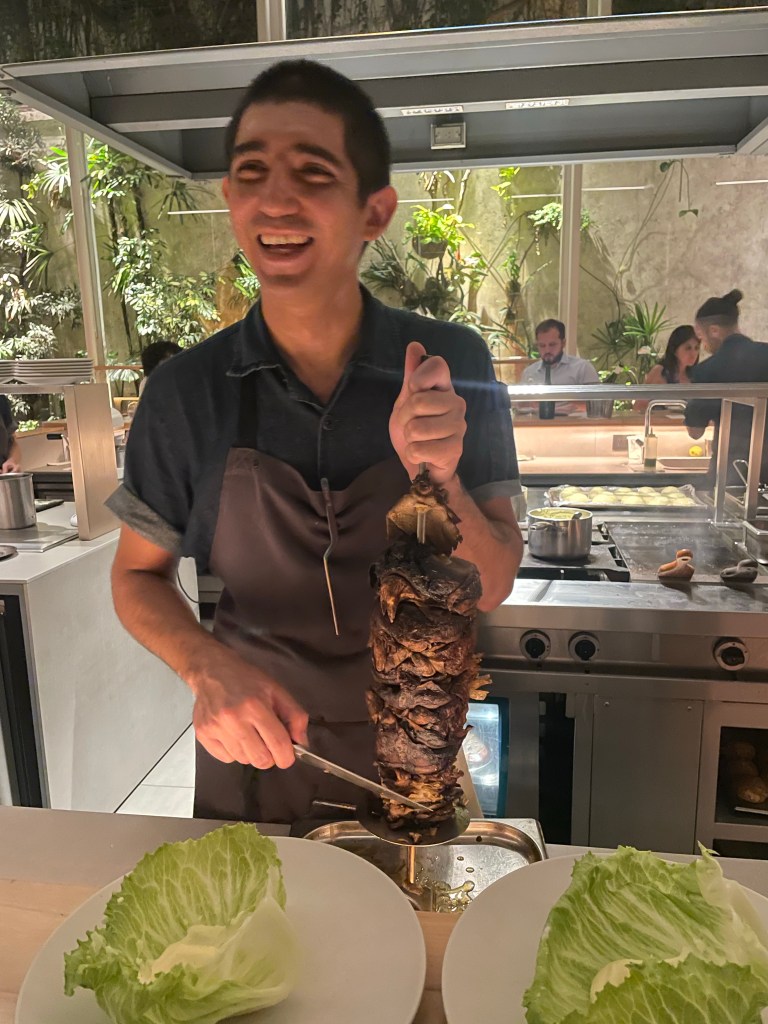
Mushroom shawarma

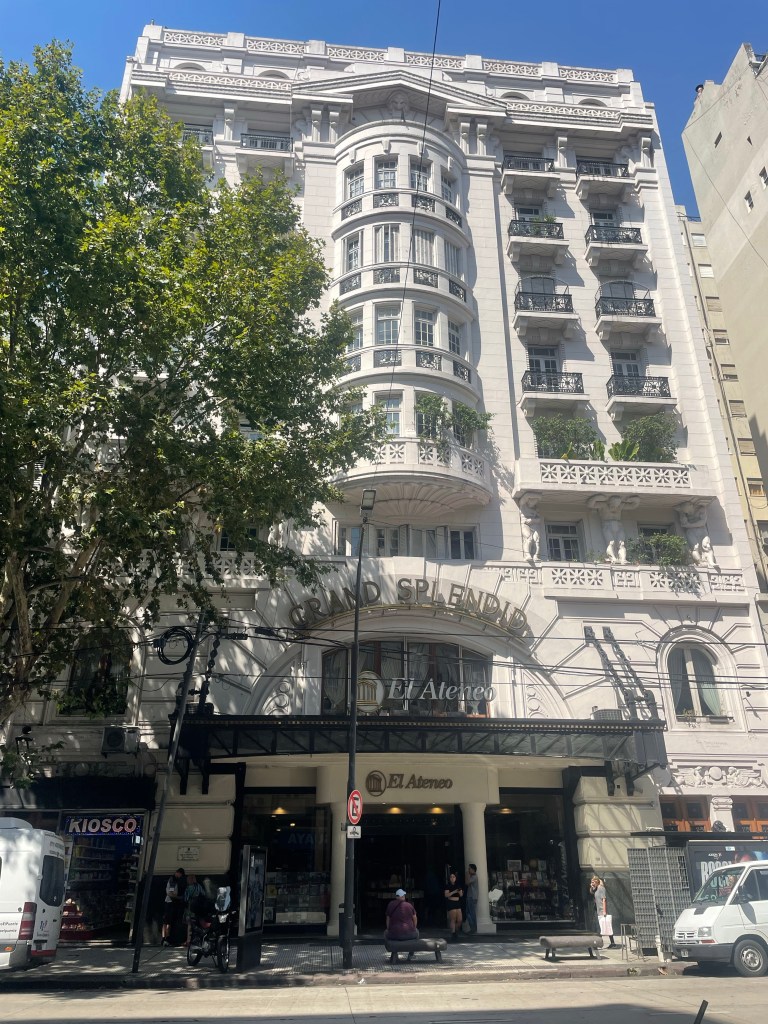
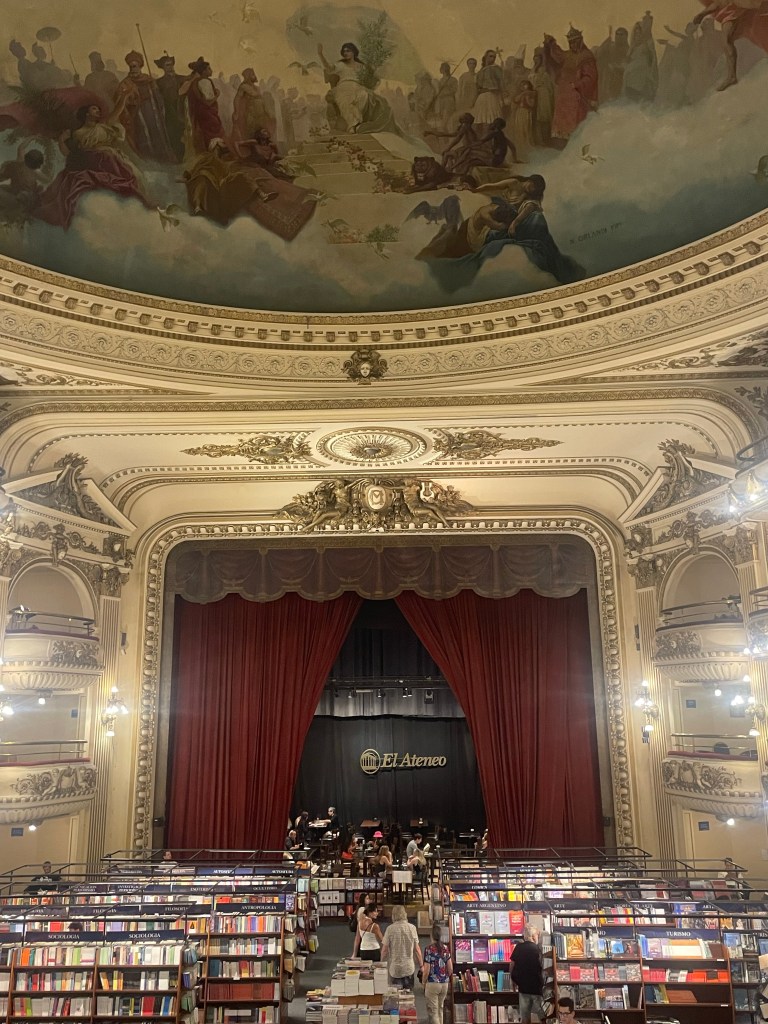
El Ateneo Grand Splendid

The El Ateneo bookshop is the former Theatre Grand Splendid, which opened in 1919 and was converted into a bookshop in 2000. Over a million people visit each year to browse, buy books and use the cafe which used to be the stage. In 2019 National Geographic named it as the “world’s most beautiful bookstore”. By coincidence, we visted on World Book Day.

Buenos Aires

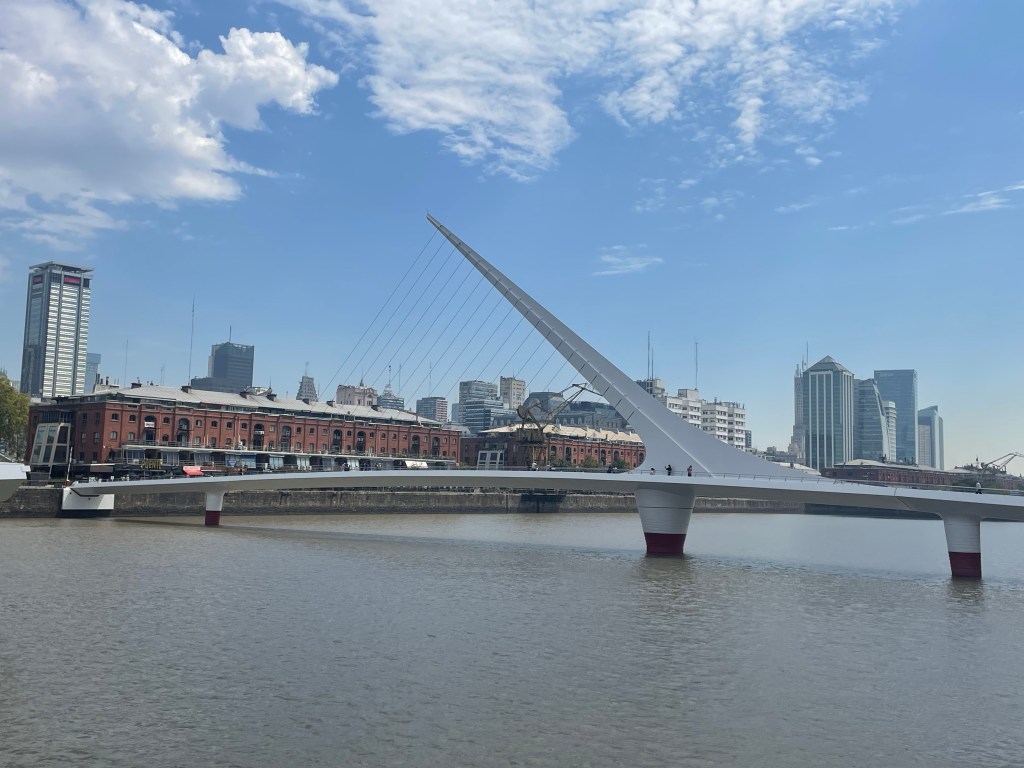
Buenos Aries, is situated on the western bank of the River Plate. It was first established by the Spanish in 1536. Argentina was declared independent in 1816 under the leadership of San Martin, however Buenos Aires was still under threat from an Anglo-French blockade as late as 1848. The blockade, driven by an objection to local taxes, failed and the city flourished. Around a third of the country’s 45million citizens live in Greater Buenos Aries.

Much of the city’s architecture shows European influence (particularly Spanish and French) from the waves of European immigration, particularly from France, Spain and Italy. Although the British were less prominent, they were responsible for establishing the railways.

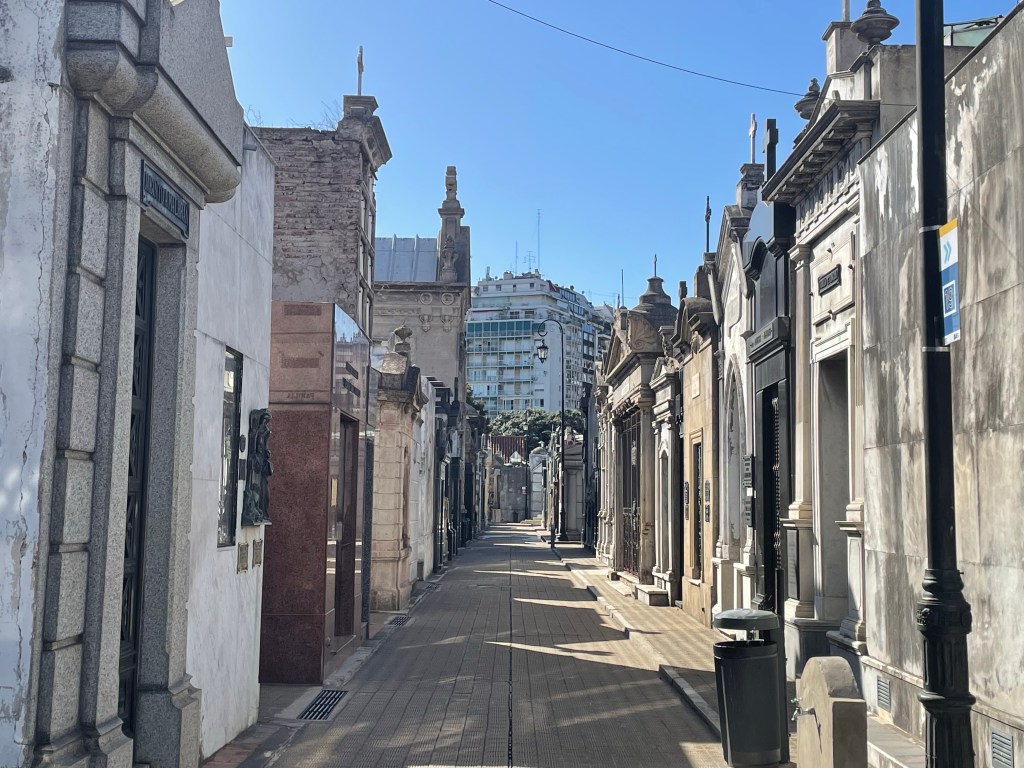
The Cemeterio de la Recoleta is Buenos Aries most visited tourist attraction. “Streets” are lined with the tombs, statues and mausoleums of past politicians, generals, the rich and the famous.
The mausoleum of Eva Peron’s family
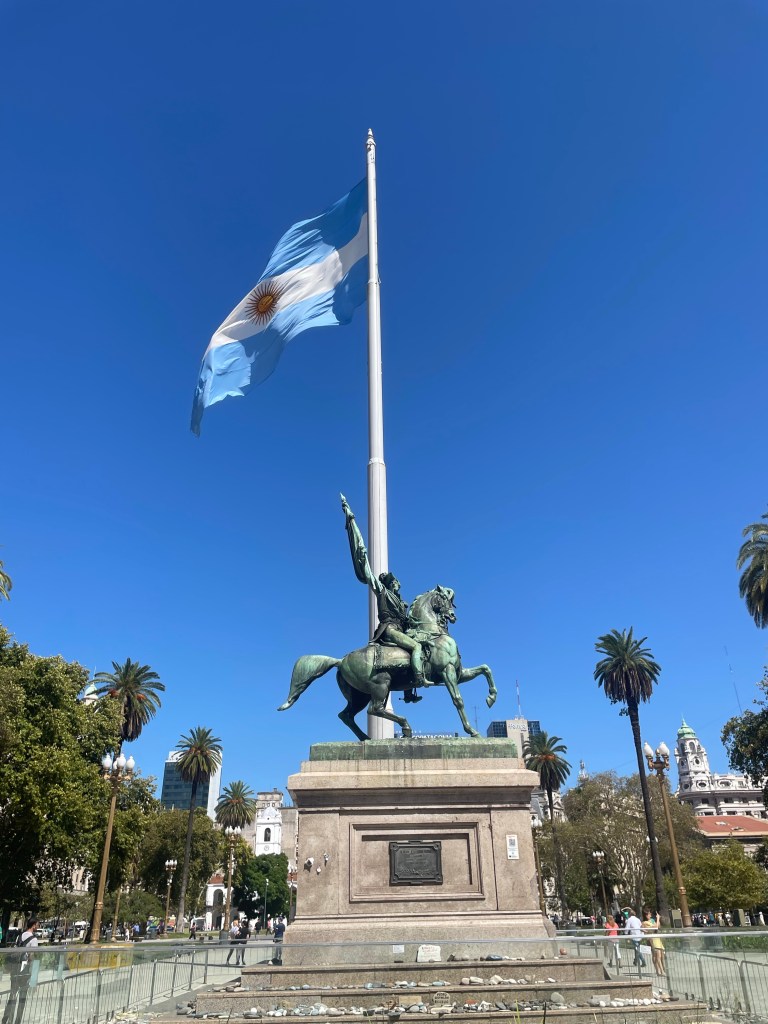
A statue of General Belgrano in the Plaza de Mayo, where Argentinian’s gather in protest or celebration. At the time of our visit there was a heavy police presence as the city was experiencing anti-government demonstrations. The stones by the statue have been placed there by the families of some of those that died of covid
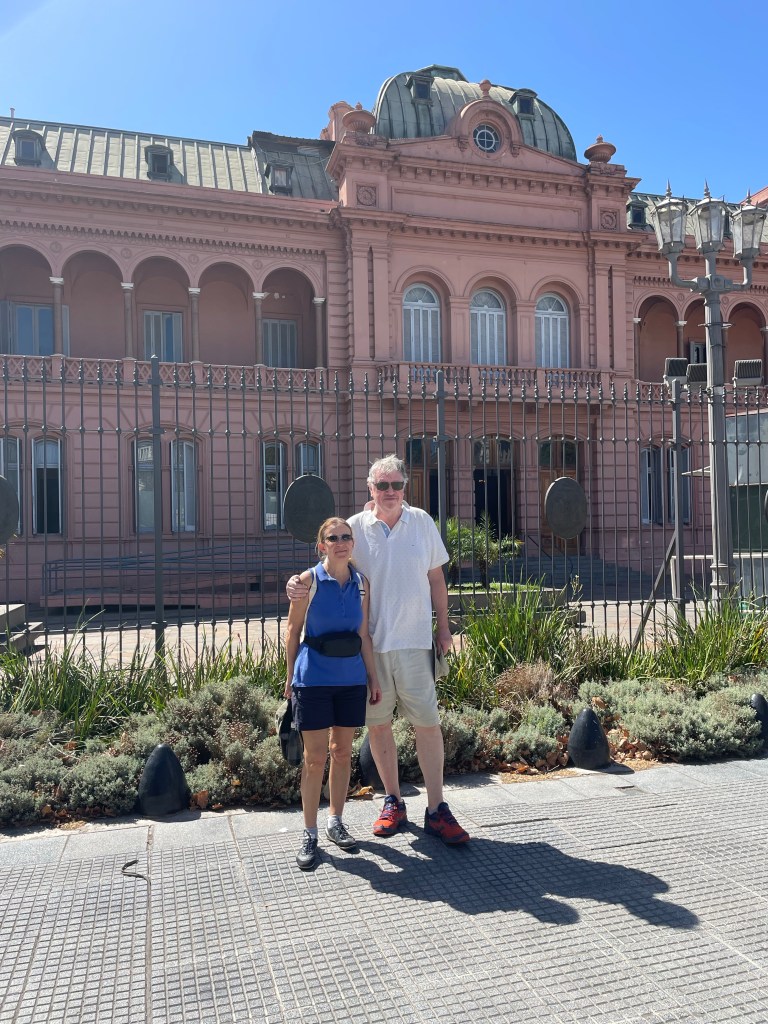
The Casa Rosada on the Plaza del Mayo with the balcony where Eva Peron adressed the throngs of empassioned supporters
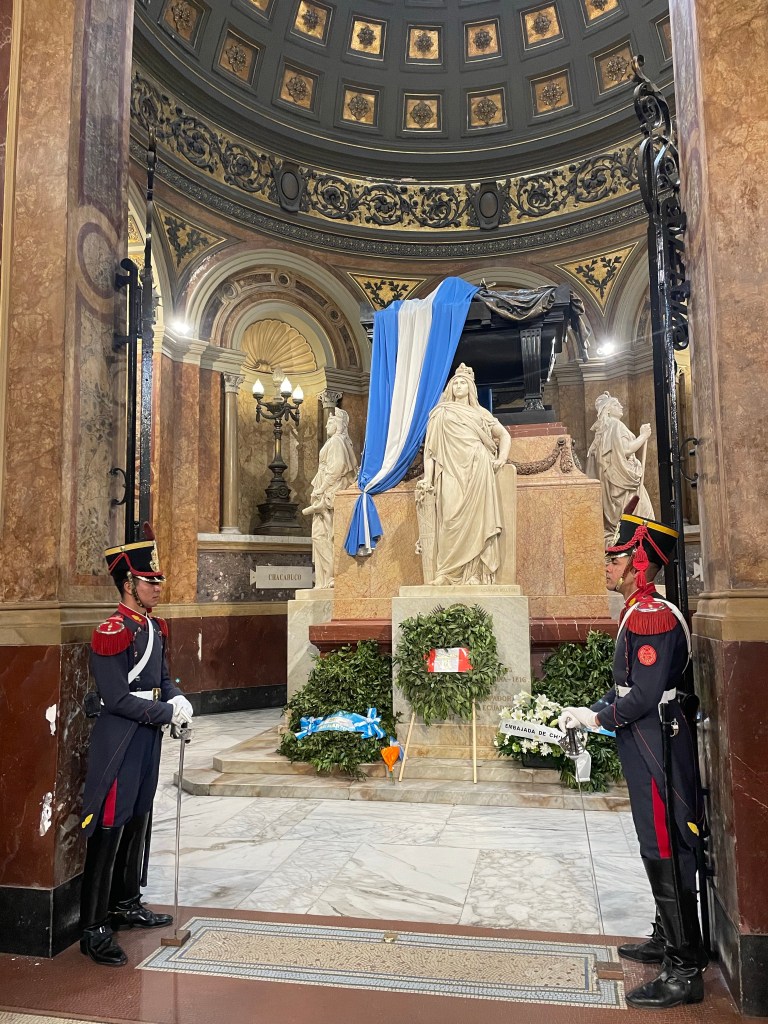
The tomb of San Martin – his body was returned to Argentina 30 years after he died in exile in France
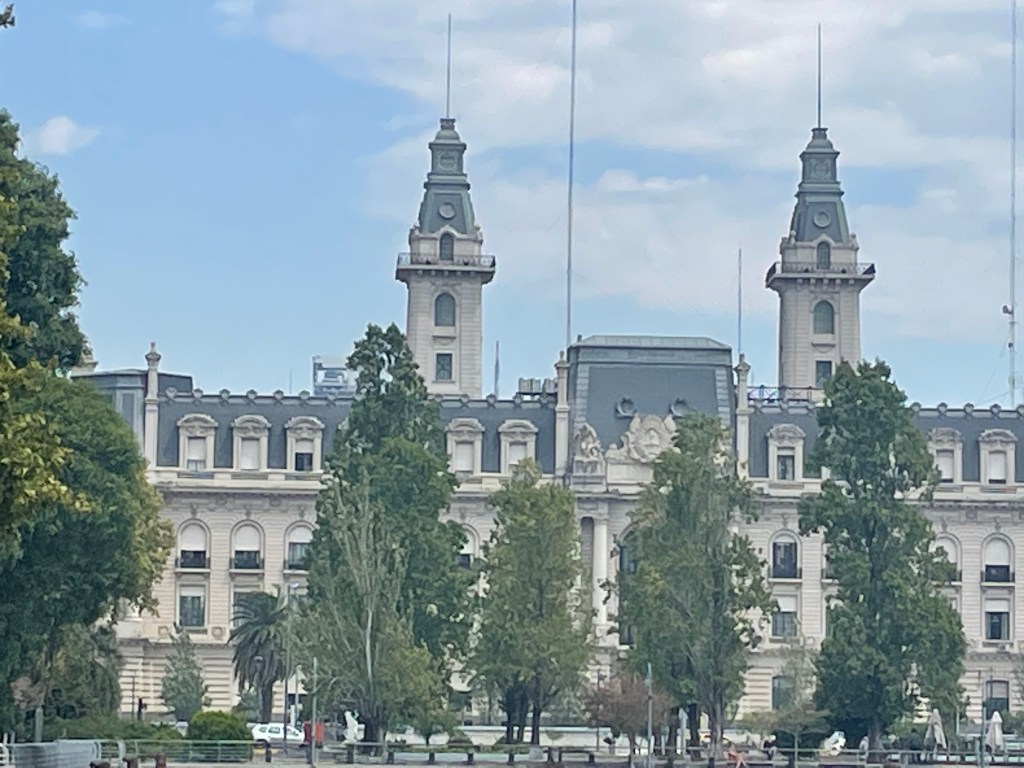
While this building could be in Paris, it is government offices
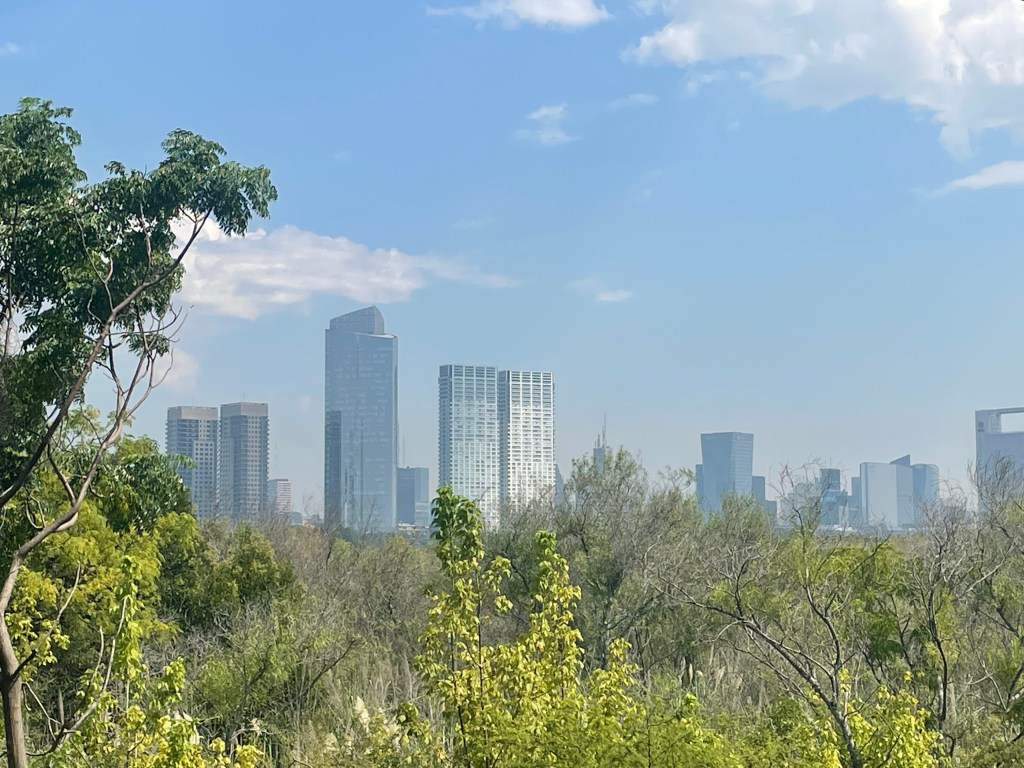
One morning we walked around the large Ecological Park, established as a park and wetlands centre, which sits between the new commercial district and the river
Converted warehouses in the Puerto Madero area, a good spot for lunch after our walk in the Ecological Park
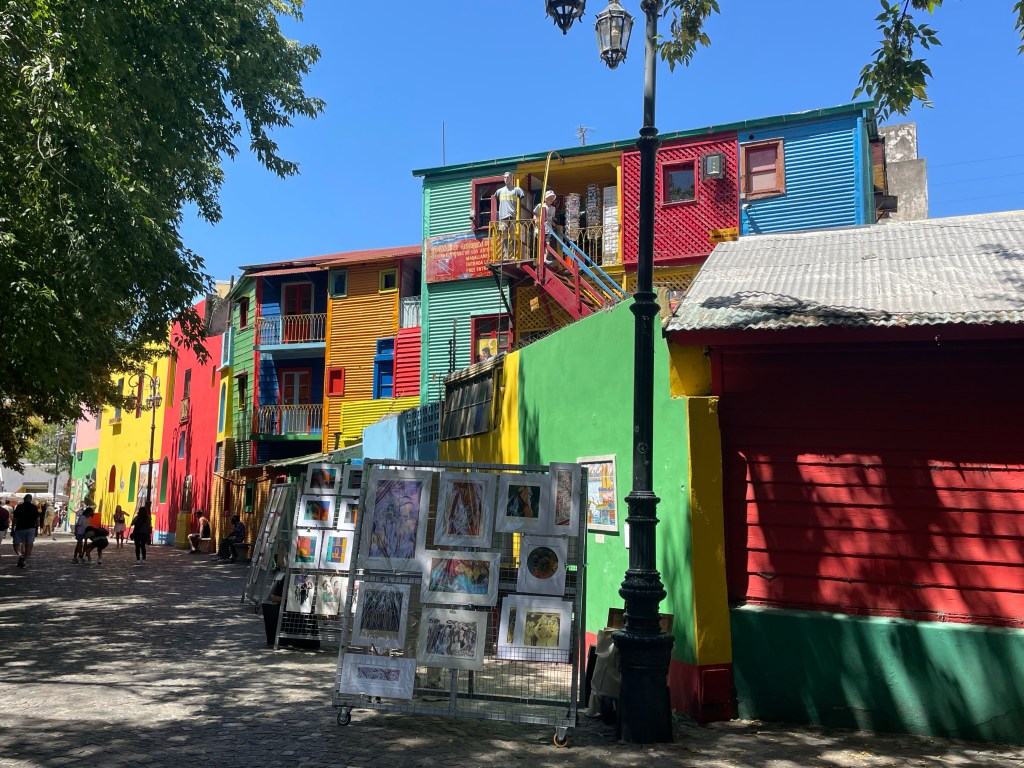
Colourful buildings in the La Boca district
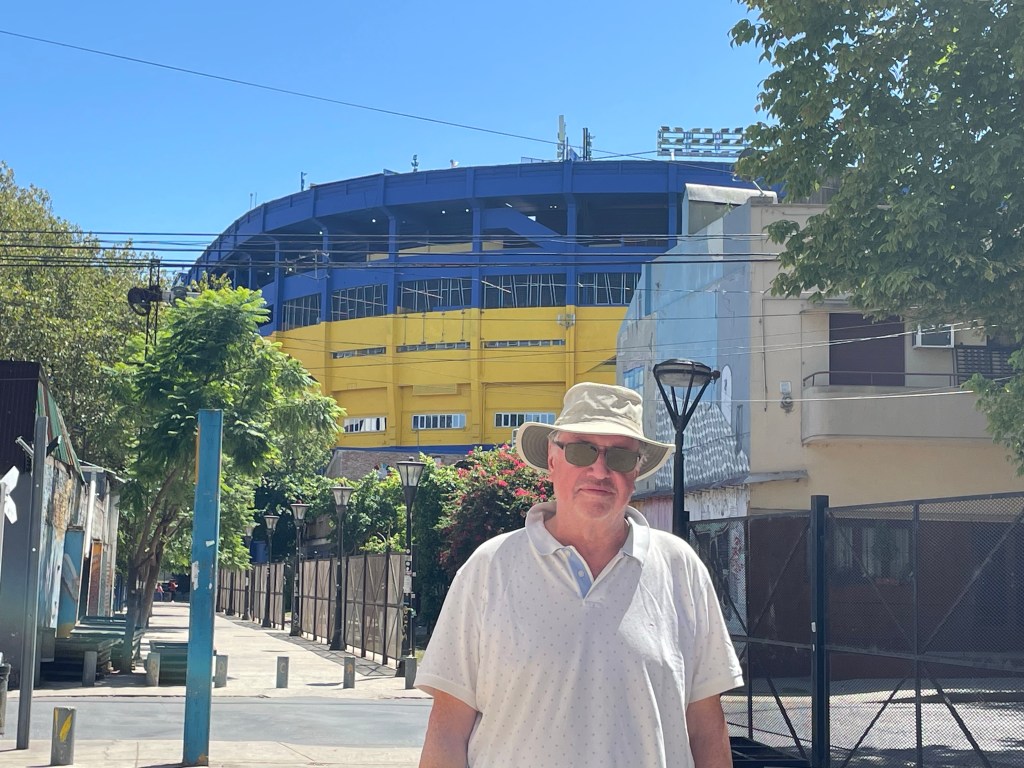
No visit to Buenos Aries is complete without a visit to La Bombonera Stadium where Boca Juniors play. The colours were apparently decided after an inconclusive debate which was later resolved by agreeing that the colours would be those of the flag of the next ship to arrive in the port, which was Swedish

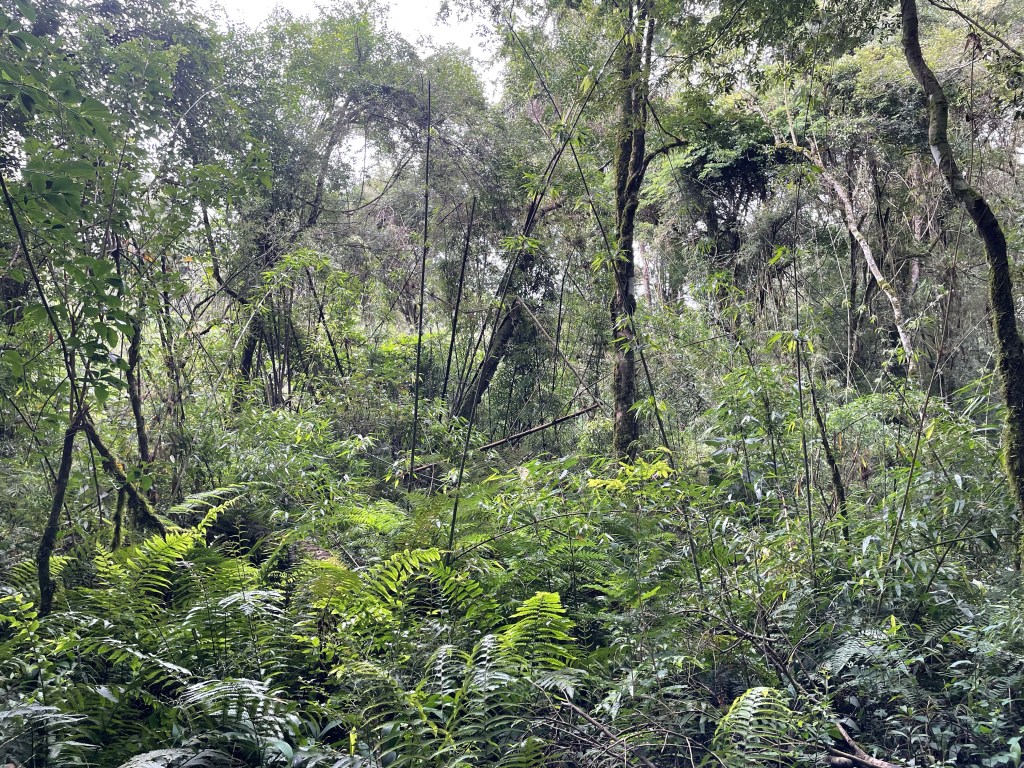
Atlantic rainforest

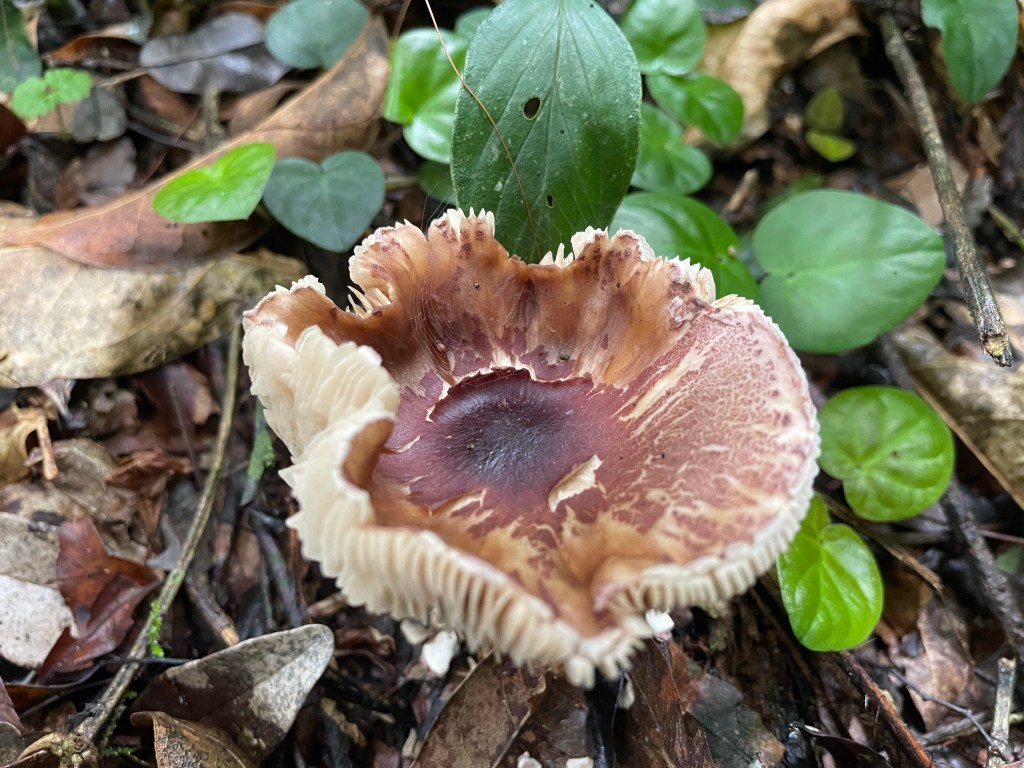
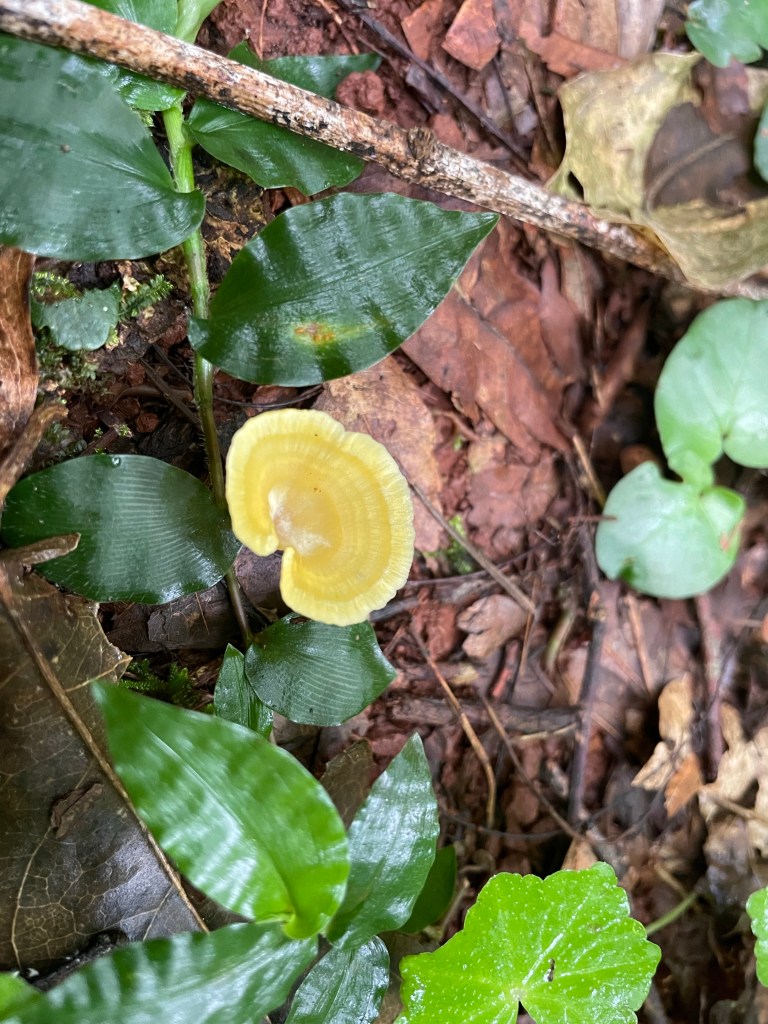
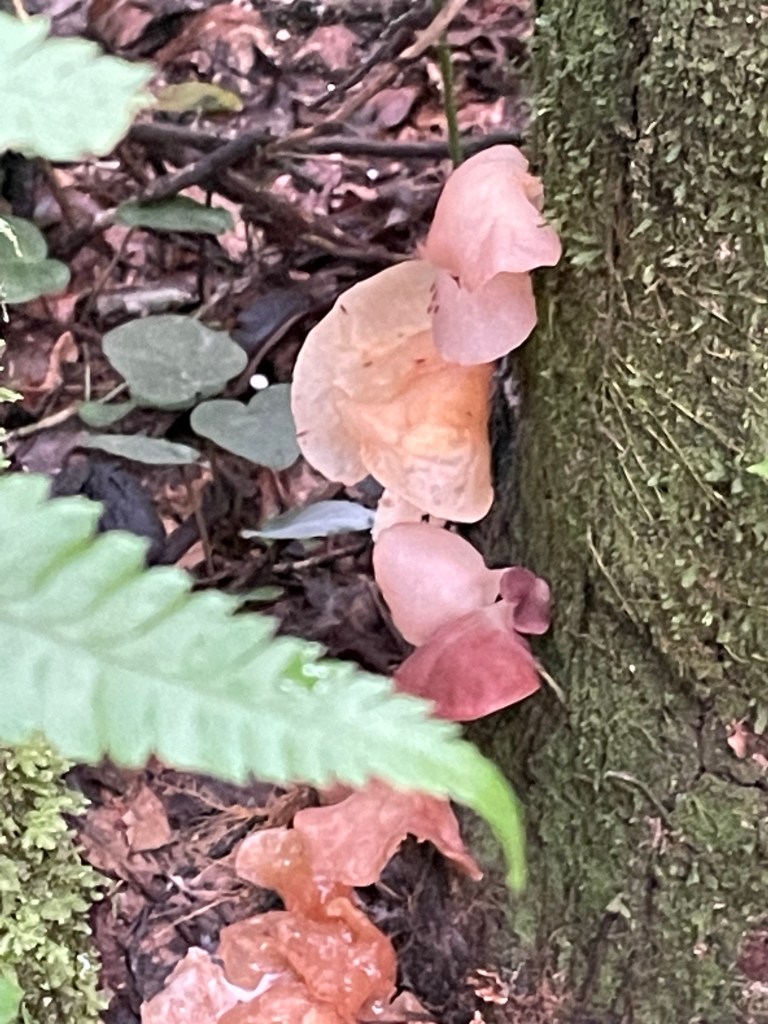
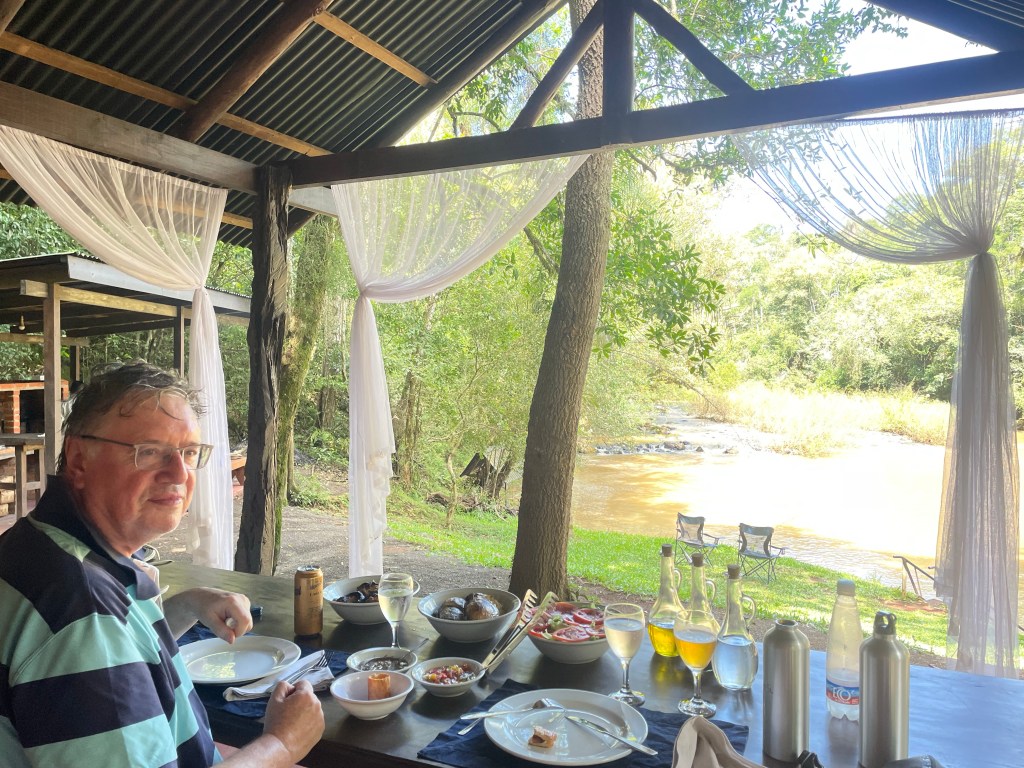
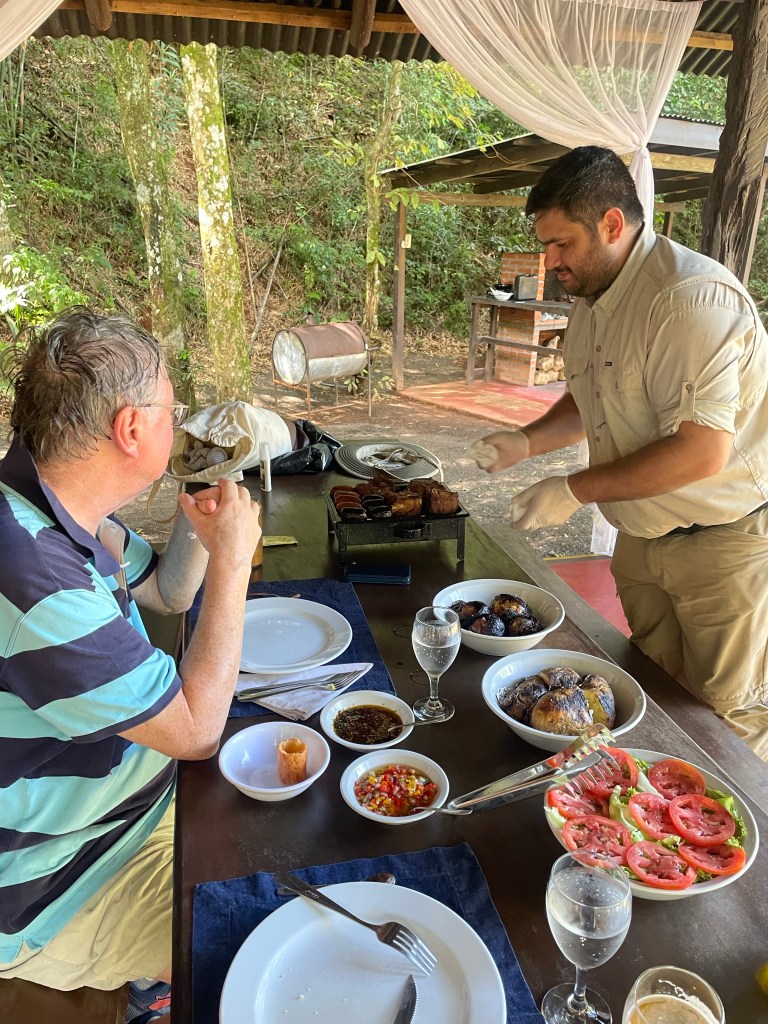
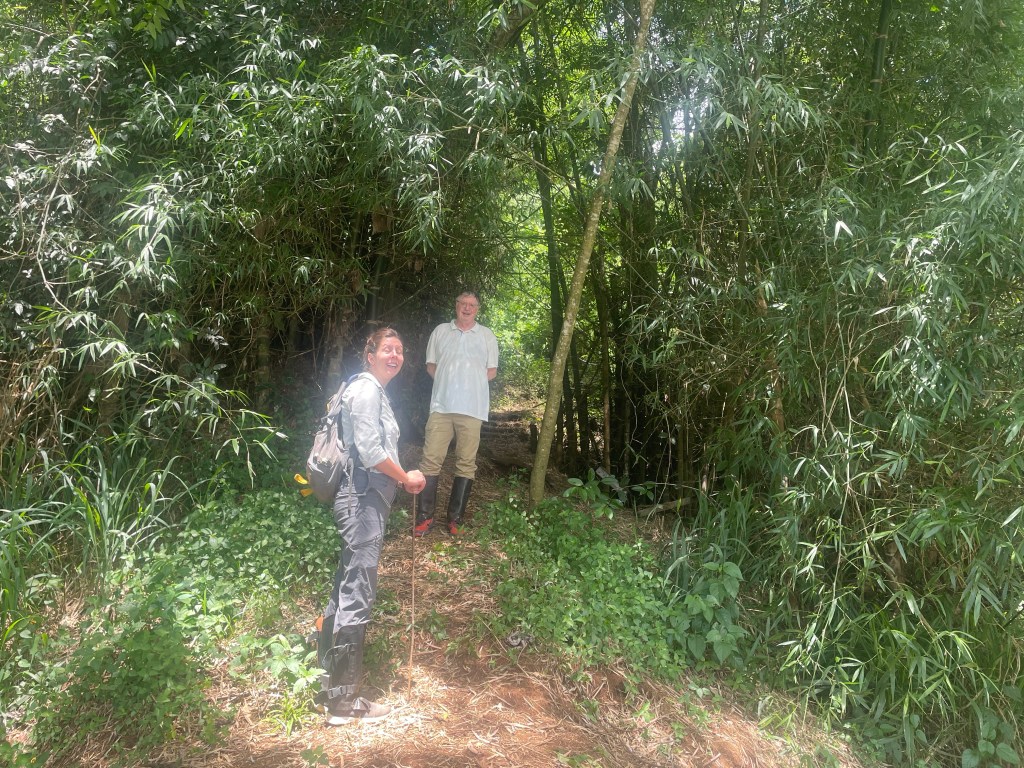
The falls is situated in the south of the Atlantic rainforest. Most people visit solely to see the falls. However we were able to do two forest hikes, followed by a barbeque. We were accompanied by our guide, Cami, and Toto. Toto is an ex-military, part-time ranger, member of the local search and rescue team, snake expert, path clearer, driver and and grill chef. The path we took was not in regular use and the rainforest grows very quickly – without Toto’s expertise and machete our route would have been impossible.

Iguazu Falls

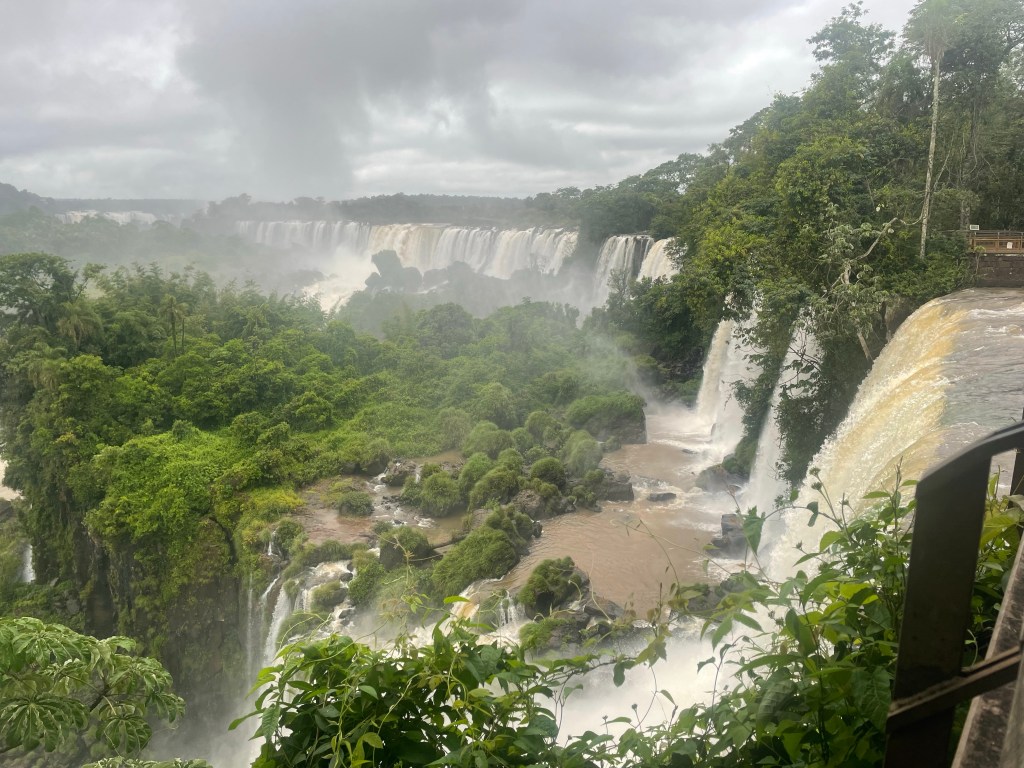
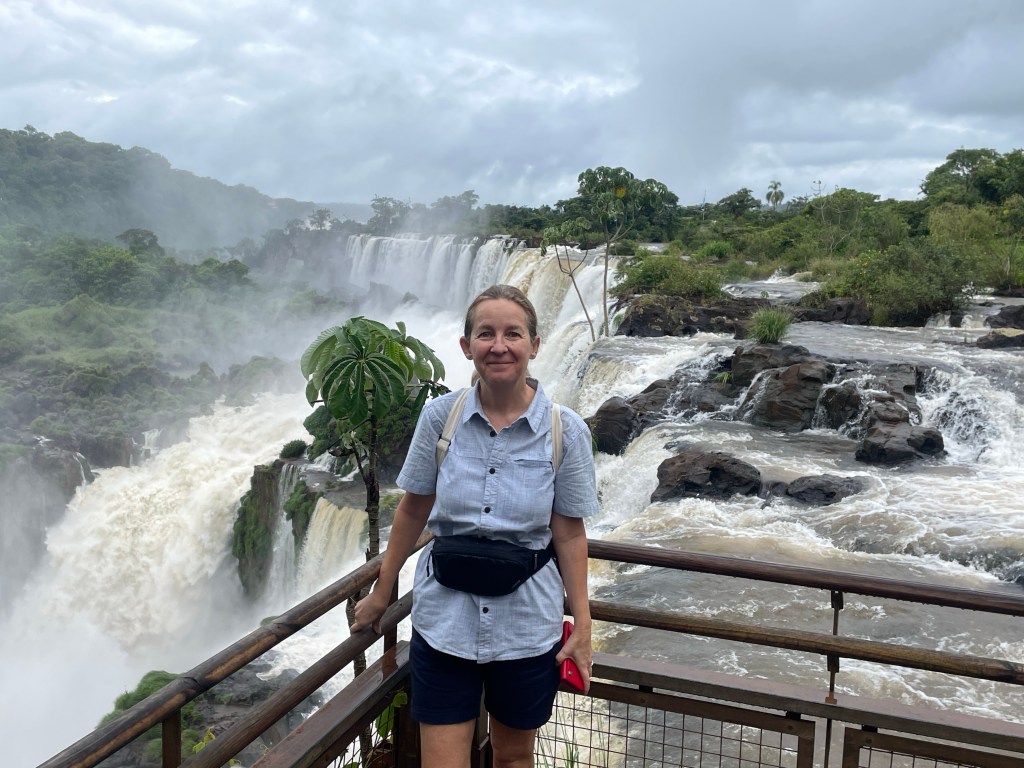
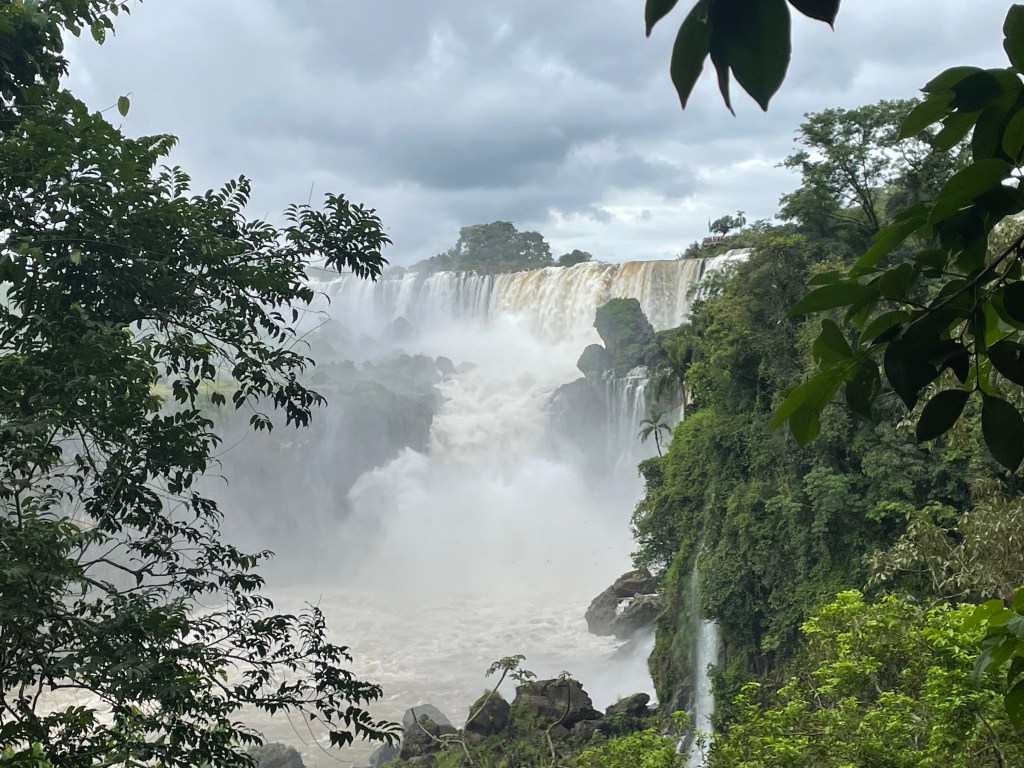
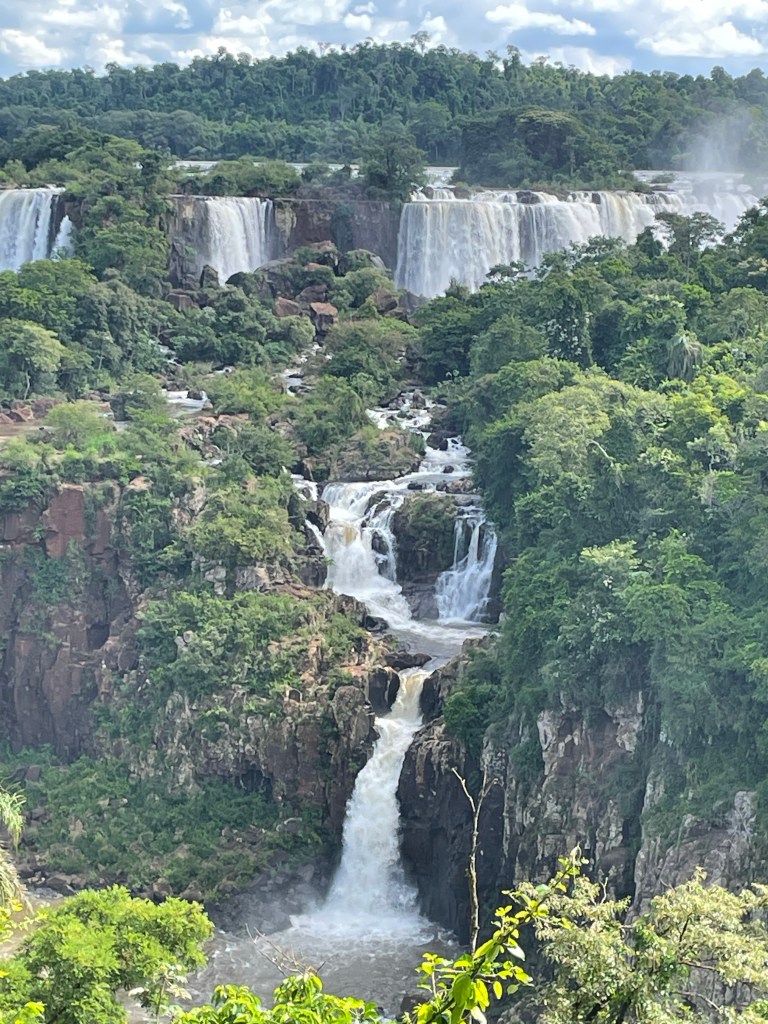
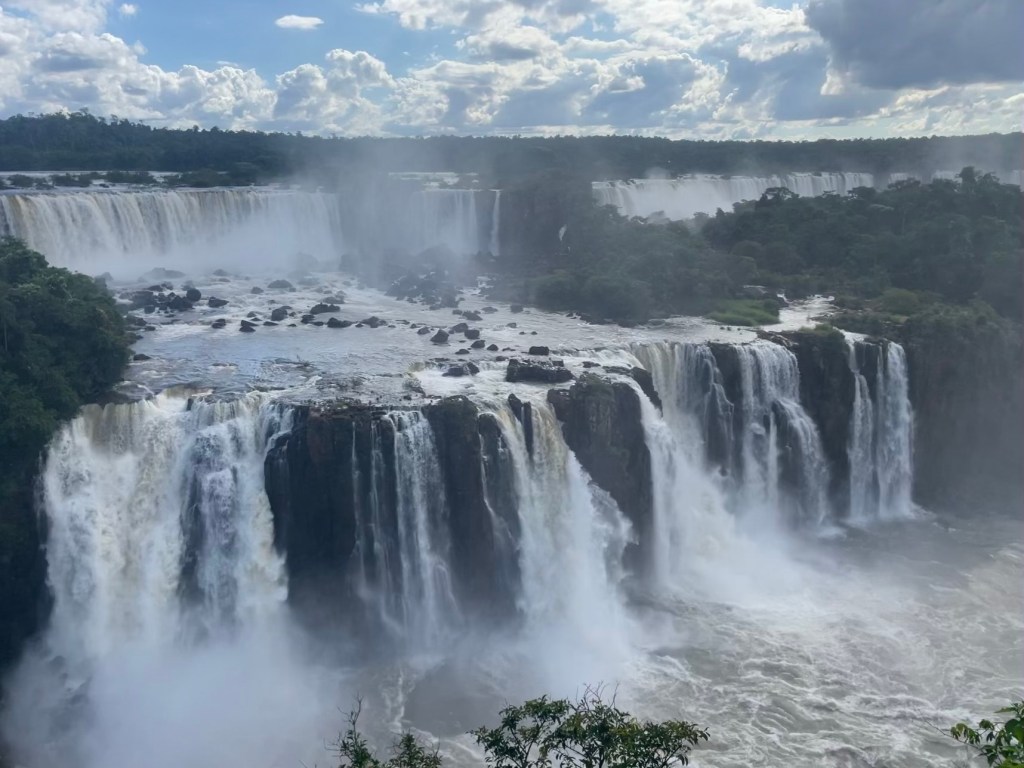
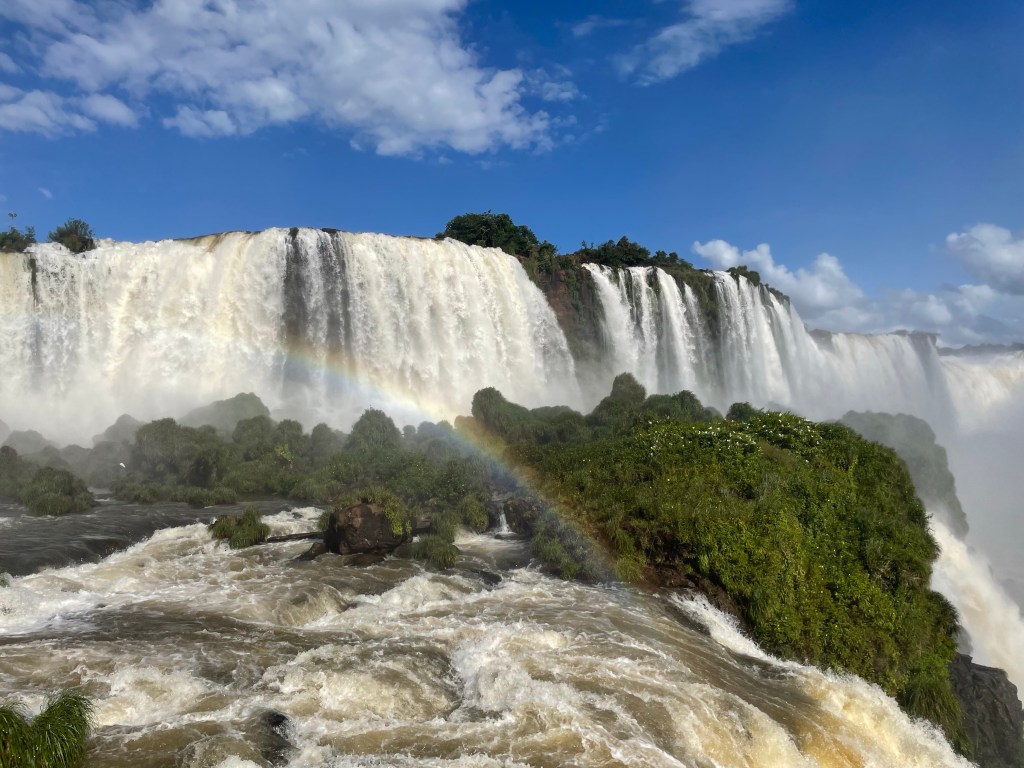
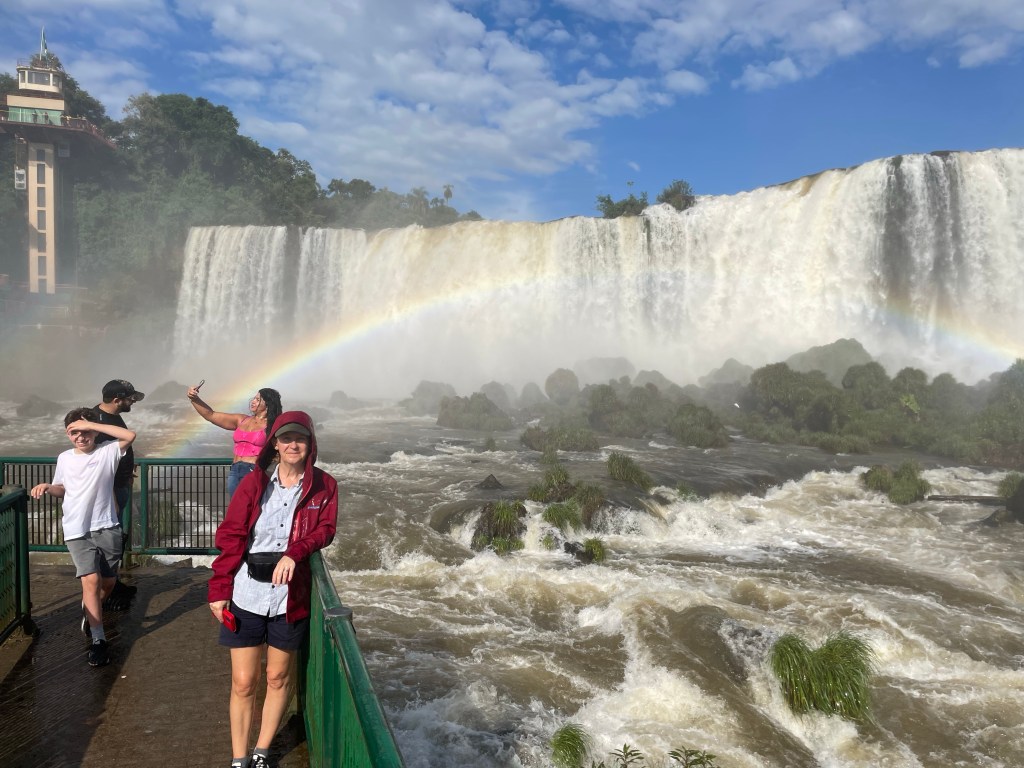
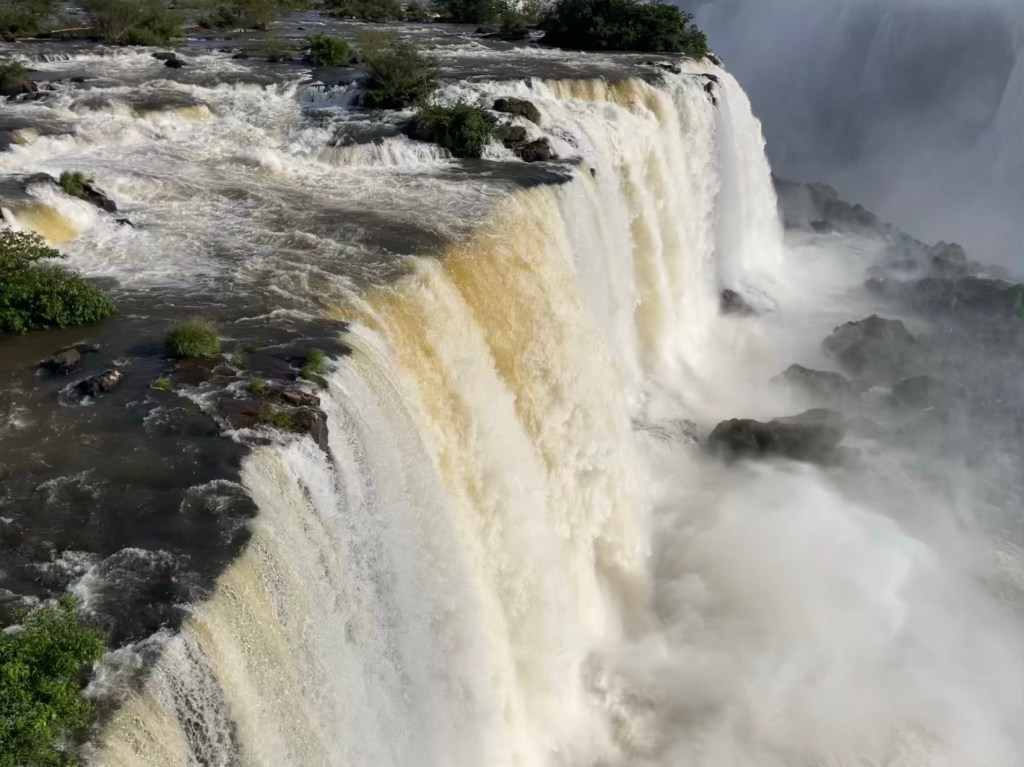
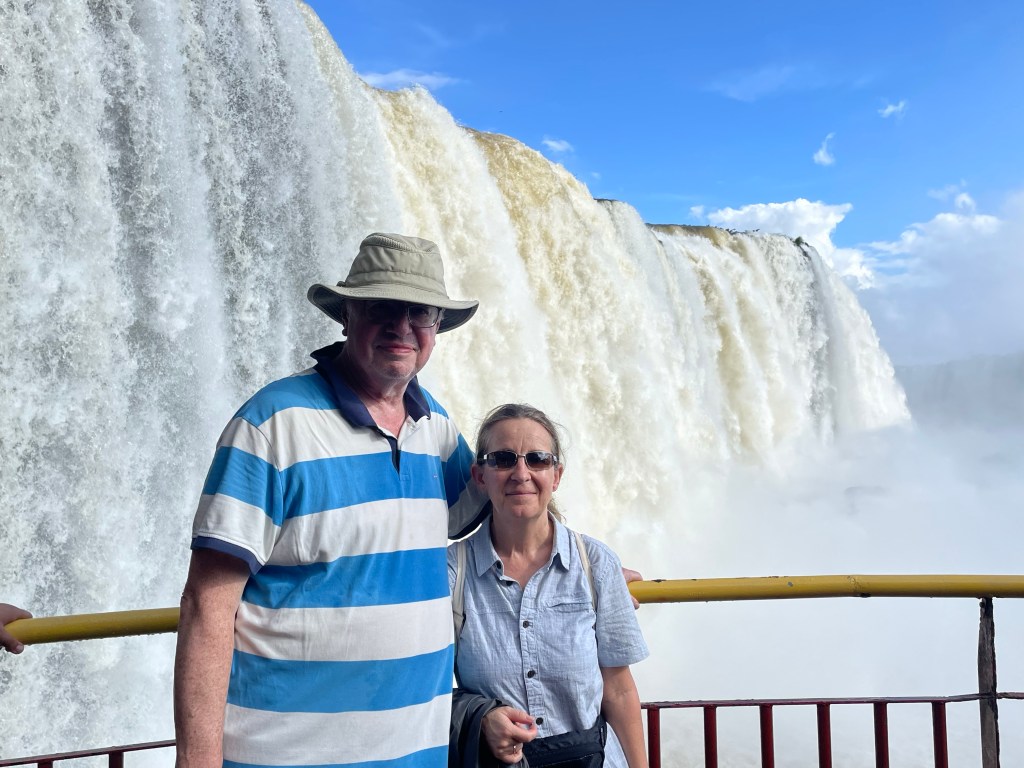
The Iguazu Falls are the largest falls system in the world with 275 drops over almost 3km. The longest drop is the Devil’s Throat at over 80 m. The guides say that although the majority of the falls are in Argentina, the best views are from the Brazilian side, so we visited both sides. On the day, the waterflow was slightly above average at 1.7 million litres per second (an Olympic swimming pool holds 2.5 million litres).

Both sides have extensive trails, along, under and behind the falls. Part of the Argentinian trail was closed due to a storm in October 2022 which created waterflow of 14.5 million litres per second and washed away the boardwalk.

Puerto Iguazu

A long day with three internal flights took us from Patagonia to the province of Misiones, in north east Argentina, for a late arrival at our new hotel and our “cabin” in the rainforest.

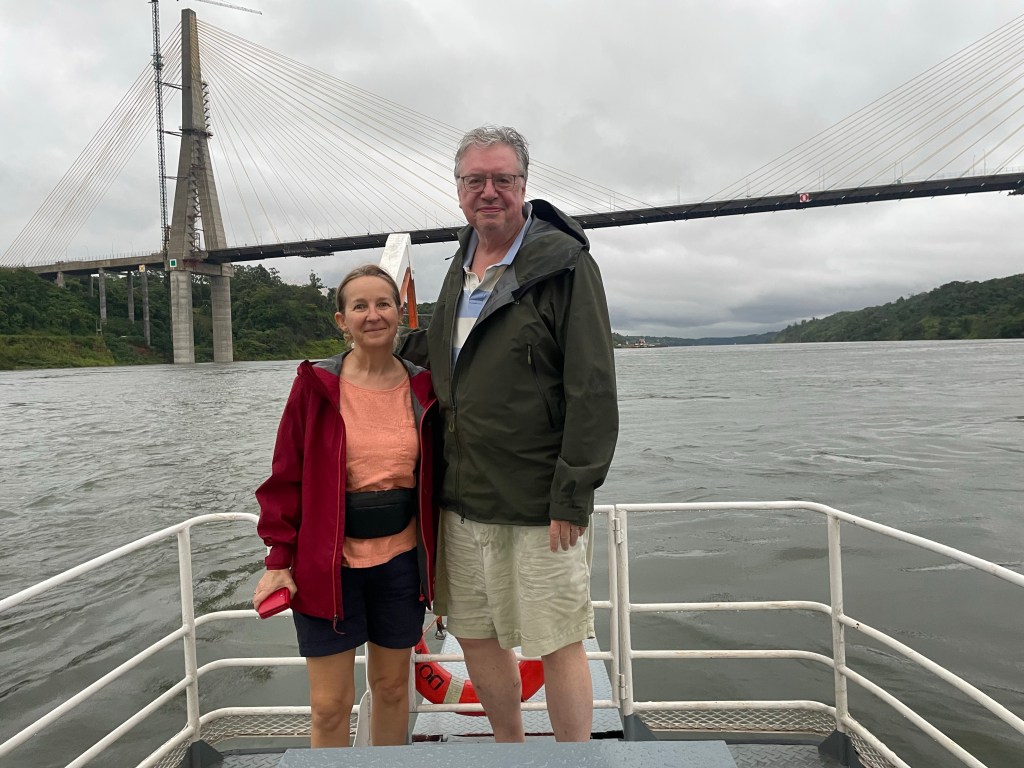
The highlight of our first day, despite torrential rain, was a boat trip to the junction of the River Iguazu and the River Parana where Argentina, Brazil and Paraguay meet. This is one of 175 tri-points in the world; there are no instances of more than three points meeting but this has been the subject of some debate as there are borders where more then three countries meet within close proximity.

The River Parana is the second longest in South America after the Amazon and is the subject of tensions with Brazil as the flow is controlled by a dam 9km north of the border.

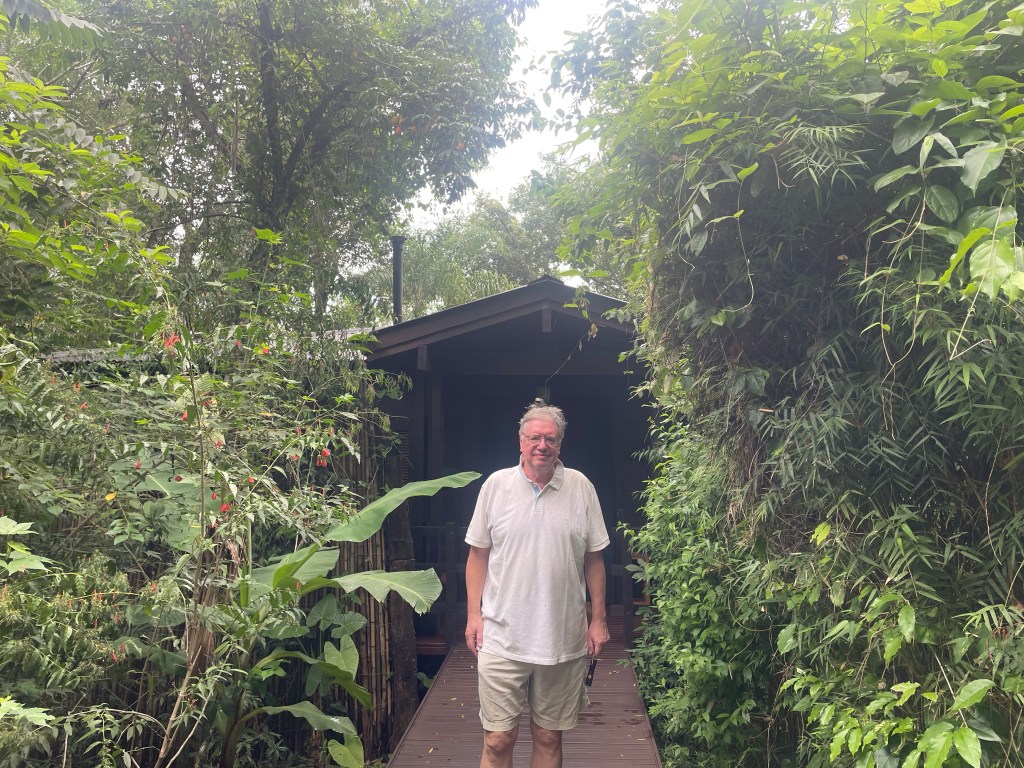
Outside our ‘cabin’
In the rainforest surrounding our hotel with our guide Cami. The gaiters are to protect from snakes (a poisonous yarara had been seen on this path an hour before) and Cami’s stick is to alert the snakes.
At the tri-border