Atacama Desert

The Atacama Desert is a strip of land west of the Andes covering over 105,000 square km and is the driest non-polar desert in the world. According to the locals in a ten year weather cycle, it has eight dry years, a medium “wet” year and a “wet” year (wet being a relative term in the context of a desert which, by definition, has less than 25cm of precipitation per year). The wet season, the Altiplanic Winter, is in the summer and lasts up to two months. It is caused by the reversal of the wind direction, so that the wind flows across the Andes from Bolivia during what is known as the Bolivian winter, rather than the normal direction from the Pacific. The precipitation is very localised, falling as rain or snow, depending on the altitude; it is believed that parts of the desert have not had any rain in 500,000 years

We stayed in San Pedro, an oasis in the desert, during one of the medium wet “winters”, at an altitude of 2,400m. It is the centre for tourism with a population of almost 5,000. The other main industry in the area is mining, predominantly copper and lithium. The lithium mining is controversial as it uses a lot of water and consequently is not good for the ecosystem. The lithium is exported, mainly to China for the production of batteries.

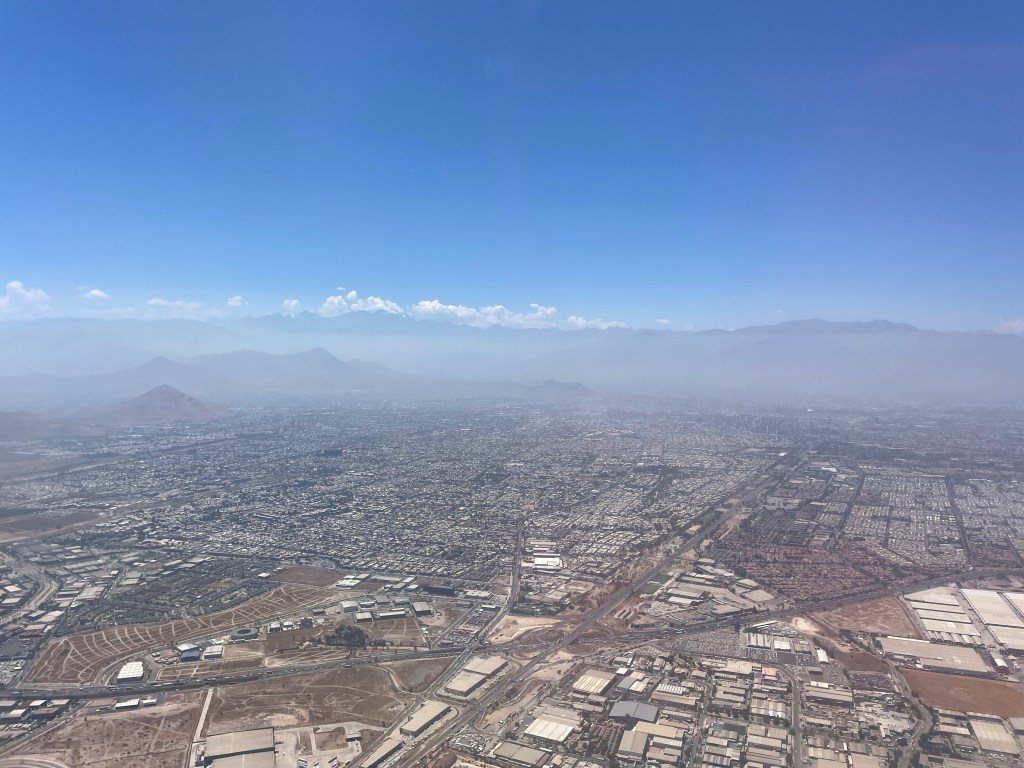
Most tourists and miners fly into Calama (the mining centre) from Santiago, a two hour flight – hiking gear and hard hats being the carry on luggage of choice.
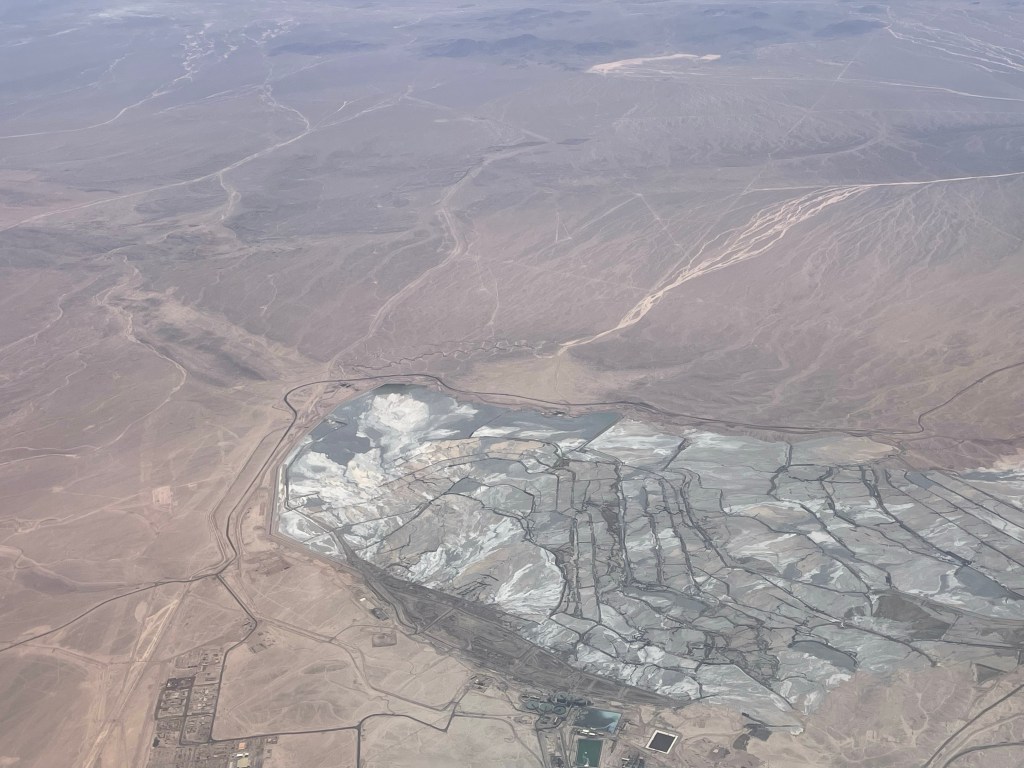
Lithium mine
Calama
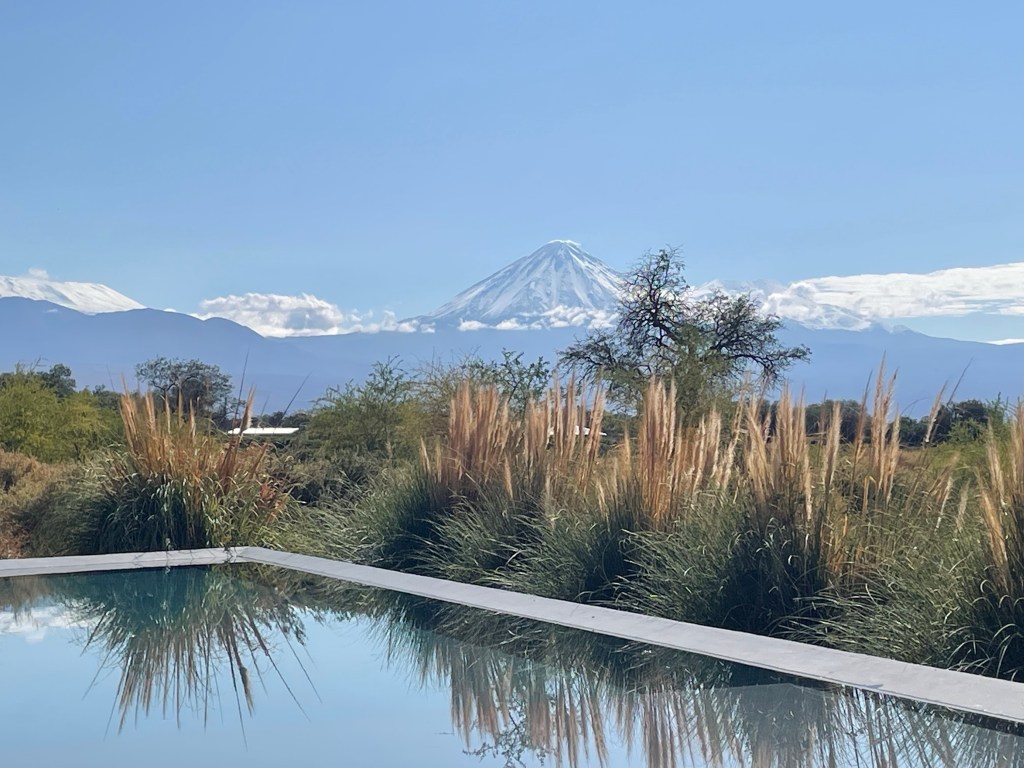
From our lodge – Licancabur (extinct) volcano, on the border with Bolivia at 5,916m, in the background.
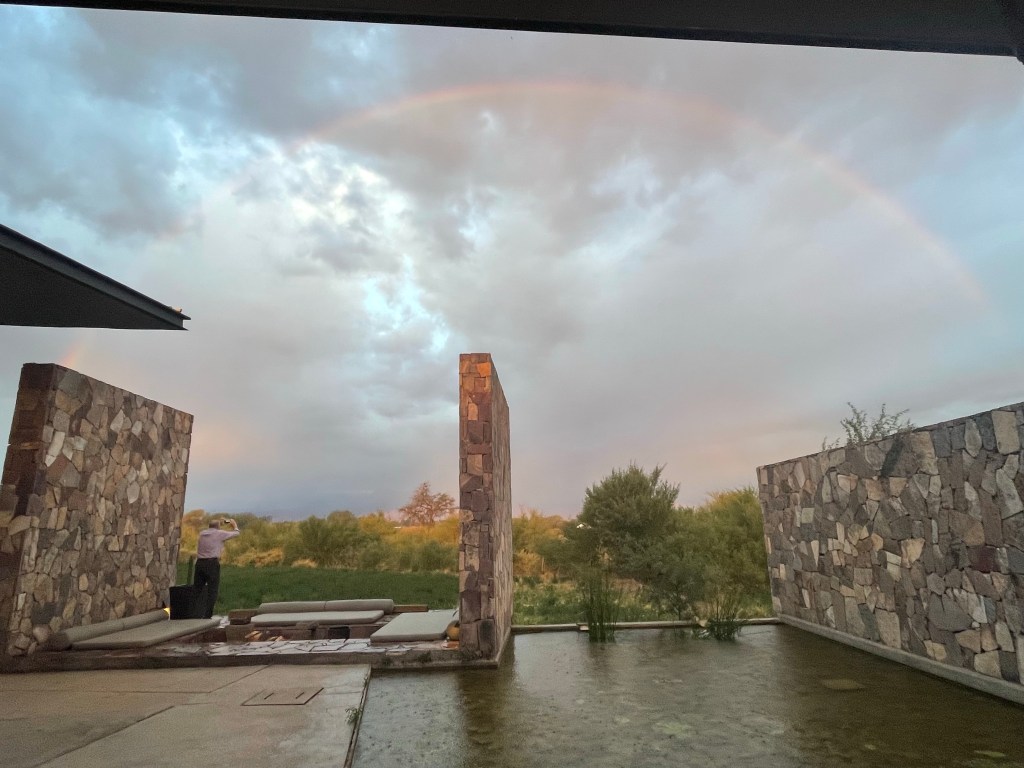
Rainbow in desert
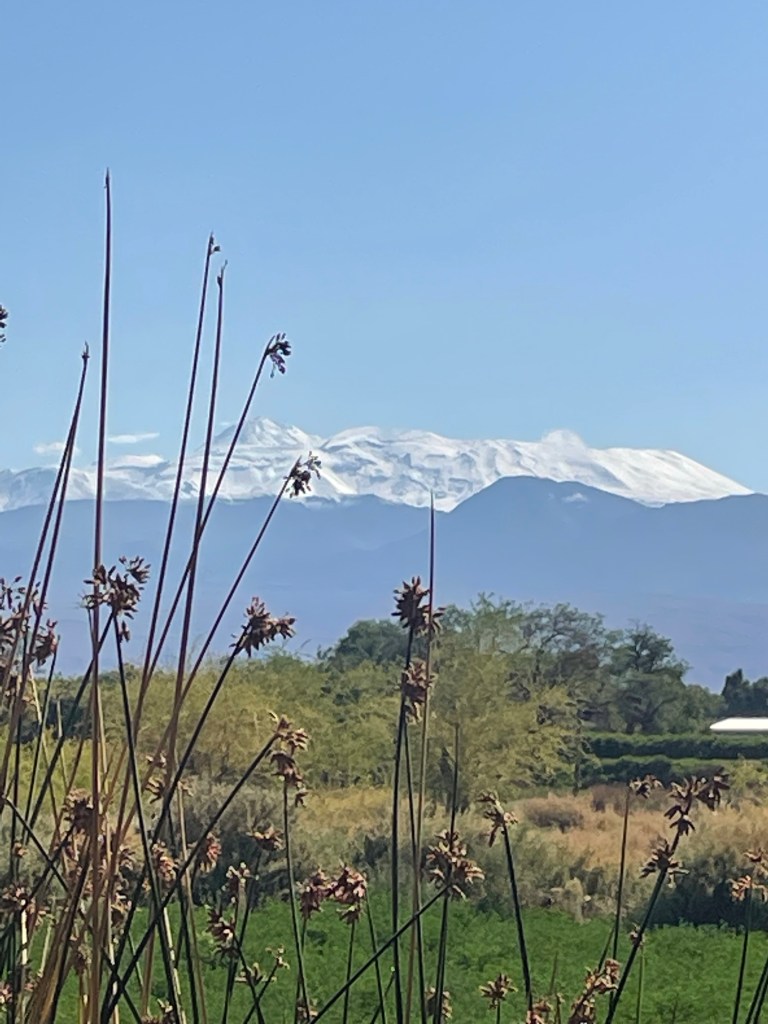
The snow capped mountains, also on the Bolivian boarder

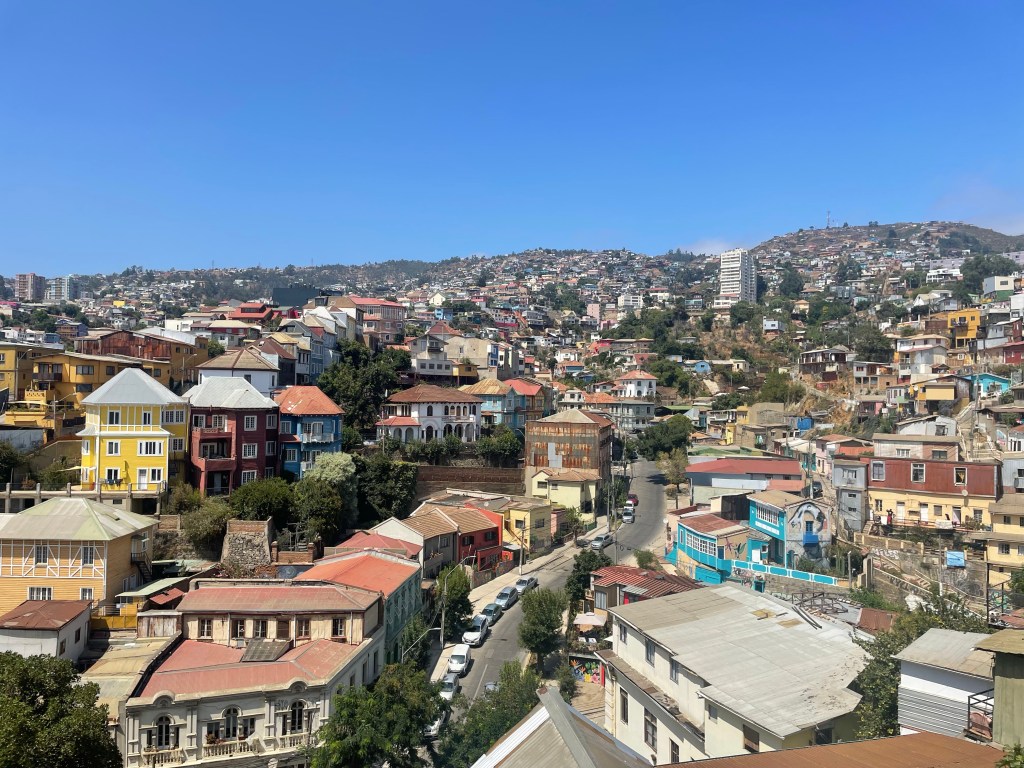
Valparaiso

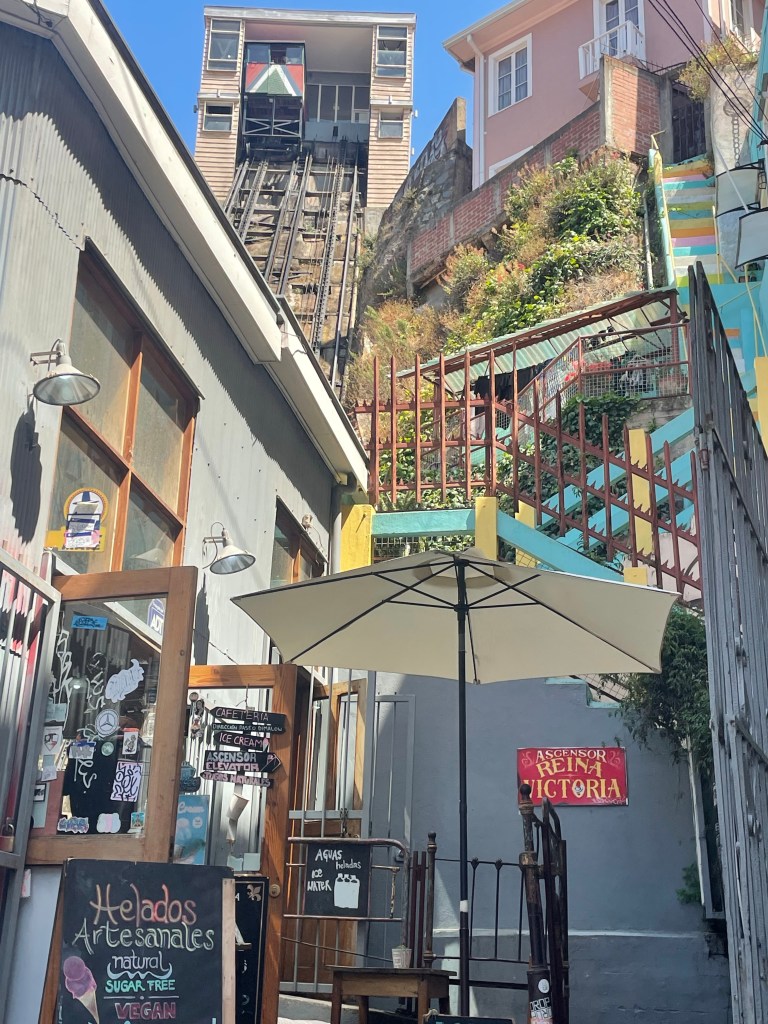
Valparaiso has been described as a dilapidated, colourful, poetic wonderful mess. From the times of Spanish colonialism and English seamen, including Sir Francis Drake, it was a major stopping off port for ships rounding Cape Horn. During the Califonian gold rush of 1849, mining supplies came through Valparaiso. It lies on the coast, 116km from Santiago, but with a very different climate – the day we visited, Santiago reached 36 C and Valparaiso 22 C, with cloud and a cold wind until lunchtime.

The Chilean navy was founded here with the first Vice Admiral being Lord Cochrane, who had been a captain in the Napoleonic wars, but was convicted of Stock Exchange fraud. Valparaiso is still home to the naval acadamy and was a major influence on Chile winning the Pacific War against Bolivia and Peru in the late 19th century, resulting in Chile incresing its land by 30%.

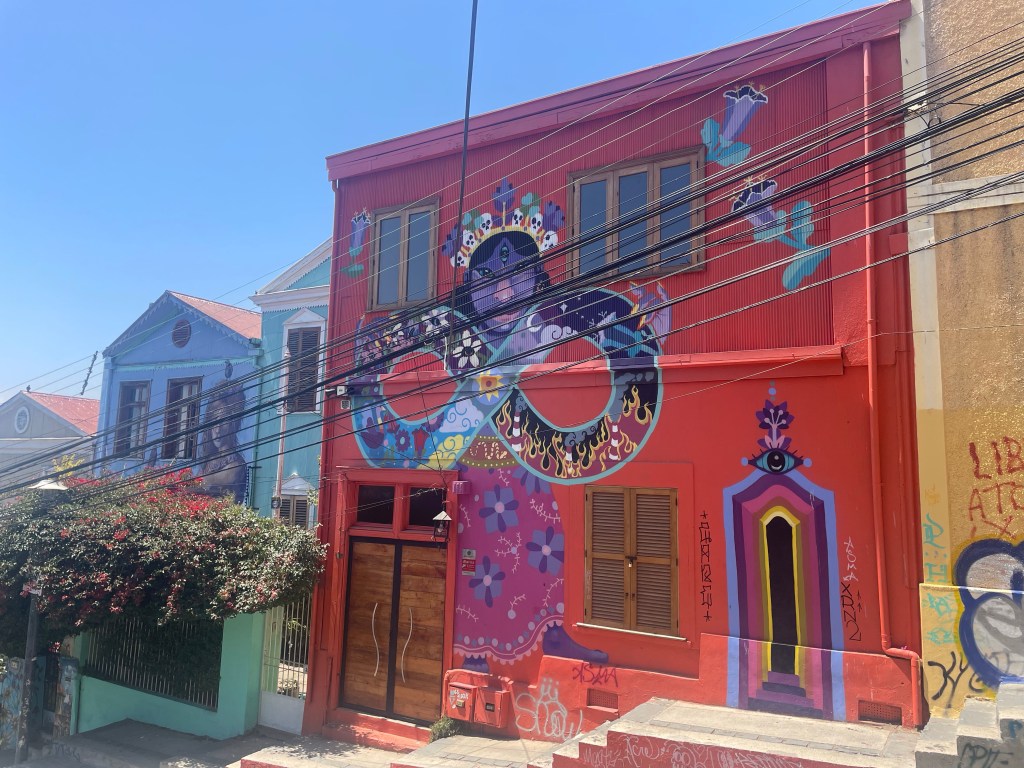
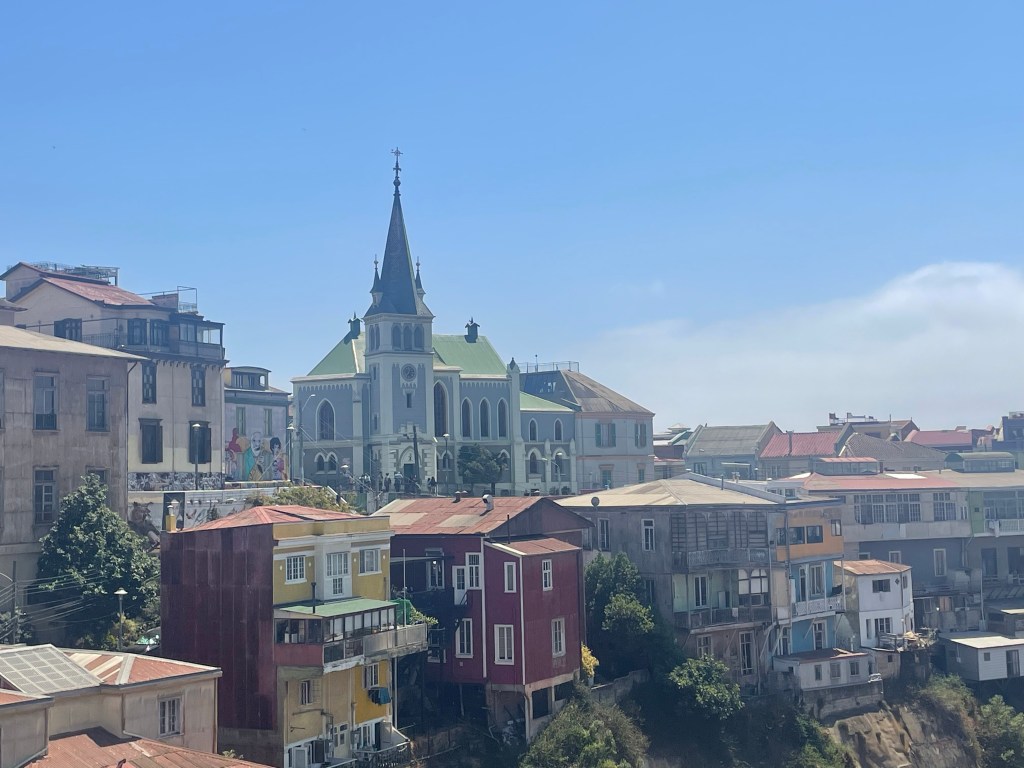
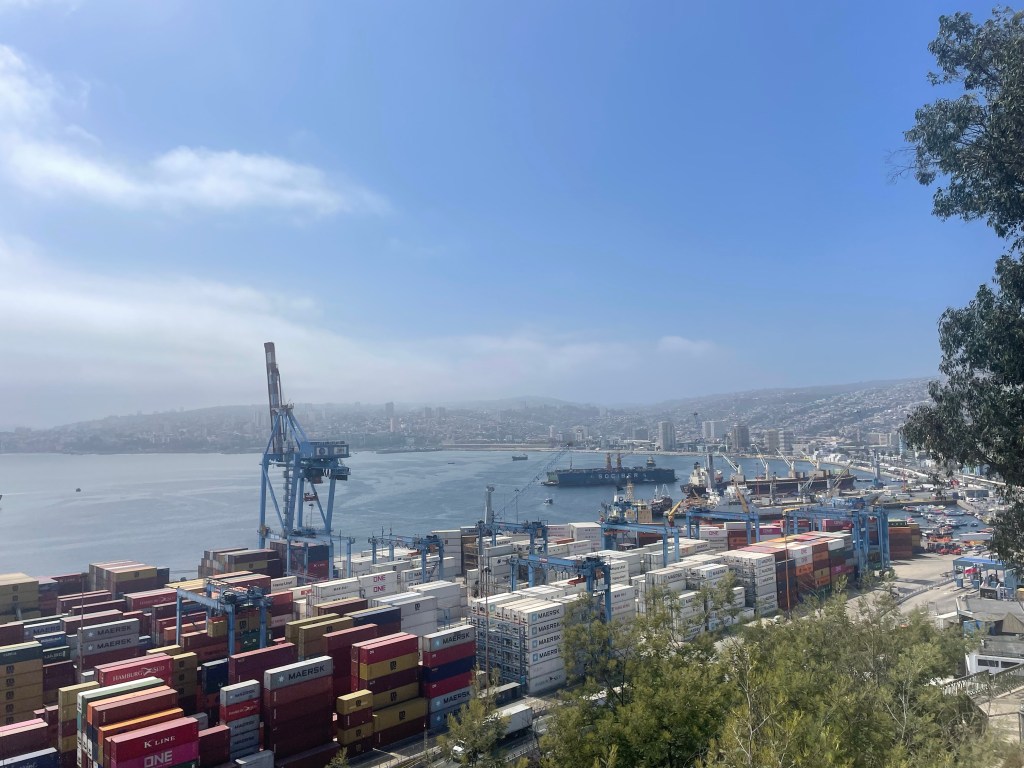
Following the opening of the Panama canal it declined, but the city built on steep hills remains colourful and artistic with separate districts for each of the immigrant European nations, reflecting their respective architechture. These include British, German, Yugoslavian, French, Swiss and Italian. It remains a significant port and is a large student city with several universities.

One of several funiculars built around 1900 to help get around the city
Many buildings are decorated with murals
A church in the German district
The port
House built by a wealthy Yugoslav merchant
The “Armada de Chile” building
The headquarters of the shipping authority- the building could not be repaired after an earthquake in 2017, so a glass building was built inside the existing exterior
Fish lunch with our guide

Santiago

Santiago is the capital city of Chile, founded by the Spanish in 1541, with a population of nearly seven million (Chile’s total population is approx 19m). Chile became independent in 1818 and its first leader was Bernardo O’Higgins (explaining the number of O’Higgins road/square names). He was the illigitimate son of an Irishman who served in the Spanish Army and became a wealthy landowner in Chile.

The city still bears the aftermarth of the military takeover by Augusto Pinochet in 1973 supported by the CIA. The marxist elected president Salvador Allende committed suicide rather than being captured. Pinochet’s regime came to an end in 1990 and democracy returned to Chile.

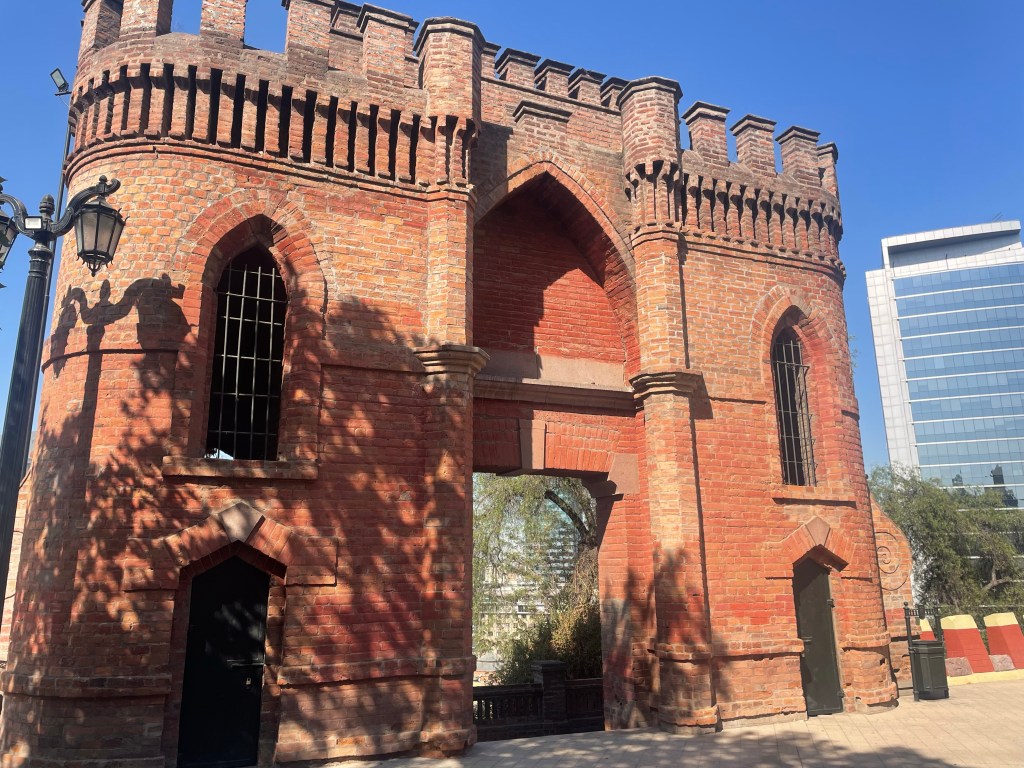
Entrance to the fortifications on the top of St Lucia Hill
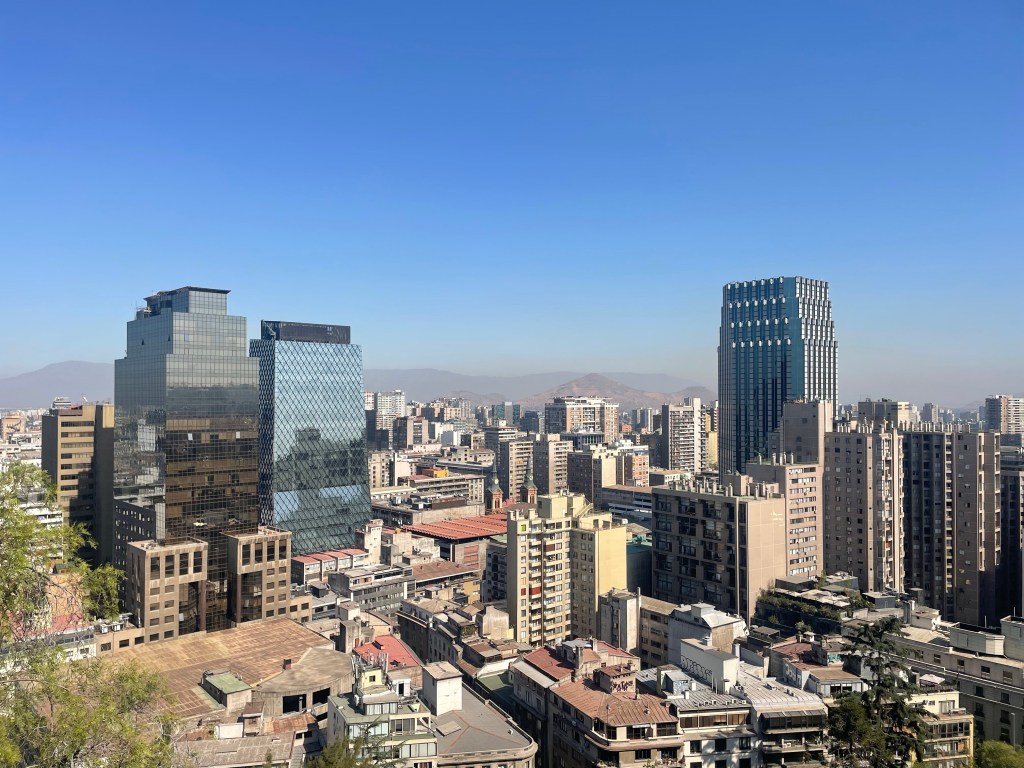
View from St Lucia hill
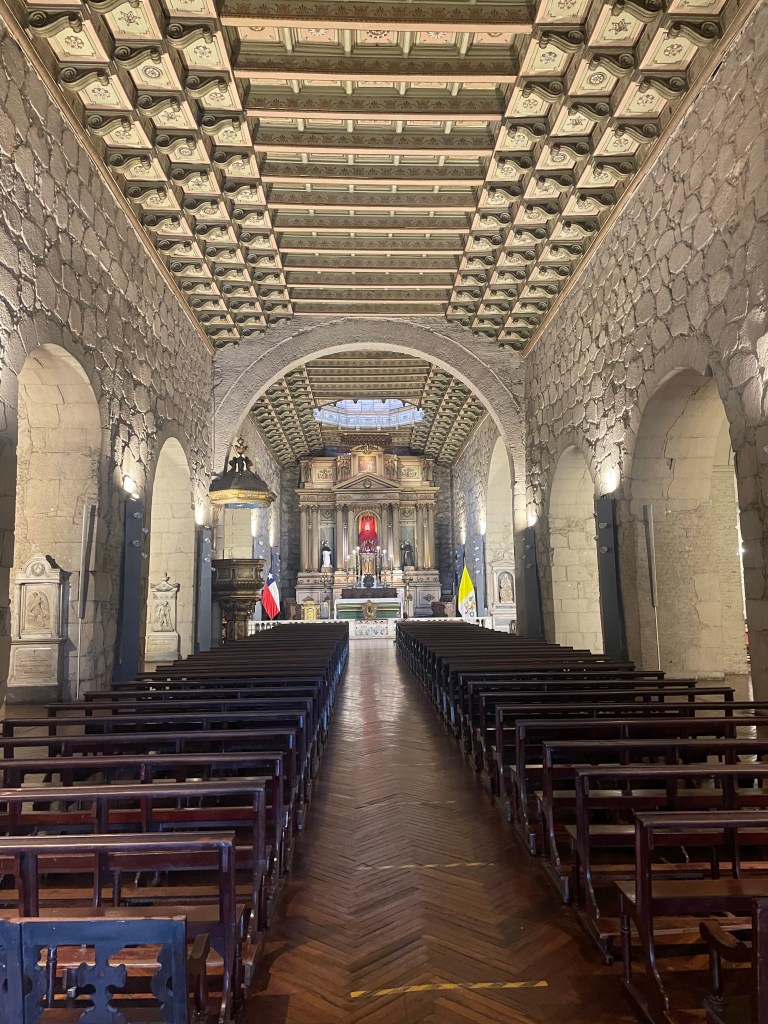
St Francis of Assisi parish church – the Oldest Church in Santiago
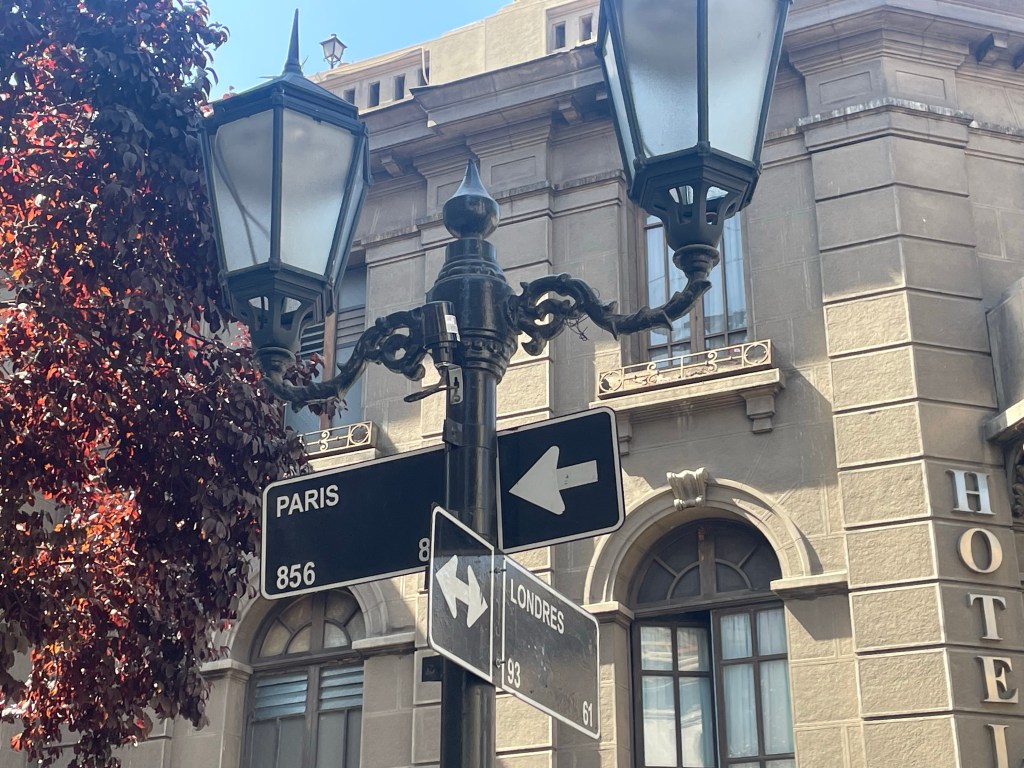
“Paris Londres” district of Santiago – a number of the buildings were gathering places for socialists during the Pinochet years
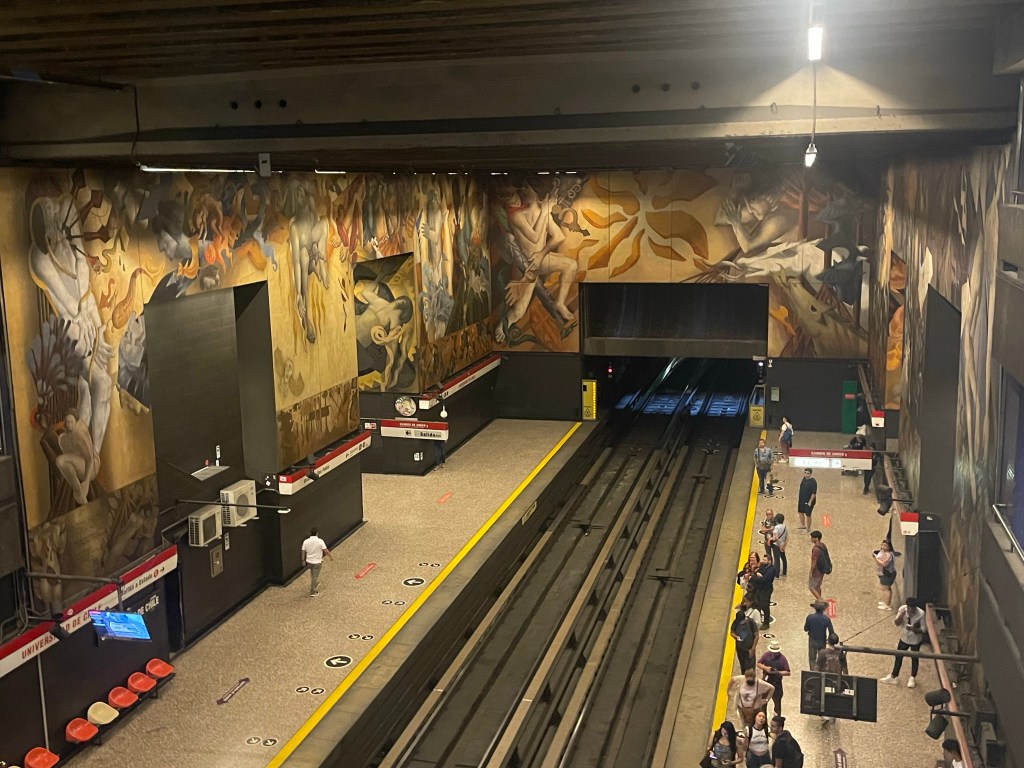
A metro station
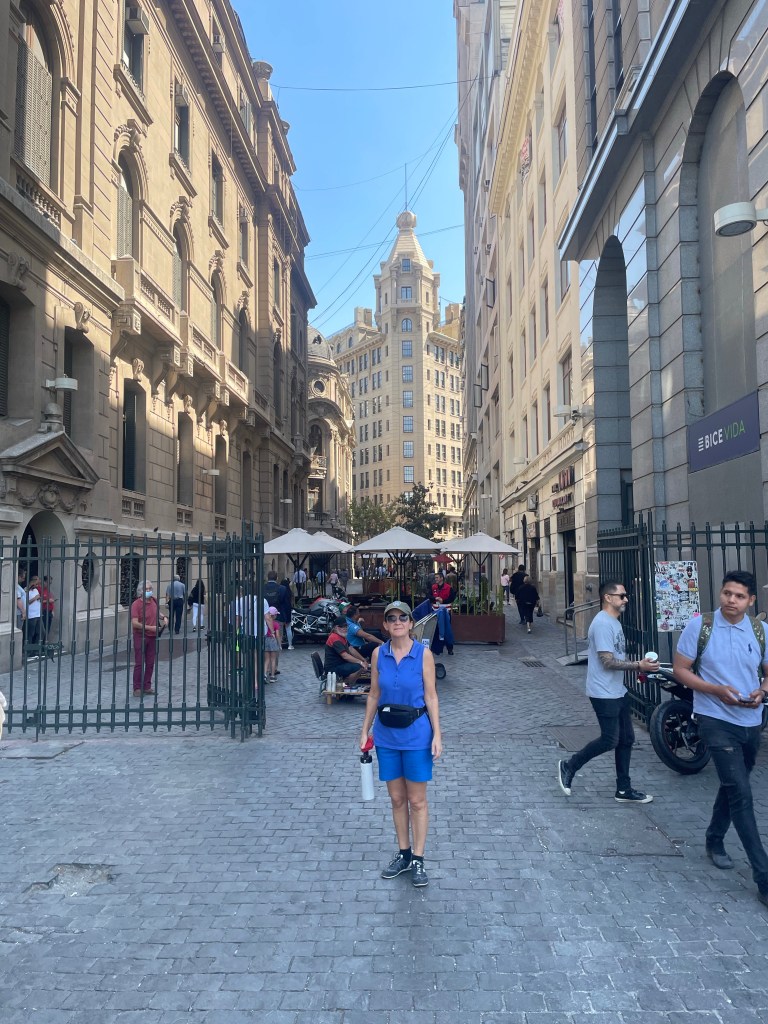
Santiago’s financial district with its flat iron building. There is also a newer financial district further out of the centre
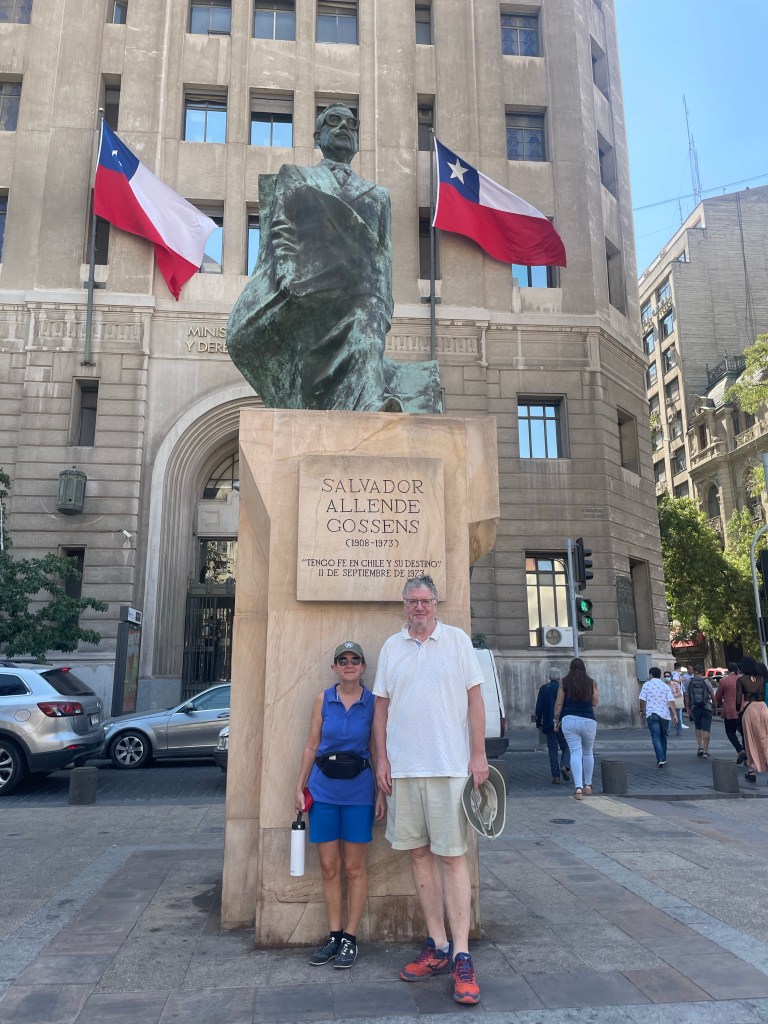
Statue of Salvador Allende outside the Presidential Palace (used as offices, no longer a residence)
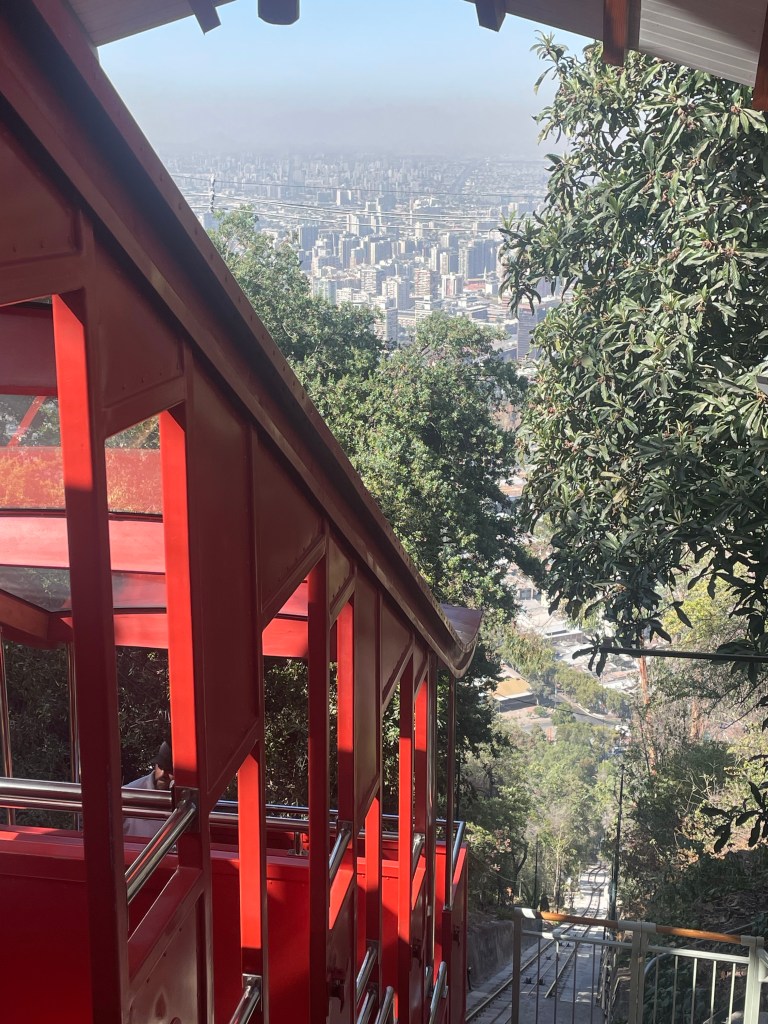
Funicular at the Metropolitan Park
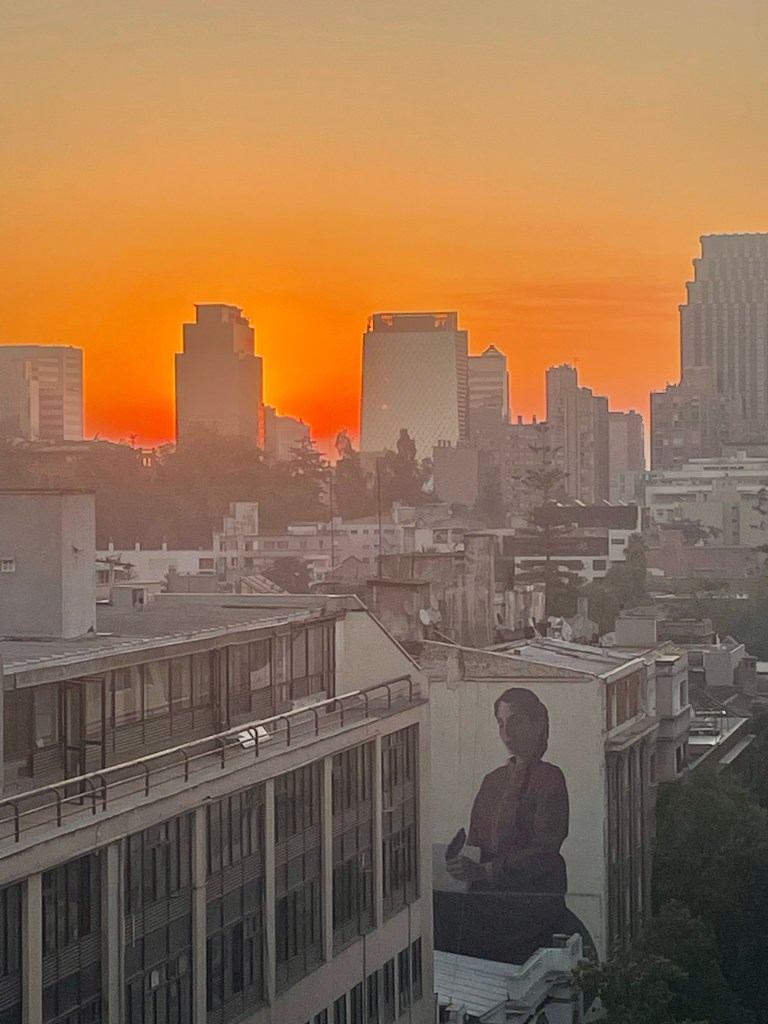
From the restaurant on our last night in Santiago

Chile

Chile is almost 2,700 miles long, stretching from the dryest desert in the world to the most southerly mainland in the world, yet, its average width is only 109 miles. The diversity is incredible with active volcanos (the worlds highest volcano at 6,891m is in Chile), geysers, earthquakes, vineyards and glaciers. This in turn is reflected in the diversity of climates and wildlife.

If a map of Chile is superimposed on Europe, it stretches from the most northern point of Norway to the coast of Libya. The same exercise with Chile turned on its side, in relation to the US shows the length of Chile as equating to New Hampshire to San Francisco.