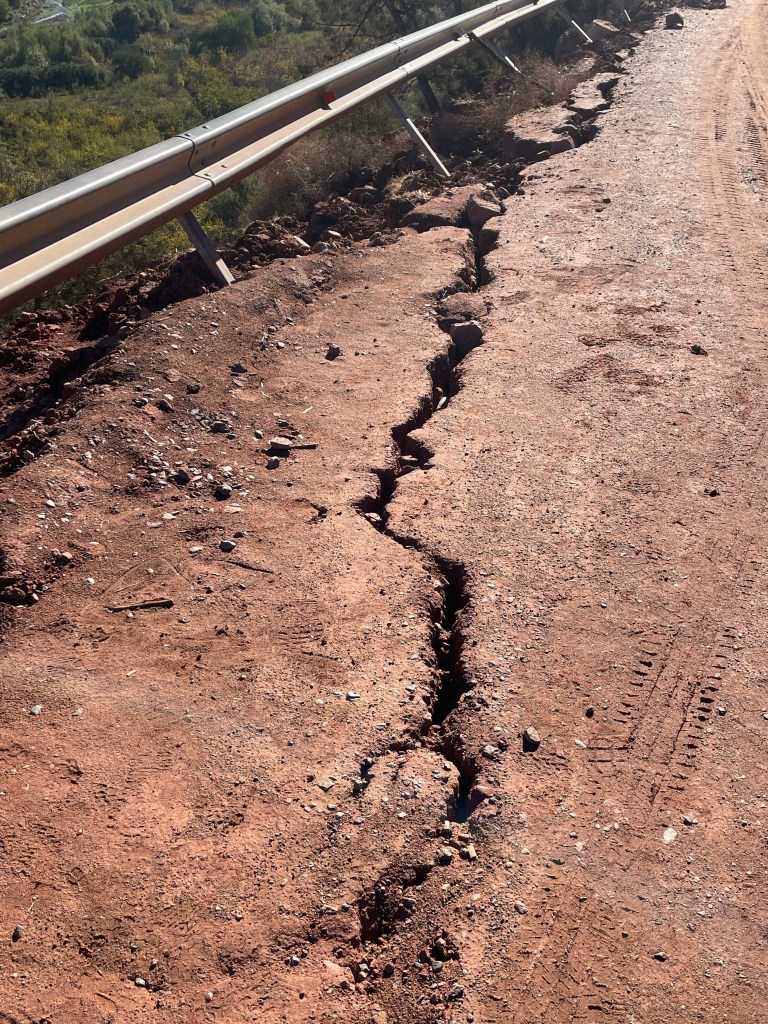
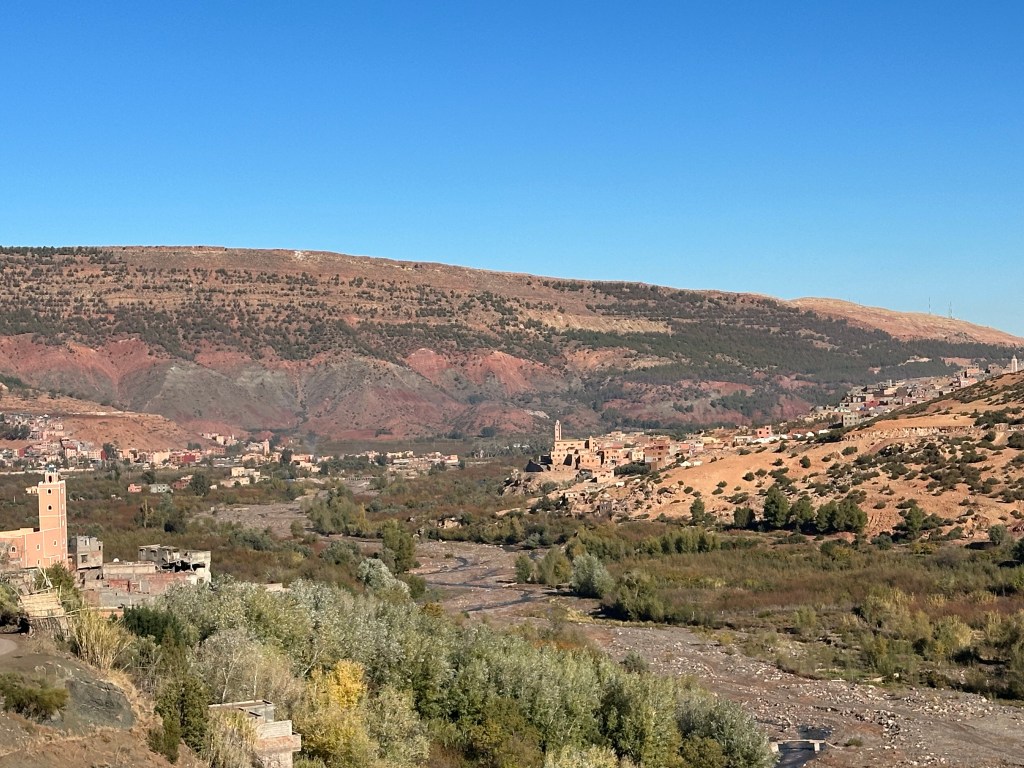
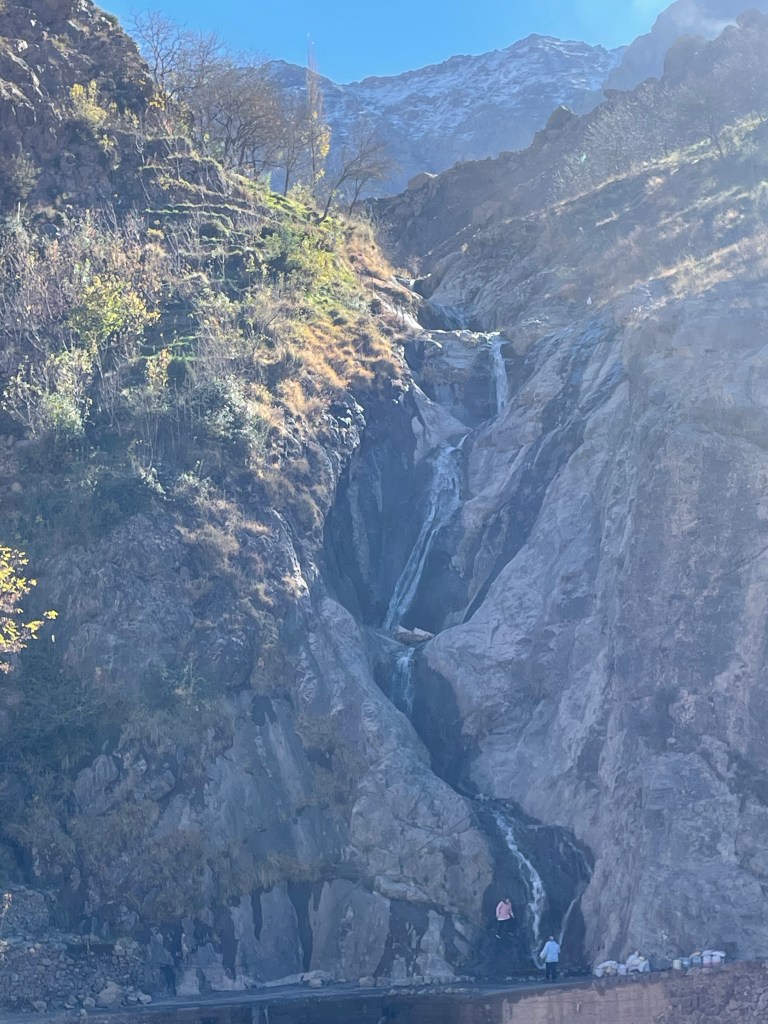
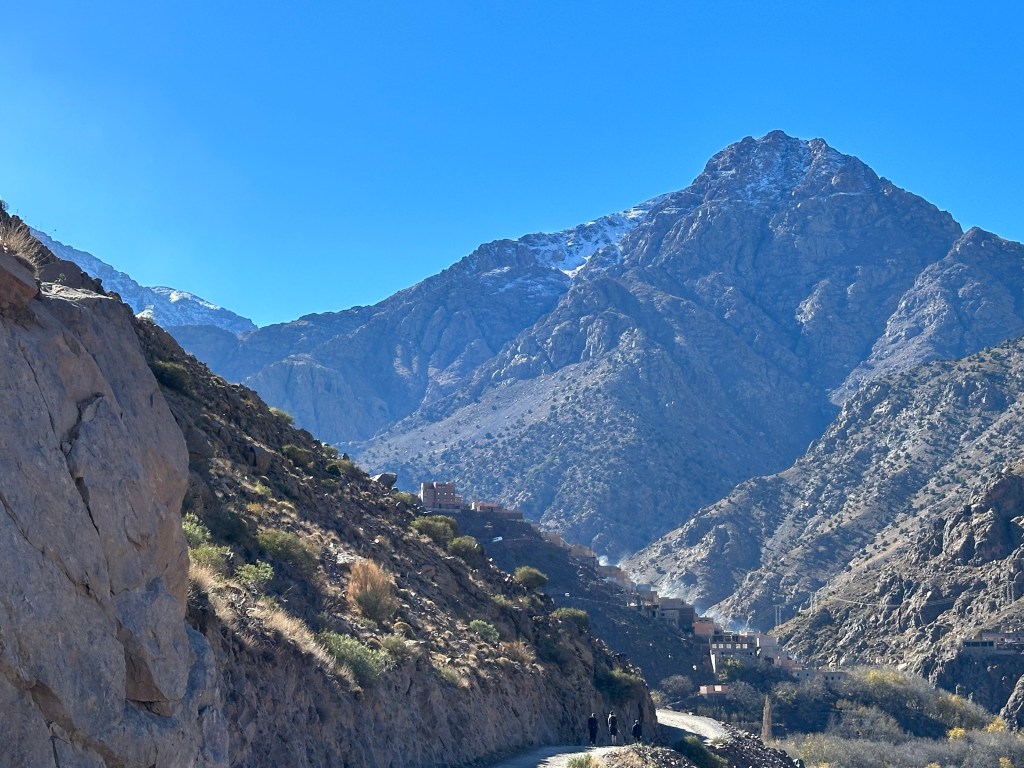
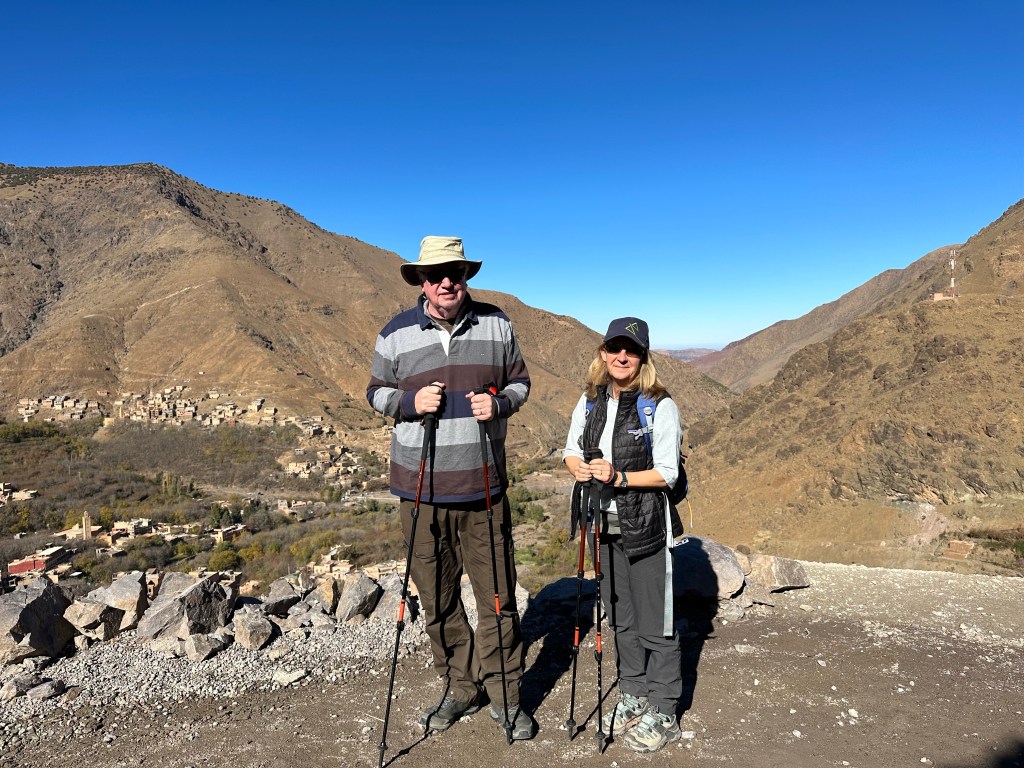
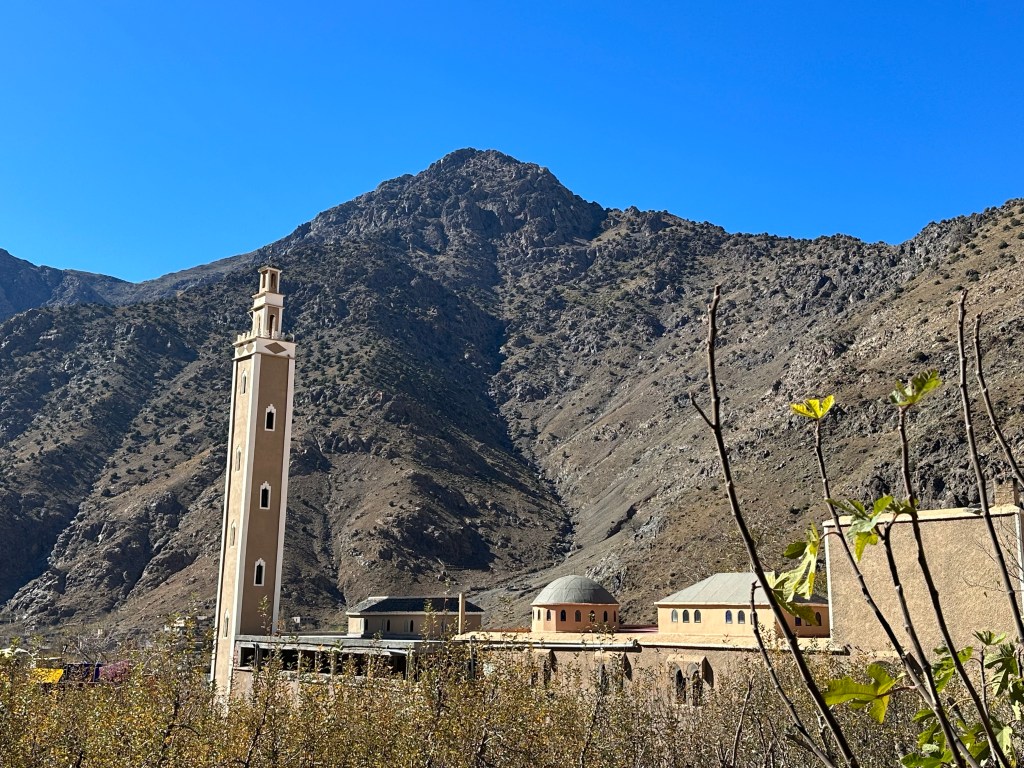
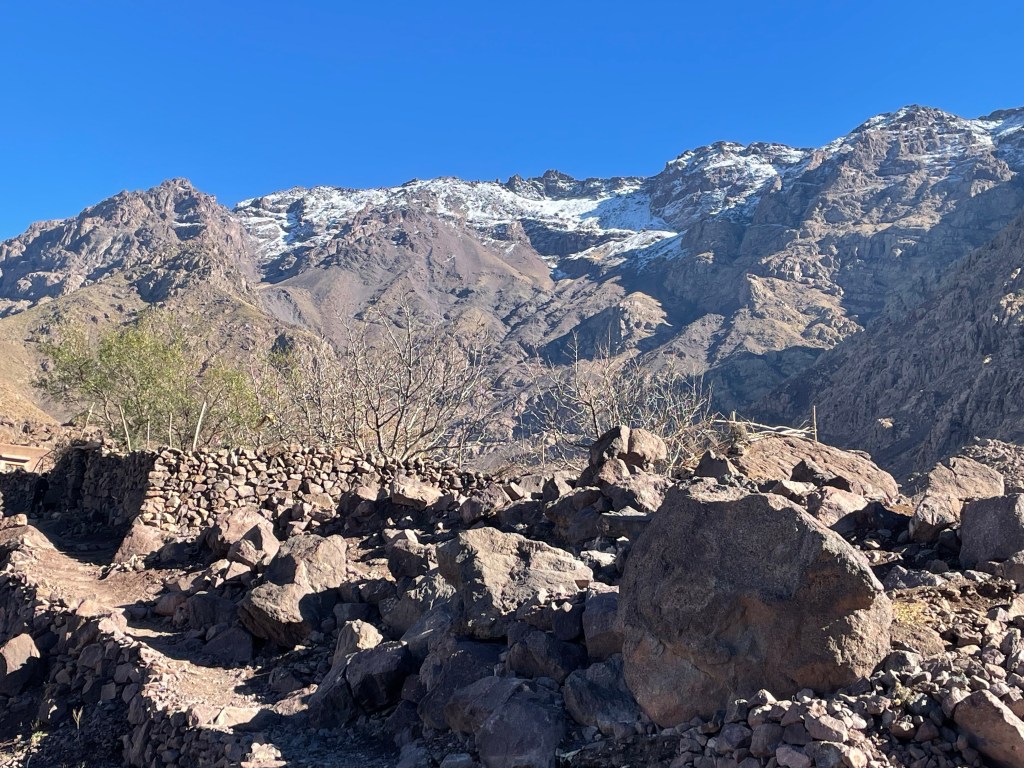
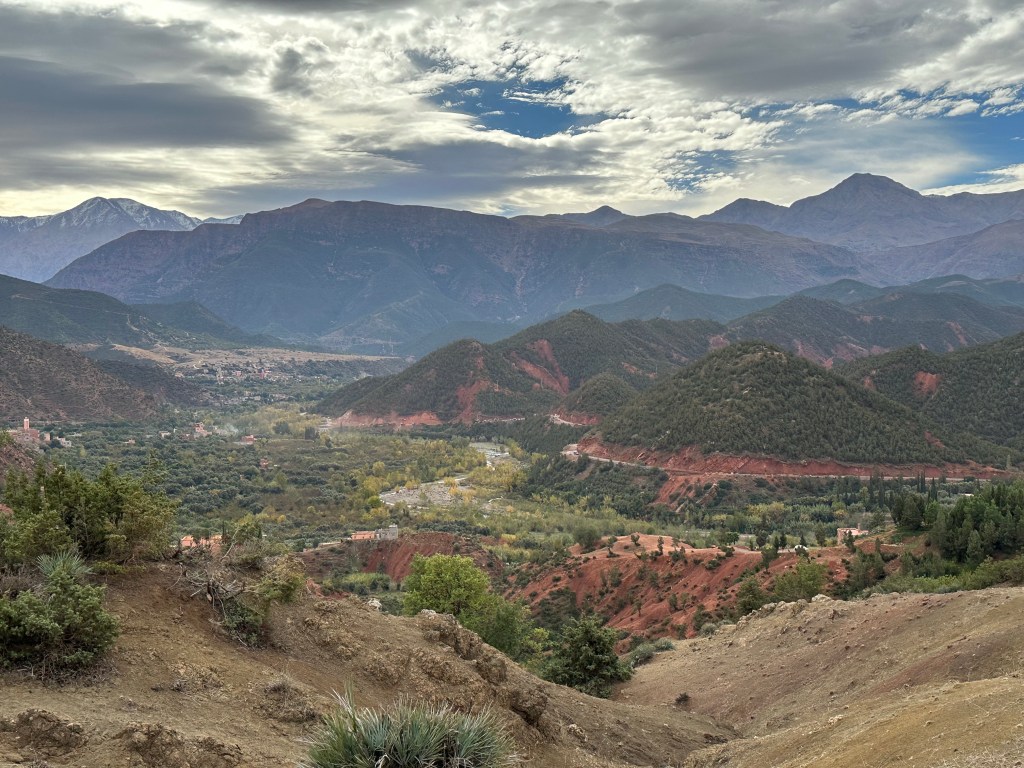
We had originally booked our third and final hotel in The Atlas Mountains. Sadly the area was badly hit by the earthquake and the hotel is under repair for 6-12 months. As an alternative, we booked a hotel outside Marrakesh within an hour or two drive to the Atlas Mountains. From here, we arranged two day trips to trek in two valleys – Imlil Valley and Ourika Valley. In the former we saw extensive earthquaque damage with roads, houses and hotels under repair; although the Ourika area was also damaged, it was less extensive. Both areas derive a significant part of their income from tourism – some tourists have returned but numbers are much lower.
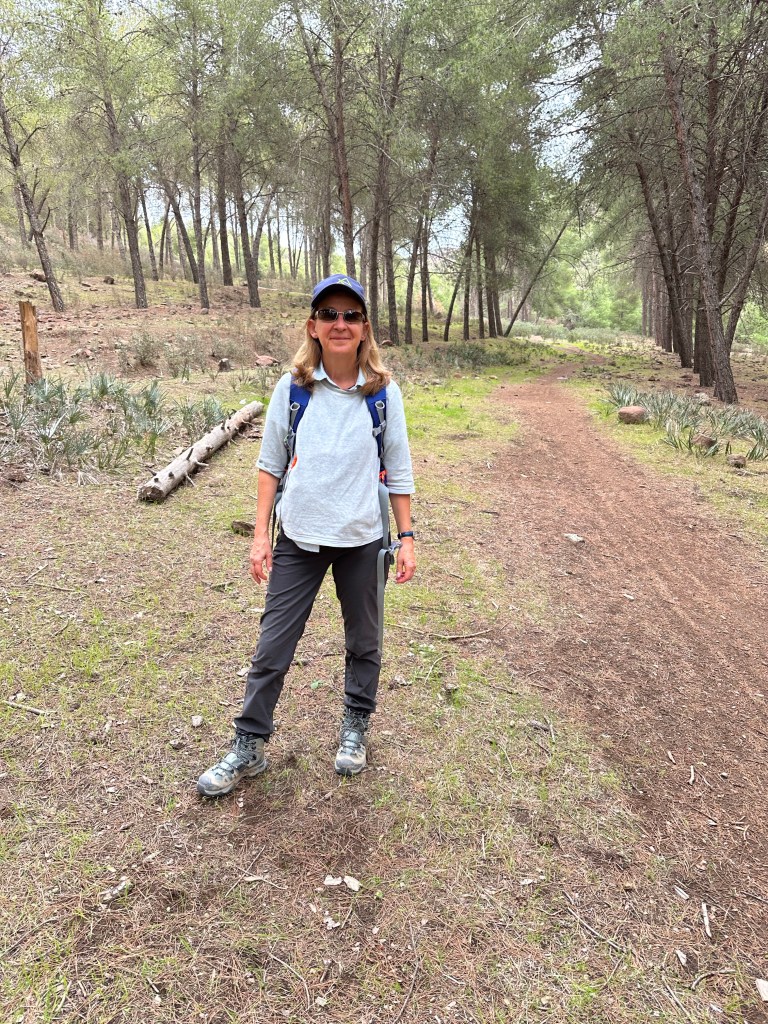
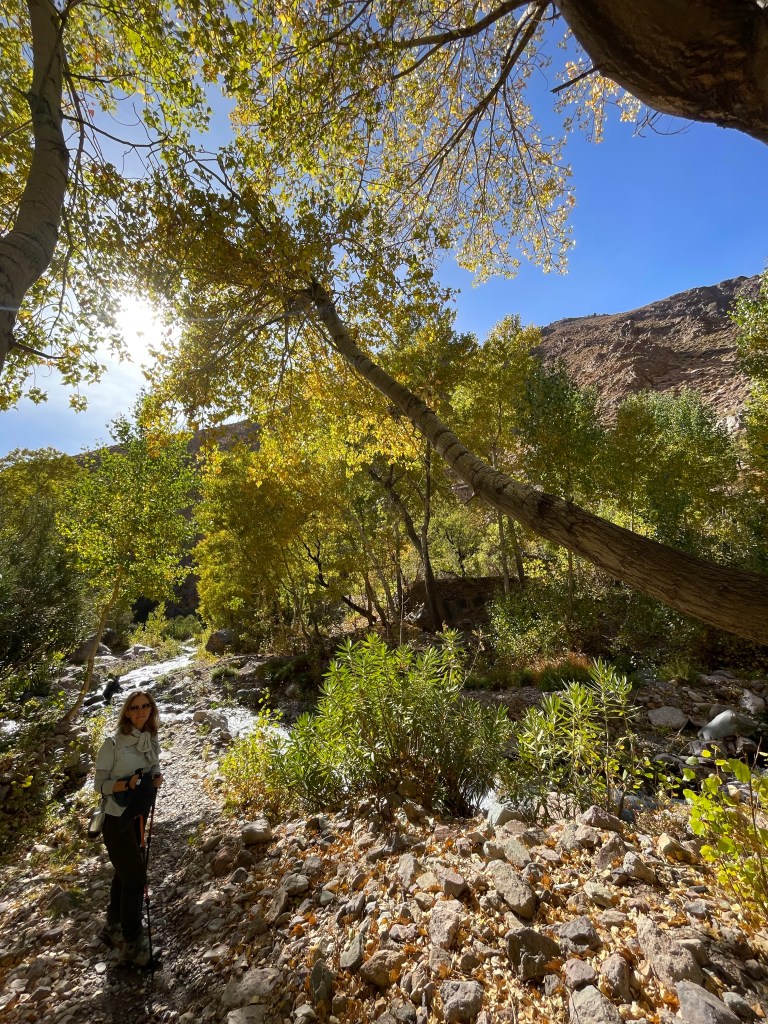
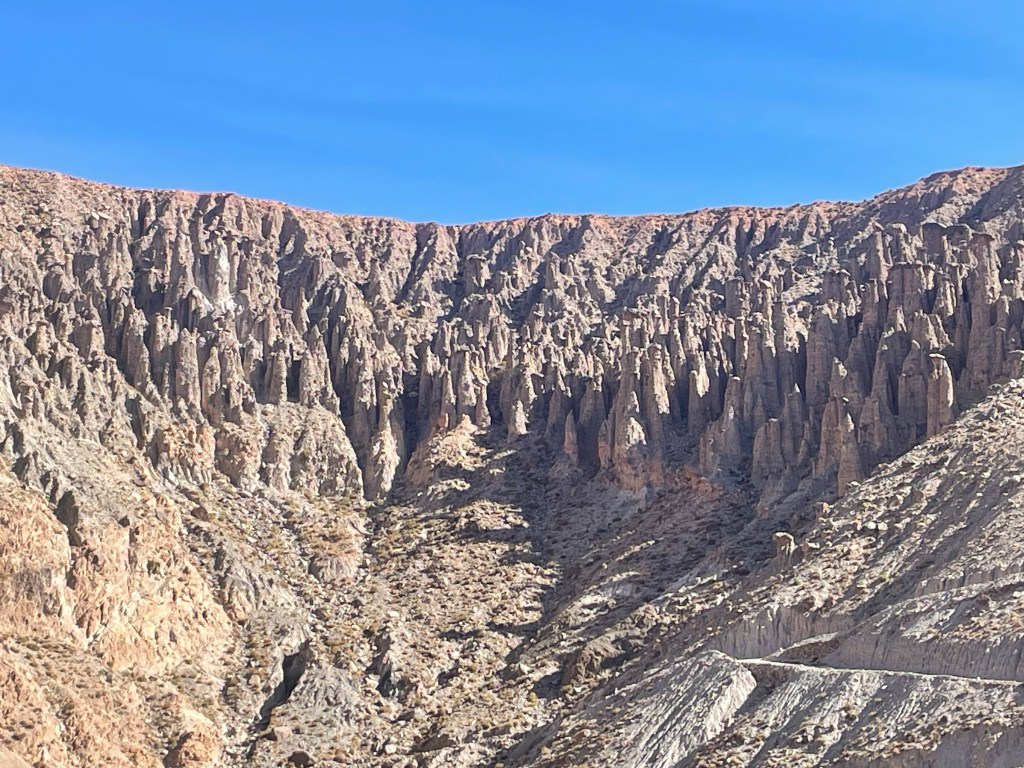
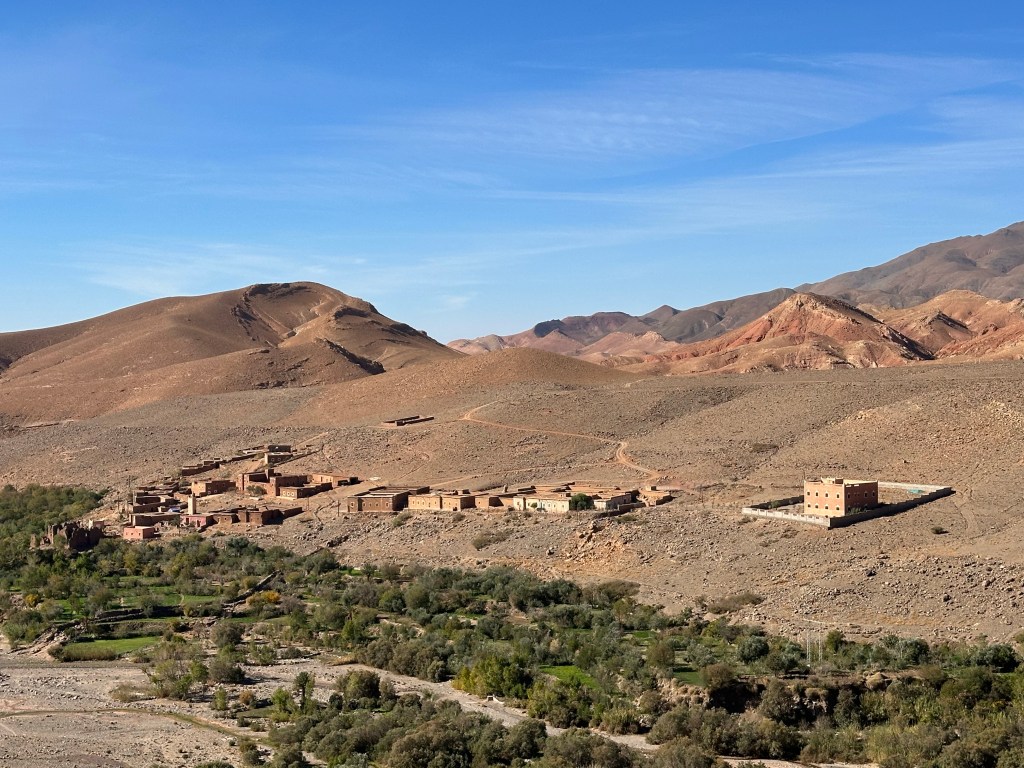
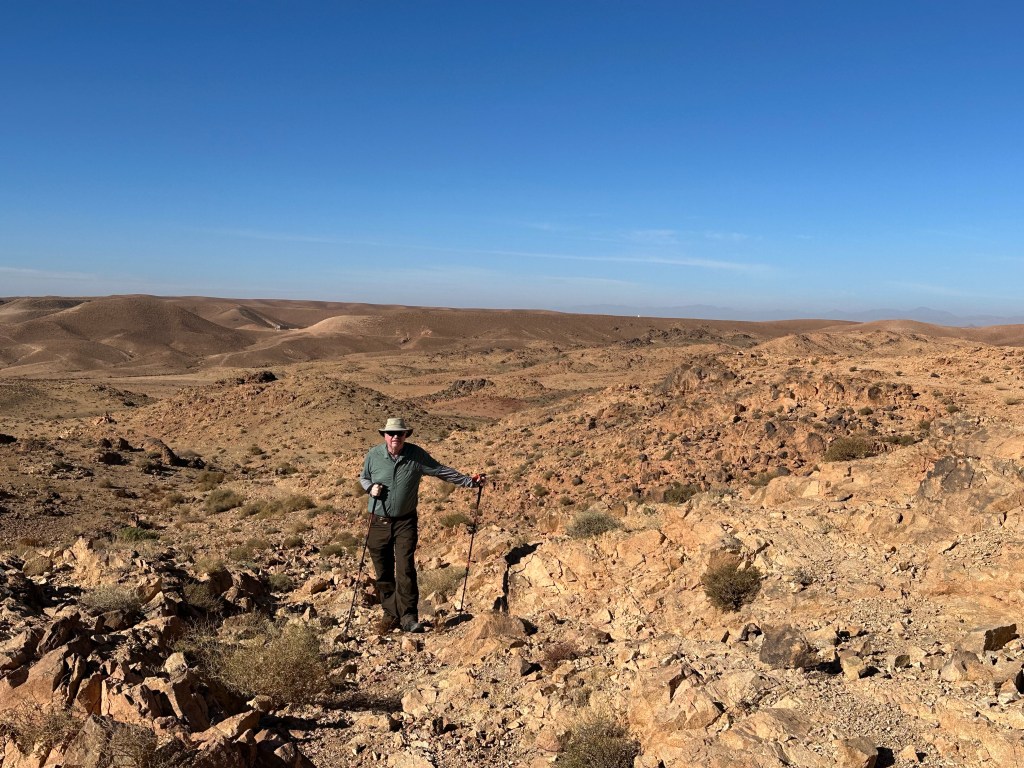
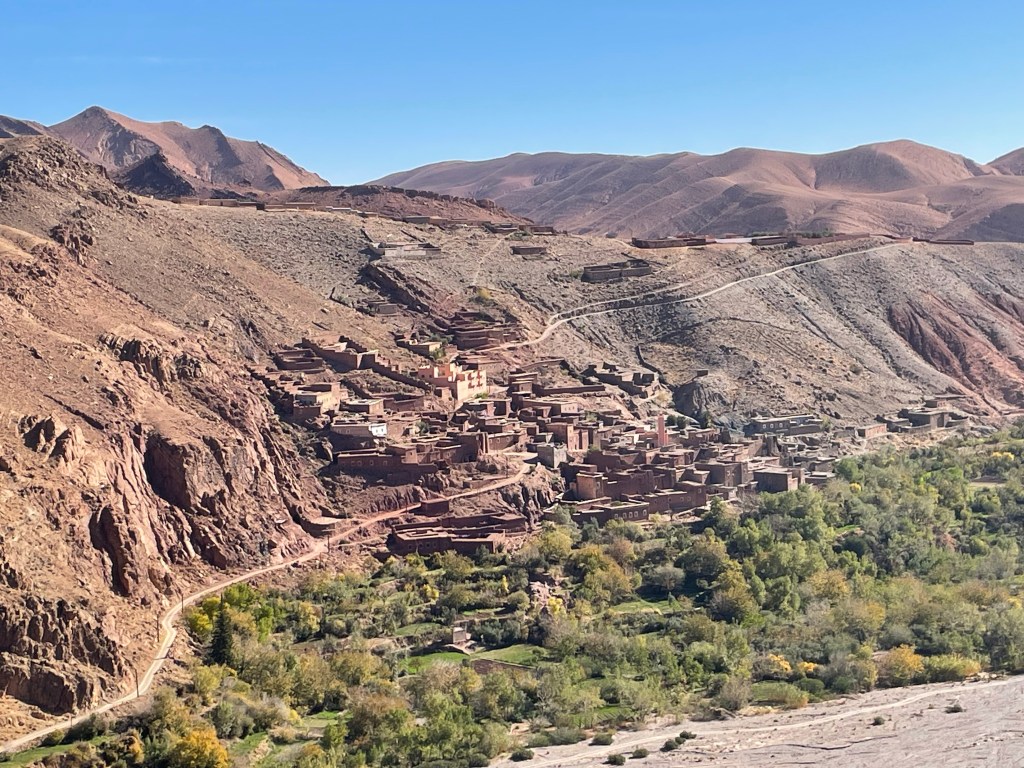
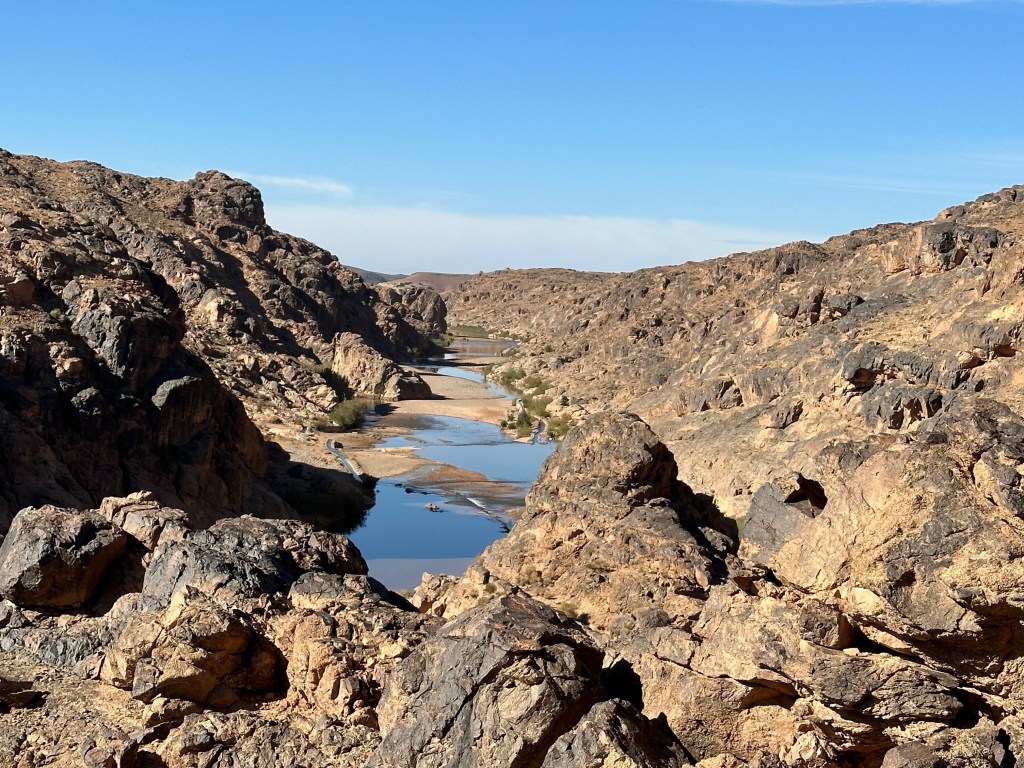
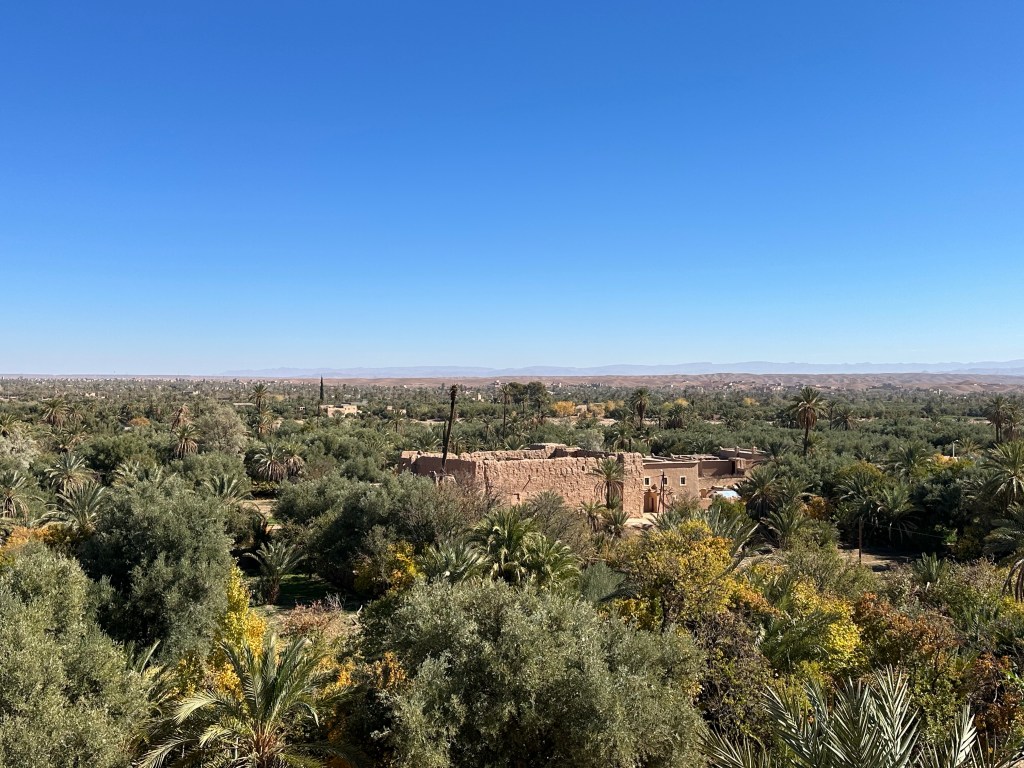
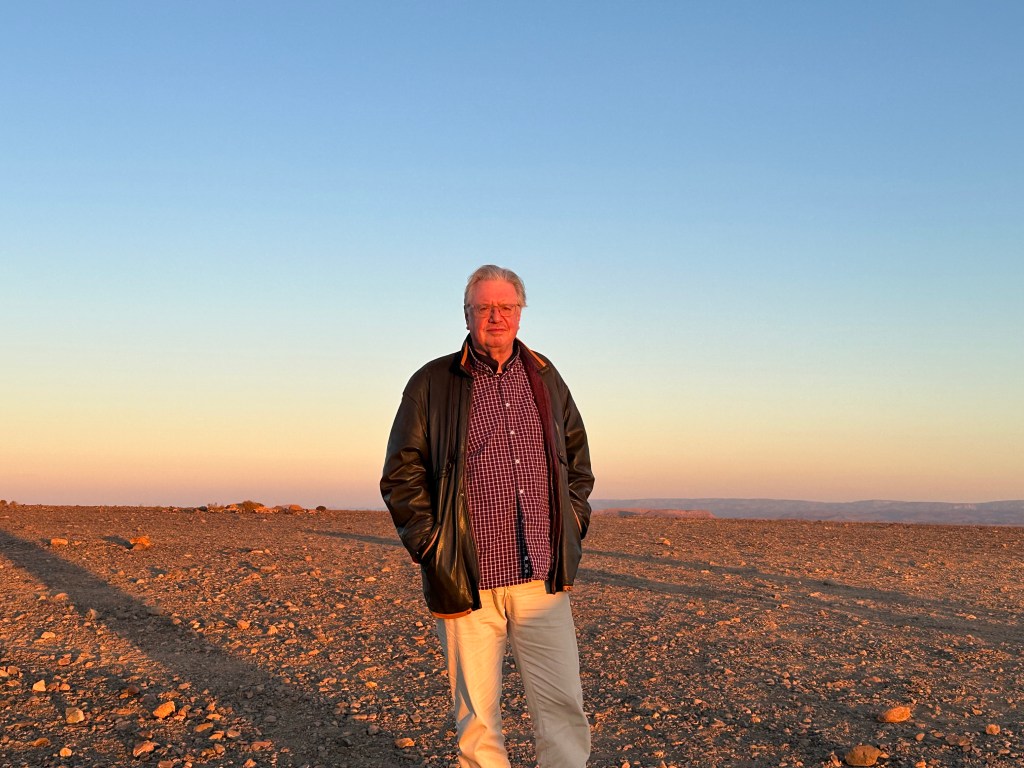
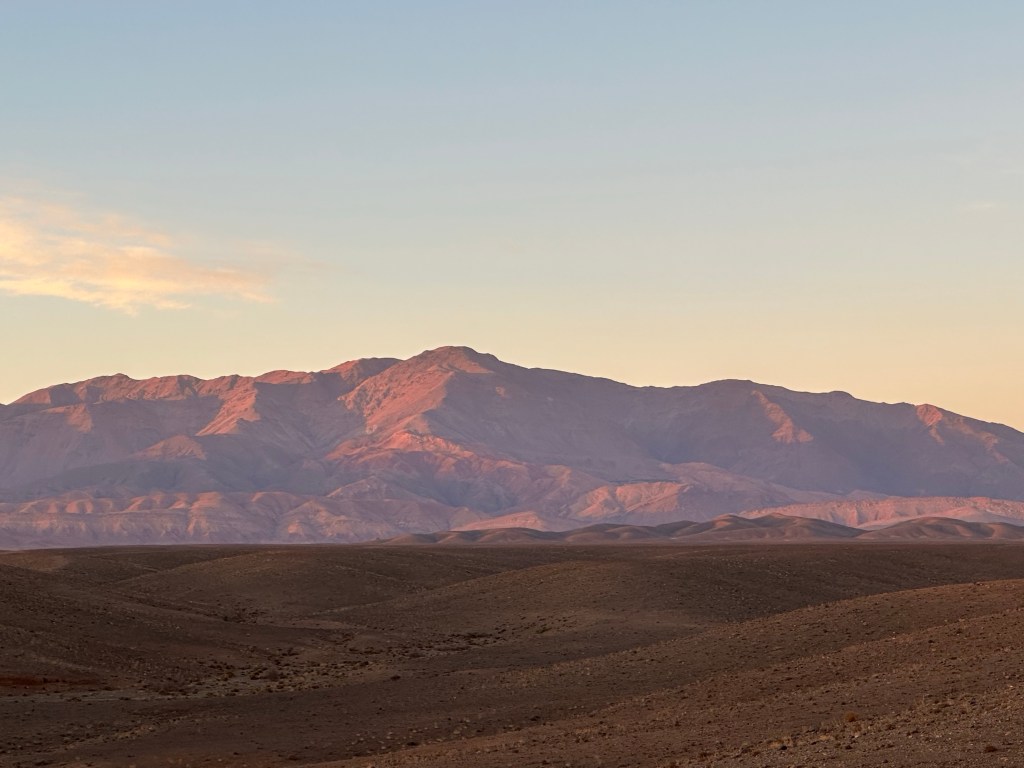
Skoura is on the eastern edge of the High Atlas and our hotel organised guides to explore the nearby mountains, valleys and deserts. We would have struggled without a guide as there are no marked paths and we didn’t see other hikers, although we passed through a number of villages where the adults were welcoming and the children curious. We did two treks from Skoura, through very different dramatic landscapes.
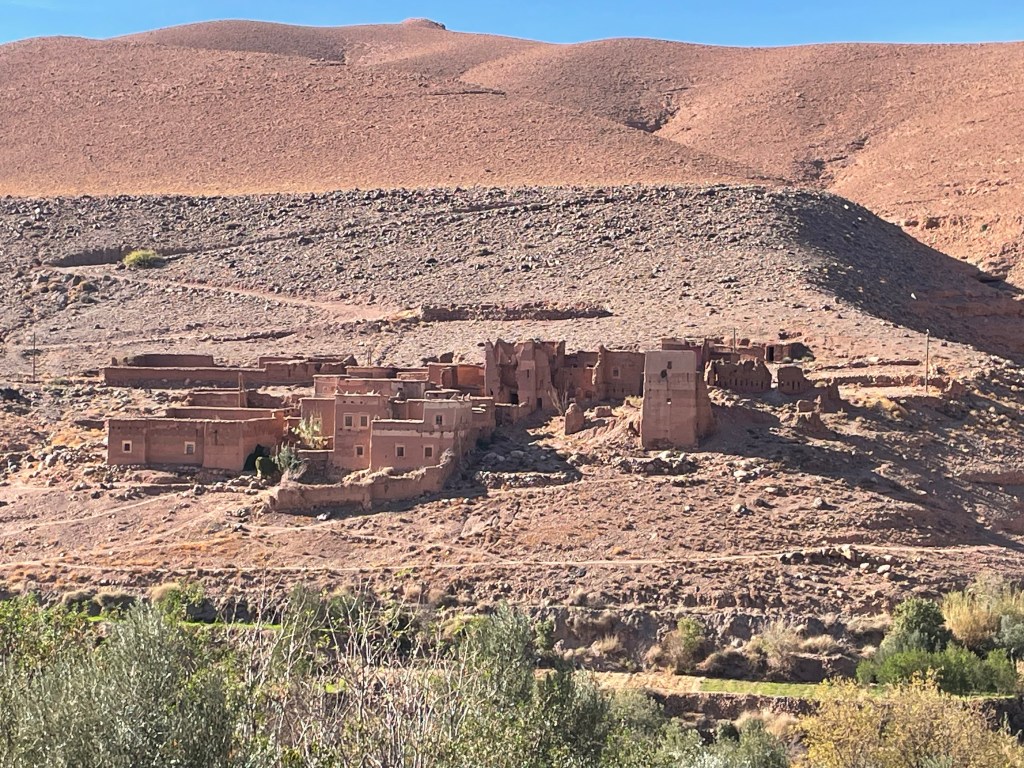
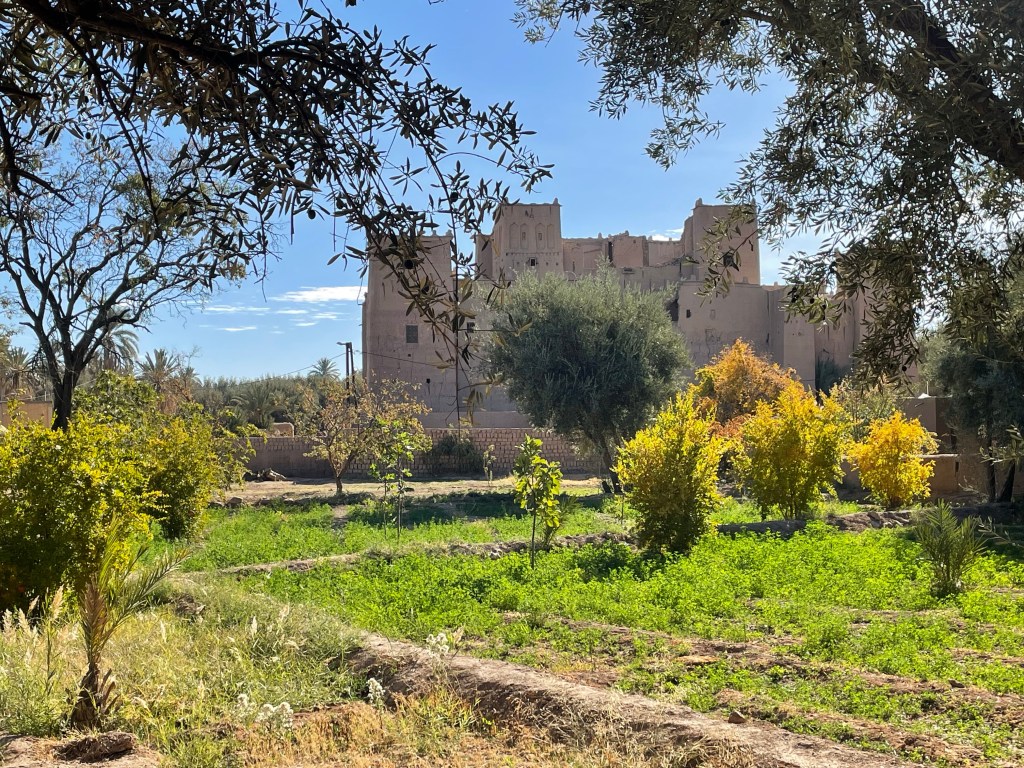
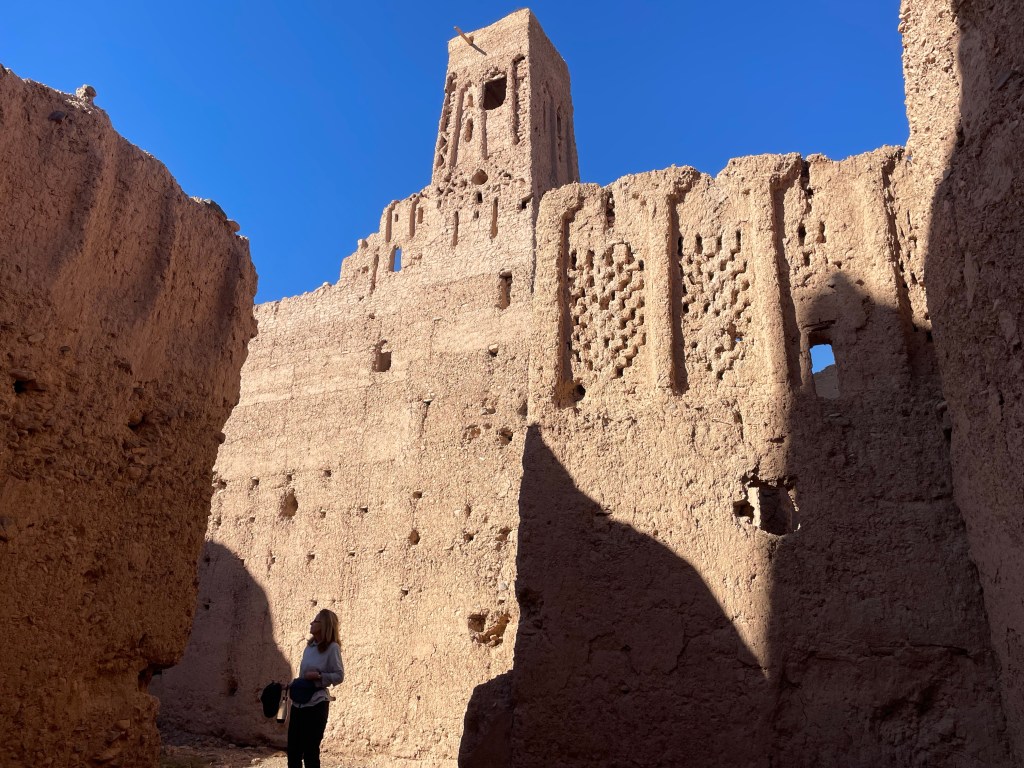
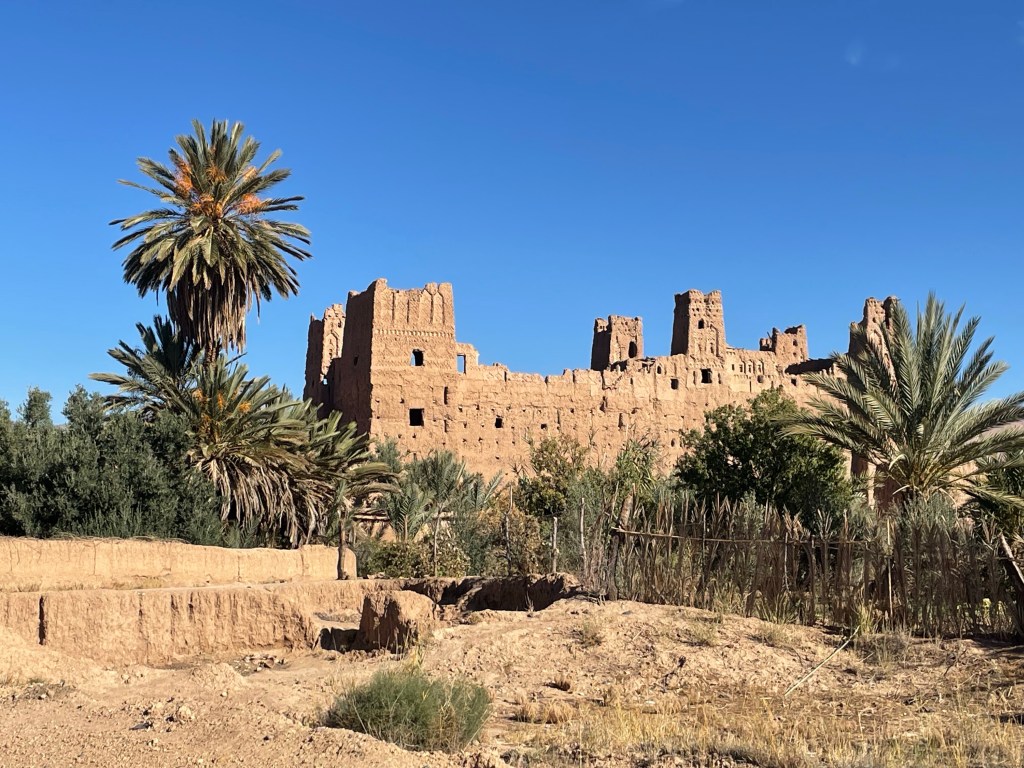
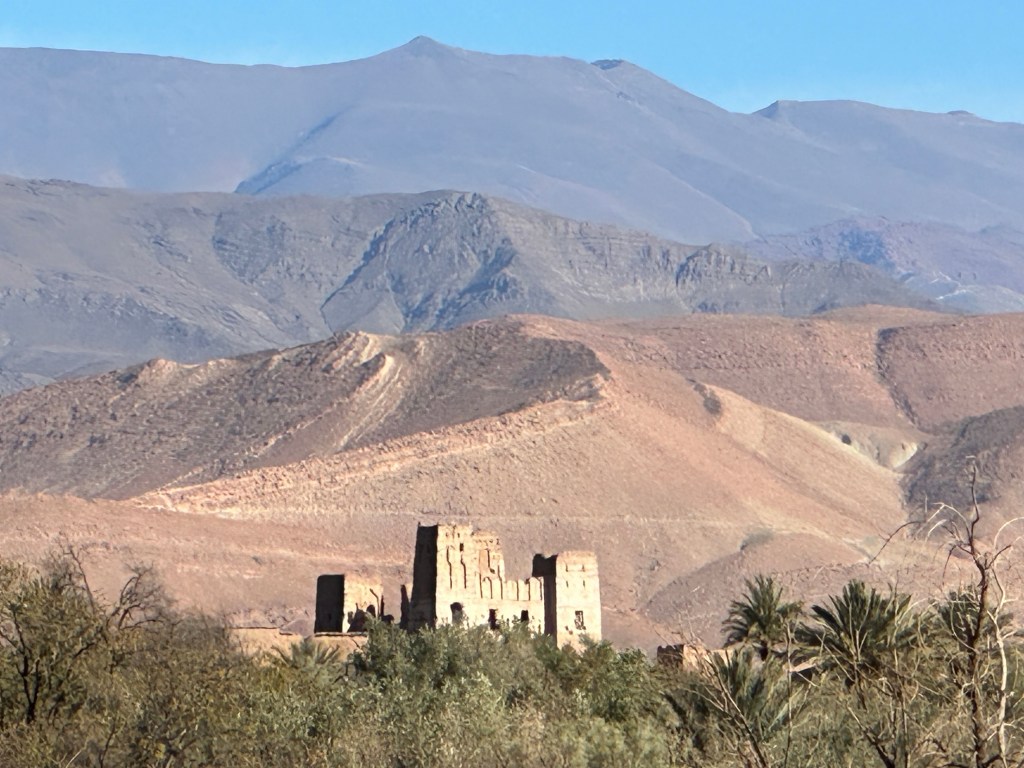
Skoura is in the middle of the “Route of 1,000 Kasbahs”. Kasbahs are fortified citadels built for defense and protection, typically with no external windows, but slot holes to fire on approahing enemies. They are generally built from compacted mud and straw with walls upto one metre thick. The earliest kasbah we saw was built in the 11th century.
A typical design addition is a three step feature on the top of the tower which is often seen on more modern Moroccan buildings as well. It was originally used as a symbol to denote that the owner is wealthy and generous enough to offer travelling strangers upto three nights board and lodgings at no cost – after then, like stale fish, its time to leave.
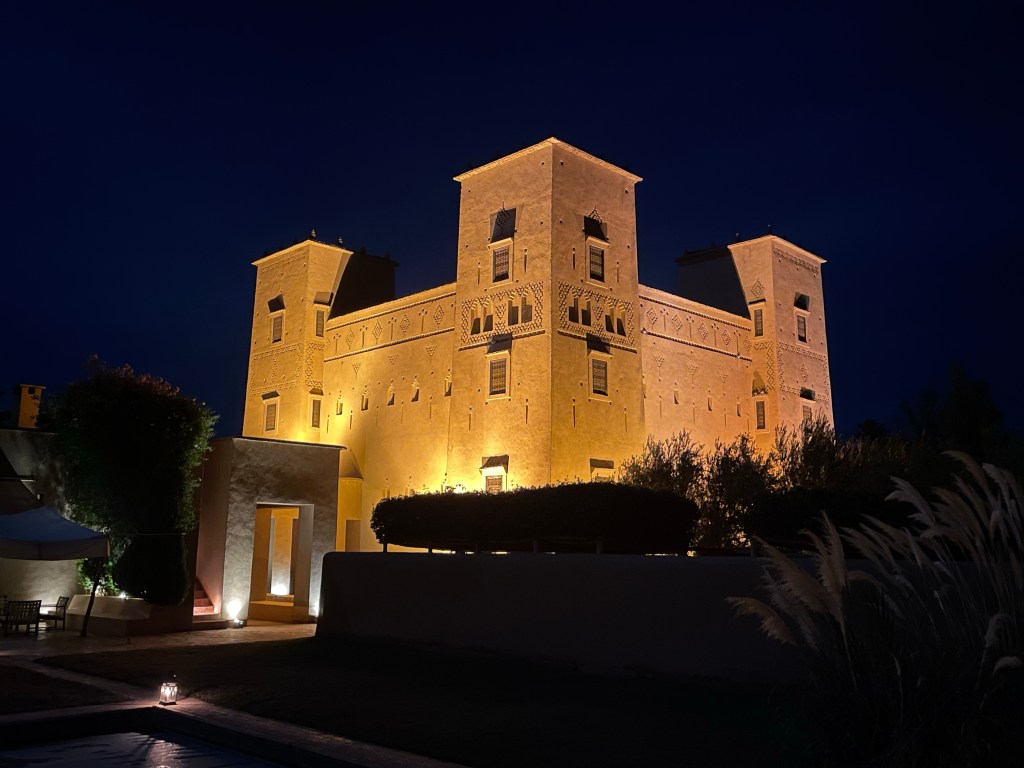
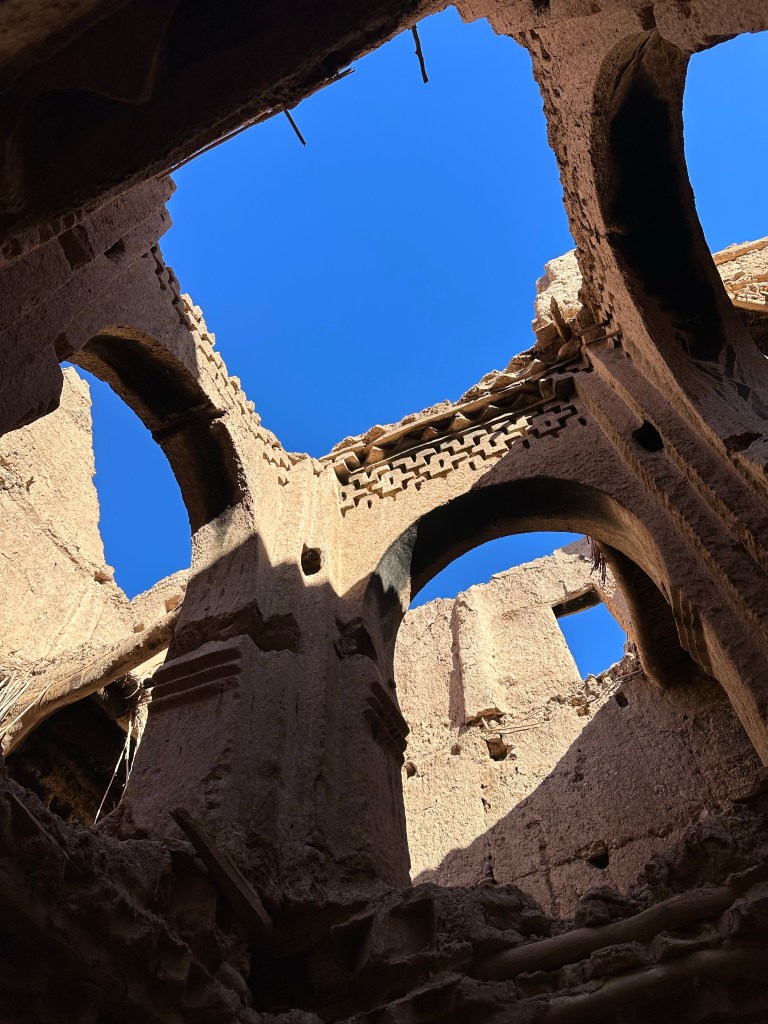
Kasbahs are not well suited to practical modern living, so many have fallen into disrepair. A modern house, with a kasbar style might be found adjacent to a ruin, both owned by the same family. The government offers protected status provided that the owner can afford the rennovation and maintenance costs; this has been done by some wealthy Moroccan families and a few hotels. The hotel we stayed in was a 19th century kasbah bought and converted by a French designer 20 years ago. The rooms comprised a maze with several internal staircases – very easy to get lost – with walls that were good for keeping the heat out during the days and the warmth in at night, but not conducive to wifi signals !
Our hotelOwned by the same family – the three step tower decoration on bothKhasbars had skylights (long before they became popular in Europe)
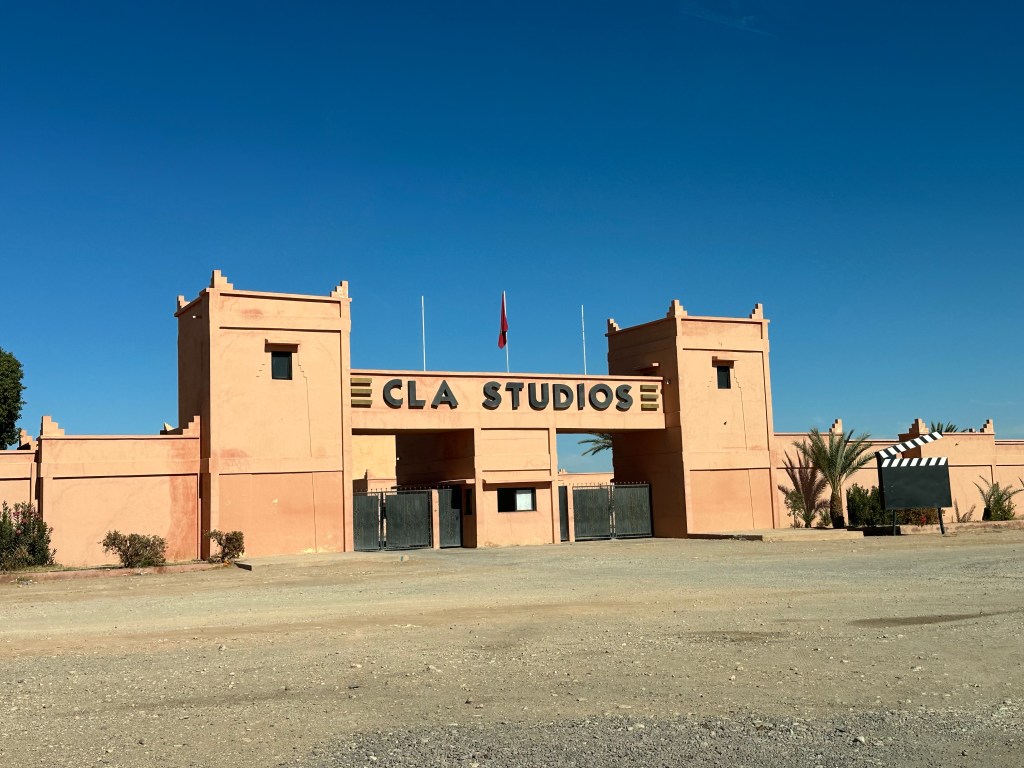
Skoura is 40km from Ouarzazate and a four and a half hour drive south east from Marrakesh through the stunning scenery of the Atlas mountains. Due to the vast rocky desert landscape, Ouarzazate has become the centre of the Moroccan film industry with filming including Laurence of Arabia, The Living Daylights, The Mummy, Gladiator and more recently Game of Thrones. It is also a major producer of solar energy enabling Morocco to become a leader in renewable energy (the solar plant is of such strategic and technological importance that the security looks like a maximum risk prison, including apparently anti-misile defences).
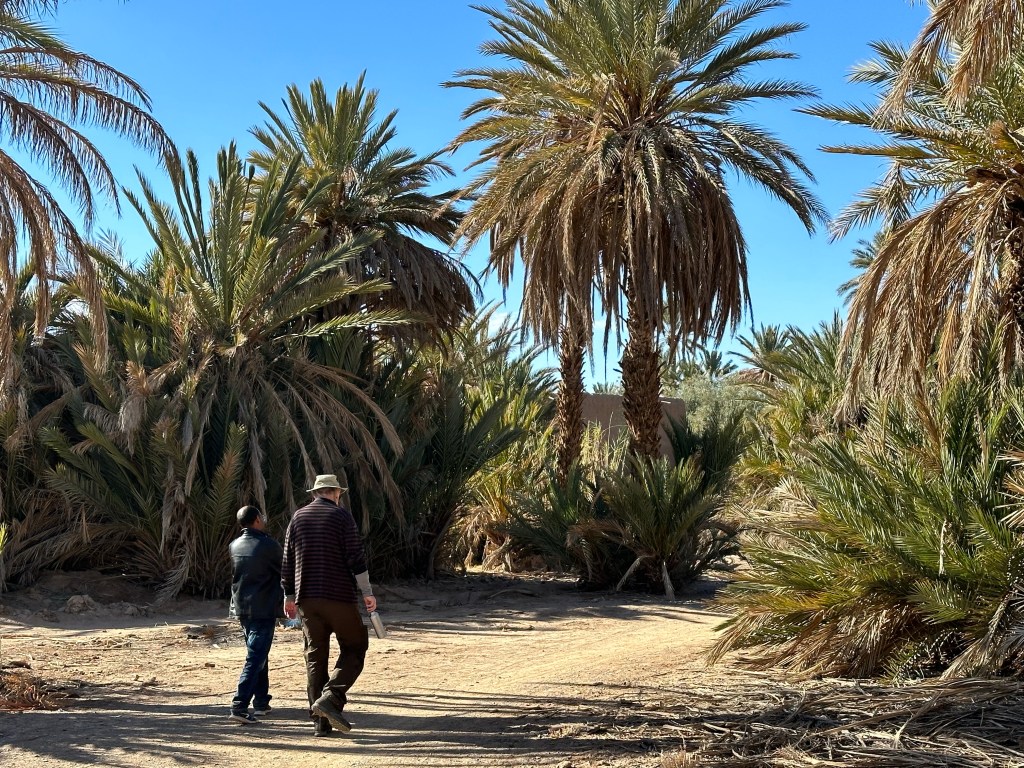
Skoura became inhabited because it is the location of a major oasis lined with indigenous palm trees, subsequently introduced olive trees and other trees and plants grown for their crops. The Palmeraie is UNESCO protected and maintained by irrigation canals called khettara. Water is allocated and diverted to each plot for agreed time periods. This system, together with passing plots down through the generations, has operated for many years.
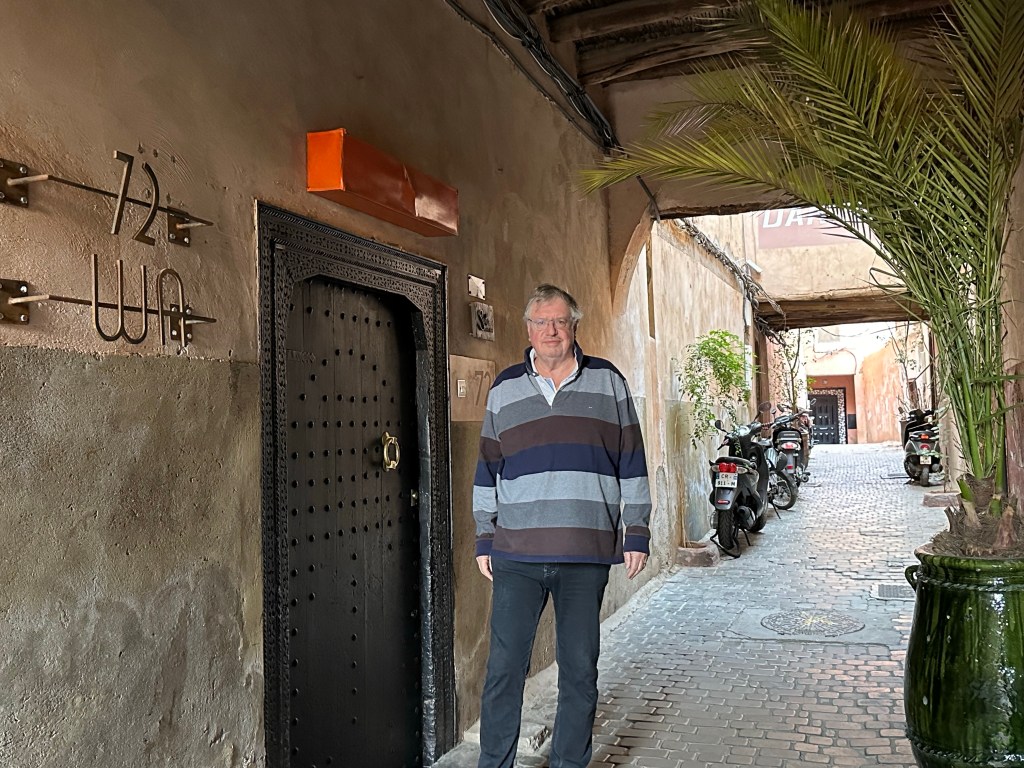
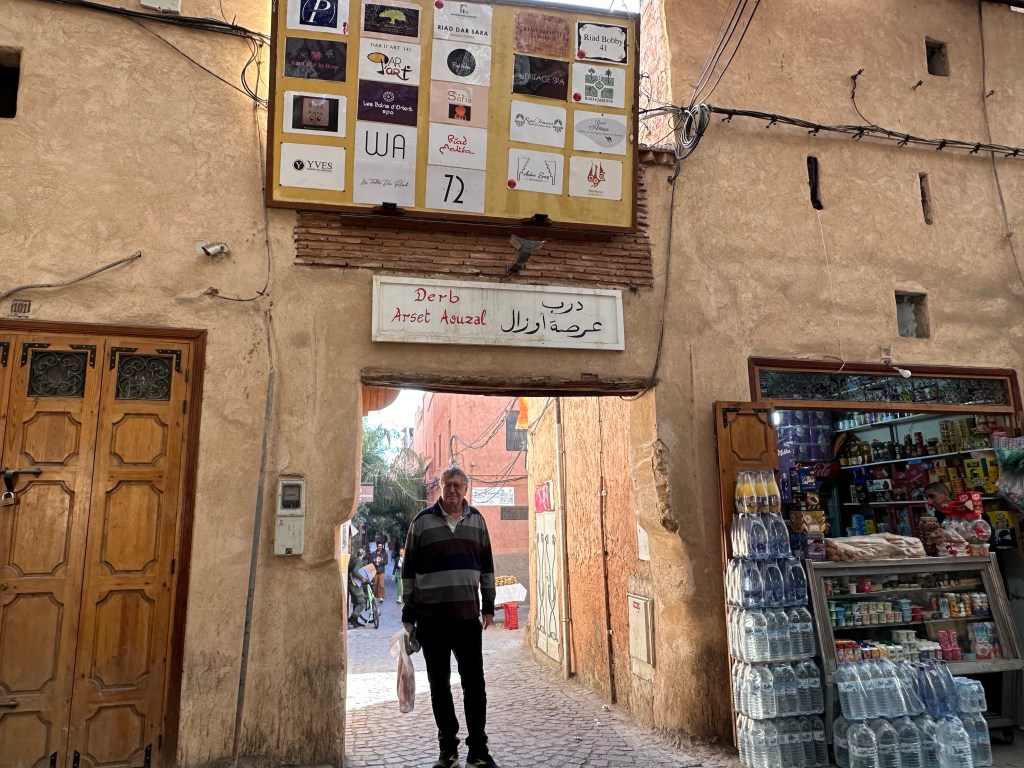
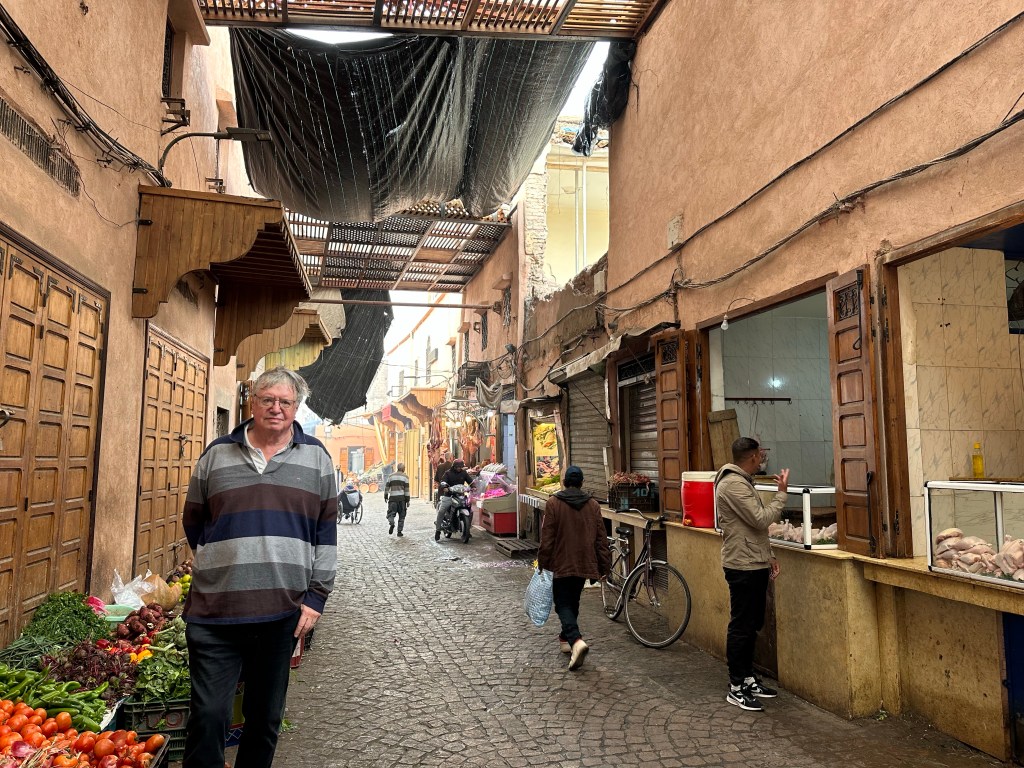
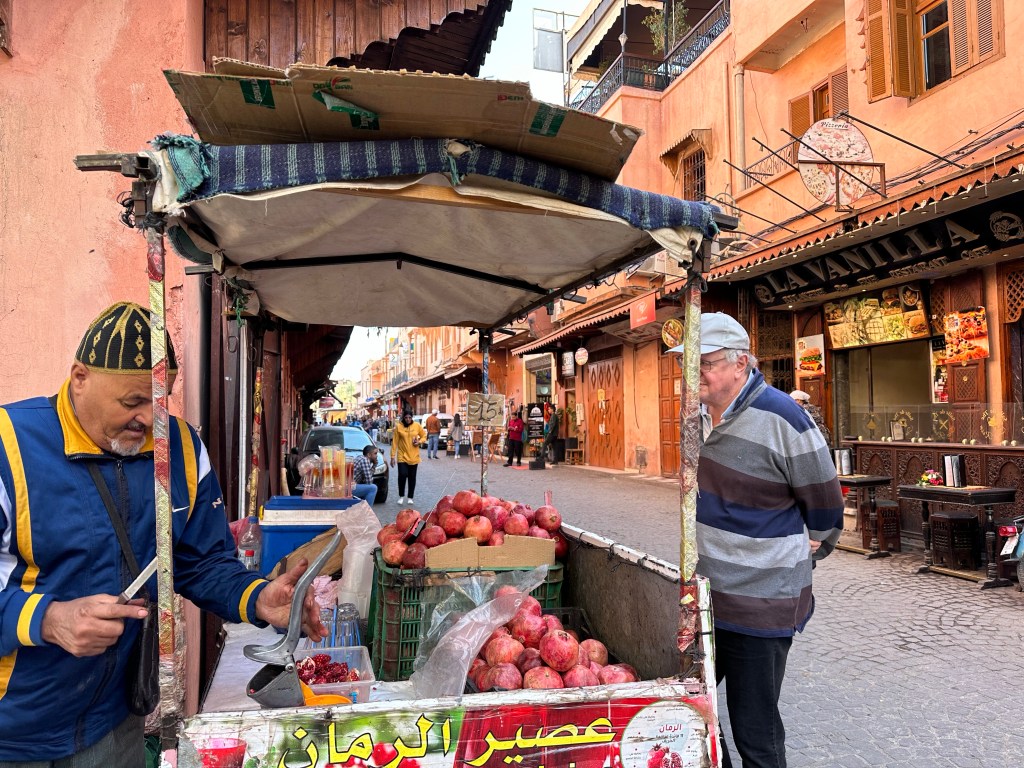
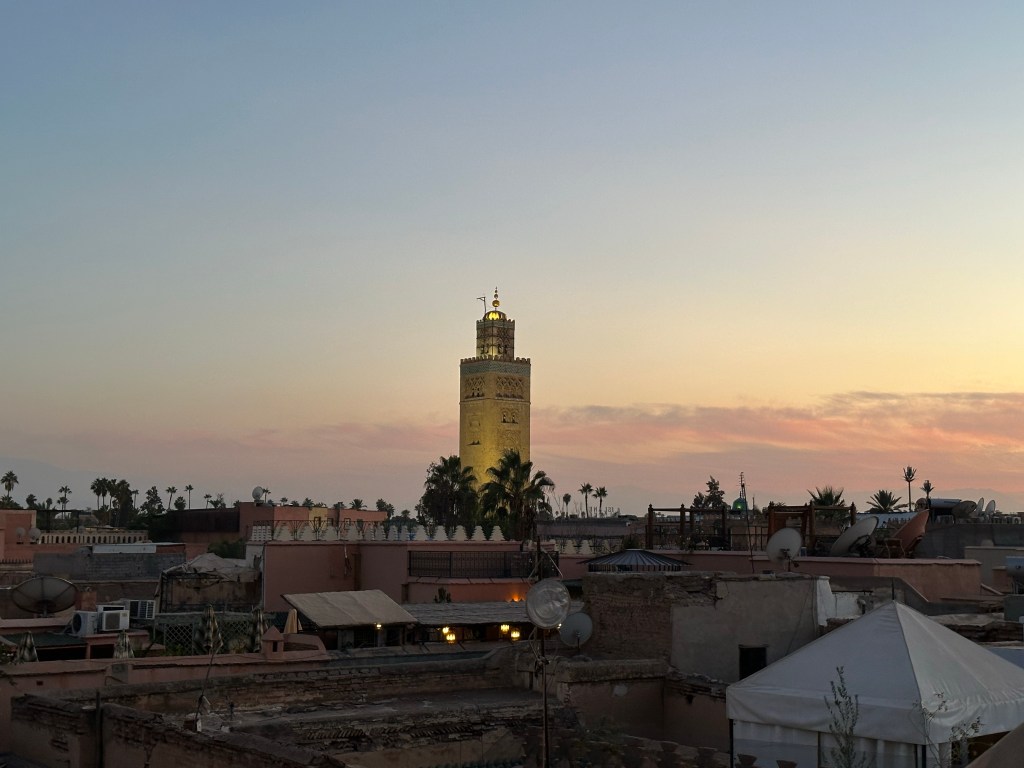
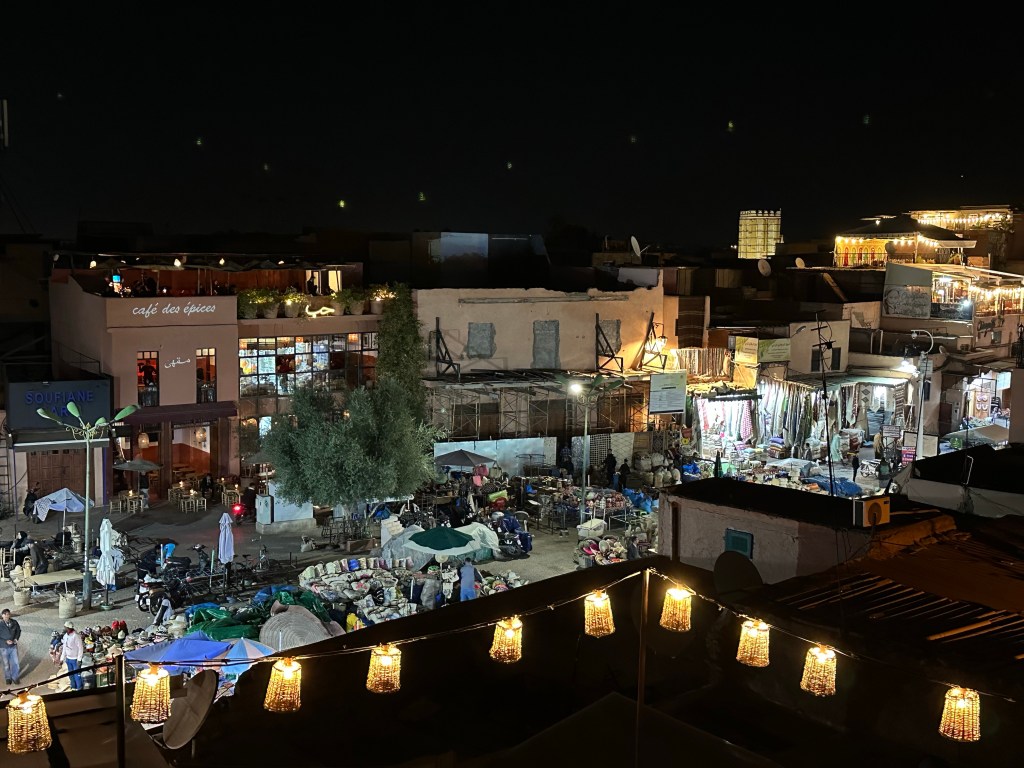
Marrakesh was founded in 1062 and with a population just under one million is the fourth largest city in Morocco. At various times it has been the capital. Its old medina, made up of narrow alleys between riads and souks, has been a major tourist attraction since the 1960s. Many of the riads have been restored as restaurants and hotels approached via a complex maze and entered through a low door. Our riad lent us a local phone, should we become lost – thankfully not needed. The earthquaque on 8th September 2023 damaged some buildings but the effect on Marrakesh was far less extensive than around the epicentre in the Atlas mountains.
The medina is a UNESCO world herritage site with palaces, mosques, markets and the major square Jemma el Fnaa. The city has been a draw for many years for the famous and fashionable from Winston Churchill to Yves Saint Laurent.
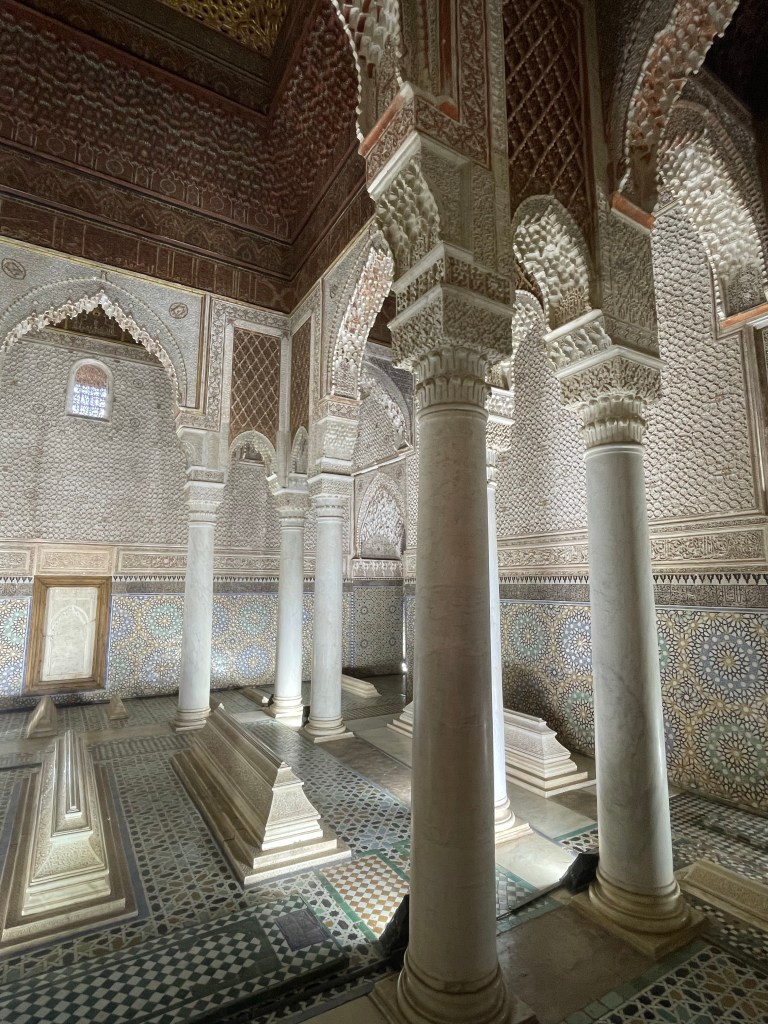
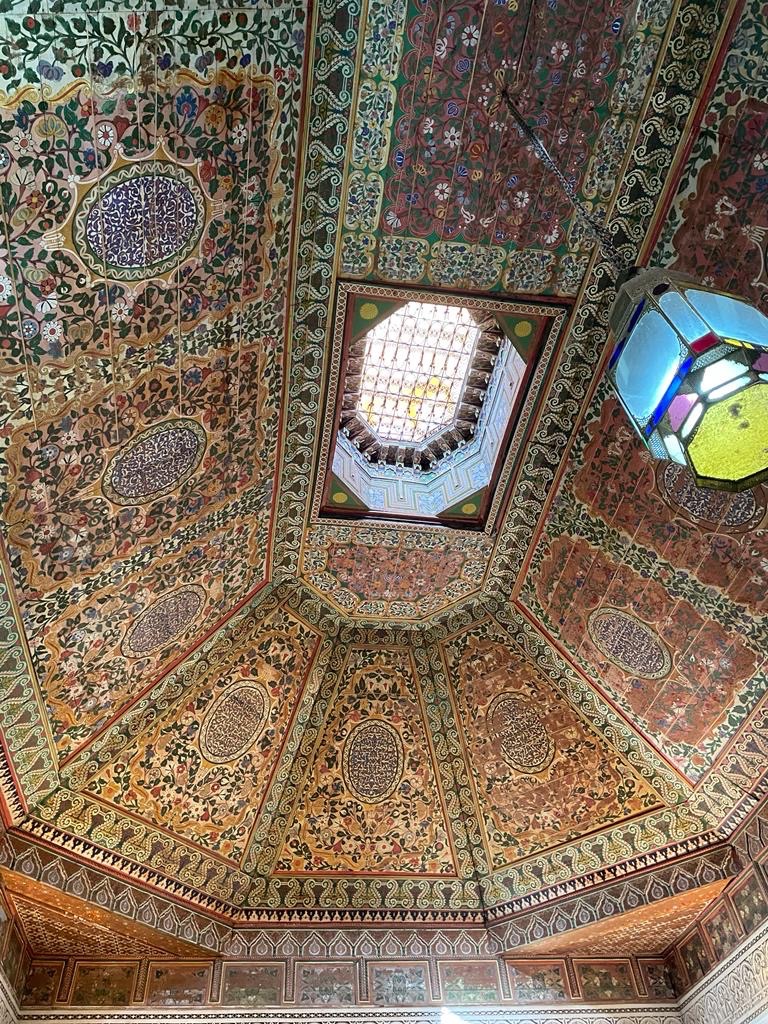
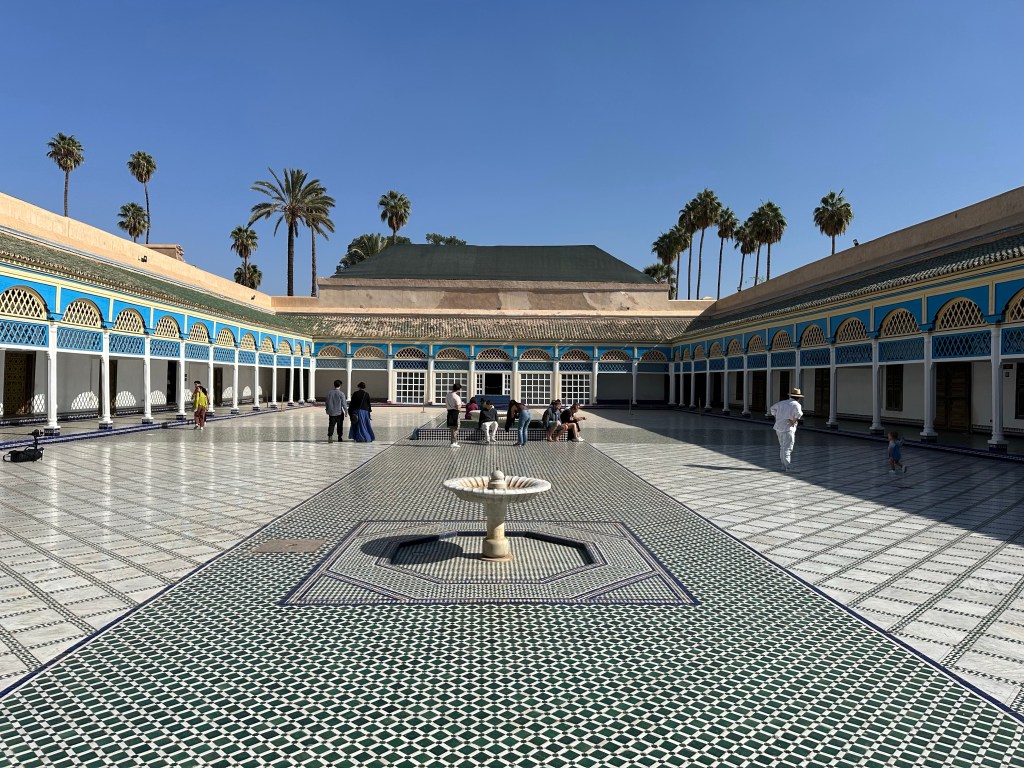
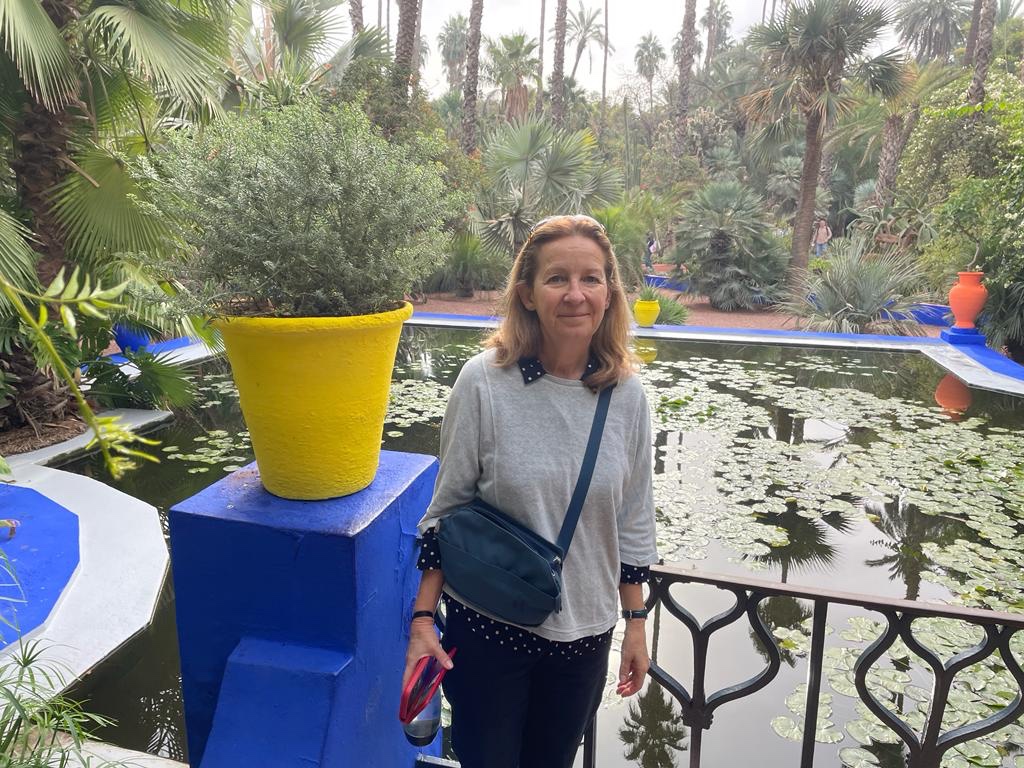
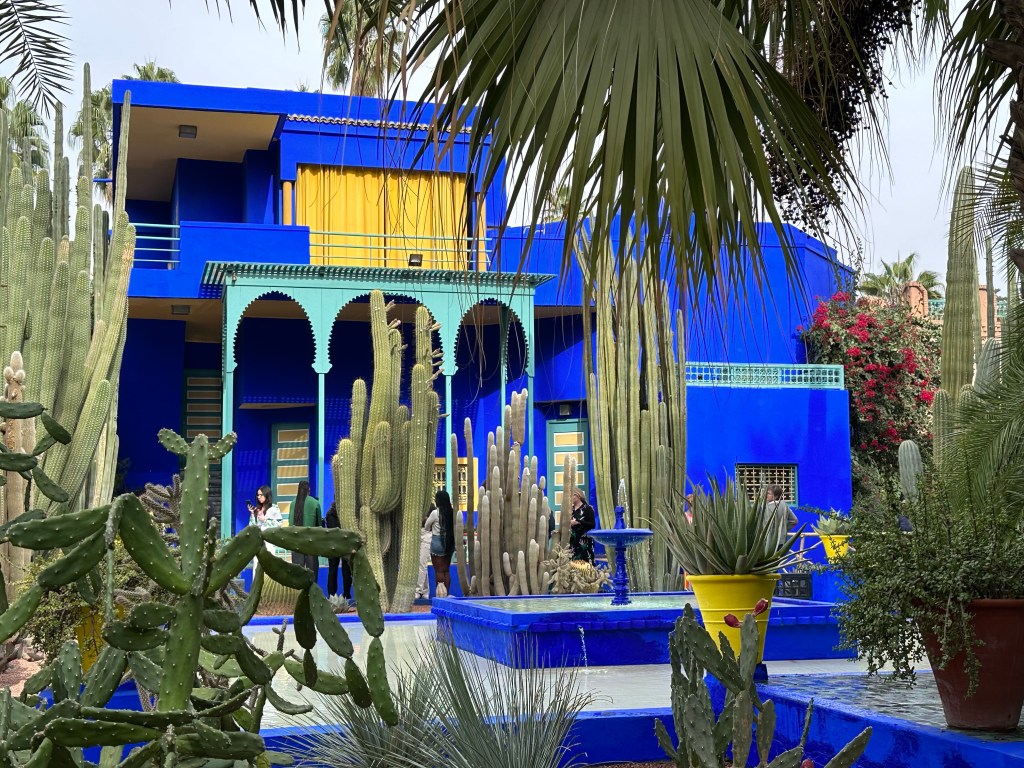
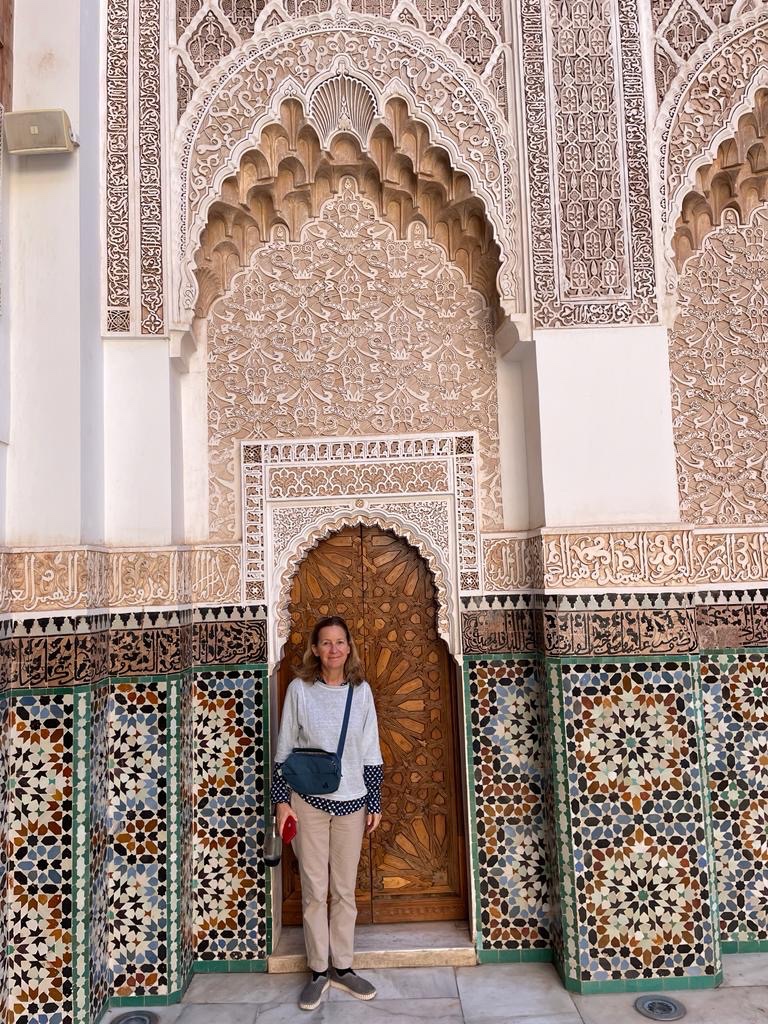
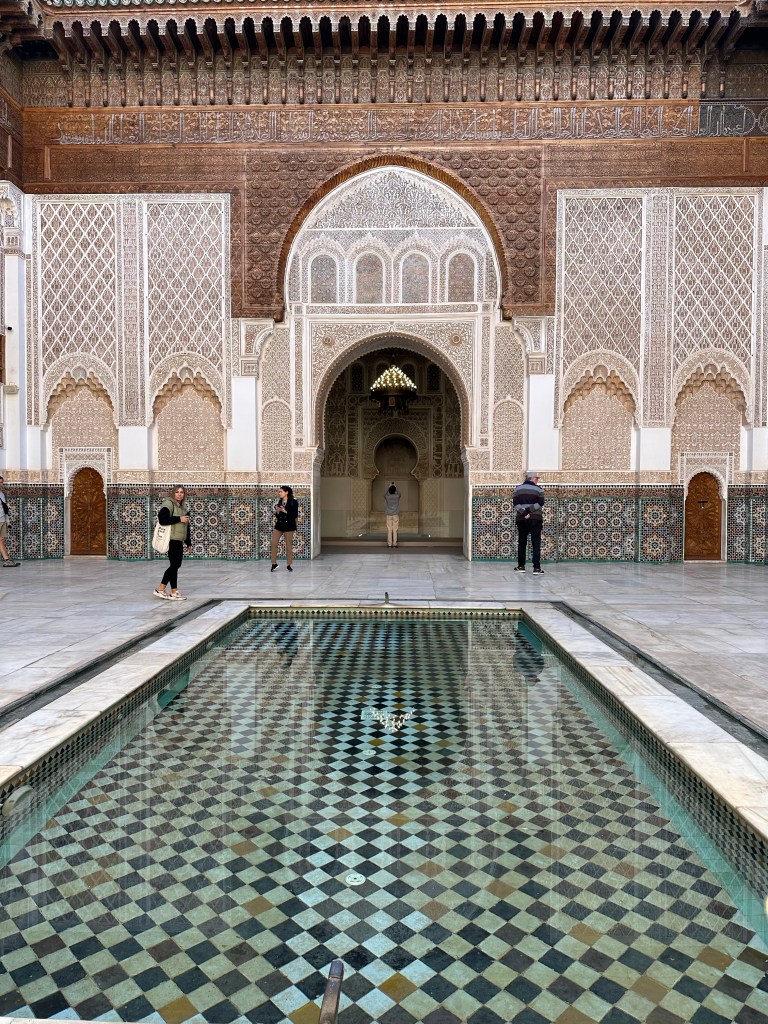
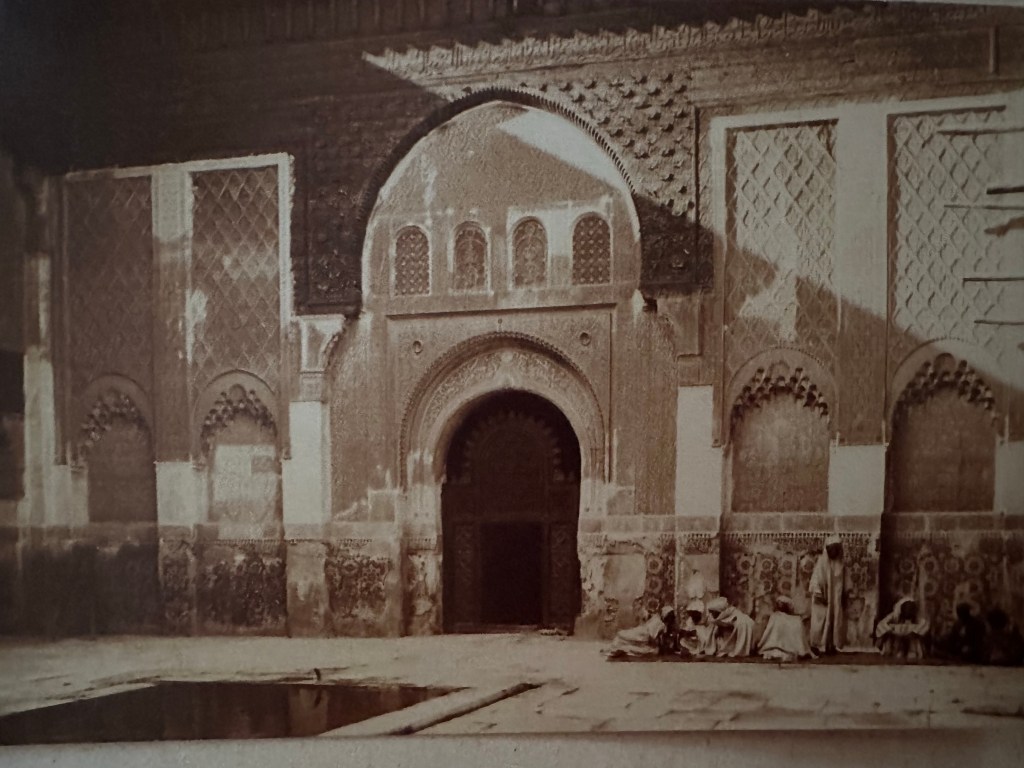
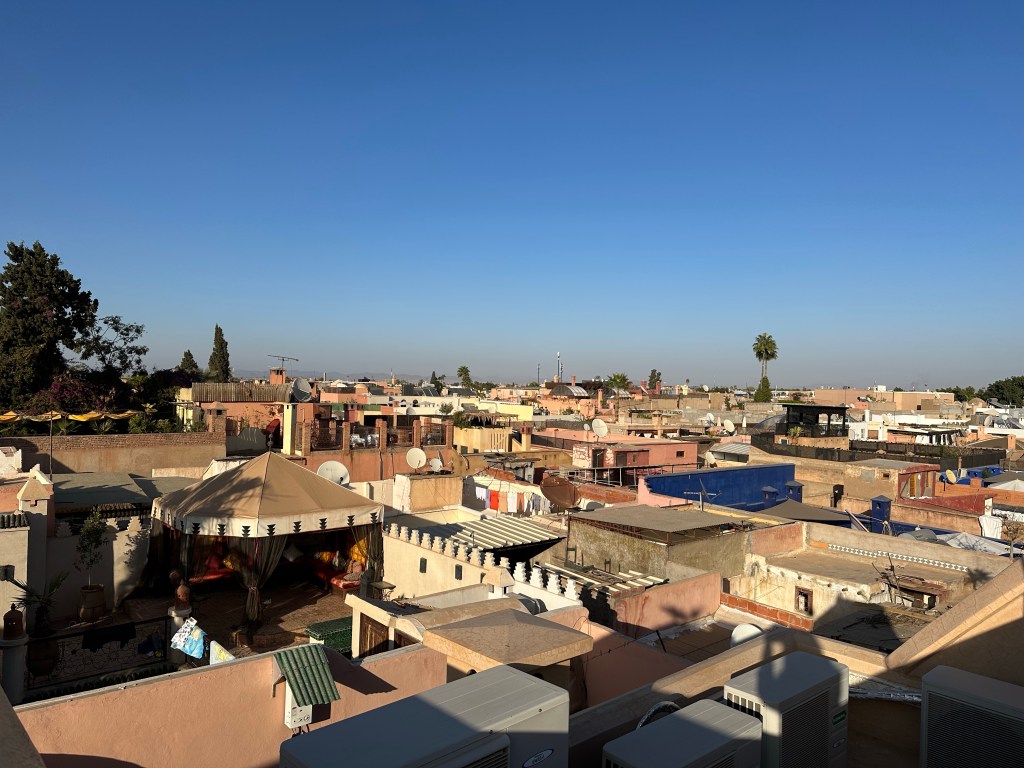
Saadian Royal Tombs built in the 16th and 17th centuries and rediscovered in 1917.Bahia Palace built from 1859 by the Grand Vizier and extended by his son between 1894 and 1900Majorelle Gardens were created by Jacques Marjorelle starting in 1923 and purchased by Yves Saint Laurent and Pierre Berge Madersa Ben Youssef, an Islamic School, built in the 14th Century, expanded in the 16th Century and recently restored Maison de la Photographie opened in 2009 with a collection of photographs of Morocco from 1870 to the 1950sOur riad hotel and nearby area
The indigineous people of the area were the Berbers however, with the strategic position on the Mediterranean and Atlantic coasts, it has been under the control of others for most of the last 2,000 years. Initially a trading outpost of the Phoenicians it then became part of the Roman empire in 44 AD under Emperor Claudius. After the fall of the Roman Empire, there was a period of local rule before coming under Byzantine control in 530 AD. In the seventh century the area was conquered by Arabs who bought Islam with them. The Berbers converted but retained their own customs and language. In the 15th century Morocco accepted Jewish refugees who fled Spain with the Inquisition. They were allowed to live freely and all major cities had a Jewish district known as the Mellah – the Arabic word for salt, for which the Jewish community were given responsibilities.
The current King Mohammed VI of the Alawi dynasty is the grandson of Mohammed V who led independence from the French in 1956, following a period since 1912 of being a French Protectorate.
The country has been relatively stable since independence, however there have been issues over corruption, the control of Western Sahara and political refugees.
The country is now a constitutional monachy with a billionaire President and a billionaire King. It is a relatively liberal Islamic state. It has no oil or gas but is developing wind and solar energy sources, using Chinese technology. Phosphate mining, agricultue and a growing tourism sector are the main drivers of the economy.
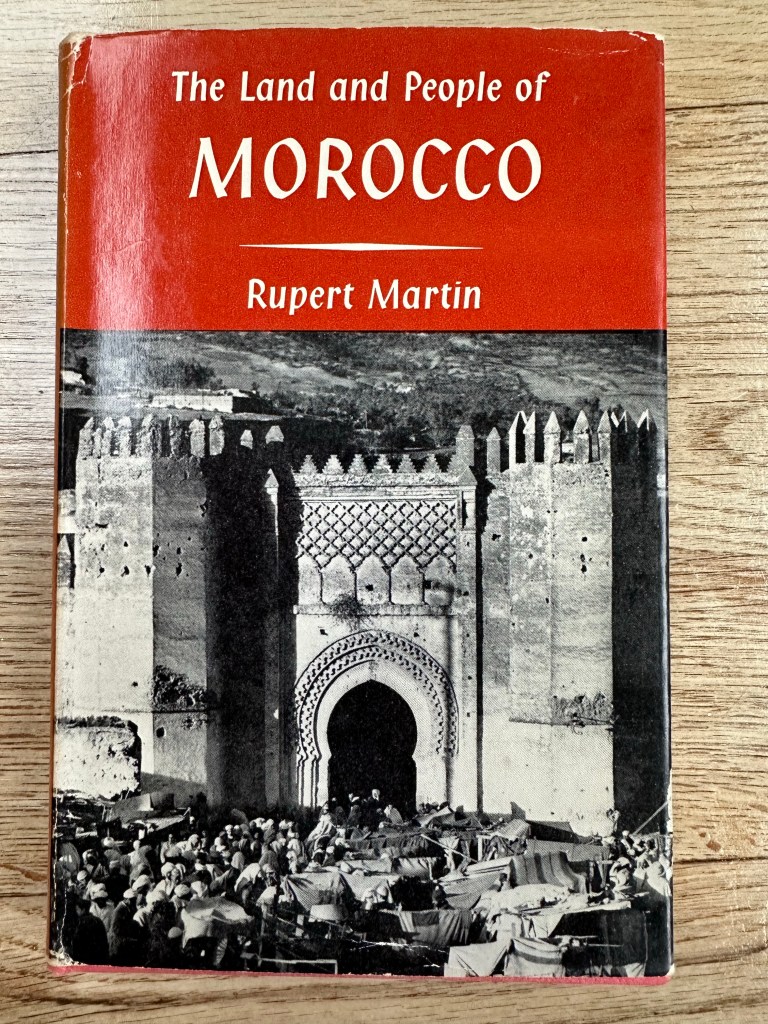
Sarah’s grandfather visited in the 1960s. Some of our route follows his footsteps.
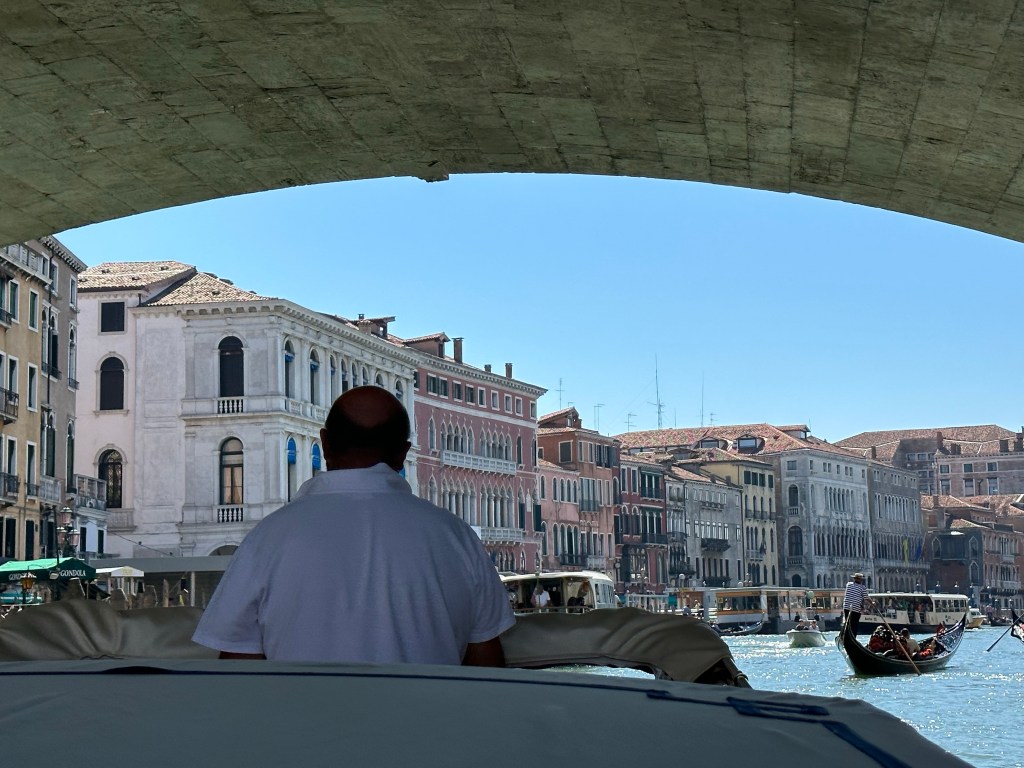
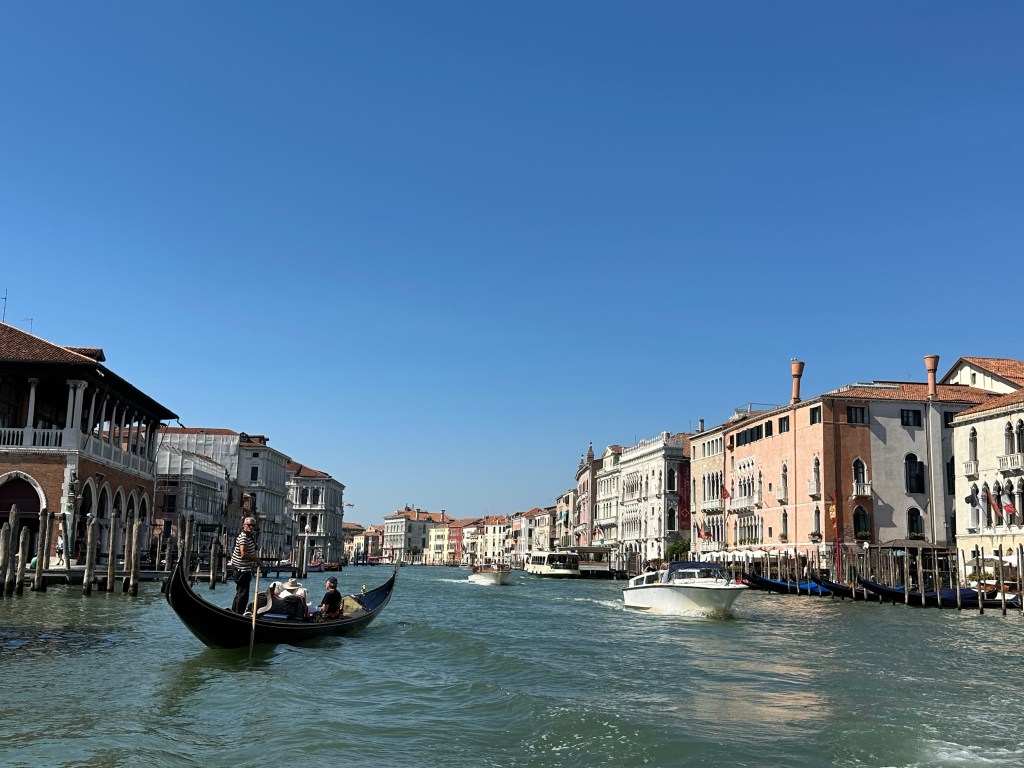
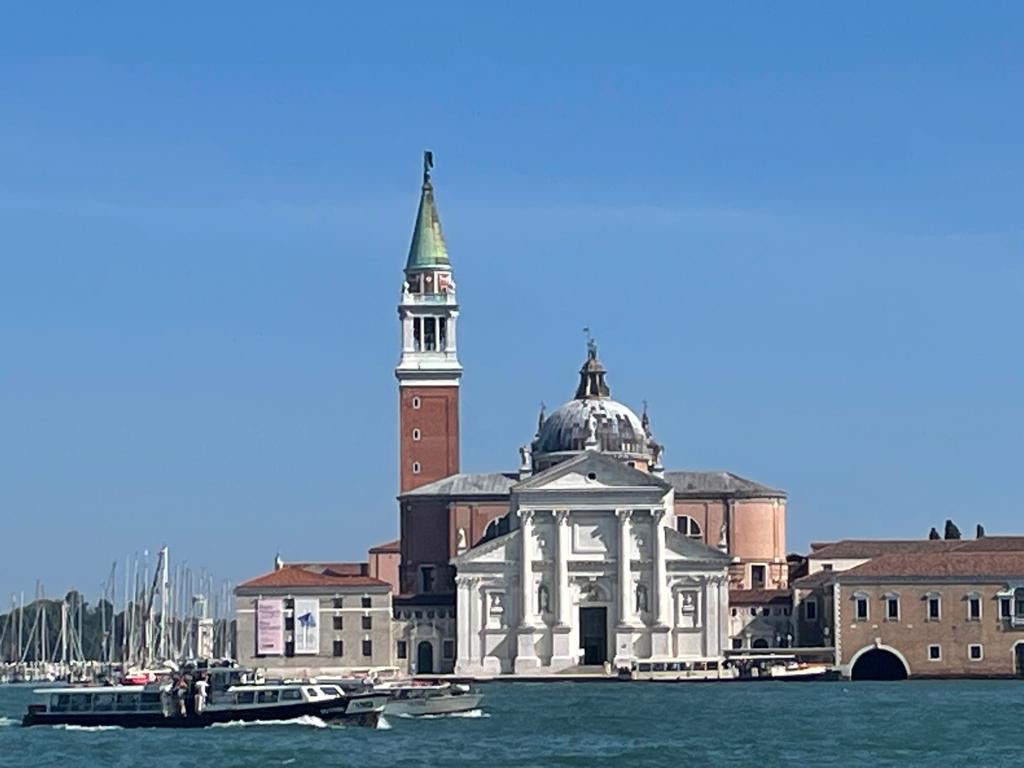
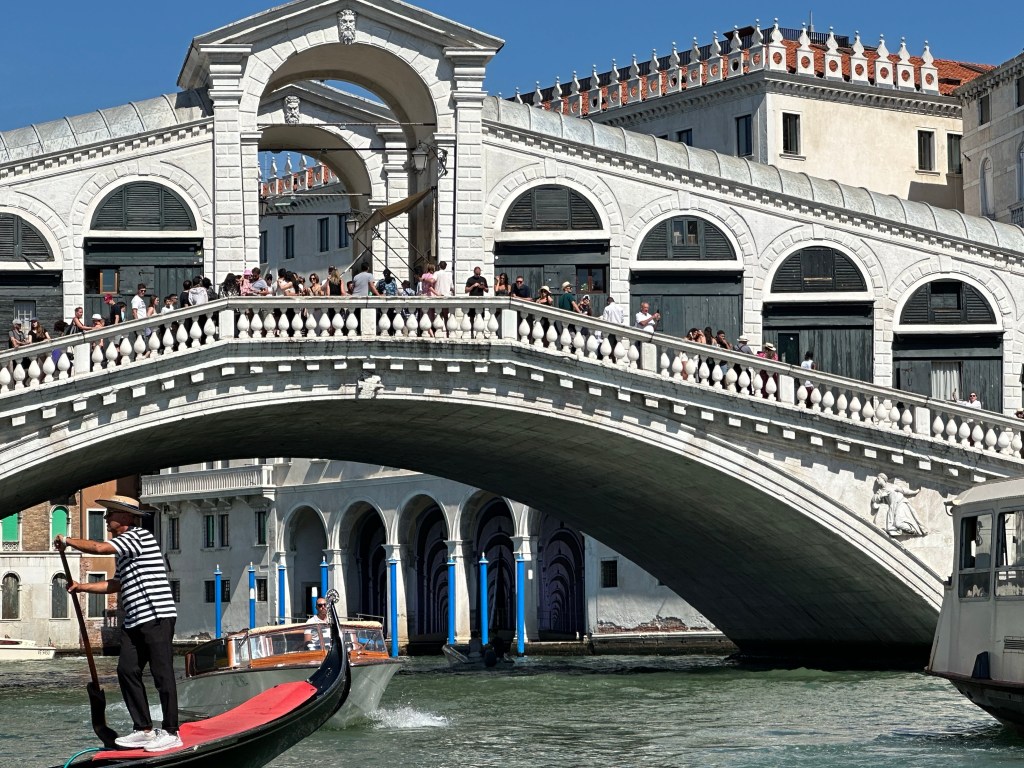
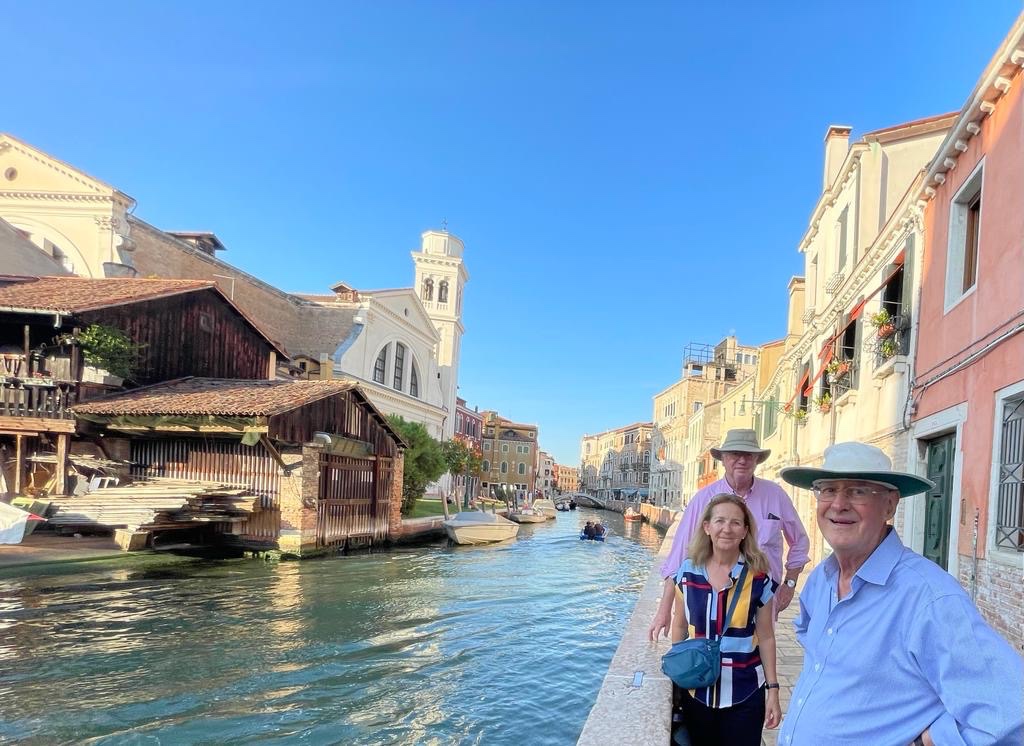
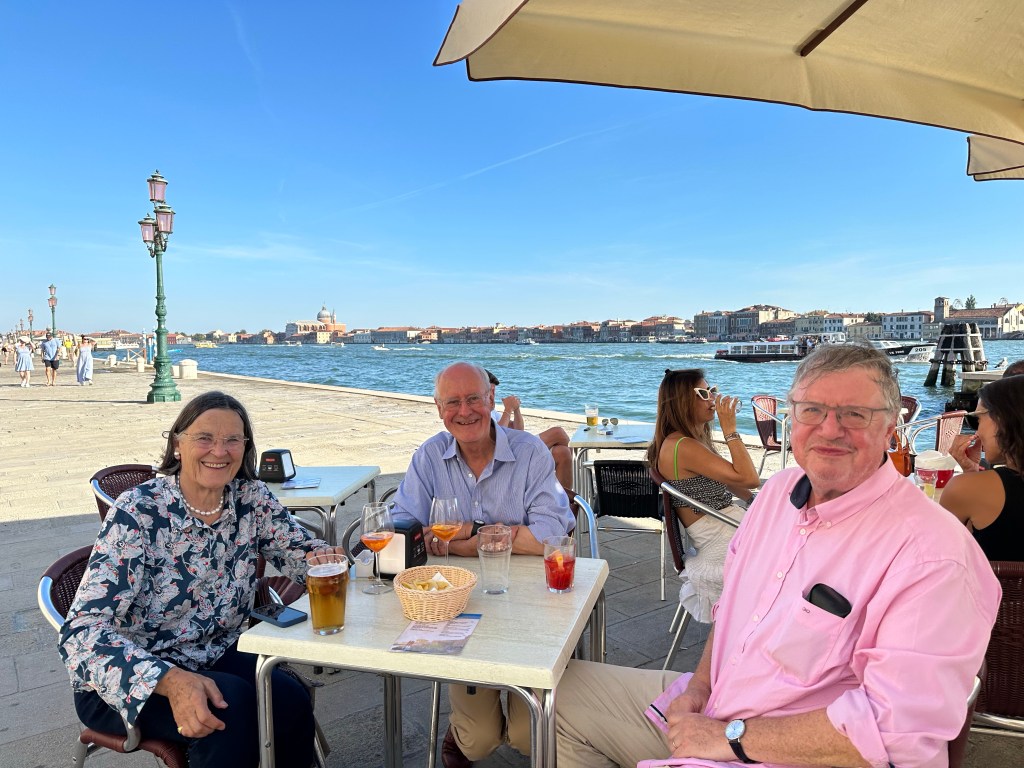
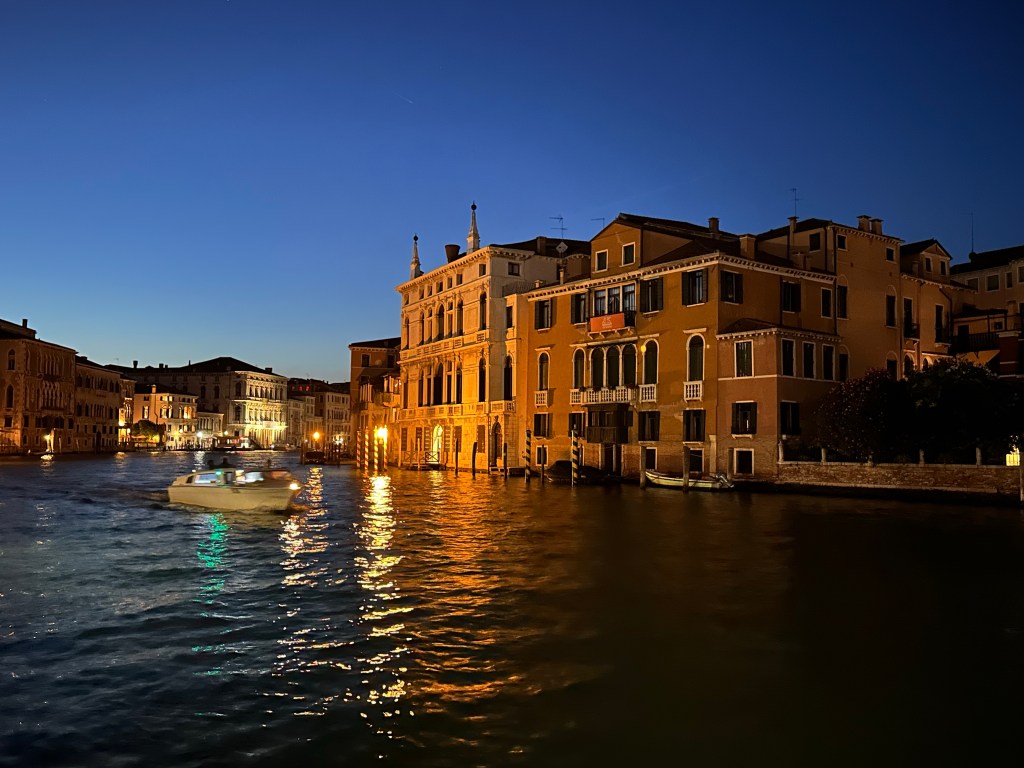
Our September Italian trip was planned as a two week visit en route from London to Turkey. While not the usual airport for South Tyrol/Lake Garda, we arrived and left through Venice airport due to flight connections to Turkey. Coincidentally our trip conincided with Jane and Robin being in Venice for a week with friends. We spent a very enjoyable afternoon and evening with them in Venice, returning to our airport hotel by water taxi for our flight to Turkey early the next day.
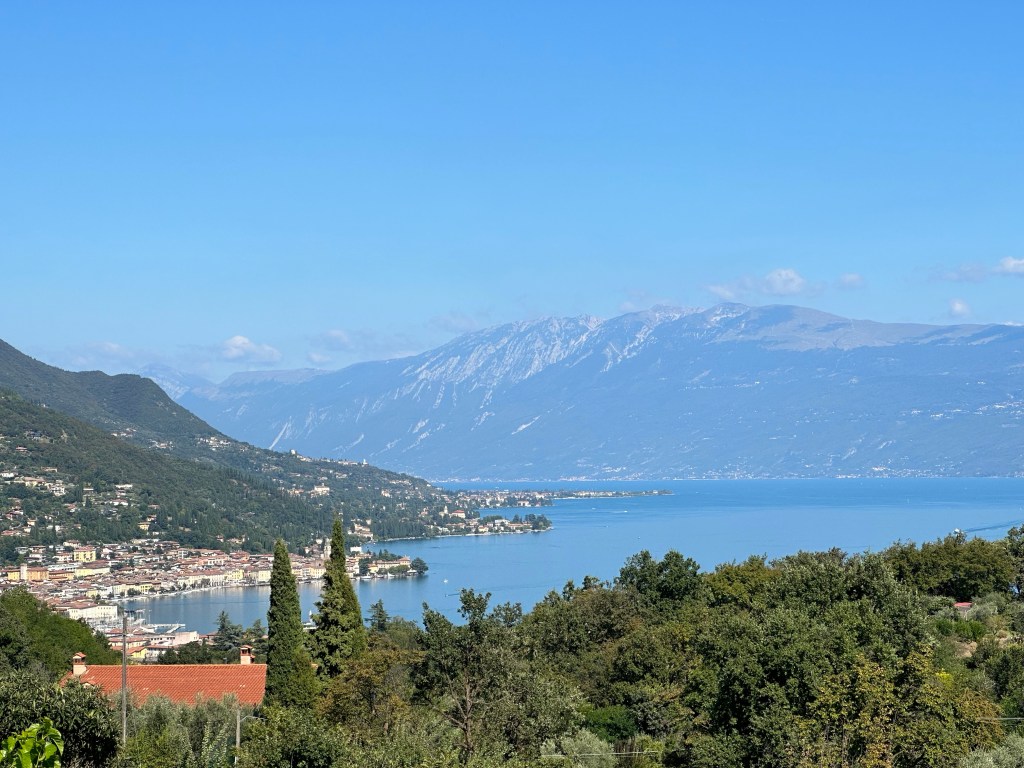
Lake Garda is the largest lake in Italy, with a surface area of 370 square km and a maximum depth of 346 m. It is a popular destination, with Milan to the west and close to Verona, but not as busy as Lake Como.
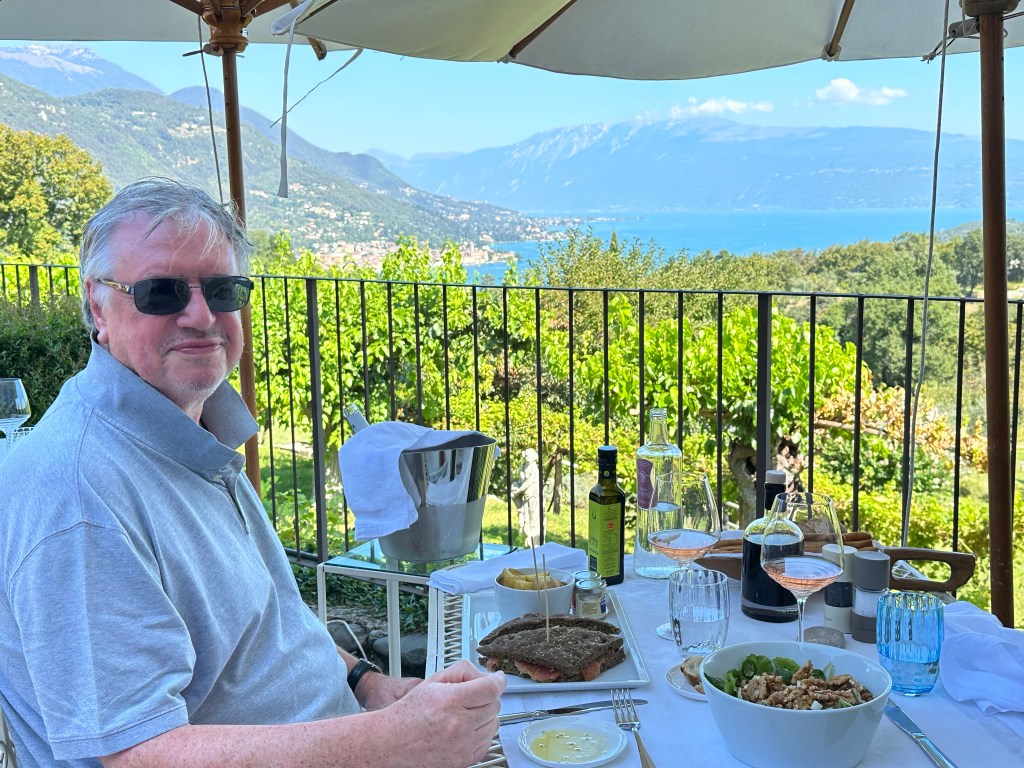
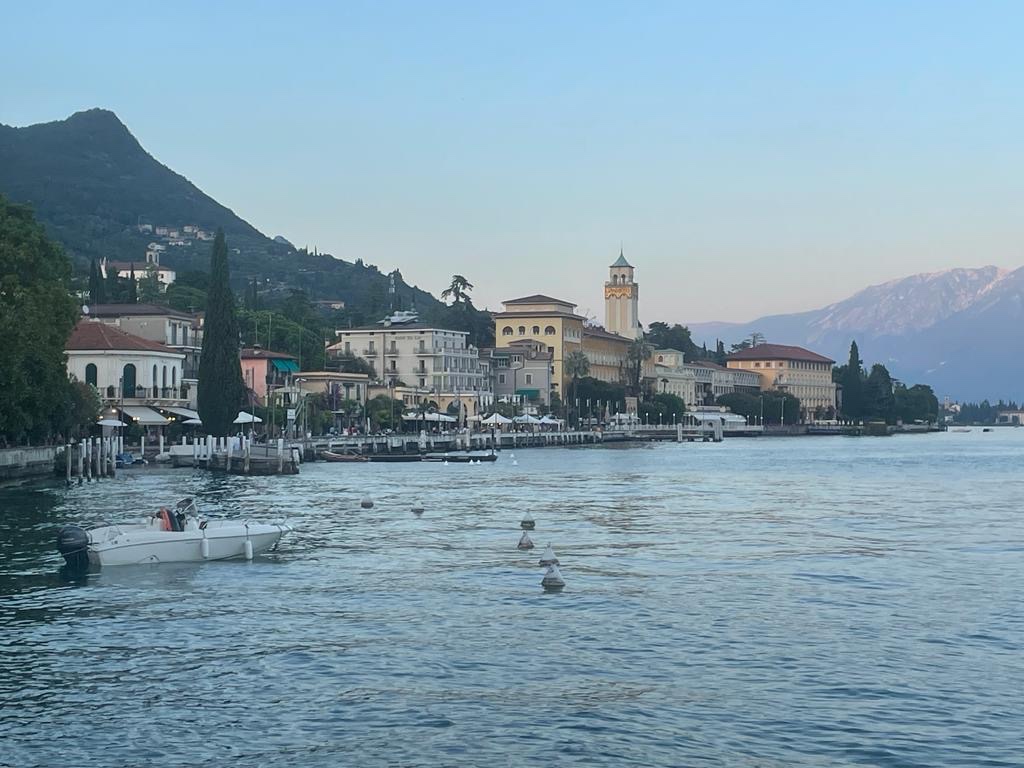
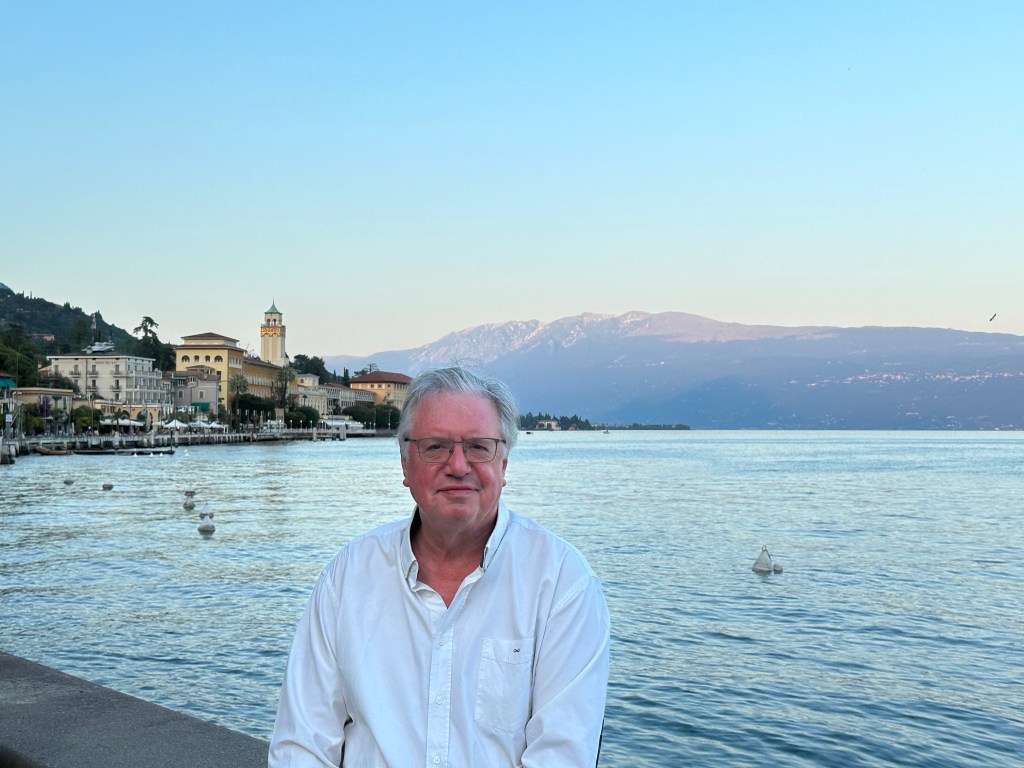
We stayed just outside Salo, a small town on the south west of the lake. Although a long established town, it is now remembered as the de facto capital of Mussolini’s government from 1943 to 1945, following the Italian surrender in World War 2. A highlight of our visit was a half day trip on a Riva boat, the boat equivalent of a Ferrari, where we became a tourist attraction. Our hotel was a monastery converted by a Finnish family, combining Italian history and cuisine with Scandinavian style and service
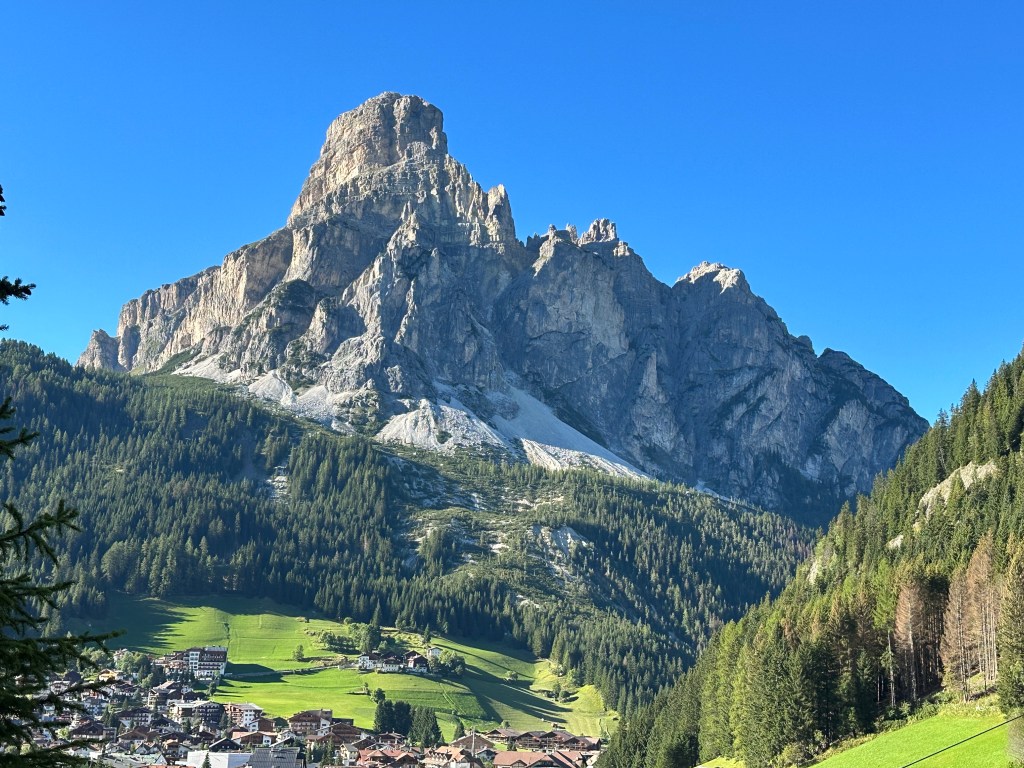
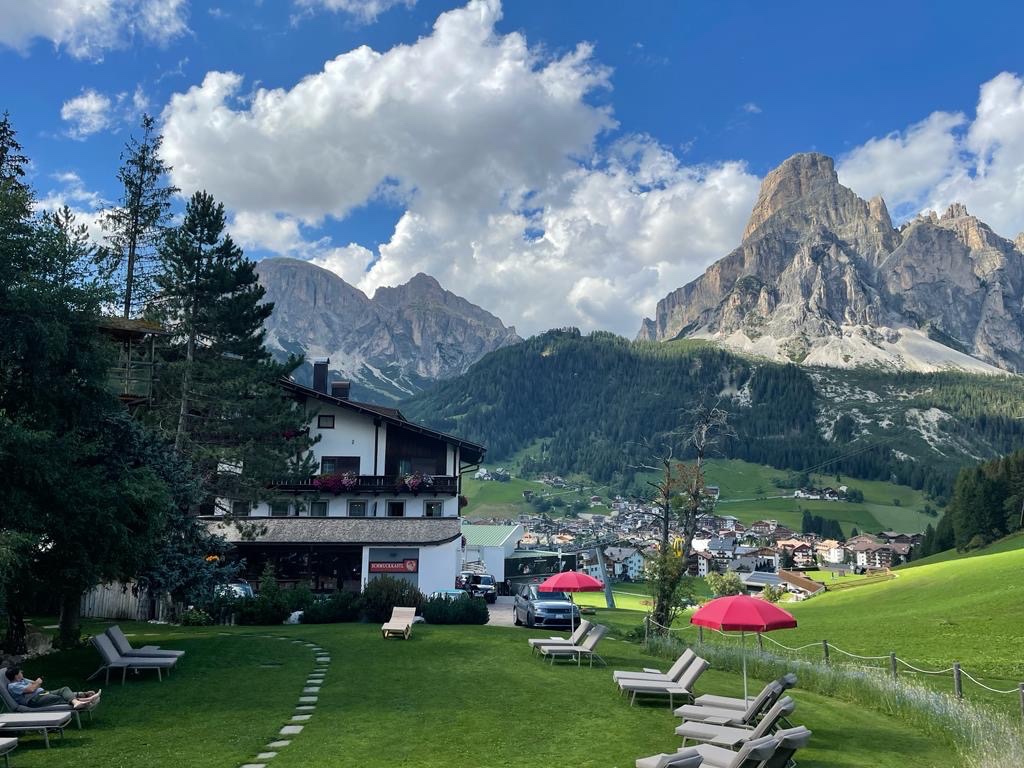
South Tyrol is the most northerly part of Italy and was part of Austro-Hungary until 1918. It borders Switzerland and it is relatively close to Munich, two hours by car from where we stayed. The main language is German, with road signs in German first and Italian second. We came across a localised third language, Ladin which is a Romance language.
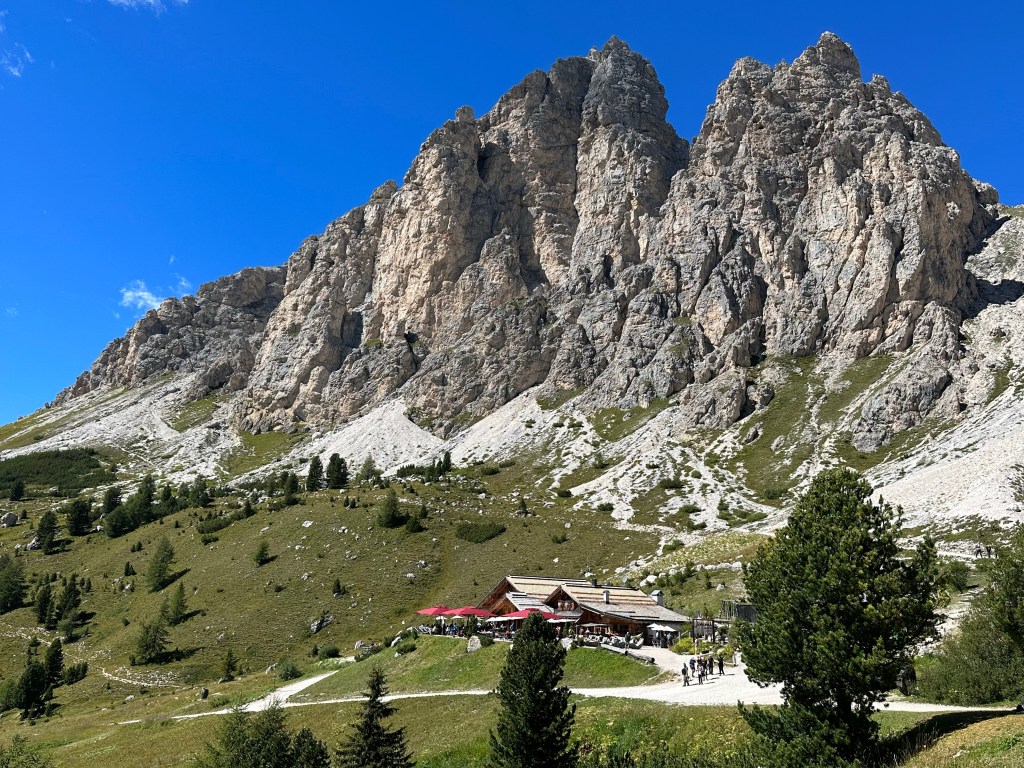
The Dolomites are a major part of the South Tyrol and with peaks in excess of 3,000 m a winter favourite for skiers. In 1956 Cortina hosted the first televised winter olympics, which return in 2026. In summer the skiing infrastructure provides excellent facilities for hikers to experience the scenery and food at over 2,000 m. For a number of years the authorities have been working successfully to restore and preserve the landscape from the impact of ski infrastructure. This has enabled a year-round tourist season. We visited in September when the weather was perfect for hiking.
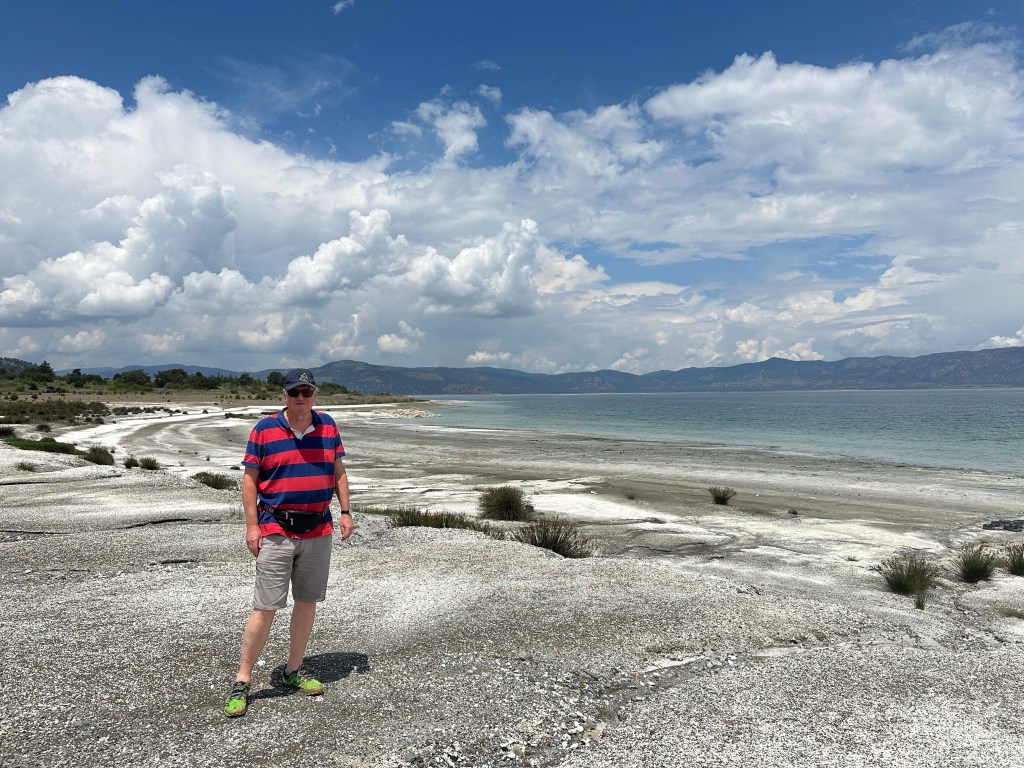
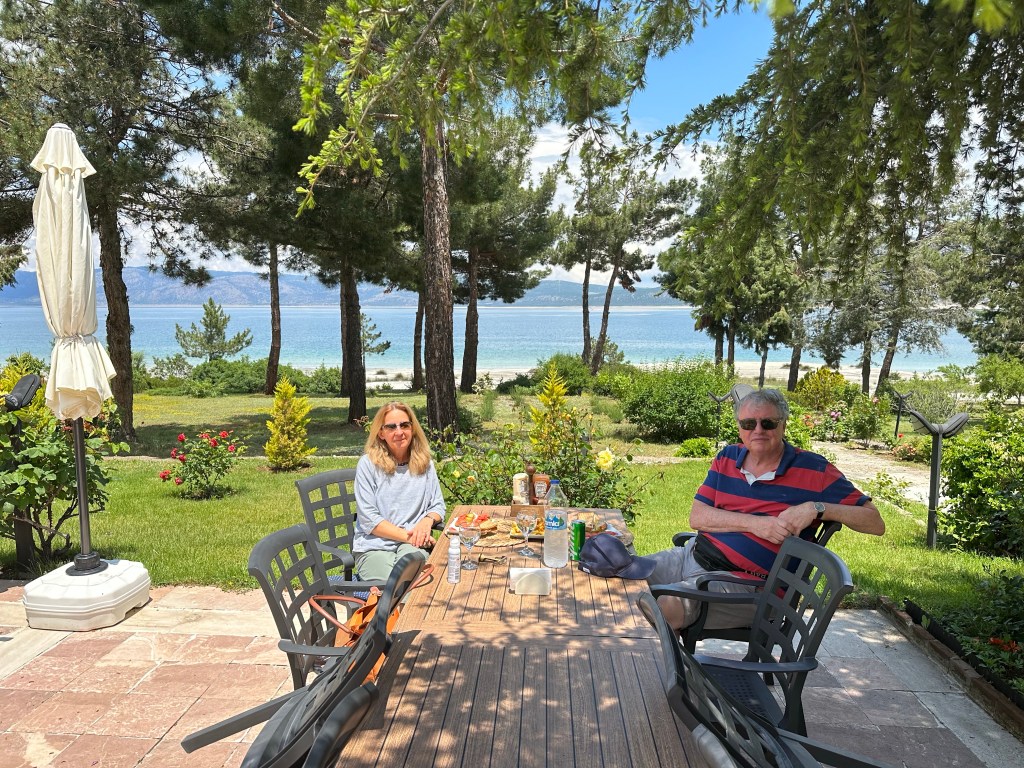
Lake Salda is in the Turkish Lake Region in Western Anatolia, a three hour drive from Kalkan. It is a crater lake at 1300m. The minerals in the water have created a “beach”, which gives (at times, according to the tourist agency) the appearance of being in the Maldives. At the time of our visit, some imagination was needed to picture this scene !
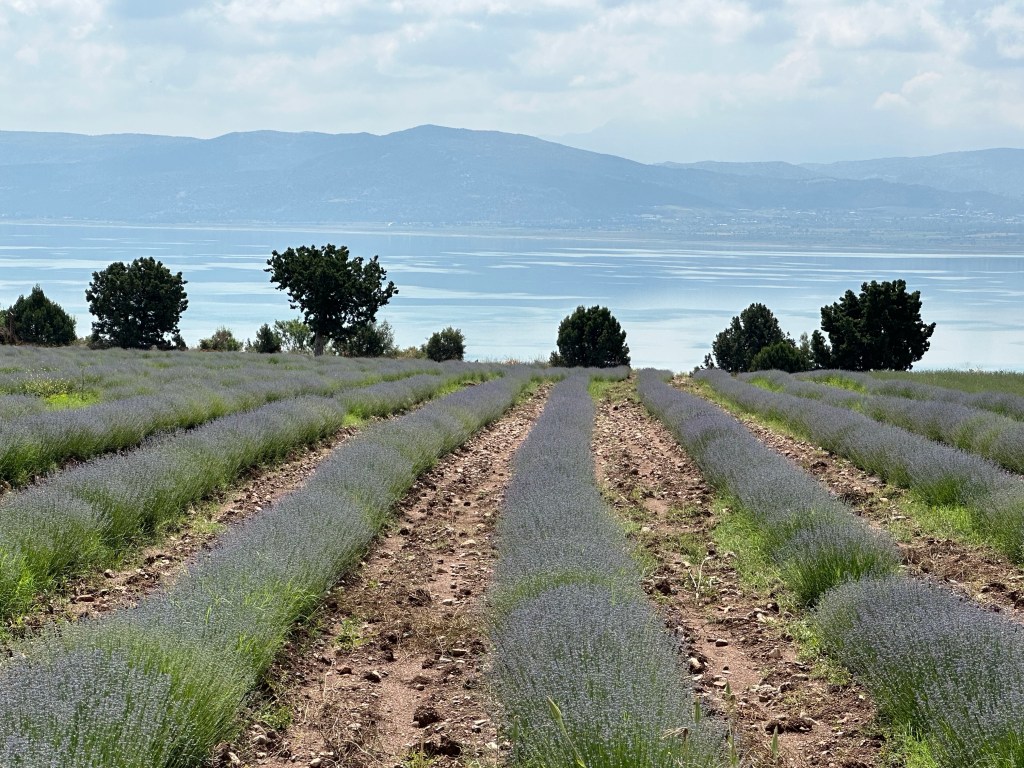
Not far from Lake Salda is the begining of the “Lavanta Yolu”, the lavender route, which passes through lavender fields close to Lake Burdur, leading to the village of Kuyucak. Production can be traced back to a local farmer visiting Provence in 1975.
The region has a small tourist trade in the summer as well as the winter, with some ski slopes in the area. The visitors are almost entirely Turkish. This gave us a need/opportunity to use our relatively basisc Turkish; mostly with the desired results, although we did once or twice require the help of google translate and found some words that we frequenty use in Kalkan pronounced differently. We found the prices to be a fraction of the prices on the Turkish coast.
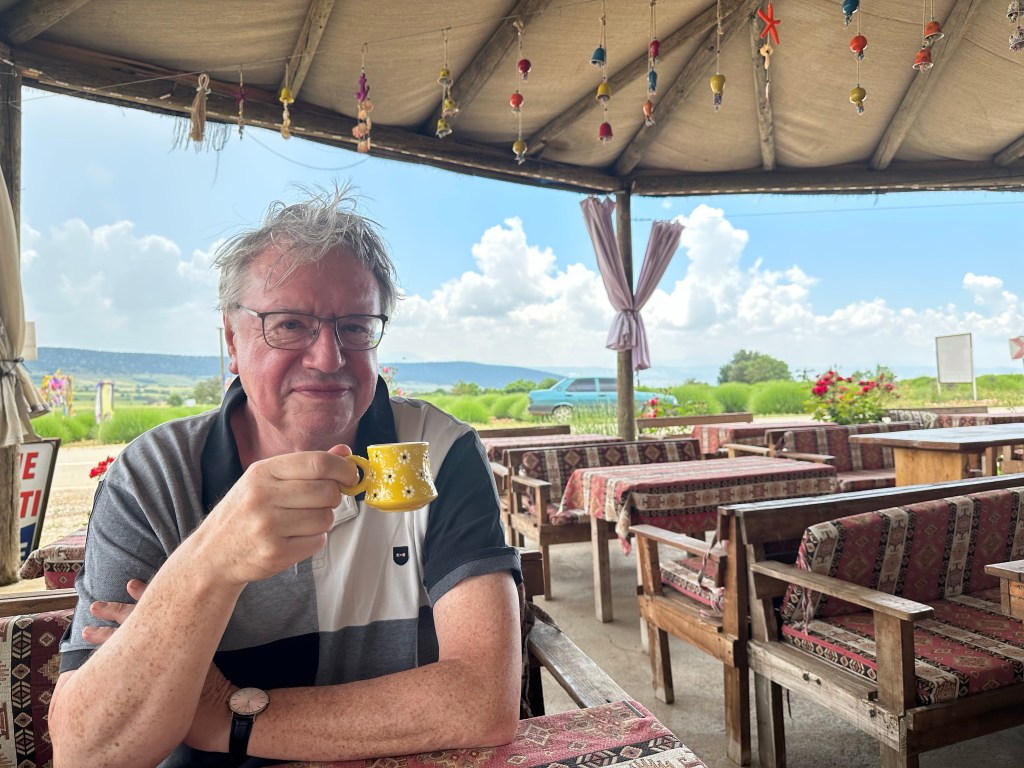
Lake Salda (Maldives ?)Terrace of our hotelLavender fields on the shore of Lake BurdurLavender coffee – an acquired taste…..













 Shilli-Fully Travels