Travels with Gökhan

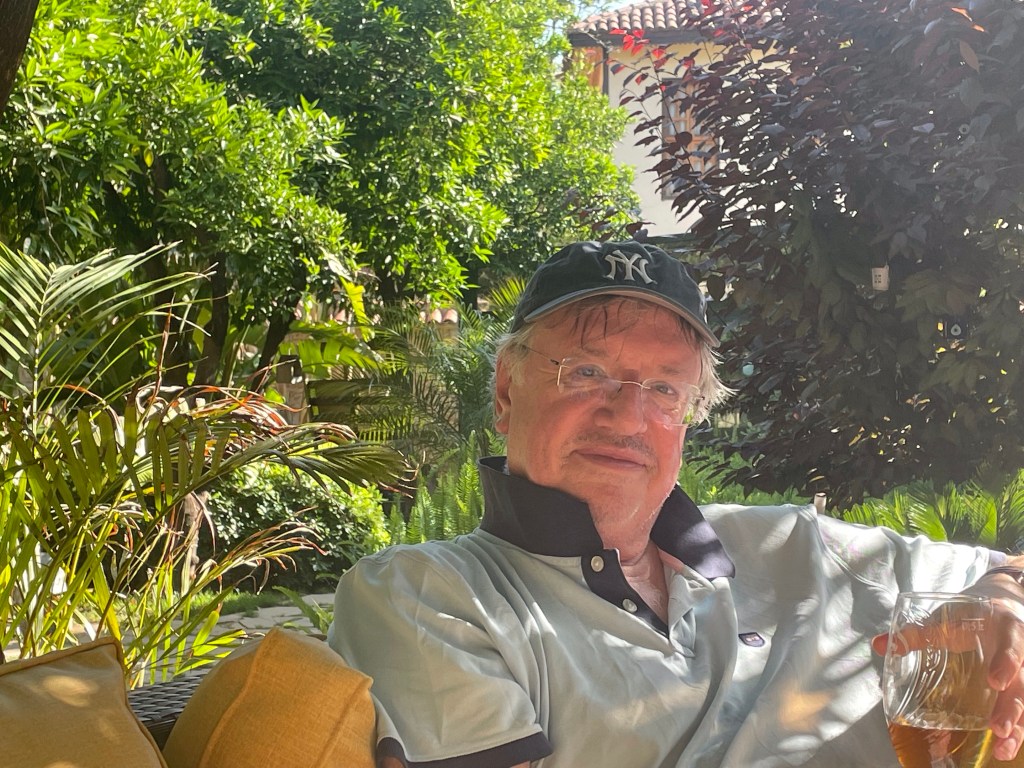
We debated driving ourselves to Cappadocia. However it is 10 hours from Kalkan, either via Konya or via Antalya and we could not hire a suitable car in Kalkan (which serves a local “run-around” demand). While it is possible to fly, it is no quicker as a transfer in Istanbul is needed and we felt we would miss out on some of the experiences of travelling across Turkey. We therefore organised a driver, through our agent, Murat (introduced by our great friend and neighbour İpek). Murat told us that our driver was Gökhan and he speaks a bit of English, although we soon discovered that he speaks very good English; better than our Turkish.

Gökhan was a star of the trip, acting as much more than a (very professional) driver – a guide, porter, Turkish teacher, comedian and expert in local cuisine. He taught us a few new phrases; with our favourite being “Hadi gidelim”, a polite way of saying “let’s go”).

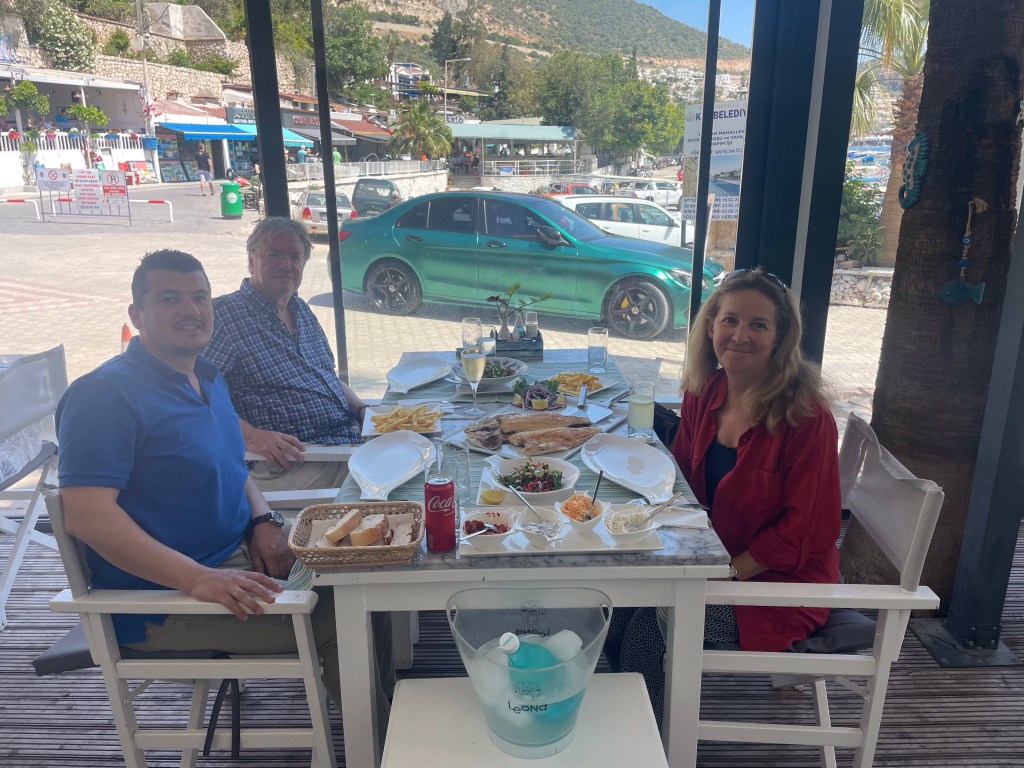
Gökhan, a Central Anatolian from Cappadocia, is a confirmed tea-total, meat eater with a preference for lamb kebabs and etli ekmek (meat and bread). We discovered though, on two occasions, that he does really enjoy fish; it is just that it is not available in Cappadocia (unless you are staying at a swanky hotel). Like some other people we know, he also has a second stomach, specifically for dessert ! When we do our next trip to Eastern Turkey, which we are already contemplating, it would be enhanced by Gökhan’s company.

Antalya

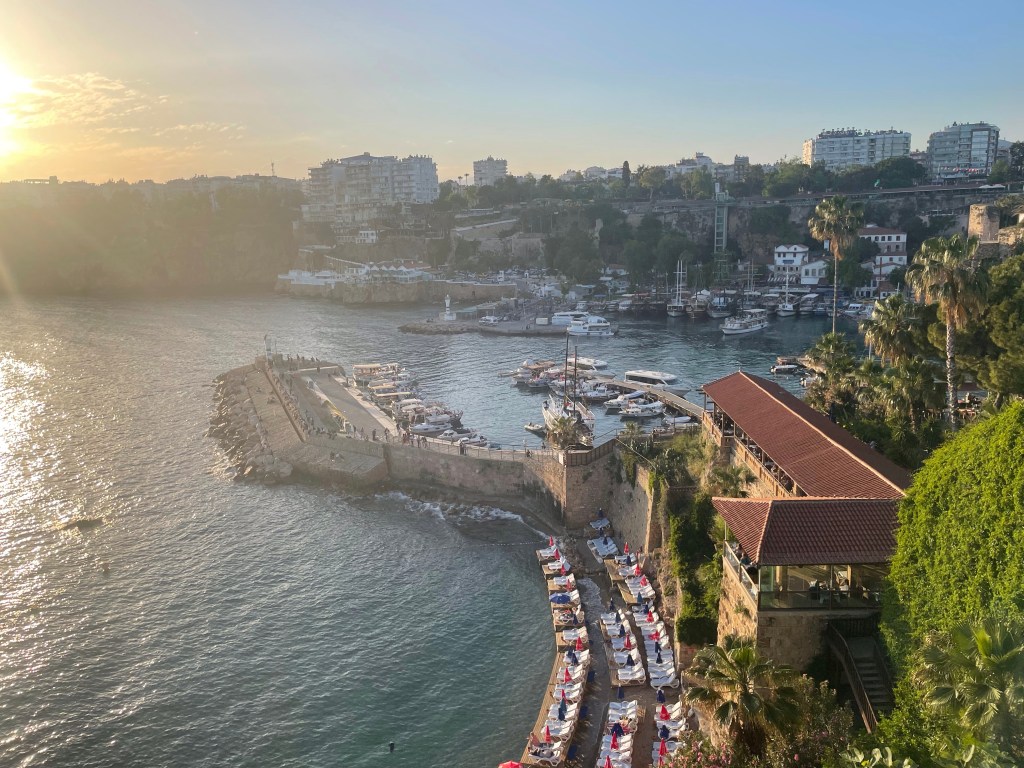
Antalya is a large modern city with a population over 2million but with an ancient heart going back to 200BC. It is now a major centre for Turkish tourism with beaches, harbours, hotels, restaurants and a golf course which hosts the Turkish Open.

It is a world away from Konya, our first stop – two opposite ends of current day Turkey in terms of politics, religion, geography and economy. A tour guide told us of a tour she had led during the pandemic when she was unable to work with international guests. The guests were from Konya and Antalya, with the two groups not wishing to eat together and the former requesting stops for prayer time at a mosque and the latter asking to visit bars.

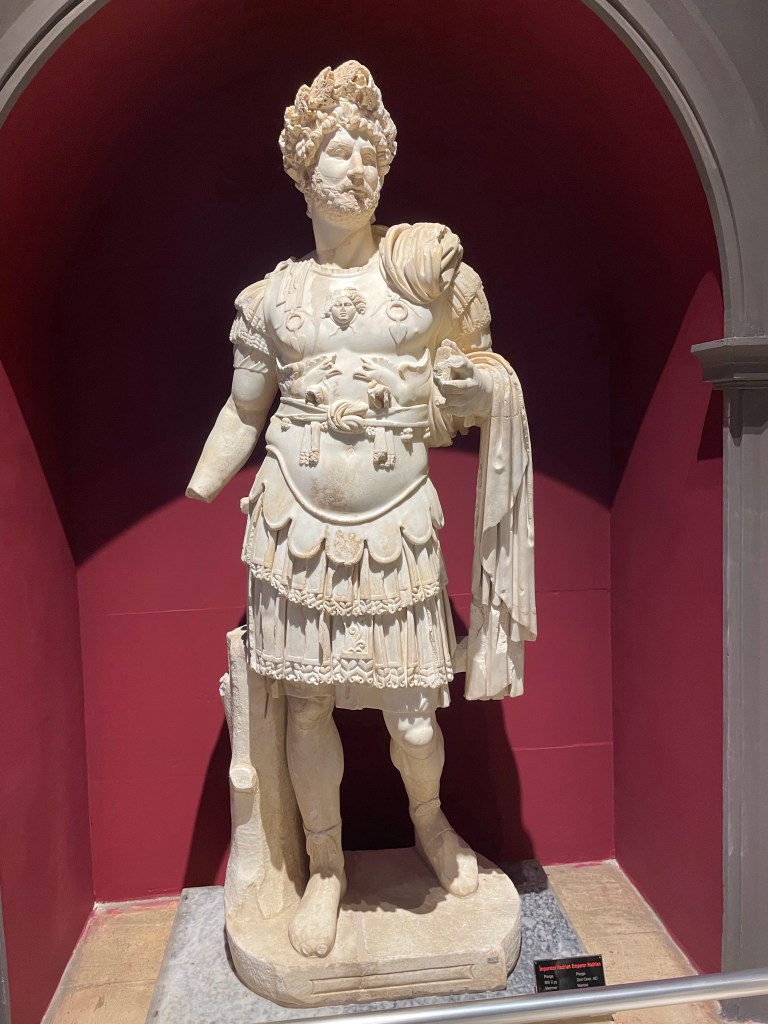
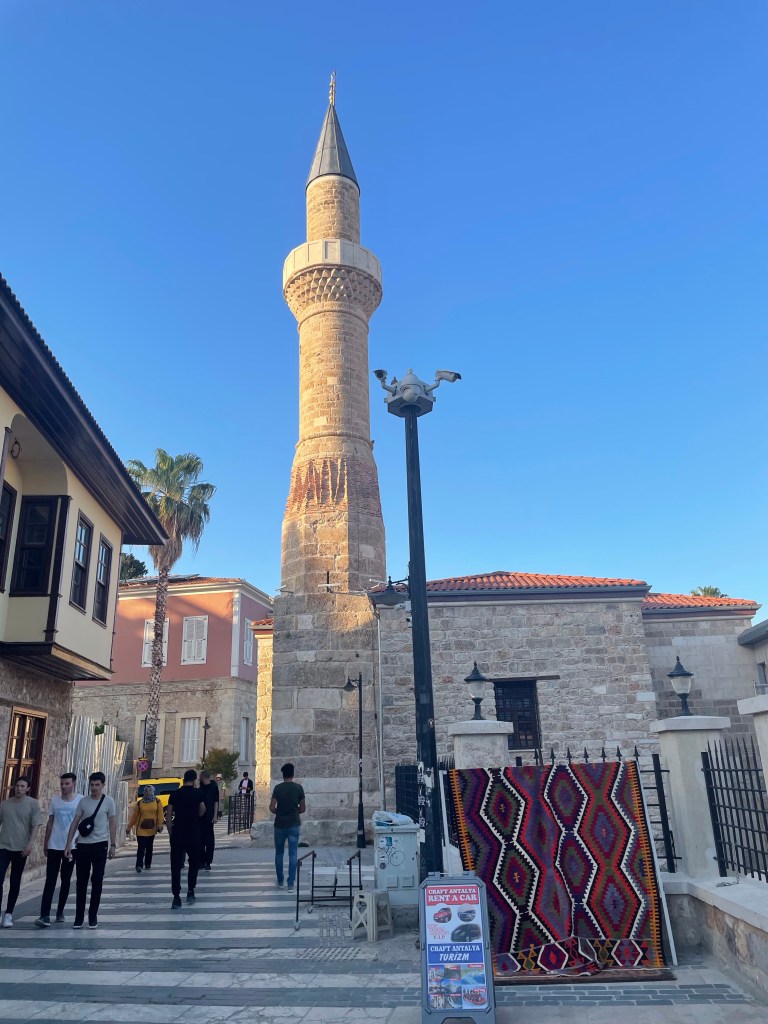
We stayed in a small boutique hotel inside the old town and very close to Hadrian’s Gate, which was built to honour the emperor’s visit in 130 AD. The Antalya archeology museum is one of the largest museums in the country. The museum has begun retrieving archeological pieces which have found their way to other countries. One of the items being sought is the Nereid Monument from Xanthos, now housed in the British Museum.

Aspendos and Termessus

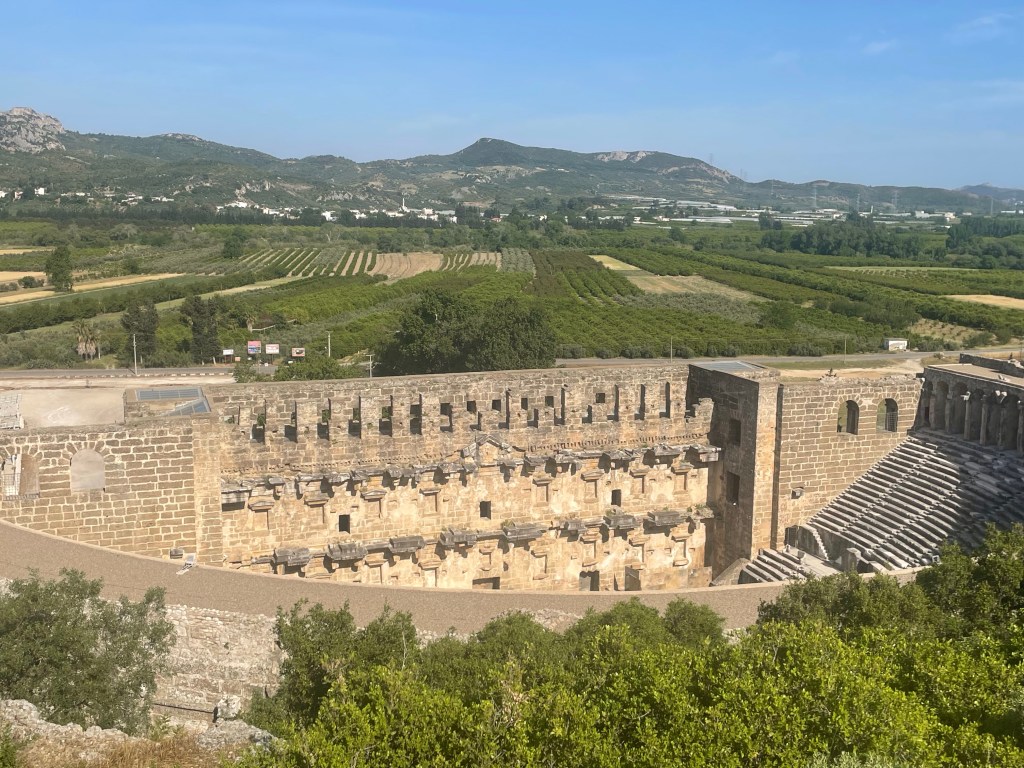
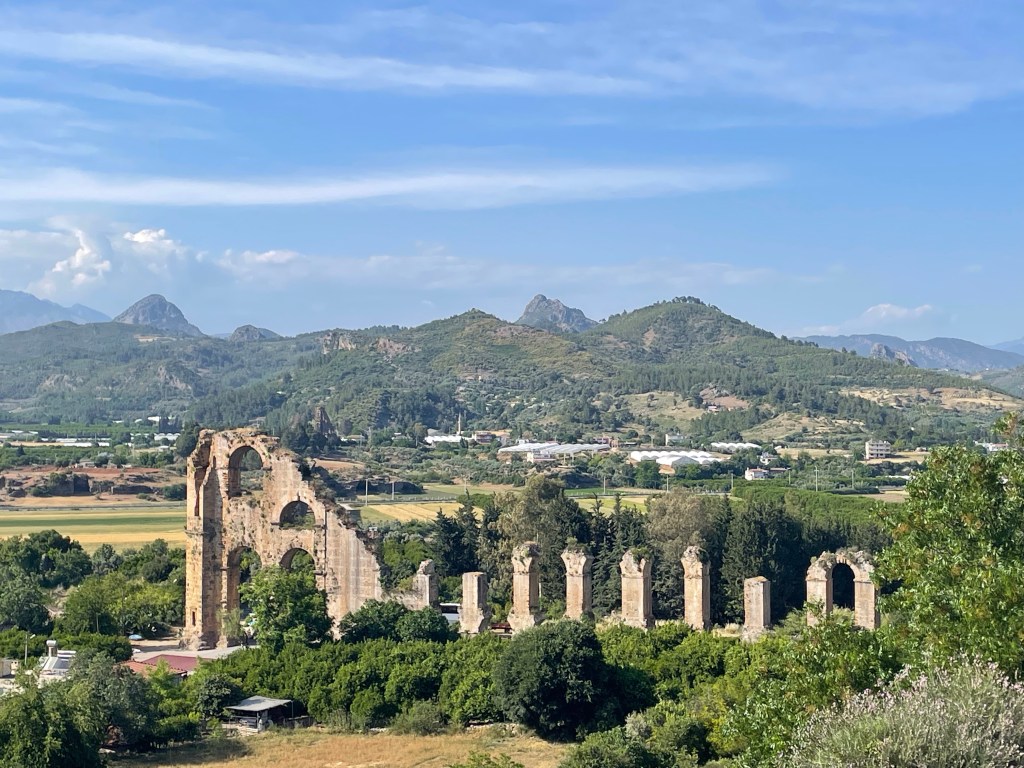
Aspendos is an ancient city situated 46km east of Antalya that we visited on our drive from Cappadocia to Antalya. It is famous because its two storey amphitheatre is virtually intact with minimal modern restoration. This is due to the extensive repairs made in the early 13th century by a Seljuk Sultan. The amphitheatre hosts an annual ballet and opera festival, recently resumed post pandemic.

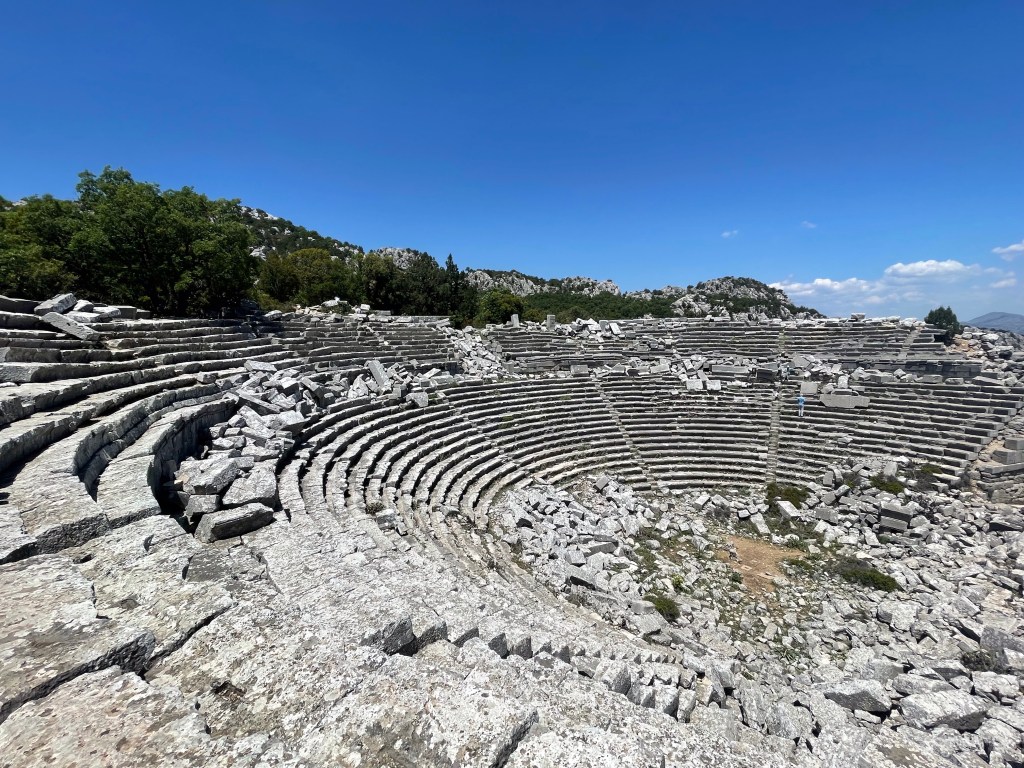
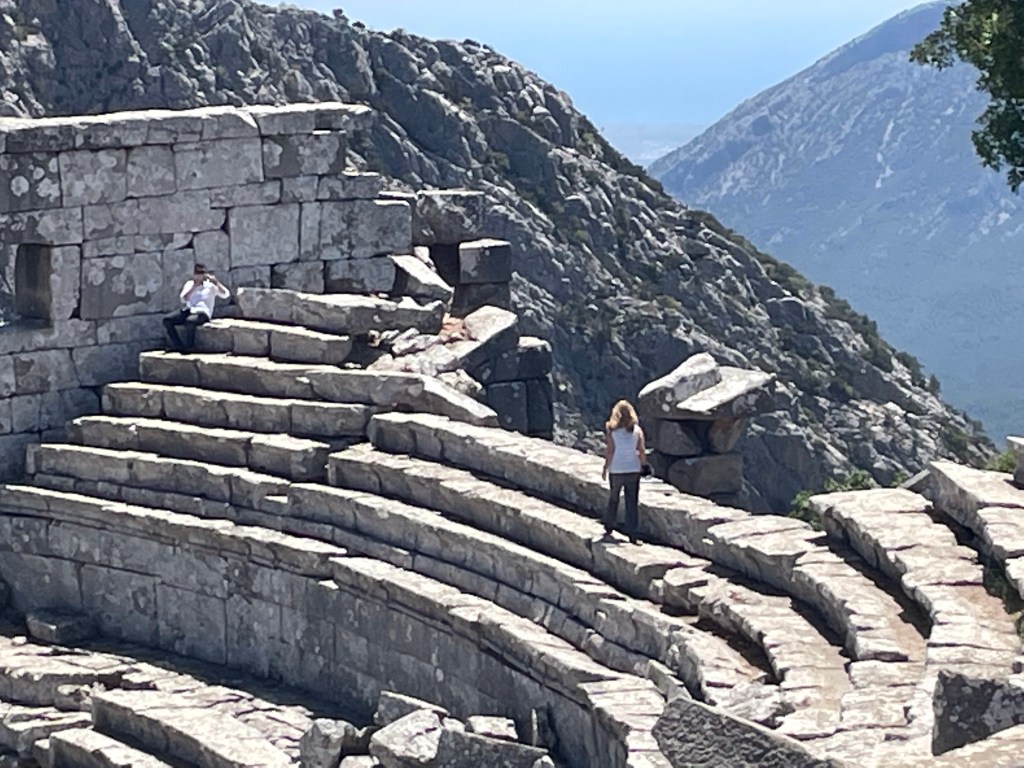
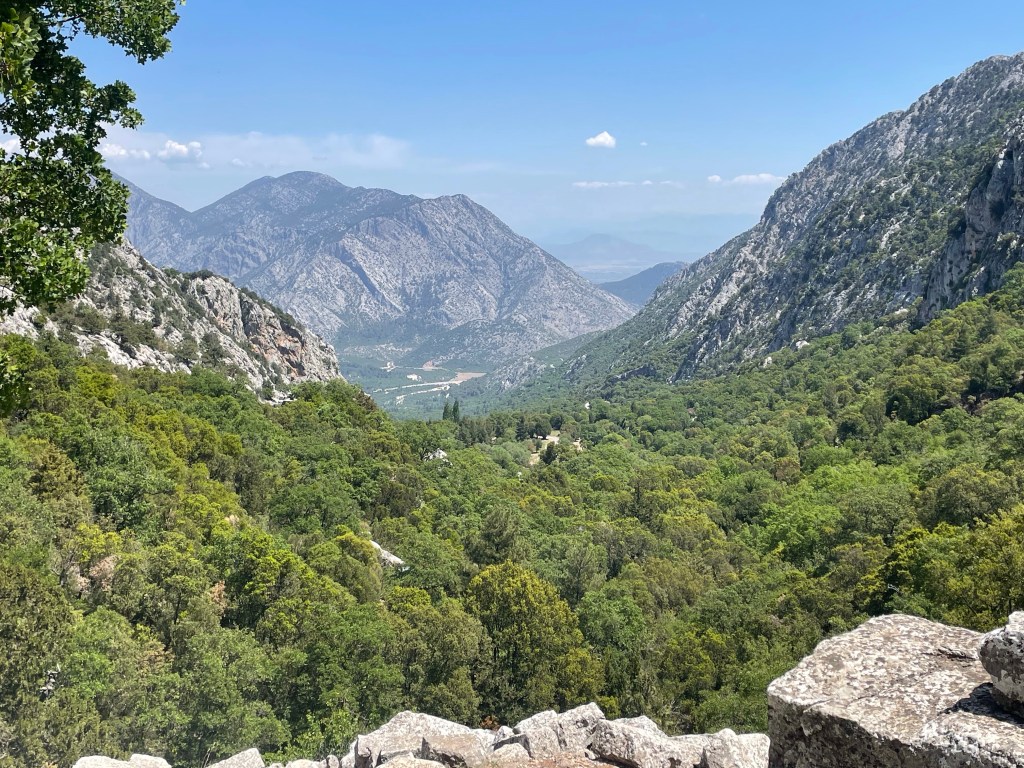
Termessus is a Psidian city 17km north-west of Antalya in an area that is now a National Park. It was founded on a natural mountain platform. From the car park at 880m we climbed to 1,050m to find the amphitheatre, a spectacular view and only a few other visitors. It is no surprise that Alexander the Great was unable to take the city, despite besieging it. He likened the city to an eagles nest.

Aspendos amphitheatre
Aspendos aqueduct (originally 3km) – the city had to be abandoned when the aqueduct was destroyed by an earthquake
Termessus amphitheatre
Termassus amphitheatre
Looking towards the ocean from Termassus

Hot air balloons

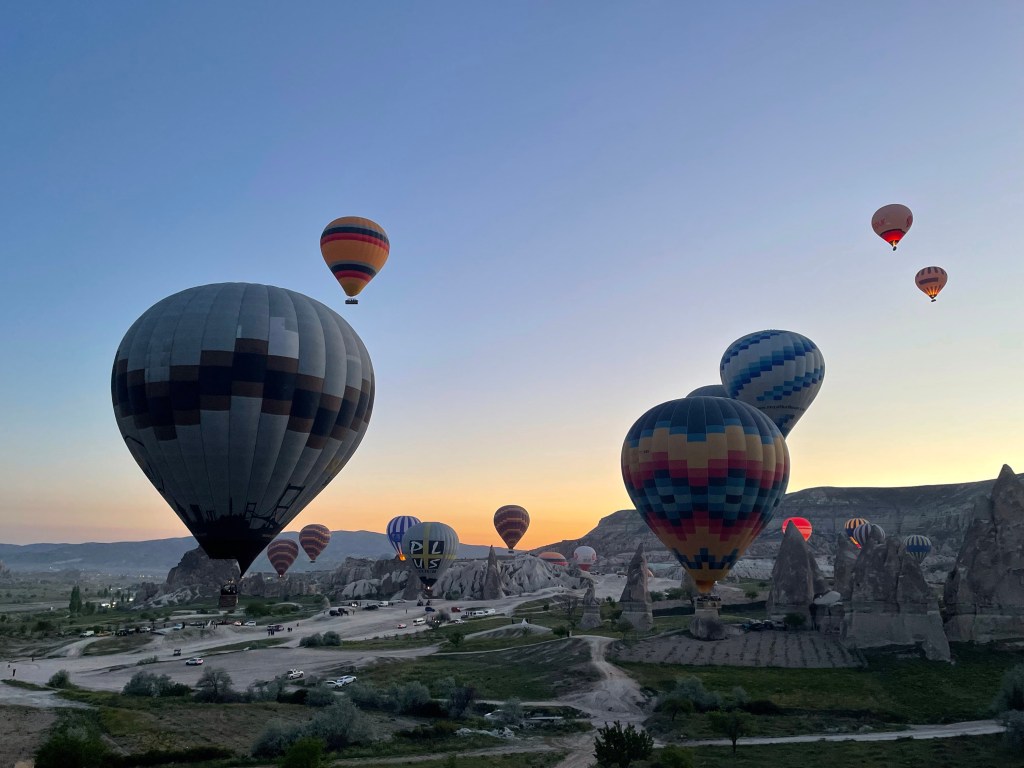
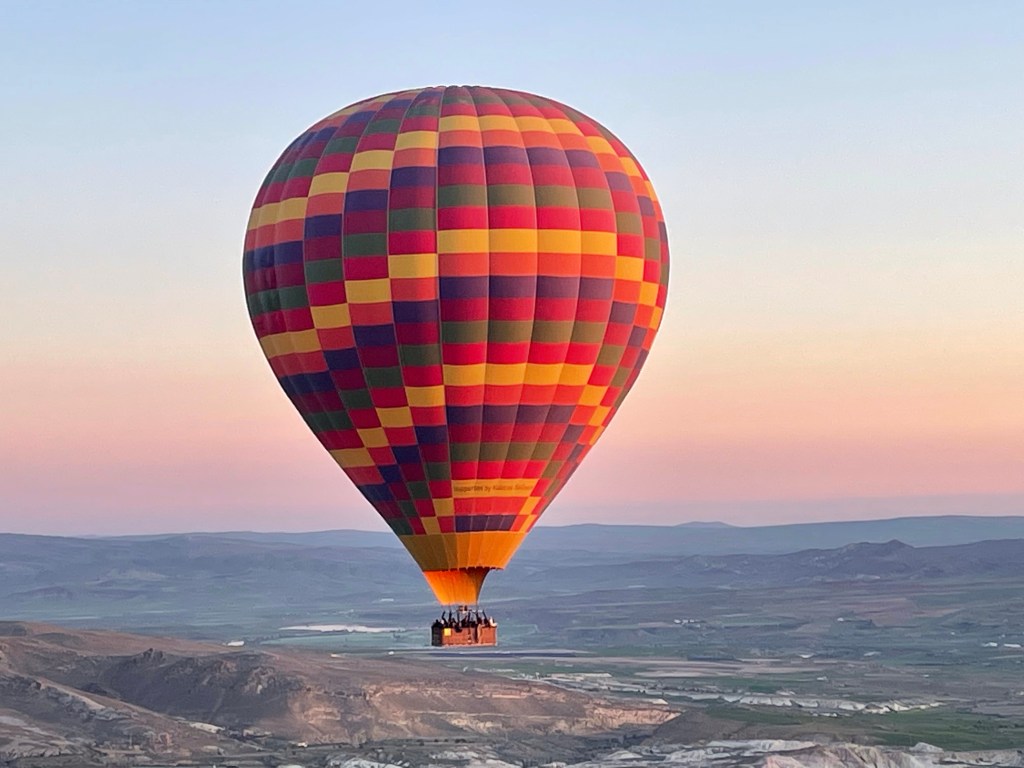
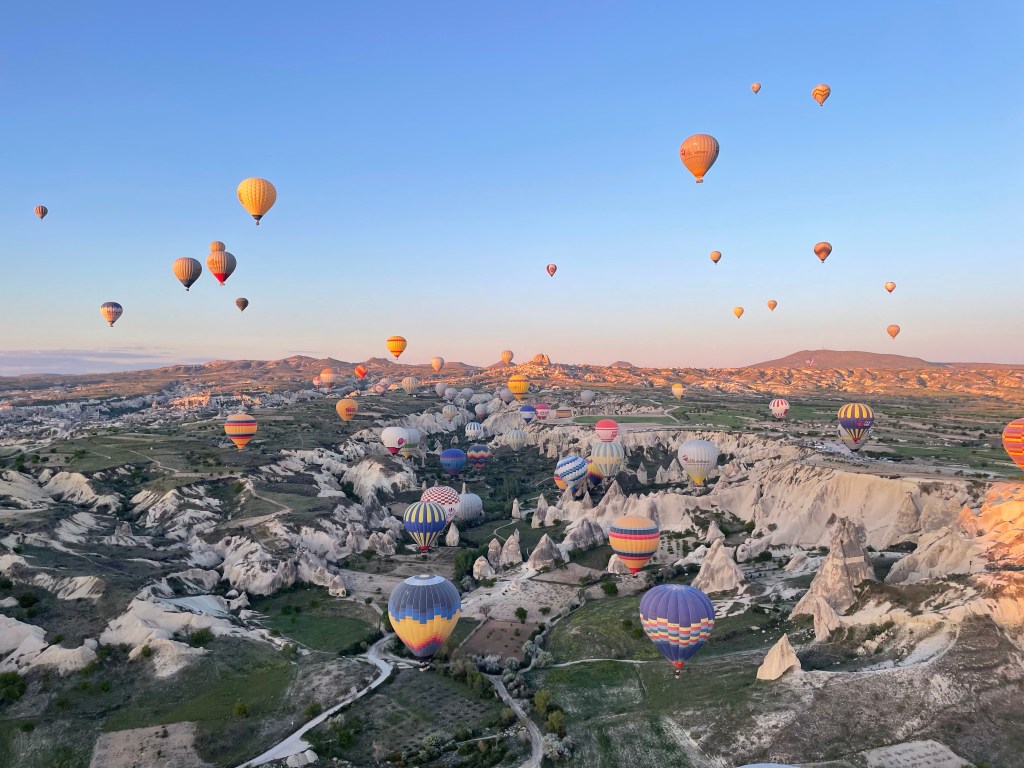
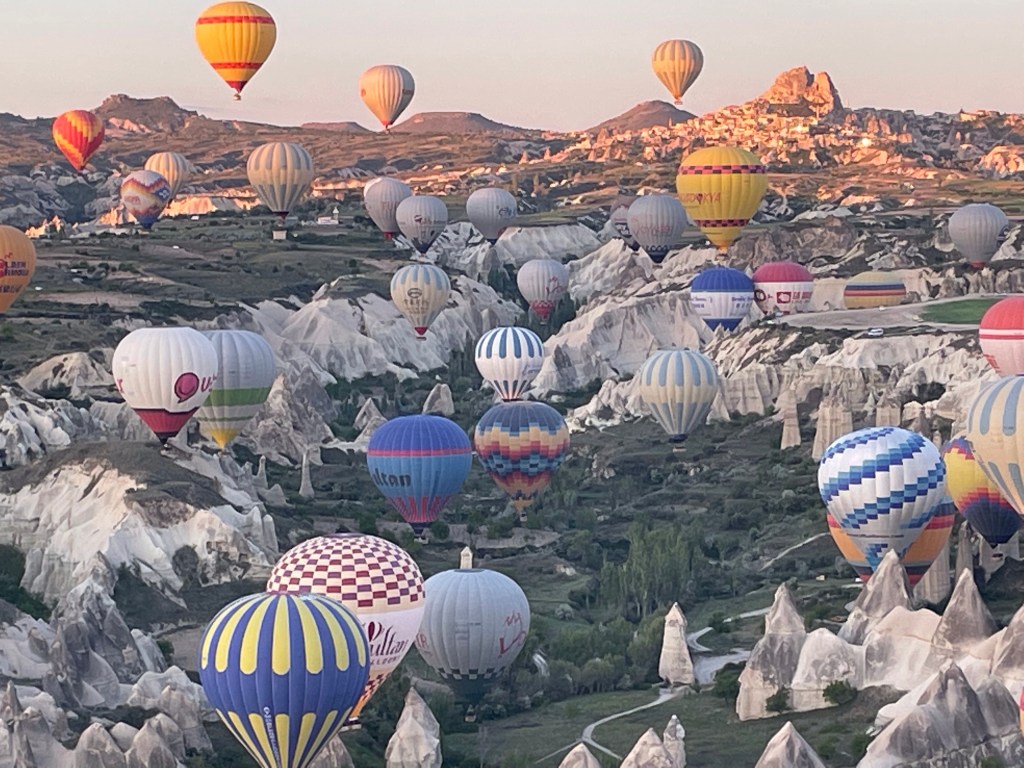
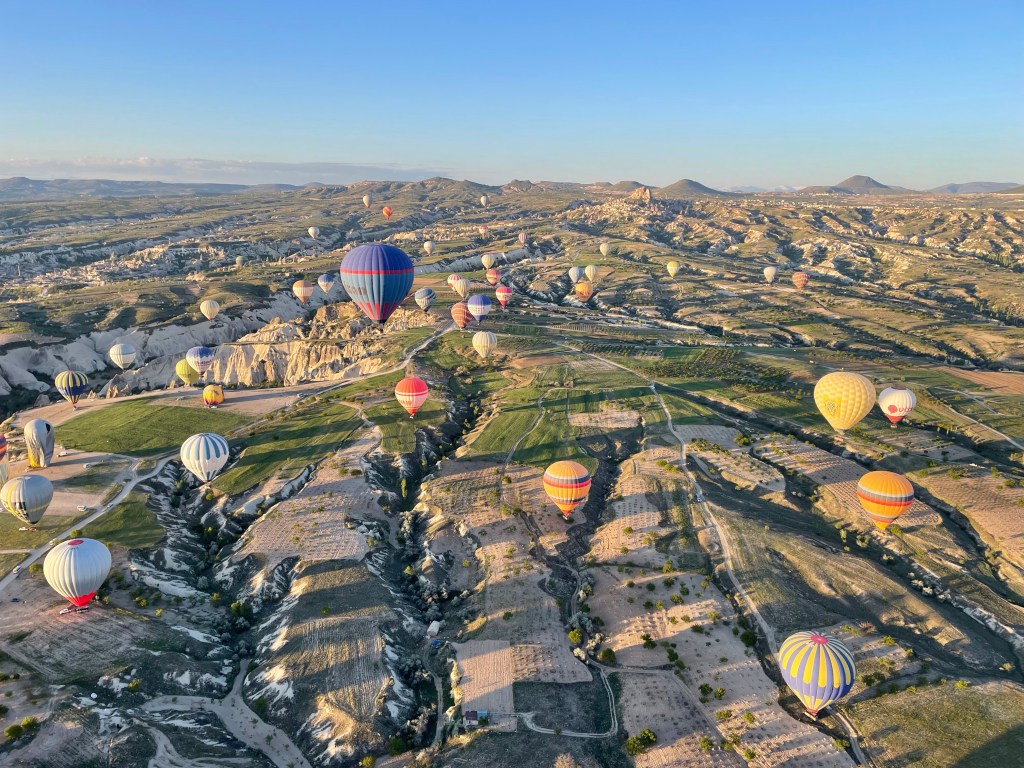
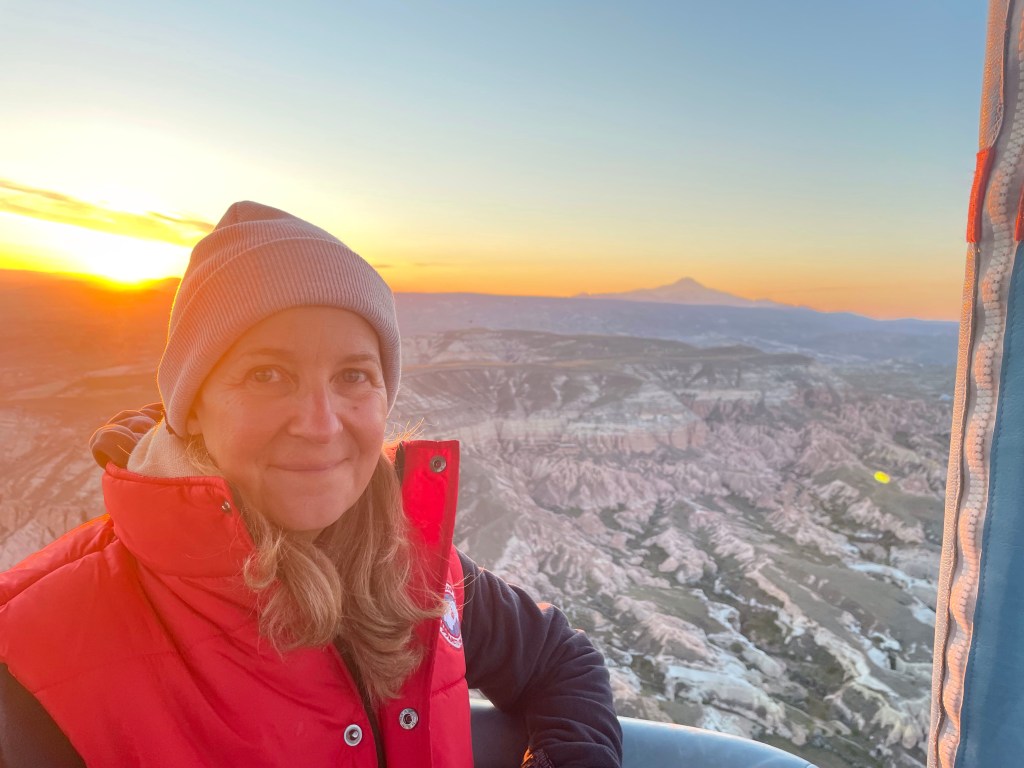
Hot air balloons were first flown in Cappadocia in the 1980s for advertising purposes. However the commercial opportunities were quickly identified and tourist flights started in 1991. There are strict controls over balloon numbers, pilot training and in-flight protocols. About 100 balloons fly each day carrying up to 24 passengers with departure just before sunrise due to the thermals. Flying is weather dependent, with around 200 days a year being suitable. Prior to the pandemic increasing demand, with fixed supply, created a black market, however the reduced tourist demand (particularly from China) has eliminated the market.

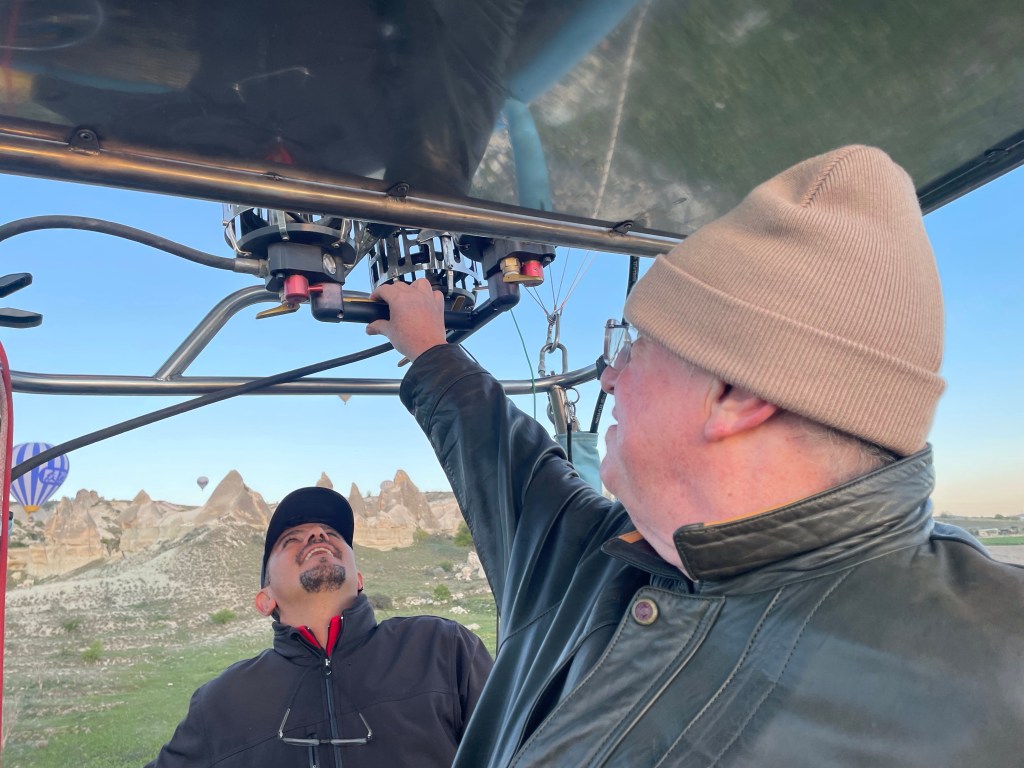
Our pilot had over 20 years experience and is a registered instructor, passing on some of his knowledge to us and allowing Tim a brief time in control of the gas cylinder.

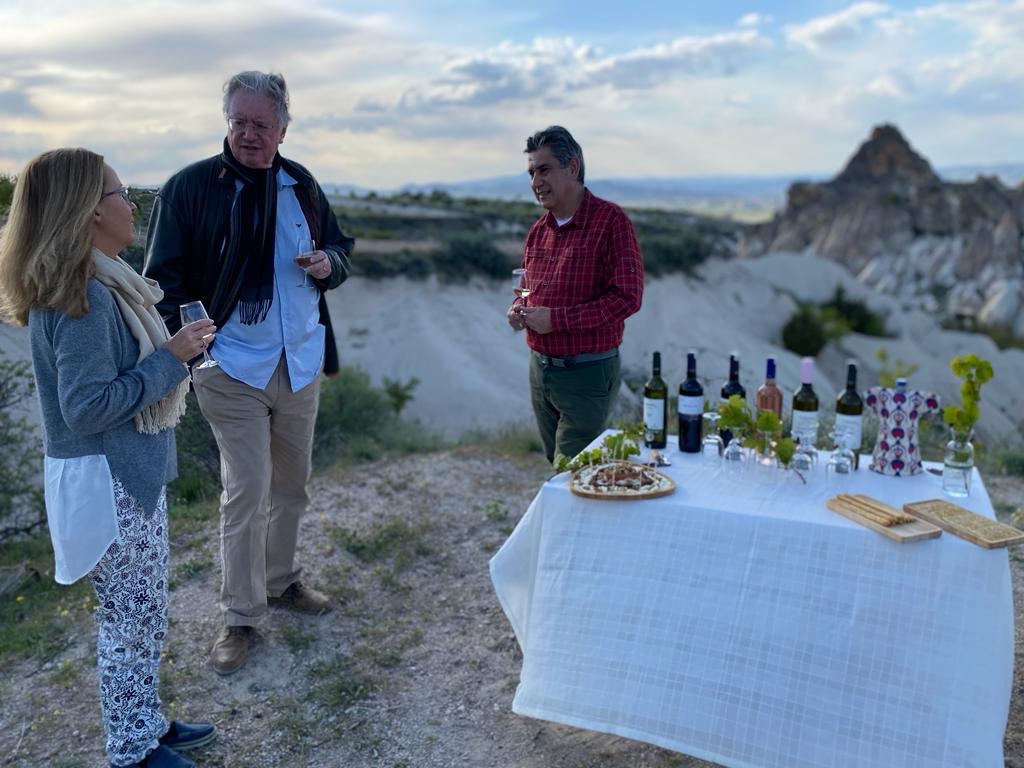
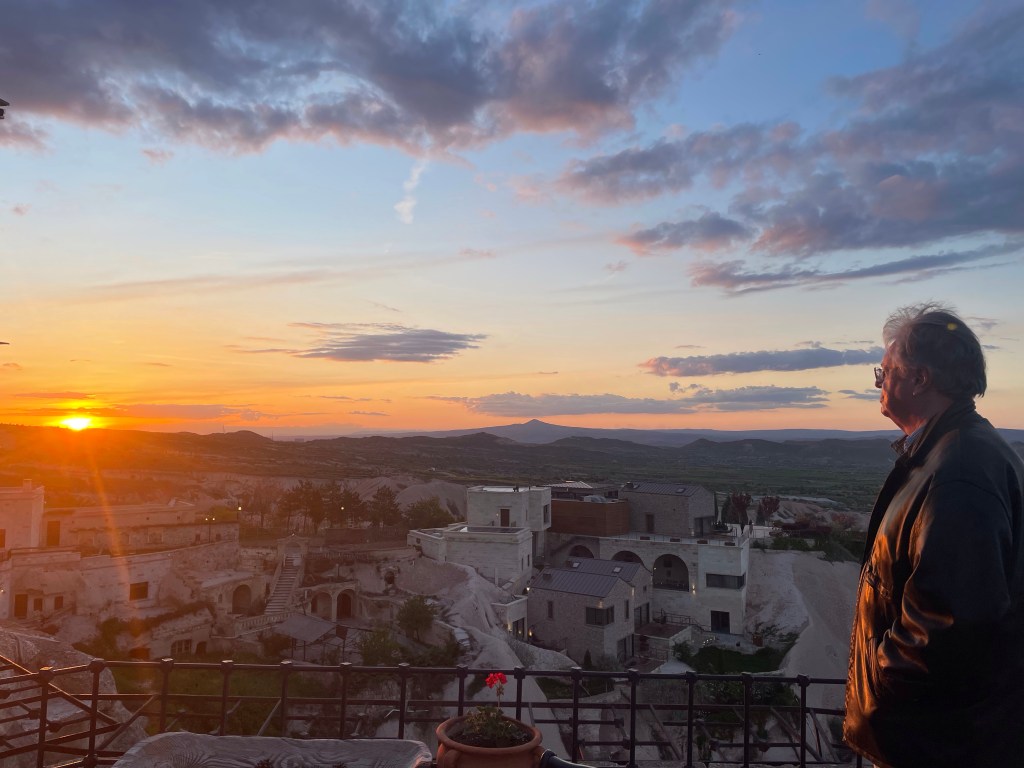
Despite the 4am start for the balloon flight and the Love Valley walk we found enough energy for a wine tasting with a spectacular sunset view over Red Valley

Valleys

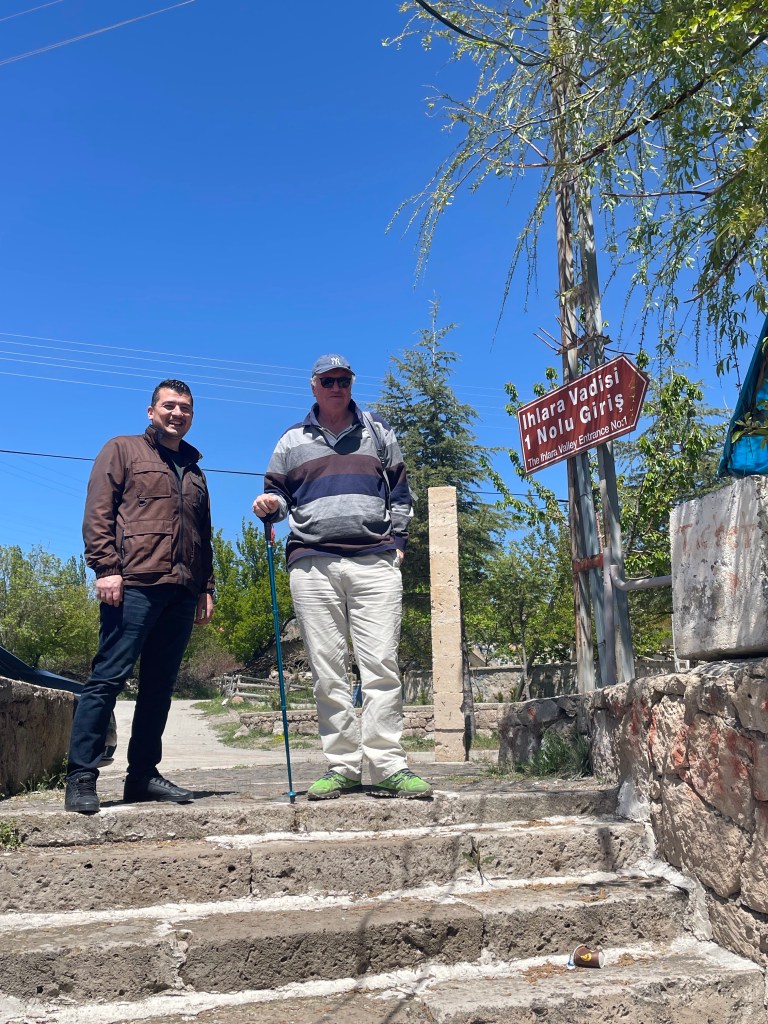
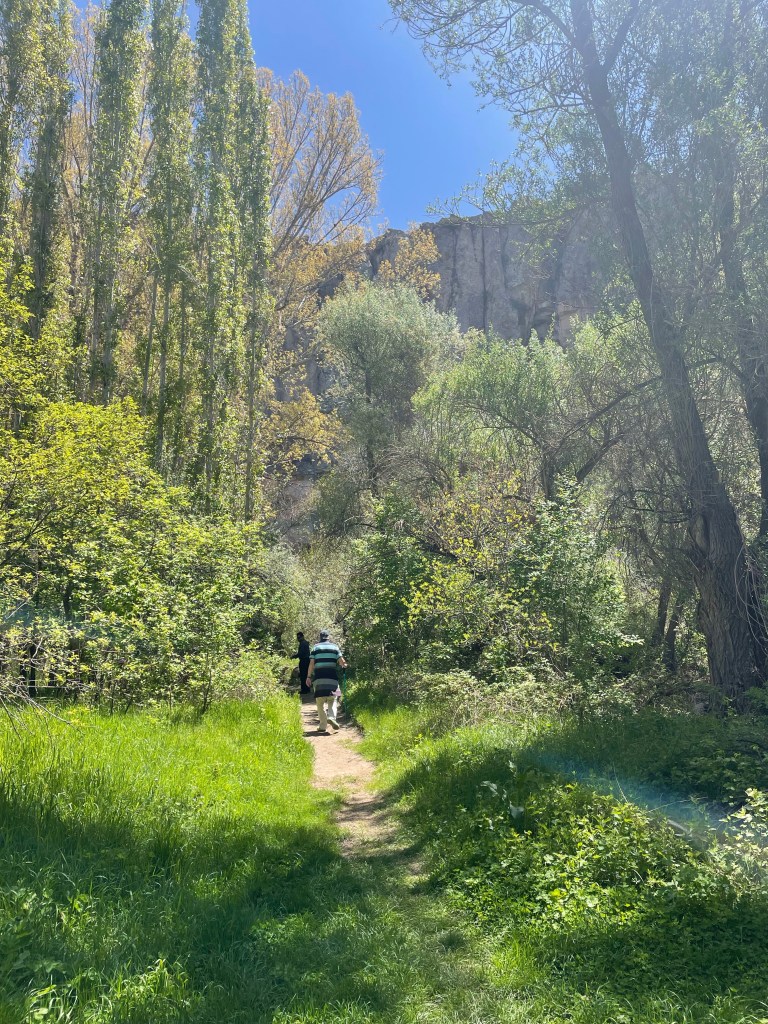
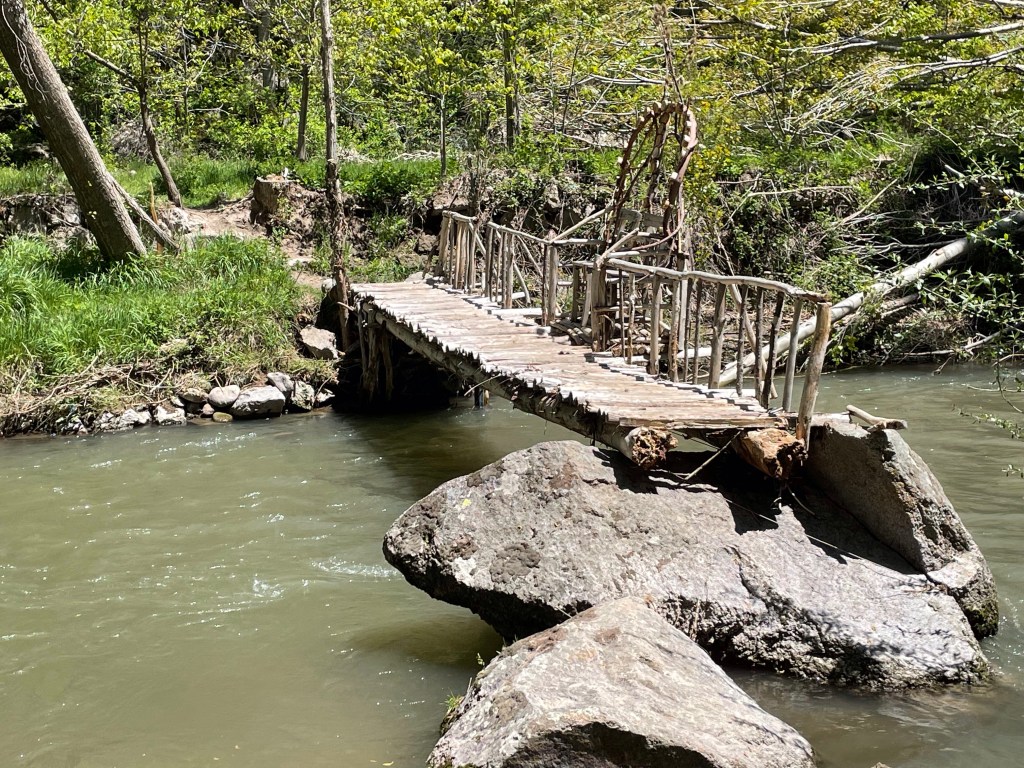
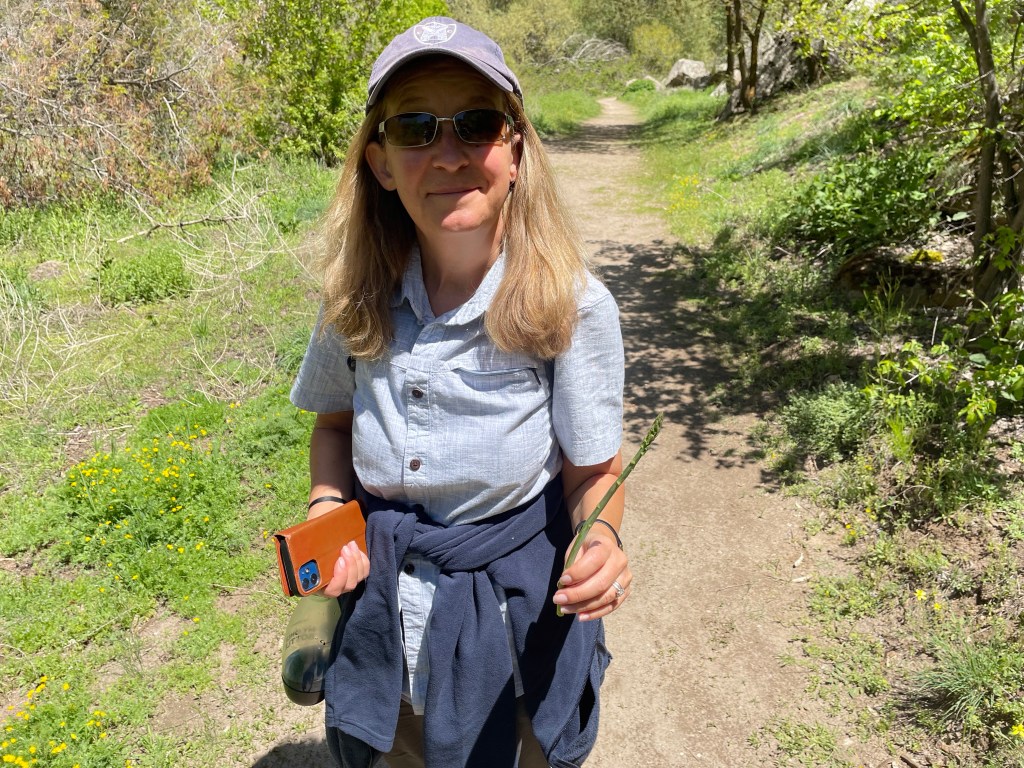
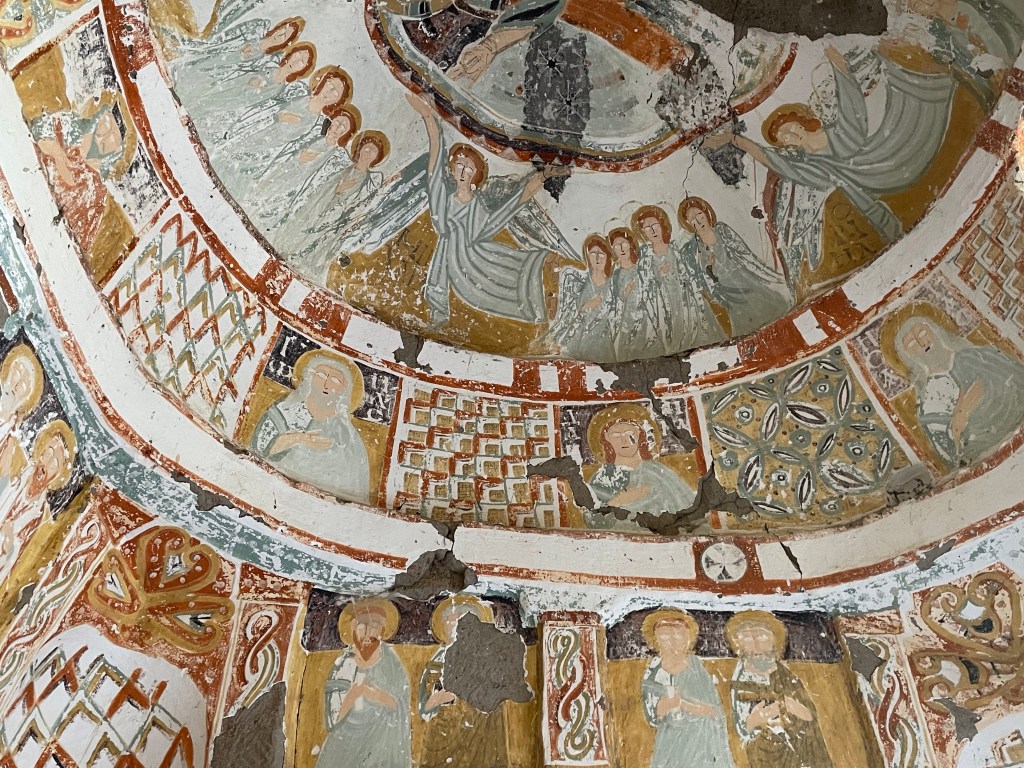
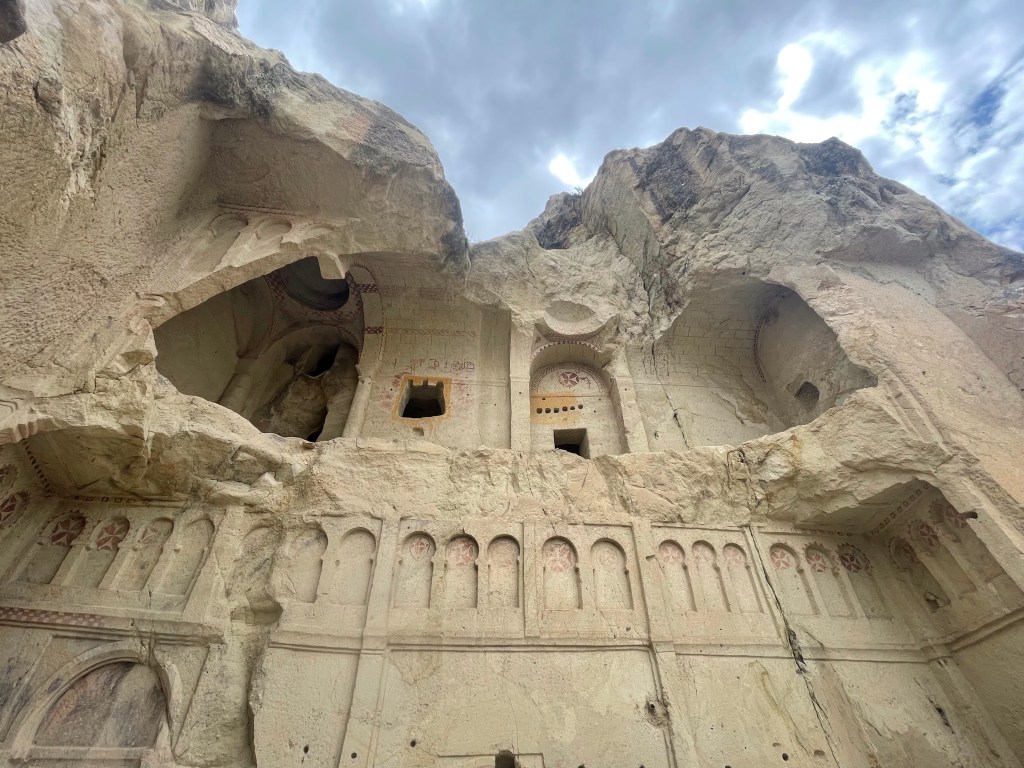
Whilst in Cappadocia we walked two challenging valleys. Ihlara is a gorge 15km long and up to 150m deep. The Melendiz river runs through it, although it is famous for its rock churches and buildings. While inhabited from the 3rd Century, the churches were built from the 7th Century onwards. We walked the top half of the canyon, with stunning scenery, birdlife and the bonus of wild asparagus to keep up our strength.

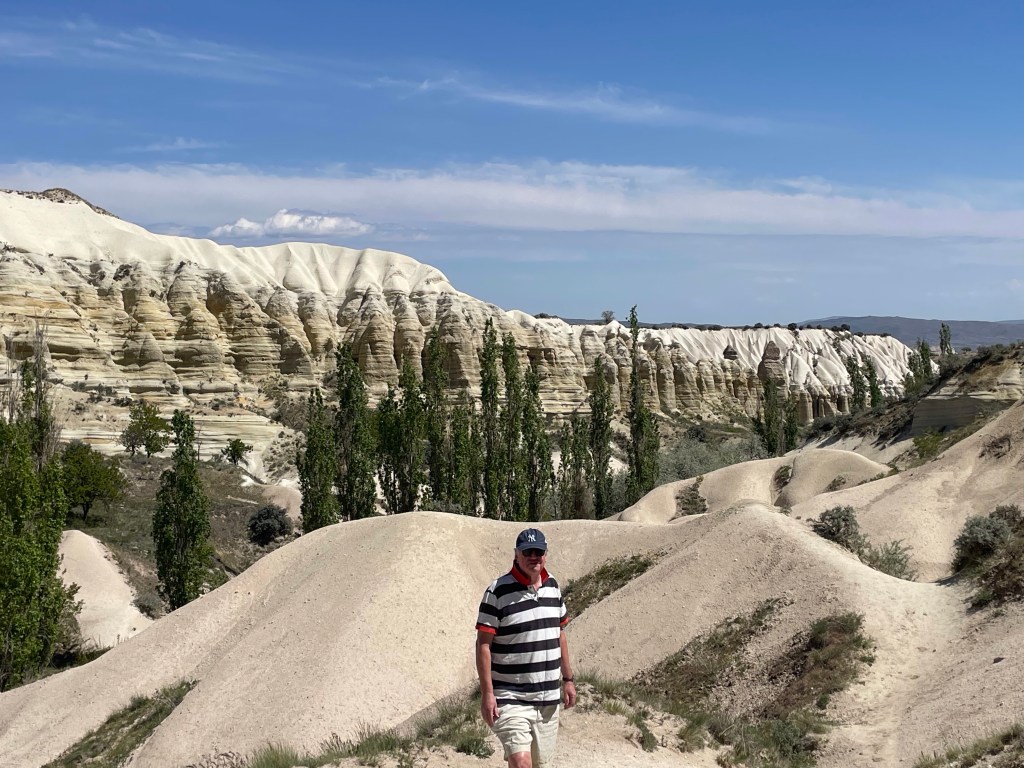
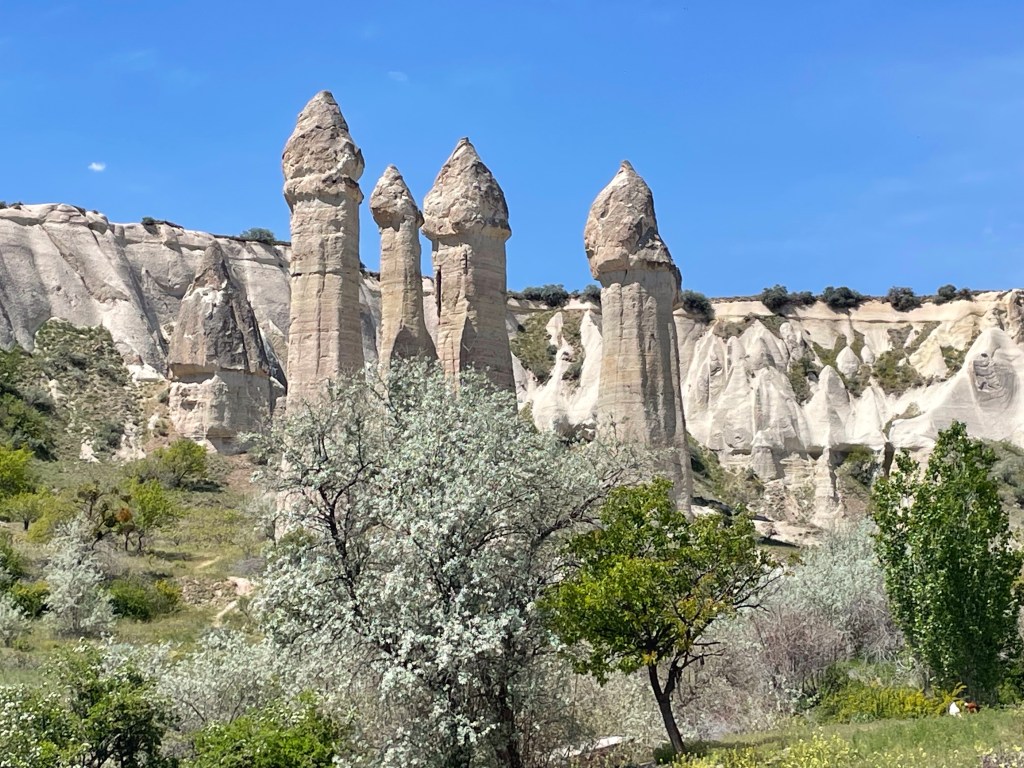
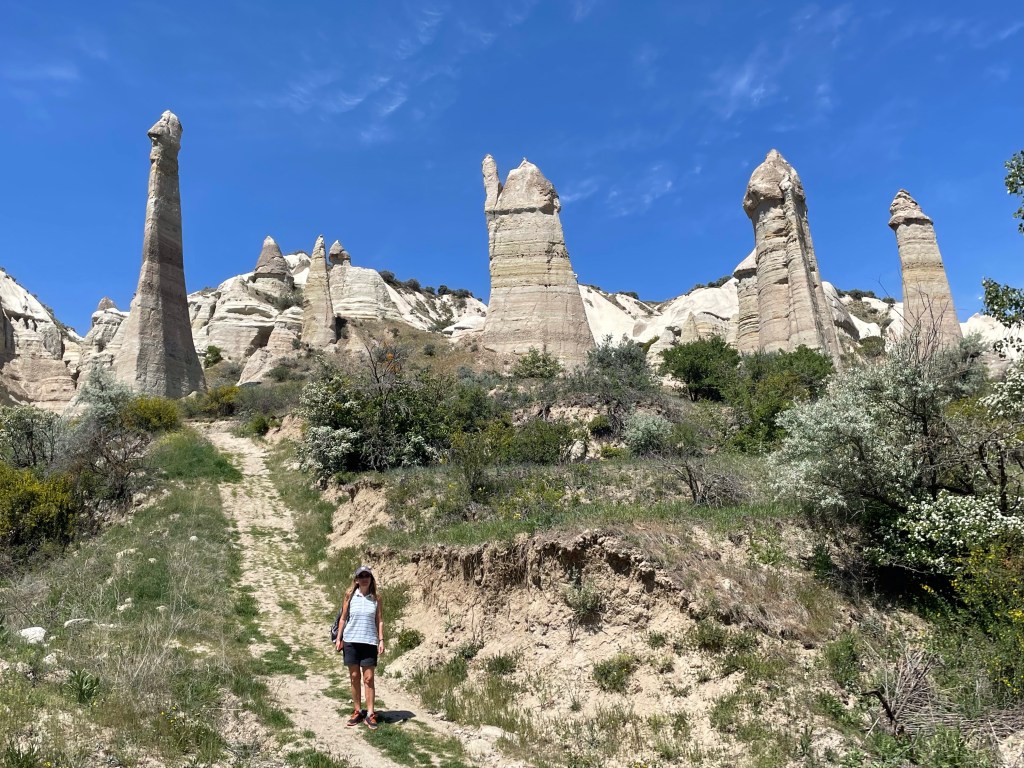
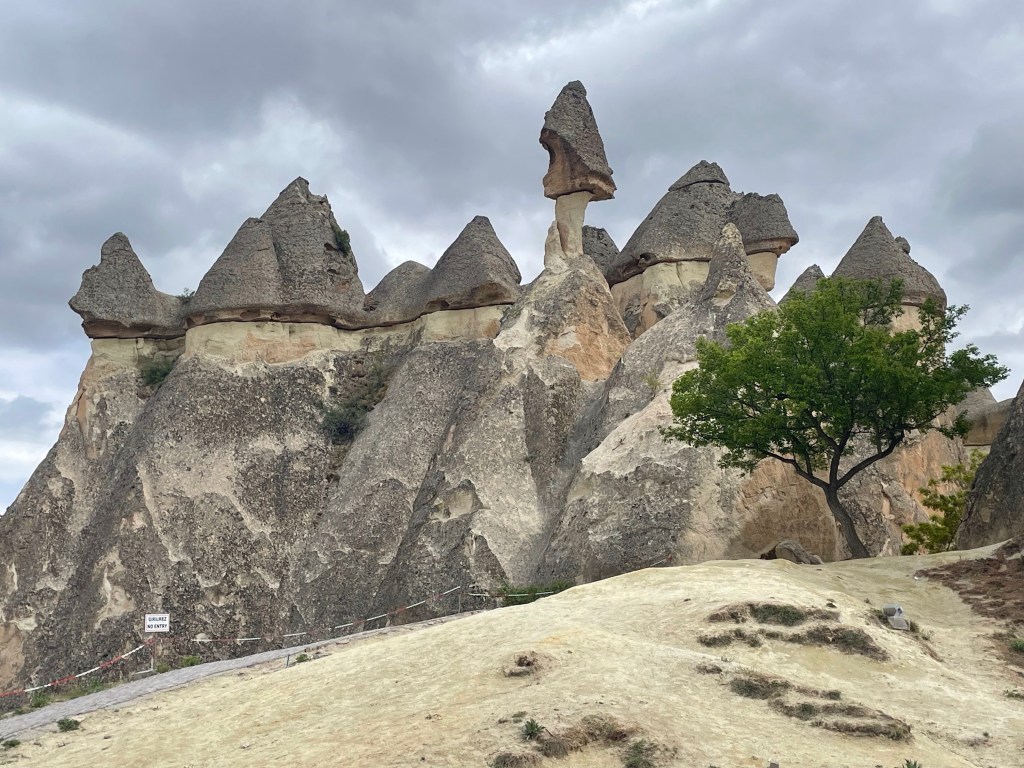
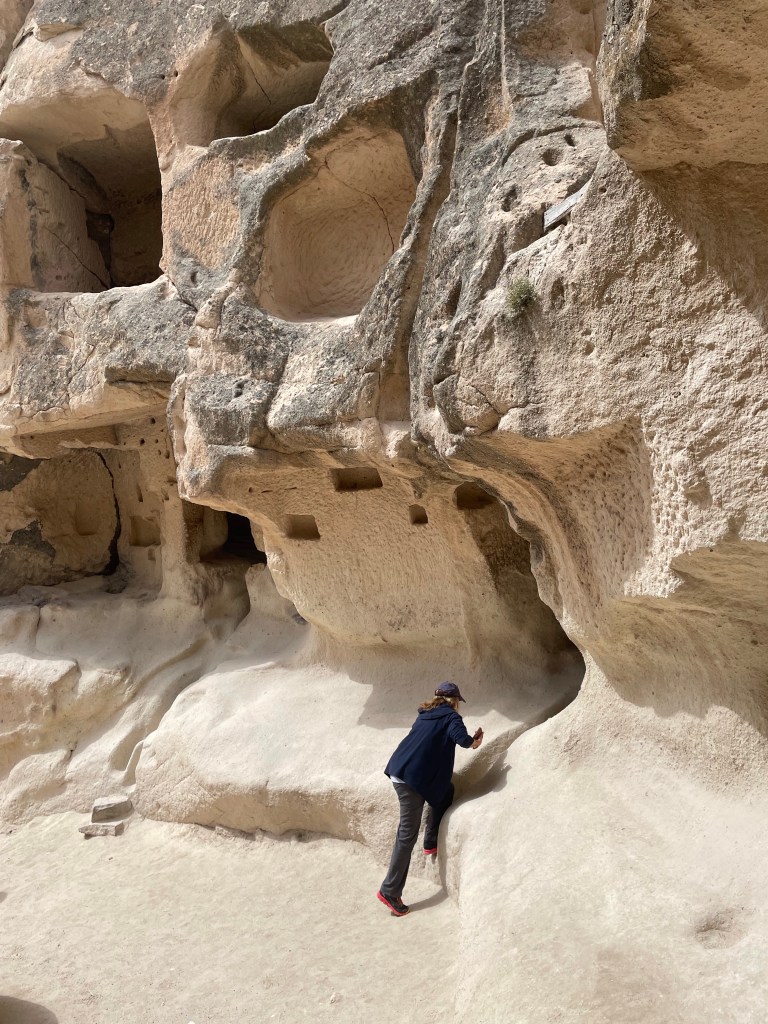
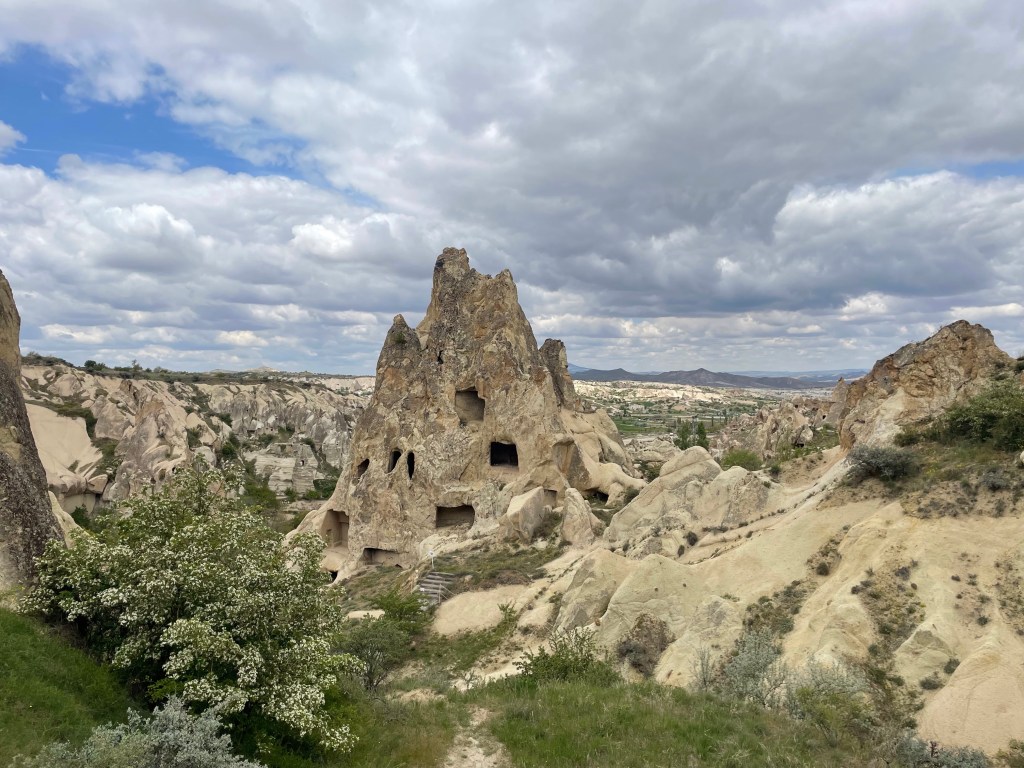
Love Valley is a dry river valley within walking distance of our hotel. The challenge for walkers is the route into the valley and picking the right paths once in the valley. Unlike Ihlara, which has steps down and a clear path, Love Valley was a scramble down ill-defined paths and several junctions where the correct route was unclear. About 7km long, the main features are phallic rock formations (hence the name) created by erosion of the volcanic material, with the rocks look almost white in the strong sun.

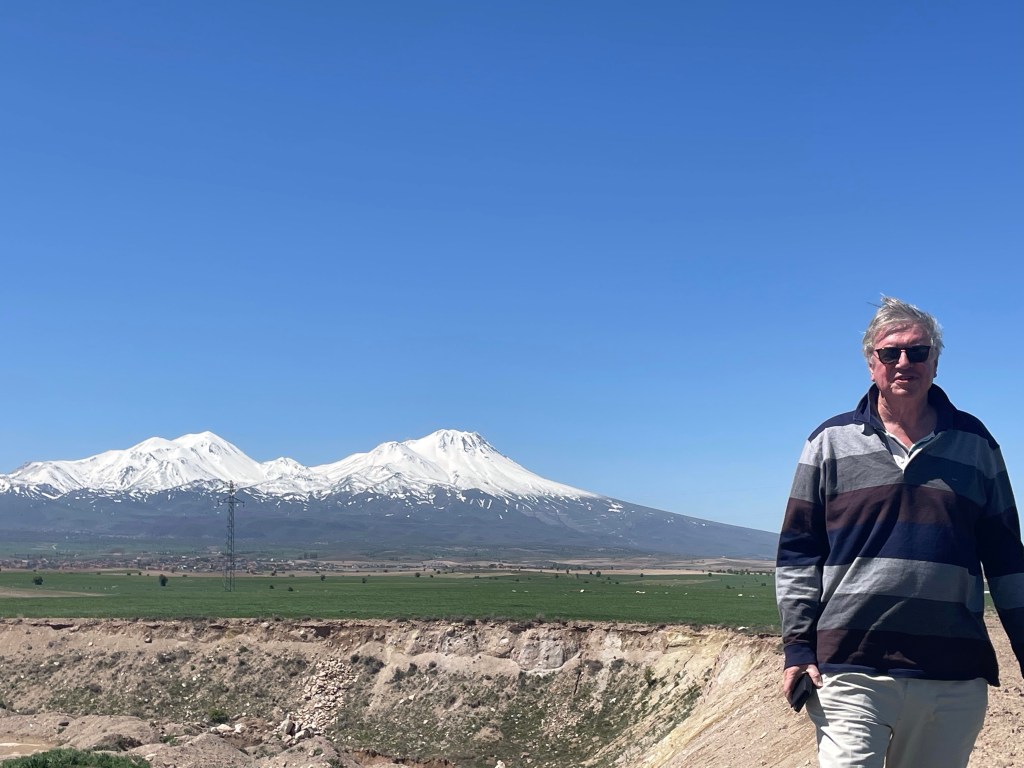
On the drive to Ihlara, the surprising sight of snow topped mountains following precipitation in the last few days
Ihlara
Ihlara
Ihlara, wild asparagus
Ağaçaltı (Danıel Pontanassa) church
Love Valley
Love Valley
Love Valley

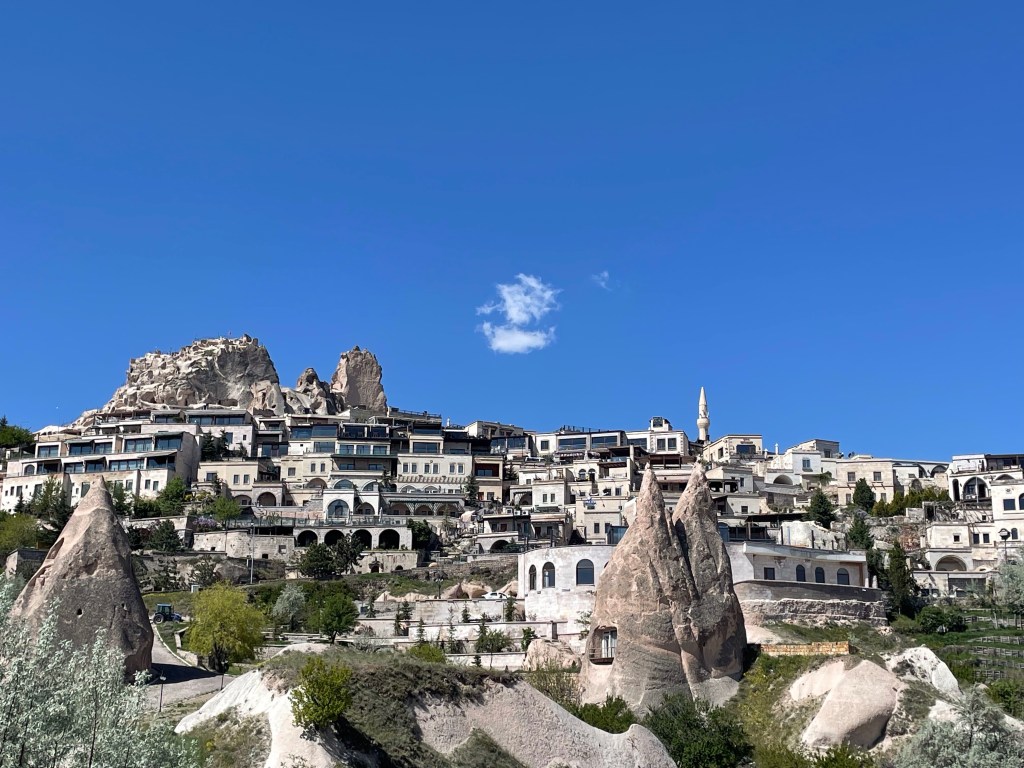
Cappadocia

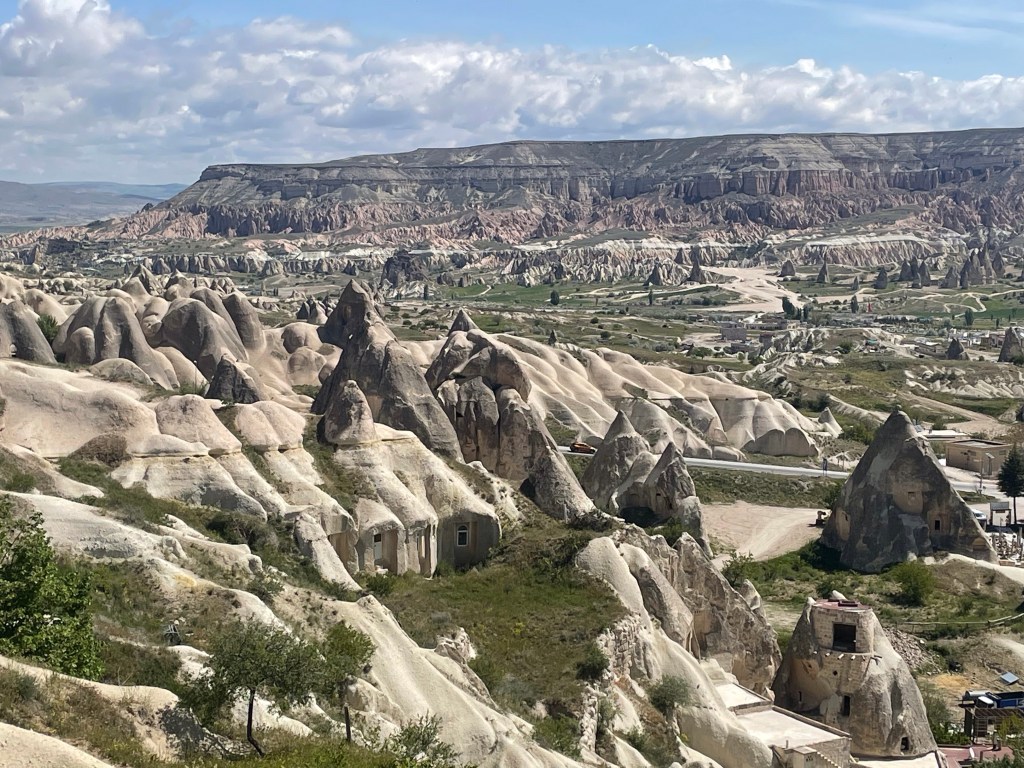
An ancient region of Central Asia, Cappadocia means land of beautiful horses. It is a plateau situated at approximately 1,000m consisting of volcanic ash created by eruptions many years ago. The largest mountain in the region (at 3,917m, Turkey’s fifth highest) Mount Erciyes is a dormant volcano. Cappadocia’s famous landscape has been created by water and wind erosion of the soft volcanic material.

Within the landscape there are several underground cities, caves and orthodox rock churches. It was the birthplace of St George and together with Georgia has a claim to be the oldest wine producer.

The broader region has extensive industry and agriculture linked to its climate and geology, including as a producer of pumice (with related construction materials), wheat and sugar beet.

Caravanserai

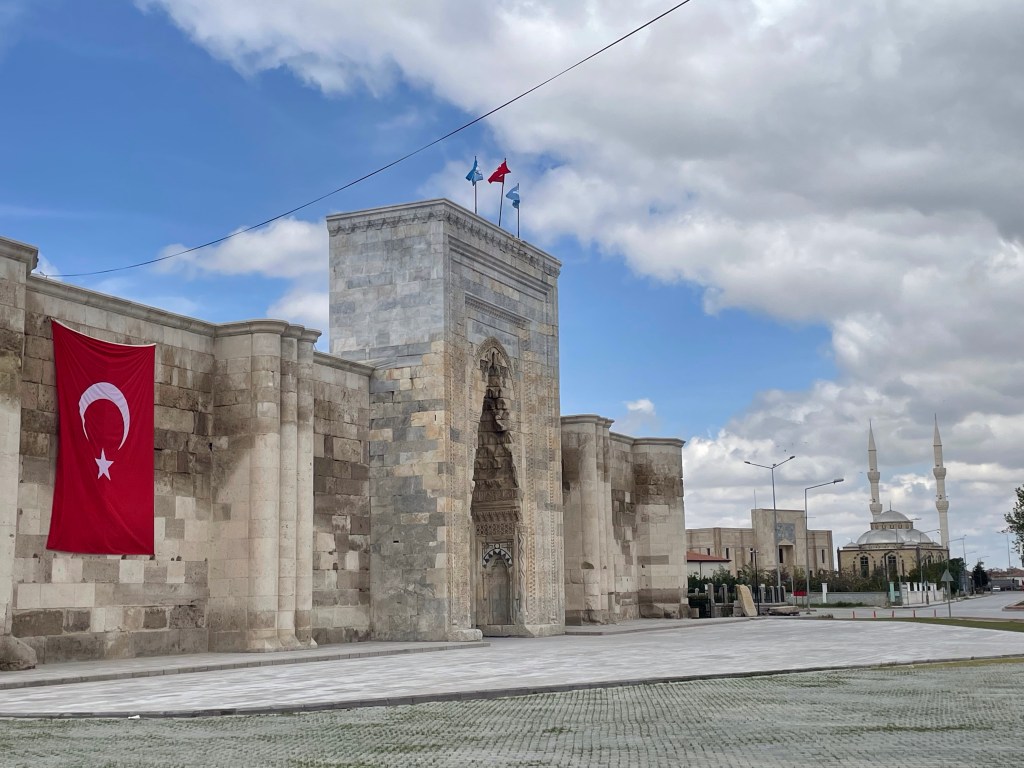
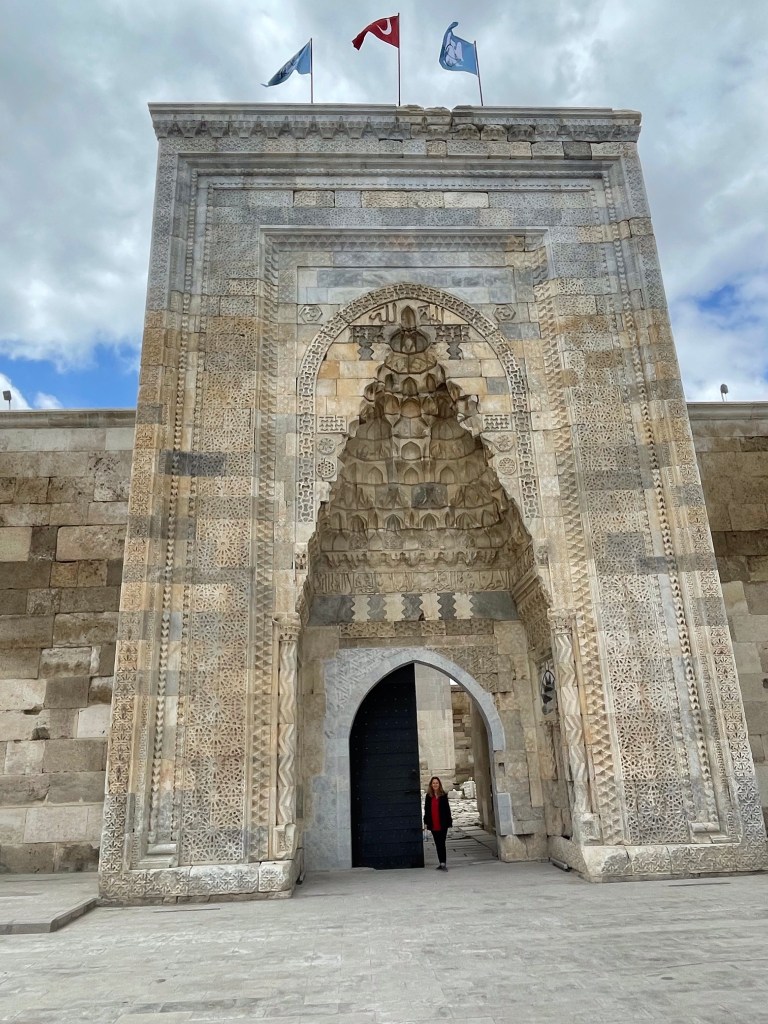
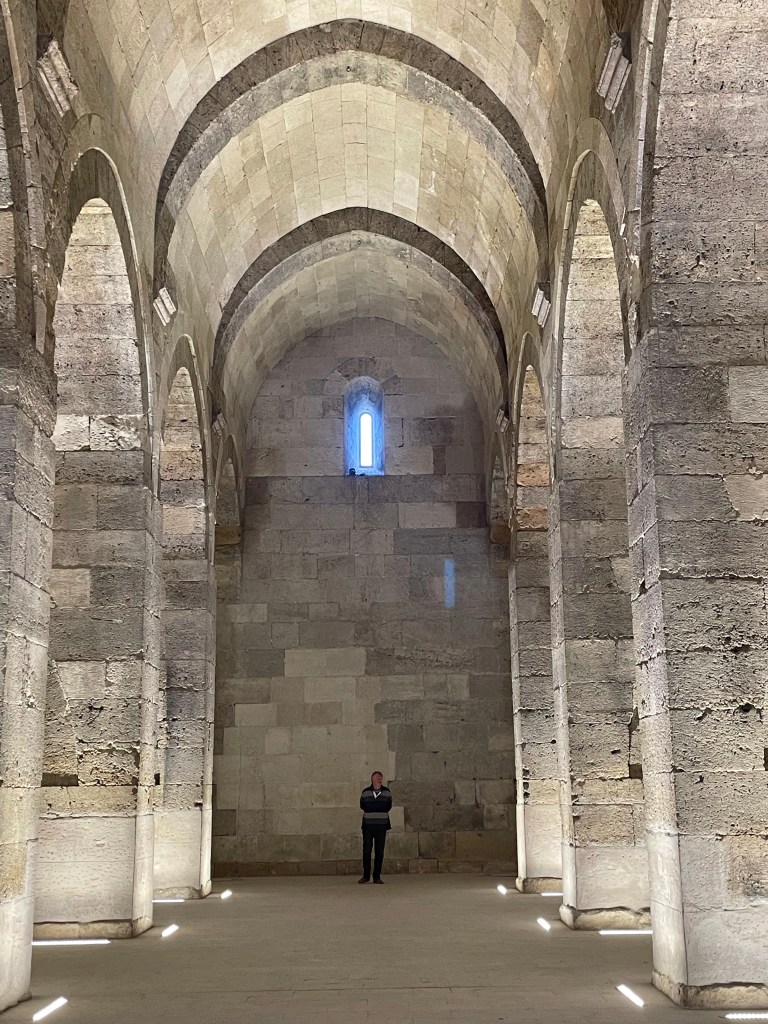
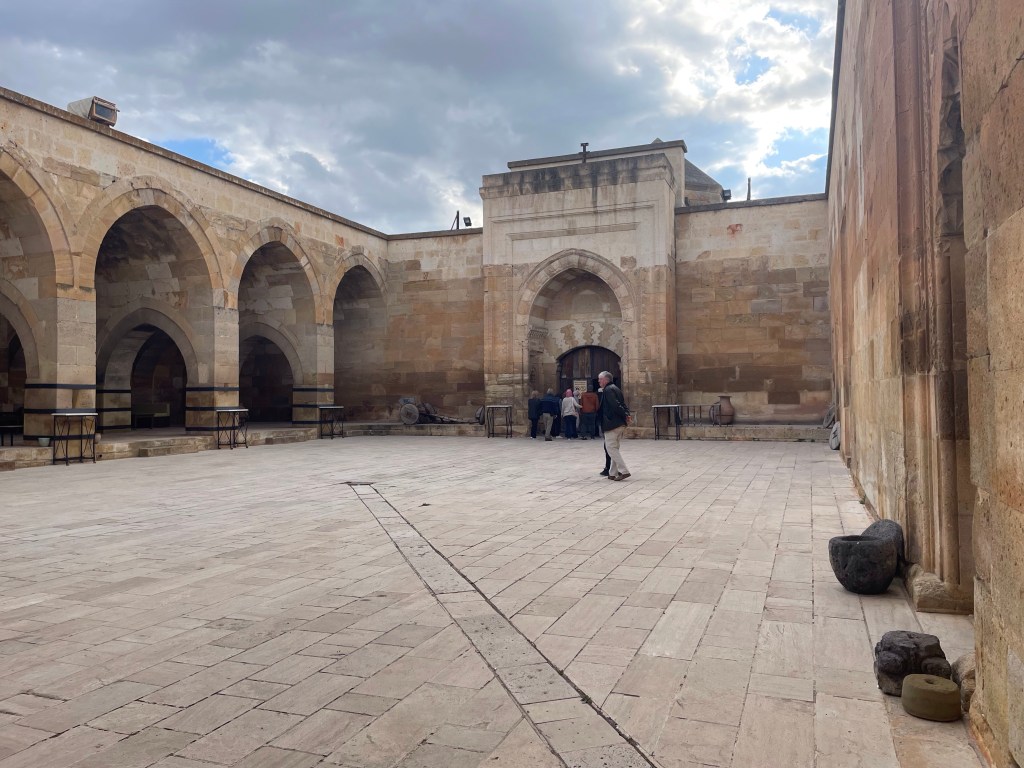
The Seljuks built a series of Caravanserai in Anatolia to provide protective stopovers for travellers along the Silk Road where they were built every 30-40 km, the distance a camel can travel in a day. They helped ensure the safe flow of goods in an era of increasing trade, including an early form of insurance cover. Today some can be seen in fields close to the highway, with the more noteworthy ones attracting current day travellers.

Sultanhan, literally Sultan’s Inn, was built in the early 13th Century and is situated 110km from Konya and 45km from Aksary, a convenient stopping point on our next leg – Konya to Cappadocia. It is one of the best examples of Seljuk architecture.

We visited a second one, Saruhan, near Avanos to see their daily Whirling Dervish ceremony. The whirling puts the Sufi into a meditative state to help them achieve enlightenment. All sense of ego is said to go into their hats.
Sultanhan
Sultanhan
Sultanhan
Sultanhan
Saruhan

Çatalhöyük archaeological site

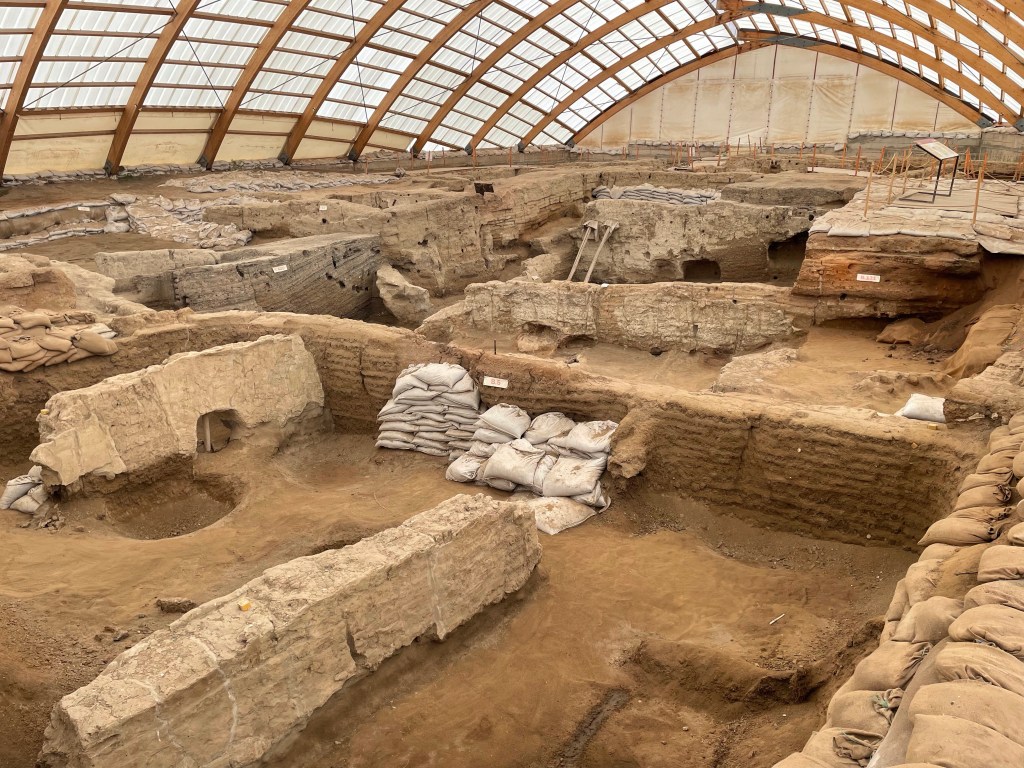
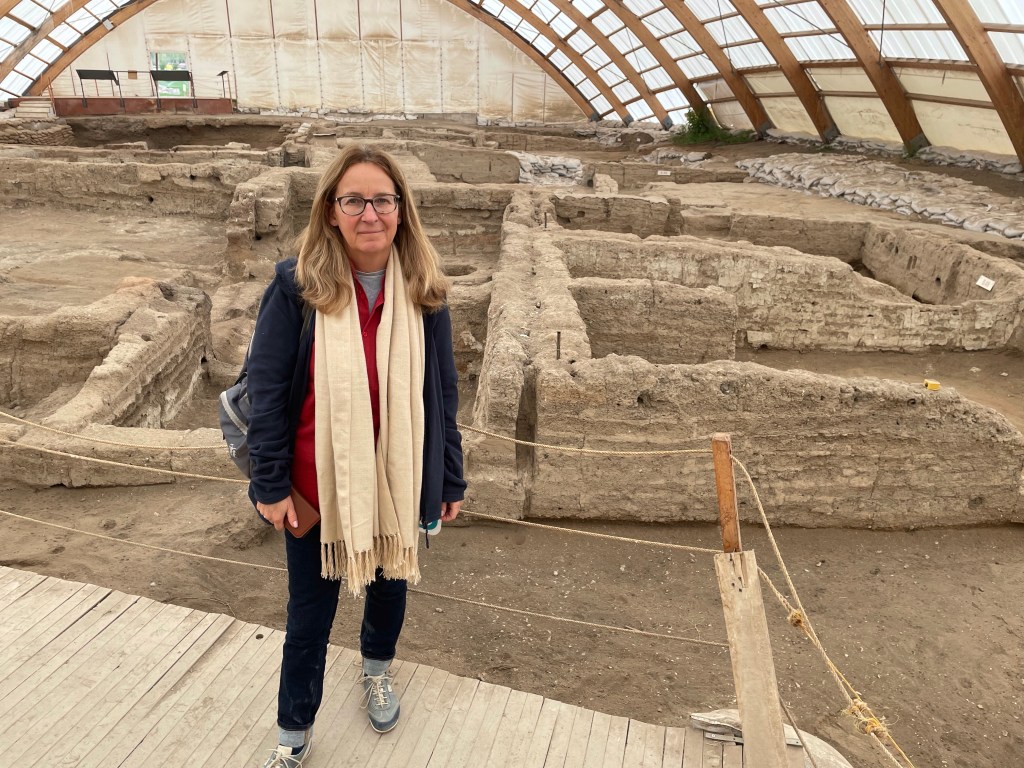
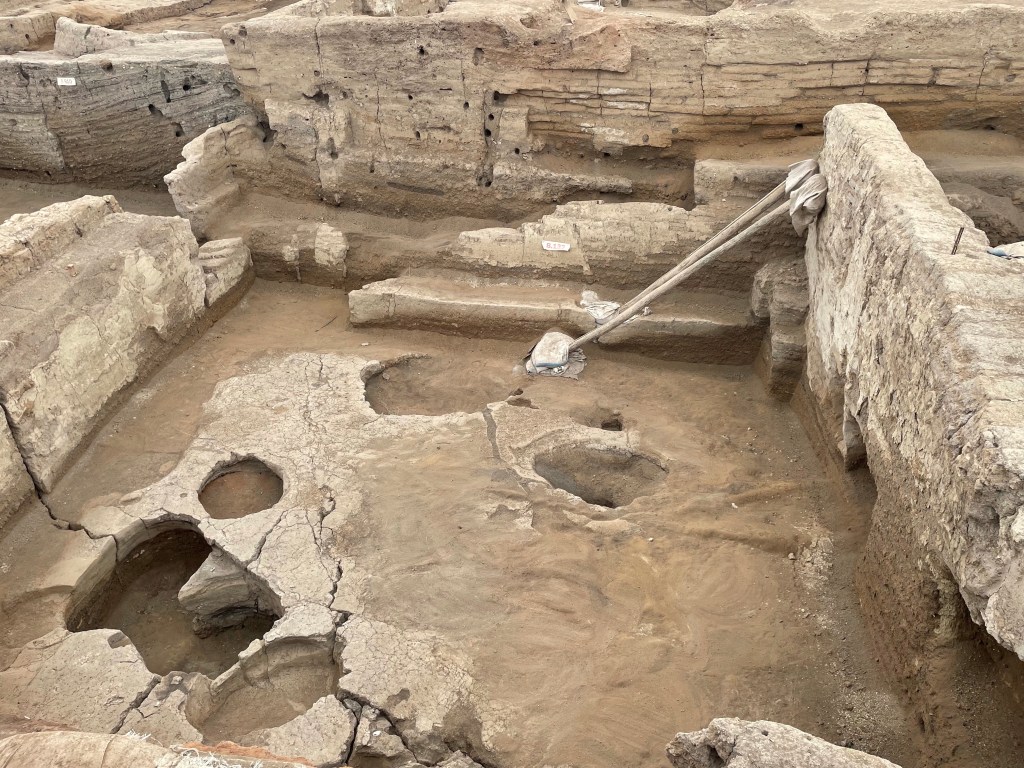
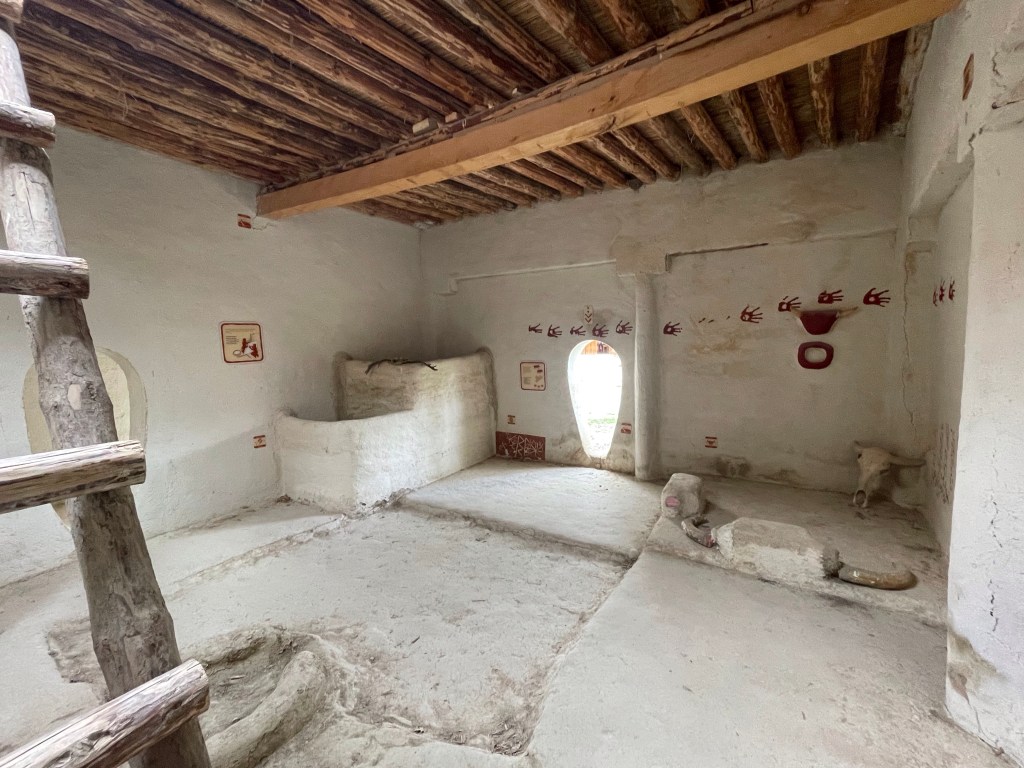
Çhatalhöyük, 25 miles from Konya, translates as fork tumulus and was first excavated in 1958 by James Mellaart (later banned from Turkey following an archeological controversy). Eighteen layers of inhabitation have been discovered over a large area, showing that the settlement existed from around 7500 BC to 6400 BC. At its peak 10,000 people lived in the town, comprising interconnected homes made of mud and straw. Most houses were accessed through the roof, with the “streets” being on top of the houses.

Excavation is ongoing and a new visitor centre is being built to help boost visitor numbers to this UNESCO world heritage site – when we visited there were less than ten other people at the site.

Skeletons were found in holes under the floor where relatives were buried
Life-size recreation of a house

Konya

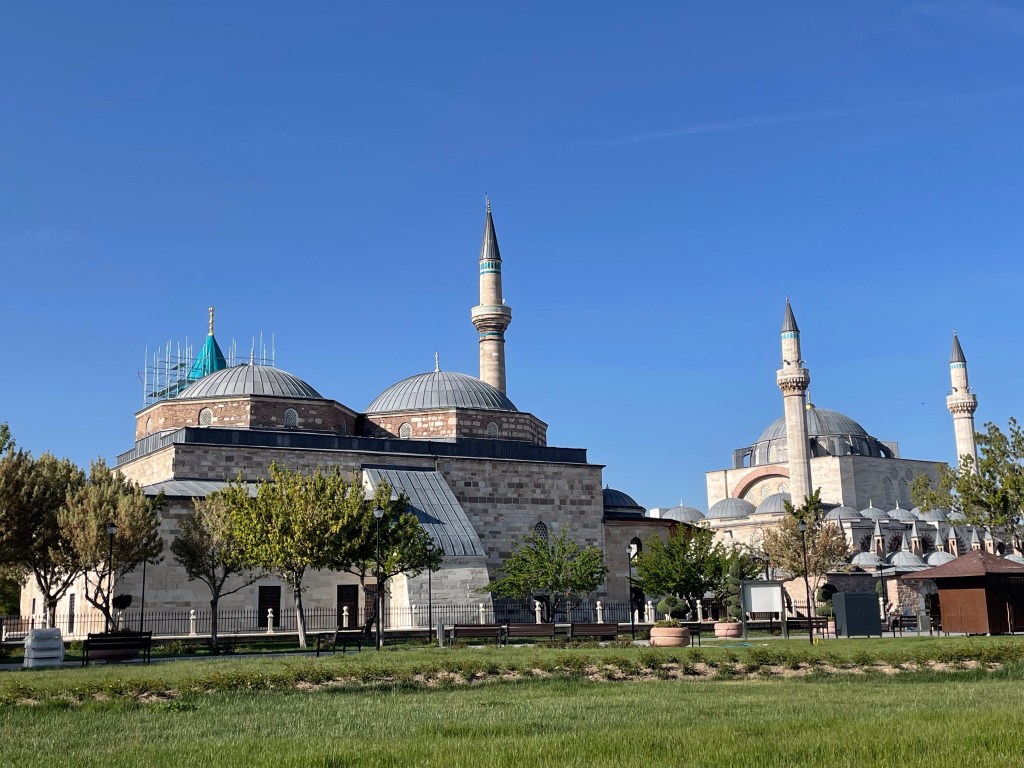
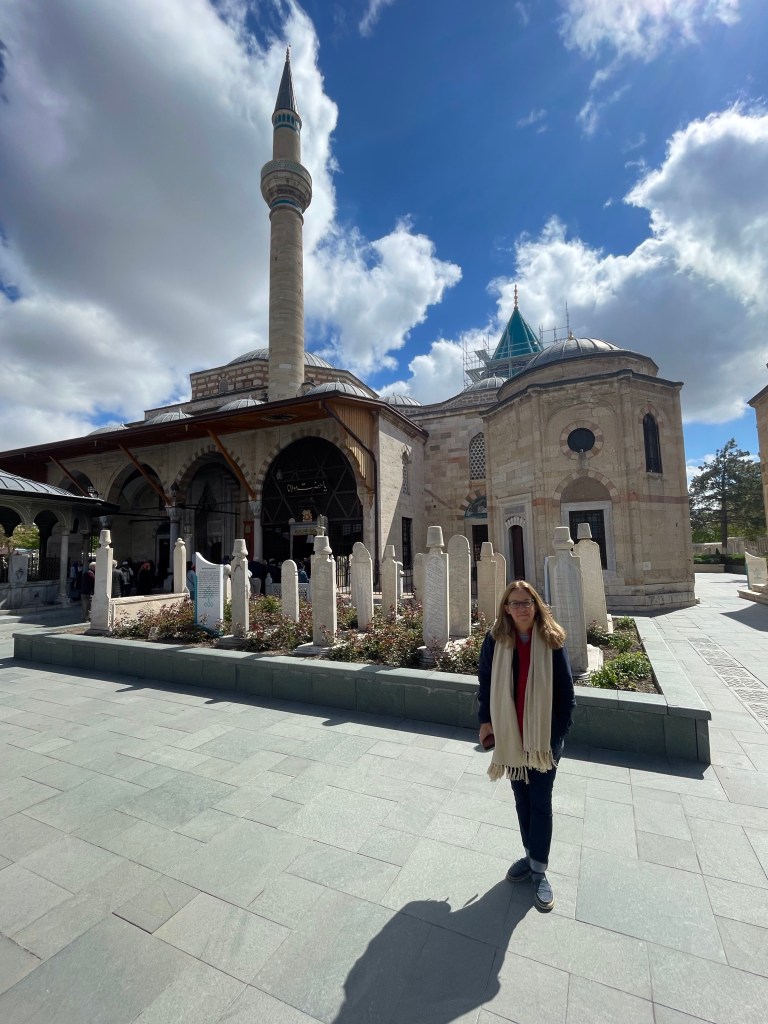
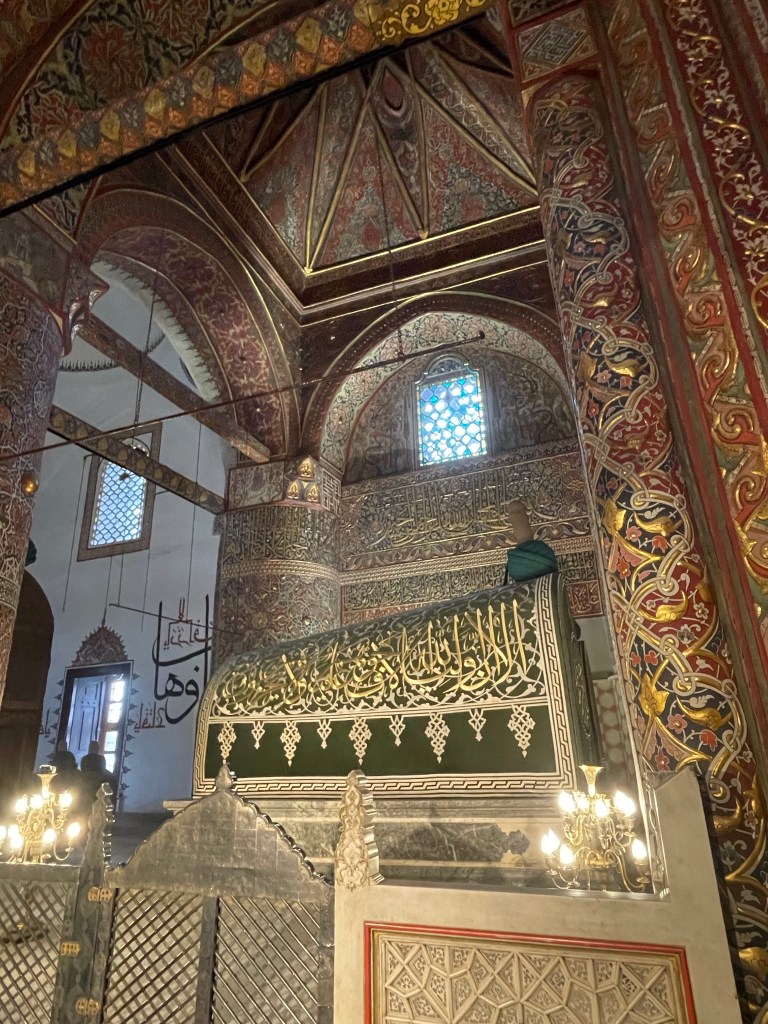
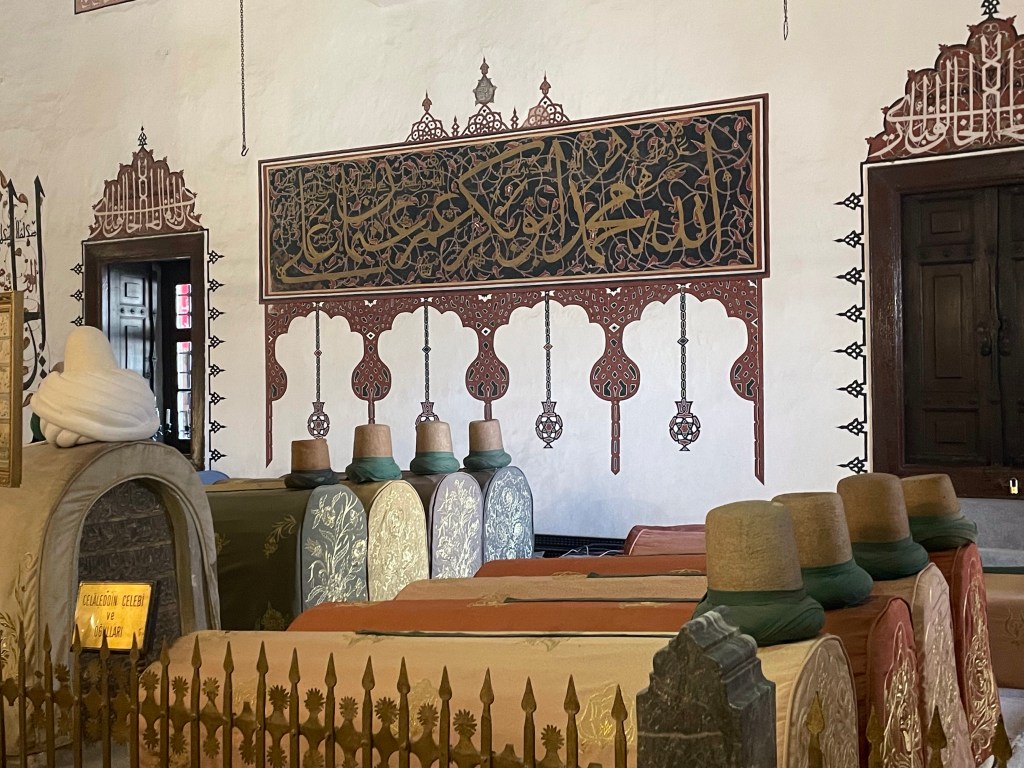
Konya is a large city in central Turkey with a population of approximately two million. It is known for being the most conservative city in Turkey and alcohol is virtually banned; however it is becoming more accepting as it has a large university. It attracts many Turkish visitors who come to visit the Mevlana Museum, but almost no overseas tourists. The museum is the most important Sufi site in the world and is the burial place of the 13th century poet and Sufi mystic, Rumi. Sufi is a sect of Islam, most known for the Whirling Dervishes. Rumi is reputed to be the most read poet in the USA. It is not hard to see why as many of his quotes have been translated from the original Persian and reproduced on posters – “Yesterday I was clever so I wanted to change the world. Today I am wise so I am changing myself.”
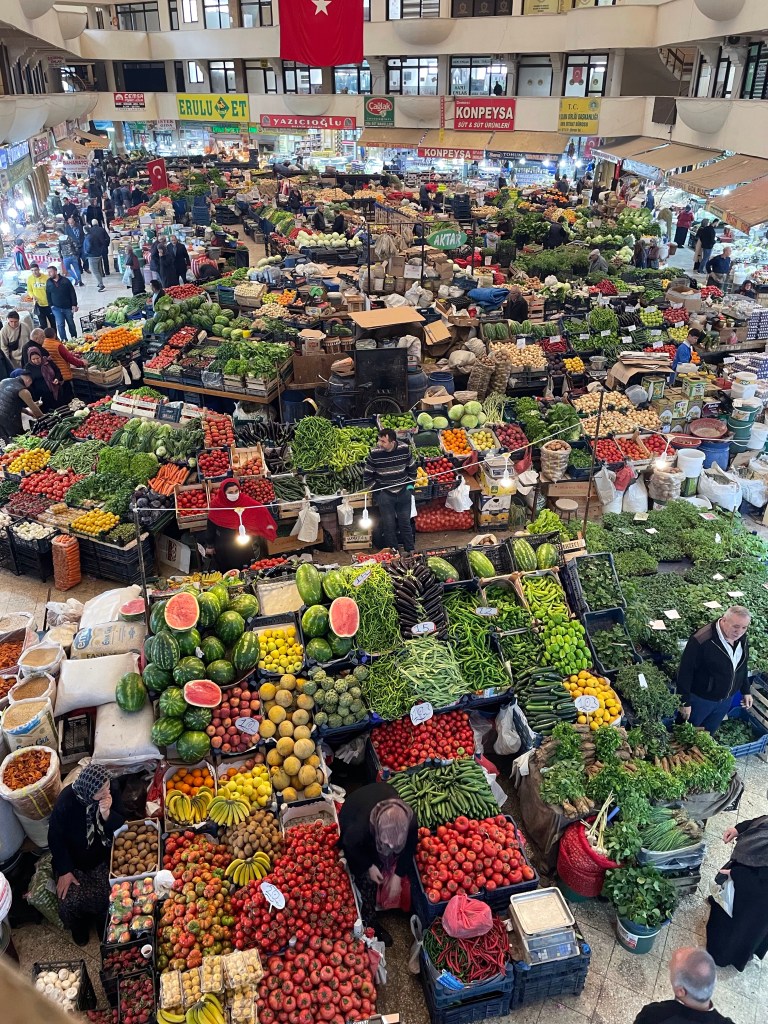
We also took time to sample the local food which comprises meat, meat and more meat…with bread. We were therefore surprised to find a large fruit and vegetable market, known as the Kadinlar Pazar (womens’ market). Our Turkish friends had warned us about the lack of alcohol, but no one had mentioned that every restaurant was Etli Ekmek (meat with bread) !

Mevlana Museum (left), Selimiye Mosque 16th century (right) – from our hotel
Rumi’s tomb
Sufi tombs

Road to Konya

The first leg of our trip to Cappadocia was the seven hour drive from Kalkan to Konya. We had made, what proved to be, a good decision to have a driver, given the long distances.

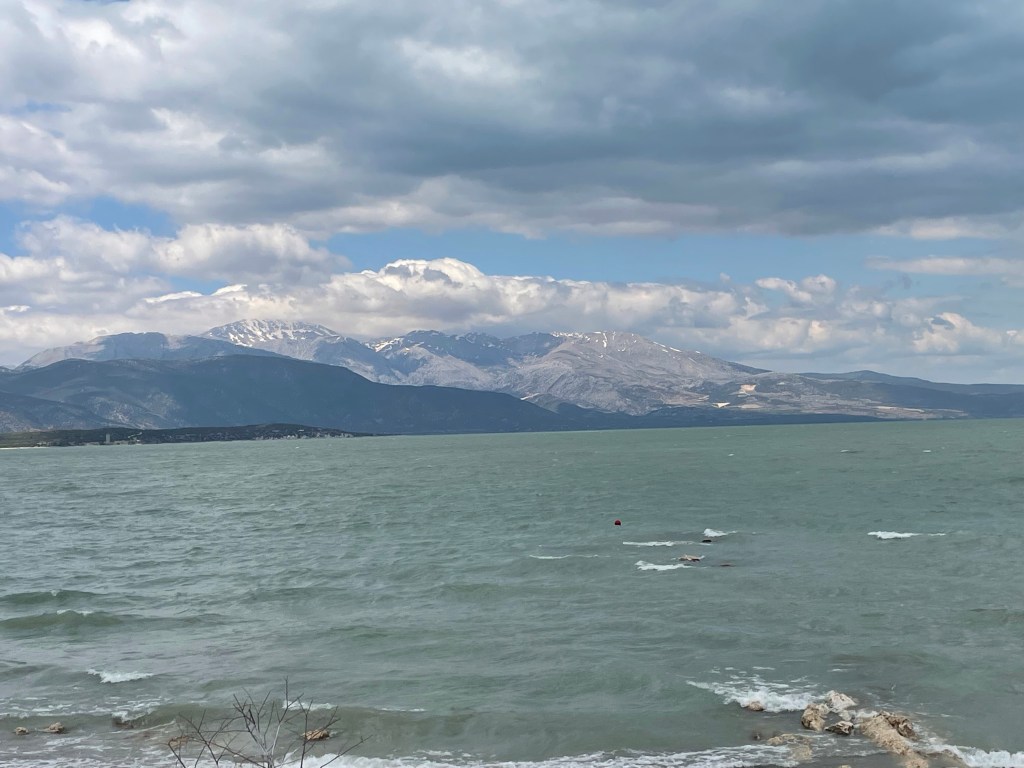
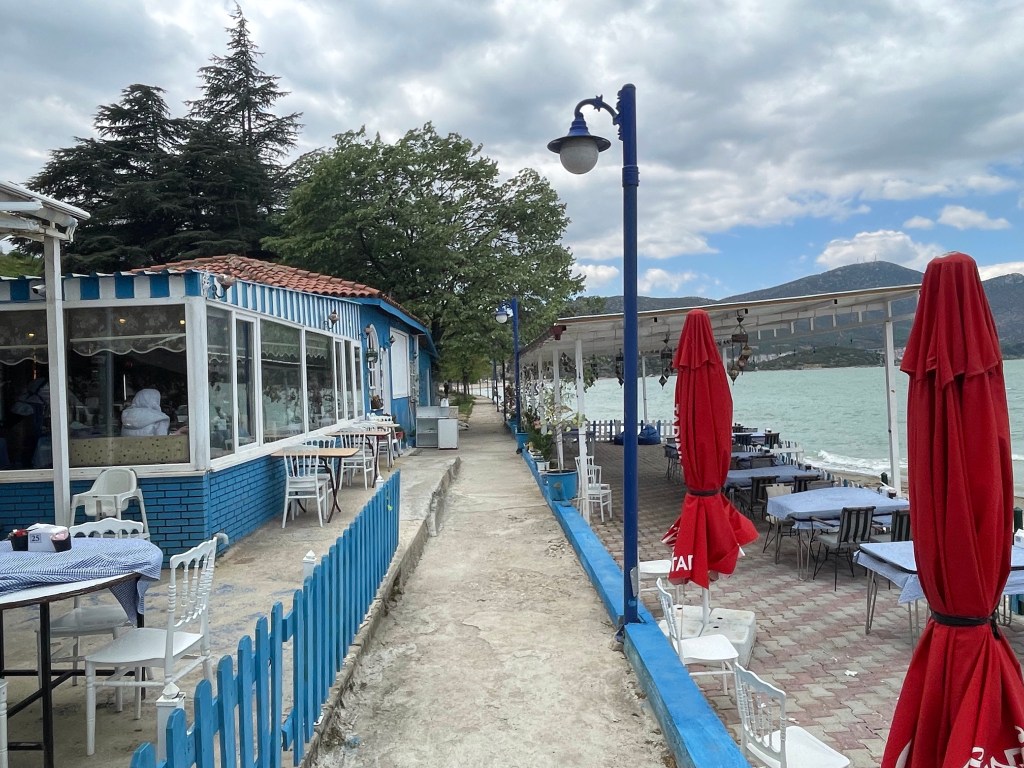
The route took us through the Turkish Lake District where we stopped at Lake Egirdir for lunch. The local fish was very good and very cheap. It is the fourth largest lake in Turkey, over 30 times the size of Lake Windermere and the surroundings reminded us of Switzerland.

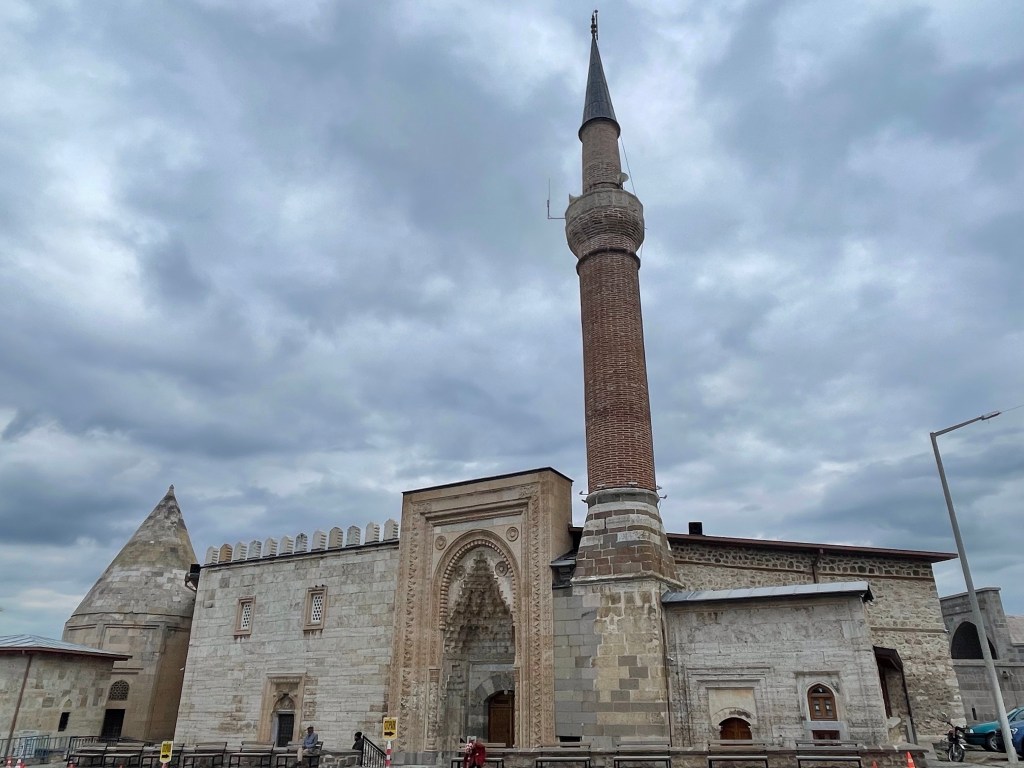
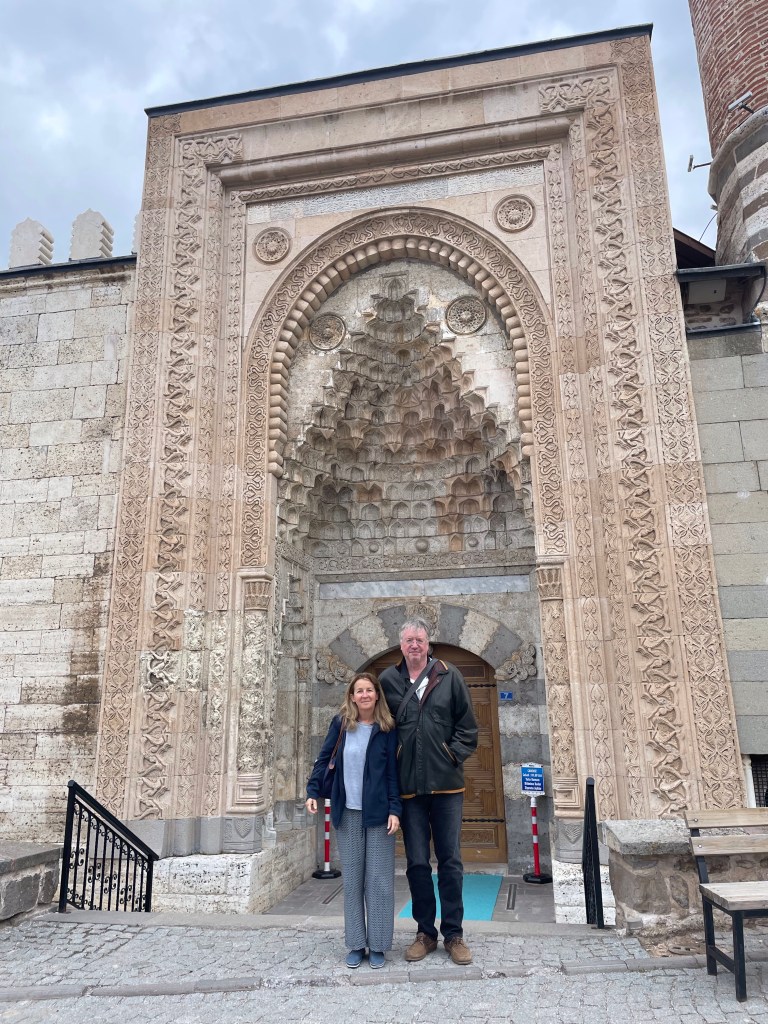
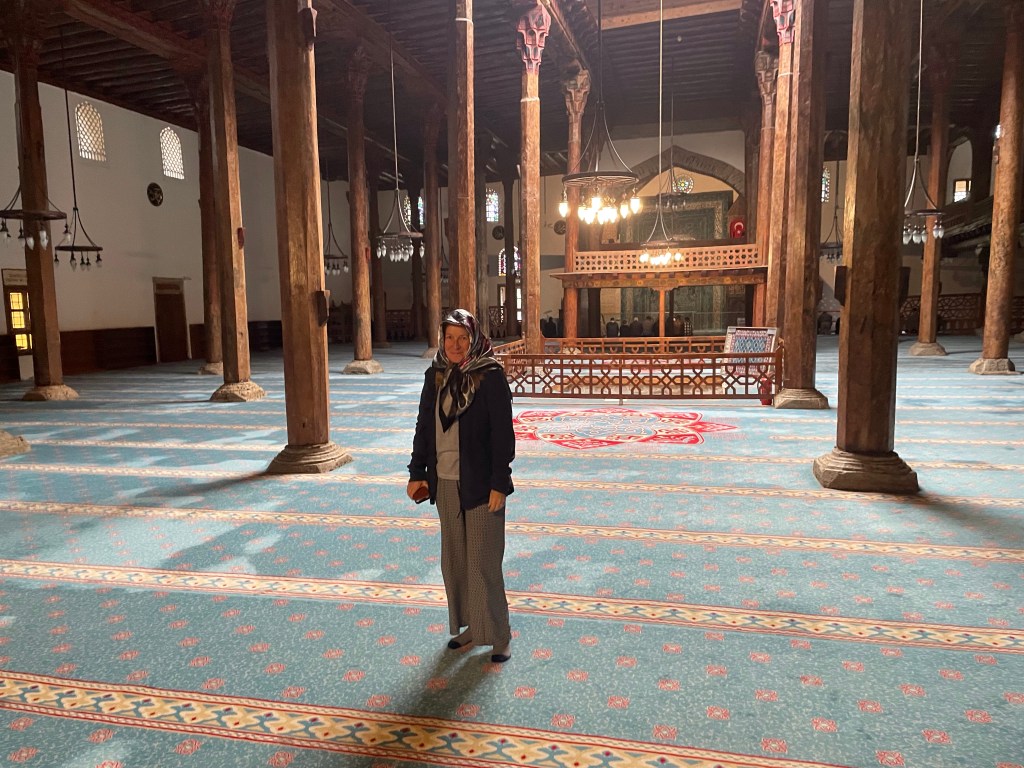
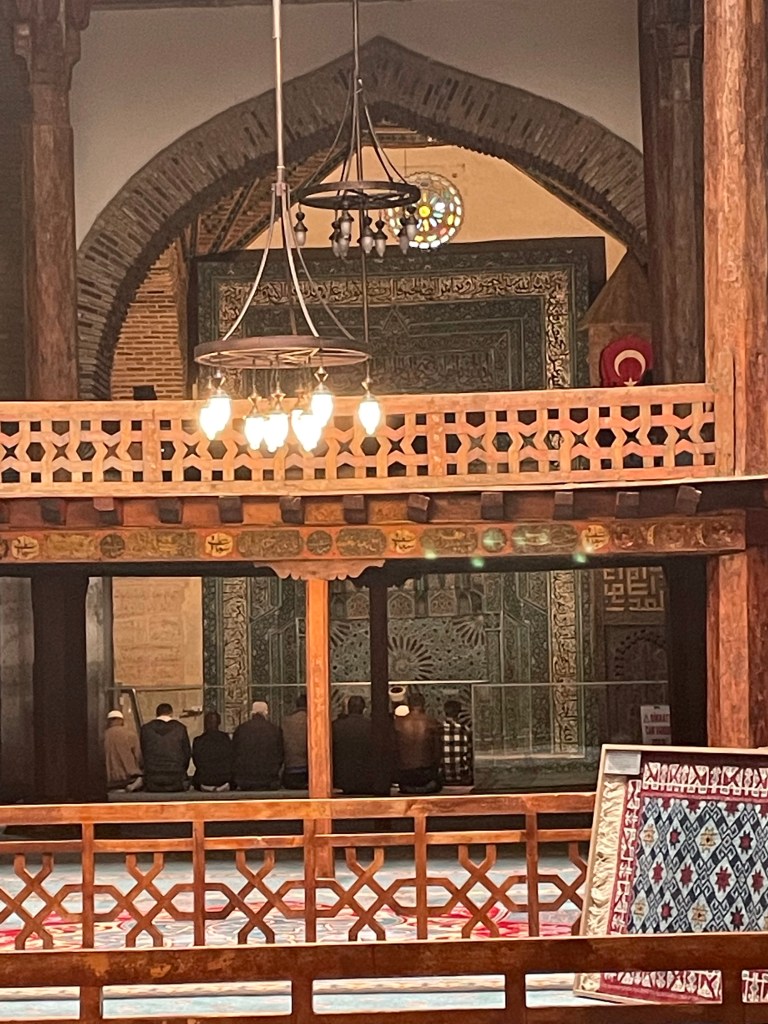
The final stop before Konya was to visit a 13th century mosque in Beyşehır. Eşrefoğlu was built between 1296 and 1299 and features on the UNESCO world heritage site tentative list. Its roof is supported by 42 wooden columns. We were surprised to be allowed in during prayers with Sarah allowed in through the the mens’ entrance.