Travels with Sumedha

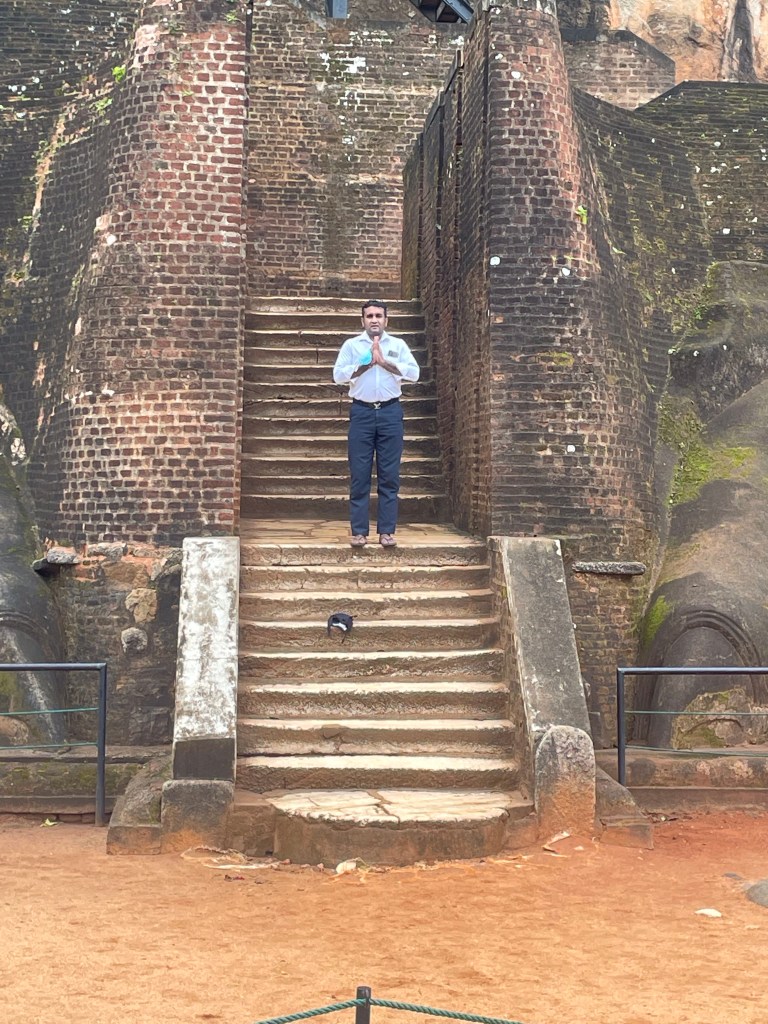
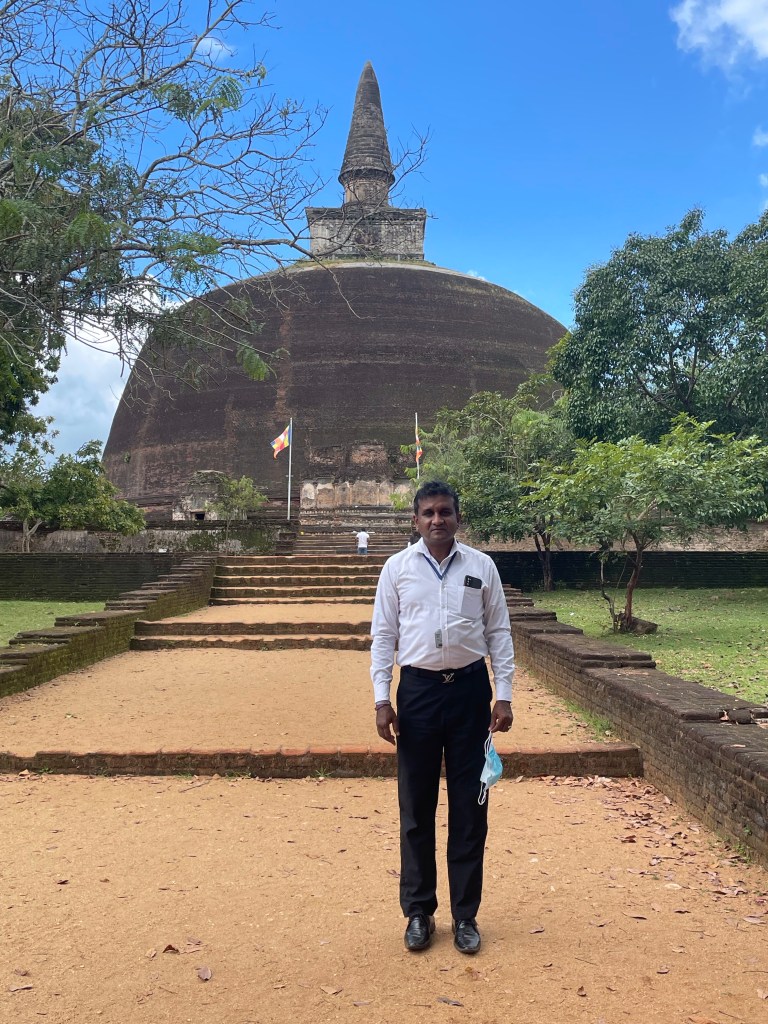
On 26th January we first met Sumedha in Jaffna. He would be our guide and driver for the rest of our time in Sri Lanka (25 days). Sumedha lives in Kandy and works for our local agent. He had picked up the car in Colombo and driven nine hours to meet us.

We quickly learned that Sumedha, as well as being a devout Buddhist, is knowledgeable, conscientious and a control freak ! We also discovered the harsh realities of living in Sri Lanka during the pandemic. Our tour was his first since March 2020, since then he had received no money from his employer or the state. His sole source of income, to support his family of four, was part-time labouring on building sites.

Sumedha was the most cautious Sri Lankan driver that we came across, averse to risk amongst the chaos of crazy tuk-tuk drivers, bus drivers and other road users. On longer journeys Tim volunteered to drive, but this was not allowed. We were not even allowed to cross the road without supervision. We started to expect a few Sumedhaisms – have you got your passports and phones ?; please do not step on the ants; I learned about that on YouTube (including, how to fly a plane, apparently); I am fully vaccinated, but just incase I have a special Ayurvedic syrup, let me know if you would like some; and finally may the blessings of the triple gem be upon you (included in all WhatsApp messages).
Galle Fort

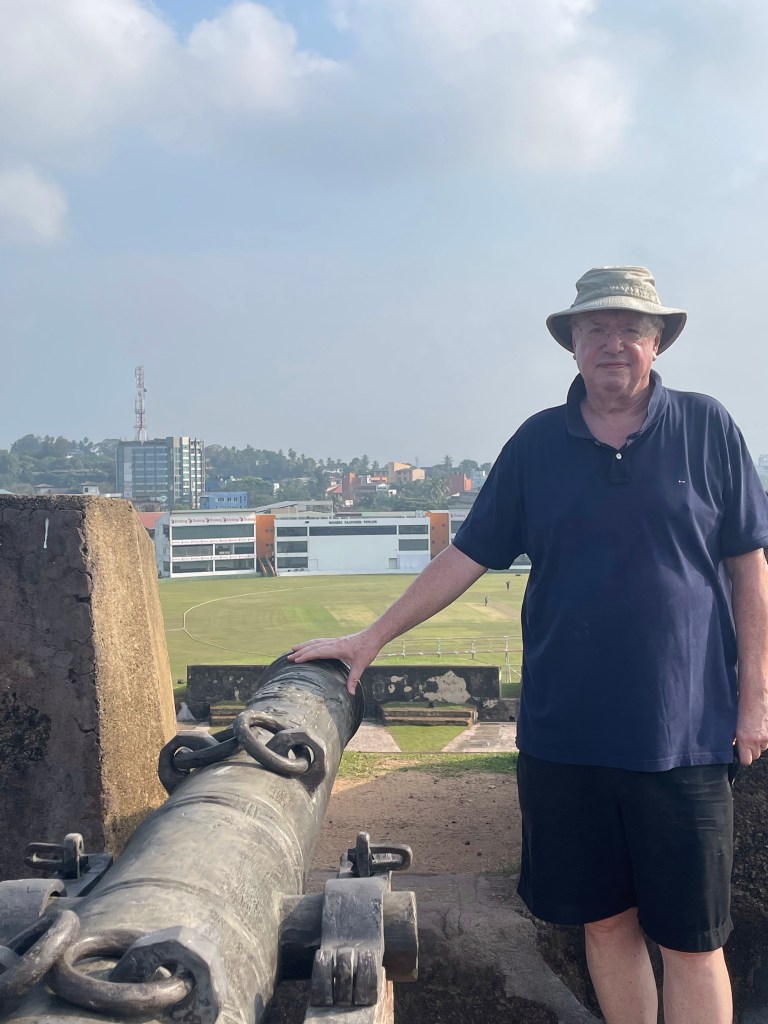
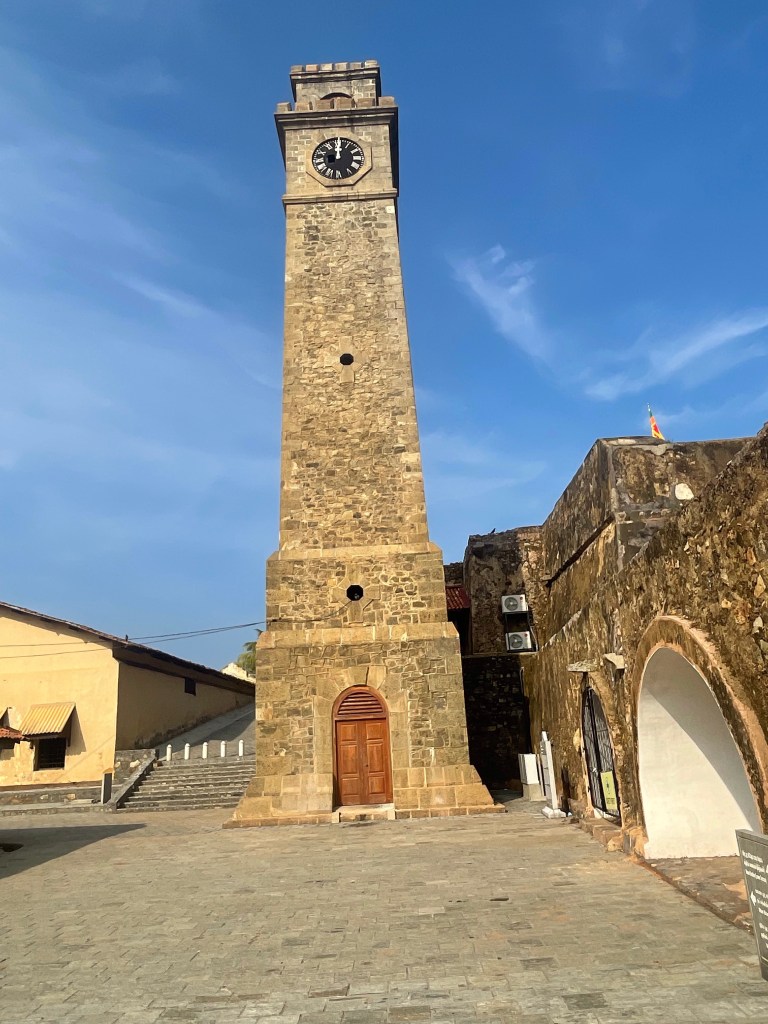
Galle was a significant seaport well before the Europeans’ arrival; Moroccan traveller Ibn Battuta visited in 1342 and a stone tablet records the second visit of Chinese Admiral Zheng He (Chong Ho) in 1411. Cinnamon was exported from Sri Lanka as early as 1400 BC; the Portuguese used Galle as their base for exporting the spice in the early 16th century and started building the fort to protect themselves from the local Sinhalese.

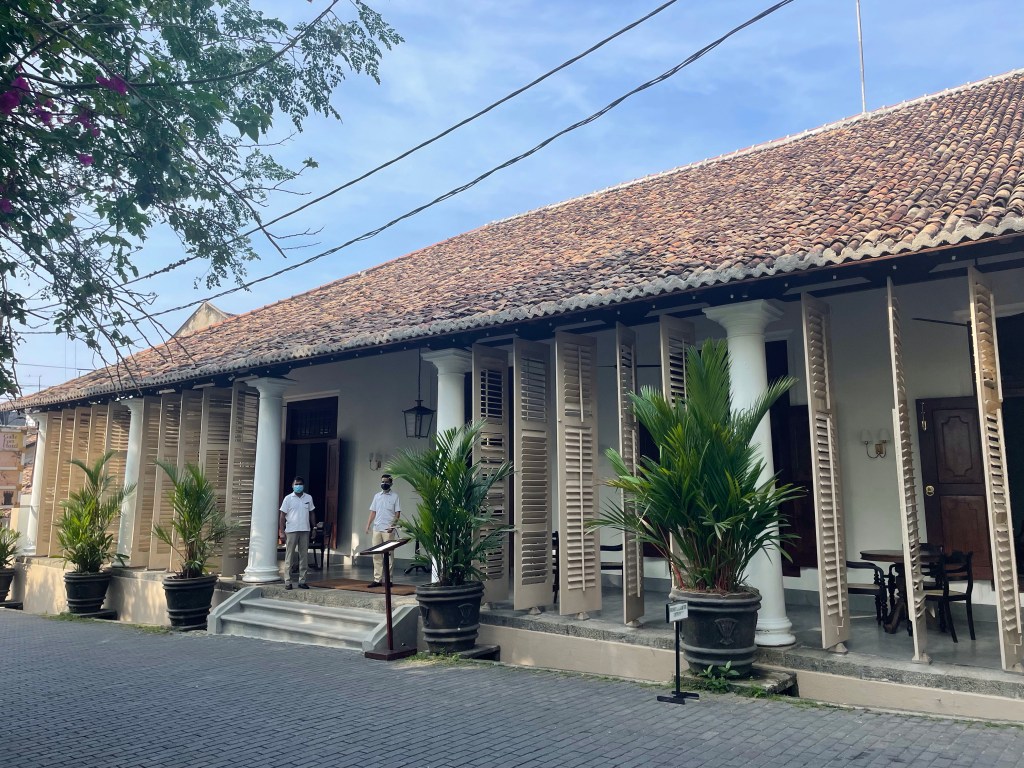
The Dutch, who followed in the 17th century built the main structure of the fort before the British added to it in the 19th century. It is now a World Heritage site. Our hotel started off as a grand Dutch home and warehouse to which the British added a regency top floor. It was renovated to become a hotel in the early 2000s.

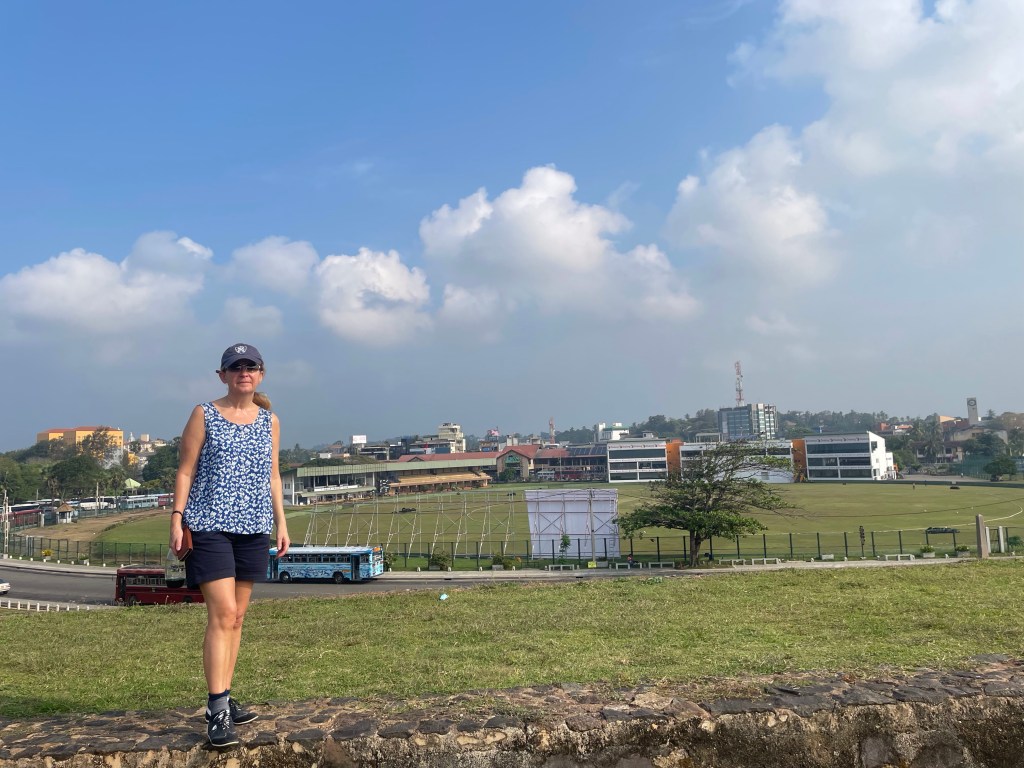
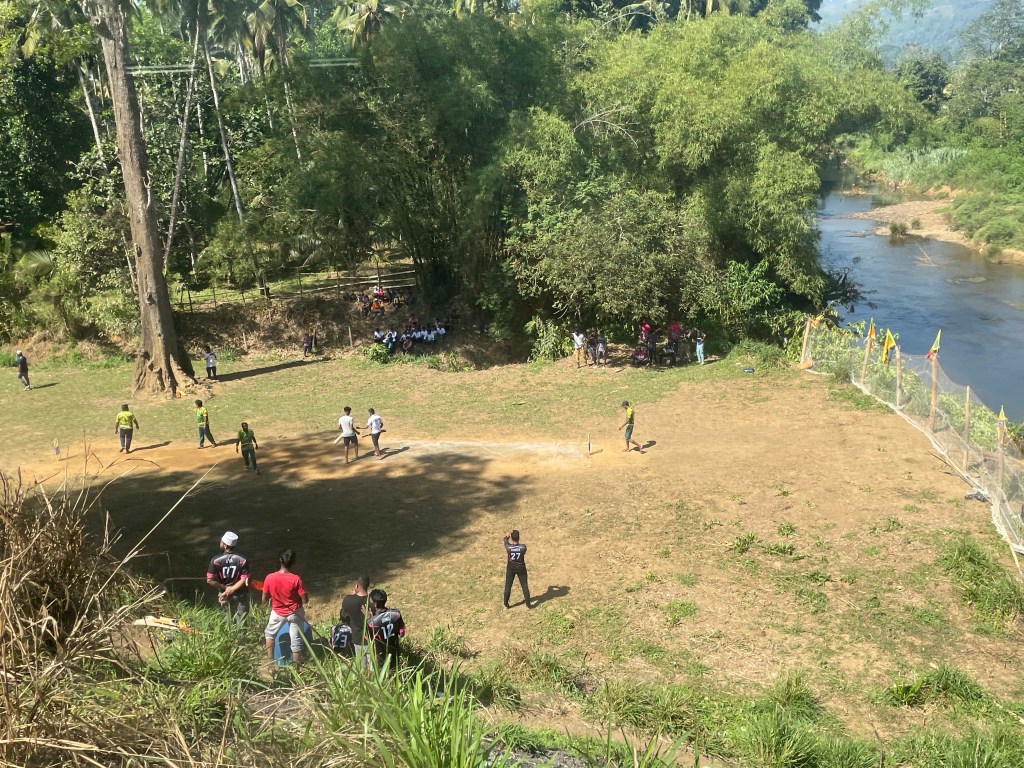
Outside the fort is Galle cricket ground which was virtually destroyed by the 2004 tsunami – the fort itself was afforded considerable protection by the ramparts, although it suffered a lot of more cosmetic damage much of which is yet to be repaired. In 2010 Muralitharan took his 800th test wicket at Galle.

Our hotel
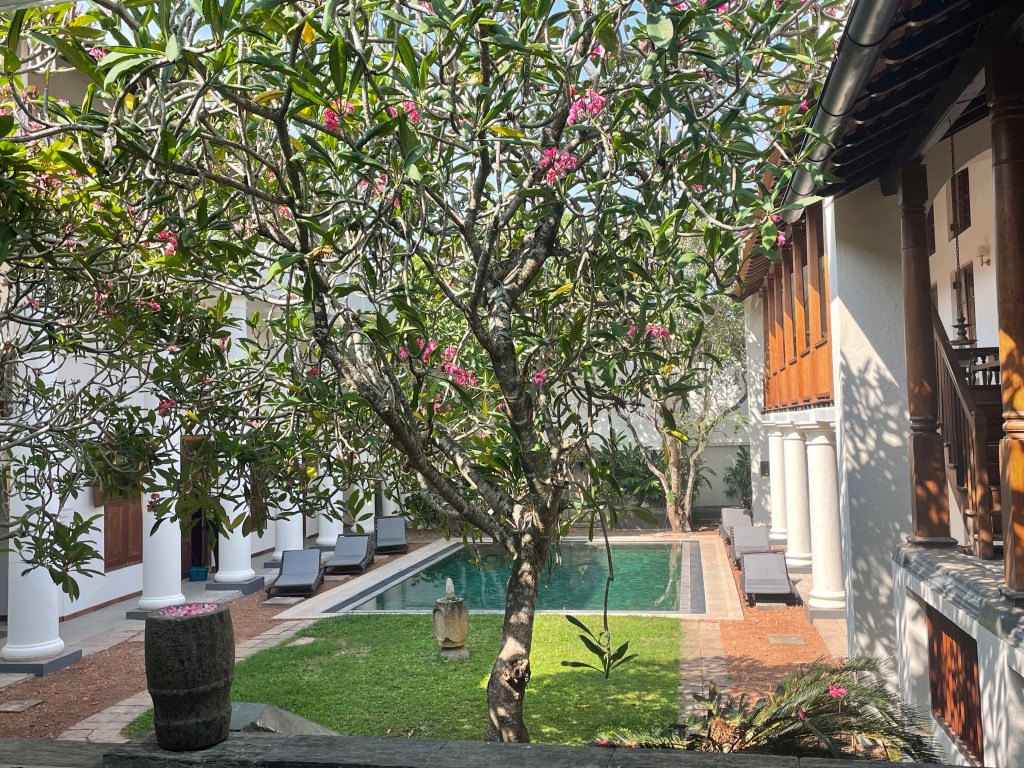
Courtyard of our hotel
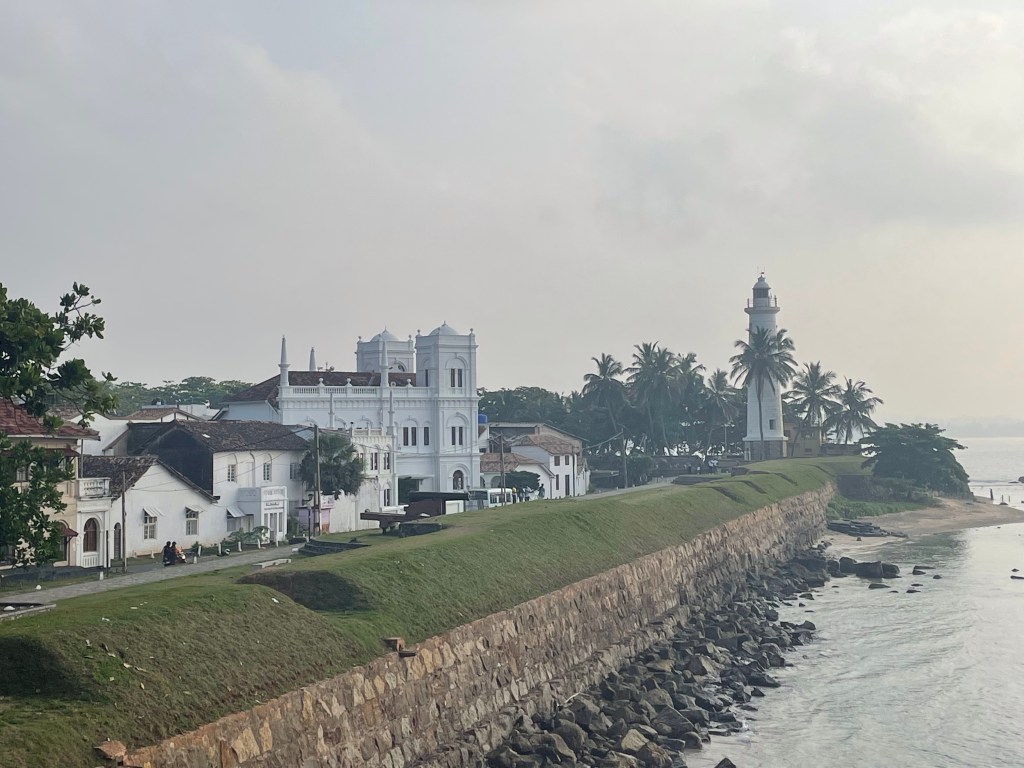
Galle lighthouse and mosque (many of the local traders are Islamic)
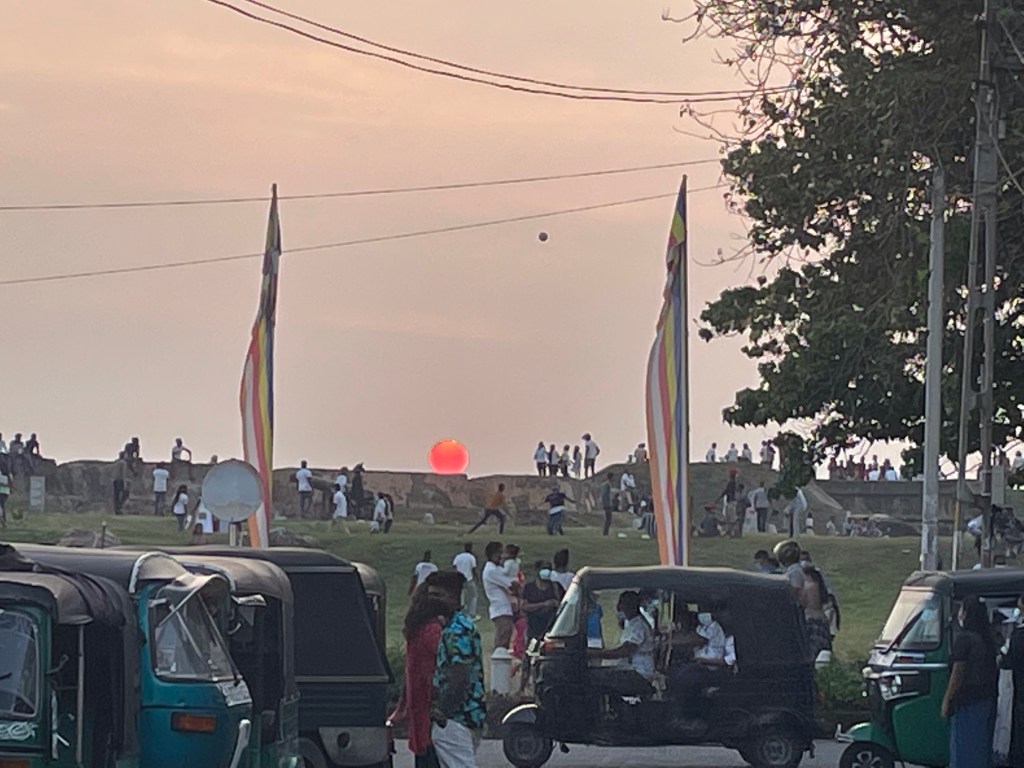
Sunset at the fort – popular with tourist but also, on this occasion, locals as it was a poya (full moon) holiday

Cooking with Danesha

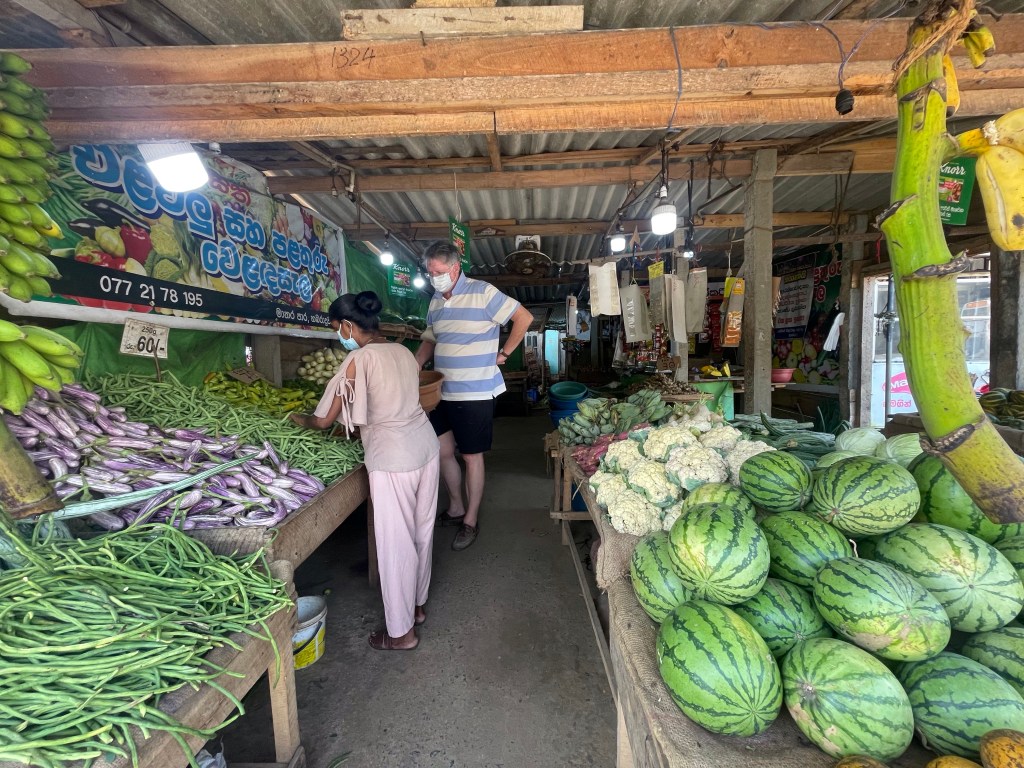
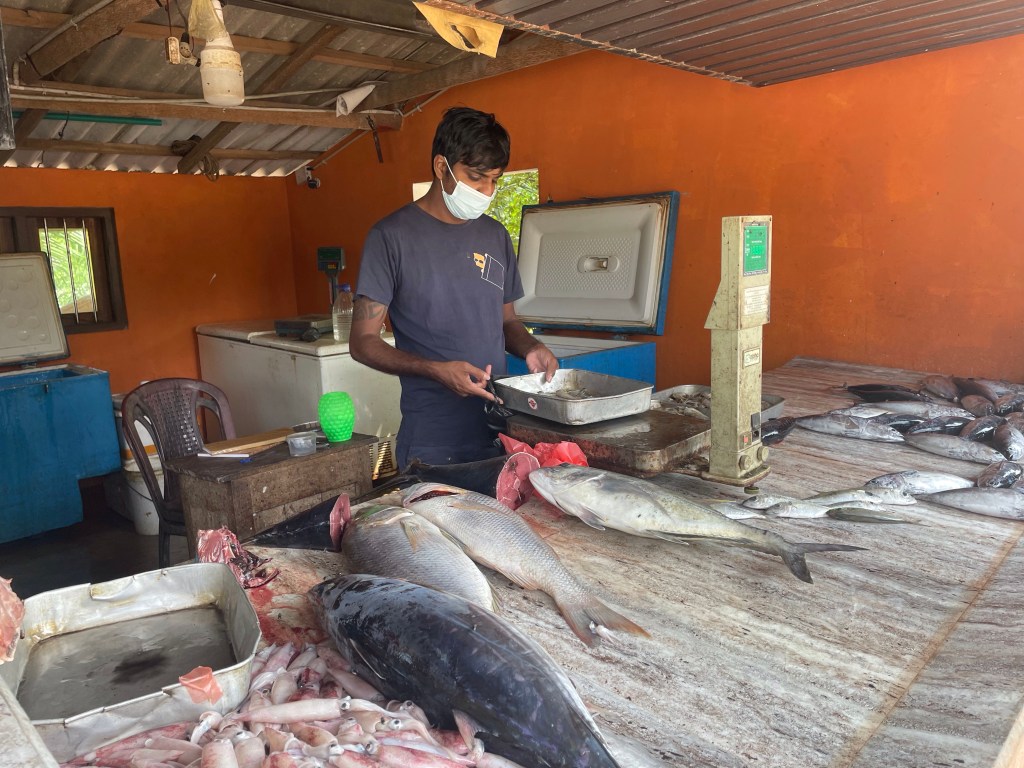
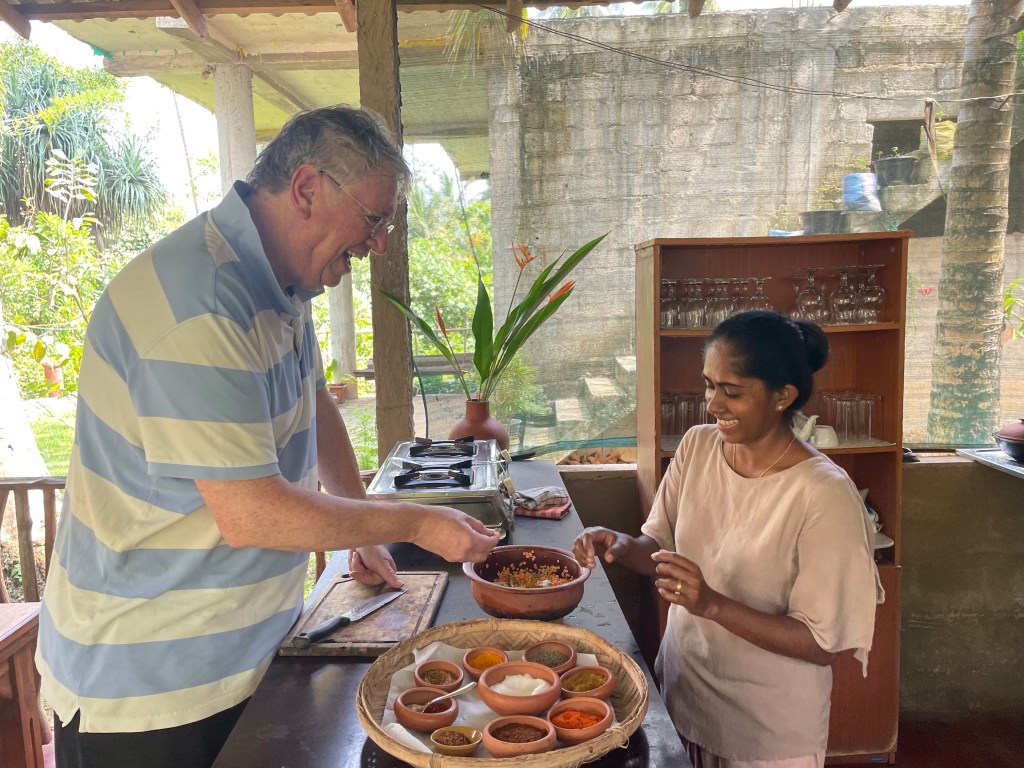
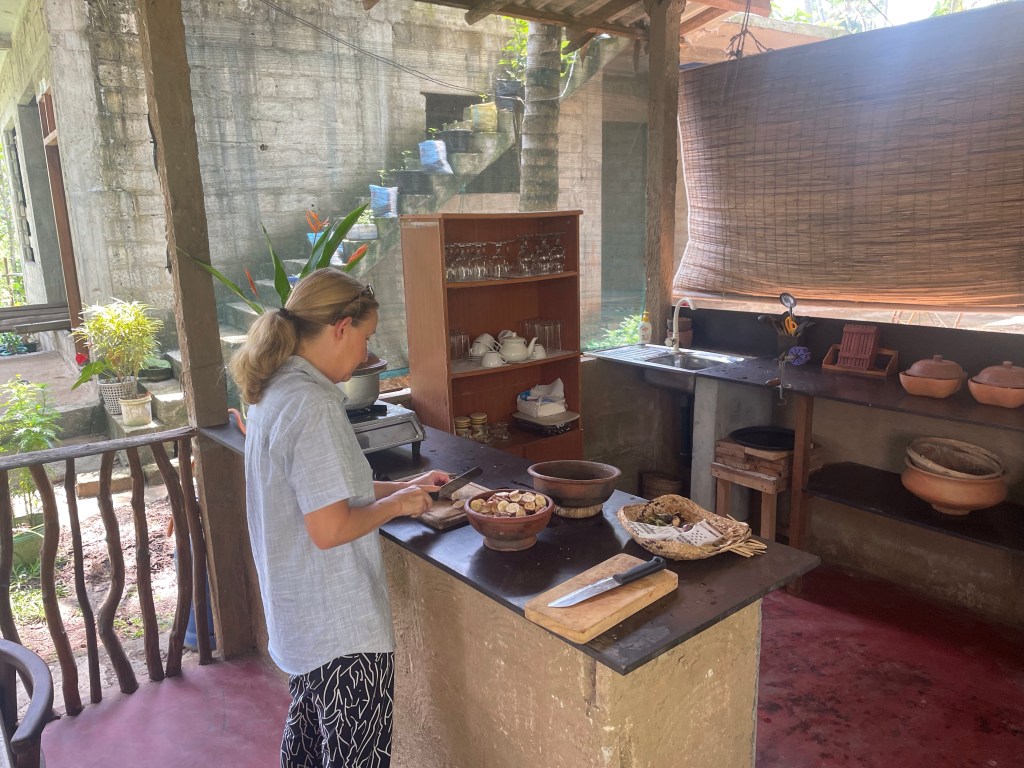
Our agent knows that we like cooking so booked a private Sri Lankan cookery class. Earlier in our trip we saw a hotel hosted class which was more demonstration and photo opportunity than cooking. However, we were taken to the private home of Danesha who immediately took us in a tuk-tuk to a local market to buy vegetables and prawns.

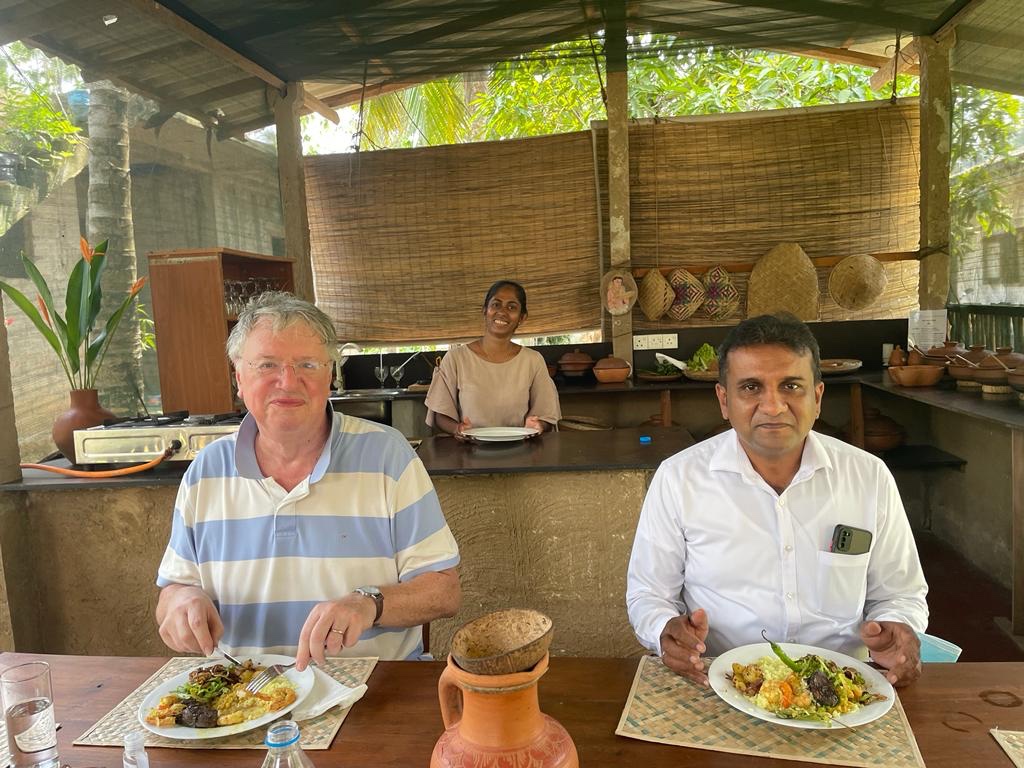
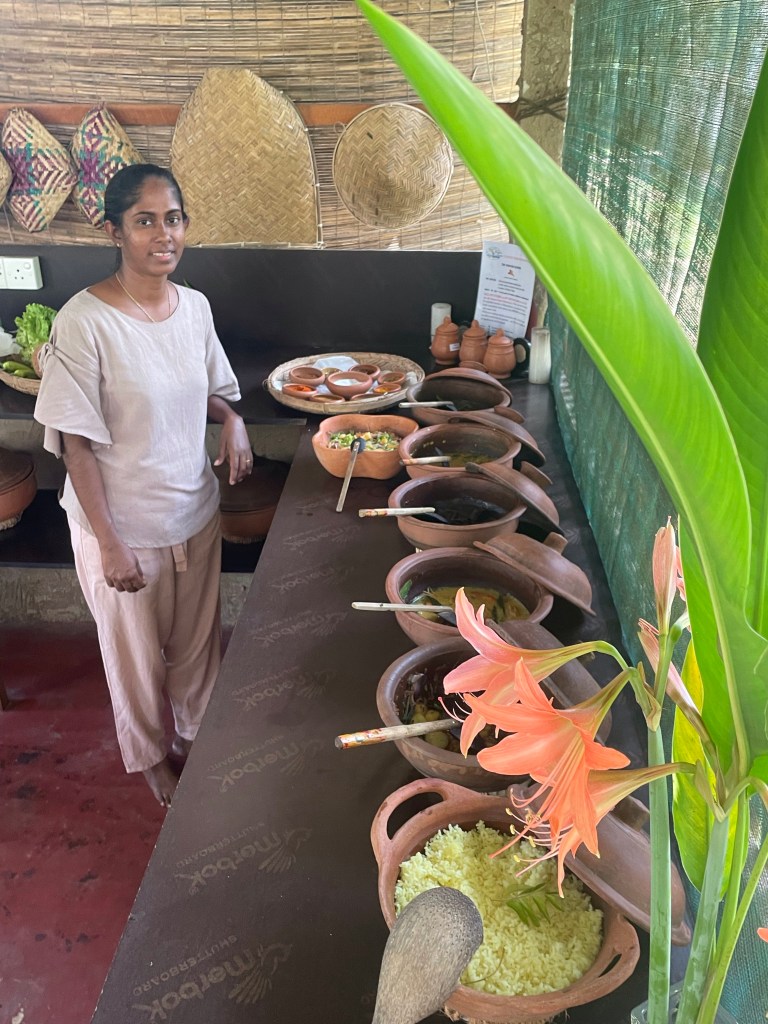
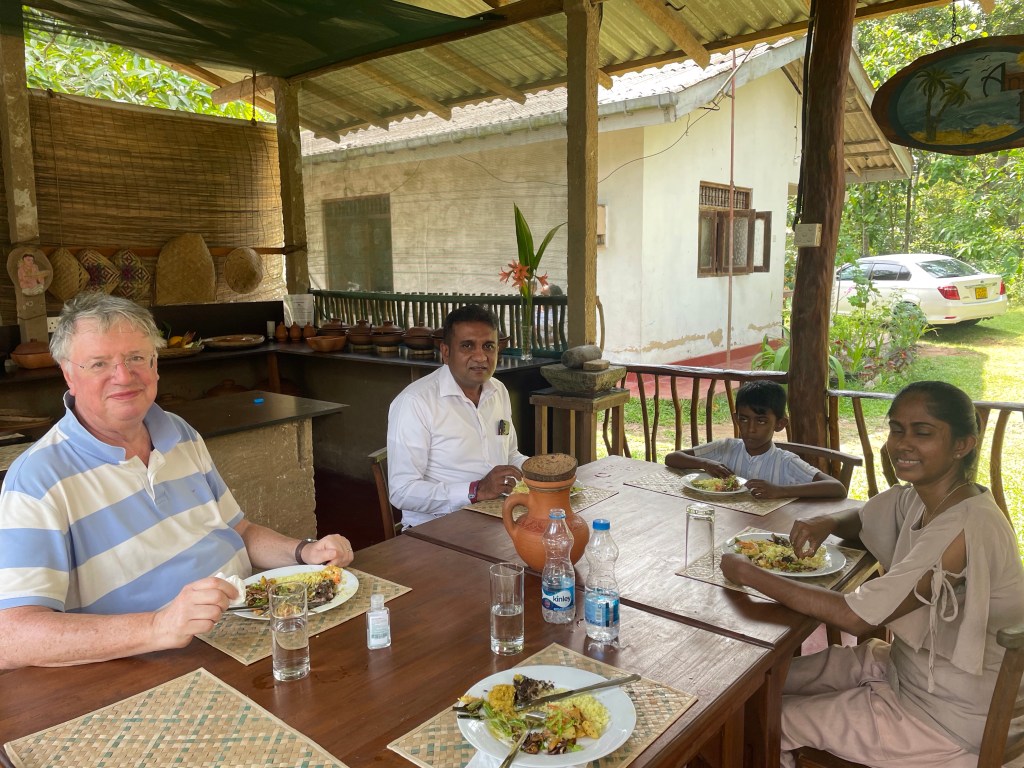
Danesha was a charming and excellent teacher and together we prepared; fish curry, prawn curry, dhal, green bean curry, potato curry, fried aubergine salad and rice. Our driver, Sumedha, Danesha and her children joined us for lunch in her outside kitchen for the spicy dishes (unexpectedly so for Tim after eating a green chilli disguised as a green bean).
Yala

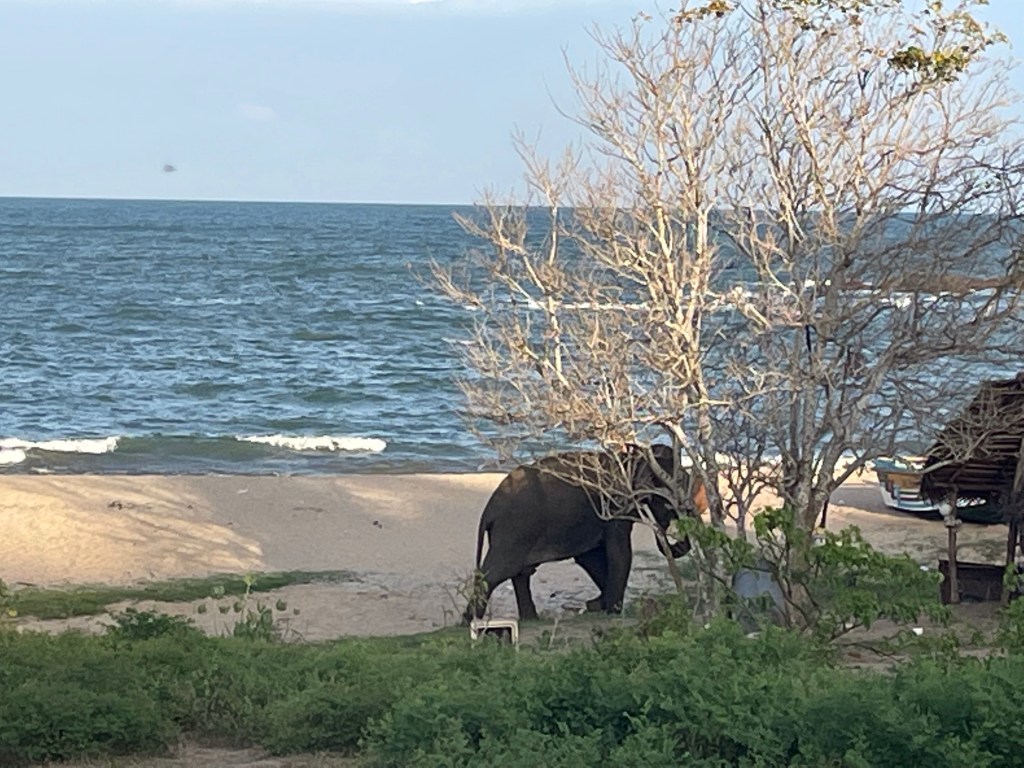
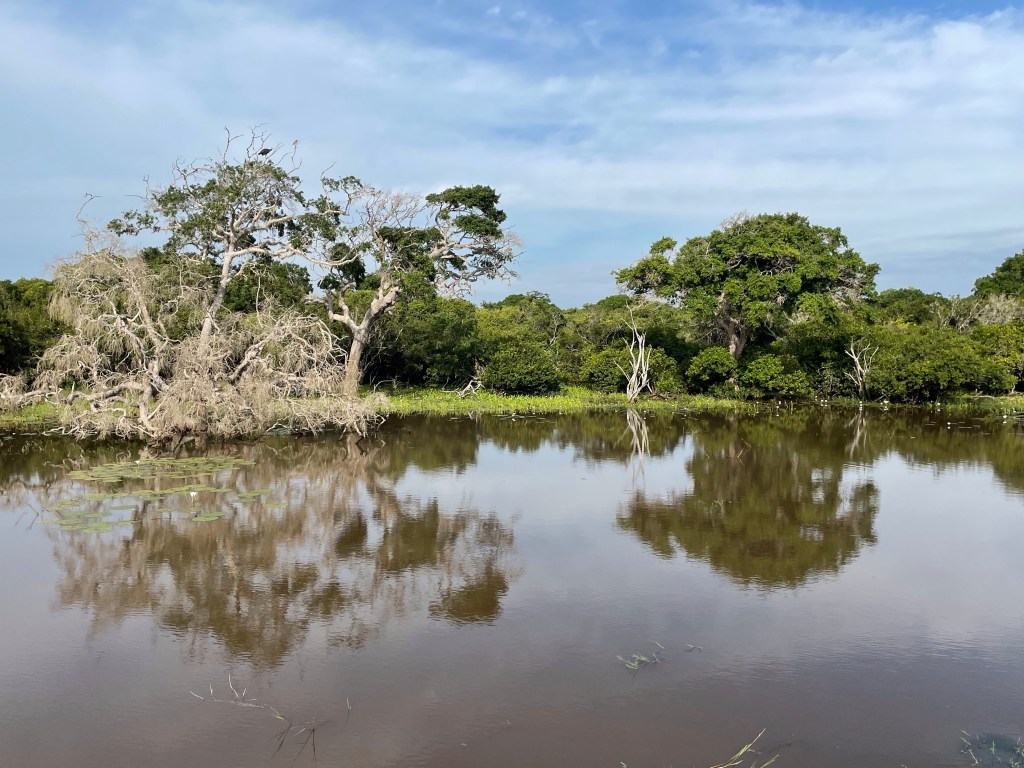
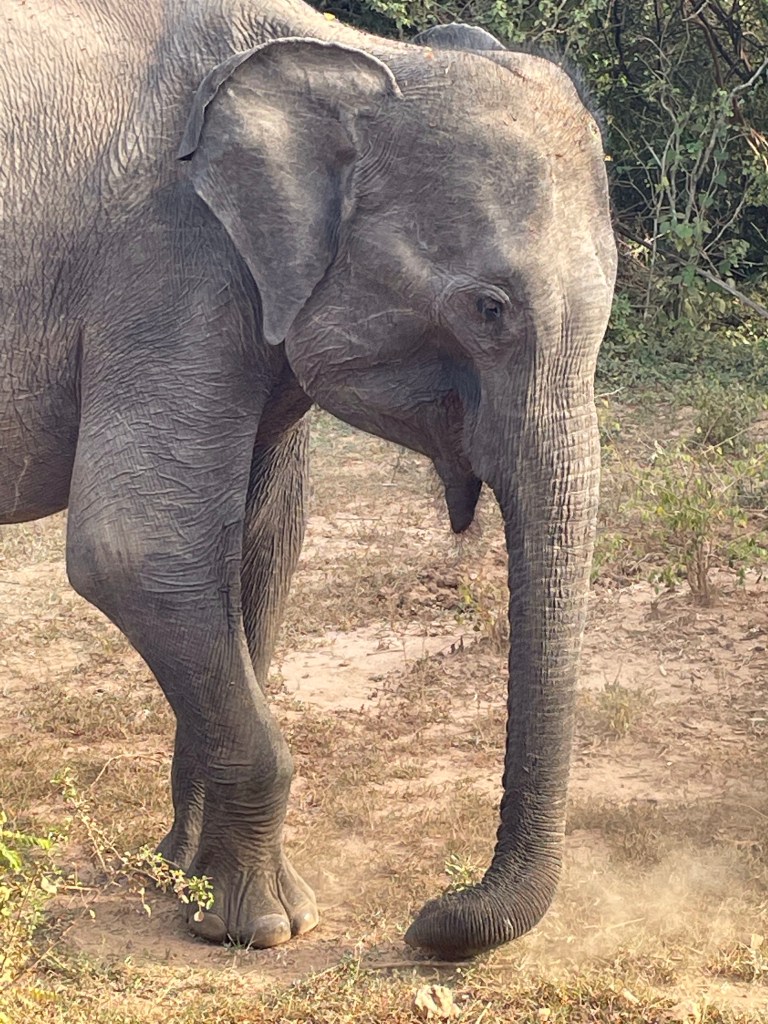
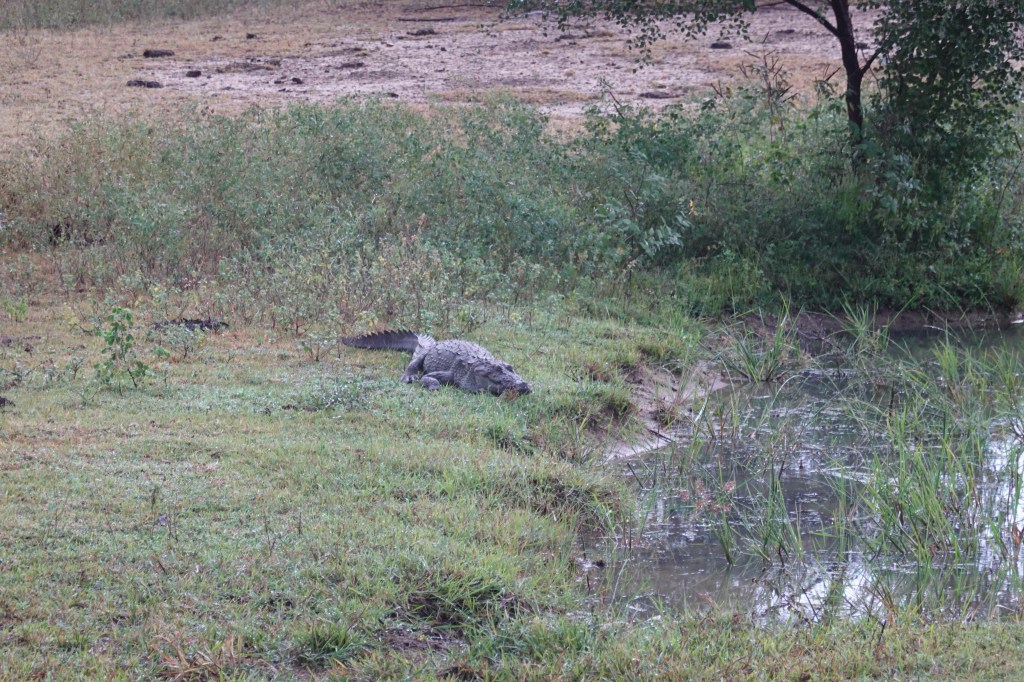
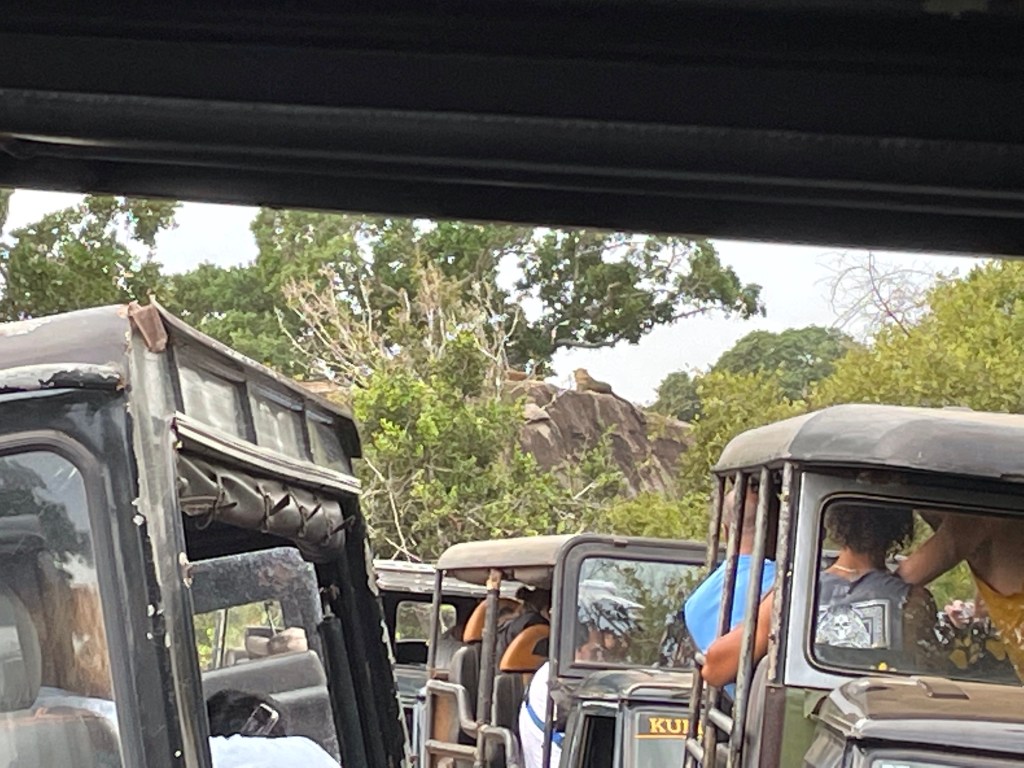
Yala is the most visited National Park in Sri Lanka, bordering the Indian Ocean in the south east of the country. Its main draw is leopards, with sightings giving rise to mad behaviour by local jeep drivers seeking to get the best view for their customers. The park is also home to a variety of other wildlife; over 200 species of birds have been identified.
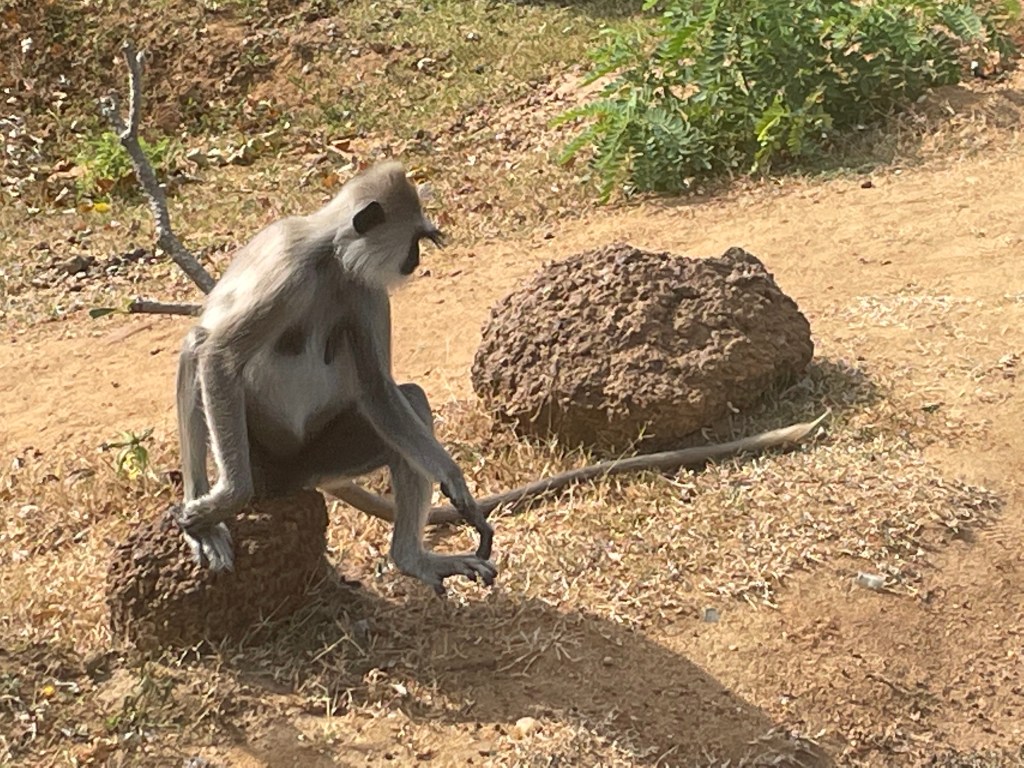
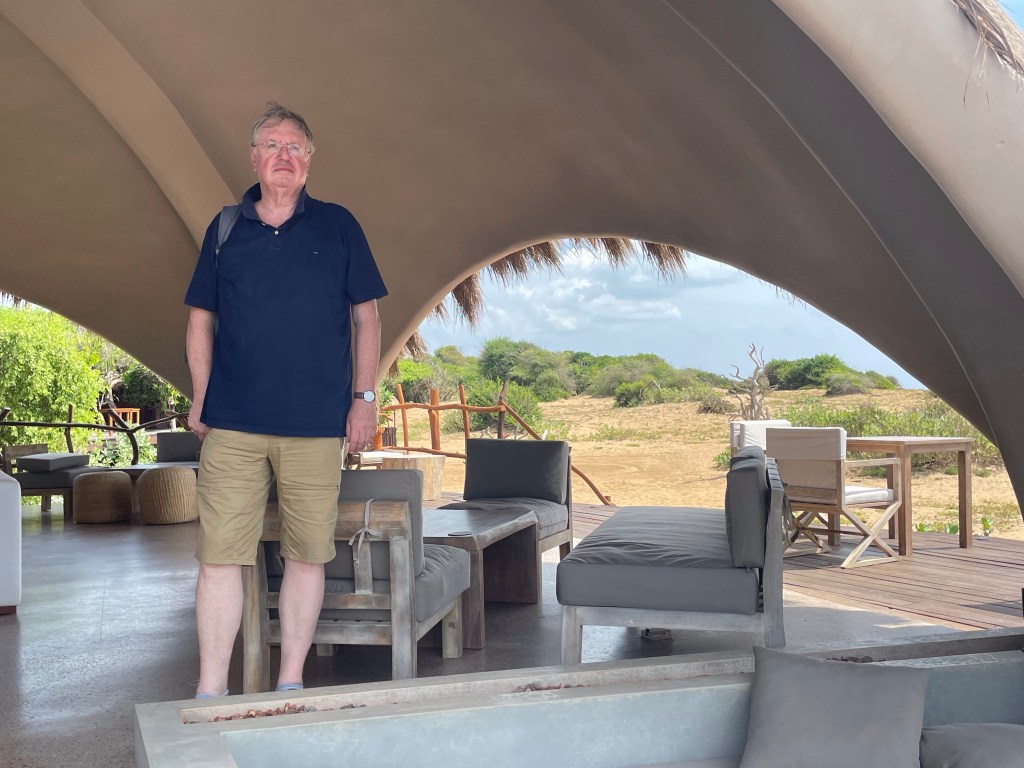
We stayed at a hotel of a dozen (luxury) “huts” on the beach close to the park entrance. There was plenty of wildlife around the hotel, including snakes and monkeys on the breakfast terrace.

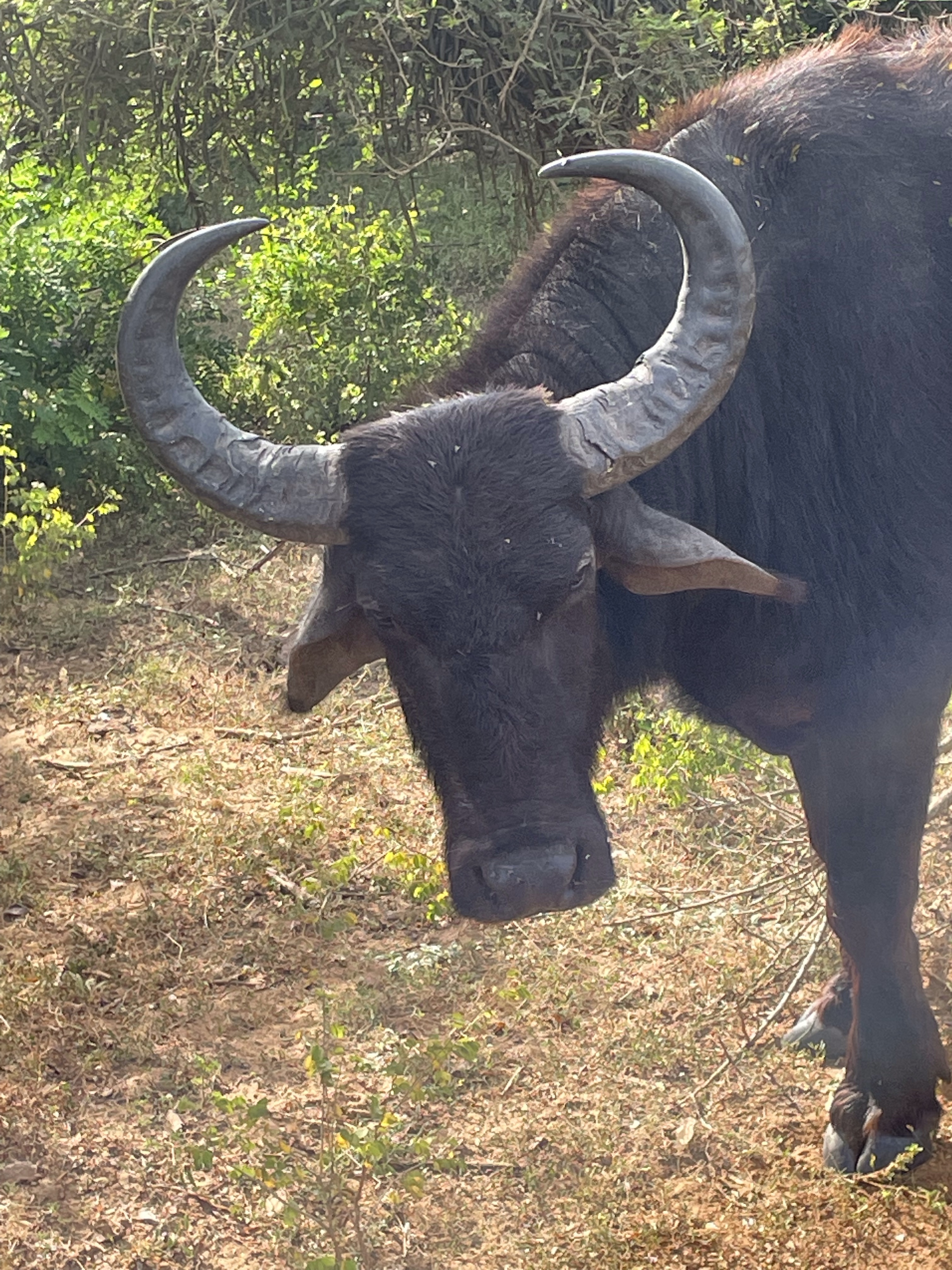
Wild water buffalo- the park is also home to a large number of domestic and hybrid buffalos
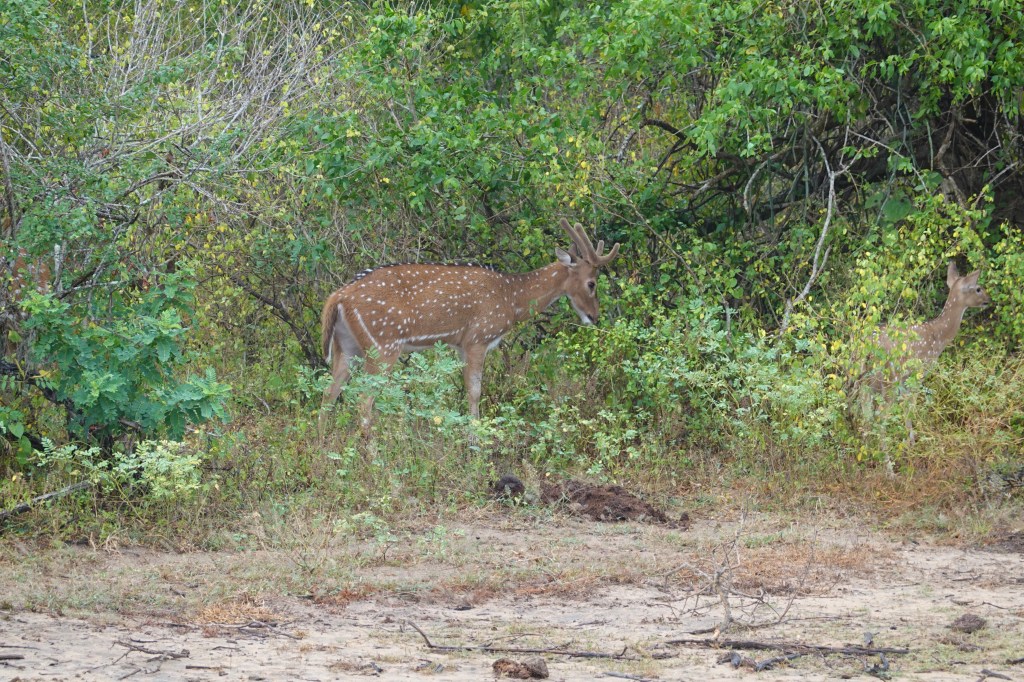
Ceylon spotted deer
Ruddy mongoose
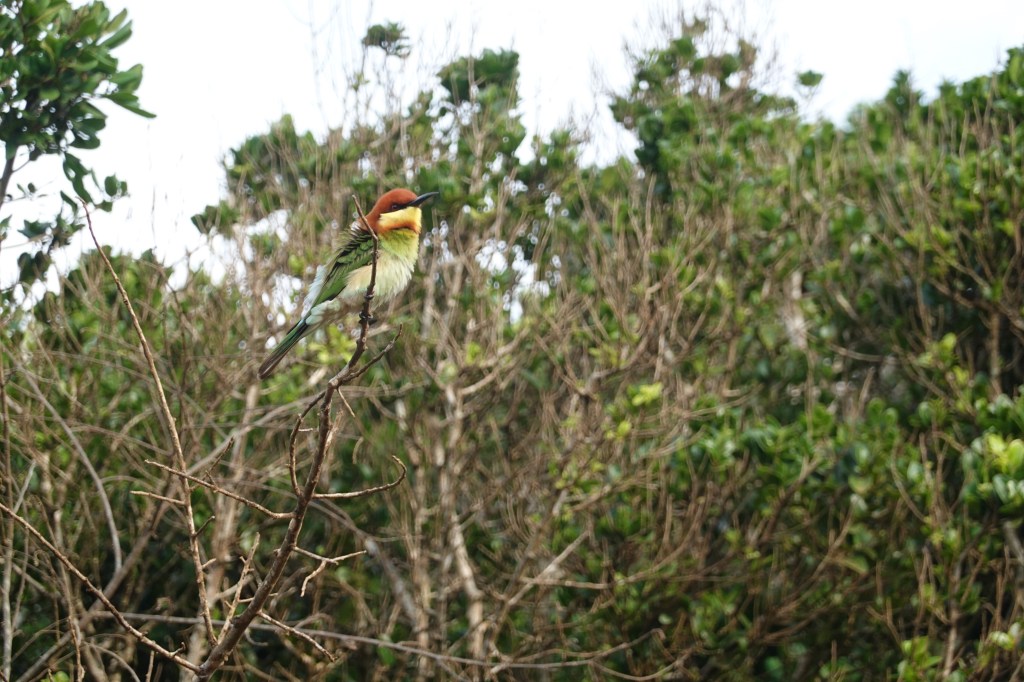
Chestnut headed bee eater
Two leopards on rock in background !
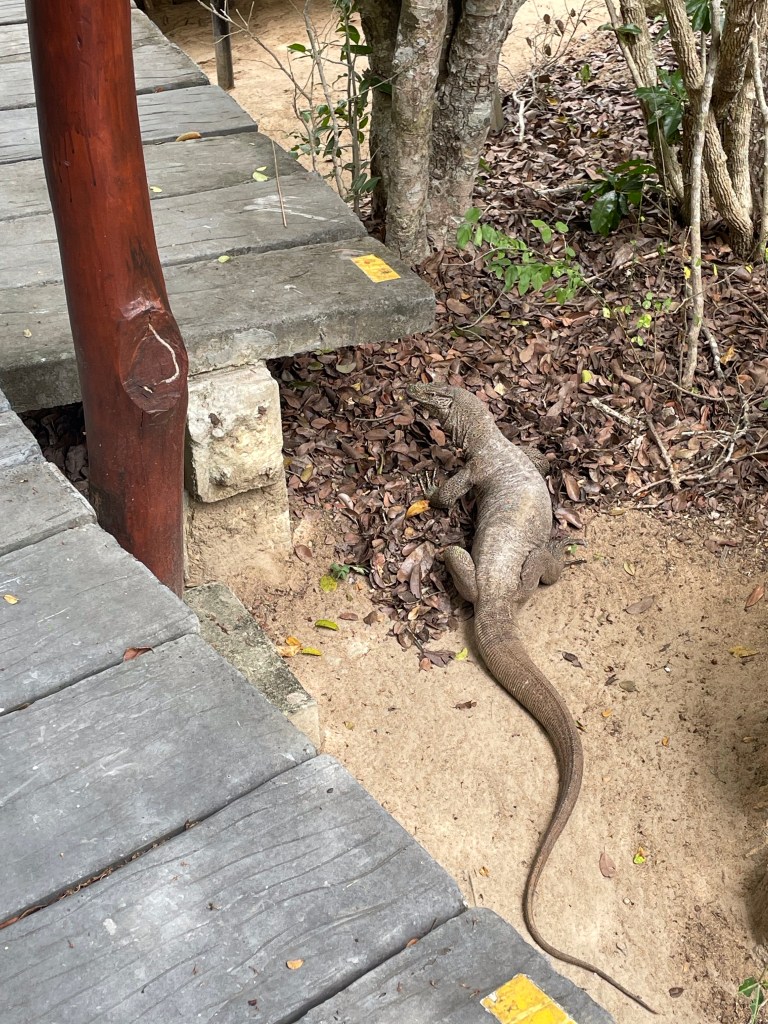
Land-monitor outside our hut

Tea

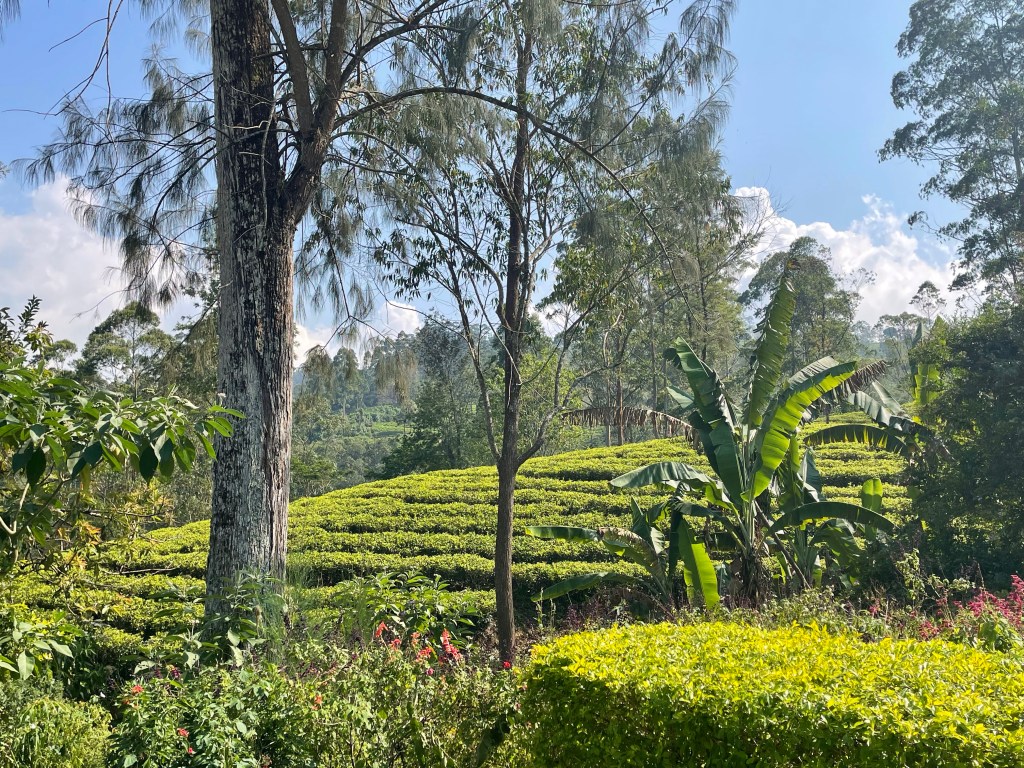
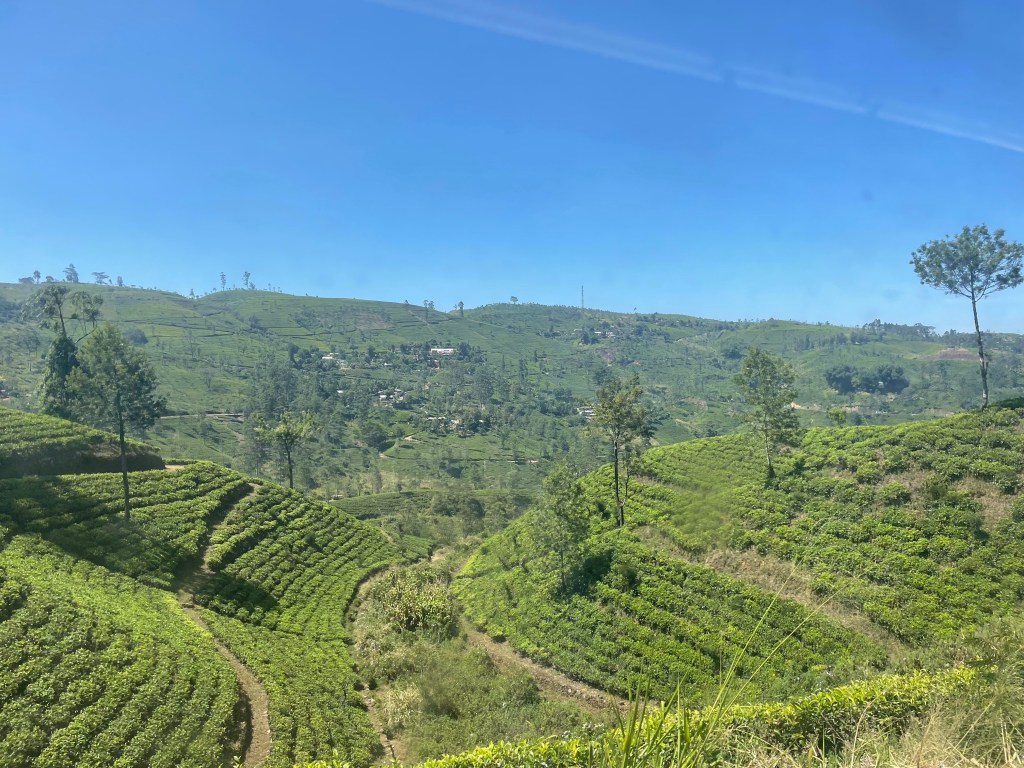
Coffee was the main crop in Sri Lanka until it was destroyed by blight. James Taylor planted the first tea bushes and in 1867 Ceylon tea was first produced. All tea comes from the same plant (Camellia Sinensis), with the different types created through picking and manufacturing techniques. Each tea bush is harvested approximately every 10 days.

Our hotel on the Norwood estate was a six bedroom bungalow, originally built in 1890 for the estate manager, at an altitude of 1,300m. Many of the estates have names connected to their British origins – we drove through both Edinburgh and Somerset.

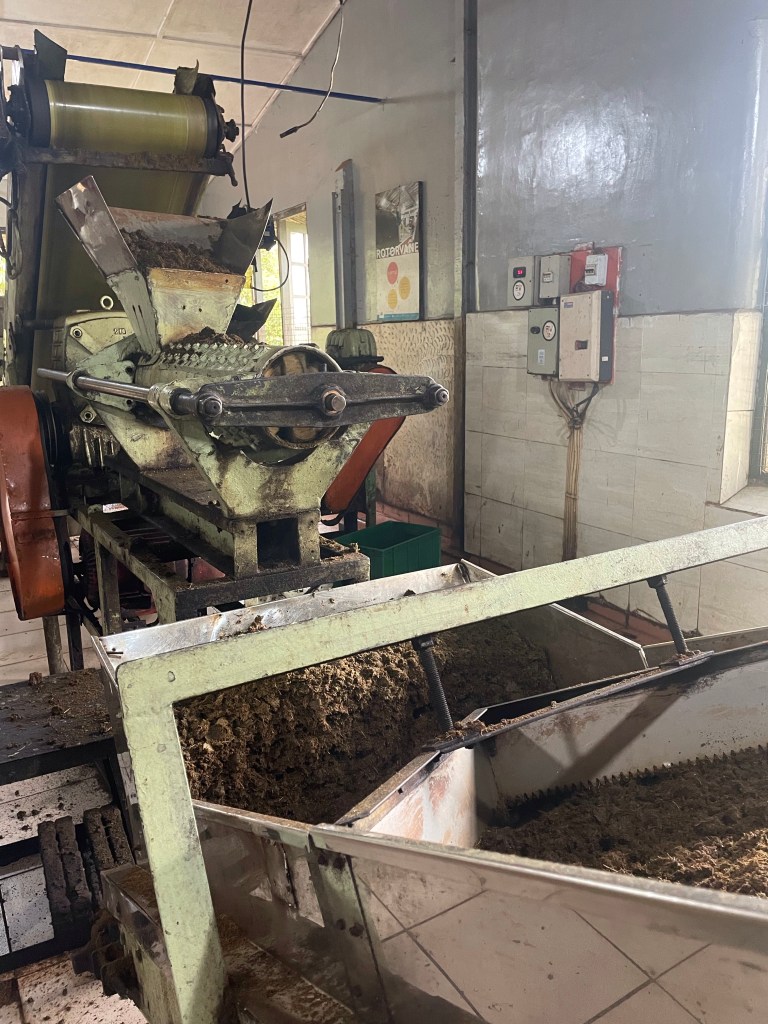
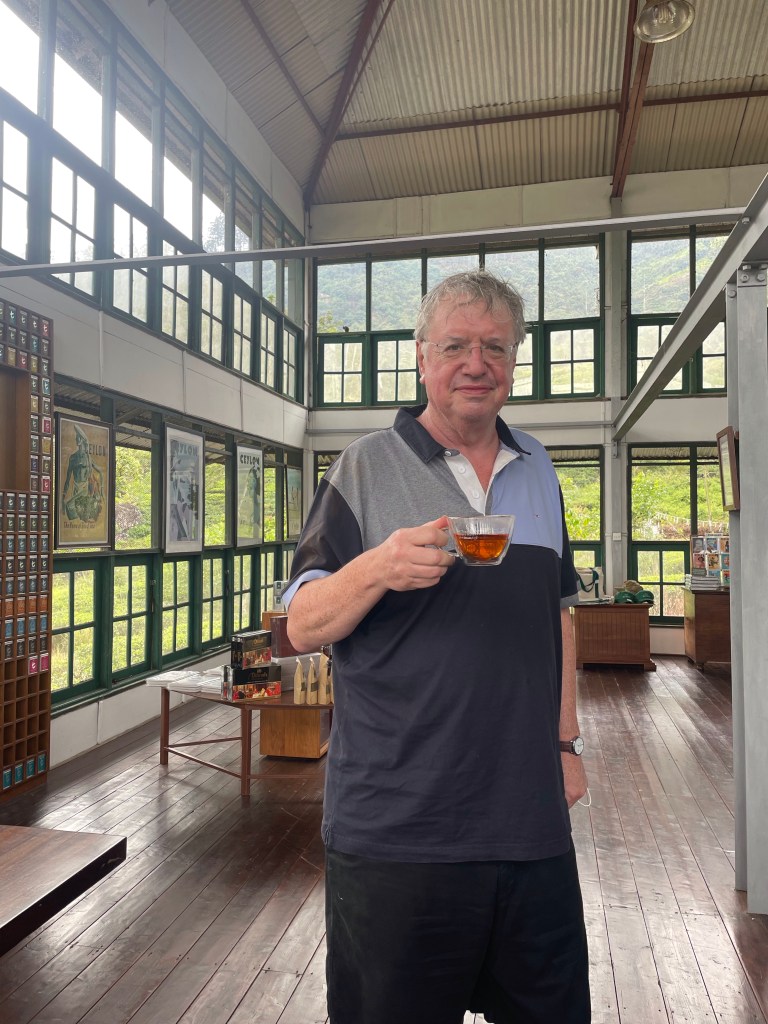
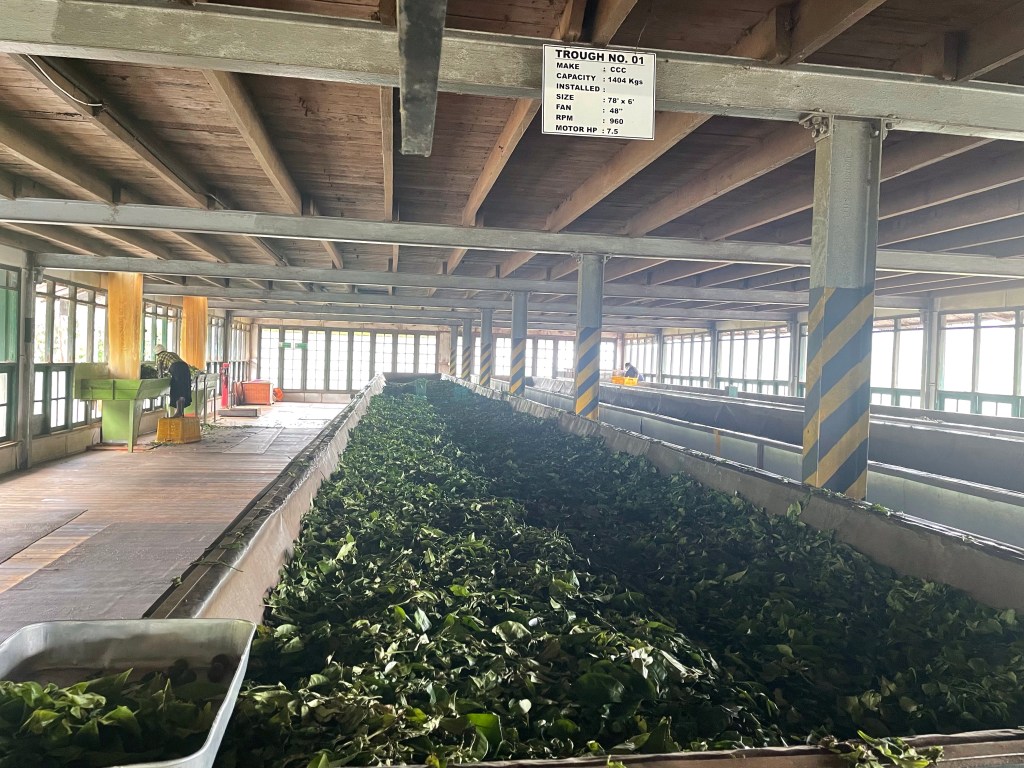
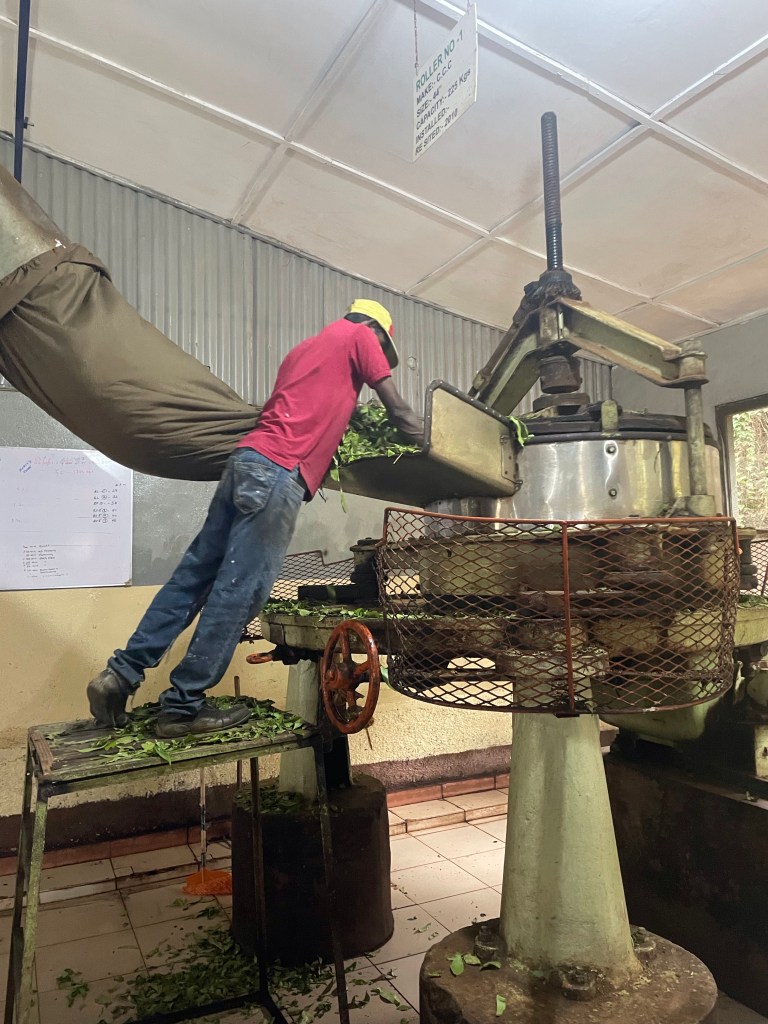
During our stay we visited a working tea factory on the Dunkeld estate owned by Dilmah. The machinery and techniques have hardly changed in the last 150 years. However, the industry is under pressure as younger generations are no longer willing to work in the plantations hand picking. This may lead to mechanisation which results in a lower quality product.

Horton Plains – World’s End

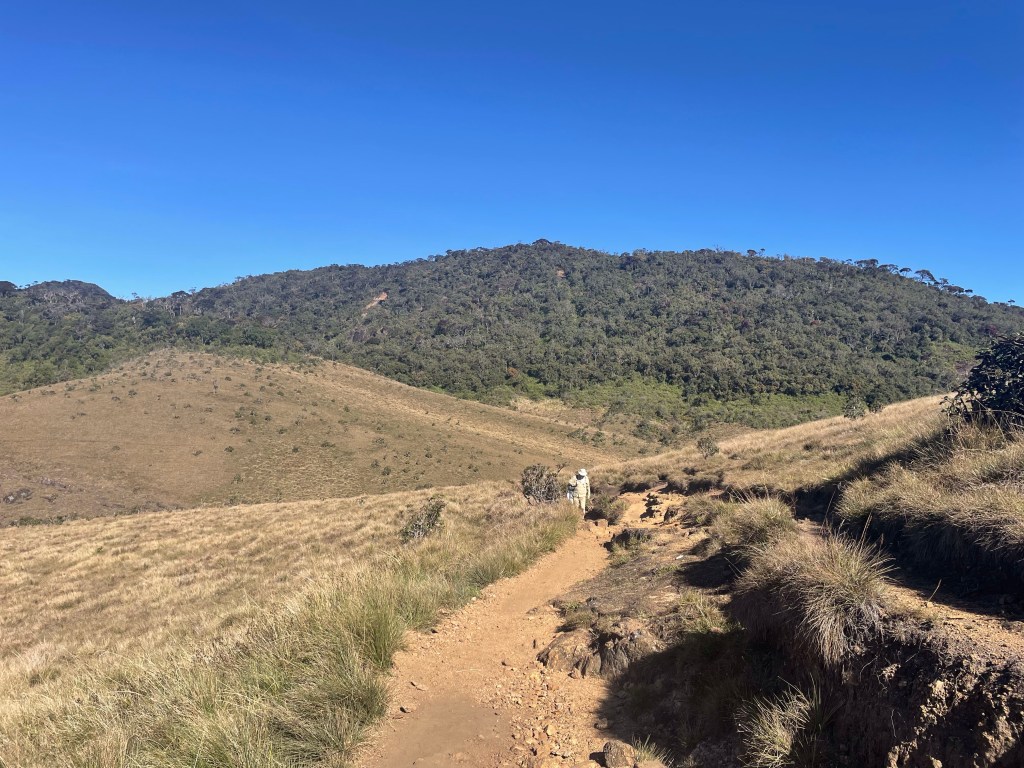
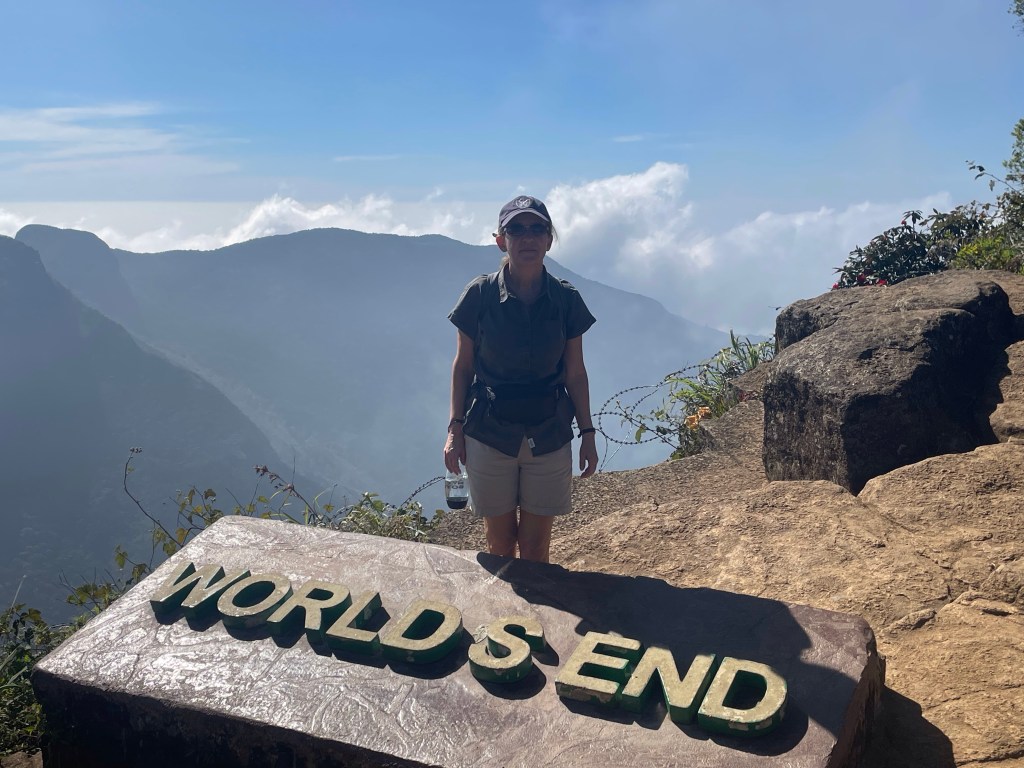
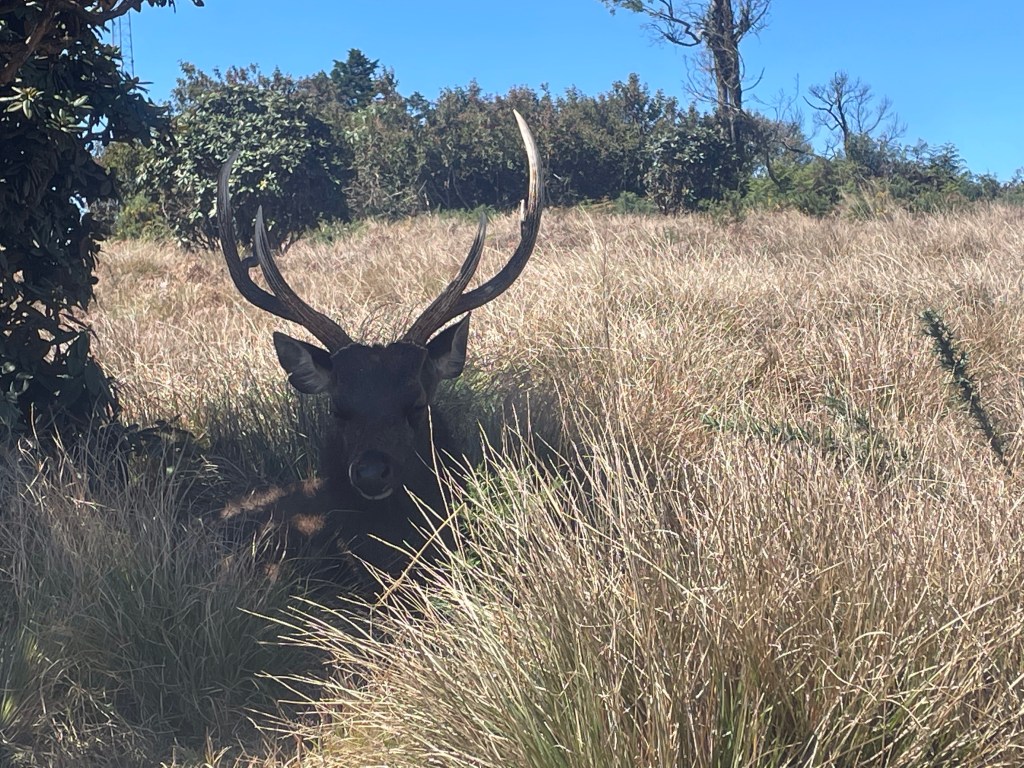
Horton Plains is an undulating (very) plateau at over 2,000m. We left our hotel at 5am, arriving at the start of the trek at 8am. The circular walk of approximately 10km took just over two and a half hours; according to our phones, we had gone up and down the equivalent of 55 flights of steps. The walk takes you past Baker’s Falls before arriving a World’s End, appropriately named as it is an 880m escarpment at the end of the plateau.

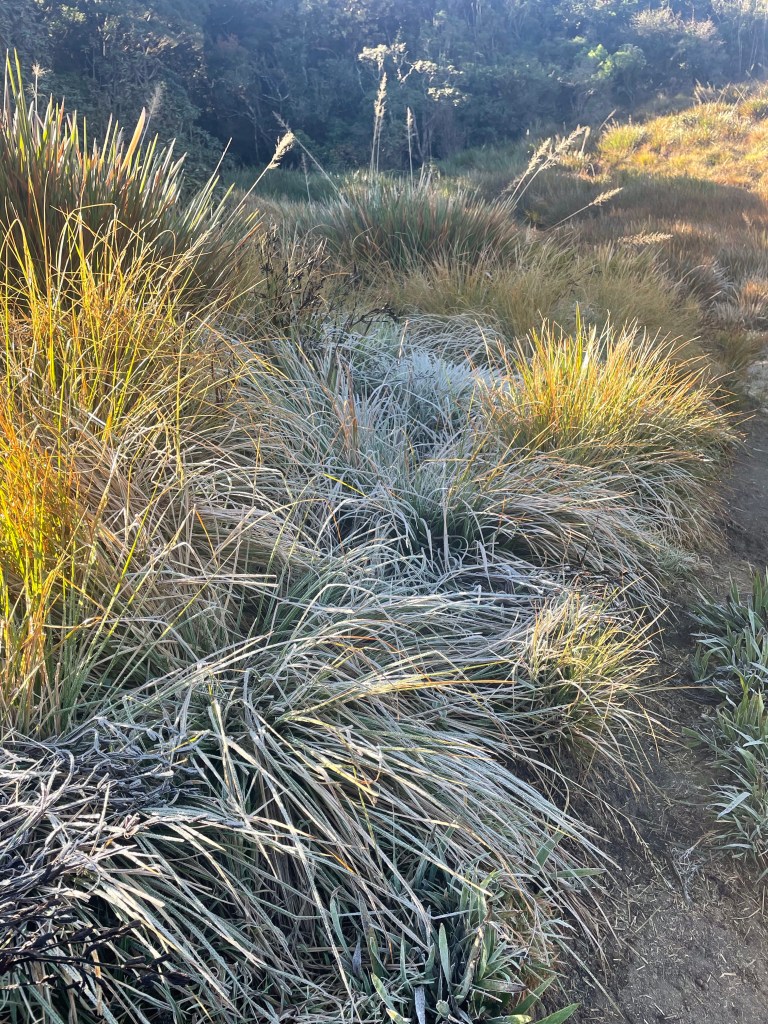
A surprising sight – frost in Sri Lanka, reminding us of the altitude

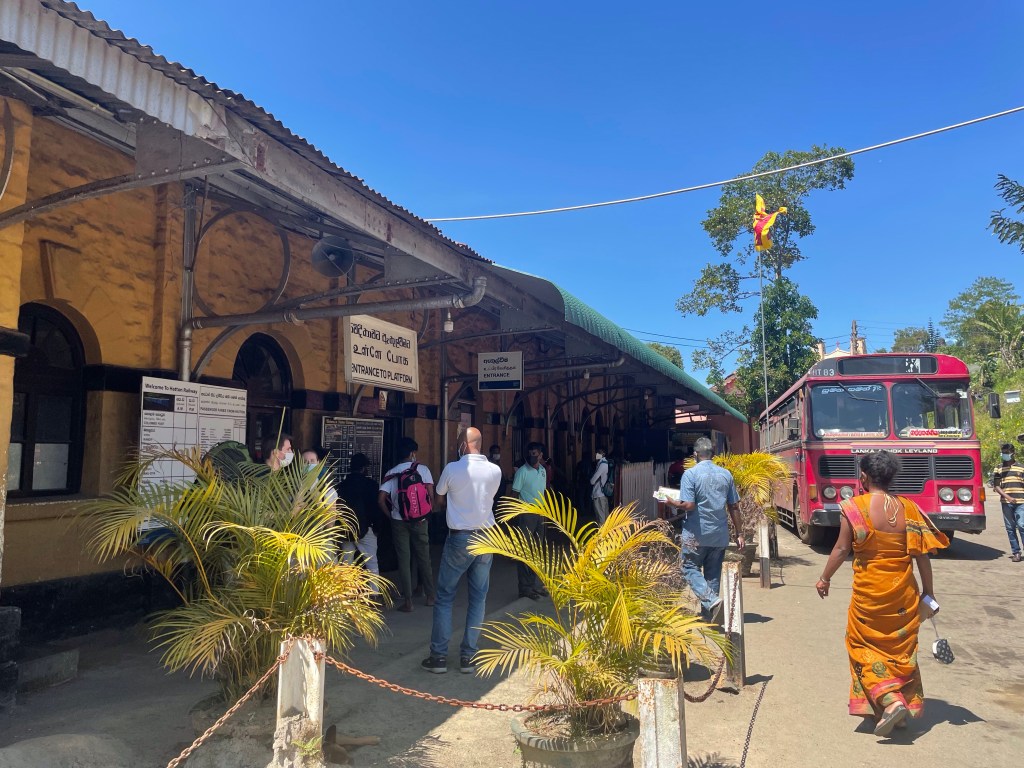
Peradeniya to Hatton by train (first class)

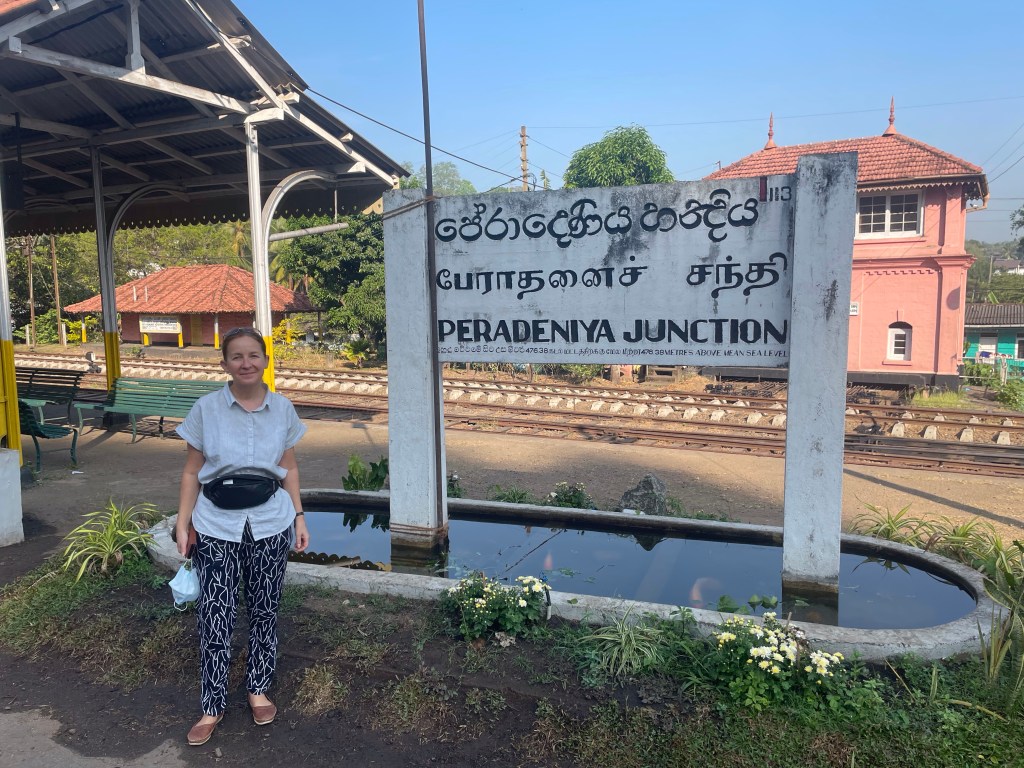
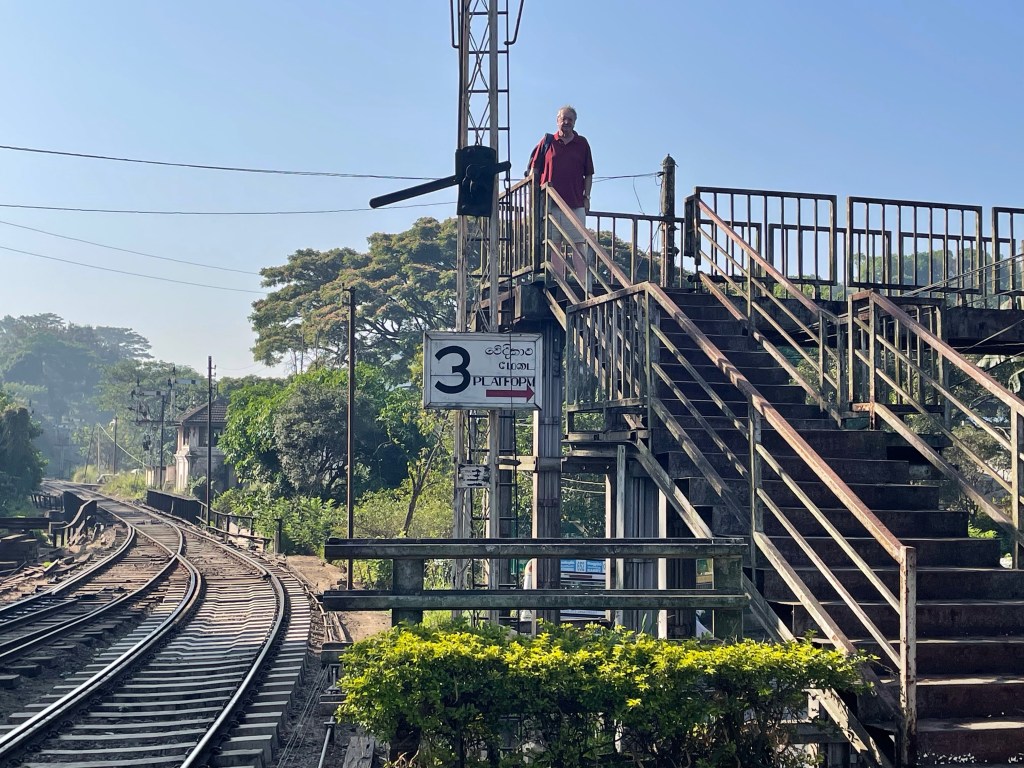
The railways in Sri Lanka were built during British rule. The first train ran in 1864, six years after work started. A few years later, the line from Kandy to Badulla was started, with Peradeniya being the first major junction.

The journey to Hatton is very scenic, especially as it enters tea country. The 60km trip takes two and a quarter hours, winding upwards from 500m to almost 1,300m. A first class ticket is 1,000 Rupees, around £3.50. Service and amenities on board are not as we would expect and carriage doors are left open, which can be unnerving.

Peradeniya Botanic Gardens

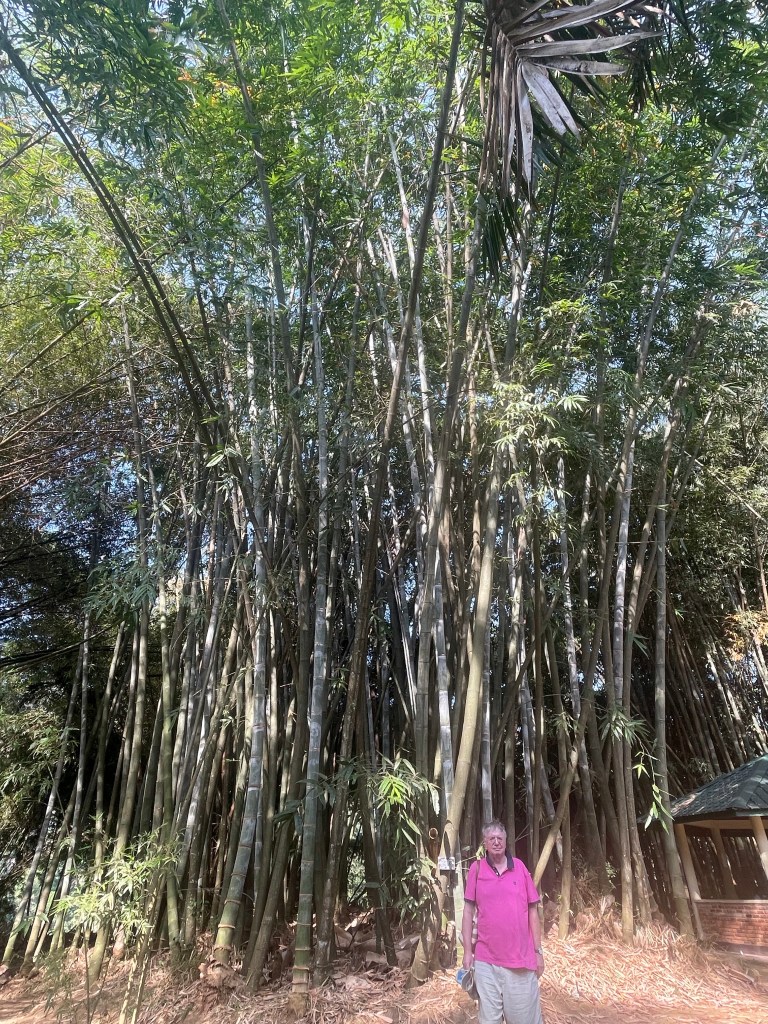
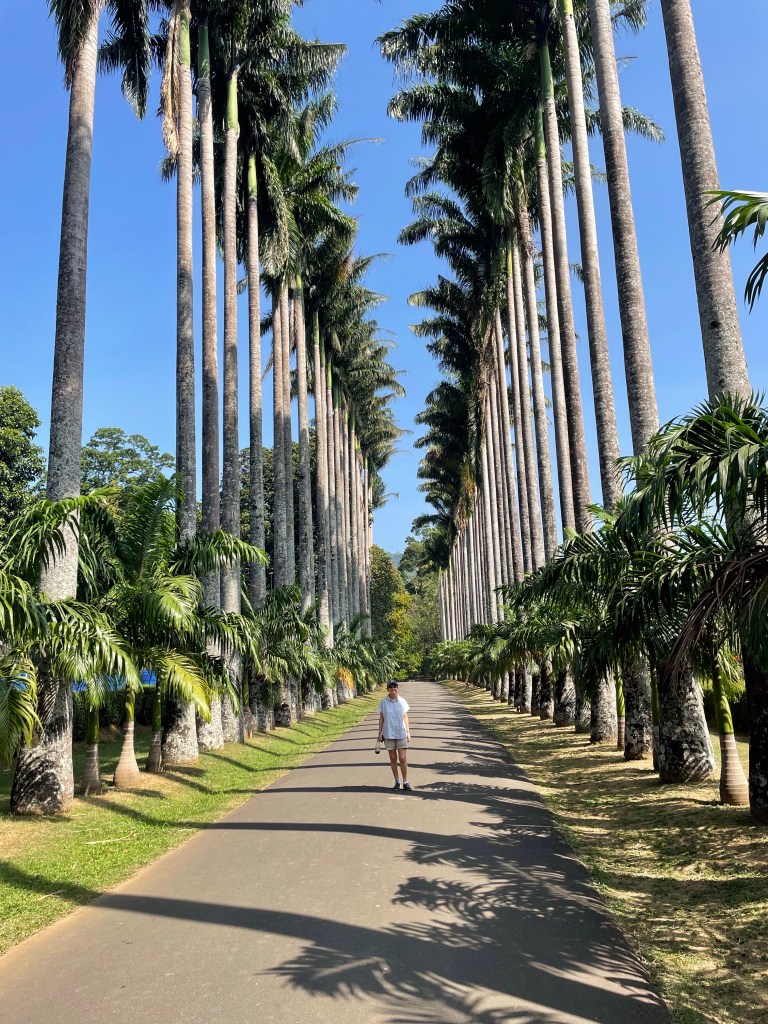
The gardens are situated 6km from Kandy next to Mahaweli Ganga, the longest river in Sri Lanka. Set over 60 hectares, the gardens were once reserved for Kandyan Royalty. It is very well maintained and home to thousands of (loud) fruit bats, hundreds of monkeys and also courting couples, even at 9am !

World’s tallest bamboo species
Cabbage Palms
Fruit bats taking a rest

Kandy

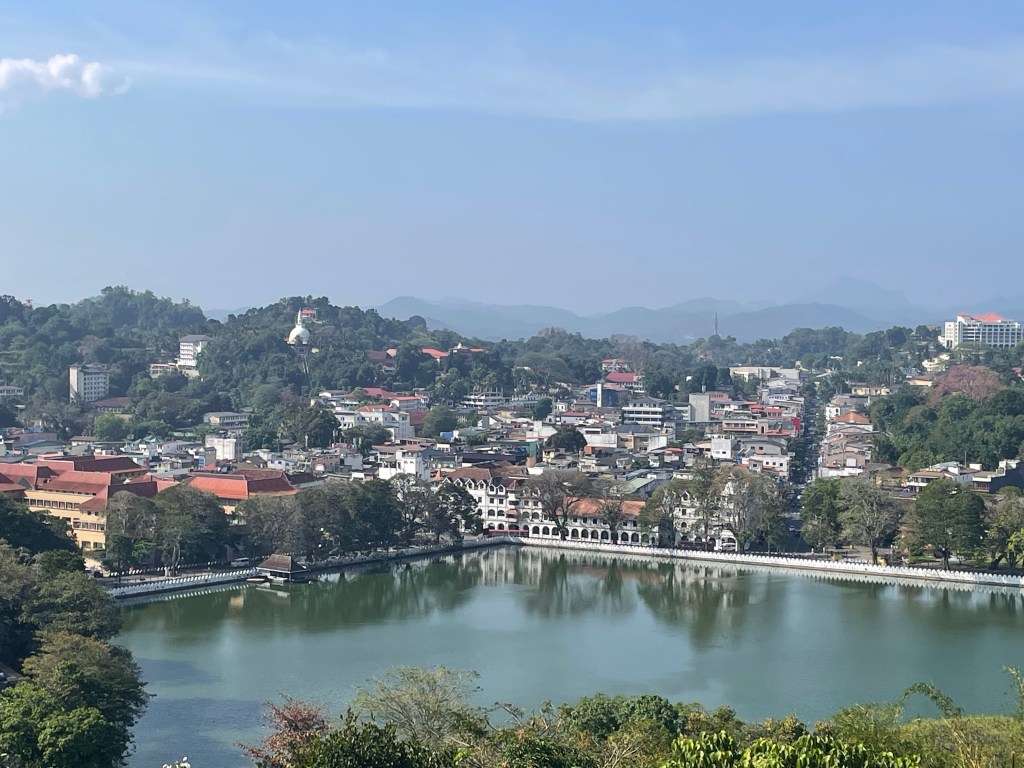
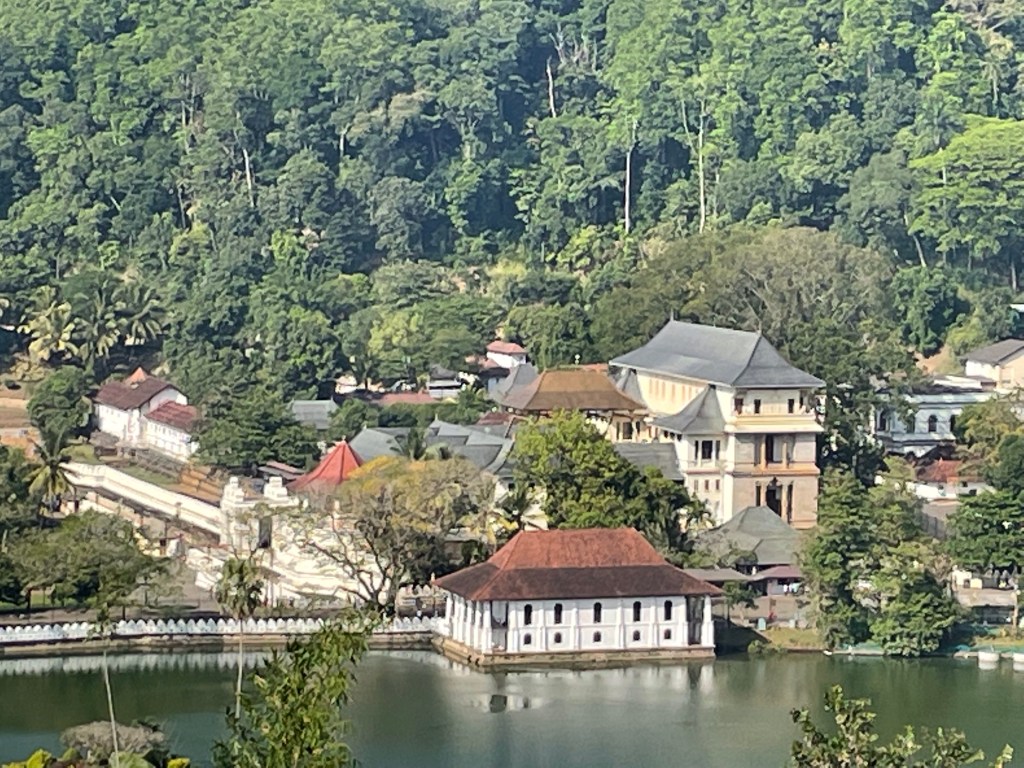
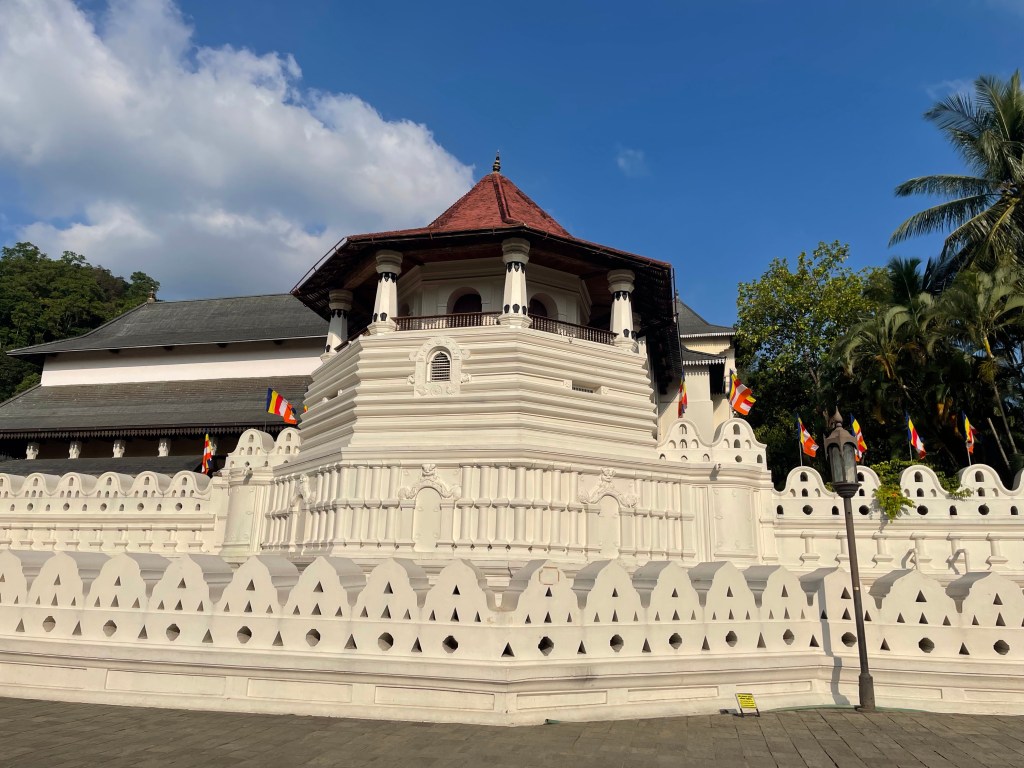
Kandy was the capital of the last Sinhalese Kingdom and due to the natural defences of river and hills remained independent from1505 until its capture by the British in1815. The historic centre, on one side of the manmade Kandy lake, includes; the Temple of the Sacred Tooth Relic, the former Royal Palace and Audience Hall and St Paul’s church. Nearby is also the Kandy Garrison Cemetery, containing graves from colonial times.

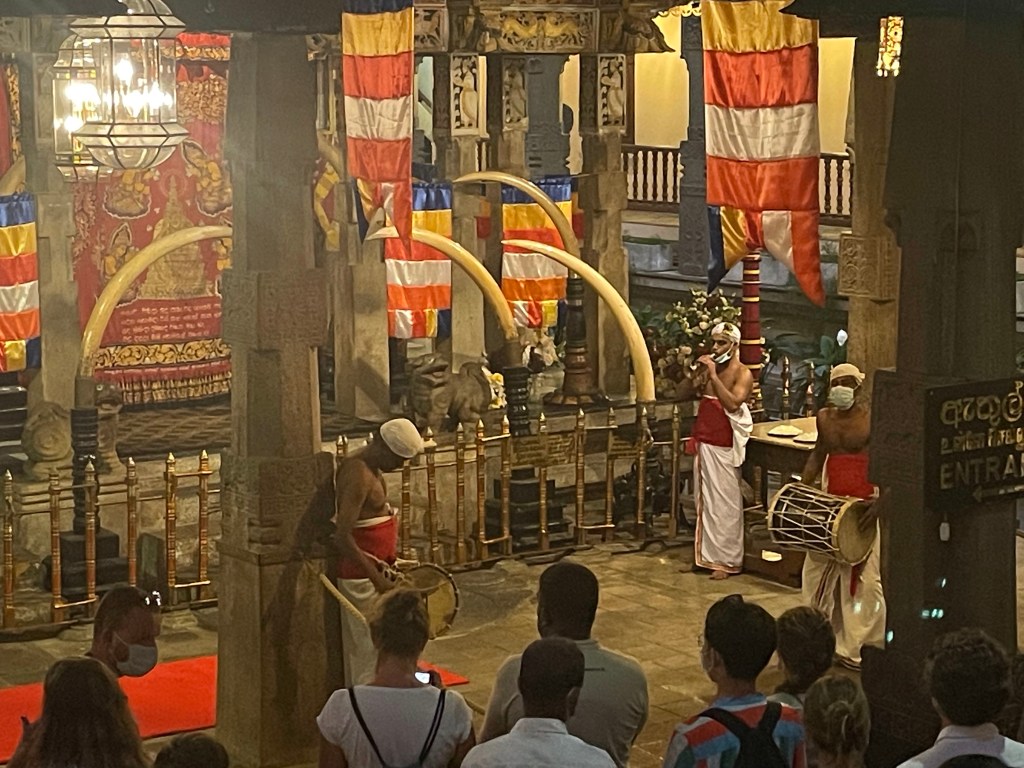
The Sacred Tooth of the Buddha is said to have been removed from his funeral pyre, eventually being smuggled to Sri Lanka in the hair of a princess. In the 16th century, the Portuguese tried to destroy it, however it survived, was transported to Kandy, and the temple was built to house it. It is kept is a series of seven gold caskets; three times a day worshipers can see a glimpse of the exterior casket. Sri Lankan Buddhist believe that they must complete at least one pilgrimage to see the ceremony – for our guide it was approximately his 500th visit.

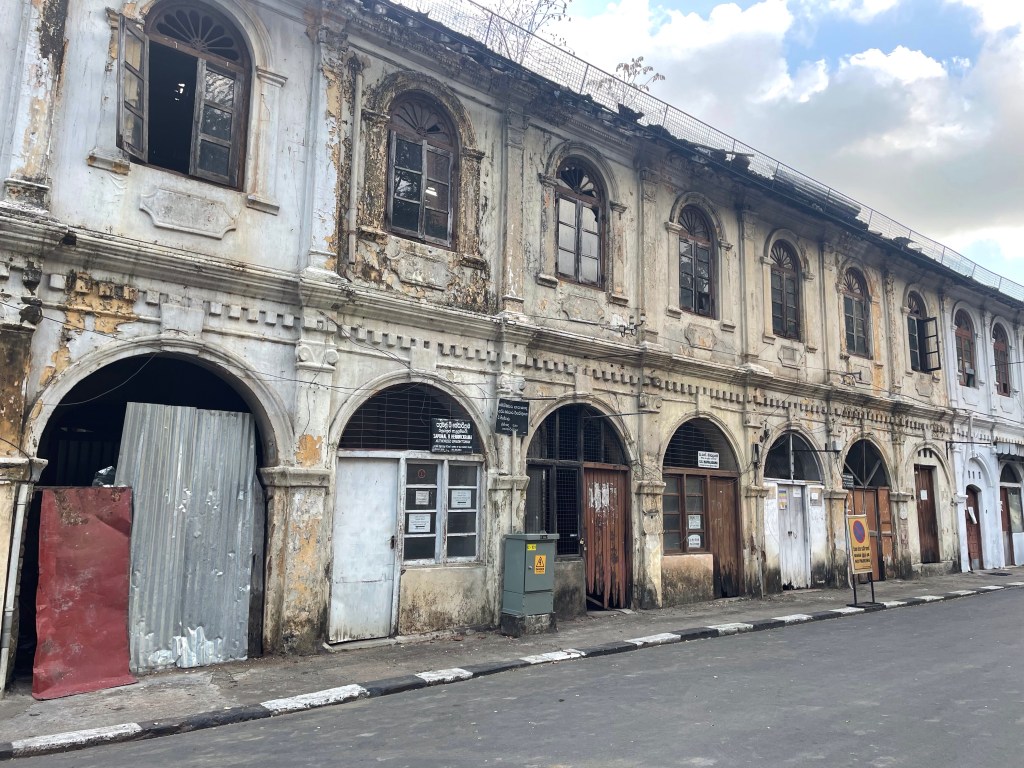
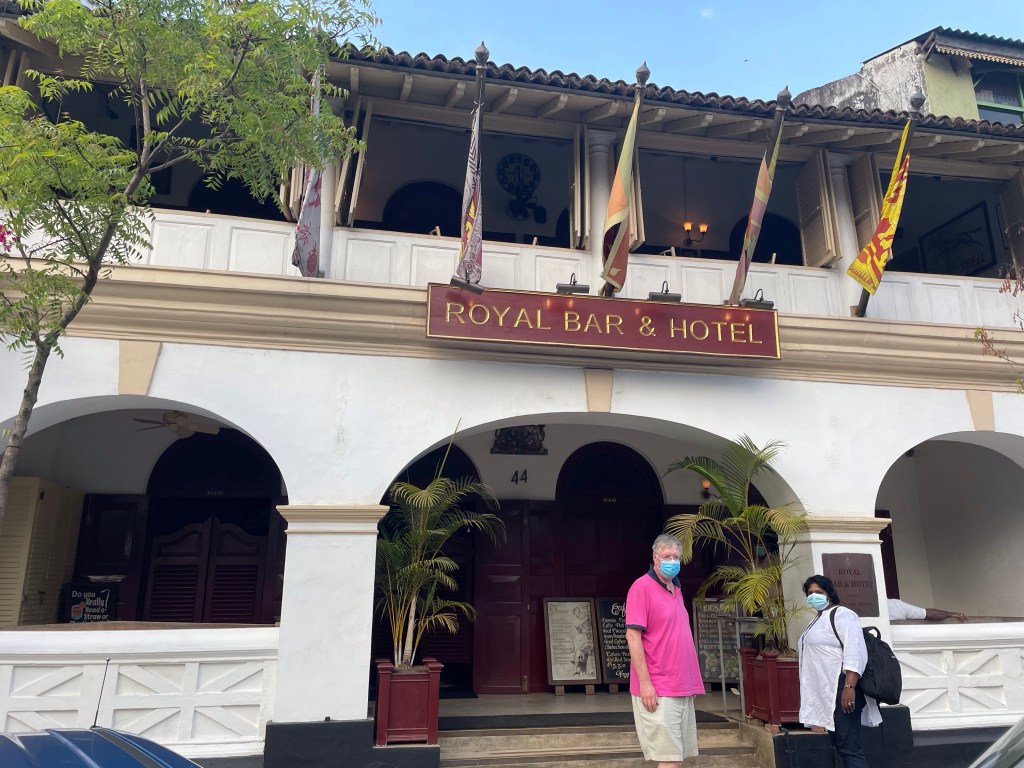
There are still signs of Kandy’s colonial past with buildings being protected by heritage status. The cost of renovation is such that many are falling into disrepair, however the pub remains in working order !

Temple of the Sacred Tooth Relic
St Paul’s church and the stupa
Tooth Relic ceremony
Garrison cemetery, established 1817
Former law offices
Time for a pint of Lion lager