Largely built by Amenhotep III (1390-1352 BC) and Ramses II, the longest reigning pharaoh, (1279-1213 BC). It is connected to Karnak by the 3km avenue of the Sphinx. The temple sits close to the Nile and surrounded by the current city of Luxor.

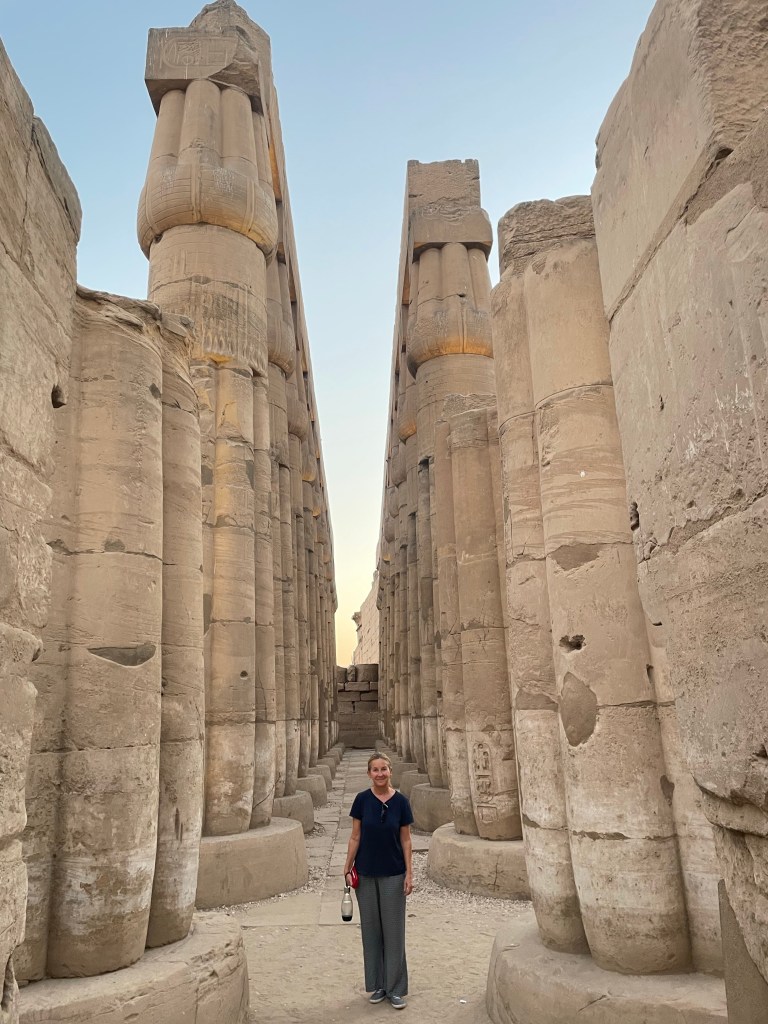
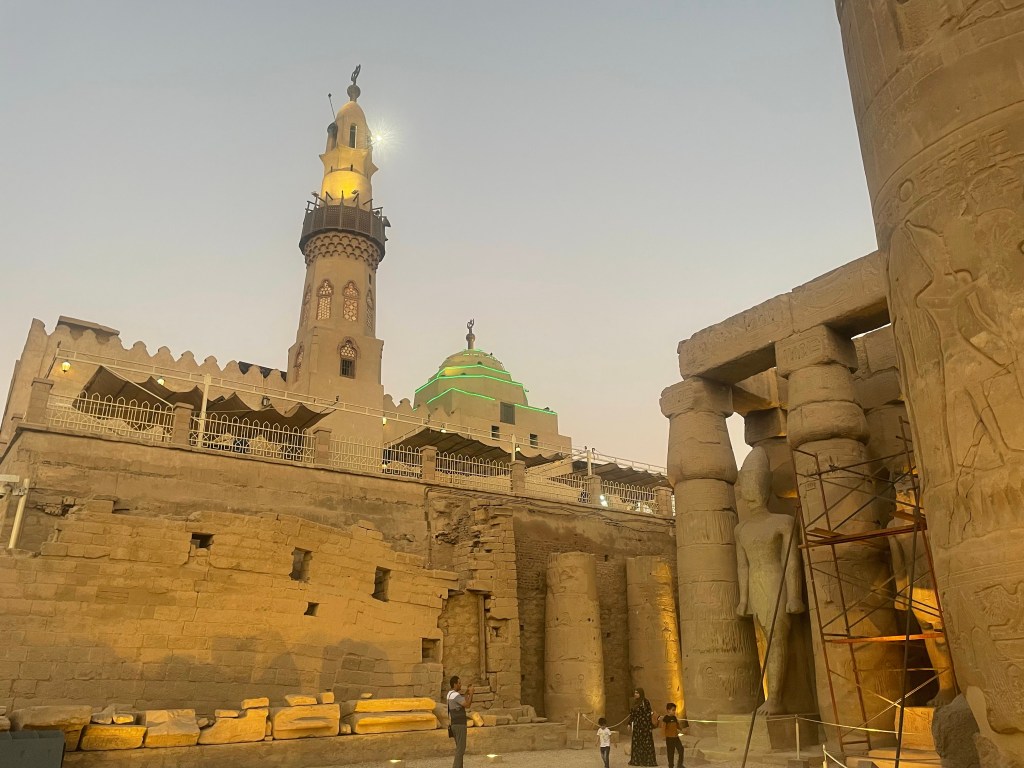
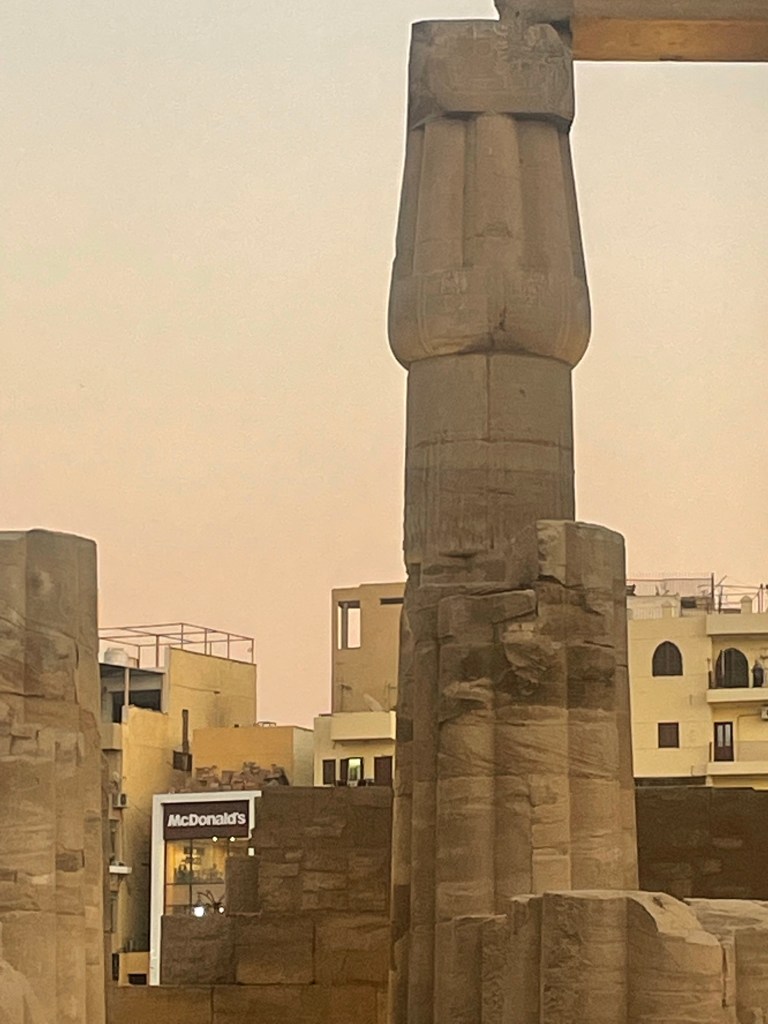
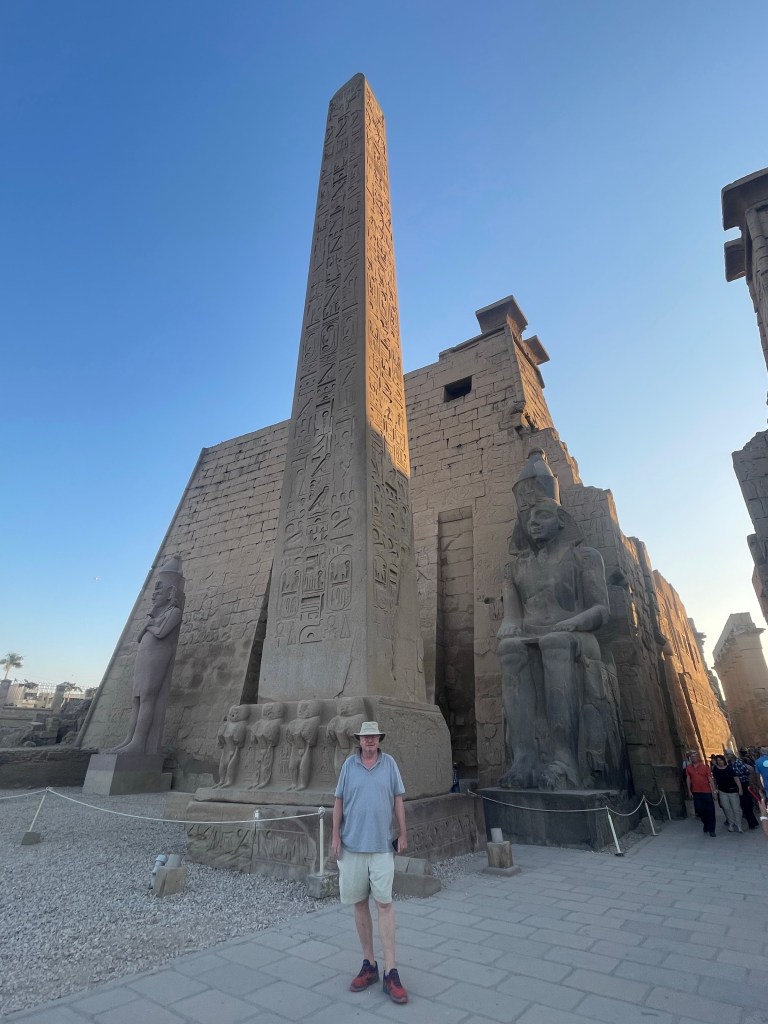
Largely built by Amenhotep III (1390-1352 BC) and Ramses II, the longest reigning pharaoh, (1279-1213 BC). It is connected to Karnak by the 3km avenue of the Sphinx. The temple sits close to the Nile and surrounded by the current city of Luxor.
Karnak is a temple complex large enough to contain ten cathedrals. It was built, added to and changed over a period of 1500 years. It is dominated by the temple of Amun-Ra – the sun god and Egyptian equivalent to Zeus.
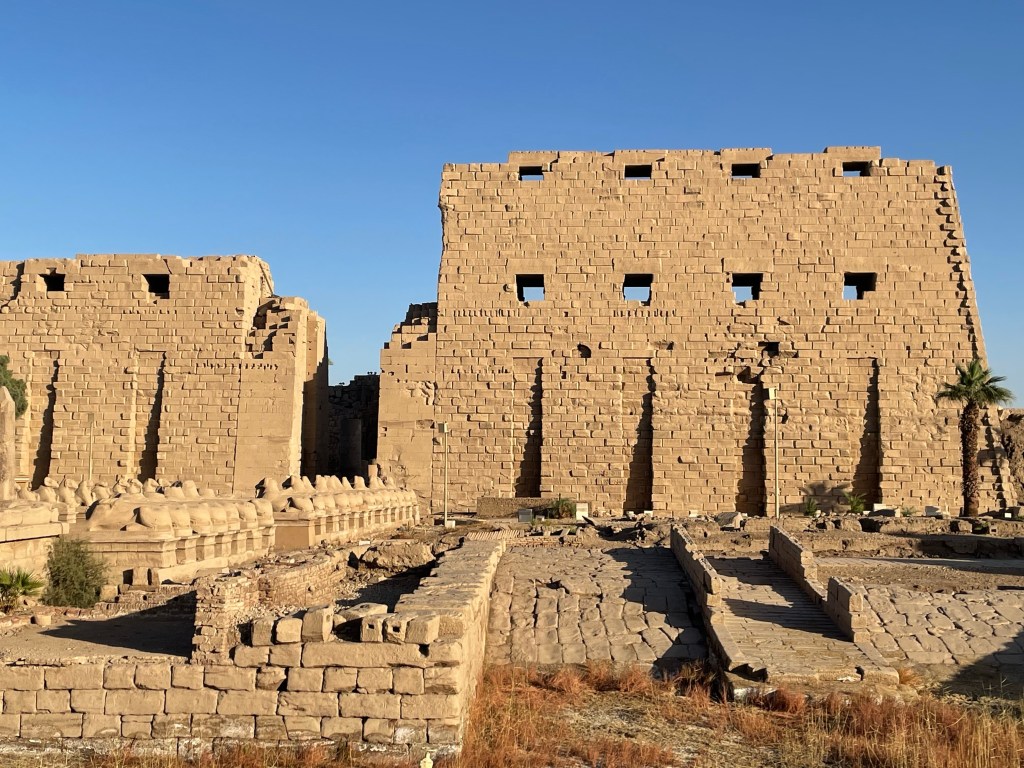

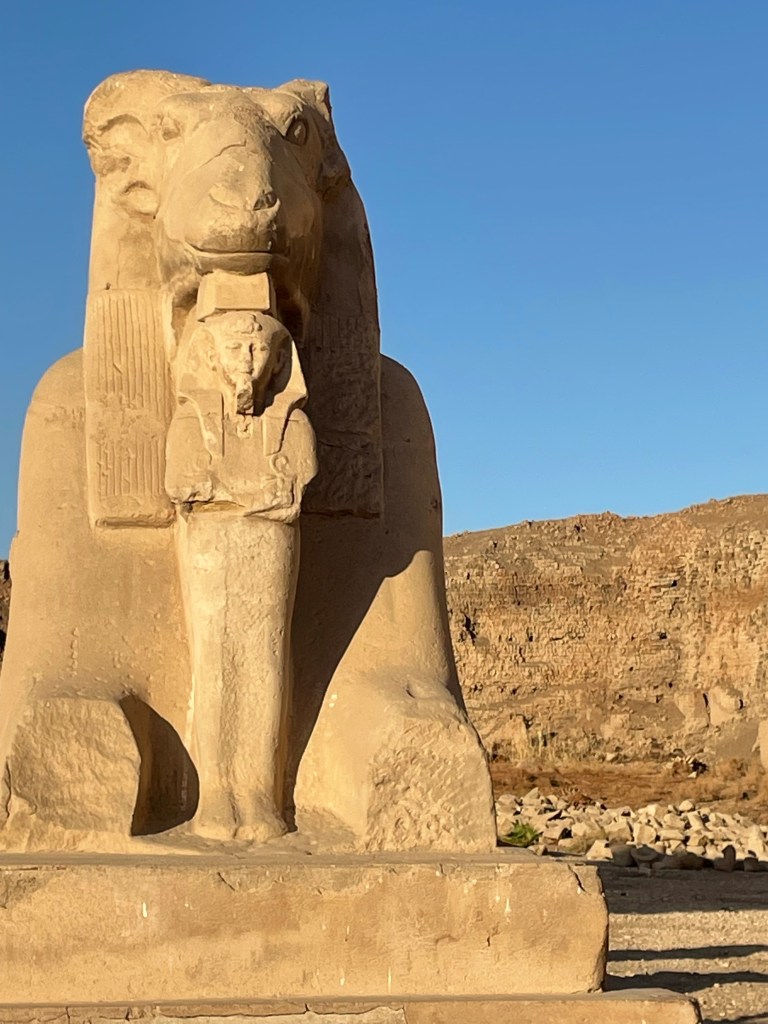
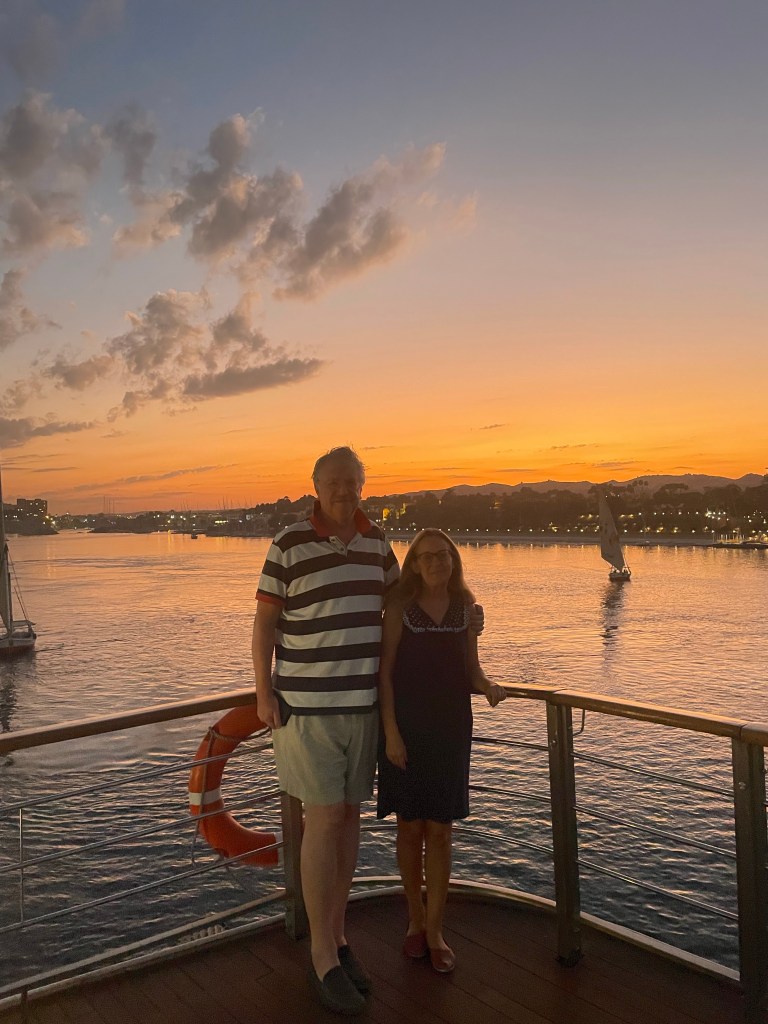
We flew from Cairo to Luxor and joined our ship for a week on the Nile. Due to low water levels in the river, initially we did not go very far as it was not possible to navigate the section north of Luxor. However, we were straight into our schedule of early starts, temples and tombs.
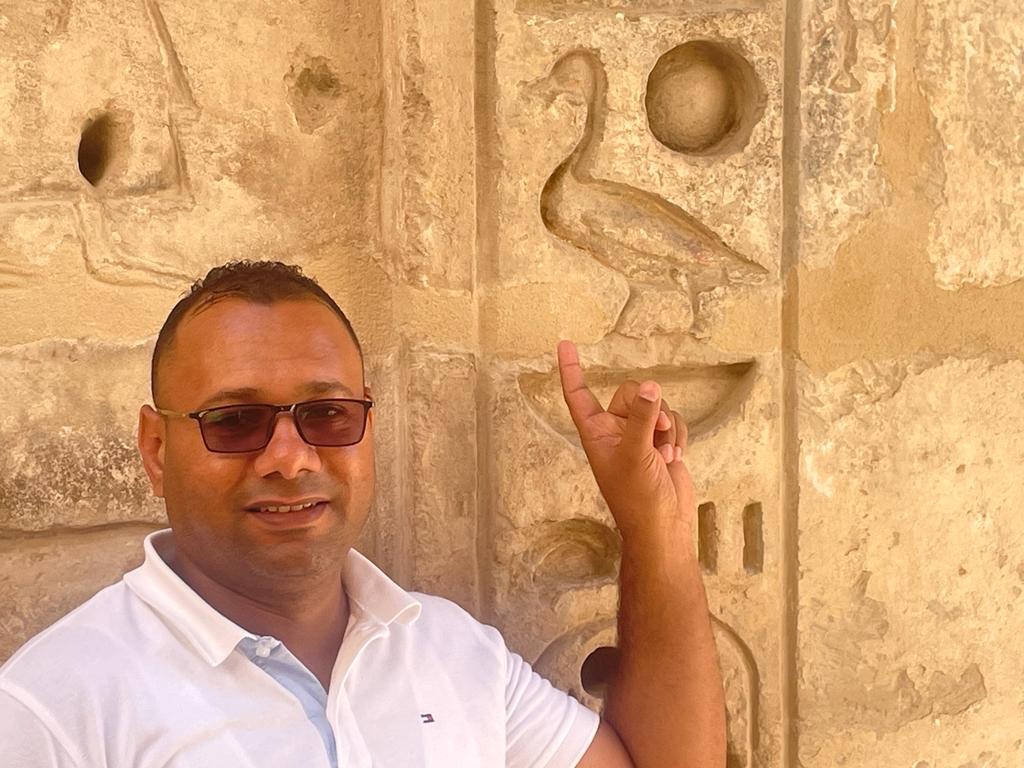
We were in the same group of six with the same guide and driver for all the sight seeing. Our guide, Wael was quick to pick up the pace and sense of humour of our all British group. Wael qualified at Cairo university in tourism, guiding and Egyptian history/archeology sixteen years ago. Sadly, though due to the impact on tourism in Egypt of political unrest and the pandemic, he has only had around six years of good work.


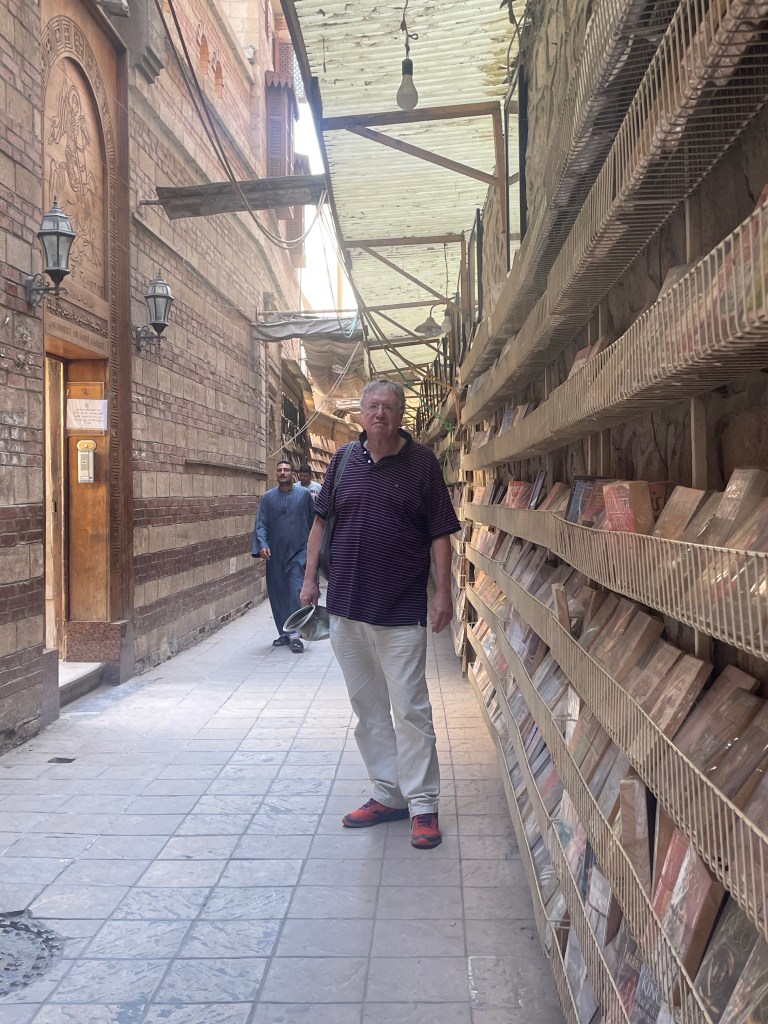
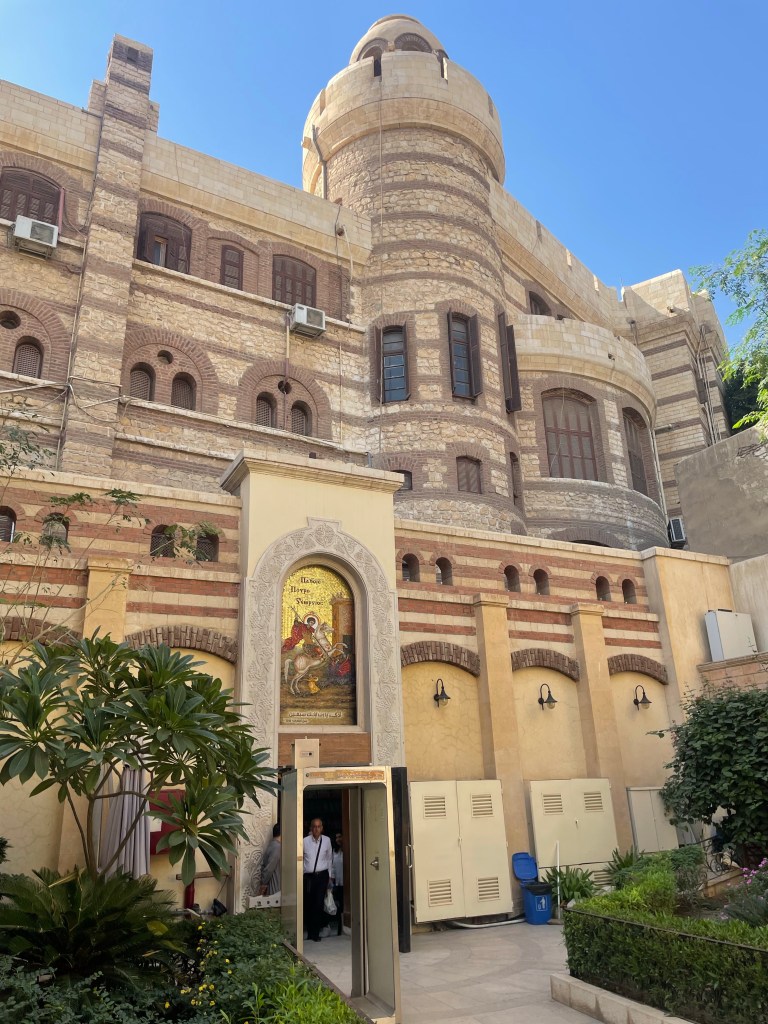
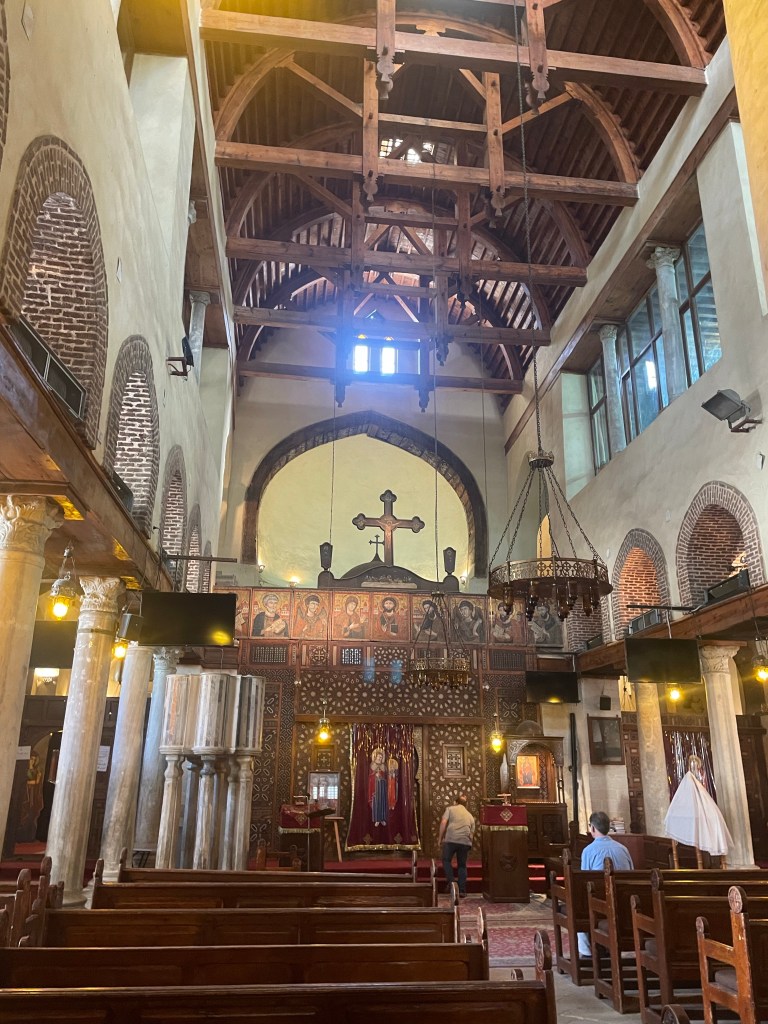
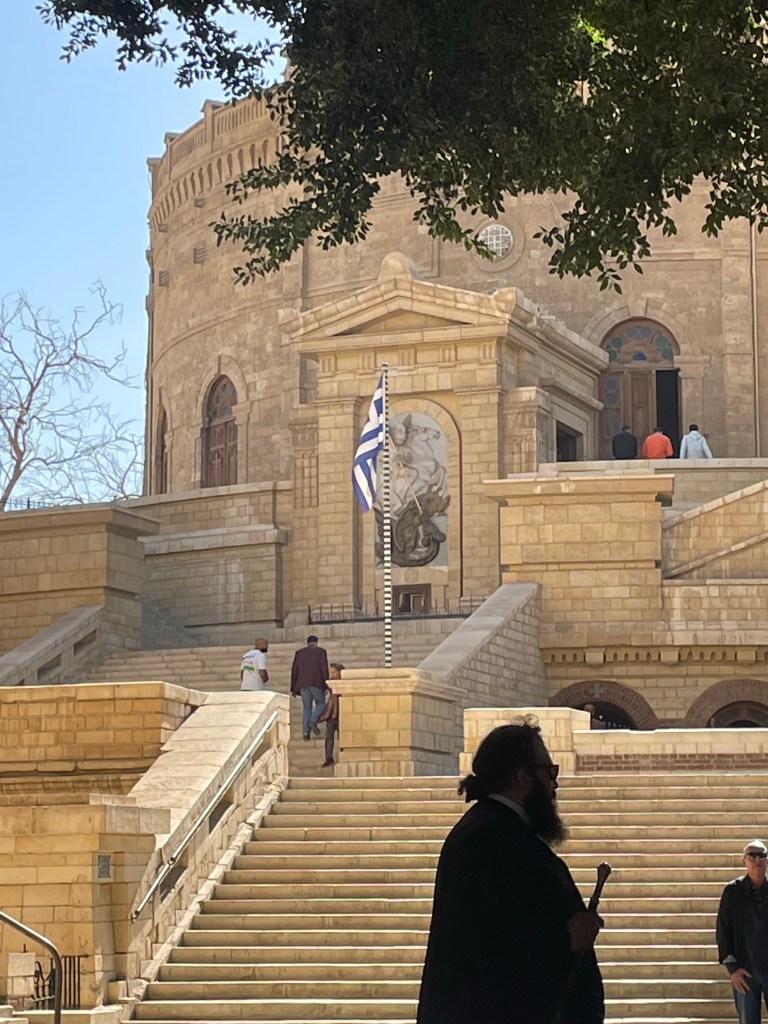
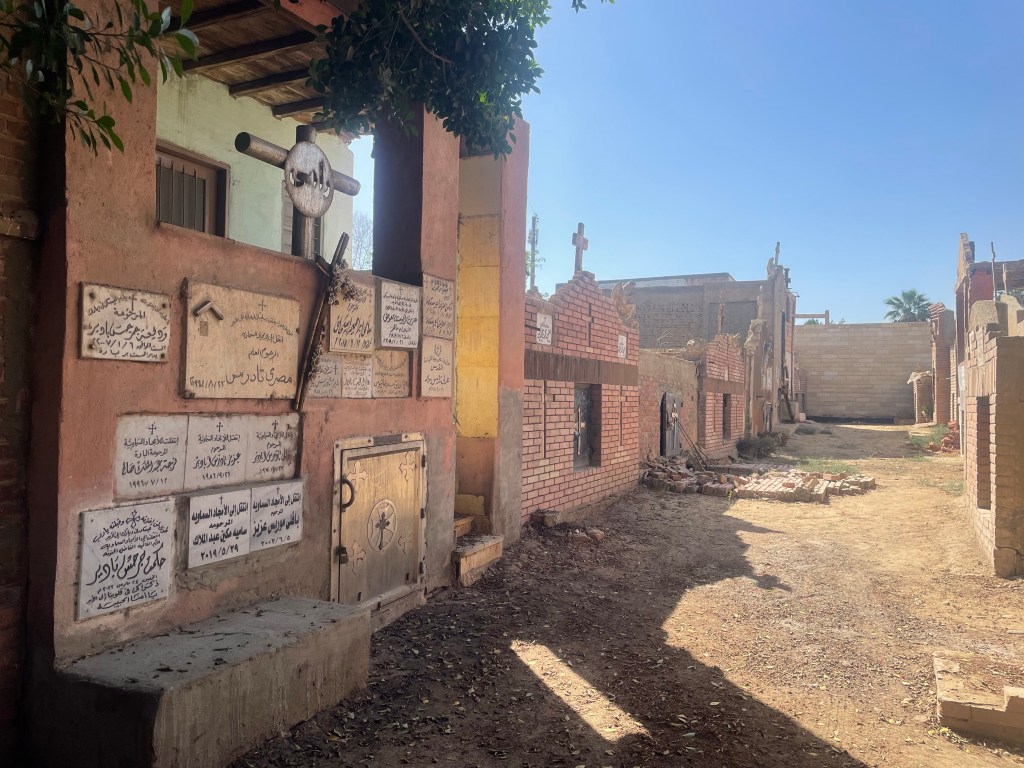
Coptic Cairo contains the oldest church, oldest mosque and oldest synagogue in Cairo; although some of the buildings are newer, some date back to the 9th and 10th Centuries. We visited the Hanging Church (named for its location above the gatehouse of the Babylon Fortress), Church of St George and Monastery of St George. In addition we walked through the Coptic cemetery where families have, what appear to be, small houses for their dead. The Ben Ezra synagogue was closed for renovation.
While estimates vary, today around 20% of the population of Egypt are Coptic christians. It is common to see churches and mosques close to each other in the towns and villages along the Nile.
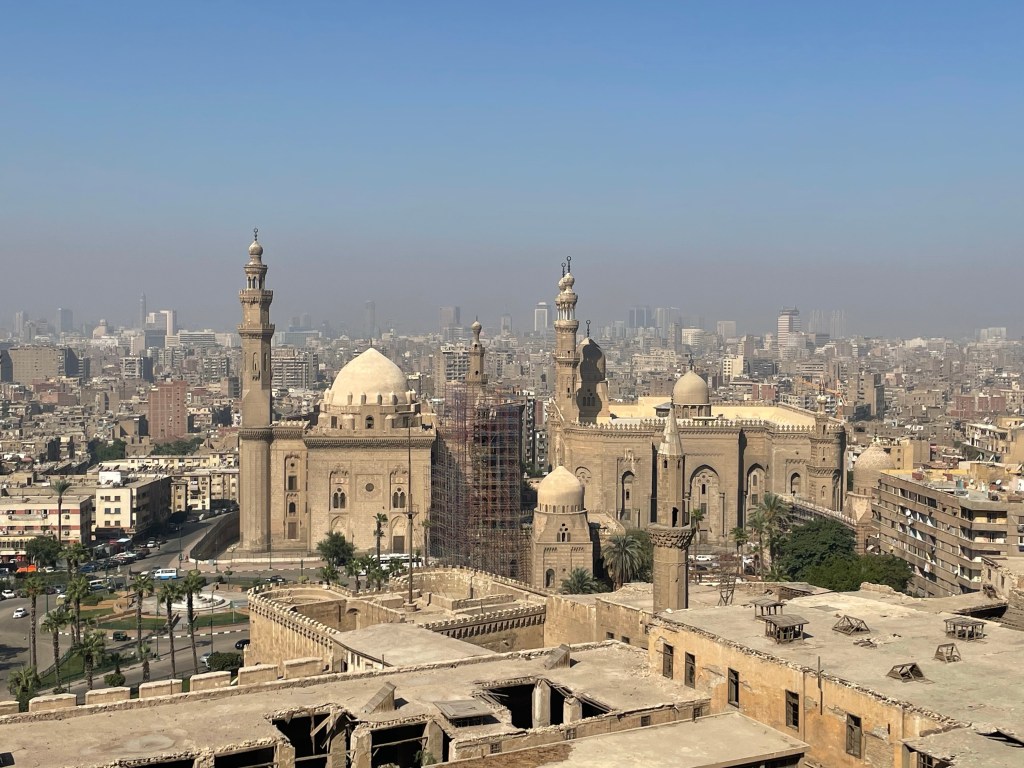
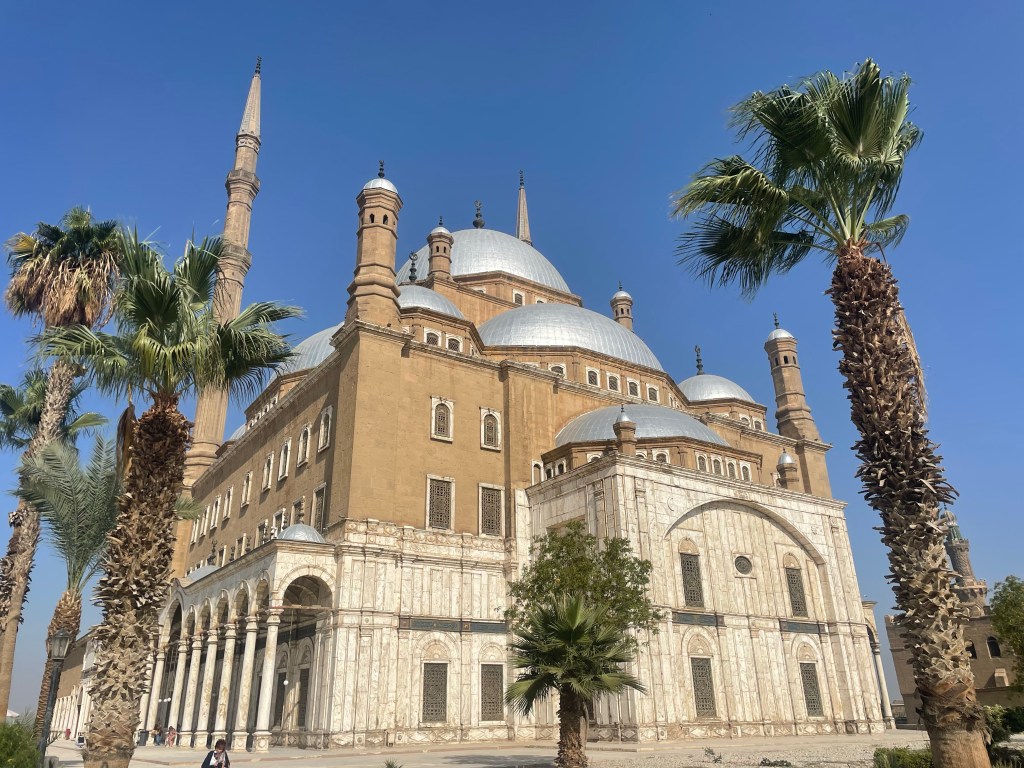
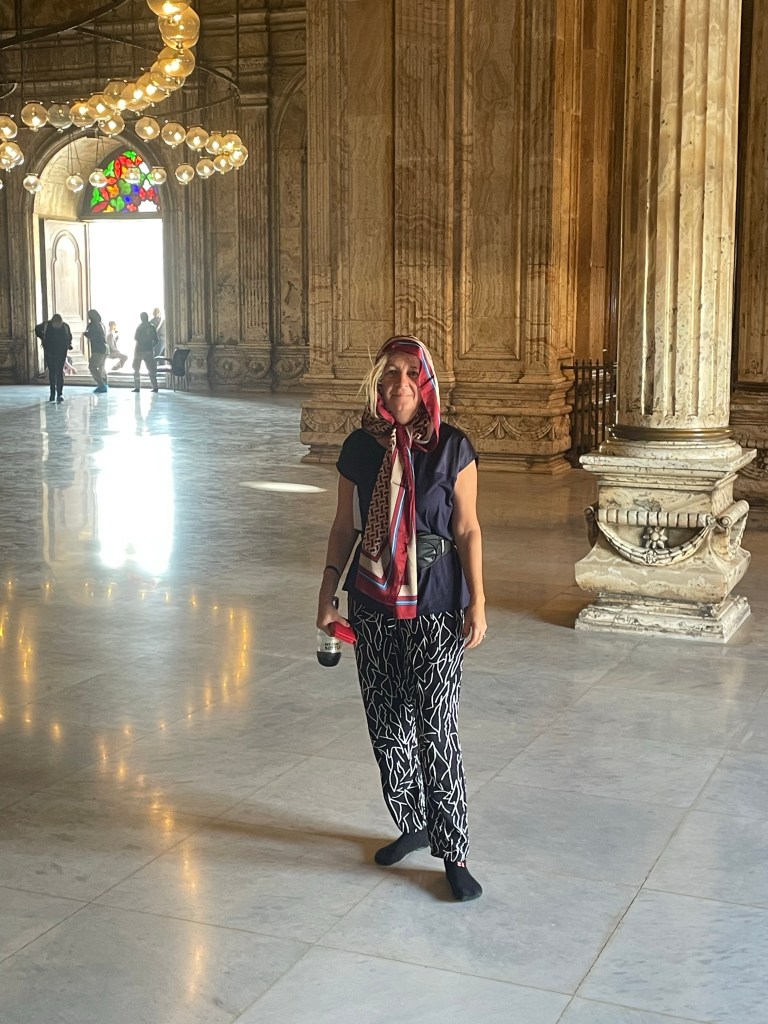
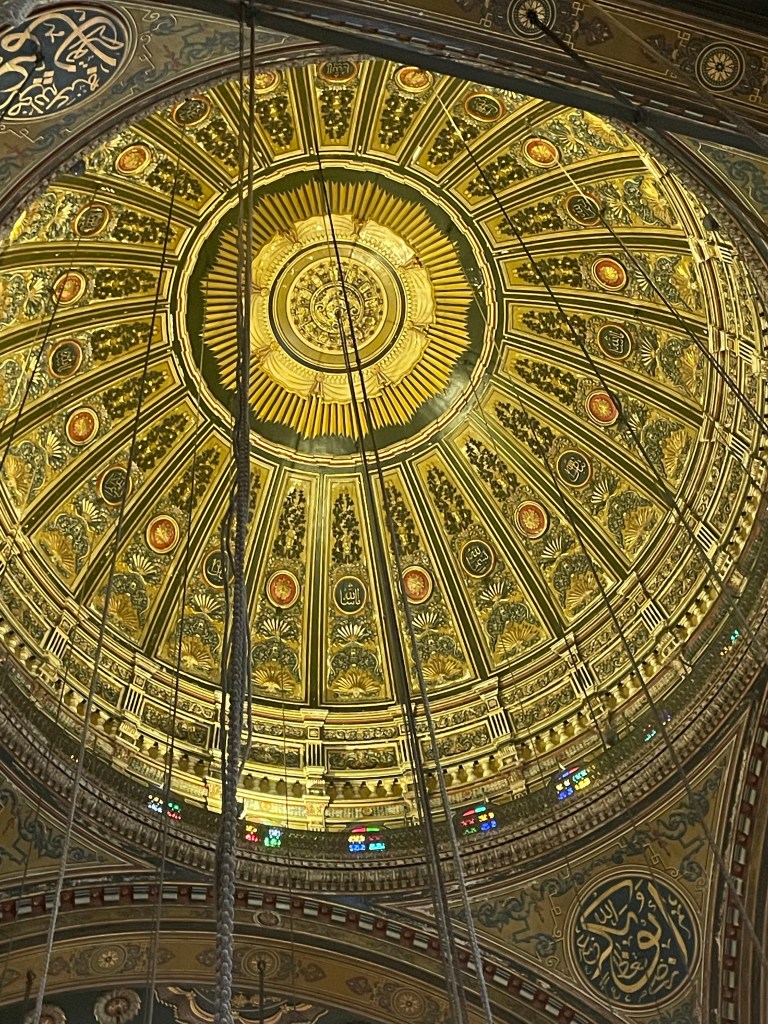
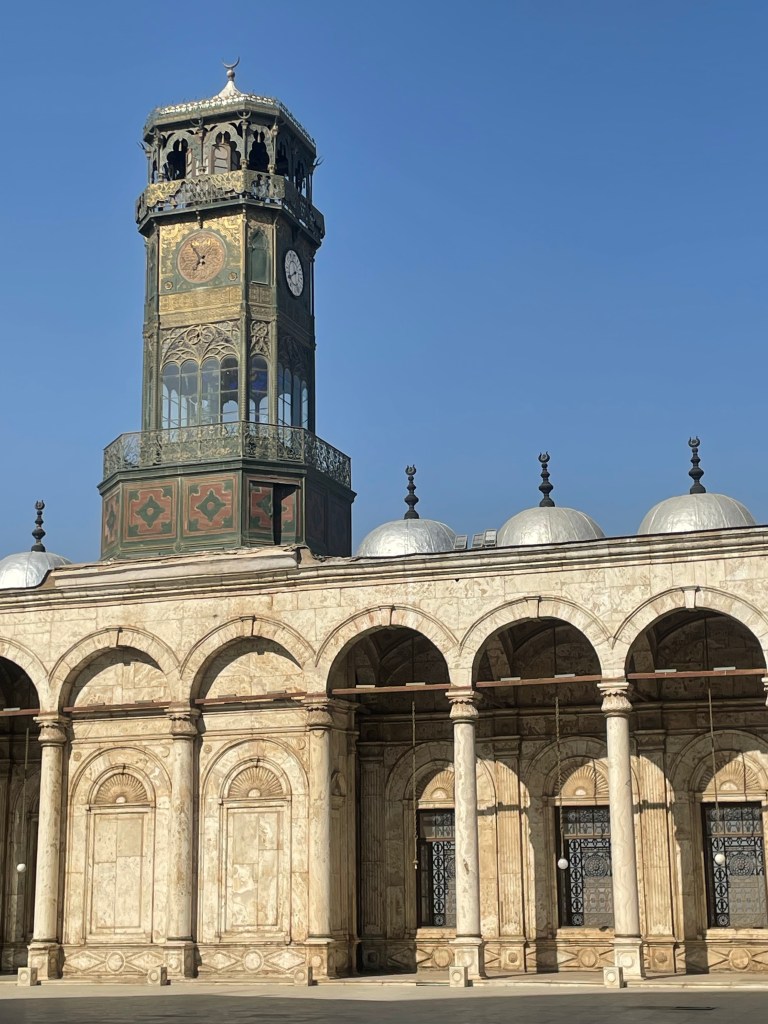
The Citadel is built at the top of Cairo. You are supposed the be able to see the pyramids, but this is impossible due to the air quality. Some of the initial building materials were removed from the pyramids. The main attraction now is the 19th Century Mosque of Mohammed Ali (nothing to do with “the greatest”). In its courtyard is a clock given to the Egyptians by the French in exchange for the obelisk in the Place de la Concorde, but it arrived damaged and has never worked. We were surprised by how few tourists there were at the Citadel – for many Cairo is a staging post including only the pyramids.
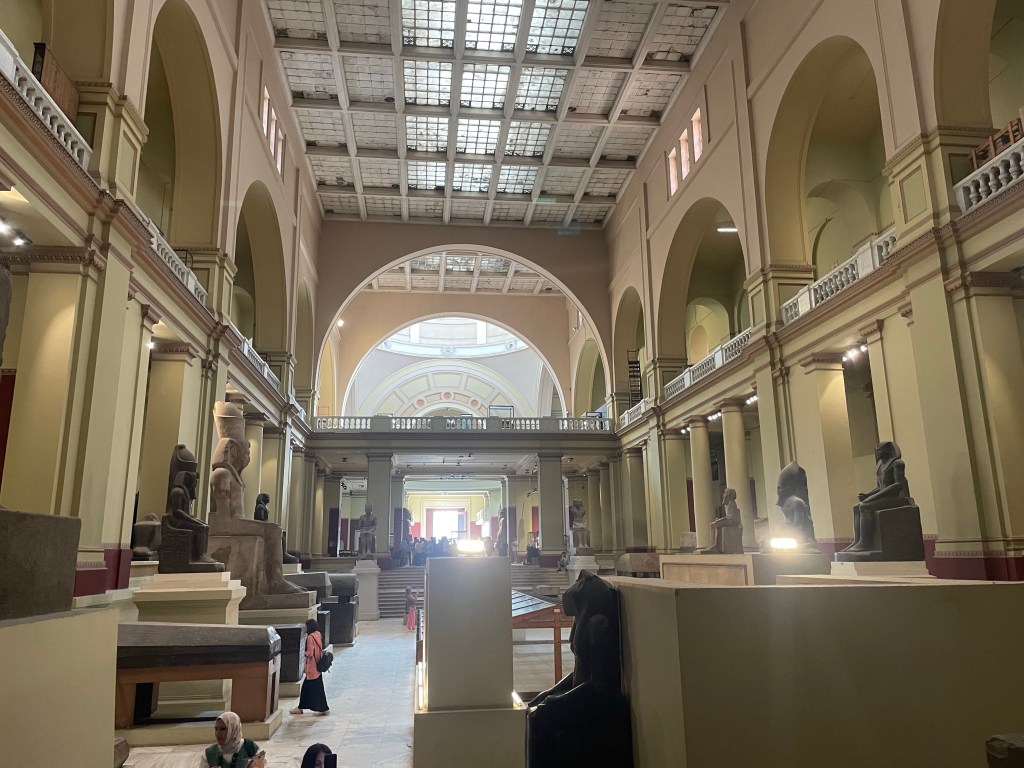
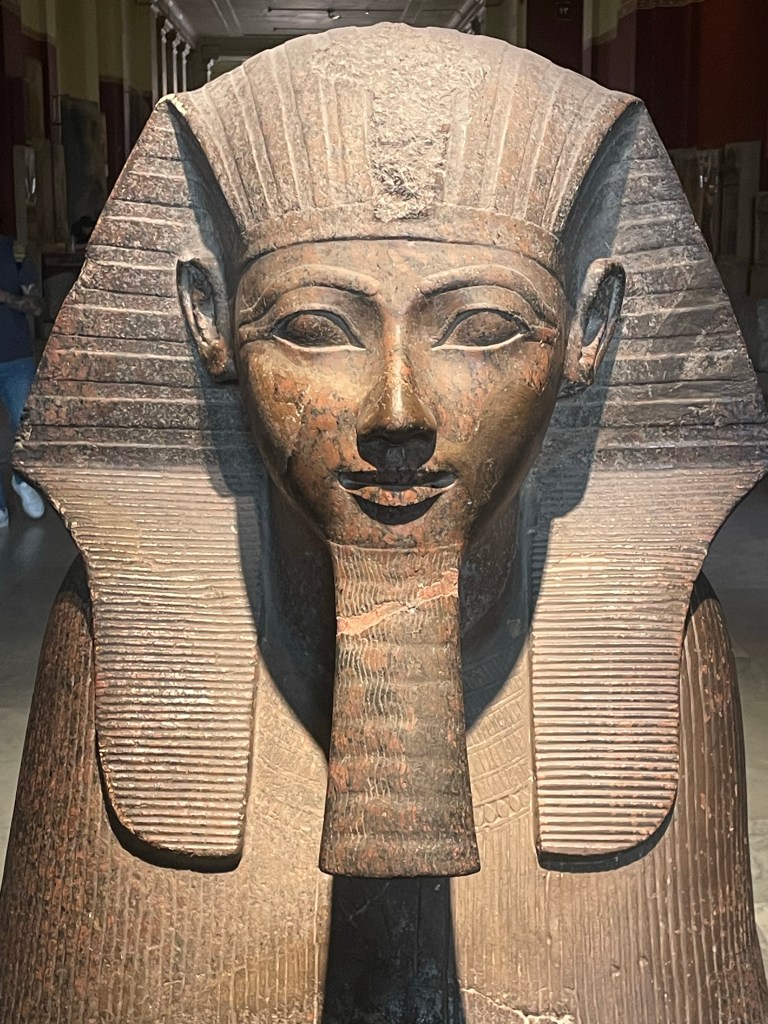
A new museum is being built to house many of the artifacts including the finds from Tutankhamun’s tomb, but this is not expected to open until 2023. The current museum in Cairo was built in 1901 to the design of a French architect. Navigation of the museum is almost impossible without the assistance of a qualified guide, which we had. You would spend days there unless directed to the highlights and many displays do not have labels.

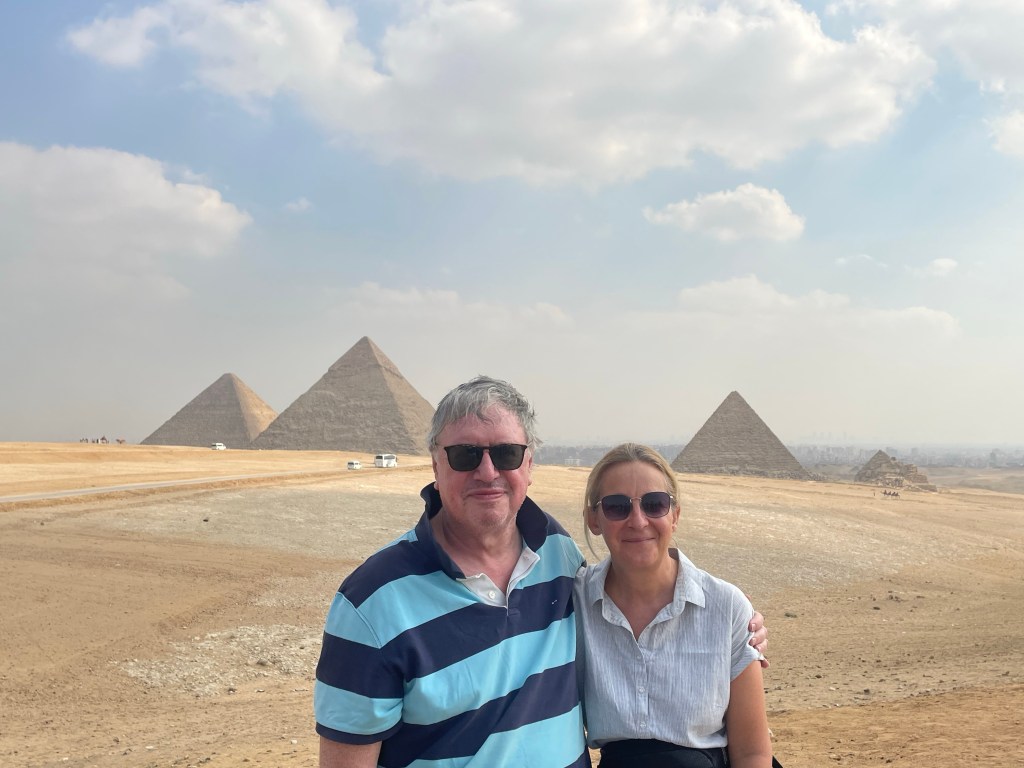
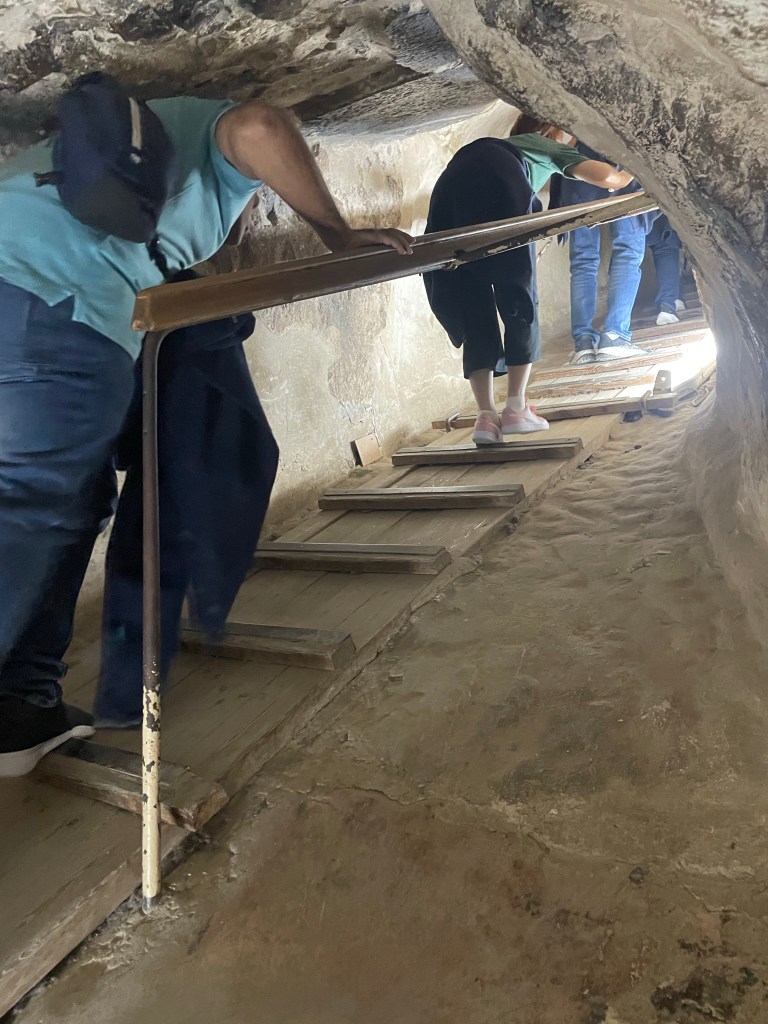
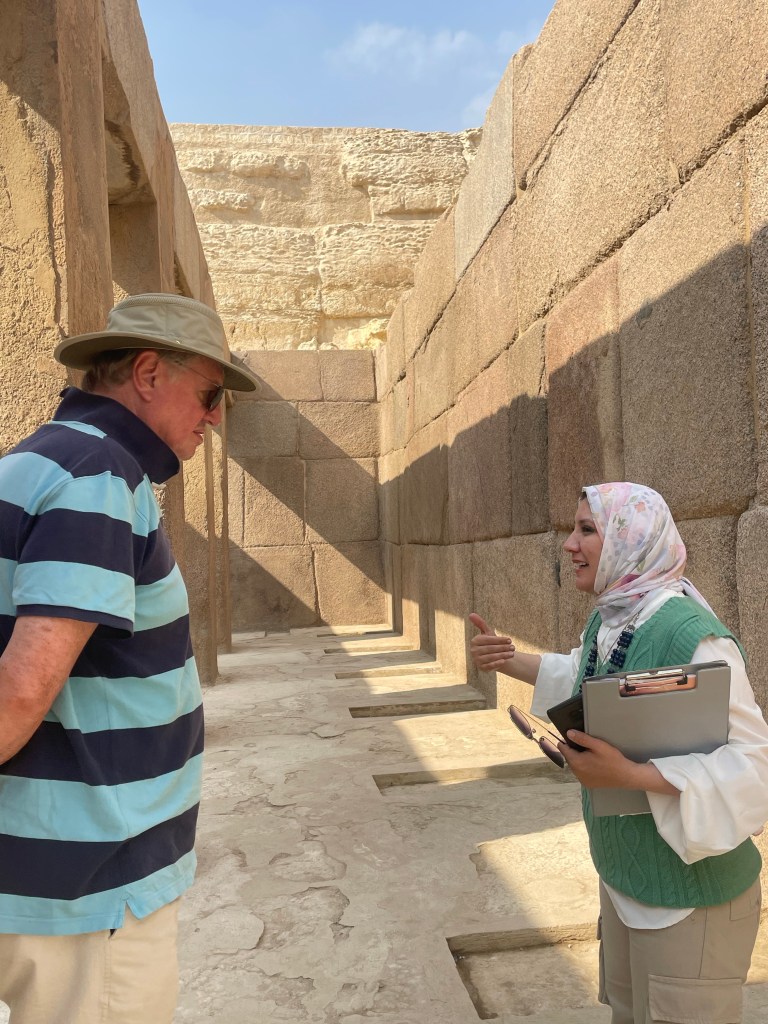
There are three main pyramids- Khufu, Khafre and Menkaure. Khufre, the great pyramid, is the largest at 146 metres high. In addition there are three Queens’ pyramids. Howard Vyse, a British soldier and Egyptologist, has left his mark on at least one of the pyramids as he tried explosives in the 19th century as a means of excavation. One upmanship on French soldiers who had used the Sphinx for target practise in Napoleon’s time.

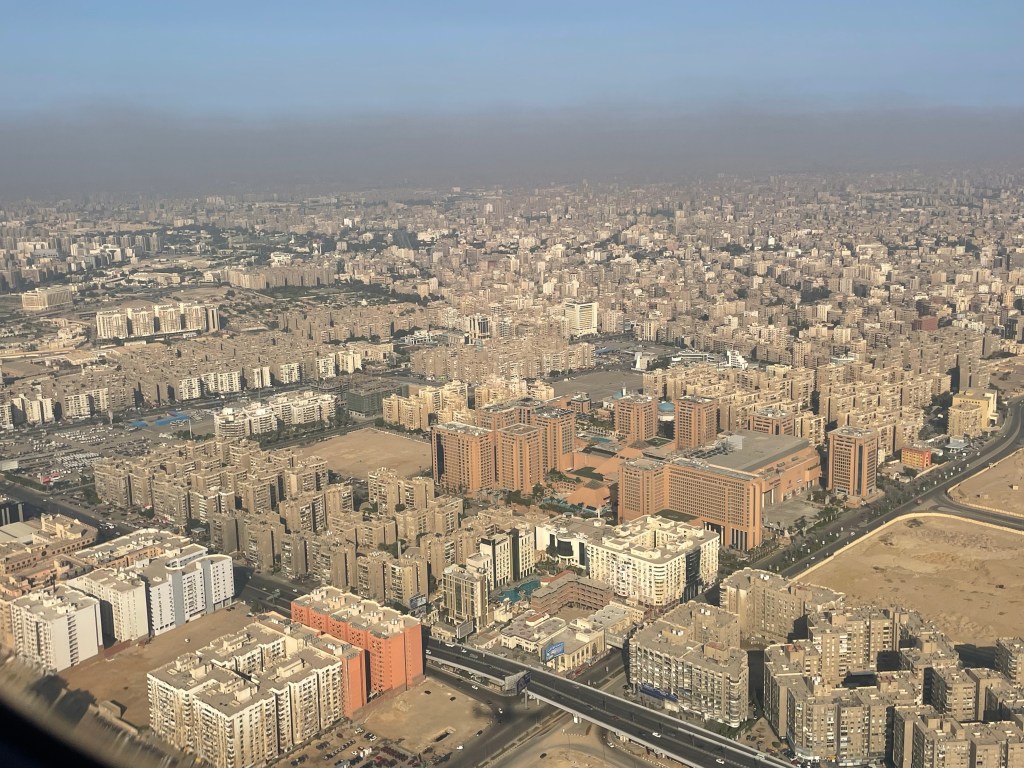
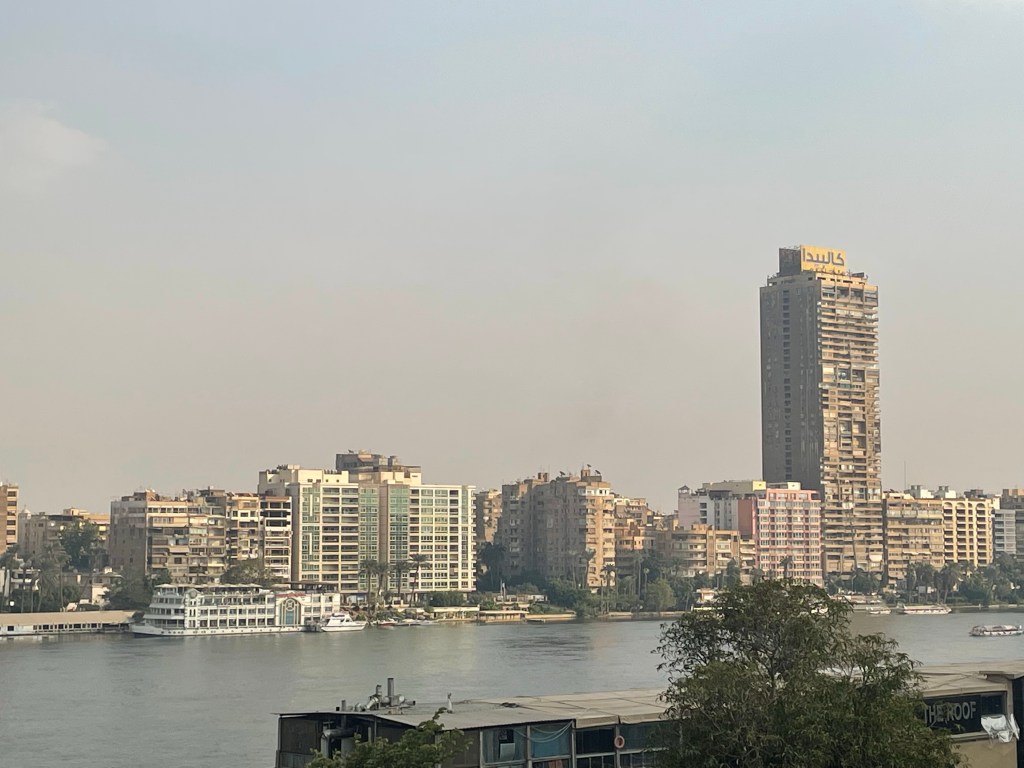
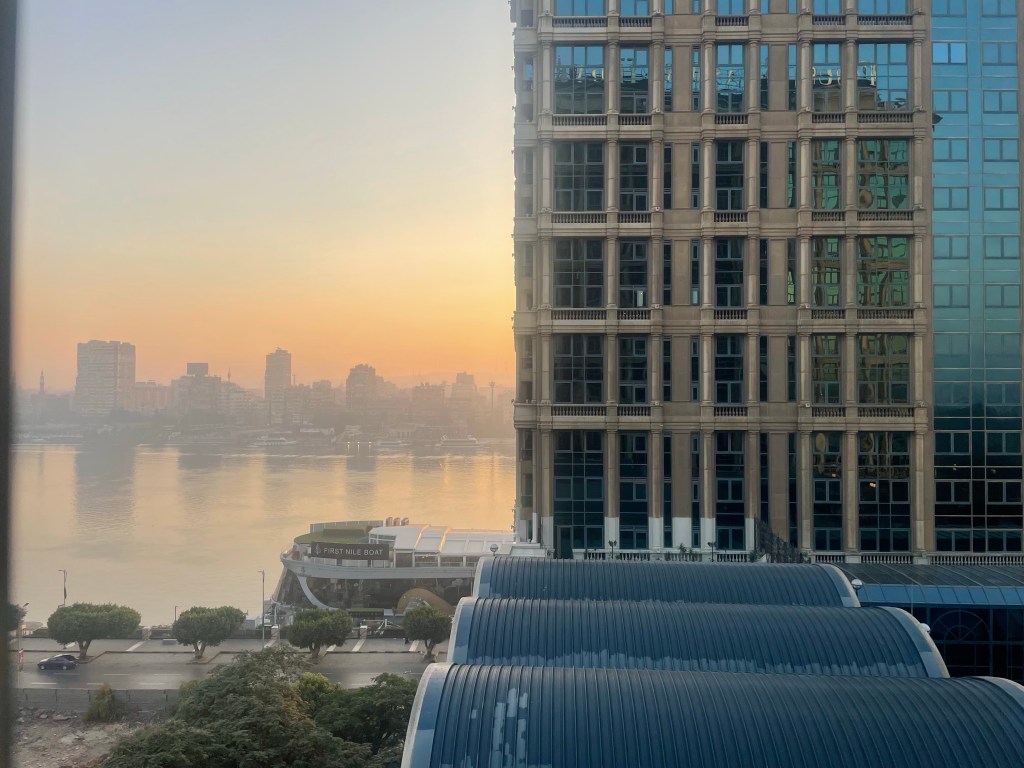
Cairo is the largest city in the Arab world with a polulation of over 20 million, around one fifth of all inhabitants of Egypt. It has grown rapidly with a creaking infrastructure (it makes London traffic look reasonable) and terrible polution. The economy has suffered badly from the pandemic and more recently the war in Ukraine. Tourism is a major source of income which was only just recovering from the political unrest when the pandemic hit.
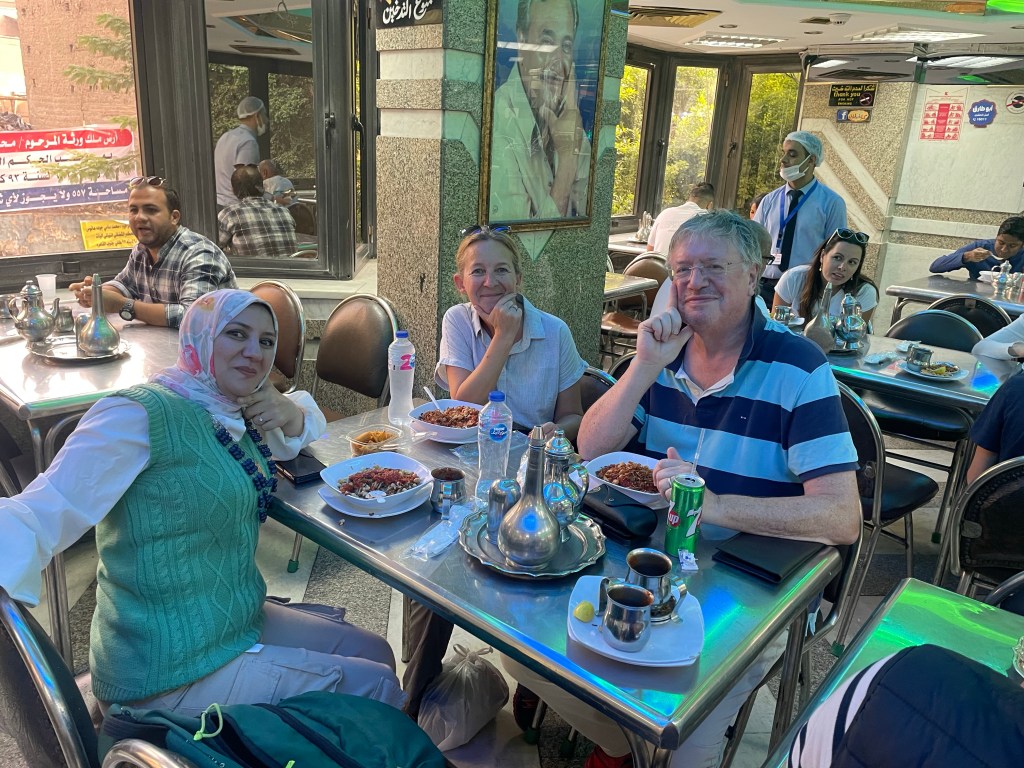
We spent three nights in Cairo, taking in the top sites and enjoying the local cuisine. Local restaurants don’t serve alcohol. International hotels have alcohol licences – Egyptian wine is an “acquired taste” while imported alcohol is very heavily taxed. We used Uber to travel within the city – a fraction of the prices in London, the same driver cancellation frustrations but the added challenge of reading a number plate in arabic script.

A brief timetable with dates
3100 BC Upper and lower Egypt united by Narmer
2650-2300 BC Pyramid building at Giza
2125-1650 BC Thebes (now Luxor) becomes the capital
1550-1150 BC New Kingdom under 18-19th dynasty including the female pharaoh Hatshepsut and the boy pharaoh Tutankhamun
525 BC Persians rule Egypt
331 BC Invasion by Alexander the Great
30 BC Anthony and Cleopatra defeated
45 AD St Mark arrives in Alexandria and Christianity begins
640-868 AD Arabs take control of Egypt
1171 AD Saladin siezes power and builds a Citadel in Cairo
1517 AD Ottamans make Egypt a province
1798 AD Napoleon invades but is quickly replaced by British
1859 AD Work begins on Suez canal
1922 AD Howard Carter discovers tomb of Tutankhamun
1952 AD Egypt becomes a republic
 Shilli-Fully Travels