Flying in Namibia

Travelling by car in Namibia is very time consuming and bumpy (locally termed “free African massage”). While the scenery is spectacular you can drive for several hours on a gravel track with limited variety. We therefore decided to maximise our time by flying between most of our stops, enabling an itinerary that included Fish River Canyon in the South and Skeleton Coast in the North.

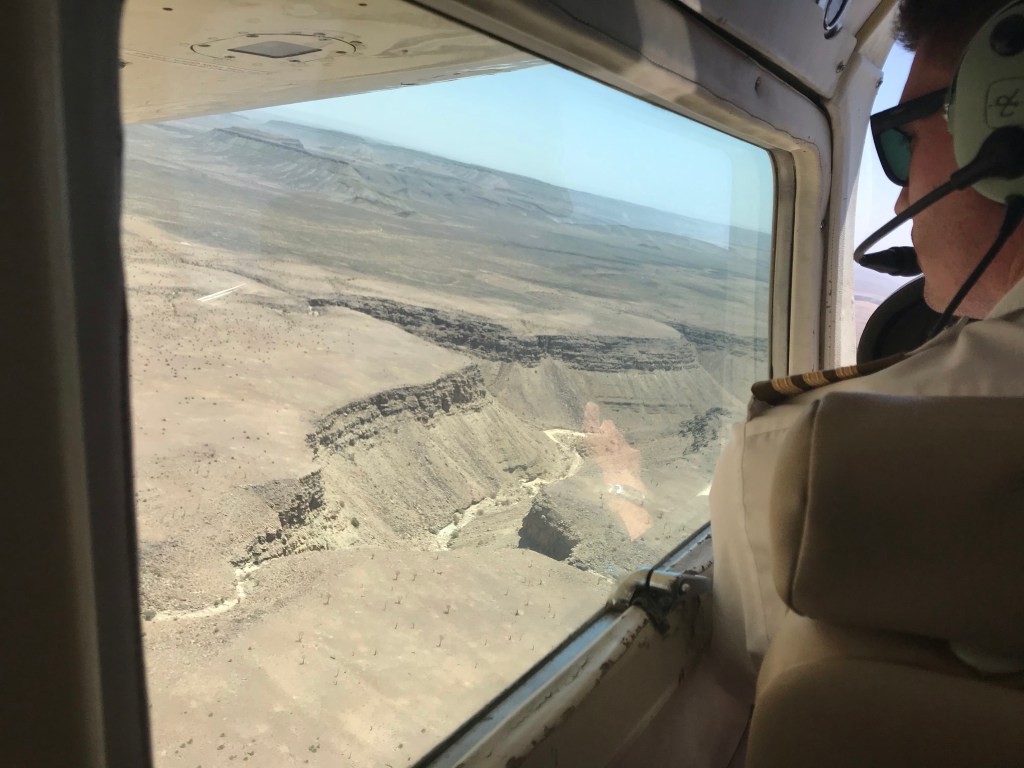
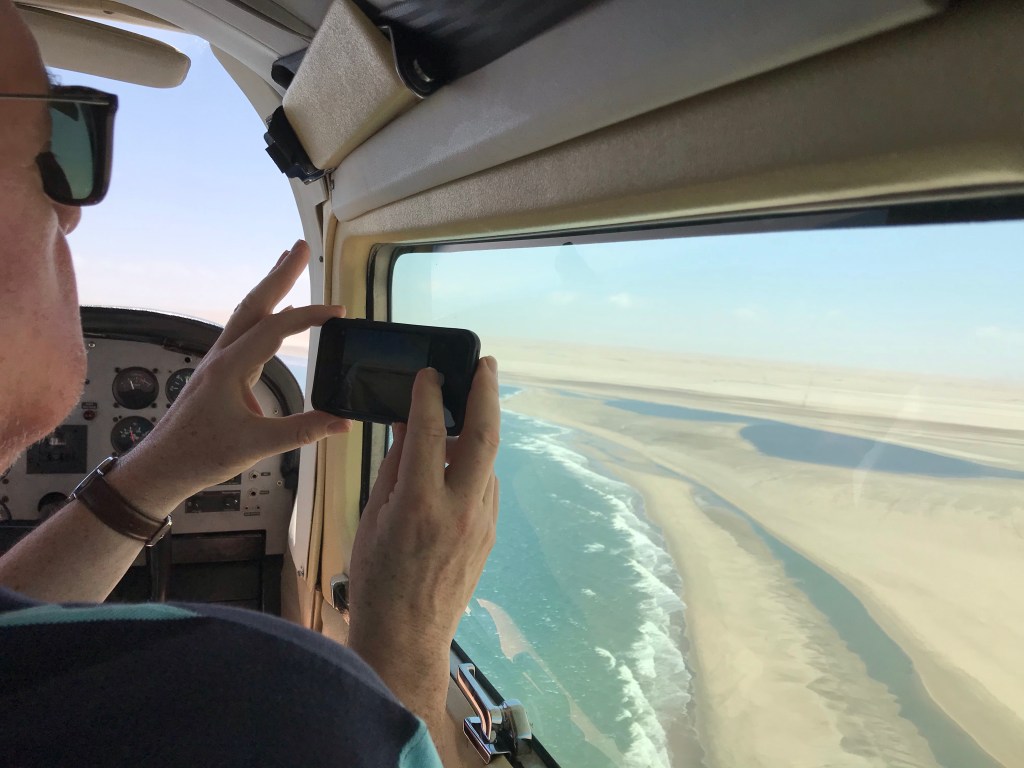
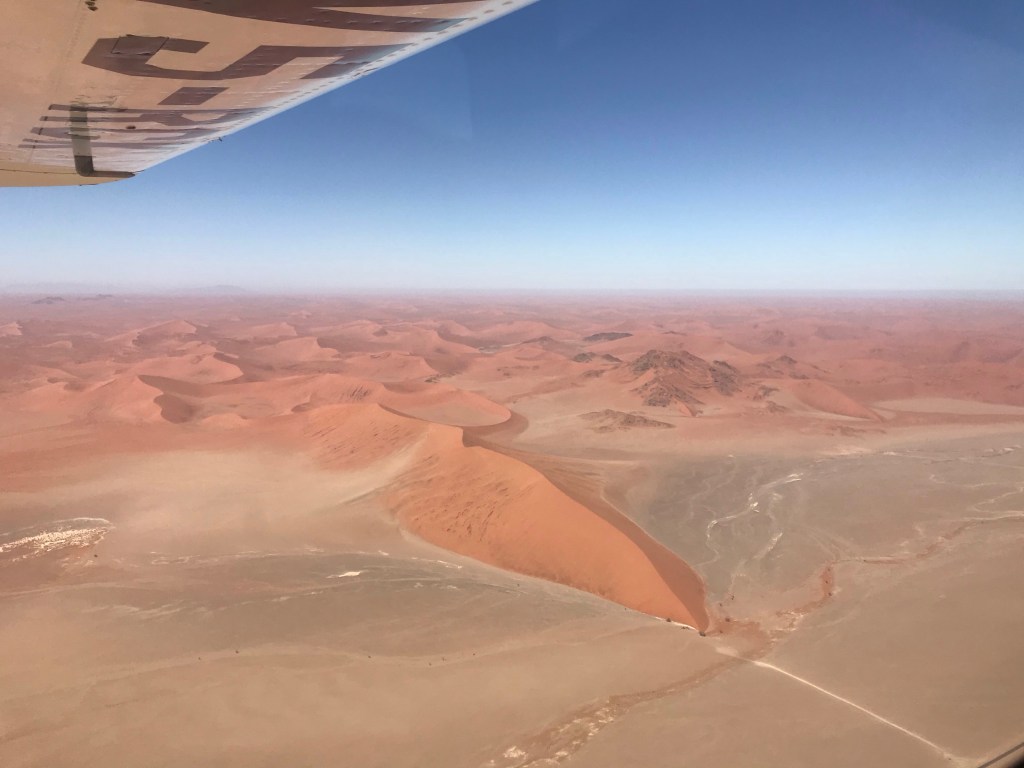
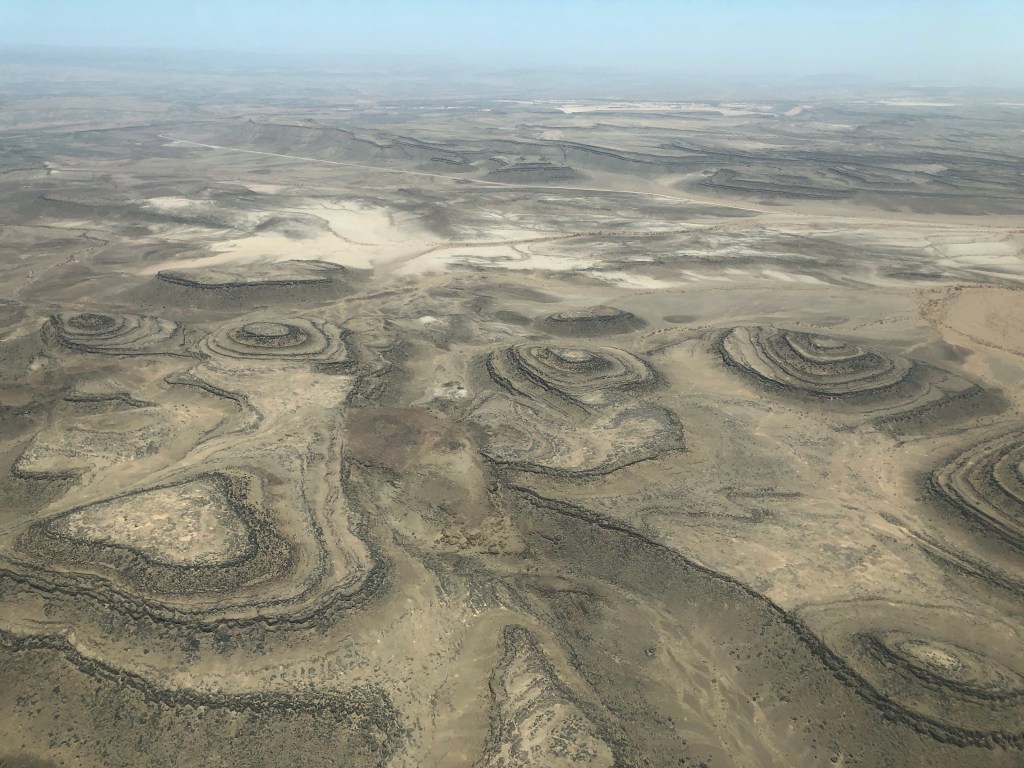
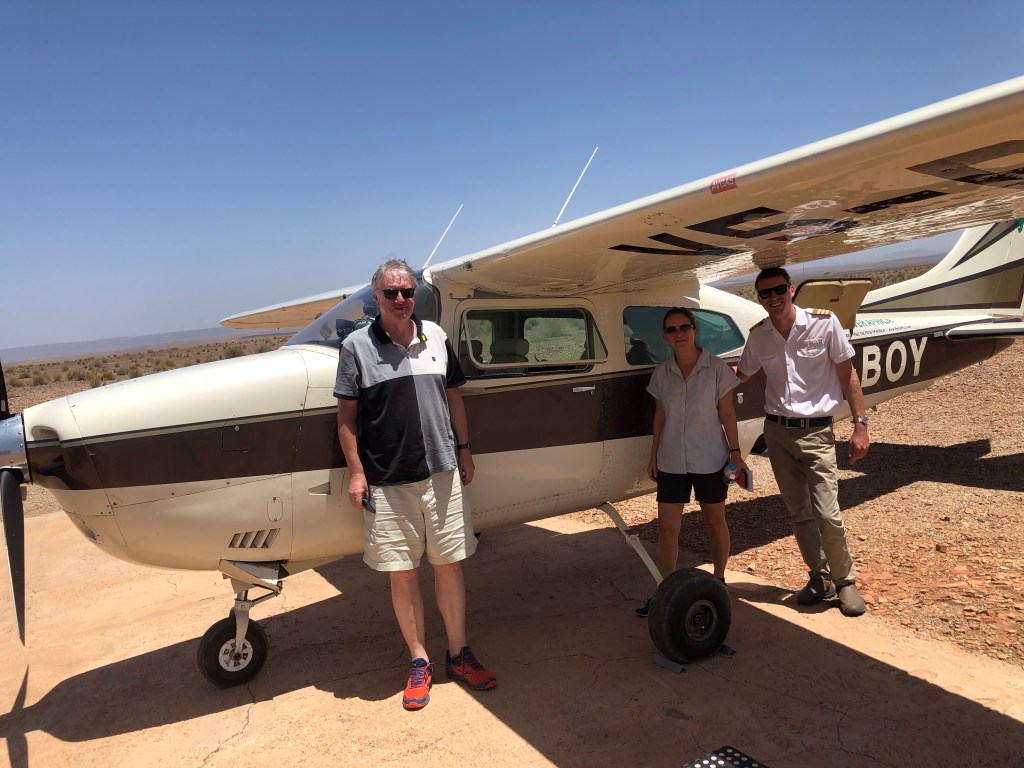
A number of charter companies operate fleets of Cessna 210 planes built in the 1970s and 1980s, seating between two and four passengers. We flew in V5-BOY and V5-RCK, built in 1975 and 1974, for our six internal flights, lasting between one and two hours. Flying mainly between eight and ten thousand feet, generally in clear conditions, we were able to see a variety of terrains.

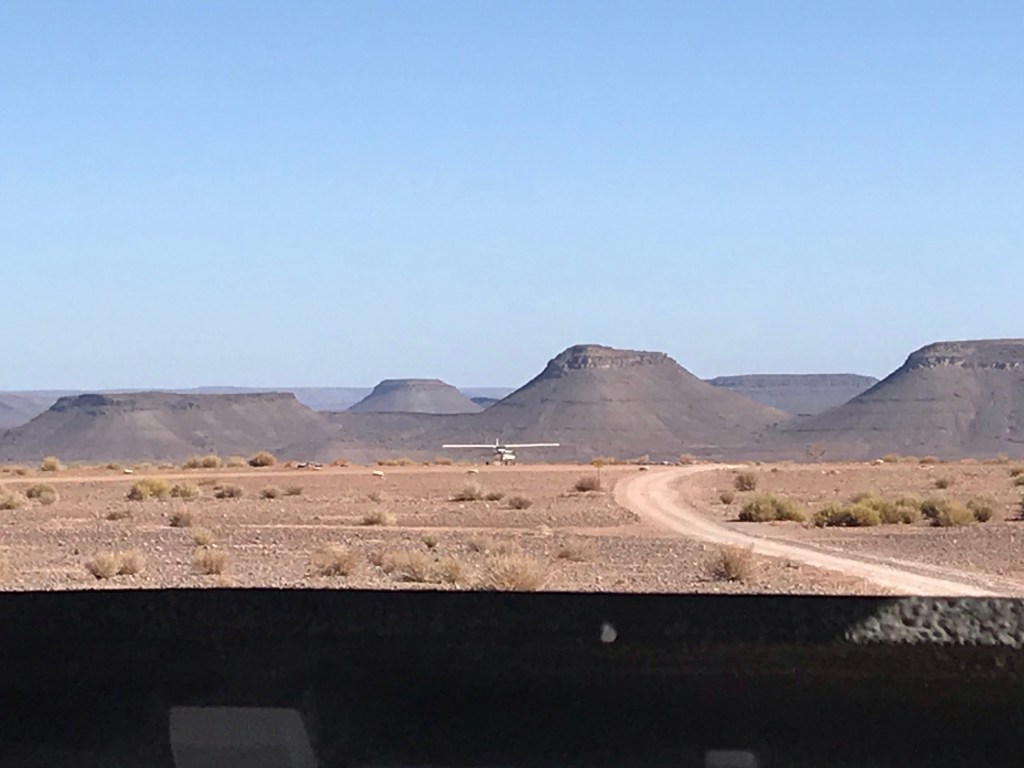
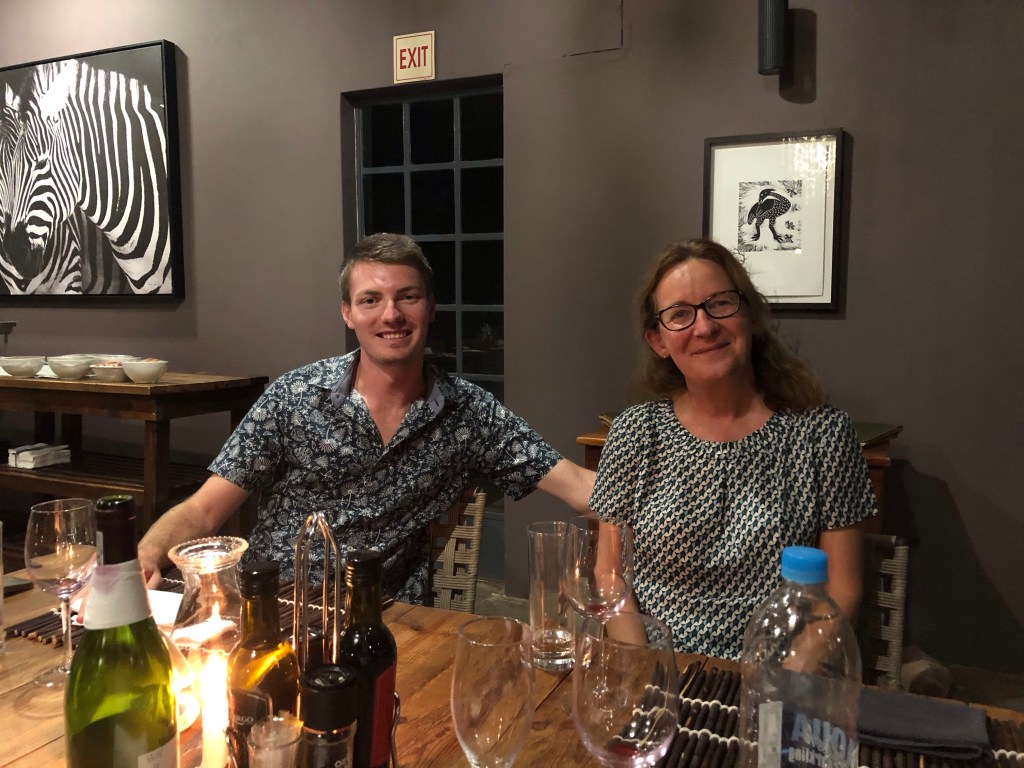
The planes land on gravel strips with no air traffic control or other staff; the pilots therefore do a pre-landing circle of the strip to check it is clear of wildlife or other obstacles. Where necessary the pilots stayed with us at the lodges which all provide guide accommodation. We flew with three different pilots – having dinner with our pilot the night before a flight was a new experience.

We started our first flight with some trepidation but ended up relishing the experience.
Otjimbondona

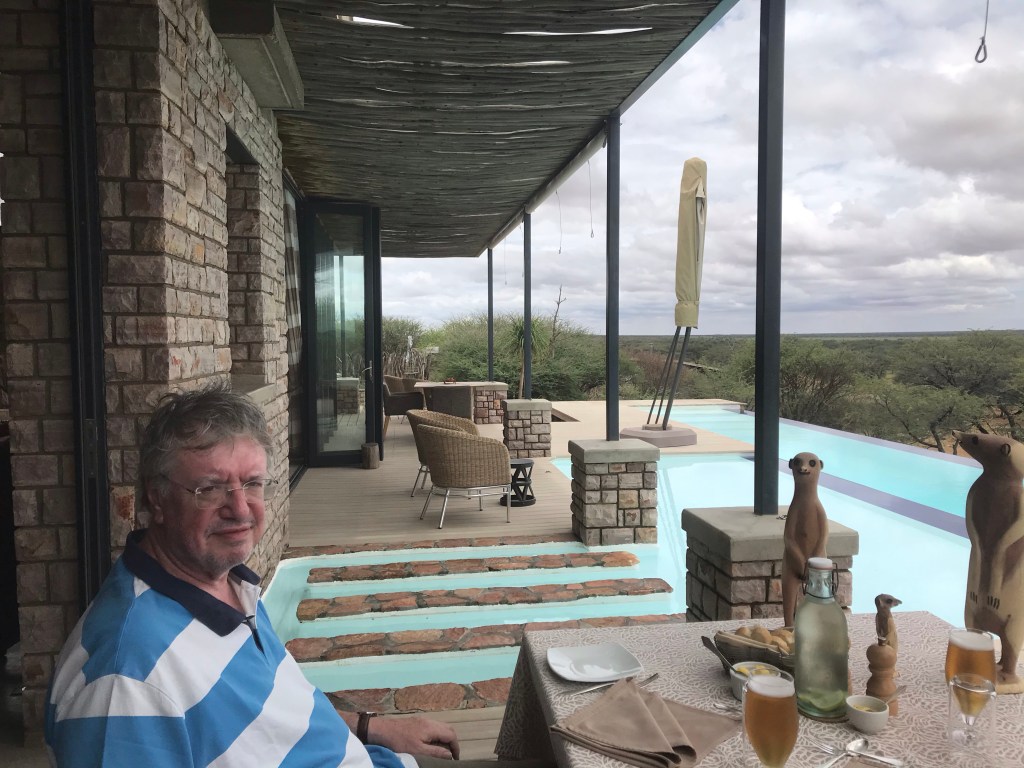
Our last stop in Namibia was at Otjimbondona – meaning “the place where the small camel thorn trees grow” in Herero – a small private reserve with four villas, an hour from Windhoek airport.

The lodge has been built around the old family farmhouse dating back to 1923. It represents a solution to a common dilemma – a livestock farm badly affected by years of drought. Here, the third generation has turned a third of its land into a reserve, acquiring and managing an interesting collection of game whilst trying to keep the cattle farm going on the balance of the land.

The lodge and villas have been built to the highest standards with relaxed but first class hospitality from the owners and their staff. It was a perfect place to spend our last night in this incredible country.

Okonjima and Africat

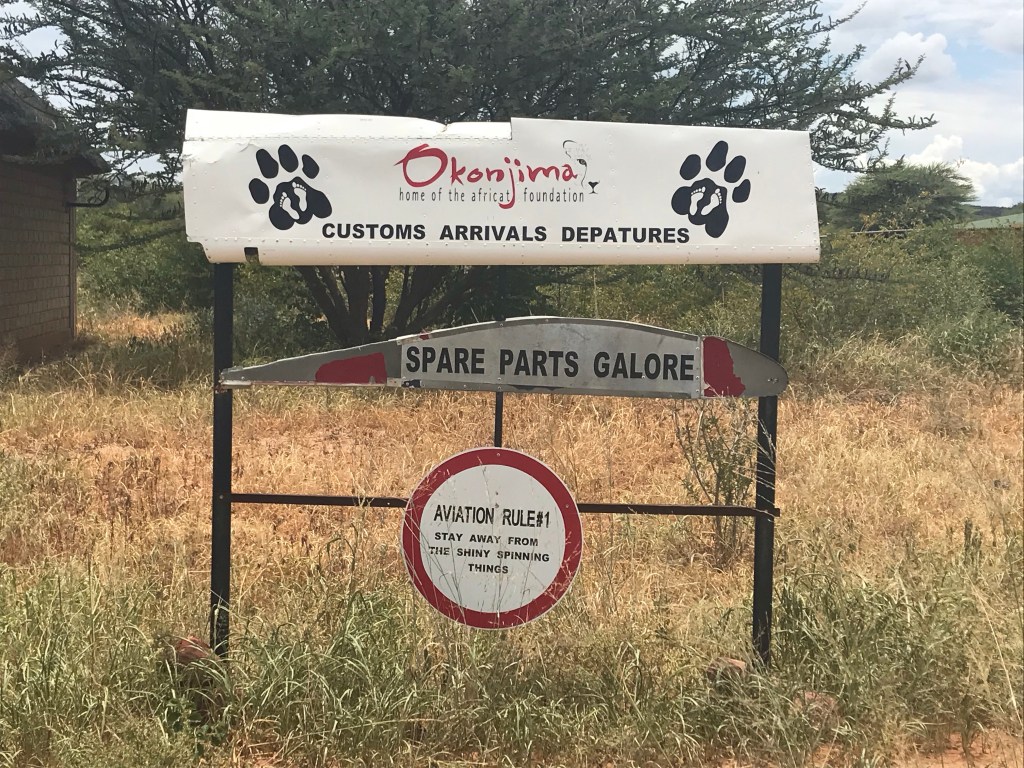
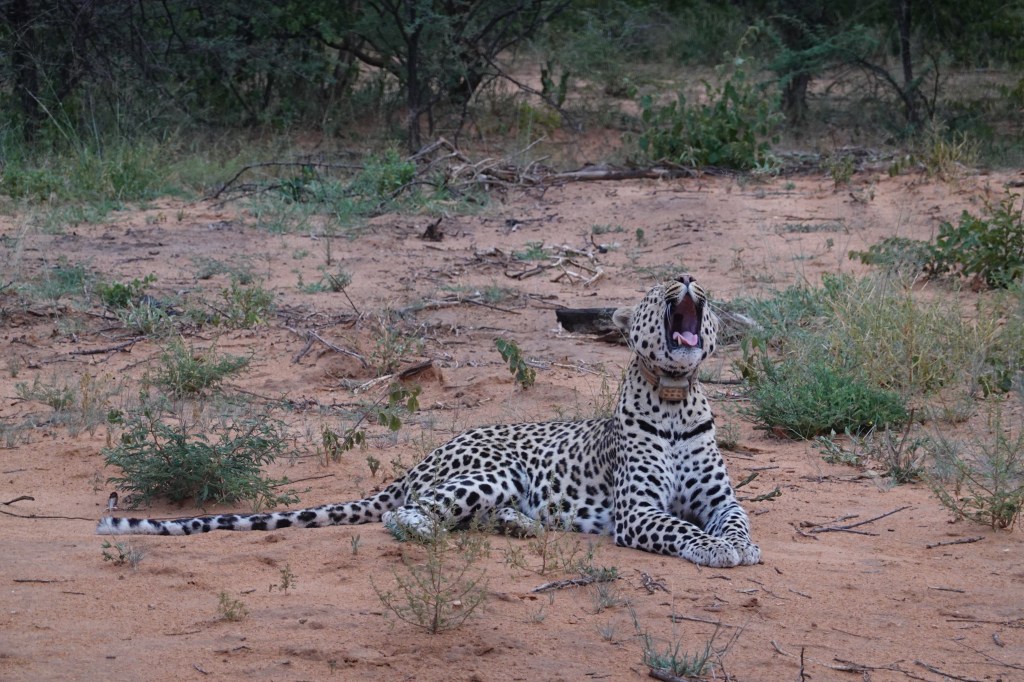
Okonjima is a large privately owned (by the Hansen family for three generations) game park. As well as many other animal, the park has approximately 30 leopards roaming freely, with twelve collared to enable tracking for both research and tourism. Thus there is a chance of the ranger finding them, but it still involves some skill and luck.

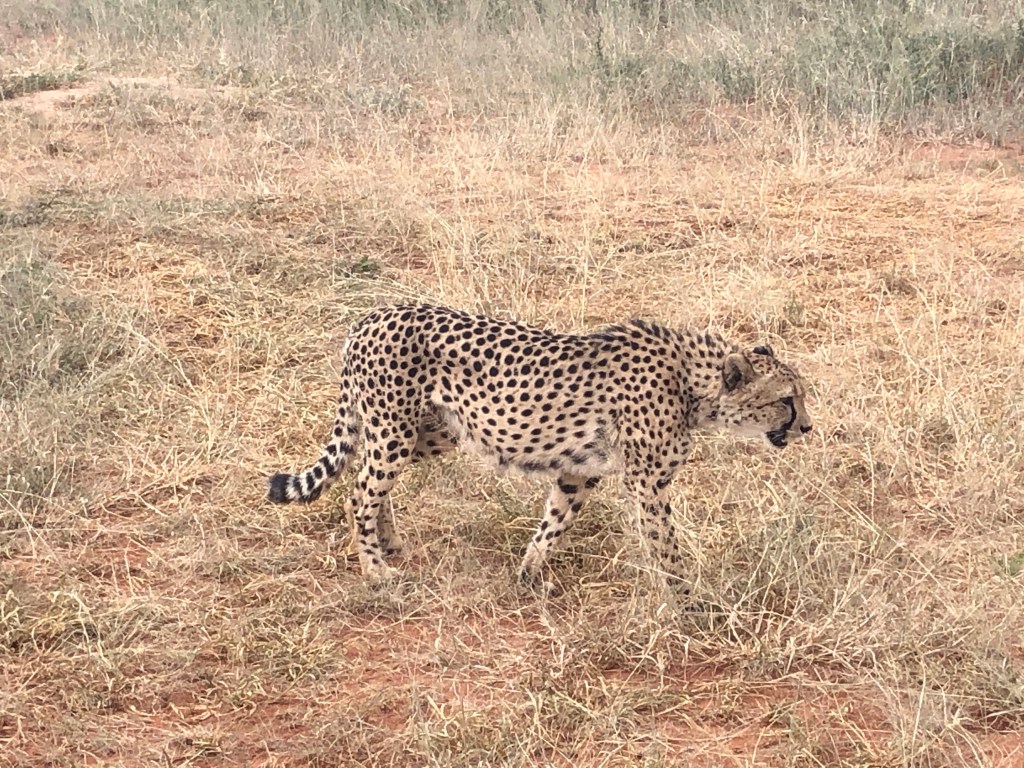
In addition they have a separate small reserve for rescued cheetahs as part of the Africat Foundation. This charity was set up to protect big cats by educating farmers and school children whilst rescuing orphaned cubs, injured cats and removing cats from farmland where they are endangered from being shot.

We learned , leopards cannot change their spots as they have rosettes, not spots; cheetahs have spots.

Our lodge room had its own lookout from which we were able to see a number of animals roaming and enjoying the waterhole.
Skeleton Coast

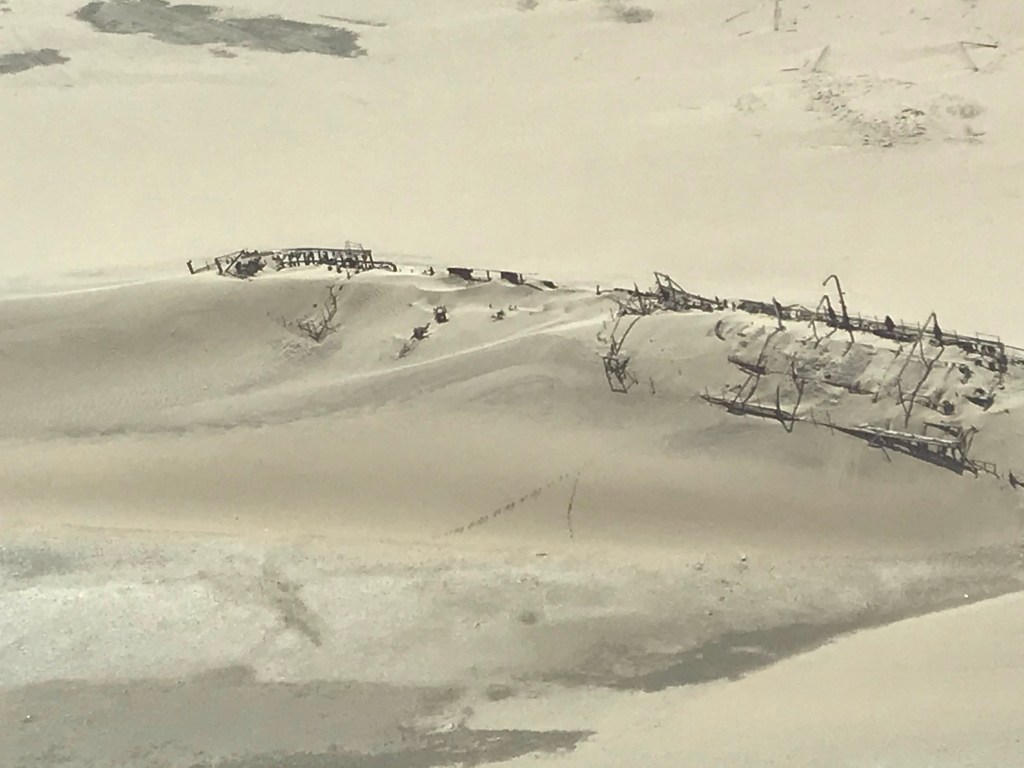
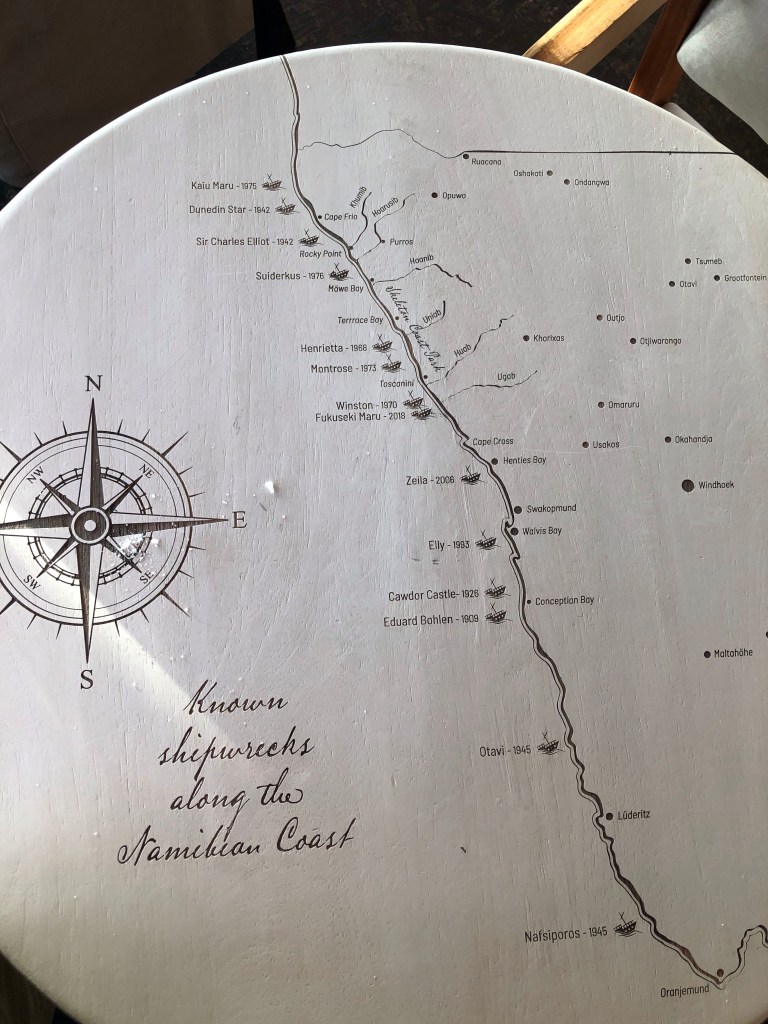
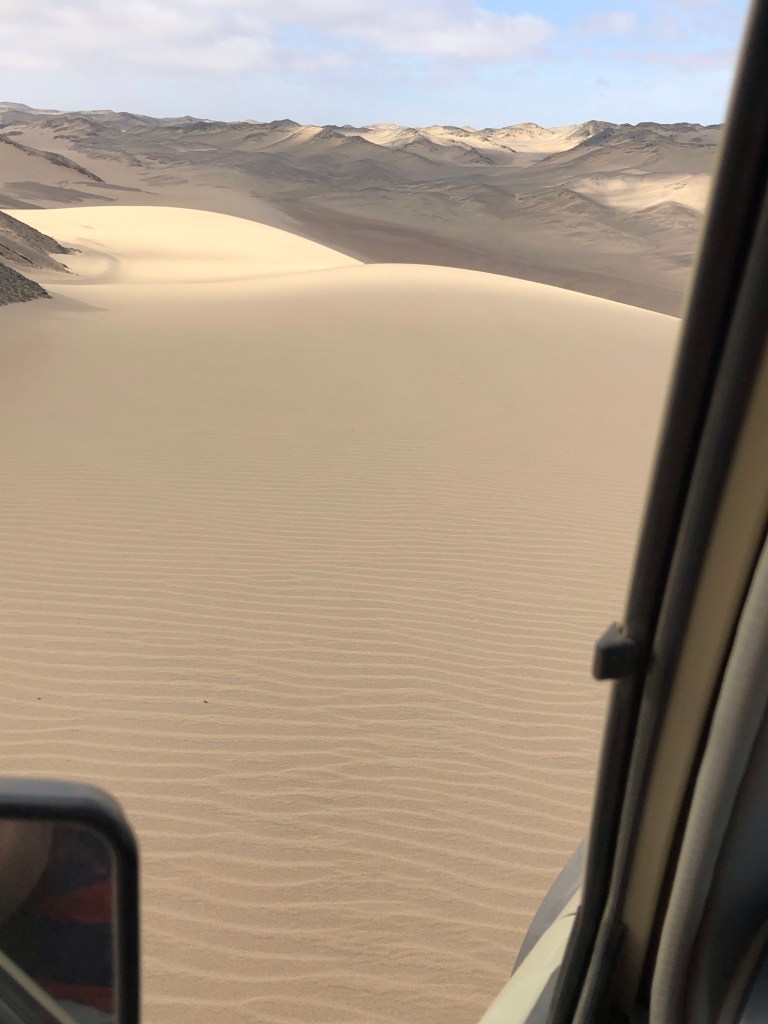
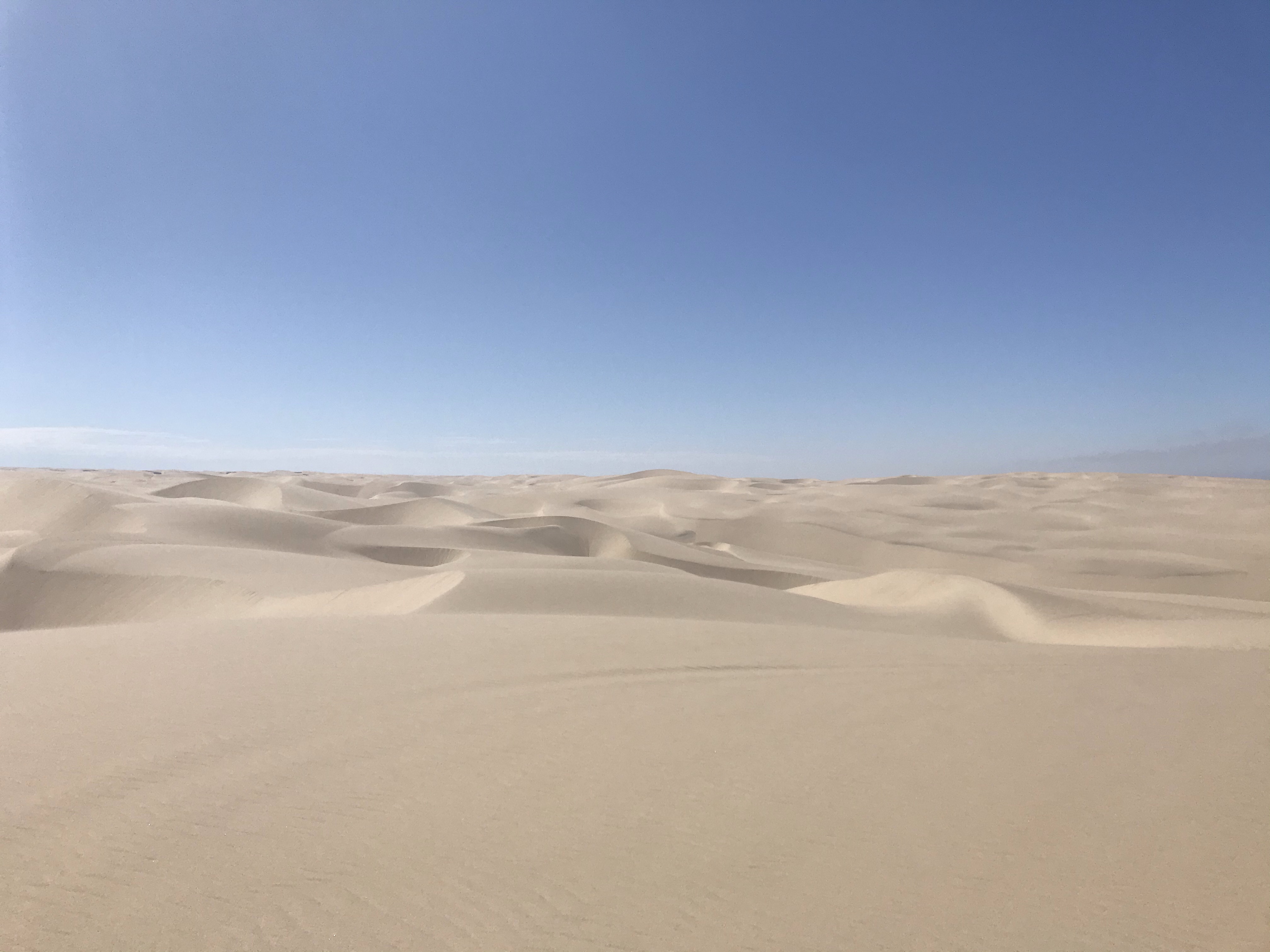
The Skeleton Coast is the name given to the Atlantic Coast of Namibia, south of the Angolan boarder stretching 500 km long and 40 km wide. It is made up of vast sand dunes with strong currents/winds and sand banks close to the coast which is often shrouded in fog. Originally the name came from the large number of whale bones on the coast but has subsequently become known for shipwrecks caused by the hostile conditions. Once shipwrecked, any surviving crew would feel relief only to suffer a long lingering death from lack of food and water while getting lost in the miles of uninhabited dunes. Estimated at over a thousand, a few of the shipwrecks remain visible.
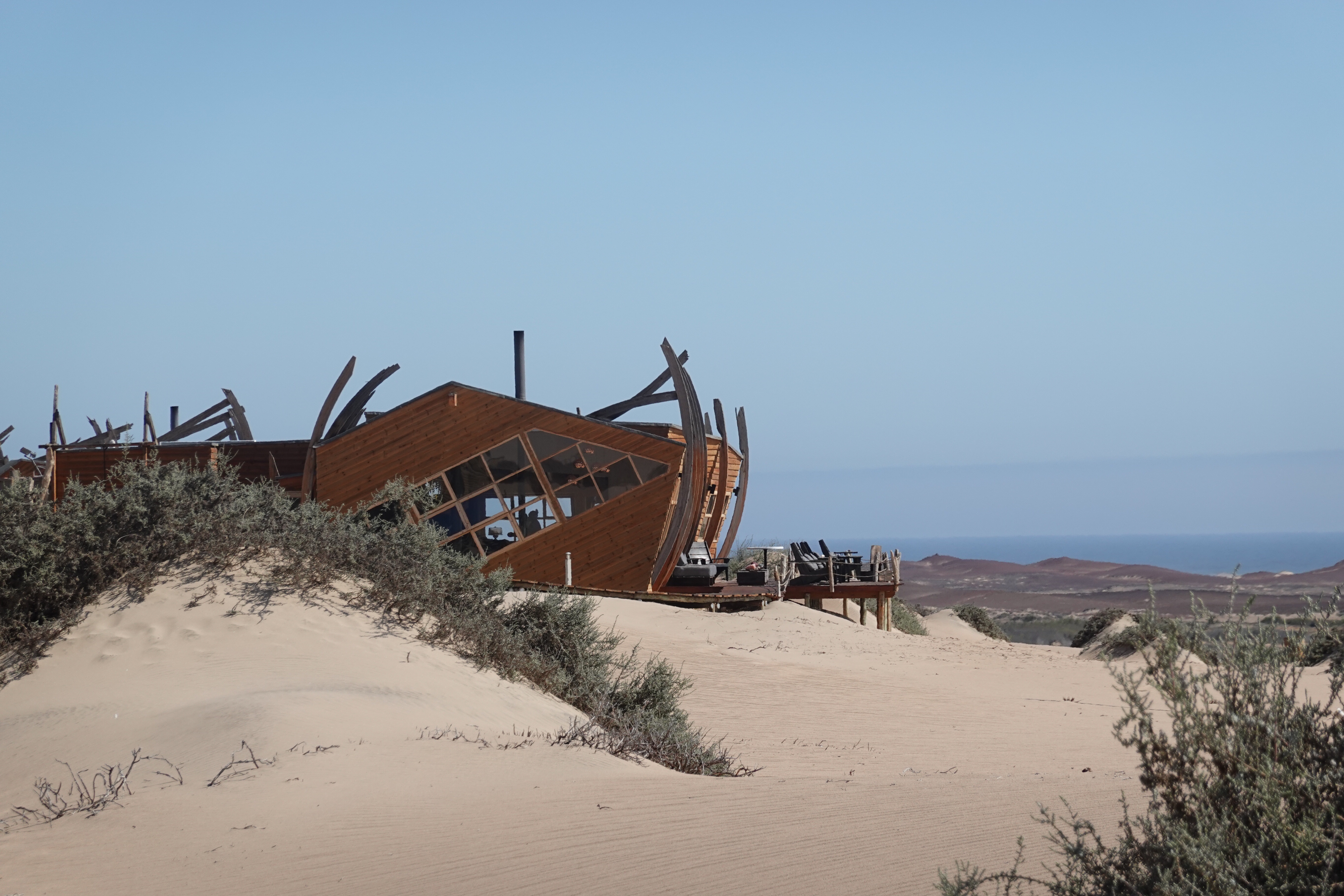
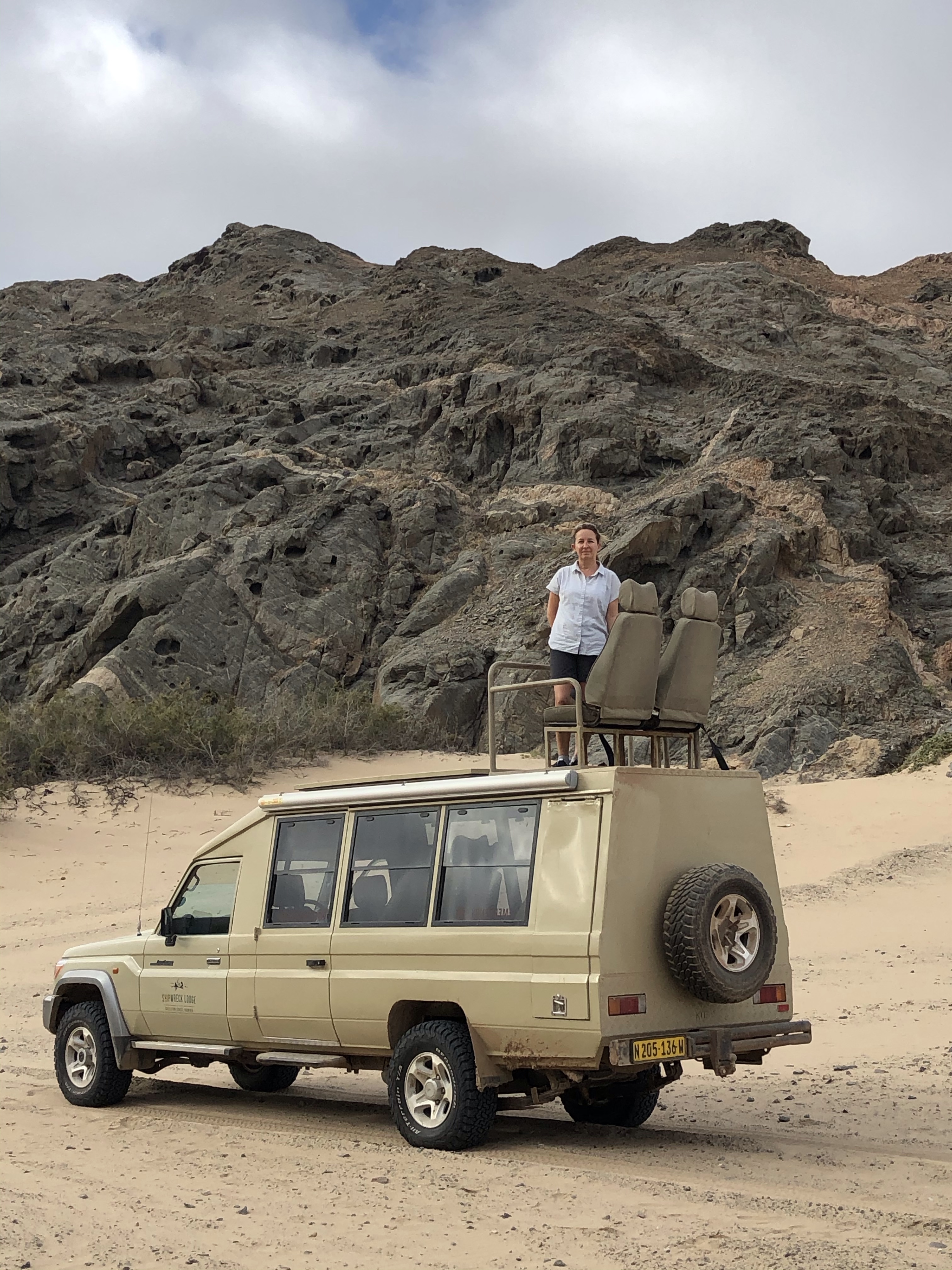
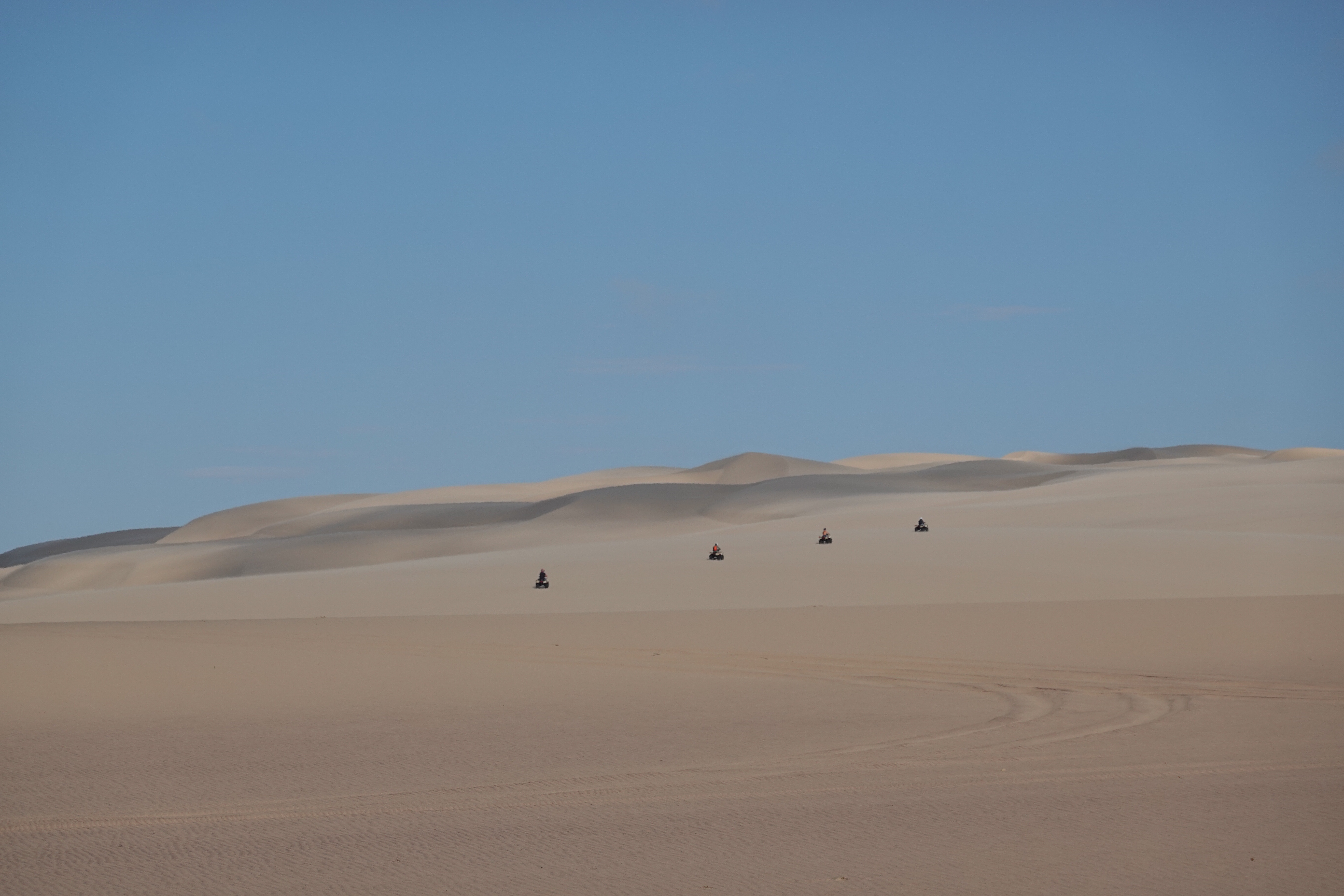
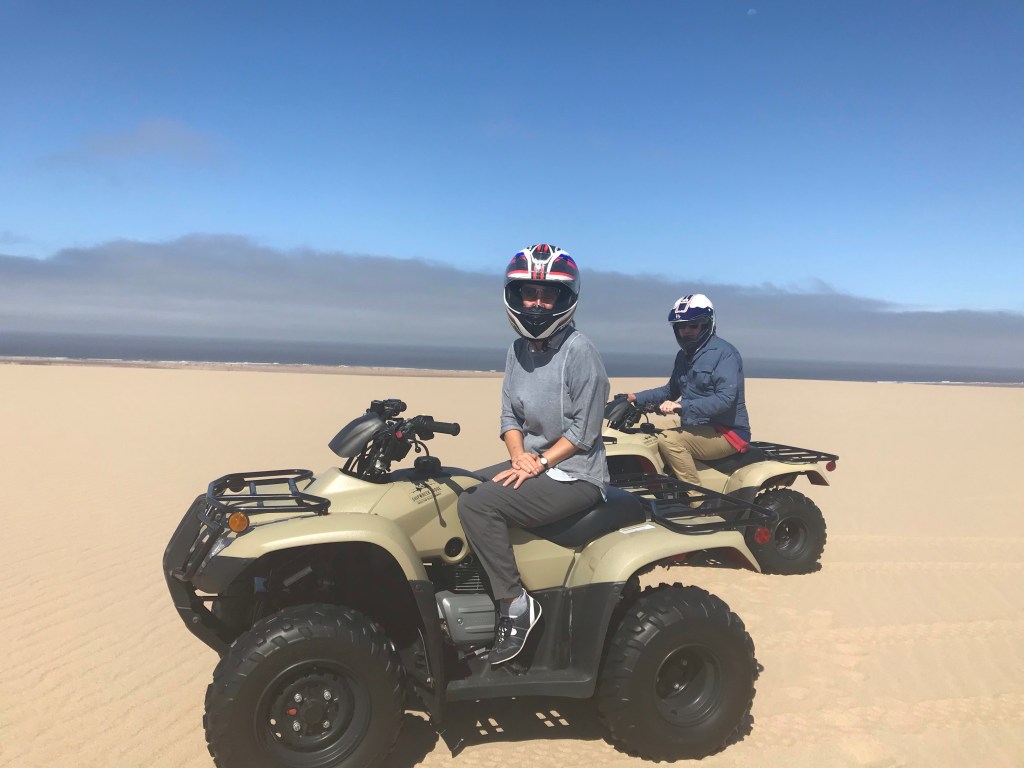
The area is now a vast and remote national park with strict regulations and only one lodge within the park, Shipwreck Lodge, a new venture run under a concession requiring that the structures (a main lodge and ten cabins sunk into the sand on stilts) can be removed with no impact on the environment. The solitude and remoteness are a major appeal for guests, although a challenge for management – guests have to be collected from a drop off an hour away and food and drink arrive weekly from 500 km away, with the last hour on sand tracks. It is a very magical place and best to explore the solitude of the dunes on a 4WD or a quad bike.

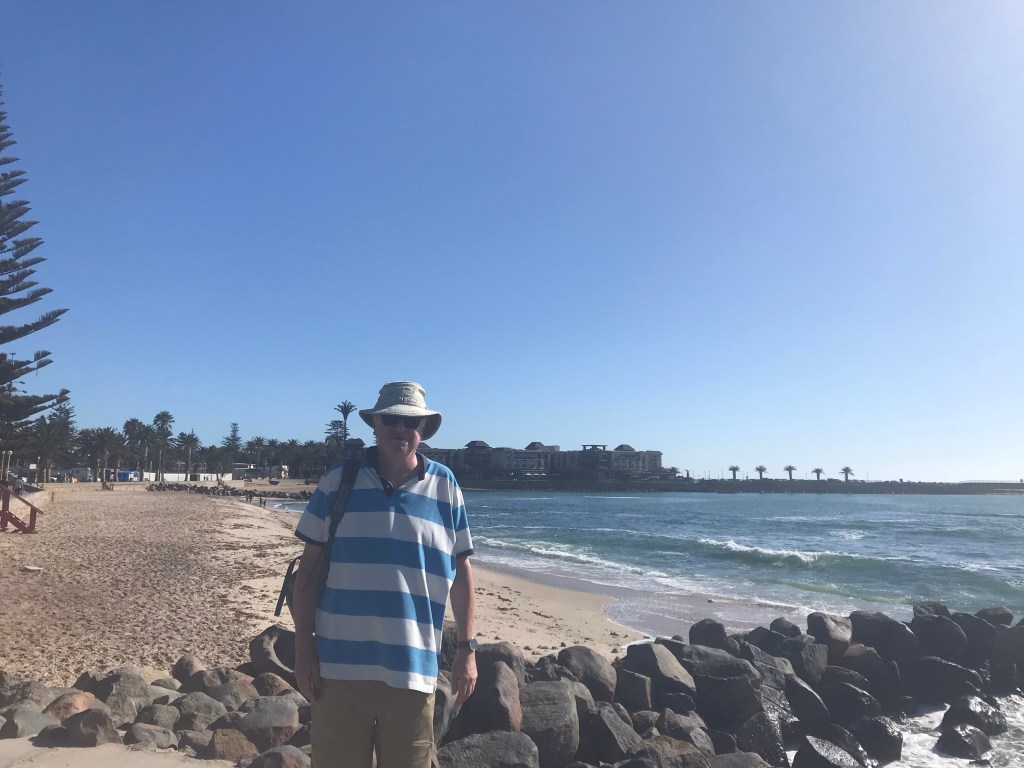
Swakopmund

Swakopmund is a coastal town, founded by the Germans in 1892. It was developed as the German colony at this time had no port as the man in port in Namibia, Walvis Bay, not far from Swakopmund, was held by the British.

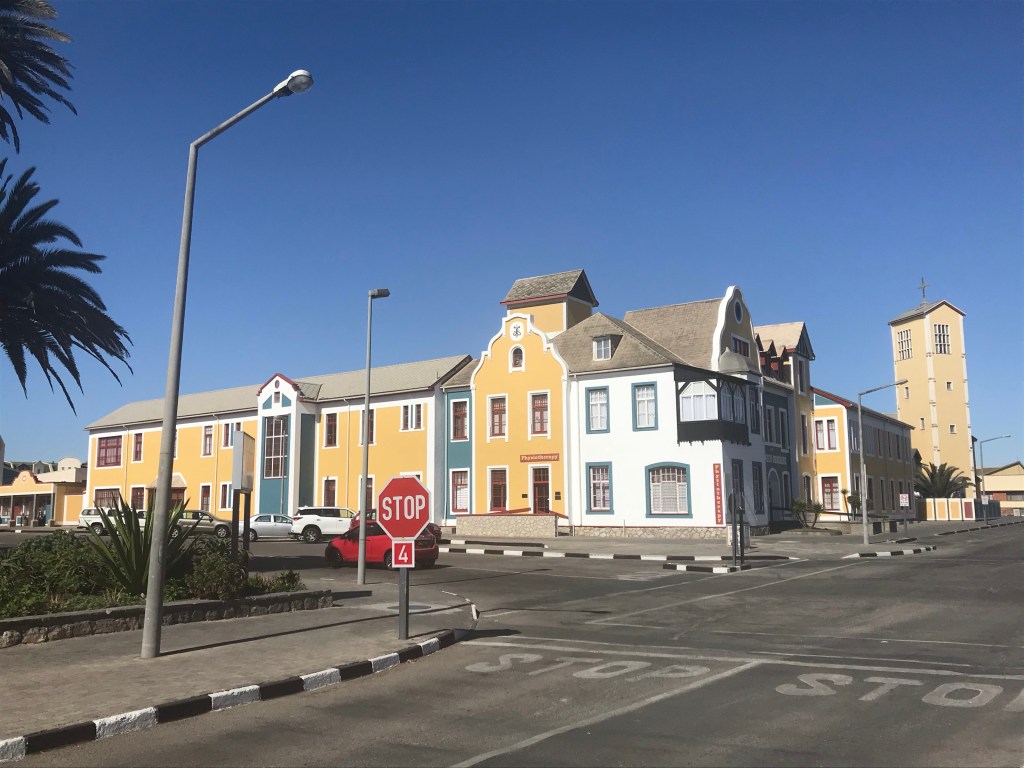
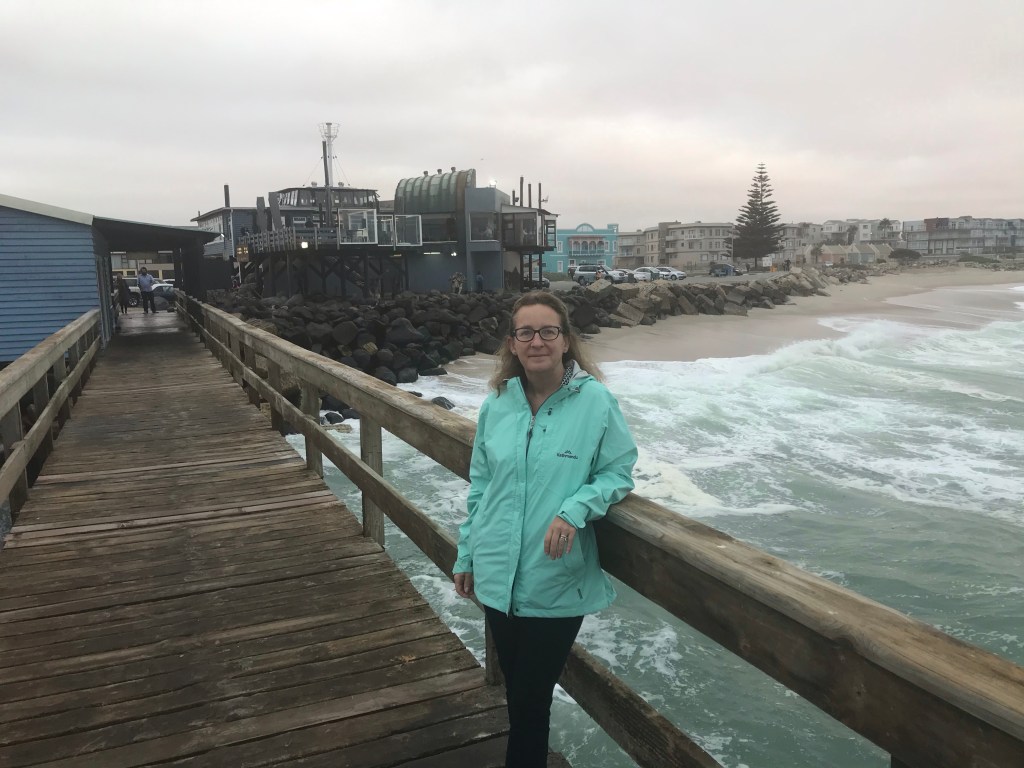
Swakop, as it is known locally, is now a tourist centre which still has a German feel with several buildings surviving from the late 19th and early 20th centuries. Namibians and Angolans are attracted to Swakop for its mild climate. On the day we arrived from Sossusvlei it had been close to 40 degrees; by the evening in Swakop it was around 20 degrees with a storm whipping around the pier where we had dinner. In Namibia mild, wet weather is something to be celebrated.

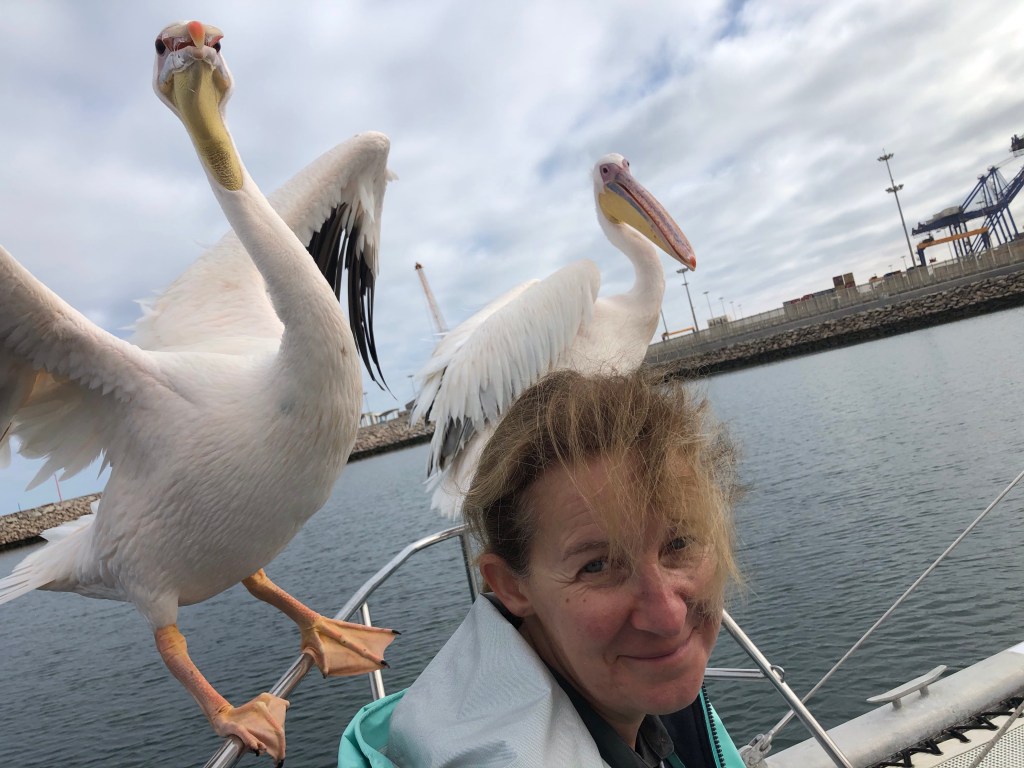
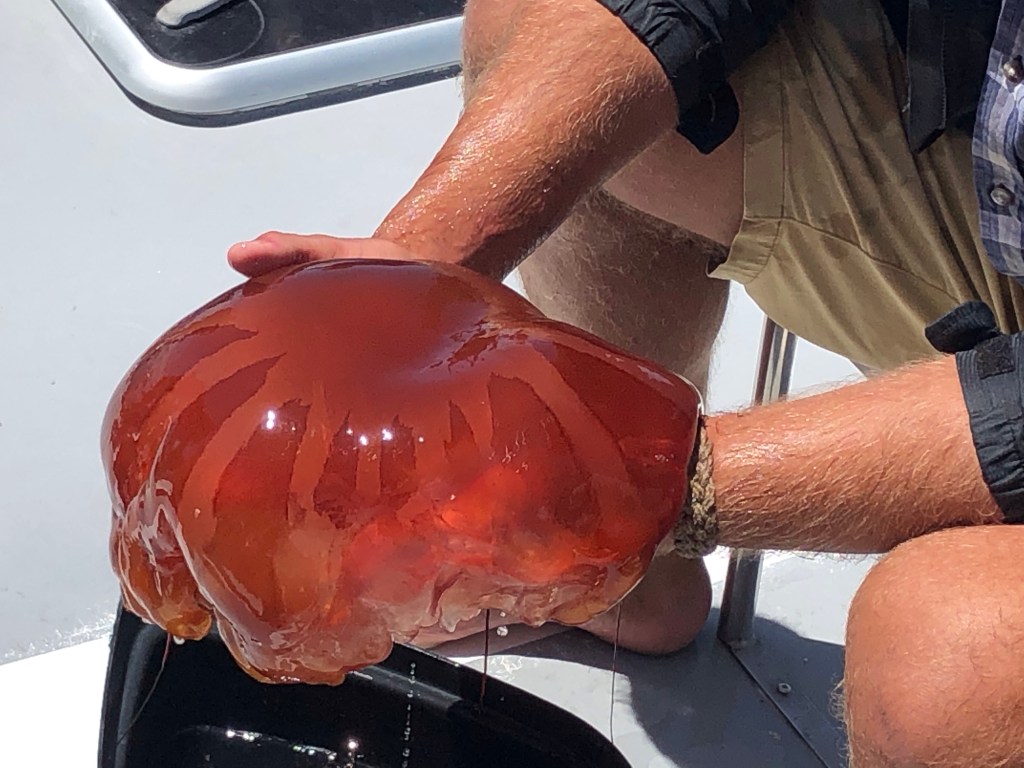
Walvis Bay has continued to thrive as a port with business in ship maintenance, including those used for oil drilling. We went on a catamaran boat trip around the bay, which has a seal colony, pelicans, flamingoes, dolphins and in summer wales. The pelicans were a bit too friendly for comfort while the guide had an unusual liking for jellyfish !

Sossusvlei Dunes

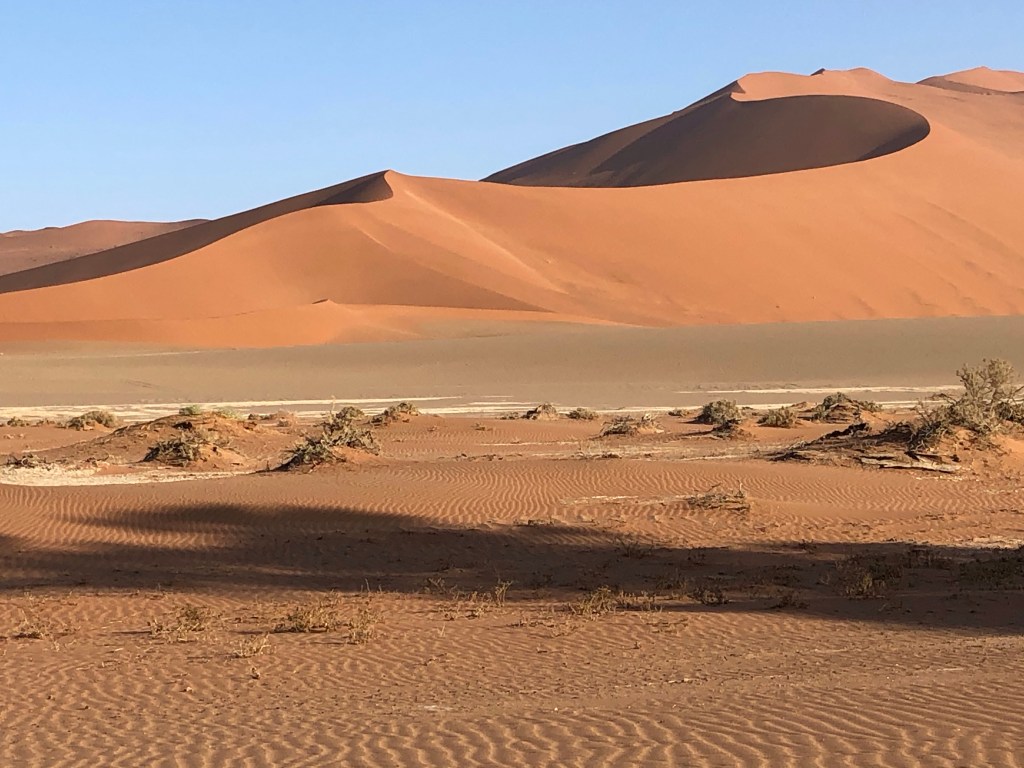
The highlight of the area is the dunes within the National Park, which opens at sunrise to enable visitors to climb the dunes before it gets too hot. For us, sunrise was at 6.30am and the “relative cool” 30 degrees, compared to 38 degrees in the middle of the day. The road through the park is initially tarmac and then sand for the final 5 km and runs between the dunes which form a horseshoe shape.

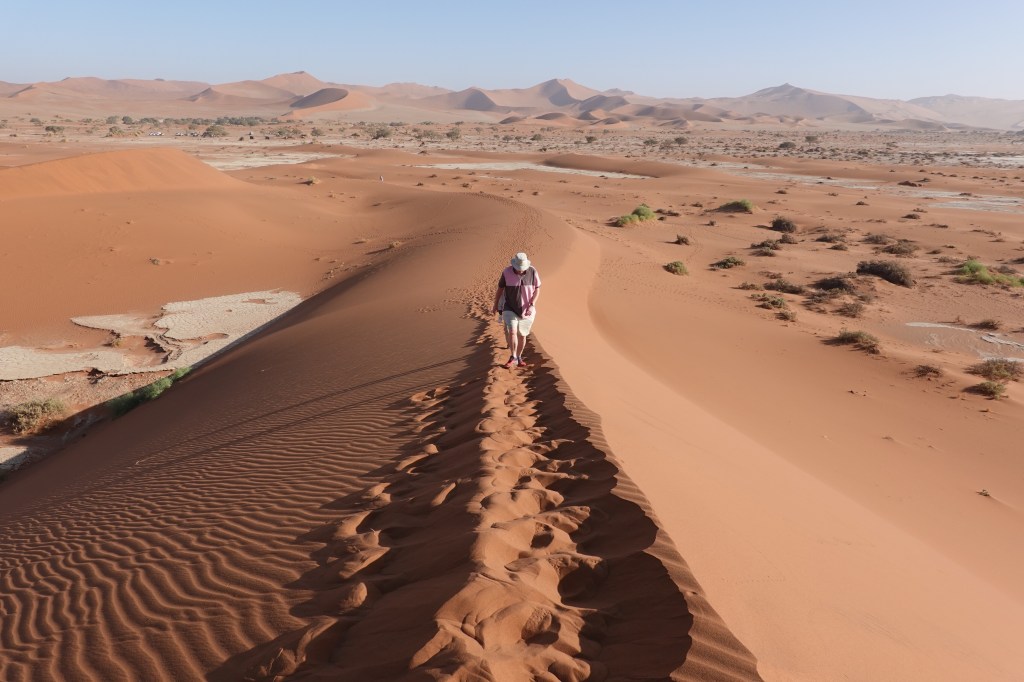
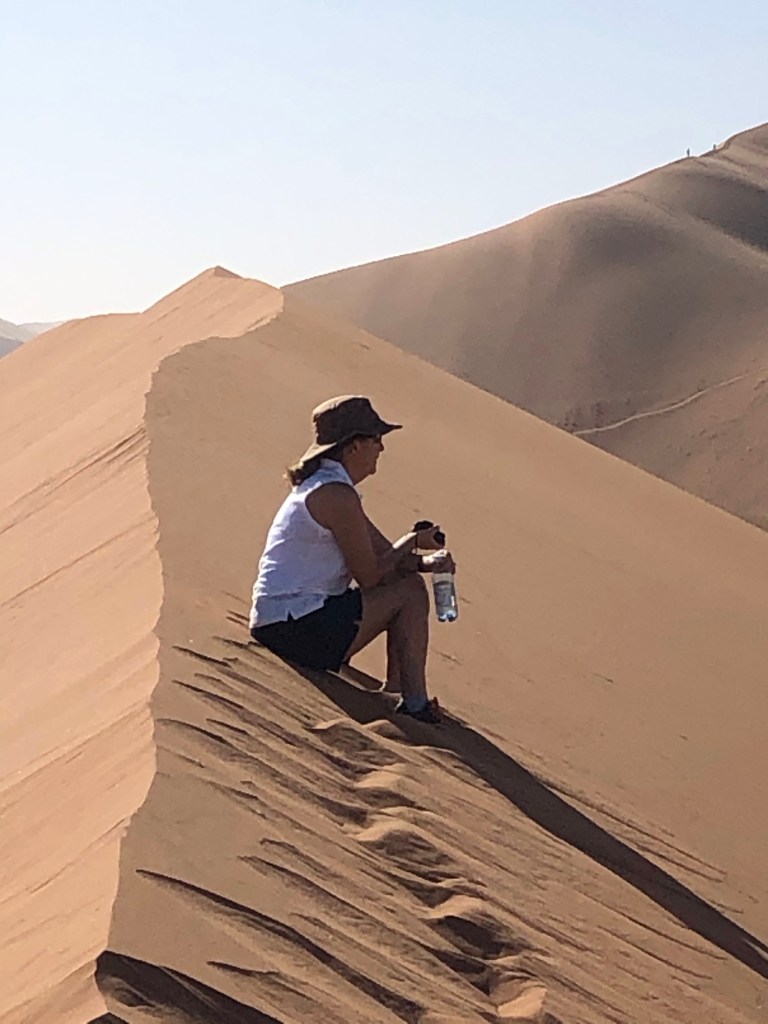
The first major attraction is Dune 45, which is the 45th dune, 45 km into the park and 45 mins drive. It is very scenic, close to the road with a car park and therefore very popular to climb and/or photograph. It is 130m high; we decided to take photos and move onto the dunes at the end of the road which are quieter due to access being limited to 4WD vehicles. The options for climbing were Big Daddy and Little Big Daddy at 170m and 110m respectively. Both have great views and access to Dead Vlei, by walking down the steep side of the dune (or running, hopping or sliding on your bottom).

We chose Little Big Daddy, climbing a narrow path along the crest which is wiped out each night by the wind. The walk through the sand was hard work but the views and the exhilarating decent made it very worthwhile.

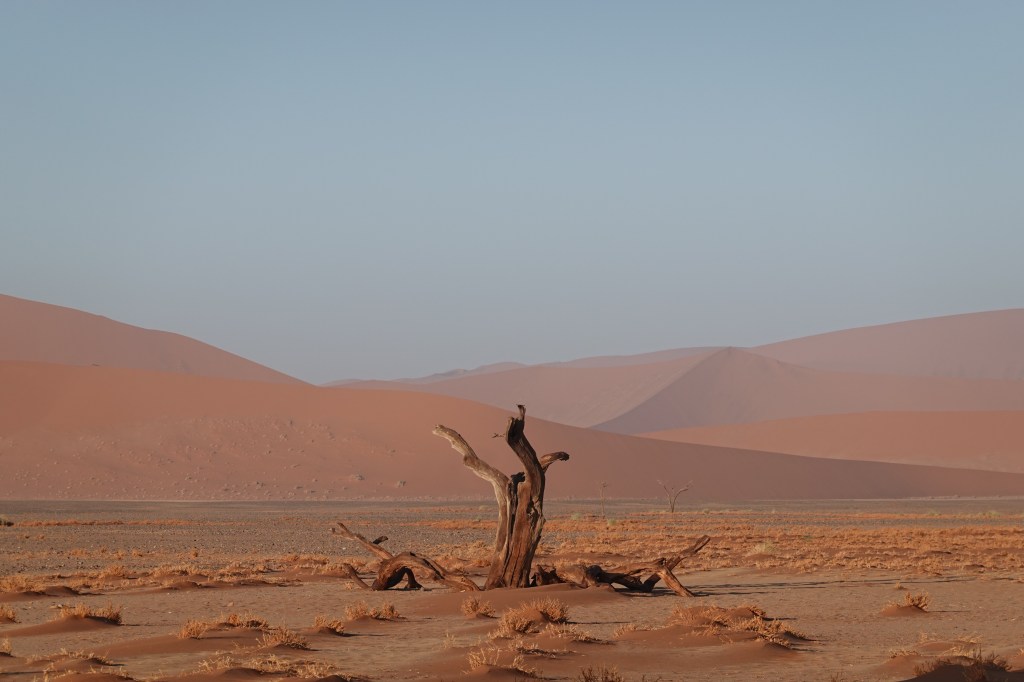
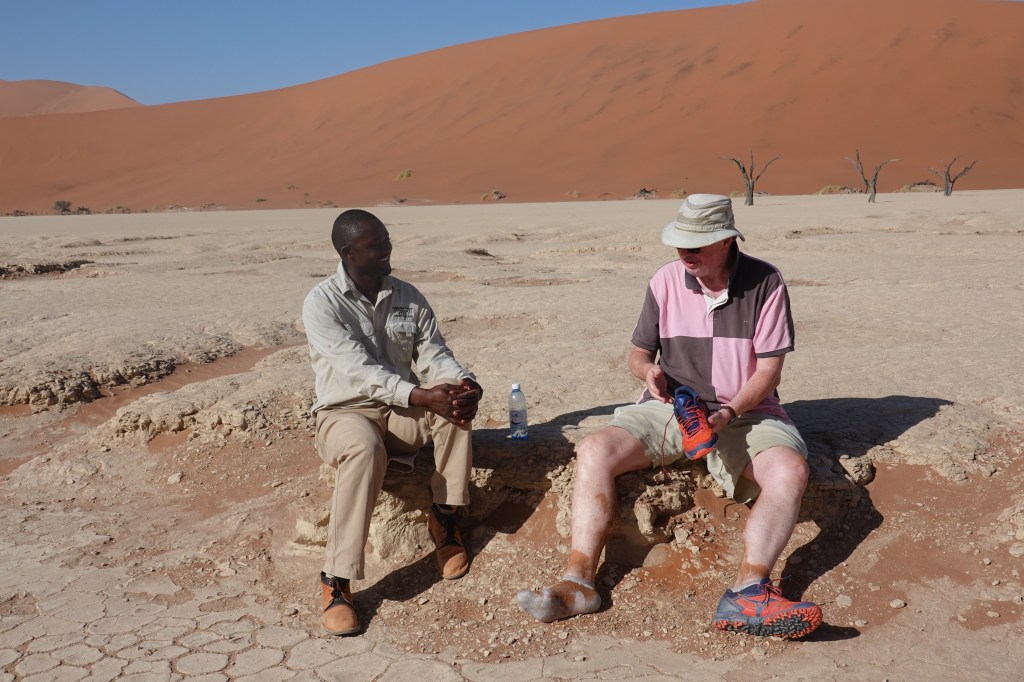
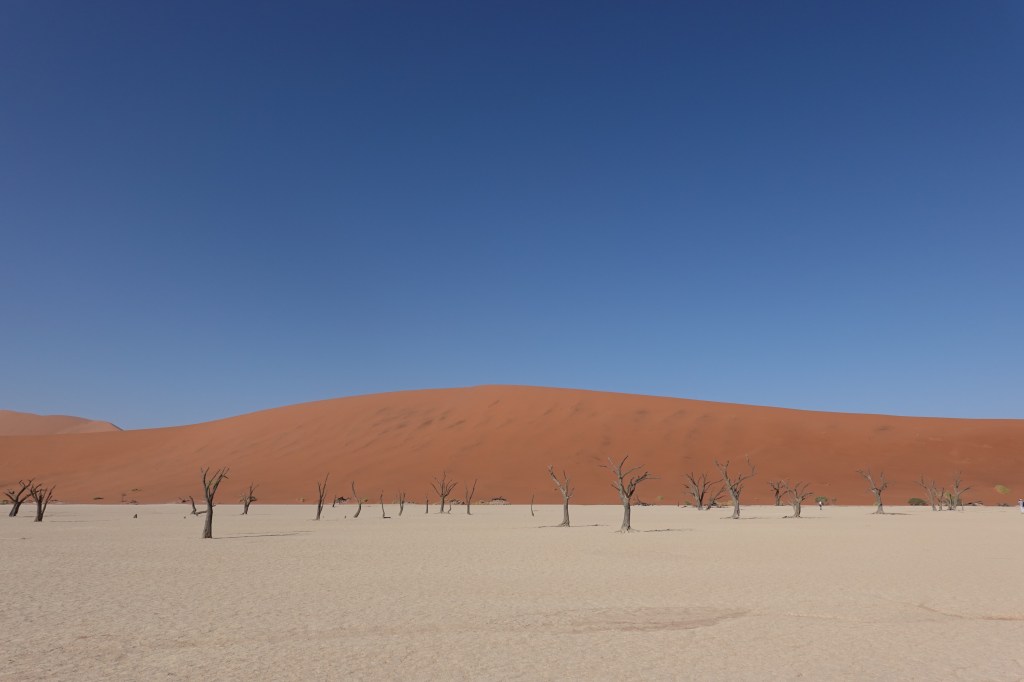
Dead Vlei is a stark landscape comprising a pan which has had no water for over 100 years leaving the ground baked and the 500 year old trees dead.

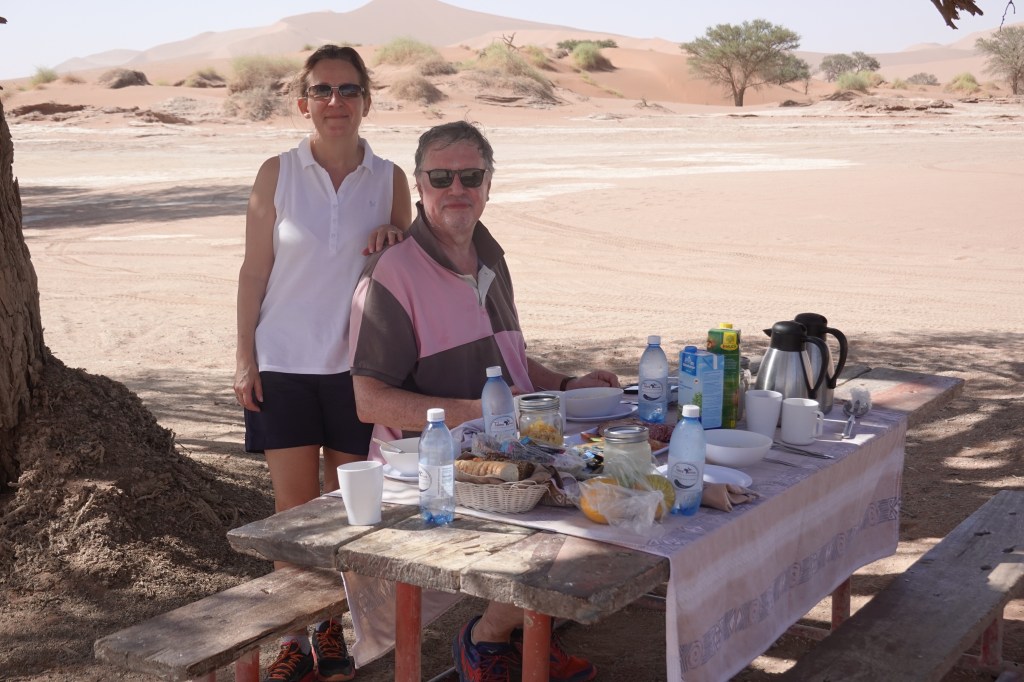
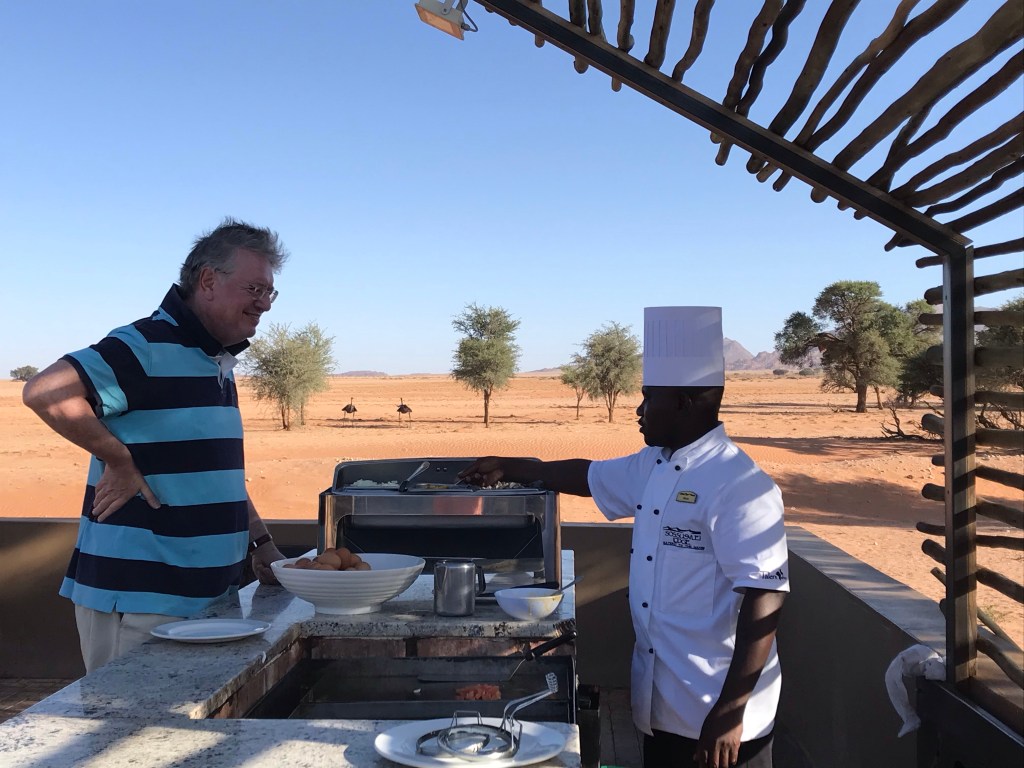
Satisfied with our early morning exertion our guide provided breakfast under trees by another dune, Big Mamma.

Sossusvlei

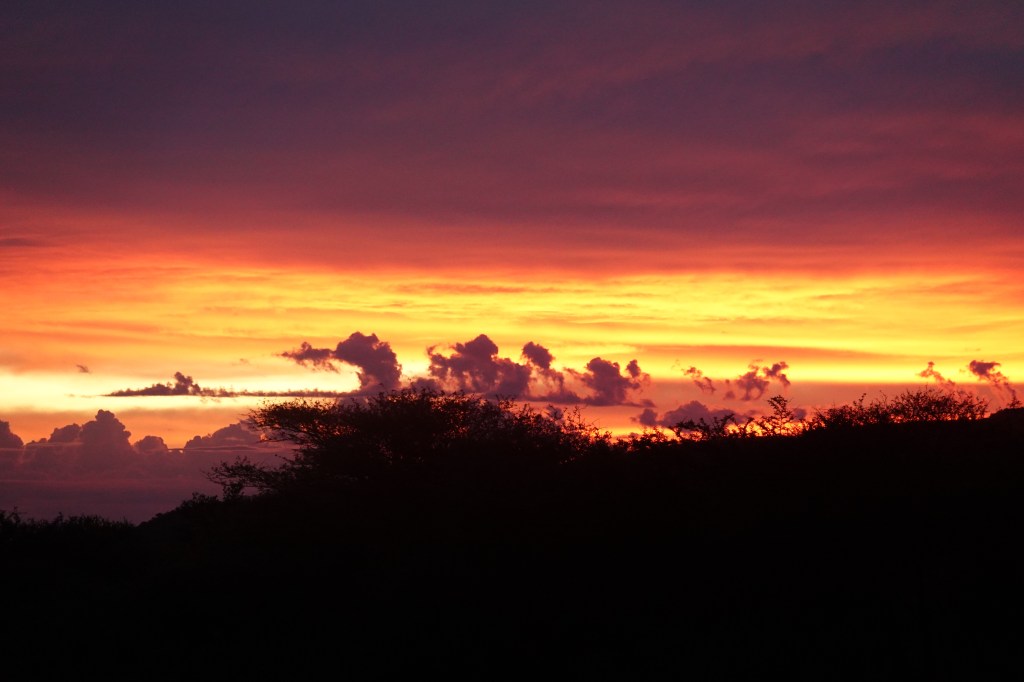
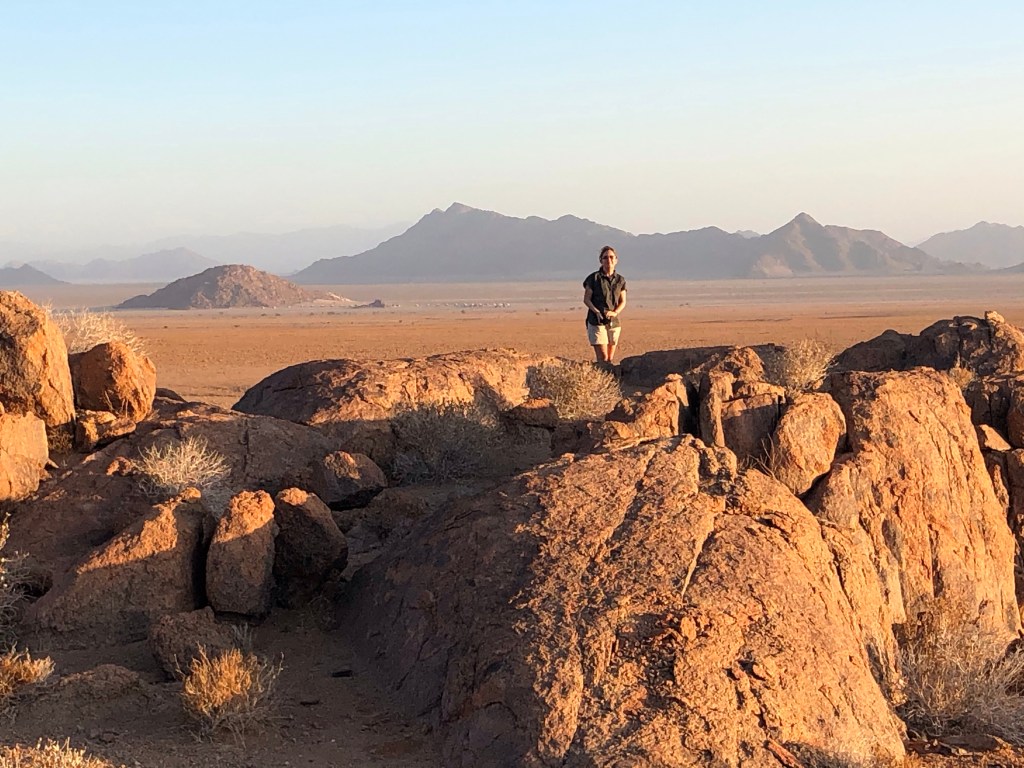
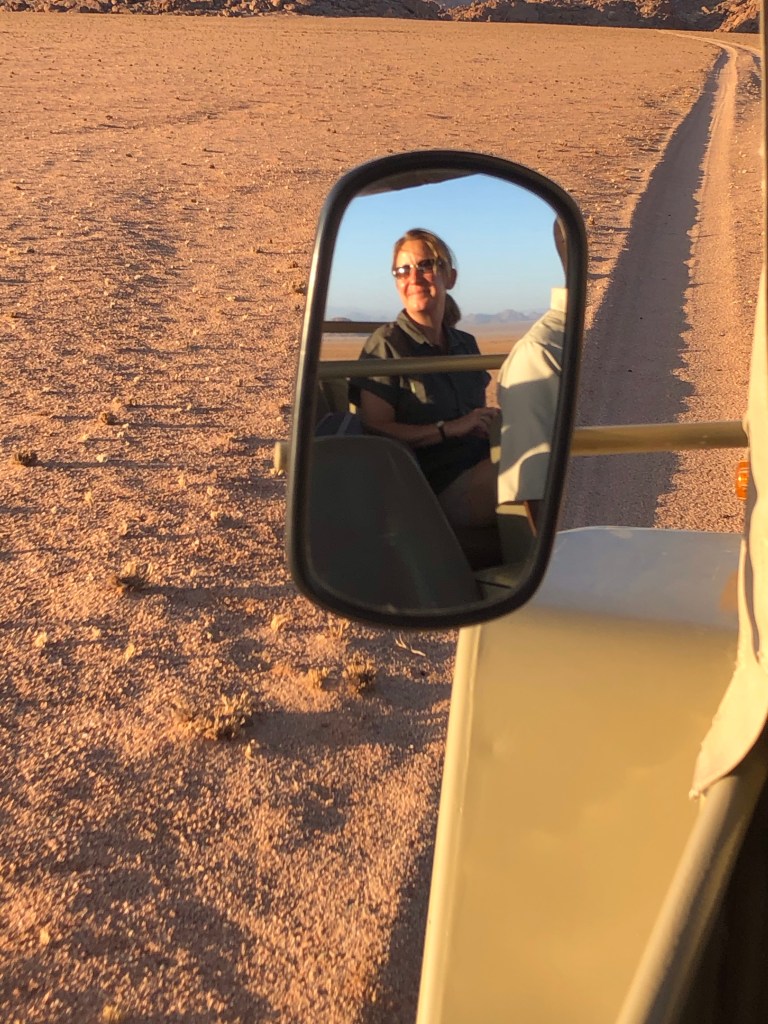
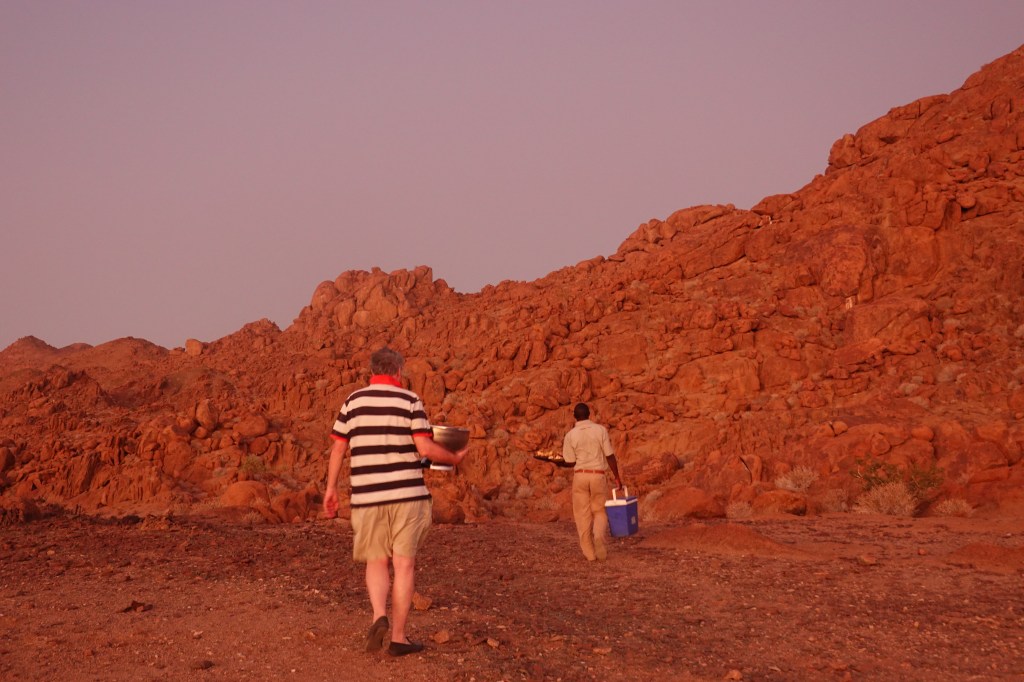
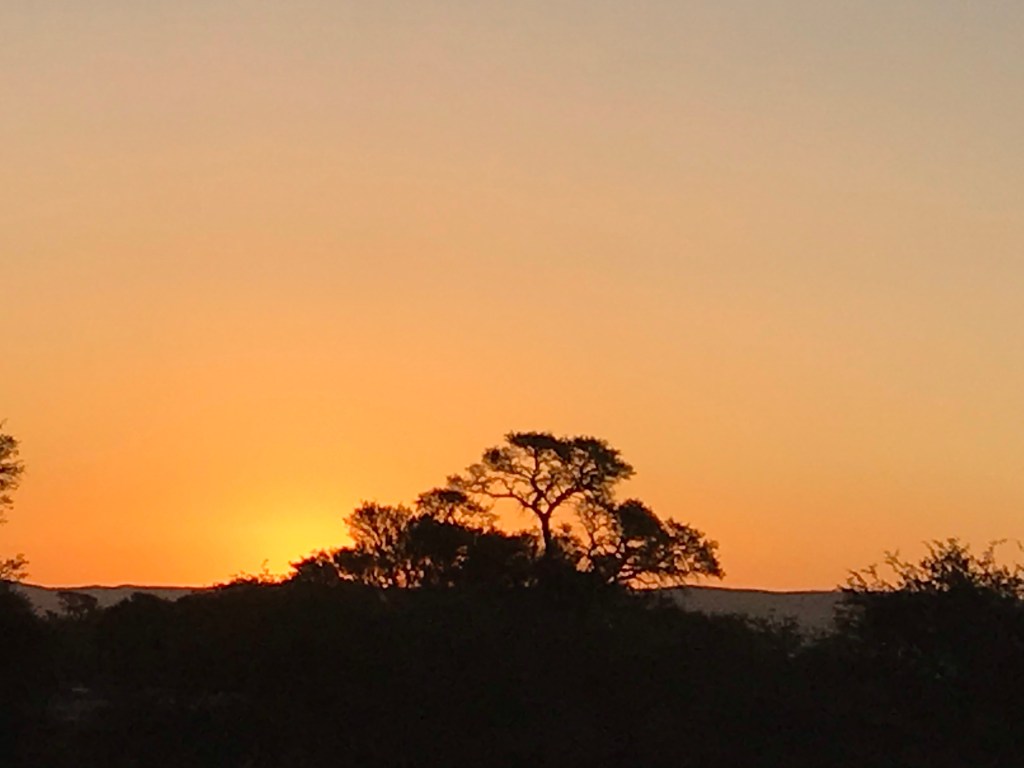
We travelled to a lodge next to the entrance to the Sossusvlei National Park. On our first night we went on a sundowner – an escorted drive across the desert to a rocky outcrop. Our guide brought along the essentials to watch the sunset – beer, water and a selection of nibbles including springbok biltong.

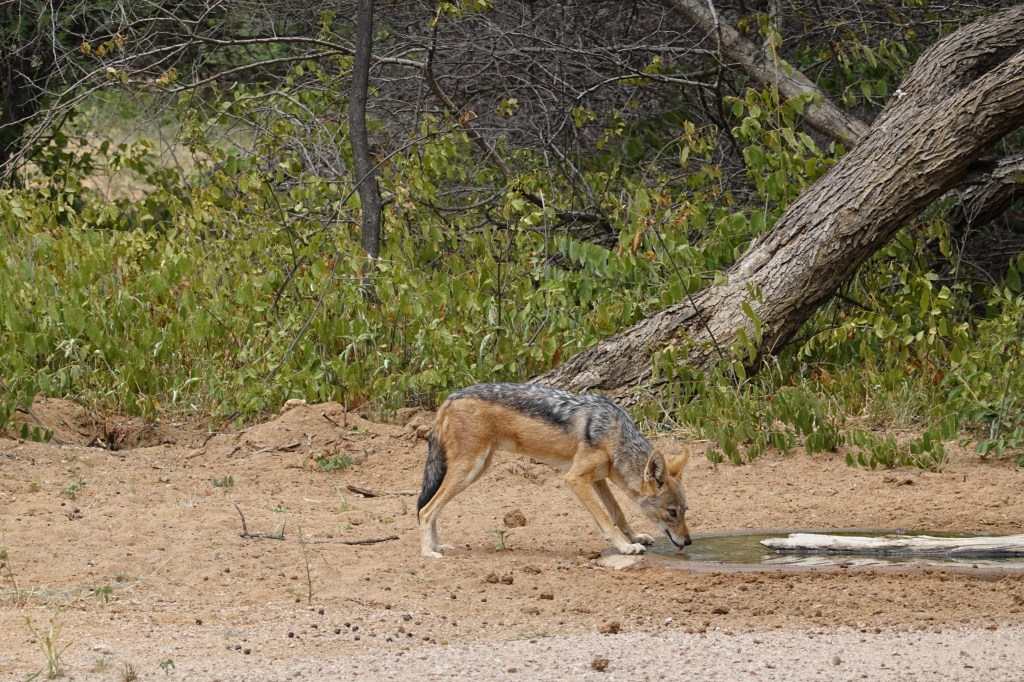
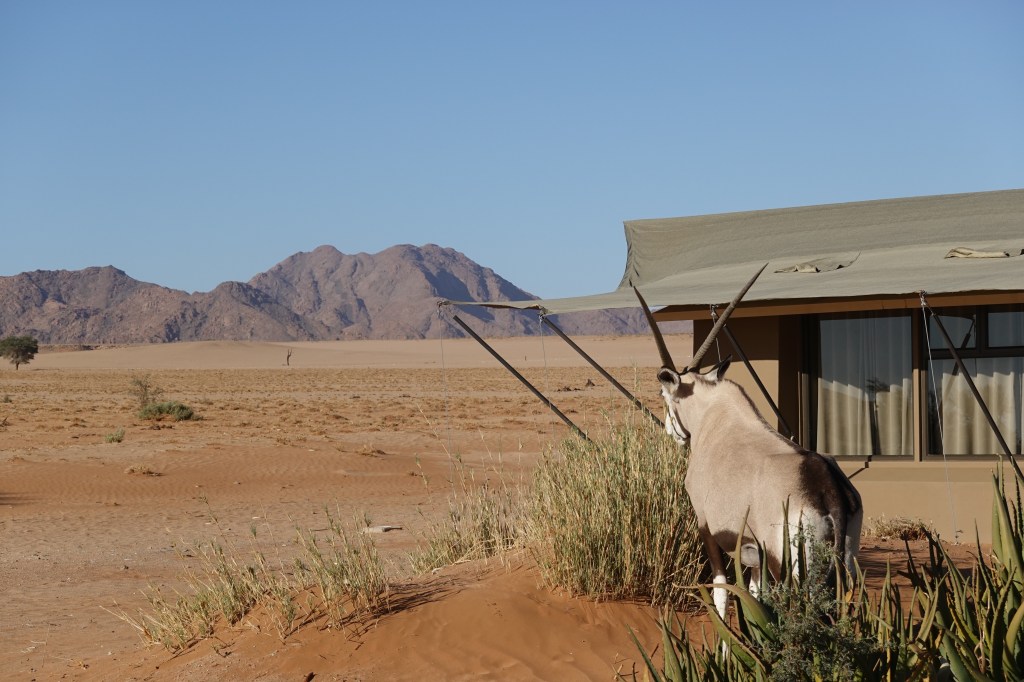
The lodge itself is unfenced, enabling frequent visits from wildlife; we saw blue wildebeest, jackals, ostriches and oryx.

Fish River Canyon

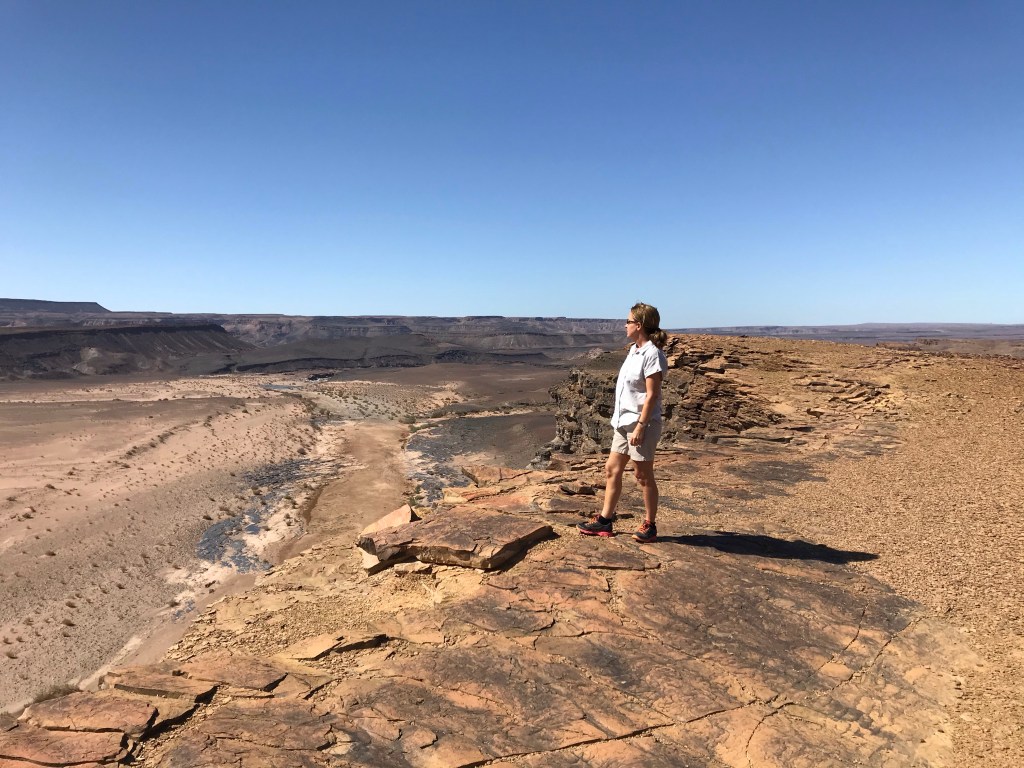
We flew to Fish River Canyon from Windhoek, which is the second largest canyon in the world, after the Grand Canyon. It is 161 km long, up to 27 km wide and 550m at its deepest. We stayed at the only lodge in the Nature Reserve, on the rim of the canyon, situated 190 km from the nearest town. We were awestruck by the solitude and quietness.

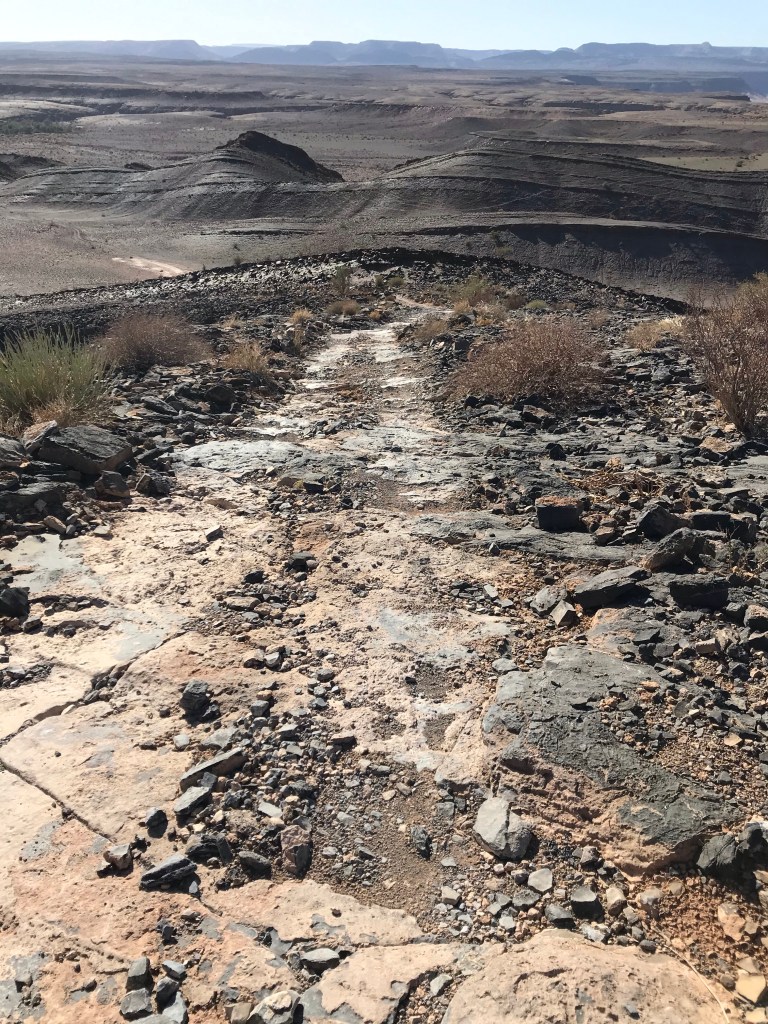
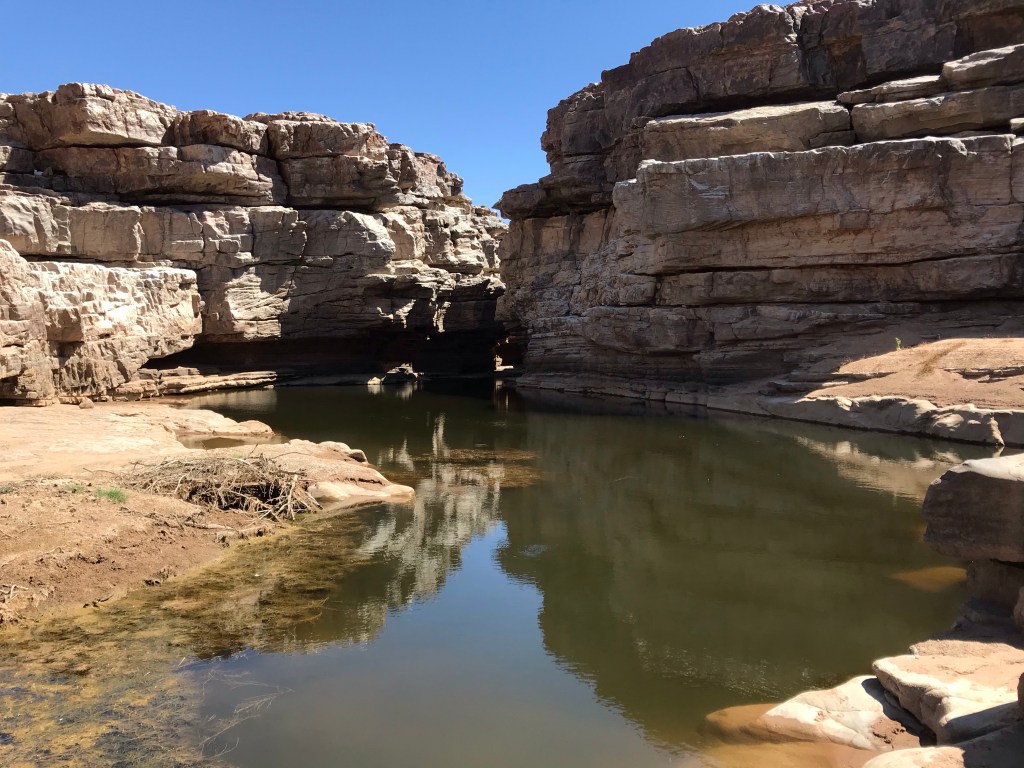
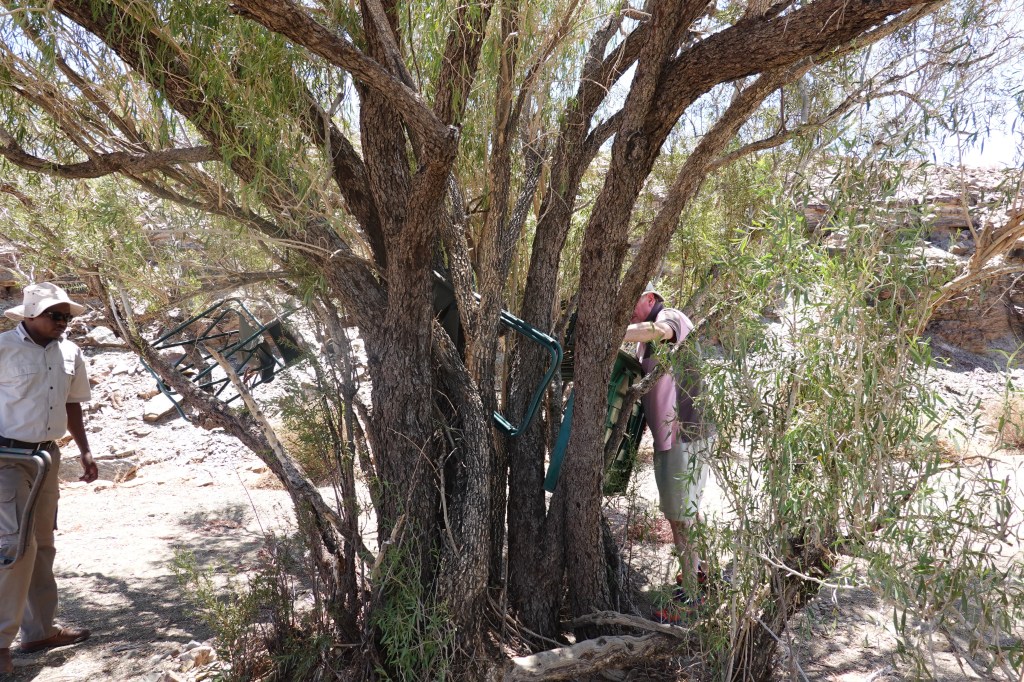
We were driven into the canyon by a guide, together with two Dutch tourists, and were the only five people in the canyon that day. We were introduced to the “African Massage” – four wheel drive vehicles bouncing around on at best gravel tracks. Our excursion into the canyon was described as extreme four wheel drive and we were grateful for an excellent driver, despite him joking that it was his first time ! The final destination was a rock pool, in which Sarah had a swim, followed by a picnic using a table and chairs which had been stored in a tree.

Namibia

Namibia is a country we wanted to visit because of the scenery and wildlife, however we knew little about the country itself.

In the late 19th century Namibia became a German colony with the exception of Walvis Bay, a deep water harbour, which was British. In 1915 South Africa, with the support of Britain, took control of the country. The struggle for independence, supported by the UN, did not come to fruition until 1990 when it became one of the last states to achieve its goal. Walvis Bay remained under the control of South Africa, given its importance, until 1994.

Modern Namibia, with its 2.5 million population, has a strong constitution and (by African standards) a liberal and honest government. Unemployment at over 30% and wealth distribution are major issues; the country is trying to use money from its mineral deposits to invest in infrastructure. Namibia has diamonds but this is becoming less important, with uranium mining now a major source of income. However “soft loans” from China have resulted in most mines becoming Chinese owned. Tourism is the third largest industry and is growing significantly, with Germans being the largest group visiting in spite of the locals speaking English to them.

The capital is Windhoek where we landed from Cape Town. It has 300,000 people, with a relic of German rule being a number of very good breweries. We stayed in a guest house along with fellow travellers at the beginning or end of their Namibian adventures. We enjoyed the Windhoek beer and a bite to eat in Joe’s Beerhouse, a local institution, also frequented by travellers sharing stories at communal tables. In the beer garden is a mini, donated by two legendary travellers who arrived in it from Durban after some epic adventures.