Summer of cricket (and tennis)

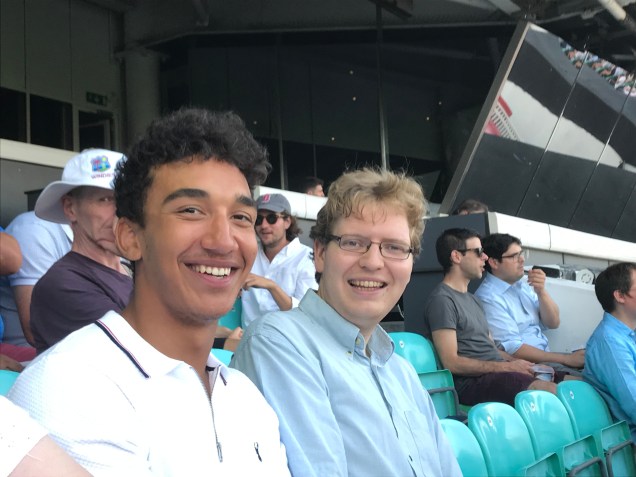
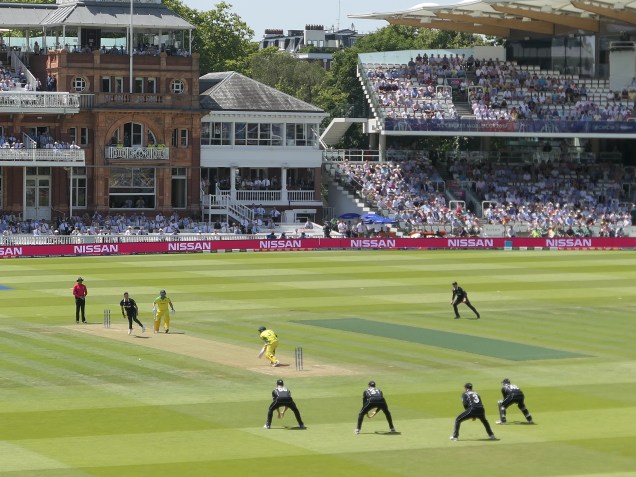
Back home for the summer we took advantage of the Cricket World Cup and the Ashes. We began at Leeds with England losing to Sri Lanka, then victory for Australia over New Zealand on a roasting day at Lord’s. Then on to the Ashes at Edgbaston followed by Lord’s. Our cricket season was wrapped up by a visit to the Oval with friends and family to see Surrey beat Somerset.

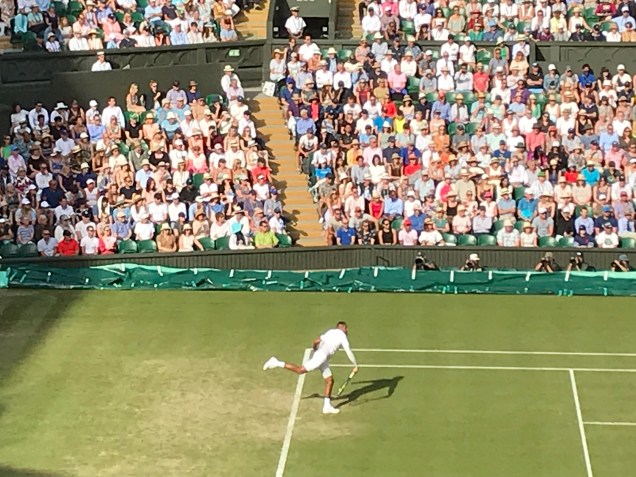
Amidst the cricket, fortune was on our side in the ballot for Wimbledon, where the highlight was Nadal beating Kyrgios in a tough four set match.

South of France

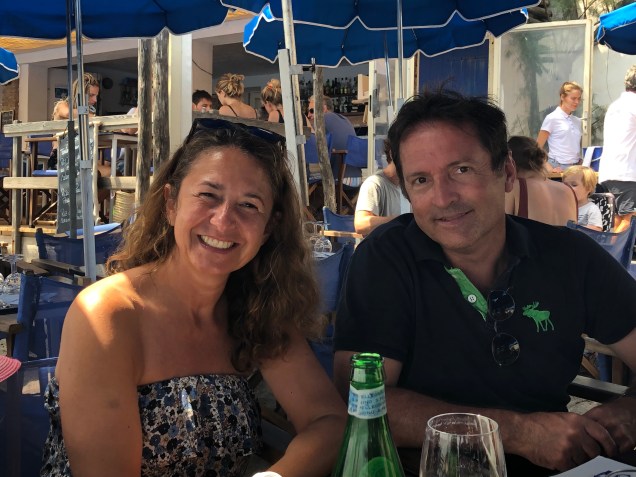
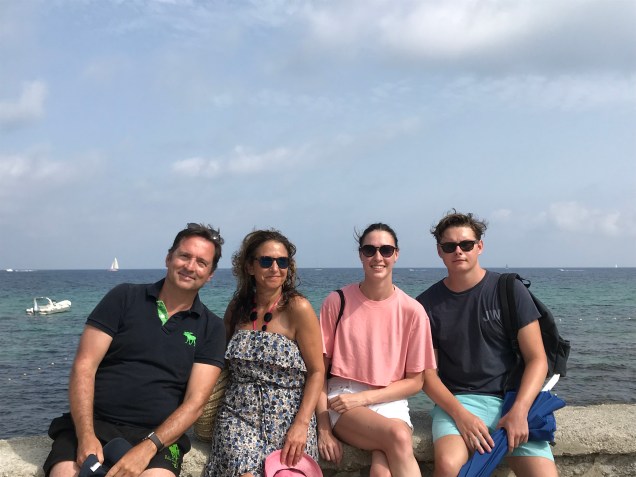
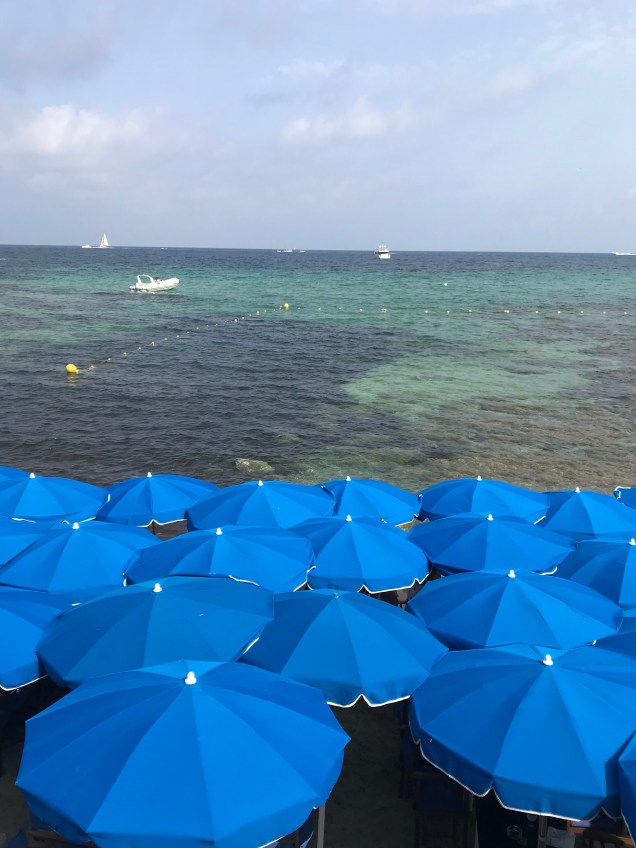
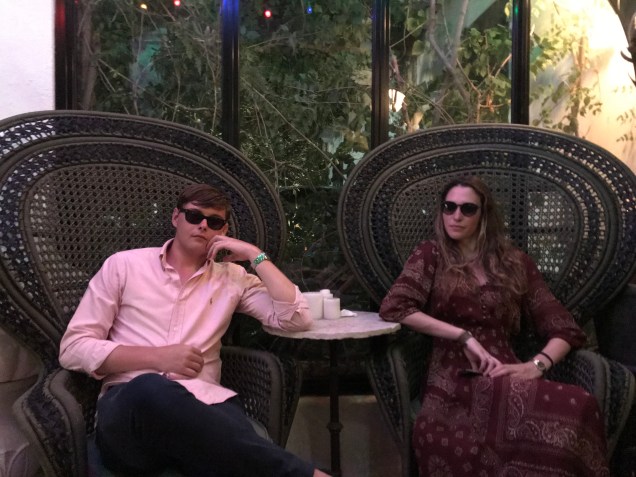
In August we stayed with Emmanuelle, Thomas, Clara and Paul in St Tropez. We felt like locals, taking part in the St Tropez traditions of shopping, lunch by the sea, people watching and Emmanuelle’s annual summer party, which stretched our French skills to the limit, mon dieu !

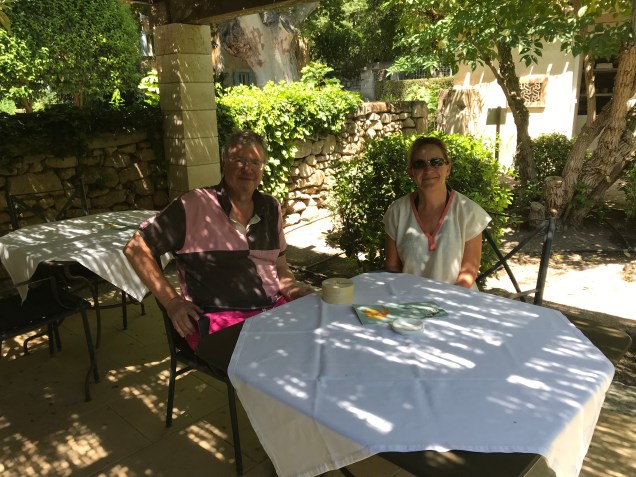
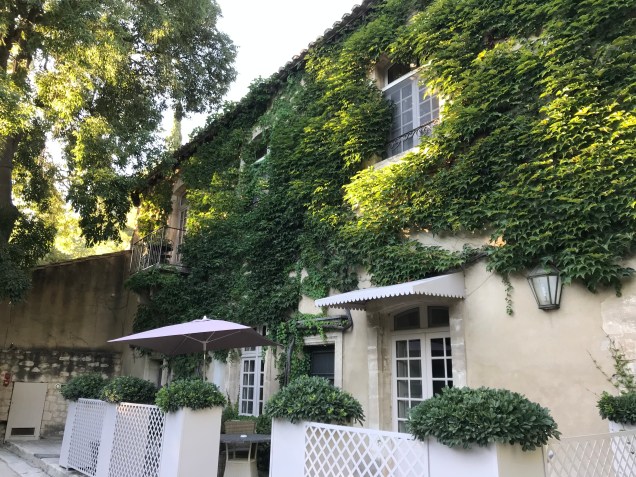
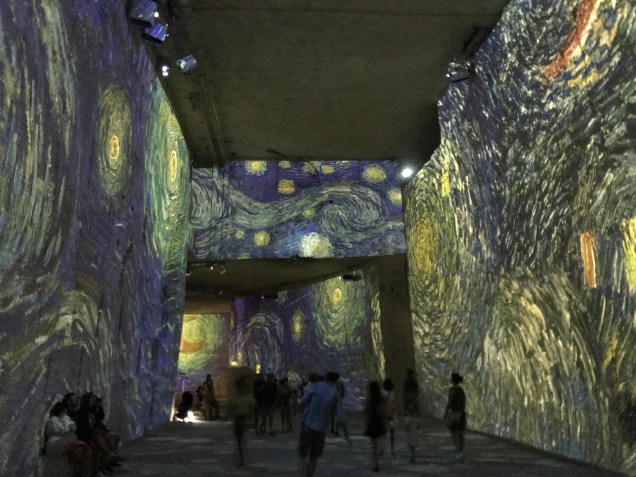
We also stayed at Les Beaux de Provence, a beautiful inland medieval village on a rocky plateau. While there we visited the Carriere des Lumieres, set in a limestone quarry where we enjoyed the Van Gough light and music experience in the cool of the cave while it was over 30 degrees outside.

Friends and family visit Kalkan

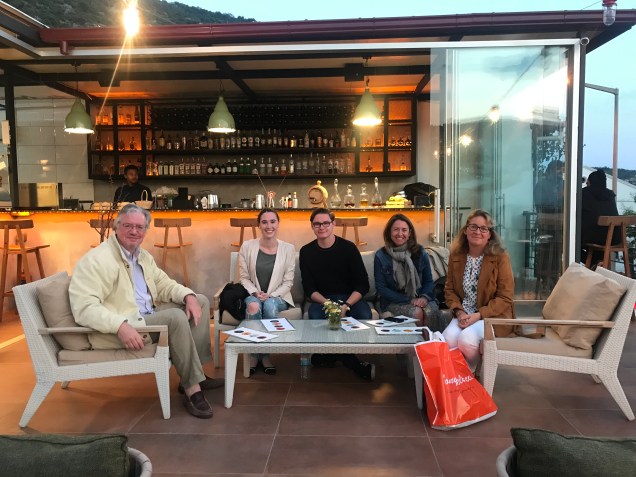
Within hours of our arrival in April, our Anglo/French chums arrived; Emmanuelle, Paul and Clara were introduced to Kalkan, Kaş and Patara. Emmanuelle was revising for her British citizenship and confirmed her expertise by ordering a beer in a restaurant without even knowing it (in fact asking for the bill).

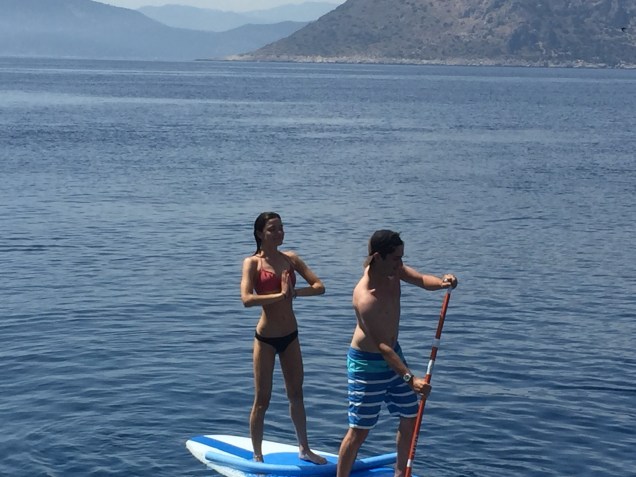
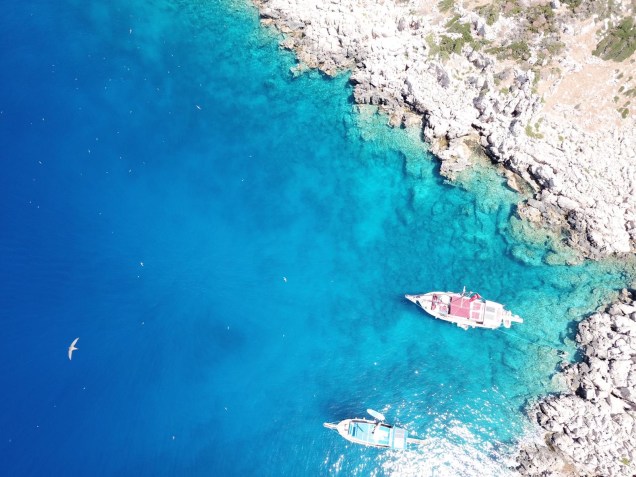
Helen and Tim visited in June, this time with Sam and Issy. Amongst the highlights were a day out on a boat, including paddle boarding, a visit to a local nightclub and yoga on the roof terrace.

Annie, Steve and Paula made a brief visit, shortly followed by the arrival of Abi and Tom. Tom managed to show that paddle boarding was not as easy or as elegant as that demonstrated by Issy and Sam ! The conditions, no doubt.

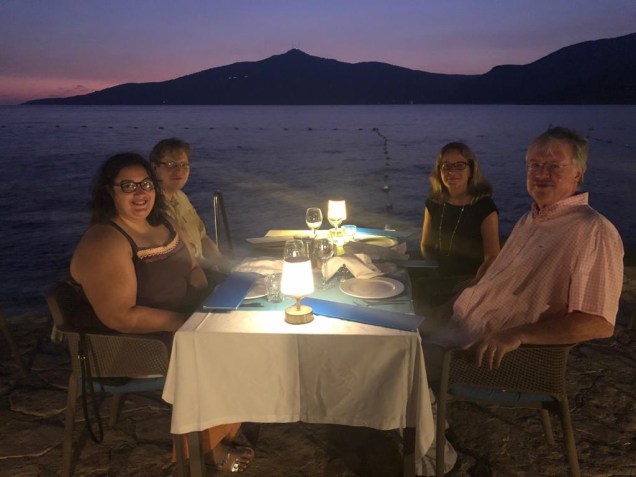
Towards the end of the season we caught up with the Boucher family who were spending half term with Anna’s brother in Kalkan. Late October brought September like weather – we all enjoyed good food and swimming and “the girls” (Harriet, Georgina, Lucinda ……and Sarah) went para-sailing.

Lunch stops

Each leg of our round trip was around three to four hours driving, generally on very good quality roads with relatively little traffic; most major cities have by-passes. We took the opportunity for a bit of ad-hoc exploring with our lunch breaks.

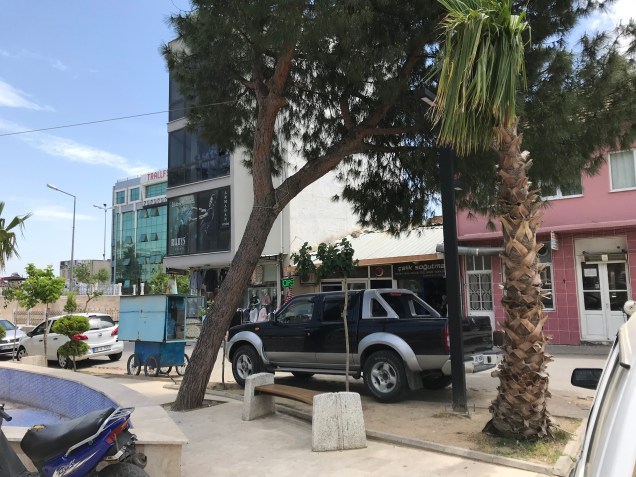
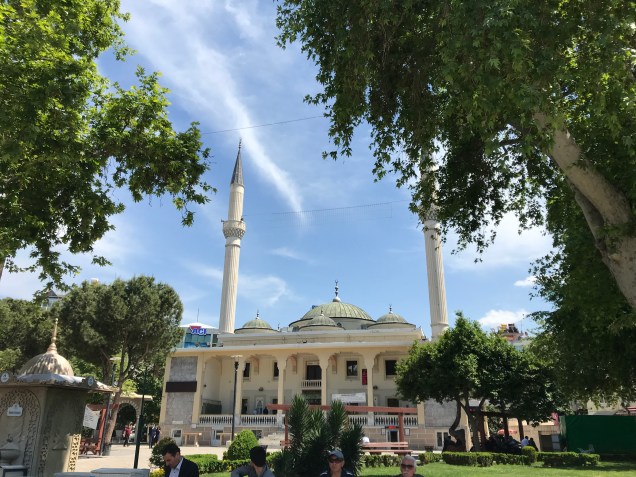
Inland we stopped at the industrial but modern city of Denizli, eating at a traditional Turkish restaurant on a square by one of the major mosques in a shopping district. Our other inland stop was at the much smaller industrial town of Köşk, just off the main road from Pamukkale to Izmir. While this is a well travelled road for tourists, eating other than at the roadside is not the norm. We ate a delicious homemade toasted sandwich in what was no more than someone’s front room. As we ate, there were quite a number of people dropping in – not for food or drink but because our arrival had caused ripples along the local grapevine.

Our stops on the coast were more conventional – the small town of Akyaka, Palamut Bükü on the Datca peninsula and the yachting centre of Göcek – but extremely picturesque.

Datça

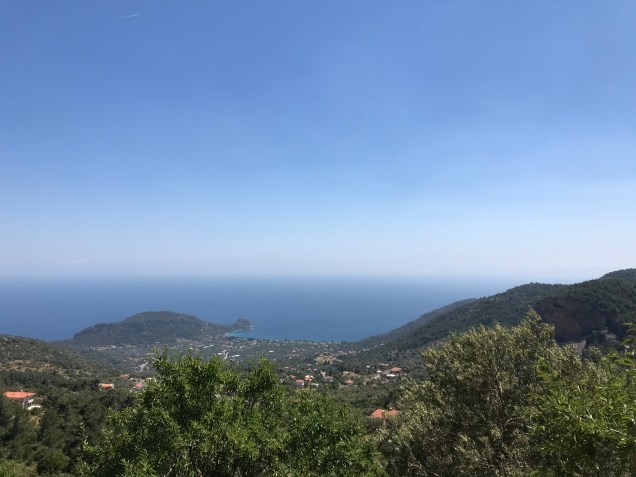
Our final stop on the trip was the Datça peninsula. Most tourist get as far as Marmaris, which we passed through, at the beginning of the peninsula. The scenery is amazing with windy roads, in place steep, along the peninsula which has the Aegean Sea on its north coast and the Mediterranean to the south.

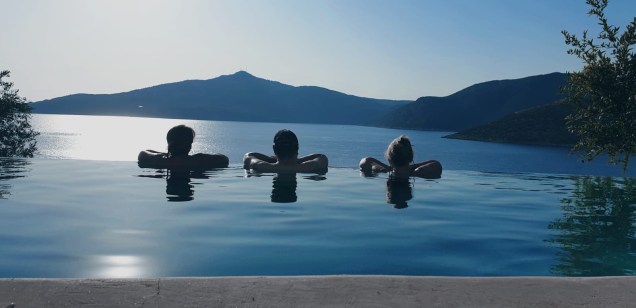
The tourists that make it this far are mostly Turkish; we met a number of people that spoke no English but managed to make ourselves understood (with some support from google translate). We stayed on an organic olive farm which produces a range of products and has a small guest house with great food and a swimming pool.

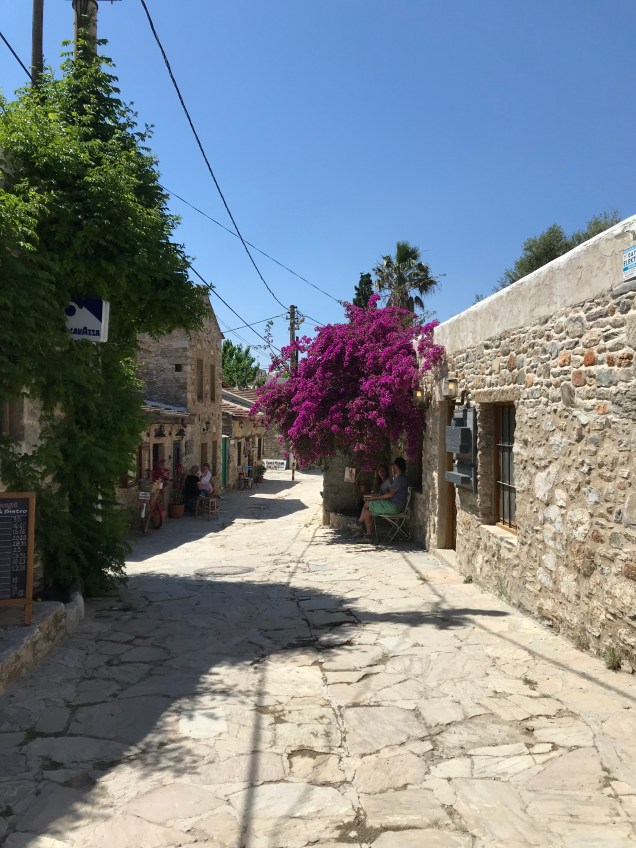
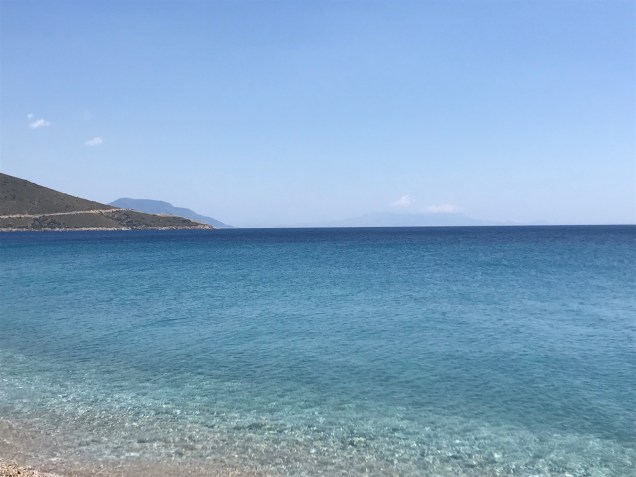
As well as enjoying some chill out time on the farm we visited the Old Town of Datça (Eski Datça) which is very picturesque and relatively quiet, and took a trip further down the peninsula to Palamut Bükü,on the beach.
Selçuk, The Basilica of St John and the İsa Bey Camii

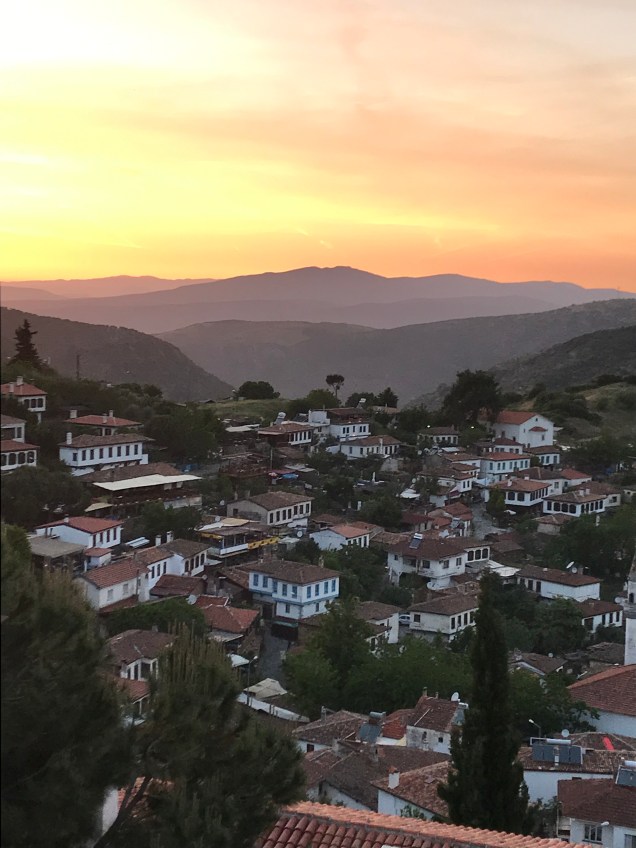
We stayed on the outskirts of Şirince, which by day is taken over by tourists as it is a picture postcard village, looking very much like a Tuscan village. It is also close to Ephesus and Selçuk. The best view was from our hotel just above the village.
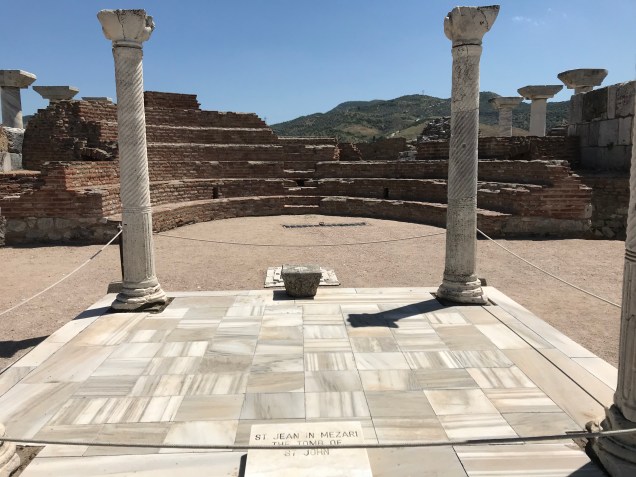
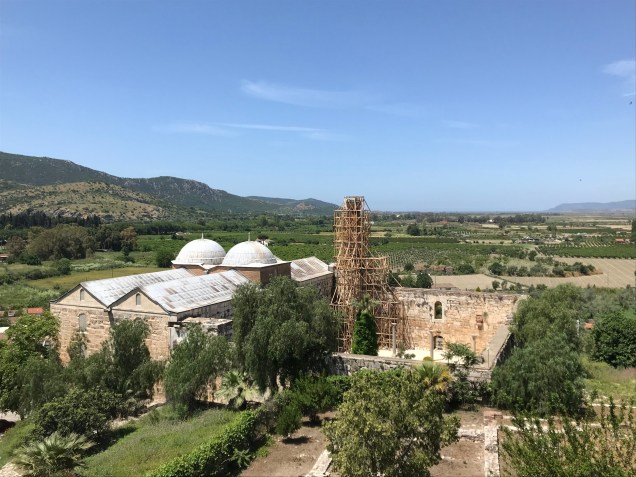
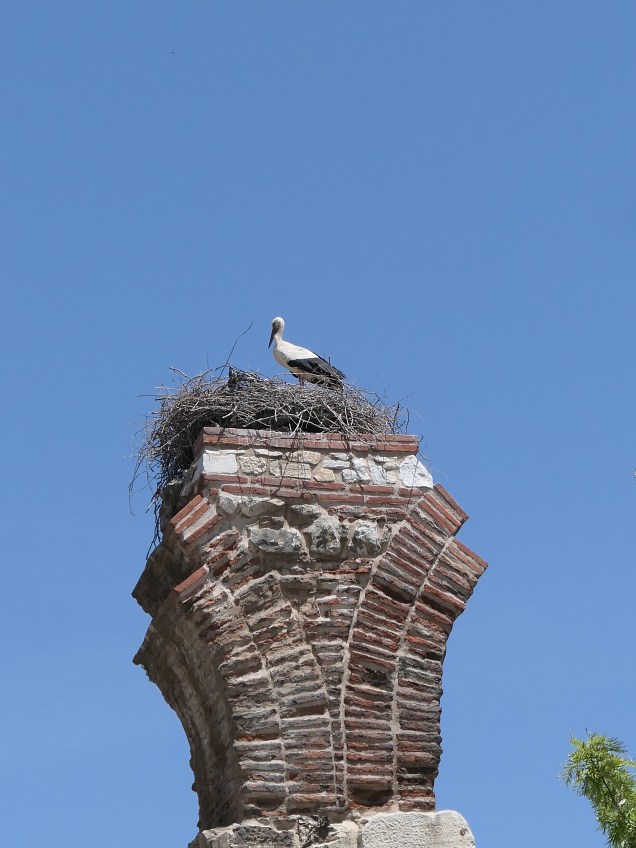
Selçuk has the ruins of the very large Basilica of St John which is next to a 14th Century mosque (Camii) and 6th Century citadel. The town has the remains of a Byzantine aqueduct which now provides perfect nesting spots for storks.

Ephesus

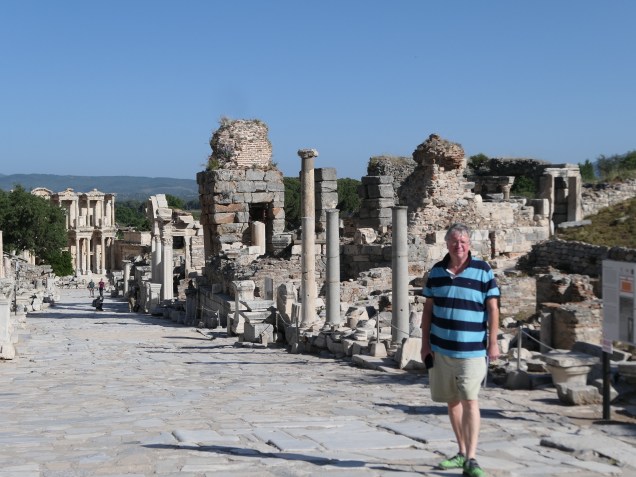
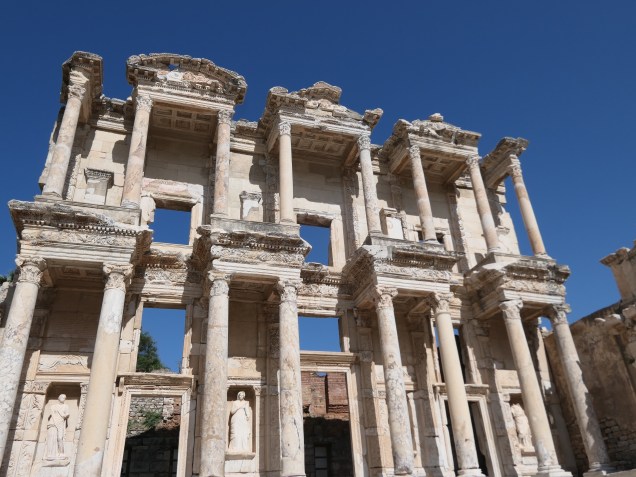
Ephesus (or Efes, in Turkish, from which the local beer derives its brand name) is the best preserved classical city in Turkey and probably the best known. It had a harbour, which became silted up and ultimately led to its decline. At its peak it had a population of 250,000. It is also significant because it is believed St John and the Virgin Mary lived here for three years and there are ruins of a church built in her name. The site is very significant to the Catholic Church and has been visited by several popes.

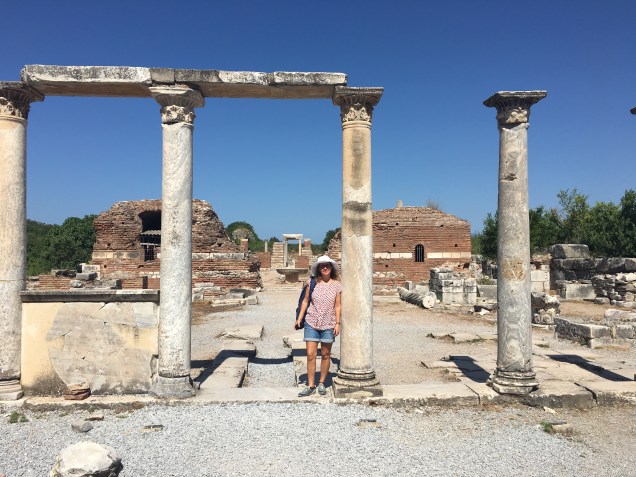
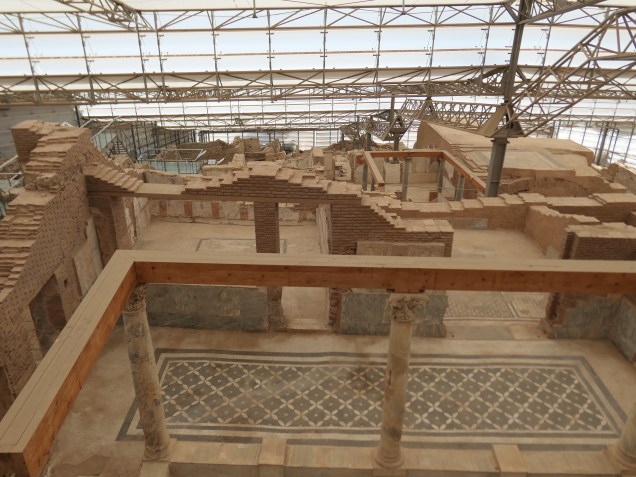
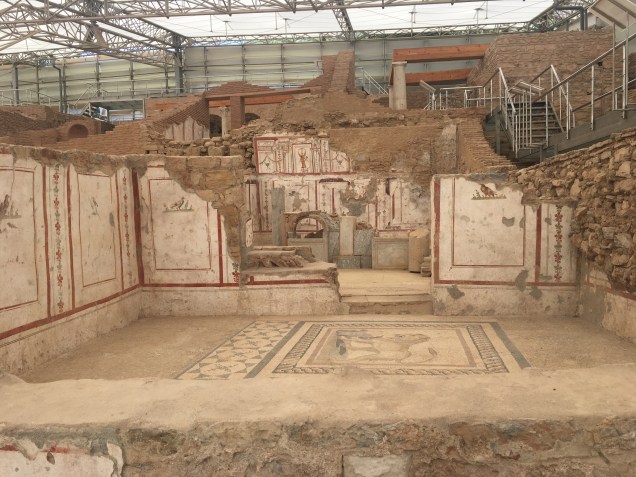
The highlight of our visit was seeing the terraced houses which are being restored to provide the best evidence of Roman life, other than Pompeii; they were the houses of the wealthy. We managed to see this section of the site and the church of the Virgin Mary with no other visitors – in the case of the former, due to a (modest) additional entrance fee and in the case of the latter a (short) walk from the main site.

Afrodisias

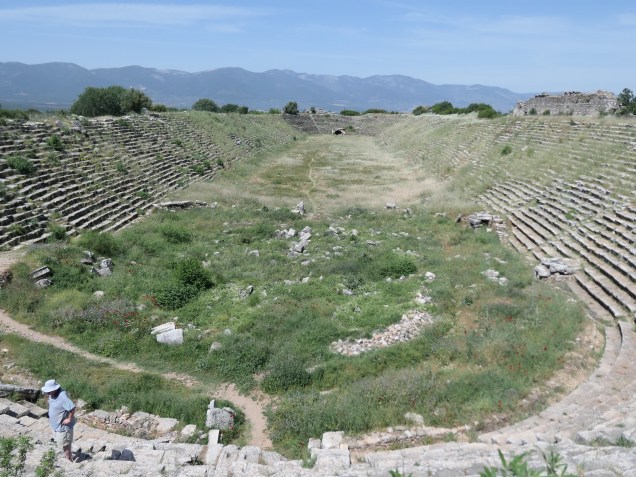
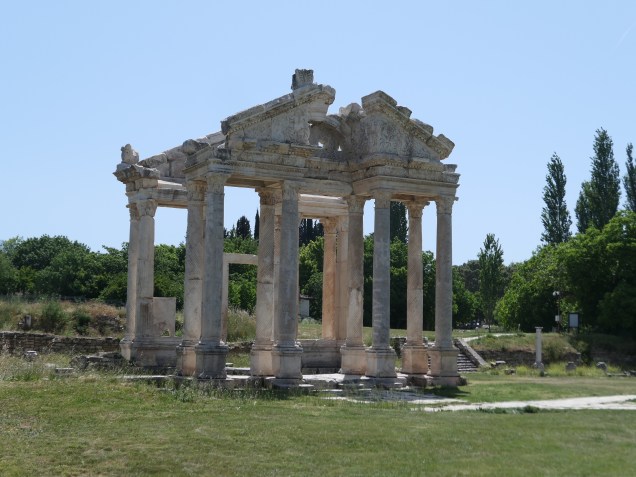
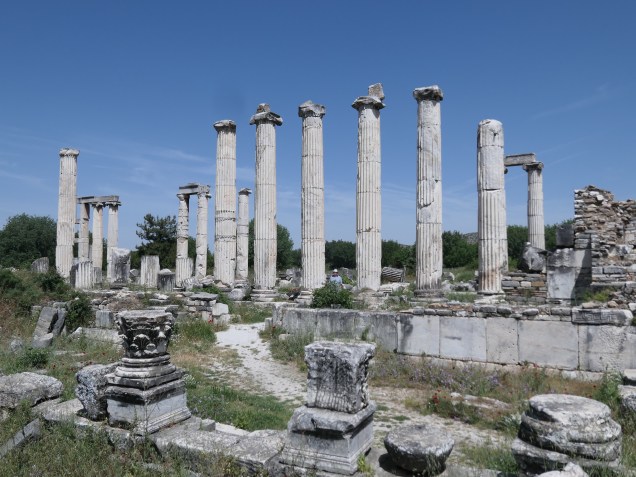
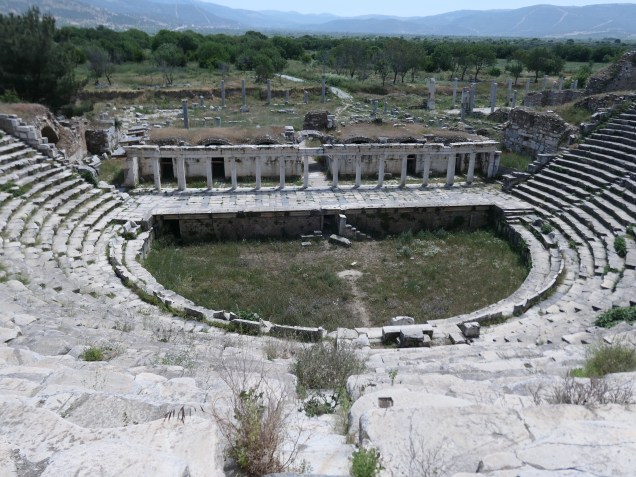
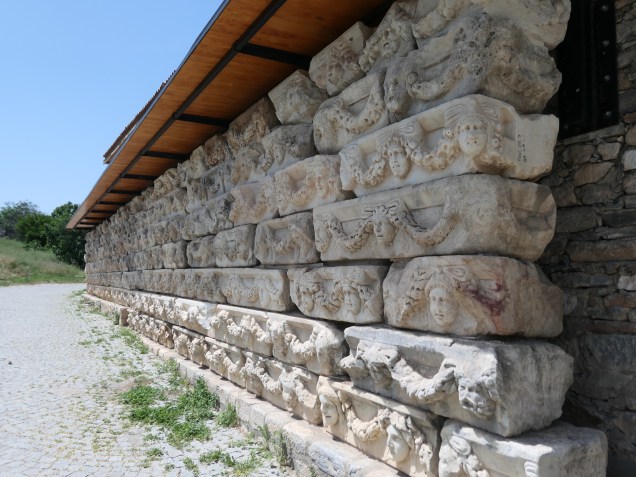
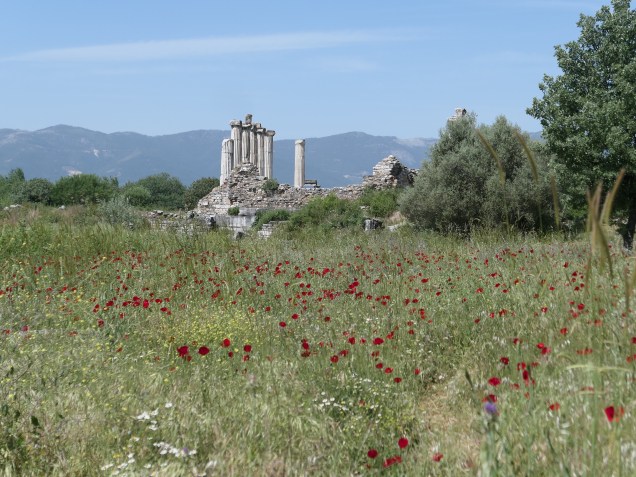
On our way from Pamukkale to Ephesus, we took a detour to Afrodisias which is more isolated, and consequently less visited, than Ephesus; during our time there we only saw six other visitors. In many ways it is as impressive as Ephesus. It includes one of the biggest and best preserved stadia – 270m long with seating for 30,000. There is a temple to Aphrodite, after whom the city was dedicated.

Hierapolis

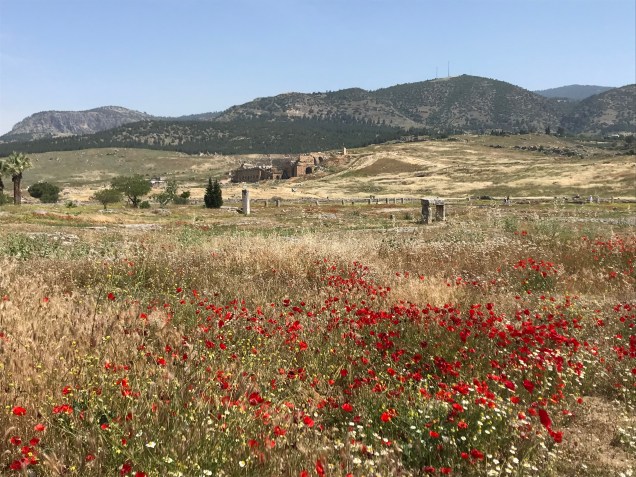
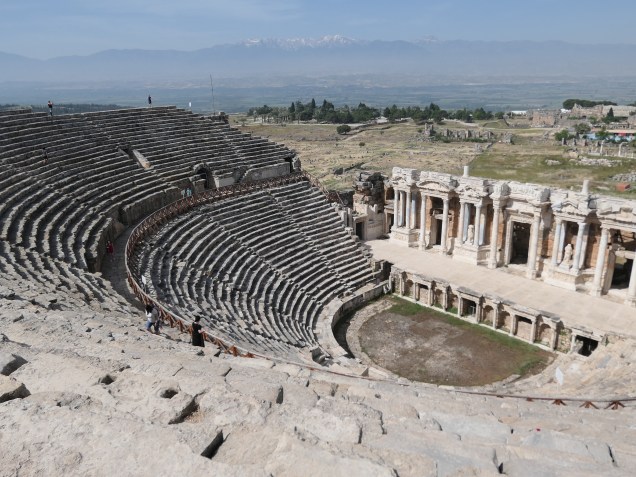
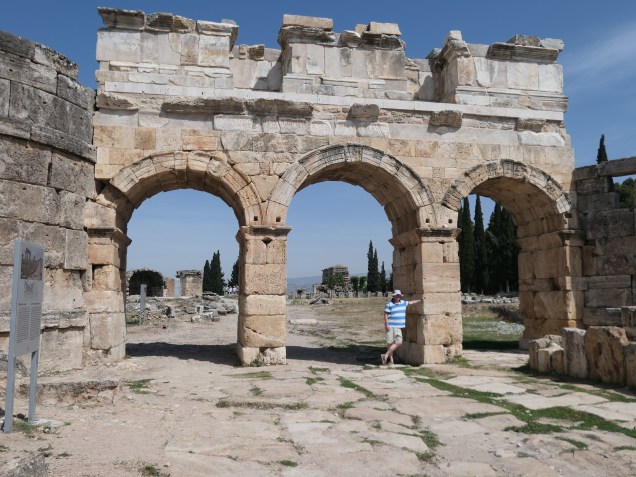
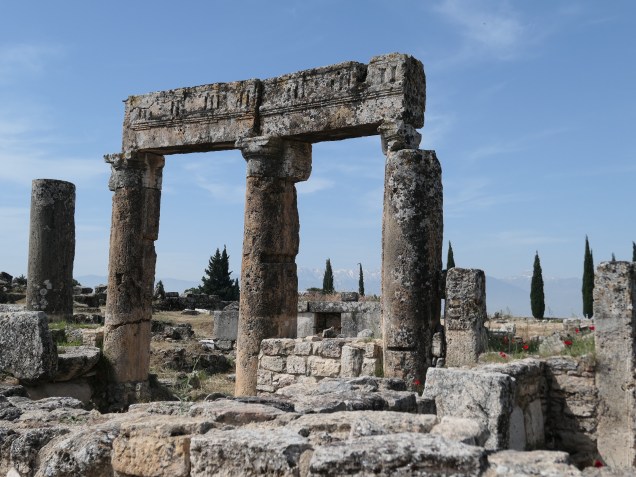
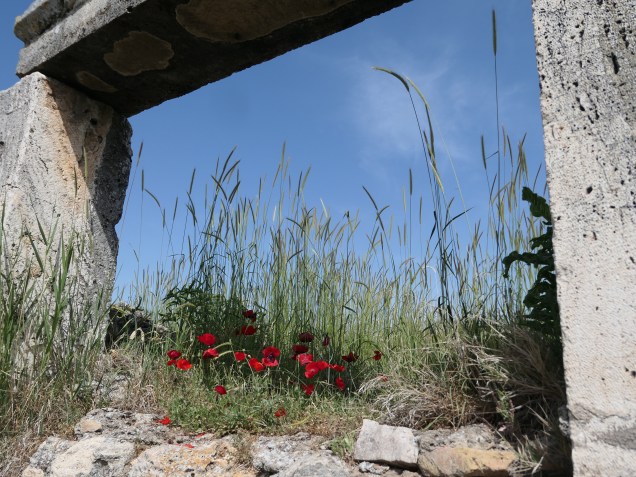
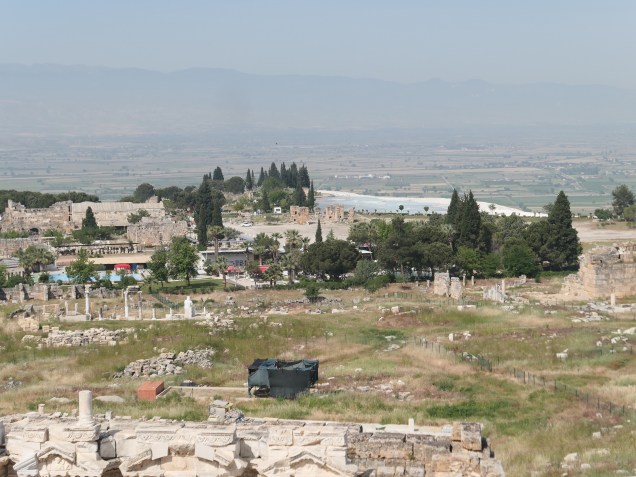
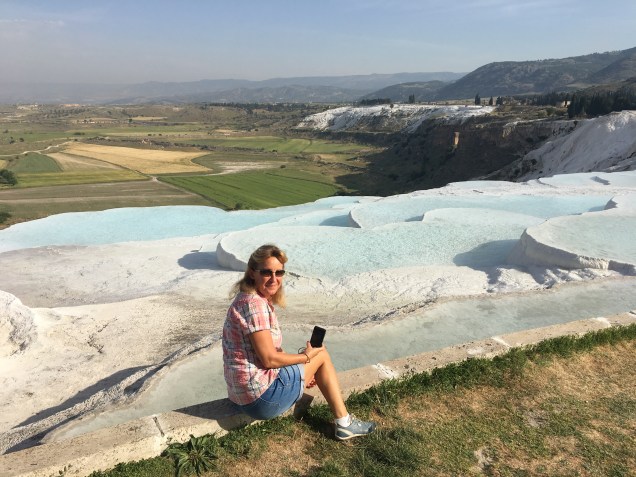
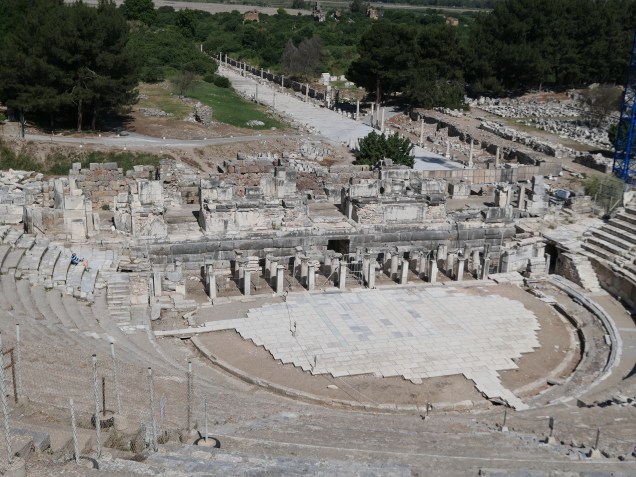
Hierapolis was a spa city founded around 190 BC and situated at the top of the Pamukkale cliff. The Romans used the same thermal waters that formed the travertines to create the healing spa. Although severely damaged by earthquakes, the ruins cover a large area and include a theatre, church, baths and archways. At this time of year the landscape is at its most lush, including wild poppies.

Pamukkale

In our effort to see more of Turkey and improve our Turkish, we made a one week round trip from Kalkan to include Pamukkale, Ephesus and Datça.

Pamukkale and Hierapolis are together a UNESCO World Heritage Site, a three and a half hour drive inland from Kalkan. We stayed for two nights so we could enter the site before 7am to avoid the crowds.

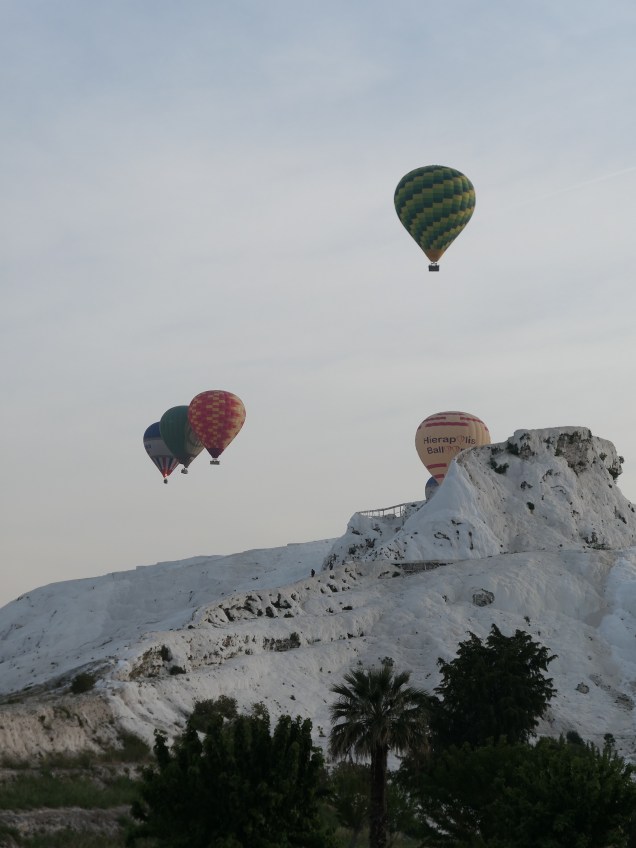
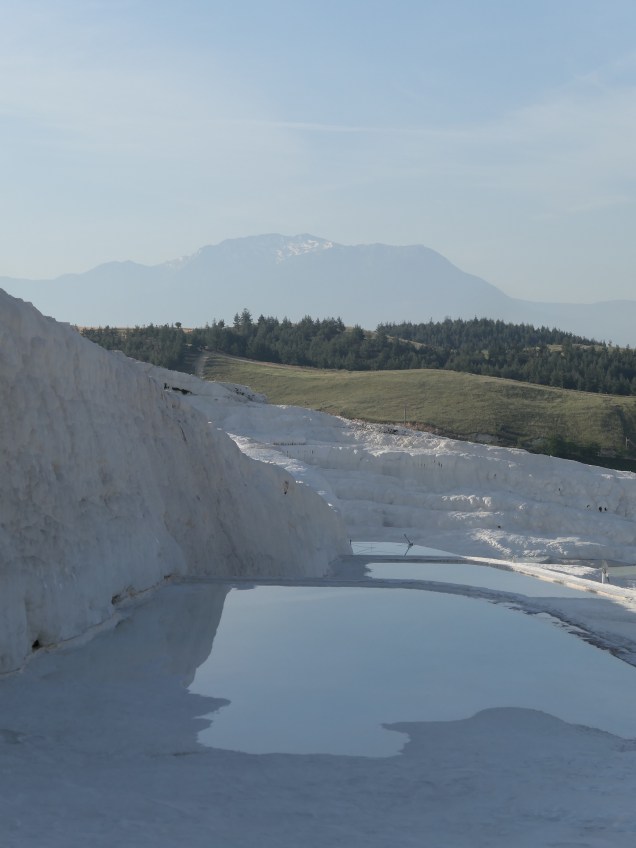
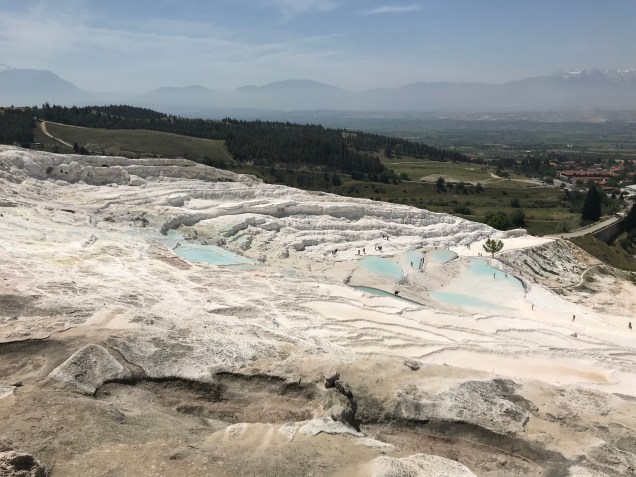
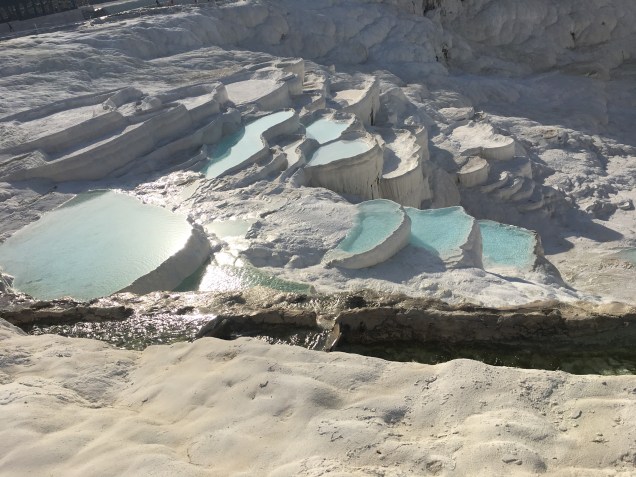
Pamukkale was formed by warm thermal waters cascading over a limestone cliff edge. The literal meaning is cotton castle. It is now the most visited single site in Turkey, with two million visitors a year – the vast majority arriving in coaches from coastal resorts such as Marmaris or on day tours from cruise ships. The village of Pamukkale, in the shadow of the cliff, is therefore very quiet in the early mornings and evenings, with a handful of small guest houses.