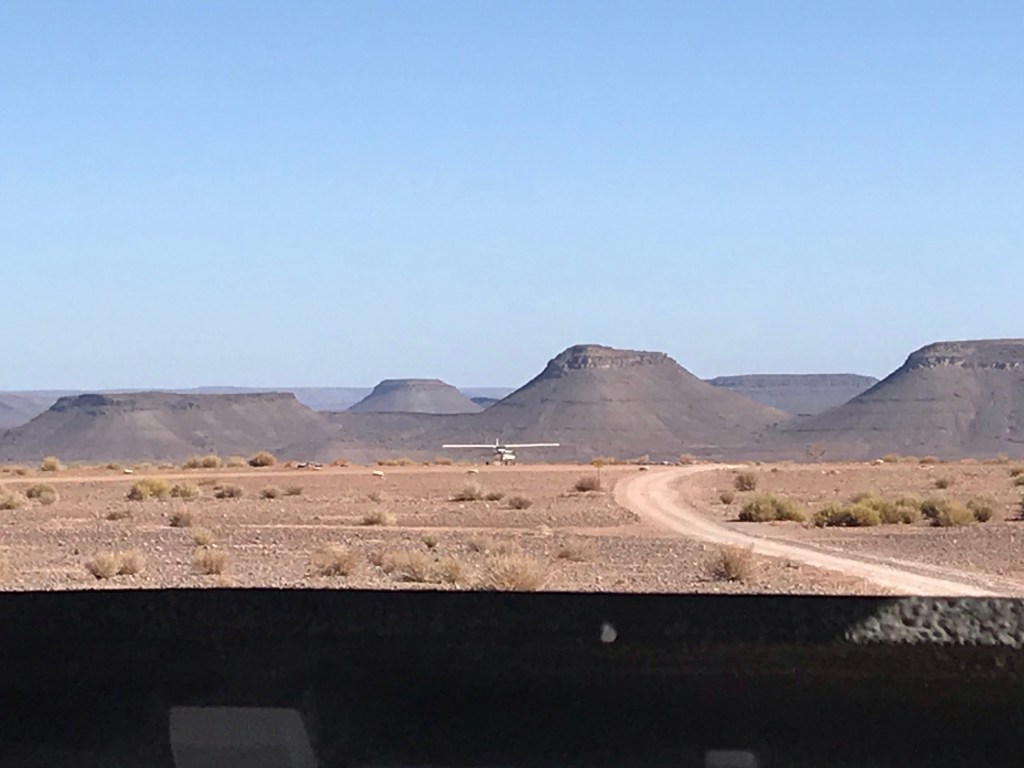
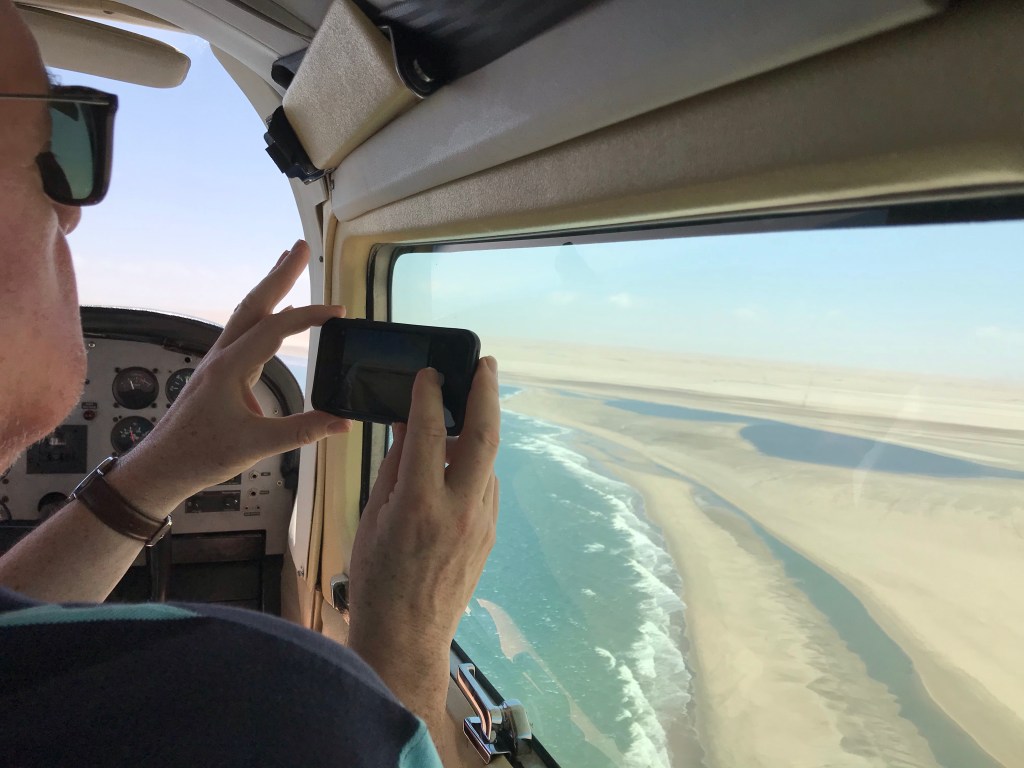
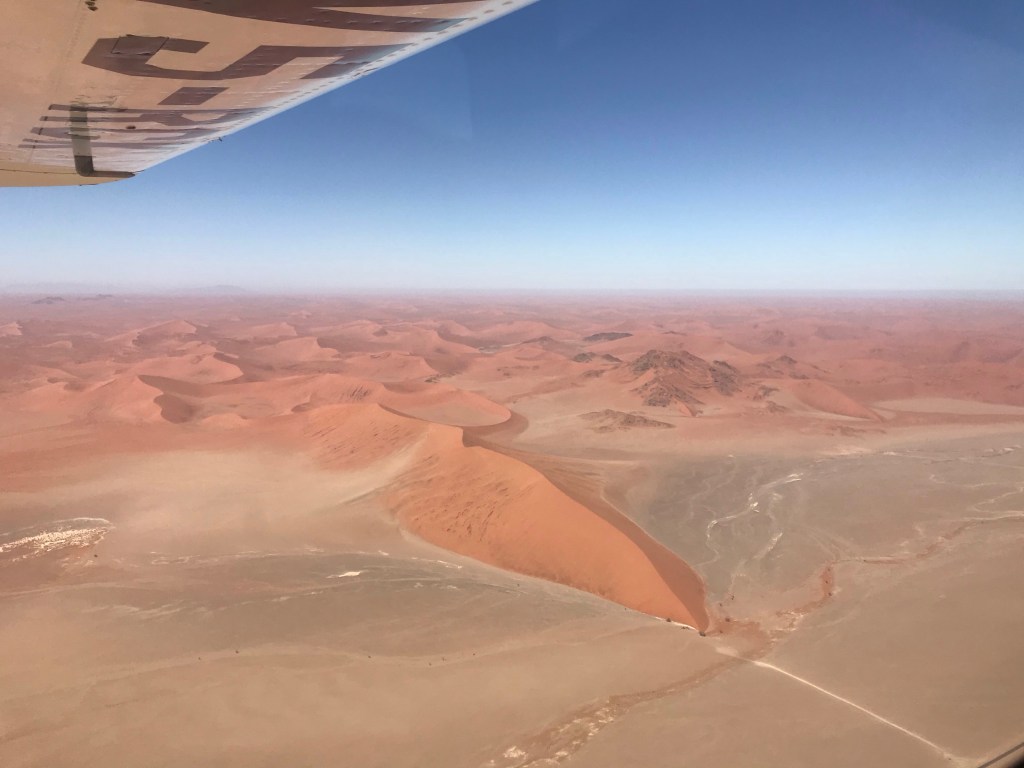
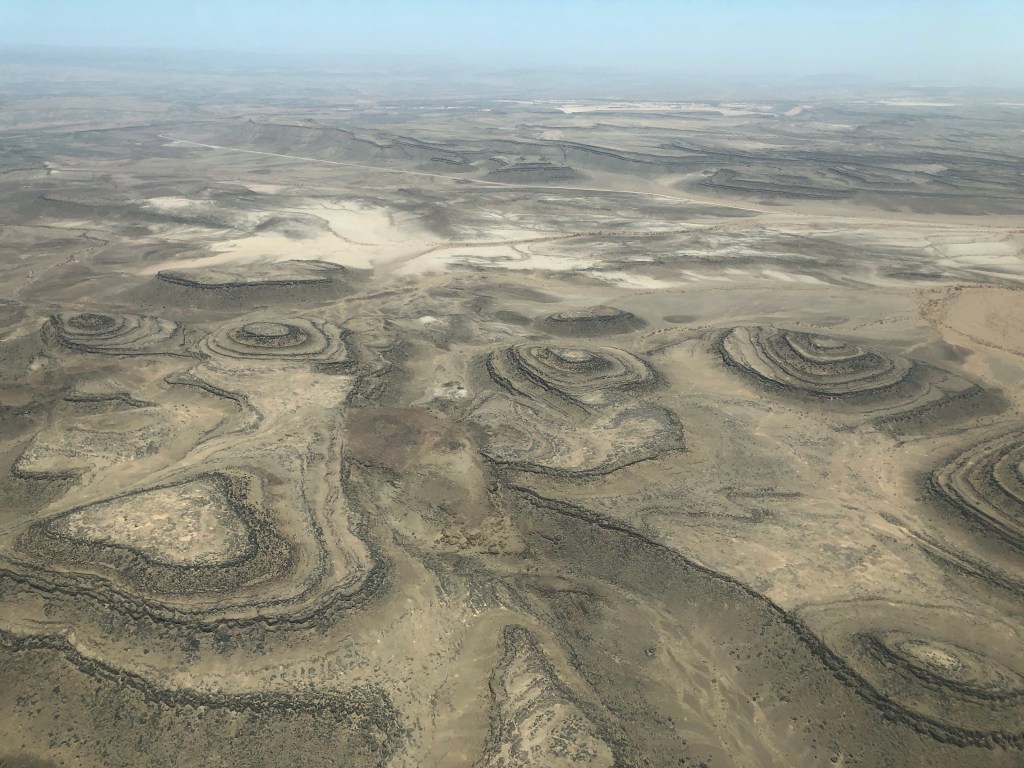
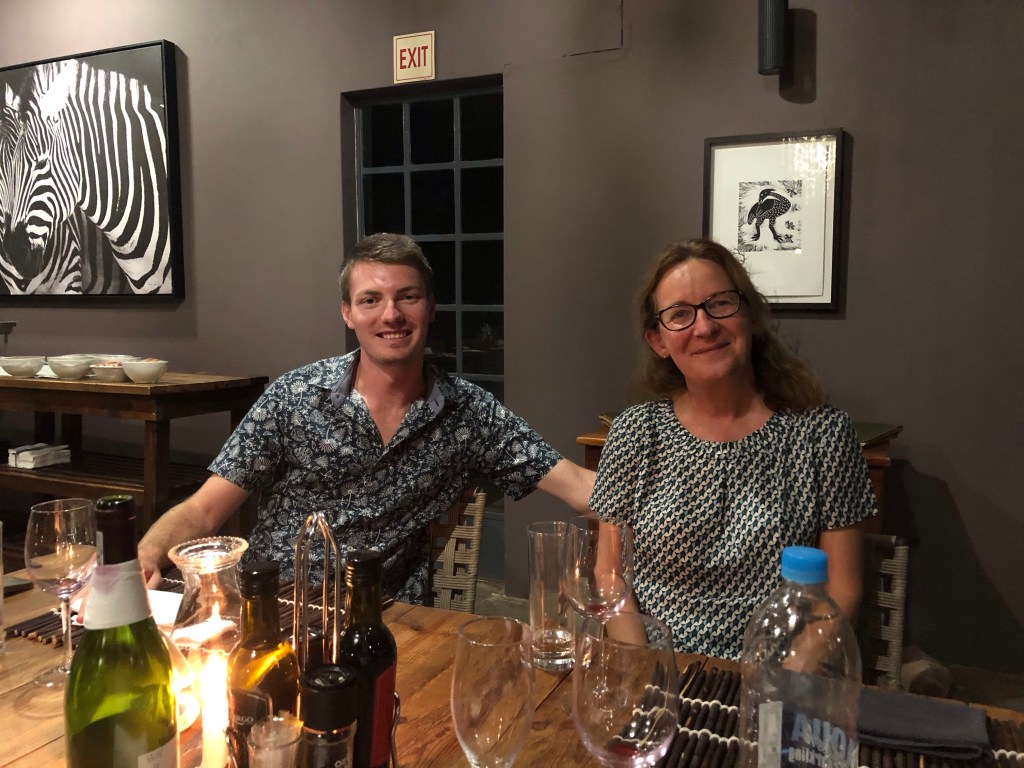
We travelled to a lodge next to the entrance to the Sossusvlei National Park. On our first night we went on a sundowner – an escorted drive across the desert to a rocky outcrop. Our guide brought along the essentials to watch the sunset – beer, water and a selection of nibbles including springbok biltong.
The lodge itself is unfenced, enabling frequent visits from wildlife; we saw blue wildebeest, jackals, ostriches and oryx.
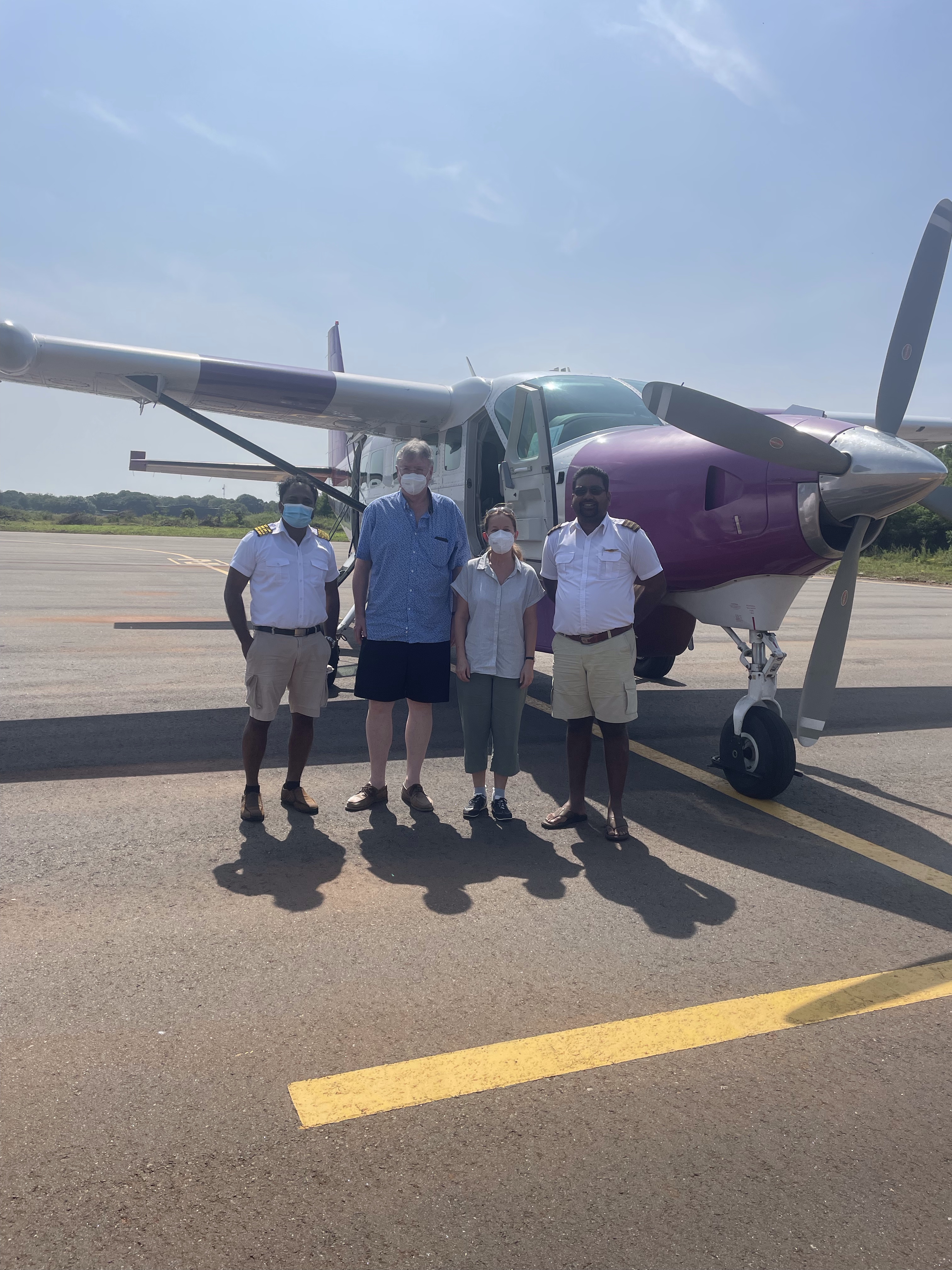
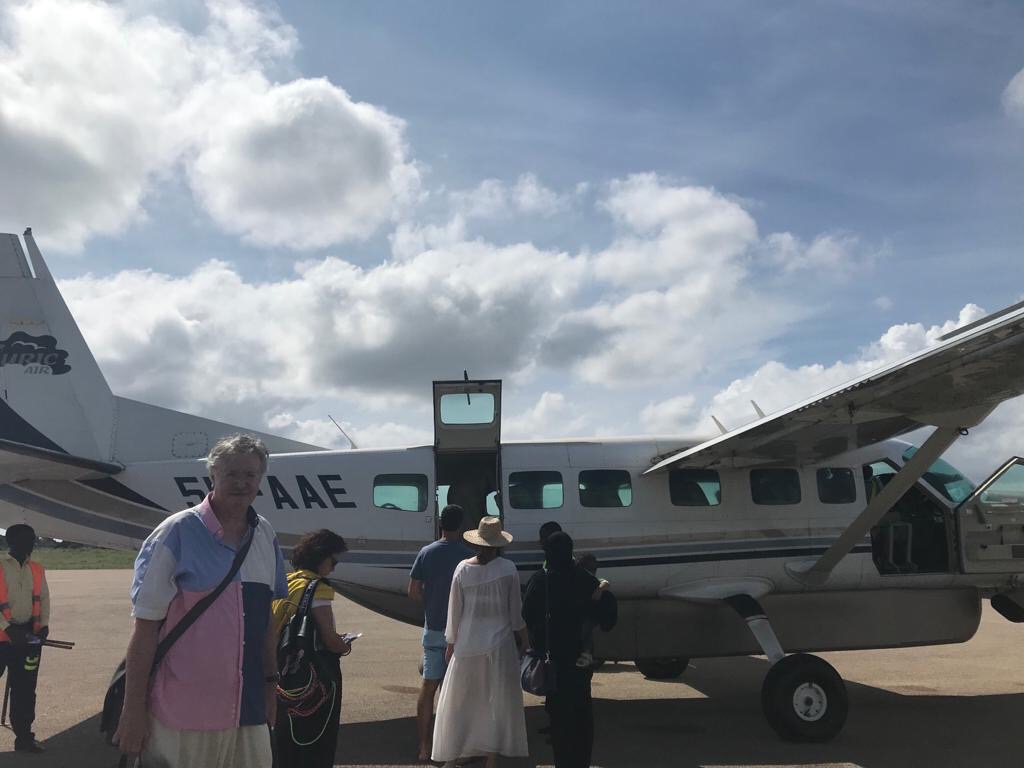
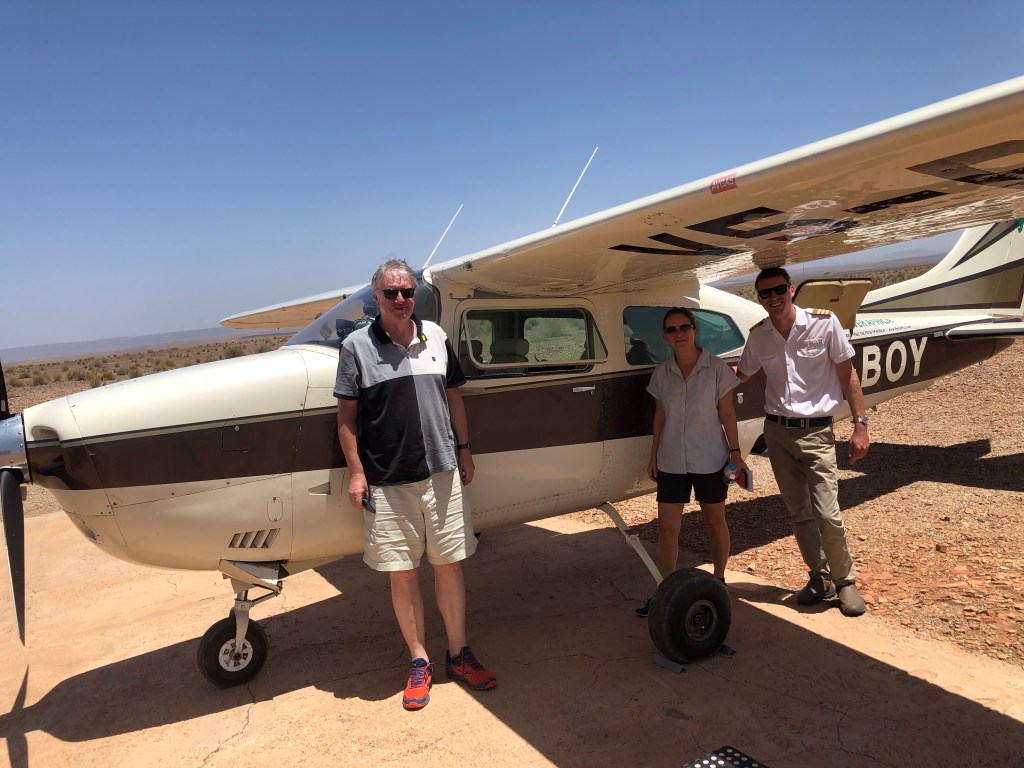
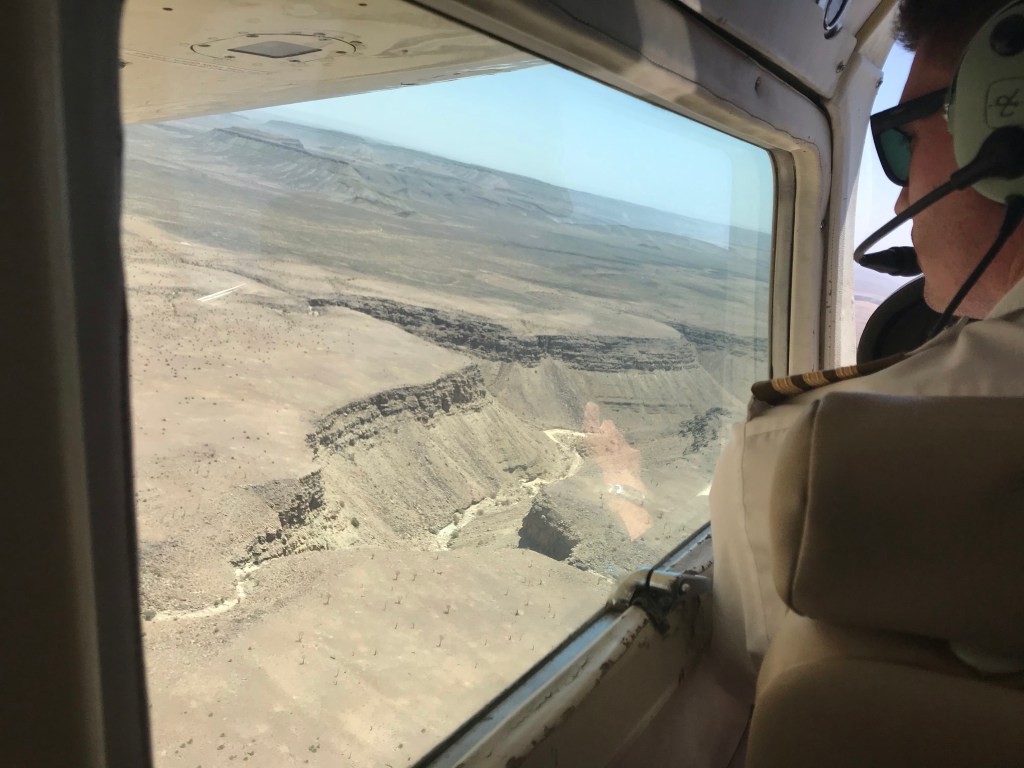
We flew to Fish River Canyon from Windhoek, which is the second largest canyon in the world, after the Grand Canyon. It is 161 km long, up to 27 km wide and 550m at its deepest. We stayed at the only lodge in the Nature Reserve, on the rim of the canyon, situated 190 km from the nearest town. We were awestruck by the solitude and quietness.
We were driven into the canyon by a guide, together with two Dutch tourists, and were the only five people in the canyon that day. We were introduced to the “African Massage” – four wheel drive vehicles bouncing around on at best gravel tracks. Our excursion into the canyon was described as extreme four wheel drive and we were grateful for an excellent driver, despite him joking that it was his first time ! The final destination was a rock pool, in which Sarah had a swim, followed by a picnic using a table and chairs which had been stored in a tree.
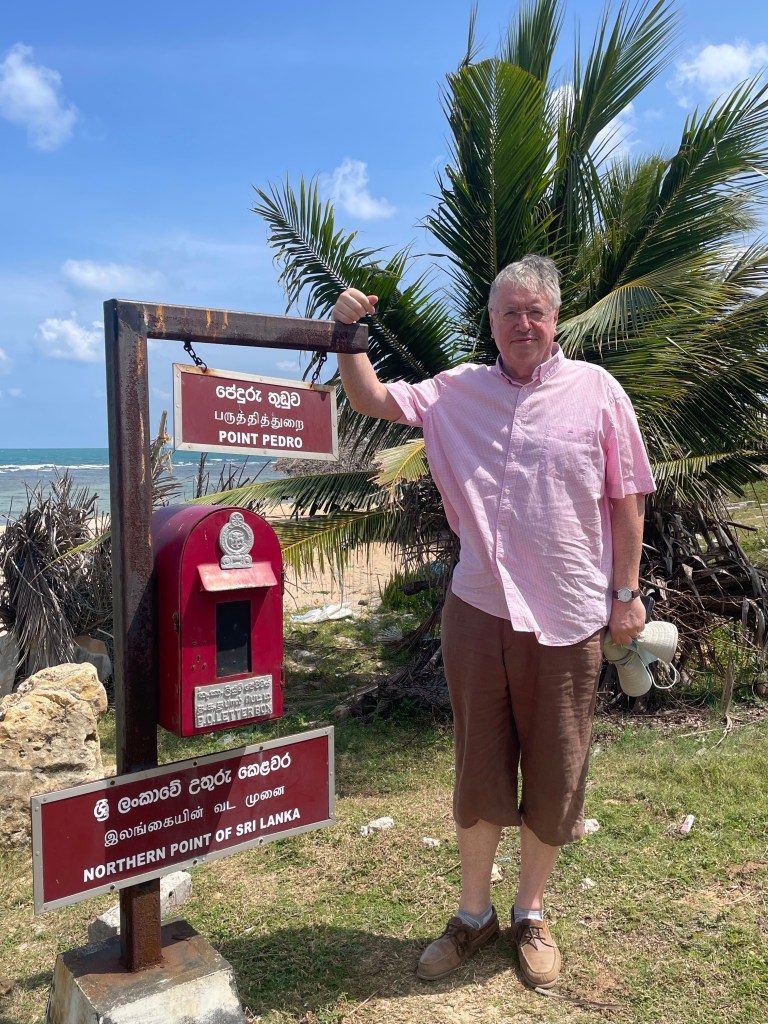
Namibia is a country we wanted to visit because of the scenery and wildlife, however we knew little about the country itself.
In the late 19th century Namibia became a German colony with the exception of Walvis Bay, a deep water harbour, which was British. In 1915 South Africa, with the support of Britain, took control of the country. The struggle for independence, supported by the UN, did not come to fruition until 1990 when it became one of the last states to achieve its goal. Walvis Bay remained under the control of South Africa, given its importance, until 1994.
Modern Namibia, with its 2.5 million population, has a strong constitution and (by African standards) a liberal and honest government. Unemployment at over 30% and wealth distribution are major issues; the country is trying to use money from its mineral deposits to invest in infrastructure. Namibia has diamonds but this is becoming less important, with uranium mining now a major source of income. However “soft loans” from China have resulted in most mines becoming Chinese owned. Tourism is the third largest industry and is growing significantly, with Germans being the largest group visiting in spite of the locals speaking English to them.
The capital is Windhoek where we landed from Cape Town. It has 300,000 people, with a relic of German rule being a number of very good breweries. We stayed in a guest house along with fellow travellers at the beginning or end of their Namibian adventures. We enjoyed the Windhoek beer and a bite to eat in Joe’s Beerhouse, a local institution, also frequented by travellers sharing stories at communal tables. In the beer garden is a mini, donated by two legendary travellers who arrived in it from Durban after some epic adventures.
Our last visit was memorable as we were in Cape Town having dinner with friends the night Nelson Mandela died. Unconnected to his death, our trip to Robben Island was cancelled the following day due to mechanical issues with the boat. This time we succeeded in going. It was the final part of a day trip which also covered the forcible removal of non-whites from District Six, the colourful Bo-Kaap district and the Langa Township.
The tour of Robben Island is made up of a guided bus trip around the island and being shown around the jail by a former political prisoner. We heard stories of the best and worst of humanity; older inmates mentoring and educating younger inmates, the mistreatment from many of the guards and the bonds formed with others. Our guide was jailed in 1984 as an 18 year old political activist. He was an angry young man who learned from his fellow inmates that anger was selfish and would not help their cause. He is still an activist and an optimist who spoke openly about his mental health challenges to this day. He knew Nelson Mandela and his lasting memory is that he was always interested in the needs of others and not his own.
We had tried to buy general ground seats for the match, but were unable to as the website showed that the match was sold out. Through the ground we purchased hospitality tickets in the President’s Pavillon at £85 per ticket, including all day food and local alcohol. We turned up to find the ground at best half full and settled into our box with a member of the MCC , a group of Warwickshire/Birmingham City fans and a few South Africans. As the game wore on and it became evident that England were going to lose, the Blues fans (who had chosen to take advantage of the unlimited bar) decided to give Chris Woakes (a local lad) abuse because he is a Villa supporter.
However, that said, we had a great day at a great location, despite the poor result. Joe Denley batted well, but unfortunately de Kock and Bavuma batted better, sharing a partnership of 173.
England had two one day warm up matches in Paarl against a South African Invitation XI at the beautiful Eurolux Boland Park stadium. We attended both days in an atmosphere closer to village cricket but with temperatures in the mid 30s.
For periods on both days the scoreboards and tannoy system were out of action due to “load shedding” – a system whereby different districts lose electricity in rotation for a couple of hours each to protect the grid. The England supporters attempted to keep score either in their heads or on scraps of paper, however for some even keeping track of the wickets was a challenge after a few beers. England won the first match and sort of lost the second match. Roy scored a century on day one and Bairstow the same on day two, however Tim is sure he retired on 99 !
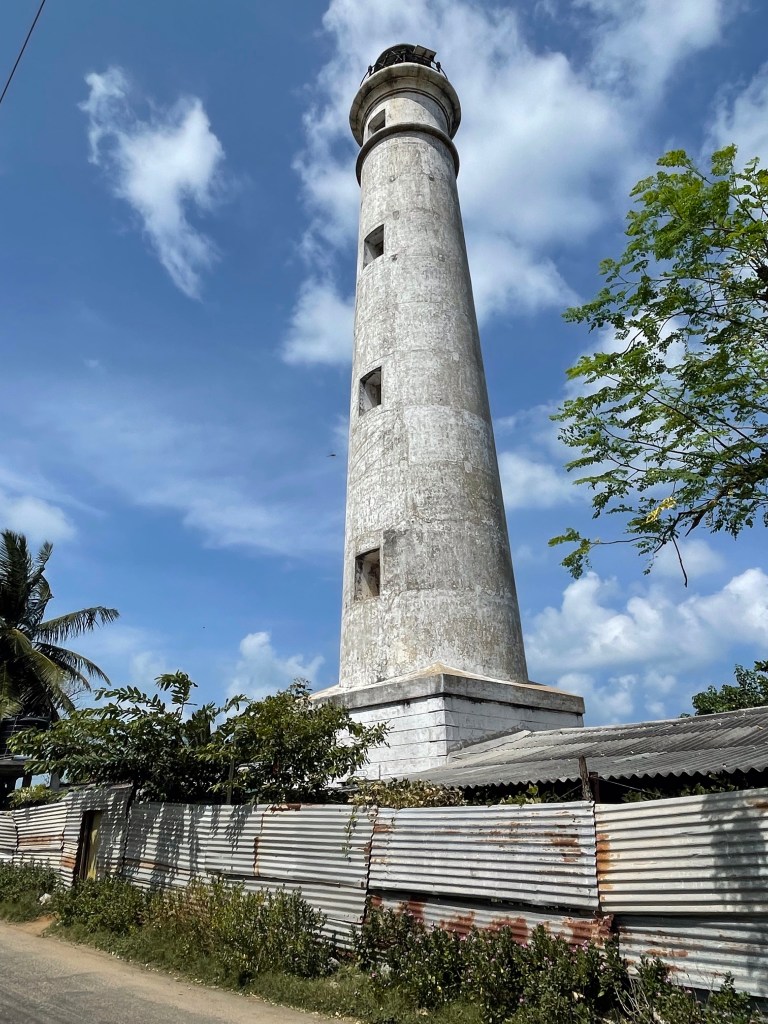
We stayed in Franschhoek for four nights so that we could watch some cricket (details to follow), catch up with friends and sample the local wines. We visited Mary and Hywel’s house which is situated next to the lake on the second fairway of a Jack Nicklaus signature golf course.
A highlight of our time in Franschhoek was walking around the gardens at Babylonstoren, followed by a cellar tour and wine tasting. It was also very interesting to see their very modern olive oil production facility. The estate was purchased by Koos Bekker for his wife Karen Roos in 2001; between them they have transformed the property and gardens first inhabited in 1692. They have recently opened The Newt in Somerset which we aim to visit before long.
Whilst travelling to the cricket we visited the memorial to the release of Nelson Mandela outside the prison at Drakenstein where he spent his last two years in custody.
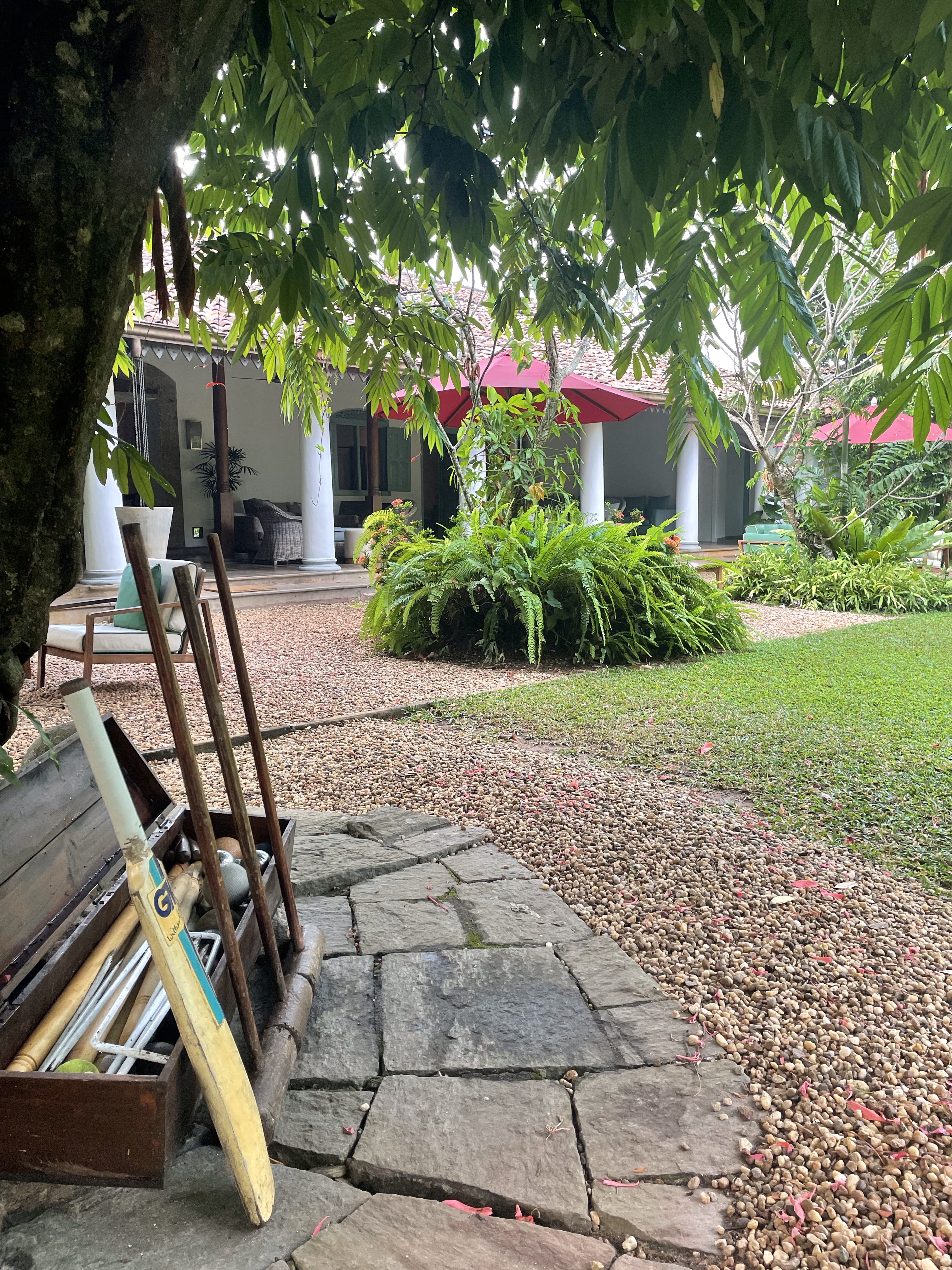
We made a one night stop in Robertson on the way from Gansbaai to Franschhoek. It is a wine town at the western end of the R62 and we stayed in a Victorian Manor House, which has been converted into a boutique hotel with very popular restaurant. We stayed in a room in the former stables with views over the pool and croquets lawn.
Whilst staying at Grootbos, we took the opportunity to take a marine tour from Gansbaai in search of the marine big 5. We saw the three above, but it was the wrong time of year for whales and the dolphins had gone missing.
The highlight of our trip was that our boat was used by a conservation team to release nine injured penguins back into the wild to rejoin their colony. The penguins had been hurt in attacks by seals and sharks before being rescued and rehabilitated. The penguin population has been much depleted by human intervention, for example their nesting material has been harvested for use as fertiliser. Local charities are now providing nesting boxes.
The seal colony thrives with 60,000 members, which can be smelt from some distance away, so we held our noses as we watched their swimming skills. The sharks we saw were being attracted by a cage diving boat. The divers were more visible than the sharks !
Grootbos is a botanical nature reserve set up to manage and protect the fynbos, which include proteas, ericas and restios. Many species of plants are under threat or vulnerable to extinction. The fynbos needs fire to germinate its seeds and Grootbos manages this on a rotational basis burning every 10 to 15 years.
The reserve has two small hotels and also runs a foundation for the benefit of the local community. Each year the foundation runs a 12 month course for 12 students (aged 18-25) from difficult backgrounds, who are taught horticulture, IT and general workplace skills. The students undertake work placements with the two best students spending time at The Eden Project in Cornwall. There is a small farm growing vegetables which are sold to the hotel to help support the foundation.