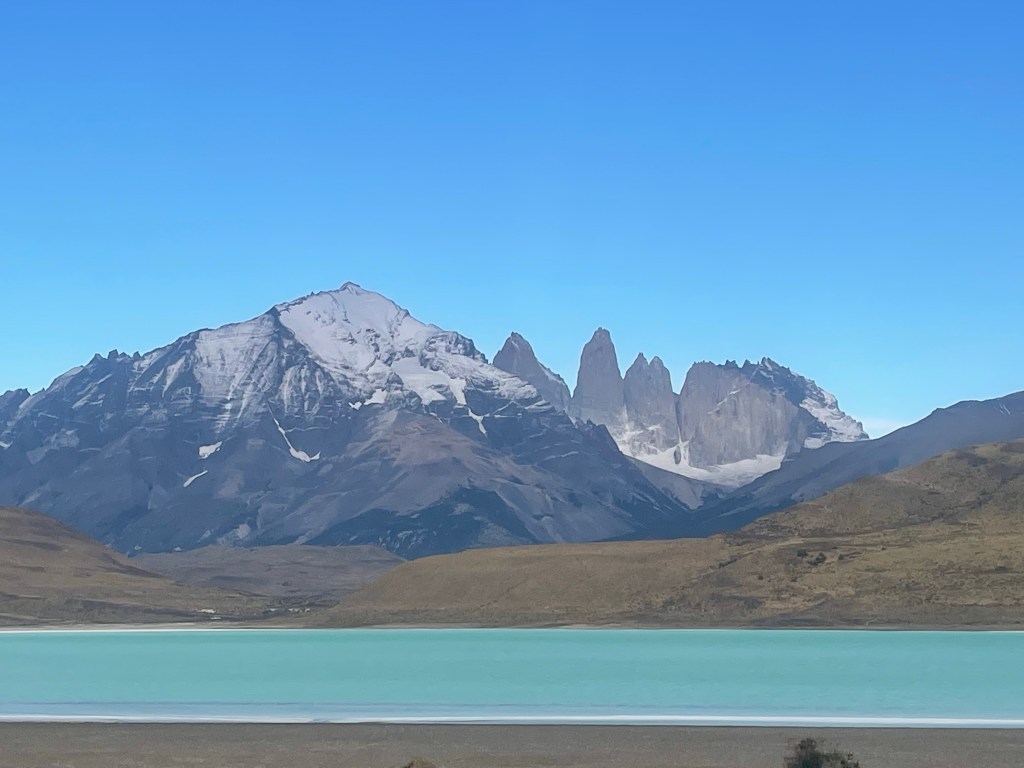
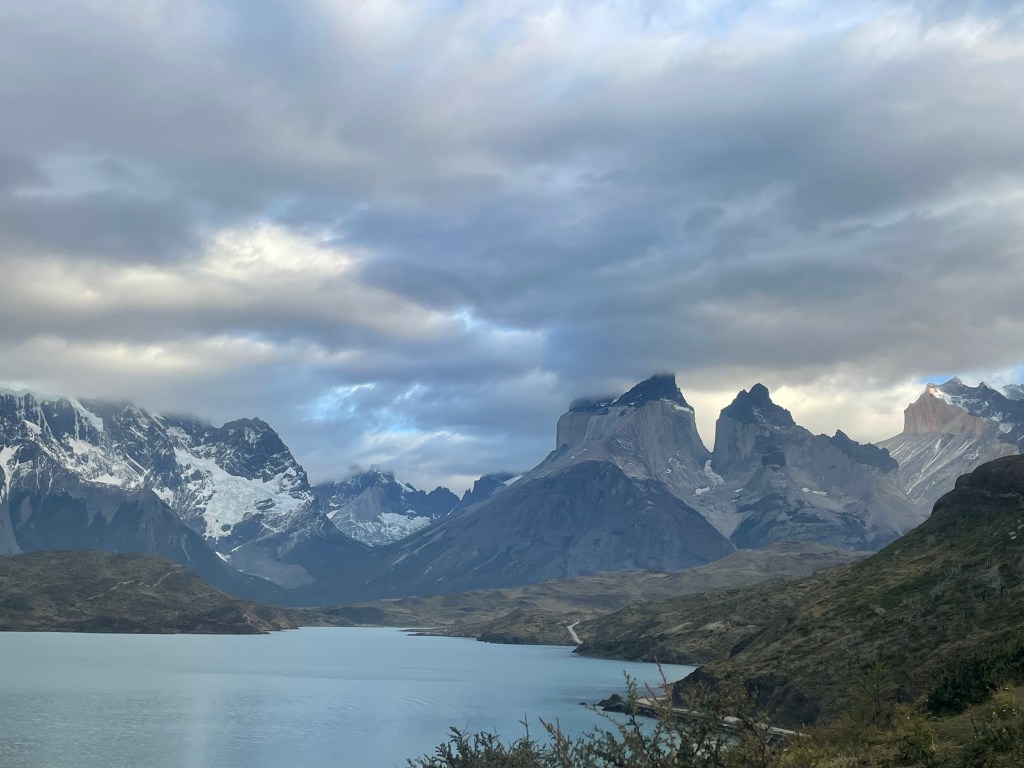
Torres del Paine is a national park in Southern Chilean Patagonia. It is almost 200 miles from Puento Arenas and is an area of mountains, glaciers, lakes and forests. At 1,800 square km, it is similar in size to Hertfordshire. The centrepiece is the Paine Masif with its three grantite towers, which are at an altitude of around 2,500 metres. The middle tower was first climbed by Chris Bonnington and Don Whillans in 1963.
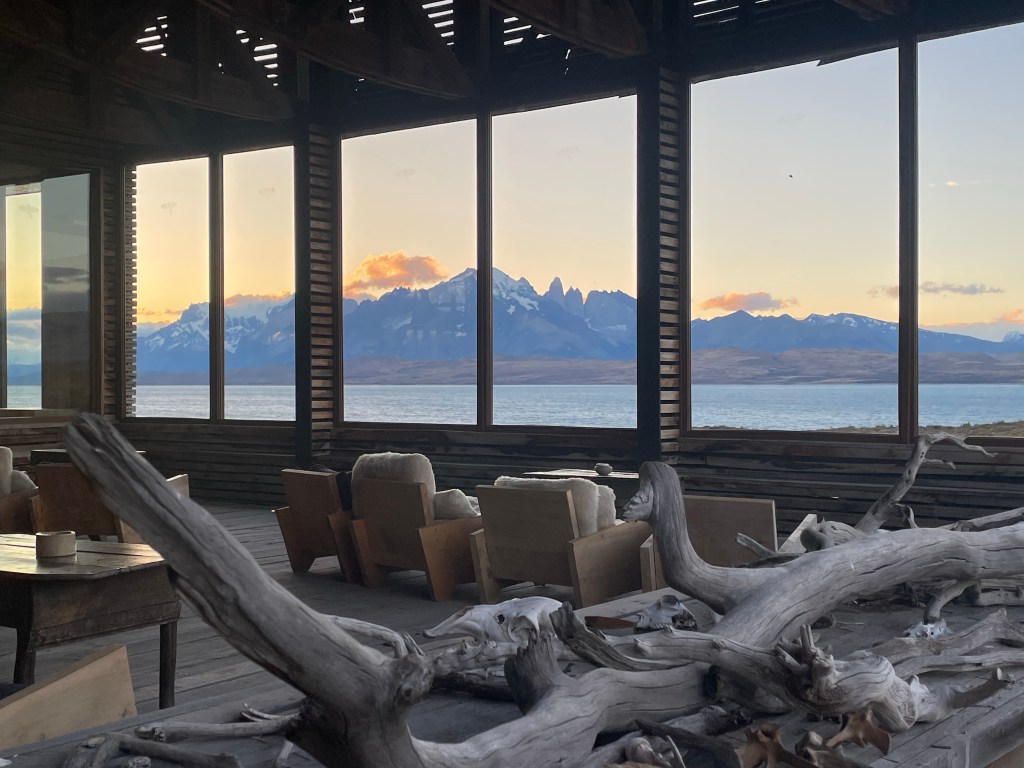
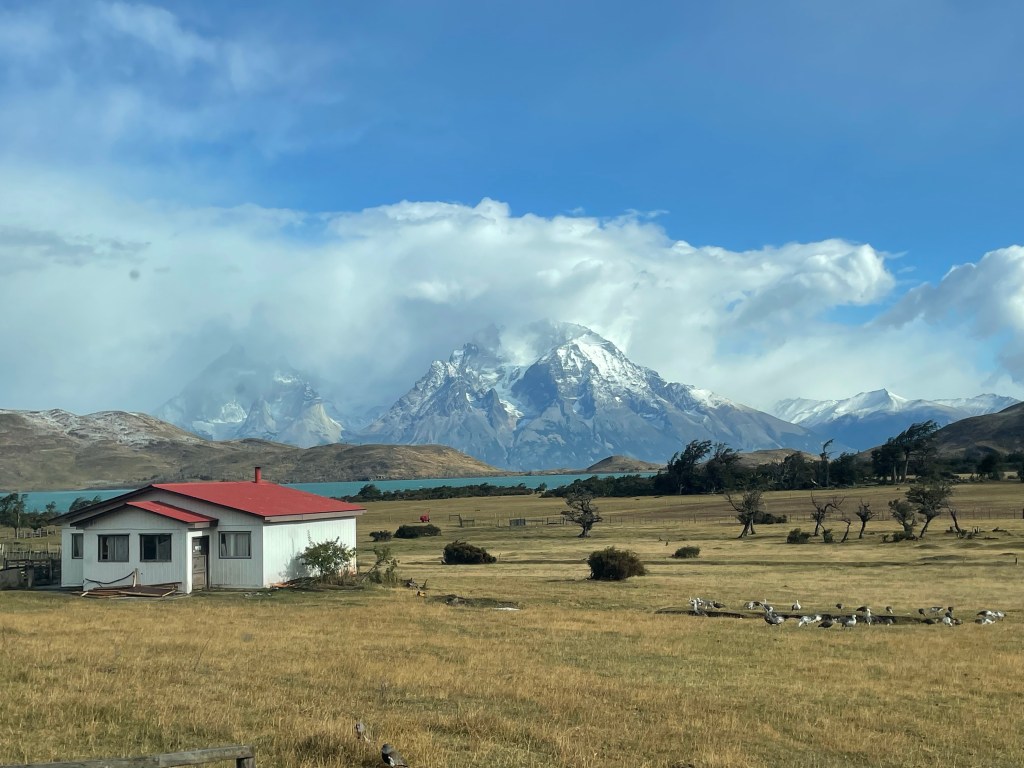
Our lodge, just outside the park, with spectacular views of Lake Sarmiento and the three towers provided guided hiking excursions.
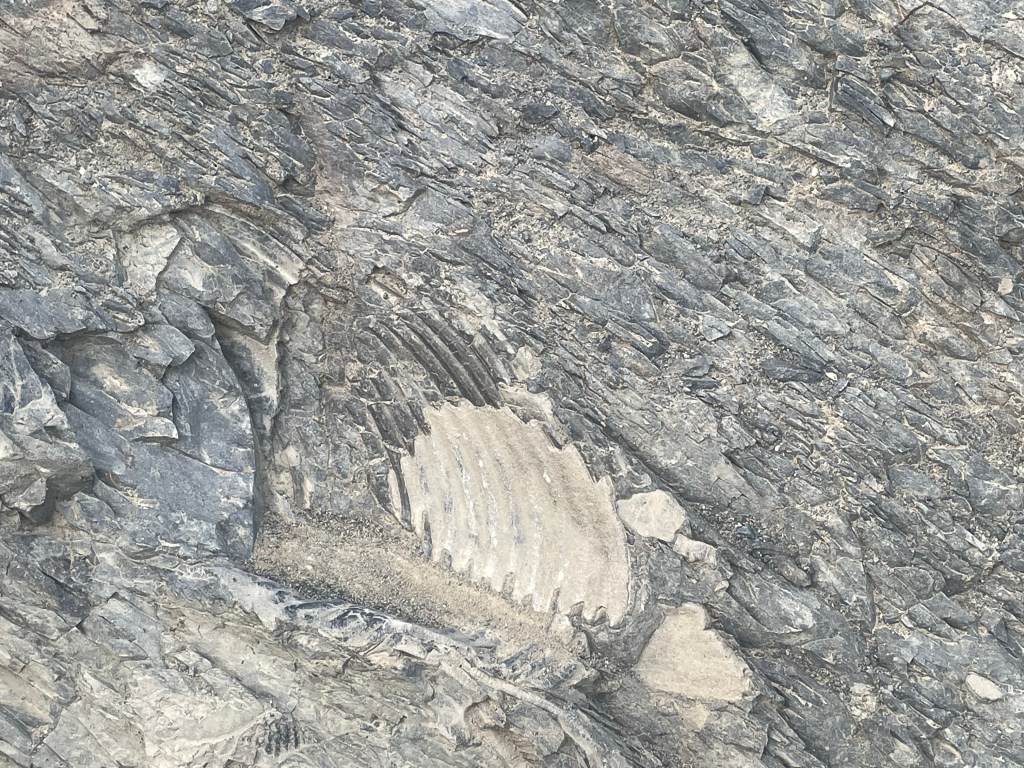
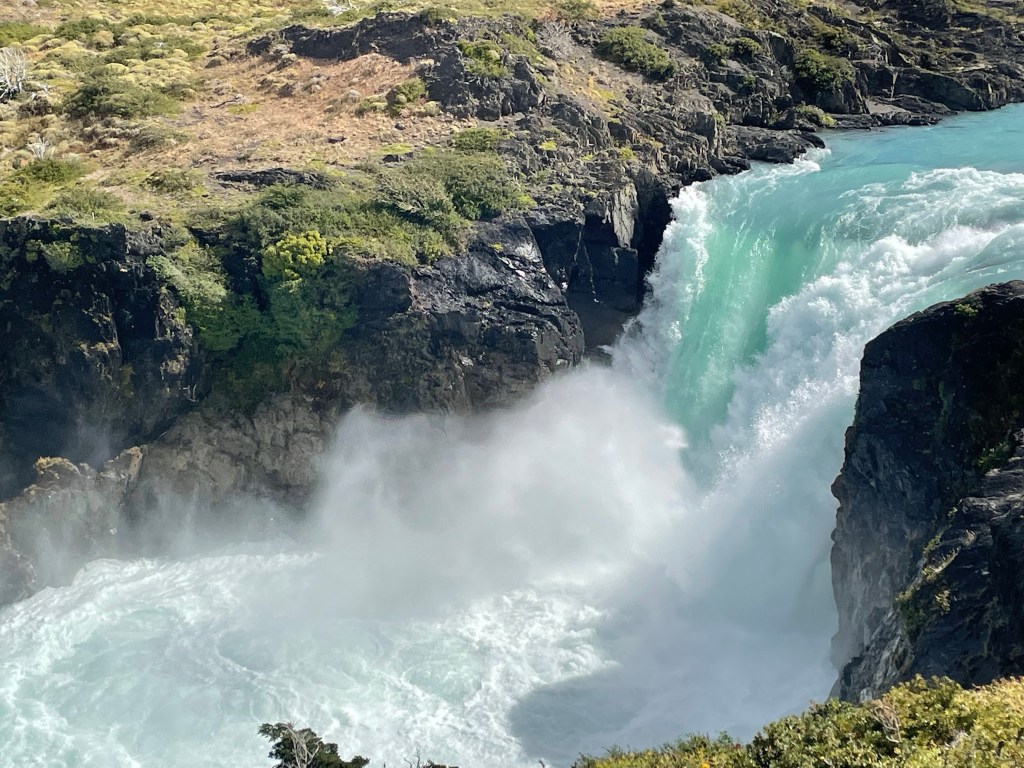
The lodge – built into the landscape with local materials and no roads or other buildings in sightView from one of the sitting roomsThe three towersA fossilised shell Salto Grande waterfall
Patagonia is a region of over 1 million square km – over four times the size of the UK and a third larger than Turkey. Approximately 90% of the region is in Argentina, with the rest in Chile. It sits at the south of South America and is surrounded by the Atlantic and Pacific Oceans with the Andes providing a backbone down the western side and acting as a border. Over the years there have been various disputes over the border with the most recent being adjudictaed by the Pope in the 1980s. With a population of just under 2 million, it is one of the least populated areas of the world (similar to Mongolia).
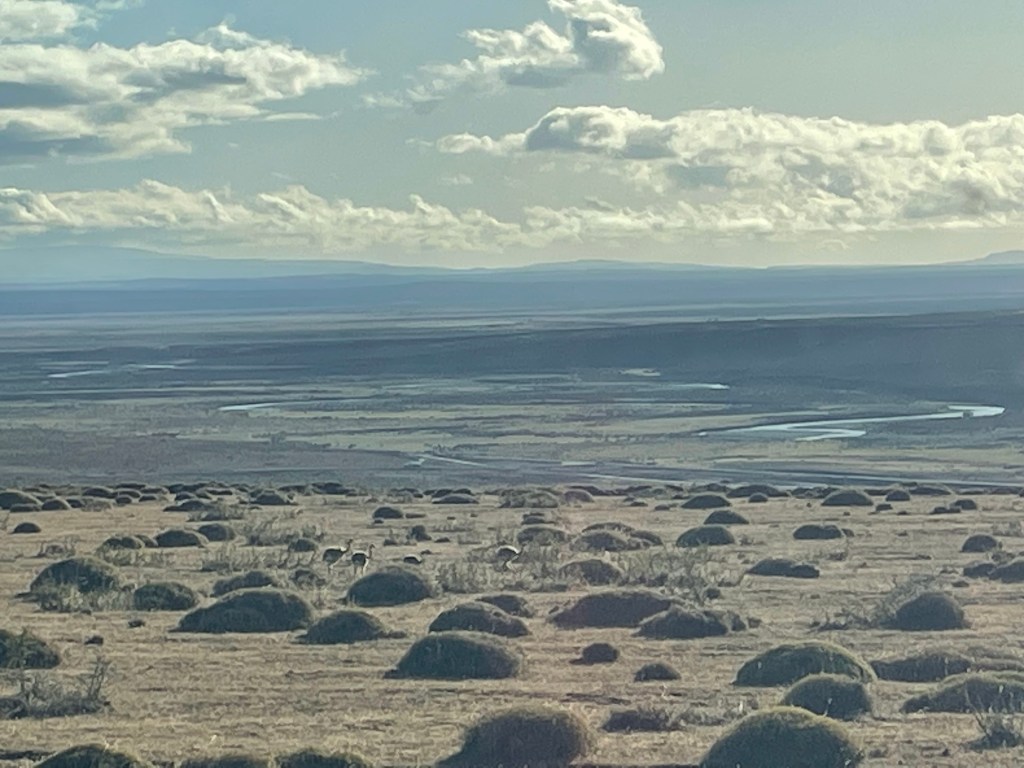
Despite the mountains, most of the land is designated a steppe. The combination of mountains, steppes and oceans creates very varied weather condistions, frequently with all four seasons in a day. Although we visted in summer, we experienced sun, showers, snow and wind. Temperatures ranged from just above freezing to mid teens but with considerable wind chill at times. We soon discovered that a “Patagonian breeze” is the sort of wind that you have to lean into to stay upright !
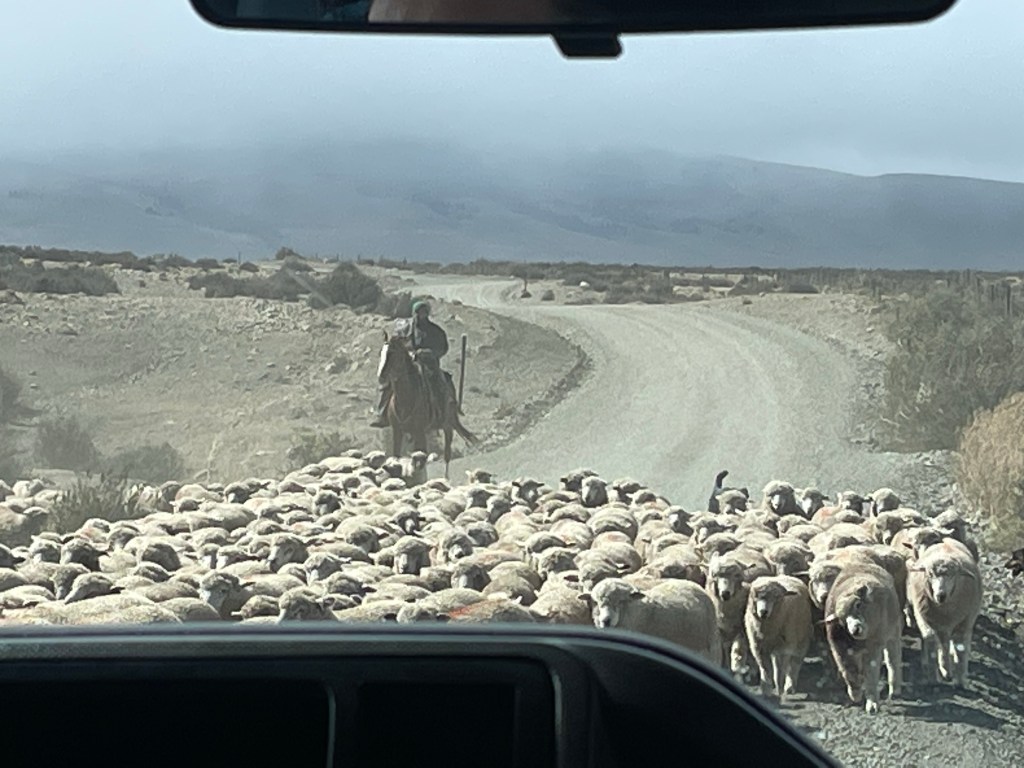
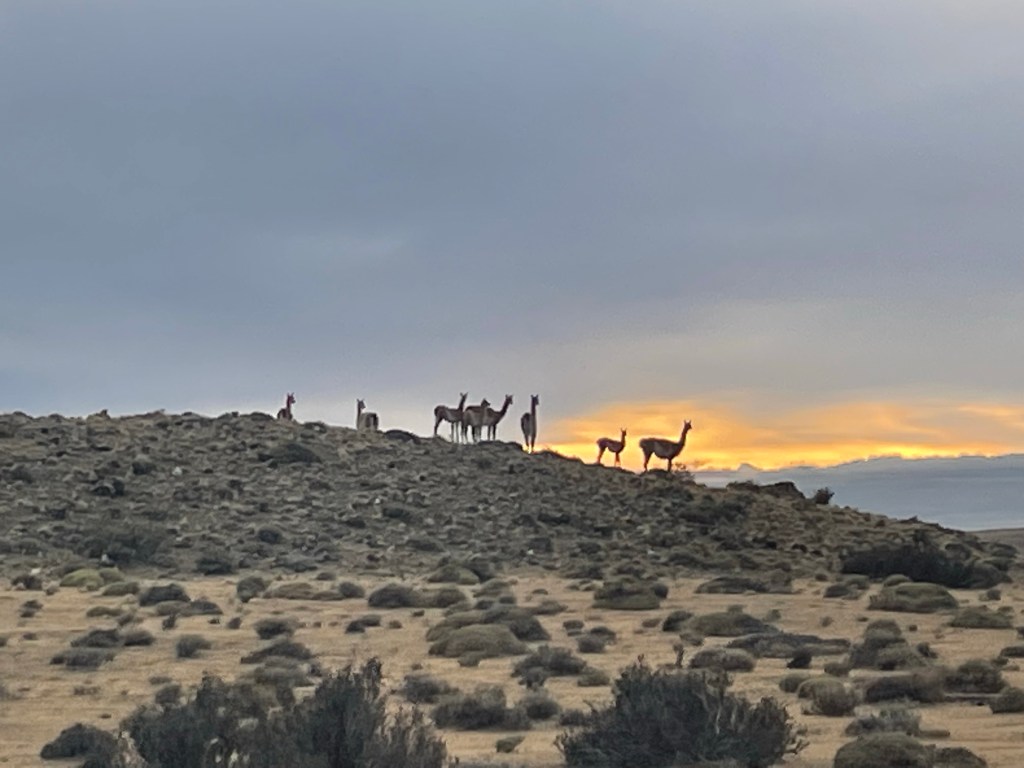
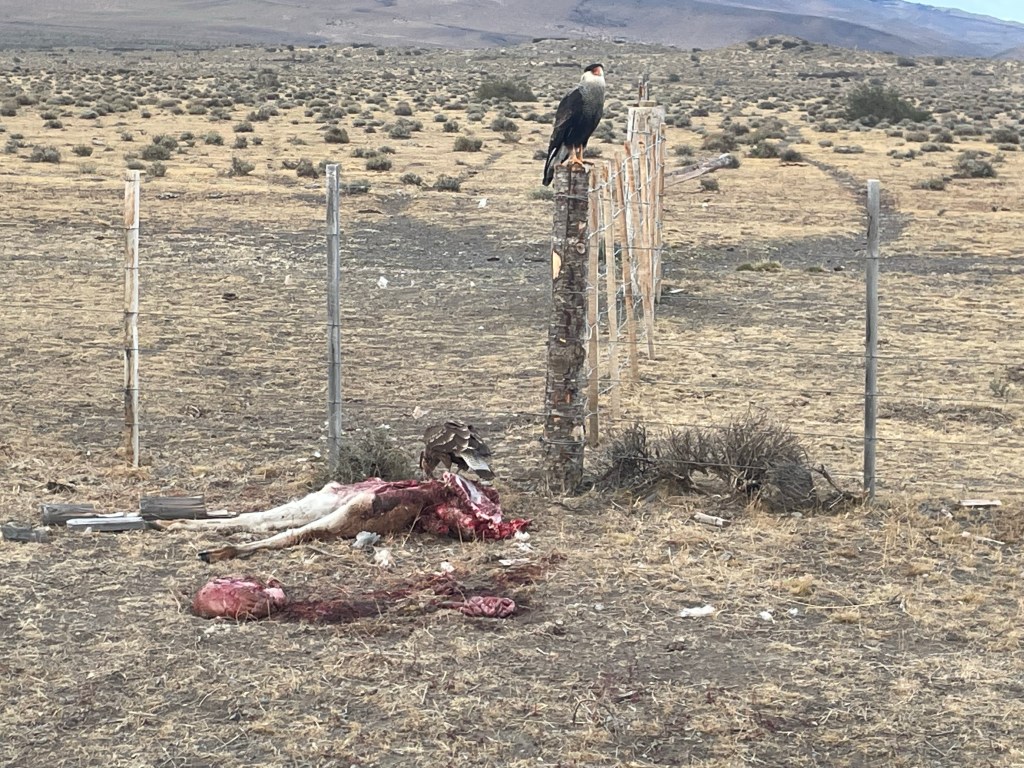
A Patagonian traffic jamA typical ‘Estancia’ – small holding/ranchSteppesGuanaco (similar to Lama)This Gunaco was killed by a puma – once the puma had enjoyed a meal or two the scavenger birds move in – this one is a caracara
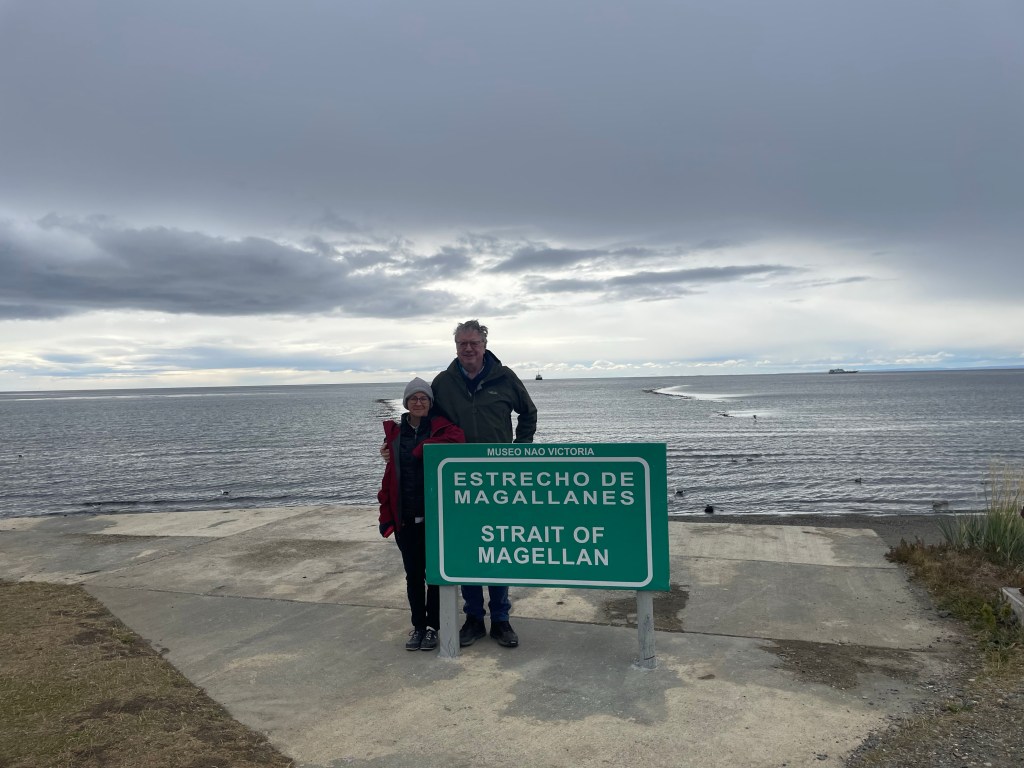
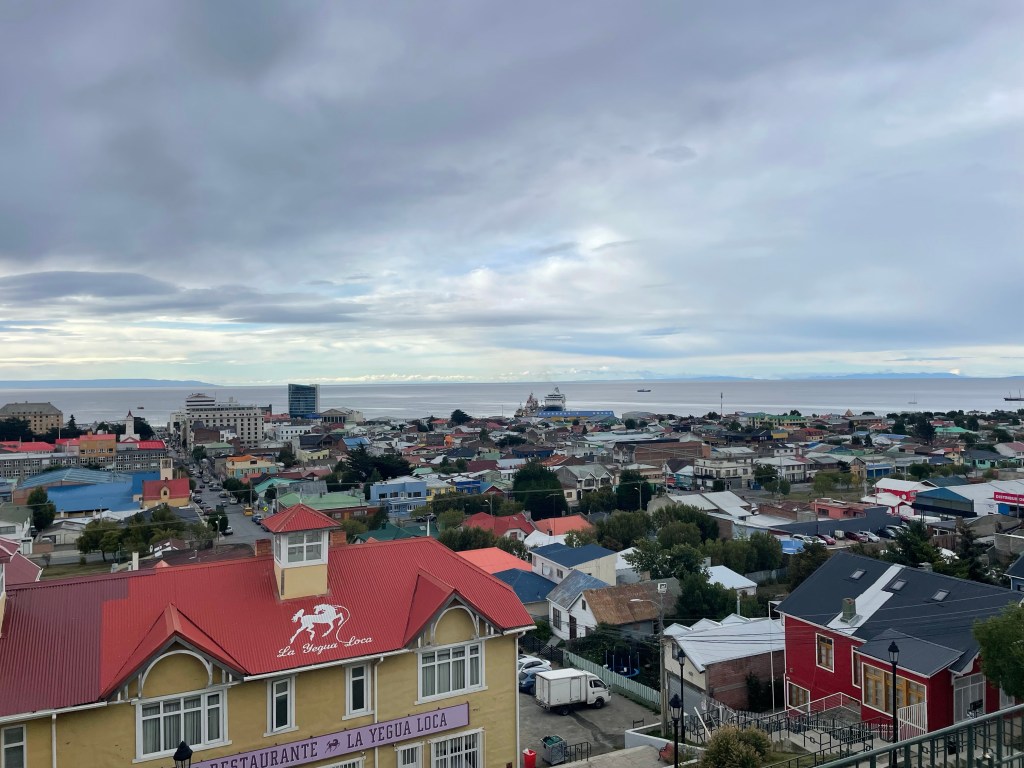
Punta Arenas (originally Sandy Point) is a three and a half hour flight due south from Santiago (for us a 4am departure from Colchugua Valley !). At 53 degrees south, it is the largest city south of 46 degrees. Although it is the same latitude south as Nottingham is north, it has a very different feel and climate as it is the gateway to Antarctica. It is situated on the north of the Magellan Straits (used by Magellan in the first circumnavigation of world in 1520) with views over Tierra Del Fuego. Its main economy was sheep farming, but is now oil, gas and tourism, making it a relatively wealthy part of Chile.
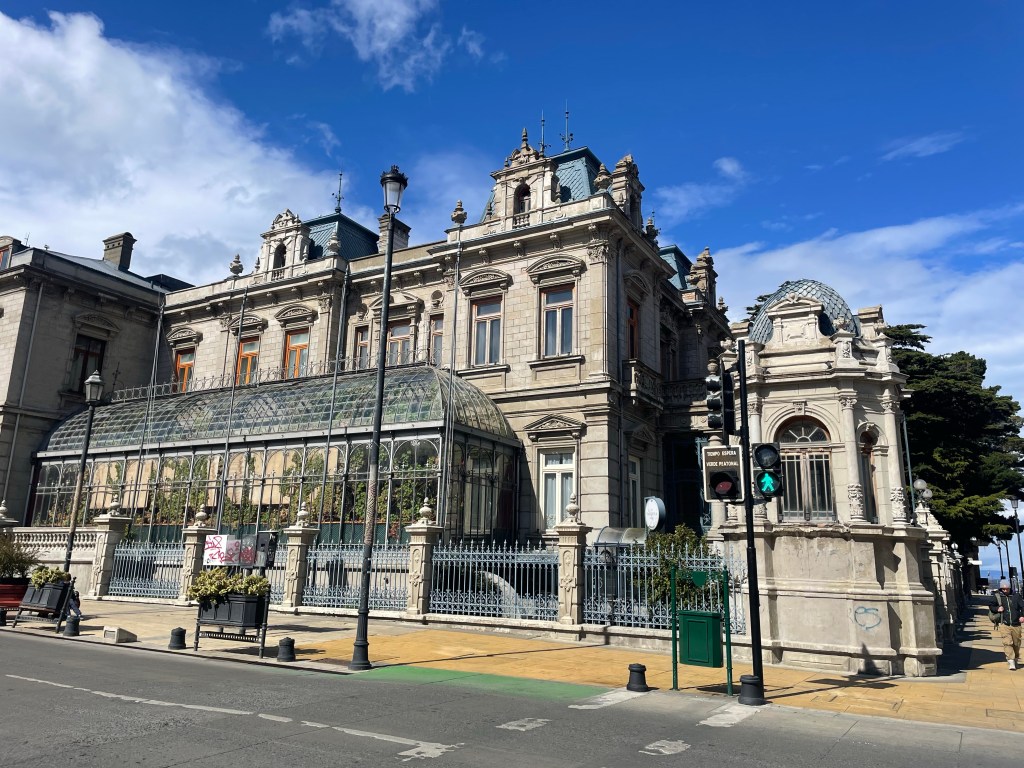
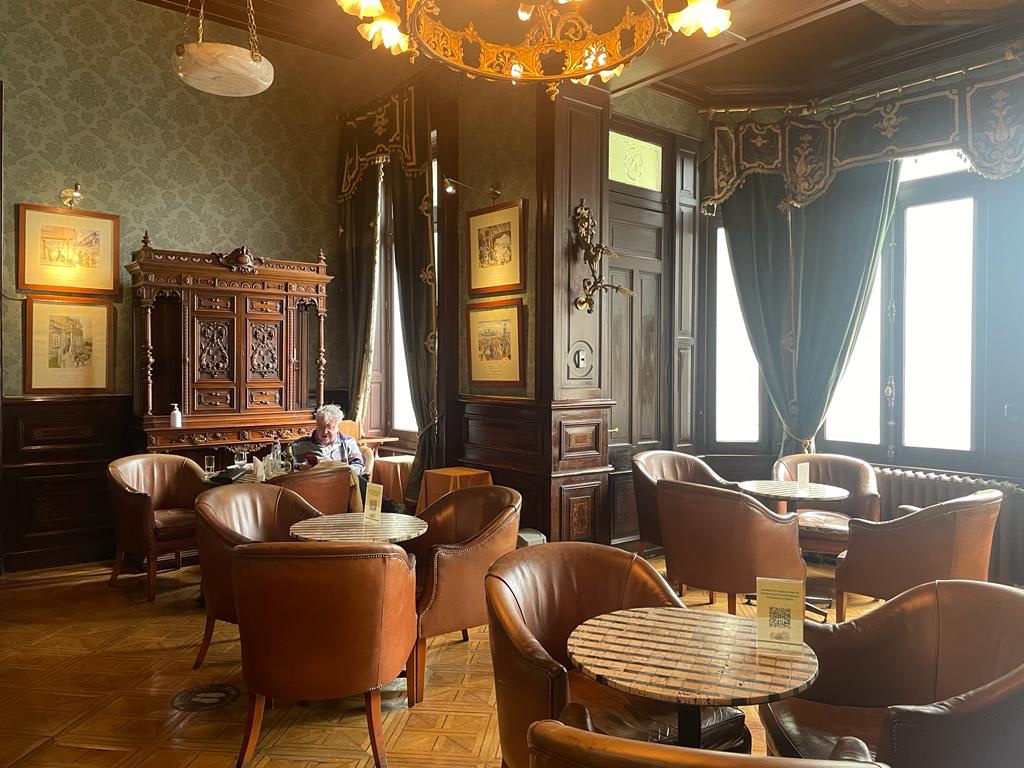
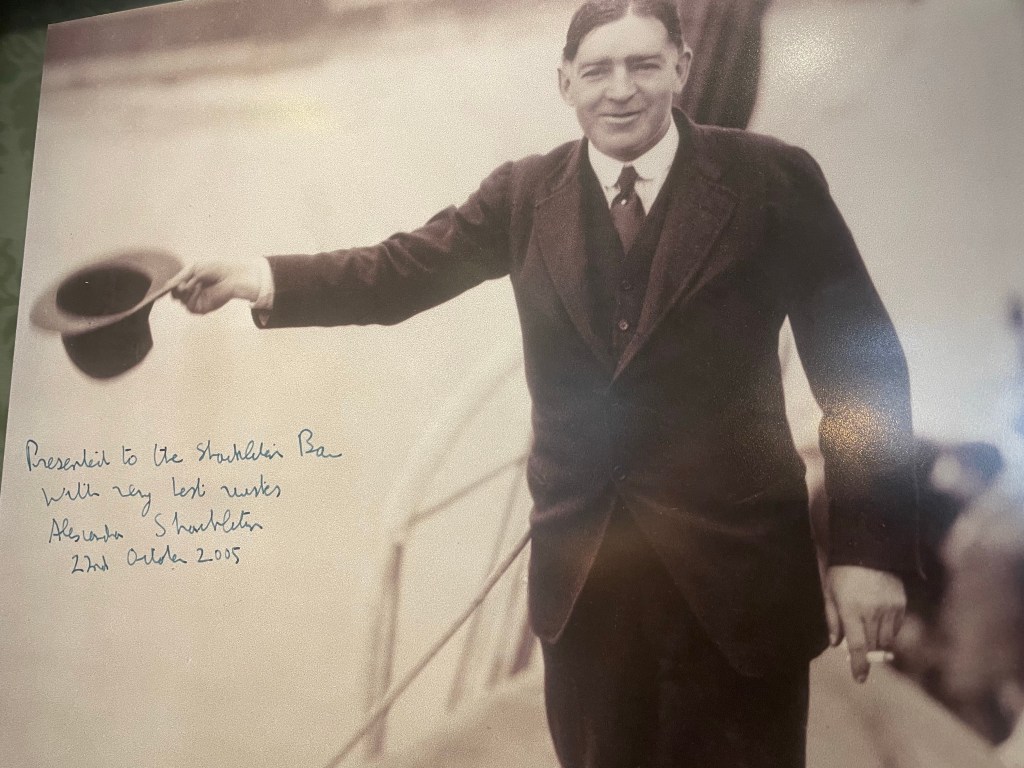
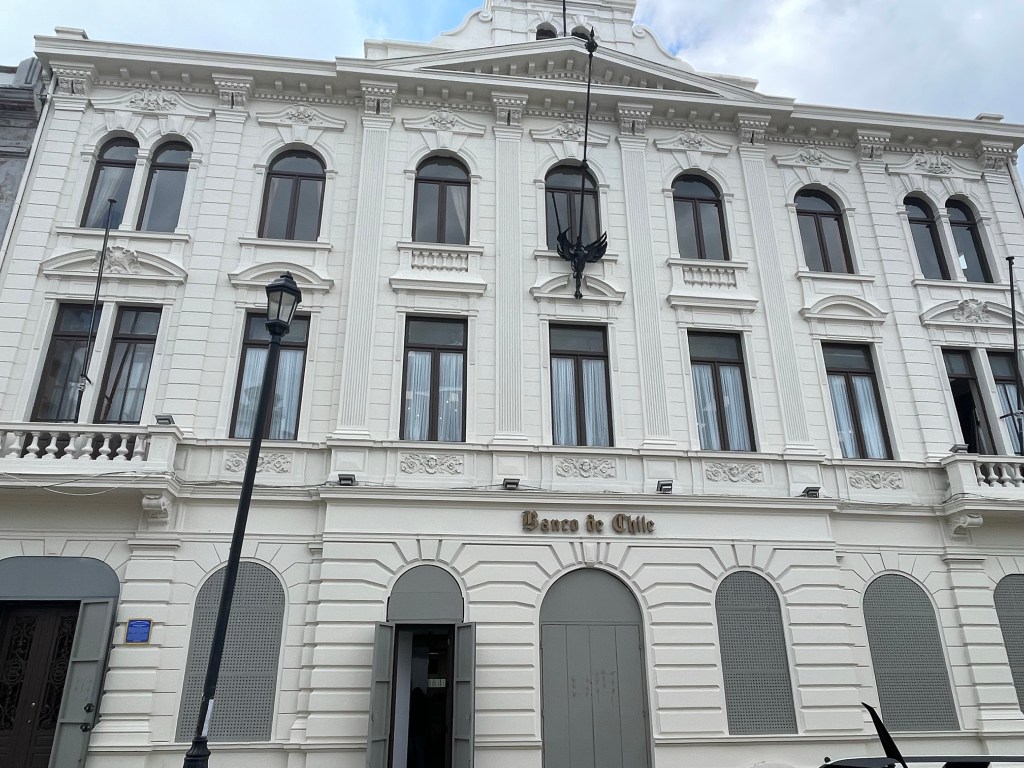
When Ernest Shackleton heroically securred the rescue of his Endurance crew, they were taken by the Chilean Navy to Punta Arenas. A celebratory dinner followed and Shackleton stayed as a guest in the mansion which was later converted into a hotel where we stayed.
The mansion of Sara Braun, now hotel Jose Nogueira (named after her husband)The Ernest Shakelton Bar at Hotel Jose NogueiraShakelton’s granddaughter stayed at the hotelThe location of the celebratory dinner, now a bank
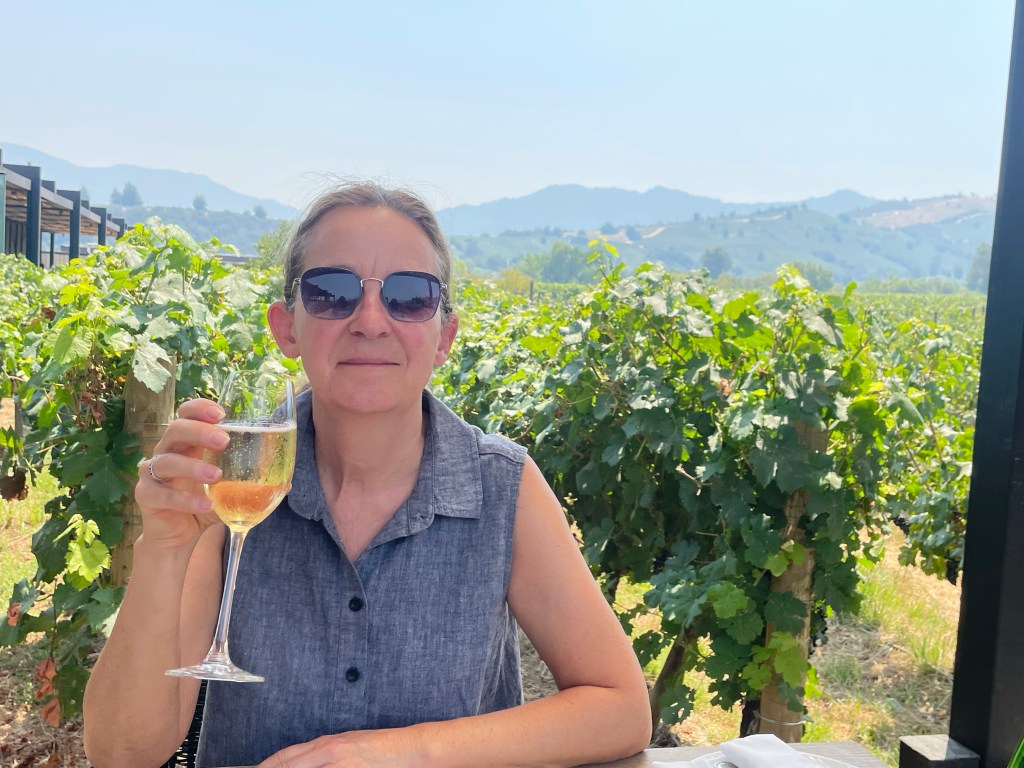
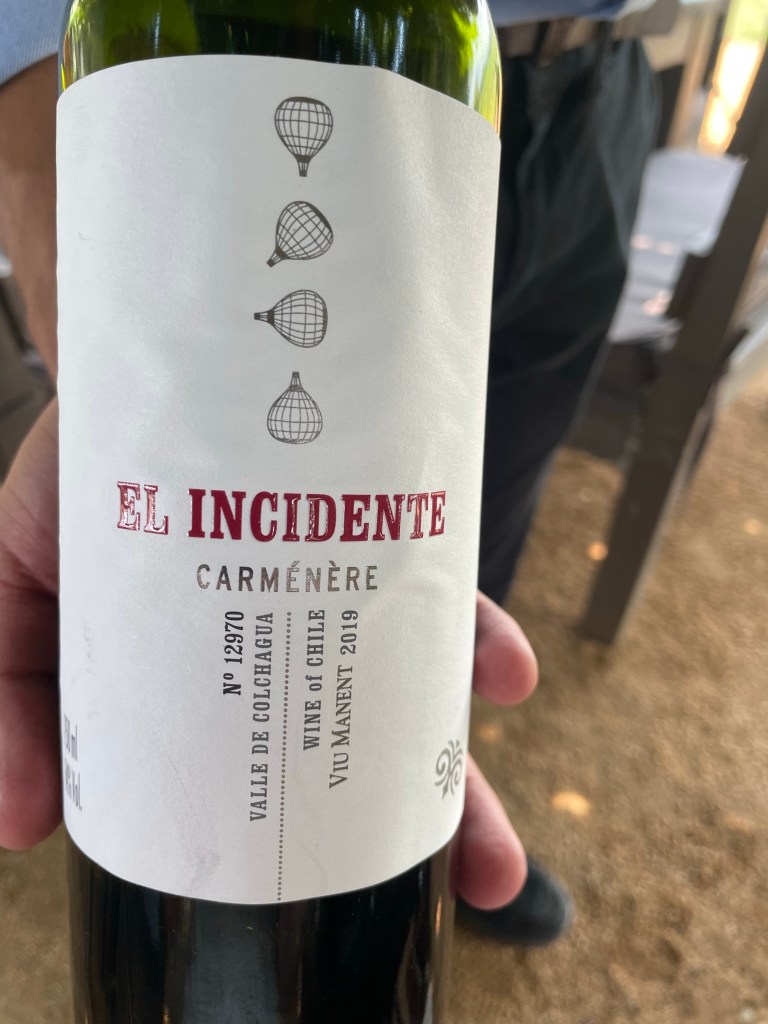
Situated a two and a half hour drive from Santiago is the Colchagua Valley, one of the best known wine regions in Chile. It has a mediterranean climate and is best known for its full bodied red wines produced from Cabernet Sauvignon, Malbec, Syrah and Carmenere grapes. Wines were first bought to Chile in the 16th C by Spanish missionaries, however French grapes were introduced in the 19th C. Carmenere vines were wiped out in France in 1867 by disease and were thought to be extinct until rediscovered in Chile around 1990, having been previously mistaken for Malbec.
The Colchagua Valley has significant French influence, with many vineyards either owned by, or under the guidance of, French winemakers.
White wines are also produced, mainly from Chardonay or Sauvignon Blanc but they are not the same quality as the red wines.
Wine is Chile’s fifth largest export with China and the UK being the largest markets. There are three main classifications – Reserva (plonk), Gran Reserva (decent) and Icons (excellent and expensive). The better vineyards usually have excellent restaurants, making them doubly attractive !
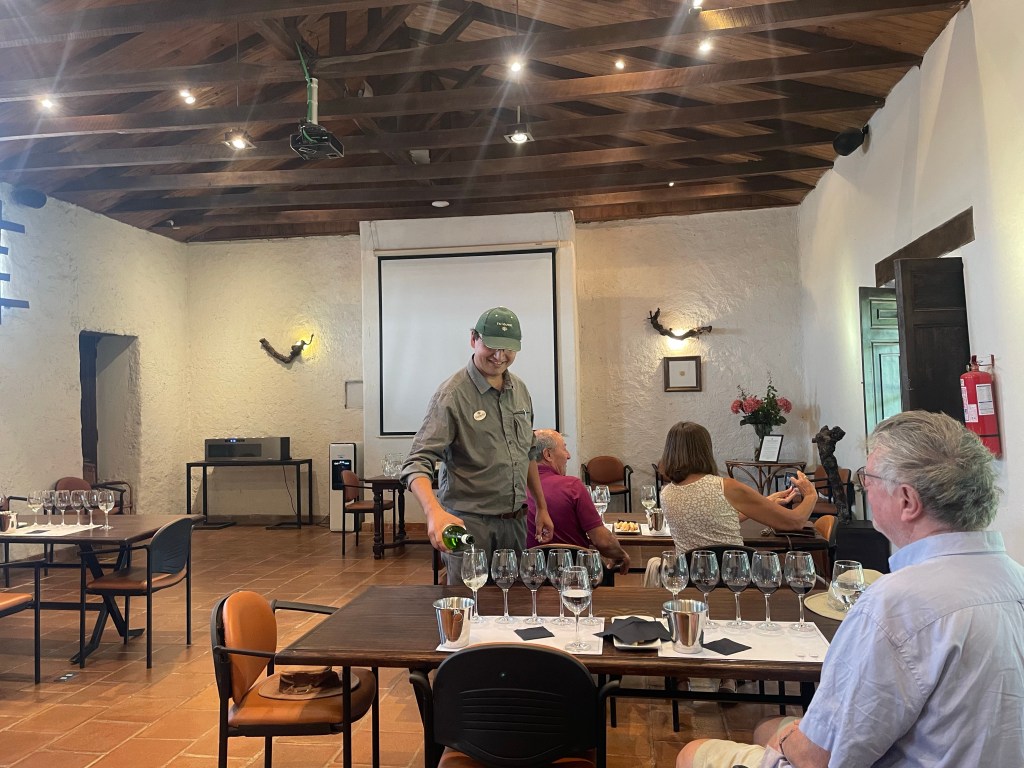
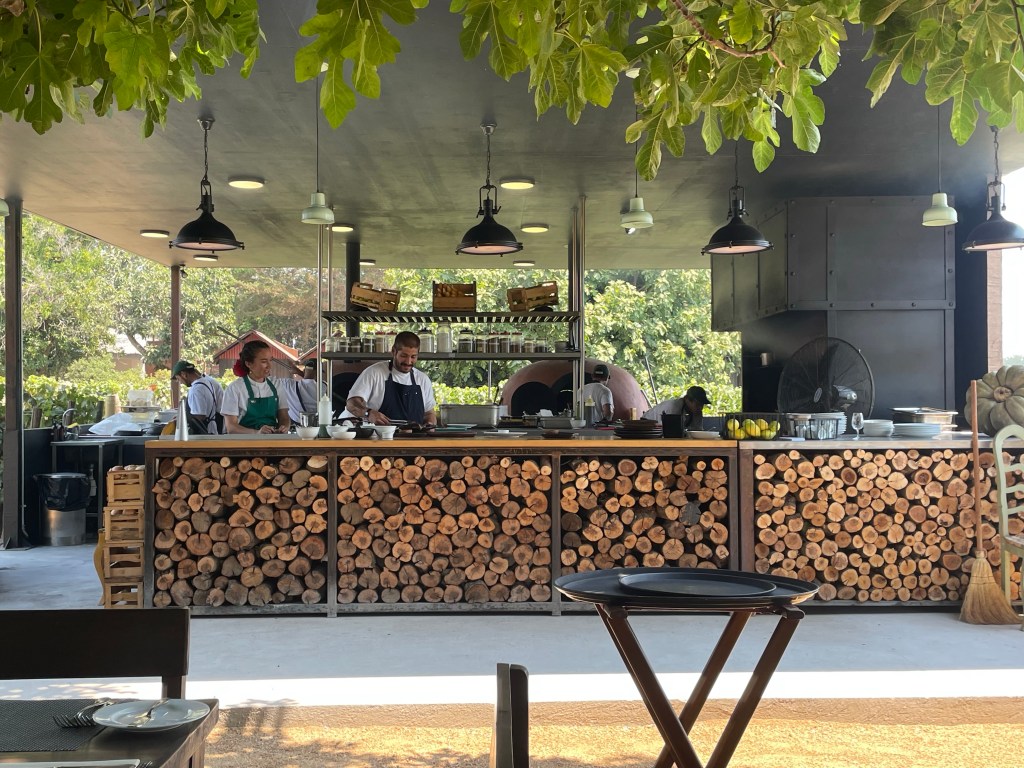
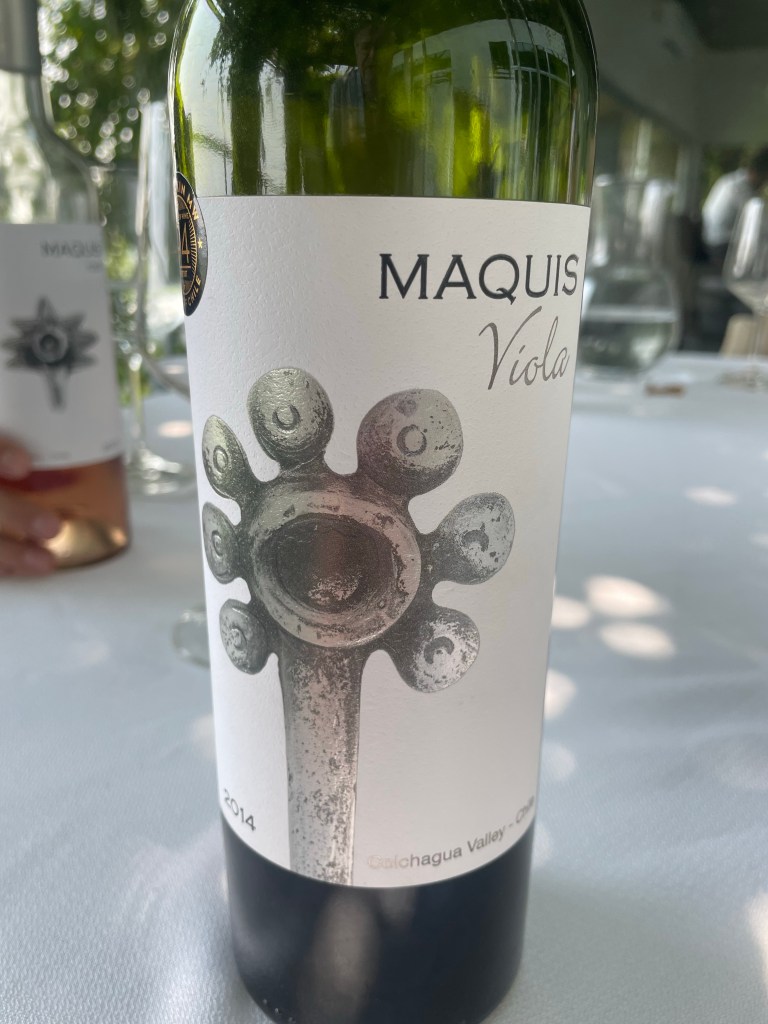
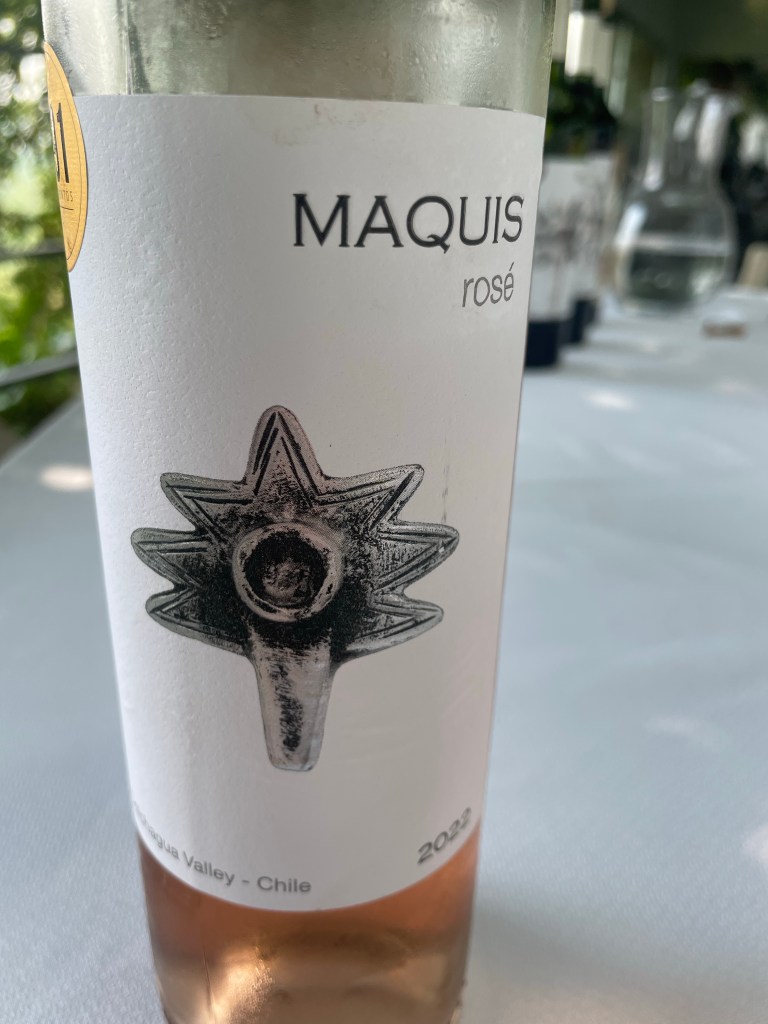
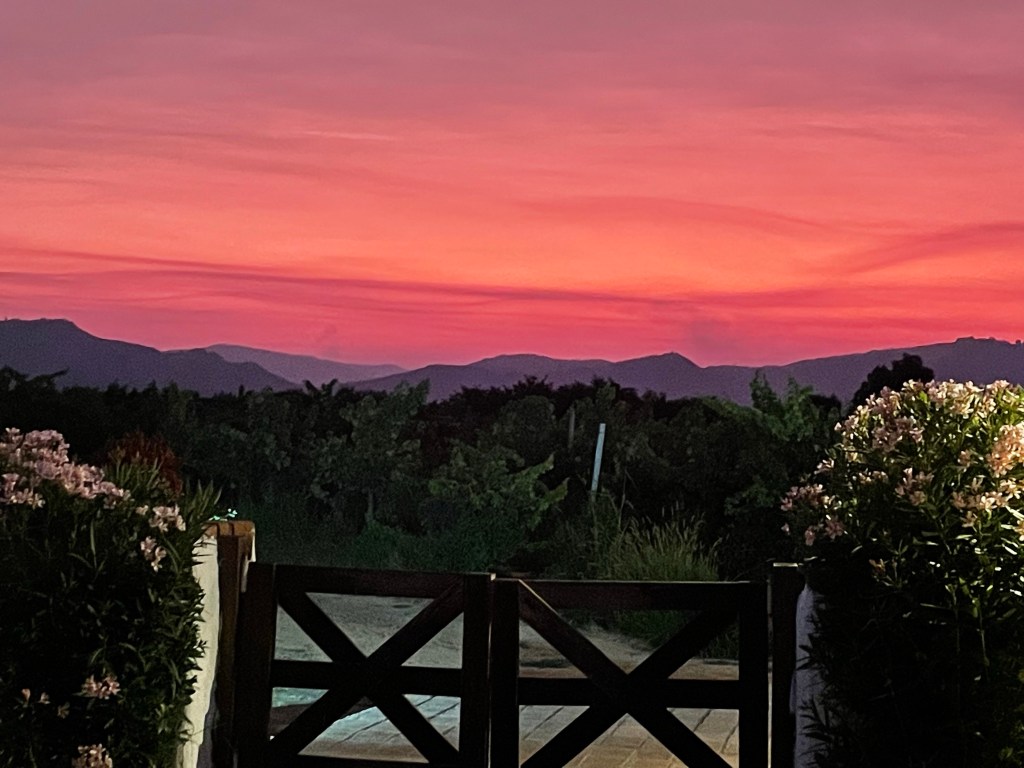
The ‘classroom’ at the Viu Manent vineyard which has been run by the same family for three generationsOpen kitchen as the Viu Manent restaurant The Maquis vineyard. French winemakers are used as consultants and a Belgian expert was used to create a biosphere, including water management and specific plantingThe Maquis vineyard produces specific wine for the Chinese market in outdoor tanks (steel and concrete) – they are made lower in alcohol and do not have the ‘Maquis’ labelLunch in the restaurant at the Montes vineyard Our top picksOverlooking the Laura Hartwig estate
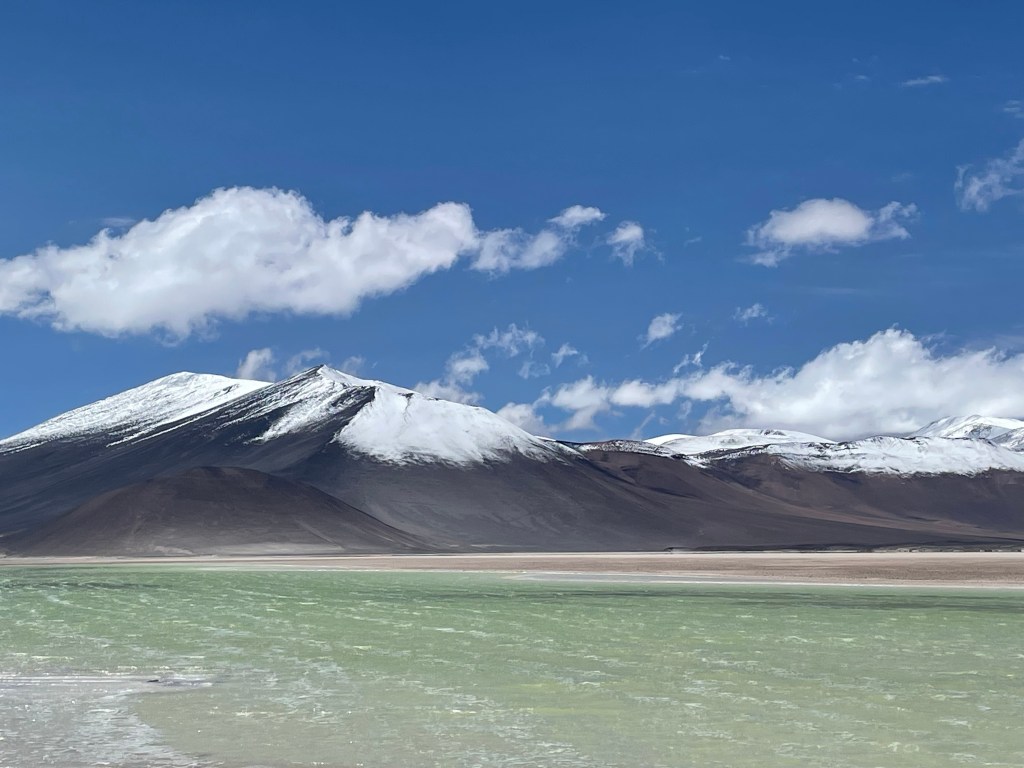
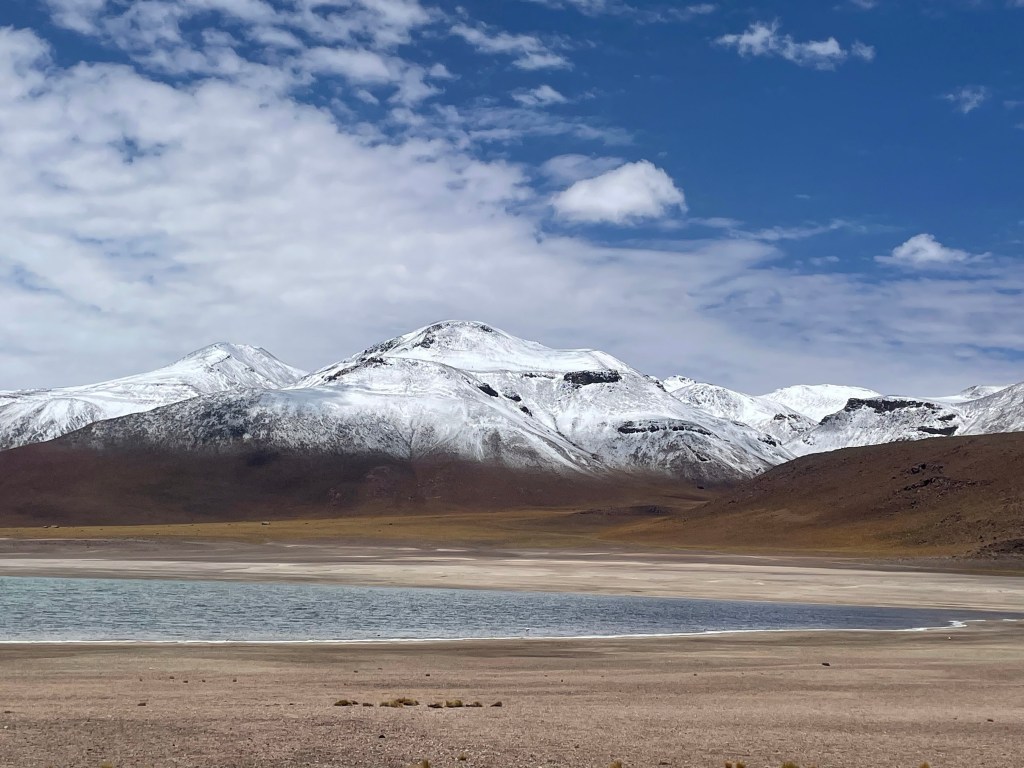
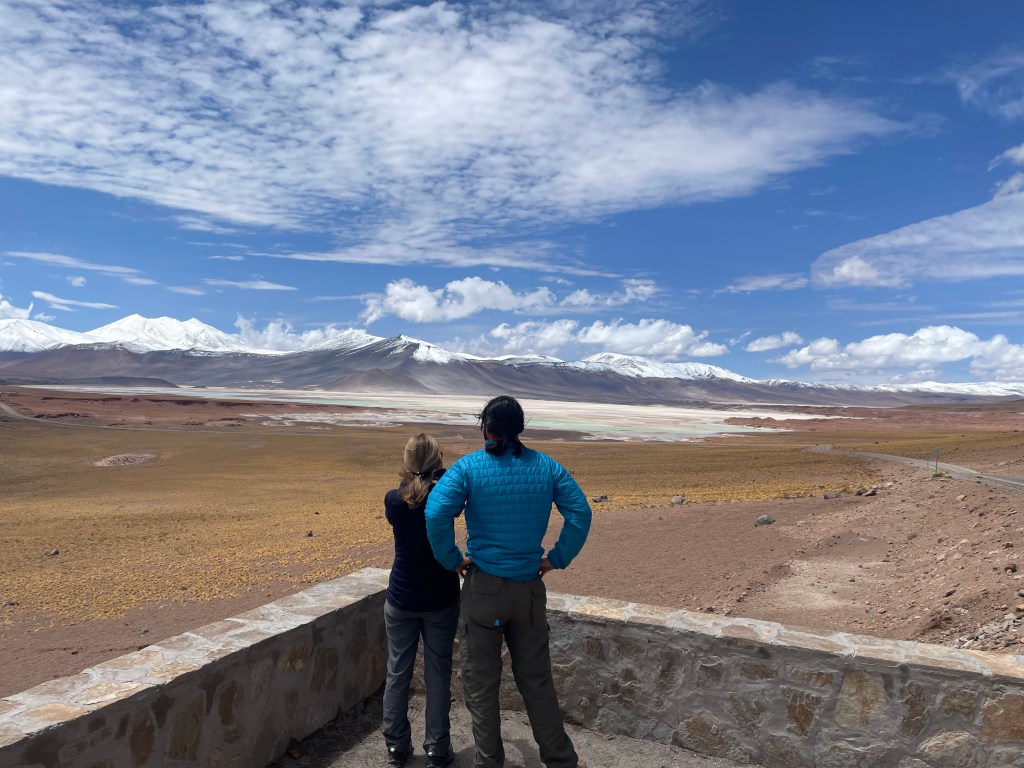
A two hour drive took us to Piedras Rojas, a salt lagoon at an altitude of 4,100m overlooked by the Andes. The mountains in the region are up to almost 6,000m in height – for comparison Mount Elbrus in Russia has highest point in Europe at 5,642m, Mont Blanc is the third highest at 4,809m. The mountains are volcanic, some dormant but some active with the last eruption in December 2022 and there is currently an orange warning, one before the maximum.
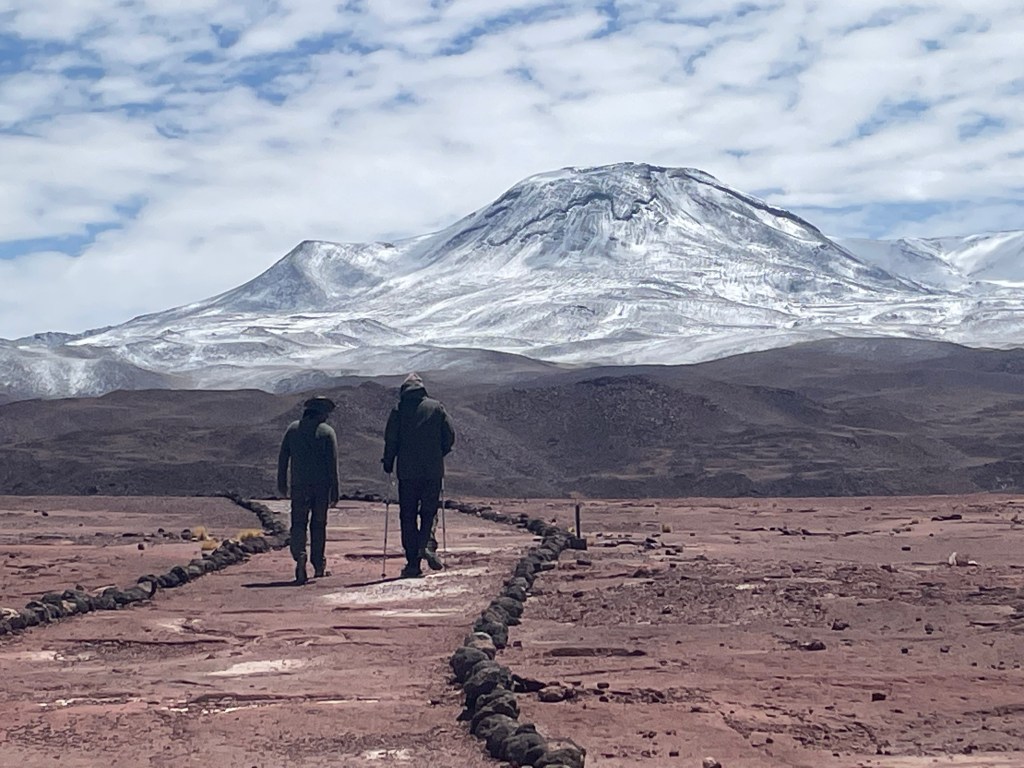
The lagoon is set amongst red rocks, hence the name. Our guide, Gaspar, took us on a gentle hike around part of the lagoon wary of the high altitude. Although not freezing, the wind chill made it seem very cold even in the bright sun.
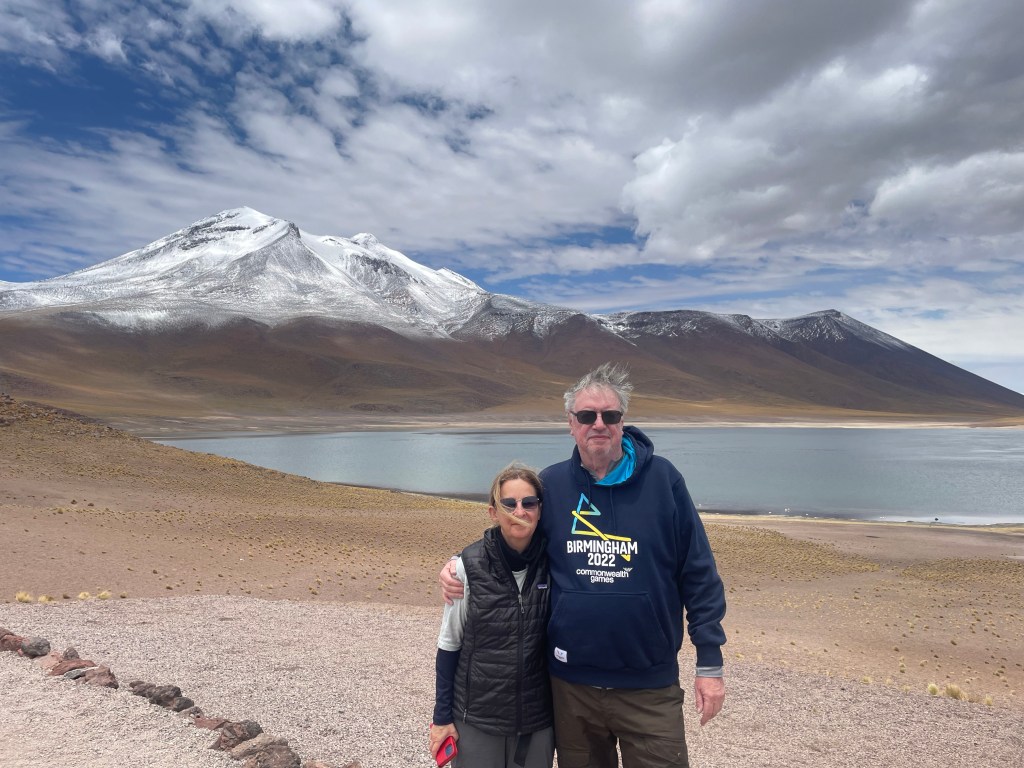
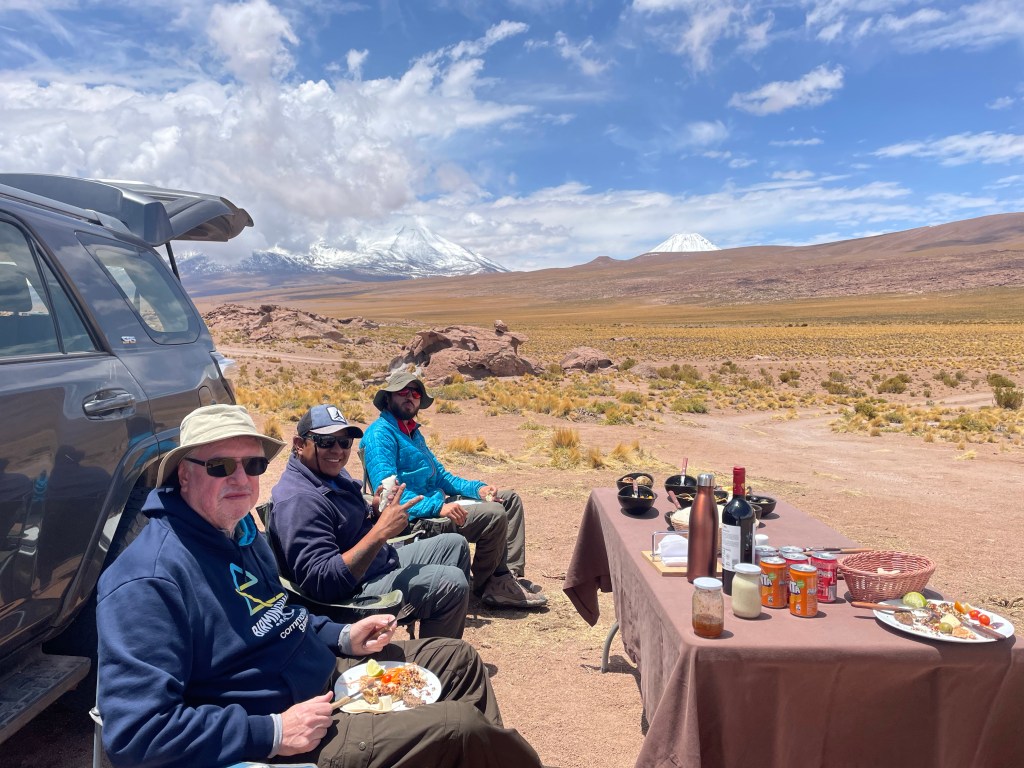
We then visited the Miscanti and Miniques lagoons before heading off for a high altitude picnic among the rocks.
During the drive we passed the foothills of the active Lascar Volcano at almost 6,000m and crossed the Tropic of Capricorn (going west the tropic of Capricorn passes through Queensland and east of south America it passes through Namibia).
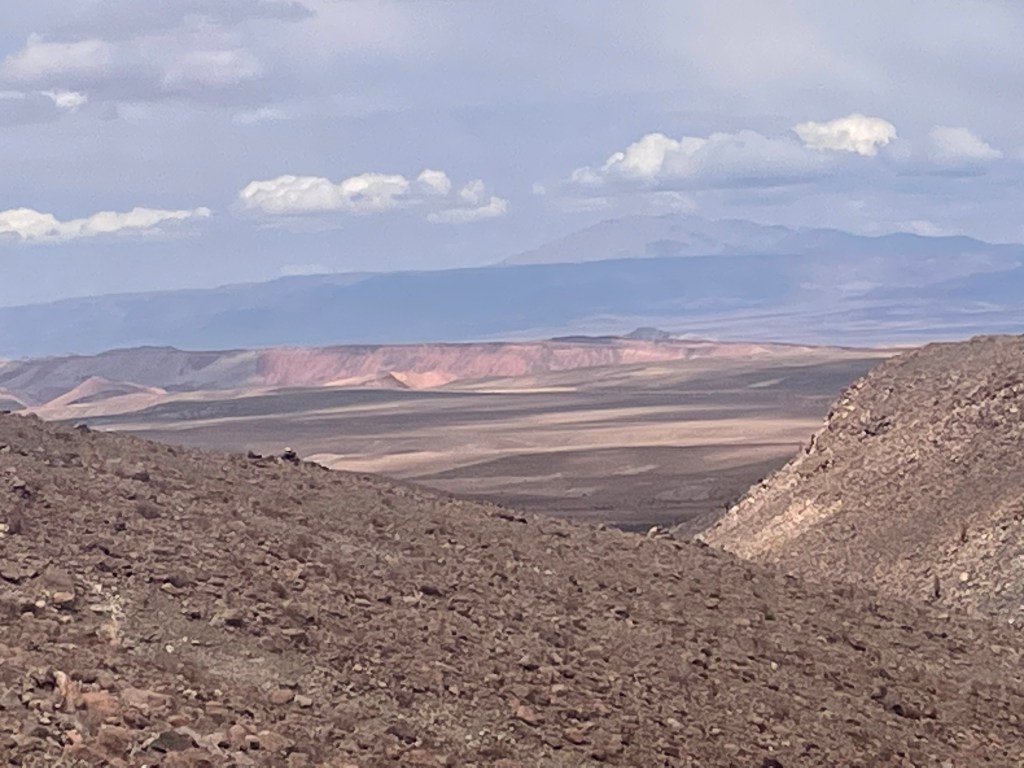
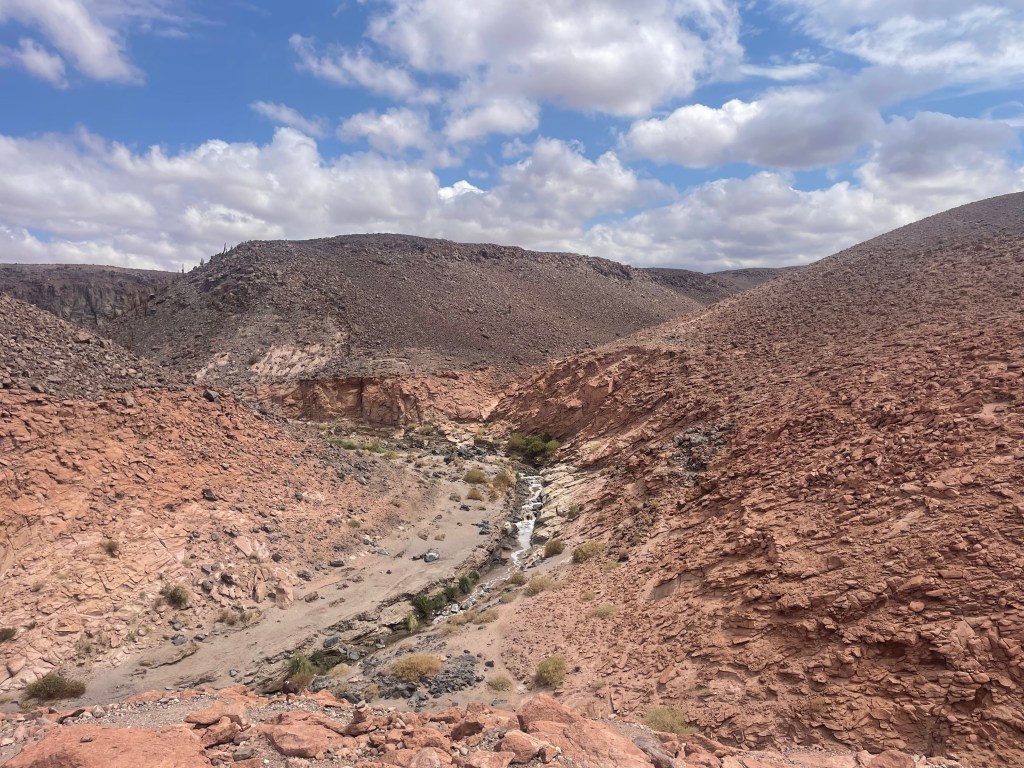
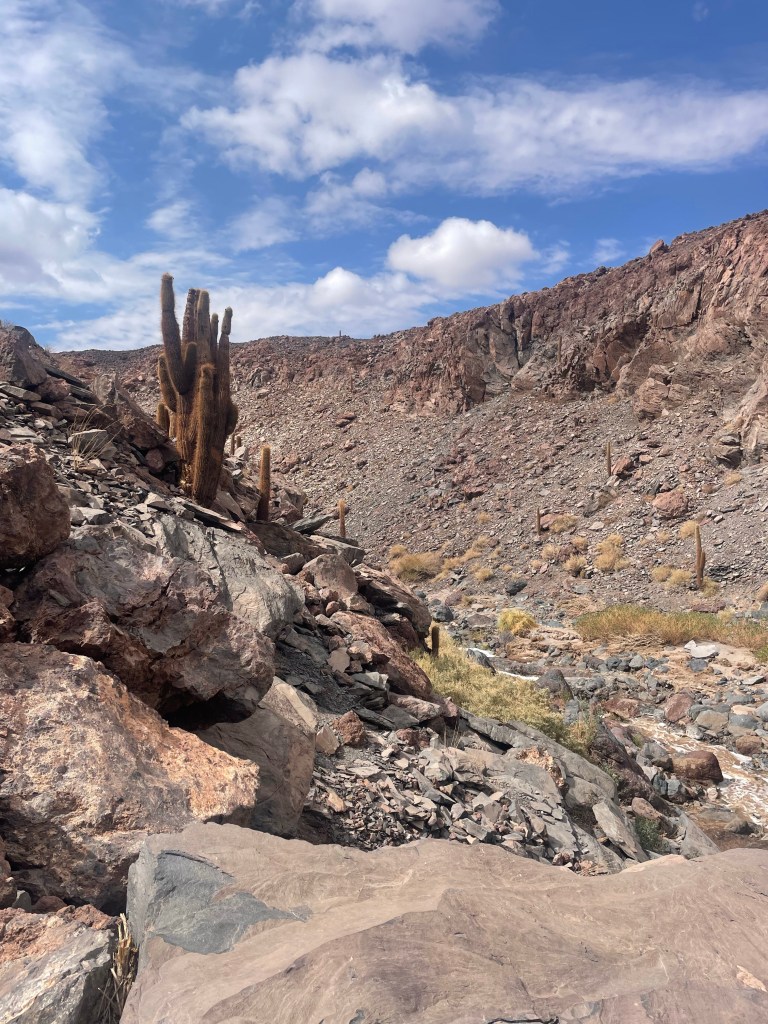
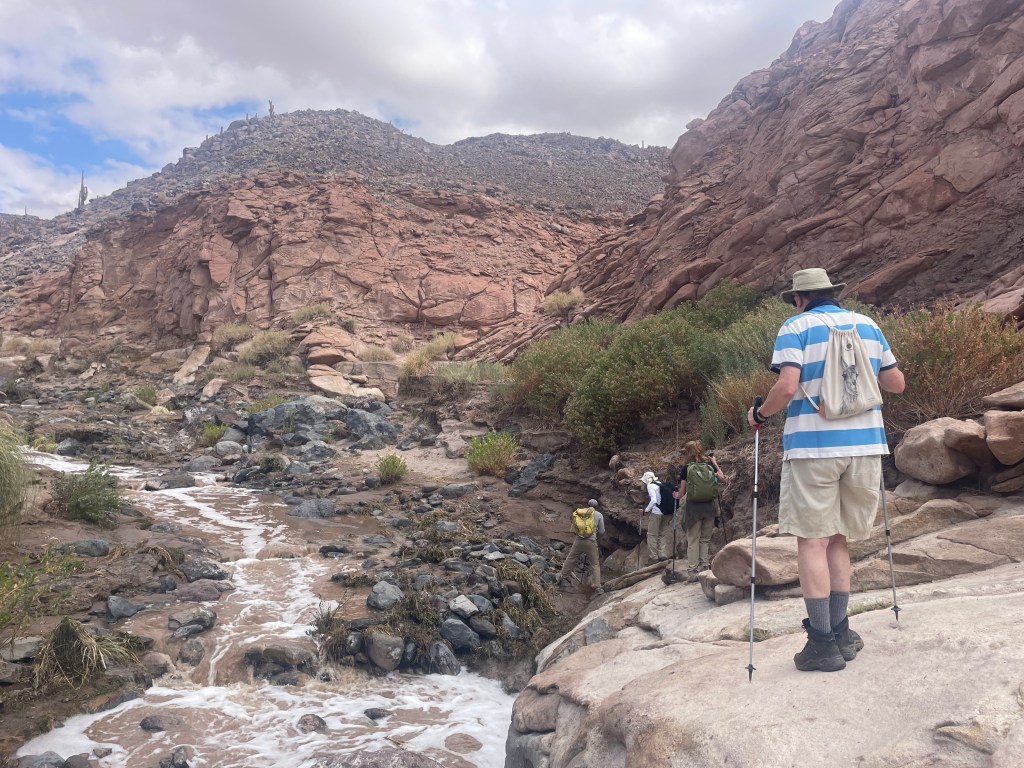
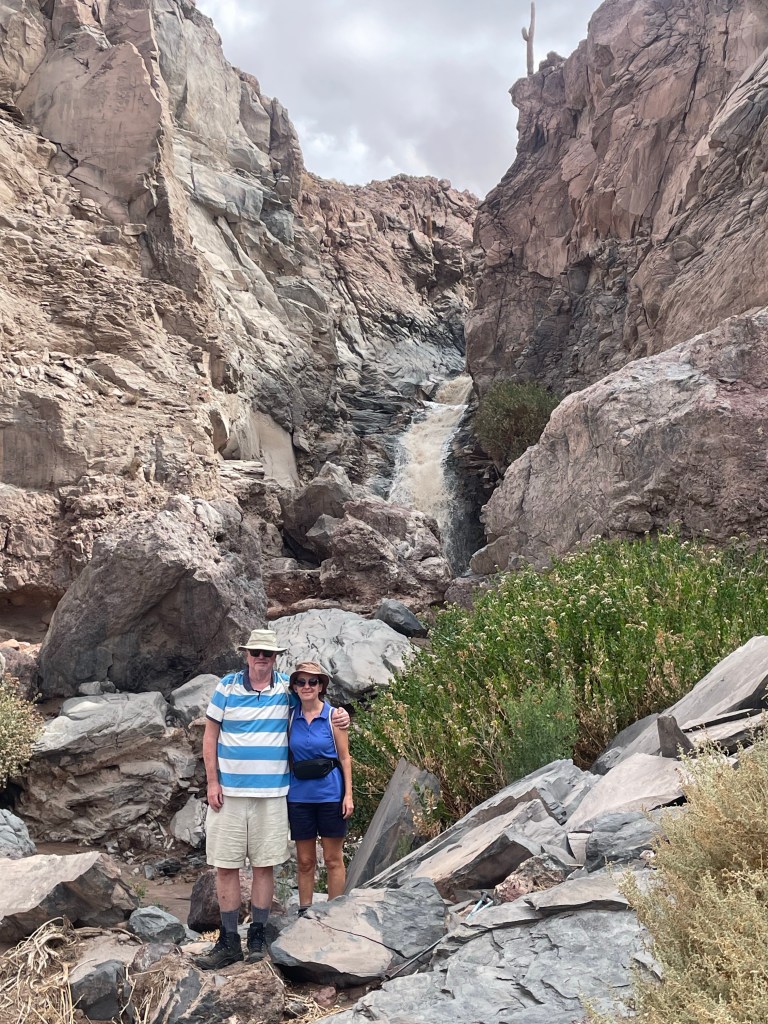
The Vilama River is the main water source for San Pedro de Atacama. We hiked to a hidden waterfall via steep rocky slopes at altitudes up to 3,400m. While not a long hike, this was the most strenuous and technically demanding hike we undertook due to the terrain and slope, but it was worth it for the scenery, waterfall and cacti.
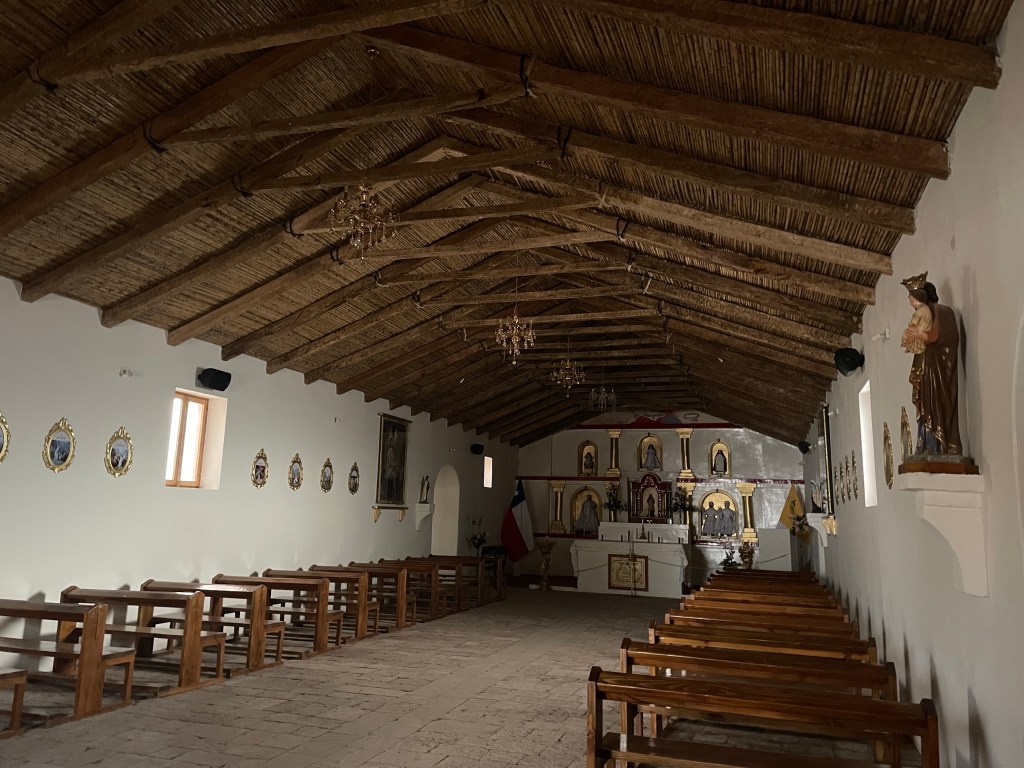
The cacti are now protected, but were used by the locals as a source of wood as there were no trees and they have a hard wood centre. They grow very slowly, only 1m every 50 years, with deep roots searching for water. On our trip to the salt flats we had stopped at a small village where there was a church with a roof made from this type of cactus.
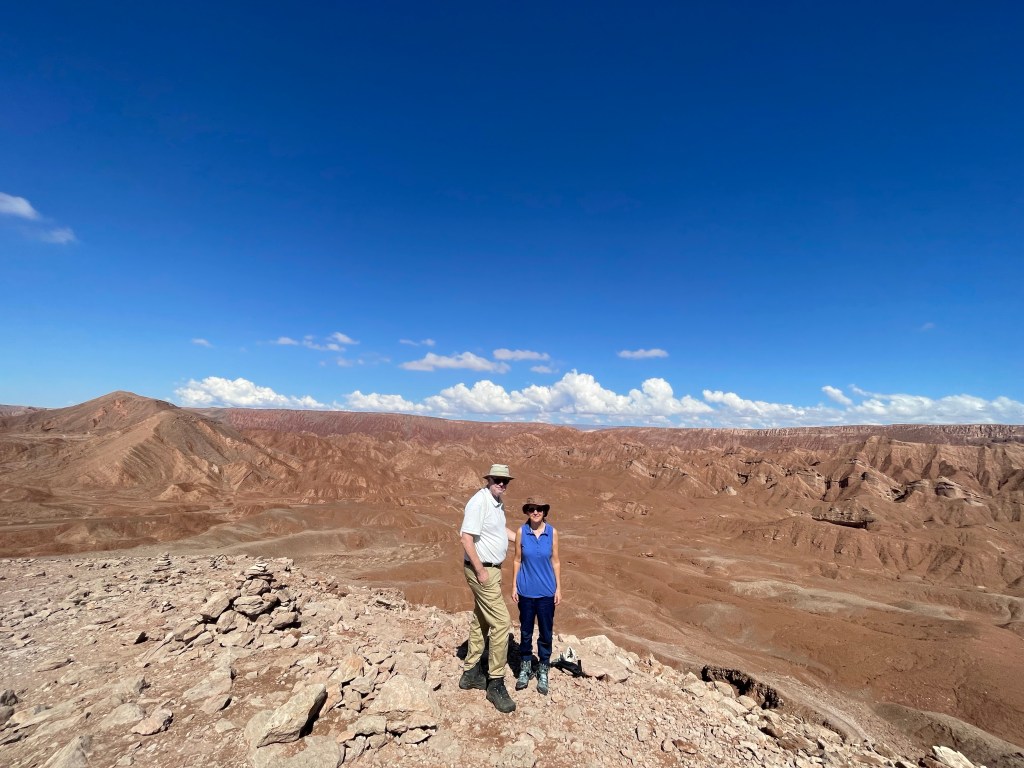
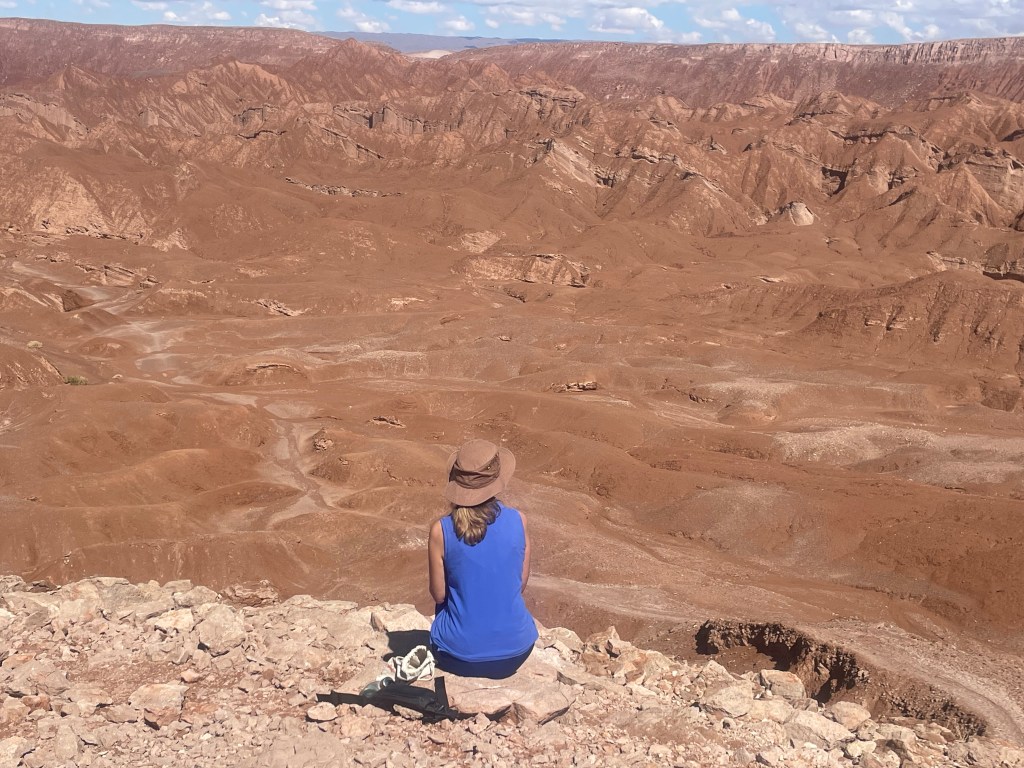
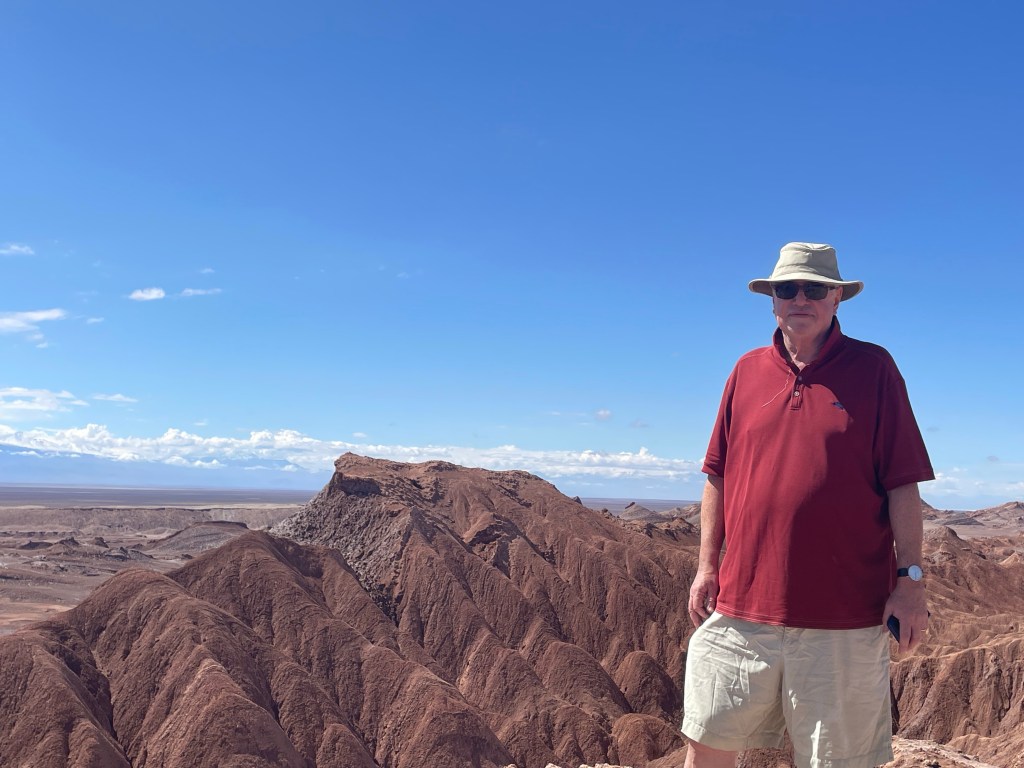
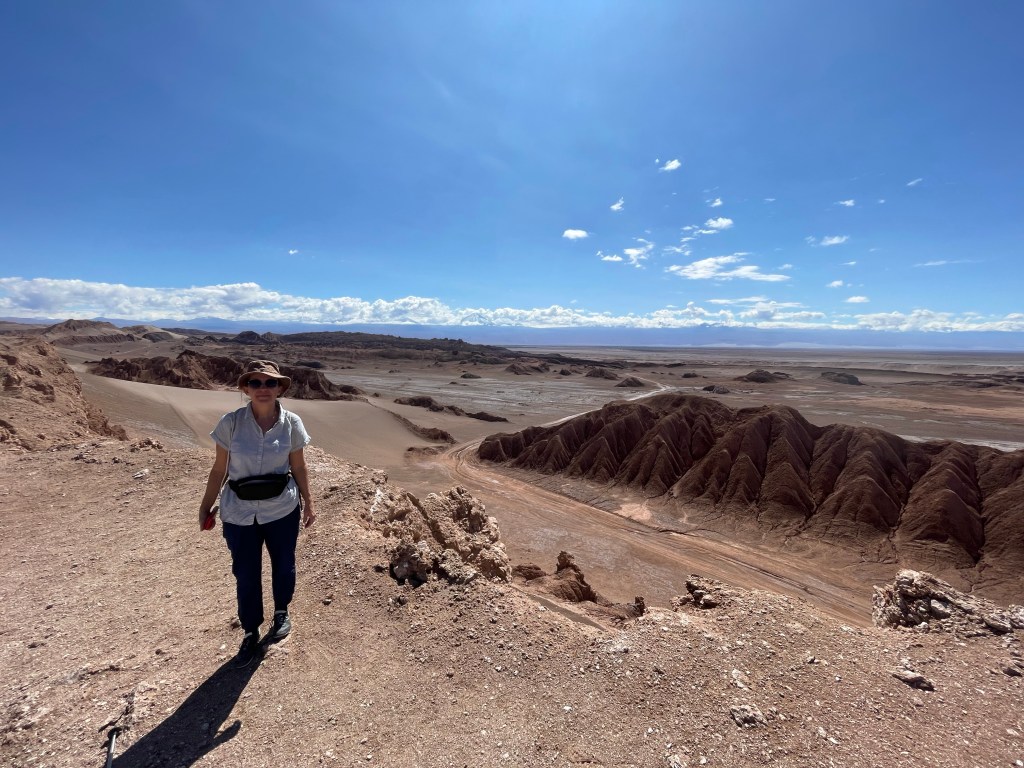
This was intended to be a medium level hike to the Devil’s mouth and walk through a narrow canyon. We managed to do the difficult half before having to turn back when the guide found out that our car could not get to the pick up point because the road had disappeared. We managed to get to the lookout point but then had to do the difficult part in reverse, down the steep rocky mountainside. No injuries, a spectacular view and almost no one else on the route – well worth the effort (including on the guide’s part, taking care of our safety!).
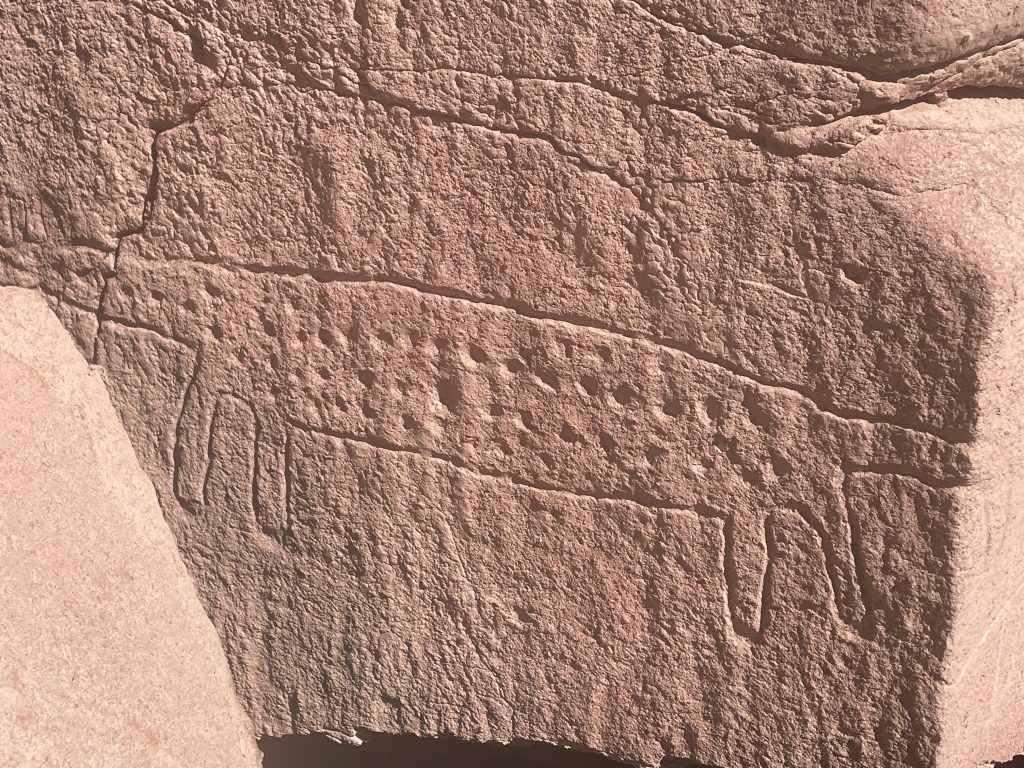
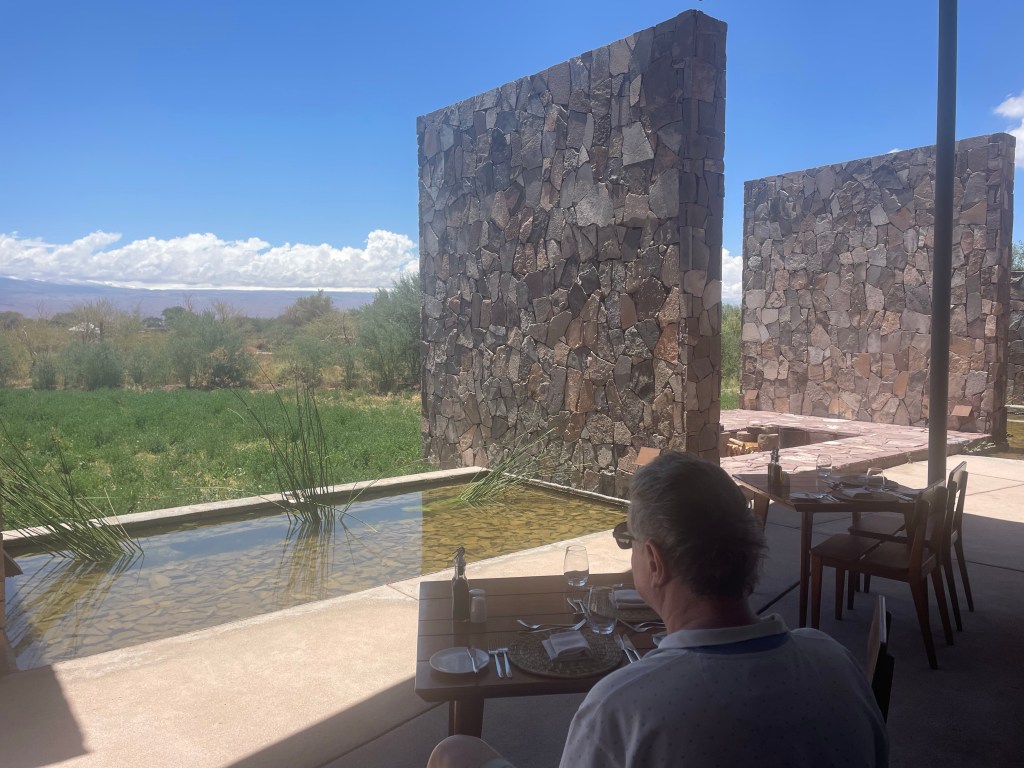
Our guide showing the routeAncient petroglyph Lunch back at the lodge
Our lodge provided half day and full day excursions in the desert, of varying levels of physical difficulty and altitude. Most of the excursions are between 2,400m and 3,400m but two are above 4,000m. Our initial plans were disrupted by the weather as roads were either flooded or blocked by snow and ice. To manage the altitude we planned the higher trips after a couple of days of acclimatisation as well as taking other advice, including no alcohol !
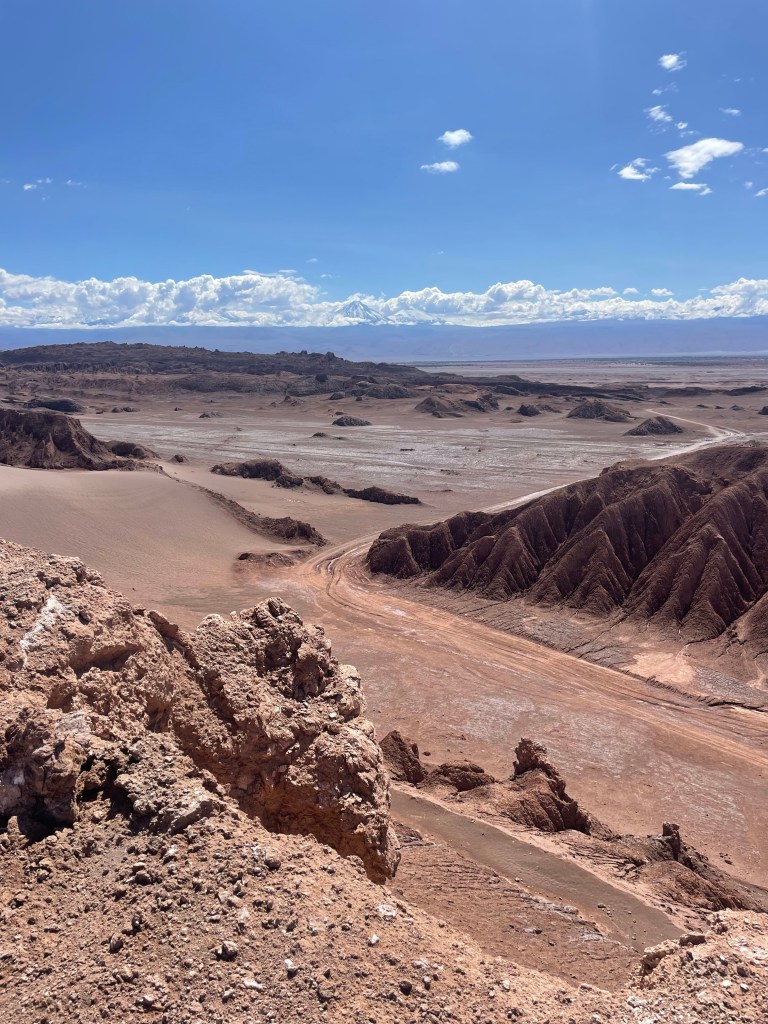
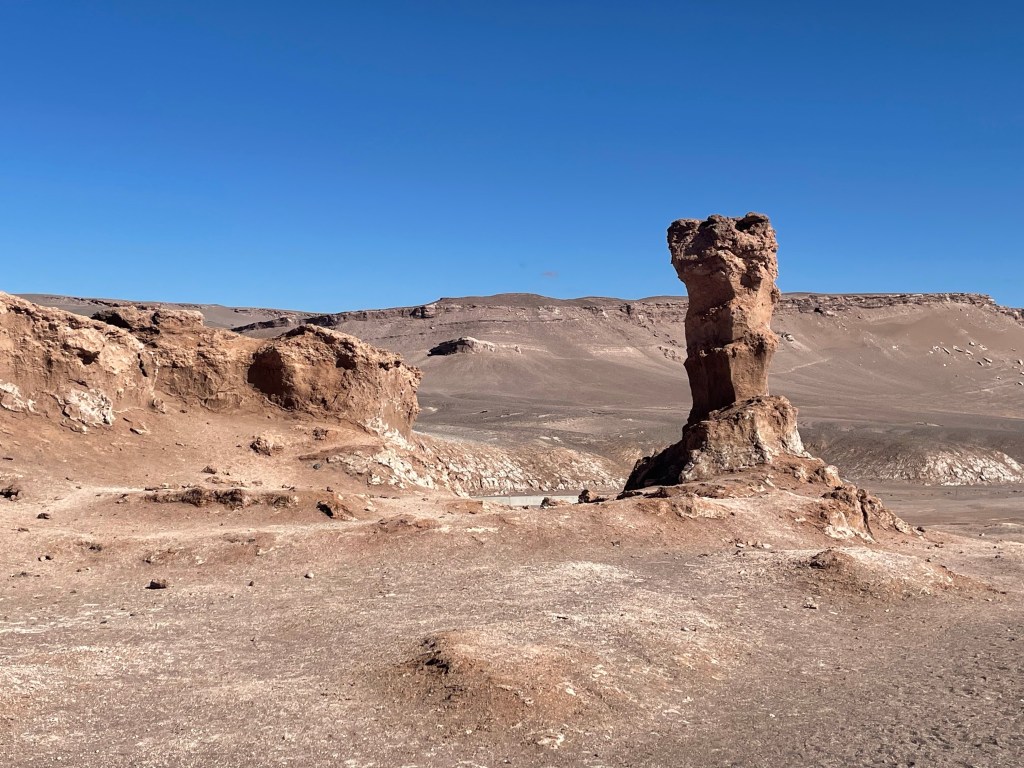
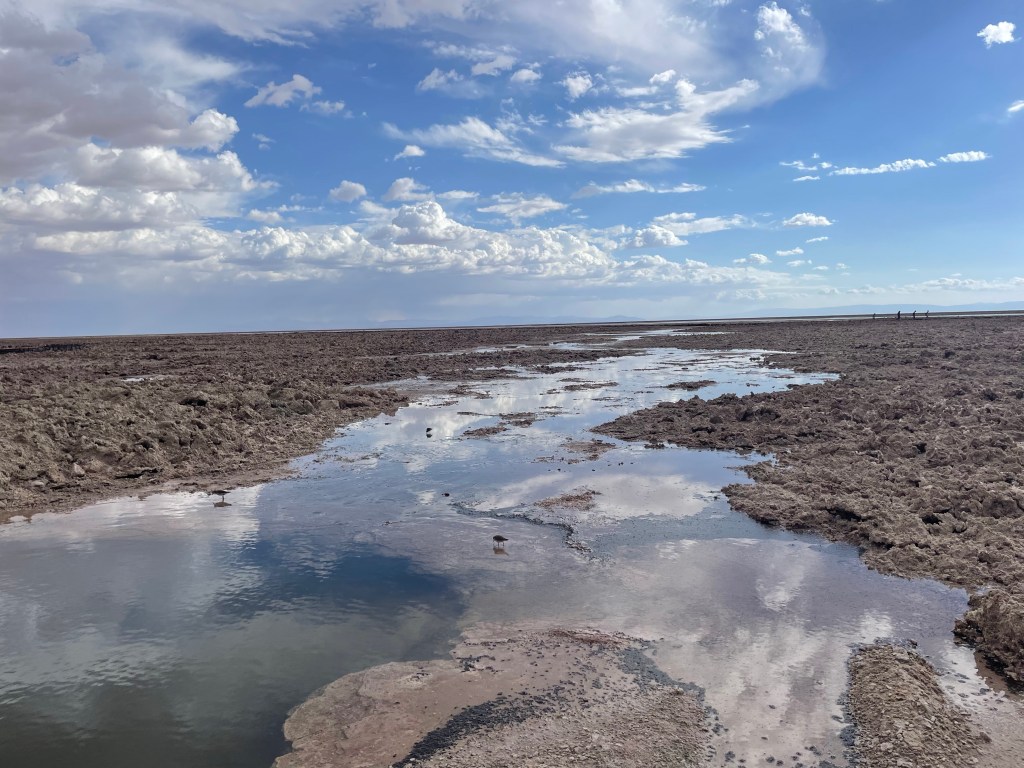
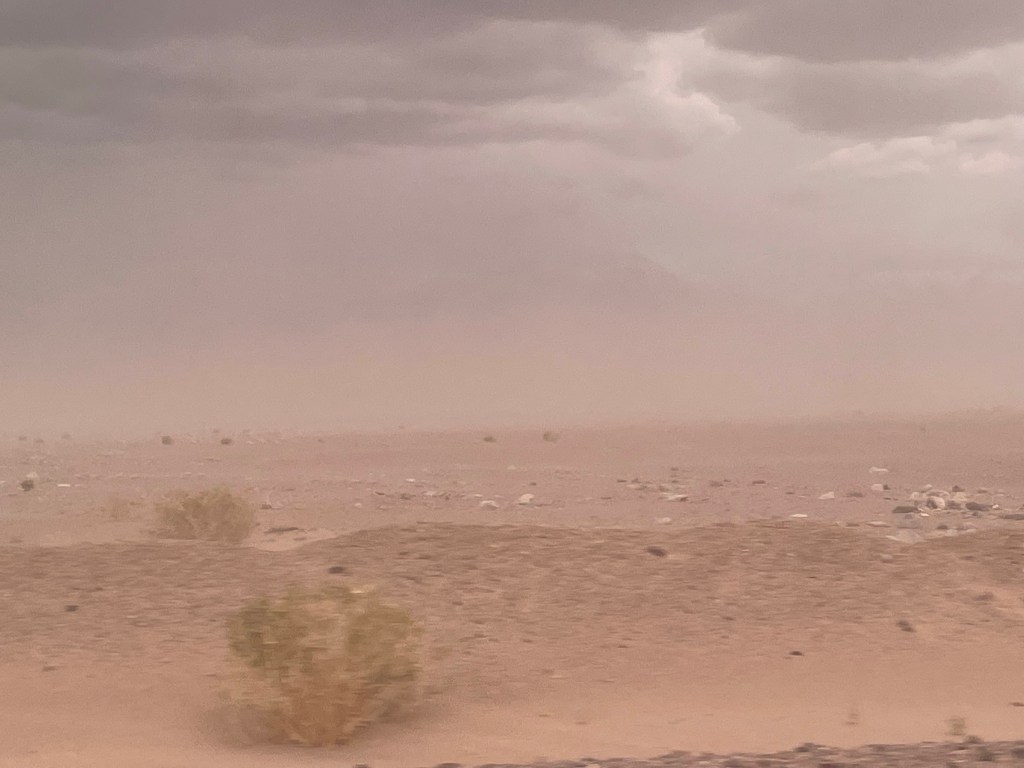
On our first day we visited Vallecito, which is a quiet part of Moon Valley. We then visited Salar de Atacama, the largest salt flat in Chile. We discovered that the mornings would be bright and sunny with clouds developing in the afternoon to give high winds and thunderstorms by late afternoon. At the salt flat we experienced rain and a sandstorm. The salt lake is home to flamingos feeding on 1cm long shrimps that inhabit the salty lagoon, giving the flamingos their pink colour.
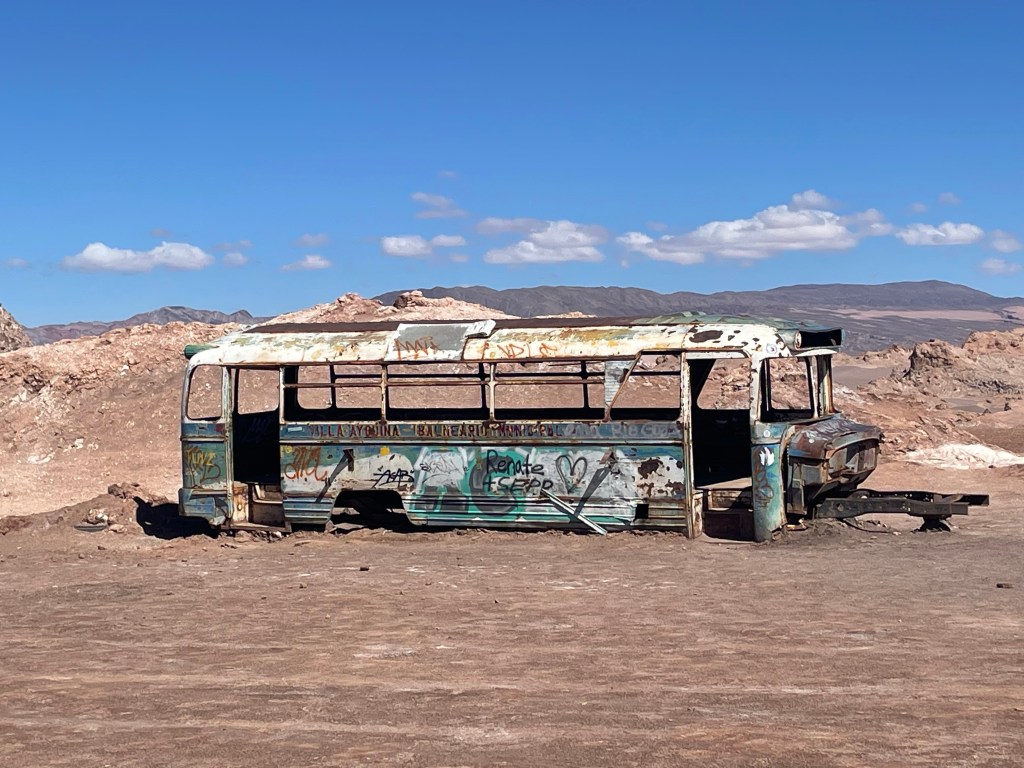
The scenery of Moon Valley lends itself to film locations, including Quantum of SolaceThe impact of wind and sand erosion A former miners’ bus – the area was the site of a number of salt minesSalt flatsFlamingos (if you look closely) and gathering storm cloudsConcurrent sand and thunderstorm
The Atacama Desert is a strip of land west of the Andes covering over 105,000 square km and is the driest non-polar desert in the world. According to the locals in a ten year weather cycle, it has eight dry years, a medium “wet” year and a “wet” year (wet being a relative term in the context of a desert which, by definition, has less than 25cm of precipitation per year). The wet season, the Altiplanic Winter, is in the summer and lasts up to two months. It is caused by the reversal of the wind direction, so that the wind flows across the Andes from Bolivia during what is known as the Bolivian winter, rather than the normal direction from the Pacific. The precipitation is very localised, falling as rain or snow, depending on the altitude; it is believed that parts of the desert have not had any rain in 500,000 years
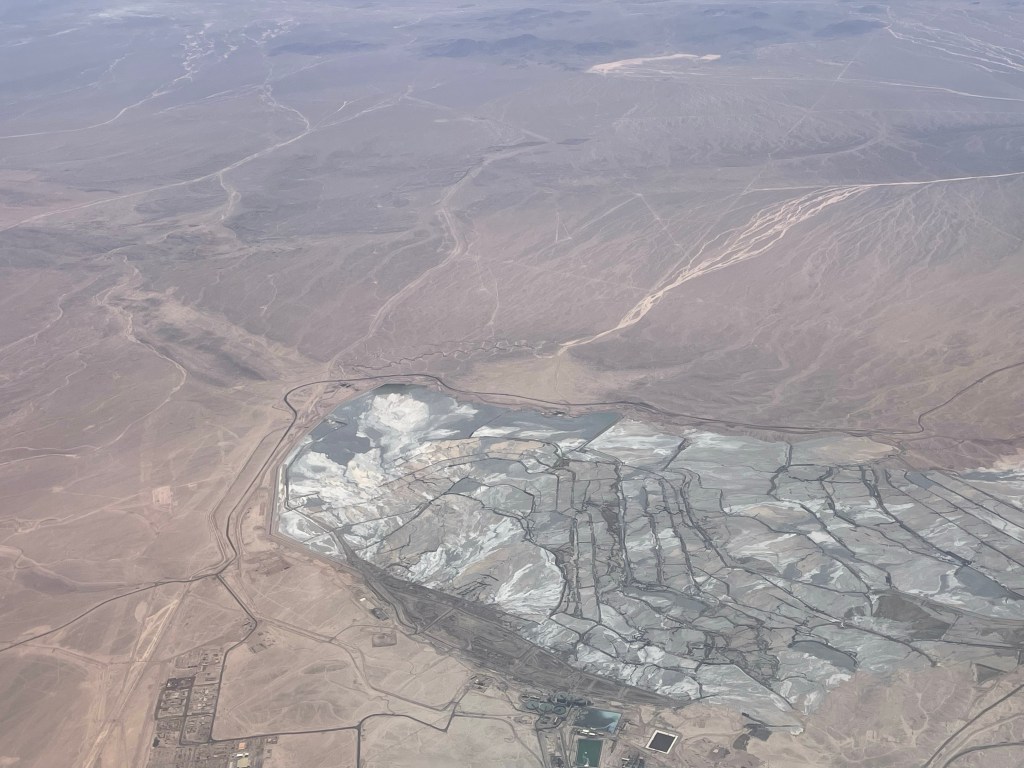
We stayed in San Pedro, an oasis in the desert, during one of the medium wet “winters”, at an altitude of 2,400m. It is the centre for tourism with a population of almost 5,000. The other main industry in the area is mining, predominantly copper and lithium. The lithium mining is controversial as it uses a lot of water and consequently is not good for the ecosystem. The lithium is exported, mainly to China for the production of batteries.
Most tourists and miners fly into Calama (the mining centre) from Santiago, a two hour flight – hiking gear and hard hats being the carry on luggage of choice.
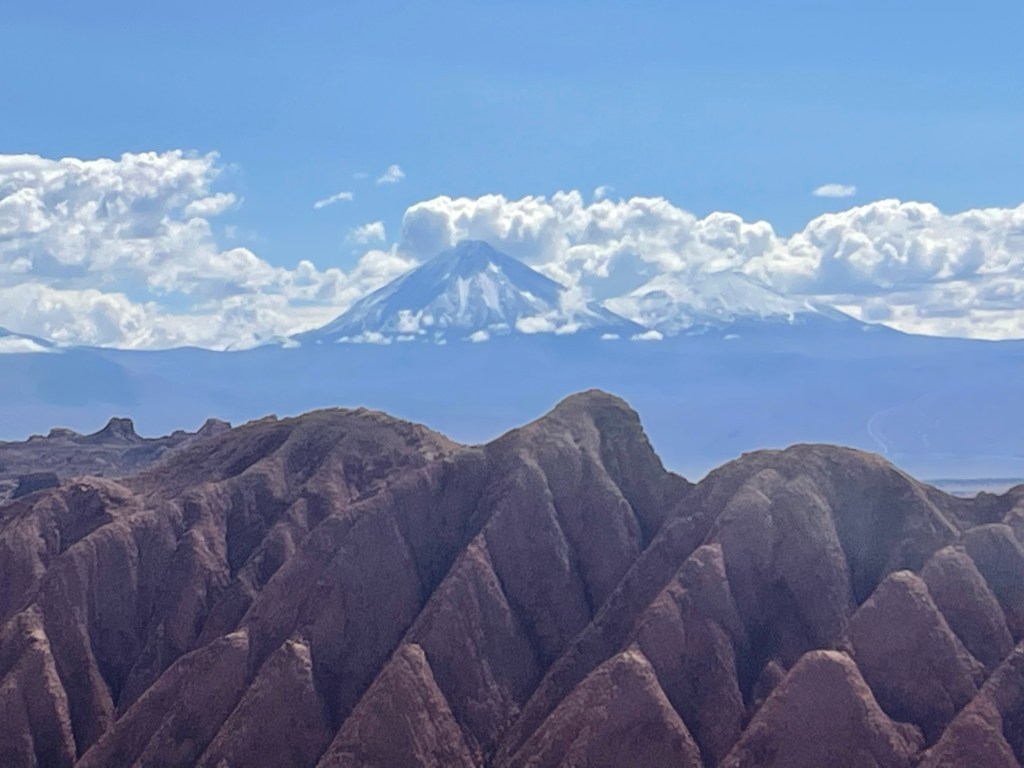
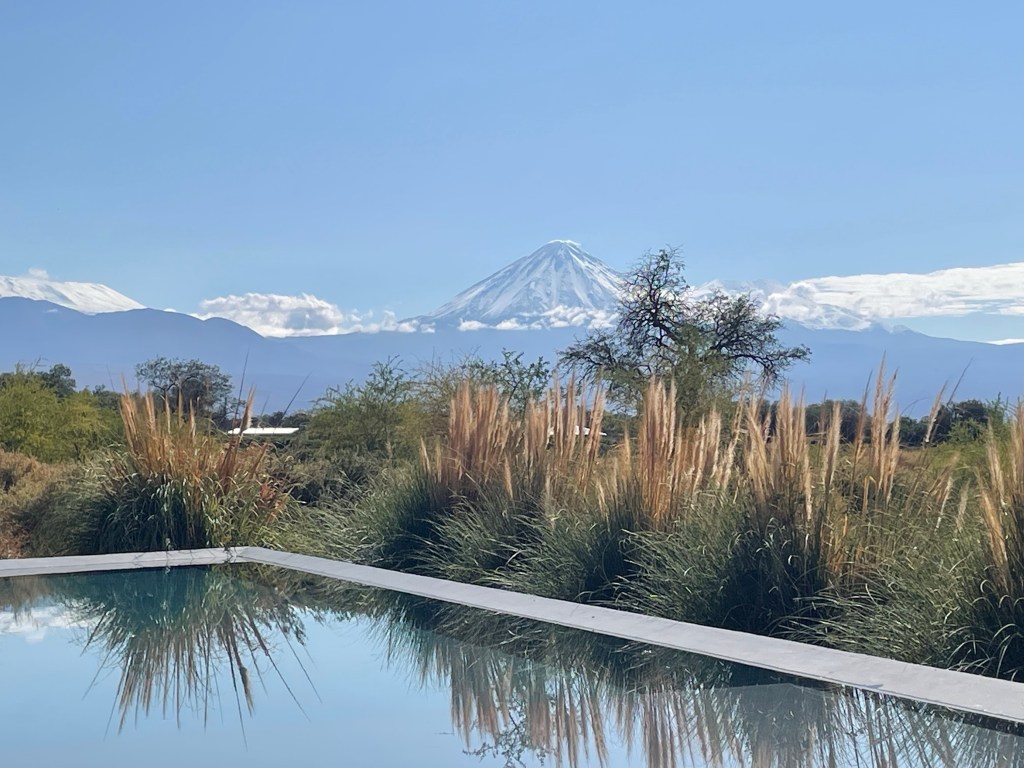
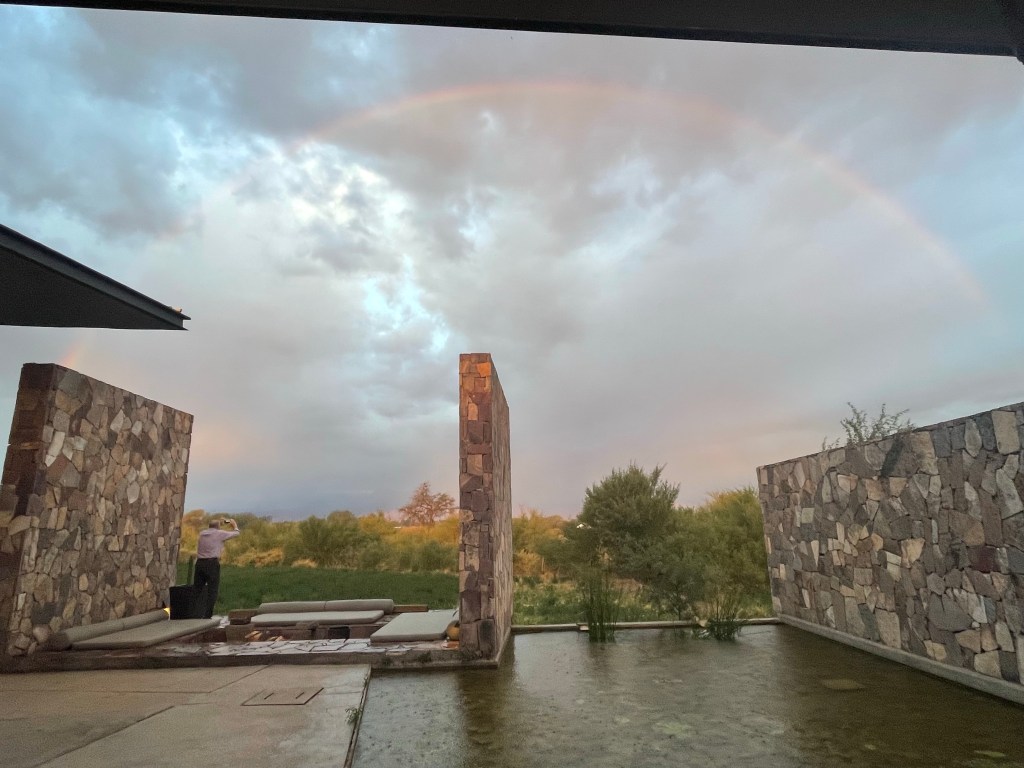
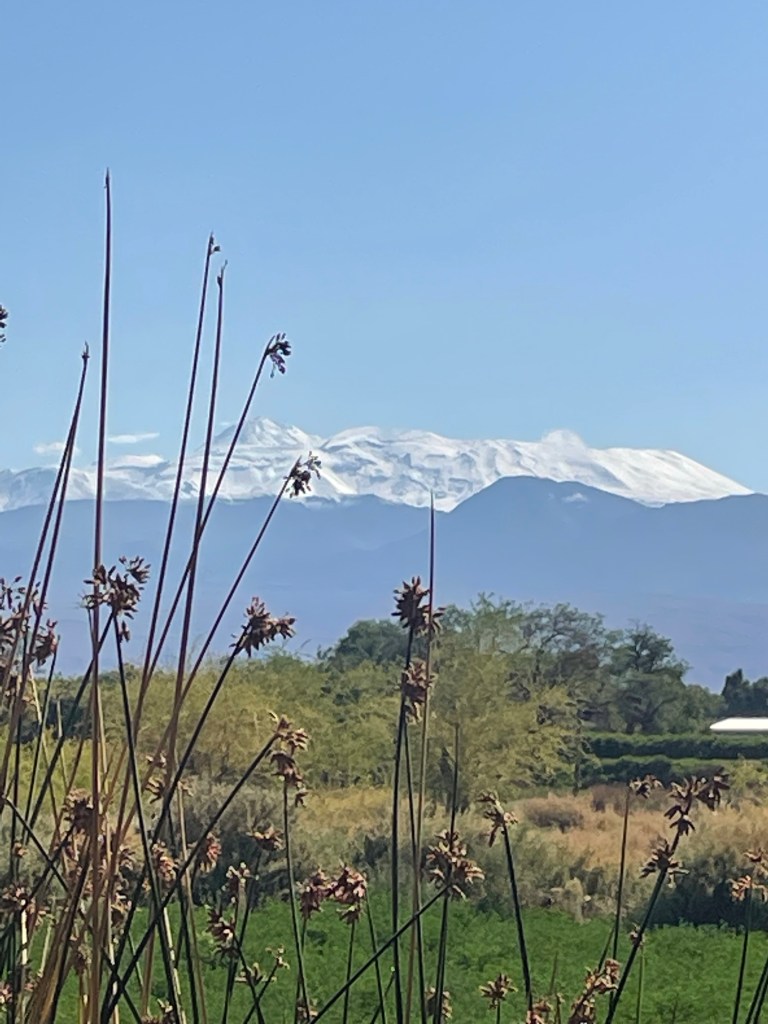
Lithium mine CalamaFrom our lodge – Licancabur (extinct) volcano, on the border with Bolivia at 5,916m, in the background. Rainbow in desertThe snow capped mountains, also on the Bolivian boarder
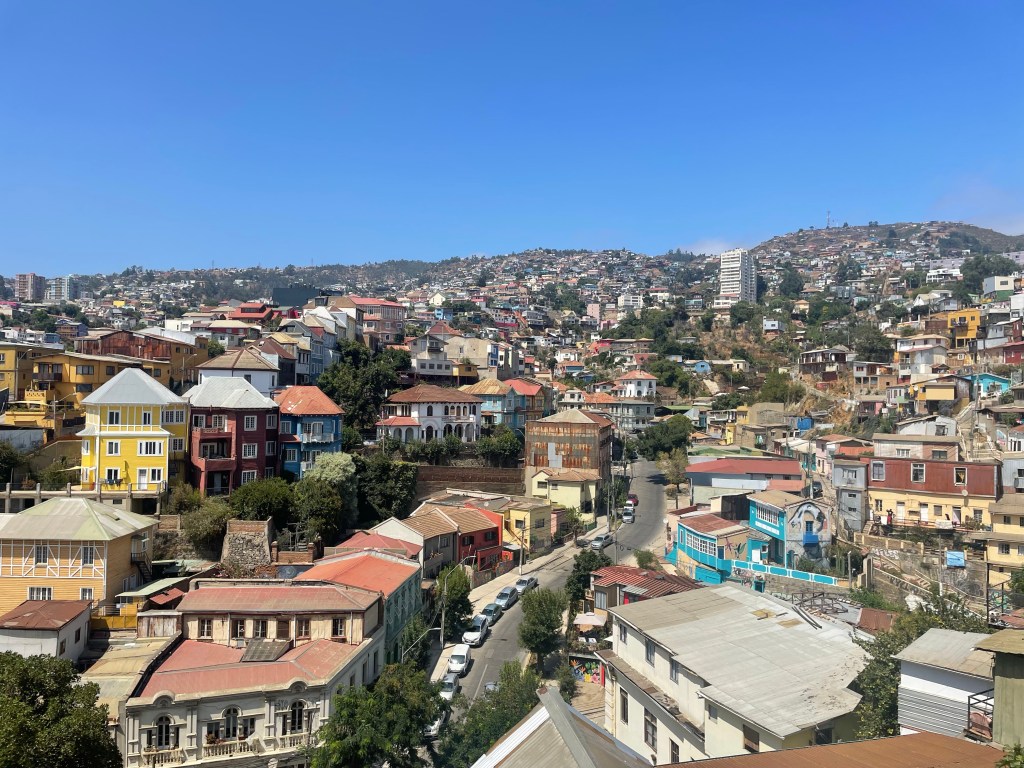
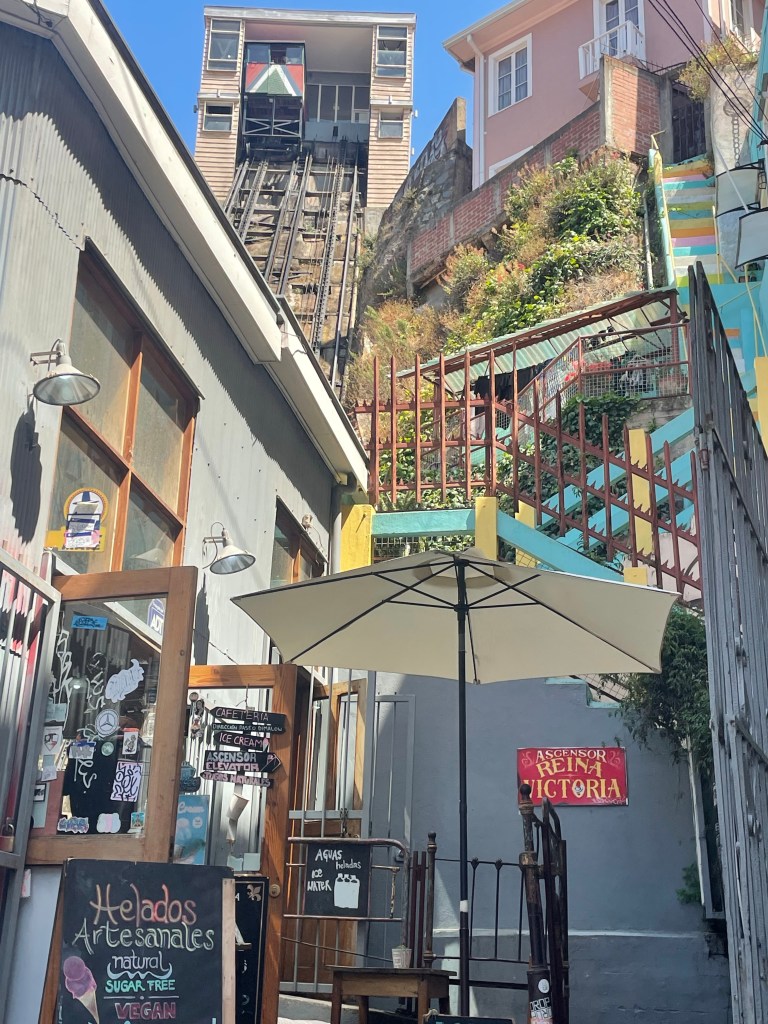
Valparaiso has been described as a dilapidated, colourful, poetic wonderful mess. From the times of Spanish colonialism and English seamen, including Sir Francis Drake, it was a major stopping off port for ships rounding Cape Horn. During the Califonian gold rush of 1849, mining supplies came through Valparaiso. It lies on the coast, 116km from Santiago, but with a very different climate – the day we visited, Santiago reached 36 C and Valparaiso 22 C, with cloud and a cold wind until lunchtime.
The Chilean navy was founded here with the first Vice Admiral being Lord Cochrane, who had been a captain in the Napoleonic wars, but was convicted of Stock Exchange fraud. Valparaiso is still home to the naval acadamy and was a major influence on Chile winning the Pacific War against Bolivia and Peru in the late 19th century, resulting in Chile incresing its land by 30%.
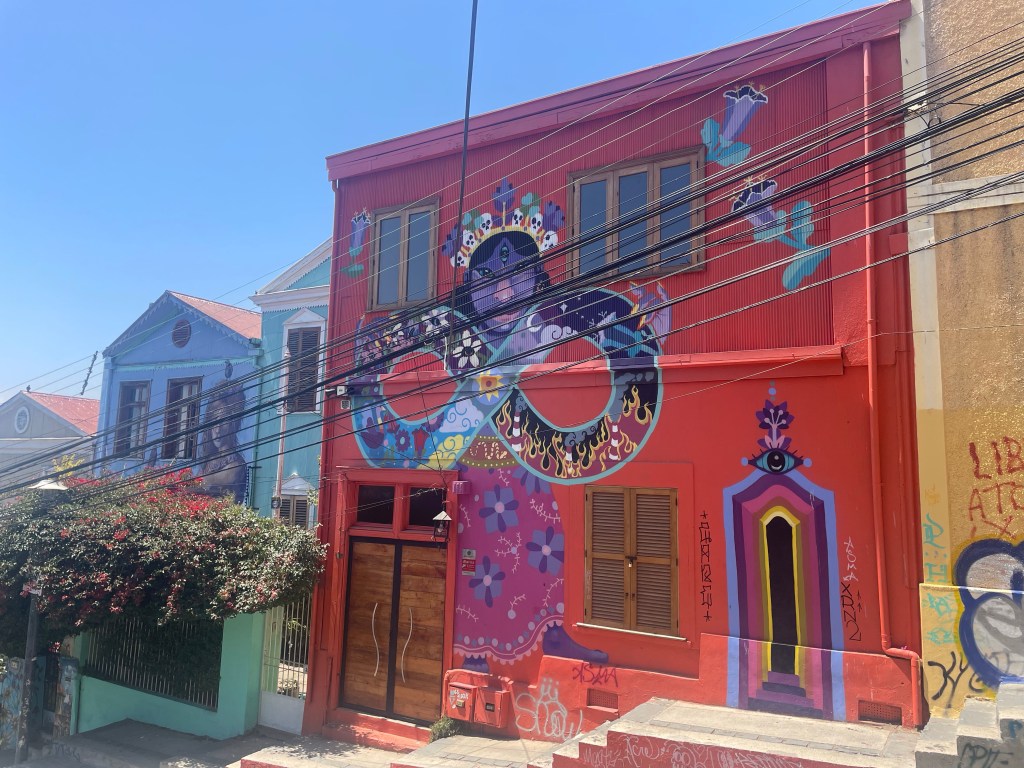
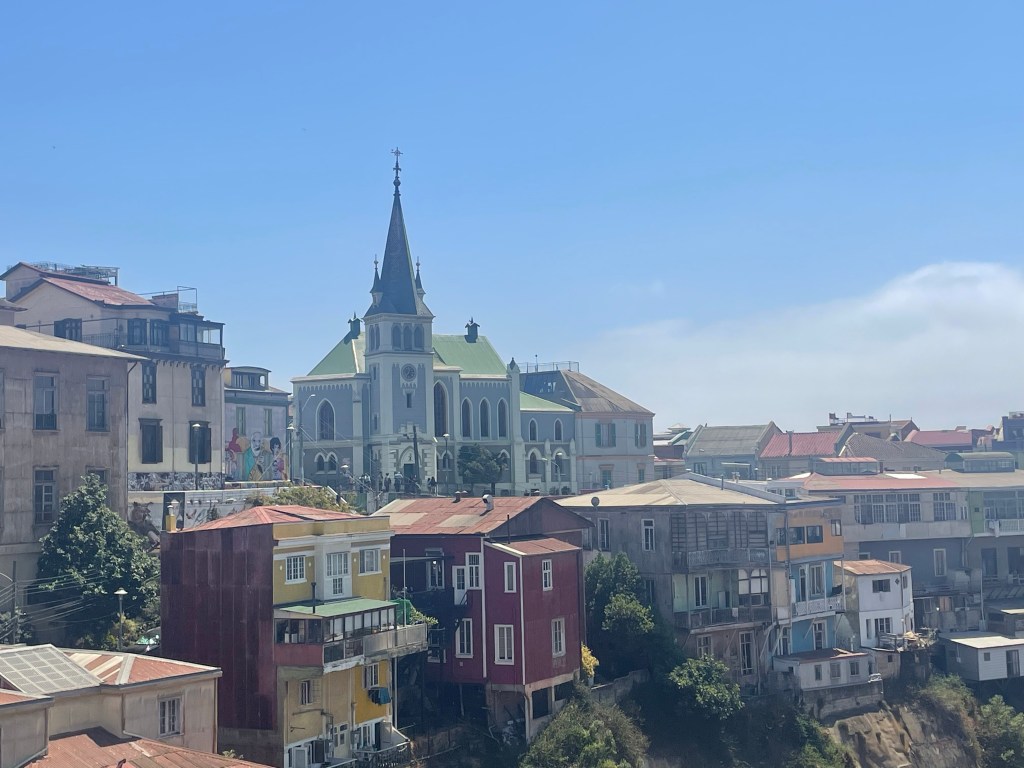
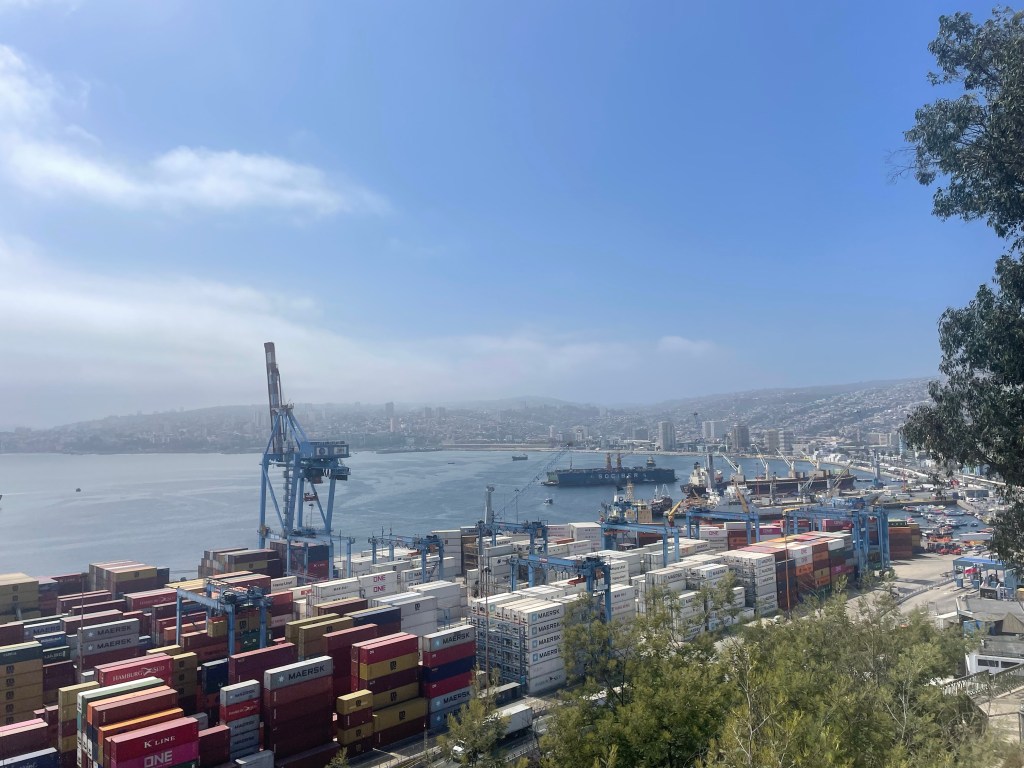
Following the opening of the Panama canal it declined, but the city built on steep hills remains colourful and artistic with separate districts for each of the immigrant European nations, reflecting their respective architechture. These include British, German, Yugoslavian, French, Swiss and Italian. It remains a significant port and is a large student city with several universities.
One of several funiculars built around 1900 to help get around the city Many buildings are decorated with muralsA church in the German districtThe portHouse built by a wealthy Yugoslav merchant The “Armada de Chile” buildingThe headquarters of the shipping authority- the building could not be repaired after an earthquake in 2017, so a glass building was built inside the existing exterior Fish lunch with our guide















 Shilli-Fully Travels