Our final stop in Costa Rica was the Central Valley, just an hour from San Jose. The area is more temperate and less humid than the rain forests and is where coffee was first grown in the late 18th Century.
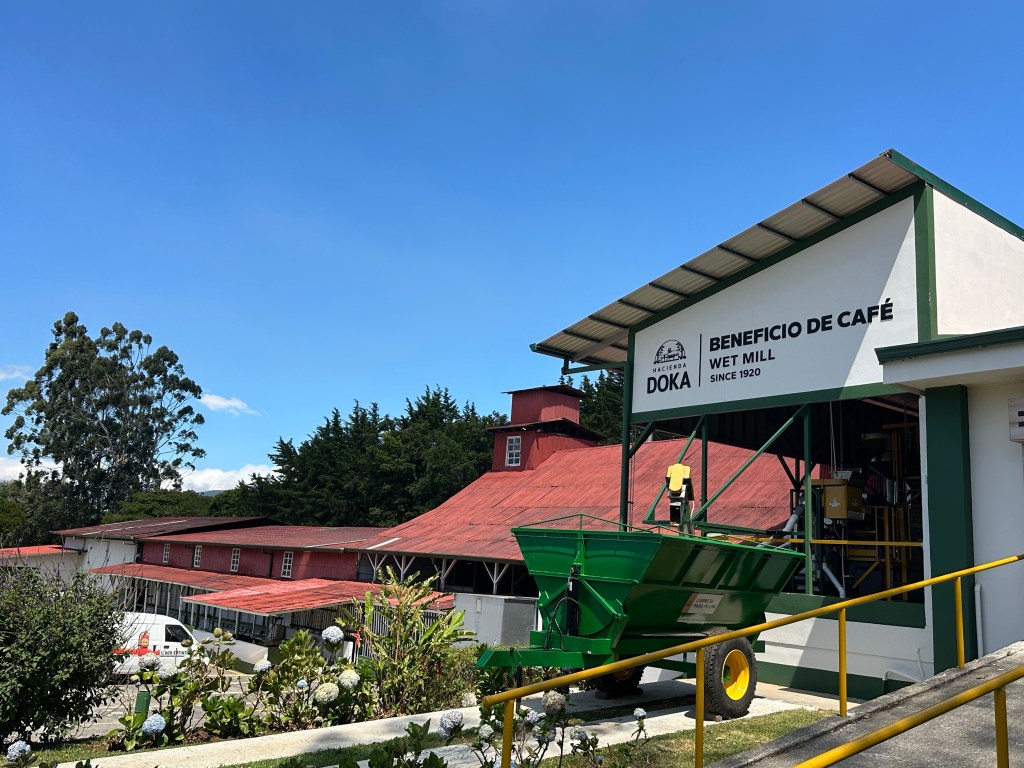
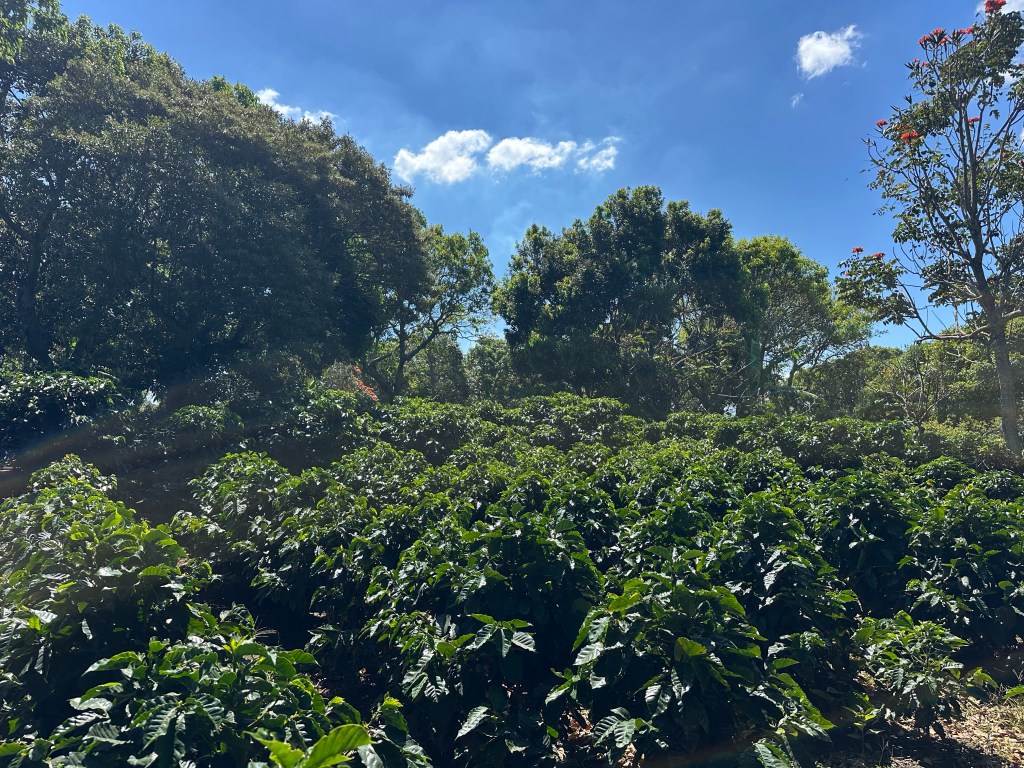
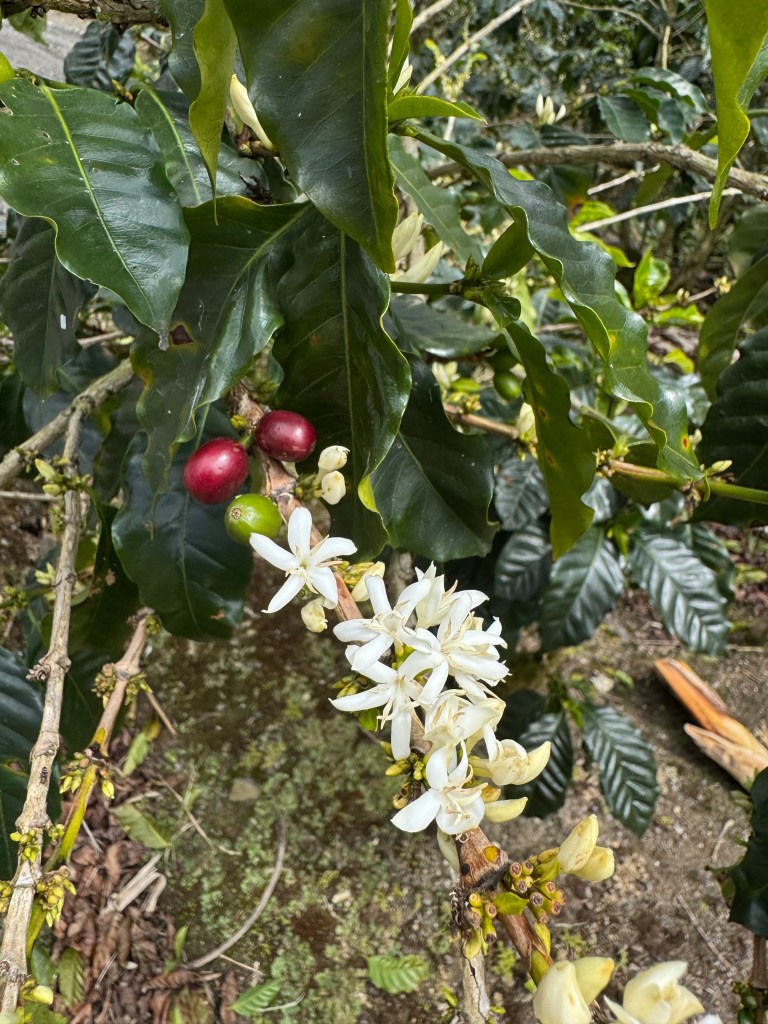
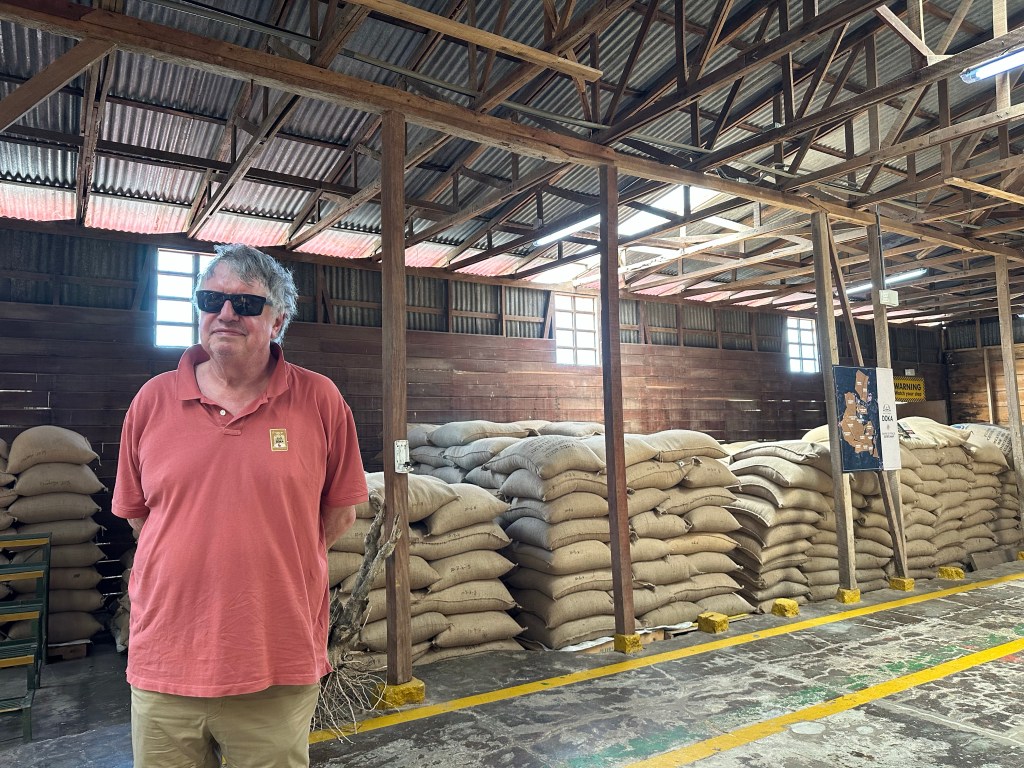
We visited a coffee plantation and learned about the process from seed to the final product. All the plants we saw were Arabica with the final flavour dependent on the roasting process. Coffee trees grow best at over 1,000 metres and enjoy the volcanic fertile soil. The caffeine in the plants provides a natural defence from wildlife. The only danger to the crop is fungus which is becoming more of a problem with climate change.
The fruit is hand picked as machines are not able to cope with the slopes of the plantation. The pickers are migrant workers from Nicaragua paid piece work with minimum wages set by the government. The plantation we visited pays double the minimum and also provides various other worker benefits.
The process for obtaining the seeds (beans) from the fruit was undertaken until 2021 by a machine built in London in the mid 19th century. It is still operational but as it is driven by water which cannot be returned to the river, it has been replaced by a more environmentally friendly Costa Rican machine.
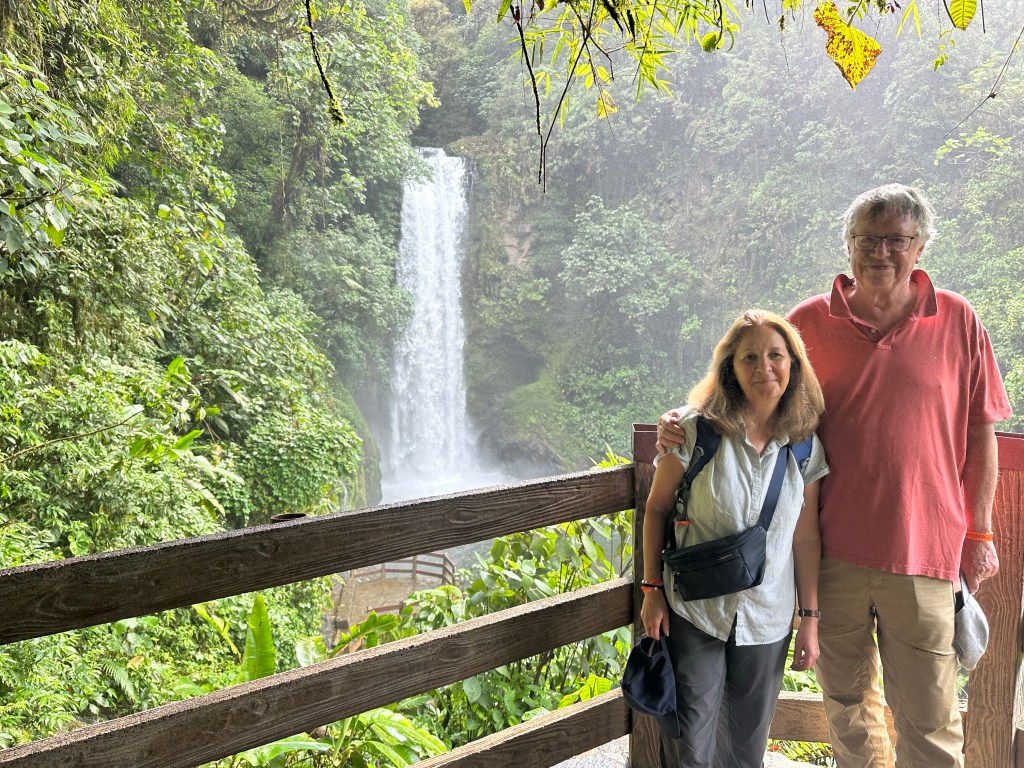
Following our coffee tasting we travelled on to La Paz waterfalls and animal rescue centre. It is illegal in Costa Rica to keep wild animals as pets, so many of the animals are recoveries from law enforcement. The centre returns animals to the wild where possible but some are too domesticated to do so. A jaguar is housed at the centre which was recovered from a travelling Mexican Circus attempting to bring it across the border.


 Shilli-Fully Travels