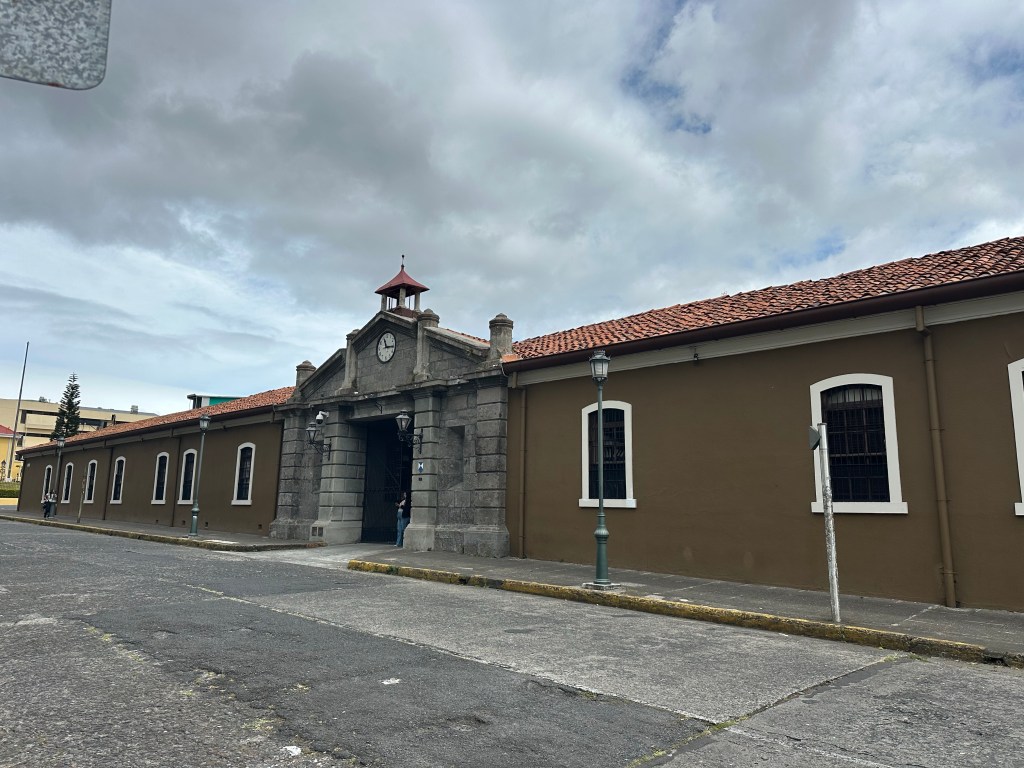
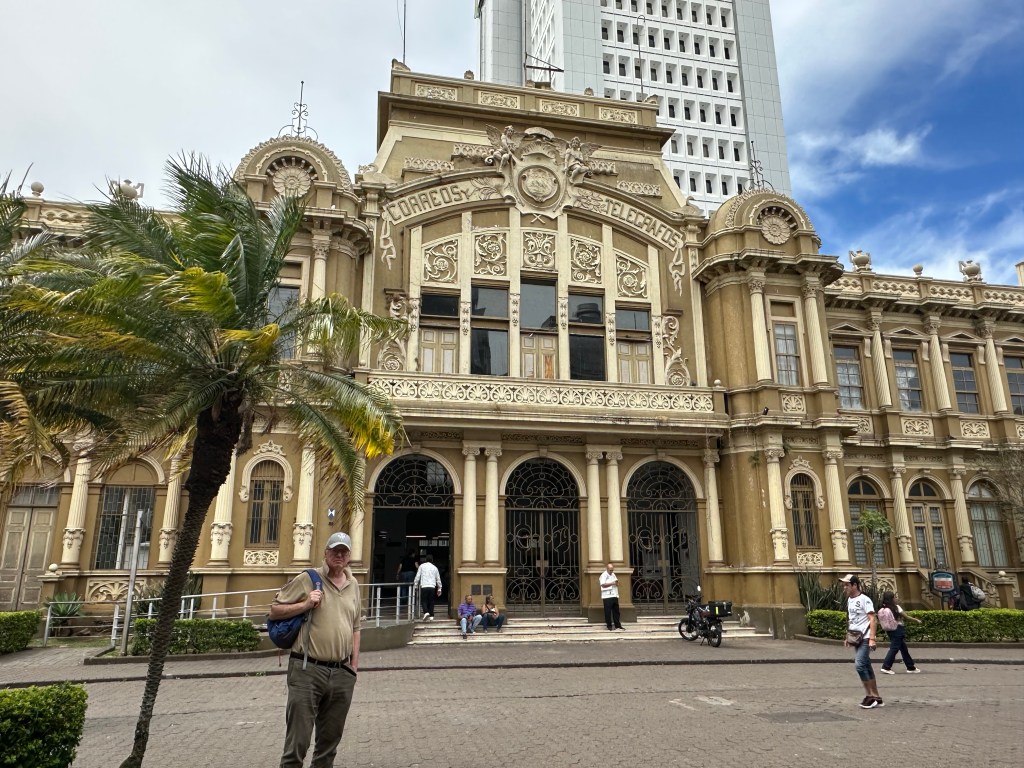
San Jose was founded in the 18th Century and became the capital of Costa Rica in 1823. It was not considered valuable to the Spanish and hence has limited colonial architecture. The population of the city is approximately 350,000 and most of the older buildings are from the end of the 19th Century.
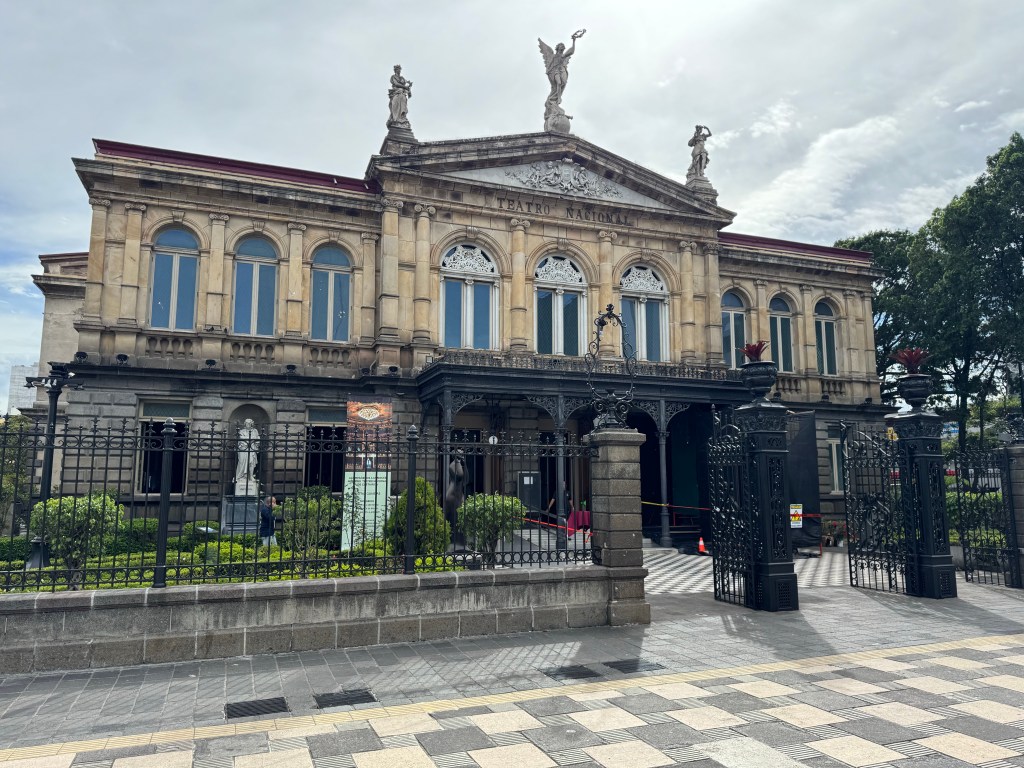
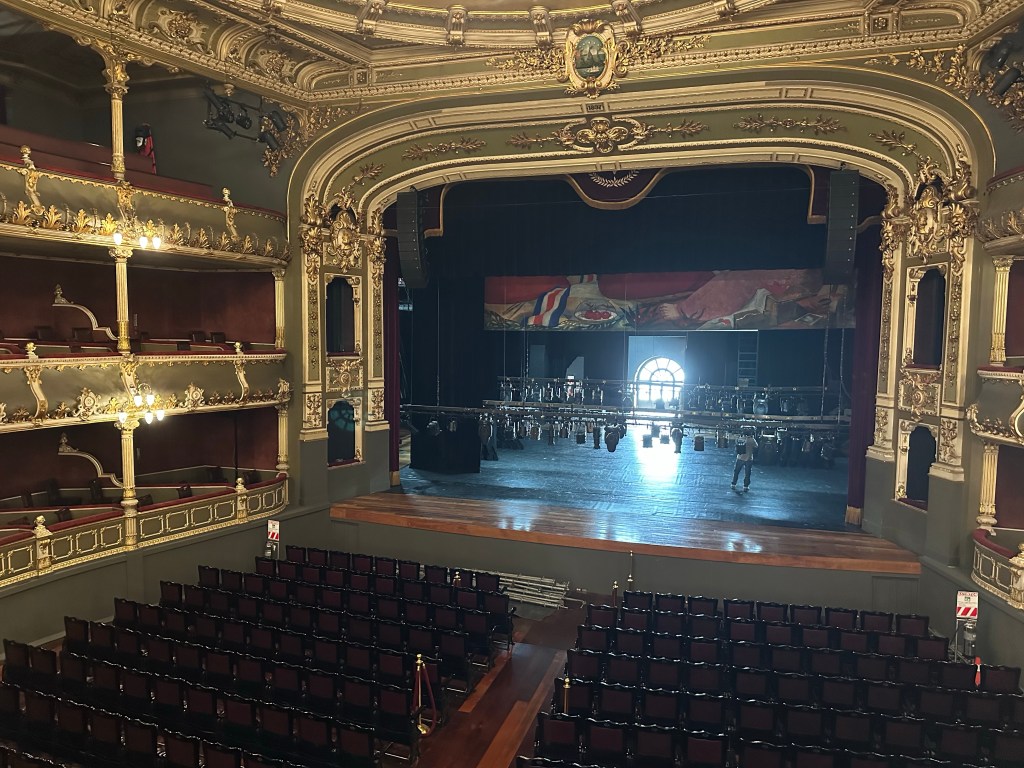
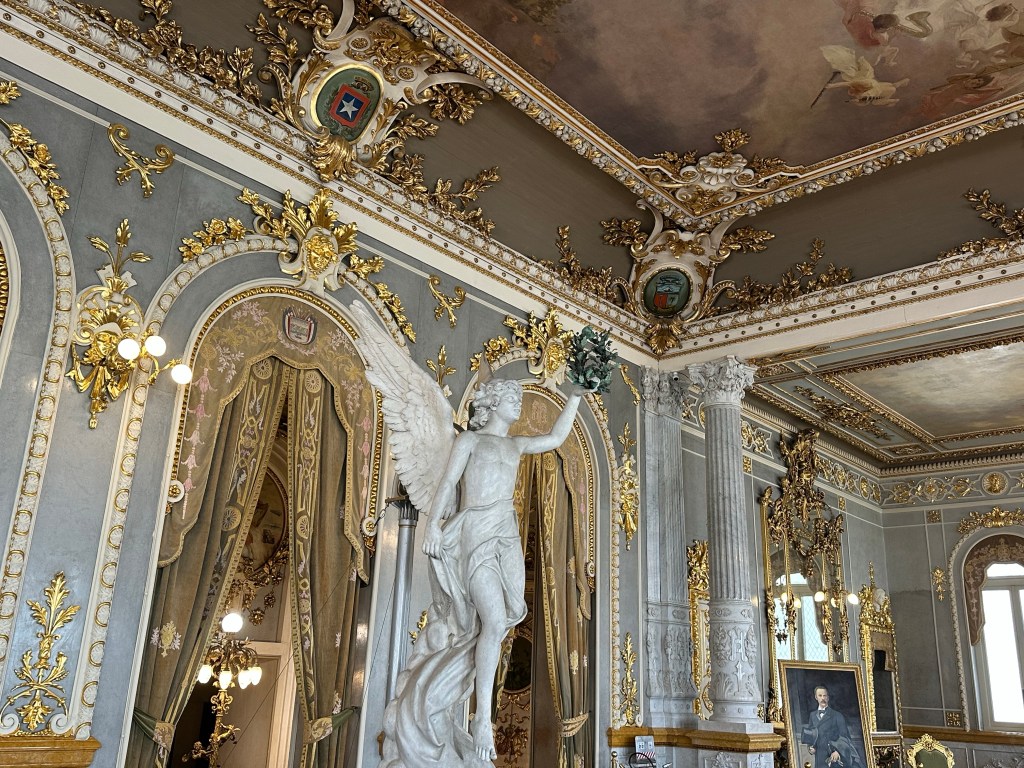
When the Costa Rican entrepreneurs became wealthy, principally from coffee related businesses, they sent their children to be educated in Europe. On their return they advocated for some of the customs and culture they had experienced in Europe. This included wanting a European style theatre where they could stage concerts and operas to display their wealth. The country raised taxes and designed a National Theatre which was built in pieces in Italy, including marble statues. The theatre opened with Faust performed by a French company in 1897. It remains the most significant building in the country. Following the Presidential election this February the new president (the current one is not permitted to stand for a second consecutive term) will host an inauguration party at the theatre in May.
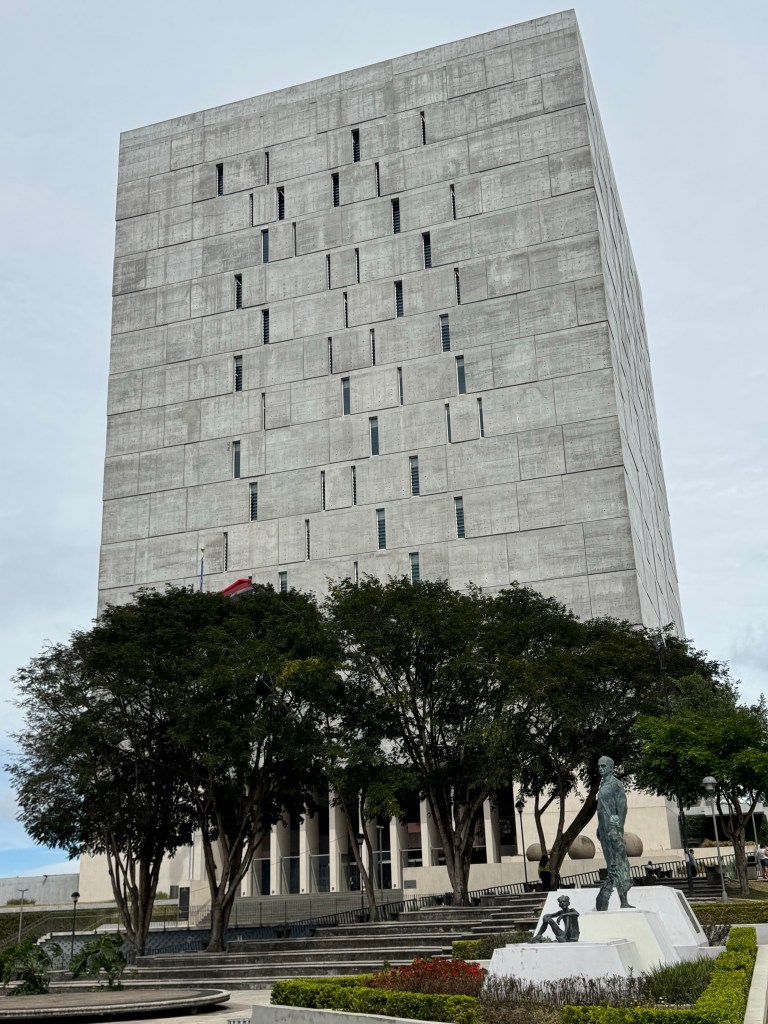
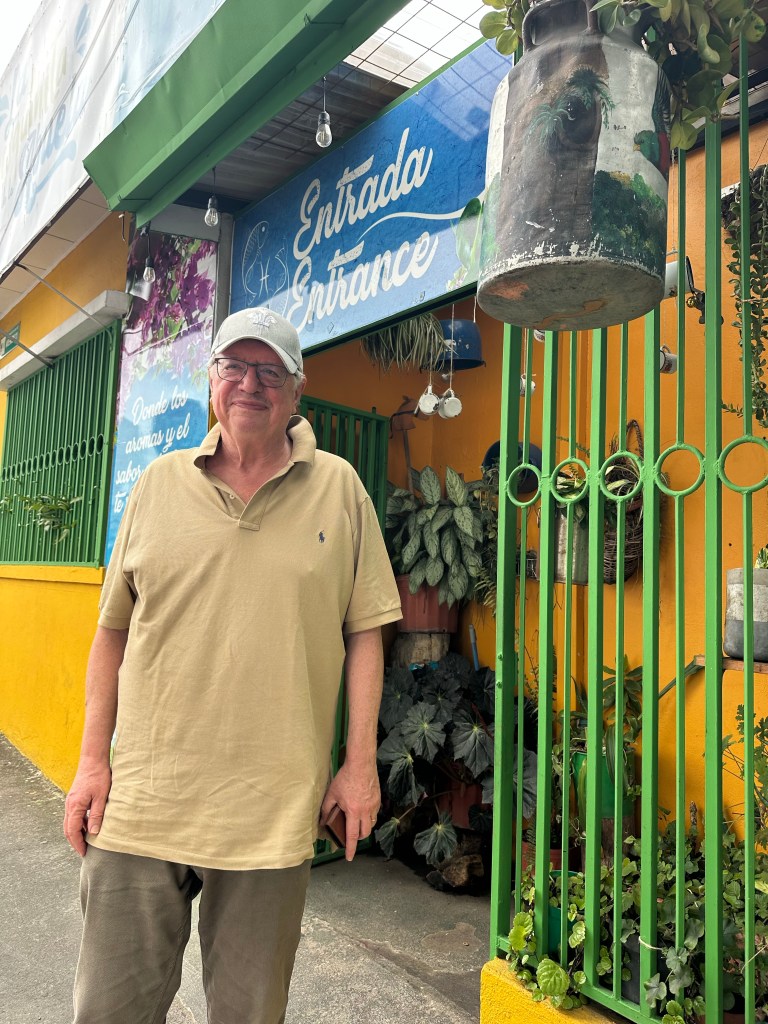
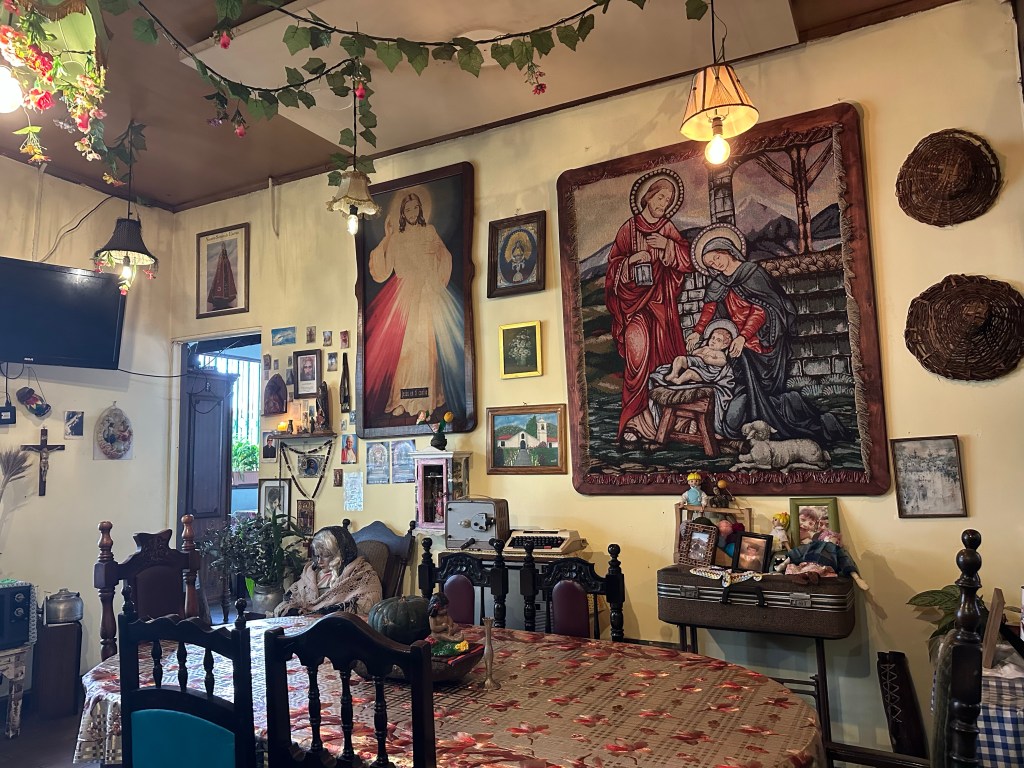
We spent three nights in San Jose which is unusual as most visitors stay there for the minimum amount of time, heading straight to the coast and National Parks. Our guidebook describes San Jose as “gritty” which we could understand. While there are certainly areas to be avoided we enjoyed our two days there, helped by the lack of other visitors as well as a walking tour on the first day with an excellent guide. In addition to explaining the sites she gave us a good insight into Costa Rica’s success, challenges and politics as well as an excellent recommendation for a restaurant.

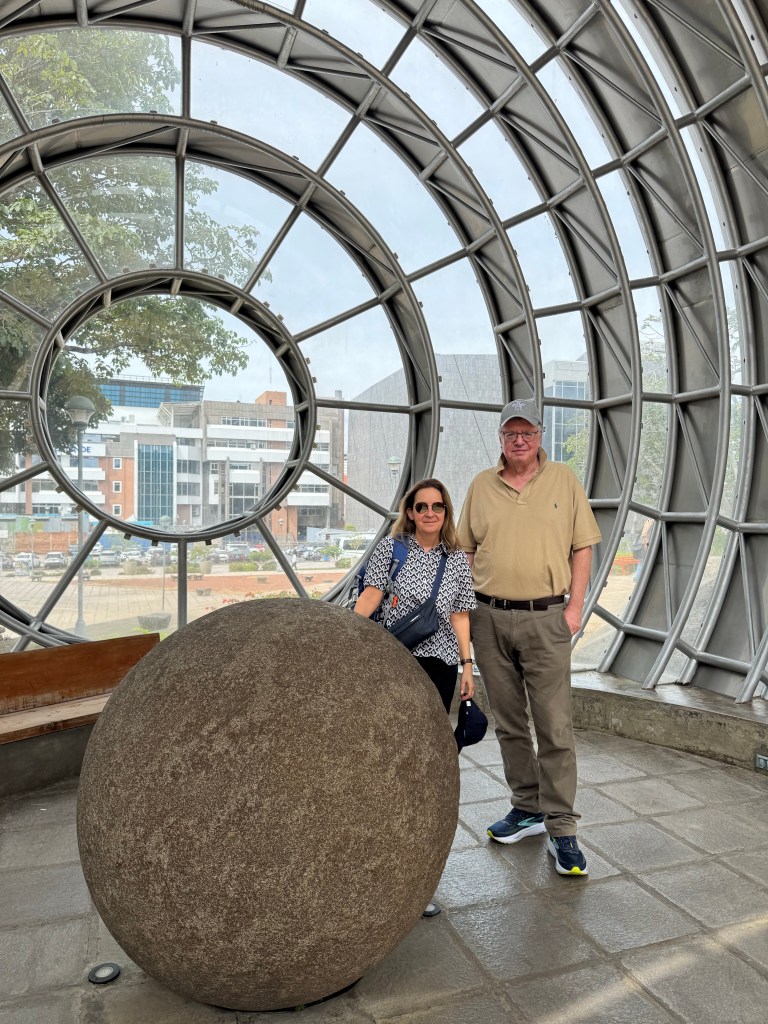
Costa Rica has over 300 of these stone spheres, of varying sizes, called Diquis Spheres after the now extinct culture to whom they are attributed. They have been dated to 500-1,500 CE. A number of theories exist as to their original purpose including representing solar systems.
 Shilli-Fully Travels