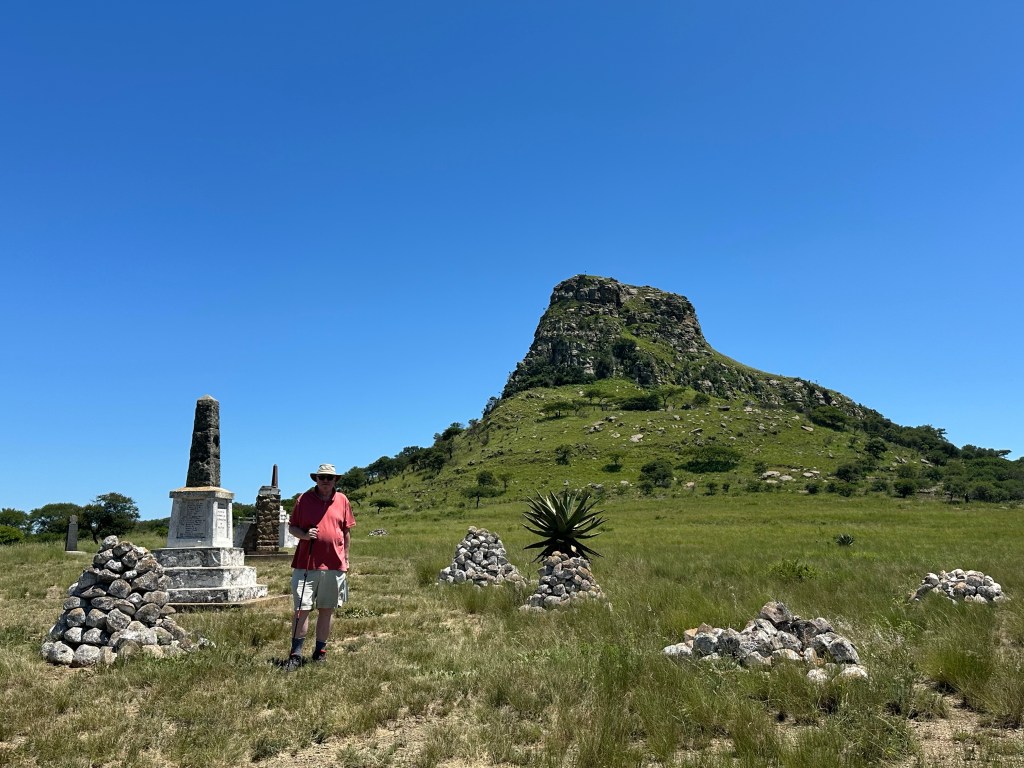
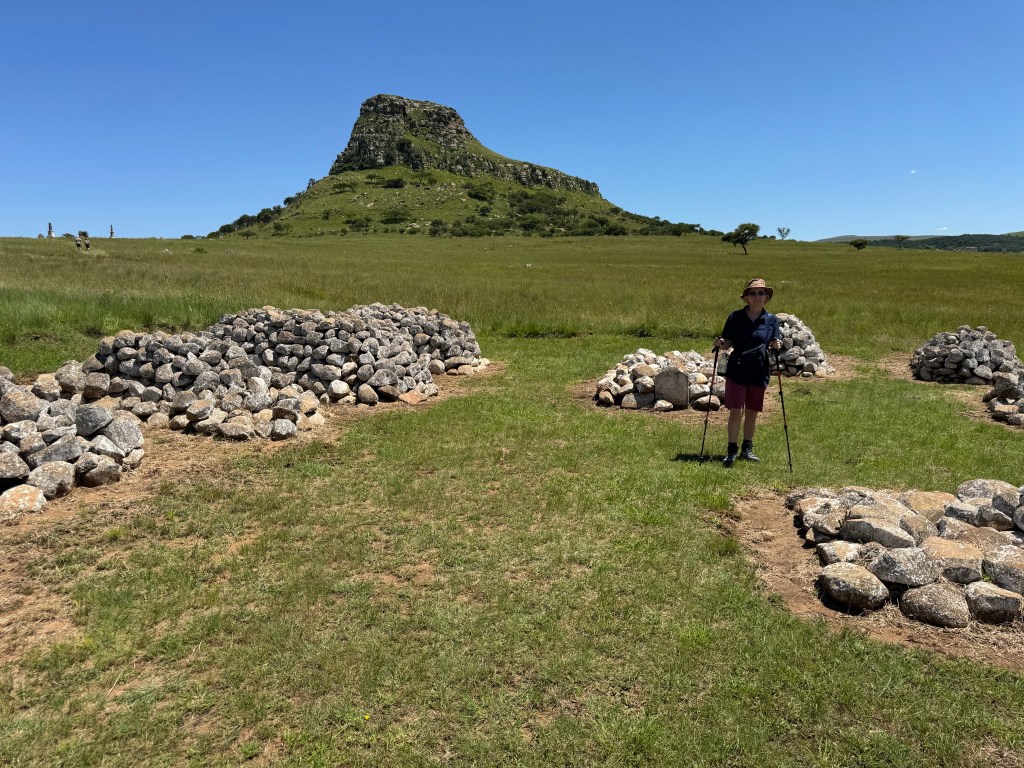
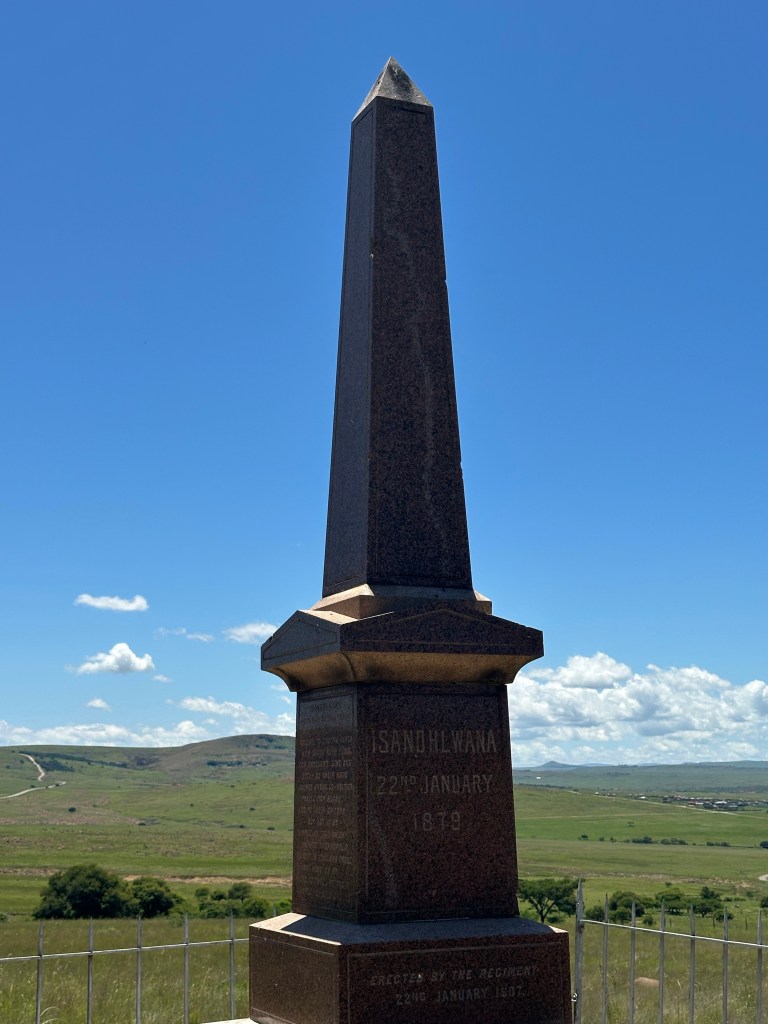
The middle column of Lord Chelmsford’s invading force travelled the 10km from Rorke’s Drift to Islandlwana. At 3.30am, following reports of Zulu movement, Chelmsford set off in persuit with 3,000 men leaving behind a camp of 1,300 men. The camp had no agreed leader nor proper defences, so was unprepared for battle with the main Zulu army, which had by passed Chelmsford’s force. The Zulu army, in a buffalo formation (two horns with a chest) were armed with assegai (spears) and shields and some old muskets. The centre and left wing, around 20,000 men, attacked around noon and by 3pm it was all over, with the added confusion of an almost total eclipse towards the end.
Aside from 55 men, all the British troops were killed. The dead were disembowelled, as a result of Zulu ritual to free the soul, and left on the battlefield. Chelmsford returned after dark, so was unable to see the full carnage until dawn.
Lt Melville, given the task of trying to save the regimental colours, set off on horseback looking to cross the Buffalo River. At the crossing he was assisted by Ltd
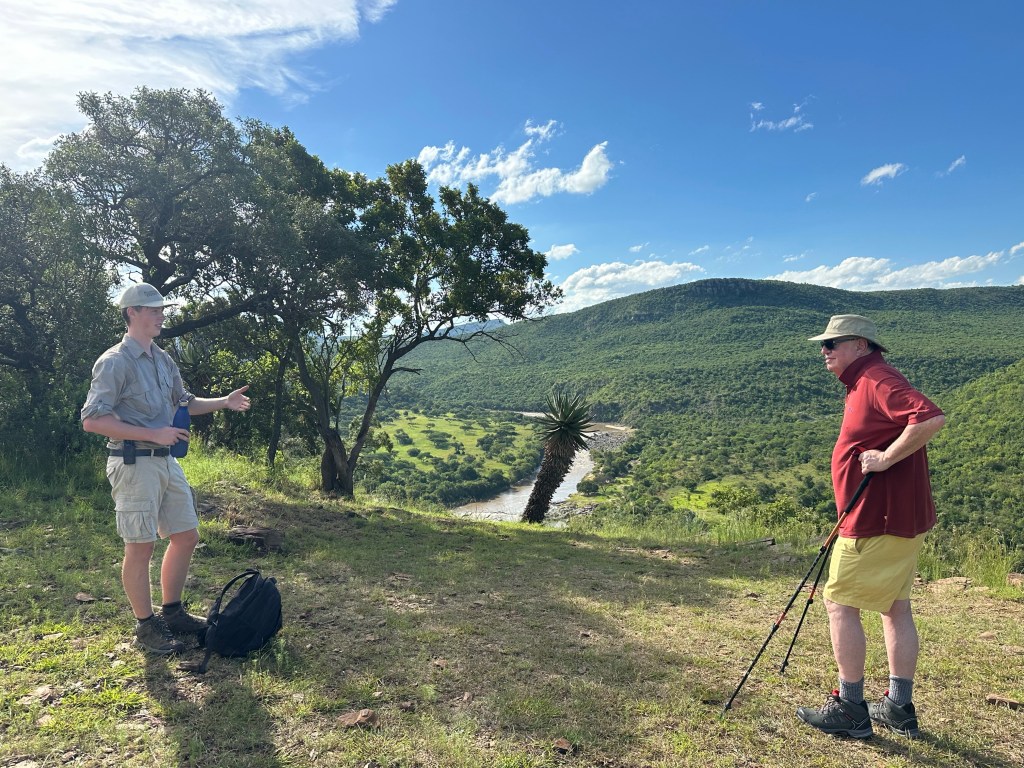
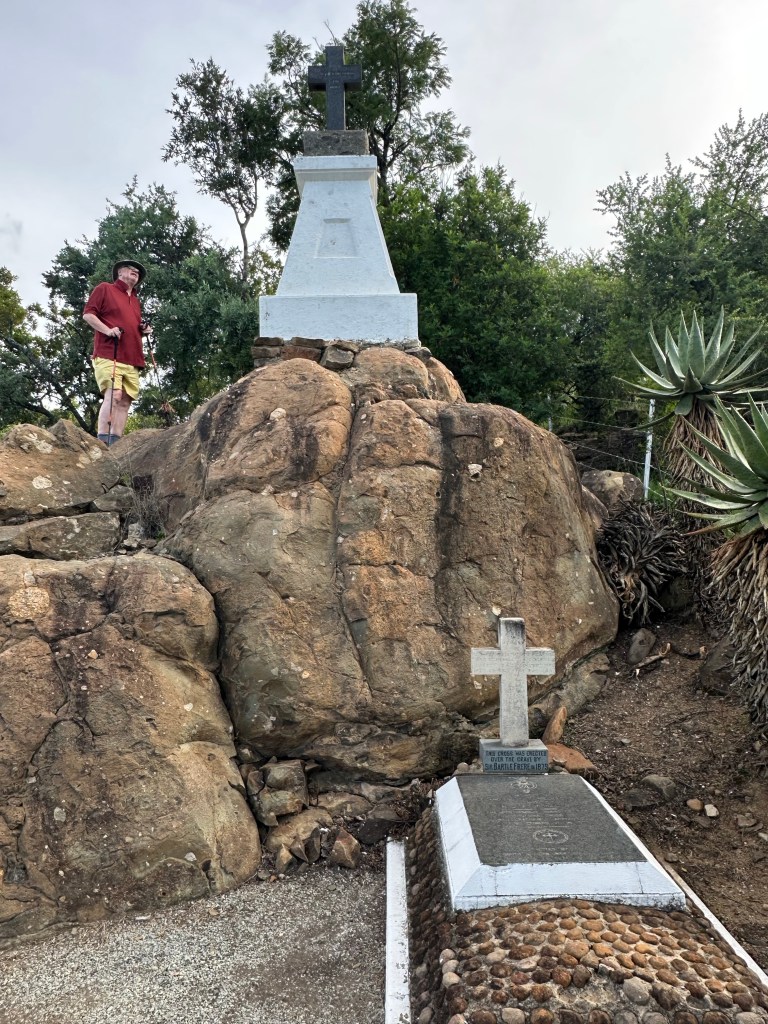
Lt Coghill who had suffered an injury chasing a chicken for Chelmsford’s dinner. They lost the colours crossing the river under Zulu pursuit, although they were subsequently recovered from the river. They lost their lives on the Natal side, overcome by Zulus and became the earliest recipients of posthumous VCs when they were first awarded in 1907. Their bodies are buried where they died, which now lies within the property of the lodge where we stayed, Fugatives Drift.

 Shilli-Fully Travels