Vienna in the east of Austria has a population of over 2 million of Austria’s total population of around 9 million. It has been the centre of European history for over a thousand years. Most of the more recent history is well known; Austro-Hungary triggering WW1 after the assassination of Franz Ferdinand in Serbia and following the Anschluss of 1938, widely popular in Austria at the time, to rejoin Germany under Austrian Adolf Hitler and WW11.
Much earlier, in 1683 Vienna resisted the Ottoman Empire who were seeking, for the second time, to caputure the city. The city, beseiged for over a month with starving inhabitants, was about to fall before the intervention of the Polish who helped defeat the Ottomans and save the city. This prevented the Ottomans from achieving their objective of expansion across continental Europe. In their haste to retreat the Ottomans left behind bags of coffee beans and from this sprang the coffee houses and cafe culture which remain just as popular today.
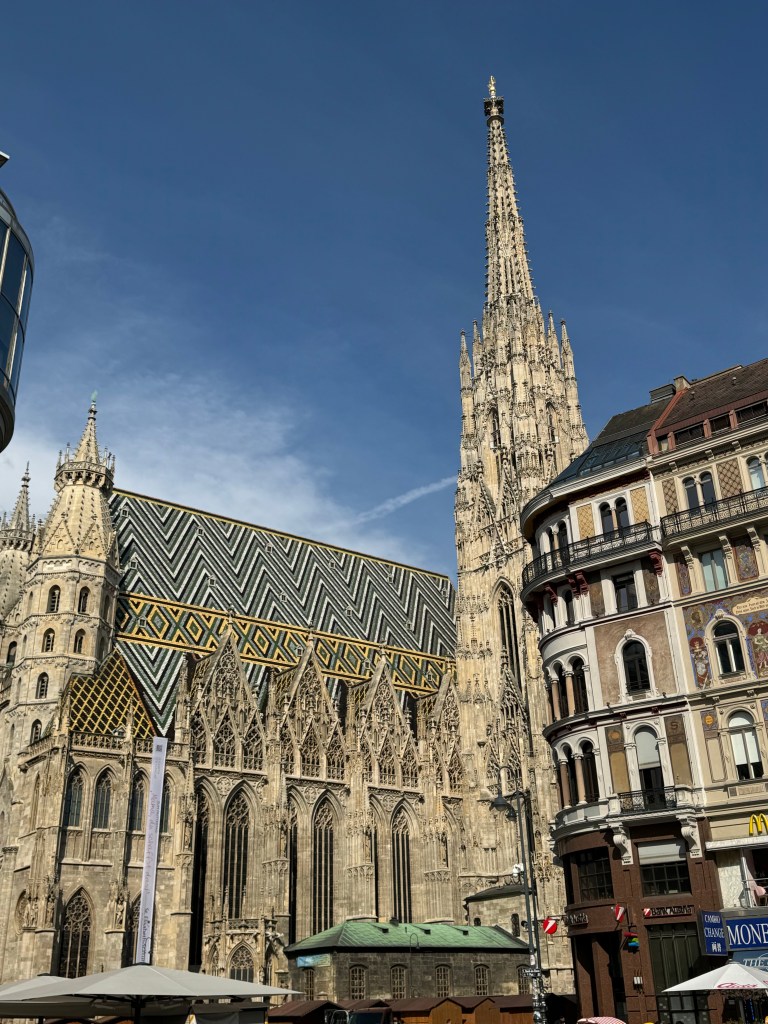
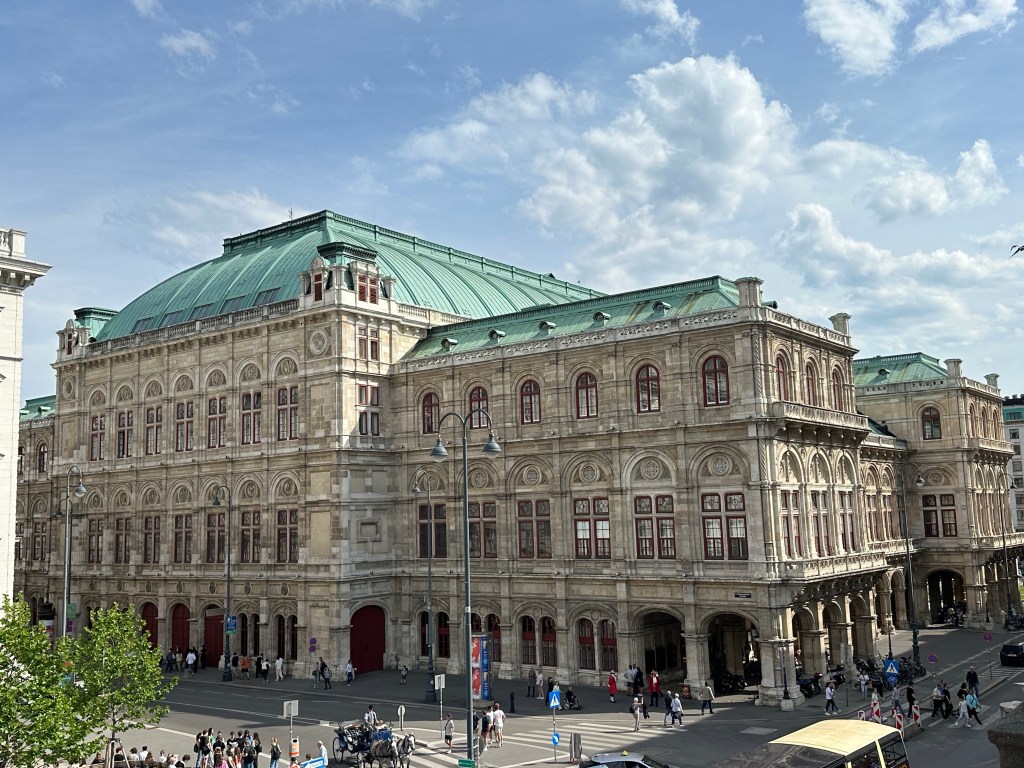
The city had a golden era of building in the late 19th Century, including the world famous opera house which due to looking more like a factory was bombed in WW11. Like many cities in the region Vienna experienced significant damage during WWII; rebuilding and rennovation did not get properly underway until Austria regained its independence in 1955. Vienna is now a magnet for tourism based on its history and cultural attractions, making its historic centre a UNESCO World Herritage Site.
Then off to Budapest, the other major capital of the Austro-Hungarian empire…..it means nothing to them Oh ! Vienna.
 Shilli-Fully Travels