Buenos Aries, is situated on the western bank of the River Plate. It was first established by the Spanish in 1536. Argentina was declared independent in 1816 under the leadership of San Martin, however Buenos Aires was still under threat from an Anglo-French blockade as late as 1848. The blockade, driven by an objection to local taxes, failed and the city flourished. Around a third of the country’s 45million citizens live in Greater Buenos Aries.
Much of the city’s architecture shows European influence (particularly Spanish and French) from the waves of European immigration, particularly from France, Spain and Italy. Although the British were less prominent, they were responsible for establishing the railways.
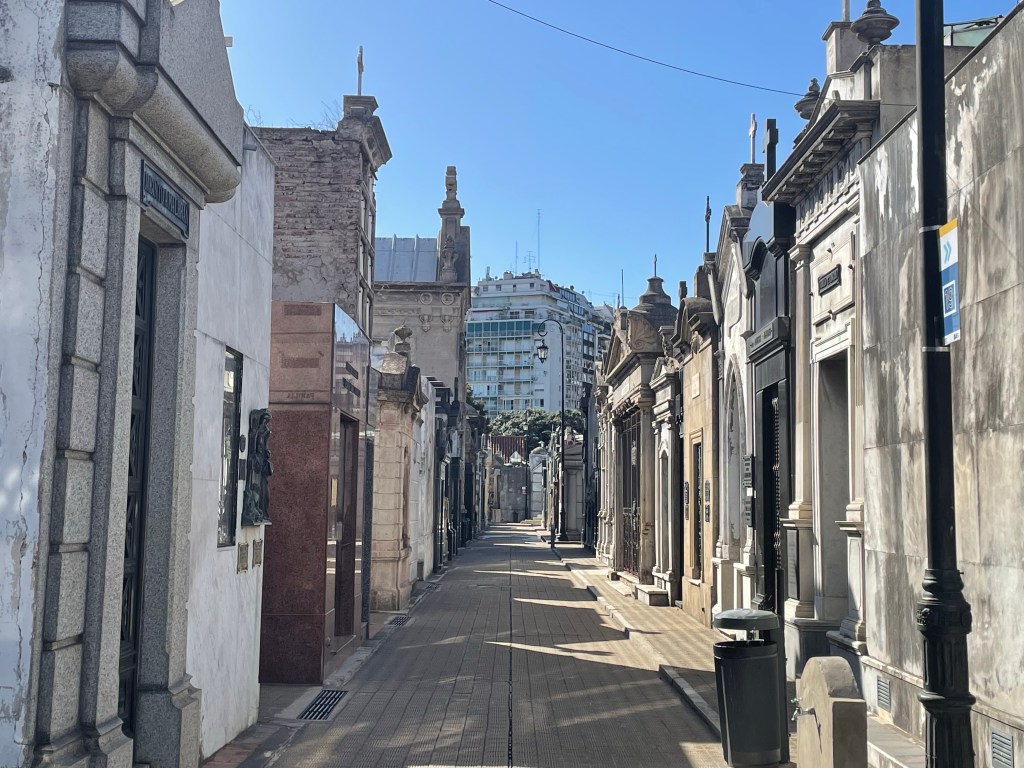
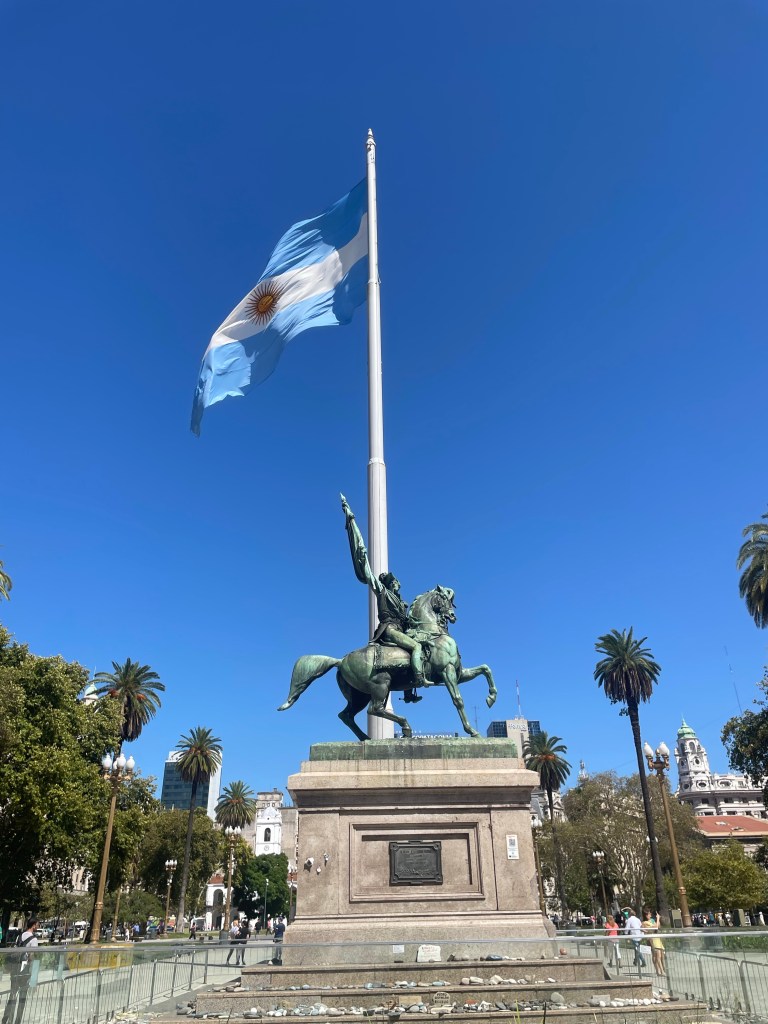
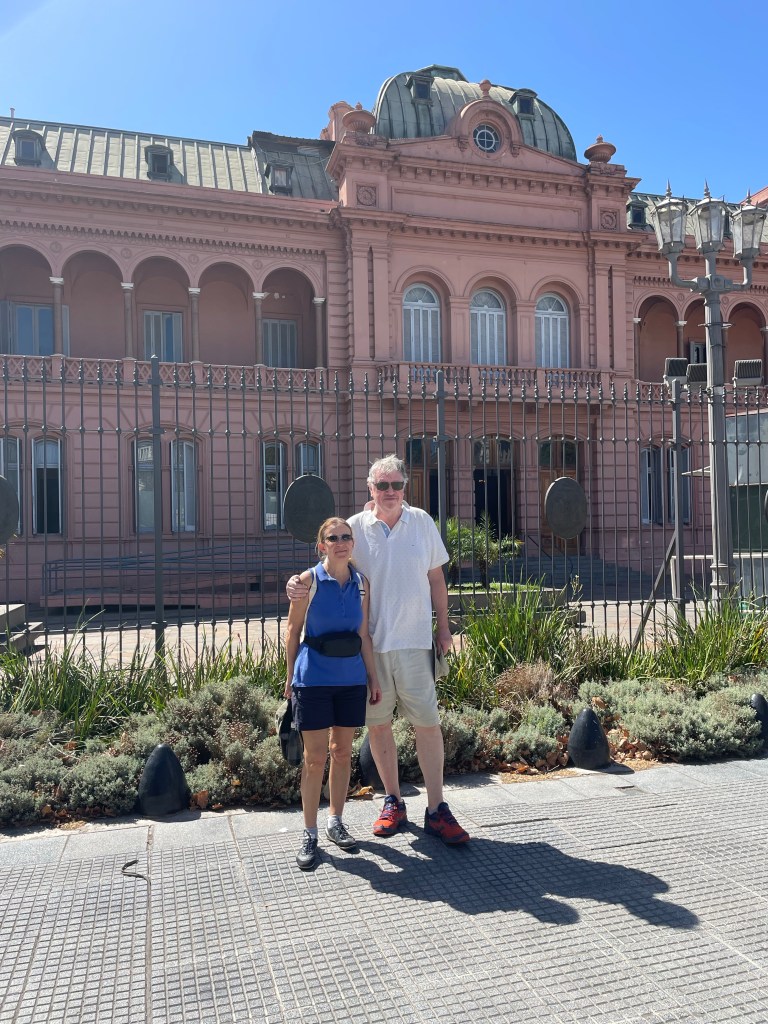
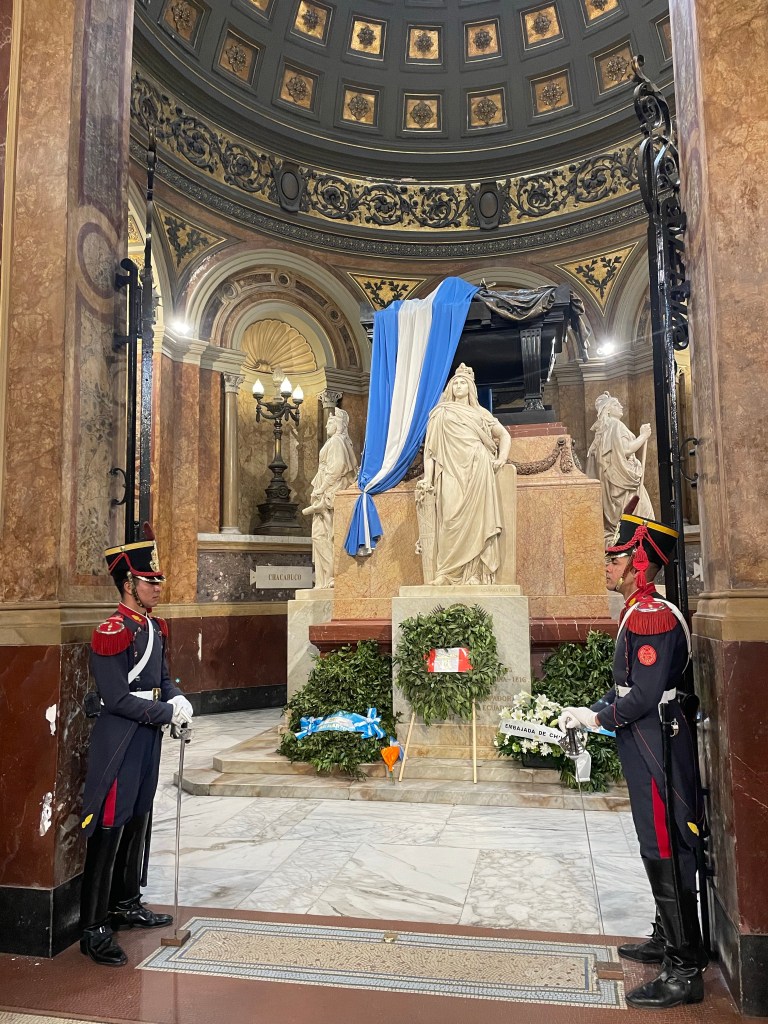
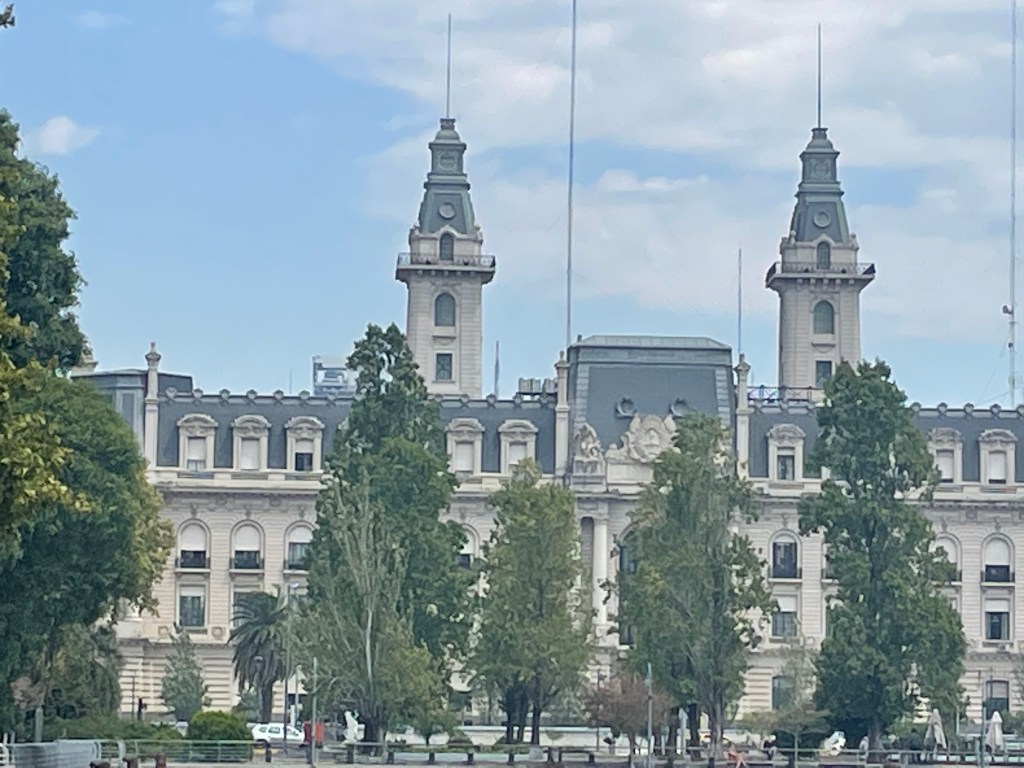
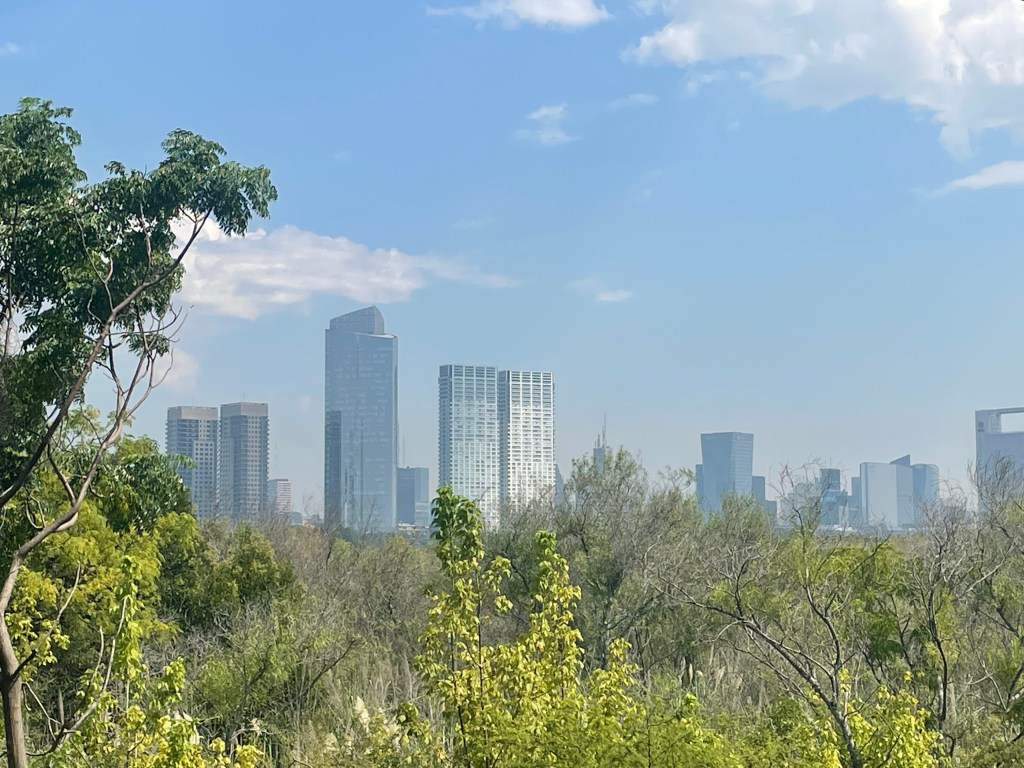
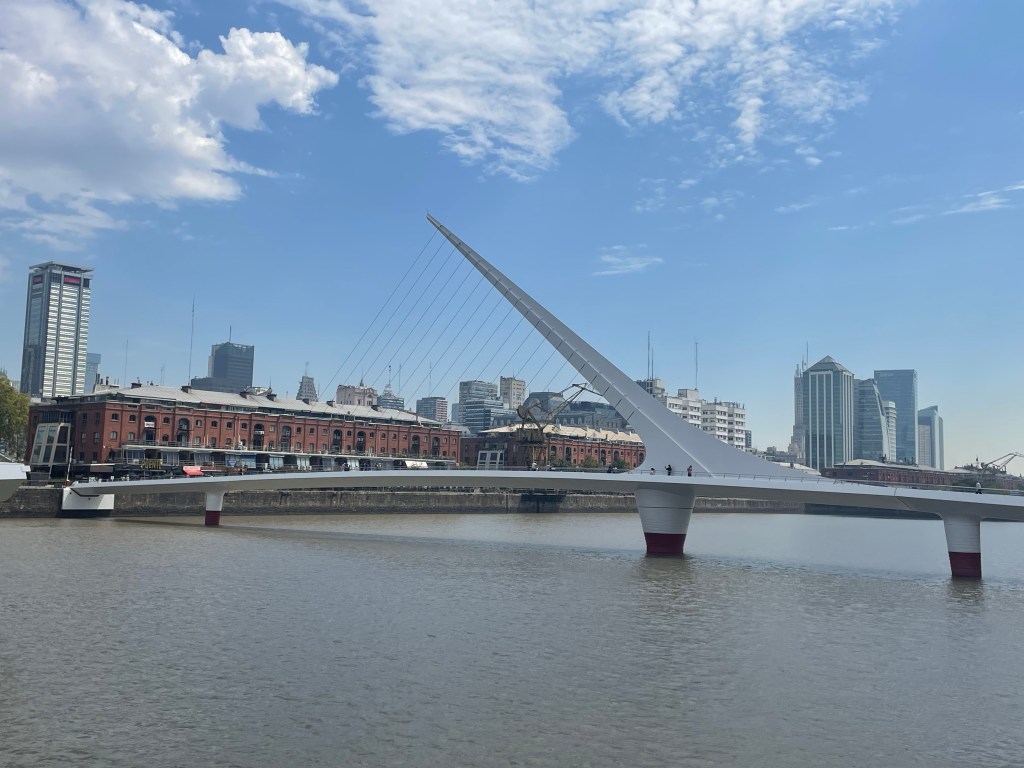
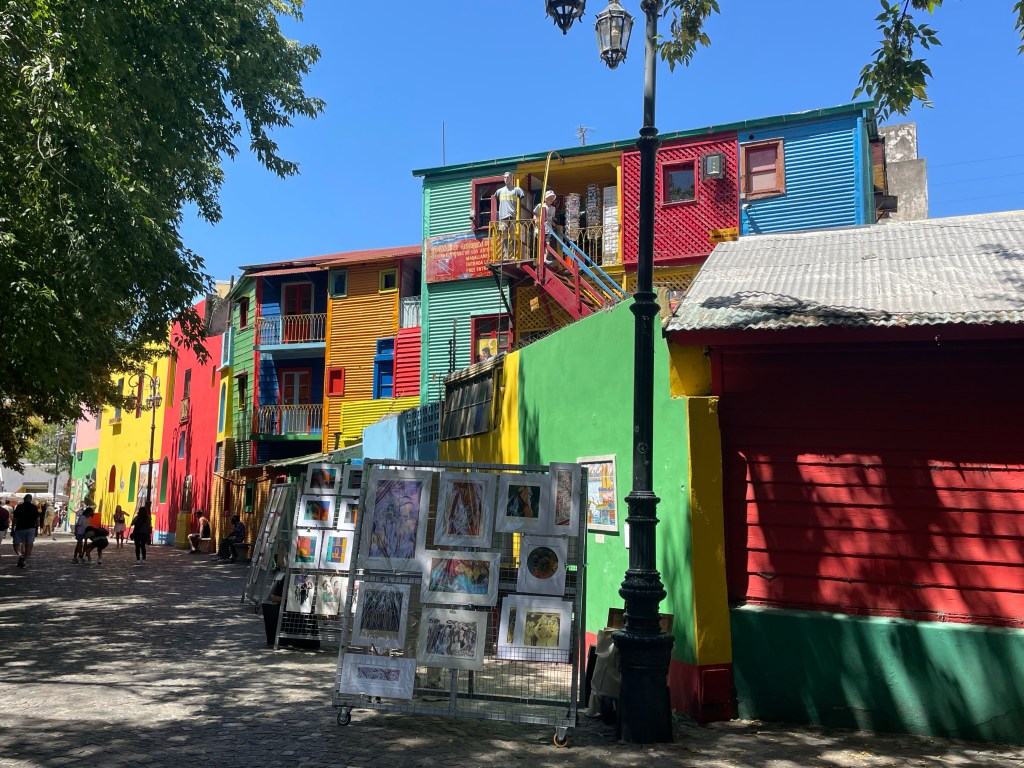
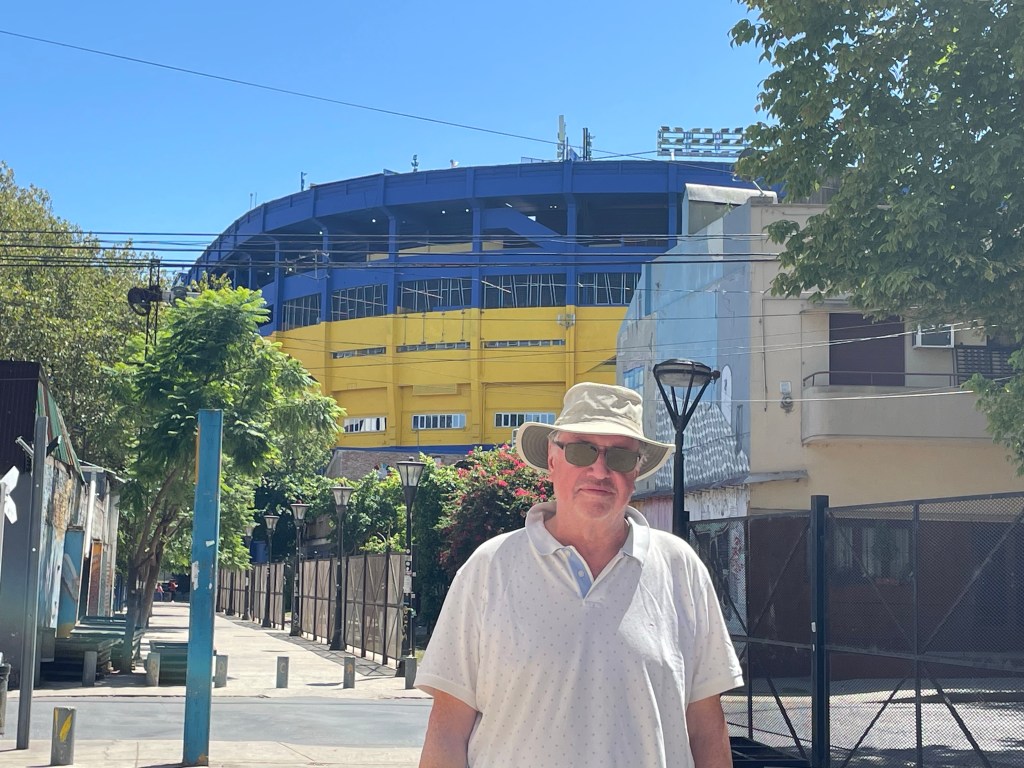
The Cemeterio de la Recoleta is Buenos Aries most visited tourist attraction. “Streets” are lined with the tombs, statues and mausoleums of past politicians, generals, the rich and the famous.The mausoleum of Eva Peron’s familyA statue of General Belgrano in the Plaza de Mayo, where Argentinian’s gather in protest or celebration. At the time of our visit there was a heavy police presence as the city was experiencing anti-government demonstrations. The stones by the statue have been placed there by the families of some of those that died of covidThe Casa Rosada on the Plaza del Mayo with the balcony where Eva Peron adressed the throngs of empassioned supportersThe tomb of San Martin – his body was returned to Argentina 30 years after he died in exile in FranceWhile this building could be in Paris, it is government officesOne morning we walked around the large Ecological Park, established as a park and wetlands centre, which sits between the new commercial district and the riverConverted warehouses in the Puerto Madero area, a good spot for lunch after our walk in the Ecological ParkColourful buildings in the La Boca districtNo visit to Buenos Aries is complete without a visit to La Bombonera Stadium where Boca Juniors play. The colours were apparently decided after an inconclusive debate which was later resolved by agreeing that the colours would be those of the flag of the next ship to arrive in the port, which was Swedish

 Shilli-Fully Travels