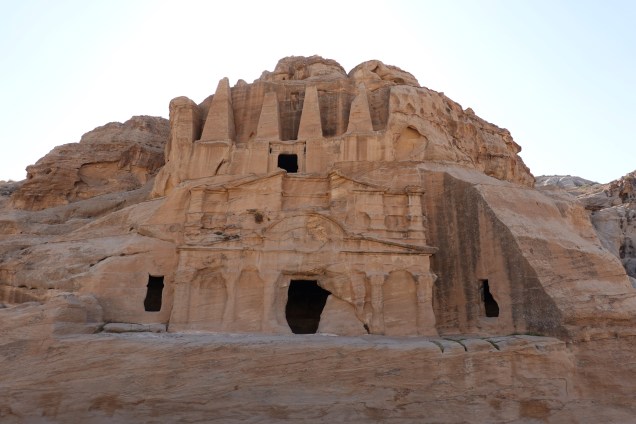
Petra is one of the seven wonders of the modern world and made famous, for many, by Indiana Jones. It was built by the Nabateans between the first century BC and the first century AD. The Nabateans were hugely successful in controlling (and taxing) the caravans travelling the spice route as they had a major source of water and knowledge of the inhospitable local area. The site was unknown to the western world until 1812 when it was discovered by a Swiss explorer Louis Burkhardt, who disguised himself as an Arab to gain entrance.
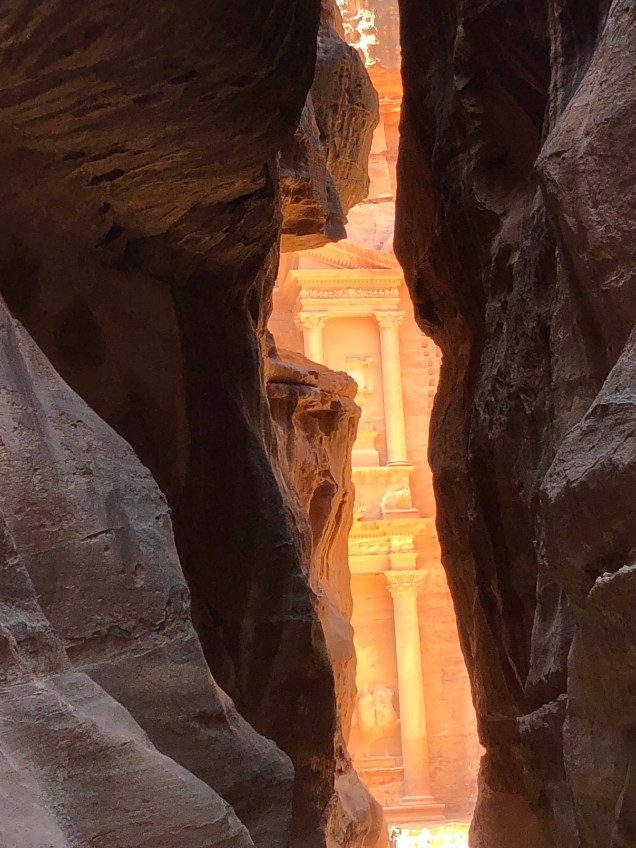
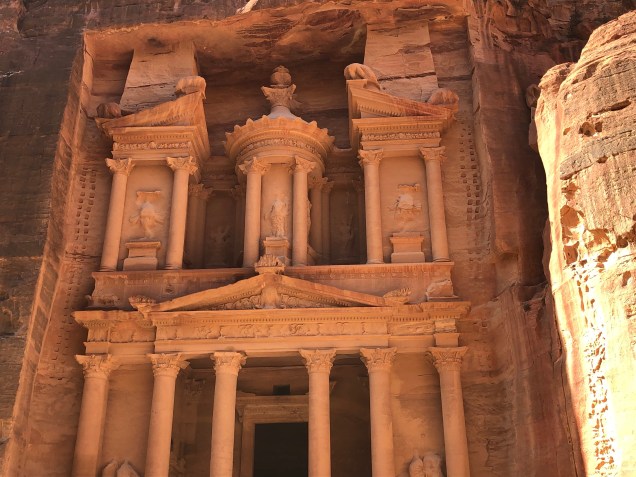
The most iconic building is the Treasury, so named as it was believed that this was where the Nabateans kept their valuables, but it is actually a tomb.
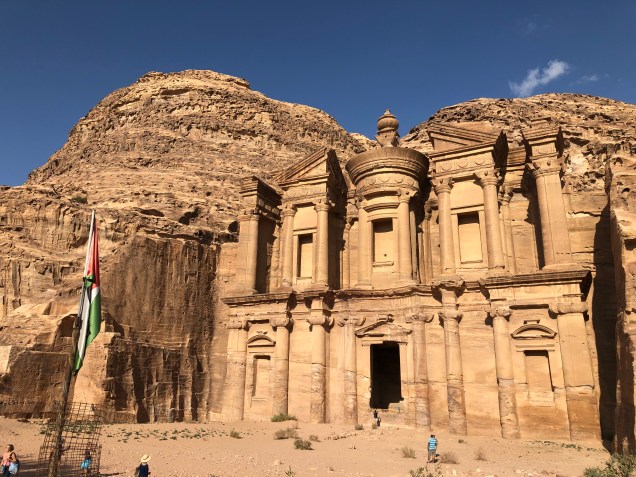
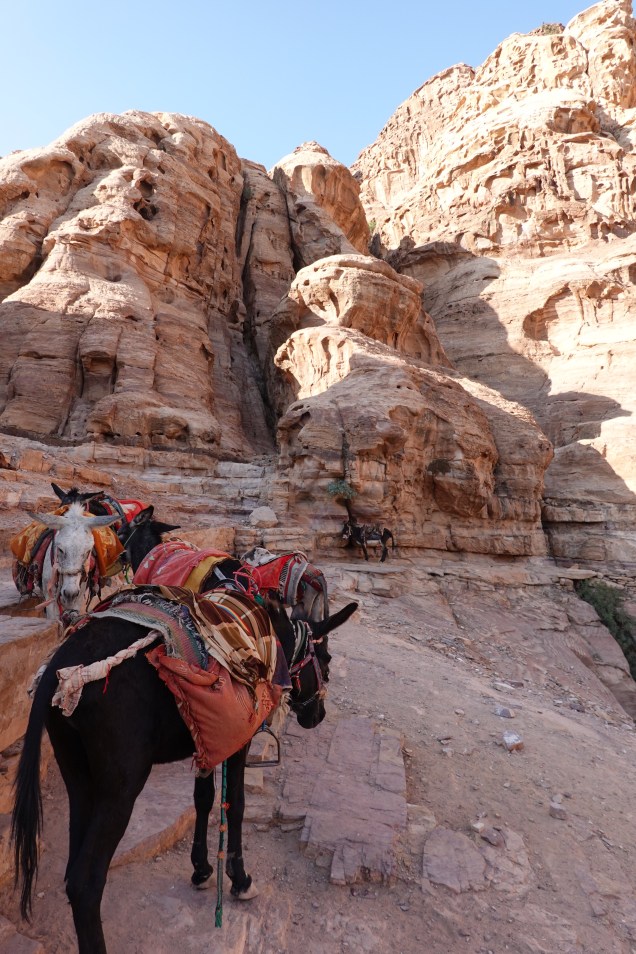
Equally impressive but less accessible is the Monastery, another larger tomb (50m wide; 45m high). It is at the end of the site reached via 800 steps. Crowds are understandably much thinner in this section, although some (lazy) tourists travel the majority of the steep route on donkeys which are being encouraged by Bedouins who all look like offspring of Captain Jack Sparrow.
Until the 1980s a Bedouin tribe lived in the site. As part of an arrangement with the government for them to move to a nearby purpose built village, they have retained the exclusive rights to trade within the site. For the men, this takes the form of horse, donkey and carriage rides and refreshment stalls. The women sell souvenirs such as clothing and jewellery, made by locals trained by the Queen Noor Foundation. One such stall holder is a women from New Zealand who came to Petra as a traveller in the 1970s and fell in love, subsequently marrying, a local souvenir seller. On her stall, as well as the souvenirs, is the book she has written “Married to a Bedouin” of her remarkable life.
Petra is without doubt amazing !

 Shilli-Fully Travels